Home Blog Page 7355

BJP and AAP at loggerheads over sealing drive, BJP blames AAP for past inaction and oppurtunism

0

The Aam Aadmi Party yesterday had announced that all its MLAs and councillors will assemble today at Patel Chowk and march to the Parliament. Their aim is to put pressure on the Central Government to bring out a law to stop the sealing of shops under the Master Plan for Delhi (MPD) – 2021 project.


AAP MLA Sourav Bharadwaj yesterday had also tweeted about a letter to Delhi LG, Shri Anil Bijal to put an immediate stop to sealing activities being carried out in Delhi under the MPD-2021.


On January 27, The Confederation of All India Traders (CAIT) and several other trader’s associations have announced that they would be observing a 48 hour Bandh on 2nd and 3rd February 2018.

Earlier on January 23 too, several markets of Delhi saw closure following the traders’ opposition to sealing. All political parties including the BJP, that controls three Municipal corporations of Delhi, have supported the traders.

The BJP has also blamed the AAP of politicising the problems of traders and stated that the activities emerged as a problem because of the AAP’s failure to take necessary actions in the past. They have blamed the Congress too for trying to gain political advantage over the issue.


Pravin Shankar Kapoor, Secretary of Chandni Chowk Nagrik Manch and also Delhi BJP Spokesperson has stated that they will be supporting the CAIT over the 48-hour bandh. The BJP Delhi office has assured the traders that they will raise the issue of sealing in the Budget session in the parliament.


The sealing commenced under the Supreme Court appointed monitoring committee since December 22, 2017. On January 27, a  joint civic body meet was held consisting of the three Delhi municipal bodies (East, North and South) to find a solution to ongoing sealing drive. It was aimed to put a stop to irregularities over constructions and failure to pay conversion charges to the Municipality for commercial properties.

The Lingayat separate religion demand – why is it being revived again

0

Background :

In the past few months, we have witnessed a well organized movement demanding a separate religion (and, hence, minority status). The theological base of the demand lays in 20th century scholarship of the Vachana movement, a movement which is given liturgical (considered holy) respect among significant sections of the Veerashaiva-Lingayat sect. This scholarship on the Vachana movement emphasised that the movement as a 12th century revolution led by Basavanna against inequality and Sanatana Dharma (Hinduism).

This view has been internalized by major sections of the community, especially among the educated classes in North Karnataka which has created conditions conducive for the spread of the demand for the status of a separate religion for the Lingayats. The political and religious leaders of these sections, that is, those who view Basavanna as the founder of the sect/religion and reject the Vedas and the Agamas, now call themselves ‘Lingayats’ and take pains to show that they are different from the rest, whom they call ‘Veerashaivas’ as the latter accept the authority of the Vedas and do not give importance to Basavanna in their Guru-parampara.

Previous attempts to obtain separate religion status :

There have been many previous attempts made by the community to obtain the separate religion status as one entity i.e ‘Veerashaiva-Lingayat’. The most recent of these attempts happened in 2011-13 under the leadership of Shamanur Shivashankarappa (currently President of the All India Veerashaiva Mahasabha) and Bheemanna Khandre. The attempt failed because the Veerashaiva section of the sect accepts the authority of the Vedas and the Agamas and are, hence, not different from Hinduism. The separate religion movement died down after this rejection only to be resuscitated by Siddaramaiah earlier this year under a different nomenclature  – ‘Lingayat as a separate religion’ and an origin theory based on 20th century Vachana scholarship.

Importance of the issue :

The Veerashaiva-Lingayat community is the third most populous community in Karnataka after the Dalits and the Backward Classes. Of the 6 crore Kannadigas, around 1.25 crore belong to this community. Since the emergence of the BJP under B.S. Yeddyurappa, large sections of the community began to identify with the party. The unity of the community and it’s support for Yeddyurappa are crucial for the BJP to come back to power in 2018 as well as win a considerable number of Lok Sabha seats in Karnataka in 2019. The movement to divide the community and secure minority status for a section of the same assumes political significance for this reason.

Below are the details of some of the prominent political leaders associated with the movement.

MB Patil – M. B. Patil is an INC MLA from Bableshwar, Bijapur, who has been Minister for Water Resources in the Government of Karnataka since 2013. He runs the Bijapur Lingayat District Education Association (BLDEA) which was established in the year 1910 and manages 75 institutions in various educational institutions ranging from primary, secondary, high schools to PU Colleges, Autonomous Arts, Science and Commerce Degree Colleges, Engineering College, Medical College, Business Schools, Pharmacy College, Nursing College and professional institutions like Colleges of Education, Polytechnics & BLDE University.

Vinay Kulkarni – Vinay R Kulkarni is the INC MLA from Dharwad and is also the minister for Mines and Geology in the Government of Karnataka. He is suspected to be the brains behind this movement.

SA Jamdar – SA Jamdar is a retired IAS officer and at present, the secretary of the Lingayat Dharma Horata Samiti. He interacts with the media on a regular basis and most leaders direct any non-theological queries to him.

Dr. Sri Shivamurthy Murugha Sharanaru – The current head of the Maha-Math i.e the Murugharajendra Math to which almost every Virakta Math (subsidiary math) in Karnataka used to owe allegiance. He took control of these institutions but lost some amount of control. However, most of the Swamijis from non Jangama (priestly) castes among the Lingayats have obtained deeksha and property from this seer and therefore owe allegiance to him. Increasingly, the influence of this seer and the Math is decreasing to the iconoclasm and anti-ritualist tendencies displayed by the seer (Information gleaned after talking to multiple people from the Veerashaiva- Lingayat Community’s elite).

Mate Mahadevi – The controversial and self declared Jagadguru of the Lingayat community is an important leader of the movement. She claims to be the reincarnation of Akka Mahadevi, a revered medieval mystic. She is known for allegedly altering Basava vachanas by changing the invocation from the original ‘kudalasangamadeva’ to ‘lingadeva. She is known to have political ambitions and had contested the 2004 Assembly elections.

Reasons For The Re-Emergence of the Issue

The theological arguments for the separate religion demand are not new. It is, therefore, necessary to look at what else is powering the latest episode of the separate religion movement.

INC’s attempt to break the Lingayat vote-base of the BJP

Siddaramaiah believes this issue will polarize the Lingayat community and hence enable him and the INC to get a greater section of the community’s votes by aligning with the faction demanding the separate religion status for Lingayats (hereinafter, the ‘Lingayatist faction’). This is important in view of the anti incumbency being faced by the government especially among the Lingayat community who are aware that the INC government came to power due to the split between the BJP and  Yeddyurappa in 2013. It stands to reason, that the INC will probably now go to Lingayat voters saying that they are in support of the demand which will give Lingayats all the benefits of being a minority and claim that the BJP is opposing an action which would give them these benefits. These benefits include massive scholarships from the Central Government (>1890 crores under the top 3 schemes of the Minority Affairs Ministry) , the Pradhan Mantri Jan Vikas Karyakram run by the Government of India which funnels enormous funds through Centrally Sponsored Schemes (CSS) into districts which have a minority population greater than 25%, as well as state government schemes meant exclusively for minorities like the infamous Shaadi Bhagya (wedding grants to poor girls exclusively from minority communities), more than Rs. 690 Crore worth annual grants under the Minority Development Corporation and the Chief Minister Minority Development Programme (2017-18 Budget, Government of Karnataka, Vol.5), access to a disproportionately funded minority only state level scholarship scheme for pre-matric students, and more.

While, INC Leaders like MB Patil and Vinay Kulkarni are using this movement as a means to build their profile as political leaders who have influence beyond their respective constituencies and to ensure that they do not lose their own seats to the BJP, muslim organisations like Anjuman-e-Islam which is traditionally known to support the INC in the state, were reported to have supported the Lingayat rallies too. Meanwhile, committed Congress Intellectuals have been pressed into service to build intellectual support for the demand in the kannada news media.

Control over Educational and Religious Institutions

Maths and political leaders who are a part of the Veerashaiva Mahasabha, have built up their influence over the community by running educational institutions – primary, secondary and higher education including medical education and ITIs. They have also attempted to enhance their status through their involvement in the building of social welfare institutions such as subsidised hospitals. Currently, educational institutions, which are a huge portion of their influence building, money making and social service activities are subject to the same regulatory hassles that other Hindu run educational institutions are subject to. If the minority religion status is given to the Veerashaiva-Lingayat community, these institutions will have near-complete autonomy similar to the one christian,muslim and other religious minority run institutions enjoy by virtue of the 93rd Constitutional Amendment which nullified the landmark PA Inamdar and TMA Pai Judgements of the Supreme Court. It would seem that it makes complete economic sense for leaders who run educational institutions to demand minority status in this context.

A trustee of the Nonavinakere Matha in Tumkur had this to say – ‘The RTE Act implementation beginning in 2012 has created the conditions for this demand to be even considered by a lot of Mathas. Earlier, the Mathadeeshas would ask anyone demanding this to shut up but important Mathas like Siddaganga and Suttur have chosen to not do so immediately this time around’ (In conversation with the trustee).

Moreover, Religious institutions of the Hindu community are vulnerable to harassment and takeover by the state government unlike Muslim, Christian and other minority religious institutions. The current government had almost passed a law – Karnataka Hindu Religious Institutions and Charitable Endowments (Amendment) Bill, 2014; which would enable it to take control of the Maths the same way it has already done for Hindu temples. Given that the current government is very proactive in bringing Hindu temples under the control of the muzrai department, those putting forward the separate religion demand see this as a feasible way to protect their religious institutions. In fact, during this author’s conversation with multiple Mathadeeshas, this was a recurring theme.

As of now, it appears that new and/or small Mathas who have not built up educational institutions prior to the RTE being passed (2009) as well as significant property like the religious institutions of other religions, are more active in the Lingayatist movement for the exemption is the only way for them to increase their institutional power and influence like minorities already can. Amongst established institutions, there is a divide, almost along party lines. BJP Rajya Sabha MP Prabhakar Kore who is the Chairman of the Karnataka Lingayat Education Society, the biggest private education provider in the society has opposed the demand. INC Minister Eshwar Khandre who runs a number of educational institutions too has backed off from supporting the demand. INC Minister MB Patil who inherited the post of Chairman of another famous education society – Bijapur Liberal District Education Association, from his father and famous Congress politician BM Patil, is one of the lead campaigners for the separate religion movement.

These reasons have been specifically mentioned and detailed by SA Jamdar, retired IAS officer and secretary of the Lingayat Dharma Horata Samiti in multiple rallies, advertisements and also by Arvind Jatti, the President of Basava Samithi, and others in various newspaper articles.

Where is the Movement Headed ?

The movement has managed to find a level of support among a growing section of the elite, especially those closely involved in community affairs and management of educational institutions. However, except for a few isolated pockets of Bidar, Chitradurga and Gulbarga districts, the movement is yet to catch on among the masses and in places like Bijapur and Belgaum, it has contributed to the anti-INC sentiment. The locals in these areas see this movement as an artificially engineered divide and consider themselves an integral part of the Hindu religion. A large section of the community feels that this is an attempt by INC to divide Lingayat votes to prevent a Lingayat, i.e., B S Yeddyurappa from becoming Chief Minister and allow a Kuruba, Siddaramaiah, to remain as Chief Minister. M B Patil and Vinay Kulkarni are thus seen as traitors to the cause of the Lingayat community. It is this feeling that has made Eshwar Khandre, Bhalki MLA and Bidar District in Charge Minister, distance himself from the movement. Even senior Congress leaders like Shamanur Shivashankarappa have begun speaking out against the Chief Minister on this issue as they see in this an attempt to dilute the strength of the community in politics.

Many argue that the activities by MB Patil and Vinay Kulkarni are seen as them meddling in affairs that they have no locus standi in. Evidently, Even in Bidar, Gulbarga and Chitradurga districts, the present level of support is being over-estimated and/or hyped. For example- the Gulbarga rally of the Lingayatist faction in September had only about 40,000 people in attendance with a lot of them being non-Lingayats. Many in the media exaggerated reports that more than 2 Lakh people had participated in the rally. While Bidar was a massive stronghold of the Lingayatist faction with almost all the prominent Mathas in the district supporting them when the initial Bidar rally took place, the situation seems to have altered as of early November with a few Mathadeeshas changing their stance in order to align themselves with INC Minister Eshwar Khandre, who took a stand against the Lingayatist faction. Moreover there is resentment within the community over the ‘external aid’ to the movement from muslim organisations, especially in the Hubli Rally. Additionally, among ‘caste lingayats’ whose support is necessary to the movement’s success, there is vocal opposition to the leaders of the movement buzzing in people belonging to dalit and other castes to these rallies.

The pockets of support for the demand are mostly a function of the Mathas in these areas being very Lingayatist, especially the iconoclastic Murugharajendra Matha. In the Old Mysore region, people are as yet undecided and waiting for the Siddaganga and Suttur Mathas to point them in the right direction. The Siddaganga Matha’s public humiliation of MB Patil over this issue has been interpreted by many as a signal from the Siddaganga Matha to oppose the issue.

What does this hold for the 2018 Karnataka Elections ?

To gain the acceptance of the masses, the political leaders of the Lingayatist faction are pushing a combination of an economic argument (detailing the economic benefits of the separate religion tag) along with the original theological argument of Lingayatism being an egalitarian and progressive religion. They have issued ads in local and state newspapers detailing the economic benefits. A ringleader of the movement, retired IAS officer S A Jamdar, spent considerable amount of time detailing the same during their maha-rally in Gulbarga. While this may marginally increase the acceptance of this demand among the masses, it is apparent on the ground that it won’t impact electoral outcomes in the 2018 assembly elections.

Recently, B.S. Yeddyurappa, after an extended period of silence over this issue, has openly come out in opposition to the separate religion movement and said that Veerashaivas are not different from Lingayats. The Veerashaiva Mahasabha under Shamanur Shivashankarappa is proactively coordinating the mobilization of the veerashaiva laity against the separate religion demand while the seers of the powerful pancha-peethas (5 peethas) of the veerashaiva-lingayat sect are touring across Karnataka to oppose the demand for the separate religion. It almost seems everyone is out to bury this movement.


Twitter users amused after DMK chief ‘Stalin’ asks people to give their children Tamil names

0

DMK chief M. K. Stalin while addressing a gathering at a wedding reception on Sunday, decided to ask people to give their children Tamil names. He made this appeal while reading out the names of the couple, Aparajithan and Preethi.

This news as a result, caught the attention of various twitter users who reacted to this:


One journalist wasn’t amused at the prospect of influencing and possibly dictating people’s personal lives:


Clearly aware about the paradox of his appeal, Stalin acknowledged that he may be asked about his name. To defend against such questions, Stalin claimed that Karunanidhi actually wanted to name him Ayyadurai, after Periyar, who was called Ayya and Durai which was the birth name of DMK founder C N Annadurai.

But as per Stalin, on the day of his birth, Karunanidhi was incidentally attending a condolence ceremony over Soviet leader Joseph Stalin’s death when the news of his son’s birth reached him. At the condolence meet, Karunanidhi then proceeded to announce that he is naming his son after the Communist leader.

Such a choice to name one’s child Stalin, apart from upsetting the Tamil ethos, possibly highlights the sympathy of the DMK top brass with a Soviet leader infamous for his brutality. As per various Russian accounts, a whopping 20 million people are said to have perished under Joseph Stalin’s regime, after being at the receiving end of labour camps, forced collectivisation, famine and executions.

Besides these measures, Stalin had also initially colluded with the Nazis during the latter’s Polish invasion in 1939 and at the end of the war, the Communist soldiers under Stalin have been alleged to have raped at least 2 million German women.

This isn’t the only time DMK’s Stalin has made a name for himself on Social Media. We had reported how he had decided to block a BJP youth leader, whom he followed on twitter, as the latter decided to write and debunk certain allegations spread by Stalin, to create an anti-Hindi debate in the state.

Dear Mr Chidambaram, pakodewalas have shown more enterprise than your leader ever will

0

Once upon a time, in a land far away, there was a pakodeawala.

Well, actually, it wasn’t too far away, just 120 Kilometres to the west of Delhi, in a sleepy town of Hansi, around 30-40 years back, there used to be a famous pakodewala named Badri.

Badri (full name was not known to most of us) was one of the famous snack joints of Hansi. The city had a quartet of such famous joints, actually. Badri ke pakode, Chand ke Chhole, Shankar ki Kulfi and Gangu ki Jalebi were like four reigning kings of food landscape. Their four shops were landmarks that defined and completed this small town and any important event or happening was not complete without visit to one or two of these joints. Whether guests from faraway lands had come to stay or a casual meeting of few friends or happiness of passing an exam or even the relief of it getting over or a potential girlfriend accepting a love letter or even recovery from a small ailment, every reason was a good excuse to visit one of them.

Last one was my favourite. As a kid, I used to fall ill once every two months and my recovery celebration was always a plate of chhole samose from Chand’s joint.

Badri, however, was the most famous among them. His shop, situated in the main market of the city was always crowded. Customers had around a dozen varieties to choose from and Badri would always serve them fresh and steaming hot, it only meant that 45 minutes to one hour waiting time was normal. Still people loved the crispy but succulent pakodas and were willing to wait. In the evening hours, one could count even twenty customers waiting at his small shop that had a frontage of only 8 feet.

The recipe or the methodology Badri used was the talking point in most drawing rooms (or Baithaks as they were called back then) and at card games sessions at the roadside, rumours were rife about some secret ingredients he added, some even claimed to know that Badri had not even revealed the secret ingredient or methodology to his family for the fear of it leaking out, many believed that he had accumulated immense amount of wealth and buried it underneath his house.

And the closed environment of our small town, coupled with limited awareness of the rest of the world and the immaturity of our ages, we kids believed that no other town had the pride of having such greats.

So much so that in those days, if anyone asked kids of our age about what we aspired to be in our lives, some of us, other than those who were not worried about the uncertainties of world outside and were willing to sacrifice the comforts of hometown for regular jobs, would have expressed a wish to become a Badri or a Chand or someone like them.

And now, Rahul Gandhi’s party Congress, mocks the pakodewalas as P Chidambram, ex Finance Minister and leader of Congress, calls them beggars!

Was Badri, who was a respectable member of our town, who was believed to be having a secret recipe, believed to have immeasurable wealth including a buried treasure and subject of jealousy for many others, a beggar?

Hundreds of others who dot the lanes of small town of Hansi, lakhs of such hard working aspirational people of India, are they beggars?

Bhaggi, who sells eggs on his handcart is a respectable member of his community, part of the decision making body of his caste panchayat, Jaggu, who alternates between selling juice in summer and roasted peanuts in winter, his daughter is studying MBBS, Ramesh, who began with a corner kirana shop is now expanding into distribution of eggs on a larger scale with his business graduate son helping him, or Titu, the photographer, whose son is in Mumbai, aiming to be a film director, or Jaidu, the one who sells vegetables from his 5 feet by 5 feet shop and still manages to arrange a grand mata ki chowki every year,  are they beggars?

Such insulting, contemptuous view of hardworking people reflects not only an elitist mentality that considers working people as inferior but also but also exposes their woefully limited knowledge about what moves the economy in the small and medium towns and villages in India.

It represents a myopic world view where only three classes of people are worthy of being acknowledged or respected, the classes that fulfill their needs; Mallyas and Vadras who provide cash chests, NREGA level poor who would vote to return them to power and thirdly, those who create a narrative of the greatness of the halfwit dynast i.e. media. Everyone else can be wished away disdainfully.

This is also the view of a rent seeker, of a dynast, who cannot understand why some people want to earn a living using their own intelligence, skill, talent and hardwork, and not using a family name. Why some people are motivated by their aspirations of a better tomorrow and want a better future. Why they do not wish to remain freeloaders, waiting for a mai baap government to give a dole, a job, a grant.

This world view hates aspiration, the self esteem that new India wants to live by, because every hardworking person makes the freeloader dynast look smaller, in his own eyes.

However, unconcerned by what Rahul’s pals like Chidambaram think about them or call them, Bhaggi, Titu, Ramesh, Jaidu go on with their life, working from morning to evening, fulfilling their aspirations bit by bit, creating a better tomorrow, for themselves and their families, powering the economy of their small town, while Badri, the ‘Pakodewala of Hansi’ is smiling on them from his heavenly abode.

P.S.: Rahul, at your next pre-election photo-op when you visit the local pakodewala for a snack, do remember what your party feels about them.

Disclaimer: All the people mentioned here are or were real people. Some names have been changed to protect their privacy.

Kasganj: Even if I say Vande Mataram, nobody has a right to shoot me

0

They say “Bharat tere tukde honge” and instantly become rockstars of free speech. Their views are judged as “dissent” at best and as a “youthful indiscretion” at worst. Then, they hit the think-fest circuit big time, talking up a storm, revelling in the glare of TV media and the adulation of intellectuals.

Don’t you dare be “intolerant” or charge them with sedition. That would be against free speech. That is for them.

We say “Vande Mataram” and …  Bang Bang Bang.  Dead, cremated, matter closed in 24 hours.

One after the other, as if reading from a memo, they point out that tiranga rally on Republic Day happened to be “unauthorized.”

u1.png

Will somebody point out to these luminaries that even if I shout “Vande Mataram,” nobody has a right to shoot me dead?

And by the way, it makes no difference to our fundamental rights as citizens of India if we happen to be in a “Muslim majority area.” The right not to be shot dead for mere speech, for merely raising a slogan, is inalienable.

Instead of speaking out for the fundamental right of a citizen not to be publicly executed for allegedly saying “Vande Mataram,” our elites have busied themselves with checking whether the official authorization documents for the rally were in order.

The issue here is not whether the rally was “authorized.” The real issue here is to address the mentality of a section of society that feels “authorized” to shoot a young boy dead simply because they didn’t like slogans that he or people around him may have shouted.

This victim blaming must stop. If you find the slogan “Vande Mataram” to be provocative, that’s your problem. Go cry about it on social media. Give an interview to The Wire. They are always looking for stories such as this. If all else fails, file a PIL with some honorable judge. They are always looking for causes such as this.

But, I should emphasize, your sense of anger over slogans such as “Bharat Mata ki jai” and “Vande Mataram” do not give you a right to pick up a gun and shoot somebody dead.

Instead of underlining the real issue, the Kasganj murder again brought into sharp focus two major problems with the way things are set up in our country.

The first is the inability to attack head on, the orthodox Islamist patriarchy that dominates our political culture. It could be a case of Muslim women wanting freedom from triple talaq or Hindus wanting to say Vande Mataram.

Yes, Hindus, as an integral part of their culture, tend to personify their objects of worship: from the fire to the earth. It is no surprise that millions of Hindus, even hundreds of millions see their nation as a deity in herself, personified as Bharat Mata.

However, the orthodox Islamic patriarchy, due to Islamic teachings against “idol worship” or “polytheism” (called “shirk“, considered one of the highest sins in Islam) has internalized the idea that violence and suppression against the practitioners of “idol worship” is somehow justified. And that the so called faithful have a right to carry out violence against non-believers, the so called “kuffar”.

These are the people who feel threatened by the seemingly idol worshipping Hindu venerating his sacred motherland with slogans of “Bharat Mata ki jai” or “Vande Mataram.”

The problem is that little has been done in our country to address this issue or to try and modernize the attitudes of the Islamist patriarchy. Neither the Constitution nor any other laws contain explicit protections for people targeted for being kafirs and engaging in pagan forms of worship that orthodox Islam finds highly disagreeable. Awareness programs to sensitise the Muslim community about the beliefs of other communities, efforts to foster in them a sense of respect and tolerance towards other forms of worship, are entirely non-existent.

The second is the inability of our newsrooms to correctly deal with Hindu assertion. Most headlines in major news outlets, which are always quick to highlight victimhood of Muslims (both real and imaginary) or even the caste of music maestros, simply did not know how to write about a Hindu boy murdered for saying Vande Mataram. Instead, they had to opt for blank sentences such as this.

Untitled.png

The above is just one representative example, you can find a full compilation of many others over here.

There are many reasons for this bias, probably top among them being the heavy under-representation of strong pro-Hindu voices in the media. This is what leads to situations like this, where a spectacularly tone deaf journalist Mr. Qazi Faraz Ahmed, reporting for News18, writes thus:

Untitled.png

There must be a special place in hell for those who report the murder of a 22 year old Hindu boy for allegedly saying Vande Mataram, as some kind of natural consequence of an unauthorized bike rally.

But Hindu youth are not having it any more. They are ready to throw off the shackles, to take to the streets and worship their motherland any way they like. And even if the orthodox Islamist patriarchy feels it is a sin to bow down to anyone but Allah, the Hindu youth today feels empowered to say “Bharat Mata ki jai” or “Vande Mataram.”

The day is coming when Hindu youth will march to the temples of Islamist patriarchy, be it Lutyens media headquarters or JNU arts departments, with a Koran in one hand and the Constitution of India in another. And demand that the Ayatollahs of secularism should pick one, just one.

French Police to interrogate ISIS operative from Kerala for November 2015 terror attack

0

French Police is likely to question Subahani Haja Moideen, a resident of Kerala, an ISIS operative currently lodged at the Central Prison at Viyyur, Thrissur in connection with November 2015 Paris terror attack which left 129 people dead. The NIA (National Investigation Agency) which is probing ISIS network in Kerala has found that Moideen had connections with two terrorists who took part in the terror attack. According to reports, the French officials may soon seek permission from Kerala High Court to interrogate Moideen.

He was arrested by the NIA in October, 2016 from Chennai and during questioning he revealed he was part of ISIS training camp in Mosul, Iraq. He also confessed to have met Abdelhamid Abaaoud and Salah Abdelslam, the two terrorists who were part of the Paris attack in November, 2015. He had claimed he was part of the same group in which they got training. However, he claimed he did not know about the terror attacks in Paris since by the time the attacks were carried out, he had returned to India.

As per reports, Moideen was radicalised and recruited in ISIS through social media platforms and he had left India for Istanbul from Chennai in April 2015 on the pretext of performing ‘Umrah’. After fighting for ISIS, he escaped and returned back to India and was arrested while he was trying to arrange explosives from Sivakasi in Tamil Nadu.

Dear Swara, at the end of your rant, I felt you should rise above your Vagina – perhaps

0

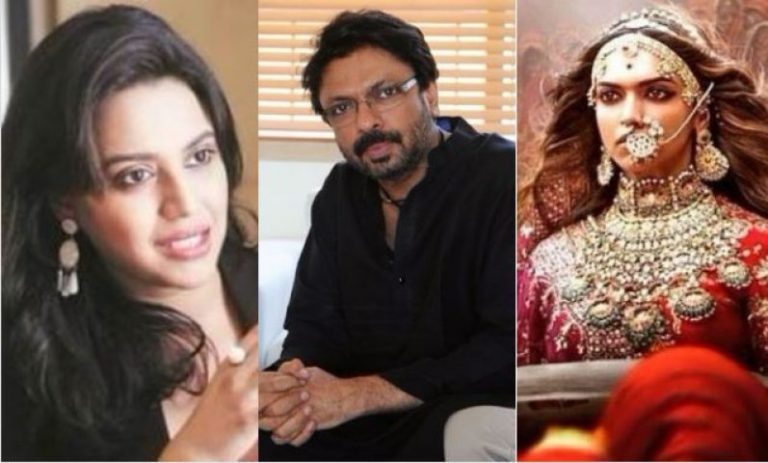
Dear Swara Bhaskar,

I read your rant against Sanjay Leela Bhansali’s Padmaavat, which despite so many obstacles, finally saw the light of the day. I understand your anger against ‘glorifying jauhar’, i.e. committing suicide rather than get yourselves raped by barbaric invaders who want to keep you as sex slave and force religious conversions on you, because of course women are more than their societal conditioning of ‘honour’.

Having said that, you being a Sociology graduate from one of the most prestigious universities of India, let me remind you of your views on cinematic depiction of a love-obsessed man who fell in love with an unattainable girl, who does not give in to his advances. You glorified stalking, a crime numerous women are victim of, and called it an ‘unapologetic celebration of crazy love’. You dismissed the criticism for the film Raanjhanaa, which brought stalking alive on the celluloid and you justified it by saying he was ‘rendered endearing in his naïve innocence’. If stalking can be dismissed so casually by you because of creative freedom director of a movie has taken, what makes you so ‘woke’ about women’s rights now?

One could argue that people grow, and your views from 2013 may have matured. That as an alumnus of JNU and daughter of Ira Bhaskar, who teaches cinema studies in JNU and was also on the Censor Board (I am sure you have achieved all that you have in the film industry on your own and your Censor Board member mother had absolutely nothing to do with it), your thoughts would evolve. But when you invoke your inner feminist while saying Bhansali glorified jauhar and that women have a right to live, you also forget that women have a right not to be raped. The right to not spend the life as a sex slave of a barbaric invader who was also violently forcing religious conversions.

Choosing death over ‘honour’ is nothing to be proud of. But if only in the 13th century, there were Internet Feminists who would run hashtags. If only people took to Jantar Mantar or Parliament Street and stood with placards asking barbaric Mughal invaders to go back because #NotOurInvader. If only the Islamic invaders didn’t think women are slaves and raping them, constantly, repeatedly, brutally, is their right because they have ‘conquered’ them. If only in the 13th century, women had known that in the 21st century, their ‘cinematic depiction’ would lead to a fifth wave of feminism where open letters would try to imply how the fact that they would rather die than spend life as sex slave is a bigger ‘crime’ than beastly Islamic invaders who destroyed civilizations and murdered people along the way.

While there is no pride in choosing death over ‘honour’, a period film based on the 13th century, you cannot deny these things did exist. Such films will have problematic, politically incorrect portrayal of society because a practice like Jauhar existed not because Hindus were patriarchal, but because Islamic invaders took interest in raping and treating enemy women as sex slaves and conquests. Depicting them is not glorifying. Glorifying is when open letters downplay the brutality of Islamic invaders under the veil of feminism.

So, next time you sit on high pedestal and go about virtue signalling everyone with your feminist-than-thou views, try not to compare 13th century practices with 21st century evils. And while you are at it, try not to justify 21st century crimes like stalking as per your convenience.

And since you felt reduced to a vagina, here’s a way to redeem yourself. While Padmaavat may be based on a 13th century Islamic invasion, there are some brutes even in 21st century who believe in maintaining sex slaves. You may want to talk to the Yazidi sex slaves who were raped by ISIS predators. Yes, they have a life beyond rapes, but the focal point should be the fact that the brutal rapes are happening. That these women are kept as sex slaves. And that some of these women, chose not to be enslaved and violated in the most brutal manner over and over again, but perhaps, would choose death.

Perhaps the film Padmaavat made you feel reduced to a vagina because that’s what the barbaric invaders like Khilji thought of women. In which case, I think Bhansali did a phenomenal job in bringing out the cinematic depiction of history.

I hope you rise above your hypocrisy and perceived political correctness.

Sincerely,


Nirwa Narayan-Sharma

Desirous of truth

Teachers ask students of MP training institute to pledge not to vote for BJP until online exams are withdrawn

0

Teachers of Vijayalakshmi Industrial Training Institute, Itarsi (Madhya Pradesh) dictated an anti-BJP pledge to their students. They asked them not to vote for BJP in upcoming elections until the government withdrew online examinations. The students pledged that they will also not cooperate with any BJP karyakartas. The teacher asked students to highlight corruption and injustice done by the BJP in their villages. They also asked them to motivate three others take the same pledge within 24 hours.


The Madhya Pradesh CMO handle had claimed that the online exam was a progressive step while tweeting about a skill development program in July 2017. The tweet said “Madhya Pradesh is considered a model in some areas. This is the first government to conduct the exam online.”


The exact problem with the online exam system is not known clearly. A twitter handle had complained about problems with the software used for the online exam.


Glitches in the online system, if any, needs to be corrected as soon as possible by the MP state government. While the online system is more transparent, it should be ensured that it is foolproof. Poor students must also be given adequate help in adapting to the online system.

Why Tagore’s opposition to the concept of nationalism is not valid in modern India

0

There has been much buzz around Tagore’s criticism of nationalism in the left-liberal circles. Tagore’s idea’s have been cited to justify criticism of the slogan ‘Bharat Mata Ki Jai’ among the so called ‘intellectual’ class. But this comparison between modern India and Tagore has been a lazy exercise. The same old reel was replayed recently when an article about Irfan Habib was titled – Tagore would be an ‘anti-national’ in today’s India, says Irfan Habib.

Tagore opposed nationalism because his ideas took shape in the context of colonialism and wars fought under the influence of European brand of nationalism. European nationalism in 19th and 20th century were based on the principle of one race, one language and one nation concept. Despite how left might attempt to caricature ‘Hindu nationalism’ or the modern wave of ‘Bharat Mata Ki Jai’ nationalism as following the same principle, the guiding principles are not the same.

Interestingly, the one aspects that the leftists completely ignore is that while Tagore is right in criticizing ‘war under the pretext of nationalism’, he offers the caste system of India as an alternative to the same. This aspect is not irrelevant to the debate, as we will later see.

This selective quoting of Tagore needs to be called out nonetheless. Contrary to expectations of all well known models, India has developed its own nationalism based on shared history of independence movement and an aspiration to make India a great nation in the comity of nations.

Tagore’s essay : Nationalism in India

Let us first see what Tagore had written:

I am not against one nation in particular, but against the general idea of all nations. What is the Nation?

It is the aspect of a whole people as an organized power. This organization incessantly keeps up the insistence of the population on becoming strong and efficient. But this strenuous effort after strength and efficiency drains man’s energy from his higher nature where he is self-sacrificing and creative.

– Rabindranath Tagore in Nationalism in India

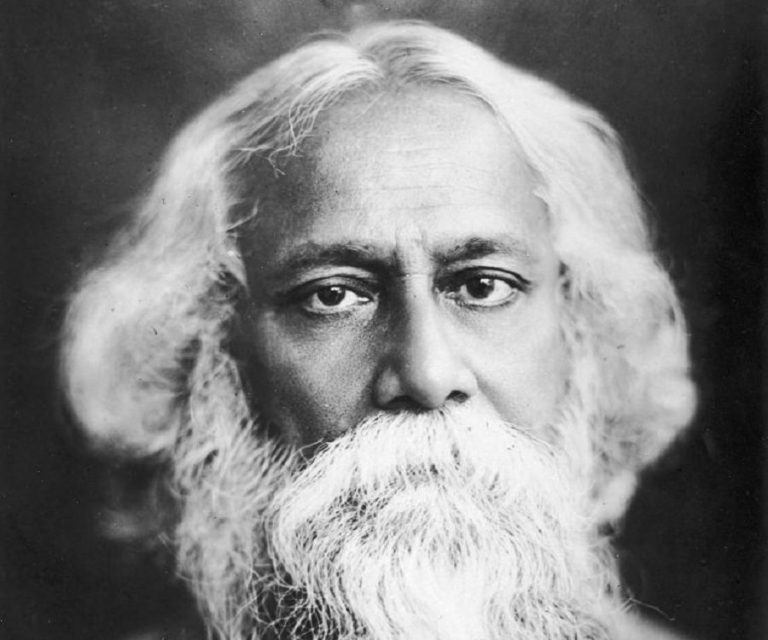
Rabindranath Tagore published the book ‘Nationalism‘ in 1917. The source of this current new found love for Tagore lies in an essay titled Nationalism in India which was one among the three essays of the book.

In his essay, Tagore begins by saying that the problems of India were social and not political. He criticizes the western concept of nationalism based on races. He points out that rivalry among nations had led to exploitation and commercialization of natural resources. Managing racial diversity is the key problem as per Tagore:

But from the earliest beginnings of history, India has had her own problem constantly before her – it is the race problem. Each nation must be conscious of its mission and we, in India, must realize that we cut a poor figure when we are trying to be political, simply because we have not yet been finally able to accomplish what was set before us by our providence.

This problem of race unity which we have been trying to solve for so many years has likewise to be faced by you here in America. Many people in this country ask me what is happening as to the caste distinctions in India. But when this question is asked me, it is usually done with a superior air. And I feel tempted to put the same question to our American critics with a slight modification, ‘What have you done with the Red Indian and the Negro?’ For you have not got over your attitude of caste toward them. You have used violent methods to keep aloof from other races, but until you have solved the question here in America, you have no right to question India.

He then goes on to say that “what India has been, the whole world is now.” In the subsequent parts of his, he talks about how European nations have victims in other parts of the world and their nationalism rests on exploitation of others. His idealism manifests in these words:

India has never had a real sense of nationalism. Even though from childhood I had been taught that the idolatry of Nation is almost better than reverence for God and humanity, I believe I have outgrown that teaching, and it is my conviction that my countrymen will gain truly their India by fighting against that education which teaches them that a country is greater than the ideals of humanity.

While posing a solution to the defects of nationalism, Tagore interestingly the caste system and calls Hinduism as a United States of social federation:

A true unity is like a round globe, it rolls on, carrying its burden easily; but diversity is a many-cornered thing which has to be dragged and pushed with all force. Be it said to the credit of India that this diversity was not her own creation; she has had to accept it as a fact from the beginning of her history. In America and Australia, Europe has simplified her problem by almost exterminating the original population. Even in the present age this spirit of extermination is making itself manifest, by inhospitably shutting out aliens, through those who themselves were aliens in the lands they now occupy.But India tolerated difference of races from the first, and that spirit of toleration has acted all through her history.

Her caste system is the outcome of this spirit of toleration. For India has all along been trying experiments in evolving a social unity within which all the different peoples could be held together, yet fully enjoying the freedom of maintaining their own differences. The tie has been as loose as possible, yet as close as the circumstances permitted. This has produced something like a United States of a social federation, whose common name is Hinduism. […]

Therefore in her caste regulations India recognized differences, but not the mutability which is the law of life. In trying to avoid collisions she set up boundaries of immovable walls, thus giving to her numerous races the negative benefit of peace and order but not the positive opportunity of expansion and movement. She accepted nature where it produces diversity, but ignored it where it uses that diversity for its world-game of infinite permutations and combinations. She treated life in all truth where it is manifold, but insulted it where it is ever moving. Therefore Life departed from her social system and in its place she is worshiping with all ceremony the magnificent cage of countless compartments that she has manufactured.

Now this is where the hypocrisy and dishonesty of those who selectively quote Tagore comes in. They will say that Tagore’s appreciation of caste system is not endorsement of a hierarchical caste system that is exploitative and against the ideas of equality. Tagore is talking about how different sets of castes have been able to co-exist without going to an internecine war (World War I was going on when this book was published), and they are right. But if they can appreciate the context of talking in favour of caste system, they should also be able to appreciate the context when he was talking against ‘nationalism’.

Not just the fact that Tagore saw nationalism causing wars, we must also note that he didn’t live to see the violent division of India into two nations, and the roots of modern nationalism in India.

Tagore’s apprehensions are not valid today

Whatever be his good intentions behind opposing the concept of nationalism of 19th and early 20th century, they can be argued to be not applicable today. We can not afford to rely on caste identities in a modern India. A common Indian identity is the only solution for India’s social problems today. All other identities, though important must be subordinated, to the national identity to achieve social unity and progress.

We live in an age where colonies have ceased to exist. Most of the modern democracies have accommodated diversity into their definition of nationhood. Indian nationalism too is finding new meaning over the years. We have been able to enhance the unity of the country after formation of linguistic states. Racism is abhorred by all nations. Thus most of the arguments put up by Tagore are not major issues of the day.

Indian nationalism doesn’t demand too much from its citizens. Respecting the flag and its anthem are the only two requirements. Thus, Tagore’s words ‘Nationalism is a great menace. It is the particular thing which for years has been at the bottom of India’s troubles‘ are not applicable to the present day scenario.

The oft-repeated phrase ‘Tagore would be considered anti-national today’ is silly, because Tagore formed his opinions in a different time, in a different context. Unfortunately, Tagore’s ideas have been used as an instrument to score brownie points against ideological rivals.

Siddharamiah Government ‘corrects’ letter on withdrawal of cases against minorities

0

The Siddharamiah Government in Karnataka “corrected” the letter which asked district police heads to send their recommendations on withdrawal of cases lodged against minorities in communal incidents for the past five years. We had reported on this episode earlier. The government asked police to review cases against all innocent people involved in various cases (including communal incidents) in the state.

The news of the letter had gone viral on social media as many people expressed their outrage at this communal order. The BJP too had jumped at the opportunity to train their guns on the Congress Government:


The government has now claimed that the specific reference to minorities was a “clerical error”. The home minister of Karnataka Ramalinga Reddy, said that the reference to minorities was part of the implementation of Sachar Committee recommendations. The minister also told ANI that his government had withdrawn cases that involve more than 2800 Hindus and 301 Muslims.


According to reports, the new letter ordered a re-look into cases lodged against the protesters during strikes on Kaveri and Mahadayi river disputes as well. The home minister also ordered police to impose fines in cases of drunk and driving. He told them to avoid filing cases against drivers who are caught for drunk and driving offence.