Home Blog Page 7368

Find out how six women are creating history in the oceans

0

Six Indian women are out there in the ocean creating history. In a first of its kind expedition by Indian Navy, an all-women crew was flagged off by India’s first female full-time defence minister Nirmala Sitharaman. On Sept 10, 2017, at 13.00 hours, at the Mandovi river boat pool in Goa, our Raksha Mantri flagged off the INSV Tarini. That was a lot of woman power in one event.

The INSV Tarini is the second ocean-going sailboat to be inducted by the Indian Navy. The first was INSV Mhadei. INSV Mhadei has a record of its own too. Commander Dilip Donde became the first ever Indian national to complete a solo circumnavigation around the globe on the INSV Mhadei in May 2010.

INSV Tarini was inducted into the Indan Navy in February 2017. It was an indigenously built in Divar shipyard in Goa. The all-women team has skipper Lieutenant Commander Vartika Joshi and crew members include Lieutenant Commander Pratibha Jamwal, Lieutenant Aishwarya Boddapati, Lieutenant Patarapalli Swathi, Lieutenant Sh Vijaya Devi and Lieutenant Payal Gupta. The women were extensively trained before they embarked on the remarkable journey. Under their training programme, they logged over 10,000 Nautical Miles on INSV Mhadei, including a voyage from India to Mauritius and back and Goa to Cape Town travelling through rough monsoon seas and heavy wind.

Indian Navy has four sailing vessels capable of open ocean deployments, that is, Tarangini, Sudarshini, Mhadei and Tarini. All of them were built in Goa shipyards.

The roughly seven-month long expedition will be completed in five legs. The INSV Tarini will make port calls at four major ports during its journey. Fremantle (Australia), Lyttleton (New Zealand), Port Stanley (Falklands), and Cape Town (South Africa).

INSV Tarini route

The voyage has so far been both beautiful and extremely challenging for the brave women. From braving deep vast oceans to sailing through extreme hailstorms in gushing winds, these women have seen it all.


The ocean is not always scary though. It has also sprung some surprises for the sailors.


During the voyage, the women monitor and report marine pollution data too. They also interact extensively with local people whenever they make port calls to promote Ocean sailing. During their voyage, the crew is also required to collate and update meteorological, ocean and wave data on a regular basis for better weather forecast by India Meteorological Department (IMD) and subsequent analysis by research and development organisations.

Even with such exhausting tasks at their hands the women never fail to celebrate an occasion and make the most of their experience.


The INSV Tarini achieved a major feat today when it rounded the Cape Horn, the southernmost tip of South America. The crew celebrated by unfurling the tricolour. Living the words “Uchchala jaladhee taranga” of our national anthem in true spirit. The Prime Minister greeted them personally.


The women have braved and conquered some of the most difficult challenges known to humankind. Their power and conviction are evident from their faces.


The sailboat will make its next port halt at Cape Town, South Africa. Then they will set sail onwards the last leg of their voyage home. The whole nation is eagerly waiting for these extraordinary women to come back. We all pray for their safe arrival. Sail strong, girls.
Blood of ABVP activist murdered in Kerala was his final dissent

0

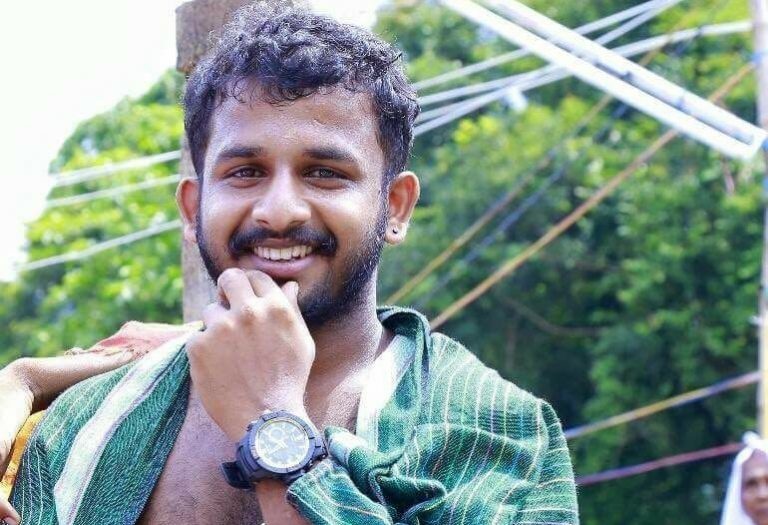
An ABVP activist was hacked to death in Kerala yesterday. You know, that thing which like other boring, mundane and routine stuff, was NOT trending on Twitter. This is his overturned motorcycle lying on the side of the road where he has attacked.

Untitled.png

A life, interrupted.

I have seen several social media posts mentioning his name, the fact that he was a 24 year old ITI student. I have seen people uploading pictures of him in better times, pictures of him smiling, pictures of him wishing his mother a happy birthday.

These people think they can shake the conscience of this nation by taking the dead man’s name, by seeking to humanize him.

Cute. You folks must have been born yesterday. I wasn’t.

In the circles of New Delhi, “dissent” is a big business. There’s always a thinkfest or a “Yuva Hunkar Rally” to go to, from where they will put you on every TV screen in the country screaming about how your voice is being suppressed.

But the real dissent in this country happens from those who are silent or those who are forced to remain silent. And of course from those who are permanently silenced.

The ABVP activist who was murdered yesterday is just one more victim added to the hundreds of lakhs of victims of Communism. How will you find the photos of them all? We don’t even know the exact number of victims, we speak in “round figures” such as the hundreds of lakhs.

It’s 300 lakh victims at the very least. Some say it is 1000 lakh victims.

Do you realize what we are rounding off here? Dead bodies of people, bodies of people who were once living, breathing human beings just like you and me before the brutal Communist rule snuffed them out forever.

So what should I say about the murdered ABVP activist? 300 lakh + 1? Or 1000 lakh +1 ?

The true dissenters were not the ones on stage at “Yuva Hunkar Rally.” It was a Wednesday morning. The true dissenters were those who had to work that day, to earn their wages, to produce the wealth that goes towards the upkeep of the sprawling JNU campus and its celebrity dissenters.

The true dissenter is the young man in Kerala who joins ABVP with the fire of idealism in his belly. Perhaps he knows at some level that he is signing his own death warrant. That one day it will probably be his turn to face the blade of the Communists and Islamists who rule Kerala. It might come any moment, while he is with his parents at home or driving his motorcycle on the road. The cold hard blade will come, slicing through his body, spilling his organs out.

See that hammer and sickle? The Communists are not afraid to use them.

He could even be a schoolteacher, standing in the classroom, teaching little kids. For those who were born yesterday, you might not have heard the story of K P Jayakrishnan Master.

The RSS worker in Kerala doesn’t get to make a living out of complaining about abusive tweets he gets on social media. He doesn’t  get to speak, or be heard. Then some day the blade comes and he is no more. Some outraged right wing Twitter handles put out a few angry tweets and get a couple hundred retweets. His blood on the ground is his final dissent. Meanwhile, the tinkling of wineglasses at Lutyens’ dissent parties continues unabated. Is it red wine, by the way?

So why does he join RSS in the first place? Is it because he wants death? No! I will tell you why.

This is the Kremlin flag, up for display at Checkpoint Charlie, the infamous border crossing on the now dismantled Berlin wall. The Communist soldiers posted at the border were under orders to shoot at sight any dissenters trying to escape. Hundreds died trying.

Untitled.png

No, the boy in Kerala rebels against the Communists because he wants freedom. He will risk dying to avoid living a life worse than death.

No matter how many years it takes, the red flag over Kerala will come down someday. Make no mistake about it. The tattered flag will be on public display just like this so that we never forget.

Om Shanti.

Subramanian Swamy reveals his game plan for National Herald case

Subramanian Swamy on Saturday revealed his big game plan on how he plans to tighten the noose on the National Herald case.


He said he is looking at interpreting the law such that one ‘TDK’ who is accused in the National Herald case becomes witness for the prosecution. TDK here is believed to be short for Tadakka, which Swamy himself had clarified to his followers back in 2012.


According to Hindu mythology, Tadakka (or Tataka) was a Yaksha princess-turned-demoness in the Hindu epic Ramayana, who was cursed by sage Agastya for being vengeful on him following her husband’s death. She and her son Sabahu turned demonic, attempting to harass as many rishis as they could by destroying their Yagna, the holy fire.

Swamy has a penchant to give code names to his enemies and uses these code names to refer to them in his tweets. People sometimes try and guess them, and if they get them wrong, Swamy even corrects them.


Coming back to the National Herald case, yesterday, he had talked about walking out of the house for getting his newspapers and finding ‘explosive’ documents in an unmarked envelop.


We had reported how the National Herald case has been a thorn for the Gandhi family for years. After paying just Rs. 5 lakh to form a company called ‘Young India’, the Mother and Son duo allegedly managed to acquire assets of the National Herald worth Rs. 5000 crores. Additionally they allegedly earned rent to the tune of Rs. 60 lakh per month after renting out the press area property. Essentially, Subramanian Swamy has accused Sonia and Rahul Gandhi, among others, of cheating and misappropriation of funds.

Last year in May, the Gandhis were dealt a huge blow when the Delhi High Court dismissed a plea to stay proceedings against Young India in the National Herald case and cleared the path for an Income Tax Probe into Young India Private Ltd. for its involvement in the case. The Mainstream Media seems overeager to give the Gandhis a free pass in the matter but unfortunately for them, the matter will be resolved in the Court of Law and not the newsrooms of news channels.

Documentary to show real footage of India’s historic surgical strike – Will the naysayers apologise?

0

On 18th September 2016, the country woke up to one of the most dastardly attacks by Pakistan. In the wee hours of the morning, at 5:30 AM, 4 heavily armed terrorists believed to be from LeT, attacked the Indian Army Brigade Headquarters in Uri, near the Line of Control. The terrorists lobbed 17 grenades in 3 minutes killing 17 army personnel.

The country reeled from the shock. The bodies kept mounting as the day progressed, and it was then that the shameless politicking started. While the condolences and condemnations poured in, many politicians resorted to the “Kashmir can only be solved through political dialogue” line of argument. But the country wanted the blood of its soldiers to be avenged.

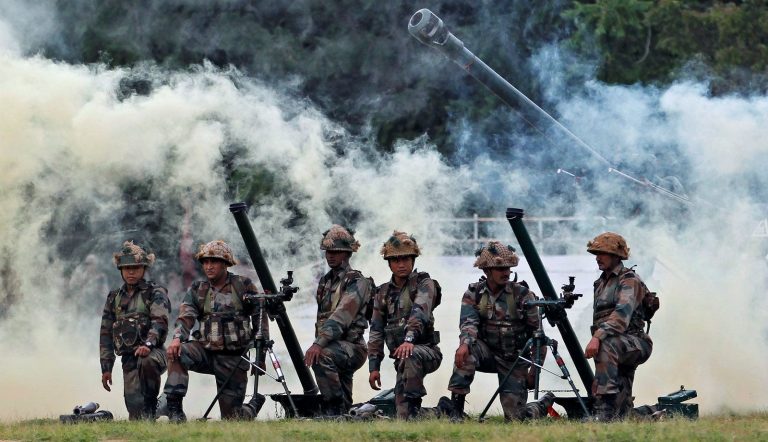
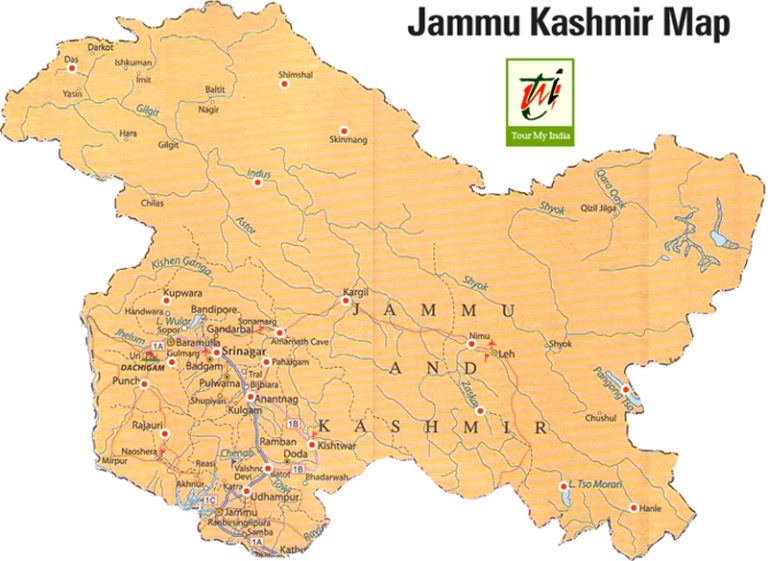
On 29th September, merely 11 days after the ghastly Uri attack, a team of the Indian army crossed the LoC into Pakistan occupied Kashmir and conducted a surgical strike. Lt Gen Ranbir Singh, Indian Director General of Military Operations (DGMO), said that it had received specific information about terrorist teams who were preparing to infiltrate and conduct terrorist strikes inside Jammu and Kashmir and in various metros in other states. The Indian action was meant to pre-empt their infiltration.

The strike started with the Army firing artillery to provide cover for three to four teams of 70–80 commandos from the 4th and 9th battalions of the Parachute Regiment (part of Para (Special Forces)) to cross the LoC at several separate points shortly after midnight on 29th September. Teams from 4 Para crossed the LoC in the Nowgam sector of Kupwara district, with teams from 9 Para simultaneously crossing the LoC in Poonch district. Shortly thereafter, special forces begun destroying terrorist bases. 

This was considered a major feat by India. Appreciation and support poured in from global quarters that said India was well within its right to defend itself from infiltration.

Unsurprisingly, Pakistan denied the Surgical Strike vehemently. What was of course unfortunate was Indian politicians toeing the exact same line and demanding that the Army and the Government release proof of surgical strikes.


Now, it looks like these political parties might actually have their wish granted.

History TV18 is all set to air a documentary on Surgical Strikes this 22nd January 2018 and they have released a rather exciting teaser.


It also seems like the documentary will feature never seen before footage of the surgical strike and detail never publicised details.


Once this documentary airs, we wonder if the eternal naysayers, who perhaps toed the enemy line in their political hatred, apologise to the Army?

Dear Rahul Gandhi, at least try not be your immature self at international level

0

The President of the Indian National Congress, Rahul Gandhi, has consistently displayed lack of maturity that is required for a person who aspires to lead a nation-state and today was no different. Rahul Gandhi, who’s still a Youth Leader at 47 years of age, decided to take a dig at Narendra Modi over the tensions between India and China over Doklam.


After repeated clarifications from the Ministry of External Affairs that there were no change in the status quo of Doklam and saying that media reports suggesting the contrary are “mischevous”, Rahul Gandhi decided it was a good idea to take potshots at the Prime Minister of the country over the same issue. That the President of the Congress party refuses to believe the government of his own country and chooses instead to further the narrative of a rival nation is a deep cause for concern.

Unsurprisingly, this isn’t the first time that Rahul Gandhi has reacted in an undignified fashion over India’s relationship with other countries. When the President of the United State of America, Donald Trump, had tweeted about developing much better relations with Pakistan, Rahul Gandhi mocked Narendra Modi for hugging Donald Trump during his visit to Washington.


The snide remark has come back to haunt Rahul Gandhi as recently, the USA has suspended its security assistance to Pakistan, which is expected to be worth over a billion dollars. However, the scion of the Nehru-Gandhi has shown no signs of embarrassment whatsoever.

The official twitter handle of the Congress Party, with the approval of its President one would expect, recently tweeted a repugnant video featuring Narendra Modi’s hugs with World Leaders to downplay the historic visit of the Prime Minister of Israel, Benjamin Netanyahu. Despite Rahul Gandhi’s childish attempt at criticizing Narendra Modi’s foreign policy, India continues to grow in stature under the NDA government. And despite spending years and years in Politics, Rahul Gandhi seems to be blissfully unaware of what’s staring at him in the eye.


However, the most ridiculous and downright appalling of his comments came after the Surgical Strikes carried out by the Army against Pakistani in their own soil. Instead of congratulating the government on the grit it displayed in unleashing the might of our Army, Rahul Gandhi tried to be smart and score political points against Narendra Modi by accusing him of doing ‘Khoon ki Dalaali‘.

Of course, his party had to pay the price for his horrendous remarks as they were completely routed in the Uttar Pradesh elections.

[youtube https://www.youtube.com/watch?v=HzH2wbs2Ock]

One would have expected Rahul Gandhi to learn from his mistakes and come up with a constructive strategy to take on Narendra Modi. However, thus far, his only strategy seems to consist of inane remarks on Twitter and fomenting caste tensions across India. His latest antics where he suggests that the government has betrayed the interests of the nation at Doklam is another gross instance where he has unwittingly, or perhaps not quiet so, undermined the interests of the nation for the sake of partisan politics.

People close to him should perhaps let him know, if you are planning to win elections in India, undermining the interests of the country in a bid to defeat your rival is perhaps not the smartest course of action.

If Rahul Gandhi wants to truly come across as a potential alternative to Narendra Modi, it is high time he quits his juvenile antics on Social Media. And perhaps he should remember, that turning anti India in his unbridled hate for Narendra Modi isn’t helping his never-took-off-perhaps-never-will-take-off political career. Unfunny childish wordplay has never won anyone any election in the history of Democratic politics and its unlikely that the Gods will be kind enough to make an exception for Mr. Gandhi.

Genesis of article 370, and cause of Kashmir’s unique predicament in modern day India

0

19th January is observed as Exodus Day by Kashmiri Pandits. Close to 4 lakh Kashmiri Pandits were forced to flee from their home due to violence and terror unleashed by Muslim separatists in the valley. One of the key reasons for their exodus was separatist attitudes of Islamists in the valley. The root cause for this ‘separatism’ can be traced to article 370 which is a symbol of Kashmir’s incomplete integration with the Indian nation.

One is inclined to question who was the person who drafted this article and what explanations were given for this concession in the constituent assembly? Could this article have been avoided at all?

Gopalaswami Ayyangar : The man behind Article 370

The person who moved the Article 370 for passage in Constituent assembly on October 17, 1949 was Gopalaswami Ayyangar , a minister in Nehru’s interim cabinet.

Before taking a plunge into politics, Ayyangar was a civil servant in the Madras state till 1937. He served as Prime Minister of Kashmir from 1937-43 and later became a member of the council of states from 1943-46. He was later elected to the constituent assembly in December 1946. Ayyangar was Nehru’s man in Kashmir. Initially he was inducted into the cabinet as a minister without portfolio. He was also member of the drafting committee led by Ambedkar. He led Indian delegation to UN on Kashmir.

Hasrat Mohani’s concerns on ‘discrimination’

On October 17, 1949 , Gopalaswami Ayyangar rose to explain the reasons for introduction of Article 370. He said (emphasis added) :

Sir, this matter, the matter of this particular motion, relates to the Jammu and Kashmir State. The House is fully aware of the fact that the State has acceded to the Dominion of India. The history of this accession is also well know. The accession took place on the 26th October, 1947. Since then, the State has had a chequered history. Conditions are not yet normal in the State.

The meaning of this accession is that at present that State is a unit of a federal State, namely, the Dominion of India. This Dominion is getting transformed into a Republic, which will be inaugurated on the 26th January, 1950. The Jammu and Kashmir State, therefore, has to become a unit of the new Republic of India.

As the House is aware, accession to the Dominion always took place by means of an instrument which had to be signed by the Ruler of the State and which had to be accepted by the Governor-General of India. That has taken place in this case. As the House is also aware, Instruments of Accession will be a thing of past in the new Constitution.

The States have been integrated with the Federal Republic in such a manner that they do not have to accede or execute a document of Accession for the purpose of becoming units of the Republic, but they are mentioned in the Constitution itself; and, in the case of practically all States other than the State of Jammu and Kashmir, their constitutions also have been embodied in the Constitution for the whole of India. All those other States have agreed to integrate themselves in that way and accept the Constitution provided.

At this juncture Maulana Hasrat Mohani rose to ask : Why this discrimination please ?

To this Ayyangar said that the state was not ripe for full integration due to several reasons. He said that other states had completely agreed to full integration with India and had accepted to abide by the constitution. However the state of Jammu and Kashmir was not ready for it as the local assembly was dead and the Government of India was entangled in the United Nations. It must be remembered that UN resolution on Kashmir had been passed on April 28 1948 (more than a year before the article was introduced in constituent assembly). He said :

There was a cease-fire agreed to at the beginning of this year and that cease-fire is still on. But the conditions in the State are still unusual and abnormal. They have not settled down. It is therefore necessary that the administration of the State should be geared to these unusual conditions until normal life is restored as in the case of the other States.

Part of the State is still in the hands of rebels and enemies.

We are entangled with the United Nations in regard to Jammu and Kashmir and it is not possible to say now when we shall be free from this entanglement. That can take place only when the Kashmir problem is satisfactorily settled.

Again, the Government of India have committed themselves to the people of Kashmir in certain respects. They have committed themselves to the position that an opportunity would be given to the people of the State to decide for themselves whether they will remain with the Republic or wish to go out of it.

We are also committed to ascertaining this will of the people by means of a plebiscite provided that peaceful and normal conditions are restored and the impartiality of the plebiscite could be guaranteed. We have also agreed that the will of the people, through the instrument of a constituent assembly, will determine the constitution of the State as well as the sphere of Union jurisdiction over the State.

At present, the legislature which was known as the Praja Sabha in the State is dead. Neither that legislature nor a constituent assembly can be convoked or can function until complete peace comes to prevail in that State. We have therefore to deal with the Government of the State which, as represented in its Council of Ministers, reflects the opinion of the largest political party in the State.

Till a constituent assembly comes into being, only an interim arrangement is possible and not an arrangement which could at once be brought into line with the arrangement that exists in the case of the other States.

This indicated that procedural and legal hurdles were the main reason for including Article 370. It must be noted that the state of Junagarh was acceded to India through a peaceful plebiscite.

By not allowing the Indian Army to finish its job in chasing out invaders and moving to the United Nations hastily, Nehru had tied India to the provisions of UNSC resolution 47. India could have also conducted a partial plebiscite in its side of Kashmir and concluded full accession to India before moving to United Nations. Kashmiris had a favorable view of Indian troops that had liberated them from invaders at that point of time.

India could have pursued Pakistan occupied Kashmir in a separate resolution, thereby avoiding the need for article 370. Hence it appears that this arrangement was required from the legal perspective. But this could have been wholly avoided.

In spite of these explanations by Ayyangar , Hasrat Mohani stood up and objected :

Well, I would not go into any detail. But I say that I object to this sort of thing. If you grant these concessions to the Maharaja of Kashmir you should also withdraw your decision about the merger of Baroda into Baroda into Bombay and allow all these concessions and many More concessions to the Baroda ruler also.

After ignoring this comment, the assembly passed the infamous article.

Kashmiris Pandits and UNSC resolution 47

So where does that leave Kashmiri Pandits who have fled vis-a-vis any future hopes of implementing UNSC resolution 47? Clause 14 of the UNSC resolution 47 says :

Government of India should ensure that the government of the state releases all political prisoners and take all steps so that :

(a) All citizens of the state who have left it on account of the disturbance  are invited, and are free, to return to their homes and to exercise their rights as such citizens

(b) There is no victimization

(c) Minorities in all parts of the state are accorded adequate protection

Clearly Kashmiri Pandits are still very much a part of the state of Jammu and Kashmir and no future settlement on Kashmir can be achieved without their assent.

Can Article 370 be removed ?

Removing Article 370 may help in achieving full integration of Jammu and Kashmir with India. Some legal experts say that this move will require consent of the J&K assembly as per the current form of the article. However, contrary opinions which claim that this article can be removed through a constitutional amendment are also prevalent. In the end, it depends on how parliament deals with the issue in future.

Future of exiled Kashmiri Pandits 

In spite of Article 370, mistakes in 1948 and communal violence, Kashmiri Pandits still deserve to live peacefully in their home state. The central government and the state government have to create the right conditions for return of Kashmiris to the state. Adequate protection must be given by armed forces in order to ensure that a repetition of events of 1992 does not occur to those families who return to their homes.

Brother of Kashmiri separatist leader detained for clicking pictures inside Patiala house court

0

Munir Ahmad Khan who is the younger brother of Kashmiri separatist leader Nayeem Ahmad Khan, found himself detained, after he proceeded to click pictures inside the complex of Patiala House Court in Delhi.

The younger brother had travelled from the Kashmir valley to meet Nayeem against whom the NIA had filed a chargesheet in the ongoing terror funding probe. Nayeem is the head of the separatist group named National Front, which was incidentally suspended from the Hurryat, after a sting emerged where Nayeem is allegedly seen accepting that he burnt schools in 2016.

Nayeem and other separatist leaders like Bitta Karate were arrested by the NIA in July 2017, in connection with allegedly receiving funds from Pakistan to spread terror in the state. This funding was also reportedly used in organising various stone pelting protests and to fund various terror groups.

As per the PTI report, when Nayeem was being taken to the jail after being in the courtroom regarding this matter, his younger brother started to click pictures after which security personnel snatched his phone and proceeded to detain him. He was later handed over to the Tilak Marg Police station.

This case was brought to the attention of Additional Sessions Judge Tarun Sherawat by Nayeem moments after the judge reserved an order taking cognisance of the chargesheet. The judge later enquired about Munir’s status, and was informed that a special cell of the Delhi Police and Intelligence Bureau would be interrogating him jointly.

The judge as a result questioned whether the photographs were sensitive in nature, which as per the public prosecutor was not the case. Following this the court directed the police to delete the photos and release Nayeem’s brother with a warning.

As per the public prosecutor, with the Republic Day being so near at hand, such precautions are likely to be taken considering the area’s sensitivity.

Karti Chidambaram’s firm reportedly linked to 63 big corporate companies as per documents found during ED raids

0

Karti Chidambaram, son of former Finance Minister P Chidambaram, was under Enforcement Directorate’s lens for his involvement in obtaining FIPB (foreign investment promotion board) approvals for INX media after allegedly receiving bribes through Advantage Strategic Consulting Pvt Limited, a firm controlled by Karti Chidambaram. INX media is owned by the infamous couple Peter and Indrani Mukherjea. Indrani is accused of murdering their daughter Sheen Bora.

He had been grilled for 11 hours by ED on Thursday in relation to the INX media case against him.

A CBI FIR has been registered against Karti Chidambaram, Mukerjea couple, INX media, Advantage Strategic Consulting Pvt Limited, Chess Management services and Padma Viswanathan, a director of Advantage Strategic Consulting Pvt Limited. However, startling revelations have emerged from raids in Chennai properties of Karti Chidambaram.


As per reports, 63 firms including big names like Vodafone, Cairn, Aditya Birla Nova, Arcelor-Mittal, Diageo, DLF, Essar, Godrej, GVK, Vedanta, Quippo, Maruti Suzuki and Sterlite, were found to be clients of Chess Management Services Private Limited as per documents recovered by ED at Karti Chidambaram’s properties. This might open a pandora’s box on past approvals given by the FIPB and CCEA headed by former finance minister P Chidambaram. The ED is now examining whether there were any irregularities in the past FIPB approvals.

Swamy hints at fresh explosive lead in National Herald case, ‘nuclear bomb’ says close aide

Subramanian Swamy has dropped another bombshell on Twitter claiming he has been delivered a big lead which would speed up proceedings in the National Herald case.


Advocate and close aide of Subramanian Swamy, Ishkaran Singh Bhandari, has described it as a ‘nuclear bomb’.


Mr. Bhandari who has admitted that he cannot reveal more details has indicated a ‘big development’ in the case tomorrow.


Mr. Swamy has confirmed his aide’s statement and assured that speedy proceedings tomorrow onward.


The National Herald case has proven to be a thorn in the side of the Gandhi family thus far. After paying just Rs. 5 lakh to form a company called ‘Young India’, the Mother and Son duo allegedly managed to acquire assets of the National Herald worth Rs. 5000 crores. Additionally they allegedly earned rent to the tune of Rs. 60 lakh per month after renting out the press area property. Essentially, Subramanian Swamy has accused Sonia and Rahul Gandhi, among others, of cheating and misappropriation of funds.

Last year in May, the Gandhis were dealt a huge blow when the Delhi High Court dismissed a plea to stay proceedings against Young India in the National Herald case and cleared the path for an Income Tax Probe into Young India Private Ltd. for its involvement in the case. The Mainstream Media seems overeager to give the Gandhis a free pass in the matter but unfortunately for them, the matter will be resolved in the Court of Law and not the newsrooms of news channels.

Subramanian Swamy in the past has displayed an uncanny knack of sniffing up a case of corruption before anyone else could. For instance, it was Subramanian Swamy who had first written to the Prime Minister to prosecute A Raja for his involvement in the 2G scam. And it was him who had first filed a case against the Late Jayalalithaa in the Disproportionate Assets case for which she was convicted in the September of 2014.

The 20th of January promises to be very exciting for BJP supporters who have been yearning for some sort of concrete action against the Congress bigwigs. Whether the contents of the mysterious envelope would truly live up to expectations, only time will tell.

20 MLAs disqualification fall out: Kapil Mishra hints at ‘New Govt’ in Delhi

0

Today, the Election Commission finally signaled the death knell for the membership of 20 AAP MLAs embroiled in the “office of profit” case. These MLAs had been appointed as parliamentary secretaries in 2015. Advocate Prashant Patel had then approached the EC seeking their disqualification since they had obtained pecuniary benefits like office space, vehicles etc. The EC today had reportedly sent its recommendation to the President of India to disqualify these MLAs.

AAP on its part has claimed that they did not get sufficient time to present its case before the EC. This claim does not make sense since the EC had repeatedly extended the deadlines. As a last resort, AAP now plans to appeal against this decision in the High Court.

Out of favour AAP MLA and former minister Kapil Mishra meanwhile has made a big claim on Twitter. He has claimed that this move of approaching the High Court is nothing but a delaying tactic. He further says he believes that if the 20 seats go for re-election, there would be a “new Government” in Delhi:


He has also claimed that 12 of the 20 MLAs will not get tickets again from AAP:


This claim may seem unbelievable at first. It is basic mathematics to derive that even if all 20 MLAs of AAP lose, AAP will still have 47 MLAs in the assembly, out of a total of 70. This scenario of AAP losing all seats itself seems unlikely, even with AAP losing credibility.

So what is Mishra saying? Is he hinting at a rebellion? Remember, the balance 47 MLAs include MLAs like Mishra himself, and some others like Devinder Sehrawat who have been vocally anti-AAP. Sehrawat in fact has been suspended from the party. Further, since the time of 67 MLAs, AAP has lost many of its core members. The likes of Prashant Bhushan and Yogender Yadav have been expelled. Will they manage to pull a handful of MLAs loyal to them?

Besides these external forces, AAP has to contend with internal foes as well. Kumar Vishwas has recently openly attacked Kejriwal after the issue of distribution of Rajya Sabha seats. As a founding member, will he too manage to pull the rug from under Kejriwal?

Also Mishra does not say “a new party will form the Government”. He only says, a “new government” will be formed, and he very carefully has put the words “new government” in quotes. What does this mean? Does he mean AAP MLAs themselves will engineer a coup to dethrone their supremo Kejriwal? Will the Aam Aadmi Party sans Kejriwal, resort to the founding principles of its party  i.e. Swaraj?