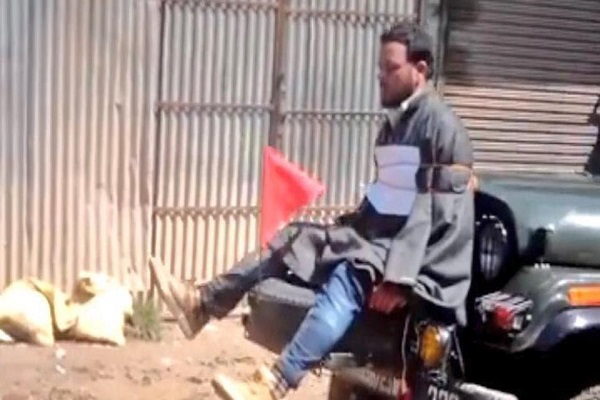
In April, Major Gogoi of the Indian army became famous after he came up with a novel idea to tie a stone pelter to his jeep’s bonnet in order to escape an attack by hundreds of stone pelters, while he was returning after rescuing poll officials in Budgam, Kashmir.
As per Major Gogoi, he and his troops faced a mob of about 1200 protesters which not only threw stones but also attacked them with petrol bombs. Thus tying one stone pelter named Farooq Dar on the jeep meant that the mob became weary of stone pelting and Major Gogoi’s cavalcade could escape from that area.
While this was hailed as a stroke of genius by many, various so called activists and liberals soon started opposing this move, which they called was a gross human rights violation by the army. Among those opposing was senior Congress leader Saifuddin Soz who outright demanded that Major Gogoi be punished for his actions.
The Indian Army though recognised Major Gogoi’s sustained efforts in counter insurgency operations and awarded him the Army Chief Commendation Card. Even the Modi government backed the Major in this regard by referring to him as a brave officer who saved the life of polling officers.
But that wasn’t the end of the story and reports claimed that the State Human Rights Commission (SHRC) directed the Jammu & Kashmir government to pay a Rs 10 lakh monetary compensation to him. As per the panel, the stone pelter was subjected to torture, humiliation apart from being wrongly confined.
Now reports have emerged which claim that the J&K government has rejected the SHRC’s recommendation and has refused to pay any compensation to the stone pelter. The government refused this recommendation via a note on 27th October but its details emerged only on Monday.
In the reply to the SHRC, the government made a four point rebuttal:
No allegations with regards to the human rights violation had been made against the state government or its functionary
The payment of compensation would establish the guilt of the accused (Major Gogoi), without giving him an opportunity to be heard
There is no scheme or policy in place which can cover the payment of compensation in cases like this
The SHRC has itself observed that it cannot judge the conduct of the army, hence it lacks jurisdiction to entertain and adjudicate upon the present matter
Dilshad Ahmad Baba, the secretary of the SHRC confirmed receiving the Home Ministry’s reply but refused to comment on it. The stone pelter Farooq Dar has predictably become anguished at not getting this compensation and has now started protesting against the same.
Gujarat is due for elections next month, and BJP is set to launch its ‘Maha-Sampark Abhiyaan’ today to optimise its communication with its voters across Gujarat. This mass outreach program will be launched by BJP president Amit Shah from his constituency, Naranpura.
“Under the initiative, senior leaders as well as booth- level workers would interact with voters of almost 50,000 booths across the state between 7th to 12th November. The exercise is aimed at telling people about what BJP has done for the states development,” said the Gujarat BJP spokesperson, K Jadeja.
The ‘Maha-Sampark Abhiyaan’ is set to continue right upto 12th November where senior BJP leaders along with booth-level workers are expected to canvas the entire state and visit households across the 50,000 polling booths in the state.
K Jadeja also said that, “State leaders, including Chief Minister Vijay Rupani, Deputy Chief Minister Nitin Patel and state BJP chief Jitu Vaghani, would take part in the drive and visit voters as well as members of various communities in their respective assembly seats”.
Senior BJP leaders like N Sitharaman, Smriti Irani, V K Singh, Prakash Jadavekar, and Mansukh Mandaviya are also expected to canvas the state for this mass communication drive. They would be joined by the current Chief Minister of Gujarat, Vijay Rupani and the Deputy Chief Minister, Nitin Patel.
Gujarat Assembly Elections are scheduled to take place in 2 phases on 9th and 14th December. Counting of votes will take place on December 18 along with Himachal Pradesh Assembly elections.
While we reported on how Gujarat has developed over the years under a BJP rule, the opposition seems to be losing its edge as indicated by the shoddy treatment of Congress by Hardik Patel and an extremely fragmented opposition.
While the endless gaffes by Rahul Gandhi continue to sprinkle his Gujarat campaign with comic relief, this communication drive by BJP might give the party the winning edge they are looking for.
Gujarat goes to vote in a month’s time and I am disappointed with you. You have always been an aspirational leader. So aspirational, that you wished for the former US President Obama and his wife to marvel at the products made in different parts of India.
Jb ObamaJi ki patni Amreeka me apni rasoi me kuch pakaye;patilon ko dekhke kahen sundar patila hai aur patile pe likha ho Made in Jaunpur-RG pic.twitter.com/om8Du6xFDt
Pretty sure Michelle Obama wakes up every morning and admires the utensils she uses to cook. And the beauty of the patila would make her wonder where the patila has been manufactured. Behold, she would then learn about Jaunpur, Uttar Pradesh.
In a 2014 rally in Mirzapur UP, you had expressed your desire to see Obama wearing Made in Mirzapur watches. Oddly, a few days prior to that rally, you wanted Obama to wear a Made in Allahabad watch. Guess Obama would have to wear watches on both his wrists to please both the cities, after all, his political career would be useless if he can’t help you win at least one election.
You even wanted the Obamas to use Made in Uttar Pradesh bedsheets. I am surprised you haven’t yet asked Putin to check his DMs to Trump while munching on “Made in Ahmedabad” khakhras.
Perhaps you don’t realise that not everyone is obliged to bow to the infinite demands of the Indian political Prince. But that’s fine. I’m sure you don’t know any better.
After you got over your unhealthy Obama obsession, you even aimed at ‘manufacturing’ (Yes. Manufacturing!) Made in Lucknow mangoes.
After aloo Ki factory another masterpiece by Rahul Gandhi when he says he wants to see Made in UP mango in China.Who is his speech writer? pic.twitter.com/cNEnbTNS6h
Speaking of fruits, you also wanted Made in Manipur Pineapple juice. Today you said that Himachal Pradesh, which is known for the apples, should now ‘manufacture’ apples of the other kind.
Wo din dekhna chahta hoon jab Chinese yuva aise selfie le aur phone ko ghumaye to uspar likha ho made in Himachal Pradesh, made in India: RG pic.twitter.com/jMSogi7jEw
But I am disappointed. You have been coming to Gujarat since past few months, going on temple run, showing your soft Hindutva side. Your sidekick, Bharat Solanki, son of the great manufacturer of caste divide, Madhav Singh Solanki, has been trying to apply his father’s ‘KHAM’ (Kshatriya, Harijan, Adivasi, Muslim) theory by trying to woo young agitators. For that, an anti-BJP coalition in Gujarat was formed. Perhaps you could try selling ‘caste divide’ to President Trump which is “Made in Gujarat”?
Your MLAs, whoever is left in Gujarat that is, showed how to escape responsibilities when Gujarat faced one of the worst floods. You said ‘Gujarat can never be bought’, perhaps you forgot your own MLAs who sold Gujarat to ensure that they get an election ticket in upcoming elections. Perhaps you could sell ‘escaping responsibilities‘ to Congress leader Ahmed Patel which was “Made in Gujarat”?
Dr. Singh is expected to ‘speak‘ in Gujarat tomorrow. Maybe you could market the “Made in Gujarat” magnetic pull that could even get Dr. Manmohan Singh to talk? Someone who didn’t even bother talking after presiding over scams after scams after scams? Or maybe Dr. Singh could sell ‘courage’ which is “Made in Gujarat”. The courage which is making him speak for Congress and speak for the nation tomorrow.
Gujarat has been an enterprising state since time immemorial. Lothal, a thriving port during Indus Valley Civilisation, was in the heart of Gujarat. Temples in Gujarat have been looted number of times by barbaric invaders. Various manmade and natural disasters have destroyed Gujarat, but Gujarat being resilient has stood the test of time and bounced right back up. This resilience is something we are extremely proud of. Gujarat has grown by leaps and bounds despite adversities. It has grown because of adversities. Gujaratis knew, that to survive, we are on our own.
You should sell this ‘resilience’, Made in Gujarat, to yourself. Considering the people of this country refuse to see the sheer brilliance of your grand plans. Plans to sell Jaunpur made utensils to the Obamas. Plans to sell these “Made in Congress” lies. Plans to sell deception camouflaged as hope. The same ‘hope’ which your party took away from people for decades.
Buy some “Made in Gujarat” resilience, Rahul. You will need it.
The recently concluded Under-17 World Cup hosted by India has been a record breaker.
The tournament which was won by England, not only saw the highest number of spectator attendance in the tournament’s history (13,47,143), it also saw the highest number of goals scored per match (3.40) ever since the tournament format was changed in 2007 to increase it to a 24 team affair from the earlier 16.
Even before the tournament had even concluded, we had reported how India had received high praise from FIFA for successfully hosting the world cup.
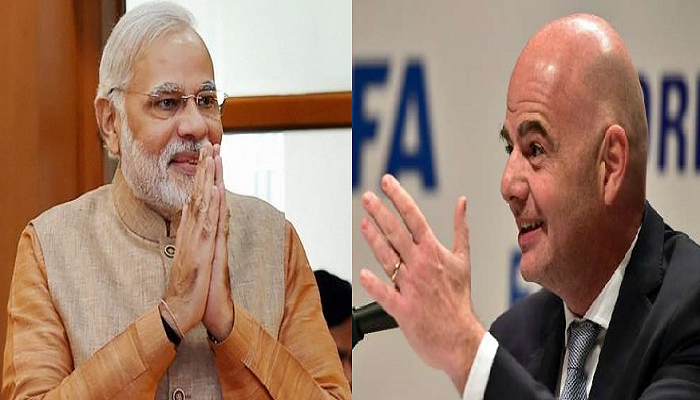
As mentioned in the report, Jaime Yarza the FIFA Head of Competitions has stated that the infrastructure provided was world class and the teams were happy with the organisation. India was also praised by FIFA president Giani Infantino, who declared that “India is a football country now”.
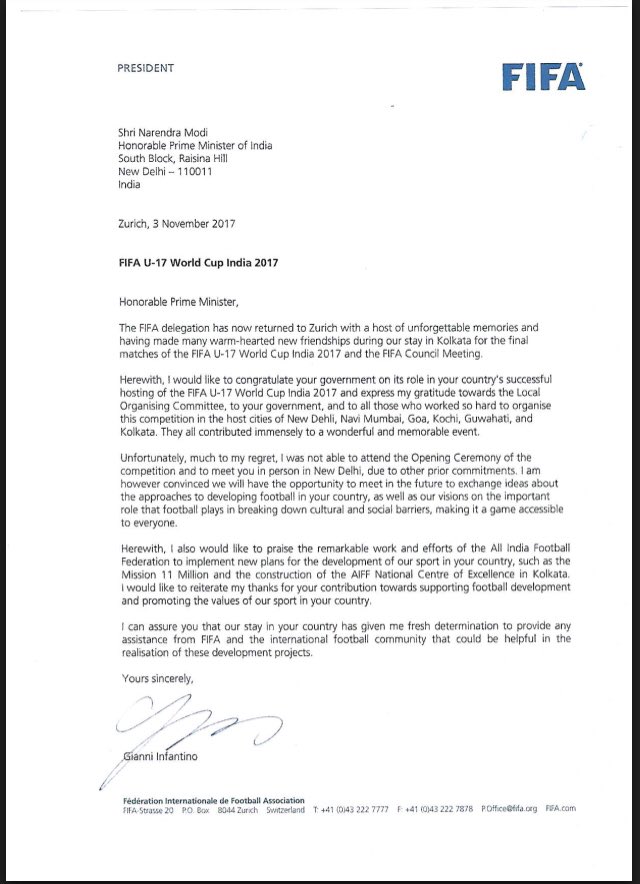
Now the FIFA president has made another warm gesture by sending a letter to Prime Minister Narendra Modi, which contained his thoughts about the tournament. This letter was shared on Twitter by Sports Journalist Samrat Chakraborty:
In the letter, Infantino stated that the whole FIFA delegation during the course of the tournament had made some unforgettable memories and had also made various warm-hearted friends during their stay at Kolkata and during the FIFA’s council meeting.
The President then congratulated the Modi government, for its role in successfully hosting the World Cup. He also expressed gratitude towards the AIFF, local organising committee and everyone else for their contribution in this tournament which was held across 6 venues.
He also apologised for not being able to attend the opening ceremony and thereby being unable to meet PM Modi in person. He concluded the letter by assuring that FIFA and the international football community would provide any assistance towards developing football in the country.
Before its start, I had reported how this tournament was a golden chance for India to shine on the global level. Going by the warm praise by FIFA, it can be concluded with certainty that India has been successful in making its mark.
A cartoonist named Bala G was arrested on Sunday as he drew a cartoon that showed the Tamil Nadu Chief Minister and some top bureaucrats naked (their private parts were being covered with currency notes they were holding) – he was arrested under various sections pertaining to defamation and obscenity.
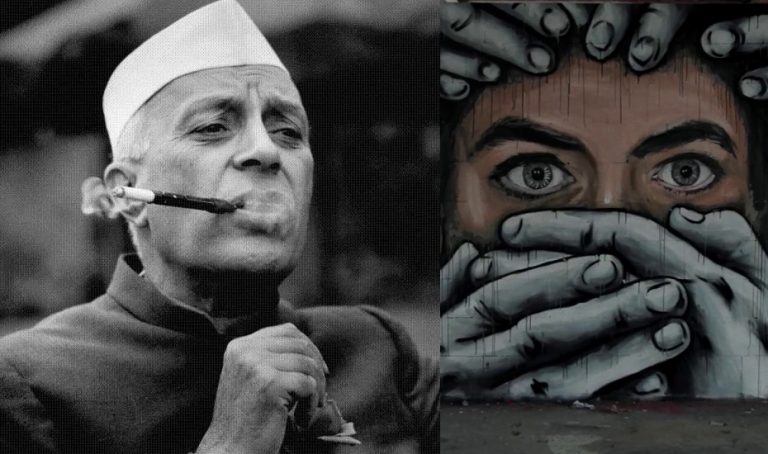
Bala G got bail today and has said that he will continue to draw such cartoons, but the arrest has triggered a debate on free speech. Almost on cue, many people repeated what India’s first Prime Minister is reported to have told cartoonist Shankar – Don’t spare me Shankar – suggesting that Jawaharlal Nehru didn’t have any problem with people criticizing or lampooning him.
The same phrase was repeated by a Congress spokesperson on Twitter, who tried to drag Prime Minister Narendra Modi into this debate, even though Modi has got nothing to do with the case and BJP is not even in power in Tamil Nadu:
While this attempt to drag Modi in the current case is pitiable and does not deserve any response, it is time people realize that Pandit Nehru being some apostle of free speech is an overstatement, if not pure propaganda.
A couple of our articles (this and this) talks about how individual liberties and free speech were curbed by the Congress party right since independence, but let us focus only on some selected sins of Pandit Nehru against freedom of speech:
The first amendment – this is the original sin of Nehru, which added restrictions on fundamental rights including the freedom of speech as guaranteed in the constitution. The mention of “public order” in the amendment was especially problematic i.e. a speech could be deemed fit to be curbed if it incites a mob to indulge in violence and disturb public order.
It virtually incentivized being intolerant and violent as community. If your community tends to disturb law and order as a ‘natural reaction’ to any form of unfavorable speech, you get license to put curbs on that speech. Haven’t we seen this in action just too many times? Hail Nehru.
The first amendment was brought in 1951 after the government led by Nehru failed to censor RSS run magazine Organiser and a communist magazine named Crossroads. The RSS magazine was supposed to risk making a particular community go violent, while the communist magazine was supposed to make ordinary people go violent as it called the freedom gained by India ‘jhoothi’ (fake or a lie).
In fact, things would have been worse if Pandit Nehru had his way. What we today know as “reasonable restrictions” would have been strict restrictions because the Nehru cabinet had proposed not to include “reasonable” as a qualifier for the restrictions proposed in the first amendment. Only after some opposition from leaders like BR Ambedkar and the press, the term “reasonable” was retained.
Jail to poet and lyricist Majrooh Sultanpuri – imagine some left-leaning Bollywood lyricist terming Modi as Hitler and him being put in jail for almost two years for this ‘crime’. Apart from loud chest-beating from all quarters, it will be argued that Modi indeed is Hitler. QED.
However, no one calls Nehru a Hitler even though poet Majrooh Sultanpuri had to spent almost two years in Arthur Road jail in Mumbai (then Bombay) because he wrote a poem calling Nehru a Hitler. He wrote that poem in support of other left-leaning writers in India and Pakistan. Such is the power of control on narrative; you are paraded as a free speech hero even though you did nothing to stop a young poet from going to jail for ‘insulting’ you.
Majrooh was just 29 years old when he was put in jail by the then governor of Bombay state, and not released because he refused to tender an apology. He was abruptly released before the 1952 general elections. Perhaps Congress feared some votes lost?
Pressure to discontinue a newspaper column – the supposedly Shankar’s cartoon loving Chacha Nehru was not so fond of editorials it seems. It is alleged that a column in The Times of India written under the pseudonym “Vivek” by a civil servant A. D. Gorwala was discontinued at Nehru’s insistence, for it was too critical of him. The incident also highlights how ‘free’ the press has really been in India.
This tactic of pressurizing media houses to drop critical voices has been a Nehru’s legacy that was adopted by Indira (‘asked to bend but the press crawled’ during Emergency) and Rajiv too (his proposed bill to punish newspapers for articles they publish) and has continued till date.
Among the Lutyens circle, it is believed that as soon as Congress returned to power in form of UPA in 2004, it pressurized a leading media house to drop at least two top journalists whom they suspected to be close to the NDA government, for they used to get exclusive scoops from the government in run up to the elections. Although the journalists were not fired, the media house had to oblige by putting them in less important roles.
Movie banned for ‘historical distortion’ – no no, we are neither talking about Tamil movie Mersal (not banned) nor Hindi movie Padmavati, but English movie Nine Hours to Rama, which was a fictional narrative about Mahatma Gandhi’s assassination produced in 1962.
The ‘historical distortions’ (well, it was supposed to be fictional narrative) was condemned by Pandit Nehru and the movie, as well as the novel on which it was based, was banned in India. While historical distortions were the stated reasons, it is believed that the book and the movie was banned as it exposed security lapses leading to Gandhiji’s murder.
Numerous books banned and censorship – Lest this article becomes too long, readers are advised to read this Twitter thread by scientist and columnist Anand Ranganathan, which documents instances of dozens of books and movies banned when Jawaharlal Nehru was at the helm, and he personally approved many such bans.
Many of these books, and some movies, were banned as they were not in alignment with Nehru’s views on international politics or policies. For example, the book “Captive Kashmir” that was banned after Nehru read a copy himself and found it unpalatable.
So not only the clueless Congress spokespersons on Twitter, but numerous Nehru bhakts are advised to go slow on the “Don’t spare me Shankar” rhetoric, for Nehru clearly did not spare many who disagreed with him, and he is no icon of free speech or free press.
For any government in power, it is equally important to get bouquets and brickbats. An honest appraisal is the need of the hour. In that spirit, while my last article focused on the Aadhaar – DBT combination and its role in changing the face of Rural India, in this one, its only fair that I focus on issues faced by the people due to the same combination. The issue pertains to LPG subsidy being transferred via AADHAAR-DBT Bridge and is being faced in villages of Sitapur in Uttar Pradesh.
I am sure most people are getting the SMS from service providers for eKYC of mobile number through AADHAAR. KYC is causing the issue with DBT Bridge. Few mobile service providers are also running Payment Banks, such as Airtel. I came across this issue with only Airtel Customers. Some of the people that I interacted with in my village, complained that they were not receiving their Gas Subsidy from past few months. The first thing I tried to check, was whether they had Bank Account Seeding for their Gas Connection.
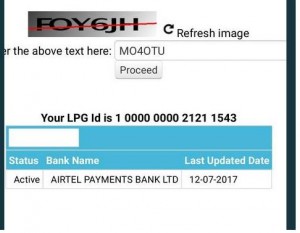
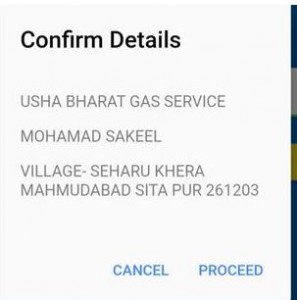
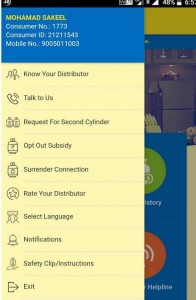
I discovered that the subsidy was being transferred to Airtel Payment Bank Account. I quickly installed Airtel App, and was surprised to see that the user hadn’t even asked/activated his Payment Bank Account. I talked to Airtel Customer Care and got the PIN for his Payment Bank Account, in which , I saw LPG subsidy being credited to his Payment bank account from the last 3 months, which he wasn’t even aware of.
Hoping that I can help these folks by getting their account changed, I spoke to Bharat Gas Customer Care. They informed us that bank accounts are changed automatically to the account with latest Aadhar-KYC update and they can’t do much about it.
This gives rise to two issues :
Earlier subsidy was going to only those bank accounts which were seeded with Aadhar. There was no need/reason to change account.
90% rural subscribers can’t use or don’t know how to use payment bank services provided by Network operators.
Subsidy was first being credited to SBI account of consumer which had Aadhar seeded. Then he opened a new account in UCO Bank with Aadhar seeding and subsidy was automatically transferred to it.
Finally he did Aadhar eKYC for his Airtel number which automatically opened his Airtel Payments Bank Account and his subsidy was transferred to this account without permission or intimation.
The authorities need to take swift action and resolve this issue specifically considering it is quite rampant and the rural population might not be comfortable with Payment accounts which are becoming operational without their consent. The fact that the subsidy is diverted to this account without permission or intimation is an added discomfort. Despite the stellar work being done by the government, people who aren’t aware might end up believing that their subsidy has been discontinued, when in reality, it hasn’t. Even though the UIDAI has already slapped a notice on Airtel for this very issue, the problem persists and the resolution needs to be quick.
“You cannot resist an idea whose time has come” said a great man once. After discussing Indian Railway at length about their coaches, configuration and operation, it’s time we discuss about the future i.e. High Speed Rail or “Bullet Trains” as the popular nomenclature goes.
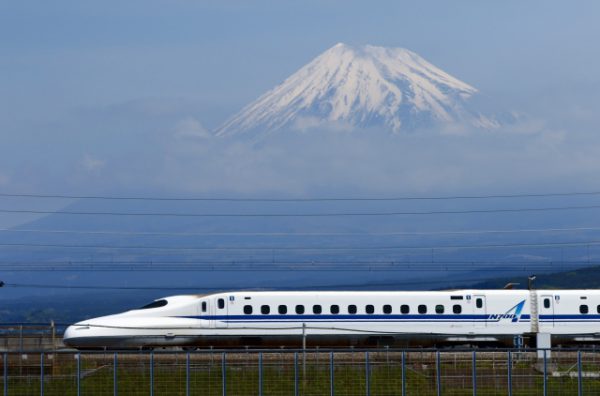
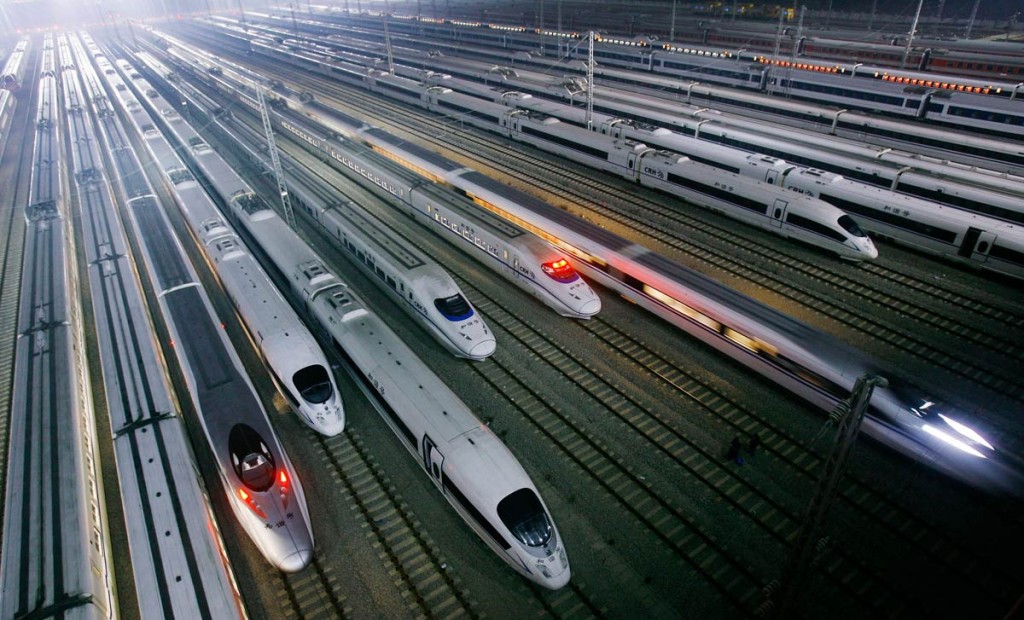
What exactly is a “Bullet Train” and how is it different from our conventional trains? Well, it looks sleek, shiny and futuristic and runs at a speed which is double or more the speed of our conventional trains. But how? Is that all it is? To begin with, “Bullet Train” is the official name given to the 0 series Shinkansen, the first ever High Speed Rail (HSR) built by Japan on the Tokaido Shinkansen line that runs from Tokyo to Osaka, now discontinued. World over, it is called with different names, for example ICE (Intercity Express) in Germany, TGV in France, CRH (China Railway High speed) in China and Shinkansen in Japan.
The magnificent China CRHs
So how does HSR runs at 300+ KMPH speeds? How exactly is it different from our conventional trains?
To begin with, most HSRs are EMU Trainsets (Most because, few like the Eurostar still is hauled by a loco, even though it has powered coaches). EMU stands for “Electrical Multiple Units”. So there are multiple power cars that draw power from OHE (Over Head Equipment) catenary and multiple motor cars that do the driving. This is unlike our conventional trains which have a Loco attached to the front which does all the pulling and coaches are powerless.
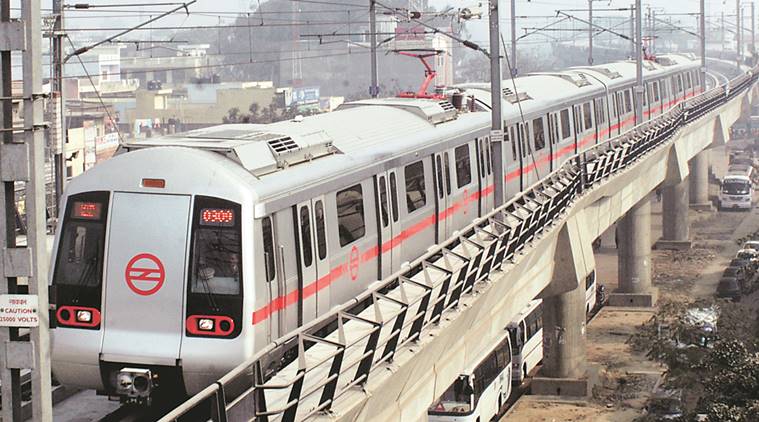
Some HSRs even have 100% axles powered i.e. all axles are connected to traction motors. So the driver cabin in these trains only house the control equipment for the train while the entire rake drives itself. Also, these are manufactured as “Trainsets” i.e. the coaches are semi-permanently coupled to each other forming a set of train. Imagine a Delhi metro rake. Can a gang man just get down on the track with a hammer and couple of spanners and detach a coach? No, because the coaches are not easy to separate. Delhi Metro trains are EMU trainsets, HSRs are just a more sophisticated version of this.
A Delhi Metro 6 car rake with 2 pantographs drawing power
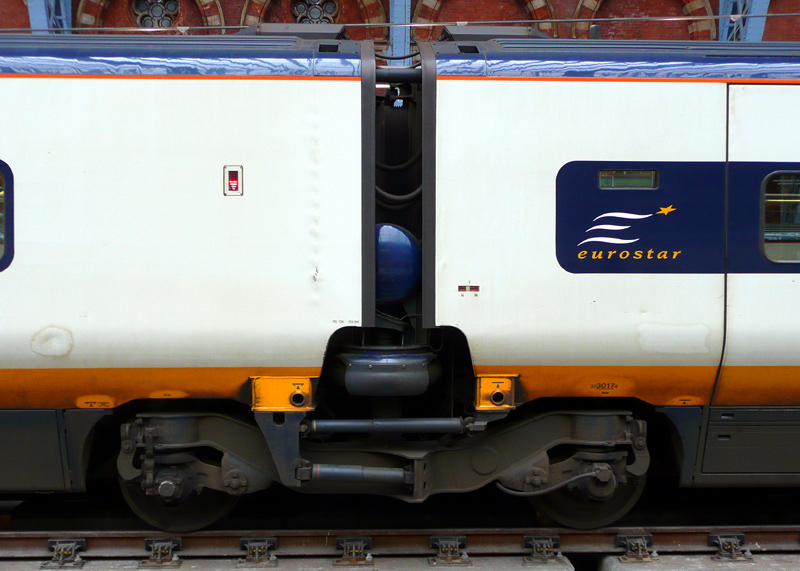
There are other details like, some of them have articulated bogie a.k.a Jacobs Bogie like the Eurostar trains manufactured by Alstom, where 2 coaches share the same bogie, 2 wheels per coach, while the Kawasaki manufactured Shinkansen doesn’t share bogie just like our conventional trains. All, HSRs must be air conditioned and sealed, some even have pressurised cabin because you can’t have trains running at 300 KMPH with air flowing in and out of cabs. The underslung of all these trains have to be covered. There are no protruding doors on windows and these fit into the coach body (Imagine Delhi Metro rake). All these are done to achieve better aerodynamics.
Articulated bogie on an Eurostar, manufactured by Alstom, France
Apart from the rolling stock, HSR also needs a whole new ecosystem to run. In-cab signalling, Automated Train Protection Systems ensure complete computer controlled run like auto pilots in flights. High speed trains can’t run on conventional tracks like ours where there is a join every 14 meter using a fishplate.
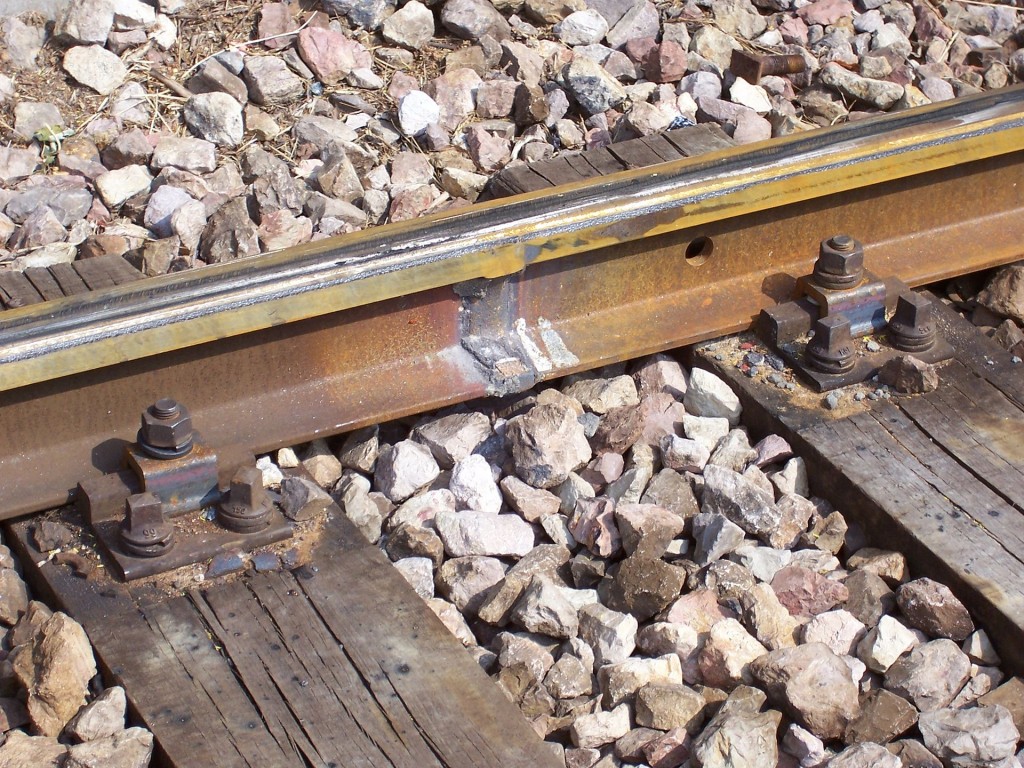
They use something called Continuous Welded Rails (CWR) joined through thermal welding, which allows expansion during heat generated when trains run on them, besides the rails are longer. The ballasts and slippers are the same, just that slipper are placed more closely than conventional rail track.
An welded rail joint
Technicalities apart, the question however is, do we need a HSR?
Let’s first settle the debate on do we need high speed transportation? I don’t think this needs to be elaborated. High speed transportation like CRH, Shinkansen or the Interstate network in USA has changed the entire economics of these countries and propelled them into an era of super-development.
It opens up the country to a vast set of possibilities. It revolutionises manufacturing by decentralising it. It also has cultural significance as diversified people come together thus breaking the geographical barrier. It virtually breaks the “tyranny of distance” as some may put it. In essence, it turbo charges the economy. Most developed countries worked on high speed transportation after world war II and that’s the sole reason, they are where they are.
Having settled the debate on high speed transportation, we have 3 options for going high speed. Air, road and Trains. Let’s target the easiest first. We can build American Interstates or German Autobahns to solve our high speed transportation problem. But to solve this problem, we have two bigger problems that need to be addressed first.
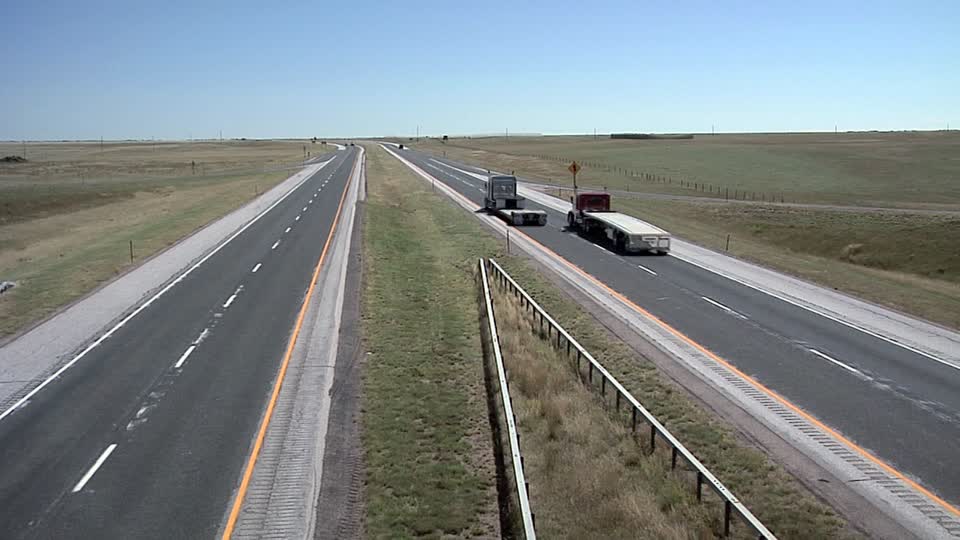
If you have travelled in a western country, you would have realised that there are vast swathes of empty land through which these super highways travel. Where would we get so much of empty land? And with “Right to Fair Compensation and Transparency in Land Acquisition”, it becomes more difficult and costly affair.
Also, remember, we are talking about high speed communication here, where we have to build real expressways with defined entry and exit points, known as “Access Controlled Highways” in normal parlance. With a town, village or settlement every few kilometres, this is not even a possibility in India. Wherever we have “Access Controlled Expressway”, we have a parallel highway serving to non-dense populated areas in between, so we need 2 sets of highways!
The second problem is, if we chose road as the default High Speed Transport medium, it comes with a fossil fuel dependency i.e an inflated oil import bill, dependency on OPEC and US dollars.
Interstate I-25 with vast swathes of empty land along side. Imagine how rare is this India.
The second choice before us is air. Here, the problem is similar. Currently, most of our airports are operating near about full capacity. If we have to expand, we need Greenfield airports that not only requires huge tracts of free land but it also puts certain restrictions in adjacent areas. Just follow the Navi Mumbai airport to see the number of problems it has got into, because of land usage. Also, air transport doesn’t help the hydrocarbon dependency or OPEC and US dollar hegemony.
Both of these mediums also suffer from another chronic issue i.e. carbon footprint. Considering the number of people it carries, if we calculate the carbon footprint per person per KM in these mediums. The below illustration substantiates it.
Transport mean
Passengers
average
Emissions
(g CO2/km*pax)
Bus
12.7
68
Car
4
55
Plane
88
285
Train
156
14
(Note: The illustration is taken from European Environment Agency where most of the electricity used to run these trains come from Nuclear reactors unlike coal powered boilers in our country)
To add, HSR solves the oil import bill. One more advantage of trains are, they reduce the total door-to-door travel time vis-a-vis airports. Where greenfield airports are located around 50-60 KMs from business districts in the city, it takes somewhere around 1-2 hour to reach the airport, additional 1.5-2 hours in check-in and boarding formalities and another 1 hour in the destination city. So somewhere between 4-5 hours is added to your total journey time.
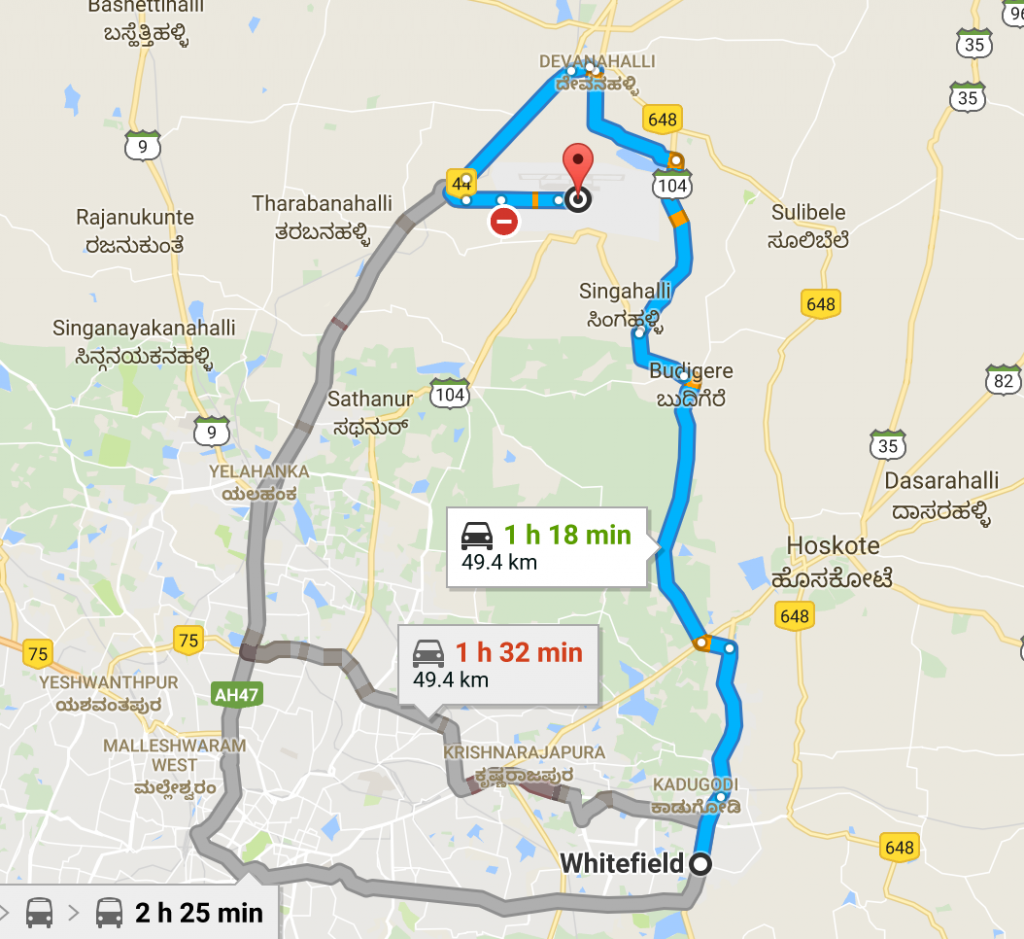
Whitefield to Bangalore airport on a Sunday – Non working day
Consider this, as I write this, a customary search on Google maps from Whitefield (Business district), Bangalore to Kempegowda International airport at Devanahali shows me around ~ 1.5 hours.
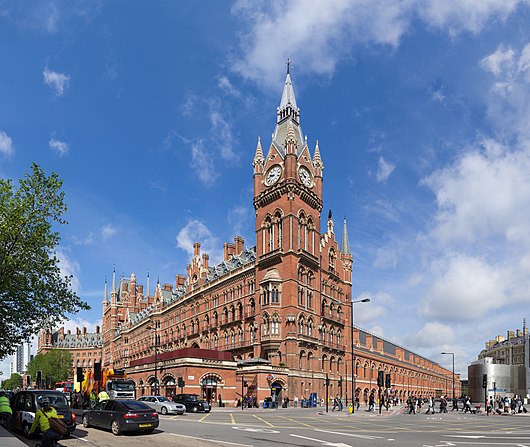
Compare this to HSR line that is coming up at Mumbai, where you will get down right at the heart of most bustling business district of Mumbai, the Bandra-Kurla complex. You can compare St. Pancras-vs-Heathrow, Paris Gare du Nord-vs-Charles De Gaulle, Tokaido-vs-Haneda airport to get a comparative figure of airport commute vs train station commute. It’s the same world over. That’s because unlike airports, HSR stations do *NOT* need huge tract of free land. In fact, most of these are constructed underground so they require land, lesser than even a shopping mall.
St. Pancras at Central London spread over ~500 square meter. Heathrow airport takes ~12 Sq KM area
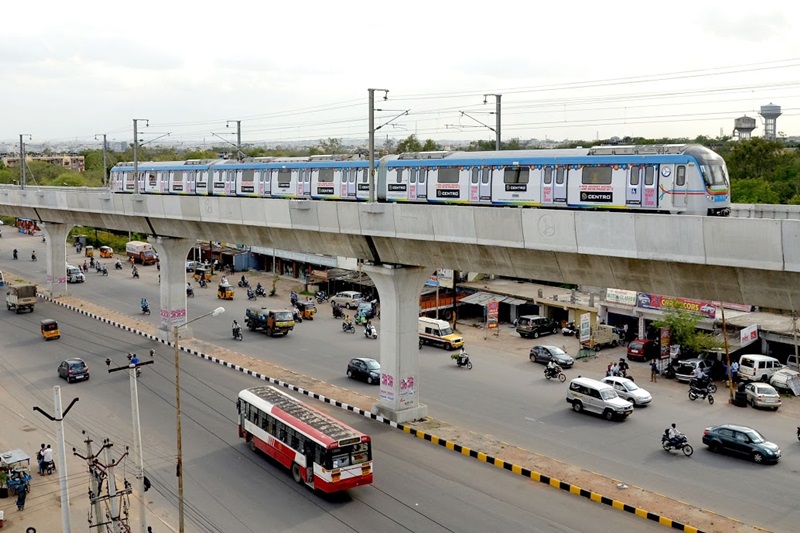
Additionally, apart from the station, the train tracks require 25% of land required to build a 6 lane highway. In India, it’s even lesser than that because almost the entire HSR line from Mumbai to Ahmedabad will be elevated with only piers taking as much land, leaving most of the land to public use. Not to add, the economic corridor it will bring along the route.
Hyderabad metro, overground. Only the piers occupy space on road leaving much land to public usage
I hope, you are now convinced that we need high speed transport to jump to the next level of development era and train is the way to go considering demography, geography and other unique needs of India. Now let’s come to the central opposition to HSR in India, the famous socialistic debate “Why do we need HSR when our existing railways have so much lacuna”.
The stem of this debate lies in our mindset that all development must be linear. First we must achieve “this” before we start investing in “that” while missing the point that development can and should always be parallel.
Did we ask, why are we developing Taj expressway when most UP roads are filled with potholes? Did we ask why bring Scanias/Volvos when we don’t even have proper highways? Did we ask, why BSNL is investing in 3G/4G when it can’t even get the landline right? We didn’t, because landline is obsolete, stone age. It’s the age of mobile. If we don’t invest, we will perish.
Apply similar logic here. High Speed Train is the future. Conventional loco hauled trains will be history in sometime. If we don’t invest in it now, we will be missing the development bus, YET AGAIN. And get this, if you want to solve all your current problem before moving to the next one, you will be stuck forever, because you CANNOT ever solve all your problems.
That said, there is no denying that we need to improve our current rail infrastructure. Make no mistake, without a robust conventional railway, a HSR will never ever be a success. Conventional railway works as a feeder to limited HSR network, be it Germany, France or Japan. And in a huge country like India, it’s more than essential that we develop a HSR and an equally robust feeder system in the form of current Indian Railway. Imagine major economic and cultural corridors connected by HSR network being fed by IR network which connects it to smaller towns and villages in the interiors. It can bring a revolution in the way Indians travel.
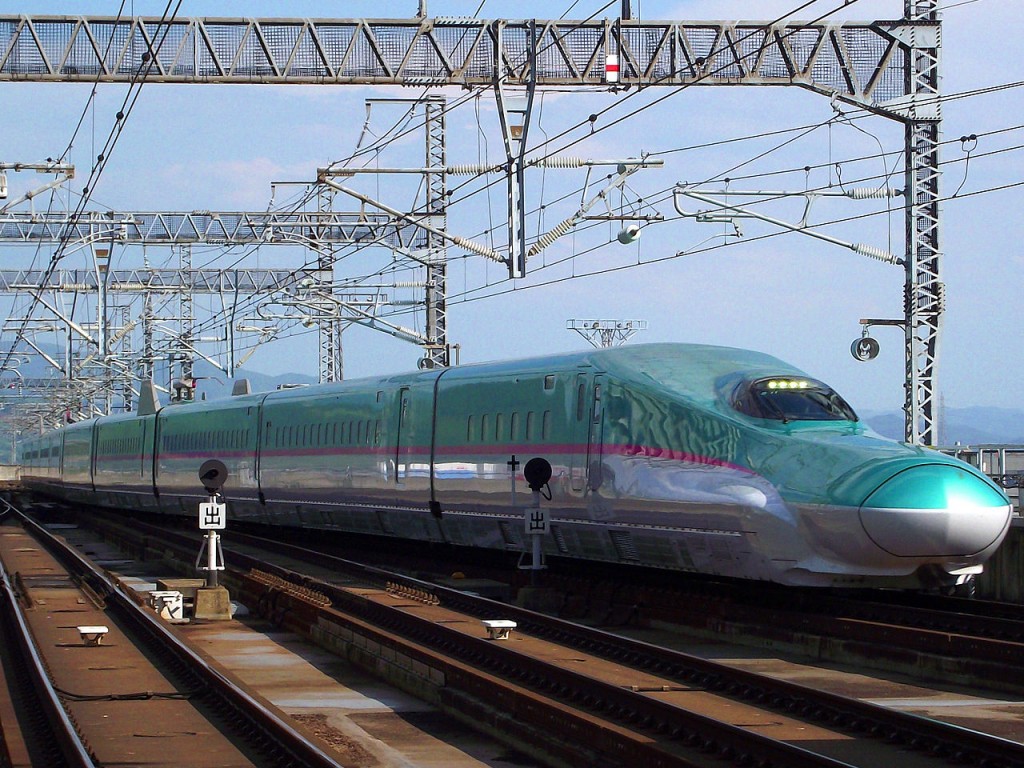
Shinkansen E5. India will be getting these. A 10 car configuration sits around 700 people
Don’t consider HSR as an upgrade to our existing trains. It’s a whole new paradigm shift in the way people travel. HSR is an idea whose time has come and we will have to do it. Why Mumbai-Ahmedabad, you can argue. Well, that’s because Japan is paying and it’s upto them where they want to invest as they see a financial sustainability.
It’s not about the corridor. It’s the tech. We are missing this tech for long and it’s due India get the HSR tech to its door. We can then come up with more corridors in the diamond quadrilateral connecting other metropolis like Bengaluru-Chennai, Delhi-Jaipur, Lucknow-Kolkata, Hyderabad-Vizag to name a few.
Possibilities are endless but we have to make a beginning. Ahmedabad-Mumbai Shinkansen is that beginning and we must support this endeavour. If channelled right, this alone can put us on the growth trajectory that none other reforms have achieved so far.
Also read the other two articles in the “Know Your Railways” series:
Since 2014, the coverage of elections in India has been reduced to a drill. It typically begins with media being fairly aware that BJP has a clear advantage, but unwilling to admit it. Then, “star” reporters are sent out on Twitter to claim that there is a last minute surge in favor of “secular” forces. Someone’s maid, cook or driver predicts a Rahul wave. The “experts” (in what?) then gather in studios for weeks explaining how the voters of this or that party are “silent voters” and so on.
Finally the result arrives. If BJP wins, which is what generally happens these days, the “experts” have a mental breakdown on live television. Grown adults close to sobbing like children. If the “secular” forces win, it’s unmistakable sign of the Modi wave *finally* ebbing, some three years after the same experts did not see it coming even in early May of 2014.
As such, I have compiled a helpful list of the most common media tropes that you should expect to see play out in the season of Gujarat elections. See how many you can spot as the coverage of the polls continues over the next month and half.
(1) The Patels are angry :
Dividing Hindus on caste lines is the mainstay of the “Idea of India” approach to electoral politics. So, every election, the media finds one Hindu caste that is supposed to be angry with Modi. In Uttar Pradesh, it was the Jats. Actually, if you remember the coverage from 2014, it was supposedly Brahmins who were angry with BJP for elevating Modi, who is from an OBC community.
So, for days, reporters from Lutyens Delhi hit the road (or at least they say so in their articles) going from tea shop to tea shop asking people their caste and invariably coming back with stories of “XYZ anger”. By now, the “kaun jaat ho” refrain of one NDTV anchor, who appears too fond of the monotone of his own voice, has become a social media punchline.
In Gujarat elections, the “Patel anger” is the flavor of the season. For one such article written in the classical format of reporting “XYZ caste anger”, see Shivam Vij’s latest in Firspost. The Huffington Post Deputy Editor had once, in a strikingly candid article, attacked liberals for not doing enough to divide Hindus by caste. If there are any cub reporters here, go read Vij’s article and learn how to break the country.
(2) Modi is dividing the people by religion :
Sooner or later, the Prime Minister (or Amit Shah) will make a tough remark against opponents that will become the highlight of the election. In UP, it was the lines on “Shamshan-Kabristan” or sticking Cong-SP-BSP with the label of “Kasab“.
The liberals will begin crying foul over this. In the idea of India system, caste votebanks are considered the only “good votebanks” among Hindus. Anyone trying to consolidate Hindus as a whole or even to help Muslim women throw off the shackles of patriarchy, is crossing a red line.
(3) Modi is nervous and/or desperate :
Again, as is his wont, the Prime Minister will give the state elections everything he has. He will sweat it out aggressively, holding rally after rally, trying to convert every opportunity into a victory. In Varanasi, he wasn’t too shy to go on three roadshows on three consecutive days. This will lead to liberals invariably mocking the PM for being nervous/desperate.
There are two reasons for this. First, the average liberal is lazy and unfamiliar with the concept of fighting hard for success in life. Your typical liberal is used to having his food brought to his table by means of a patronage network. They don’t know what a hard fought win tastes like.
Secondly, you have to understand that the average liberal is actually much more in awe of Modi than the average “bhakt”. The liberals had been ensconced comfortably in power for like 6 decades, happily serving one generation after another of the Dynasty. Then, Modi comes and bludgeons his way to a brute majority in the Lok Sabha. He doesn’t stop there. He goes on a mission to wipe out their political power from every bit of the country.
So, the average liberal is absolutely terrified of Modi, looking for just about anything to conclude that the PM’s power is fading. Under these circumstances, even pigeon droppings on Modi’s car can be seen by liberals as a symptom of his approaching weakness.
(4) Rahul is becoming a youth icon along with other young leaders :
In Uttar Pradesh, it was Achche Ladke, the two godly young dynasts, as if descended from heaven to take the nation back to the good old times of things as they always were. Turns out that the youth isn’t exactly excited by this idea. Which is surprising for liberals, because for them the old India was always full of milk and honey. Did you hear that M K Venu (who now is with ‘The Wire’) collected 33 lakh of public money through his appearances on Rajya Sabha TV alone? Totally legal fortune made off the backs of the taxpayer. Which liberal would want to change a system that good?
In Gujarat, it is Rahul Gandhi flanked by the young “leaders” Hardik, Alpesh and Jignesh who are drawing crowds, getting all the adulation and generally walking among rainbows and unicorns. Because which youth in India isn’t excited by the idea of caste politics? That liberals would choose all their “youth icons” from among the children of the old establishment or among those who claim to represent caste votebanks tells you everything you need to know about them.
(5) My Gujarati stockbroker says BJP will lose :
There is a time honored tradition among liberals, of calling elections based on predictions by their maids, cooks and drivers. In turn, these humble folk who actually have to work hard for a living, are savvy enough to tell their employers exactly what they want to hear.
However, thanks to decades of relentless entrepreneurship, Gujjus working as cooks and drivers for Delhi-NCR based liberals isn’t really a thing (what a surprise that Gujaratis would elect BJP for the longest time). So, I am guessing that this time liberals are going to have to turn to their Gujarati stockbrokers to predict doom for Modi in his home state.
(6) BJP must win ‘X’ number of seats for it to qualify as a ‘real’ victory :
This is my favorite one. Scared of losing, liberals in every election are looking for excuses even before the results come in. One of the ways to save face when defeat comes, is to claim that the BJP isn’t a “real” winner because it won less than ‘X’ number of seats. This number ‘X’ is generally set somewhere well above the range of 2/3rd to 3/4th majority, in the hope that BJP will fail to surpass it under any circumstances. Variants of this trope include demands that the BJP should exceed a certain vote share that is considered impossible to reach.
And when it happens once in a while, that the BJP beats even these ‘impossible’ standards, as in Uttar Pradesh, that’s when grown adults on live television have the kind of mental breakdown I mentioned above.
(7) Rahul is a winner for effort :
Participation prizes are the epitome of modern liberal thinking. Because you don’t have to work hard for them. And even if you do work hard, you don’t have to swallow the bitter pill of truth that says hard work does not always lead to success. In fact, success is such a precious commodity that only very few ever achieve it. As I mentioned before, liberals are not exactly familiar with this concept.
So, after every election, Rahul is simply a winner before it even starts. Then he is a winner for the Congress contesting the election, then a winner for tweeting or even clicking a selfie, then a winner for campaigning and then he is a winner even for losing.
(8) Bonus fact : EVMs are rigged, ‘First Past The Post’ is a bad system :
This generally comes after heavy defeats. Why didn’t they vote for the corrupt old system and the caste leaders that liberals tried to pass off as “youth icons”? The EVMs must be rigged, ofcourse. And hilariously, the ‘First Past the Post’ system must be a bad one. It’s almost like crybabies did not realize this while the same ‘First Past the Post’ system was giving them their favorite candy for nearly 6 decades.
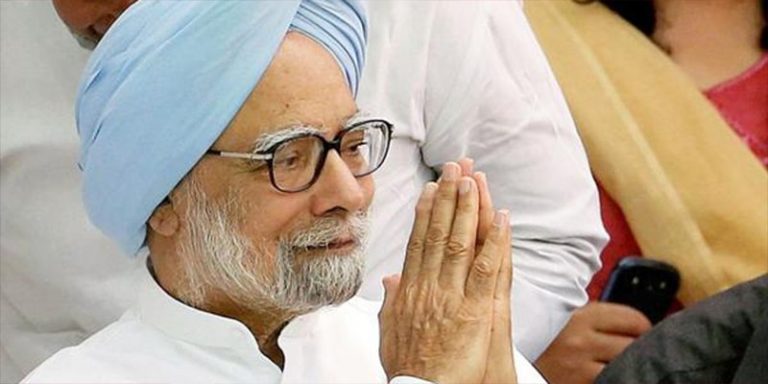
Former Prime Minister Dr. Manmohan Singh is set to campaign in poll bound Gujarat where he is scheduled to address media on Tuesday. Dr. Singh, who presided over the numerous UPA scams during his stint as two time Prime Minister, and stayed quiet about the same, is expected to talk on GST and demonetisation.
This, of course, amused twitterati who were quick to don their funny hat and dish out some hilarious reactions.
मोदी ने गूंगो को भी बोलना सिखा दिया। ये है अच्छे दिन।
With Dr. Manmohan Singh set to campaign in Gujarat, we expect Twitterverse to continue to give us a healthy dose of laughter. History may be kind, but Twitter isn’t.
The state of Uttar Pradesh, which just saw assembly elections conclude in March, is now gearing up for municipal polls which will be held in three phases on 22nd, 26th and 29th November respectively. The results would be declared on 1st December.
This time round the Aam Aadmi Party has also entered the fray by announcing its intentions to contest these elections by fielding its candidates across 16 UP civic bodies. As per reports, the party would focus on Varanasi and Gorakhpur districts and according to AAP leaders, would build women toilets in markets, improve infrastructure and education level of government-run schools. They have also promised to reduce house tax if voted to power.
AAP’s pursuit of power now seems to have hit a bit of a roadblock after allegations of the party selling tickets for 40,000 have surfaced.
As per reports [1][2], Praveen Vishwakarma, the party’s candidate for Vidyawati-2 ward has alleged that party leader Gaurav Maheshwari and Sarojini Nagar’s supervisor, Shyam Kumar Singh demanded Rs 40,000 from him for giving him the civic poll ticket.
Vishwakarma has as a result, sent a written complaint to the state election commission regarding this matter and has demanded that the party be barred from contesting the civic polls.
Vishwakarma has reportedly claimed that he had been approached by AAP workers who had requested him to become one of their candidates. He then agreed to the offer and requested that he be given the Vidyawati-3 ward ticket. Later he met with Gaurav Maheshwari and Shyam Kumar Singh who allegedly asked him to pay Rs 40,000 if he wasted the ticket.
Vishwakarma as per reports didn’t agree to it by asserting that he is poor and has been doing social work in his region for many years with the help of donations form locals. Later as per him, AAP declined to give him the ticket and instead gave it to a person named Arvind Singh who had joined the party barely 9 days ago.
But incredibly, the party informed Vishwakarma on Saturday that he has been made the candidate of Vidyawati-2 ward which prompted him to expose the party’s corruption.
The party on the other hand has refuted these allegations by labelling them as politically motivated. As per Gaurav Maheshwari, Vishwakarma has making such allegations after not getting a ticket and has asserted that he would permanently retire from politics if allegations against him are proven.


 I discovered that the subsidy was being transferred to Airtel Payment Bank Account. I quickly installed Airtel App, and was surprised to see that the user hadn’t even asked/activated his Payment Bank Account. I talked to Airtel Customer Care and got the PIN for his Payment Bank Account, in which , I saw LPG subsidy being credited to his Payment bank account from the last 3 months, which he wasn’t even aware of.