Home Blog Page 7486

NCP skips press conference called by the ”United Opposition” of Maharashtra

The press conference organised by the United Opposition parties in Maharashtra was given a miss by the NCP which chose to conduct its own separate conference on Sunday. This supposed snub by the NCP has let many to speculate about the unity of the ”united opposition”.

This press conference was conceptualised by the opposition parties in order to discuss strategies for cornering the Devendra Fadnavis government during the monsoon session of the Maharashtra assembly. The press conference of the united opposition was held at the residence of Leader of Opposition (LOP) Radhakrishna Vikhe Patil.

When asked about the reason for NCP absence, Radhakrishna Vikhe Patil stated that the NCP wanted to address some other issues, hence it chose to go ahead with a different conference. He also reiterated that all was well between the ”united opposition”.

The NCP state chief Sunil Tatkare on the other hand was singing a completely different tune. According to Tatkare there was no communication from the Congress party about how to conduct the assembly session and had chosen to directly communicate with the Assembly speaker without bringing the NCP into the loop. This led to them holding a separate conference.

The opposition including the NCP though were united in boycotting a tea party which had been organised by Devendra Fadnavis which led to it planning the press conference in the first place. According to Fadnavis, it was the first time he had seen the opposition getting split and organising 2 different conferences.

The press conference of the opposition parties saw them taking an unanimous decision to corner the government on loan waiver and malnutrition. The opposition also attacked the Shiv Sena by calling it an FM radio among other things. It isn’t clear whether they were trolling Sena over the RJ fiasco it has chosen to embroil itself into.

This is the second time in recent days when there have been allegations about the NCP distancing itself from the opposition. A section of the media had reported that the NCP MP and MLAs had decided to rebel and vote for Ram Nath Kovind in the Presidential elections. This was refuted by the party and our data analysis of the cross voting too didn’t show any signs of the allegations being true.

Proposed tunnels through Sela Pass in Arunachal to reduce travel time to the China border by an hour

The Border Roads Organisation (BRO) has sought to construct two 475 metres and 1790 metres long tunnels across the 4170-metre-long, sparsely populated Sela Pass in western Arunachal Pradesh.

The tunnels, which would be part of a new 12.37-km alignment, would cut down the 320-km distance from Tezpur, the Army’s 4 Corps headquarters, to Arunachal’s Tawang by about 10 km and bring down the travel time by an hour. Tawang is located at a height of 10,000 feet on the border with China.

According to the report, these two tunnels would help avoid high altitude, steep gradient and numerous hair-pin bends. This would make troops movement in this vital sector easier during the winter when heavy snowfall in the eastern Himalayas often cuts off road connectivity. The BRO’s alignment-cum-tunnel project also includes double-laning of the existing 25 km long single-lane road between Baishakhi and Nurarang.

Sela Pass, located at a picturesque horizon, also has several important landmarks of the 1962 Chinese war. The easy accessibility to Sela Pass thus will also provide a big boost to tourism. 

The wheels regarding the project are already in motion. RS Rao, the Commander of 42 Border Road Task Force(BRTF) under BRO’s Project Vartak, has initiated the formal land acquisition process on 20 July. He has handed over a copy of the approved alignment plan to West Kameng deputy commissioner Sonal Swaroop so that the construction can be taken up on a priority basis. The BRO too has already worked out the technical details regarding the proposed tunnels.

This tunnel project assumes significance in the wake of the ongoing standoff between Indian Army and China’s People’s Liberation Army (PLA) at India-China-Bhutan tri-junction over Chinese activities at the Doklam plateau.

Apart from this, the Ministry of Railways is also planning to bring rail lines to Tawang via the Bhalukpong-Tenga-Tawang Railway project. The survey work is scheduled to begin from next year. This project is likely to cost the Indian Railways between Rs 50,000 to Rs 70,000 crore.


7 Hurriyat leaders including the dreaded Bitta Karate arrested by NIA

In a major blow to separatism in the Kashmir valley, 7 Hurriyat leaders including the dreaded separatist Bitta Karate were today arrested by the NIA in connection with allegedly receiving funds from Pakistan to spread terror in the state. This funding was also reportedly used in organizing various stone pelting protests and to fund various terror groups.

The 7 Hurriyat leaders arrested are, Naeem Khan, Bitta Karate, Sahid-ul-Islam, Meharajudeen, Peer Saifullah, Ayaz Akbar and Syed Ali Shah Geelani’s son-in-law Altaf Fantosh who also was detained earlier in connection with this matter. Incidentally even Hafeez Saeed has been named as an accused in the FIR. Those arrested would be brought to Delhi and then be produced in front of a court on Tuesday.

This arrest reportedly stems from the fact that the NIA was unable to interrogate those arrested because they were already in preventive custody of the J&K police. This resulted in the NIA making a formal arrest request to question the accused. According to the Home Ministry, it was essential to arrest all the accused at they were essential for uncovering a larger conspiracy.

Jammu Kashmir Liberation Front (JKLF) leader, Bitta Karate who is among those arrested has in the past reportedly admitted to the murder of at-least 20 Kashmiri Pandits. This was revealed in an alleged video, where he was seen boasting about never missing his target and either shooting the Kashmiri Pandits in their heads or hearts.

The NIA has been on the trail of separatist leaders for a couple of months and it looked as if it was just a matter of time before some serious action was taken. At the start of June, the NIA had raided as many as 23 locations across Delhi, Haryana and Kashmir in connection with the Pakistani funding which the Kashmiri separatist leaders are believed to receive in order to spread terror in the valley. This had been followed by the questioning and detention of Geelani’s son-in-law, Altaf Fantosh. Later it was also revealed that the NIA was investigating journalists and retired judges in connection with fueling the Kashmir unrest.

JNU celebrates Kargil Vijay Diwas for the 1st time, makes leftists unhappy

In a first, the Jawaharlal Nehru University or JNU celebrated the Kargil Vijay Diwas on Sunday. Various luminaries including MOS External Affairs Gen VK Singh, Petroleum Minister Dharmendra Pradhan, cricketer Gautam Gambhir, Maj Gen GD Bakshi were in attendance. The event also saw the presence of an army band and 23 families of Kargil martyrs were also felicitated during the course of it.

This was a kind of pre-celebratory event as Kargil Diwas actually falls on 26th July. The crowd which gathered there made sure that it became a festive occasion with a chanting of slogans like woh Kashmir humara hai, Jahan hue balidaan Mukherjee (Syama Prasad) and Bharat Mata Ki Jai among others.

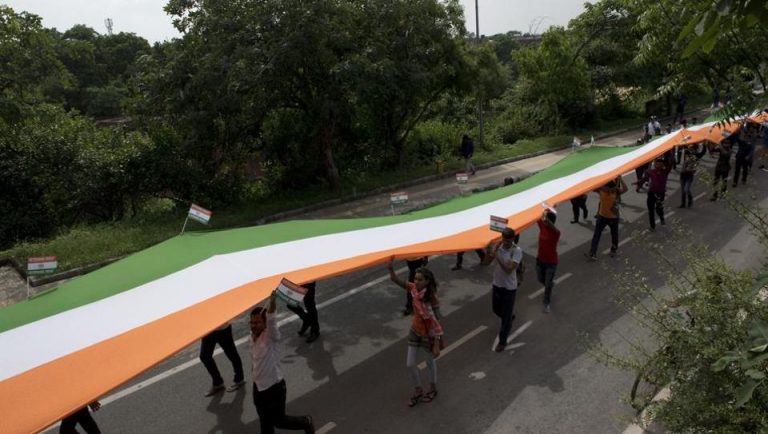
The crowd, which later carried a 600 metre long National Flag around the JNU campus, termed it as a defeat of the anti-national forces and slogans like Naxalwad na Maowad, sabse upar Rashtrawad to rang around. Even Gautam Gambhir personally took part in the Tiranga march.

According to Saurabh Sharma, the vice-president of ABVP, the students body led the march along with Army veterans, JNU students and faculty. He also claimed that JNU was changing and that students were starting understand the meaning of true nationalism.

During the event, Gen VK Singh shared his personal experiences in the Kargil battle and Maj Gen GD Bakshi spoke about the Indian Army’s efforts in guarding the nation’s treacherous border with Pakistan in extreme weather conditions.

The VC of JNU, M Jagadesh Kumar appealed to the Union Ministers to help procure an army tank, which would be put on display inside the campus for reminding the students of the valour and sacrifices of the soldiers. Incidentally this demand was also made last year after the leftist students had organised a pro-Afzal Guru event on the campus.

Even though the event was grandly celebrated, there were some sore moments including the disgruntlement of some leftist students on the campus. JNU alumni Abhinav Prakash claimed that leftists students had openly boycotted the event and had even ridiculed the administration:


This was also reiterated in the HT report which carried a quote from Amal the vice-president JNU Students Union which is currently controlled by the Left unity alliance. This is what Amal stated:

They can hold their programmes and say what they wish but why have they been curtailing the voices of dissent. Each time we screen a film or hold an event that does not suit their agenda, they send notices to us. When we do not have a problem with them holding events, they why stop us? They call such events patriotic but they just use them as an opportunity to recruit people in RSS

So not only had the leftist organisation not participated in the event (and virtually termed it ‘their event’), they termed the event featuring families of martyrs and union ministers as opportunity to recruit people into the RSS.

Also, the statement about the leftists not having any problem which ‘the other side’ holding events, is clearly not true.

We had reported in the past how the leftists had forced Arvind Gupta the BJP’s digital campaign head from speaking at an event inside the JNU due to his ‘BJP connection’. The same leftists had also demanded a ban on Baba Ramdev’s entry into the campus in December 2015, and and had protested against the screening of the movie Buddha In A Traffic Jam that talks about ‘Urban Naxals’.

Colgate is worried about Patanjali’s Swadeshi effect

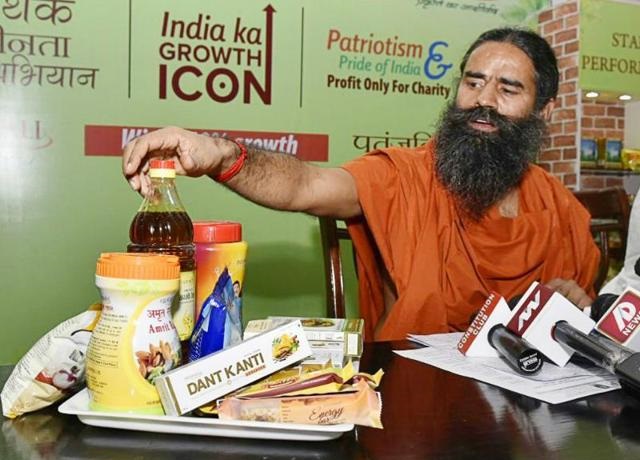
Baba Ramdev promoted Patanjali Ayurved is giving multinational companies a run for their money. For the first time, US multinational Colgate Palmolive’s global CEO Ian Cook has acknowledged that Patanjali is a “tough competitor” in the Indian business space. Cook was talking to investors during an earnings conference call on last Friday (21 July).

Cook said there is a need to respond to “changing consumer preferences.” “Patanjali in India takes a very nationalist view of its business. They tend to be premium price oriented and it means that you have to respond with a very specifically constructed offering to consumer,” the Colgate Palmolive’s global CEO said.

It could be noted that Colgate India has recorded a fall in its market share last year. The share of Colgate India in Indian toothpaste segment fell by 1.8 per cent and the company’s sales volume declined by 4 per cent in the last fiscal. The shift of consumers to ayurvedic and herbal brands is the reason for the fall. Patanjali Ayurved is the main disruptor in the category.

In 2016, Colgate India – which is still India’s largest oral care player – had a market share of 55.6 per cent in toothpaste category and is present in as many as more five million stores. However, Patanjali had garnered a 4.5 per cent market share in the toothpaste segment last year. But the Baba Ramdev promoted brand has managed to challenge the very dominance of Colgate despite being present only in two lakh traditional retail stores. Patanjali had forayed into the retail space with the Future group in October last year.

Patanjali Ayurveda’s sudden rise to a Rs 10,000-crore company in a very short span has made multinational rivals shift focus to Ayurveda sector. Targeting Patanjali’s Dant Kanti toothpaste, Colgate had launched its first India-focused Ayurvedic brand Cibaca Vedshakti last year.

“In the end the winner over time in these clashes are going to be the companies that best understand the consumer and serve them offerings that.  Of course that is what we all resourced and focused on doing,” Cook said.

It is significant to note that homegrown companies account for nearly 80 per cent products in natural personal care market in India. Brands using natural ingredients reportedly make up for more than one-fifth of India’s oral-care market.

As NDTV’s Tax troubles mount, Barkha Dutt distances herself from the channel

Not long ago, Barkha Dutt was known as the soul and face of NDTV. This happened because the bigwig anchors of the channel kept departing and Prannoy Roy’s stardom faded, which meant that Barkha was the sole captain of the ship. From hosting all the big-ticket shows, to using social media to drum up support for her failing channel, she did it all.

Then came the parting. After 21 years with NDTV, Dutt finally quit the channel early this year, amidst reports of major layoffs in the media house owing to its poor TV ratings. A short statement by NDTV wished her all the best for her future endeavours, and on the face of it, it seemed like an amicable split.

But her actions in the recent past show that probably all was not well between her and the channel. Strain was also seen between her and her ex-colleagues at NDTV.

Early in June 2017 when the CBI raided NDTV’s promoter Prannoy Roy’s residence in the case of an alleged bank fraud, NDTV chose to spin the issue into an “attack on press freedom” narrative. An event was organised at the Press Club of India where journalists came out to support NDTV against a “witch hunt”. Curiously though, Barkha Dutt was conspicuously absent: in person at the event, and even on social media for supporting the channel.

Then in late June came the first visible sign of disenchantment with her former colleagues. In a blistering facebook post, Barkha spewed venom against unnamed colleagues. While she did not name NDTV or any specific person, it doesn’t take a genius to realise where the gun was pointed.

And now, it appears that Barkha has finally given up on her “silence”. The recent turn of events suggest that she has now completely abandoned her channel of 21 years.

According to reports published yesterday, NDTV and Prannoy Roy have been found guilty of Income Tax Fraud by the Income Tax Appellate Tribunal (ITAT). It is reported that the ITAT had some scathing observations on the entire issue:

  • The ministry of corporate affairs had in 2009 acted in collusion with NDTV founder Prannoy Roy and hid certain information related to shell companies set up by the news media firm to launder Rs 642 crore.
  • Dr Prannoy Roy was personally responsible for tax evasion and laundering of those Rs 642 crore
  • The channel and its promoters had laundered a total of Rs 1,100 crores from 2007-08 to 2009-10 out of which Rs 642.54 crores was black money.
  • The findings of the IT Department confirmed that Prannoy Roy made a conscious attempt to hide financial details of foreign paper subsidiary companies of NDTV, by not attaching audited profit loss account, balance sheet and annual report of these foreign shell companies along with the annual report of NDTV

Far from being silent, or being defensive of her channel, Barkha Dutt chose to slyly enjoy the slow cooking of the NDTV goose. She retweeted many tweets which exposed NDTV’s sorry state of affairs, and this was noted by social media users:


Some journalists also wondered if her account was hacked, since it was taking an openly anti-NDTV stance:


Barkha’s response to these tweets was a beguiling smiley face, nothing more:


Further, Barkha Dutt even distanced herself from the murky financial deals of NDTV when some social media users try to snare her into the trap:


Such anger against he brand that she built for over 2 decades indicates that towards the end of her tenure things became very sour between her and the people at NDTV. Worse, her constant refrain that she had nothing to do with the financials of the company also indicates that she might be aware of the cooking of books by NDTV, and hence wants to maintain a safe distance from the company.

The only way Barkha can now redeem herself, is to expose all the wrongdoings of NDTV, by donning the role of a whistle-blower. Maybe she can take some tips from her former colleague and do a “Truth vs Hype” of her own, this time focusing on NDTV.

BJP MP introduces private bill in Lok Sabha to amend the Minority favouring RTE act

Maheish Girri, the BJP MP from East Delhi Lok Sabha constituency, yesterday revealed that he had introduced a Private Bill in the Lok Sabha, which asks for amendments in the Right to education or RTE act:


The MP also pointed out that he wanted one of the biggest flaws of the act amended, and also provided logic for the same.
The act in question stipulates that all the private run unaided schools need to reserve 25% of their seats for students from the weaker sections of the society. But the main issue is that the minority run institutions are exempted from following this directive as per the 93rd amendment in the constitution passed in 2005.

The Supreme Court in 2014 had also reiterated the point that the RTE act would not be applicable to aided and unaided minority schools and that they can’t be obligated to reserve 25% of the seats.

Maheish Girri claimed that this amendment contradicted the right to equality which has been enshrined in our constitution. He also stated that no waiver should be given to any particular faith by a society which promotes the idea of secularism.

Also as reported in the past, this discrimination against majority run schools has meant that the number of minority schools are steadily rising at the cost of Hindu run schools. According to the report which sampled data from Urban Bangalore, the number of  private unaided schools just grew from 2,753 to 2,868 from 2012-13 to 2015-16 which was measly growth rate of 1.35%. While minority institutions on the other hand grew from 160 to 340 which was a growth rate of 28%.

Further, it has been reported that Hindu run schools are even struggling to stay operational due to difficulty in RTE compliance. The report also stated that more than 3000 of such schools have been forced to close throughout the country.

The RTE Act has another problem, which demands a 30:1 student to teacher ratio, puttin a further strain on the school’s finances. Also if in any case the government is unable to fill all the reserved 25% seats it doesn’t mean that the school can use them admit students of its own choice. The act stipulates that the seats need to be kept vacant year on year which means they cannot be filled till the 8th standard.

While the bill is a welcome step, only 14 private member bills have passed in India since Independence, which perhaps foretells the possible outcome of this effort. But at least this bill may shine the light on the flaws of RTE, paving the way for amendments by the Government.

Muslim mob attacks Kaanvariyas for passing through ‘their area’

Bareilly district of Uttar Pradesh witnessed communal clashes on Friday night, leaving hordes of people including policemen injured, after a Muslim mob attacked a convoy of Kaanwariyas (devotees of Lord Shiva) for taking out their kaanwar yatra through ‘their area’.

This supposed ‘Muslim area’ through which any Hindu religious procession can’t be allowed, is a village named Khailam falling under Aliganj police station of Bareilly district.

According to a report in Patrika, on Friday evening when Kaanwariyas were returning to their homes after offering prayers to Lord Shiva, Muslims of Khailam village objected to them passing through the main road in their area terming it a “new development”.

Kaanwariyas refused to bow down to this diktat and demanded that they be allowed to take the route. As per a Times of India report, every year Kaanvariyas pass through the road as it is the only route to reach the river Ramganga.

This led to a stalemate and protests by the Kaanvariyas, which caused a traffic jam for over three hours. In their attempt to break the logjam, local administration and police is reported to have asked the Kaanwariyas to not play any music while passing through the ‘Muslim area’.

However, when the convoy of Kaanwariyas passed through the village, they were attacked with bricks and stones. The mob even resorted to firing, which further led to stampede among the Kaanwariyas. Many of the Kaanwariyas were reportedly dragged and beaten up.

According to a report in Hindustan, the mob is supposed to have collected these bricks and stones in those three hours when Kaanwariyas were protesting against this ‘ban’ on their route.

This attack happened in presence of police forces and jawans of ITBP (Indo-Tibetan Border Police), and many security personnel are also reported to have suffered injuries while trying to rescue the Kaanvariyas. Even women and children were not spared by the mob.

Muslim mob in Uttar Pradesh attacks Shiva devotees
At least 24 people were injured in the stone pelting and stampede

The area is currently tense but under control. Police says that they are identifying accused and arrests will be made in the case.

While a report by ABP News claims that the mob attacked because Kaanvariyas didn’t heed to the administration request of not playing any music while passing through the ‘Muslim area’, no such conclusion can be drawn from other media reports mentioned in this article.

Was it an attempt to rationalise the violence by Muslim mob by ABP? This can’t be said for sure, but the media has betrayed on many occasions their belief that “Muslim areas” should be kept away from “provocative” Hindu religious or political slogans and symbols. An example from early this year:


Now, a hawala scam haunts Mr Clean Naveen Patnaik

0

Odisha Chief Minister Naveen Patnaik has been enjoying a clean image in the national media till now, but stains have already surfaced on the white dress of Patnaik. Biju Janata Dal (BJD), led by Patnaik, is under scanner for alleged dubious funding made to the party through hawala routes.

An expose done by Times Now suggests that huge unaccounted funds have been deposited into the BJD’s account. It is really interesting to note that one Purna Chandra Padhi – a peon who works in the BJD headquarters and stays in Naveen Niwas – has deposited a sum total of Rs 1 crore into the bank account of the party in various instalments between 2012 and 2014.

It could be noted that Padhi is a BPL (below poverty line) card holder. Now, the moot question is how could a man who is working as a peon and holds a BPL card donate such a huge amount to the party.

What is even more intriguing to learn that there was a suspicious transaction of lakhs of rupees from a bank account named “Bhubaneswar main branch of State Bank of India” – with an account number 10091805573 and the Customer Identification Number (CIN) 8007240248 – to the BJD’s account. Perhaps for the first time a political party in India has received funds from a account named after a public sector bank, which obviously is now suspected to be a fake account.

This has laid bare the ugly underbelly of the BJD’s political funding. This is in serious violation of Election Commission of India’s guidelines. Senior BJP leader and Union Petroleum Minister Dharmendra Pradhan was said, “This is a subject matter of a detailed investigation. The Election Commission must act on this.”

BJD’s dubious political funding was exposed days after the Orissa High Court issued notice to the Election Commission of India on a complaint demanding disqualification of Chief Minister Naveen Patnaik. The Petition, filed by RTI activist Subash Mohapatra, has highlighted discrepancies in the statement of accounts and expenses submitted by the Chief Minister subsequent to the 2014 elections.

Earlier, allegations have surfaced that a huge chunk of the chit fund money has gone into the BJD coffer. The issue was raised on the floor of the Odisha Assembly by the Opposition bench in May last year.

The multi-crore chit fund scam came to the light post-2014 elections. Chit fund companies in Odisha were allegedly flourishing under the direct patronage of the Naveen Patnaik government. A number of senior BJD leaders, including a dozen of Ministers, and two dozen of IAS officers are already under CBI scanner.

Incidentally, the list of chit fund companies is long in the state. There are as many as 50 companies under the purview of CBI investigation. Deposits of as many as 80 lakh investors – majority of them from low-income families – were duped. According to estimates, Odisha chapter of chit fund scam is much bigger than its West Bengal counterpart.

Allegation of BJD using scam money in party funds is not new. Way back in 2010, it was alleged that mineral smugglers funded the BJD in the 2009 elections. Odisha mining scam can be argued to be the biggest scam of independent India with mineral-rich Odisha becoming a paradise for illegal mining, with losses to the tune of Rs 3 lakh crore to the state exchequer. The inquiry report by Justice MB Shah Commission, which was submitted in the Supreme Court, highlighted serious irregularities by Naveen Patnaik government.

Then there are allegations of corruption regarding Vedanta. It was the BJD government which allotted as much as 6,000 acre of three-crop agricultural land – including 1,300 acre belonging to Lord Jagannath Temple – for the Vedanta university project in Puri-Konark marine drive. Odisha Lokpal had indicted the Patnaik government for the illegal land allotment in 2010. The London-listed aluminium czar Vedanta Resources’ $1.7 billion proposed bauxite mining project in Niyamgiri was nixed in 2010 following the NC Saxena report cited violation of a series of laws by Vedanta in active collusion of the Odisha Government.

In addition, there are rural jobs scam, coal scam, land scams and dal scam under Patnaik’s tenure, which did not make national headlines. This may change with the hawala scam catching the attention of Delhi media.

Researchers conclude that cows might be the key to fighting HIV, find out how

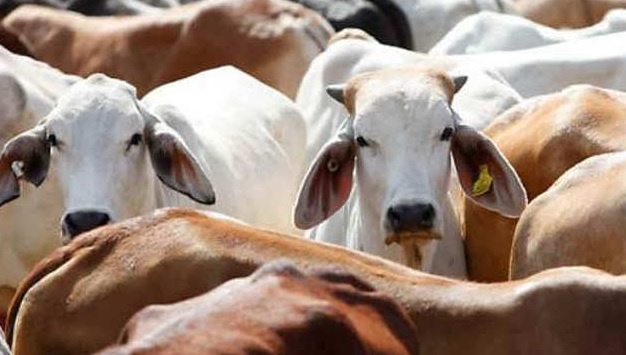
Researchers at the at the International Aids Vaccine Initiative and the Scripps Research Institute, California have claimed that cows hold an insane and mind-boggling ability to fight HIV, and the bovines may just be the key to develop a vaccine. They published their findings in a paper published in the prestigious Nature journal on 20th July.

The cows used during the research were found to rapidly produce special types of antibodies which could tackle the virus. They were believed to have achieved it by evolving a supreme immune defence as a result of their bacteria packed complex digestive system.

The main issue why the humans can’t tackle the HIV virus is because it is a master of disguise and it can rapidly alter the molecules present on its surface, which renders the human immune system unable to recognise it.

The key to beat the HIV virus is to produce broadly neutralising antibodies that attack the parts of the virus which it can’t mutate, thereby enabling the immune system to always detect the virus. The main problem is that humans rarely produce these neutralising antibodies, but even when they do so, they do it after 3-5 years of the infection. But the cows on the other hand produced these antibodies within weeks and as a result eliminated 20% of the HIV strains within 42 days. Plus in a little more than a year, they could eliminate 96% of these strains.

According to one of the scientists associated with the research, this response by the cows blew their mind. The cows reportedly have gained this superior immune system due to its digestive system which ferments grass in order to digest it and as a result has to tackle a lot of hostile bacteria. This has resulted in them developing a very superior immune system.

So if we somehow manage to develop a vaccine which teaches our immune system to make similar antibodies, we too can similarly neutralise the virus. As written in the abstract of the journal published in Nature, the immunisation of cows may provide an avenue to rapidly develop antibodies to address the disease agents which have learned how to avoid conventional human antibody responses.