Home Blog Page 754

UK: Mohammed Sadiq hires Pakistan-born Shazeb Khalid for £2,000 to kill a Tamil Indian restaurant manager, contract killer uses a stolen car to mow down the victim

0

In a horrifying turn of events, Shazeb Khalid, a 25-year-old Pakistani man, was found guilty of the heinous murder of Vignesh Pattabiraman, a 36-year-old Indian Tamil restaurant manager from Reading, UK. The crime occurred on Valentine’s Day this year.  

On Wednesday, the jury at Reading Crown Court found Khalid guilty of intentionally running down Pattabiraman while driving a stolen red Range Rover, motivated by a £2,000 ‘contract fee’. The man died from his injuries at Royal Berkshire Hospital in the early hours of 15th February. The deceased victim’s post-mortem report confirmed head injuries as the cause of death.

According to the prosecution, a sinister conspiracy involving Vel’s operation manager, Mohammed Sadiq Ishmail, who reportedly recruited his accomplice, Soiheem Hussain, to intimidate Pattabiraman. Ishmail suspected Pattabiraman was informing authorities about illegal staff employment at the restaurant. Witnesses reported seeing Khalid emerge from the wrecked car and attack Pattabiraman with a series of attacks.

Moreover, Khalid stole money from Pattabiraman’s bag after the murder. Vel Restaurant in Brighton was fined £20,000 in December 2022 for employing two illegal workers, while a following raid on Vel Reading in August 2023 resulted in no further action. Defending his actions, Khalid, who came to the UK from Pakistan in 2007, claimed his actions were inadvertent, claiming he just intended to “scare him” and “maybe grab him and tell him to stop snitching.” He denied violence and stealing. Meanwhile, Hussain rejected charges that he hired Khalid to cause serious injury, resulting in his acquittal on the murder charge but punishment for helping an offender. Khalid and Hussain are expected to be sentenced on the 10th of October.

Chaos at Punjab Power Corp: Employees extend strike until Sep 17 as locals outrage over 20+ hours of power outage

0

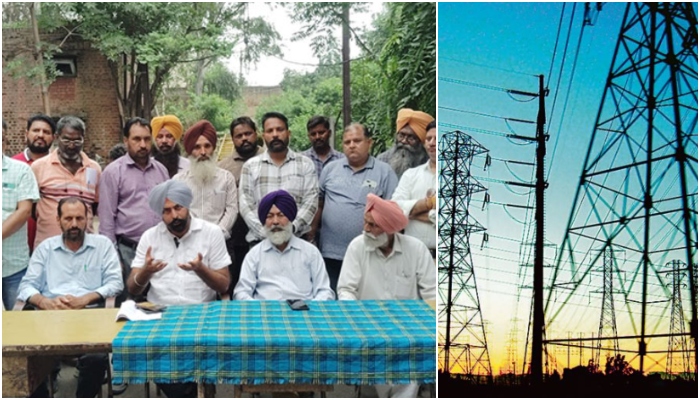
Residents of Harmilap Nagar Phases I and II, Saini Vihar, Gurjivan Vihar, and several others protested outside PSPCL’s power grid in Dhakoli, Punjab on Thursday, 12th September after suffering from electricity power cut since 10 pm on Monday.

The enraged public raised chants against the PSPCL and the Punjab government, stating that there was no power in a dozen housing societies from Monday night (10 pm) until Tuesday evening (7 pm). PSPCL officials had to call the police to deal with the furious people, which included children and women.

For the majority of the day, the supply of electricity in Baltana remained inconsistent. Surinder Singh Bains, Executive Engineer at Zirakpur PSPCL, stated that “many employees were on strike, which affected supply.” Rains additionally served as an intrusion.

PSPCL executives stated that a mass exodus by various union members of the PSPCL exacerbated the matter. Many PSPCl employees went on strike today, taking mass leave from various Mohali office locations. Residents of Badhmajra also reported experiencing lengthy power outages.

Major decisions to escalate the ongoing struggle were made during a meeting chaired by Ratan Singh Majari and Gurpreet Singh Gandiwind, both convenors of the PSEB Employees Joint Forum, Electricity Employees Ekta Manch Punjab, and the Association of Junior Engineers. The two convenors and the state president of the association, Ranjit Singh Dhillon, attended a state-level press conference in Ludhiana to provide information about the meeting in Chandigarh, which was called by the electricity minister.

Addressing a press conference, Ranjit Singh Dhillon, provincial leaders Additional SDO Raghveer Singh, Rachpal Singh Pali, and Kewal Singh Banvait of Panserj Union demanded the proper management of the state electricity board employees. He said that the grid of unauthorized officials instilled fear and uncertainty in the electricity workers as the former allegedly carried out unlawful actions.

Given this, union representatives have decided to extend the collective break from September 13th to September 17th (5 days), and all power workers will demonstrate in front of the board headquarters. As per the reports, the next action will be declared on September 17th, with a state-level demonstration in front of the headquarters in Patiala.

During the protest, black flags will be exhibited to the power corporation’s management, including the power minister. He further stated that, after the farmers’ unions, they have additionally received the support of the Patwar Union.

Ranjit Singh Dhillon, provincial leader Additional SDO Raghveer Singh and Rachpal Singh Pali further apologized for the inconvenience caused to the people and urged them to cooperate in their action against the Punjab government, the power minister and the management of the electricity corporation.

Military intelligence and Maharashtra police bust fake army recruitment racket, man impersonating army major arrested for running recruitment training camps

0

In a joint operation, military intelligence and Maharashtra police arrested a man impersonating an army major for allegedly running a massive fake recruitment racket across several states.

He was running an army recruitment training camp in Dehradun and Aurangabad.

According to a senior officer, on specific input, Military Intelligence, Pune, and Bingar Camp Police station, Ahmednagar, have launched a joint operation Wednesday and arrested an accused Satyajit Barath Kamble at Belapur, Shrirampur, Ahmednagar Maharashtra, after chasing him from New Delhi.

The accused was impersonating an Army Major running a massive fake recruitment racket across Maharashtra, Telangana, and Karnataka. Uttar Pradesh, Bihar, Punjab, Haryana & New Delhi, etc., along with accomplices who have duped hundreds of candidates under the pretext of providing them jobs in the Armed Forces (Army & MES).

Investigation revealed that Satyajit Barath Kamble is the kingpin of the fraudulent recruitment module being run across the country along with his accomplices (a few of whose names surfaced during interrogation, including female touts who were spread over in the & and southern states of the country).

Further, the fraudulent recruitment module established a fake training camp at Dehradun, Uttarakhand and Shrigonda, Maharashtra, for hundreds of aspirant candidates by impersonating an Army officer and serving Army staff of recruitment zones and duping Rs 7-8 lacs from each candidate.

It has also come to light that the module approximately made Rs 3-4 crore out of a fake army recruitment racket till date, as the nexus was being run over across various states by the assistance of his accomplices.

The accused revealed that the modus operandi of the module was to allure candidates from across Maharashtra, Telangana, Karnataka, Uttar Pradesh, Bihar, Punjab, Haryana, and New Delhi by the assistance of academies located in different states and also approached candidates directly at recruitment rallies to allure them to join fake training camps as established by the module in the Dehradun and Shrigonda jungles and issued them counterfeit joining letters in the name of Ex Southern Army Commander, Chief Engineer Oficer & other appointments of Army.

Further, the module has managed camping stores akin to military patternss from local markets in New Delhi and Dehradun and provided shelter to aspirant candidates during training and issued them identity cards as undertrained trainees.

A senior officer added that the further details as to how many others from various states were involved in the module would come out in due course of investigation. As the module duped numerous candidates, which raises suspicion of involvement of a greater number of accomplices in the nexus.


(This news report is published from a syndicated feed. Except for the headline, the content has not been written or edited by OpIndia staff)

Who benefitted? CAG finds major irregularities in Odisha’s ore mining sector, losses over 22,000 crores incurred under Naveen Patnaik govt, says report

Comptroller and Auditor General (CAG) has shared alarming details about the loss of mining revenue incurred by the state administration of Odisha under former Chief Minister Naveen Patnaik. According to the CAG, the Odisha govt under the Biju Janata Dal (BJD) lost at least Rs 22,392 crore because leaseholders misreported the quality of the iron ore and underestimated the grade of ore mined between 2015 and 2022 as well as exceeded the mining plan.

The production of chromite without forest clearance, short royalty assessments, non-utilization of sub-grade iron ore, production exceeding permitted in mining plans and environmental clearance and reports of lower-grade iron ore and iron ore fines as screened fines were estimated by CAG when determining the loss figure.

CAG carried out a performance assessment of “Systems and Controls in Assessment and Collection of Revenue from Major Minerals.” It was focused on concerns pertaining to the granting and extension of mining leases, licenses, and licences for the years 2015 through 2022. CAG audited six iron ore mines in the state and the report was laid before the state assembly on 11th September.

What led to the staggering loss

Twenty leaseholders reported the majority of their mined ores as “screened iron ore fines” which are small and less desirable in steel plants. As a result, the ores were subject to lower royalty rates than normal iron ore fines, which are larger and attract higher royalty owing to a state government order in 2010. This resulted in the state losing Rs 10,294 crore, which amounted to half of the total loss in mining revenue.

“There was a significant decrease in reporting of crushed fines from the production pattern of crushed and screened fines as prevalent before the order, leading to revenue implication of Rs 10,294.24 crore for the 20 test checked mines consisting of royalty of approximately Rs 5,841.80 crores and premium of approximately Rs 4,452.44 crores (for four auctioned mines),” the audit agency stated.

In 2010, the State Steel and Mines Department issued an order directing the government to impose a greater fee on “crushed fines” and a lower royalty on “screened fines.” Following this notice, there was an unusual rise in the reported production of screened fines (which have a lower royalty) and a downward trend in the reported production of crushed fines from 2010 to 2011. Notably, it pointed towards a serious possibility of misreporting the “crushed fines,” to avert the imposition of higher royalty and premiums.

Seven of the 14 mines for which production data for the time frame before 2010 was available, showed production of no screened fines at all, while three reported producing less than 7%, one mine 12%, and just three mines between 23 to 42%. However, from 2010 to 2011, when the state government’s directive was issued, the percentage of screened fines produced from the same mines increased.

When compared to the production pattern of crushed and screened fines that were common before the order, by 2021–2022, the reported proportion of screened fines at the 12 active mines ranged from 60% to as high as 82% in the case of 10 mines, 44% for one mine and 27% for another mine.

Suspicious claims of decline in iron ore grade

The apex audit body pointed out an interesting loophole in the auction regime which was adopted after huge mining irregularities were revealed across the country. An “abrupt and abnormal decline in the grade of iron-ore and its classification” was noted following the auction of the selected mines in 2020. A total of Rs 4,162 crore in mining revenue was lost as a result between 2020 and 2022. Prior to the commencement of the auctions in 2020, over 83% of the production was recorded in the 62–65% iron grade, however, in the two years after the sale (2020–2022), that percentage dropped to 16%.

“The decline of the grade of iron ore has resulted in a revenue implication of approximately Rs 4,162.77 crore for the financial years 2020-21 and 2021-22 in the form of lesser royalty and premium (post-auction),” the report mentioned. CAG’s report number 6 of this year highlighted that the mines that supplied better-grade iron ore before the 2020 auction also reported increased percentages of lower-grade iron ore (with less than 60% Fe) after the auction, ranging from 11% to more than 60%.

The average production of iron ore with grades above 60% Fe in a mine under Joda Circle in the Keonjhar district was approximately 77% before the auction, however, afterwards, it decreased to 9.88% in 2020-21 and then to nil in 2021–22 when a new lessee took over operation of the mine.

“It is highly improbable that the grades of mineral reserves, produced from the auctioned mines, would witness an abrupt decline within a short period of one or two years. Such a significant and sharp decline in the grade of iron-ore indicated a significant risk that the new lessees were misreporting the grade of iron-ore produced, in order to avoid higher royalty and premium payable on higher grades,” the report unveiled.

CAG further mentioned, “For the six test-checked mines, changes in reported grades of production of lumps and fines after the auction, as compared to the consistent pattern in the grade of production, as reported by the older lessees, have consequently resulted in a revenue loss.” The loss in mining revenue was also brought to the attention of the CAG since at least eight iron ore mines incurred losses worth Rs 3,618.50 crore due to leaseholders mining above the permitted mining plans’ limitations.

Additionally, leaseholders mined past the boundaries of environmental permissions, costing the state Rs 1,700 crore in lost mining revenue. Furthermore, the CAG noted that Rs 1.48 crore tonnes of iron ore were moved via weighbridges and check gates without e-passes, resulting in a further loss of Rs 1,473 crore in mining income.

The state govt took no action to probe

The CAG report observed that the state administration had “not taken any steps to investigate” the grades of iron-ore production reported by the new lessees as of March 2022, despite an abnormal fall in the grades of iron-ore lumps and fines that indicated the possibility of misreporting.

‘Hold officers accountable’, says CAG report

The government has been advised by the CAG to hold officers accountable for suggesting an extension of the lease period despite objections from various departments regarding irregularities committed by the lessees. Moreover, a thorough and prompt investigation should be conducted across all mines that have been auctioned to figure out whether there was intentional or willful misreporting of lower grades of iron ore to evade paying higher royalties and premiums.

A committee headed by the director of mines and geology was reportedly established by the state government to investigate the disparity in ore downgrading and false reporting of ore size. The committee unearthed that ore was downgraded in three leases and that there was a mismatch in ore size in six leases. Lessees who have favoured the review of the cases before the revision authority are liable for paying an amount of Rs 471.48 crore by the government as a result of the breach.

The report conveyed that mining operations that violate applicable environmental protection laws and go beyond the parameters of the mining plan will undoubtedly have a negative influence on the surrounding ecosystem. “Therefore, the present status clearly indicates the existence of system failure to timely detect the actual grades of lumps and fines produced, which adversely impacted the state government revenue,” the significant report concluded.


Research funds totally exempt from GST, notices sent to private institutions like IIT, Anna, Punjab University no longer to be sought

0

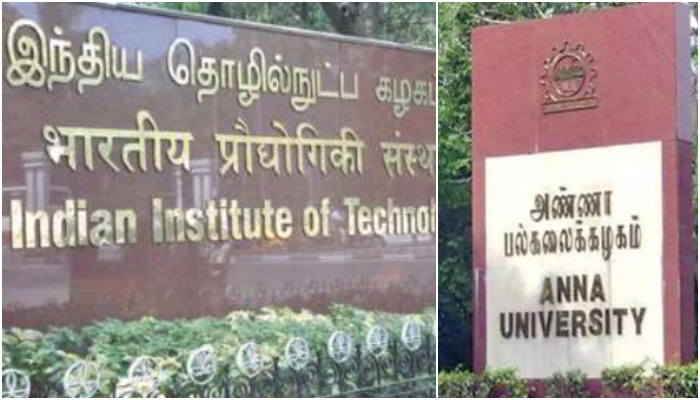
Following the GST Council’s decision to exempt central and state-governed higher education institutions from settling GST on their research funding, notices issued to some prominent institutions, including IIT-Delhi, Anna University, and Punjab University, concerning their outstanding GST pays will no longer be sought out.

The Goods and Services Tax (GST) Council, in its 54th meeting on Monday, resolved to exempt universities and research centers run by the central or state governments, as well as those exempt from income tax, from paying GST on research funding. The exemption applies to research money received from both the government and the commercial sector. Until the above, they had to pay 18% GST on their research grant.

These institutes claim that the move represents a significant step toward reducing budgetary strains, allowing them to focus more on innovation and high-impact research activities. They do, however, point out that there is still tremendous room for flexibility in other areas, such as college fees, particularly those at private colleges.

“The recent exemption of GST on research grants in educational institutions has been broadly welcomed within the academic community… Reducing the tax burden allows institutions to invest with greater confidence in potentially groundbreaking and risky projects,” Bhuvnesh Kumar, dean of research at Sharda University was quoted as saying.

Kumar noted that the removal of GST from college costs will benefit students. Eliminating this tax would reduce financial pressures for students and educational institutions. He noted that eliminating the GST on food and accommodation bills will significantly decrease the financial strain on students and their families.

The ruling comes a month after the Directorate General of Goods and Services Tax Intelligence issued show-cause orders to many educational institutions across the country for failing to pay GST on research funding received.

While IIT-Delhi received a Rs 120 crore warning, Tamil Nadu’s Anna University received a Rs 36 crore notice for research money received between 2017-18 and 2021-22. Following this, the Union Ministry of Education stepped in and commenced talks with the Ministry of Finance.

According to Department of Revenue officials, the GST Council’s decision will consider previous instances ‘as is, where is’. Nonetheless, educationists argue that, while exemption would undoubtedly foster scientific temper and increase research and development, it would provide an unusual obstacle to privately run colleges.

Exempting research organizations and universities from claiming input tax credits on grant purchases will result in increased operational costs for their research projects. Furthermore, these organizations would face challenges with tax compliance and record keeping.

The GST Council recently announced tax reductions on a variety of goods and services, including cancer treatments and helicopter trips. Following the council meeting, Union Finance Minister Nirmala Sitharaman stated that the lower rates will apply prospectively.

In Budget 2024, Sitharaman proposed a record Rs 1.20 lakh crore for education. However, the allocated amount for FY25 is Rs 9,091 crore less than the updated estimate for 2023-24, representing a nearly 7.26 percent reduction from the prior revised estimates of Rs 1,29,718 crore.

The Indian Institutes of Technology, the government-run public technical establishment, received Rs 10,324 crore for FY25, compared to Rs 9,661 money in the BE for FY24, which was then amended to Rs 10,384 crore.

The allocation to the University Grants Commission (UGC), the higher education regulatory agency, was lowered to Rs 2,500 crore. Last year, UGC was allocated Rs 5,360 crore, which was later increased to Rs 6,409 crore. 

Labourers from UP-Bihar not allowed inside villages while locals embracing Christianity or migrating to Canada – tragedy of Punjab that not many want to talk about

0

Three years ago, the former Chief Minister of Punjab and Congress leader Charanjit Singh Channi called migrant workers coming from Uttar Pradesh and Bihar as “Bhaiya” in a derogatory sense. Although Channi apologised due to backlash, this disdain against migrant workers is gaining momentum in Punjab. In August this year, several migrant workers were driven out of a village in Mohali by the locals. In some villages, boards with 11 ‘restrictions’ for migrant labourers have been put up.

According to an exclusive report by Aaj Tak, migrant labourers are not allowed to rent a house inside the Jandpur village under the Kharar sub-district of Sahibzada Ajit Singh Nagar (Mohali), which has imposed eleven restrictions on migrant workers. The restrictions include a ban on movement after 9 PM, no smoking or chewing tobacco, and others, as OpIndia reported earlier. Multiple display boards were placed across the village explaining the restrictions.

Moreover, there are several restrictions regarding the clothes they wear. Local people argue that with the arrival of outsiders, violence, thefts and robberies, harassment of women has increased. However, the migrant labourers say that although they earn money here, they receive no respect. The situation of these migrant labourers is such that they don’t want to stay there anymore.

The report says that this trend of driving UP, Bihar migrant labourers out of the village began from Mundo Sangtian in August this year. While all the migrants were driven out of the village, some were also expelled from their jobs. Eventually, the matter reached the Punjab and Haryana High Court as one Vaibhav Vats filed a plea against the illegal expulsion of migrant workers by the locals.

As per the Aaj Tak report, the Jandpur village is filled with signboards advertising visa to various countries like Canara, USA and Poland. Apart from that, there were boards praising and thanking ‘Prophet’ Bajinder Singh from the Chuch of Glory and Wisdom. Banners claiming that if one takes his blessing, visas will be issued immediately were also found by the reporting team of Aaj Tak.

As per the report, there is a conversion lobby working in the area who helps youths migrating to Canada by becoming Christians. They get the youths to convert to Christianity, cut their hair to settle abroad.

Speaking to AajTak, the villagers claimed that migrant workers lived in squalor, and roamed around half-naked when we used to go to Gurudwara. They used to fight and the behaviour of the migrant women was also not good. The villagers said that due to this alleged inappropriate behaviour, they voted which included people from the Gurudwara Committee and decided to oust the migrants from the village.

Lamenting the mistreatment faced by migrant workers in Mohali, a migrant worker Mansukh said that the local people taunt them with “Bhaiya Bhaiya” remarks and that they mock them by saying “you people eat from our money”. The worker said that if migrants take money, in exchange, they do hardwork. Other than belonging to UP and Bihar, these migrant workers are also allegedly mistreated due to their dark complexion. “We look different from them, that’s the whole problem,” the migrant worker said.

When asked about why suddenly this became an issue when migrants have been working in Punjab for many years, a local explained that earlier, these migrant workers used to work in fields and stay on their motor vehicles, but since last three-four years, they have begun entering the villages. In addition, since locals have placed a restriction on their sons moving to Canada and other countries, they look for work here. However, since most of the jobs are taken up by the migrants, they face difficulty in finding work.  A Panchayat member Charanjit Singh alleged that migrants have eloped with many local minor girls.  

As reported earlier, police verification has been made mandatory for migrant workers. The residents who provide accommodation on rent to these migrant workers are now also required to provide them with dustbins. More than two migrant workers will not be allowed to stay in a single room and they cannot roam around in “half attire”. In case the migrant workers are found indulging in illegal activities, the house owners who rented them accommodation would be held responsible.

The list of restrictions came in response to the allegations levelled against the migrant workers from Uttar Pradesh and Bihar. The allegations include spitting on roads outside the village Gurudwara, which is considered disrespectful to the Sikh religion. Locals accused migrant workers of roaming around half-naked, causing embarrassment to the female residents. Several migrant workers have decided to leave the village following the restrictions. Other workers might follow suit.

US imposes sanctions on suppliers to Pakistan’s ballistic missile program including multiple China-based companies

0

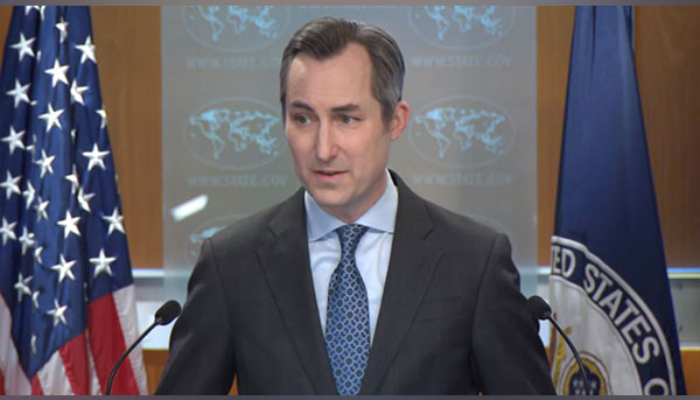
On 12th September the United States State Department placed penalties on China-based companies that supplied Pakistan’s ballistic missile development, according to the missile sanctions rules. State Department spokesperson Matthew Miller informed, “The Department of State is taking action against five entities and one individual that have been involved in the proliferation of ballistic missiles and controlled missile equipment and technology. Specifically, the Department of State is designating the Beijing Research Institute of Automation for Machine Building Industry (RIAMB) pursuant to Executive Order 13382, which targets proliferators of weapons of mass destruction and their means of delivery.”

Notably, RIAMB has collaborated with Pakistan’s National Development Complex (NDC), which the US considers responsible for the country’s long-range ballistic missile development and manufacturing.

The statement further added, “Additionally, the United States is imposing sanctions under the missile sanctions laws (i.e., the Arms Export Control Act [AECA] and the Export Control Reform Act [ECRA]) on three PRC-based entities, one PRC individual, and a Pakistani entity for ballistic missile proliferation activities: PRC-based firms Hubei Huachangda Intelligent Equipment Company, Universal Enterprise Limited, and Xi’an Longde Technology Development Company Limited (aka Lontek); PRC individual Luo Dongmei (aka Steed Luo); and Pakistani-based entity Innovative Equipment.”

Matthew Miller further added that the US ‘will continue to act’ against proliferation and associated procurement activities of concern, wherever they occur. “These sanctions are being imposed because these entities and individuals knowingly transferred equipment and technology controlled under the Missile Technology Control Regime (MTCR) Annex, in support of MTCR Category I missile programs, to a non-MTCR country.”

The US had designated four entities targeting proliferators of weapons of mass destruction and their means of delivery previously as well. These entities too had supplied missile-applicable items to Pakistan’s ballistic missile program, including its long-range missile program. The entities included Belarus-based Minsk Wheel Tractor Plant, which has worked to supply special vehicle chassis to Pakistan’s long-range ballistic missile program. It further imposed sanctions on three Chinese entities, including, “Xi’an Longde Technology Development Company Limited”, “Tianjin Creative Source International Trade Co Ltd” and “Granpect Company Limited.”

“We’re going to continue to disrupt and take actions against proliferation networks and concerning weapons of mass destruction procurement activities wherever they may occur. Just let me say, broadly, we advise anyone considering business deals with Iran to be aware of the potential risk of sanctions. But ultimately, the government of Pakistan can speak to their own foreign policy pursuits,” declared State Department Principal Deputy Spokesperson Vedant Patel in April.

“The sanctions were made because these were entities that were proliferators of weapons of mass destruction and the means of their delivery,” he pointed out. He revealed that these firms were based in China and Belarus.

(With inputs from ANI)

Arvind Kejriwal granted bail in Delhi liquor scam case with conditions, plea challenging legality of arrest dismissed: Here is all you need to know

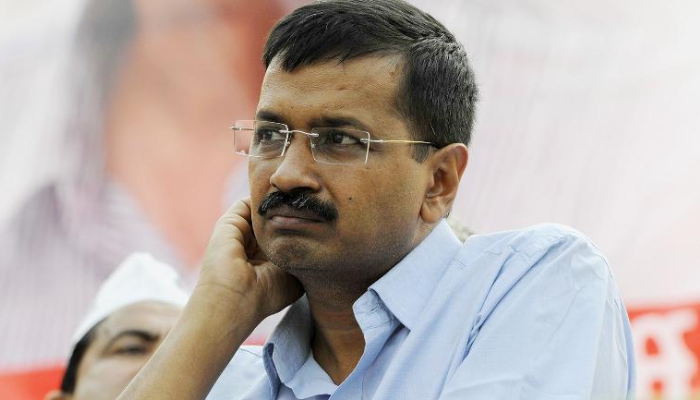
On Friday (13th September), the Supreme Court of India granted bail to Delhi Chief Minister Arvind Kejriwal in connection to the liquor policy scam case.

The development came more than three months after he surrendered to the authorities at the Tihar jail. The court noted that the arrest of the Delhi Chief Minister was valid and that there was no illegality on the part of the Central Bureau of Investigation (CBI).

Arvind Kejriwal was granted bail after the apex court noted that the trial is unlikely to be completed in the immediate future. On the other hand, the CBI had opposed the bail application, citing the possibility of tampering with evidence.

The central agency demanded that the case be heard by the trial court. It must be mentioned that Arvind Kejriwal did not stand trial in the lower court and had directly approached the Delhi High Court.

In the end, the Supreme Court ruled that Arvind Kejriwal satisfied all conditions required to secure bail. The Delhi CM has however been directed to appear before the trial court, surrender his passport and refrain from making public statements about the case.

This comes as a setback, given that Arvind Kejriwal and other AAP leaders were planning to use the Delhi liquor policy case for their political vendetta ahead of the Haryana and Delhi elections.

Kejriwal has also been barred from leaving the country. All restrictions that were imposed on him while being granted interim bail in the Enforcement Directorate (ED) case continue to him.

Having said that, no conditions have been imposed that can prevent Kejriwal for taking over the position of the Delhi Chief Minister.

Delhi Liquor policy scam case

At the heart of the controversy is the Delhi Excise Policy 2021-2022, which has been explained in 10 simple points.

  • The liquor policy was first proposed in September 2020 but came into effect only in November 2021.
  • It changed the manner in which alcohol was being sold in the National Capital. Introduced private players in the market and marked the exit of government-owned liquor vendors.
  • Delhi was divided into 32 zones and a total of 27 private vendors were to ply in each zone. Every municipal ward had 2-3 liquor vendors operating in the area. 
  • Proposals such as home delivery of liquor, allowing liquor vendors to offer unlimited discounts, opening of stores till 3 am were also tabled before the Delhi Cabinet.
  • The drastic policy change resulted in a 27% increase in government revenue to ₹8900 crores. At the same time, it marked the complete exit of the Delhi government from the liquor business.
  • While the objective of Excise Policy 2021-2022 was to end black marketing and the liquor mafia, the Delhi government soon came under fire over allegations of corruption.
  • Chief Secretary of Delhi, Naresh Kumar, found irregularities and procedural lapses in the new liquor policy. Lieutenant Governor VK Saxena ordered a CBI probe on the recommendation of Naresh Kumar.
  • Manish Sisodia waived off ₹144.36 crores on the license fee, to be paid by the private liquor vendors, under the garb of the Coronavirus pandemic. Incurred loss to the Excise Department and benefitted liquor licensees by waiving the import pass fee of ₹50 per beer case.
  • All these changes were made without the final approval of the Lieutenant Governor and thus considered illegal under the Delhi Excise Rules of 2010 and Transaction of Business Rules of 1993.
  • Thus, the Delhi government made a U-turn on its new excise policy in July 2022. A month later, CBI booked Manish Sisodia, ex-Only Much Louder (OML) CEO Vijay Nair and 13 others in an FIR for irregularities in the implementation of the Delhi Excise Policy 2021-2022.

Ahmedabad: Mohammed Shehbaz arrested in train theft is also involed in ‘Love Jihad’ case, has trapped 24 women using matrmonial sites pretending to be ‘Harshit Chaudhary’

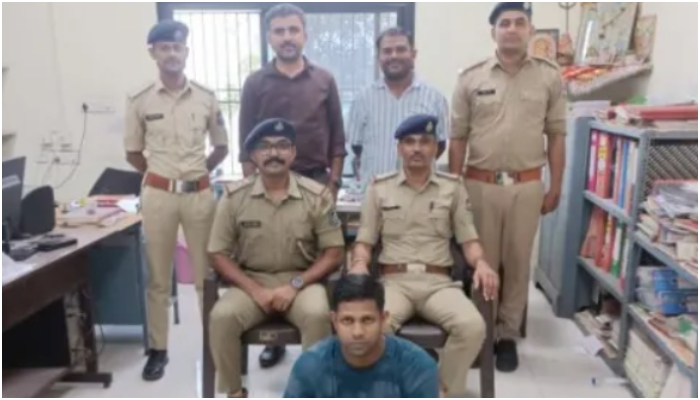
On 31st August, Ahmedabad Police arrested one individual identified as Mohammad Shehbaz in the case of theft on a Vande Bharat train in Gujarat. Now it has come to the fore that he is also involved in a ‘Love Jihad’ case. According to the initial reports, he is believed to have used a false Hindu name to trap and marry a Hindu girl. The Aligarh Police had booked the accused in the case and now he has been handed over to the Ahmedabad Police.

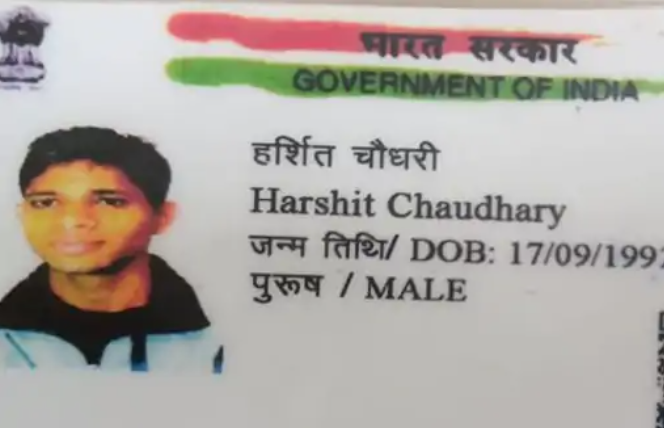
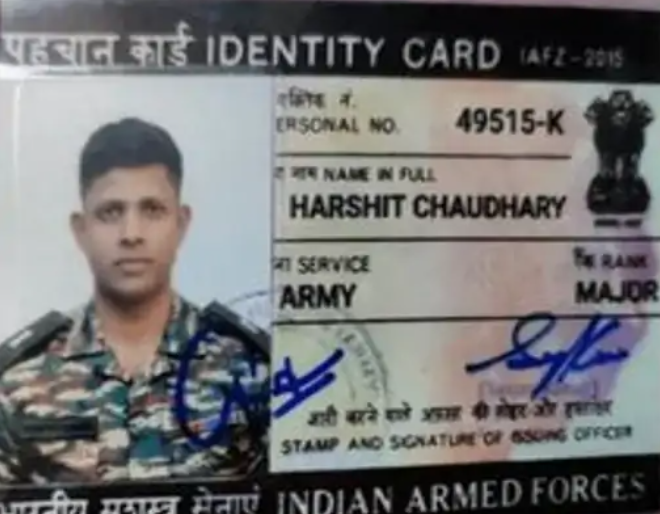
It is worth noting that Shahbaz was detained by Ahmedabad police on 31st August in connection with a theft on the Vande Bharat train. A fake ID card bearing the name ‘Major Harshit Chaudhary’ was also discovered in his possession. Shehbaz is a resident of Aligarh, Uttar Pradesh. He not only created a fake Aadhaar card with a Hindu name, but he also preserved a false army officer card despite not being in the army. When the police arrested him and interrogated him further, they discovered that he had used his false identity to deceptively maary a Hindu woman.

The accused is believed to have stolen a trolley bag of one of the passengers from the Vande Bhart train. After reviewing the train’s CCTV footage and passenger chart, the police found that the accused had reserved a seat under the name ‘Harshit Manoj Singh Chaudhary’. The police followed him away and detained him, and when questioned, he confessed to having generated a bogus ID of ‘Harshit Chaudhary’. Furthermore, it was discovered that he had joined the Army in 2015 but was expelled from the Army being unfit as of June 2024.

Image- Dainik Bhasker

Further inquiry revealed that Shehbaz utilized a fake Aadhaar card with a Hindu identity, a PAN card, and a false ID card of an army major for railway and plane travel. Not only that, but he also entrapped a Hindu girl originally from Jharkhand by adopting a Hindu identity. A case has been filed against him in Aligarh in this regard.

Image- Dainik Bhasker

One of the women called the police amid the investigation and exposed the accused

In a conversation with OpIndia, PI H Garhvi said that during the interrogation one of the women called him. The woman told the police that Harshit Chaudhary was her husband and had not returned home for a long time. So he called his (accused’s) phone number. The police later told the girl that the person she believed to be her husband was actually not Harshit but Mohammad Shehbaz. The girl eventually said that she never knew that the man she had married was a Muslim. She then lodged a complaint against Shehbaz at a police station in Aligarh.

According to a report by Dainik Bhaskar, the girl went to Aligarh’s Banna Devi police station and lodged a complaint on September 8th. She said in the complaint that she originally hails from Chaibasa in Jharkhand. Mohammad Shehbaz contacted her through shaadi.com and identified himself as ‘Harshit Chowdhury’, claiming to be an army man. He also created a fake Aadhaar card and an ID card of an Army major to obtain the woman’s trust.

After that, Shehbaz called the girl to Aligarh and got married to her as per Hindu rituals on March 5th, 2023 in a temples and then took a rented house in Aligarh and made the girl stay there.

The girl said in the police complaint that after marriage, Shehbaz’s behavior changed and he left her alone. He told her that he wasn’t allowed to go on leave by the Army authorities. In addition, she said that he forcefully established sexual relations with her and threatened to kill her if she refused. Further, during the police investigation, it was found that Shehbaz is already married and that he has two children.

Bank account seized, IT officials informed

The Aligarh Police registered a case on the complaint of the victim and now he has been handed over to the Ahmedabad Police. As per the police, he had cheated on 24 women from different parts of the country using fake Hindu identities. He met working women on social media sites or matrimonial sites and then forced them to have sexual relations. He then used to loot the women monetarily. The police exposed this modus operandi of the accused during the investigation to which the latter gave confirmation.

The Police further investigated the bank accounts of the accused to discover that he had used a fake Hindu identity to create an account. The police also found that large monetary transactions had recently happened through the account. The bank accounts have been seized and the IT officials have been informed.

The police said that since he was in the Army, he knew all the etiquette which helped him gain the trust of the victim women. Further investigations into the case are underway.

Another attack of short seller Hindenburg against Adani Group falls flat, Indian conglomerate says no proceedings ongoing in Swiss court

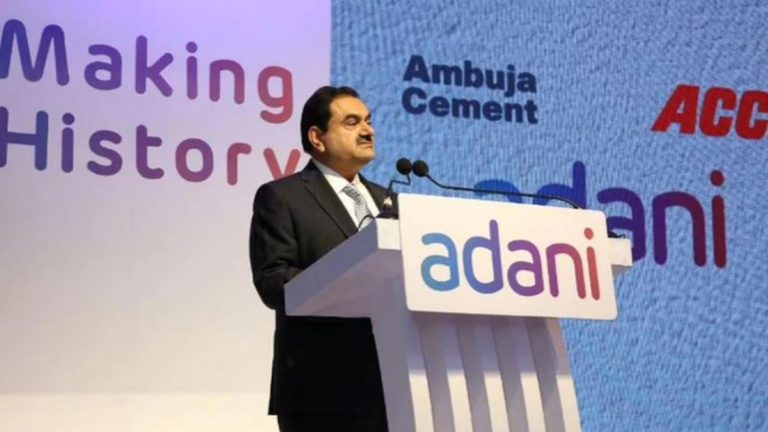
On Thursday (12th September), US-based short seller Hindenburg Research claimed that Swiss authorities had frozen more than USD 310 million in funds across several Swiss bank accounts over money laundering allegations against Adani Group. The Adani conglomerate strongly rejected the claims made by Hindenburg Research.

Taking to X, Hindenberg Research claimed: “Swiss authorities have frozen more than $310 million in funds across multiple Swiss bank accounts as part of a money laundering and securities forgery investigation into Adani, dating back as early as 2021. Prosecutors detailed how an Adani frontman invested in opaque BVI/Mauritius & Bermuda funds that almost exclusively owned Adani stocks, according to newly released Swiss criminal court records reported by Swiss media outlet.”

Adani Group trashes Hindenburg and Gotham City’s money laundering proceedings claim

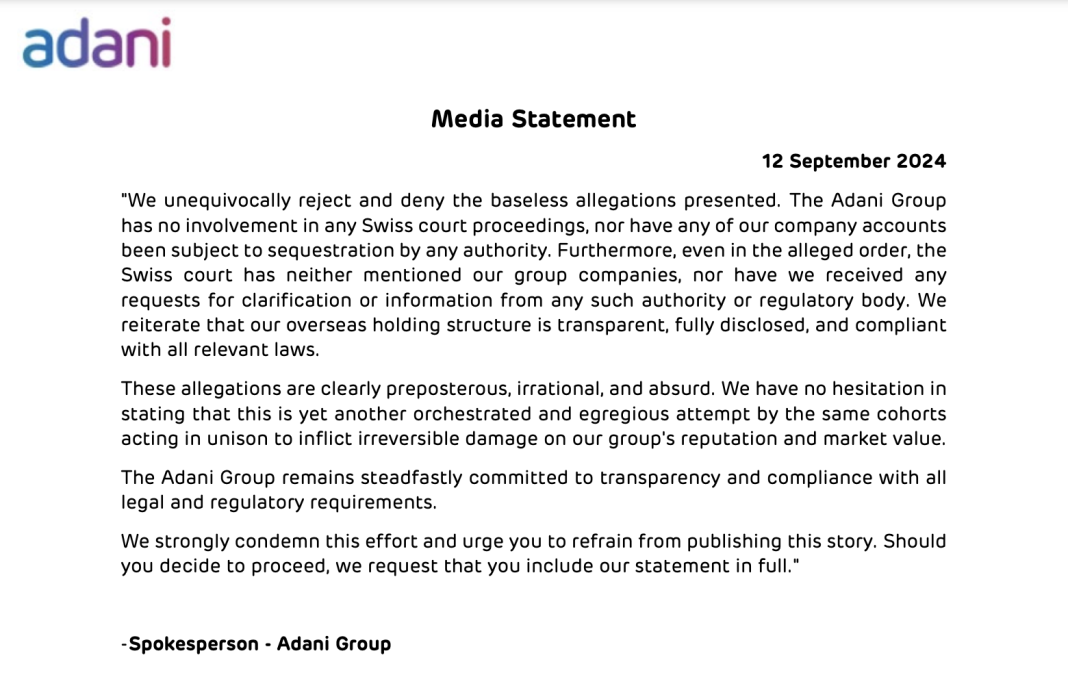
The Adani Group has rejected and denied “baseless allegations” over reports concerning the freezing of some funds in Swiss bank accounts. The Business conglomerate asserted that it has no involvement in any Swiss court proceedings, nor have any of the company accounts been subject to sequestration by any authority.

The Adani Group said in a statement that the allegations are clearly preposterous, irrational, and absurd and it is yet another orchestrated and egregious attempt by the same cohorts acting in unison to inflict damage on the group’s reputation.

In an official statement, the Adani conglomerate said: “We unequivocally reject and deny the baseless allegations presented. The Adani Group has no involvement in any Swiss court proceedings, nor have any of our company accounts been subject to sequestration by any authority. Furthermore, even in the alleged order, the Swiss court has neither mentioned our group companies nor have we received any requests for clarification or information from any such authority or regulatory body.”

“We reiterate that our overseas holding structure is transparent, fully disclosed, and compliant with all relevant laws. These allegations are clearly preposterous, irrational, and absurd. We have no hesitation in stating that this is yet another orchestrated and egregious attempt by the same cohorts acting in unison to inflict irreversible damage on our group’s reputation and market value. Adani Group said it remains steadfastly committed to transparency and compliance with all legal and regulatory requirements,” the statement added.