Home Blog Page 755

Jammu and Kashmir: 3 terrorists neutralised in an encounter in Baramulla, army says operation in progress

0

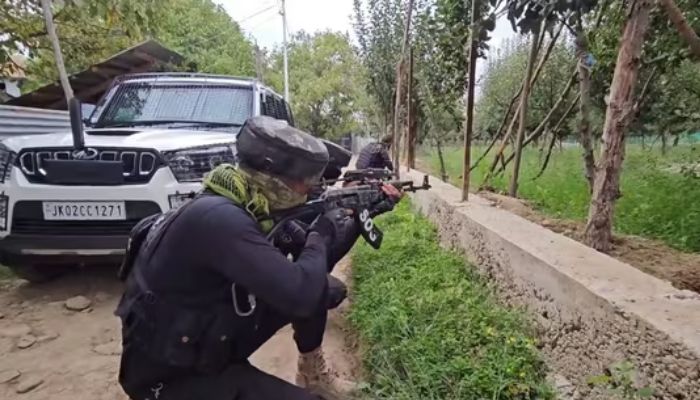
On Saturday (14th September) morning, three terrorists were killed in an encounter with security forces in Jammu and Kashmir’s Baramulla. The security forces have also recovered weapons and war-like stores from the dead bodies of neutralised terrorists. The development comes a day after two Indian Army soldiers were killed in action and two others were injured in an operation in Kishtwar. 

Incidentally, an encounter broke out between terrorists and security forces in the Chak Tapper Kreeri Pattan area of Baramulla district on Friday night (13th September). When a cordon-and-search operation was launched in Chak Tapper Kreeri in the Pattan area late at night on Friday, the terrorists opened fire on the search party of the Indian forces. In the ensuing gunfight, at least three terrorists were killed on Saturday morning. 

Speaking with the news agency PTI, a police official said that the identity and affiliation of the dead terrorists were still being investigated. 

On Saturday afternoon, the Indian Army’s Chinar Corps shared an update on the ongoing encounter in the Baramulla area. It wrote, “Three terrorists have been neutralised by the security forces in the ongoing Operation. Weapons and war-like stores have been recovered. The #Chinarcorps has dealt some crippling blows to the terror network in North Kashmir over the past few days with significant recoveries and elimination of terrorists, inspiring confidence and assurance for upcoming events scheduled in the region.” 

It added, “Operation is in progress.”

Meanwhile, several videos are doing rounds on social media. It is being said that the three bodies seen in the video are that of the three terrorists who have been neutralised in the ongoing encounter in the Baramulla region. In these viral videos, the faces of the slain terrorists are also visible. 

Additionally, another drone footage video is also circulating on social media, in which a few men can be heard confirming the death of two terrorists inside their hideout. The details and veracity of these videos doing rounds on social media are unclear whether they are of the same operation or from some earlier operation and whether the two slain terrorist inside a hideout were the same and they were later brought together as seen in the open field.

A day earlier, two Indian Army soldiers were killed in action and two more were injured in an encounter in Kishtwar.

The security forces had launched a cordon-and-search operation in the Naidgham area in the Chhatroo belt connecting Kishtwar with south Kashmir’s Anantnag district. During a gun battle, sepoy Arvind Singh and junior commissioned officer Naib Subedar Vipan Kumar were injured. The two soldiers succumbed to their injuries soon after. Later, the other two injured soldiers were airlifted to an Army hospital after preliminary treatment at a local hospital.
UP CM Yogi Adityanath objects to the classification of Gyanvapi as a mosque; says it is in reality, Vishwanath, Lord Shiva’s abode

0

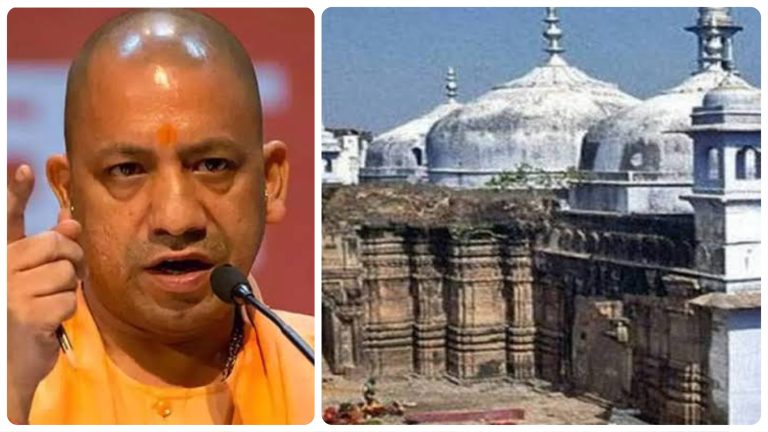
Uttar Pradesh Chief Minister Yogi Adityanath on Saturday objected to the classification of Varanasi’s Gyanvapi as a Muslim place of worship, asserting that it is dedicated to Lord Shiva, also known as Vishwanath.

Speaking at an event in Gorakhpur, he remarked, “Unfortunately, people refer to Gyanvapi as a mosque, but it is in fact, Vishwanath.” He emphasised that the uncertainty surrounding its true identity is viewed by devotees as a significant barrier. “Had our society recognized this obstacle earlier, India might never have been colonized,” he added.

The Chief Minister also shared a story from Hindu mythology, recounting Adi Shankaracharya’s encounter with Lord Shiva in Kashi, which is today called Varanasi.

Yogi Adityanath’s statement came a day after a Varanasi court denied a request from the Hindu community to repair and restore the “Vyas Ka Tahkhana” and to prevent gatherings for namaz there. The court’s decision followed a petition seeking permission to repair the basement, with consideration given to objections from the Muslim side and related cases pending in the Supreme Court. The Hindu side argues that a temple once stood at the site of the Gyanvapi mosque, which they claim was destroyed by Mughal emperor Aurangzeb in the 17th century—a claim refuted by the Muslim side.

In February, a Varanasi court allowed Hindu devotees to pray inside the sealed basement of the Gyanvapi mosque, specifically at ‘Vyas Ka Tekhana,’ a restricted area within the mosque.

Delhi Police file FIR against unknown AAP workers for bursting firecrackers at Arvind Kejriwal’s residence to celebrate his bail

0

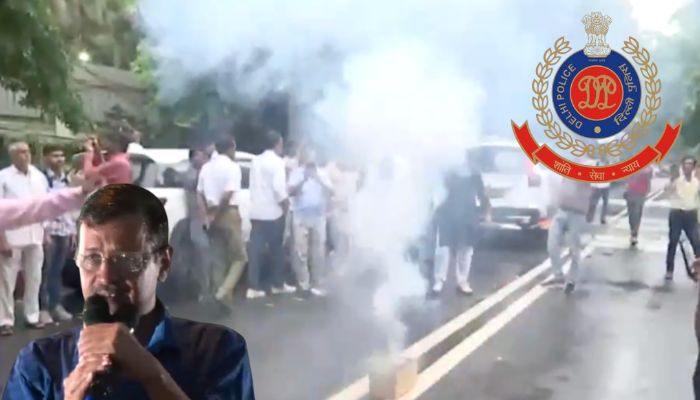
On Saturday (14th September 2024), the Delhi Police registered an FIR against unknown workers of the Aam Aadmi Party who celebrated the release of Delhi CM and AAP Supremo Arvind Kejriwal from jail by bursting firecrackers outside his residence. The party workers have been booked suo motu by the police for bursting firecrackers in violation of Delhi government’s ban on fireworks. 

The development came days after Delhi’s AAP government had renewed the ban on firecrackers ahead of the Diwali festive season. A few days earlier, the Delhi government had announced a blanket ban on all types of firecrackers until 1st January 2025, as part of efforts to combat the annual winter surge in air pollution in the capital. 

State Environment Minister Gopal Rai stated that the ban, enforced under the Air (Prevention and Control of Pollution) Act, 1981, covers the manufacturing, storage, sale, and use of all firecrackers, including “green” forecrackers.

Now on Saturday (14th September), an FIR has been registered at the Civil Lines police station against unknown AAP workers who burst firecrackers yesterday to celebrate Kejriwal’s bail in the Delhi Liquor Policy scam case.  

The FIR NO. 462/2024 under section 223(B) of BNS has been filed based on the complaint given by Sub-Inspector (SI) Tarun Kumar. According to the complaint, the incident occurred at around 06:45 PM on 13th September near 6 Flag Staff road, Civil Lines, Delhi Date. 

As per the FIR, when the officer reached near CM House in Civil Lines, Delhi, he heard the sound of firecrackers from among the large crowd present there. This caused a lot of air pollution. However, when he reached closer, the people in the crowd started running away and no one was seen bursting firecrackers. 

Some unknown people have caused air pollution by bursting firecrackers near 6 Flag staff road, Civil Lines, Delhi which is very harmful to the health of residents and other general public, the complaint in the FIR read. The unknown AAP workers who burst firecrackers have committed an offense under section 223(B) of Bharatiya Nyay Sanhita (BNS). 

As per the FIR, SI Tarun Kumar will carry out the investigation of the case. 

Mumbai: CBI arrests cybercriminal on FBI inputs for defrauding US citizen posing as tech support, seizes 57 gold bars and Rs 16 lakh

0

The Central Bureau of Investigation (CBI) has arrested an alleged cybercriminal from Mumbai for defrauding a US citizen of USD 453,953 by posing as technical support, according to a press release on Saturday.

The accused has been identified as Vishnu Rathi.

As part of the ongoing Operation CHAKRA-III, the CBI has taken action to dismantle a sophisticated cybercrime network supported by virtual assets and bullion that has been targeting victims in foreign countries since 2022. This operation was carried out in close coordination with the Federal Bureau of Investigation (FBI) (USA).

The International Operations Division of the CBI registered a case on September 9, 2024, against the accused, including Vishnu Rathi, under sections 120-B and 420 of the Indian Penal Code (IPC), as well as Section 66D read with 75 of the Information Technology Act, 2000, and launched an investigation.

It is alleged that between June and August 2022, the accused conspired to target a US citizen by gaining unauthorised remote access to the victim’s computer and bank account. Under the pretext of offering tech support services, they falsely informed the victim that her bank account had been compromised. They allegedly manipulated her into transferring USD 453,953 to cryptocurrency wallets controlled by them.

Following the registration of the case, the CBI swiftly conducted extensive searches at multiple locations linked to the accused, recovering substantial incriminating evidence.

The searches, conducted by the CBI at seven locations across Mumbai and Kolkata on September 12 and 13, revealed that the transnational cyber-enabled financial crime network was channelling proceeds of crime through virtual assets and bullion.

During a search of Vishnu Rathi’s residence, 57 gold bars of 100 gm each, Rs. 16,00,000 in cash, a mobile phone, a laptop used to manage cryptocurrencies, details of lockers, and other incriminating documents were recovered.

Further operations are ongoing to identify additional victims and recover further proceeds of crime.

The CBI is coordinating with the FBI and law enforcement agencies in multiple countries through INTERPOL to follow up on leads. Operation CHAKRA-III has been launched by the CBI to combat and dismantle organised cyber-enabled financial crime networks through a globally coordinated law enforcement response using INTERPOL channels.


(This news report is published from a syndicated feed. Except for the headline, the content has not been written or edited by OpIndia staff)

Indian Navy commissions indigenously designed and developed Kalvari Submarine Escape Training Facility titled Vinetra in Visakhapatnam

0

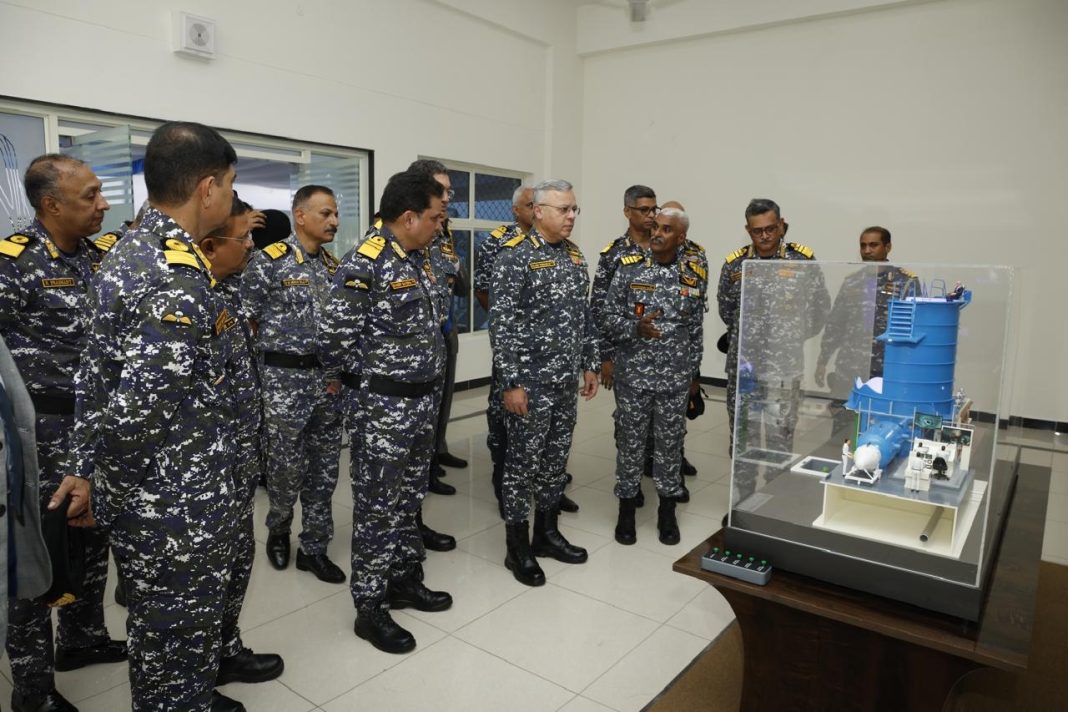
The Kalvari Submarine Escape Training Facility (Vinetra) was commissioned on 13 Sep 24 by Vice Admiral Rajesh Pendharkar, the Flag Officer Commanding-in-Chief, Eastern Naval Command, at INS Satavahana, Visakhapatnam. The facility aims to enhance the escape capabilities of crew from a distressed Kalvari-class submarine.

Vinetra has been designed and developed indigenously keeping in line with the ‘Aatmanirbhar Bharat’ initiative, highlighting India’s focus on self-reliance in defence capabilities.

Constructed by M/s L&T Defence as a turnkey project, the Kalvari Submarine Escape Training Facility is equipped with a five-meter escape tower integrated with an adjacent diving basin. This state-of-the-art facility will be utilised for imparting both basic and refresher escape training to the crew of Kalvari-class submarines, ensuring that they are proficient in escape procedures in the event of a submarine distress situation.

The official handle of Indian Navy spokesperson shared a video on social media demonstrating the working of the facility. They added, Vinetra – the Kalvari Submarine Escape Training Facility, aimed to enhance the escape capabilities of crew from a distressed Kalvari-class #submarine; was commissioned on #13Sep by VAdm Rajesh Pendharkar, FOCINC #ENC, at @IN_Satavahana , #Visakhapatnam.”

The further added, “This indigenously designed & developed facility aligns with the #AatmanirbharBharat initiative, highlighting #India’s focus on self-reliance in defence capabilities.”

The facility “Vinetra” (विनेत्र), meaning “Trainer” represents a significant step forward in building confidence among submariners, ensuring that they are equipped with the skills and training necessary to escape in case of any underwater emergency. This training facility also reinforces the operational readiness, safety protocols and training infrastructure of the Indian Navy. By offering specialised training, it enhances operational readiness and reinforces the Navy’s focus on safety protocols and preparedness in underwater emergency situations.

Kalvari-class submarines are a series of diesel-electric attack submarines built for the Indian Navy. These submarines are based on the Scorpène-class submarines originally designed by the French shipbuilder Naval Group (formerly DCNS). The vessels are constructed by a joint venture of Naval Group and Mazagon Dock Limited. The Kalvari-class submarines are a key component of India’s underwater warfare capabilities, designed for a range of tasks including anti-ship warfare, anti-submarine warfare, intelligence gathering, and area surveillance.

After eviction drive turned violent in Assam’s Sonapur, locals including Muslims protest against encroachment, demand protection of tribal lands

0

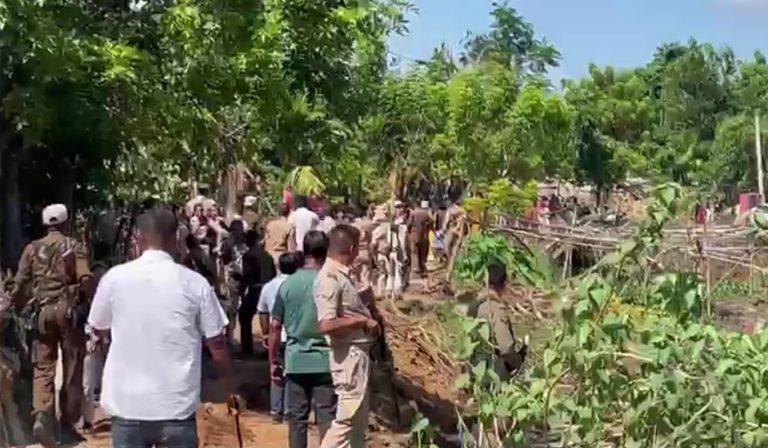
Locals of the Sonapur Kachutali area in Assam’s Kamrup (Metro) district staged a protest on Saturday in support of protecting tribal belt and block areas.

They demanded the eviction of people illegally occupying government land in the area, as well as protection for the indigenous people by the state government.

Locals have alleged that some Congress leaders brought a large number of illegal migrants for vote bank and settled them in government land of Sonapur tribal belt and block areas.

The local Muslim people here are supporting the government’s eviction drive against illegal migrants.

Rahim Baksh, a local youth of the Sonapur Kachutali area, told ANI, “Earlier some Congress leaders brought these illegal migrants to this tribal belt and block area for their vote bank. We want to protect the tribal belt and block area and also the indigenous people. We demand the government to evict the suspected people from here.”

Ashrafuddin Choudhury told ANI that they have been living in the area for the last 100 years and that the illegal migrants should be evicted.

“We have many documents that are 100 years old and we are indigenous people. We want that this tribal belt and block area should be protected. We are with the government in this eviction drive,” Ashrafuddin Choudhury said.

On September 12, two people were killed and seven others were injured in a police firing. After a mob of around 1500 people attacked government officials, including on-duty police, with sharp weapons and threw stones at them, obstructing them from performing their government duty during an eviction drive.

Twenty-two police personnel and a Revenue Circle officer were also injured in the mob attack.

Meanwhile, the administration has served notices to many other people of Sonapur Kachutali area to leave the tribal belt and block area.


(This news report is published from a syndicated feed. Except for the headline, the content has not been written or edited by OpIndia staff)

‘Those who claim to be running Mohabbat Ki Dukaan are indulging in brutality’: PM Modi slams Congress over journalist assault in the US

0

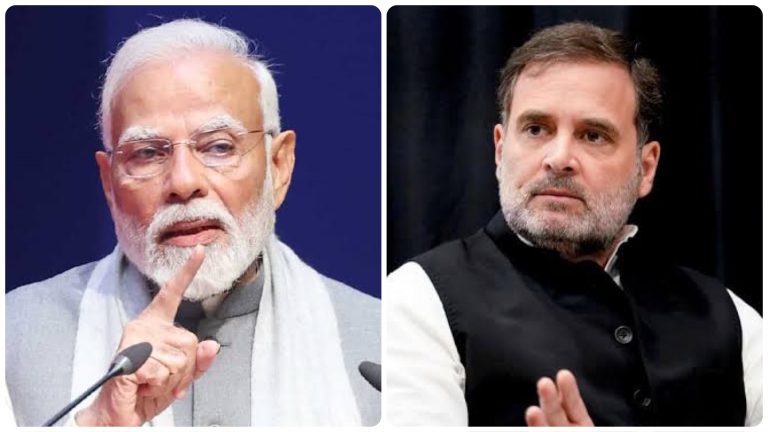
Prime Minister Narendra Modi on Saturday criticized the Congress, accusing them of “engaging in brutality” following an allegation by an India Today journalist who claimed to have been assaulted by Rahul Gandhi’s team in the United States. Speaking at an event in election-bound Doda, Kashmir, PM Modi also mocked Rahul Gandhi’s “Mohabbat ki dukaan” slogan, questioning the harsh treatment of the journalist in the US.

“They (Congress) claim to be running Mohabbat ki dukaan. But a journalist of our country was subjected to cruelty in the USA by Congress. A son of India was insulted in the USA. Those who claim to be champions of freedom of speech indulged in brutality,” Modi said on Saturday in Doda, Jammu and Kashmir.

Prime Minister Modi stated that how the journalist was treated diminished India’s standing on American soil. He also remarked that the Congress is unfit to use the term “Constitution,” seeking to flip the narrative on the party, which has frequently accused the BJP of undermining the Constitution.

Prime Minister Modi emphasised the media’s role as a vital pillar of democracy, questioning whether locking a journalist in a room upholds democratic values. He asked, “Is assaulting an Indian journalist on American soil enhancing India’s reputation?” He added, “The word ‘Constitution’ doesn’t suit you,” directly criticizing the Congress.

India Today journalist assaulted during Rahul Gandhi’s US visit

Last week, a journalist associated with the India Today media network was assaulted by Congress workers in Dallas, Texas, during Rahul Gandhi’s US visit. Journalist Rohit Sharma had gone to Texas to cover Indian Leader of Opposition Rahul Gandhi’s much-anticipated visit. During the event, Sharma was harassed by the Congress workers as he raised the question of Hindus killed in Bangladesh at the hands of Islamists after the fall of the Sheikh Hasina government there.

As per the India Today report, Sharma approached the Chairman of the Indian Overseas Congress (IOC) Sam Pitroda for an exclusive interview hours before Gandhi was scheduled to arrive at the DFW International Airport. The entire interview went well until the last question posed by the journalist. 

As the interview drew closer to the conclusion, Sharma asked, “Will Rahul Gandhi raise the issue of Hindus being killed in Bangladesh during his meetings with US lawmakers?” Before Pitroda could respond to the question, other 20-30 close associates and supporters of Congress and Rahul Gandhi who were present during the interview began creating chaos saying that the question asked by Sharma was ‘controversial’. 

They assaulted him, snatched his phone, and deleted the entire video of the interview.

Another major sign of democratic revival in Jammu and Kashmir: Door-to-door campaigning for election resumes after 37 years

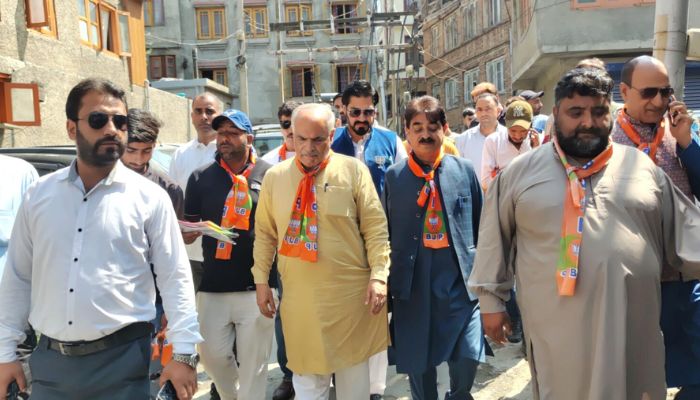
Another major sign of thriving democracy in Jammu and Kashmir is currently being witnessed in the form of door-to-door campaigning in the Kashmir valley for the upcoming assembly elections. Notably, candidates are now reaching out directly to the voters at their doorsteps after a long gap of 37 years.

Strikingly, this is the first time that door-to-door canvassing has returned to the Kashmir Valley since the notorious 1987 Jammu and Kashmir Assembly elections. Back then, elections were overseen by the then-Farooq Abdullah-led National Conference government. NC and Congress were blamed for ‘heavily rigging’ the elections, fomenting a deep divide in the populace, and alienating them from democratic exercise. The tragic aftermath of the 1987 elections was marked by a wave of Pakistan-sponsored terrorism and the purging of the Kashmiri Hindu community. 

Following that infamous election, the democratic exercises and poll campaigns became a risky affair for candidates due to threats of terrorists, and the door-to-door campaigning stopped completely. 

However, the Kashmir valley has seen major signs of democratic revival in the last ten years of the Modi government. While strict counter-terrorism policy has caused a substantive drop in terror incidents, the Abrogation of Article 370, bringing three tiers of governance in the valley and other progressive developments ensured democratic revival. 

Currently, Jammu and Kashmir are in the midst of an election phase with voting to be held between 18th September and 1st October. However, this time the assembly elections are witnessing calmer scenes and intensified election campaigning. The return of door-to-door campaigning signals that democratic exercises are now thriving even in the downtown Valley areas.  

Unlike earlier times, when candidates were forced to address people from a distance in tight security, candidates are now shaking hands, embracing supporters, and enjoying tea with supporters during door-to-door campaigns even in parts that were earlier considered prone to terror incidents. 

Apart from locals, even the PDP candidates have lauded the transformative journey. A former MLC and PDP candidate running from the Eidgah seat in Srinagar, Khurshid Alam said, “We got back home before dusk earlier. Back then, there was risk. Now, campaigning lasts till one in the morning.”

Echoing the positive sentiment, Pulwama’s Rajpora resident, Gulzar Ahmad said, “People who used to be reluctant and afraid to welcome politicians into their homes with tea and blessings now do it with openness. This degree of involvement has been unheard of in the last forty years.” 

To highlight the importance of the LG administration’s transformative initiatives, Ahmad contrasted the present scenario with the dreaded past. He added, “Earlier, candidates were wary about door-to-door canvassing because they thought that Hurriyat leaders and terrorist outfits would organise poll boycotts and stone-pelting.”

According to Ahmad, people are now leaving their houses and approaching politicians directly with their problems. 

Analysts believe that the valley could witness a spike in voter turnout. In the majority of the elections held in the previous 40 years, the Valley recorded voter turnout in single digits. 

However, post the democratic revival under the LG government, voting in the Srinagar constituency reached a four-decade high of 38.5 percent in the recently held Lok Sabha elections.  

Nonetheless, this is the first assembly election since J&K’s special status was abrogated in August 2019. This time it is said to be a multi-corner fight with BJP staked against all other political fronts to make inroads in the Kashmir valley and form its government in Jammu and Kashmir UT. 

West Bengal: Idols of Goddess Durga and other Hindu deities found desecrated ahead of Puja, BJP shares video

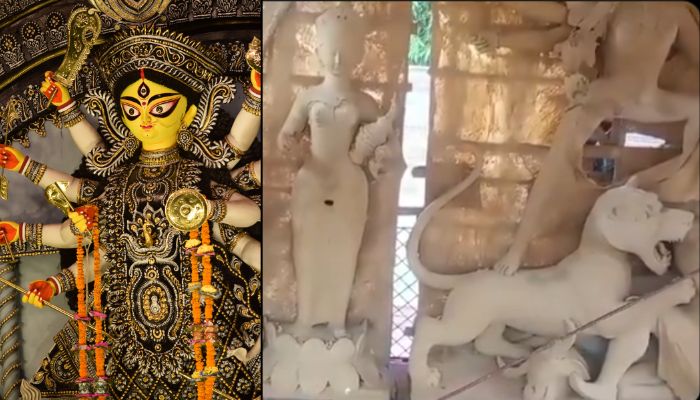
Ahead of the Hindu festival of Durga Puja, idols of the Hindu deity were found vandalised in Jharia village in Hooghly district of West Bengal.

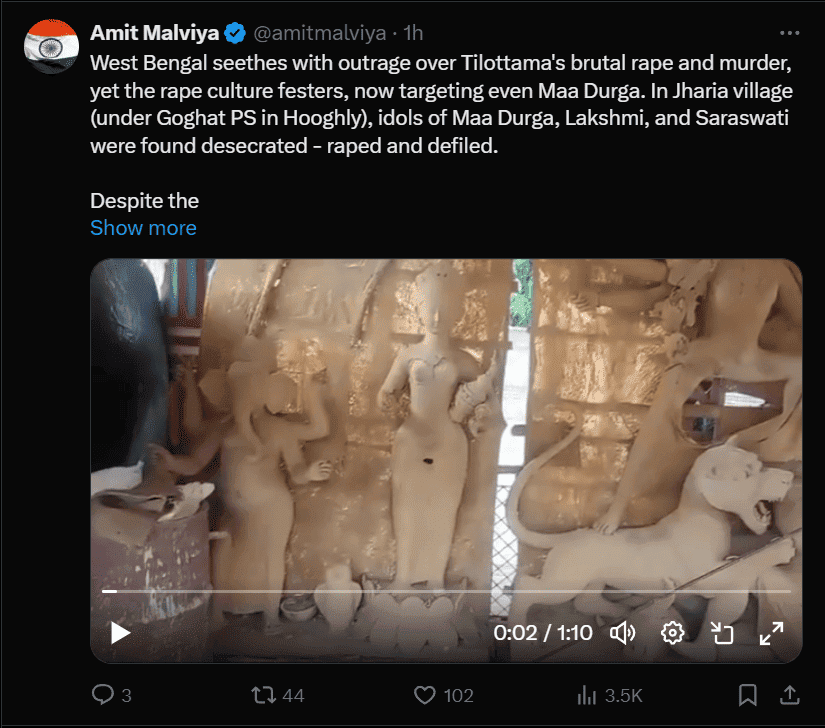
The development was confirmed on social media by BJP spokesperson Amit Malviya on Saturday (14th September). In a tweet, he said, “In Jharia village (under Goghat PS in Hooghly), idols of Maa Durga, Lakshmi, and Saraswati were found desecrated – raped and defiled.”

He has accused the Goghat police of inaction in the case. “Despite the police offering hollow assurance of apprehending and punishing the perpetrators to the enraged villagers, it is all too predictable that this case, like countless other cases, that do not demand the exoneration of a TMC offender, will be relegated to the tortuous, cyclical farce of an investigation,” Amit Malvia added.

Screengrab of the tweet by Amit Malviya

The BJP spokesperson had shared a video of the incident from his X handle. In the video, freshly carved idols of Goddess Durga could be seen in a desecrated state.

Amit Malviya had lashed out at the Mamata Banerjee government over appeasement politics. “If even our Goddesses aren’t safe, what hope remains for women of Bengal, who embody their divine essence?” he concluded.

This is not the first case of idol vandalism that has come to light from West Bengal. Earlier in May this year, three Hindu temples were desecrated by unidentified miscreants in Dhupguri in the Jalpaiguri district of West Bengal.

Following the incident, the local Hindus protested against the incident and blocked a highway, demanding strict action against the accused.

‘Sensitive material’ delaying appointments of Chief Justices of 7 High Courts: Attorney General to SC

0

On Friday (13th September), the Attorney General of India told the Supreme Court that the Union government has received some ‘sensitive material’ which is delaying the appointment of Chief Justices of 7 High Courts. This comes nearly two months after the Supreme Court collegium had recommended these appointments. 

It is pertinent to note that the Collegium holds the final authority on appointments to constitutional courts but the Union government gathers information about the potential appointees, such as their track record, any criminal record, or activities/links that could harm national interests before executing the recommendations of the SC collegium. 

A three-judge SC bench comprising Chief Justice of India DY Chandrachud, Justices JB Pardiwala, and Manoj Misra was hearing a PIL that has sought directions to implement the recommendations of the Collegium in a time-bound manner. 

Explaining the delay in the appointment of these seven Chief Justices of High Courts, Attorney General R Venkatramani said, “I have received some information…I’ll share it, information is confidential, sensitive, I’d like to place it on record.” 

The attorney general further stated that the government was refraining from filing an affidavit as putting these issues in the public domain would neither be in the interest of the institution nor of the personalities involved.

Venkatramani added, “I would like to place the inputs and my suggestions in sealed cover for perusal by the judges.”  

Earlier, on 11th July, the SC collegium comprising CJI Chandrachud and Justices Sanjiv Khanna and B R Gavai had recommended the appointment of Chief Justices of seven High Courts. These included – the appointment of Justices Manmohan as CJ of Delhi HC, Rajiv Shakdher as CJ of Himachal Pradesh, Suresh Kumar Kaith as CJ of J&K and Ladakh, G S Sandhawalia as CJ of Madhya Pradesh, N M Jamdar as CJ of Kerala, Tashi Rabstan as CJ of Meghalaya and K R Shriram as CJ of Madras HC.

Furthermore, there are many more recommendations of the SC collegium which are pending before the Union government. They include appointments and transfers of HC judges. 

During the hearing, the CJI-led bench made efforts to persuade the Attorney General to convince the Union government to expeditiously clear the appointments to the HCs. Currently, there is a pendency of 60 lakh cases before the High Courts but 30% of HC judges’ posts are lying vacant.

CJI DY Chandrachud also revealed that he had a conversation with the AG on Thursday. He had requested him to “sort out” the issues that are delaying the appointments that had been recommended by the Collegium. 

The bench will now hear the matter on 20th September.