

Home Blog Page 7578

Is Mahavir Singh Phogat of ‘Dangal’ a misogynist character?

0

While there is a debate on whether to boycott or not boycott Dangal due to Aamir Khan’s comments, there is another debate going on about the movie that is more about the story rather than the story teller.

This debate is whether Aamir Khan has sent out a message through Dangal that is directly in conflict with what he sent out in 3 Idiots i.e. whether children should be allowed to chase their own dreams or forced to follow the dreams of their fathers.

Some are arguing, and it may appear right, that in Dangal, Aamir Khan is playing character of a father who thrusts his unfulfilled dream of winning an Olympic medal upon his daughters, and that this is not the same father of 3 Idiots who lets his son drop out of engineering course to pursue photography.

Not just that, since this time it’s daughters and not sons, there is a bonus criticism about sexism and patriarchy too. For example, this particular criticism:

Dangal review by Huffington Post
Fair criticism?

The above article is quite critical of Aamir and at one place it says “this film is not about the women, but about one man driven by his male ego.”

Is this a fair criticism?

Outwardly it may seem so, but this criticism suffers from the weakness many people, incidentally on the ‘left’ side of the ideological divide, have shown on other occasions when they have failed to look at a character beyond their own binaries.

Such critics are so obsessed with their own idea of political correctness that they fail to notice the nuances. They will be particularly upset at reading this, because they usually consider themselves the masters of understanding nuances.

This failure to notice the nuances was limited to misinterpreting and misdiagnosing Hindu epics earlier as they raced to apply their modern “progressive” standards on events that took place thousands of years ago, but it now appears to be percolating to even Bollywood movies.

In case you are wondering what is being argued, recall the criticism of Lord Rama, who is often abused as “misogynist” by some because he made Sita-mata go through agnipariksha and later separated from her because a dhobi (washer-man) raised some objections.

Sounds pretty fair on modern feminist standards, right? But the nuance missed here is when people confuse, or maybe deliberately ignore, that Ramayana is not a husband-wife story. The character of Lord Rama is playing roles of that of a son, a husband, a king, a warrior, a brother, and so on – and more often than not, these roles are in conflict with each other.

When Rama decides to listen to an ordinary washer-man and “abandons” his wife, he takes that decision as a ruler, not as a husband. As a ruler, he had to bow down to what his subjects felt. His decision to separate from Sita was to show that a king in Ram Rajya has to follow the same moral and civil codes that an ordinary washer-man has to. Rama upheld standards of a society – which surely were not “progressive” when viewed from modern feminist standards – because upholding those standards was supposed to be his dharma as a ruler.

Ramayana and other epics are full of such nuanced characters and events, but they are often critiqued through modern binaries and judgments are passed over characters. We had earlier shown how Goswami Tulsidas is similarly attacked with critics paying no attention to the nuances of a character he developed.

Bringing down Hindu epics is a form of virtue signalling that helps people show that they are “progressive”, and it appears that we have seen the same virtue signalling when it comes to criticism of Aamir’s character in Dangal.

The character that is being claimed as that of a person full with male ego and a father thrusting upon his dreams upon his daughters, is actually the character of a Coach.

When Mahavir Singh Phogat – the character in the movie, not the real person – forces his daughters through rigorous exercises and even punishments, it is not a father thrusting his unfulfilled desires on his daughter but a coach determined to make his students shine on international levels.

This is clear from the storyline of the movie where one can see that once Phogat becomes the father of a fourth girl child, he buries his dream of seeing his son win a medal. Does it means misogyny because he wanted a son? Again, the context has to be seen. We are talking about Haryana – a state with one of the worst sex-ratio and not really known for gender equality especially in the time the movie is set. And add to that wrestling – a sport not that well identified with women.

He picks up all his trophies and puts them in a box, symbolising how he he has given up on this one wish. It is only later, when he is told that his daughters handed a solid beating to two boys, the coach in him spots talent in the little girls. And then the man in him realises that it is not only boys who can win medals. That is not exactly misogyny, but realisation about gender equality.

It is not like those girls wanted to be singers or dancers while their father decided to make them wrestlers. Do we not marvel when we hear about how athletes in other countries are spotted young and trained for big events? And did we not hear stories about how Pullela Gopichand, coach of PV Sindhu who won a Silver medal at the Olympics earlier this year, confiscated her mobile phone, made her go through rigorous exercises, didn’t allow her to meet friends, banned her having ice-cream, and all such stuff? Was Gopichand driven by some male ego or was it the determination of a coach to see his student excel?

That is exactly what Aamir’s character in the movie does. He is playing the role of a disciplined coach, not of an egoist father. In one of the scenes from the movies this dichotomy is brought to the fore. After a hard day’s training, while his daughters are asleep, the tough cookie Phogat crumbles, and is seen pressing his daughters’ tired legs. That’s when he remarks: “I can be either their father or their coach at any one point of time, not both.”

This is the nuanced character that Aamir Khan is playing, A coach who wants to see his students push the envelope, thus thrusting them into a world of trial and hard work, yet a caring and loving father, who worries for his daughters too.

Criticism and analysis of a character always enriches and extends the experience of watching a movie or reading a novel, but when some obvious nuances are missed in such criticism, one wonders if it was genuine criticism, or just a virtue signalling.
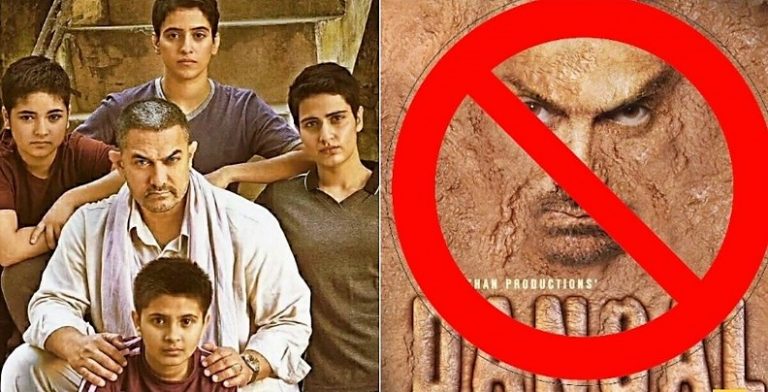
Right Wing and Boycotts – the Dangal fiasco raises questions for future

0

One of the universal truths is that our world is not black and white. It has myriad shades of grey and it is often considered a sign of elevated intelligence to understand nuanced differences that life offers us. It is with this knowledge that most people assess others and evaluate their relationships with them.

However, there are certain instances in life when a message is sought to be sent out in no unequivocal terms. A social or financial boycott is one of those.

Social boycotts are more of a rural phenomenon where anti-social and troublesome entities are socially boycotted to teach them a lesson. This however is not the first line of punishment. Typically this is done only after observing a pattern of behaviour over a period of time. Very often these decisions are handed out by the Panchayat and the villagers unquestioningly follow suit. No one then brings up the other desirable qualities that the person may or may not possess.

Now coming to financial boycott. The most recent example that comes to mind is the Snapdeal boycott because of Aamir Khan’s intolerance utterances. Even then, anti-boycott advocates rightfully questioned the morality of the boycott. They spoke about innocent people who were caught in the cross fire between Aamir Khan and Right Wing (RW) supporters.

Technicians, delivery boys and suppliers who were in no way a part of the intolerance brigade but probably paid a price as thousands boycotted Snapdeal. But RW believed that a message had to be given and in their wisdom this was infinitely better than adopting violent means. This was the Swadeshi moment for Twitter and a message was sent out by peaceful means.

Having tasted blood, it was then decided that Dangal was also to be boycotted. At that point of time, it was well known that Dangal was a biopic about the Phogat sisters but the idea of ‘Boycott Dangal’ was well accepted.

As events unfurled, Dangal was released and it received very good reviews from some prominent RW supporters. This led to outrage among many others. It was seen as a huge let down to the RW cause and transgression by these supporters.

Justifications followed, including a write up by OpIndia. This article justified the support by stating that it was for its nationalist character of the movie and also for providing impetus to the ‘Beti Padhao Beti Bachao’ campaign of Narendra Modi government. However, the explanations seem wanting on many counts.

I will not get into questioning whether Dangal should be boycotted or not. Aamir Khan’s anti-Modi statements and constant flip flops are now well documented and well known. My comments are limited to the call for boycott and the subsequent backtracking by some.

Does this also have implications for future boycott calls? With Raees set to release soon, does it make sense to continue with this strategy or is it time to look for a new one?

Now coming specifically to the OpIndia article, the writer says that “if you take out Aamir Khan and his statement from the equation, this movie is tailor made for RW to embrace”. The thing about boycotts is that they can never be qualified. And certainly not in retrospect. The call for boycott was for Aamir Khan’s intolerance utterances. To measure that in terms of what his movie portrays takes away from the purpose of a boycott call. By that yardstick, the next time a boycott is called, RW must conduct a SWOT analysis of the subject and only then decide on whether to proceed or not.

Secondly, the write up asks us whether we want to send a message to Aamir Khan or to the lakhs of men trapped in their patriarchal mindset. Here I disagree with the writer because watching a movie is not about sending messages. It is remotely possible that making a movie may be about sending a message, but watching one is certainly not about that.

That aside how many of those who watched Dangal would have done so if it was not Aamir Khan but Nawazuddin Siddiqui as the main protagonist? How many of those would go and see a wrestling match with these girls if it were to happen in their city? For that matter how many of those have ever watched a cricket match of our world cup winning Indian woman cricket team?

At the end, movie making, with very few exceptions, is all about money making. Likewise, movie watching is generally about entertainment where altruistic intentions take a back seat. To ascribe any other motives to either of the two actions is to live in a fool’s paradise. And to conflate a movie’s content and message with the call for a boycott is self-defeating.

It probably is a good time for RW to ponder over the usefulness of boycott calls. The ability of RW to embrace the shades of grey in Aamir Khan is a hint in this direction.

For this AAP leader, proof of not being communal is ‘eating beef’

0

Election season is near and so is the season of making irresponsible statements to woo voters. Since the elections in Punjab and Uttar Pradesh are being given more importance by the Indian media due to them being big states, brain-farts from leaders of those states get discussed and debated; and that has allowed leaders in Goa to make silly statements and hope to get away from it.

Recently, AAP Supremo Arvind Kejriwal descended in Goa to address a public meeting to drum up support for AAP in Goa. Instead of choosing a centrally located venue in Goa, AAP went deep into South Goa, to the constituency of its CM candidate, Elvis Gomes. Another feature of this constituency Cuncolim, is that 50% odd of its population is made up of “minorities”, and the surrounding constituencies have the “minority” population going up to even 71%.

AAP is trying to win these “secular” constituencies, and thus its candidates are supposed to prove their commitment to secularism. One of AAP Goa’s founding leaders, and candidate from Panaji, Valmiki Naik has been trying to do the same after Congress recently released a picture of Naik purportedly seen cheering to a crowd of BJP supporters after AAP lost the North Goa Lok Sabha poll in 2014.

To prove his secularism, Valmiki Naik chose the aforementioned election rally, which was graced even by Arvind Kejriwal. He gave various details of his life, to prove to the “secular” audience, that he is not a communal RSS-wadi. Listen to his claim to secularism:

He gave various details, such as staying in a home owned by a Christian and his sister being convent-educated. But then he pulled out the smoking gun: “I eat beef”. It is important to note that its perfectly legal in Goa to eat beef, but the statement when seen as a whole is important:

“I am not communal….I eat beef”

Leaders of the Right Wing are often ostracised for bringing food habits and religion into the political sphere to influence voters. How is this different from a Sadhvi or some random Baba pandering to religious feelings?

Whether he wants to eat beef or not, is his choice, but the fact that he chose to declare this from a public political rally to score a political point indicates that he links food habits to politics, that too communal politics as eating beef is considered a transgression, almost a sin, by large section of the Hindu community.

Also, is it to be inferred then, that Naik is implying that all non-beef eaters are communal? Essentially majority of the Hindus are communal? Such religiously charged statements used for political gains could have been expected from some uneducated candidate in rural India, but Naik claims to be an alumni of the University of Texas. And of course, a he is a candidate of the Aam Aadmi Party, which claims not to stoop down to caste and communal politics.

Furthermore, what is even more worrisome is the reaction of the crowd – presumably made up of AAP supporters – present at the rally. When Naik mentions the instance of religious coexistence of photos of both Jesus Christ and Hindu gods, the crowd is virtually silent. They don’t cheer him at that instance. Coexistence and mutual respect is not worthy of an applause for the crowd, but when Naik says that he eats beef, he gets the loudest cheer.

Perhaps that’s the perfect embodiment of what secularism has come to mean in India – not mutual respect when Hinduism is involved, but an aggressive one-upmanship over Hindu beliefs.

Why many on the ‘right’ are not boycotting Dangal – no, they haven’t forgiven Aamir

0

Aamir Khan’s career is full of ups and downs. In Bollywood, he started off with a bang, then succumbed to trashy movies, and now is seen as the torch-bearer of method acting and thought provoking movies. He has also been quite vocal about his social views, and even here, he has had his fair share of flip-flops. From making polarising anti-Modi comments about the 2002 riots, to mildly praising Modi in 2014, even meeting him after he became the Prime Minister, then making the infamous intolerance remark, and most recently, praising demonetisation.

The latest support for demonetisation has come just near his latest movie Dangal, and even so, a section of the “Right Wing” is vociferously campaigning for boycotting Dangal. The reason is obviously their anger at Aamir Khan for his remark that his wife had though about leaving India due to the country’s rising intolerance.

This anger, can be understood. If someone in my house says something bad for our house, and if I don’t agree with him, I am bound to be peeved. Further, boycotts are a perfectly legal method (much better than stoning theatres) to express one’s displeasure. Don’t we all have that one uncle or aunty with whom our family doesn’t have great relations, hence we all “boycott” their functions?

Aamir Khan is the lead actor as well as the producer of this movie, so if you want to send a message to Aamir Khan, this movie is tailor-made for a boycott. But the moot question you need to ask is this: Do you want to send a message to one man who offended you with one sentence? Or do you want to send a message to lakhs of men who are trapped in their patriarchal mindset, not giving the females in their family, their due?

Dangal as a movie sends all the right messages to the viewers.

Dangal shows us a male Jat from the hinterlands of Khap-infested Haryana, the state having the reputation of having the worst sex ratio in India, the state where new born girls are still murdered, is a life-long wrestler. He first wrsetles real opponents in his youth, winning most matches. He then has to wrestle with his father, but fails. As a parent, he   has to wrestle with his patriarchal mindset of “sons are the best”, and then wrestle the society as a whole, and the system he is bound by, to ensure that his daughters are not left behind.

We are shown what it takes to be a girl from a village, to traverse the very tricky terrain of the inefficiency infested world of Indian sports bodies, to emerge at the pinnacle of a sport which unlike Cricket, does not get all the support it should get. And don’t forget, this is the women’s section of a forgotten sport, making it even more forgotten.

Aamir Khan plays a highly patriotic, nationalistic minded wrestler, who wants to win a medal for his country, so that his country’s national anthem rings in the pantheons of world sport.

All this is set in the 90s and early 2000s, when India was still not as progressive as it is today, making all the challenges faced even harder to surmount.

And to top it all of, this story is based on the real lives of the Phogat family. Mahavir Singh Phogat, the father and mentor of the Phogat sisters, has lived this life, and probably endured much more than what was actually shown in the movie. The fact that this movie is not fictional adds huge weight to the proceedings, and the message it delivers.

If you take out Aamir Khan and his statement from the equation, this movie is tailor-made for the Right Wing to embrace. It has the spirit of PM Modi’s Beti Bachao Beti Padhao movement, something which PM Modi has pushed at various important platforms. It has a huge dose of nationalism, mixed with the desire to excel at a sport.

But without doubt, the most important message of this movie its bold statement against patriarchal mindsets. Lets face it, “India” may have moved on in large parts, but large sections of “Bharat” are still chained to regressive practices. No-one can deny that women are yet to get justice in many fields in India.

When an A list star makes a bold appeal that too based on a real-life story, the chance that it may wake up that dying conscience in its viewers is fairly large. Even if 5% of the viewers of this movie go home with a changed outlook towards their daughters, their wives, their daughter-in-laws, and women at large, then it is well worth it.

But to be fair to the movie, it is not only about upliftment of women. It touches on the aspect of a borderline selfish father, robbing his children’s childhood. Or the tricky relation between a daughter and her father-cum-taskmaster-coach.

It is not a perfect movie, being a bit stretched and little contrived in parts. The usual cinematic tropes are thrown in to tug at your emotions. But the acting is A-grade, and there is a very authentic feel to the proceedings. The cast and crew have worked hard to get small things right, and it shows on the screen.

In such a situation, holding Aamir Khan by his one statement, would do great injustice to Dangal’s message which is the need of the hour. As far as sending a message to Aamir Khan is concerned, the boycott Snapdeal movement already had an impact on Aamir.

Governments would do well by making the movie tax free as well, provided Aamir Khan himself promises to donate a percentage of the proceeds to a cause which ensures the upliftment of women. If not, Governments could also promise to use the collections from taxes only for women-specific schemes. Aamir Khan too should step in to promote the Beti Bachao campaign honorarily.

But does this mean if you care about the cause of the girl child, you have to watch Dangal or else you’re a part of the problem? No. One can choose to take Aamir Khan’s message from PK as well, that of not donating to a temple and instead donating clothes to the needy. Instead of watching Dangal, we can also act to solve this gender bias problem by creating awareness, donating to the right causes etc. Finally, its all about working towards the cause, in your own way.

Goa AAP CM candidate Elvis Gomes, Corruption charges and a problematic letter: The full story

0

Elvis Gomes, AAP’s CM candidate for the upcoming Goa election doesn’t seem to be able shrug off the ghosts from the past after he was summoned by the Anti-Corruption Bureau yet again for a 30,000 square meters land scam that took place between 2007-11.

The alleged scam dates back to 2007 when Nilkant Halarnkar of the Congress was the Chairman of the Goa Housing Board. Later, Elvis was reportedly the Managing Director and the Joint-Secretary of the same housing board. ACB claims that during that time Halarnkar and Elvis acquired approx 30,000 square meters of land in Margao region for implementation of a housing scheme. The land was identified and in August 2008 NOC was obtained from TCP, Margao.

Then, in September 2009, the Goa Housing Board deposited Rs 21,80,000 as 25 per cent of the cost of land with the EDC. All was well till 2011 when a Vincent Gracias made a single-page application to the MD of the Housing Board requesting them not to acquire land as he along with some more people were the cultivators of the said property. Later it was found that Gracias had no authority over the land.

It is alleged that Gomes under the capacity as the joint secretary of Goa Housing Board granted approval to Gracias’s request without following the protocol of placing the matter before the Secretary for decision and referred back the matter to the MD or himself. If this wasn’t murky enough, the zoning of the land was changed from a settlement zone to a commercial zone in 2010 thereby increasing the value of the land. So in a nutshell the government acquired the land from the existing owners increased its valuation and then gave it back to the owner.

AAP and its sympathizers rather than acknowledging the charges against their CM candidate and ordering an internal inquiry for the same, as has been their practice in the past are now trying to spin the charges against Elvis as being a vendetta by the BJP government.


The truth however is slightly different as it was in February 2016 that an individual had first levelled these charges against the Minister and Elvis. And after a preliminary inquiry, the ACB registered the FIR in June of this year when there was no association between Elvis and AAP. Plus just after a few days of an FIR being filed against him he applied for voluntary retirement. During that time Elvis was IG prisons. Though his resignation wasn’t accepted immediately due to the inquiry being pending against him. His resignation was finally accepted at the end of September.

Also Elvis himself had claimed that he wasn’t attached to the housing board when the incidents occurred, though a letter doing rounds on Social Media suggests otherwise:

The picture contains the letter allegedly signed by Elvis as the Joint Secretary housing addressed to Elvis as MD wherein he conveyed the government’s intention of dropping the acquisition of probably the same 30,000 square meters of land.

Though one hopes more clarity is provided and Elvis is able to provide an answer to all the suspicious minds  thereby preventing him from having to be inside the same jailhouses of which he was the IG before taking the VRS.

Trending: Left Liberal Calvin vs Right Wing Calvin

0

Everyone knows about Bill Watterson’s epic comic strip series Calvin & Hobbes. So often we have seen so many sections of the strip, where a small child interacts with his toy tiger, or his parents, or friends, on the most innocent issues, but reveals universal practical truths. And all of this in a humorous manner.

Since Calvin & Hobbes is an American cartoon series, there is almost no chance of seeing them talking about Indian issues right? Think again.

Social media saw the emergence of 2 Calvin & Hobbes enthusiasts, who used the panels of the epic of cartoon series, and filled them with dialogues related to the hottest topic of the day: Demonetisation. What was even more amusing was how both of them chose the same panels, yet put two different set of dialogues to cater to completely divergent thought processes. So here are the 2 cartoons:

Left Liberal Calvin: (Source)

Click on the image to see larger size

Right Wing Calvin: (Source)

Click on the image to see larger size

[poll id=”1″]

Modi Government’s reforms scorecard: Governmental and Administrative reforms

0

Even though the media is crying hoarse about demonetisation, it appears that people continue to support Modi, for attempting something radical. So much so that even a radical left wing propaganda site had to publish something about why demonetization is getting wide support. This should embolden Modi to undertake more reforms that are palatable to the common man. If politically feasible, this should drive Modi to ensure all the reforms initiatives that are listed in the 2014 BJP election manifesto see the light of the day.

To see how Modi has performed, based on his own criteria, here is the “Reforms Scorecard” halfway through PM Modi’s tenure. Here are the promises made on the reforms front in BJP’s 2014 election manifesto and their status as on December 2016:

A. Open Government and Accountable Administration

1. Digitization of Government records will be taken up on top priority so that they are easily accessible

The DIGILocker facility to keep all documents from birth certificate to business records has been created. Launched on July 1, 2015.

Status: Done.

2. Performance review, social and environment audit would be mandated for all Government schemes and programmes

This has been initiated and is an ongoing process. PM Modi has initiated PRAGATI – Pro-Active Governance And Timely Implementation – aimed at monitoring and reviewing important programmes and projects of the central and state governments. Launched on March 25, 2015.

Status: Done.

3. Open up Government to draw expertise from the industry, academia and society into the services

This has been an ongoing process and here are some examples:

KV Kamath – Ex-ICICI Bank and Ex-Infosys – BRICS Bank Chairman
Kris Gopalakrishnan – Ex-Infosys – Digital India
Arvind Panagariya – Professor of Economics at Columbia University – Vice-Chairman NITI Aayog
and many others

Status: On-Going

4. Government will be redefined by elimination of whatever is obsolete in laws, regulations, administrative structures, practices and would be purposive

  • As for eliminating old laws, by July 2016, the government had already repealed 1,175 laws by legislation
  • As for changing regulations: There have been changes in regulations in almost all sectors. Here are only few examples:
    • Changes in visa regulations
    • Modi government has cleared the Model Shops and Establishment Bill, which will allow shops, banks, cinema halls, malls, restaurants and other retail commercial establishments to stay open 24 hours, seven days a week—if they choose to. (June 29, 2016)
    • There have been changes in the The Real Estate (Regulation and Development) Bill through legislation
    • Amendment in the First Schedule of Industries (Development and Regulation) Act, 1951 has been made. This amendment eliminated long standing confusion about jurisdiction of Central and State Governments on Alcohol – Potable Alcohol and Industrial Alcohol has been resolved. This Amendment was made to create a balance between the Union and States.

Status: Done.

5. Changes in Administrative structures and practices

Abolishing the Planning Commission and bringing in NITI Aayog is a significant example. However, there needs to be further impetus in changing the old structures. Decisive action seems to be lacking in other areas. Though a committee had been formed under Shyam Benegal to bring changes in the CBFC, nothing has changed on the ground yet. Though the intent was visible, no changes were made in the institutions like FTII – where government must have no role whatsoever.

Status: Half-hearted effort.

6. We will generate ‘Kartavya Bhavna’ among public servants as lives and productivity of people is dependent on the quality and efficiency of public services
Well…! This one is tough to evaluate, isn’t it?

Risking the ire of some, I would rate the performance of the bankers has been exceptional. Be it in opening new Jan Dhan accounts to marketing of various insurance schemes (example: Atal Pension Yojana) to demonetization, they have done a commendable job. To include such a huge share of population in a short span of time is indeed worth applause. Of course, black sheep exist. Nevertheless…

Unfortunately, the “Kartavya Bhavana” has not been instilled in all elected MPs of BJP and NDA. Their performance in the “Sansad Aadarsh Gram Yojana” has been dismal to say the least. I would place the blame of this squarely on the shoulders of BJP President Amit Shah. He needs to ensure that his flock get serious about this, lest the opposition and media will have something to beat Modi with in 2019.

Status: Hence, I would rate this as not yet done!

B. Administrative Reform

1. The administration and its members will be made truly accountable to their tasks as well as the people through rigorous evaluation process

The government redrew the empanelment process for civil servants deputed to the Centre and made merit and integrity the cornerstones. The old system of Annual Personal Appraisal Reports (APAR) of civil servants has been removed, as more than 90% of them were found to have very high grades. Please click on this report to find more details regarding the changes.

Needless to say, some areas of the government – the finance ministry in particular – continues to confuse. Am not sure if competent people are handling decision making and public communication. The recent fall-outs during the demonetization implementation drives the point, if the new evaluation process is indeed working.

Meanwhile, other ministries do not make front page news (or on any page) and hence it is difficult to ascertain the positives.

Status: Hence, this will remain a question mark as of now!

2. Good performance will be rewarded; non-performers will be given opportunities and training support to improve

On the two year anniversary of Modi government, Swarajya had filed this to evaluate this criteria. Modi government has undertaken tough decisions like enforcing voluntary retirements and dismissals of civil servants. Rewards have been given in equal measure. The aforementioned Jan Dhan Yojana saw many bankers being rewarded. So were Railways employees, who completed their projects before schedule. Also, giving cash rewards (in cheques) to employees in the public sector seems to be the go-to option of Indian governments since time immemorial.

Status: Done

3. Rationalization and convergence among the Ministries, departments and other arms of the Government will be ensured to focus on delivery
One of the first decisions taken by the Modi government was the abolishing of GoMs and and EGoMs (Empowered Group of Ministers) – as if the first lot were not empowered. Anyway, such chaff have been removed. Also, the role of erstwhile Planning Commission has been changed to focus on delivery.

Another early move by the Modi Government was to combine 17 related ministries into seven different groups, including some infrastructure departments, in a bid to ensure synergy and better results. One major example is that of the infrastructure sector, where he combined Road Transport and Highways and Shipping in the ministry to be eventually headed by Nitin Gadkari

Status: Done

4. Services of youth in particular will be tapped to contribute in governance with Fellowship and Internship programmes launched at various levels

  • A National Scheme of Apprenticeship Training has been started.
  • On 2 Aug 2014, the HRD ministry rolled out a special internship programme that seeks the involvement of young talent to get a fresh perspective on formulation of policies, implementation of projects and various initiatives in the education sector.
  • Likewise, internship programs are ongoing in Ministry of External Affairs, Finance Ministry, Ministry of Corporate Affairs and so on.
  • Also, the Press Information Bureau has been regulary sharing many such internship/apprenticeship programs on it’s website.

In addition, it must be mentioned that the government also increased fellowship amount for research scientists in October 2014 (though it’s implementation has not been smooth).

Status: Done.

In the next part, we will look at some of the Judicial, Police and Electoral reforms which the BJP had promised to undertake in its manifesto, and the status thereof.

Businessman arrested for converting 25 crore worth of old notes, no stranger to controversy

0

Kolkata based businessman Parasmal Lodha was today nabbed by the Enforcement Directorate for converting old notes worth Rs 25 crores. He was also detained a few days back after it was found that the 13 crores seized from the office of lawyer Rohit Tandon actually belonged to Lodha.

Parasmal Lodha is a real estate developer and has stakes in mining, finance, consultancy and restaurant firms. His also nicknamed as ‘Extra floors Lodha’ or ‘Fiddler on the roof’ for being infamous for approaching house owners in a bid to construct extra floors on that building and using them for his own purposes. Its reported that Lodha first came to prominence when the Left front came to power and was dubbed close to a minister in the government.

He has also featured in other controversies:

The 2010 Stephen Court fire: Fire engulfed the top two floors Stephen Court building in Kolkata killing at least 43 people. Reports later came out that it was Lodha who had built or to be more accurate, added the top two floors but had chosen not to provide an extension to the spiral staircase which came up to the 4th floor. Had he done so, the people present on those floors could have used the same as a fire exit. He had built the floors in mid 80’s and had proceeded to get them legalized.

The controversy for which he is most well known is his attempted hostile takeover of Peerless General Finance and Investment Company Limited. The year is 1991, Pearless group at that time was flourishing with a deposit base of Rs 1,340 crore witnessing a 15% year on year growth and major investments in shipping, hotels, tourism and housing in the pipeline. Those who didn’t have a stake wanted one and those who had a stake wanted more. Parasmal Lodha was one such guy, having a 22% stake he apparently wanted a larger piece of the pie. Peerless’s Chairman and Managing Director P.C. Sen and Joint Managing Director S.K. Roy had other ideas. This after all wasn’t the first time Lodha had tried a takeover. Back in 1986 he had managed to garner 51% of the shares and a seat on the board. Just that IT raids had forced him to sell most of the stake.

This time though Lodha petitioned the Central Government and approached the courts in order to somehow coerce S.K. Roy into selling his 68% stake. Then the Chairman and MD P.C. Sen started alleging how Lodha had offered substantial amount of money to Roy and when he refused, threatened that Roy would sleep with the fishes. Sen further alleged that in order to carry out the offer which Roy couldn’t possibly refuse Lodha had requested the services of Dawood Ibrahim.

Though the police wasn’t convinced of the same and let off Lodha after questioning, the whole episode ensured Lodha gained prominence in the corporate world.

Congratulations Saif and Kareena for your baby, and for exposing the ‘perfumed elites’

0

Not so long ago, as a first-time expectant mother, the thoughts, aspirations and fears that raced through my head would put a deathly cyclone to shame. Often my sisters and my mother used to tell me to calm down and not overthink everything. But of course, it was impossible.

I thought about everything. Which cot was the safest? Which stroller would I need? How should I baby proof the house? What tiffin would I make for my child when she starts going to pre-school? What music should I listen to? How much should I walk? How many times the baby should kick in an hour? What was the best technique to do her maalish? I read every page of “what to expect when you are expecting” thrice over.

And of course, her name.

In those 9 months, I shortlisted hundreds of names for boys and girls. Obsessed over what they meant and how the energy attached to the name might influence my child. Everything, was minutely planned. Everything was thought a million times over. I became a crazed over-obsessive overjoyed mess.

Which is why, I felt the need to comment on the entire controversy that surrounded Kareena, Saif and their newborn.

At the onset, before I even begin to comment on what the couple chose to name their child, it has to be said: when I saw some (limited) tweets wishing ill upon the new bundle of joy, I felt a chill run down my spine. I almost couldn’t believe what sort of monsters would even wish the slightest harm on an infant who has barely breathed his first in this world. And I prayed that someone would shield the new mother from reading the monstrosity of those tweets.

I myself went through this when I was an expectant mother. Someone on Twitter thought it was fair game to wish I bleed to death. Some desired I had an ectopic pregnancy, and wished the most atrocious things upon my unborn child, which I don’t even feel like repeating. For that alone, I empathise with the mother. I hope our collective good wishes can trump all the negative energy hurled upon the new life.

A mother, for 9 unending months nurtures a human being with her blood, sweat and tears. Every second of her existence is dedicated to the life she is creating. It is a joy, the sheer depth of which, is unparalleled and incontestable. And naming that creation is another personal and spiritual experience for every couple.

I would imagine, that every parent would want a name for their child, that would not only define the virtues that the parent holds dear, but also in a manner that would define the child when he grows up. The virtues that the parent chooses to highlight with the name, might not be agreeable to everyone. And it doesn’t have to be. It has to sit well with the parents.

And this is where I felt uneasy. It is indeed painful that a name that represents a mass murderer would be agreeable to a couple who might be idolised by many unsuspecting youngsters.

That Mrs. Kareena Kapoor Khan and Mr. Saif Ali Khan chose to name their child after a Turco-Mongol conqueror who left a trail of blood behind him, is their choice. That they named their son after a rapacious man who destroyed temples, killed millions of Hindus, destroyed India (where this happy couple are considered royal celebrities), and reportedly beheaded his mother, is their choice. That they chose to name their child after a man, who in his memoir said, “My object in the invasions of Hindustan is to lead a campaign against the infidels, to convert them to the true faith according to the command of Muhammad (on whom and his family be the blessing and peace of God), to purify the land from the defilement of misbelief and polytheism, and overthrow the temples and idols, whereby we shall be Ghazis and Mujahids, companions and soldiers of the faith before God.” is their choice.

Perhaps these are the virtues that the couple wish to pass on, and that again, is completely their choice. Though, what gives me the right to comment, is the fact that the couple has chosen the glorify a character who once destroyed the very land that today puts this couple and their respective families on a pedestal.

What perhaps scares me the most, is the influence such people wield on unsuspecting youngsters. I chuckle to myself when they say “this is our personal matter”. Yes, it is. But with great fame, comes great responsibility and greater scrutiny.

Scrutiny, because owing to their stature, it is our children who might get influenced by misplaced decisions taken by such celebrities. But, it is STILL their personal choice how they wish to conduct themselves. It is also the people’s choice to critique a decision that was taken by the very people THEY have put on a pedestal.

I understand how a part of the “perfumed elite” club is flabbergasted with this “unnecessary outrage”. Sure. It would be quite unnecessary if the elite cabal of our society didn’t pretend to be torch bearers of virtue and morality. The beacon of hope in the dark dingy era of intolerance that we seem to live in. The paragons of peace and harmony that stand against any sort of violence and discrimination.

It would certainly be unnecessary if they didn’t claim to be all of that, and simultaneously, glorify the very man who did everything that was diametrically opposite to the virtues they claim to hold dear.

It is, however, necessary, because these very people claim to fight for equality of women while glorifying a man who raped our women (“Many of the Rajputs placed their wives and children in their houses and burned them. Then they rushed to battle. Other men of the garrison fought and were slain and a great many were taken prisoners.” – Vol. III, Elliot & Dowson).

And this point of time, one of these perfumed elites will throw at me the argument that the Islamic invaders in those areas were fighting each other. That they killed Muslims too. That “it has nothing to do with religion”.

But I love books, and I love reading. I read this somewhere:

“They (Islamic invaders) were not a loving family cemented by the feeling of Islamic brotherhood. They were deadly rivals of one another and their wars were often wars of mutual extermination. What is, however, important to bear in mind is that with all their internecine conflicts they were all united by one common objective and that was to destroy the Hindu faith.”

Our liberals throw at us only half-truths, which is their trademark. They happily ignore the last bit – one common objective and that was to destroy the Hindu faith.

No. The text I quoted above wasn’t written by some “overzealous hateful Sanghi”. It was written by Babasaheb Bhim Rao Ambedkar. He specifically mentioned Taimur when he wrote that.

Understandably, the mention of Ambedkar might have made some perfumed elite a little uncomfortable since it doesn’t bode well for their narrative. So now, they might come up with another argument – most rulers were bigoted plunderer in those days, so why pick on Taimur only?

Firstly, no, not everyone was bigoted even though you’ve tried to twist history as much you can to whitewash Taimurs, Tipus and Aurangzebs. And secondly, go slow on that hypocrisy. You falsely accuse Lord Rama of being misogynist, apply on him modern synthetic standards of feminism and can’t stop screaming how these “regressive” figures have to be fought, but want me to surrender to your whims? It would be laughable if it weren’t so twistedly tragic.

While I completely respect Saif and Kareena’s freedom and privacy to do as they please with their family and while I have nothing but blessings and good wishes for the new bundle of joy, I say, it is necessary to talk about how it’s time for the torchbearers of humanity, to walk the talk.

If you are happy with glorification or even normalisation of Taimur, you’re nothing but merchants of hate.

And on that note, I must congratulate Saif and Kareena for one more thing other than them getting their bundle of joy – for their actions have exposed these “liberals”.

You can choose to cut off your nose to spite your face, but I humbly submit to you, dear “liberals”, don’t expect everyone to follow suit.

Digvijaya Singh to be questioned in a 719 cr scam that happened while he was CM

0

Congress leader and former Chief Minister of Madhya Pradesh, Digvijaya Singh is all set to be questioned by the Economic Offences Wing of the state with regards to a 719 crore rupees scam in the MP State Industrial Development Corporation (MPSIDC) while he was the CM of the state. Digvijaya Singh was the CM of MP for two tenures from 1993 to 2003, after which Congress is yet to win an assembly election in the state.

What was the scam?

In order to understand the scam, first we need to know what ICD or inter corporate deposits are. ICDs are essentially a short term loan provided by one corporation, which has surplus cash, to another corporation in need. MPSIDC, a public sector entity, loaned out about Rs 663 crores in 1998 to select industrialists and charged 18-21% interest. The problem happened when some of the ‘select industrialists’ didn’t repay the loans to the tune of Rs 375 crores, which thanks to the interest rate has now accumulated to about Rs 719 crores in today’s date.

Another hitch in the ride is the fact that unlike the textbook definition of ICD, where a corporate with surplus cash loans out money, MPSIDC in order to loan out the funds actually proceeded to issue bonds which were brought by Banks like IDBI, Maharashtra District Central co-op Bank and others who have been haranguing the MPSIDC for repayment.

In what might be a classic case of Crony Capitalism, the bonds which essentially raised public money were alleged to have been given to ‘select industrialists’ without any guarantee of repayment. The biggest defaulters are reported as Enbee Group, Alpine Industries, Ishar Group, Jagdish and Ajay Arora of the Som Group and G.K. Rathi and Dilip K. Rathi.

How is Digvijaya Singh involved:

As the scam took place during his tenure as CM he could be held culpable for the same. But it has been further alleged that among the select industrialists, there were Alpine Industry’s Jamboo Bhandari who has been dubbed close to Digvijaya Singh and Anoop Bishnoi, son-in-law of the former Haryana chief minister Bhajan Lal.

Just more problems for Digvijaya?

Back in 2015, an arrest warrant was issued against Digvijaya in an assembly recruitment scam, and just a few months back he was questioned by the EOW with respect to the the government decision to waive off penalty imposed on RKDF engineering college in 2000-01 and 2001-02.

Also, former AAP leader Prashant Bhushan has shared a handwritten note which he alleges contains details of payoffs by Sahara to certain politicians. While the Supreme Court has not accepted such notes as proof, Congress Vice President Rahul Gandhi is using those to attack the Modi government. Well, if Congress party believes that the notes are genuine, it contains Digvijaya Singh’s name alleging that he received 25 lakh rupees as bribes from Sahara.
