The Enforcement Directorate (ED) in its recent supplementary chargesheet filed in Delhi Court stated that the total Proceeds of Crime (PoC) identified so far is Rs 1100 Cr, out of which PoC of Rs 292.8 Cr is being dealt with in this Prosecution Complaint. The ED has recently filed a Supplementary prosecution chargesheet naming BR Leader K Kavitha and several others in connection with the Excise policy money laundering case.
The chargesheet stated that Bharat Rashtra Samithi (BRS) leader K Kavitha was involved in PoC of 292.8 crores out of which 100 crores are kickbacks to AAP leaders & 192.8 crores are profit of Indospirits. K Kavitha conspired with the members of the South Group and the AAP leaders through Vijay Nair (who was acting on behalf of the top leaders of the AAP) to pay kickbacks to the tune of Rs 100 Cr and receive undue benefits.
Kavitha by way of conspiracy and formation of Indo Spirits has participated in the generation, acquisition and use of the PoC of Rs. 192.8 Cr which was derived as a result of the conspiracy of kickbacks and payment of kickbacks. By showing Indo Spirits as a genuine business entity and acquiring the PoC of Rs 192.8 Cr she is involved in projecting this PoC as genuine profit from a legitimate business, stated the chargesheet.
K Kavitha also received the PoC of Rs 5.5 Cr from M/s Indo Spirits in the name of her associate Abhishek Boinpally. K Kavitha by paying kickback to the Govt functionaries through their middleman has participated in the generation of PoC of Rs. 100 Cr. K Kavitha has then participated in the transfer of this PoC to the Govt functionaries, as stated in the chargesheet.
It also stated that K Kavitha actively destroyed the digital evidence to conceal her role and involvement in this scam. K Kavitha has deleted evidence and contents of her mobile phone. K Kavitha presented 9 phones for examination, these phones were formatted and had no data. She was evasive and couldn’t give any explanation for those formatted phones. Kavitha is also involved in acts of influencing the witnesses. Buchi Babu, CA of K Kavitha in his statement revealed that an associate of K Kavitha was being asked to retract his statements against Smt K Kavitha given on 23.02.2023 and 28.03.2023 to ED.
By way of participating in the conspiracy of formation of M/s Indo Spirits to recoup advance bribes of Rs. 100 Cr paid K. Kavitha is knowingly involved in the generation and transfer of PoC of Rs 100 Cr and the generation, acquisition, and possession of PoC Rs 192.8 Cr in the guise of profits generated by Indo Spirits (accused no. 4) during November 2021-August 2022. For acquiring this PoC, Smt K Kavitha in conspiracy with others, formed a partnership concern using dummies/proxy persons and projected them as genuine business partners. Further, she is also involved in the possession of Rs 32 cr approx. Through her proxy Arun Pillai which is part of her share of profits in M/s Indo Spirits. The same is recoupment of advance kickbacks paid. In this manner, Kavitha is involved in the generation, acquisition of Rs 192.8 Cr. possession and projection of the POC as untainted.
On May 29, 2024, the Rouse Avenue Court took cognizance of the Enforcement Directorate’s supplementary prosecution complaint (Chargesheet) filed against BRS Leader K Kavitha and others in connection with the Excise policy money laundering case.
The chargesheet was filed against BRS Leader K Kavitha and other accused namely Chanpreet Singh, Damodar Sharma Prince Kumar and Arvind Singh.
On May 6, the Rouse Avenue Court of Delhi dismissed the bail petitions moved by Bharatiya Rashtra Samithi (BRS) leader K Kavitha in connection with CBI and ED cases related to the Excise Policy case.
BRS leader K Kavitha was arrested by the Enforcement Directorate on March 15, 2024 and by the Central Bureau of Investigation (CBI) on April 11, 2024.
Earlier, CBI through remand application stated that “Kavitha Kalvakuntla was required to be arrested in the instant case to conduct her custodial interrogation for confronting her with the evidence and witnesses to unearth the larger conspiracy hatched among the accused, suspect persons regarding the formulation and implementation of the Excise Policy, as well as to establish the money trail of ill-gotten money generated and to establish the role of other accused/suspect persons, including public servants, as well as to unearth the facts which are in her exclusive knowledge.”
The CBI inquiry was recommended based on the findings of the Delhi Chief Secretary’s report filed in July showing prima facie violations of the GNCTD Act 1991, Transaction of Business Rules (ToBR)-1993, Delhi Excise Act-2009, and Delhi Excise Rules-2010, officials said.
The ED and the CBI had alleged that irregularities were committed while modifying the excise policy, undue favours were extended to licence holders, the licence fee was waived or reduced and the L-1 licence was extended without the competent authority’s approval.
The beneficiaries diverted “illegal” gains to the accused officials and made false entries in their books of account to evade detection, the probe agencies said.
As per the allegations, the Excise Department had decided to refund the earnest money deposit of about Rs 30 crore to a successful tenderer against the set rules.
Even though there was no enabling provision, a waiver on tendered licence fees was allowed from December 28, 2021, to January 27, 2022, due to COVID-19, the probe agency said and there was an alleged loss of Rs 144.36 crore to the exchequer.
(This news report is published from a syndicated feed. Except for the headline, the content has not been written or edited by OpIndia staff)
On May 28th, a 23-year-old Indian student Nisheetha Kandula went missing in the US state of California. Now, the authorities have appealed to the public for help in finding the missing California State University, San Bernardino (CSUSB) student. Several similar cases involving Indian students have been reported in recent months in the US.
Taking to X on Sunday (2nd June), CSUSB police chief John Guttierez said that Kandula was last seen in Los Angeles and was reported missing on the 30th of May.
“#MissingPersonAlert: California State University, San Bernardino Police along with our partners in #LAPD, is asking anyone with information on the whereabouts of @CSUSBNews Nitheesha Kandula, to contact us at: (909) 537-5165,” Guttierez posted.
#MissingPersonAlert: California State University, San Bernardino Police along with our partners in #LAPD, is asking anyone with information on the whereabouts of @CSUSBNews Nitheesha Kandula, to contact us at: (909) 537-5165. pic.twitter.com/pZaJ35iwuq
— Chief John Guttierez (@guttierez_john) June 1, 2024
According to a written statement from the police, the missing Indian student is 5’6″ tall, weighs around 160 pounds (72.5 kg), and has black hair and eyes. The police said that Nisheetha Kandula was driving a Toyota Corolla that was licenced in California.
“Anyone with information is urged to contact the CSUSB Police Department at (909) 538-7777, or the LAPD’s Southwest Division at (213) 485-2582,” the police statement adds.
Notably, in April this year, a similar incident was reported wherein a 25-year-old Indian student Mohammed Abdul Arfath, who was missing since March this year, was found dead in the US state of Ohio. As reported earlier, Arafat, a native of Hyderabad, went to the US for his Master’s degree in IT from Cleveland University was missing since March 7 this year. His father, Mohd Saleem, said that after ten days, they received a phone call from an unidentified person who claimed Arafat had been kidnapped and demanded a USD 1200 ransom for his release.
This follows a string of strange disappearances and deaths of Indian students in the United States of America.
Earlier on 5th April, it was reported that an Indian student named Uma Satya Sai Gadde died in the US state of Ohio. The cause of death remains unknown.
A 23-year-old engineering student at Boston University, Paruchuri Abhijit, was found dead in an abandoned car on 11th March this year. He hailed from the Burripalem in Guntur district of Andhra Pradesh. Abhijit is believed to have been murdered by unidentified assailants.
On 27th February, Indian dancer Amarnath Ghosh was murdered by unidentified men while he was out in the St Louis Academy neighbourhood.
On 2nd February, a 41-year-old Indian-origin man named Vivek Taneja succumbed to his injuries after being grievously assaulted by an unidentified man in downtown Washington in the United States.
A day earlier, Shreyas Reddy Beningeri, who had been pursuing a graduate degree from Lindner School of Business, died in Ohio.
One Neel Acharya, an Indian student pursuing a double master’s at the Purdue University in Indiana, went missing on 31st January. Later, his dead body was recovered by the police.
Earlier on 20th January, Akul Dhawan, an 18-year-old Indian-American student, was found dead near the University of Illinois. He reportedly froze to death after being denied entry into a nightclub.
Another Indian student Vivek Saini was brutally killed with repeated blows from a hammer by a homeless man inside a store in Lithonia, Georgia, US on January 16th this year.
Two students named Nikesh and Gattu Dinesh were found dead in their room in Connecticut in the United States on 14th January 2024. They were students of the Sacred Heart University and believed to have died due to ‘carbon monoxide poisoning’.
Besides the 11 cases of mysterious death, an Indian student named Sameer Kamath committed suicide on 5th February while another student named Venkataramana Pittala died in a jet-ski accident.
After taking an acute partisan stance against the incumbent Bharatiya Janata Party (BJP), the foreign supporters and abettors of the Opposition I.N.D.I. Alliance have seemingly started to accept the writing on the wall. In an apparent display of a ‘recalibrated’ strategy, the UK-based Financial Times recently published an article to assert that Narendra Modi is well poised to return with a strong mandate to form the next government, citing exit poll forecasts.
The article titled ‘Exit polls forecast decisive majority for Narendra Modi in India’s election’, acknowledges that if the result predictions hold true, Modi’s victory will establish him as “one of the world’s strongest leaders” who is “at the helm of a fast-growing economy.”
Yes. “If the polls’ predictions are confirmed on Tues when official results are reported, the victory will bolster Modi’s image as one of the world’s strongest leaders at the helm of a fast-growing economy, at a time when its geopolitical clout is growing.”https://t.co/w8mHs8oLkz
— Derek J. Grossman (@DerekJGrossman) June 1, 2024
Similar to other foreign media outlets, the Financial Times has been notorious for running smear campaigns against India and stereotypically projecting India as a ‘third-world country of abject poor, uncivilised savages’. However, the latest article strikingly notes that Modi’s re-election comes “at a time when India’s geopolitical clout is growing”, alluding to the success of the Modi government in the foreign policy domain.
(Financial Times along with other Western media outlets rallied against the incumbent Bharatiya Janata Party prior to and during the Lok Sabha elections 2024)
The article states, “Narendra Modi is poised to secure a third five-year term as India’s prime minister this week after exit polls projected a clear election victory for his Bharatiya Janata Party and its smaller allies.”
The article cites predictions from several exit polls, which unanimously indicate that the BJP-led NDA is poised to win a comfortable majority with seats ranging between 353 and 401 in the 543-seat Lok Sabha. Notably, shortly after the seventh and final voting phase concluded on June 1st, ten exit polls predicted that the BJP-led NDA would secure over 350 seats, while three forecasted an even stronger mandate with the ruling alliance gaining over 400 seats. All the exit polls predict that the opposition alliance will secure fewer than 200 seats.
(Image Credit – OpIndia)
Further in the article, FT notes, “That (exit poll forecasts) leaves Modi with a strong mandate to form the next government, taking him into a second decade as prime minister.”
‘The opportunistic INDI Alliance failed to strike a chord with voters,’ FT cited PM Modi’s post on X, made on Saturday evening after the Lok Sabha elections concluded.
The UK-based outlet highlighted that PM Modi’s resounding victory will positively impact the financial sector, especially for share market analysts and investors. This underscores the fact that the market, investors, and economic stakeholders view PM Modi’s economic policies favourably and express confidence in the continuity and stability of the government. FT added, “Market analysts, in the meantime, anticipate a surge in Indian equities on Monday, buoyed by the anticipated decisive win for Modi.”
It is pertinent to note that in the backdrop of stellar GDP figures and exit polls instilling confidence and exuberance in investors, they added a whopping Rs 12 lakh crore to the Sensex after the market opened on Monday. At 12:35 PM, the Sensex registered a surge of 3.13%, or 2,313.25 points, standing at 76,246 points. Similarly, the Nifty jumped by 3.08%, or 693.20 points, reaching the 23,223.90 level.
FT further stated, “The results give the first indications of the shape of India’s next parliament after an election that many saw as a referendum on Modi’s decade in power.”
Incidentally, the Financial Times was unabashedly spearheading hit jobs against the incumbent Modi government prior to and during the elections, particularly regarding the allegations that India under Modi has been carrying out “extra-judicial killings” of “dissenters/activists” (a term they used for Khalistani/Islamist terrorists killed in mysterious circumstances on foreign soil), and published canards linking Indian government with the murder or attempted assassination of Khalistani terrorists like Hardeep Singh Nijjar and Sikh for Justice’s Gurpatwant Pannun.
(Along with other foreign media outlets, Financial Times have spearheaded campaign against the Modi government over the issue of mysterious deaths of terrorist elements outside India)
However, the FT in its latest article acknowledged India’s growth and rising global stature under the leadership of PM Modi. It noted, “If the polls’ predictions are confirmed on Tuesday when official results are reported, the victory will bolster Modi’s image as one of the world’s strongest leaders at the helm of a fast-growing economy, at a time when its geopolitical clout is growing.”
Further in the article, FT mentioned that exit polls in the past have gone wrong, but noted that in recent years, they have been proving to be a more reliable indicator of voters’ decisions.
FT, notorious for its cynical reports peddling baseless tropes against the Modi government, also highlighted several major achievements of the Modi government. Notably, pollsters believe these achievements have helped the BJP attain an unassailable advantage over its rivals.
The FT lauded the achievements of the Modi government stating, “India’s 73-year-old leader campaigned on the slogan of ‘Modi’s guarantee’, a reference to government welfare programmes that benefit hundreds of millions of Indians, and his record on reducing poverty and developing the world’s fifth-biggest economy. India’s GDP grew at a better than expected rate of 7.8 percent quarter on quarter in the three months to March, and its economy has been one of the world’s fastest-growing since the Covid-19 pandemic.”
Strikingly, the Financial Times had earlier echoed the opposition’s rhetoric and often gave fodder for their unsubstantiated allegations to corner the Modi government. Supporting the opposition’s cause, it had earlier extensively tried to paint an autocratic image of PM Modi charging him of “stifling dissent, jailing key opposition leaders” and taking India on the road to dictatorship, etc.
However, in the latest article, the Financial Times refrained from amplifying the opposition’s rhetoric. It only mildly referenced the opposition’s allegations against the Modi government during the election campaign and their claim of ‘forming a government with 295+ seats on June 4th.’
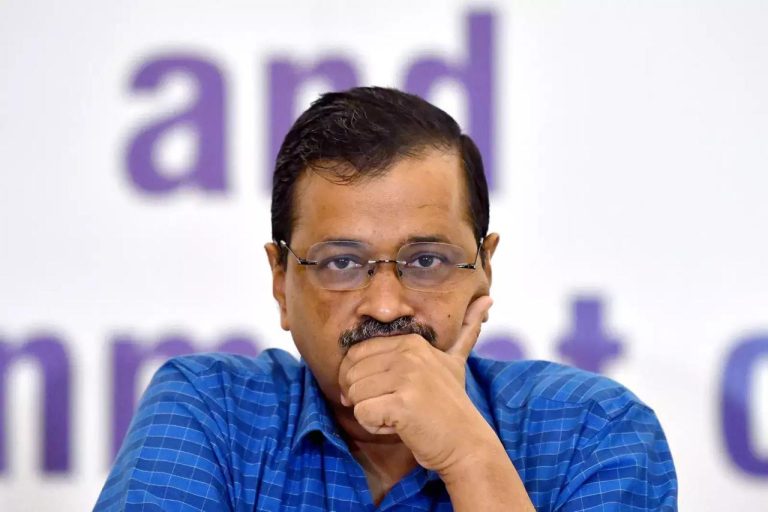
The Financial Times, which batted for the opposition alliance and dismissed India’s objections to “foreign interference” in its election and narrative setting, published an article on May 24th that hyped Arvind Kejriwal, the liquor policy scam accused, to influence public perception a day before Delhi went to the polls on May 25th.
Even in the latest report, FT sounded sympathetic to the jailed AAP leader as it included the version of his supporters. It deliberately omitted the details revealed by the probing agencies in its chargesheet in the case and failed to include several scathing remarks from various courts in the case which has severely dented the image of the “Kattar Imandar Party” and its Chief.
FT cited Kejriwal’s remarks made on Sunday (2nd June) when he surrendered before the Tihar jail authorities and returned to jail. It stated, “On Sunday, Kejriwal, before returning to jail in a corruption case his supporters claim is politically motivated, asked his Aam Aadmi party colleagues to be vigilant on counting day to prevent any manipulation of voting machines. ‘All exit polls are fake,’ he said. ‘Don’t be depressed or discouraged.’”
Earlier this month, the Financial Times targeted Adani for an alleged ‘coal scam,’ which was soon picked up by senior Congress leader and former president Rahul Gandhi to attack the Modi government. In an attempt to corner the Modi government, Gandhi referenced the Financial Times report, which accused the Adani Group of selling low-grade coal as high-value fuel. However, it later emerged that the transaction took place during the UPA era, undermining Rahul Gandhi’s attempt to target the Modi government and casting his own party’s previous government in a negative light by leveling corruption allegations against them.
Incidentally, in an interview with Hindi broadcaster Times Now Navbharat, PM Modi acknowledged that there are active attempts to interfere with India’s elections from abroad. Regarding this, PM Modi had said, “Many in the world are trying to influence the election, which they shouldn’t be doing… They are not merely making comments or remarks, but trying to influence the election.”
विरोध की तीव्रता की उम्र सिर्फ 4 जून तक है।
4 जून के बाद ना उनकी हैसियत होगी और ना ही उनका हौसला होगा। सिर्फ और सिर्फ देश की ताकत और सामर्थ्य होगा।
However, PM Modi asserted, “They won’t have the guts to say anything after 4 June. They would witness the power of India, its democracy, and its voters on 4 June.”
Notably, the peculiar change in stance by the FT seems to strengthen PM Modi’s assertion that the intensity of these (election interference) efforts will come down post-election results. After sensing BJP’s return to power, OpenAI had recently pointed out that influence operations were using its tools to run anti-BJP and pro-Congress campaigns on social media during the Lok Sabha elections 2024. It added that it has shut down five such covert operations. The foreign actors, which rely on a subscription model, played an active role against the incumbent Modi government and have now seemingly ‘recalibrated’ their strategy to cater to one of the largest English-speaking countries outside the Anglosphere.
The Election Commission of India has rejected Congress spokesperson Jairam Ramesh’ request to be given 1 week’s time to respond to their letter. The ECI has asked the Congress leader to reply by 7 pm today regarding the claims he made earlier.
“Your allegations that attempts have been made to influence the DMs of around 150 constituencies who are also the ROs/DEOs has serious connotations and direct bearing on the sanctity of the counting process, scheduled for tomorrow”, the letter stated. The ECI asserted that if Jairam Ramesh fails to file his response with details of his claim, it will be understood that he has nothing substantial to make such a claim. In that case the ECI would proceed to take appropriate action, the letter stated.
On Sunday, June 2nd, Jairam Ramesh had claimed that Union Home Minister Amit Shah dialled 150 District Magistrates (DMs) just days before the counting date. Ramesh had made the claim in a public social media post.
The Election Commission asserted that it has not received a report from any DM that they are experiencing any undue influence, to date. However, it asked the Congress leader to give details so that the issue could be addressed in the “larger public interest”, given the gravity of the allegations leveled by the senior Congress leader.
It is notable here that District Magistrates serve as returning officers during the election process and the claims made by Ramesh were serious in nature.
The ECI letter read, “The process of counting of votes is a sacred duty cast upon every RO (Returning Officer) and such public statements by a senior, responsible and experienced leader tend to put an element of doubt and thus, deserves to be addressed in the larger public interest.”
The Bhartiya Janata Party has begun its victory march from the land of the rising sun—Arunachal Pradesh. Under the leadership of Chief Minister Pema Khandu, the BJP won a landslide victory in the state. The party won 46 of the 60 seats in the state legislative assembly. Congress party which dominated Arunachal Pradesh’s politics until ten years ago has been nearly wiped out winning just 1 Bameng seat in East Kameng district.
Source: ECI website
“In Arunachal Pradesh, the Congress had been running the government for a very long time. It set up a corrupt system. The then central leaders of the Congress never sanctioned any work without kickbacks. But the BJP gave an alternative way of governance…” Khandu said on the 2nd of June.
Interestingly, in March this year, the BJP won 10 uncontested seats in Arunachal Pradesh’s 60-member assembly since none of the opposition parties nominated candidates in five constituencies, while BJP opponents withdrew their nominations in another five. The uncontested winners included Chief Minister Pema Khandu from Mukto and Deputy Chief Minister Chowna Mein from Chowkham.
Pema Khandu: The man behind BJP’s rise to power in Arunachal Pradesh
Known for his passion for sports and music, Pema Khandu has become massively popular in Arunachal Pradesh, especially after a constitutional crisis in 2016 that resulted in the declaration of president’s rule. The 2016 constitutional crisis eventually culminated in Khandu’s appointment as the state’s chief minister at the age of 37.
Belonging to the Monpa tribe, Khandu is accredited to be the driving force behind the BJP’s ascension to power in the state when it won 46 of 60 assembly seats for the third time in a row with a massive 54.57% vote share.
Source: ECI website
Khandu’s political career began with a personal tragedy: his father, former chief minister Dorjee Khandu, died in a helicopter crash in 2011. His political career took off after he won an unopposed by-election in his father’s Mukto constituency.
Regardless of political fluctuations, defecting from the Congress to the People’s Party of Arunachal (PPA) and then to the BJP, Khandu has held his political grip demonstrating perseverance in the face of internal conflict.
Pema Khandu connecting with people and winning hearts by organising cultural and sports events
Since taking office as Chief Minister of Arunachal Pradesh, Pema Khandu has promoted and organised a myriad of cultural events and sports tournaments to promote the state’s rich heritage and boost the confidence of young athletes in the state. Khandu’s initiatives to unleash the state’s tourism potential include infrastructure development, promoting cultural heritage, and marketing Arunachal Pradesh as a premier tourist destination.
From the famous Tawang Festival showcasing the region’s unique traditions, music, dance, and crafts, the Siang River Festival, the Ziro Music Festival held annually in the picturesque Ziro Valley, the Nyishi tribe’s Nyokum Yullo Festival, Losar Festival, to Pangsau Pass Winter Festival among others, CM Khandu has actively supported efforts to showcase Arunachal Pradesh’s cultural diversity before the entire country and the world. Khandu’s efforts have yielded positive results for the state’s tourism industry and also increased job opportunities.
CM Pema Khandu at Mopin celebration in Hime village of Lower Siang district in 2022 (Source: Khandu’s Facebook page)
As the Covid pandemic caused severe damage to the state’s tourism sector, CM Khandu launched the “Dekho Apna Pradesh” scheme on the lines of Prime Minister Narendra Modi’s “Dekho Apna Desh” scheme to revive tourism in the state. Based on the theme of “Restarting Tourism for All”, the Tourism Department has conducted four of its familiarisation (FAM) tours covering Kra-Dadi-Kurung Kumey- Kamle, Namsai-Kibitho-Kahoo, Tirap-Longding and Taksing to Tawang (theme Border to Border) under ‘Dekho Apna Pradesh’ initiative.
Simplifying the process for obtaining Inner Line Permits (ILP) has been a significant step in boosting tourism, making it easier for domestic tourists to visit the state. In November 2022, the CM Khandu-led BJP government launched an e-ILP portal for tourists. With the launch of electronically generated ILP, obtaining a permit has become faster and more convenient than ever.
Pema Khandu as CM has played a pivotal role in fostering a positive environment for promoting sports and athletics in the state. In addition to various state-level tournaments, CM Khandu has launched the first-of-its-kind Tawang Marathon, the North East India 24-Hours Mountain Biking Championship, and organised the Hangpan Dada Trophy etc.
‘Trekking’ is Khandu’s key to connect with the people in remote areas
Interestingly, beyond the political rhetoric of reaching the last man standing, CM Khandu has in practice demonstrated that if there is true intent, no place is distant and unreachable. In the year 2020, CM Khandu trekked a distance of 24 km for 11 hours to meet the people of Luguthang village located 97 km away from Tawang. Situated at the height of 14,500 feet above sea level, this village had at that time only 10 houses and just 50 people residing there.
— Pema Khandu པདྨ་མཁའ་འགྲོ་། (Modi Ka Parivar) (@PemaKhanduBJP) September 10, 2020
In March 2021, Pema Khandu became the first Chief Minister to reach Vijaynagar, the last administrative headquarters near the Myanmar border in Changlang district. He travelled a distance of 157 km from Miao on the road. Accompanied by some state cabinet ministers and officials, Khandu also held a public meeting in Vijaynagar and Gandhigram. He inspected the condition of the road and ensured that it was motorable by March 2022. It is pertinent to note that the 140 km long road, as promised by CM Khandu, has been constructed and is ready for public use.
Source: Arunachal Times
Road and Infrastructure projects: How Pema Khandu has become the “Nitin Gadkari” of Arunachal Pradesh
Under the leadership of CM Pema Khandu, Arunachal Pradesh has witnessed a significant surge in road construction and infrastructure projects. Once seen as a hard-to-reach Arunachal Pradesh, with the inauguration of the Donyi Polo Airport in 2022, Itanagar is just a three-hour flight away from New Delhi. The state government with the remarkable support of PM Modi-led Central government has transformed the state’s connectivity via roads. This holds special significance since Arunachal Pradesh shares border with a hostile China.
In January this year, the Modi government approved the construction of 1022 km long roads for Rs 2,205.19 crore in Arunachal Pradesh under the Vibrant Village Programme intending to ensure last-mile connectivity in the remote areas of the state. Under the scheme, around 105 road projects have been sanctioned by the Ministry of Home Affairs (MHA)
In October last year, CM Khandu announced that a Frontier Highway would be constructed along the India-Tibet-China-Myanmar border and it will be around 20 km close to the Line of Actual Control (LAC) and the international borders. For its construction, Union Minister Nitin Gadkari allocated Rs 6,621.62 crore in March this year. Besides enhancing connectivity and facilitating socio-economic growth, this highway would also prove beneficial in curbing migration and facilitating reverse migration.
Under visionary leadership of Hon PM Shri @narendramodi Ji, Arunachal Pradesh is witnessing a new era of connectivity in border areas.
Gratitude to Hon Union Minister Shri @nitin_gadkari Ji for fresh allocation of Rs 6621.62 crore for construction of eight packages of NH-913,… pic.twitter.com/NZMCl2yw1F
— Pema Khandu པདྨ་མཁའ་འགྲོ་། (Modi Ka Parivar) (@PemaKhanduBJP) March 12, 2024
“The frontier highway has a huge strategic value. It will bring transformational changes in road connectivity in Arunachal Pradesh. This will be beneficial for the Army too,” CM Khandu said.
Meanwhile, projects like the Trans-Arunachal Highway and the improvement of various rural roads have been prioritised to enhance accessibility and economic activity. Notably, the work of the trans-Arunachal highway is about 92% completed reflecting the commitment of the state government in ensuring road connectivity in the state.
‘Connectivity is the key’
Arunachal Pradesh now has more than 50,555 km of roads, a 65% increase over the last seven years from 30,692 km in 2016. The pace of road construction increased by more than nine times, adding up to over 2,838 km per year, much above the 300 km average created in the previous 70 years. Moreover, road density in Arunachal Pradesh has increased by 65% in the last seven years, from 36.65 km to 60.36 km per 100 km.
In the past seven years, numerous remote areas have been connected by the building of bridges across rivers. These include the Upper Siang district’s motorable suspension bridge over the River Siang, the Steel Arch Bridge over the River Yamne at Parak, the River Kabung bridge on the Dosing Pareng-Yibuk-Ligging road, the RCC bridge over the Sille River on Mirem, Mikong, Jonai Road and the Namchik River bridge that connects Hetlong village.
In February this year, CM Khandu inaugurated various infrastructure projects in the state’s Anjaw district, bordering Myanmar and China. He launched a 35-metre-long key steel girder RCC bridge on the Hayuliang to Manchal CO headquarters road. Khandu also dedicated the new infrastructure of Jawahar Navodaya Vidyalaya (JNV) at Hawai.
Efforts have been made by CM Khandu and his government to improve air connectivity within the state, including the operationalization of airports like the Pasighat Airport and plans for new airports in places like Tezu and Hollongi near Itanagar.
CM Khandu flagging off first commercial flight from Pasighat Airport to Guwahati in 2018 (Source: Arunachal24)
Hydropower projects
In another remarkable achievement, CM Khandu has focused on harnessing Arunachal Pradesh’s hydropower potential. Various stalled hydropower projects have been revived, and new projects have been initiated to make the state a significant power generator in the region. In August 2023, the state and the Central government joined forces to revive 12 stalled hydropower projects in the state.
“Towards this, Memorandums of Agreement have been signed in Itanagar, August 12, 2023, wherein 12 hydro-electric projects of cumulative Installed Capacity of about 11,517 MW have been allotted by the state government, to Hydro PSUs under the Union Ministry of Power, an official press release stated.
In April last year. CM Khandu announced that his government will build 50 mini hydropower projects along the border with China for the electrification of remote villages to tackle challenges posed by poor connectivity and mountainous terrain. “50 projects are being implemented in a phased manner and under Phase-I, 17 projects with an installed capacity of 1255 KW and at an estimated cost of ₹50 crore, have been taken up, CM Khandu said last year.
Interestingly, Prime Minister Modi has in the 10 years of his government frequently visited the northeastern states including Arunachal Pradesh. PM Modi’s visits proved to be a gift for the perennially neglected northeast. In line with his ambition of Viksit Bharat [Developed India], PM Modi has ensured that no state is left behind. PM Modi in March this year, laid the foundation stone of the 2,880 MW Dibang Multipurpose Hydropower Project at a cost of Rs. 31,875 crores in Lower Dibang Valley district of Arunachal Pradesh at a Viksit Bharat Viksit Northeast.
Pema Khandu’s ‘Sankalp’ to provide water, houses and health facilities
A central government effort accomplishes its goal only when the state government takes an active part in ensuring that the scheme’s benefits reach the general populace. Under Khandu’s leadership, Arunachal Pradesh became the first state to attain 100% saturation under the Jal Jeevan Mission. Arunachal Pradesh had only 22,796 houses with tap water connections on August 15, 2019, but this figure has since increased to 2,28,546. This achievement holds special significance given the difficult terrain and sparsely located population in the state.
Notably, alongside ensuring the effective implementation of JJM, CM Khandu launched Arunachal Jal Sankalp Yojna (AJSY) and spent around Rs 590.80 crores under AJSY covering 20989 households that were not covered under the Centre’s JJM. This is a perfect example of how visionary and hardworking leadership coupled with effective cooperation between Centre and State governments can yield benefits for the people.
It’s interesting to note that the state has built over 35,000 homes under the PM Awas Yojana, electrified over 3 lakh households, backed over 2,900 self-help groups (SHGs) that give the poorest people jobs, established its first medical college, installed 4G mobile towers to offer network coverage to security personnel and the “first villages,” and increased the state’s overall road infrastructure by 64%. Khandu government is also setting up a dedicated Development Cell for women entrepreneurs.
As jal, jungle, and zameen form an integral part of the lives of tribals in Arunachal Pradesh which has over 79% forest cover, the government needs to maintain a balance between infrastructure development and forest preservation. In this direction, the state cabinet adopted the “Pakke Declaration” at Pakke Tiger Reserve in Pakke Kessang district for climate-resilient development.
Pema Khandu’s efforts to resolve tribals vs settlers dispute
Besides development projects, CM Khandu has taken several steps to address the long-standing disputes between indigenous tribal communities and settlers in the state. His approach involves a combination of legal, administrative, and developmental measures aimed at ensuring harmony and equitable development for all communities. Khandu’s government has emphasized the strict enforcement of the ILP system to ensure that non-indigenous settlers comply with the regulations. The ILP application and issuance processes have been digitized to streamline the system and prevent illegal entry. In 2017, Pema Khandu established a Department of Indigenous Faith & Cultural Affairs (DIFCA) to preserve, promote and document the traditional customs, faith and culture of the Indigenous tribal communities.
The BJP government in the state has also launched initiatives to provide vocational training and employment opportunities to the youth from both indigenous and settler communities, thereby reducing economic disparities.
Notably, the settlement of Chakma and Hajong refugees from Bangladesh has been a contentious issue, with indigenous communities opposing their integration. Khandu government has ensured compliance with Supreme Court directives regarding the citizenship and rights of Chakma and Hajong refugees while negotiating with the central government to ensure that the concerns of indigenous communities are addressed. Moreover, there have been efforts to find balanced solutions that consider the humanitarian aspects of the refugee issue without compromising the rights and interests of the native tribals.
Congress governments neglected northeast India
Congress, during its long tenure in power, often failed to address the unique challenges and developmental needs of northeast India adequately. This neglect resulted in infrastructure deficits, economic stagnation, and social underdevelopment, contributing to a sense of alienation among the people of the region. Despite being strategically important, the northeastern states have long suffered from poor road connectivity under Congress rule. National Highway projects and state road development were slow, making travel and trade within the region difficult.
Furthermore, major railway projects that could connect the northeast with the rest of India and facilitate economic growth were delayed or ignored.
Until the Modi government came to power, many northeast states had inadequate air connectivity, with few airports and limited flight services.
Moreover, the northeast also suffered economic neglect in the pre-Modi era. The northeast is rich in natural resources like oil, natural gas, and minerals. However, these resources remained largely underdeveloped due to a lack of investment and infrastructure. The northeast region also lagged in industrial development due to a lack of central initiatives to promote industries. The absence of large-scale industries led to limited job opportunities and economic stagnation.
Historically, trips by Prime Ministers and high-ranking central officials to the northeast were rare, reflecting a lack of attention to the region’s difficulties and “Mann ki doori”. On the contrary, Prime Minister Modi has visited the northeast more than 60 times. Moreover, the law and order situation has been spectacularly improved in the northeast. Union Minister Jitendra Singh said last year that there has been a reduction of 63% in the incidents of violence from 8700 cases during the period 2006-14 under UPA to only 3195 cases during the period of 2014-22, during the NDA-led Government.
Arunachal Pradesh under remarkable leadership has achieved new strides of development and progress in the last 7 years. It is the collective efforts of the state government, central government and the hardworking people of the sunrise state that the state excels in various sectors despite the geographical challenges it faces. With the shift from UPA’s neglect to NDA’s much-needed attention and support, both Arunachal Pradesh and in turn, the BJP have benefitted. It is these collective efforts coupled with CM Pema Khandu’s extraordinary dedication to connecting with people that have improved the lives of the people of Arunachal Pradesh and the remarkable achievements have translated into a thumping 55% vote share and a massive third consecutive victory for the BJP.
A day before the Lok Sabha election results, it has come to light that 400 companies of Central Armed Police Forces (CAPF) will be retained in West Bengal to prevent post-poll violence.
Citing sources, ANI reported that a total of 40000 personnel will remain in the TMC-ruled State till 19th June 2024 i.e. two weeks after the declaration of the Lok Sabha election results.
The CAPF companies will consist mostly of Central Reserve Police Force (CRPF) personnel. There would also be jawans from the Border Security Force (BSF), Central Industrial Security Force (CISF), Indo-Tibetan Border Police Force (ITBP), and the Sashastra Seema Bal (SSB).
To manage post-election violence, nearly 400 Central Armed Police Force (CAPF) companies (over 40,000 personnel) will remain in West Bengal until June 19. A significant portion of the CAPFs will consist of the Central Reserve Police Force: Official sources
An official told ANI, “The decision was taken anticipating post-poll violence in West Bengal. The ongoing deployment of 400 CAPF companies in West Bengal aims to establish area dominance, build confidence among citizens, and ensure a peaceful environment while maintaining law and order in the state.”
It must be mentioned that 900 companies were deployed in West Bengal across different phases of elections.
2021 post-poll violence in West Bengal
Using violence as an instrument to subdue their political opponents has become a distinctive feature of the TMC rule in West Bengal. Ever since the Mamata Banerjee-led retained power in the state, the persecution of dissenters and opposition workers has only intensified.
More than a dozen BJP workers lost their lives in the post-poll violence that ensued following the victory of the TMC party in the assembly elections. Some reports said women in West Bengal were raped, assaulted and, in some cases, even killed, just because they adhered to a different political ideology.
In 2021, a victim who was raped by the TMC goons in front of her father shared her harrowing ordeal with OpIndia. She narrated how she was attacked and sexually assaulted by perpetrators associated with the TMC party.
In the aftermath of the assembly election results, TMC goons wreaked havoc, attacking and plundering the houses of their opponents. In one such attack, TMC goons lynched BJP worker Avijit Sarkar to death.
On Friday (May 31), Karnataka Deputy CM DK Shivakumar backtracked from his claims that black magic rituals involving animal sacrifice were performed at the Rajarajeswara Temple in Kannur against the Karnataka government. However, while recanting his position, he got the temple name wrong. DK Shivakumar referred to it as the temple dedicated to Devi Rajareshwari while it is Sri Rajarajeswara Temple and dedicated to Lord Shiva.
“I am a big believer and devotee of Devi Rajarajeshwari, and I know that ‘shathrusamharapooja’ is NOT performed in Rajarajeshwari temple. My words are being misconstrued, and so I would like to clarify that I was talking about this pooja being performed some 15kms away from Rajarajeshwari temple and in a private place,” Shivakumar tweeted.
I am a big believer and devotee of Devi Rajarajeshwari, and I know that 'shathrusamharapooja' is NOT performed in Rajarajeshwari temple. My words are being misconstrued, and so I would like to clarify that I was talking about this pooja being performed some 15kms away from… pic.twitter.com/kTNJyUYSu7
He further added, “The only reason I mentioned this temple was to give a context of the location near which this pooja is performed. Privileged to have received the blessings of Rajarajeshwari temple a while back.”
However, an X user who goes by the handle @HKUpdate, a global community of dedicated Keralites with a peace mission as per its bio, corrected Karnataka Deputy CM, highlighting that the temple in question is not a Devi Temple but a temple dedicated to Lord Shiva and called as Sri Rajarajeswara Temple, not Rajarajeshwari Temple.
For your kind information, Temple in Thaliparamba is not a Devi Temple
DK Shivakumar’s allegations of black magic rituals performed at the hallowed Sri Rajarajeswara Temple in Kannur triggered a furore, prompting quick repudiation from the temple and the Kerala government.
Kerala govt and Rajarajeswara Temple refute claims made by DK Shivakumar
On 1st June, the Kerala government restated that, contrary to Karnataka Deputy Chief Minister D K Shivakumar’s claim, no animal sacrifice was performed in the vicinity of Rajarajeswara Temple, which is located at Taliparamba in the Kannur district of the state’s northern region. The Congress leader had levelled serious allegations that animal sacrifice was carried out at the Kerala temple using tantriks against him, Karnataka Chief Minister Siddaramaiah and the Congress government in Karnataka. Now Kerala Devaswom Minister K Radhakrishnan has come out refuting the allegations, and the temple also has denied the charges.
K Radhakrishnan said, “We investigated the claim and also contacted the Malabar Devaswom Board. The preliminary report we got states that nothing like that has happened in or near the temple. The Devaswom Board also confirmed it.” He asserted that an investigation into the reasons behind DK Shivakumar’s charges is necessary. Furthermore, the minister mentioned that although initial reports did not indicate that such an occurrence had transpired in the state, the administration was looking into whether anything similar to DK Shivkumar’s accusation happened anywhere else in the state. He also argued that it was improbable that animal sacrifices happened in Kerala because they had been outlawed since 1968.
The State Police Chief has also received a report from the Special Branch refuting Karnataka’s Deputy Chief Minister’s contention.
Meanwhile, Rajaraeswara Temple on 31st May also dismissed his assertions, and a trustee of the temple board named Madhavan voiced that a temple should not be dragged into politics. “There is no such puja that takes place in Rajaraeswara Temple. There are no nearby places where animals like goats and buffaloes are sacrificed, as he (DK Shivakumar) claims. We would know if there was any such activity, but still, we checked about it. No such puja can be done without the outer world knowing,” he reaffirmed.
History of Sri Rajarajeswara Temple
The Rajarajeswara Temple, dedicated to Shiva, is in Taliparamba, Kannur district, Kerala, India. It is considered one of Kerala’s 108 ancient Shiva temples and holds significant importance among the many Shiva temples in South India. Historically, it had the tallest shikhara among temples of its era, with a top weighing approximately 90 tonnes.
Legend has it that Sage Parashurama renovated the temple long before the Kali Yuga began. Centuries ago, the Mushika (Kolathiri) dynasty kings also renovated it, and it was rebuilt into its current form in the early eleventh century. The temple features a two-tiered pyramidal roof over its quadrangular sanctum and a namaskara mandapam in front of the sanctum. Unlike other temples in Kerala, it does not have a kodi maram (flagstaff). Entry to the temple is restricted to Hindus only.
The Shivalingam in the sanctum of the Rajarajeshwara Temple is revered as one of the Jyotirlingas and worshipped under various names, including Rajarajeswara, Perumthrikovilappan, Perumchellurappan, and Thampuran.
Taliparamba is considered one of the ancient Shakti Peethams, believed to be the location where the head of Goddess Sati fell after Shiva’s tandavam following her self-immolation. The Shivalingam here is thought to be several thousand years old. According to legend, Lord Shiva gave Sati three sacred Shivalingas for worship. Sage Maandhata, after intense prayers to Goddess Parvathi, received one of these Shivalingas with the condition that it be installed where there was no cremation ground. Taliparamba was found to be the ideal spot, but after Maandhata’s death, the Linga disappeared into the earth. His son Muchukunda also received a Shiva Linga from the Goddess after similar prayers, which also eventually vanished. The third Shiva Linga was given to Sathasoman, a king of the Kolathiri dynasty, who installed it in the present temple he built.
Following the death of its five Chinese Engineers in an attack in March this year and similar casualties in earlier attacks, China has been mounting pressure on Pakistan to accept its humiliating demands. Notably, senior Chinese government officials recently held meetings with Pakistani officials where the security concerns of Chinese nationals were prominently discussed. However, Islamabad has made efforts to conceal several important details about Chinese demands from economically strained Pakistan, especially the Chinese dictating to its military.
According to reports, Beijing has asked Islamabad to launch another Zarb-e-Azb operation in Balochistan against its own citizens there so that Chinese workers and citizens can feel secure. China telling Pakistani military what to do was first highlighted in a report by Business Recorder which was also reported by other media outlets including some from Pakistan.
However, this demand has been blacked out by prominent Pakistani media. Additionally, Business Recorder has also taken down this story. According to the now-taken down story, “well-informed sources in the Ministry of Planning, Development, and Special Initiatives had told Business Recorder that Beijing asked Islamabad to launch another Zarb-e-Azb”.
According to reports, Chinese Vice Foreign Minister, Sun Weidong held a meeting with Pakistani officials ahead of Pakistani PM’s five-day visit to China. During the meeting, Sun Weidong reportedly emphasised the need for another Zarb-e-Azb following the security concerns of Chinese nationals in Pakistan.
While, the reports regarding the same have been taken down, the details shared in the Business Recorder have been reported in different phrasing in Pakistan and China.
Notably, many Chinese citizens have lost their lives in several attacks aimed against the China-Pakistan Economic Corridor (CPEC) which passes through the Balochistan area. The locals have been dead opposed to these projects and warned China against its “illegal settlement”, “occupation” and plundering of the region’s resources.
Following the mounting resistance from locals and incidences of militants overtaking Pakistani army outposts in several attacks, China has been displaying its angst with the Pakistani military and its failures. There are apprehensions among locals that China is frustrated by the Pakistani military and warned it that if they are not capable of protecting Chinese citizens, Beijing will deploy Chinese soldiers in the Balochistan region, further strengthening the world’s perspective that Pakistan is turning into a vassal state for China.
According to reports, Beijing is mulling deploying Chinese soldiers on Pakistani territory to protect its assets and citizens as part of the CPEC project, discarding Pakistan’s concerns about its sovereignty which would also be a scathing indictment of the ineffectiveness of the Pakistani military.
The recent development comes particularly in the wake of a suicide attack in March this year in which five Chinese engineers were killed. After this, Chinese firms suspended their activities in Pakistan. Later, the Chinese government forced Islamabad to pay hefty compensation of $ 2.58 million to the heirs of Chinese nationals who lost their lives in the attack. Pakistan also claimed that it arrested nearly a dozen militants who were allegedly involved in the operation.
Additionally, China has also emphasised the need to revive the trilateral mechanism between Pakistan, China, and Afghanistan for better coordination on “anti-terrorism measures”. Chinese officials have stressed that China should not be a “high-value target for terrorist groups, rather the Chinese workers deserve high respect in Pakistan.”
Incidentally, in the past, China has categorically lauded the Zarb-e-Azb operation for “improving the overall security situation”. In a press release, Chinese Ambassador Sun Weidong had remarked in 2016, “It has improved the overall security situation by launching the Zarb-e-Azb operation.”
Nonetheless, according to reports, Pakistan has constituted a 12,000-strong para-military force just to “protect” Chinese workers in the country.
Operation Zarb-e-Azb was about subjugating locals, and carrying out extra-judicial killings of regional ethnic-nationals
The operation Zarb-e-Azb was launched on 15th June 2014 in the North Waziristan area along the Pakistan-Afghanistan border. While Pakistan claimed that it was a counter-terror operation, several questions were raised about its effectiveness and exacerbating Human suffering in the region including increased allegations of extra-judicial killings, forced displacements, and allowing pro-Pakistani Jihadi groups to flourish.
According to German outlet DW, Aqil Shah, a Pakistani expert and the Wick Cary Assistant Professor of International Affairs at the University of Oklahoma, had said that there was a fundamental contradiction in the Pakistani military’s counter-terrorism approach. Shah pointed out that while the army goes after the terrorists who carried out attacks in Pakistan, it patronised those who attack its enemies.
Speaking with DW, Shah said, “The army has fought hostile factions of the TTP, but it continues to use other militant groups as proxies against archrival India.” He cited the example of the Haqqani network and the Afghan Taliban, which helped Pakistan maintain its influence over Afghanistan, as well as Lashkar-e-Taiba, which continues to plan and carry out terror attacks against India.
The same was reiterated by US Secretary of State John Kerry during his India visit. In an address in New Delhi, Kerry said, “It is clear that Pakistan has work to do in order to push harder against its indigenous groups that are engaged in extremist terrorist activities.”
He added, “They must work with us to help clear the sanctuaries of bad actors who are affecting not only relations between Pakistan and India but also our ability to achieve peace and stability in Afghanistan.”
A US-based expert on political Islam, Arif Jamal said that the Zarb-e-Azb military operation was never launched to target home-grown jihadists.
Jamal told DW, “Actually, it was aimed at weakening political parties and not eliminating terrorists. Some of the top global terrorists such as Hafiz Saeed and Hizbul Mujahideen’s Yusuf Shah are openly leading public rallies, recruiting jihadists, and fundraising.”
Prominent Pakistani rights activist Asma Jahangir accused the Pakistani army of running a smear campaign against politicians. It was also seen as an effort to weaken the civilian government in the country by doing extensive PR of the Pakistani military to protect the country from terrorists.
Additionally, Pashtuns and Baloch nationals witnessed repressive measures (such as extra-judicial killings, enforced disappearances, discrimination, subjugation of non-Punjabi ethnicities, and surveillance) by the country’s security forces under such programs.
Pakistan PM Shehbaz Sharif to embark on five-day visit to China, Beijing mounting pressure on Islamabad to accept more demands
Notably, Pakistan PM Shehbaz Sharif will be in China from 4th to 8th June. The visit aims to increase cooperation between the two nations as they plan to launch the second phase of the controversial and struggling CPEC project.
Earlier this month, Pakistan’s Deputy Prime Minister and Foreign Minister Mohammad Ishaq Dar visited Beijing and held the fifth strategic dialogue with his Chinese counterpart Wang Yi.
During the meeting, Wang expressed concern over frequent terrorist attacks on Chinese personnel in Pakistan and asked Islamabad to do its utmost to protect them and “eliminate the worries of Chinese enterprises and personnel”. Following which, Pakistan said it has constituted a 12,000-strong para-military force to protect Chinese workers in the country.
China has further asked Islamabad to accept its other demands including one to improve its foreign exchange reserves, clear payments to Independent Power Producers (IPPs), and launch the ML-1 project in phases while addressing concerns of Chinese financial institutions.
During the recent meetings, Chinese Vice Foreign Minister Sun Weidong expressed displeasure over the “slow progress” of the Main Line-1 project (one of the costliest Railway projects in Pakistan), but emphasised its strategic importance and suggested a phased implementation. The project’s high financial outlay, Pakistan’s debt profile, and IMF conditions are causing Chinese financial institutions to scrutinise the technical study.
China also stated that Pakistan should clear early settlement of Chinese power projects to restore trust and secure additional funding and insurance coverage for renewable energy projects, including Kohala and Azad Pattan Hydro Power Projects. As per reports, Pakistan owes Rs 500 billion to Chinese IPPs, and the Prime Minister has directed the Finance Minister to address these payments.
A day after the government of Islamic country Maldives ‘banned’ Israeli passport holders from visiting their archipelago, the Israeli embassy in India has released some advisory with stunning alternatives in India for its citizens.
Since the Maldives is no longer welcoming Israelis, here are some beautiful and amazing Indian beaches where where Israeli tourists are warmly welcomed and treated with utmost hospitality. ?️??
“Since the Maldives is no longer welcoming Israelis, here are some beautiful and amazing Indian beaches where where Israeli tourists are warmly welcomed and treated with utmost hospitality”, the Israeli embassy posted on social media, attaching stunning images from Indian beach destinations that are visited by Israeli diplomats.
The images include beaches of Andaman and Nicobar Islands, Lakshadweep Islands, Goa and Kerala.
Maldives bans Israeli passport holders from visiting
Maldives on Sunday, June 2, announced its decision to impose a ban on the entry of individuals holding Israeli passports into the country. Maldives Minister of Homeland Security and Technology, Ali Ihsaan, announced the decision while addressing a news conference at Maldives President’s Office on Sunday.
In a press release, the Maldives President’s Office stated, “President Dr Mohamed Muizzu, following a recommendation from the Cabinet, has resolved to impose a ban on Israeli passports.”
The press release reads, “The Cabinet decision includes amending necessary laws to prevent Israeli passport holders from entering the Maldives and establishing a Cabinet subcommittee to oversee these efforts.”
Furthermore, Maldives President Mohamed Muizzu has decided to appoint a special envoy to assess the needs of Palestinians. He has also decided to start a fundraising campaign to provide assistance to the people of Palestine, with the help of United Nations Relief and Works Agency for Palestine Refugees.
Israel is currently engaged in a war against Hamas terrorists in Gaza after the October 7 massacre where hundreds of Hamas terrorists launched an attack on Israeli civilians. Hundreds of civilians, including babies and elderly, along with many foreign nationals , were kidnapped into Gaza. Many of those victims are yet to return. Israel has stated that their military operation on Gaza will stop only when Hamas is destroyed.
With just a day away from the 2024 Lok Sabha election result, a contentious letter written by Congress leader Jawaharlal Nehru expressing ‘relief’ over the killing of 400 Hindu peasants in 1946 has surfaced on social media.
The letter was written by Nehru to Padmaja Joshi, the daughter of freedom fighter Sarojini Naidu, on 5th November 1946.
While speaking in the context of resistance by Hindus in Nagarnausa (Bihar) against atrocities committed by Muslims in the Noakhali district (then Bengal, now Bangladesh), Nehru gleed over the fact that the police gunned down a group of 400 Hindu peasants.
He wrote, “My dear, A Why exactly I am writing to you just at this present moment, nearing mid- night, when I am tired out, I do not quite know. But suddenly after the excessive strain of the last two days I had a feeling of reaction and relaxation and I thought of you and wanted to write.
This evening I returned by air from Bhagalpur. On arrival I learnt that the military had fired on a peasant mob in the rural areas some miles from here, and about 400 had been killed. Normally such a thing would have horrified me. But would you believe it? I was greatly relieved to hear it! So we change with changing circumstances as layers of fresh experience and feeling cover up the past accumulation.
I have had horror enough during the past two days. Something incredible has happened here, or something that I would have refused to believe in, a few days ago. Hindu peasant mobs have behaved in a manner that is the extreme of brutality and inhumanity. How many have been done to death by them I do not yet know, but it must be a vast number.”
Screengrab of the letter by Nehru, sourced from Selected works of Jawaharlal Nehru Vol. I (Page 65)
To think that the simple, unsophisticated, rather likable Bihar peasant can go completely mad en masse upsets all my sense of values. For a few days they had it their own way, with few checks or hindrances. And so when the news came that they have been stopped at last in one place and that 400 of them had died, I felt that the balance had been very slightly righted.
I do not know how long I shall stay here-I have forgotten Delhi and all else for the moment. All I am concerned with is Bihar at present. As soon as I see light here I go back to Delhi, I am very tired and sleepy now. Love, Jawahar.”
The overt justification of Hindu killing
In November 1946, over 400 Hindu peasants in Bihar were killed in an indiscriminate Police firing. The peasants had been protesting against Muslim excesses in West Bengal’s Noakhali where according to documented evidence Hindus were massacred, thousands in number.
According to International media reports of that time, the Hindu pogrom which was covered as ‘Bihar Communal Riots’ claimed the lives of thousands of Hindu peasants, hundreds of whom were killed in Police firing.
Without mentioning the Hindu pogrom in West Bengal’s Noakhali, Nehru claimed that Hindus had had an unabated run in Bihar to retaliate. In the letter, he further stressed that a right balance has been struck by giving go ahead for security forces to kill Hindus en masse.
He said, “Do you propose to repeat the unfortunate happenings in Bengal by killing the Muslims in Bihar? Is this the way in which you are showing your culture and civilisation of which you are so proud? .. You should be ashamed of your acts of lawlessness. I urge upon you to cry a halt even now and restore peace.”
His earlier warnings for example one issued on 4th November underscores the allegations that the police firing on Hindu peasants was carried out at the behest of the Interim government which was led by Nehru himself.