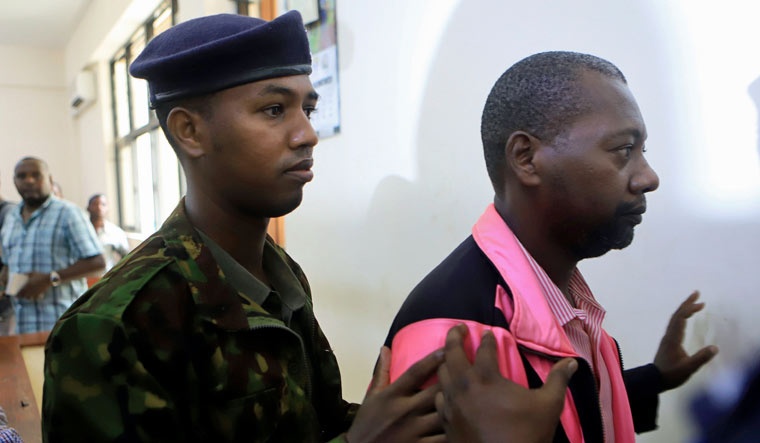
Kenyan Christian cult leader Paul Nthenge Mackenzie, along with 29 other suspects have been charged with murdering 191 children by the Malindi High Court, as reported by CNN.
The bodies were exhumed from Shakahola forest in eastern Kenya last year where Mackenzie and his associates are accused of running a death cult.
After searching these bodies for months, the authorities exhumed them from the sprawling forest.
However, Mackenzie and the 29 others pleaded not guilty to the charges, according to CNN.
One of the suspects was found mentally unfit to stand trial.
Moreover, Mackenzie has been facing several other charges including terrorism, manslaughter and child cruelty.
Reportedly, his trial is scheduled to begin on March 7, according to CNN.
Mackenzie, who ran the Good News International Church, is accused of leading a doomsday cult where he instructed his mass followers to starve themselves and their children to death so they could reach heaven.
Following this, the investigators alleged that the cult was preparing for the end of the world under the instructions of Mackenzie.
He has remained in custody since last April as investigators spent months combing the forest for evidence.
Later, the autopsy results showed that many of the recovered bodies had died from starvation while others had signs of blunt trauma and strangulation, as reported by CNN.
However, last month, a court threatened to release Mackenzie if the state prosecutor did not bring charges against him.
Prosecutors replied that they faced a lengthy process to identify victims through DNA due to the severe decomposition of the majority of bodies.
(This news report is published from a syndicated feed. Except for the headline, the content has not been written or edited by OpIndia staff)
On 7th February, a Delhi court directed Chief Minister of Delhi Arvind Kejriwal to appear before the court on 17th February for skipping multiple Enforcement Directorate (ED) summons. Additional Chief Metropolitan Magistrate Divya Malhotra of Rouse Avenue Court in Delhi took cognisance of the ED’s complaint against Kejriwal for not complying with summons and issued a notice to the CM to appear before the court.
Additional Chief Metropolitan Magistrate Divya Malhotra said that she has taken cognisance of the ED's complaint and summons are being issued to Kejriwal.
On 3rd February, ED moved to Delhi’s Rouse Avenue Court and filed a complaint against Chief Minister Arvind Kejriwal for not complying with the summons issued by the agency in the liquor policy money laundering case.
Delhi Chief Minister Arvind Kejriwal skipped the Enforcement Directorate’s summons for the fifth time in connection with the money laundering probe related to irregularities in the Delhi excise policy 2021-22 case. Kejriwal has so far skipped four previous summons issued by the ED on January 18, January 3, November 2, and December 22, calling them “illegal and politically motivated.” The ED wants to record Kejriwal’s statement in the case on issues like the formulation of policy, meetings held before it was finalized, and allegations of bribery.
While skipping the fourth summons issued by the ED, Kejriwal termed it “illegal,” saying he was ready to cooperate, but the agency intended to arrest him and stop him from election campaigning.
“All four notices sent to me (by the ED) are illegal and invalid in the eyes of the law. Whenever the ED sent such general, non-specific notices in the past, they were quashed and declared invalid by courts. After skipping the fourth notice, these notices are being sent as part of a political conspiracy,” Kejriwal said.
The case against the Aam Aadmi Party supremo Arvind Kejriwal is based on a First Information Report (FIR) alleging multiple irregularities in the formation and implementation of the Delhi excise policy (2021-22) by the Central Bureau of Investigation (CBI). The policy was withdrawn after allegations of corruption.
In its sixth charge sheet filed in the case on December 2, 2023, naming AAP leader Sanjay Singh and his aide Sarvesh Mishra, the Enforcement Directorate has claimed that the AAP used kickbacks worth Rs 45 crore generated via the policy as part of its assembly elections campaign in Goa in 2022. On Kejriwal’s role, one of the six charge sheets filed in January 2023 states that Kejriwal told businessman Sameer Mahendru that former AAP communications in-charge Vijay Nair “is his boy” and that he should trust him.
The excise policy was aimed at revitalizing the city’s flagging liquor business and replacing a sales-volume-based regime with a licence fee for traders. It promised swankier stores and a better buying experience. The policy introduced discounts and offers on the purchase of liquor for the first time in Delhi. Lieutenant Governor Vinai Kumar Saxena’s move to order a probe into alleged irregularities in the regime prompted the scrapping of the policy. The AAP has accused Saxena’s predecessor, Anil Baijal, of sabotaging the move with a few last-minute changes that resulted in lower-than-expected revenues.
Two senior AAP leaders–Manish Sisodia and Sanjay Singh–are already under judicial custody in the case. Sisodia, who was the then Delhi Deputy Chief Minister, was arrested by the CBI on February 26 following several rounds of questioning, and on October 5, the ED arrested Singh, who is a Rajya Sabha member.
I don’t know about you but I am now a very firm believer that Prime Minister Narendra Modi hacks the EVMs (hereinafter, referred to as “The Project”). I first started to believe when I saw a social media post that had a short video of a fellow citizen explaining how this “project” would be done. I then started to study more about how Modi accomplished the project. I figured it would be a simple mechanism and I could write an article about it. However, the findings are so startling and vast that it looks like we will end up with a series of articles to explain how Modi hacks EVMs.
Take for example how the Vishwakarmas contribute to the project. Wait, first of all, who are these Vishwakarmas? In our ancient scriptures, Vishwakarma is the architect of our gods and is also the deity of our craftsmen. The art of crafting is so large and wide that Prime Minister Modi, for the first time, decided to bring in 18 such tradecrafts under one umbrella, the PM Vishwakarma Yojana, and help improve the skills of the practitioners of these crafts shown below.
The eligible Vishwakarmas get collateral-free credit support of up to INR 3 lakhs at 5% interest. Usually, people who are involved in these crafts aren’t eligible for formal loans and end up taking private loans at 18-24% interest. Now, they can get up to 3 lakhs (which is a huge amount) for just 5%, and that too without any collateral. In addition, they get INR 15,000/- as a toolkit incentive, INR 1500 to purchase modern tools and INR 500 per day as a stipend to attend skill development training. While the money of course is a prime component, that alone will not inspire these artisans to participate in the project.
It is a fact that the Prime Minister of India thought about them in the first place. Take a closer look at the trades covered. Imagine the garland makers near your house, the washermen you give your clothes to, the unknown stone breakers who helped build the apartment you stay in, the fishing nets that caught the fish you savour and everyone else in that list above. Imagine them eventually becoming a part of the formal economy and imagine how they will feel to be part of a global value chain. In today’s day and age, one does not have to stress the importance of having a platform to sell your products globally, and imagine having such an opportunity and means to do so.
This scheme was launched in September 2023 and has already seen nearly 4 lakh artisans benefit (a total of 93 lakh applications have been received!). I think you now understand how, not just these 4 lakh beneficiaries, but most of the 93 lakh applicants, will end up voting for Modi just because he even thought about helping them (something that no PM has thought of, so far!).
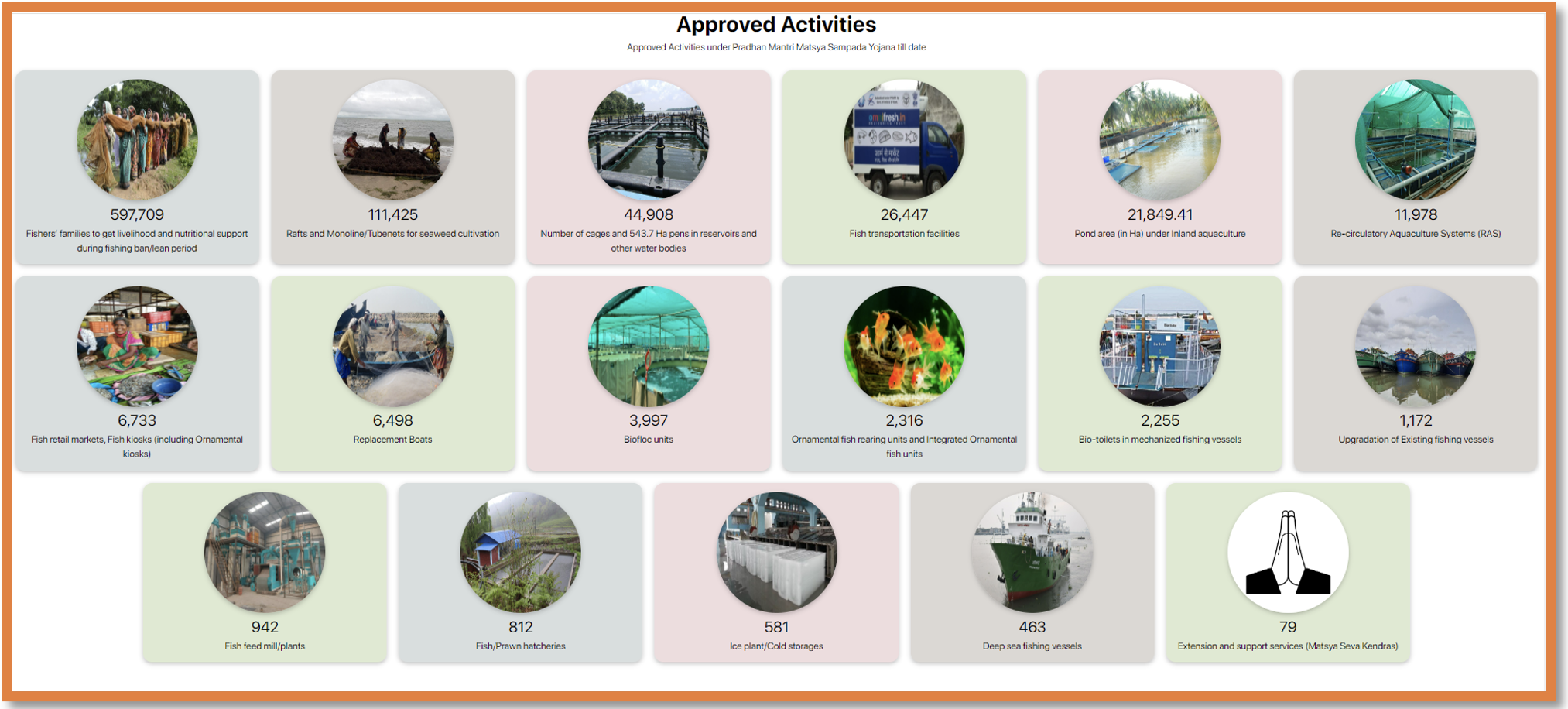
In the above list, you see that Fishing Net Makers benefit. Then you will ask, but what about fisherfolks? The Prime Minister figured that he should involve the fisherfolks in the project too. So, he came up with the PM Matsya Sampada Scheme.
Already nearly 6 lakh fisher families get livelihood and nutritional support in their lean fishing periods; 10s of 1000s of fishing-related infrastructure (more than 1 lakh nets for seaweed cultivation…who would have thought of that!), cold storages, fishing vessels and many more. I think you now understand how these lakhs of families will willingly become part of the project where they will go and press the relevant button on the EVM, come election day!
Enough of fishing man! As if there are no other small-scale industry-related people who need no help. Of course, there are. And that’s why Prime Minister Modi came up with the PM SVANidhi scheme – PM Street Vendors Atmanirbhar Nidhi scheme. This was introduced during COVID-19 times to help the street vendors, who were one of the worst hit because of the pandemic. A detailed RBI study has already explained how this scheme has promoted “inclusive entrepreneurship” amongst this group – 44% of whom were women! A total of 57.2 lakh loans, amounting to nearly INR 10,000 crores, were sanctioned as of Oct. 2023, and I don’t have to explain to you how these people now become part of the project.
Speaking of women, there is this brilliant scheme called Lakhpati Didi that aims to make 9 crore women associated with the Self Help Groups lakhpatis! It was recently announced that nearly 1 crore of them have already become lakhpatis. I would strongly urge you to watch this beautiful interaction the Prime Minister has with one such group. Imagine 1 crore women being part of the project press that button on EVM!
The list is long, but it will get boring for you to read about more such schemes that focus exclusively on small-scale industries, crafts and arts. I mean, the Modi government announced a scheme called NIRVIK that helps small-scale exporters with lesser interest rates and better insurance coverage! A lot of discussion has already happened around the phenomenally successful MUDRA loans (A whopping INR 23-lakh-crore worth of loans given as of March 2023!) and Stand-up India schemes from the first term.
Often, our discussion around small-scale industries focussed on this one ministry – MSME. The Prime Minister expanded this gambit and involved multiple ministries to focus on small-scale industries relevant to their ministries. SVANidhi scheme, for example, is helmed by Housing and Urban Affairs. The whole government approach is not a rhetorical or theoretical document for Prime Minister Modi – it is implemented across all ministries so that maximum small-scale entrepreneurs are enabled to fly high. As I said, the list is too long and vast, just talking about the big things done for small-scale industries. You must be tempted to now ask – A great list of things being done by entrepreneurs, but what about employees? We will talk about them in the 2nd article of this series – How Modi hacks EVMs!
On 22nd January 2024, the idol of Ram Lalla was consecrated at his Janmabhoomi (birthplace) in Ayodhya according to Hindu rituals. For over a month, the OpIndia team has been informing people about numerous anonymous devotees who sacrificed their lives in the struggle for the Ram Mandir for five centuries. Meanwhile, in our ground reports, several Ram devotees mentioned the names of a few villains in the Ram Mandir movement, with Munnan Khan being one of them.
Munnan Khan served as MP from Balrampur and was close to Former UP CM Mulayam Singh Yadav. It is alleged that Khan carried out the massacre of karsevaks in Ayodhya in 1990. As per the allegations, Khan’s henchmen killed Ram devotees while donning Police uniforms. However, they were not police personnel but rather Khan’s private militia. Since his demise, his son Qasim Khan has allegedly continued his father’s criminal legacy. Our investigation has revealed that not only streets, villages, and a competition are named after Munnan Khan but also his name is mentioned in government records.
Munnan Khan intersection on the PWD board
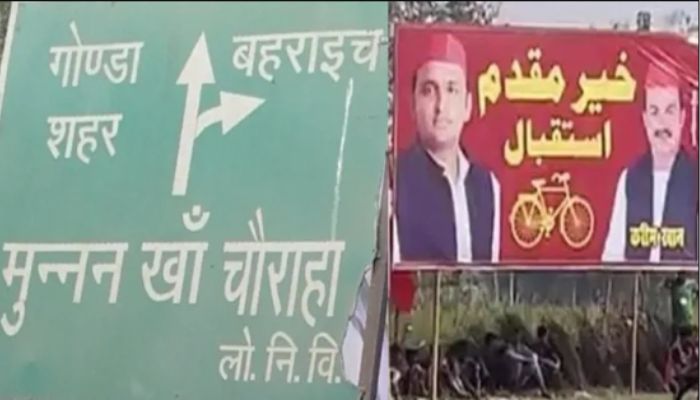
In Gonda, there is a crossroad named after Munnan Khan on the outskirts of the city. Pertinent to note that this intersection is on the Ayodhya road, where Munnan Khan allegedly carried out the massacre of kar sevaks. On this road, there are two PWD boards. One large board is placed in the middle of the Ayodha to Gonda-Tiraha road, while the other serves as a directional indicator. On both these boards installed by PWD, the name of the intersection has been written as Munnan Khan intersection.
Most of the shops at this intersection belong to the Muslim community. The name ‘Munnan Khan Chowk‘ is written on the boards of all those shops. Even the location search on Google Maps shows this place named ‘Munnan Khan Chowk’.
Munnan Khan’s house and his son’s office both fall on this intersection
On reaching the Munnan Khan Chowk, the OpIndia team found that there is a house belonging to Munnan Khan. This is where Khan used to stay during his political heyday. The house is built on a very large plot. Adjacent to the boundary, there is a bypass road leading to Bahraich district. Outside, there is a stone slab that has Munnan Khan and his father’s name inscribed on it. There is a large boundary around the house, outside of which several vehicles were parked.
His son Mohammad Asim Khan has opened his office on the road that leads towards roadways. There are tyre puncture shops etc. around it.
There is a Mazar adjacent to the road near the intersection
There is a green-coloured shrine visible just around 100 metres away on the road that goes from Munnan Khan Chowk to Bahraich. The tomb is made of concrete and it appears to have been recently painted. There are incense sticks and bedspreads on it as well. Because of the tomb, the road has a narrow passage which often causes traffic jams and other issues here.
M.K. Petrol Pump named after Munnan Khan, customers allege misbehaviour
At the Munnan Khan Chowk, there is an MK petrol pump. Here, MK stands for Munnan Khan. Its full name is MK Filling Point. The management and ownership of this petrol pump is with another son of Munnan Khan, Salahuddin Khan. Bharat Petroleum awarded Salahuddin the dealership of the petrol pump in 2019.
On 18th March 2022, a customer named MSSM complained that the petrol pump provided low-quality fuel and misbehaved with customers. This complaint is mentioned in the review section of the website, Indiapl.com.
The customer alleged that the petrol pump employees misbehave with the customers when they are asked for the slip after filling the oil. The complainant also advised people to go to other petrol pumps for fuel. Only one star out of 5 has been given in the review of this petrol pump.
Police records also show the intersection as Munnan Khan Chowk
Apart from the Public Works Department (PWD), the UP Police also records this intersection under the name of Munnan Khan. The police’s District Crime Record Bureau (DCRB) has registered this intersection under the name of Munnan Khan.
There is also a village in the name of Munnan Khan
In the Katra Bazar Thana area of Gonda, there is also a village known as Munnan Khan Purwa. This name has been officially recorded along with the Google Maps location on the website onefivenine.com. The original name of this place is Mohan Tepara village. The pin code here is 271126.
The distance of this Purwa (hamlet) from Gonda city is approximately 25 kilometers. It is important to note here that Munnan Khan started his political career as an MLA from this very Katra constituency. Even today, all the members of his family reside in the Hardhar Mau area of Katra.
Cricket tournaments are held every year in memory of Munnan Khan
Sports competitions are organised in memory of Munnan Khan in the Katra Bazar of Gonda district. These competitions include the Munnan Khan Cricket Tournament. Not only Gonda, but teams from surrounding districts also participate in the tournament. Stage and microphones are set up, and it attracts villagers of surrounding areas as spectators.
During this time, large hoardings of the Samajwadi Party are placed around the field. Many of these hoardings have posters of Akhilesh Yadav with text written in the Urdu language which is translated into Hindi as ‘Khair Maqadam Istaqbal’ or ‘Welcome’ in English. Apart from SP, the current family members of Munnan Khan also feature in these banners.
Additionally, Munnan Khan’s son Qasim Khan runs a school in Haldhar Mau of Katra. Its name is Unity Public School. Apart from Munnan Khan and his family, his relatives also have many lands in Gonda city. The district administration also conducted searches for all those lands after Qasim Khan was charged with the Gangster Act in 2017. The police had also taken action on Nazul’s land citing illegal construction.
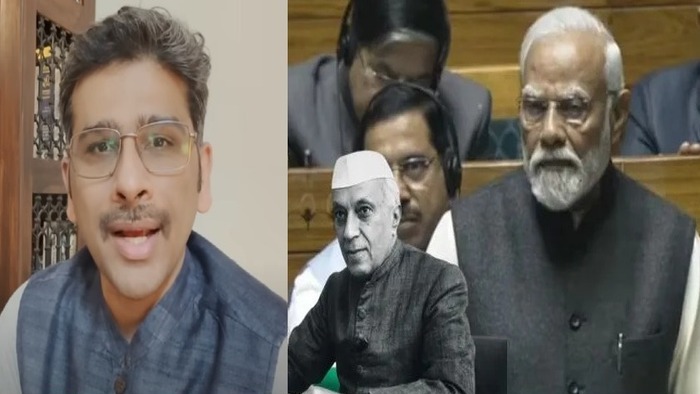
On Wednesday (7th February), former NDTV ‘journalist’ turned YouTuber Sanket Upadhyay attempted to ‘fack-check’ Prime Minister Narendra Modi’s recent speech in Parliament in which he talked about former PM Jawaharlal Nehru considering Indians as “lazy” and “less intelligent”. Upadhyay in his desperate attempt to defend PM Nehru ended up embarrassing himself.
In a video uploaded to his YouTube channel, Sanket Upadhyay said that the speech PM Modi quoted in his Motion of Thanks address was former PM Nehru’s 1959 Independence Day speech. He then plays the audio clip of the said speech: “In India, the habit of working very hard is not very common. (Hindustan mein kaafi mehnat karne ki aadat aam taur se nahin hai). It is not our fault, habits form due to incidents (aadatein aise pad jati hain, vaakyat se). But the fact is we don’t work as hard as people in Europe or Japan or China or Russia or America do (Lekin baat ye hai ki hum utna kaam nahin karte jitna ki Europe ya Japan wale ya Cheen [China] ya Roos [Russia] ya Amreeka [America] wale karte hain). These communities became prosperous not through some magic, but through their hard work and intelligence (Ye na samajhiye ki ve qaumein khush-haal hogayi kisi jadu se, ve mehnat se hui hain, akal se hui hain). We too can progress through hard work and intelligence, there is no other option (Toh..hum bhi mehnat aur akal se badh sakte hain koi aur chara bhi nahin hai).”
Subsequently, Upadhyay tries to justify Nehru’s speech saying that the former prime minister did not essentially call Indians “lazy” and “less intelligent” rather he said that “Indians generally [emphasis added] don’t have the habit of working hard.”
“There is a generalisation from Jawaharlal Nehru’s side that generally (aam taur se), he has added those riders. Let’s first talk on a factual basis, did Jawaharlal Nehru say that Indians are lazy? So, he did not [explicitly] say that ‘Indians are lazy’. He said that Indians generally don’t have the habit of working too hard. But PM Modi made its interpretation that Jawaharlal Nehru has said that all the Indians are lazy. You have listened to both speeches, the truth is right before you,” Upadhyay said.
One is pressed to understand what Upadhyay was trying to “fact-check” here. The very definition of lazy is someone who does not like to work hard. To say that one said the latter and not the former is simply an attempt to mislead people.
Hilarious!
Desperate ex-NDTV Sanket Upadhyay makes excuse for Nehru
He then addresses the second ‘interpretation’ by PM Modi that Nehru said that Indians are “less intelligent”. After playing the audio clip of Nehru’s speech again, Upadhyay repeats Nehru’s words and said, “So Nehru is saying that these communities like the Europeans, the Japanese etc did not become prosperous due to some but by working hard and applying their intelligence. At the last, he [Nehru] said that we have to use our intelligence. But, he did not call Indians ‘less intelligent’ (Kam-akal). Both things are very different. While giving this bizarre justification Sanket Upadhyay looked as if he cracked some code.
“Nehru saying that Indians have to work hard and use their intellect and bringing out its interpretation that so far Indians have been lazy and less intelligent are absolutely two different things,” Upadhyay continues as he tries to cover up the obvious.
While Nehru admirers may come up with senseless arguments to say that it is PM Modi who misinterpreted Nehru’s assertion in his 1959 speech, it is undeniable that PM Nehru indeed insinuated that Indians are lazy and less intelligent and should work hard and use their brains to become prosperous like the Europeans, Japanese, Chinese, Russians or Americans.
Sanket Upadhyay then goes on to say that in today’s context, however, it is not right to say that Indians have grown lazy or are not that intelligent as Indians are not only working hard in India but also in European countries as well. Furthermore, he somehow brought ‘unemployment’ into the context saying that there is an ‘employment paradox’ as he said that there is a high number of unemployed people but a very limited talent pool in the country. It still does not justify Nehru’s ‘generalisation’ since unemployment is not a problem exclusive to India.
Europe recorded an unemployment rate of 6.4% till December 2023 while India’s unemployment rate has reduced to 3.2% in 2022-23, according to the information provided by the Periodic Labour Force Survey (PLFS).
Interestingly, after miserably failing at ‘fact-checking’ PM Modi’s speech, Upadhyay tried to do monkey-balancing saying that it is not right even though Nehru made a general proposition that Indians don’t have the habit of working very hard and he did not directly call Indians lazy and ‘kam-akal’ since Indians work hard to earn their livelihood. He, however, blames the successive governments somehow for this senseless assertion regarding Indian people.
In an X post, Upadhyay continued to defend Nehru’s remarks as he shared a Swami Vivekananda quote which says “arise, awake and stop not till the goal is reached. “The whole ‘Lazy and Unintelligent Indian ‘attribution to Nehru in PM Modi’s speech can be understood with this simple Swami Vivekananda quote. Would it be correct to interpret that Swamiji meant we are all sleeping, unawakened and have stopped? No, right?”
The whole ‘Lazy and Unintelligent Indian ‘attribution to Nehru in PM Modi’s speech can be understood with this simple Swami Vivekananda quote. Would it be correct to interpret that Swamiji meant we are all sleeping, unawakened and have stopped? No, right? pic.twitter.com/V0Y8YVCuPU
Interestingly, while Swami Vivekananda’s saying is inspired by a Katha Upanishad verse उत्तिष्ठत जाग्रत प्राप्य वरान्निबोधत, क्षुरासन्न धारा निशिता दुरत्यद्दुर्गम पथ: तत् कवयो वदन्ति | (chapter 1.3.14) which means “Arise! Awake! Approach the great and learn. Like the sharp edge of a razor is that path, so the wise say−hard to tread and difficult to cross”. Nehru’s generalisation of Indians having developed a habit of not working hard and that they need to apply their intelligence to become prosperous was his personal opinion giving the obvious impression that Indians had so far been lazy and less intelligent.
PM Modi quoted Nehru in his Lok Sabha speech
#WATCH | PM Narendra Modi read out a statement from a speech of former PM late Jawaharlal Nehru, in Lok Sabha today.
PM Modi said, "…It means that Nehru ji thought that Indians are lazy and less intelligent." pic.twitter.com/GBba9NEbz3
During his speech in the Lok Sabha on Motion of Thanks on the President’s Address on 5th February, Prime Minister Narendra Modi said, “Let me read what Prime Minister Nehru had said from Red Fort. Indians generally do not have the habit of working very hard, we do not work as much as the people of Europe or Japan or China or Russia or America. It means that Nehru ji thought that Indians are lazy and less intelligent. The Congress never trusted India’s potential. They always considered themselves rulers and belittled people.”
On Tuesday, February 6, the Uttarakhand government tabled the much-awaited Uniform Civil Code (UCC) in the state assembly.
The bill included various provisions, including a complete ban on polygamy and child marriage, a standardised marriageable age for girls across all faiths, and a uniform process for divorce. These proposals, geared towards promoting gender equality and social harmony, will be discussed during the ongoing special four-day assembly session, which commenced on Monday and will run until Thursday.
The draft of the Uniform Civil Code (UCC) covered a wide range of aspects of civil life. It includes suggestions regarding inheritance rights, compulsory marriage registration, and raising the legal age of marriage for girls to enable them to pursue education before marriage. Moreover, couples who do not register their marriages will not qualify for government benefits, signalling an emphasis on legal documentation.
The proposed UCC aims to establish uniform civil laws applicable to all communities within the state and end the complex labyrinth of individual laws that govern different communities, which presents challenges to the uniform enforcement of legislation that is the cornerstone of a secular society.
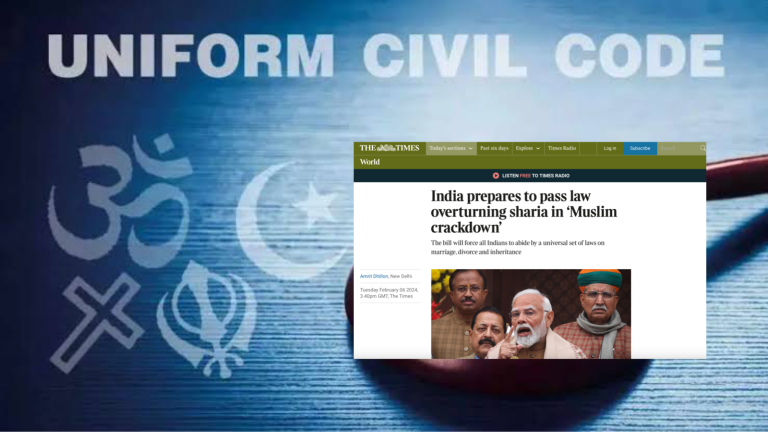
As the Uttarakhand government tabled the Uniform Civil Code (UCC) Bill in the state assembly on Tuesday (February 6) for discussion, The Times, a British national daily, found an opportunity to perpetuate its longstanding anti-India campaign, vilifying the Modi government and stoking fears among its Muslim population with unfounded claims and patently misleading conjectures.
The headline is a dead giveaway that The Times was up to its mischievous ways to undermine the Indian government and pressurise it to drop the Uniform Civil Code. The Times published an article titled ‘India prepares to pass a law overturning Sharia in ‘Muslim crackdown”, giving a false impression that Muslims remain under a constant threat of persecution in India.
Not only is the headline evidently erroneous since the bill was not tabled in the parliament and by the central government. Instead, it was proposed by a state government for discussion in a state assembly. In their zeal to defame India, The Times and its author went with a headline and a featured image of PM Modi to imply that democratic polity has given way to authoritarianism and the Modi government is moving to pass a law aimed at ‘clamping down’ at its Muslim population.
The preposterous headline naturally created quite a flutter on social media, with several social media users criticising the British daily for characterising the Uniform Civil Code, a set of rules that forms the bedrock of secularism, as a tool of ‘Muslim crackdown’. Facing fierce online backlash that could and should invite legal repercussions for The Times in India, the British newspaper quietly amended the headline and redacted ‘Muslim crackdown’ from its headline.
The Times changed the headline and removed ‘Muslim crackdown’ from it
But it maintained the anti-India and irrational sentiment of the article in its body. Paradoxically, The Times and other Western media houses that routinely hold forth on the need to save ‘secularism’ in India, perhaps out of their historical habit of suppressing Indian consciousness and preventing India from shaping its destiny based on its moral compass, was concerned with the neutering of Sharia law with the introduction of the Uniform Civil Code.
Here’s how The Times rhapsodised the Sharia Law:
The relevant section from The Times article on UCC
If the above paragraph is anything to go by, The Times was not only supporting Sharia Law, but it was also going into raptures about the abhorrent practice of polygamy that allows Muslim men to take more than one wife, thereby contributing to their mental and physical health outcomes, including severe depression, anxiety, psychosis, and in some cases, domestic violence too.
The Times also came out in support of another regressive practice called ‘halala’, which according to Islamic customs, is a practice where the divorced wife has to temporarily marry another person, consummate the marriage and get talaq again. It is intimately linked with triple talaq, which has already been invalidated by Indian laws.
The relevant section from The Times article on UCC
The practice reduces women to being a mere commodity that can be discarded by pronouncing ‘talaq talaq talaq’ and then acquired again by undergoing ‘halala’, which involves marrying her to another man, establishing sexual relations with him and then divorcing him if she wants to remarry her first husband.
The evil practice, of course, has a serious bearing on Muslim women and deeply affects their physical and psychological well-being. But it is of little concern for The Times which seeks to ignore these inequities meted out on Muslim women as long as it helps them in mounting their attacks against the Modi government.
The other casualty of The Times’ perversity is secularism in India. The Western media never fails to pontificate India on “secularism” and the need to protect it, even though India has never been a secular country and “secularism” in India’s context has always been pluralism and composite culture, where people espousing different religions not only found refuge but also thrived and their religious practice protected.
However, despite being a staunch advocate of secularism, The Times and the Western media have no compunction in railing against a law that seeks to abolish oppressive individual laws and introduce a set of rules that apply uniformly to all sections of society and treat them as equals regardless of their caste, creed, and race.
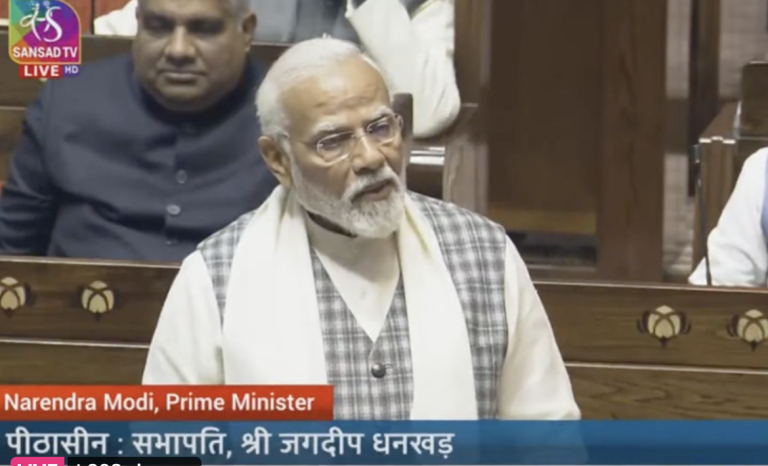
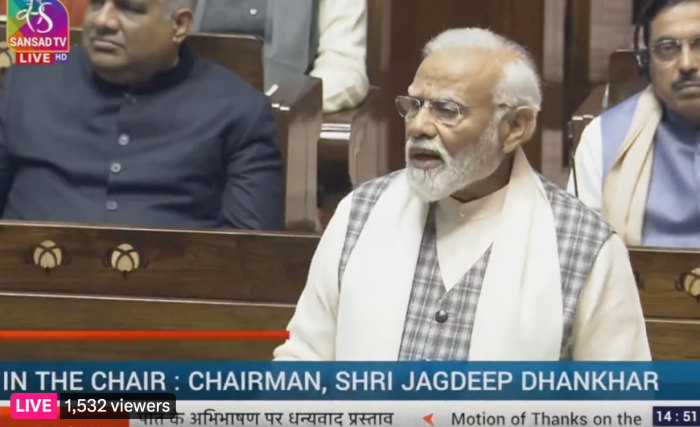
Prime Minister Narendra Modi on Wednesday launched a scathing attack on Congress using West Bengal Chief Minister Mamata Banerjee’s remarks on differences in the INDIA bloc over seat-sharing and said he prays that the opposition party is able to secure 40 seats in the forthcoming Lok Sabha polls.
Replying to the debate on the motion of thanks to the President’s address in the Rajya Sabha, the Prime Minister said the Congress whose leader and policy have “no guarantee” is raising questions on his policies.
“A challenge has been posed before you from West Bengal that Congress will not be able to cross 40 (in Lok Sabha elections 2024). I pray that you are able to secure 40,” the Prime Minister said.
Mamata Banerjee had last week slammed Congress and also took a dig at the Bharat Jodo Nyay Yatra, saying she had proposed that it take BJP in the Hindi heartland states and contest 300 seats across the county but they did not heed and she has doubts “if they will secure even 40 seats if they contested 300”.
Both Congress and Trinamool Congress are part of the INDIA bloc. Lok Sabha elections are expected to be held in April-May this year.
The Prime Minister said that President Droupadi Murmu in her address spoke about India’s potential, strength, and bright future and thanked her for address to the joint sitting of two Houses of Parliament.
The Prime Minister had given reply to the debate on the motion of thanks in Lok Sabha on Monday.
(This news report is published from a syndicated feed. Except for the headline, the content has not been written or edited by OpIndia staff)
PM Modi addressed the Rajya Sabha today in his response to the motion of thanks for the President’s speech in the current budget session.
During his speech, PM Modi highlighted how the former UPA-era Prime Minister Manmohan Singh had himself listed out problems in the Indian governance system.
Former PM Manmohan Singh had highlighted how faulty tax collection systems prevent the poor of the country from getting benefits. He had stated how we need GST and a corruption-free environment to clean our system.
“It is through hard work and clean intentions that we, in the NDA government, have brought India into the Top 5 economies of the world. In the UPA era, India was among the ‘fragile five’ of the world economies,” the PM stated.
“The President in her address highlighted the 4 primary pillars in our country that need their problems solved. The poor, youth, farmers, and women. The President stated that we need development on these 4 pillars to realise the dreams of a developed India in the 21st century. We cannot realise these dreams via policies and mentality of the 20th century’
I don’t know why the Congress suddenly needed to play caste politics now. But the way the Congress has been behaving and governing the country when in power, I doubt whether the Dalits even would have got reservations had there not been Babasaheb Ambedkar.
Adding how the Congress worked against Dalits, the PM narrated how former PM Nehru once wrote to state CMs saying he never supported caste-based reservations. Nehru wrote, “I am vehemently opposed to caste-based reservations, especially reservations in jobs because it promotes inefficiency.” Nehru thought that if SC-ST-OBCs got reservations in government jobs, the efficiency levels and standards of government jobs would go down. The Congress is now trying to portray itself as the messiah of SC-ST and OBCs, but this is what the original ideology of Congress is, the PM added.
Citing the example of Jammu and Kashmir, PM Modi stated that by allowing Article 370 in Jammu and Kashmir, the Congress govt had deprived SC-ST and OBCs of their constitutionally granted rights for 7 long decades. “Forest Rights Act, Prevention of Atrocities Act etc were not applicable in J&K. We granted those rights to the Dalit communities by removing Article 370. Despite residing in Kashmir for several decades, the Valmiki community was deprived of domicile rights. We ensured domicile rights to the Valmiki community in Jammu and Kashmir by removing Article 370. Yesterday we passed another Bill in Lok Sabha by which Dalits can be represented in local body elections,” PM Modi added.
The PM added how Congress deliberately tried to prevent a tribal leader Draupadi Murmu from becoming the President. “If they had ideological differences in the Presidential elections, they would not have fielded a candidate who went from the BJP. They just wanted to prevent a tribal woman from becoming the President. Even to date, their leaders actively disrespect and use derogatory words for the President”, the PM stated.
The Madras High Court recently observed that every stone placed on public roads and draped in clothes can’t be considered a religious idol. The Court also directed district authorities to remove what it called a ‘stone’ which the locals had started worshipping as a Murti.
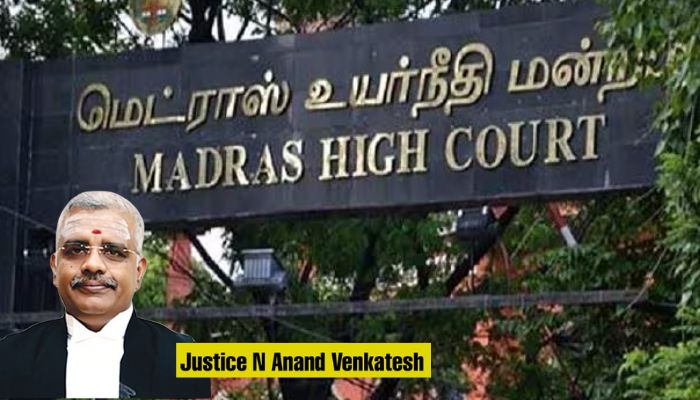
Notably, Justice Anand Venkatesh was hearing a writ petition filed by one E.Shakthi Murugan. The petitioner had sought relief and police protection to remove what he branded as a “stone” that was “projected as an idol” at the entrance of his private property. While granting relief to the petitioner, the Court remarked that “superstitions still prevail in society and people have not evolved over time”.
Justice Venkatesh said, “It is quite unfortunate that such superstitious beliefs continue to prevail in the society and people do not seem to evolve with the passage of time.”
The petitioner submitted before the court that a stone covered with a green cloth was planted right in front of his property. Additionally, there were claims that it was an idol which didn’t allow him to enjoy his property. He also submitted photographs of what he called a ‘stone’. The petitioner added that he had sought Police protection from the Assistant Commissioner of Police to remove what the locals had started worshipping, however, he didn’t get a response. This forced him to move the court.
On its part, the State argued that the complaint was closed as the issue was civil.
However, the court noted that the petitioner could not approach the civil court as it would be a “very funny situation”. The court observed that, in that case, one person would claim that the stone should be treated as an idol while another would deny it.
Justice Venkatesh asserted that it would be impossible for a court to decide whether the stone had been uplifted to the status of an idol.
The court observed, “A very funny situation will arise before the Civil Court wherein the seventh respondent will claim that the stone must be treated as an idol and the petitioner will state that it is merely a stone and not an idol. It will become impossible for the Court to decide whether it is a stone or it has uplifted itself into the status of an idol. Fortunately in our country, no court exercises ecclesiastical jurisdiction.”
The court stated that pondering over such a frivolous issue would be a waste of judicial time. Consequently, the court directed the Assistant Commissioner to give necessary police protection to the petitioner and allowed him to remove the so-called stone.
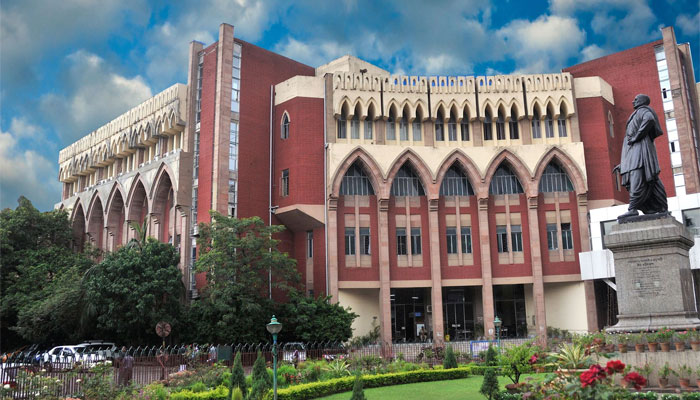
On 7th February, the Calcutta High Court stayed the formation of a Special Investigation Team (SIT) and investigation by the West Bengal Police in the matter linked to the attack on Enforcement Directorate (ED) officers in the state. The high court issued the order in an appeal filed by the ED against a single-judge order constituting an SIT comprising of State police & CBI officials to probe the attack on ED officials last month.
Additional Solicitor General (ASG) SV Raju appearing for the ED contended that the state police would not be able to investigate the matter correctly and that the Central Bureau of Investigation (CBI) would be the appropriate agency to investigate the case.
Bench assembles.
ASG SV Raju appearing for ED.
ASG: matter of attack on ED officers. the single judge accepted our contention that the state police investigation was not properly conducted. He also conceded that the CBI would be able to better deal with the matter.
ASG SV Raju told the court that there were apprehensions that one of the state ministers was involved in the matter and that the state police would jeopardise the investigation, which would amount to leakage and tempering [of evidence].
ASG: the SIT would not work, since state will try to shelter accused. It has to go to CBI
CJ: this case concerns assault of ED officials. The state is also on appeal. What is their ground of challenge?
ASG: they want the state police to continue…can’t be done. There is bias
Furthermore, ASG asserted the state might try to shelter the accused; thus, the matter should be shifted to ED. He said that the state police could not be allowed to continue the investigation as there was bias. Furthermore, ASG also opposed the anticipatory bail plea submitted by SK Shahjahan, the primary accused in the case.
In the judgment, the court stayed the direction of the formation of SIT including state police till the appeals submitted by ED and the state government were decided. The court noted that the inclusion of CBI in the SIT meant that there were doubts about the ability of police to handle the matter due to the political affiliations of the accused.
The court said, “On a reading of the order we find that the single bench has opined that the involvement of CBI in investigation of the current cases would be imperative considering the ineptitude of local police to handle the matter due to the political affiliations of the accused. In the background of these findings, the question to be decided in the appeal is whether the State police can be part of the SIT.”
CJ: matter must be decided after hearing both parties, since the State has also preferred an appeal.
Therefore, till the appeals are decided, the direction for constitution of SIT must remain stayed. The State police shall also not investigate the matter.
As a result, the court stayed the formation of SIT till the appeals are heard and decided. “The State police shall also not investigate the matter,” the court order categorically stated. The matter will be next heard on 6th March.
Attack on the ED team
On 5th January, a team comprising officials of the Enforcement Directorate (ED), CRPF, and journalists was attacked, and their vehicles were targeted in Sandeshkhali of North 24 Parganas district in West Bengal. The incident occurred when the ED team reached to execute a raid on the residence of Shahjahan Sheikh – a block-level official of the ruling Trinamool Congress (TMC) – as part of an investigation into the ration scam. In a statement, ED said a violent mob comprising 800-1000 people attacked the ED team with CRPF with the intention of causing death. It added that the attackers were carrying sticks and stones.
The probe agency added that the mob is suspected to be instigated by TMC leader Shahjahan Sheikh and his associates. It further informed that three of its officials had been injured in the mob attack and admitted to hospital for treatment. In addition to injuring the on-duty ED officials, the violent mob also stole their laptops, mobile phones, wallets, cash and other belongings.