Home Blog Page 1401

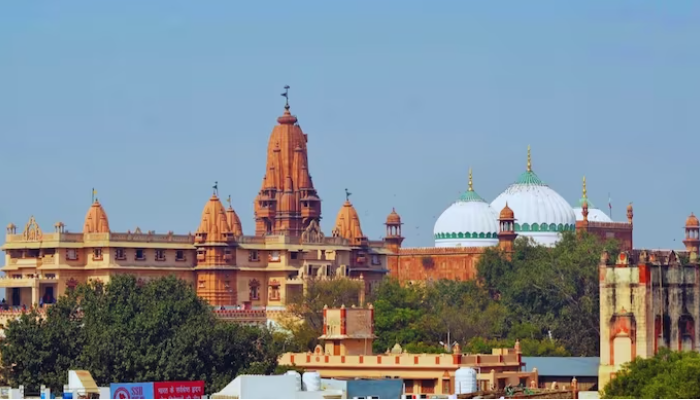
SC extends stay on Allahabad HC order to appoint Commission on Krishna Janmabhoomi-Shahi Idgah Masjid case, next hearing in April

 The Supreme Court on Monday extended the interim order on stay on Allahabad HC order appointing Commission for the Shahi Eidgah Mosque in connection with Mathura’s Sri Krishna Janmabhoomi-Shahi Idgah Masjid dispute till next date of hearing.

A bench of justices Sanjiv Khanna and Dipankar Datta adjourned the hearing for April and directed the parties concerned to complete pleadings and file written submissions.

The court said that the interim order on stay on Allahabad HC order appointing a Commission for the Shahi Eidgah Mosque in connection with Mathura’s Sri Krishna Janmabhoomi-Shahi Idgah Masjid dispute will continue till the next date of hearing.

In the last hearing, the top court had stayed the Allahabad High Court order appointing the Commission for the Shahi Eidgah Mosque in connection with Mathura’s Sri Krishna Janmabhoomi-Shahi Idgah Masjid dispute

The order came on a plea filed by the Committee of Management Trust Shahi Masjid Idgah challenging the Allahabad High Court order for the appointment of a Commission for the Shahi Eidgah Mosque.

The court had said that proceedings before the trial court can be continued but the commission cannot be executed till the next date of hearings.

The Committee of Management Trust Shahi Masjid Idgah has filed an appeal in the Supreme Court challenging the Allahabad High Court order for the appointment of a Commission for the Shahi Eidgah Mosque.

The Special Leave Petition (SLP) by the mosque committee challenged the order dated December 14 passed by the High Court of Judicature at Allahabad allowing an Application for the appointment of a Commission for the Shahi Eidgah Mosque where prayers are being regularly offered by the Muslim community from time immemorial.

“The High Court has allowed the Application for appointment of a Commission without considering the objections of the Petitioner herein and without considering the fact that the very existence of the Suit has been questioned by the Petitioner herein, whose Application under Order VII Rule 11 of the CPC for rejection of the Plaint has been kept pending without any decision,” the petition copy said.

Committee of Management Trust Shahi Masjid Idgah was represented by advocates Tasneem Ahmadi, Mehmood Pracha and RHA Sikander.

The Supreme Court is also dealing with various matters relating to Mathura’s Krishna Janambhoomi land dispute. Earlier Committee of Management Trust Shahi Masjid Idgah filed an appeal in the top court challenging the Allahabad High Court order which transfers to all the petitions relating to Mathura’s Krishna Janambhoomi land dispute from District Court Mathura, Uttar Pradesh Masjid Idgah challenged the order dated May 26 passed by the Allahabad High Court whereby it transferred all such cases relating to the Krishna Janambhoomi dispute from the District Court Mathura, Uttar Pradesh, to itself.

Ranjana Agnihotri, a resident of Lucknow, had filed a suit in Mathura court demanding the ownership of 13.37 acres of land of Shri Krishna Janmabhoomi. In her legal suit, Agnihotri demanded the removal of the Shahi Idgah mosque built in Krishna Janmabhoomi.

The suit filed in the Mathura court sought the removal of a mosque said to have been built in 1669-70 on the orders of the Mughal Emperor Aurangzeb in the 13.37-acre premises of Katra Keshav Dev temple, near the birthplace of Lord Krishna.

(This news report is published from a syndicated feed. Except for the headline, the content has not been written or edited by OpIndia staff)


Al Jazeera anchor tries to corner BJP spokesperson Shazia Ilmi with motivated questions on Ram Mandir. Here’s how she defied them with facts

0

Al Jazeera’s motivated questions aimed at BJP spokesperson Shazia Ilmi took no one by surprise and have instead only confirmed the Qatar-based channel’s hatred for Hindu-majority India. What has become the talking point instead is Shazia’s to-the-point and gracefully delivered answers to Al Jazeera’s motivated questions.

Speaking about the Ram Mandir Pran Pratishtha, the news anchor asked if the ceremony is part of temple politics. Shazia rubbished the same and said that Lord Ram cannot be relegated as merely a religious figure.

“It’s a very important day for India. And it ends all the rancour and contention there has been around this issue. If you want to understand Lord Ram, I must tell you that you can’t relegate Lord Ram as just a religious figure. That would indeed diminish His contribution and he understanding of Lord Ram in the entire civilisational ethos of this country,” she said.

Shazia also said that Al Jazeera had cherry-picked facts and quoted such members of the Muslim society and others who see the Ram Mandir as a threat. She said that all Indians who grew up in the syncretic Indian culture look up to Lord Ram.

Interrupting her, the anchor asked, “What message do you think it sends to build a temple on the site of a former mosque?” to which Shazia had just the answer.

“On the contrary in fact, the temple was broken by Mir Abi Bir (Mir Baqui), who was the commander-in-chief of Babur, the first Mughal emperor invader of India. And a mosque was made and this temple was razed. This is why this has been a part of the national consciousness of India and all its people. There are Muslim writers who see Lord Rama has a saint of Muslims too. A historical wrong has been corrected. And not just that, this has only come after the orders of a Supreme Court verdict. This fight has gone on since the 16th century when a mosque was erected atop a mandir,” she said.

The third motivated question from Al Jazeera was if the Ram Mandir was a “vote-getter” for the BJP and Narendra Modi in the election year.

Shazia said, “To be honest, yes you can’t undermine the fact that this will yield electoral dividends to the BJP but this has been part of BJP’s manifesto since 1990, ever since the entire movement on Ram Temple has begun.”

She also mentioned that Muslims too were given 5 acres of land by the SC and that Babri is not even a revered place like Mecca, Medina or Al Aqsa whereas Ayodhya itself is the birthplace of Lord Ram.

The Al Jazeera anchor then played up the Muslim victim card saying that the place for Muslims has been shrinking.

Shazia denied the insinuation and said that all is done in accordance of law. She reiterated that the Ram Mandir was built in accordance with the Supreme Court judgment.

The anchor interrupted and said that he is asking a political question about the “balance in the country between the communities”.

“The Muslim side accepted the SC verdict. This does not undermine secularism and the rule of law,” Shazia said. “We adhere to the Constitution of this country,” she said.

The anchor insisted that Shazia answer the question on whether this hinders the balance between communities.

She said, “There is complete balance between communities. Under PM Modi’s leadership, Muslims have benefitted the most. Muslims are only 14% of Indian population but 30% beneficiaries of central schemes are Muslims.”

“There is no discrimination whatsoever. This is a sacred place. It is the birthplace of Lord Rama. The Archaeological Survey of India has found the remains of Hindu temple. I think this is a moment of jubilation and end of hostilities,” Shazia concluded.

Al Jazeera and the Western media’s coverage of the Pran Pratistha has been heavily hateful, anti-India and anti-Hindu. They have historically never minced their words in downplaying India’s Hindu identity, in demonising it and even terming it as fringe.

Ayodhya: How Hindus were massacred on the call of jihad by Maulvi Amir Ali after King Devi Bakhsh Singh built Ram Chabootra on Janmabhoomi

The Pran Pratishtha (consecration ceremony) of Ram Mandir took place at Lord Ram’s birthplace in Ayodhya on 22nd January this year. Hindus all over the world are ecstatic about the development—the souls of innumerable Ram Bhakts who sacrificed their lives for the cause of peace.

Many such sacrifices and occurrences, either forgotten by the people or purposefully swept under the carpet by communist historians were brought to the world’s attention by OpIndia’s team in their ground reports.

When OpIndia began looking into Ram Janmbhoomi and its related issues during our ground report in and around Ayodhya, we discovered a lot of information that most people were unaware of. The atrocities of the Mughals were extensively detailed in the ground report. These comprise the sacrifices made by King Devi Bakhsh Singh of Gonda and King Jaydatt Singh of Bhiti as well as the jihad waged by Maulana Amir Ali and the unprecedented riots that occurred in Ayodhya around 1850.

King Devi Bakhsh Singh waged a war in the British period

As we mentioned in the last story, Bhiti king Mahtab Singh died in defence of Ram Janmbhoomi and 80,000 of his soldiers. In that piece, we found out that Mir Baqi mixed the blood of Raja Mahtab Singh and his warriors with mud to lay the mosque’s foundation. Further research into King Mahtab Singh revealed that his successors too attained martyrdom in the service of Ram Janmbhoomi.

Around 1527–1528, King Mahtab Singh, the ruler of Bhiti ruler was martyred in the service of Ram Mandir. King Jayadat Singh, a descendant of King Mahtab Singh sacrificed his life to defend Ram Janmbhoomi nearly 300 years after Mahtab’s death. The battle transpired between the years 1847–1857. Devi Bakhsh Singh, the king of Gonda fought for the Ram Mandir during this period and constructed a Ram Chabootra (platform) there.

Jitendra Singh Bisen, a fifth-generation descendant of King Devi Bakhsh Singh’s general Gulab Singh Bisen was interviewed by OpIndia. Jitendra Singh Bisen claimed that all of the fighters who had previously served in the Mughal army had joined the British Army. The disputed structure was attacked by King Devi Bakhsh Singh, the Gonda monarch at the time, who sensed the weakness of the Mughals. Ramjanmbhoomi was completely under Mughal control at this point.

The verbal accounts of how Ram Janmabhoomi remained a flashpoint between Hindus and Muslims from the Mughal era also attest to the Hindu assertion that a mosque was built atop a temple at one of their holiest sites.

Nevertheless, the Ramabhakts continued to make sporadic attacks and were making attempts to reclaim Janmbhoomi. Nawab Wajid Ali Shah occupied the Awadh throne at the time. King Devi Bakhsh Singh’s invasion decisively destroyed Wajid Ali and his troops. King Devi Bakhsh Singh’s forces eventually managed to reach Ramjanmbhoomi. Vijay Swaroop established a Ram Chabootra alongside the contested building.

Maulvi Amir Ali had waged jihad

Jitendra Singh further stated that as soon as the news of the construction of Ram Chabootra and Wajid Ali Shah’s defeat came to light, the Muslim zamindars (feudal rulers) in the area were incensed. Maulvi Amir Ali of Amethi was one of them. He marched to Ayodhya with a contingent of Mughals. His goal was to destroy the Ram platform and drive out the Hindus from Ram Janmbhoomi. Hindus had also begun to worship at Ram Janmbhoomi around this point.

Maulvi Amir Ali was determined to put an end to these prayers at whatever costs. Some more Muslim landlords moved towards Ayodhya with him. On the other hand, King Devi Bakhsh Singh battled against the British as he advanced towards the Nepal border up to Terai. He fought the war while residing in Nepal’s border regions and did not fall into the hands of the British throughout his life.

The British started to seek and destroy his strongholds and allies. Kranti Upvan Park in Gonda is constructed in honour of King Devi Bakhsh Singh. A monument commemorating him and the other warriors who died beside him in the 1857 revolt is located in this park. This monument also bears the name of Jitendra Singh Bisen’s ancestor, Gulab Singh.

Gonda’s Kranti Upvan where Raja Devi Bakhsh Singh and Gulab Singh’s memorial is built. (Source: OpIndia Hindi)

Later, Jitendra Singh Bisen became a member of the Hindu Mahasabha and fought to defend the Ayodhya Ram Mandir. The Hindu Mahasabha itself contested the case in support of Ram Lalla Virajman. Jitendra Singh Bisen referred to it as his good fortune to have witnessed the culmination of the movement started by his ancestors and to have made an equal amount of contributions to it.

King Jaydatt of Bhiti was sacrificed

A descendant of King Jaydatt named Pranav Pratap Singh told OpIndia that as soon as the Mughal princes and clerics’ armies began moving toward Ayodhya, the Hindu kingdoms in the region also began to band together. They assembled far from Ayodhya. It is estimated that this was around 1850. The British had achieved total hegemony over India by that point.

Maulvi Amir Ali tried to break this circle near Raunahi where the front was guarded by King Jaydatt Singh, a descendant of Bhiti King Mahtab Singh who was the first to give his life for Ram Mandir while battling Mir Baqi. King Jaydatt Singh valiantly faced off against Amir Ali and became a fallen hero on the battlefield. Amir Ali and his soldiers reportedly perished during the clash.

Folk songs honouring King Jaydatt’s bravery are still sung in the Awadh region today. Kavindra Laxman Das wrote, “Awadh viagra hetu jab, jawn jure chahoon aaye; Chordi yatra kar liyo, kinho samar subhaye; Kush penti sab chaadi liye, khadg bhawani Datt; Ali Amiro so bhidyo, samar soor Jaydatt.” (The Hindu rulers arrived at the battleground and withdrew from their pilgrimages and other activities when the mob assembled to attack Ayodhya. The emperors then lifted their swords, setting aside the offerings of worship that they had taken in hand. Among them was the warrior king Jaydatta who was martyred in a battle against Amir Ali.)

Even now one can still observe religious symbols in King Jaydatt’s run-down palace. (Source: OpIndia Hindi)

Armies were fighting outside while rioting was occurring inside

The Faizabad Gazetteer disclosed that there was a riot between Hindus and Muslims in and around the Ram Mandir when the armies of Kshatriya Kings confronted Muslim landlords and clerics. Historian Cunningham noted that the Awadh region had never had a riot of this magnitude which took the lives of thousands of people.

Radical Muslims would stop at nothing to destroy Ram’s platform. At the same time, the Hindu side was striving to safeguard Janmbhoomi, their holy site of worship, at all costs. During the violence, Muslims also targeted Hindu women, children and the elderly while Hindus did not lay a hand on their women, children or old persons. The saints of Ayodhya were also attacked in the riots. This period of violence lasted from 1853 to 1859.

The British then avoided this issue as they were preoccupied with putting an end to the 1857 revolution. They only intervened in Ayodhya after suppressing the countrywide freedom movement. Afterwards, the British authorities of the time gave the order to keep things as they were. There were British troops stationed at Janmbhoomi. At last, Ram Chabootra was preserved due to the sacrifices made by Hindus as well as their kings and the worship continued there.

We’ll tell you about the horrors carried out by the Mughal army in King Mahtab Singh’s kingdom as they were outraged by the first sacrifice made by the Bhiti ruler to defend the Ram Mandir in our upcoming article.

Maldives: Opposition to move motion to impeach pro-China President Mohamed Muizzu. Here is what’s happening in the archipelago

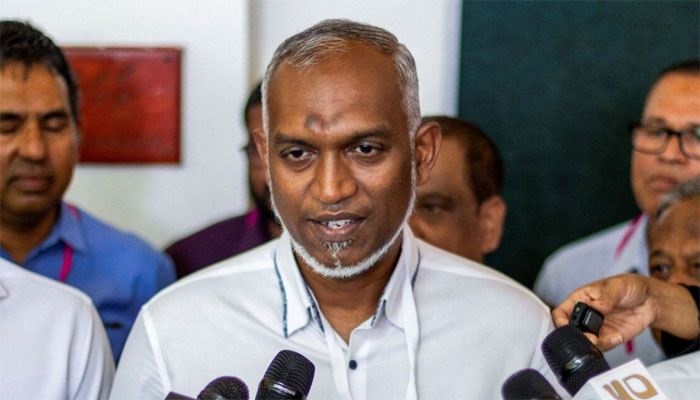
The Maldivian Democratic Party (MDP), the leading Opposition party in the archipelago, has garnered enough signatures to move a motion to impeach incumbent anti-India, pro-China Maldivian president Mohamed Muizzu.

As per a report by Sun Online International, the development was confirmed by a lawmaker belonging to the MDP. The impeachment motion is reportedly being moved with the help of the Democrats. However, the motion is yet to be submitted in the Parliament.

The MDP has 43 MPs and the Democrats have 13 MPs in a Parliament of 80 seats. As per the standing orders of the Parliament, a sitting President can be impeached with 56 votes.

The development comes a day after a ruckus broke out in the Maldivian Parliament over a crucial vote to determine the cabinet of Mohamed Muizzu.

The chaos began after Opposition MPs were barred from entering the Parliamentary chamber by the ruling party MPs belonging to the Progressive Party of Maldives (PPM) and People’s National Congress (PNC).

It must be mentioned that the Opposition Maldivian Democratic Party (MDP) wields significant power in the Parliament has refused to approve 4 members (Ahmed Usham, Mohamed Saeed, Dr. Ali Haidar, and Dr. Mohamed Shaheem Ali Saeed) of the ruling party from joining the cabinet of President Muizzu.

The Opposition has raised questions about the suitability of the ‘designated cabinet ministers. The MPs belonging to the ruling PPM and PPC thus disrupted the Parliamentary proceedings and the functioning of the Speaker of the House.

In videos that have emerged on social media, some ruling MPs were seen blowing trumpet next to the chair of the Speaker. Others were seen manhandling, pushing and shoving Opposition MPs.

They had also submitted a motion of no-confidence against Speaker Mohamed Aslam and Deputy Speaker Ahmed Saleem. The videos of the scuffle have gone viral on social media, with netizens questioning the political turmoil in the archipelago.

Punjab: Indian-origin US citizen murdered by in-laws in Kapurthala for insurance money

0

Rajdeep Kaur (32), a US-based Punjabi woman, was allegedly murdered by her in-laws in a Kapurthala village of Punjab after being called back to India on the pretext of attending a relative’s wedding.

The mother of a five-year-old son, Rajdeep was a US citizen and is believed to have been murdered for her insurance money. “It is believed the woman was murdered as she had a hefty life insurance coverage,” Babandeep Singh, DSP, Sultanpur Lodhi said.

Rajdeep’s mother-in-law Daljit Kaur and father-in-law Jagdev Singh were arrested by police on Monday (29th January) morning. Her husband, Manjinder Singh, who is in the United States, has also been charged.

Rajdeep Kaur was murdered between the night of January 19 and 20 at Nano Malian village, Kapurthala. Her husband had insisted that she and their five-year-old kid travel to Kapurthala on 12th January. While she was a US citizen, her husband is reportedly living illegally in the country and is trying to obtain a green card.

According to the post-mortem examination report, the cause of death was “asphyxia due to smothering” stated the police.

The victim’s in-laws stored the body in a freezer in Sidhwa Dona village for two days before reporting their daughter-in-law’s death to the Sultanpur Lodhi police. On 23rd January, police took the body for a post-mortem examination.

Meanwhile, Rajdeep’s parents in the UK learned of their daughter’s death over the phone. On 25th January, her mother Nirmal Kaur traveled to India, fearing Rajdeep had been murdered, and filed a complaint with the Sultanpur Lodhi police.

On 27th January, Rajdeep’s relatives protested outside the Sultanpur Lodhi police station, prompting the registration of an FIR against the deceased’s in-laws. 

“Rajdeep was constantly tortured by her husband. He wanted her to name all her property in his name so that he could get a green card. My daughter was called to India on the basis of a lie about a wedding. It was a plan to kill her. Her husband Manjinder told us she died of a heart attack. Another relative said she died due to gas from a room heater,” Nirmal Kaur said.

“Rajdeep was invited to Kapurthala on the pretext of the wedding of the son of Manjinder’s aunt. But there was no wedding. The woman died due to asphyxia, establishing that she was murdered. The FIR was lodged against the in-laws and husband the very day (Saturday) the post-mortem examination report came,” DSP Babandeep Singh said.

‘CAA will be implemented across India within 7 days’: Union Minister Shantanu Thakur makes bold ‘guarantee’ in Bengal

The Citizenship (Amendment) Act will be implemented across India within the next seven days, Union Minister Shantanu Thakur made this bold assertion as a guarantee in West Bengal on Sunday (28th January).

Addressing a public gathering in Kakdwip in South 24 Parganas, Thakur said in Bengali, “The Ram Mandir in Ayodhya has been inaugurated, and within the next seven days, the CAA will be implemented across the country. This is my guarantee. Not just in West Bengal, the CAA would be implemented in every state of India within a week.”

Notably, Shantanu Thakur is BJP’s Lok Sabha MP from Bangaon, Bengal and he is the Union Minister of State for the Ministry of Ports, Shipping and Waterways in the PM Narendra Modi’s government. 

According to the Union Minister, the act will be implemented within a week not just in West Bengal but across the country. 

During his address, Thakur also reiterated Union Home Minister Amit Shah’s earlier remark on the implementation of CAA.  

On 27th December last year, Union Home Minister Shah had asserted that the BJP-led Union government would implement the CAA stating that “no one can stop it”. 

Back then, Shah also launched a scathing attack against Trinamool Congress supremo and West Bengal Chief Minister Mamata Banerjee who has been vehemently opposing the implementation of CAA. 

During his address at a large rally at Kolkata’s iconic Esplanade, Shah had also slammed West Bengal CM over the issues of infiltration, corruption, political violence, and appeasement. He then urged the crowd to dethrone her government from Bengal and elect BJP in the 2026 Assembly elections.

The Citizenship (Amendment) Act

The Parliament passed the Citizenship (Amendment) Act on 11th December 2019. A day later, it received the President’s assent following which it was notified by the Ministry of Home Affairs. The Act, when implemented, will grant Indian nationality to persecuted minorities who belong to any of these six faiths namely – Hindus, Sikhs, Jains, Buddhists, Parsis, and Christians – from three neighbouring countries Bangladesh, Pakistan, and Afghanistan. Those migrants who had come to India till 31st December 2014 can be granted citizenship under this act.

As per the parliamentary procedural manual, legislation rules must have to be formulated within six months of presidential assent, or the Home Ministry should request an extension from the Committees on Subordinate Legislation in both Lok Sabha and Rajya Sabha. Since 2020, the Home Ministry has routinely sought extensions from the parliamentary committees to draft the rules citing challenges posed by the COVID pandemic. 

The act aims to fulfill India’s long-standing commitment to minorities in India’s neighbourhood, under the Nehru-Liaquat agreement, to grant Citizenship to persecuted minorities in Undivided India. However, it was subjected to massive anti-CAA protests including the Shaheen Bagh sit-in protest which culminated in the Anti-Hindu Delhi riots in 2020 on account of uncalled-for and blatantly false accusations that it strips nationality or affects Indian Muslims. 

In the past two years, over 30 district magistrates and home secretaries from nine states have been authorised to grant Indian citizenship to Hindus, Sikhs, Buddhists, Jains, Parsis, and Christians arriving from Afghanistan, Bangladesh, and Pakistan under the Citizenship Act of 1955.

Chhattisgarh: Thousands revert to Sanatana Dharma at Hanumat Katha of Bageshwar Dham’s Pandit Dhirendra Shashtri

0

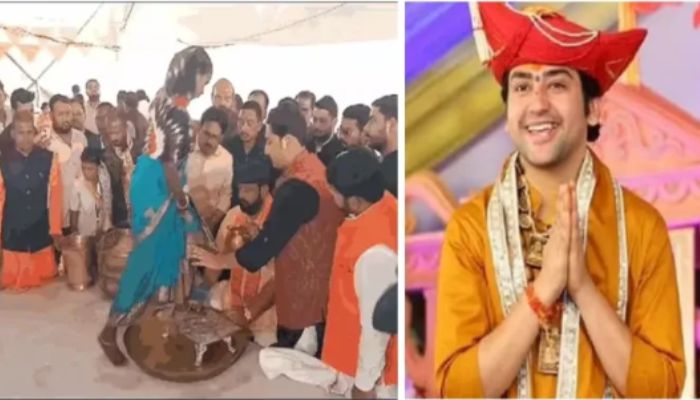
On 27th January (Saturday), as many as 1000 people from 251 families returned to Sanatan fold in state’s capital, Raipur. The Ghar Wapsi took place on the last day of Hanumat Katha recitation by Bageshwar Dham’s Pandit Dhirendra Krishna Shastri. Prabal Pratap Singh Judev who hails from Jashpur royal family and is BJP’s state Secretary was also present there. He washed the feets of the converted tribals with Gangajal (holy water of Ganga) and brought them into Sanatan Dharma. 

Notably, the Hanumat Katha recitation by Pt. Dhirendra Shastri was organised from 23rd to 27th January in Raipur’s Kota Gudhiyari area. On the last day of the recitation, 1000 converts from 251 families did Ghar Wapsi and it included two Muslim families and people who had converted to Christianity.

During the Ghar Wapsi ceremony, Mohammad Akbar who is a resident of Uttar Pradesh also returned to Hinduism. Dhirendra Shastri renamed Akbar as Satyam. Sheikh Sameem who lives in Changorabhatha, Raipur also adopted Sanatan Dharma. 

Apart from Gharwapsi, mass marriages of 21 couples from poor families were also organised and they were given essential household items.

According to media reports, all the people who did Gharwapsi are residents of Surguja division. At the event, Judev said that he will bring all the people back to Sanatan Dharma and described Gharwapsi as a task of nation building.

Prabal Pratap Singh Judev said that religious conversion of these people was done in a very wrong way. They were converted by lying to them and saying derogatory things about Hindu gods. He said that he has been organising the Ghar Wapsi program for a long time. His late father Dilip Singh Judev had also been organising it.

Judev said, “I believe that where Hindus have converted or have become a minority, those areas have been cut off from India. There was a time when all from Afghanistan to Indonesia were Hindus. Hindus were converted and those areas were cut off from India. They got separated. Where Hindus are reduced, the country is divided there.” From the stage, he also took an oath to build 101 temples in Chhattisgarh.

Pandit Dhirendra Krishna Shastri said that he is not against any religion nor does he believe in conversion, but he believes in Gharwapsi of the people who were converted by coercion or deceit. He said that those who have done Gharwapsi have come as per the wish of Hanuman ji. He also appreciated the efforts of Prabal Pratap Singh Judev.

Prabal Pratap Singh Judev leading Ghar Wapsi

Prabal Pratap Judev has been leading Ghar Wapsi of converted tribals in the tribal heartland and across state and has brought converted people into Sanatan Dharma fold by thousands in number. 

Earlier in December, when the state assembly elections concluded, Judev brought 8 families back to the Sanatan fold. A day earlier on 28th December 2023, he led a Gharwapsi event of 101 families who had converted to other faith.  

Since the death of his father Dileep Singh Judev who was a tall BJP leader and carried out Gharwapsi at large scale, Prabal Pratap Judev has brought over 10,000 people back to Sanatan Dharma fold as of November 2021. The efforts have continued ever since and the Gharwapsi led by Prabal Judev has brought 1100 Christian converts in January 2023 and 1250 people in March 2022 among other similar ceremonies throughout the last several years.  

Children’s report card is not ‘visiting card’ for parents: How PM Modi asked parents to refrain from ‘Sharma Ji ka Beta’ habit in Pariksha Pe Charha 7.0

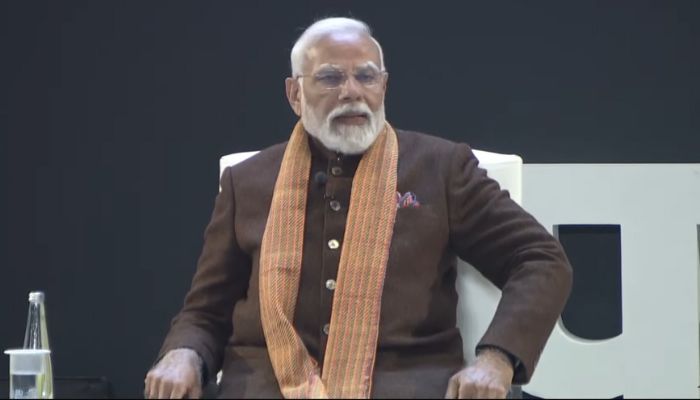
On Monday (29th January), PM Narendra Modi participated in the 7th edition of ‘Pariksha pe Charcha’, organised at Bharat Mandapam in the National Capital.

As per reports, about 2.05 crore students, 14.93 lakh teachers and 5.69 lakh parents have registered for the 2024 edition of ‘Pariksha pe Charcha’.

PM Modi inspected an exhibition of projects, ranging from science and technology to arts, put out by students before addressing their questions during the event.

PM Modi shares ways to handle pressure

At the very onset, students asked the Indian Prime Minister about ways to handle the pressure of examinations. PM Modi said, “This same question has been asked in the last 6 seasons of Pariksha Pe Charcha, but in a different manner. This shows that the problem has been recurrent for each batch.”

“First, we have to make ourselves strong enough to handle any kind of pressure. We have to mentally prepare ourselves to bear the challenge,” he added.

He cited an example of how people who live in warmer climates prepare themselves mentally before visiting cold places, which in turn eases the process of acclimatisation. PM Modi urged students to follow the same mental preparation for their studies as well.

He highlighted that there are two kinds of pressure, one which is self-created and the other which is based on societal expectations. The Indian Prime Minister asked the students to set realistic goals and step them up gradually instead of overburdening themselves with studies.

He added that students also face the burden of expectations from siblings, parents and teachers.

On peer pressure and unhealthy competitions

PM Modi was also asked by students about competition, unhealthy competitions and the feeling of competing with their friends.

He said that life would become dull in the absence of competition. He urged students to compete with themselves and not with their friends as the latter’s academic performance will not impact their results.

“Parents should also avoid comparing their child with other children from their batch, siblings etc. This will bring in unhealthy competition, which will negatively impact your child and create a feeling of jealousy,” PM Modi emphasised.

In simple words, he asked parents to use ‘Sharma Ji ka Beta’ example to shame their wards. It is essentially a meme on how Indian parents always give example of another child to tell their kids they are not good enough

He requested students to take inspiration from the good academic performance of their friends and batchmates. “If your friend scores 90, then it is not the case that you are left with only 10 marks. You still have your 100 marks to score. This should be your mindset.” 

He asked parents to not turn the scorecards of their children as visiting cards when they score well in exams. “When some students perform extremely well, their parents end up displaying their scorecard as their visiting card. This may create a feeling among students that they know everything and are best in the world.”

“This is a dangerous behaviour and we must take steps prevent it,” PM Modi pointed out.

Changing teacher-student dynamics

PM Modi noted that a teacher’s job is not limited to the mere act of teaching or leading the students onto the path of success. He stated that teachers must make efforts to motivate students and develop a strong bond with them.

He added that the relationship should be such that students do not feel hesitant to talk to them or discuss issues being faced by them. PM Modi lamented that the teacher-student dynamics are changing and the relationship has now been limited to the curriculum.

“These days students do not call their teachers to talk to them about their exam stress. They feel that the interaction is limited to their subject. Stress will automatically disappear the day students believe that they can reach out to their teachers for every problem in life,” PM Modi highlighted.

Importance of practice before exams

During the 7th edition of ‘Pariksha pe Charcha‘, PM Modi emphasised the need to practice well before writing exams. He remarked that students spend a lot of time on electronic devices and have lost touch with writing on paper.

He asked students to practice writing, identify mistakes and correct their own answers. He also added that students should read the full question paper before attempting to answer questions.

“This will help you to make a strategy as to which questions will require more time,” PM Modi was heard saying.

Health is important

During his address to students, the Indian Prime Minister underlined that it is important for students to take care of their health. He said that if the health of students is not right, then, they may not be able to sit through 3 hours of their examination.

He said that our body needs to be recharged just like our phones. “Try to sit in sunlight for a few hours each day. It will help recharge your body. Make it a habit. Spend some time outdoors with a book,” the Prime Minister continued.

He emphasised on the need for adequate sleep for students and pointed out how the latter often deprive themselves of sleep by watching reels on the phone. Additionally, PM Modi remarked that exercise and a balanced diet are essential for physical and mental well-being.

Need for family time

The Indian Prime Minister also reiterated the need for quality family time. ”Families should get together each month, and talk about some motivational books and movies. This will build an environment of positivity and trust within the family.”

He also emphasised on the need for ‘no-gadget zones’ in the family, especially in bedrooms and during dinner. PM Modi pointed out how members of a family are often found glued to their cell phones in different corners of their house.

Japan suspends financial support to UNRWA following concerns over UN staff involvement in Hamas terror attack on Israel on October 7

0

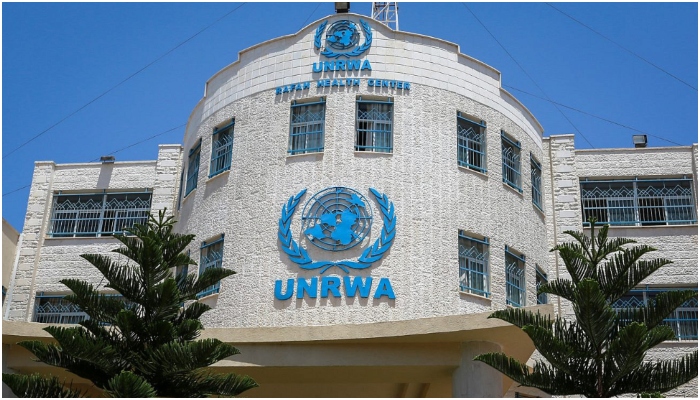
Japan announced late on Sunday (28th January) that it would restrict additional financing to the United Nations agency for Palestinians in Gaza. This comes at the time when the organisation is investigating allegations that its staff was involved in the 7th October attack on Israel.

Japan is “extremely concerned about the alleged involvement of UNRWA staff members in the terror attack on Israel” and has “strongly urged UNRWA to investigate in a timely and comprehensive manner,” according to a foreign ministry statement.

“In response, Japan has decided to suspend additional funding to UNRWA for the time being while UNRWA conducts an investigation into the matter and considers measures to address the allegations”, the statement added.

“At the same time, Japan will continue to make persistent and active diplomatic efforts to improve the humanitarian situation in the Gaza Strip and to calm down the situation as soon as possible by providing support to other international organizations,” added Japan.

United Nations officials have encouraged countries, particularly big donors like the United States and Germany, to reconsider financing UNRWA suspensions. Japan is the agency’s sixth largest donor, according to UNRWA data for 2022.

Following Israel’s allegations against UNRWA staffers, around six Western nations have suspended their funding to the United Nations Relief and Works Agency for Palestine Refugees in the Near East (UNRWA). The agency was created by the United Nations General Assembly in 1949. 

The Western nations that have so far taken action against the UN body include the US, the UK, Italy, Australia, Canada, and Finland.  

Notably, on Friday (26th January), UNRWA Commissioner-General Philippe Lazzarini revealed that Israel has accused a dozen UNRWA staffers of being involved in the 7th October terrorist attack on Israel by Hamas. He added that the agency has terminated the contract of these employees and launched an investigation into this case.

UN Secretary-General António Guterres has also pledged an urgent independent examination of UNRWA. He has also called with donor countries to “guarantee the continuity” of the agency for the sake of “the desperate populations” it assists.

However, Israel has pledged to cease UNRWA operations in Gaza following the war against Hamas and after links of UNRWA emerged with the terrorist organisation.

China: Liquidation of troubled property developer giant Evergrande ordered by Hong Kong court

0

On 29th January (local time), the Hong Kong court issued an order to liquidate Evergrande, a property developer from China. Notably, Evergrande was once China’s most prominent property developer and had played a significant role in the country’s economy. However, the company faced financial challenges, leading to the accumulation of debt of over USD 300 billion. The court order came after a financer filed a winding-up petition in 2022 and sought liquidation of the company after Evergrande defaulted on an overseas loan in 2021.

The petition against Evergrande was filed by Top Shine Global Limited of Intershore Consult (Samoa) Ltd, a strategic investor in Energrande’s online sales platform.

In the order, High Court Judge Linda Chan pointed out that Evergrande was not progressing to present a workable restructuring plan. She also highlighted the company’s insolvency. The judge stated, ” I consider it appropriate for the court to make a winding-up order against the company, and I so order.” Earlier, the court stressed a comprehensive and viable proposal during the hearing in December. However, Evergrande failed to present a workable plan.

After the decision, Evergrande’s shares saw a steep fall of 20.87 per cent and reached HKD 0.16 in Hong Kong. The trade was stopped on the stock exchange at 10:19 AM (local time). Furthermore, the situation in Evergrande’s property development branch affected its electric vehicle subsidiary, leading to a trading halt in that sector.

Speaking to media, lawyer Fergus Saurin, representing a group of creditors, accused Evergrande of not engaging with them. He highlighted a history of unproductive last-minute engagements and blamed the company for the situation. Detailed judgment in the matter is yet to come. Following the judgment, a liquidator will be appointed to complete the process.

Evergrande first defaulted on a loan in 2021. Subsequently, the company declared bankruptcy in the United States. As the company had a notable impact on the Chinese economy, its downfall has been closely monitored by sector experts. Notably, Chinese President Xi Jinping had expressed concerns over debt accumulated by property developers and the overall health of the country’s economy. In 2020, authorities tightened developers’ credit access, leading to a series of defaults. By June this year, it is expected that Evergrande’s debts will rise to USD 328 billion, contributing to the ongoing property crisis in China.