Home Blog Page 1545

Parliament security breach: Police say perpetrators wanted to create anarchy in the country, sixth accused arrested and sent to 7-day police custody

0

The Patiala House Court here on Saturday granted seven-day custody of Mahesh Kumawat, the sixth accused in the Parliament security breach case, to the Police.

Delhi Police sought 15 days of custodial remand of accused Mahesh Kumawat. He is the sixth accused arrested in the case.

Police claimed, “he alongwith others wanted to create anarchy in the country so that they can compel the government to meet their unjust and illegal demands”.

According to the Police, Mahesh was associated with the other accused for the last 2 years. He was the part of the conspiracy. He attended almost all the meetings held between them. He is actively involved in the act of destruction of a mobile phone and evidence with the key accused Lalit Jha.

Lalit Jha, the fifth accused and mastermind in Parliament security breach case, has burnt the mobile phones of his associates along with his friend Mahesh after fleeing to Rajasthan’s Kuchaman, said police sources.

Ahead of the incident, all four accused had handed over their mobile phones to Jha so that crucial investigation details cannot get into police hands as they were anticipating their arrest.

Jha met his friend Mahesh, who got him a room for the night. Both of them had met through Facebook, as revealed by Jha during his interrogation.

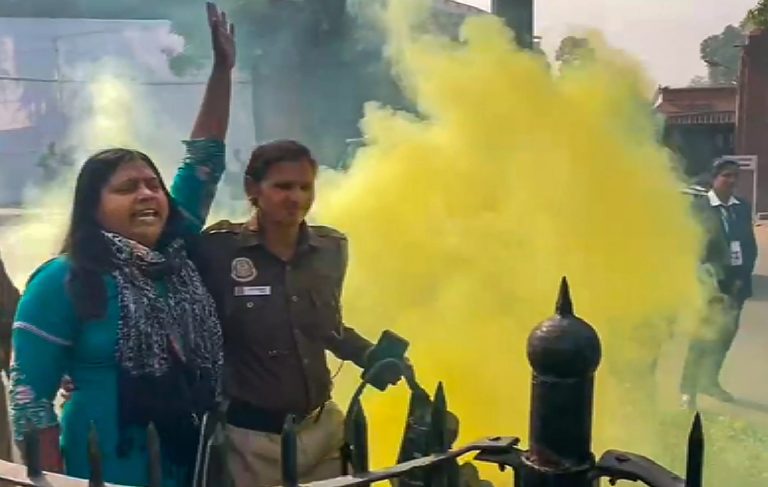
The security breach happened on the anniversary of the 2001 Parliament terror attack. Two people–Sagar Sharma and Manoranjan D–jumped into the Lok Sabha chamber from the public gallery during Zero Hour, released yellow gas from canisters and shouted anti-establishment slogans before being overpowered by the MPs.

Outside it, in another incident, two protestors — Neelam (42) and Amol (25) — protested outside the Parliament with similar gas canisters. However, all four were sent to seven-day custody of Delhi Police Special Cell on Thursday.

Last night, senior police officials, including two Deputy Commissioners of Police (DCP) and Additional Commissioners of Police, interrogated Lalit Jha, during which he narrated the whole incident to officials. According to sources, during interrogation, it came to light that preparations for the security breach were being made months ago. An entry pass was necessary for entry into Parliament; hence, it was not available.

Lalit had asked everyone who could arrange the pass so that they could easily enter Parliament. From a hotel in Rajasthan Lalit was continuously keeping an eye on ongoing developments and police movements through news channels, they said. According to sources, to unearth more details in the case, the Special Cell of Delhi Police has formed six teams that will go to the locations linked with the accused in Lucknow, Mysore, Karnataka, Rajasthan, Maharashtra and Haryana.

The investigation also revealed that two pairs of shoes were made on special order in Lucknow, as the accused discovered that shoes do not get checked in Parliament and this can be an easy way to carry the smoke canister inside the parliament. Meanwhile, Special Cell will recreate the scene of Wednesday’s Parliament security breach by taking the accused to the Parliament complex on Saturday or Sunday, sources said. According to sources, the accused will be taken to Parliament to recreate the scene of the crime. This will help the police find out how the accused entered the Parliament building with colour spray and how they executed their plan, sources from the Special Cell said. 


(This news report is published from a syndicated feed. Except for the headline, the content has not been written or edited by OpIndia staff)

As politicians in Bihar bat for caste census, here is how caste politics took Bihar’s economy to the bottom

Caste-based census data was released in Bihar amid an atmosphere of celebration among the supporters of RJD and JDU, the two main ruling parties of Bihar. It was projected as if the state government had delivered some huge public welfare scheme. But the reality is that it is the caste politics in Bihar took the state’s economy to the bottom.

Bihar has been considered a poor state for decades now. It is one of the ‘bimaru’ (meaning ill) states. The acronym is obtained by joining the initials of backward states in north India including Bihar, Madhya Pradesh, Rajasthan, and Uttar Pradesh. All the development indices in these states would normally be on the lower side.

Between the 1980s and 2020s, there was a time when the economy of Bihar saw a reverse shift from a slowly growing phase to a declining phase before coming back to a nominal positive track. In the 1980s, Odisha was a state poorer than Bihar. And over these four decades, Odisha has maintained steady growth. Today Odisha has outgrown Bihar on economic indices.

According to a report by Shamika Ravi for ‘The Economic Times’, Bihar has consistently held the unfortunate distinction of being the most impoverished among large states in recent decades. However, it is worth noting that historically, this was not the case. In 1991, Odisha was even more economically deprived than Bihar. Hence, it is fitting to examine and juxtapose the experiences of the two most impoverished states, evaluating what has been gained and lost over the past four decades.

In the report authored by Shamika Ravi – a member of the Economic Advisory Council to the Prime Minister – this period of comparative consideration of the two states is divided into three parts viz. 1980 to 1991 (before the economic crisis), 1992 to 2002 (emergence of caste politics, economic reforms and division of states) and post-2002 (growth and development).

Between 1980 and 1991

The report cites that in 1980, Bihar held the title of the poorest large state, with a per capita GDP (at 2015 prices) of ₹12,553, trailing behind Odisha, which recorded ₹17,256—a gap of nearly 37%. However, despite this initial disparity, Bihar exhibited a robust average annual per capita GDP growth rate of 5.1%, outpacing Odisha’s slower growth rate of 1.4%. Consequently, due to Bihar’s significant economic growth throughout the decade, by 1991, its per capita GDP had exceeded that of Odisha, standing at ₹21,282 compared to Odisha’s ₹20,591.

Between 1992 and 2002

Despite Bihar initially having a higher per capita GDP than Odisha, this era marked a significant shift in the fortunes of the two states. The prevalence of caste politics and lawlessness also known as the Jungle Raj triggered an unprecedented reversal in Bihar’s average annual growth rate, plummeting from +5.1% (1980-1991) to -0.6% (1992-2002). In contrast, Odisha doubled its growth rate from 1.4% (1980-1991) to 3% (1992-2002). This divergence resulted in Bihar’s per capita GDP dropping by almost 33%, declining from ₹21,282 in 1991 to ₹14,209 in 2002.

Conversely, Odisha experienced a 31% increase, growing from ₹20,591 in 1991 to ₹26,881 in 2002. Factors such as caste politics, poor governance, and lawlessness pushed Bihar behind Odisha, widening the per capita GDP gap from +3.4% in 1992 to -47% in 2002.

2002 onwards

Bihar’s economic trajectory underwent a notable shift with a transition from caste politics and lawlessness to a renewed focus on agriculture and women’s well-being. In the post-2002 period, Bihar witnessed a remarkable average annual growth rate of 5.6%, propelling its per capita GDP from ₹14,209 in 2002 to ₹37,050 in 2019—an impressive 161% increase.

Concurrently, Odisha experienced a 4.7% average annual growth rate during the same period, leading to a surge in per capita GDP from ₹26,881 in 2002 to ₹86,287 in 2019—a substantial 221% growth. As of 2019, Odisha’s per capita GDP surpassed Bihar’s by 130%.

Numbers in 2023

The per capita Gross Domestic Product (GDP) of Bihar and Odisha as of 2023 is Rs 49470 and Rs 150676 respectively. Odisha’s per capita GDP is thus thrice that of Bihar.

Where did Bihar lag?

Through a counterfactual analysis of per capita GDP, projections were made based on the average annual growth rates achieved by Bihar and Odisha from 1980 to 1991. If Bihar had sustained its growth at the rate of 5.1%, the projected per capita GDP would have been ₹95,313 in 2019—significantly higher by 257% compared to the actual figure of ₹37,050. This stark contrast highlights the true opportunity cost incurred by Bihar due to regressive caste politics during the 1990s. Had Bihar sustained its economic progress from 1980 to 1991, it would have evolved into a markedly different state economically.

In contrast, if Odisha had maintained an annual growth rate of 1.4% (its average rate from 1980-91), the projected per capita GDP would have been ₹29,782 in 2019. This amount represents only 35% of the actual per capita GDP, which stood at ₹86,287 in 2019. This comparison underscores the potential growth that Odisha forewent by not matching the growth trajectory of the 1980-91 period. If Odisha had persisted in its lacklustre economic performance, it would currently hold the undesirable distinction of being the most impoverished state, surpassing Bihar.

Caste politics is the prime reason of Bihar’s misery

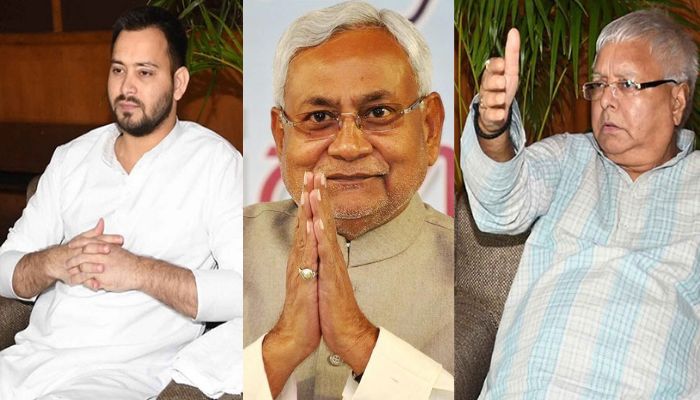
The impact of caste politics and lawlessness on the economy is clear. Bihar’s economic downturn during the 1992-2002 period, characterized by these challenges, led to a significant and lasting decline in prosperity, marked by a substantial drop in per capita GDP. This comparison with Odisha highlights Bihar’s ongoing challenges in fully recovering from the setbacks endured during that tumultuous decade. This decade is when Lalu Prasad Yadav was at the peak of his politics. Rashtriya Janata Dal was bringing together Muslim and Yadav votes to secure power in the state only to turn the democratic administration into a Jungle Raj.

Caste politics is back in Bihar

The recent political shifts in Bihar, veering towards caste politics instead of prioritizing economic growth, stand as a stark reminder of the potential repercussions. Contemplating the 1992-2002 period underscores the enduring costs borne by the weaker sections, women, and socially backward groups. It serves as a poignant reflection on the persisting challenges of caste politics and misgovernance, emphasising that they are enduring problems rather than solutions to economic and social backwardness. Despite numbers suggesting that caste politics has pulled Bihar back for a decade, politicians from Bihar resorted to the caste census in 2023.

Caste census in Bihar

As per data released by the Bihar government, 36.01% of the state’s population is categorised as belonging to the extremely backward class, while 27.12% falls under the backward class. The remaining 15.52% of the population is reported to belong to the unreserved or general category.

It’s important to note that the term ‘Extremely Backward Class’ refers to the EBC community, consisting of 130 castes and sub-castes in Bihar, a categorization that has long been on Nitish Kumar’s agenda. This separate classification aims at mobilizing non-Yadav backward castes, excluding OBC castes like Yadav and Kurmi.

The question arises whether two distinct groups, namely EBC and OBC, will be formed, each with its unique mobilization strategy. The answer to these questions remains uncertain, and only time will provide clarity. However, the possibility of joint fronts comprising various castes emerging against more influential castes within the OBC is a potential outcome, and similar experiments have been conducted in the past, suggesting a potentially accelerated process this time.

If OBC and EBC are amalgamated in Bihar, they collectively constitute 63%. The ‘Caste Census’ report mentions a total of 203 castes, with 196 of them being eligible for reservations.

Conclusion

In summary, Bihar’s economic journey reflects a series of ups and downs, with the state transitioning from being the poorest in the 1980s to a phase of decline in the 1990s marked by caste politics and lawlessness. The post-2002 period saw a revival, focusing on agriculture and women’s well-being. However, recent political shifts back towards caste politics raise concerns about sustained economic growth. The 2023 caste census introduces additional complexities, posing questions about potential social divisions. The future implications remain uncertain, and only time will unveil Bihar’s intricate interplay between caste dynamics, politics, and economic development.


India and Oman exploring Rupee trade between the two countries, utilising UPI stack in Oman’s digital economy: Foreign Secretary

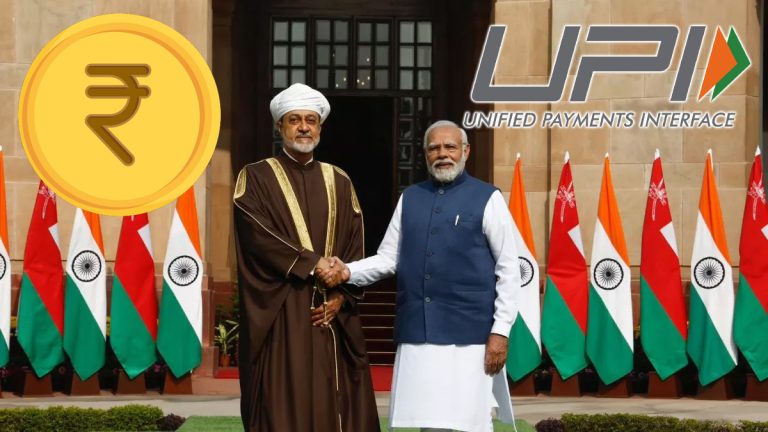
Foreign Secretary Vinay Kwatra on Saturday said that discussions are underway between India and Oman about utilising the UPI stack, adding that talks on the possibility of Rupee trade which is an “important element of cooperation,’ is still at the “exploratory stage”.

Kwatra’s remarks came while addressing a special briefing at the Ministry of External Affairs on the State Visit of the Sultan of Oman, Haitham bin Tarik, to India.

“Another element of discussion where we would try to move forward is the possibility of Rupee trade which can work between the two countries but this is still at an exploratory stage but can be an important element of cooperation going forward,” Kwatra said while responding to ANI question.

On talks of digital payment cooperation between Oman and India, the Foreign Secretary said both sides discussed utilising the UPI stack with the potential corresponding digital stack in the Omanis ecosystem.

“There are also other elements of the Indian stack in terms of the digital infrastructure that can be suitable to Omanis priorities with regard to using now financial inclusion and financial technology payment systems; those are only one element of it but the interface of the UPI with a corresponding Oman platform is something we can talk about,” he added.

Kwatra also talked about the Comprehensive Economic Partnership Agreement (CEPA) and mentioned that the negotiations have started recently, which have made substantial progress in the last few rounds of discussion and both leaders gave strong impetus to conclude it as early as possible.

“An area that featured very prominently in the discussions between the two leaders was ongoing discussions between the two countries for a Comprehensive Economic Partnership Agreement. Although the negotiations on CEPA have started only recently, they have made substantial progress in the last few rounds of discussion and both leaders gave strong impetus and push to conclude the CEPA Agreement as early as possible,” Kwatra said.

Briefing further on the Sultan of Oman’s maiden visit to India, Kwatra said, “This is the first visit of Sultan of Oman to India. This is also the first state visit from Oman to India in the last 26 years. Some of you would recall that the late His Majesty Sultan Qaboos bin Said visited India in 1997 and he was also awarded the Gandhi Peace Prize for 2019 posthumously.”

The visit gained added importance due to the recent exchanges between the two nations, including Prime Minister Modi’s visit to the Sultanate of Oman in February 2018.

Kwatra underscored the significance of Oman’s successful participation as a special guest country in the G20 during India’s presidency, particularly at the G20 summit in September.

“Most recently in our exchanges over the last few years. PM Modi visited the Sultanate of Oman in February 2018. The visit by His Majesty is also important as it follows Oman’s very successful participation as a special guest country in the G20 during the India Presidency and their participation, particularly at the summit of the G20 in September this year,” said the Foreign Secretary.

Kwatra also highlighted the strategic partnership between India and Oman, which is rooted in a long history of cultural ties and has evolved into a comprehensive collaboration spanning political, security, defence, trade, economic, cultural, and people-to-people relations. “India shares a special relationship with Oman anchored in an old history of contacts between our people today,” he said.

Notably, India and Oman are key partners in maritime security in the Western Indian Ocean, reflecting the depth of their cooperation.

“Our relationship has turned into a strategic partnership characterised by strong cooperation across a range of areas in diverse fields. India and Oman are partners for maritime security in the Western Indian Ocean. Both sides enjoy robust and multi-dimensional defence engagement,” the Foreign Secretary added.

Kwatra acknowledged the strong bond shared by the two nations and the special role played by the Indian diaspora in Oman, numbering around seven million individuals who have significantly contributed to the development of Oman’s economy.

“Oman is also home to a large Indian diaspora. About seven Indians called Oman their home and, in the process, made significant and meaningful contributions to the development of the Omanis economy,” he also said.

Earlier in the day, Prime Minister Narendra Modi held delegation-level talks with the Sultan of Oman, Haitham bin Tarik, at Hyderabad House in New Delhi.

“Transforming India-Oman ties! PM @narendramodi held productive discussions with His Majesty Sultan Haitham bin Tarik of Oman. The leaders reviewed bilateral relationship covering the areas of political, security, defence, trade, economic, cultural and people to people ties. They also exchanged perspectives on regional and international issues,” posted MEA spokersperson Arindam Bagchi on X, following their meeting.

The two leaders adopted a new ‘India-Oman joint vision, a partnership for the future’ under which both countries will work in ten different areas.

The Sultan of Oman was also accorded a ceremonial reception at the forecourt of Rashtrapati Bhavan in New Delhi on Saturday, the second day of his state visit to India.

The Sultan was received by Union Minister of State (MoS) for External Affairs, V Muraleedharan, as he arrived at the Delhi airport on Friday for a three-day state visit.


(This news report is published from a syndicated feed. Except for the headline, the content has not been written or edited by OpIndia staff)

‘PM Modi taught rioters such a lesson in 2002, no one dares to cause riots in Gujarat’: Amit Shah lists PM Modi’s achievements at ‘Viksit Bharat Sankalp Yatra’

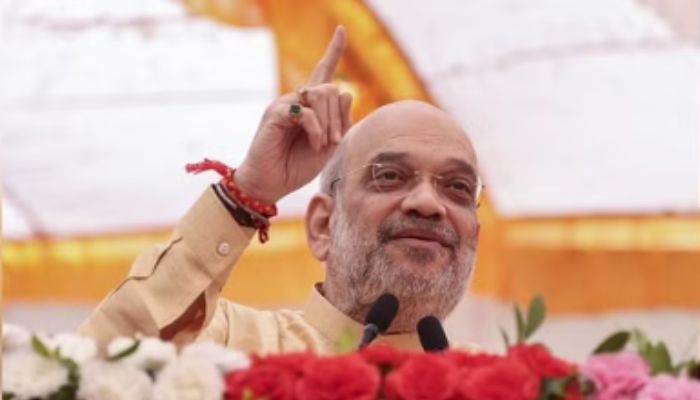
On 16th December (Saturday), Union Home Minister Amit Shah asserted that Prime Minister Narendra Modi taught such a lesson to rioters in Gujarat in 2002 that no one has dared to cause riots again in the state to date. He made the remarks while addressing the Viksit Bharat Sankalp Yatra in Sanand, Gujarat’s Ahmedabad district. 

Addressing the gathering in Gujarati, Home Minister Shah said, “In 2002, there were riots and thereafter Modi saheb taught a lesson to not repeat the act. Have there been riots thereafter? The rioters were taught such a lesson in 2002 that to date no one dares to cause riots in Gujarat.”

He also listed out the major achievements of the Modi government in the last nine-and-a-half years and credited the Prime Minister for abrogating Article 370 “in a jiffy”. He lauded PM Modi for improving the safety of the country and highlighted the recurrent bomb blasts across the country before 2014. 

Shah also highlighted the construction of Bhavya Ram Mandir which was otherwise housed in a ‘tent’. 

He added, “PM Narendra Modi worked to secure India by carrying out surgical strikes on Pakistan, realised the incomplete dream of abrogation of Article 370, undertook the work of constructing Lord Ram temple in Ayodhya, took India to the Moon through Chandrayaan mission, improved economic parameters to their best since independence, and led to the highest industrial development since independence.” 

Shah further noted, “Earlier, every day, we would have bomb blasts, print journalists would forget to print, and there would be so many blasts with no end to it. But with a surgical and air strike once, we taught Pakistan a lesson…Narendrabhai has made the country safer.”

The Home Minister asserted, “The entire world reached the Moon but our flag could not. Narendrabhai sent Chandrayaan to the Moon and at Shivshakti point made our tricolour fly high. He has worked such that in the country’s economy, all parameters have been at their best in the past 75 years. If one takes 10-year intervals, industrial development has been the most during Narendrabhai’s tenure.” 

However, Shah argued that improving the quality of life of 60 crore poor people in the country has been the biggest achievement of the Narendra Modi government.

“Several times, journalists ask me as to which of Narendra Modi’s achievements will get my highest marks. I say this without any controversy, confusion or dilemma that if I have to give the highest marks, then it will be Modi’s work to improve the quality of life of 60 crore poor,” he was quoted saying by The New Indian Express.

Meanwhile, during the Sanand gram panchayat event, Shah also urged people to take a pledge to transform India into a developed country by 2047 while eradicating the “slavery mentality from its root”.

Central Consumer Protection Authority to publicly ‘name and shame’ companies and establishments running misleading advertisements

As part of a crackdown on misinformation spread by advertisers, the Central Consumer Protection Authority (CCPA) is planning to make information public about the establishments and brands that are running misleading advertisements, Mint reported on Saturday (16th December) citing officials. 

In a statement, the CCPA stated that they will soon be “naming and shaming” companies that are publishing misleading ads to discourage such practices, as reported by Mint.

As per reports, the orders and notices issued against establishments running misleading ad campaigns, like coaching institutes, and service providers, will soon be displayed on the official websites of the CCPA and its nodal Ministry. Notably, the Ministry of Consumer Affairs, Food and Public Distribution is the Nodal Ministry of India’s consumer protection authority. 

As per the current working procedure of CCPA, the authority did not publicly disclose the information of the companies or establishments that run misleading ads. However, it is now planning to display their names on the CCPA website so that the consumers will be alerted to make informed decisions. 

Additionally, the Nodal Ministry is also planning to conduct a study to evaluate the impact of the CCPA’s new guidelines on the public, officials cited by Mint stated. 

The report further added that these measures are being taken to eliminate misinformation spread by certain corporations regarding their services. 

As per the Consumer Protection Act, 2019, for any product or service, misleading advertisement pertains to any advertisement, that— (i) falsely describes such product or service; or (ii) gives a false guarantee to, or is likely to mislead the consumers as to the nature, substance, quantity or quality of such product or service; or (iii) conveys an express or implied representation which, if made by the manufacturer or seller or service provider thereof, would constitute an unfair trade practice; or (iv) deliberately conceals important information.

It is important to note that the CCPA had earlier issued 20 notices to IAS coaching centres for allegedly running misleading advertisements. As per reports, the authority issued a warning to all coaching centres. Apart from the warning, heavy penalties were imposed on eight of these institutes. 

The information was given by the Union Minister of State for Consumer Affairs, Food & Public Distribution, Shri Ashwini Kumar Choubey in a written reply on 13th December in the Lok Sabha. 

However, the authority didn’t reveal the names and locations of these IAS coaching institutes to the general public.

Committee to be formed on the issue of converted tribals receiving dual benefits in the state: Maharashtra Government

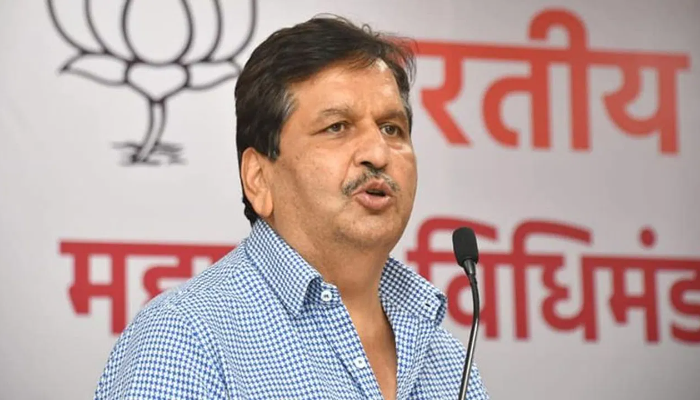
On 14th December, Maharashtra minister Mangal Prabhat Lodha stated in the legislative council that a committee would be constituted to examine the advantages enjoyed by members of scheduled tribes (ST) community in Maharashtra who have converted to Christianity or Islam and left Hinduism. The issue would be presented to Chief Minister Eknath Shinde, Deputy CMs Devendra Fadnavis and Ajit Pawar.

The panel would be presided over by the vice-chancellor of a university and would consist of members from all political parties who would look into cases of tribal (Janjati/Vanvasi) conversion. The minister remarked that the committee would look into the concerns mentioned by Bhartiya Janta Party MLA Niranjan Davkhare and present a report in 45 days.

He was reacting to an appeal to action made by BJP lawmakers Niranjan Davkhare and Pravin Darekar who demanded that tribal people who embraced Islam or Christianity be removed from the ST list and that their right to reservation be terminated. The BJP lawmaker had earlier argued that the Janjati members who had converted were receiving benefits intended for scheduled tribes and minorities during the debate on the de-listing of those Janjati community members who had switched to other faiths.

The Minister of Tourism, Skill Development and Entrepreneurship also voiced worry about the rising number of reported cases of forced and inducement conversions among tribe members and asserted that these actions undermine tribal culture.

However, the opposition leaders who contended that members of scheduled tribes have the right to choose their religion and that the planned de-listing process would result in religious discrimination engaged in a contentious debate over the matter. Congress legislator Kapil Patil claimed that the proposed delisting would amount to prejudice based on faith and alleged that members of a Scheduled Tribe have the right to pick their religion. According to him, if the indigenous people convert to Hinduism it becomes acceptable (for those looking to delist them upon conversion) but if they convert to Islam, Christianity or Buddhism, it is not approved.

Notably, there have been many allegations of the unlawful conversion of Janjati community members through coercion and seduction that have surfaced regularly. This included conversion that is pushed by deception and false promises of financial assistance, jobs, education and health care. Furthermore, numerous reports of conversions that occur in the Janjati-dominated districts of Bharat involve the provision of rations and the enticement of innocent girls from the community by concealing true identities.

It is important to note that the Janjati community in several Indian states has been taking to the streets in support of a national delisting initiative to find members of the community who have converted to another religion but still possess a scheduled tribe certificate and are eligible to use the reservation’s benefits. Numerous comparable demonstrations have also taken place in Maharashtra, where the Janjati group makes up a sizeable 9% of the state’s population.

Sharad Chauvhan, the Janjati Suraksha Manch’s media coordinator previously conveyed during his talk on the subject that the Janjati society has organised up to 231 rallies throughout various states to support the cause of delisting and that a nationwide delisting exercise is urgently needed. He stressed, “Our demand is clear, those who have converted to any religion other than those originated in Bharat should not avail the benefits exclusively reserved for the Janjatis.”

The desire for delisting is one of the long-standing issues facing the tribal community and many of its leaders have been observed expressing support for it. This includes legendary figures like Baba Kartik Oraon who backed the idea of a national identity program to protect the rights granted only to the tribal community.

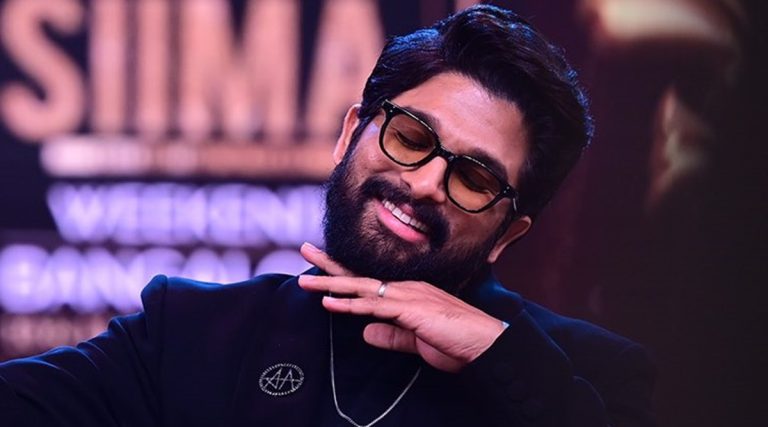
Actor Allu Arjun turns down multi-crore liquor and tobacco advertisement deal for upcoming Pushpa sequel

Actor Allu Arjun has rejected a popular liquor and pan masala brand’s lucrative advertisement deal. The “Pushpa: The Rise” fame actor reportedly rejected the brand’s offer of Rs 10 crore for its logo to be displayed on screen every time he smokes or chews tobacco as ‘Pushpa’ in the much-awaited sequel “Pushpa: The Rule”. The actor turned down the offer saying that it goes against his ethics and is “comfortable” in promoting such brands.

This, however, is not the first time the Telugu sensation has refused an ad deal offered by liquor and pan masala brands. In August this year, similar reports emerged about the actor refusing to sign a multi-crore deal with a tobacco and liquor brand. The actor reportedly said that he himself does not consume tobacco and does not wish to encourage his fans to do the same.

It is worth recalling that in April this year, KGF fame superstar Yash had refused a tobacco brand deal. The actor rejected the multi-crore deal since he wanted to give the right message to his fans and followers.

Interestingly, while these south superstars rejected tobacco brand deals, Bollywood biggies Ajay Devgn, Shahrukh Khan and Akshay Kumar drew flak over promoting gutka brand. The trio recently received notices from the Central Consumer Protection Authority (CCPA) for promoting tobacco brands.

Notably, actors Akshay Kumar alongside Shah Rukh Khan and Ajay Devgn were seen in the advertisements of the brand Vimal. This sparked controversy, and Akshay Kumar resigned as Vimal’s brand ambassador last year after receiving criticism from his fans. Previously, he had signed up as a brand ambassador for the company’s Elaichi products. However, Vimal also makes tobacco products, and his endorsement of the brand was seen as an endorsement of those products. In October this year, Kumar refuted a media report claiming that he is returning as the brand ambassador for Vimal Pan Masala.

Actors Shahrukh Khan, Akshay Kumar, Ajay Devgn, and Amitabh Bachchan received flak from fans over a commercial that aired featuring him back in 2021. Following the backlash, Bachchan withdrew from a pan-masala advertising campaign.

Friends fame Matthew Perry died of ‘acute effects of Ketamine’, reveals autopsy

Hollywood actor, famed for portraying Chandler Bing in the popular sitcom Friends, Matthew Perry died because of ‘acute effects of Ketamine’, as per his autopsy report which was released on Friday (15th December). As per reports, the manner of death was ruled an ‘accident’.

While releasing the autopsy report, the Los Angeles County Medical Examiner’s office said Matthew Perry died from the “acute effects” of ketamine, an anaesthetic with psychedelic properties.

As per reports, the effects of the drug combined with other factors, made the actor lose consciousness and drown in his hot tub leading to his death. 

The medical examiner’s office added that drowning, coronary artery disease, and the effects of an opioid, buprenorphine, had contributed to his death. However, his autopsy attributed his death primarily to “the acute effects of ketamine.” 

Ketamine is a potent anaesthetic and it has gained popularity as an alternative treatment for challenging mental health issues such as depression, anxiety, post-traumatic stress disorder, and others. Additionally, it is also used recreationally. 

According to the autopsy report, Perry had been on ketamine infusion therapy. However, the report ruled out that the ketamine in his system could not have been from his last known therapy session, which was about a week and a half before he died. 

Perry had publicly struggled with drinking and drug use for decades. 

The autopsy report stated, “At the high levels of ketamine found in his postmortem blood specimens, the main lethal effects would be from both cardiovascular overstimulation and respiratory depression.” The report noted that the level of ketamine investigators found in Perry’s blood was equivalent to the amount that would be used during general anesthesia. However, the exact method of intake is unknown. 

Toxicology tests also revealed the presence of “therapeutic” levels of buprenorphine, a drug used to address drug addiction and manage pain. According to Perry’s live-in assistant, he was seeing a psychiatrist and taking prescribed buprenorphine twice a day. While investigators discovered signs of sedatives, they found no traces of alcohol, methamphetamine, or cocaine.

The veteran Hollywood actor aka Chandler Bing died at the age of 54 on 29th October. At around 4 PM, he was found dead in his Los Angeles residence, in a jacuzzi. According to initial media reports, he died due to drowning. No drugs were found at the location and no foul play was suspected in connection with his demise, media reported. 

A day after his tragic demise, the details of the 911 call that was made from his home on the fateful night was released. In the dispatch audio, a man was heard saying the word “drowning.”

On 3rd November, his funeral service was conducted at Forest Lawn Memorial Park in LA, near Warner Bros Studios. It was attended by the entire main cast of ‘Friends,’ comprising Jennifer Aniston, Courteney Cox, Lisa Kudrow, Matt LeBlanc, and David Schwimmer.

Congress announces crowdfunding campaign after cash haul of Rs 351 crores seized from Congress MP Dhiraj Sahu in I-T raids

Days after the Income Tax Department recovered crores of rupees in cash from Rajya Sabha MP of Congress party Dhiraj Sahu, Congress party announced that it will soon launch its crowdfunding campaign. In this campaign, the Congress party is asking people to donate money to the party. This campaign is named ‘Donate for Desh’ which means ‘Donate for the country’.

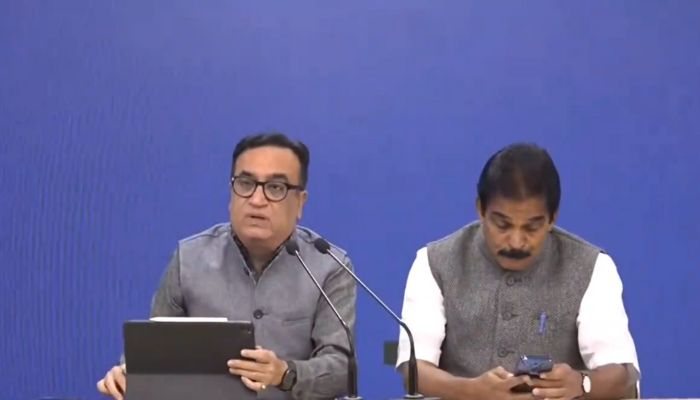
Congress MP KC Venugopal announced this in a press conference on Saturday (16th December). He said, “The Indian National Congress is proud to announce the launch of its online crowdfunding campaign, ‘Donate for Desh’. This initiative is inspired by Mahatma Gandhi’s historic Tilak Swaraj Fund’ in 1920-21 and aims to empower our party in creating an India rich in equal resource distribution and opportunities. The campaign will be officially launched by the party President on 18th December in Delhi. We encourage our state-level office bearers, our elected representatives, DCC Presidents, PCC Presidents, and AICC office bearers to contribute at least Rs 1,380 each.”

Congress party’s treasurer Ajay Maken said, “We are going to launch a crowdfunding campaign named Donate for Desh, which will be launched by Congress President Mallikarjun Kharge on December 18, 2023. On completion of 138 years of Congress, we request the countrymen to deposit amounts like Rs 138, Rs 1380, and Rs 13800 in the Congress account to strengthen the Congress, so that the Congress can work for a better India. You can visit our website donateinc.in or inc.in and donate through it. Along with this, you can also donate to us by credit card, debit card, net banking, UPI, RTGS, NEFT or by scanning a QR code. The person donating must be a citizen of India and must be above 18 years of age.”

Notably, this crowdfunding campaign by the congress party has come after crores of rupees in cash were confiscated from the premises owned by Congress MP Dhiraj Sahu and various establishments connected to him. Dhiraj Prasad Sahu is a Rajya Sabha MP for Congress from Jharkhand. His family has been associated with the Congress party since independence. He became RS MP in by-polls in 2009 for the first time. In 2010, he was elected as RS MP for the second time; in 2018, he was re-elected for RS by Congress for the third time. He actively participates in parliamentary proceedings. Sahu was part of Rahul Gandhi’s Bharat Jodo Yatra.

In recent raids at Odisha-based Boudh Distillery Pvt Ltd, where Dhiraj Prasad Sahu is a partner, the Income Tax Department recovered over 300 cr of unaccounted cash. Congress Party has distanced itself from the controversy, while BJP leaders, including PM Modi, have targeted Congress.

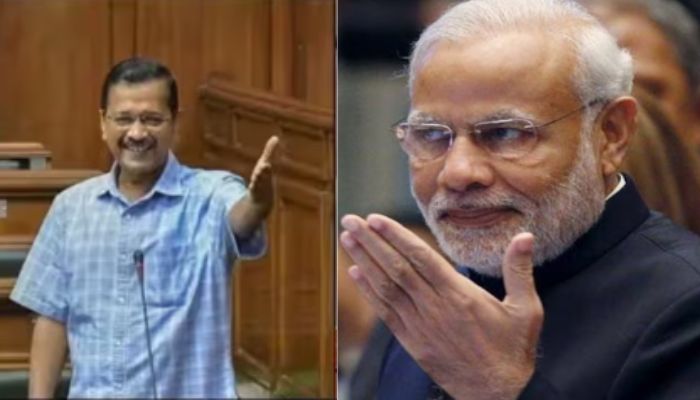
PM Modi’s degree case: Gujarat court junks Kejriwal’s plea against nod to prosecute him in defamation complaint filed by Gujarat University

On Friday (15th December), a metropolitan court in Gujarat rejected Delhi Chief Minister Arvind Kejriwal’s plea opposing criminal prosecution in the defamation complaint filed by Gujarat University. The metropolitan court observed that there is no need for prior approval for his trial in this case, as the remarks made by the politician do not seem to have been made as part of the discharge of official duty.

Notably, AAP National Convener Arvind Kejriwal and AAP Rajya Sabha MP Sanjay Singh are facing trial in connection with a criminal defamation complaint filed by the registrar of Gujarat University Piyush Patel. The complaint pertains to their “sarcastic” and “derogatory” statements made in connection with PM Modi’s educational degree.

Citing provisions of Section 197 of the CrPC, Kejriwal had sought protection asserting that a sanction was required to initiate a trial against him because he is a public servant.

However, the court of additional Chief Metropolitan Magistrate SJ Panchal rejected his plea, noting that no such sanction was required. The matter will now be heard on the next date set on 28th December.

Earlier on 13th December, the AAP Supremo had filed an application before Panchal’s court. In his plea, the AAP leader challenged his prosecution in the matter as he is a public servant. 

His advocates had argued that since there was no permission from the proper authority to start a criminal case against him, the trial was not valid. They claimed that the comments were made as part of a public servant’s duty to ask questions.

Gujarat University’s counsel Amit Nair opposed the application and asserted that Kejriwal made defamatory statements about the university and tarnished the image of the institution. He submitted that utterance of defamatory words does not fall under the category of discharge on official function and hence, such a sanction was not required in the present case. 

Additionally, on 13th December, magistrate Panchal had also rejected Kejriwal and co-accused Sanjay Singh’s applications that sought adjournment of proceedings in the defamation case. 

The court observed that prima facie there appeared to be a case against them under section 500 (defamation) of the Indian Penal Code(IPC) and had summoned the duo. 

The case against the AAP leaders was filed by GU registrar Piyush Patel following their comments, which came in response to the Gujarat High Court overturning the Chief Information Commissioner’s order regarding the PM’s degree.

The complainant asserted that the AAP leaders made “defamatory” statements in press conferences and on their Twitter(now X), handles targeting the university over Modi’s degree. He said that their comments targeting Gujarat University were defamatory and hurt the prestige of the educational institution which has established its name among members of the public.