Home Blog Page 1567

“It was to tell the audience that an animal is coming”: Actress Mansi Taxak justifies marital rape scene in film Animal

The film ‘Animal’ starring Ranbir Kapoor, Boby Deol, and Anil Kapoor in lead roles has created a storm at the box office. The film has received appreciation for the performances of the lead actors and is breaking all box office records. However, the Sandeep Reddy Vanga directorial has also received criticism over the ‘glorification’ of violence, toxicity and misogyny. In a recent interview with Zoom Entertainment, actress Mansi Taxak, who plays one of the wives of actor Bobby Deol’s character Abrar, defended the marital rape scene saying that it was to depict the character’s animal instincts.

During the interview, Mansi was asked specifically about the wedding scene in Animal, in which Abrar learns of his brother’s death. He begins by killing the messenger before viciously assaulting Mansi’s character, the youngest of his three wives. Following that, he gestures for his other two wives to join them in the bedroom and continues to abuse them also.

“It is shocking, of course. Nobody expects their wedding to end that way. When the wedding sequence starts, if you see the lights and the way the art was done, it was beautiful. You hear the music, that has gone so viral on Instagram. It was heading towards a beautiful end, and suddenly, you see something like this happening,” Mansi said.

“It was to tell the audience that an animal is coming, if you thought Ranbir was this way, you can expect the villain to be (worse). It was an apt way to establish Bobby Sir’s character and to show the audience what real animal we’re talking about. I would not wish that to happen at my wedding ever”, the actress continued.

Mansi Taxak further lauded Bobby Deol’s performance saying that he was ‘commendable’ in the scene. When asked about the backlash over the film’s portrayal of women, Mansi said that her character was in love with Abrar. The actress denied that any assault transpired in the scene.

“If you see the scene before that, the wedding scene, if you see the sort of chemistry that we have, the eye contact that we have… It tells you the back story, that besides their differences, their age, and their careers, they do love each other, and that’s why they’re getting married. I completely get where people are coming from, but that was not the intent. It was not the intent to show that any sort of assault was happening. It was just that Bobby sir did not expect his brother’s death news to come at the wedding, which puts the character into a zone where he couldn’t think straight. And that’s what we’re talking about, right? Animal instincts are unpredictable instincts. So he goes into that zone, and to vent out his emotions, he comes to his wives. I don’t think it was intended to be any sort of assault. I didn’t feel it on the set, or in the script. That was not the case. It was just a relationship between two people that has panned out the way it did,” Mansi Taxak said.

Interestingly, right after defending the marital rape scene and denying any assault, Mansi Taxak asserted that cinema is a reflection of society. “You know… cinema is a reflection of society, so when you see these kinds of scenes onscreen, it is actually happening in the society and there are people who are doing these things to their spouses…their wives….”

Film ‘Animal’, directed by Sandeep Reddy Vanga and starring Ranbir Kapoor, Rashmika Mandanna, Bobby Deol, Anil Kapoor, and Triptii Dimri, among others, was released on December 1.

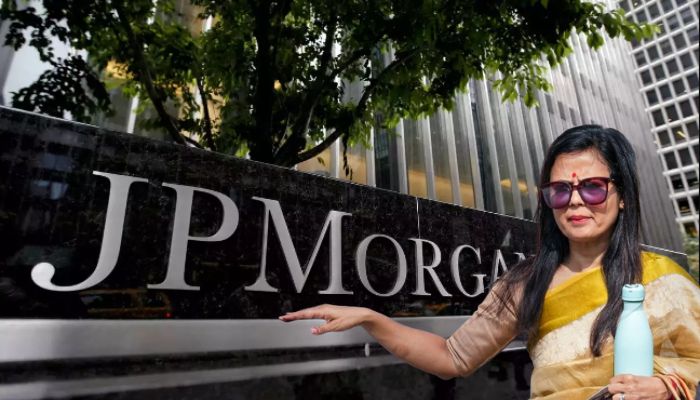
Mahua Moitra was Vice President at JP Morgan, but that post doesn’t mean what one may imagine. Here is the truth about fancy designations in the banking world

On 8th December (Friday), the Lok Sabha voted in favour of expelling the Trinamool Congress MP Mahua Moitra on the recommendation of the Ethics Committee against the TMC leader in connection with the cash-for-query scam case. Since her ouster, several netizens have flaunted her past credentials as the Vice President at the Investment Banking giant JP Morgan and Chase. Notably, it is touted among the big five in the Investment banking sector. 

Supporting the accused TMC leader, some social media users claimed that she is innocent of the cash-for-query scam case and alleged that it is an attempt to silence her. They argued that Moitra left her lucrative and ‘distinguished’ position at one of the biggest investment banks (I-bank) to enter politics and serve the people of her constituency.

Additionally, they asserted that her lavish lifestyle is a result of her previous role as the VP at JP Morgan, a high-paying and consequential post. Furthermore, they claimed that her ‘senior’ position in the top Investment Bank underscores her leadership qualities, which have rattled her naysayers insinuating that she has a brain of her own and didn’t need to take cues from others to shape her decisions countering the allegations that she accepted bribery to ask pliable questions. 

However, several netizens have pointed out that the senior-most designation in the I-banks is not a rarity linked with high calibre and exemplary growth. Instead, it is a general trend in Investment Banks to dole out fancy designations to scores of employees, sometimes even in the hundreds to thousands. This is done for various reasons, including massaging the egos of their employees, non-cash retention tools to assuage lower paychecks, or creating an impression on clients/customers, among other considerations.

Inflated designation conundrum: VP in I-Banks may not be the second-most or even a very high-ranking official

It is generally assumed that an official with senior-most designations like Vice-President, Director, or Managing Director would be among the highest-ranking decision-makers in any company or country, possibly holding the 2nd or 3rd authority in the entity. However, things are different in I-Banks, and according to reports, as high as 30-40% or even higher of officials enjoy these fancy titles of VP, Director, or MD without their designations granting them as much power, privilege, or reflection of experience as their contemporary designation holders in non-I-Banks get.

In March 2012, Goldman Sachs, in a court case, noted that the plaintiff Greg Smith, an estranged VP of the firm, was one of 12,000 VPs in their organisation. Back then, US media also estimated that 40% of Goldman staff were VPs as it was estimated to have 2,400 managing directors!

While it was a decade-old case, things have not changed much, and recent estimates also highlight that there are between 10,000 and 12,000 Vice Presidents employed at Goldman Sachs, FourWeekMBA reported in October this year.

Reuters in November this year reported that Goldman Sachs would promote 608 executives to managing directors next year. These would be fewer than the 643 senior bankers it elevated two years ago, according to a company memo. Notably, the Wall Street firm announces managing director promotions every two years. The number of promotions this year is the lowest since Goldman promoted 465 in 2019, before the pandemic, the report added.

Similarly, on 4the July 2022, the global accounting and consulting firm EY became the latest firm to promote thousands of its employees to “partner” without offering them a share of profits, the Financial Times reported. However, outside the non-I-banking terminology, a ‘partner’ is often assumed a co-founder or large shareholder which is not the case in I-banks.   

However, this phenomenon isn’t confined to I-banks alone. According to a report from the Small Investor Protection Association, there are approximately 121,000 registered financial professionals in Canada. The majority of them, classified as dealing representatives, are essentially salespeople licensed to sell financial investments. Only about 4,000 among these registered financial professionals bear a fiduciary duty, a legal obligation to act in the best interests of their clients. 

Meanwhile, the exact figures and percentages of individuals bearing these inflated corporate titles may vary, the prevalence of fancy designations, as exemplified by Goldman Sachs, is a common practice in the sphere of investment banking. This broad trend is observed in I-banks worldwide, including those in India. This means that I-banks are plentiful of Vice-presidents, directors, and managing directors.

A consultant from a financial services company, Jerome Tillier, conducted a test and discovered a significant number of hits when searching for the keyword ‘bank vice-president’ in LinkedIn’s search box. He pointed out that this number is larger than the population of Malta. 

Similarly, when searching for the keyword ‘Vice President JP Morgan Chase’ in India, the results yield thousands of hits, featuring dozens of Vice Presidents, Managing Directors, and other senior positions available regularly.

Furthermore, in a wrongful termination lawsuit between Bank of America and an Indian-American, Padmanabhan Ramanathan, at the California Court of Appeals in 2007, the bank’s legal representation made an unusual assertion. As detailed by the California Business Litigation Blog, the counsel contended that the bank has the authority to label any employee, “including janitors, maintenance workers, everyone,” as “vice-presidents” if it so chooses. 

The assertion that a bank can make even a janitor as VP aptly explains why an Investment bank VP or MD doesn’t immediately translate to authority, experience, and command in that domain or career growth viz-a-viz equivalent title holder employed in non-I-banks. 

It is important to note that the abundance of such posts has diminished the perceived authority associated with these positions. Evidently, a vice president is the most junior of the senior bankers and, as far as clients and higher-ups are concerned, the post carries the first legitimate title. The general Hierarchical structure in an Investment bank could include Analysts followed by Associates, then VP, Senior VP, and Managing Directors. 

This begs the question: What accounts for the abundance of these fancy titles in certain fields like Investment banking?

Experts claim fancy and inflated titles are “non-cash feel good” factors and more

Foremost, Indian and India-based banks adopted a well-established practice observed in American banks, particularly investment banks (I-banks). Evidently, post-liberalisation, American banks introduced their HR norms to India, and the influence of peer pressure compelled Indian private banks and I-banks to conform to these practices.

A major reason for these inflated Corporate titles is to stoke egos. A bank executive said, “Fancy designations address a human need for validation by employers.”

The head of one of the largest MNC I-banks in India noted, “The MD designation gives social status…being an MD symbolises seniority outside.”

Another reason for so many VPs, MDs, and Directors is to make an impression on customers.

K Sudarshan is a managing partner, Asia at EMA Partners International which is a global executive search firm.

Explaining the rationale and power wielded by such fancy titles, Sudarshan said, “Designations like MD, VP are not jobs, but grades that reflect seniority. VPs are just fancy titles on visiting cards for market-facing executives… VPs are ubiquitous and the title does not mean anything and has nothing to do with the job one is doing…even the person managing in-house tech support can be called MD, technology.”

VP & Head – HR, India Factoring and Finance Solutions, Gauri Das explains that companies try to go innovative with designation, wherever required, and use it as a “retention tool”.

According to Das, another reason for fancy designation is to compensate for low payouts by giving a very high social status through designations. This is because a
fancy and inflated title does not cost money and is not necessarily linked with the paycheck, making it an easy tool for employee happiness.

As per experts, one of the reasons can also be to create a buzz on social media. Das added, “Fancy designations help you get many eyeballs.” Job titles like Customer Service Evangelist, Marketing Dynamo, Head of First Impressions (Receptionist), Opportunity Creator (Business Development), and Master of Disaster (the one who helps federal agencies with information to manage calamities) among others are an example of it.

In a sector where customer perception is crucial, a headhunter said, “A customer meeting a vice-president is going to be a bit impressed…and a company looking for an acquisition likes the idea of liaising with an MD.”

He added, “These designations are visiting card tools for banks to present a grand face to people and companies.”

Meanwhile, after her education, Mahua Moitra worked as an investment banker for Investment banking giant JP Morgan Chase in New York and London. In 2009, she quit her position as one of the vice presidents of JPMorgan Chase in London to join politics, where there were thousands of VPs in the bank.


Return of Jungle Raj in Bihar: Three people including a minor murdered in Banka, Namami Gange engineer injured in indiscriminate firing in Munger

0

The ruling coalition of Janata Dal (United) and Rashtriya Janata Dal claimed to be the champions of good governance, however, the reality belies their lofty rhetoric as rising crime rates in the state are making people nostalgic for the era of the Jungle Raj and instilling dread that those dark days could soon return. Several such criminal cases have occurred in the state recently.

In the first incident, a 14-year-old student in 9th grade named Arun Yadav son of Bhupendra Yadav was shot dead in Jhalar village of Bandhua Kurawa police station area located in Bounsi Block on the evening of 8 December. Meanwhile, 45-year-old Kuldeep Rai who was also wounded in the firing died on the next day morning at Mayaganj Hospital during treatment. Kuldeep Rai’s 7-year-old daughter Shraddha Kumari, Arun Yadav’s 40-year-old mother Tara Devi and their 30-year-old neighbour Indu Devi are receiving care at the referral hospital.

The former head of Chilkara Panchayat Pappu Yadav and his associates reportedly committed the crime due to personal enmity. Harku Rai who is the father of Kuldeep Rai has also passed away. Arun Yadav’s uncle (father’s brother) Karthik Yadav informed the police that on the morning of 8th December Pappu Yadav had a dispute with the deceased teenager’s brother and his nephew Pankaj Yadav over parking a vehicle on the road.

The accused then arrived in the evening accompanied by his brothers Himanshu and Amar, uncles (father’s brothers) Samudra Yadav and Kuldeep Yadav and driver Doma Yadav. They began to fire in retaliation after which Arun Yadav was shot in the chest and died on the spot and injured others.

According to the relatives, six or seven rounds were fired. Police reached the village in large numbers after they received information about the occurrence. However, all the perpetrators escaped from the village till then but cops eventually apprehended one person.

There is also a rifle and pistol license in the name of Pappu Yadav. His father Prayag Yadav was also killed a decade ago in a battle for supremacy. He then obtained a weapon license. Superintendent of Police Dr Satya Prakash stated that the rivalry between the two sides was the reason behind the crime and one individual is in their custody.

Bandhua Kurawa police station in-charge Mantu Kumar revealed that the police are interrogating the arrested person. The boy’s dead body has been sent for post-mortem and the family members have not registered a case yet. However, the cops are conducting raids to nab the other offenders.

A team under the jurisdiction of Sub-divisional police officer (SDPO) Vipin Bihari, Bounsi police station Inspector America Ram, Bounsi police station in-charge Arvind Kumar Rai and Bandhua Kurawa police station in-charge Mantu Kumar has been created and is currently executing searches regularly.

In another instance, around 3 am on 9th December, two youths arrived in a car and asked engineer Vipin Kumar who is from Uttar Pradesh’s Mirzapur to halt the excavation of the road which resulted in an argument between the two parties when one of the two people took out a pistol and opened fire at the the latter. He was urgently admitted to an emergency hospital in Safiabad for treatment. It is alleged that he was shot in the knee.

According to the information, construction work is going on under Namami Gange Yojana in the Munger Municipal Corporation area. A sewage treatment plant is under construction in the city in which the road is being excavated. The victim has been transported to a private nursing home for medical care.

The Qasim Bazar police station in-charge Mintu Singh went to the hospital as soon as he heard about the occurrence and obtained information about the same. Afterwards, the authorities raided many places to arrest the accused and succeeded in capturing one of them. The police official assured that the inquiry is underway and the captured offender is being questioned.

The Nawada district of Bihar witnessed a young man mercilessly stabbed to death by criminals in broad daylight. They repeatedly attacked him with a knife thirty times after throwing chilli powder in his eyes. Rahul Kumar, a 19-year-old who lives in the Nagar police station area on Postmortem Road Shivnagar Mohalla has been confirmed as the victim. He was the only son of Vasudev Prasad and Savitri Devi who is employed at Mandal Kara jail as a Home Guard jawan.

Kerala: Instagram influencer Ajmal Shereef dies of suicide after posting obituary, family says he was depressed due to inability to secure a job

0

A 28-year-old young man residing in the vicinity of Aluva in Kochi took his own life after posting an obituary for himself on his Instagram page.

Ajmal Shereef was discovered hanging in a room at his residence around 6:30 PM on Friday, according to authorities.

With over 14,000 followers on Instagram, Ajmal had shared a post featuring his photo and the caption ‘RIP Ajmal Shereef 1995-2023’ before resorting to this tragic measure, as per the police statement.

“Deeply Saddened to inform that Ajmal Shereef has passed away. May his Soul Rest in Peace,” the post read.

The family of the victim said Shereef was somewhat depressed due to his inability to secure a satisfactory job, the police were quoted as saying in a report published by New Indian Express.

Following the postmortem examination, the body was released to the deceased’s relatives.

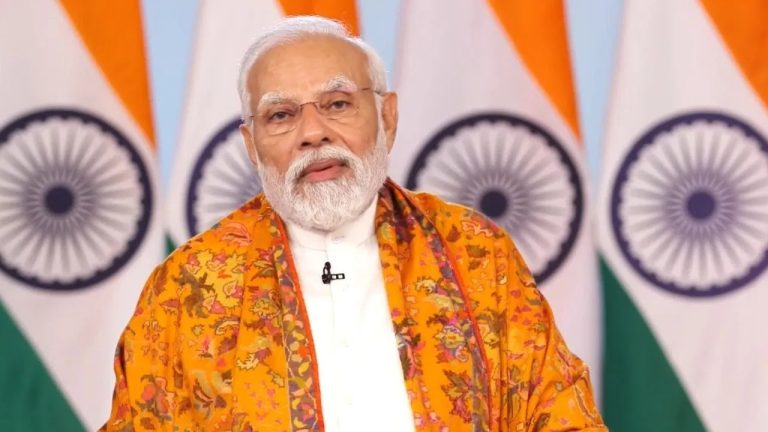
You cannot win polls on social media. Can’t understand why opposition does not have confidence in our country: PM Modi at Viksit Bharat event

0

Prime Minister Narendra Modi on Saturday hit out at the opposition parties over not giving importance to public welfare, saying that they cannot win polls on social media but need to interact with people and win their hearts.

“You cannot win polls on social media; you need to go amid people. Before winning polls, you need to win people’s hearts. You should not underestimate them. If some political parties had prioritized service to people instead of thinking about political gains, a majority of our country’s population would not have been facing so many difficulties, deprivation, and problems today,” Prime Minister Modi said while interacting with the beneficiaries of Viksit Bharat Sankalp Yatra through video conferencing.

Hitting out at the opposition for announcing false promises before polls, the Prime Minister said, “I don’t know why our opposition does not have confidence in our country. Some political parties don’t understand that they cannot get anything from false promises.”

PM Modi further said that he need not have given guarantees to people if the opposition had worked diligently.

“If they had worked diligently for decades, the guarantees which Modi is giving today would have been fulfilled 50 years ago,” he said.

In a veiled dig at the welfare schemes announced by the UPA government when they were in power, PM Modi said, “Modi’s guarantee implies that a guarantee that the guarantee itself will be fulfilled.”

The Prime Minister said that when a beneficiary receives benefit from government schemes their confidence increases and they get a new strength to live their lives.

“Crores of families in villages across the country have benefited from some government scheme or the other. When one gets the benefit, one’s confidence increases. They get a new strength to live their lives,” PM Modi said.

“The notion of begging for getting benefits under government schemes that existed earlier is now gone. The government identified the beneficiaries and then took steps to extend the benefits to them,” he said.

The Prime Minister said that he is happy to note that people in villages are welcoming the ‘Guarantee Wali Gadi’ vehicle with enthusiasm.

“I am glad to note that for welcoming the Viksit Bharat Sankalp Yatra, our Panchayats have formed the ‘Swagat Samitis’ in villages; all sections of the society including the elderly have joined the Samitis,” PM Modi said.

“It is a big achievement that in such a short time, more than 1.25 crore people have reached out to Modi’s guaranteed vehicle and welcomed it,” he added.

The programme was joined virtually by thousands of VBSY beneficiaries from across the country. More than two thousand VBSY vans, thousands of Krishi Vigyan Kendras (KVKs) and Common Service Centres (CSCs) from across the country were connected during the programme.

Prime Minister Narendra Modi interacted with a beneficiary of PM Mudra Yojana, Mukesh who received Rs 4.5 lakh through a loan to open a shop. The Prime Minister congratulated him for transforming himself from a job-seeker to a job-maker. He also urged him to conduct most of his business through UPI payments.

A large number of Union Ministers, MPs, MLAs and local-level representatives also joined the programme.

Viksit Bharat Sankalp Yatra is being undertaken across the country to attain saturation of flagship schemes of the government by ensuring that the benefits of these schemes reach all targeted beneficiaries in a time-bound manner. 


(This news report is published from a syndicated feed. Except for the headline, the content has not been written or edited by OpIndia staff)

‘Irrepressible impact on national security’: Ethics Committee report lashes out at Mahua Moitra for sharing Lok Sabha credentials

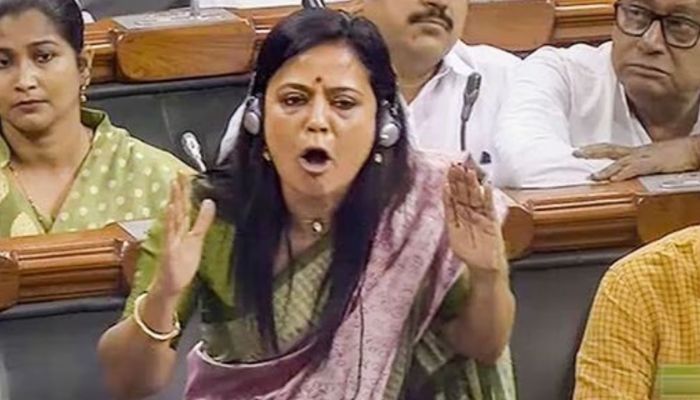
A day after Mahua Moitra was expelled from the Lok Sabha, it came to light on Saturday (9th December) that the Committee of Ethics in its first report concluded that the Trinamool Congress (TMC) leader compromised national security.

According to sources, Moitra has been found guilty of “unethical conduct and contempt of the House” for sharing the user ID and password of the Members Portal of Lok Sabha with unauthorised persons.

Her actions have left “irrepressible impact on the national security,” the sources confirmed. The Committee of Ethics noted that Mahua Moitra’s conduct is unbecoming of a member of the Parliament.

It was also found that the TMC politician accepted gifts and other facilities from a businessman to further his interests. The Committee dubbed her actions as ‘serious misdemeanour’ and ‘highly deplorable conduct.’

Mahua Moitra expelled from Parliament

On Friday (8th December), the Ethics Committee report, probing the ‘unethical conduct’ of Trinamool Congress (TMC) MP Mahua Moitra in the ‘cash for query’ case, was tabled in the Lok Sabha.

It recommended that Moitra “may be expelled” from the Lok Sabha and called for an “intense, legal, institutional inquiry” by the central government in a “time-bound manner”. 

The Background of the Controversy

Moitra is facing a CBI inquiry over serious allegations of corruption, bribery where she has herself admitted that she had given her login credentials to businessman Darshan Hiranandani to pose questions on her behalf.

The questions were related to Hiranandani’s business interests and were targeted at his rival Adani Group. Hiranandani has admitted to paying cash, lavish gifts to Moitra, and having access to her Lok Sabha login credentials.

‘I am sorry’: Harvard president Claudine Gay apologises for refusing to condemn genocide calls against Jews on campus

0

In the aftermath of global outrage and condemnation, Claudine Gay, the President of Harvard University, has ‘apologised’ for refusing to condemn the calls for the genocide of Jews on the varsity campus.

In an interview with Harvard Crimson on December 8, Gay said, “I am sorry. Words matter. When words amplify distress and pain, I don’t know how you could feel anything but regret.”

She further claimed that she failed to convey her “truth” that calls for violence against Jews has no place in Harvard. “I got caught up in what had become at that point, an extended, combative exchange about policies and procedures. What I should have had the presence of mind to do at that moment was return to my guiding truth, which is that calls for violence against our Jewish community — threats to our Jewish students — have no place at Harvard, and will never go unchallenged. Substantively, I failed to convey what is my truth,” Gay said.

Ironically, Gay expressed her pleasure to attend the hearing and answer questions from the House Committee on Education and the Workforce members. She said that hearing was an opportunity to convey the depth of both my personal commitment and the institutional commitment to combating antisemitism.” However, while conveying her ‘commitment to combating antisemitism, Gay ended up contextualising calls for genocide against Jews.

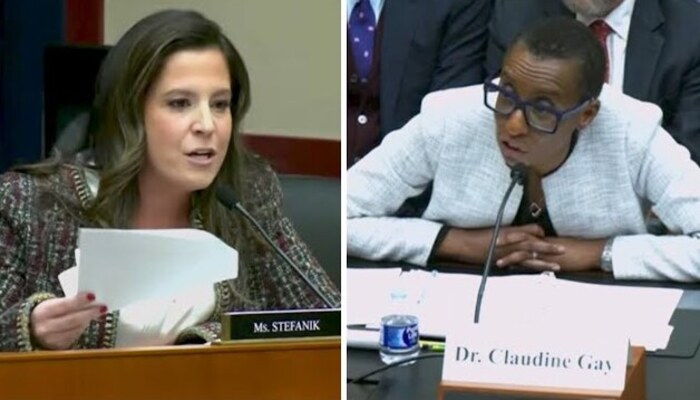
Meanwhile, Congresswoman Elise Stefanik slammed Claudine Gay over her ‘apology’ saying that she had asked Gay seventeen times whether calling for the genocide of Jews violates Harvard’s code of conduct, and the world heard her ‘truth’.

“No, Dr. Gay. You were given an opportunity to speak your truth. And you did. Not once. Not twice Not 5x. Not 10x I asked you 17x(!!!) in the hearing about whether calling for the genocide of Jews violates @Harvard code of conduct. You spoke your truth under oath 17x. And the world heard it,” Stefanik posted on X.

In another X post, Stefanik announced that she along with 72 other Congress representatives have penned a bipartisan letter to the authorities seeking the dismissal of the presidents of Harvard, the University of Pennsylvania and the Massachusetts Institute of Technology (MIT).

“…Given this moment of crisis, we demand that your boards immediately remove each of these presidents from their positions and that you provide an actionable plan to ensure that Jewish and Israeli students, teachers, and faculty are safe on your campuses. Anything less than these steps will be seen as your endorsement of what Presidents Gay, Magill, and Kornbluth said to Congress and an act of complicity in their antisemitic posture. The world is watching – you can stand with your Jewish students and faculty, or you can choose the side of dangerous antisemitism,” the letter reads.

In the face of global denunciation over refusing to condemn calls for violence against the Jewish people, the presidents of Harvard and UPenn on December 7 issued ‘clarification‘ backtracking from contextualising the genocide calls. The ‘clarification’ came right after the White House slammed statements of Harvard and UPenn presidents.

Meanwhile, truck billboards reading “Fire Liz” were seen in Philadelphia on Thursday seeking the removal of UPenn president Liz Magill after the controversy. Two privately-funded trucks are circling the University of Pennsylvania campus on streets such as Walnut and Spruce, while making pit stops at popular spots for students like the Penn bookstore. The trucks also show photos of the Jewish victims who have been killed or taken hostage by Hamas, Fox News reported.

Trucks blaring the University of Pennsylvania President Magill’s exchange with Congresswoman Elise Stefanik (Image via Fox News)

Notably, the controversy erupted on 5th December, during the first hearing on “Holding Campus Leaders Accountable and Confronting Antisemitism” in Washington, DC. As reported earlier, Congresswoman Elise Stefanik confronted the Presidents of Harvard, MIT, and UPenn during the hearing over the issue of rising cases of antisemitism on their campuses. During the hearing, Harvard University President Claudine Gay, MIT University President Sally Kornbluth, and UPenn President Elizabeth Magill refused to condemn the calls for the genocide of Jews on their respective campuses as bullying and harassment, when asked to offer a simple “yes” or “no” answer on whether advocating for the murder of Jews would violate the University’s bullying and harassment policies.

India’s per capita emissions ‘very low’, clubbing with emitters like China and the US unacceptable: European Parliament member

0

On 9th December (Saturday), a senior official of the European Parliament expressed dissatisfaction with concerted attempts against New Delhi over pollution and wrongly clubbing India with major emitters like China, the US, and Gulf nations. Speaking with PTI at the UN climate talks in Dubai, Peter Liese, a German politician and a member of the European Parliament asserted that clubbing India with emitters like China and the US is completely unacceptable as India’s per capita emissions are “very low”.

He emphasised, “Indian people should be able to own a car when people in Germany own two cars.” 

Liese added, “It is very important to acknowledge for everybody that per capita emissions of the UAE, China, and the US… they are very different from India. Many people in Europe put China and India in the same basket and sometimes even with the Gulf states which is completely unacceptable. India has very low per capita emissions compared to these countries.” 

Notably, India has been facing concerted efforts that attempt to club it with major emitters like the US at climate negotiations despite its low per capita emissions.

Earlier this week, a global team of scientists released a report highlighting that India’s per capita carbon dioxide emissions were less than half of the global average even though it rose by around five per cent last year to reach 2 tonnes of carbon dioxide. 

The team of scientists pointed out that the United States topped the per capita emissions chart. The report revealed that on average every individual in the US emits 14.9 tonnes of CO₂. This is followed by Russia (11.4), Japan (8.5), China (8), and the European Union (6.2), whereas, the average global per capita emission stood at 4.7 tonnes.

Carbon Border Adjustment Mechanism: EU’s border taxation

The European Union has been planning to impose a border tax on energy-intensive goods from developing countries like India. This enraged a debate at the international climate conference in Dubai as poorer countries firmly argued that this tax would harm livelihoods and economic growth. The aim of the Carbon Border Adjustment Mechanism (CBAM) is to set a fair price on the carbon emitted during the production of energy-intensive products like iron, steel, cement, fertilizers, and aluminium in countries outside the EU. 

It is claimed that this will serve two purposes. First, it will create a level playing field for domestically manufactured green goods. Second, it plans to reduce emissions from imports which account for around 20 percent of the bloc’s total emissions. 

The implementation of the carbon tax is scheduled for 1st January 2026. Throughout the trial period, initiated on 1st October 2023, companies in seven carbon-intensive sectors, including steel, cement, fertilizer, aluminum, and hydrocarbon products, are required to disclose emissions data to the EU.

Regarding this controversial CBAM, Liese said meeting the bloc’s climate promises is “just not possible” without it. 

The EU has committed to achieving a reduction of at least 55 percent in emissions by the year 2030, in comparison to the levels observed in 1990.

Liese added, “Despite low per capita emissions, India’s cement, iron, and steel are as carbon-intensive as produced elsewhere in the world. So we need to find a good balance here.” 

The EU implements stringent regulations on carbon emissions through its ‘Emissions Trading System,’ which places caps on emissions for industries and allows them to purchase ‘allowances’ if they surpass their limits. However, the bloc is concerned that this strict approach could lead some businesses to relocate to countries with more lenient rules, a phenomenon known as carbon leakage. 

According to a recent study by the United Nations Conference on Trade and Development (2021), the introduction of CBAM and a USD 44 per tonne carbon tax would reduce leakage by over half, from 13.3 percent to 5.2 percent.

Further, a New Delhi-based public policy think tank Centre for Social and Economic Progress (CSEP) conducted a study regarding the impact of this border taxation (CBAM) on India’s exporters. According to their study, Indian exporters of steel and aluminium could lose up to USD 2 billion due to border taxation in European countries. It is important to note that India was the eighth-largest exporter of iron and steel to the EU in 2019. 

It is believed although carbon taxes could encourage producers to lower emissions, it may divert the focus of resource-deficient nations from adapting to climate impacts to prioritizing emission reduction.

Used to work 85-90 hours in a week, from 6:20 AM to 8:30 PM, 6 days a week: Infosys co-founder Narayana Murthy

0

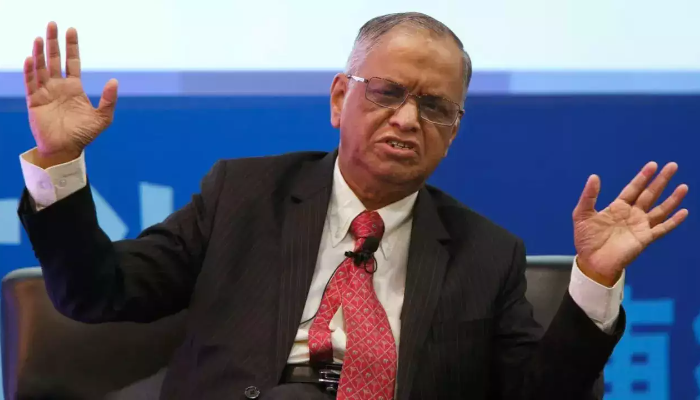
NR Narayana Murthy, the co-founder of Infosys, has stated that he put in long hours when he started his compan. Mr Murthy’s comment comes months after he proposed that young people in India should work for at least 70 hours a week to increase productivity. His statement led to a major row at the time. He revealed that he worked more than 85 to 90 hours a week up till 1994 in an interview with The Economic Times.

The 77-year-old businessman said, “I used to be in the office at 6:20 AM and leave office at 8:30 PM, and worked six days a week. I know every nation that became prosperous did so through hard work.”

Narayana Murthy added,”My parents taught me very early in life that the only way we could hope to escape poverty was to work very, very hard – of course, assuming that one gets the best productivity from each hour of work.”

Mr Murthy’s father was a Mysore schoolteacher and he was the fifth of eight children in a modestly-off family. Afterwards, he studied computer science at the Indian Institute of Technology (IIT) in Kanpur after earning a degree in electrical engineering from Mysore University. “During my entire 40-plus years of professional life, I worked 70 hours a week,” he reiterated, “When we had a six-day week – till 1994 – I used to work at least 85 to 90 hours a week. That has not been a waste.”

The country’s work productivity is among the lowest in the world, according to the billionaire who made this claim on a recent podcast with former Infosys board member and Chief Financial Officer (CFO) Mohandas Pai.

Narayana Murthy stressed that India has significant ground to cover while talking to The Economic Times. “We must remember that with a per-capita (income) of $2,300, India is a poor country. For us to become a middle-income country (with a per-capita of $8,000-10,000) it will take about 16 to 18 years even with an annual growth rate of 8%.”

He noted that it takes this kind of dedication to break free from the cycle of poverty. “My parents told me that the only way I could escape from the orbit of poverty was by good values – honesty, hard work, discipline and good work ethic. Putting the interest of the community ahead of one’s interest in the short and medium term will lead to personal betterment. I know every nation that became prosperous did so through hard work”, Mr Murthy added.

In October, NR Narayana Murthy made news when he remarked in the “The Record” podcast of 3one4 Capital that young people needed to work seventy hours a week in order to boost the country’s overall productivity. Prominent figures from a variety of businesses responded differently to his comment. While some shared his opinions, others believed that producing the best outcomes required quality effort rather than quantity.

Last month, in a candid conversation with Zerodha’s Nikhil Kamath at the 26th edition of Bengaluru Tech Summit, Narayana Murthy voiced his disapproval of freebies and asserted that “nothing should be given for free.” He also opined that compassionate capitalism can help a ‘poor’ country like India to become developed.

Mr Murthy highlighted, “When you provide those services, when you provide those subsidies, there must be something in return that they’re willing to do. For example, if you say I will give you free electricity, then it would have been a very nice thing for the government to have said, but we want to see the percentage attendance in primary schools and middle schools go up by 20 per cent, then only we will give you that.”

Tax raids in Odisha: More cash recovered at premises linked to Congress MP, SBI counts 40 of 176 bags so far, large amounts of shredded notes also found

0

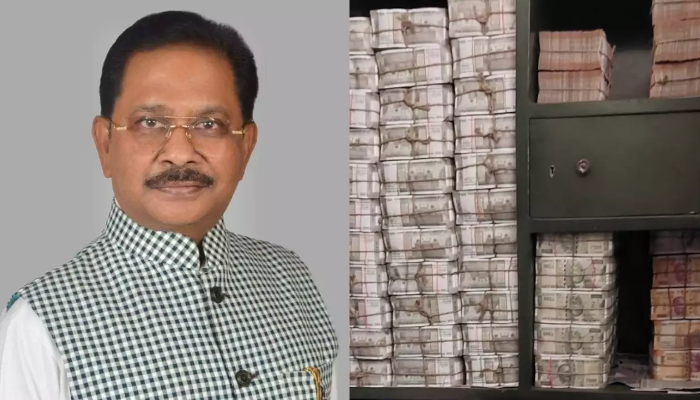
Tax inspections continued on 9th December at the Odisha and Jharkhand properties linked to Congress leader and Rajya Sabha MP from Jharkhand Dheeraj Sahu after over Rs 200 crore and up to Rs 300 crore in undeclared funds were found in the investigation which commenced on 6th December. Three more bags were confiscated by Income Tax teams from the politician’s Ranchi premises recently.

Furthermore, over nineteen bags containing cash were taken from the home of a certain Bunty Sahu who was assigned to oversee the management of liquor facilities in the Odisha regions where raids were underway. According to sources, the amount of cash taken from his home was anticipated to exceed Rs 20 crore as the money was being transferred to banks in Sudpara which is located in Balangir’s Odisha.

Bhagat Beherea, the Regional Manager of the State Bank of India in Bolangir further informed that the bank has received 176 bags containing money in total. The bank had received 156 bags earlier and 20 more bags with cash arrived yesterday and a total of Rs 46 crore in cash has been counted on the second day of the probe. Fifty workers and twenty-five counting machines have been deployed to count the currency notes. He said that more people will be added to the task.

“We have received 176 packets of money bags and we finished only 40 packets of counting. Now the rest of the packets are being counted. We have counted 40 crores of money so far. Some money was also counted over at Titlagarh. The adequate security system has been arranged in bank areas,” Beherea said.

Meanwhile, inspections by the Income Tax department against the Odisha-based Boudh Distillery Private Limited and organisations connected to it have turned up undeclared funds worth about Rs 225 crore. The entire amount acquired so far is Rs 225 crore after Rs 25 crore was counted through the 8th of December afternoon. The Income Tax department has implemented twelve counting devices and the process is proceeding slowly because the machines have a limited capacity.

The distillery group’s facilities in the Bolangir region of Odisha yielded cash stored in almirahs totalling Rs 200 crore, according to officials. The remaining cash was discovered in several locations including Sambalpur and Sundargarh in Odisha, Bokaro and Ranchi in Jharkhand and Kolkata. The Income Tax team also raided the Ranisati Rice Mill, the firm’s factory and office in Boudh, the homes of certain company leaders and the corporate headquarters of Boudh Distillery Private Limited in Palasapalli, Bhubaneswar.

Multiple ripped Rs. 500 banknotes were discovered discarded close to the BDPL establishment in Titirikata under the Harabhanga block, based on a report from the Boudh district. The large amounts of shredded cash that were visible close to the company’s perimeter wall startled the locals. This could reportedly be the biggest cash recovery made by the Income Tax department in Odisha to date, per the former IT commissioner Sarat Chandra Dash.

“Countrymen should look at these piles of currency notes and then hear the addresses of its (Congress) leaders on honesty. Every penny looted from people will have to be returned. This is Modi’s guarantee,” Prime Minister Narendra Modi wrote on social media while reacting to the development.