Home Blog Page 1713

I defy you to show me discrimination: S Jaishankar rubbishes claims of institutional prejudice against minorities in India

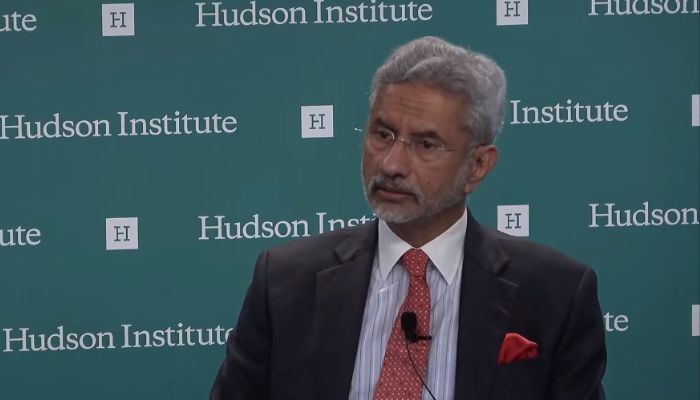
Weighing in on the state of minorities in India, External Affairs Minister S Jaishankar on Friday dismissed concerns around discrimination on grounds of religion saying everything had become fairer.

Speaking at an event in Washington DC on Friday, Jaishankar said, “Today, since you brought up the issue of minorities in India, What is the test really of fair and good governance or of the balance of a society? It would be whether in terms of the amenities, the benefits, the access, the rights, do you discriminate or not and in every society in the world, at some point, there’s been some discrimination on some basis. If you look at India today, it’s a society today where there is a tremendous change taking place, the biggest change happening today in India is the creation of a social welfare system in a society that has less than USD 3,000 per capita income.”

On India increasingly asserting itself on the international fora, Jaishankar said, “Nobody has done that in the world before…Now, when you look at the benefits of that, you look at housing, you look at health, you look at food, you look at finance, you look at educational access, health access.”

“I defy you to show me discrimination. In fact, the more digital we have become, the more faceless the governance has become. Actually, it’s become fairer,” he added.

“But as I said this is a globalised world. There will be people, you will have people gripe about it and much of the griping is political. Let me be very frank with you because we have also had a culture of vote banks and there are sections who had in their own eyes a certain privilege…and it’s a phenomenon,” Jaishankar said during an interaction at the Hudson Institute in the US.

Describing India as an absorber of best practices during the event, Jaishankar hailed the country’s success in digital payment saying, “If you are going shopping in India today, you can leave your wallet behind but you can’t leave your phone behind, because most likely the person you’re buying something from will not accept cash, and will want you to pull out your phone, look at the QR code, and make a cashless payment. Last year we clocked 90 billion cashless financial payments. Just for reference, the US was about 3 (billion), and China was 17.6 (billion). This year, we probably would exceed. I saw the June figures, it was 9 billion transactions in June alone. Street vendors today will have a QR code on their cart and say, just make your payment there.”

He also highlighted how India’s advocacy of Yoga over the last decade has “improved” Global Health. Further, the EAM underscored India’s increasing footprints in the global economy and its increasing trade with the Middle East.

“We have to understand today that as India becomes a larger consumer, a bigger economy, our salience in the Middle East countries calculations, especially the Gulf economies, is that much higher. We are the largest trade partner of the UAE and we would be among probably the top three of the Saudis,” Jaishankar said.

Earlier this week, the External Affairs Minister met his UAE counterpart Sheikh Abdullah bin Zayed Al Nahyan on the sidelines of the 78th United Nations General Assembly session in New York City. The two appreciated the rapid progress in India, UAE bilateral cooperation and valued regular exchange of perspectives on regional and global issues.

“Always a pleasure to meet FM @ABZayed of UAE, this time in New York. Appreciate the rapid progress in our bilateral cooperation. Value our regular exchange of perspectives on regional and global issues,” EAM Jaishankar wrote on X.

UAE and India along with Saudi Arabia, the US and European Union (EU), had recently announced an ambitious infrastructure plan — the ‘India-Middle East-Europe Economic Corridor’. This initiative launched at the G20 summit in New Delhi, seeks to reshape the trade route between the Gulf, Europe and South Asia, connecting them by rail and sea links.

(This news report is published from a syndicated feed. Except for the headline, the content has not been written or edited by OpIndia staff)
Congress workers attack actress Archana Gautam and her father during their visit to party headquarters. Here is what happened

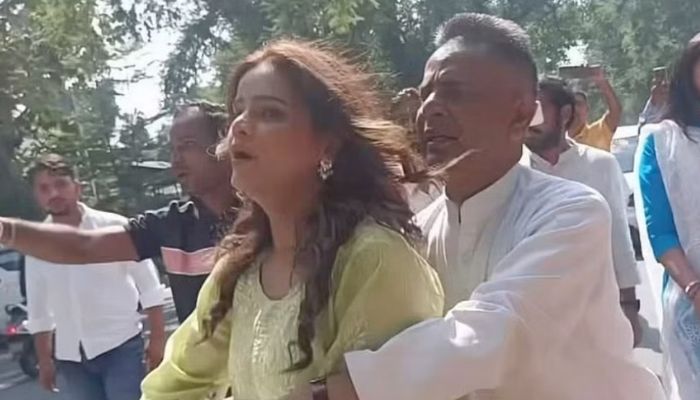
On Friday (30th September), Archana Gautam came forward with disturbing allegations. The actress informed that she and her father were physically assaulted during her visit to the Congress headquarters in Delhi.

Archana Gautam, known for her appearances on reality shows such as Bigg Boss 16 and Khatron Ke Khiladi, pointed out that the individuals responsible for this violence were affiliated with the Congress party.

A video capturing the incident went viral on social media where she could be seen surrounded by several people yelling at her. Archana Gautam, accompanied by her father, visited the Congress office in Delhi on Friday (30th September).

However, she was denied entry. Archana Gautam alleged that she was physically assaulted by Congress workers present there. She shared with the media that her purpose for being there was to extend congratulations to the party’s national president, Mallikarjun Kharge, and Priyanka Gandhi, in recognition of the passage of the Women’s Reservation Bill.

Archana Gautam said, “I was going to the Congress party office. But I was stopped. I was then manhandled, abused and beaten up outside the office. My father rescued me and he took me in the car and left. But I’m not going to sit still.”

She added, “If the Congress party behaves like this with an actress like me, what about others? I’m not going to shut up. We will continue the fight. What happened to me was shocking and the behaviour of Congress workers was wrong.”

Gautam Budh, Archana Gautam’s father, is expected to take legal action in Meerut concerning the incident. Additionally, he may choose to address the media to shed further light on the situation.

Back in March 2022, Gautam Budh lodged a formal complaint against Sandeep Kumar, the personal assistant to Priyanka Gandhi Vadra, alleging that he had issued death threats to Archana Gautam.

In the complaint, Archana Gautam’s father mentioned that his daughter had been subjected to death threats, alongside the use of derogatory caste-based language.

The actress’ association with the Congress party began in November 2021, following which she contested unsuccessfully in the 2022 UP Assembly Elections from the Hastinapur constituency.

Fraudulent visa agents in Delhi helping people get visas on forged documents, British High Commission writes to Delhi Police

0

The British High Commission has written to Delhi Police informing them about fraudulent visa agents who operate in and around Delhi and have been assisting customers in Haryana, Gujarat and Punjab to obtain visas on forged documents, said the police on Friday. 

A case has been registered in the matter, the police added. 

“The British High Commission in New Delhi has identified fraudulent visa agents that operate in and around Delhi, assisting customers in Haryana, Gujarat and the Punjab. It is thought this agent is connected as part of a wider organised criminal network. In an attempt to facilitate visa applicants to the UK, the known agents and associates are suspected of providing counterfeit and forged documents to the British High Commission in New Delhi,” said Andrew Longley, Third Secretary (Immigration) Immigration Enforcement International, British Deputy High Commission in the complaint. 

“A detailed analysis has so far uncovered two main agents who have submitted at least 164 visa applications, using eight different credit cards, to the British High Commission in New Delhi. 107 visa applications are known to contain counterfeit and forged supporting documents,” it added. 

The British High Commission also has conveyed to the Delhi Police that they have personal details of the alleged perpetrators and their contact details.

“The details that have been shared are being looked into. The investigation has been started. We have registered an FIR on relevant sections at Chanakyapuri police station. We are verifying the data from our teams on the ground and accordingly, action will be taken as per the course of law,” said the police.


(This news report is published from a syndicated feed. Except for the headline, the content has not been written or edited by OpIndia staff)
UN lacks credibility and, to large degree, effectiveness: Jaishankar

0

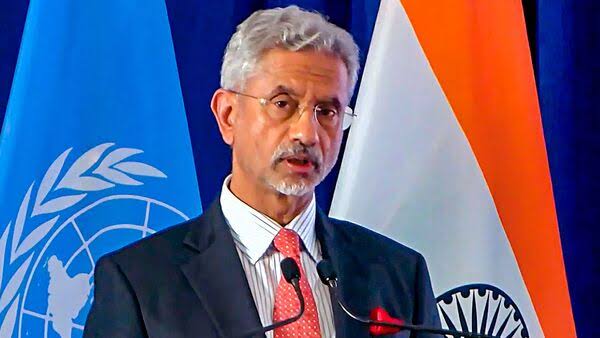
Reiterating the need for reforms in the United Nations, External Affairs Minister S Jaishankar on Friday said the world body lacks credibility and, to a large degree, effectiveness.

Without naming India, Jaishankar lamented that the fifth largest economy of the world is not in the United Nations Security Council. 

Jaishankar made the remarks while participating in a discussion at Hudson Institute in Washington, DC. 

On India being described as a reformist rather than as a revisionist power, he said, “It’s very clear today that we are serious about climate action. If you are looking to sustain, you

know, to ensure that sustainable development goals are well-resourced, then somewhere we have to find the financial muscle for that. Now, for us too, it is the international financial

institutions, the World Bank and the Fund which will be at the core of that effort.”

“So, a lot of what we are seeking to do is to improve and I would say refresh institutions, make them more fit for purpose. And that even applies to the United Nations. We do believe today that a United Nations where the most populous country is not in the Security Council, when the fifth largest economy is not there, when a continent of 50 plus countries is not there, that United Nations obviously lacks credibility and to a large degree effectiveness as well. So when we approach the world, it’s not with the sort of pull down the pillars kind of approach. It is very much what can we do to make it better, fitter, efficient, purposeful,” he added.

Earlier, addressing the 78th session of the United Nations General Assembly (UNGA) in New York City, Jaishankar called on the United Nations to ring in urgent reforms to stay relevant in the contemporary world, saying that the issue cannot remain “indefinite” and “unchallenged”.

Keeping up with his refrain from his address at the United Nations General Assembly, Jaishankar said, “In our deliberations, we often advocate the promotion of a rules-based order. From time to time, respect for the UN Charter is also involved. But for all the talk, it is still a few nations, which shape the agenda and seek to define the norms. This can’t go on indefinitely nor will it go unchallenged. A fair, equitable and democratic order will surely emerge once we all put our minds to it. And for a start, that means ensuring that rule-makers do not subjugate rule-takers.”

Speaking on changing world architecture at the Hudson Institute in Washington, DC, Jaishankar said, “The world as we live it today is largely a Western construct. Now, if you looked at the world architecture there’s been obviously enormous change in the last 80 years… nothing illustrates it more than the G20 itself. So, the list of the G20 will tell you the easiest way of actually getting a sense of the changes in the world.”

“So, I make this very important distinction. Where India is concerned, India is non-Western. India is not anti-Western,” he added.

He said that a particular model of globalisation has evolved over the past 25 years but the world now is “badly in need of some form of reglobalisation.”

In his opening remarks at the Hudson Institute in Washington, DC, Jaishankar said, “If you put it together, I would suggest to you that the world is badly in need of some form of reglobalisation, that globalisation itself is undeniable. It has struck very deep roots.”

“It has tremendous benefits. Nobody doubts that. But, the particular model of globalisation which has evolved over the last 25 years obviously has a lot of risks inherent in it. And today, how to address those risks and create a safer world is part of the challenge facing the Pacific order,” he added.

Jaishankar is currently in the last leg of his US visit. After concluding his New York visit, the EAM arrived in Washington, DC on September 28.

The last date to exchange ₹2000 banknotes is 30 September, clarifies RBI amid reports of extension of the deadline

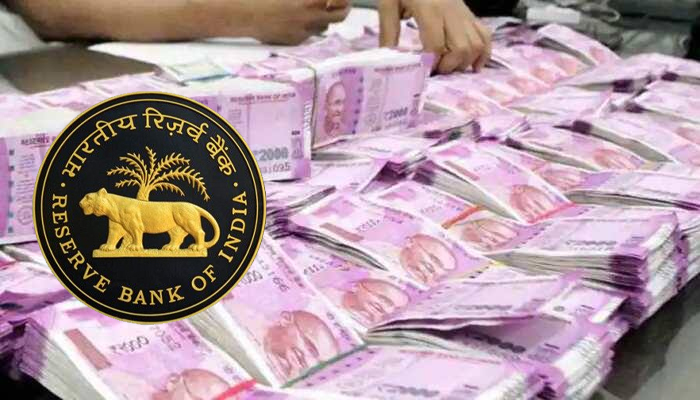
The Rs 2,000 denomination banknote will cease to have its value after Saturday and will be just another piece of paper if one does not get it exchanged in any bank, the Reserve Bank of India (RBI) clarified on Friday. 

The RBI had earlier fixed September 30, 2023 as the last date for the purpose of completing the exercise in a time-bound manner and to provide adequate time to the public.

Earlier last month, the RBI said that about 93 per cent of the Rs 2,000 banknotes have returned to the banking system since the central bank in May decided to withdraw the high-value note from circulation.

People were directed to exchange or deposit their Rs 2,000 notes in bank branches and regional branches of RBI. A non-account holder could also exchange Rs 2000 banknotes up to a limit of Rs 20,000 at a time at any bank branch.

On May 19, the RBI decided to withdraw the Rs 2000 denomination banknotes from circulation but said it would continue to remain as legal tender. However, RBI had advised banks to stop issuing such banknotes with immediate effect.

The Rs 2000 denomination banknote was introduced in November 2016, primarily to meet the currency requirement of the economy in an expeditious manner after the withdrawal of the legal tender status of all Rs 500 and Rs 1000 banknotes in circulation at that time.

The objective of introducing Rs 2000 banknotes was met once banknotes in other denominations became available in adequate quantities. Therefore, the printing of Rs 2000 banknotes was stopped in 2018-19.


(This news report is published from a syndicated feed. Except for the headline, the content has not been written or edited by OpIndia staff)
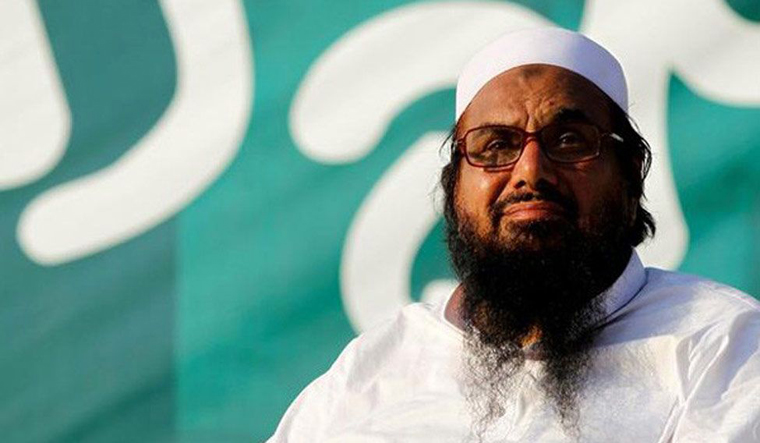
Social media rife with claims that LeT chief Hafiz Saeed’s son Kamaluddin has been killed, earlier media reports suggested he was kidnapped

0

Two days after media reports emerged alleging that Kamaluddin Saeed was kidnapped by unidentified individuals, social media platforms today (Friday, September 29) are full of posts claiming that Kamaluddin’s dead body has been found in Peshawar, Pakistan. Kamaluddin Saeed is one of the sons of the 26/11 Mumbai terror attack mastermind and internationally designated Islamic terrorist Hafiz Saeed.

Several Netizens and media portals took to X to post about the rumoured death of Kamaluddin Saeed.

Some X users alleged that the Islamic terrorist’s son’s body that has been recovered has multiple bruises on it suggesting that he was tortured before being killed.

Popular X user @Kesariya_Meenu alleged that Kamaluddin Saeed, the body of the missing son of LeT chief Hafiz Saeed was recovered from Jabba Valley in the KPK region and that Pakistan’s ISI has already performed his last rites.

Prior to this, on September 27, several media houses reported the sudden disappearance of Hafiz Saeed’s son Kamaluddin Saeed. It was alleged that the Islamic terrorist’s son had been abducted by unidentified individuals in Peshawar, Pakistan.

A report published by ABP Live quoted the Pakistani local media house The Express Tribune as confirming that Kamaluddin Saeed was abducted in Peshawar by miscreants who came in cars. It further alleged that several journalists in Pakistan have claimed that Pakistan’s intelligence agency ISI had not been able to trace Kamaluddin Saeed. 

Several media portals and social media users have also posted about Kamaluddin Saeed’s abduction.

Please note that although Indian media quoted Pakistan media outlet Express Tribune as confirming that Hafiz Saeed’s son was abducted and several social media portals and Netizens have posted about the abduction and killing of Kamaluddin Saeed, OpIndia could not find any such report by the Pakistan newspaper that confirmed the same. Additionally, both the claims of Kamaluddin Saeed’s abduction and murder have not been confirmed yet.

Islamic terrorist Hafiz Saeed sentenced to 31 years in jail

Last year, an anti-Terrosim court in Pakistan sentenced Islamic terrorist Hafiz Saeed to 31 years in jail. As per reports, the Pakistani government had also been ordered to confiscate all assets of Saeed.

Hafiz Saeed is the founder of the banned Islamic terrorist organisation Lashkar-e-Taiba and has been the mastermind of many terrorist attacks against India, including the 26/11 Mumbai attacks. Reports say that the court has also imposed a monetary fine on Saeed.

Though the reason behind Saeed’s sentencing is said to be the FATF pressure, where Pakistan continues to be in the grey list, many experts speculate that given the precedents in Pakistan, Saeed may even walk free soon or continue to enjoy a lavish life.

Though Saeed has been sentenced by courts earlier, he had been living a lavish life, under the security provided by the Pakistani government. In 2020, a video had surfaced where Saeed, who was supposed to be in jail, was seen travelling with a large convoy of SUVs with Pakistani rangers protecting him.

Diesel generator sets allowed in Delhi-NCR for emergency services like hospitals from Oct 1

0

As a one-time exception, diesel generator sets for all capacity ranges will be allowed to run in Delhi-NCR from October 1 till December 31, announced the Environment Ministry on Friday, ahead of the implementation of the Graded Response Action Plan (GRAP) to tackle pollution.

The decision was taken by the Commission for Air Quality Management.

The commission has banned the use of diesel generator sets for the industrial and commercial sectors in the National Capital Region (NCR) since May 15.

There has been strong opposition from resident welfare associations against CAQM’s earlier decision to completely ban diesel gensets during GRAP.

GRAP is an emergency response mechanism based on the AQI level of Delhi and brings together multiple stakeholders, implementing agencies and authorities to respond to situations of deteriorating air quality in Delhi-NCR. GRAP will come into force on October 1 in the entire NCR.

It “eases out the means of implementation and addresses practical difficulties and techno-commercial concerns of various stakeholders and thus the revised schedule for regulation of DG sets would be in force in the entire NCR w.e.f. 01.10.2023,” the ministry said in a statement.

In the interest of not disrupting emergency services and permitting sufficient time for adopting the stipulated emission control mechanism, the Commission, “as a one-time exception, has permitted DG Sets for all capacity ranges to be run only for emergency services in the NCR, as listed below, even under periods of restrictions under the GRAP, only up to 31.12.2023”.

This relaxation will be limited to elevators, escalators, travelators, medical services (hospital/nursing homes, and health care facilities), railway services, metro, airports, ISBTs, sewage treatment plants, water pumping stations and projects of national security, defence and of national importance.

“DG sets deployed for emergency services are also required to install and adopt appropriate means for emission control in the intervening period and w.e.f. 01.01.2024, even such DG sets shall be permitted to operate in the NCR, strictly subject to adherence to the stipulated schedule and measures for emission control,” the ministry said.

The Commission for Air Quality Management (CAQM) has banned the use of diesel generator sets for the industrial and commercial sectors in the National Capital Region (NCR) from May 15. The deadline for generator sets fitted with Retrofit Emission Control Device (RECD) is September 30.

In two orders in February and September last year, the commission clarified that DG sets should shift to dual mode (gas and diesel) and install devices to regulate emissions.

(This news report is published from a syndicated feed. Except for the headline, the content has not been written or edited by OpIndia staff)
Vachathi Case: Madras HC dismisses appeals of 215 government officials, uphelds convictions in 1992 assault and rape case of 18 women

0

The Madras High Court upheld the convictions of 215 government officials from the forest, police and revenue departments of Tamil Nadu on 29 September. The decision was pronounced in response to the brutality, rape and looting of village property inflicted against the inhabitants of the Vachathi tribal hamlet in the Dharmapuri district in 1992.

The state of Tamil Nadu was ordered by Justice Velmurugan to compensate the 18 victims with a sum of Rs 10 lakh and provide them with suitable employment. The Court directed that further compensation be provided to the relatives of the three victims who passed away as a result of the horrible event. The State was mandated to recoup 50% of the compensation money from authorities who were found guilty and given prison terms for the rape offence in the case.

The Court expressed that welfare measures and job opportunities must also be extended to the families of the victims as well as necessary steps must be undertaken to improve the quality of lives of the tribals living in the area. Furthermore, Justice Velmurugan sought harsh punishment for the district collector, forest officer, and police superintendent who refused to act despite receiving reports of the atrocities.

He had reserved the order on the appeals filed by 126 forest employees, 84 police officers and 5 revenue officials in February of this year. He also went to the Vachathi village to conduct a local inspection and “understand the topography of the area.”

The officials are convicted of assaulting several men and raping 18 women during a search operation to find Veerappan’s sandalwood in Vachathi village Tamil Nadu.

Background of the horrifying incident

The sandalwood belonging to now-deceased dacoit Veerappan was reportedly smuggled and hidden by Dalits and Adivasis in the village of Vachathi in Tamil Nadu’s Dharmapuri district, according to officials. Forest and revenue personnel entered the village to conduct a “search operation” to find the expensive item in June 1992. The authorities also wanted more details regarding the dacoit’s whereabouts.

They carried out raids on the village, harassed women, destroyed village assets and killed livestock. Several males were beaten up while 18 women were raped and tortured. The majority of the women were left in their homes during the searches while the men fled to neighbouring hills, where they hid for months. More than 100 women and children were detained and spent months in prison on fraudulent charges.

On 22 August 1992, the rape victims filed a complaint at the Harur police station. However, the officials denied any wrongdoing. The Revenue Divisional Officer was asked to visit Vachathi and carry out an investigation after submitting an “objective and independent” report of the occurrence. The rape instance, per the probe “cannot be believed” and the “villagers themselves damaged their houses in order to place the blame on the forest and police officials,” the report claimed.

Almost three years after the tragedy, the Madras High Court ordered the Central Bureau of Investigation to investigate following many efforts by civil society activists. The court initially dismissed a Public Interest Litigation on the grounds that officials from the government would not have engaged in such behaviour and that the issue was not appropriate for consideration as a PIL.

In its inquiry, the CBI confirmed that the police and officials had behaved cruelly, and assaulted men, women, and children along with tearing down huts. Only 215 of the 269 accused were still alive when the designated trial court handed down sentences in June 2011, nearly 20 years after the incident.

Amongst them were 126 forest employees, 84 police officers, 5 tax agents and 4 Indian Forest Service (IFS) officers. The other accused passed away while the probe was proceeding. The sentences for the multiple offences for which they were adjudged guilty ranged from one year to ten years in prison.

Indian Muslims harbour deep love for Pakistan: Mohammad Hasnain who fled to Pakistan with his son doesn’t want to return

0

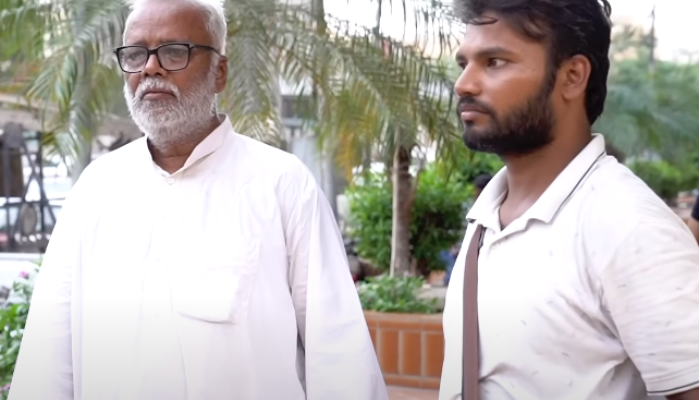
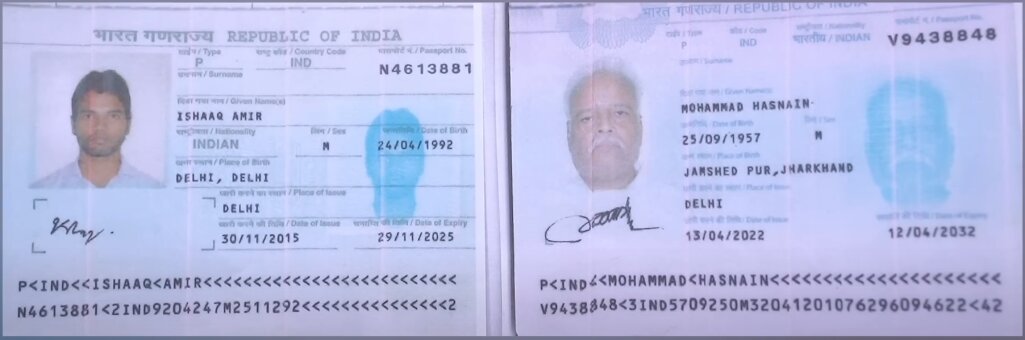
A 65-year-old journalist named Mohammad Hasnain and his 31-year-old technician son Ishaq Amir who are from Delhi’s Jaffrabad fled the country citing ‘religious persecution’ through Afghanistan and arrived in Pakistan illegally earlier this month. They are originally from Jamshedpur in Jharkhand. Now, they have yet again cried alleged ‘religious discrimination’ in an interview with Geo News. They’ve been reciting the same script since their entry in Pakistan.

The passports of the father and son duo. (Source: Geo News)

Mohammad Hasnain claimed to be a marketing executive in multiple companies and former president of a political organisation called Quami Party of India and contested multiple assembly and parliament elections. “They file fictitious complaints against their rivals and employ national agencies when they can’t control someone.” He stated that he was threatened by the Indian establishment and asked to “mend his ways.” He mentioned that the administration warned, “You have a son, you must think about him.”

Notably, in accordance with the recent trend of uttering “credible accusations” without presenting “credible proof,” he did the same and offered no evidence to back up his ludicrous statements. He also repeatedly brought up the theme of ‘Muslims under attack in India’ which is a global initiative of the diabolical alliance of liberals and Islamists who elevate every minor occurrence to the level of a pressing social concern and portray it as victimisation of Muslims.

The man claimed that he and his son were involved in a minor road rage incident and he offered to reimburse the other party was apparently a Hindu, but he started to abuse him and his religion. He apparently belonged to a Hindu outfit and called a few of his fellow members there.

The irony was not lost on anyone as he narrated the supposedly real episode in a country where Hindus and other religious minorities are murdered for no other reason than their very existence and systematic hatred towards non-Muslims is regularly inculcated in the minds of people through textbooks, TV shows, and other programmed on daily basis.

Rashtriya Swayamsevak Sangh’s criticism is a necessary part of such stories and this one was no exception. “RSS has more than 50 affiliated outfits and after his phone call, we somehow managed to escape from there and save our lives. My son had to suffer through identical experiences as well.” He alleged that each and every Muslim is subjected to the same treatment in India and claimed that thousands of Muslims have already left because of such instances.

He expressed that rich Muslims choose first-world nations like Germany and Canada whereas less fortunate ones go to places like Turkey, Azerbaijan Malaysia and Indonesia because they want to live in an Islamic society. “Indian Muslims have a profound love for Pakistan in their hearts,” he responded with the reason he went to their country. “It is natural. Our forefathers have also greatly sacrificed and contributed to the formation of this nation. We are told to become Hindu and chant Vande Mataram or go to Pakistan.”

It is noteworthy that many similar cases involving Hindu mobs assaulting Muslims were later revealed to be fraudulent and orchestrated. In reality, Hindus are routinely targeted by radical Muslims, whether it’s through stone-throwing during Hindu religious processions or beheadings committed in the name of blasphemy. “Gustakh-E-Rasool Ki Ek Hi Saza, Sar Tan Se Juda, Sar Tan Se Juda” (Behead those who insult Islam or its Prophet) is frequently echoed in the streets of India.

The propagandists conveniently disregarded the fact that the population of Muslims in India has increased dramatically since 1947 and is now around 15%, despite their allegations of Islamophobia and anti-Muslim sentiment. They enjoy equal rights and are treated as equal citizens in the eyes of the law.

While Pakistan’s constitution regards its minorities as second-class citizens who are never eligible to serve as President or Prime Minister of the Islamic Republic, Indian Muslims have held some of the highest offices in the nation, including Vice President, Home Minister, Army Generals and Supreme Court Justice among others. In contrast to Pakistan, which has become a hellhole for those it considers to be infidels, the Indian state does not discriminate between its citizens and recognises as well as honours their abilities without any bias or prejudice.

Interestingly, the deep connection between Pakistan and Indian Muslims was gleefully addressed by former Pakistani cricketer Mushtaq Ahmed who voiced that places like Hyderabad and Ahmedabad have a very high Muslim population and therefore they would come in support of the Pakistani cricket team in the upcoming matches of the International Cricket Council wasl (ICC) Cricket World Cup 2023 to be held in India in a TV show.

Mohammad Hasnain claimed, “Government schools in Mulsim areas lack education, but every student is taught Vande Mataram and made to participate in Hindu religious practices.” Unsurprisingly, the anchor constantly urged the duo to disparage India further during the interview.

Ishaq Amir narrated how they managed to reach Pakistan. They arrived in Kabul after taking off from Abu Dhabi. They eventually made it to Karachi without any legal documentation after landing in Kandahar and travelling through Chaman and Quetta.

His father added, “Let us stay here because people who return from Pakistan and Afghanistan are either killed in encounters or hanged to death. I don’t want to see my granddaughter elope with a Hindu. I can’t see a Hindu committing zina (illicit sexual relationship) with my daughter-in-law. I didn’t let my son marry anyone for several years because of this.”

The heinous murder of Shraddha Walker, the harrowing Shahbad Dairy murder case and hundreds of other instances where Muslim men killed Hindu women, in addition to the thousands of cases of love jihad that transpire every day across the nation expose the outrageous claims. However, neither the interviewer nor the interviewee cares to allow the truth to come in the way of their malicious propaganda.

He called Pakistan the country of his dreams and asked for a house so that he could live there peacefully. Importantly, the country’s minorities would not concur with the sentiment whose lives have turned into embodiments of nightmares. They have witnessed the abject horrors of rape, abduction and forced conversion of their minor girls and women as well as suffered through the deaths of their men and blatant oppression throughout generations.

Anwaar ul Haq Kaka, the caretaker prime minister of Pakistan shared the desire to convert all Hindus in Pakistan to Islam in an old tweet which recently surfaced online. One can only speculate as to the extent of religious persecution of Hindus in a nation where individuals who hold the highest positions express such opinions with unabashed impunity.

Watch the entire interview below:

Pakistan recently made headlines for exporting the maximum number of beggars to other countries. Beggars appear to be the third most popular export of the nation, behind terrorists and donkeys. The South Asian nation has been battling major economic crises, inflation bombs, political instability and terrorist assaults all at once and in vain for quite some time with no end in sight to its rising problems.

Women’s Reservation Bill passed by parliament receives the assent of President Droupadi Murmu, becomes a law

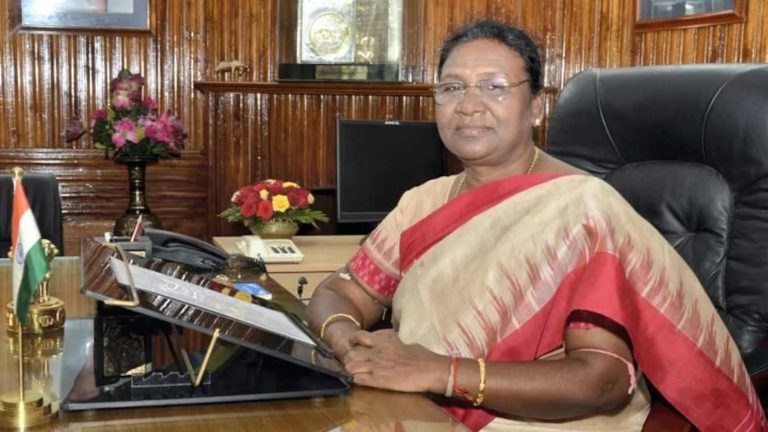
The women’s reservation Bill passed by the Parliament last week, became law after it received assent from President Droupadi Murmu.

The ‘Nari Shakti Vandan Adhniyam’, which provides 33 per cent reservation for women in the Lok Sabha as well as the state legislative assemblies, was unanimously passed by the Rajya Sabha, becoming the first bill to be passed in the new Parliament building. 

On September 20, the Bill was passed following division with 454 members voting in favour of the legislation and two against it on the motion seeking its passage.

The amendments moved by the Opposition members were negatived and separate clauses of the draft legislation were also voted on.

On September 21, Nari Shakti Vandan Adhiniyam was ‘unanimously’ passed in Rajya Sabha which marks the PM’s birthday according to the Hindu calendar. 

Women members from both Houses of Parliament, including PT Usha, and Union Ministers Meenakashi Lekhi and Smriti Irani, were all smiles as they presented a bouquet to Prime Minister Narendra Modi following the historic passage of the Bill in Parliament.

The Rajya Sabha had earlier passed the Women’s Reservation Bill in 2010 during the Congress-led UPA government but it was not taken up in the Lok Sabha and subsequently lapsed in the lower House of Parliament.

After the Bill cleared the legislative hurdles in both Houses last week, Prime Minister Narendra Modi said that the Nari Shakti Vandan Adhiniyam in Parliament will usher in an era of stronger representation and empowerment for women in the country.

“A defining moment in our nation’s democratic journey! Congratulations to 140 crore Indians. I thank all the Rajya Sabha MPs who voted for the Nari Shakti Vandan Adhiniyam. Such unanimous support is indeed gladdening. With the passage of the Nari Shakti Vandan Adhiniyam in Parliament, we usher in an era of stronger representation and empowerment for the women of India. This is not merely a legislation; it is a tribute to the countless women who have made our nation. India has been enriched by their resilience and contributions. As we celebrate today, we are reminded of the strength, courage, and indomitable spirit of all the women of our nation. This historic step is a commitment to ensuring their voices are heard even more effectively,” PM Modi said on social media platform, X.

Union Minister Meenakashi Lekhi, too, lauded PM Modi for the passage of the Bill saying that it will go down in history for empowering women.

While the Opposition leaders welcomed the bill, some flagged concerns over the non-inclusion of an OBC sub-quota in the draft legislation.

Bharat Rashtra Samithi (BRS) MLC K Kavitha, one of the key advocates for legislation providing a fairer representation of women in law-making bodies, called the passage of the quota Bill in Parliament a major step in ensuring stronger and more significant participation of women in the country’s political process.

However, she added, “There are a couple of ommissions that catch one’s eye. Non-provision of a sub-quota for OBC women is painful. They should have added a sub-quota in the Bill as it would ensured a similar representation of women from backward classes in the country’s legislative process.” 


(This news report is published from a syndicated feed. Except for the headline, the content has not been written or edited by OpIndia staff)