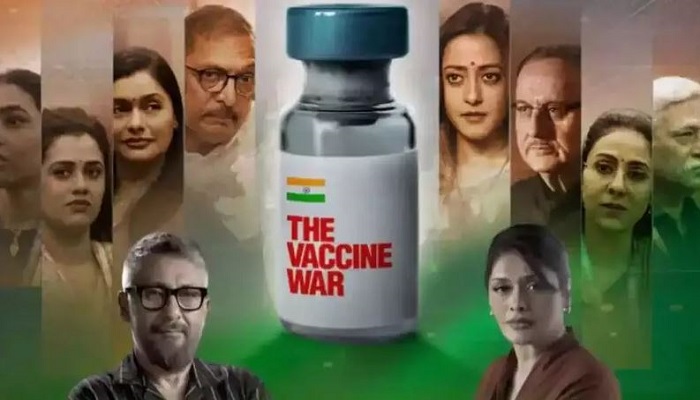
On Tuesday (12 September), the much-awaited trailer of Vivek Agnihotri’s directed upcoming film ‘The Vaccine War’ was released on the official YouTube channel of Pen Movies and ‘I Am Buddha’. The film features Nana Patekar, Anupam Kher, Sapthami Gowda, Raima Sen, and Pallavi Joshi as the lead characters. Touted as ‘India’s first bio-science film, it will be released on 28 September.
PRESENTING:
The trailer of your film #TheVaccineWar. Film releases on 28th Sept 2023.
Helmed by Vivek Agnihotri, the film is produced by Pallavi Joshi at I Am Buddha and it will be released in multiple languages. ‘The Vaccine War’ will be based on the inspirational story of Indian scientists and how they developed India’s first indigenous vaccine in record time defying all odds that were stacked against it.
The film will focus on the development of the BBV152 vaccine, which was named Covaxin. It was developed by Bharat Biotech in collaboration with the Indian Council of Medical Research (ICMR)- National Institute of Virology, Pune.
With dialogues like – “India can’t do it” and emphatically highlighting reports like “Foreign vaccines: The Need of a modern India”, the film promises to tackle the negative media campaigns and propaganda that the Indian scientific communities had to face during the trials and tribulations of making the vaccine.
In the trailer, Nana Patekar shines as the head of the scientistic team developing the indigenous COVID-19 vaccine while Anupam Kher portrays the role of Prime Minister Narendra Modi.
As per the trailer, Raima Sen is playing the antagonistic role of a journalist seemingly representing the group that ran smear campaign against the Indian vaccine while parallelly routing for foreign vaccines manufactured by Pfizer and Moderna. The trailer focuses on the immense contribution of Women scientists in the face of hardships.
The trailer has neatly blended historical references to Mahabharata to talk about the struggle and how the scientists had a steadfast focus on developing efficient vaccines to safeguard humanity.
Director Vivek Ranjan Agnihotri who received a great response for his film ‘The Kashmir Files’ has been actively promoting his upcoming film as ‘India’s first bio-science film’. This involves screening abroad and launching the first song of the film – ‘Shristhi se pehele’, at Times Square which finds a good portion in the film’s trailer.
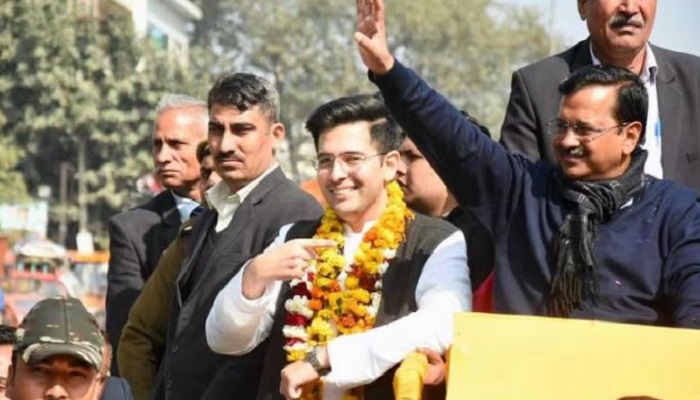
On Tuesday (12 September), Aam Aadmi Party leader Raghav Chadha spoke about DMK leader Udhayanidhi Stalin’s hate speech against Sanatan Dharma. In an interview with PTI, the AAP leader claimed that Stalin’s remark can’t be considered the official stand of the I.N.D.I. Alliance. While distancing from the remark, Chadha referred to Tamil Nadu Minister Udhayanidhi Stalin, who is also the son of Tamil Nadu Chief and DMK Supremo MK Stalin, as a “small leader”.
Remarks by some 'small' leader of any party can't be seen as official stand of INDIA: AAP's Raghav Chadha tells PTI on Sanatan Dharma row
Chadha said, “I am from Sanatan Dharma. I condemn and oppose such statements. Such kind of statements should not be made. One should stay away from making such remarks on any religion. We should respect all religions.”
He further argued, “Some leader from some party makes such remarks… it doesn’t mean it is the statement of the alliance. The alliance has been formed to raise bigger issues like price rise, and unemployment facing the country. The statement made by some small leader, while standing in a district in a state, is not the official stand of the alliance.”
Meanwhile, on the issue of names for the prime ministerial probables from the opposition alliance, Raghav Chadha ruled out Arvind Kejriwal from the equation saying, the first thing is that the AAP is not in the race.
He said, “We are a loyal soldier in this alliance. We are not in the race to become PM. We have many able administrators in our alliance. We have many competent people.”
Earlier in the day, a video of DMK’s Higher Education Minister K Ponmudy was doing rounds on social media in which the DMK Minister, an ally of AAP in the I.N.D.I. Alliance, asserted that the bloc was formed to fight the Sanatan Dharma.
In the viral video, DMK Minister K Ponmudy emphasised that there is no disagreement in the I.N.D.I. Alliance with respect to eradicating Sanatan Dharma. The Minister further claimed that all 26 parties in the opposition alliance are united to fight Sanatan Dharma and the opposition bloc was formed solely for this purpose.
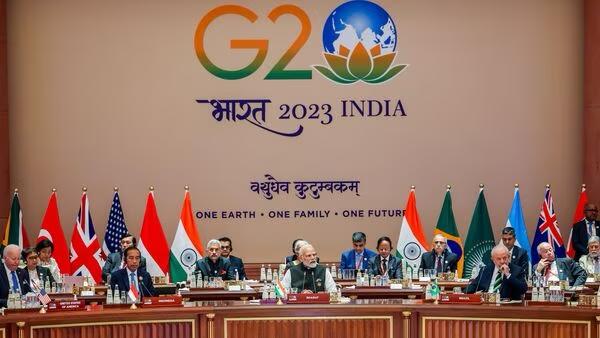
The G20 Summit in New Delhi was an exhibition of Prime Minister Narendra Modi’s 9-year-long foreign policy of strengthening relations with global powers and utilising the same to generate global consensus on matters concerning not only India, but the world. The two-day summit put the seal on India’s decisive rise to prominence. Here’s a look at the top 10 highlights from the G20 Summit that made India’s Presidency a rousing success:
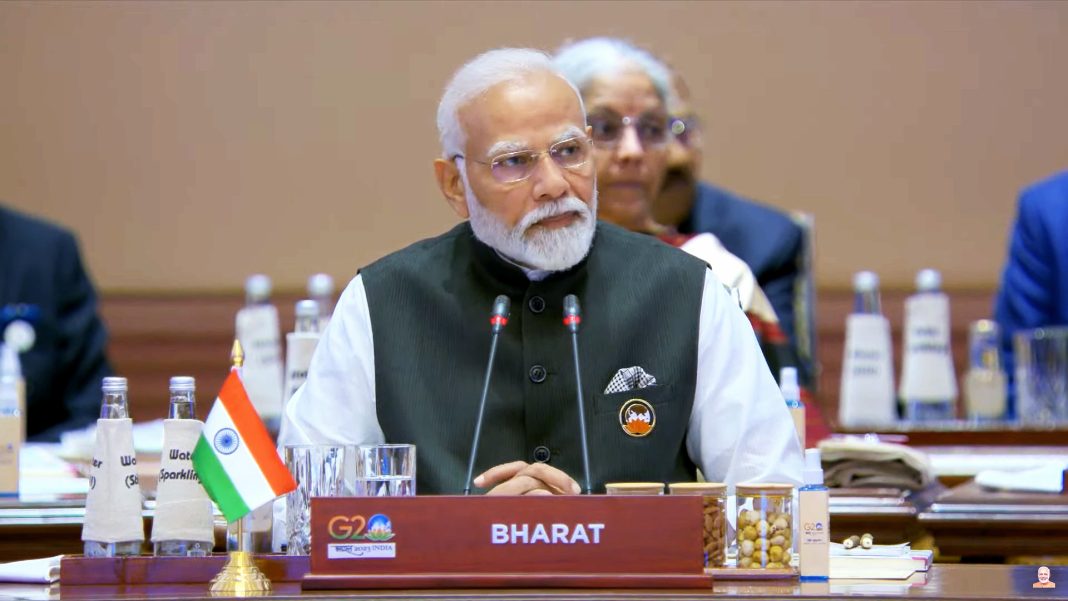
1. PM Modi addresses G20 Summit with ‘Bharat’ nameplate
India became renowned for its ancient Sanskrit name ‘Bharat’ at the G20 Summit when Prime Minister Narendra Modi’s seat displayed a nameplate by the same name.
Narendra Modi at G20 with Bharat Nameplate. Image Source: OpIndia File Photos
President Droupadi Murmi’s dinner invitation to the G20 heads of state also mentioned Bharat instead of India. The Bharat nameplate at PM Modi’s seat at the Summit reflects the ascent of New India.
2. The G20 Delhi Declaration
The idiom “Don’t count your eggs before they are hatched” is lost upon the Western media. Headlines were published to project India’s Presidency in a bad light as no joint declaration was released until the Summit. A narrative was being run implying that the New Delhi Summit was unproductive owing to no joint communique.
And then, on 9th September, the first day of the Summit, PM Modi announced that all members of the G20 had arrived at a consensus to release a joint communique.
Speaking at the Session-2 on 'One Family' during the G20 Summit in Delhi. https://t.co/tj1jrzelBA
Defying speculations that the G20 Leaders’ Summit in Delhi under India’s presidency would end without a joint statement due to differences over a range of issues, the group adopted the New Delhi G20 Leaders’ Summit Declaration.
Not only was India’s Presidency a roaring success with the release of the declaration but it received heaps of praise from Russia and Europe alike for the same, even as both sides were earlier sparring for their respective agendas to be mentioned prominently in the declaration.
3. Highest number of outcomes and presidency documents released under the India Presidency
Compared to previous presidencies, the G20 event in Delhi witnessed one of the most inclusive and delivery-oriented events. The G20 under India’s presidency has achieved 73 outcomes or lines of effort and 39 annexed presidency documents. This is the highest number of outcomes and presidency documents in the G20 history and is substantially more than previous presidencies.
The G20 event in India was a vast exercise, which included over 220 meetings in over 60 cities, where over 25,000 delegates from more than 115 countries in the world. While the summit meeting was taking place in Delhi, other meetings were held all over India, including North East and Ladakh. The 220 meetings included 17 ministerial meetings and 3 Sherpa meetings.
4. African Union inducted as a permanent member to make G21
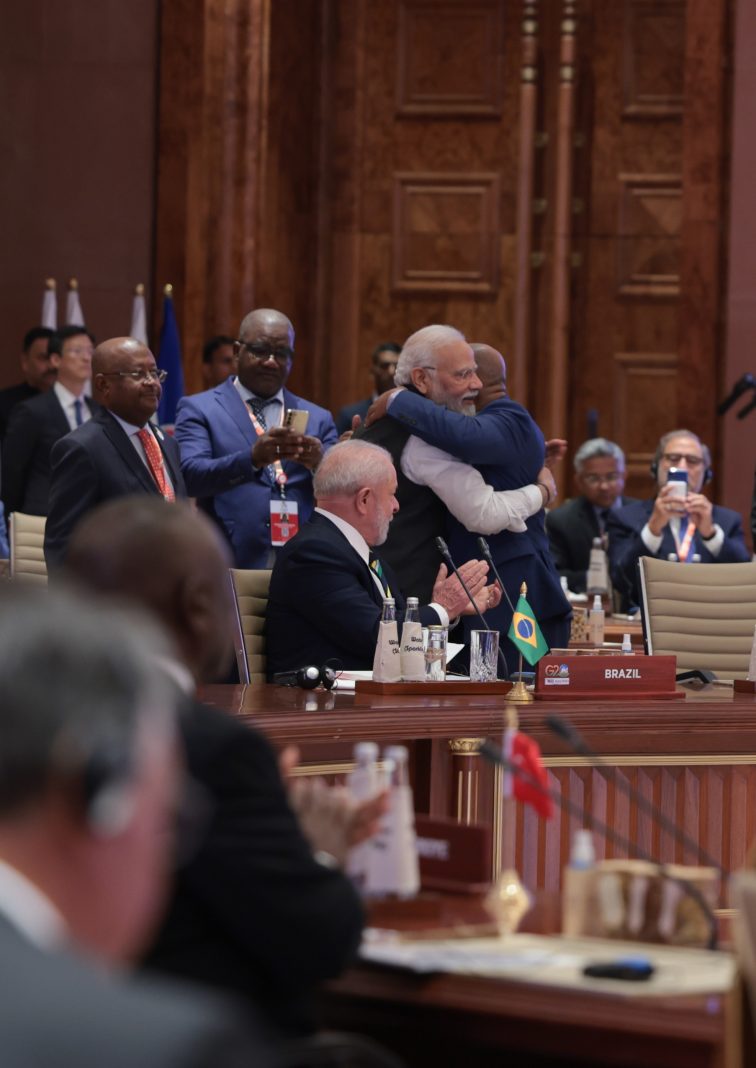
Prime Minister Narendra Modi announced the inclusion of the African Union as a permanent member of the Group of 20 countries. In his opening remarks at the 18th G20 Leaders’ Summit, PM Modi invited the African Union, represented by Chairperson Azali Assoumani, to take a seat at the table of G20 leaders as a permanent member.
External Affairs Minister S Jaishankar accosted the President of the Union of Comoros and Chairperson of the African Union (AU), Azali Assoumani as he took his seat among world leaders.
This was a major milestone achieved by the Indian Presidency under Prime Minister Narendra Modi’s leadership who, in June 2023, had written to G20 counterparts to provide the African Union with full membership at this G20 Summit. PM Modi has given special focus to India’s ties with the African Union using their shared history and values against anti-colonialism.
5. Global Biofuel Alliance
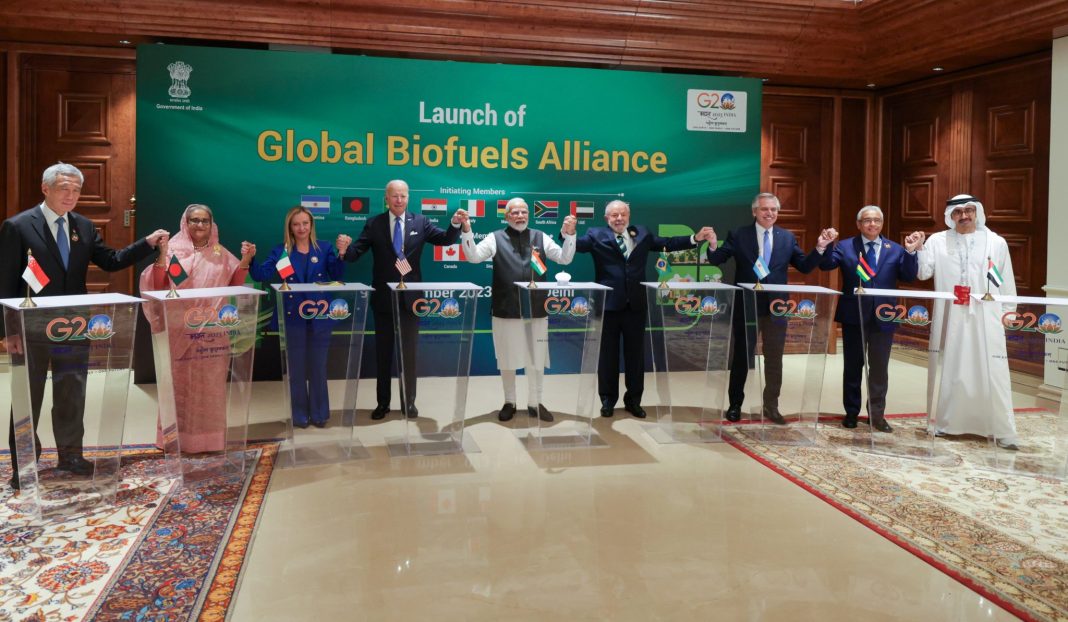
Prime Minister Narendra Modi along with the leaders of Singapore, Bangladesh, Italy, USA, Brazil, Argentina, Mauritius, and UAE, launched the Global Biofuel Alliance (GBA) on 9 September 2023, on the sidelines of the G20 Summit in New Delhi.
The GBA, an initiative by India, intends to expedite the global uptake of biofuels through facilitating technology advancements, intensifying utilization of sustainable biofuels, and shaping robust standard setting and certification through the participation of a wide spectrum of stakeholders.
The alliance will also act as a central repository of knowledge and an expert hub. GBA aims to serve as a catalytic platform, fostering global collaboration for the advancement and widespread adoption of biofuels.
It was affirmed that this alliance will accelerate global efforts to meet net zero emissions targets by facilitating trade in biofuels derived from various sources, including plant and animal waste.
6. India’s ‘One Earth, One Family, One Future’ initiative envisioned by global leaders
On the first day of the two-day G20 Summit in Delhi hosted by India, several major achievements were recorded, including the adoption of the joint statement Delhi Declaration by G20 leaders.
The first session on ‘One Earth’ included discussions on the International Year of Millets, Green Grids Initiative – One Sun, One World, One Grid, Natural Farming, and the National Green Hydrogen Mission. Taking to X, PM Modi tweeted about the same.
“Highlighted the need to further human-centric development, which is also something Indian culture has always emphasised on,” PM Modi wrote on X.
Spoke at Session 1 of the G20 Summit on the subject of One Earth. Highlighted the need to further human centric development, which is also something Indian culture has always emphasised on.
It is with a spirit of One Earth that India has worked on initiatives such as LiFE… pic.twitter.com/lVB2OoBioI
At second session titled “One Family”, the Prime Minister announced the Delhi Declaration. The Prime Minister quoted from the Vedas, ancient Hindu scriptures, “एको अहम् बहुस्याम्!” (Eko Aham Bahusyaam) meaning “I am one; let me become many.”
Basing India’s vision for the world on this Vedic premise, PM Modi said that the essence of “One Family” is to connect every class, every country, every society, and every region of the world and to think of the whole from the self.
At the One Family Session of the G20 Summit, elaborated on how to collectively think about empowering fellow humans and making our planet more inclusive as well as sustainable.
Gave the example of how technology has been leveraged to bring a positive difference in the lives of… pic.twitter.com/SqT9OjStps
At the third session on day 2 of the Summit, PM spoke about realising the economic aspirations of what he called the “Global Village”. He wrote on X, “Simply having a GDP centric approach is outdated. Time has come to adopt a human centric vision of progress. India has been making several efforts in this regard, particularly in areas relating to data and technology. We must do whatever we can to use AI for socio-economic development.”
Shared my thoughts during Session 3 of the G20 Summit. This Session focussed on the theme of ‘One Future.’ Emphasised on the need of the hour being to look beyond the idea of a Global Village and make the vision of Global Family a reality. pic.twitter.com/KcypGXdLsP
7. Partnership for Global Infrastructure and Investment (PGII)
PM Modi and US President Joe Biden co-chaired a special event on Partnership for Global Infrastructure and Investment (PGII) on the sidelines of G20 Summit. PGII is a developmental initiative aimed at narrowing the infrastructure gap in developing countries as well as help towards accelerating progress on SDGs globally.
“Through PGII, we can make a significant contribution in reducing the infrastructure gap in the countries of the Global South,” the Prime Minister said.
A Memorandum of Understanding was signed between Saudi Arabia, EU, India, UAE, France, Germany, Italy, and the US to work together to establish the India – Middle East – Europe Economic Corridor (IMEC). The IMEC is expected to stimulate economic development through enhanced connectivity and economic integration between Asia, the Arabian Gulf, and Europe.
Sharing my remarks at the Partnership for Global Infrastructure and Investment & India-Middle East-Europe Economics Corridor event during G20 Summit. https://t.co/Ez9sbdY49W
The ambitious project aims to establish India as a significant global hub for international business and commerce by linking India, the Middle East, and the EU. This project is expected to be a big rival to China’s Belt and Road project, which has left a host of developing countries in deep debt such as Pakistan, Kenya, Zambia, Laos, and Mongolia.
The countries involved in the new rail and shipping corridor will experience an increased flow of energy, trade and digital communications. The corridor will tackle the infrastructure deficit that hampers growth in lower- and middle-income nations, and will help in reducing tensions and instability in the Middle East, thereby improving overall regional security.
9. UK commits $2 billion to the Green Climate Fund (GCF)
One of the most talked about leaders amongst the G20 heads of state was UK PM Rishi Sunak. His popularity was amplified with the country pledging a whopping $2 billion to the Green Climate Fund (GCF). He said the fund was to help developing countries cope with climate change.
According to the UK government’s press release, this is the biggest single funding commitment by the UK to the world to help fight climate change.
10. G20 unanimously condemns terrorism and terror funding
The Group of 20 “condemned terrorism in all its forms and manifestations”. The declaration read, “We condemn terrorism in all its forms and manifestations, including those on the basis of xenophobia, racism and other forms of intolerance, or in the name of religion or belief, recognizing the commitment of all religions to peace. It constitutes one of the most serious threats to international peace and security.”
Furthermore, all nations gave a call for counterterrorism measures including putting a stop to terror funding. Members committed to support increasing the resource needs of the Financial Action Task Force (FATF) for the same.
On September 11, in a Super 4 match of the Asia Cup in Colombo, India defeated Pakistan by 228 runs. In terms of runs against Pakistan, this was India’s largest victory ever. Nationwide, Indian cricket fans celebrated Team India’s historic victory against Pakistan. However, one fan in Surat, Gujarat, paid a high price for expressing his exuberance over India’s victory.
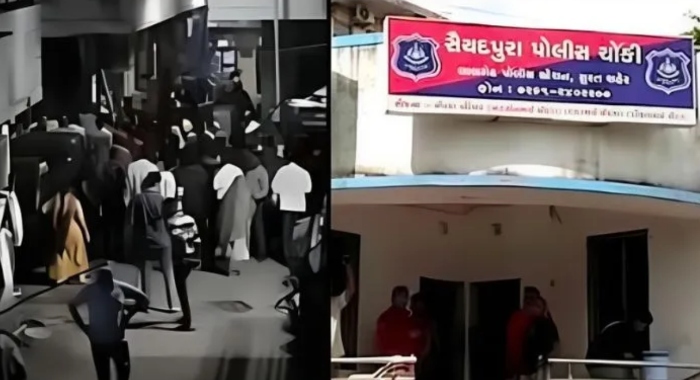
According to reports, a Hindu youth, who was bursting crackers to celebrate India’s win, was brutally assaulted by a Muslim mob in the Saiyedpura market area in Surat, Gujarat. The frenzied crowd not only thrashed the victim with wooden bats and stumps but also barged into his house and vandalised it. The incident reportedly took place at around 11 p.m. on September 11.
Local media reported that after India won the match that happened over Sunday and Monday, several fans from the locality descended on the street at around 11 pm to celebrate the victory. The victim, who belonged to the Dalit community, started bursting firecrackers to rejoice the victory. Soon, some Muslim youths rushed to the area and began hurling casteist slurs and beating up the victim. The victim somehow managed to escape the clutches of the frenzied mob and ran to his house to save himself, but the mob followed him, barged into his home and assaulted him further.
When the Saiyedpura Lalgate Police Station learned of the occurrence, they rushed to the scene and brought the situation under control. The police registered a case under sections including the atrocity act against all those who beat up and hurled caste-related slurs at the victim.
The police said that they were examining the CCTV footage and assured that the culprits would be identified and apprehended soon.
Local Muslims have attacked the victim thrice before
The victim stated that because he and his father worked for social causes, the local Muslims harboured hostility toward him and frequently attacked him. Three attacks had been made on him in the preceding 15 years, he claimed, adding that the Surat police had filed a case in 2021 as a result of court pressure.
Muslims, in turn, have filed a complaint against the Hindu youth. In the complaint, Shahrukh Aftab Mirza of Saiyedpura Mirza Manjil said that he had urged the Hindu youth not to burst firecrackers as children were playing cricket in the street. The Hindu youth and his two friends assaulted him at the time.
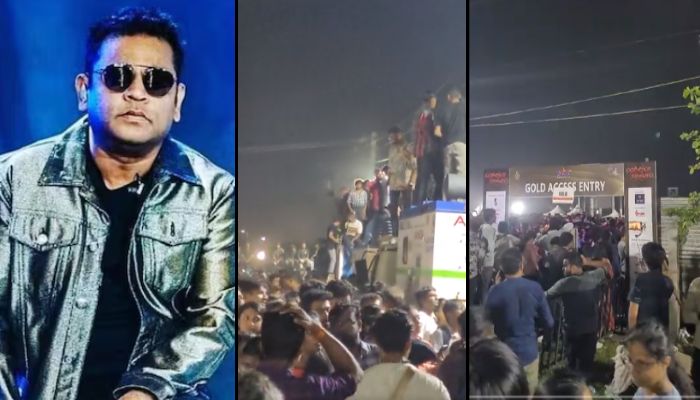
On Sunday (September 10), a concert by Oscar-winning musician AR Rahman turned into a nightmare after the organisers reportedly oversold the tickets, leading to overcrowding and mass molestation. The event titled ‘Marakkuma Nenjam’ (Will the heart forget) was held at Adityaram Palace in Chennai.
There have been allegations that the event planners, ‘ACTC Events’ oversold the tickets, despite being aware of the limited capacity of the open-air venue. Several fans, who were in possession of valid tickets, were denied entry.
This led to overcrowding near the gates, creating a stampede-like situation. With no crowd management and negligible security, several women became the subject of sexual harassment.
Independent filmmaker Charulatha Rangarajan informed, “As a woman who was groped twice in the concert,Shame on all of you for making me go through anxiety and adding on to my trauma.”
“Woke up to having such a weight in my heart.The unsafe feeling i have today is haunting me. One of the people who groped me, literally looked into my eyes when I just asked him for the way and move. I’m exhausted,” she narrated her ordeal.
“The number of men who used the crowd as an excuse to violate women today… We were struggling to breathe and were also violated. Fuck all those men and fuck ACTC Eevents. The fan in me died today AR Rahman. Thank you for that,” wrote another X user.
the number of men who used the crowd as an excuse to violate women today.. we were struggling to breathe and were also violated. fuck all those men and fuck @actcevents the fan in me died today @arrahman thank you for that?
A 22-year lawyer from Chennai, who attended the event, toldThe Quint that she was molested by the crowd.
“I lost count of the number of times I got groped yesterday. After a while, I gave up and didn’t try to defend myself. I tried pushing them, punching them, but they kept touching me. So I had no choice but to stand still…Today, I stand here as a mentally, physically, emotionally exhausted victim, who can’t do anything about it,” she recounted.
“Just because I cannot afford VIP tickets by paying 25,000, should I be left to die without any protection? No amount of money they give us will undo my sexual trauma. Even then, the least I deserve is monetary compensation,” the young lawyer added.
A woman, who attended the AR Rahman concert, said, “If I had stood for 2 more min, they would have squeezed & killed my child, we would have died, Are they even human beings.”
Visuals from the event indicate that there was little to no crowd management by the event organisers. “Imagine paying 2000 rupees for gold tickets and this is what you get? What a shit show. Had to return back without even entering,” lamented one X user.
Another X user, Nitin, demanded accountability from AR Rahman and the organisers of his music concert ‘Marakkuma Nenjam’
“We need answers, accountability, refunds and much more. The organizing today was pathetic, and not only from an experience POV but dangers to health&safety. Videos attached, thread follows,” he said.
@actcevents@arrahman and everybody else involved in #marakumanenjam and #ARRahman live. We need answers, accountability, refunds and much more. The organizing today was pathetic, and not only from an experience POV but dangers to health&safety. Videos attached, thread follows. pic.twitter.com/hf7fnyDVHc
Following the controversy, AR Rahman took to X (formerly Twitter) to inform that refunds would be initiated for those who could not attend the event despite purchasing tickets. He, however, did not address the allegations of mass molestation levelled by the victims.
“Dearest Chennai Makkale, those of you who purchased tickets and weren’t able to enter owing to unfortunate circumstances, please do share a copy of your ticket purchase to [email protected] along with your grievances. Our team will respond asap,” he said in a tweet on Monday (September 11)
Dearest Chennai Makkale, those of you who purchased tickets and weren’t able to enter owing to unfortunate circumstances, please do share a copy of your ticket purchase to [email protected] along with your grievances. Our team will respond asap?@BToSproductions@actcevents
ACTC Events also did not comment on the issue of lack of safety and security at the music concert.
“Grateful to Chennai and the legendary @arrahman Sir! The incredible response, the overwhelming crowd made our show a massive success. Those who couldn’t attend on overcrowding, Our sincere apologies. We take full responsibility and accountable. We are with you,” it said.
Grateful to Chennai and the legendary @arrahman Sir! The incredible response, the overwhelming crowd made our show a massive success. Those who couldn't attend on overcrowding, Our sincere apologies. We take full responsibility and accountable. We are with you. #MarakkumaNenjam
While speaking to The Hindu, Rahman said, “Right now, we are just terribly disturbed. Safety was the primary issue, especially because there were women and kids. I don’t want to point fingers at anyone, but we have to realise that the city is expanding, and the passion to consume music and art is also expanding.” He however did not directly address the allegations of molestation.
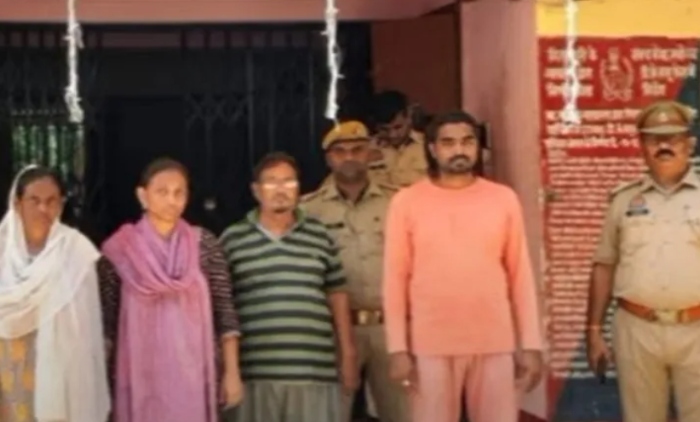
The Ambedkar Nagar police in Uttar Pradesh had on September 2, 2023, arrested 4 members of a family namely, Mohammad Hussain, Mumtaz Shaikh, Abdul Rehman and Heena Abdul, on charges of forceful conversion and coercion. The arrest was made based on a complaint filed by a Dalit woman named Indravati on August 31, 2023.
दिनांक 02.09.2023 को जनपद अम्बेडकरनगर थाना मालीपुर पुलिस टीम द्वारा थाना स्थानीय पर पंजीकृत विधि विरुद्ध धर्मांतरण के अभियोग से सम्बन्धित वांछित चार नफर अभियुक्तगणों को किया गया गिरफ्तार।#UPPolicepic.twitter.com/S3SUMSWt6Y
Indravati is reportedly the biological sister of Mohammad Hussain aka Shyamlal, who had converted to Islam a few years ago. Now, he and his family were pressuring Indravati to do the same. When Indravati refused to accede to their demand, they threatened to kill her.
Indravati, a resident of Tarakala village under the Malipur police station area, said in her complaint, that her brother Shayamlal had gone to Mumbai in search of work where he met some Muslim clerics who brainwashed him and converted him to Islam. He was given the name Mohammad Hussain and married off to a Muslim woman named Mumtaz Shaikh. Thereafter Shyamlal broke all ties with his family.
She further alleged that when her niece became eligible for marriage, Mohammad Hussain aka Shyamlal brainwashed a Hindu boy from Varanasi named Vicky Tripathi alias Vikas, converted him to Islam and got his daughter Heena Abdul married to him.
Indravati said that for all these years, her brother and his family had been staying in Mumbai and were not in touch with her or any of their family members. Recently, after the demise of their mother Pratapi Devi, Mohammad Hussain came to the village with the family and started pressuring Indravati and her family to convert to Islam.
Indravati further stated that on August 30, Mohammad Hussain and his family members forced their way into her home. At first, they asked her to convert to Islam while promising her land and Rs 2 lakh. When Indravati refused to convert, she was referred to as a “Kaafir” (an infidel) and threatened with death.
On August 31, 2023, the Ambedkar Nagar police registered an FIR against Mohammad Hussain alias Shyamlal, Abdul Rehman alias Vikas Tripathi alias Vicky, Heena Abdul and Mumtaz Shaikh based on Indravati’s complaint. Sections 452, 504, and 506 of the IPC, as well as Section 5(1) of the Uttar Pradesh Unlawful Religious Conversion and SC/ST Act, were invoked in the case. OpIndia has a copy of the FIR. The police detained and jailed all four accused on Saturday, September 2, 2023.
Indravati scared for her life
OpIndia spoke to Indravati who told us that she was scared for her and her family’s well-being. She disclosed how she had been receiving threats since the time the police has acted on her complaint and arrested her brother and his family members. Lamenting how she was petrified about her children’s safety, she said some people had been threatening her that they would fix her as soon as Mohammad Hassan and his family were out of jail. Indravati was, however, too scared to give out the names of the people who had been threatening her.
Shyamlal who had severed ties with the family had unexpectedly showed up to claim property
The lone son of the family, Indravati’s 61-year-old sibling, allegedly left for Mumbai when he was about 25 years old. When he was about 30 years old, he married a Haji’s daughter and took the name Mohammad Hussain. Indravati added that ever since Shyamlal hasn’t even visited his elderly parents; she was the one who took care of them. Now, after their mother passed away, Shyamlal returned unexpectedly in order to stake a claim on the property, Indravati added.
I am a devotee of Shiva, a Hindu, and will never become a Muslim: Indravati
Indravati further told us that Shyamlal would only associate with the Muslim people on the few occasions he returned to the hamlet in these years. He used to, in fact, abuse and look down upon her and every one belonging to their caste.
Indravati went on to say that she is a devoted Hindu and an adherent of Lord Shiva and Hanuman, and no matter what happens, she will never convert to Islam.
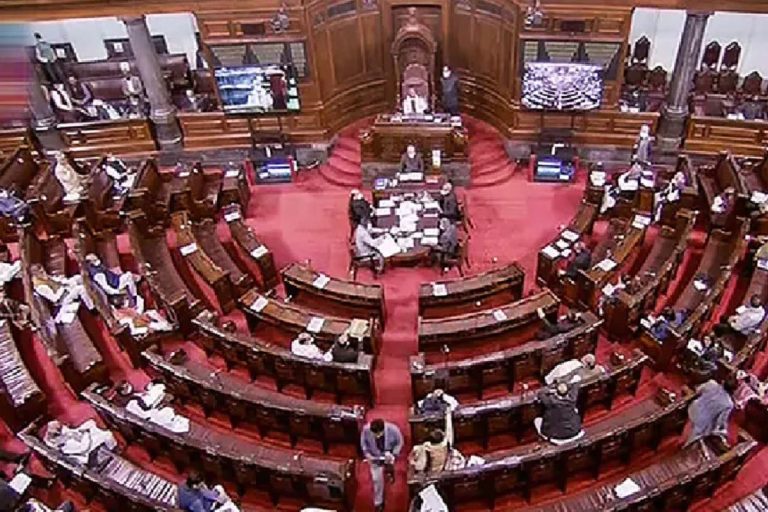
The southern state of Kerala is top among the states with the highest percentage of MPs with criminal cases against them, according to the latest report released by the Association for Democratic Reforms (ADR) and National Election Watch (NEW).
In the list of Members of Parliament who disclosed criminal cases in their self-sworn affidavits, Kerala took the lead with 73%, with Bihar, Maharashtra at 57%, and Telangana at 50% following closely behind.
The Association for Democratic Reforms (ADR) and National Election Watch (NEW) state that out of the 763 Members of Parliament (MPs), 306 of them, constituting 40%, have self-declared criminal cases against themselves.
Out of 306, 194 of them have declared serious cases against themselves, including cases related to murder, attempt to murder, kidnapping, crimes against women etc.
Bihar leads with the highest proportion of MPs facing serious criminal cases at 50%, followed by Telangana at 9%, Kerala at 10%, Maharashtra at 34%, and Uttar Pradesh at 37%.
When assessing party-specific statistics, it is revealed that 139 (36%) of the 385 MPs representing the Bharatiya Janata Party (BJP), 43 (53%) out of the 81 MPs from the Congress, 14 (39%) of the 36 MPs from the Trinamool Congress (TMC), 5 (83%) of the 6 MPs representing the Rashtriya Janata Dal (RJD), 6 (75%) out of the 8 MPs from the Communist Party of India (Marxist) or CPI(M), 3 (27%) out of the 11 MPs from the Aam Aadmi Party (AAP), 13 (42%) out of the 31 MPs from YSRCP, and 3 (38%) out of the 8 MPs from the Nationalist Congress Party (NCP) have disclosed criminal cases against themselves in their affidavits.
As per the submitted affidavits, 32 Members of Parliament (MPs) have disclosed cases related to ‘attempt to murder’ (IPC Section 307). Among the current sitting MPs, 21 have declared cases linked to crimes against women, with 4 of them declaring cases specifically related to rape (IPC Section 376).
The average assets held by Members of Parliament (MPs) from both the Lok Sabha and Rajya Sabha amount to ₹38.33 crore. MPs who have declared criminal cases, on average, possess ₹50.03 crore in assets, whereas MPs with no criminal cases have an average asset value of ₹30.50 crore.
Telangana, represented by 24 MPs, boasts the highest average assets among its parliamentarians, with an average asset value of ₹262.26 crore. Following closely behind, Andhra Pradesh, with 36 MPs, reports an average asset worth of ₹150.76 crore, while Punjab, represented by 20 MPs, holds an average asset value of ₹88.94 crore.
Currently, there are four vacant seats in the Lok Sabha and one in the Rajya Sabha. Additionally, four Rajya Sabha seats from Jammu and Kashmir remain undefined. The affidavits of one Lok Sabha MP and three Rajya Sabha MPs could not be analyzed as their affidavits were unavailable.
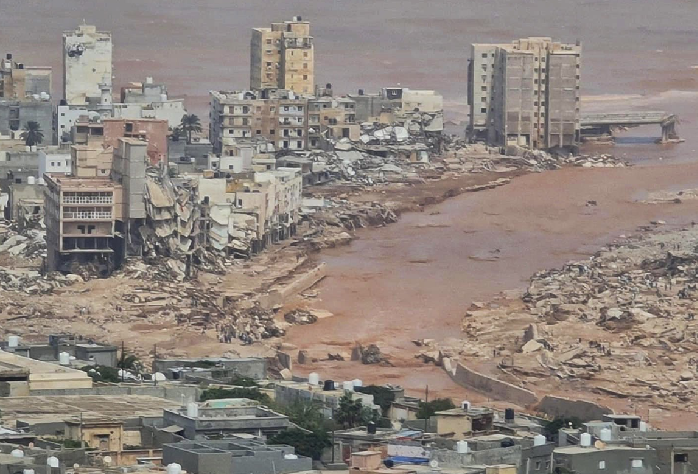
Thousands of people are believed to have died after a severe storm caused disastrous flooding in the country of Libya. According to reports, the number of deaths has crossed 2,000, and around 10,000 a still missing.
Prime Minister of Libya, Ossama Hamad, confirmed the number to al-Masar television station and said that around 2000 are feared dead in the eastern city of Derna, one of the Libyan cities majorly devastated by floods. He stated that the floods had washed away entire communities in Derna, which has been declared a disaster zone after the country got hit by the Mediterranean storm Daniel.
My heart goes out to the people of Libya who are going through catastrophic flooding caused by Storm Daniel.
Derna, which has been worst affected, has become inaccessible, according to local media, and the situation there is horrific, with no electricity or communications. Libyans shared footage on social media over the weekend showing flooded houses and highways in various locations of eastern Libya. They begged for assistance as floodwaters swamped individuals inside their homes and vehicles.
The east Libyan government’s prime minister, Osama Hamad, has declared Derna a disaster zone after torrential rains and floods damaged parts of the city. In addition, the government has announced a state of emergency and discontinued schools as a precaution ahead of a storm.
The prime minister on Monday, September 12, declared a three-day national mourning period and ordered that flags be flown at half-mast across the country. Notably, seven Libyan army members have gone missing while rescue efforts continue, and officials in the east have enforced a curfew. Along with the schools, businesses and services have been instructed to remain closed.
The eastern cities of Benghazi, Sousse, Derna, and Al-Marj have been particularly hard hit. At least 150 homes have been damaged, according to the Libyan Red Cross. Meanwhile, two dams in Derna, a town of around 100,000 people, are said to have collapsed flooding much of the region and force drowning some citizens. Along with places in the east, the western city of Misrata has also been impacted by the flooding.
Another natural disaster strikes in North Africa, violent storms destroy dams causing mass flooding in Libya ?? ?
Unverified storm videos circulated online, with one depicting torrents of floodwater washing a man away. Drivers could be seen caught on their car roofs in another clip. In addition to schools and businesses, four major oil ports have also been forced to close due to the storm.
While the administration in Benghazi has been dealing with issues in the country’s east, the competing, internationally acknowledged government in Tripoli has also been active.
On Sunday, its Prime Minister, Abdulhamid Dbeiba, said he had directed all state agencies to “immediately deal” with the damage and floods, while the United Nations in Libya said it was closely monitoring the storm and would “provide urgent relief assistance in support of response efforts at the local and national levels.”
Since 2014, Libya has been divided between two opposing administrations, following the assassination of long-time leader Muammar Gaddafi in 2011. Following Storm Daniel, both governments have announced three days of mourning. The Internet services and other communication services continue to remain hampered.
Indian football is currently going through a resurgent phase having won the SAFF Championship recently and punching above their weight in the recently concluded King’s Cup.
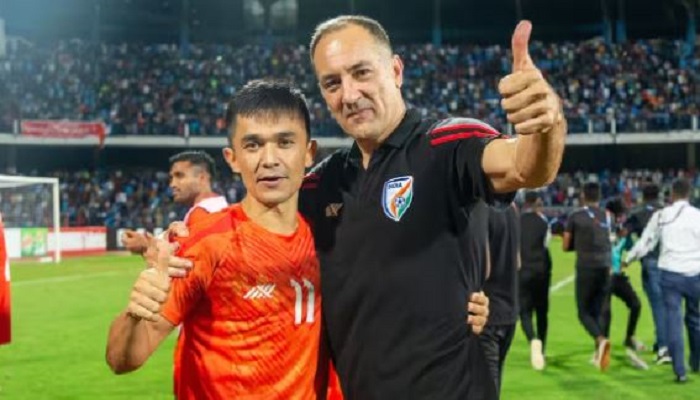
Now amid all this, a report in The Indian Express has claimed that Igor Stimac, the coach of the Indian football team was in constant touch with an astrologer to finalise the playing XI for some crucial games. The coach reportedly shared information like the injury status of players and substitution strategies with a Delhi-NCR-based astrologer named Bhupesh Sharma.
In one purported conversation between the two, Stimac reportedly wrote, “Hi dear Bhupesh, it was a pleasure meeting you and discussing future work! I would kindly ask you to provide an opinion on the following players.”
After this purported message, Stimac shared the date, time, and place of birth of four players. Out of them, three players had represented India at the 2017 FIFA U-17 World Cup.
As per the Indian Express report, on June 9, 2022, Igor Stimac sent a message to Sharma. The coach reportedly sent this message hours before the Indian side was scheduled to face Afghanistan in a crucial Asian Cup qualifier in Kolkata.
In the purported message, the coach said, “Hi dear friend, you can check charts for each player from the list for 11 June. Kick-off time is at 20.30.”
As per the report, the list referred to in the message pertains to the names of the probable 11 for the crucial game. It was a must-win game in order for the Indian side to remain in contention for the prestigious continental championship.
In response, the astrologer replied with specific remarks against each player like –“Good”; “can do very well. Needs to avoid overconfidence”; “a below-average day”; “a very good day for him but might get over aggressive”, and “not recommended for the day”.
Subsequently, one hour prior to the kick-off on June 11, the Indian playing lineup didn’t include two established names whose stars were allegedly “unfavourable”, as per Sharma.
Going further, the Indian Express report claims that this was not a one-off incident, rather the duo exchanged close to 100 messages between May and June 2022. During this time frame, the Indian side played four matches. These included a friendly match against Jordan followed by three Asian Cup qualifiers against Cambodia, Afghanistan, and Hong Kong.
As per the report, before each game, the former West Ham and Croatia player Stimac allegedly sought suggestions from the astrologer to finalise the team.
The report added that a top All India Football Federation (AIFF) official introduced coach Stimac to astrologer Sharma. Speaking to The Indian Express, the then secretary-general of AIFF, Kushal Das, admitted that he introduced Stimac to Sharma in May 2022.
He claimed that he met astrologer Sharma at a meeting and prior to that, Sharma had worked for a lot of telecom companies and Bollywood personalities. He added that as per their claims, it was said that his astrological timings could help people to make the right decisions.
The resurgent Indian football side under Igor Stimac
Under Croatian coach Igor Stimac (who represented his country when they finished 3rd in the 1998 France World Cup), the Indian Men’s team lifted the Intercontinental Cup and the SAFF Cup in short succession. The Blue Tigers have been improving their overall ranking (99th) and recently entered under 100.
The unbeaten run was beautiful while it lasted.
Team India will have to restart the record from scratch in the next match at the Merdeka Cup! pic.twitter.com/TIVvLNceG6
On the home soil, the Indian men’s side was unbeaten for 15 matches straight. Similarly, the women’s team defeated Kyrgyzstan over two legs to win their first round of Olympic qualifiers in April. On the back of a brilliant run by the main squads, the Sports Ministry gave exemptions to Under-23 teams to participate in the Asian Games in China.
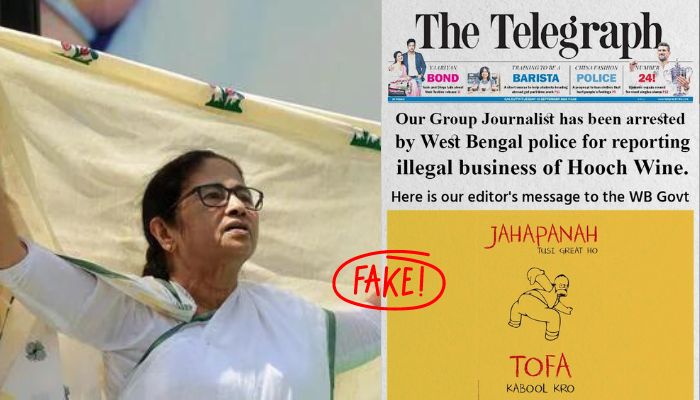
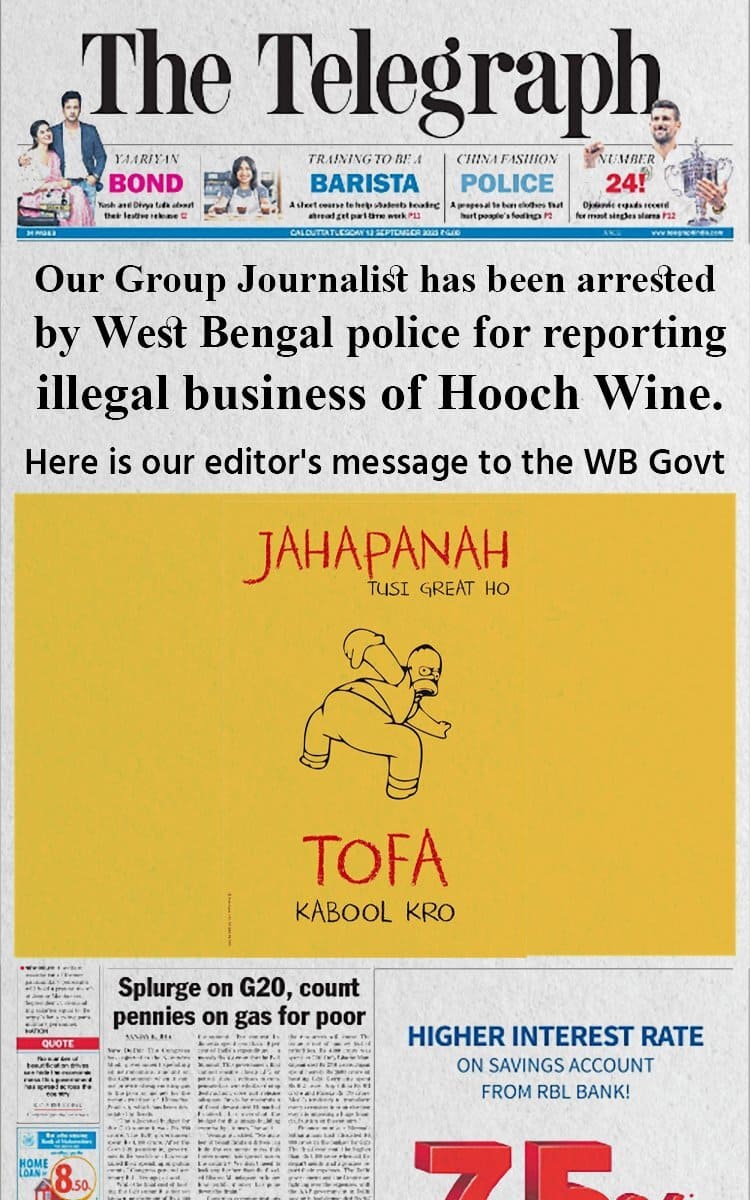
On Tuesday (September 12), a purported screenshot attributed to The Telegraph went viral on social media. It bore an uncanny resemblance to the front page of the Indian English daily and mocked the Mamata Banerjee-led-TMC government for arresting Debmalya Bagchi.
“Our Group Journalist has been arrested by West Bengal police for reporting illegal business of Hooch Wine,” the alleged copy of The Telegraph read in bold.
The subheading of the purported newspaper stated, “Here is our editor’s message to the WB Govt – Jahapanah Tusi great ho, Tofah Kabool karo (Emperor, you are great. Please accept our gift). It is a popular dialogue from the highly acclaimed movie ‘3 idiots.’
Screengrab of the purported copy of The Telegraph
The message was accompanied with a cartoon of Homer Jay Simpson, showing his posterior, to the West Bengal government. Homer is the main protagonist of the US-based animated sitcom, The Simpsons. The graphic is popularly called ‘Kiss my yellow butt.’
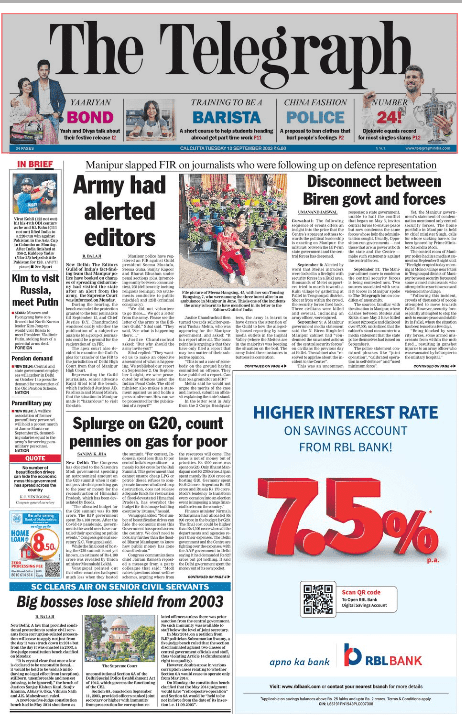
In order to ascertain the truth, Opindia checked the e-paper of The Telegraph and all its editions (Kolkata, North Bengal and South Bengal) for September 12, 2023. We found no such cartoon of Homer Simpson ‘gifting’ his ass to the West Bengal government.
Moreover, there was no mention of the arrest of Anandabazar Patrika (ABP group that publishes The Telegraph) correspondent, Debmalya Bagchi, on the front page. Instead, the English daily pointed out the case of journalists being ‘slapped with FIR’ in Manipur.
Screengrab of The Telegraph
Nonetheless, Manipur remained the featured story of the West Bengal-based paper. The arrest of its own journalist by the Trinamool Congress government found no mention in its main headlines.
Opindia also cross-verified The Telegraph e-paper for Monday (September 11) but found no such message or cartoon from the Editor of the newspaper. We thus concluded that the purported screenshot attributed to The Telegraph was fake.
Arrest of journalist in West Bengal
On September 6 this year, the 33-year-old Debmalya Bagchi was arrested by the West Bengal police. The development came days after he wrote critical articles about hooch traders operating in the TMC-controlled Sanjoal area in Kharagpur Municipality.
He was booked under Indian Penal Code Sections 323 (voluntarily causing hurt), 341 (wrongful restraint), 354B (assault or use of criminal force with intent to disrobe), 509 (uttering any word or making any gesture intended to insult modesty of a woman), provisions of SC/ST Act.
A police complaint was filed against Bagchi by his Dalit neighbour on August 27, 2023, for allegedly hurling casteist remarks and assaulting her outside her residence.
It must be mentioned that the Anandabazar Patrika correspondent had written about the laxity of the local administration towards hooch trade and the harassment of the informants by those involved in the production of bootleg liquor.