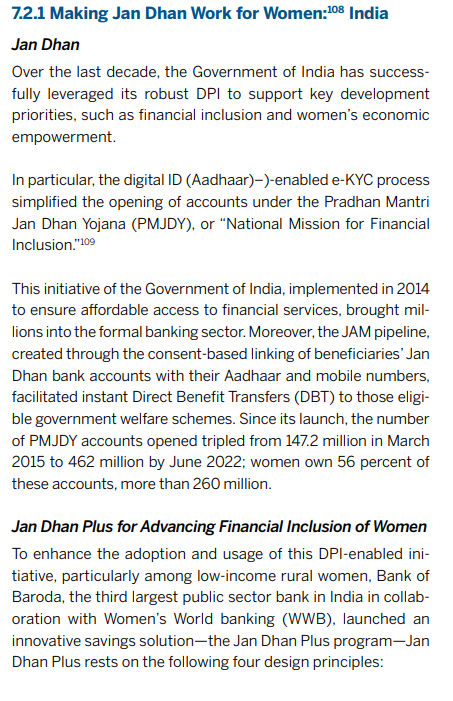
On Wednesday (23 August), the Union Minister for Education, Dharmendra Pradhan released the National Curriculum Framework (NCF) for School Education in Delhi. The textbooks for the same will be developed for the 2024 academic session.
Union Education Minister Dharmendra Pradhan releases National Curriculum Framework for School Education in Delhi pic.twitter.com/ziCaGfO1Cj
In the NCF, the Ministry has made a major announcement that from now on board exams will now be conducted at least two times a year. As per the new framework, students will be allowed to retain their best score.
The Ministry said, “Board exams will be offered at least twice a year to ensure students have enough time and opportunity to perform well. Students can then appear for a board exam in subjects they have completed and feel ready for. They will also be allowed to retain the best score.”
Board exams to be conducted twice a year, students will be allowed to retain best score: MoE’s new curriculum framework
Apart from this, students of Class 11 and 12th will have to study two languages, out of which at least one language must be an Indian language. The NCF gives more flexibility to the students and their choices of subjects will not be restricted to streams.
The new framework will also ask the school boards to develop capabilities to offer ‘on-demand’ exams in the near future. The NCF has also given due focus to improving the skills of evaluators and those who make board exam papers. Now, they will have to go through university-certified courses mandatorily to join their work.
“In due course of time, school boards are to develop capacities to offer ‘on demand’ exams in due course of time. Besides board exam test developers and evaluators will have to go through university-certified courses before taking up this work,” the document said.
Board exam test developers, evaluators to go through university-certified courses before taking up this work: MoE's new curriculum framework
Further, the Ministry will end the age-old practice of covering textbooks and will also optimise the cost of textbooks. Rather than months of coaching and memorisation, the board exams will now assess the understanding, and achievement of competencies.
The Joint Workshop
Education Minister Dharmendra Pradhan also addressed the Joint Workshop of National Curriculum Framework Oversight And National Syllabus and Textbook Committee (NSTC).
Informing about the same, the Minister said, “Under the guidance of Kasturirangan, the steering committee has prepared the curriculum for the new National Education Policy. They submitted it to the government. The government gave it to the NCERT. NCERT has made two committees, the National Oversight Committee and NSTC. We expect both these committees to prepare a syllabus according to the requirements of the 21st century and based on original Indian thinking. We want them to prepare futuristic teaching and learning material for classes 3 to 12.”
#WATCH | On Joint Workshop of National Curriculum Framework Oversight And NSTC Committee, Union Education Minister Dharmendra Pradhan says, "Under the guidance of Kasturirangan, the steering committee has prepared the curriculum for the new National Education Policy. They… pic.twitter.com/CTmdeWj1hr
Apparently, the first orientation meeting of these committees set up by NCERT took place today.
Notably, with the aim to bring various reforms in school education and higher education including technical education, the Union government introduced the New Education Policy 2020 (NEP 2020).
“This is a historic moment.. a dawn of new India,” said PM Modi as India’s third lunar mission Chandrayaan 3 successfully landed on the Moon’s surface at 18:04 IST on August 23. PM Modi also congratulated the staff members of the Indian Space Research Organization (ISRO) and the entire country for the successful space mission.
While addressing the nation from South Africa moments after the Vikram Lander of the lunar mission made a successful soft landing on the south pole of the moon, PM Modi said that this was the proudest moment for India and that the country today witnessed the new flight of new India. “New history has been written. India is now on the moon. India first country in the world to reach the Lunar South Pole,” the PM said.
The Prime Minister meanwhile also said that the planet Earth in India is seen as mother and that its natural satellite is looked at as her brother. “Young children in India call Moon as ‘Mama’ uncle. Earlier they used to feel that their Uncle Moon was too far. But India is making history and in the coming future children will also be able to take a quick tour to meet their uncle,” he said.
#WATCH | "Kabhi kaha jata tha chanda mama bahut door ke hain, ab ek din wo bhi ayega jab bacche kaha karenge chanda mama bass ek tour ke hain," says PM Modi on the soft landing of ISRO's third lunar mission Chandrayaan-3 on the moon pic.twitter.com/qxpfyzHsQl
“We can all aspire for the moon, and beyond,” the PM said who is at present in South Africa for BRICS Summit 2023.
PM Modi also lauded all the scientists and said that the moment of celebration had arrived. “This moment is historic. It is a symbol of a new, developed India. We saw a dream on Earth and fulfilled it on the Moon,” he said.
He also said that this was not alone India’s win, and that the country’s G20 theme of one earth, one family, one future is resonating across the globe. “Our Moon mission is based on the human-centric approach. This success belongs to the entire humanity. All countries around the globe are capable of achieving such success,” he said.
On 23rd August, the Indian Space Research Organisation (ISRO) achieved one of the most important milestones in Indian Space history as Chandrayaan-3 landed successfully on the moon’s surface. At 18:04 hours, the spacecraft landed successfully on the moon, and the success was celebrated with cheers and applause at the ground station.
The official X handle of ISRO posted the success of Chandrayaan-3’s landing on the Moon. “Chandrayaan-3 Mission: ‘India, I reached my destination and you too,” it tweeted.
Chandrayaan-3 Mission: 'India??, I reached my destination and you too!' : Chandrayaan-3
Chandrayaan-3 has successfully soft-landed on the moon ?!.
Chandrayaan 3 was launched from the Satish Dhawan Space Centre in Sriharikota on July 14 this year. Now post-landing the spacecraft is expected to investigate the elemental composition of the Earth’s only natural satellite, its surface plasma environment, lunar seismicity, and thermophysical features.
India made history on Wednesday after it accomplished an extraordinary achievement: becoming the first nation to achieve a soft landing in the vicinity of the Moon’s southern pole and propelling itself into the exalted club of countries that have successfully touched down on the Earth’s only natural satellite.
Before India, the US, Russia, and China achieved the landing on the Moon but none have managed to accomplish the feat on the moon’s southern polar expanse.
From 5:20 PM onwards on Wednesday, the Chandrayaan-3 entered the critical landing phase, signifying the start of its crucial descent toward a delicate touchdown on the moon’s surface. A “soft landing” entails a carefully managed and gradual descent to preserve the spacecraft’s integrity. At around 6:04 PM, Chandrayaan-3 successfully landed on the Moon.
The official X handle of ISRO posted the success of Chandrayaan-3’s landing on the Moon. “Chandrayaan-3 Mission: ‘India, I reached my destination and you too,” it tweeted.
Chandrayaan-3 Mission: 'India??, I reached my destination and you too!' : Chandrayaan-3
Chandrayaan-3 has successfully soft-landed on the moon ?!.
Launched on July 14, the Moon mission comprises three essential elements: the Vikram lander, the Pragyan rover, and a propulsion module. Earlier today, following their detachment from the propulsion module on August 17, the lander and rover strove to gently touch down on the lunar expanse.
Weighing 26 kilograms and named ‘Pragyan’, a Sanskrit term for wisdom, the rover is a robotic vehicle armed with a variety of purpose-built instruments for the mission. The rover’s mission period covers a single lunar day, which equates to 14 days on Earth.
One of its key instruments carried by the rover is a laser-induced breakdown spectroscope (LIBS) propulsion module. This module holds a critical responsibility in performing qualitative and quantitative elemental analysis, helping in the assessment of both the chemical and mineralogical makeup of the moon’s surface.
In addition, the Pragyan rover is armed with an Alpha Particle X-ray Spectrometer (APXS), a vital tool for determining the elemental constitution of lunar rocks and soil in the immediate landing vicinity.
It’s worth noting that Russia’s Luna-25 was scheduled for a landing near the Moon’s South Pole this week as well, but an instance of lost control resulted in a crash last Sunday. Likewise, India’s previous lunar mission, Chandrayaan-2, hit a setback two years ago due to a technical maneuver failure in its attempt at a vertical landing position. However, these challenges have been carefully tackled this time around.
The lunar southern pole has held significant importance ever since India’s inaugural lunar mission, Chandrayaan-1, detected hints of ice molecules in that region back in 2008. The possibility of water’s existence on the Moon holds considerable potential for upcoming planetary and Martian expeditions, unveiling insights into its history, including elements like ancient volcanoes and oceans.
These invaluable findings from the moon’s polar south could serve various needs, including drinking water and equipment cooling. The area might also hold other volatile substances like methane and ammonia. Additionally, exploring the southern pole could offer valuable insights into the initial phases of the solar system.
Significantly, both the United States and China have also planned missions to the Moon’s southern pole, further underscoring the region’s captivating scientific possibilities.
On Tuesday, August 22, the Nuh district administration denied permission to the Vishwa Hindu Parishad to resume its Braj Mandal Jalabhishek Yatra on August 28 which was halted due to the violence unleashed by an Islamist mob on July 31st. The authorities in the Nuh district of Haryana rejected the application submitted by the VHP seeking permission to take out the Yatra on August 28 to conclude the interrupted procession.
This comes after a Hindu “maha panchayat” in Pondri village in Palwal resolved on August 13 to resume the Jalabhishek yatra from Nalhar temple in Nuh on August 28.
Narender Bijarnia, the Nuh Superintendent of Police confirmed that the application for the procession’s permit had been turned down.
Reportedly, Nuh District Commissioner Dhirendra Khadgata refused to grant permission to VHP for the Yatra citing various reasons including the G20 meeting scheduled to be held from September 3 in Tauru. The DC reportedly said that the dates of the G20 meeting and the Jalabhishek Yatra collided. Moreover, the permission has been denied in the wake of the prevailing situation in the Nuh district.
Originally, the yatra was to begin at Nuh’s Nalhar Mahadev Mandir, travel to Ferozepur Jhirka, and then stop in Singar in Punhana. However, it was halted and violence broke out about 3 km from the Nalhar temple.
Meanwhile, local VHP leader Devender Singh said he is not aware of the administration denying permission and asserted that there is “no need for any permission” for the Jalabhishek Yatra.
Vinod Bansal, the national spokesperson for the VHP, stated that they are still hopeful for the administration to approve the yatra. Bansal stated that rather than putting up barriers, the administration should offer support.
On July 31st, an Islamist mob attacked the Jalabhishek Yatra procession organised by Vishwa Hindu Parishad and Bajrang Dal. The violent attacks claimed six lives. Vehicles were burnt and stones pelted at the VHP’s Jalabhishek Yatra as Islamists unleashed violence against the Hindus in the Muslim-dominated region of Nuh, Mewat in Haryana.
On 23rd August, the Indian Space Research Organisation (ISRO) achieved one of the most important milestones in Indian Space history as Chandrayaan-3 landed successfully on the moon’s surface. At 18:04 hours, the spacecraft landed successfully on the moon, and the success was celebrated with cheers and applause at the ground station.
The official X handle of ISRO posted the success of Chandrayaan-3’s landing on the Moon. “Chandrayaan-3 Mission: ‘India, I reached my destination and you too,” it tweeted.
Chandrayaan-3 Mission: 'India??, I reached my destination and you too!' : Chandrayaan-3
Chandrayaan-3 has successfully soft-landed on the moon ?!.
Scientists at the ISRO headquarters celebrated the soft landing of Chandrayaan-3 on the Moon.
Scientists celebrating the successful landing of Chandrayaan-3 on the Moon
Prime Minister Narendra Modi joined from South Africa and congratulated ISRO and Indians on the remarkable achievement, lauding the hardworking ISRO scientists for achieving the magnificent feat. Modi further added that Chandrayaan-3’s successful land was not just a big accomplishment for India but for the entire humanity.
Historic day for India's space sector. Congratulations to @isro for the remarkable success of Chandrayaan-3 lunar mission. https://t.co/F1UrgJklfp
Chandrayaan-3 was launched successfully by ISRO’s LVM3 M4 into the orbit vehicle on 14 July 2023.
On 15th July, the spacecraft performed its first orbit-raising manoeuvre at IS TRAC/ISRO, Bengaluru and reached 41762 km x 173 km orbit.
On 17th July, the spacecraft performed a second orbit-raising manoeuvre. The spacecraft was in 41603 km x 226 km orbit.
On 22nd July, it performed another orbit-raising manoeuvre.
On 1st August, the spacecraft was inserted into the translunar orbit, which was achieved at 288 km x 369328 km.
On 5th August, it was successfully inserted into the lunar orbit and it achieved 164 km x 18074 km orbit, as intended.
On 6th August, the spacecraft reached in 170 km x 4313 km orbit around the moon as LBN#2 was completed.
Further, on 9th August, the orbit was reduced to 174 km x 1437 km following a manoeuvre performed on that day.
On 14th August, the mission reached the orbit circularisation phase.
On 16th August, The spacecraft was in an orbit of 153 km x 163 km after the firing.
On 17th August, the Lander Module was successfully separated from the Propulsion Module.
On 19th August, the Lander Module reached 113 km x 157 km orbit around the moon.
On 20th August, the Lander Module is in a 25 km x 134 km orbit.
On 23rd August, powered descent commenced at 5:45 PM.
About Chandrayaan-3 mission
Chandrayaan-3 is a follow-up mission to Chandrayaan-2. It aims to showcase the ability to safely land and travel on the moon’s surface. It includes a Lander module and Rover configuration and is set to launch from SDSC SHAR, Sriharikota, via LVM3. The Propulsion module will transport the Lander and Rover to a 100 km lunar orbit, with a scientific payload to study Earth’s spectral and Polari metric measurements through the Spectro-polarimetry of Habitable Planet Earth (SHAPE) instrument. The mission goals are to demonstrate the safe and gentle landing of the Lander, successful Rover exploration, and conduct scientific experiments in situ.
The Lander incorporates advanced technologies such as altimeters, velocimeters, inertial measurement, propulsion system, navigation, guidance, control, hazard detection and avoidance, and landing leg mechanism. Successful tests have been conducted on Earth to demonstrate the effectiveness of these advanced technologies.
On Wednesday, August 23, the Chief Justice of India DY Chandrachud rebuked advocate Manish Tewari after he anticipated the Centre abrogating the special provisions in Northeast under Article 371 just like it did with Article 370 that gave special status to the former state of Jammu and Kashmir. The court reprimanded him for raising irrelevant issues during the hearing on petitions challenging the abrogation of Article 370 and asked him to stick to the matter.
“Why should we deal with anything in anticipation and apprehension? We are dealing with a specific provision namely Article 370. We don’t really have to expand this to what impact or interpretation it will have on other provisions of the Constitution,” said CJI DY Chandrachud. In a significant move, the Supreme Court bench immediately dismissed the arguments made by the Congress leader after the Solicitor General intervened in the matter.
The saga began after Tewari made his argument during the SC hearing of a number of petitions challenging the revocation of Article 370 and the resulting partition of Jammu and Kashmir into the two Union Territories of J&K and Ladakh. He mentioned Article 371, an article that deals with several states, saying that Article 370 and 371 are basically the same, and there is an apprehension that the govt may take down this article also.
“Independent India decided to manage its periphery through Constitutional guarantee. We were building a republic. Hence, Article 370, 371, and Schedule 6 applying to Assam, Tripura, and Meghalaya becomes relevant in this matter. Even a slight apprehension in the periphery of India can have serious implications and one such situation our Lordships are seeing is in Manipur,” Tewari said as he represented former minister from Arunachal Pradesh.
Following this, Solicitor General Tushar Mehta interjected Tewari and said that the latter was indulging in potential mischief as there was no apprehension of abrogating Article 371 and there was no need to create apprehension.
“We must understand the difference between temporary provision which is Article 370 and special provisions with regard to other states regarding the North East. The Central Government has no intention to touch any part which gives special provisions to North East and other regions. This submission would have a very potential mischief and therefore I am interrupting and making it clear. Let us confine to temporary provision for Jammu and Kashmir,” SG Tushar Mehta could be heard saying during the hearing.
The 5-judge bench also then asked Tiwari to avoid making anticipations and focus the submission only with regards to Article 370. “Why should we deal with anything in anticipation and apprehension? We are dealing with a specific provision namely Article 370. We don’t really have to expand this to what impact or interpretation it will have on other provisions of the Constitution,” said CJI DY Chandrachud.
“Why should we apprehend that this is what the government is about to do in the other parts of the country,” the CJI added as Tewari attempted to clarify that he was not referring to the current Central Government but was referring to the Principal at state.
The CJI also directed Tewari saying that there was no reason to anticipate what would the government do in other regions of the country. “As far as other parts like North East is concerned, I don’t think we are required to go into all that given the statement made (by the SG). We are at present dealing only with Article 370,” the bench noted.
Justice Sanjay Kishan Kaul also added that there is no similarity between Article 370 and Article 371, and there is no reason to mention Article 371 in the arguments in the hearing on abrogation of Article 370.
After this, the apex court dismissed the plea by Manish Tewari on behalf of a client, adding that the reference to the Constitution Bench is confined to Article 370. “The applicant urged that apart from the provisions contained in part 21 of the Constitution pertaining to the state of J&K. there are special provisions governing the North-East in the same part. Since it has been submitted (by Tewari’s client) that the interpretation should be placed by this court on Article 370 could possibly impact the other provisions, the solicitor general, on specific instructions, has said that Union of India has no intention to touch or effect any of the special provision applicable to the North-East or any other part of India,” the court stated.
“Reference to the Constitution bench is confined to Article 370. There is no commonality of interest between the issues which sought to be addressed by the intervenor and the issues raised in the reference to this constitution bench. In any event, a statement which has been made on behalf of the Union government would allay any apprehension in that regard. We therefore close the application which stands disposed of,” the top court said while dismissing the plea.
The bench during the hearing emphasized the distinction between Articles 370 and 371, noting that the petitioner had disputed the former’s claim that it was temporary in nature and had instead interpreted it as permanent.
The CJI continued by stating that while the court is concerned about the overall effects of a state’s abrogation to the UT, it would be incorrect to express concern specifically for the Northeast.
BJP’s Amit Malviya meanwhile slammed Congress’ Tewari and stated that “Congress won’t stop at anything till they burn down India.” He said that Congress was full of hate for PM Modi and India. “Another instance of Congress’s hate for Prime Minister Modi and India crossing all limits. Congress’s Manish Tewari, while arguing in the Supreme Court against the revocation of #Article370, raised the specter of Article 371 being scrapped too. The argument wasn’t just misplaced and misleading but also fraught with grave risk of stoking unrest in the North East,” he tweeted.
Another instance of Congress’s hate for Prime Minister Modi and India crossing all limits.
Congress’s Manish Tewari, while arguing in the Supreme Court against revocation of #Article370, raised the spectre of Article 371 being scrapped to.o. The argument wasn’t just misplaced…
A 5-judge Supreme Court bench headed by Chief Justice of India DY Chandrachud and comprising Justices Sanjay Kishan Kaul, Sanjiv Khanna, BR Gavai, and Surya Kant is hearing a batch of petitions challenging the abrogation of Article 370 of the Constitution which conferred special status on the erstwhile State of Jammu and Kashmir.
It is notable that while Article 370 gave special status to Jammu and Kashmir, which included a separate constitution and separate laws on a large number of subjects, Article 371 only grants some temporary, transition and special provisions to some states in the country. Ranging from Article 371-A to Article 371-J, this Article of the constitution gives special provisions for the states of Maharashtra, Gujarat, Nagaland, Assam, Manipur, Andhra Pradesh, Sikkim, Mizoram, Arunachal Pradesh, Goa and Karnataka.
Fawad Hussain Chaudhry the former Minister of Information and Broadcasting in the Imran Khan government, has suggested that Pakistan’s media should broadcast the Chandrayaan-3 landing program. He congratulated the Indian scientists, the space community and the Indian people on the lunar mission.
All eyes on #Chandryaan3 Moon landing 5:40 PM, great day for Indian Science Community and Space scientists, Congratulations to people of India on this great achievement
Furthermore, the politician took to X, formerly known as Twitter, and termed it a “historic moment for humankind.” He posted, “Pak media should show Chandrayaan moon landing live tomorrow at 6:15 pm,” on 22 August.
Pak media should show #Chandrayan moon landing live tomorrow at 6:15 PM… historic moment for Human kind specially for the people, scientists and Space community of India…. Many Congratulations
The ex-federal minister praised the current mission last month and lauded India and the Indian Space Research Organisation (ISRO) on the successful launch of the Chandrayaan-3.
Congratulations to Indian space and Science community on the launch of #Chandrayan3 wishing you all the best
Notably, these compliments from the former senior member of Pakistan Tehreek-e-Insaf, have drawn attention towards his old statements where he was seen mocking India’s previous moon mission, despite being the minister of sceinece and technology in the former administration. He took a dig at India and ISRO after it faced disappointment in its Chandrayaan-2 moon landing mission. He remarked, “Don’t try to attempt what you can’t do, dear Endia.”
His controversial post gained a lot of backlash and criticism to which he replied with another similar opinion. “Surprised on Indian trolls reaction. They are abusing me as if I was the one who failed their moon mission. I had already said that don’t invest 900 crores on these losers. Now, be patient and try to sleep.”
He then made more fun of the mission and wrote, “Endia only way you can reach the moon is through Bollywood. Another 100 crore and you guys will be on the moon.” He labelled the country as that of extremists and alleged, “On a serious note, extremists always fail and you failed when instead of scientists you relied on astrologers and delayed the mission.” Moreover, he told India to end the hatred against other communities.
Notably, a video of his also became popular on social media in which he expressed, “Our science and research team has a philosophy. We don’t need to do so much work. The moon is visible. We know its exact location. What would be its altitude in which territory is also known.” He was giving an interview with Pakistan’s ARY TV in 2019.
— Dr. Radhika Chaudhary (@Radhika8057) July 14, 2023
All hopes on Chandrayaan-3
The Chandrayaan-3 Vikram lander is scheduled to make an attempt at a soft landing on the moon’s south pole at 6:04 pm today and India along with the rest of the world is anxiously awaiting the results.
Vikram lander, which is currently in orbit around the moon is set to start a gradual and methodical descent into the lunar surface later in the evening.
It would touch down at the lunar south pole if everything is according to the plan. Soon after, the lander will open its doors and lower Pragyaan, a coffee table-sized rover with six wheels to the moon’s surface. The suspense has been ratcheted up by the failure of the Russian moon mission Luna-25, which crashed on the moon’s surface on 20 August during landing.
A technical issue prevented the Chandrayaan-2 mission from successfully landing in the same region in 2019, which is full of craters and deep holes. The scientists have incorporated all the crucial lessons they learned during the mission and the space agency is confident that the landing would be carried out without a hitch.
India would become the very first country to land at the dangerous south pole and just the fourth in the world after the United States, Russia and China to operate a rover on the moon. A Launch Vehicle Mark-III (LVM-3) rocket bearing the Rs 600 crore rupee Chandrayaan-3 mission lifted off on 14 July.
On Tuesday (22 August), the Former Deputy Chief Minister of Telangana, Thatikonda Rajaiah got emotional and broke down in front of his supporters. Apparently, he cried profusely after he was denied a ticket from Bharat Rashtra Samithi (BRS) for the upcoming state assembly elections.
#WATCH | Jangaon, Telangana: Bharat Rashtra Samithi (BRS) leader Thatikonda Rajaiah, broke down reportedly after being denied a ticket from Station Ghanpur constituency for the upcoming Assembly elections. (22.08)
Currently, he is a sitting MLA from the Ghanpur (Station) constituency. However, BRS President and Telangana Chief Minister K Chandrasekhar Rao decided to field another candidate from his Ghanpur constituency. Instead of Rajaih, this time BRS has placed its bet on another senior leader Kadiyam Srihari to fight from there.
After getting the reports that he did not get a party ticket, Rajaiah reached the Ambedkar statue centre in his constituency. When he reached there, his supporters started raising slogans, “Jai Rajaiah, Jai Telangana”. Amid the sloganeering, he could not control his emotions and wept in front of his followers.
The video of the said incident has gone viral on social media. In the video, he can be seen prostrate on the floor and crying in front of Dr. B. R. Ambedkar’s statue. Later, he addressed his supporters and claimed that though he had been denied a ticket by the BRS leadership, he would, however, remain loyal to the party.
As per media reports, a village sarpanch who also belongs to his own party levelled sexual harassment allegations against Rajaiah a few months ago. It is claimed that this is the reason he did not receive a ticket from the Ghanpur constituency. He has been representing this constituency for the past one and a half decades.
Notably, Rajaiah had been representing the Station Ghanpur constituency since 2009. After the formation of Telangana in 2014, he became one of the Deputy Chief Ministers of the newly formed state and held the health portfolio.
However, there were allegations of corruption in the health department and he was dropped from the Cabinet in 2015. Despite that, the party gave him a ticket from the same constituency in 2018.
Meanwhile, on Monday (21 August), Telangana CM KCR announced the list of 115 candidates out of the total 119 seats for the upcoming assembly elections scheduled later this year. As per the announcement, he will contest from two seats, Gajwel and Kamareddy. Further, his son and state’s information technology minister KT Rama Rao KTR) will contest from Sircilla. His nephew T Harish Rao has received a ticket from Siddipet constituency.
The special Protection of Children from Sexual Offences Act (POCSO) judge of Tis Hazari Court on Wednesday sent suspended Delhi government official, Premoday Khakha, and his wife, Seema Rani, to 14 days of judicial custody till September 6, in connection with the rape of a minor girl.
It was alleged that the government official sexually assaulted the minor over several months, resulting in her becoming pregnant.
Earlier, on Monday, Delhi Police arrested the government official and his wife for the alleged sexual assault on the minor.
According to the police, following the death of her father, who was also a Delhi government employee, the minor girl lived with the accused in Burari from October 2020 to February 2021.
Taking serious note of the allegations, Chief Minister Arvind Kejriwal on Monday suspended the accused official, pending investigation.
“In exercise of the powers conferred by sub-rule (1) of Rule 10 of the Central Civil Services (Classification, Control and Appeal) Rules, 1965, Premoday Khakha, Assistant Director is hereby placed under suspension with immediate effect,” read an official order issued by the Aam Aadmi Party (AAP) government to this effect.
Deputy Commissioner of Police (North) Sagar Singh Kalsi on Monday said that further investigation is underway in the matter.
Meanwhile, the chairperson for the Delhi Commission for Women, Swati Maliwal, on Wednesday sent a notice to Delhi Police seeking details of the accused.
She also sought to know whether all the accused named by the complainant have been arrested and what steps were taken by Delhi Police to record the statement of the survivor under 164 CrPC.
She also sought a detailed action taken report in the matter.
“The Commission has also been informed that till now the statement of survivor under 164 CrPC has not been recorded. The girl is presently admitted in a government hospital in a very serious condition,” read the notice sent by DCW to Delhi police.
Maliwal sat on a dharna at the hospital where the minor is admitted, alleging that she was not allowed to meet her.
Accusing Delhi Police of ‘hooliganism’, the Delhi women’s panel chief said questioned why she wasn’t being allowed to meet the minor or her kin when the National Commission for Protection of Child Rights (NCPCR) chairperson had met her mother.
(This news report is published from a syndicated feed. Except for the headline, the content has not been written or edited by OpIndia staff)
In a proud moment for Indians, the country is set to achieve a historic feat in accomplishing its Lunar ambitions as the Chandrayan 3 will attempt a soft landing on the moon’s surface on August 23. As the whole nation and the world’s eyes are set to witness the Indian space agency add another feather to its cap, did you know about a man who was ‘buried’ on the moon?
Dr Eugene Shoemaker, a revolutionary geologist who is known and remembered for his extraordinary contribution in the field of planetary science became the first and the only person in the world whose ashes were scattered on the moon as a tribute. Shoemaker, who once called himself a science historian was also the founder of Astrogeology.
Eugene Merle Shoemaker, who was born on April 28, 1928, in Los Angeles, California, graduated from the California Institute of Technology in Pasadena at the age of 19.
Soon after receiving his master’s degree for a thesis on the petrology of Precambrian metamorphic rocks, he joined the United States Geological Survey (USGS), where he continued to be somewhat affiliated for the remainder of his life. His initial task for the USGS was to scour Colorado and Utah for uranium reserves. He also developed an interest in the moon, the prospect of reaching there, and determining the relative contributions of volcanic eruptions and asteroidal impacts to the formation of lunar craters.
Ending the debate around Barringer Meteor Crater
Shoemaker’s dissertation at Princeton University for his Ph.D., which he earned in 1960, focused on the impact dynamics of Arizona’s Meteor Crater also called the Barringer Crater.
The Barringer Meteorite Crater rises 150 feet above the surrounding Arizona desert. It was formerly known as Coon Butte or Coon Mountain. The impact crater is 570 feet deep and about a mile broad. Two opposing theories were most frequently put forth by geologists to explain geologic occurrences. The first theory’s proponents thought that volcanic activity deep underground generated an explosion of superheated steam that caused the crater in Arizona. Others supported the theory that a massive meteorite’s impact had caused the crater’s formation.
Gilbert Karl Grove, a chief geologist at USGS in the 1890s conducted thorough investigations at the crater site and concluded that the crater was formed due to a steam explosion.
Barringer Meteor crater in Arizona (Image source: Astronomy Magazine)
Interestingly, in 1902, Daniel Moreau Barringer, a Philadelphia mining engineer and entrepreneur studied the Arizona crater and presented a hypothesis that the crater was formed due to the arrival of meteorites.
It was only in 1960 that Eugene Shoemaker proved Barringer’s hypothesis to be true and ended a prolonged debate around the Barringer crater’s formation. Shoemaker noted the presence of coesite — a mineral form of Silica and another similar material Stishovite. Since the formation of these minerals required much greater pressures and temperatures than any natural phenomenon, Shoemaker substantiated Barringer’s hypothesis proving that the crater was formed due to an asteroid impact event and not volcanic action or steam explosion.
Eugene Shoemaker sitting on the edge of Meteor Crater in Arizona (Image source: AZ Central)
Discovery of Shoemaker-Levy 9 Comet
Twenty-nine years ago, Eugene Shoemaker, his wife Carolyn Shoemaker, a renowned astronomer accredited with discovering/ co-discovering 377 asteroids and 32 comets, and David Levy discovered the Shoemaker-Levy 9 or SL9 Comet orbiting Jupiter in March 1993. A year later, a historic moment came up between July 16 and 22 when the SL9 Comet collided with Jupiter. The event was the first ever real-time observation of an extraterrestrial collision in the solar system with many across the world witnessing it.
According to NASA, several observatories on Earth as well as satellites in orbit, such as the Hubble Space Telescope, Ulysses, and Voyager 2, observed the collision and what followed. Shoemaker-Levy 9 left behind black, ringed scars that were later covered over by Jupiter’s winds. The comet was split into at least twenty-one fragments by the planet’s tidal forces.
Composite image of Jupiter and comet Shoemaker-Levy 9 (Image source: NASA)
As Comet Shoemaker-Levy 9 revealed, large impacts still happen in the Solar System, and NASA utilized this information when developing programs aimed at lowering the risk of impacts on Earth.
In a piece applauding Gene Shoemaker, his wife Carolyn, and David Levy for their incredible discovery, NASA notes: “From comet science to Jupiter science, to the science of impacts, the legacy of that serendipitous discovery by Carolyn and Gene Shoemaker, and David Levy, continues to this day and into the future.”
Years later, astronomer David Levy wrote a book titled Shoemaker: The Man Who Made An Impact giving a fitting tribute to Eugene Shoemaker and his outstanding achievements in the field of astrogeology and planetary sciences.
(Image source: Princeton University website)
Shoemaker’s unfulfilled dream to travel to the Moon fulfilled after his death
Shoemaker opined that geological studies can be pivotal in space-related programs and research. He had a dream of being the first geologist to map the Moon. He led teams that studied the Moon’s structure and history in the 1960s and developed techniques for planetary geologic mapping using telescopic images of the Moon.
He played a significant role in the Lunar Ranger missions to the Moon, which revealed that the Moon was covered in impact craters of all sizes. In addition to detecting 800 asteroids, Shoemaker also trained many of American astronauts.
Shoemaker, who himself could have become the first geologist-astronaut to join the Apollo moon flight, however, could not turn his moon dream into a reality as he was diagnosed with Addison’s disease which prevents the adrenal glands from producing sufficient hormones.
Shoemaker and Carolyn resumed their ongoing research on asteroids and craters after Shoemaker was forced to give up his dream. Eugene along with his wife Carolyn set up an observation program at Palomar Observatory in California.
Gene and Carolyn Shoemaker at Palomar Observatory (Image source: Earth Date)
The geologist spent the rest of his life traveling the world in search of rare impact craters. On July 18, 1997, while on one of his treks, Shoemaker was involved in a head-on collision with a car close to Alice Springs, Australia. While the 69-year-old explorer died in the accident, Carolyn suffered multiple injuries.
Eugene’s ashes were kept in NASA’s Lunar Prospector
While NASA was preparing to launch its Lunar Prospector at the same time, Carolyn Shoemaker suggested sending her late husband’s ashes with the prospector to fulfill his dream. As NASA approved the proposal, Eugene Shoemaker became the first person to have his ashes scattered on the Moon.
Eugene Shoemaker’s ashes were placed in a memorial capsule and sent to the moon on Lunar Prospector on January 6, 1998. The vacuum-sealed, flight-tested aluminum sleeve was attached deep inside the spaceship and carried the polycarbonate capsule, which measured one and three-quarters inches in length and seven-tenths of an inch in diameter.
Carolyn demonstrated the truth of the saying that “love is the strongest emotion in the world” by accomplishing her husband’s dream of going to the moon. Interestingly, she had handpicked certain things that were sent along with the ashes including a piece of brass foil inscribed with an image of a Comet Hale-Bopp, an image of a Meteor Crater in northern Arizona, and a passage from William Shakespeare’s enduring love story, “Romeo and Juliet”:
And, when he shall die, Take him and cut him out in little stars, And he will make the face of heaven so fine That all the world will be in love with night, And pay no worship to the garish sun.
In a 1998 press release, Carolyn Shoemaker said, “I don’t think Gene ever dreamed his ashes would go to the moon. He would be thrilled. It brings a little closure, in a way, to our feelings. We will always know when we look at the moon, that Gene is there.”
When the Lunar Prospector crashed on the Moon surface after completing its mission, Eugene’s ashes found their dream. So far he is the only person whose ashes have been dispersed on the Moon.
Space is where human ambitions are matched with human potential. Centuries ago, humans used stars to navigate around the oceans and search for new continents to settle in. Now, humans look at space to know the secrets of the universe and to see if humanity can one day settle on other planets. Space research brings nations closer and in a way, unites this world because when we look upwards, small differences among ourselves no longer matter.
The quest to study the Moon has been a long-cherished endeavor. If all goes well, India will today become the fourth nation in the world to accomplish a soft landing on the Moon.
As Vikram Lander prepares to land on the Lunar south pole, cumulative knowledge of several generations of scientists and data gathered by multiple space organizations are coming into play.