Responding to the murder of a journalist in Araria district, Bihar Chief Minister Nitish Kumar on Friday termed the incident ‘unfortunate’.
Speaking to reporters, the Bihar CM said, “It is a very unfortunate incident. How can someone kill a person this way? I have asked the officials to inquire into it.”
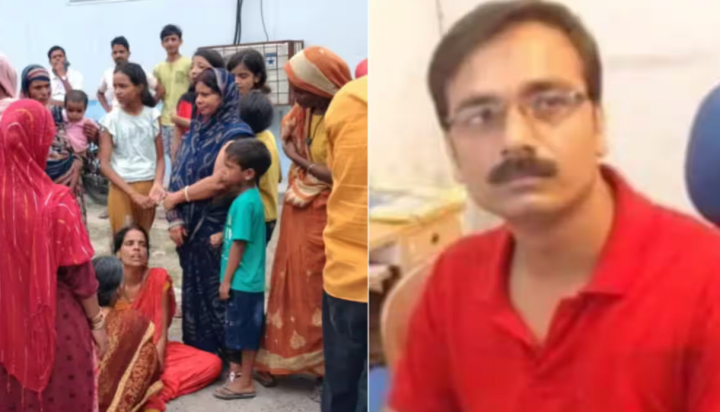
A journalist was allegedly shot dead at his home by unidentified assailants in Araria district of Bihar, police said earlier on Friday. The incident took place in the Raniganj Bazaar area. The deceased was identified as Vimal Kumar Yadav, as reported by ANI.
“A journalist, identified as Vimal Kumar Yadav, was shot dead by unidentified assailants In the Raniganj Bazar area. The post-mortem is underway. The dog squad was brought to the scene and an investigation is underway,” Ashok Kumar Singh, Superintendent of Police, Araria, said.
#WATCH | Patna: "It's very sad. Journalist Vimal Kumar has been murdered by the miscreants. I would like to pay homage to him. Law and Order have failed in Bihar. Miscreants are not scared of anything as they are getting protection from the state government and the members of the… pic.twitter.com/ZwjlUJUsev
As per reports, the deceased Vimal Yadav was a journalist with the Hindi daily Dainik Jagran. Speaking to ANI, Union Minister Nityanand Rai stated that the murdered journalist was the sole eye witness to the murder of his brother, who was killed by some miscreants 4 years earlier.
Vimal Yadav’s brother Shashibhushan Yadav was brutally killed by some men in 2019. Jagran has reported that Vimal Yadav was at his residence when some miscreants entered the house and started firing. Vimal Yadav was a witness in that case. The next hearing was scheduled on August 19.
Vimal Yadav was the father of two teenage children.
Lambasting the Bihar government over the deteriorating law and order problem in the state, Rai stated that criminals are not scared of anything as they are getting protection from the state government and the members of the JDU and RJD parties. “If Nitish Kumar and Tejashwi Yadav have some shame, they should take action against the criminals”, Rai added.
On August 15, in a dreadful incident reported from the Varanasi district of Uttar Pradesh, a minor boy studying in class 10 was murdered by two boys from the specific community. The deceased has been identified as Mukesh (15) and was murdered by the accused after the duo fought over the distribution of the national flag in the region.
As per the recent update exclusively obtained by OpIndia, the two accused boys involved in the case have been identified and arrested by the Police. While the police refused to reveal the identity of the accused given their minor ages, it has been confirmed that the accused persons belonged to a specific community.
According to the Aaj Tak report, the incident is said to have happened on August 16, a day after Muskesh and the accused minor boys engaged in a fight over the distribution of Indian flags in the locality. One of the accused stopped Muskesh while he was on his way to the market on August 16 and murdered him by inserting a sharp knife in his stomach. The other accused person meanwhile played a role in assisting the primary accused.
The family members of the victim reached the spot after they knew about the incident and immediately took Mukesh to the nearby hospital. However, he was declared dead. Massive tensions erupted in the Phulpur region of Varanasi district after the death of the victim boy. Following this, police squads reached the spot to assure that peace and law and order were maintained.
The police also began investigations into the case and interrogated several people from the Harijan Basti locality where the victim resided. The Police learned that the victim and the accused boys already knew each other and stayed in the same locality. They engaged in a minor fight on August 15, as revenge of which the accused murdered the Hindu victim.
The sister of the victim boy confirmed the incident to the police and revealed that Mukesh on August 15 was distributing 35 national flags in the locality. “My brother and the accused engaged in a fight over hoisting the flags. After this on the very next day, he was murdered,” she added.
According to the sister further, Mukesh was the youngest of her 4 brothers and was studying in class 10 at the local college.
The accused had fled from the spot after the incident. However, they were nabbed by the state police after three teams were formed to search for the accused.
Team OpIndia on August 18 called the SO Phulpur to obtain updates on the case. OpIndia was exclusively informed that the accused persons are minors and that they were from the same locality. “They are minors, belonged to a different community, and have now been arrested. They will now be presented in the court and then will be sent to jail,” SO Phulpur said.
The SO also confirmed that Mukesh was murdered by one of the accused while the other one assisted him during the incident. FIR in the case has been registered under the relevant sections of the IPC and POSCO. The dead body of the victim has been sent for post-mortem, reports of which are awaited. Further investigations are underway.
An allegedly fake statement made by an imam from Nalhar’s mosque acted as a catalyst to the communal violence that swept the Muslim-majority region of Haryana’s Nuh during the Jalabhishek Yatra, a report published in Tribue India said, citing a recent revelation that surfaced during the Special Investigation Team (SIT)’s inquiry into the violence.
On the 31st of July, the imam, Fajru Miyan, who is currently absconding, purportedly incited Muslims in the neighbourhood, announcing on mosque’s speakers that participants of the Jalabhishek pilgrimage looted certain Muslim-owned stores. The police have launched a manhunt to nab the imam.
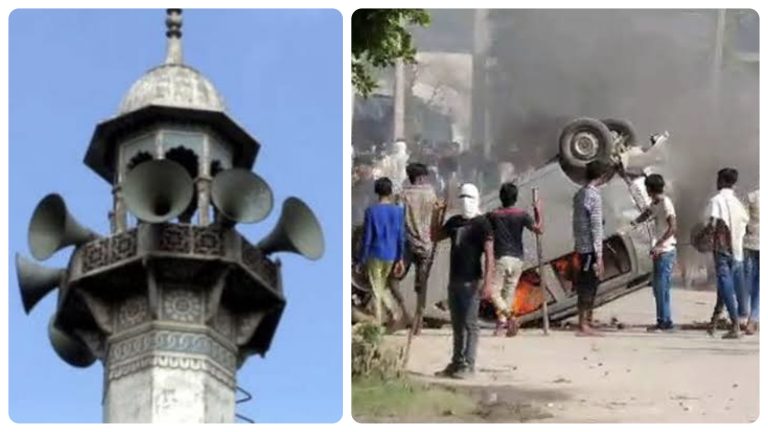
Based on the investigation findings, at approximately 1 pm, during the namaz (Islamic prayer), Fajru allegedly disseminated a false rumor using the mosque’s loudspeaker, claiming that Hindus were engaged in looting shops owned by Muslims close to the Nalhar temple. The announcement set off a wave of anxiety among the region and served as a trigger point for the ensuing communal escalation.
Following the announcement of fake claims made on mosque’s speakers, a raft of Muslims assembled and indulged in vandalism, looting, and arson. “The announcement acted as a trigger for anger among the villagers, inciting groups of men who were already agitated due to videos circulating on social media,” conveyed a member of the Special Investigation Team (SIT). These groups subsequently organized, armed themselves with stones, and launched an assault on the pilgrimage group. The SIT is presently carrying out search operations to apprehend the imam involved.
It is reported that subsequent to the announcement of fake rumours on mosque speakers, numerous imams circulated the message through WhatsApp groups and even by means of other mosques.
Law enforcement is also actively conducting raids to apprehend additional individuals implicated based on information provided by those who are currently in custody.
As per media reports, calls were made from mosques asking every child, woman, and man to come out with weapons. Hindustan 9 recently shared a video of a child witness who said the Muslim mob had abused the Hindus and threatened them with dire consequences. Another female witness they spoke to had reportedly said that the mob had been swinging weapons, abusing, and shouting that none of them would be spared.
?Jihad-occupied Nuh (Mewat)
"Calls were made from Masjids that every child, woman, and man should come out with weapons." – Eyewitness
"Beh#enc#od tum nahi bachoge while shouting Allah-U-Akbar and Pakistan Jindabad" – Child eyewitness
OpIndia, however, cannot vouch for the authencity of the claims made by eyewitnesses in the Hindustan 9 report shared by a Twitter user.
The report of an Imam using mosque loudspeakers to fuel apprehensions among Muslim residents, however, jibes perfectly well with earlier reports that said Islamists had preplanned the attack against JalAbhishek Yatra pilgrims and created WhatsApp groups in advance to coordinate collection of stones and glass bottles to attack the Hindu devotees.
Nevertheless, the new revelation is in stark contrast to the attempts made by the secular-liberal lobby to pin the blame of the Nuh violence on the likes of Bittu Bajrangi and Monu Manesar, blaming them for disturbing communal harmony. With recent revelation holding the imam responsible for fuelling tensions by making allegedly false statements, it will be interesting to see how the liberal-Islamists spin the development or turn a blind eye to it—which is what they often do when it is no longer possible to mask their condoning of Islamists with propaganda and rhetorics.
Mewat Shobha Yatra attack
On July 31, violence broke out in Haryana’s Nuh district during the ‘Brij Mandal Jalabhishek Yatra,’ which was organized by Vishwa Hindu Parishad and Bajrang Dal. Vehicles were burnt and stones pelted at the Vishwa Hindu Parishad’s Jalabhishek Yatra as clashes erupted between two communities in the Muslim-majority region of Mewat in Haryana.
“Religious Brajmandal Yatra” organized annually by Bajrang Dal, Islamic Jihadis pelted heavy stones, violence, arson and direct bullets from the hills on the pilgrims on the ancient “Religious Yatra” of Nallahad Shiv Temple, the centre of faith and reverence of Hindus in Nuh, Mewat. In which hundreds of vehicles were damaged and burnt to ashes,” said a statement shared by Bajrang Dal on Twitter.
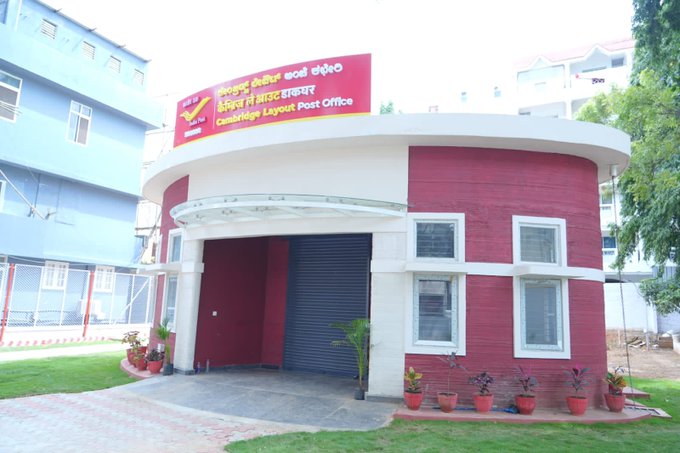
Prime Minister Narendra Modi on Friday hailed the newly inaugurated India’s first 3D-printed post office. PM Modi said that it is a testament to the nation’s innovation and progress.
Taking to ‘X’ (formerly known as Twitter), PM Modi wrote, “Every Indian would be proud to see India’s first 3D printed Post Office at Cambridge Layout, Bengaluru. A testament to our nation’s innovation and progress, it also embodies the spirit of a self-reliant India. Compliments to those who have worked hard in ensuring the Post Office’s completion”.
Every Indian would be proud to see India's first 3D printed Post Office at Cambridge Layout, Bengaluru. A testament to our nation's innovation and progress, it also embodies the spirit of a self-reliant India. Compliments to those who have worked hard in ensuring the Post… pic.twitter.com/Y4TrW4nEhZ
Earlier today Union Railways Minister Ashwini Vaishnaw inaugurated India’s first post office constructed using 3D printing technology.
The inauguration of the 1100 square feet post office was held at Bengaluru’s Cambridge Layout near Ulsoor Bazaar.
“A new picture of India that we saw in terms of this 3D-printed technology. Nobody thought that India would be developing its own 4G and 5G technology. Nobody ever imagined that India would emerge as a developer and manufacturer of telecom technology. Nobody ever thought that the country would be able to design and manufacture a world-class train”, said Minister Vaishnaw while addressing the inauguration ceremony.
3D printing technology is a fast-emerging way of constructing structures. It uses computer-aided design to create three-dimensional objects through a layering method.
About a year back, Indian Institute of Technology (IIT), Guwahati constructed a 3D-printed sentry post for the Indian Army as part of an indigenous research and development program.
(This news report is published from a syndicated feed. Except for the headline, the content has not been written or edited by OpIndia staff)
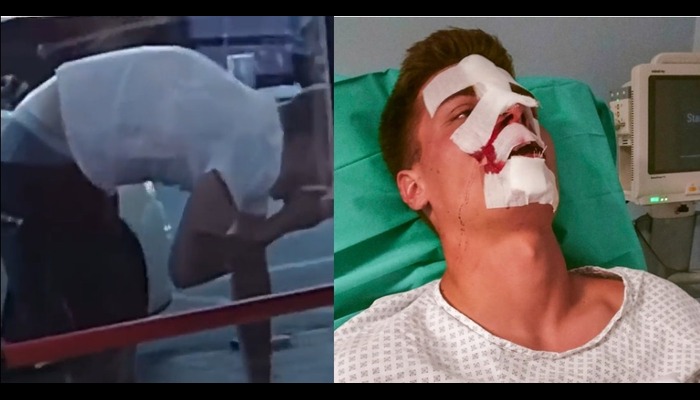
In a shocking incident from Italy’s Milan, a 19-year-old Ukrainian boy named Danylo Shydlovskyi was brutally attacked by a gang of around forty migrants on 6th August. The gang was largely comprised of Tunisians and Libyans. A video of the chilling attack has sent shockwaves across Italy.
Shocking Attack in Open Borders Italy
Gang of 20 Tunisian and Libyan Migrants Mutilate Ukrainian Teen's Face and Limbs
Danylo's brave attempt to protect his friends, mainly two young girls, turned into a nightmare as he faced the wrath of the illegal migrants.
Danylo and his friends were out travelling when they were faced with a harassing gang of “illegal” migrants. While bravely attempting to protect his friends, mainly two young girls, the Ukrainian boy was already enduring severe blows when another attacker from the gang wielded a box cutter and slashed Danylo’s face, back, and arm.
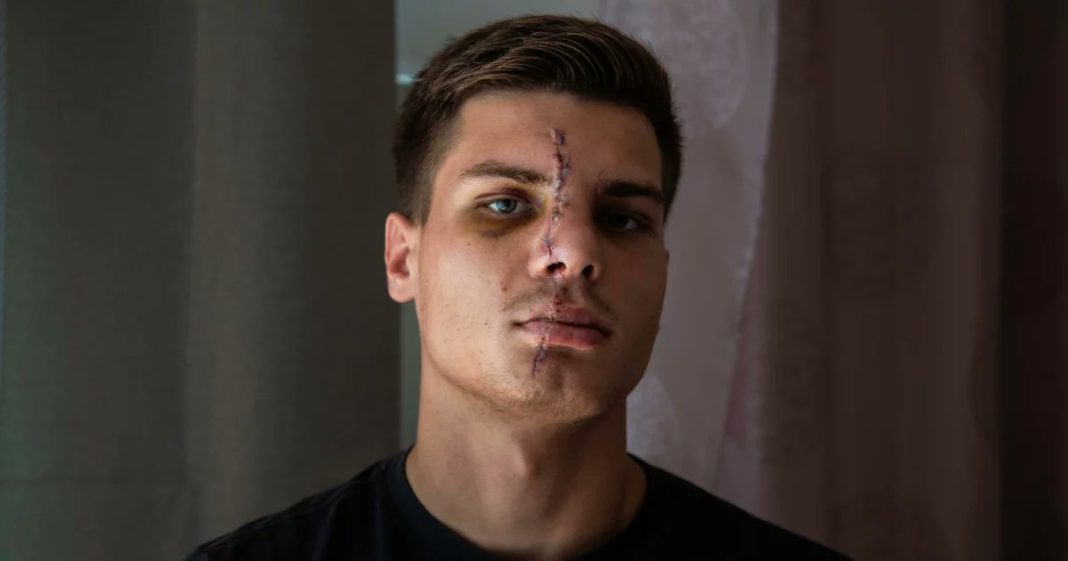
The video shows Danylo bleeding profusely after the attack. He has been left with a scar for life from the forehead to the chin, two five-centimetre wounds on the back, and scars on the arm. Danylo Shydlovskyi had come to Milan in an escape from war-torn Ukraine.
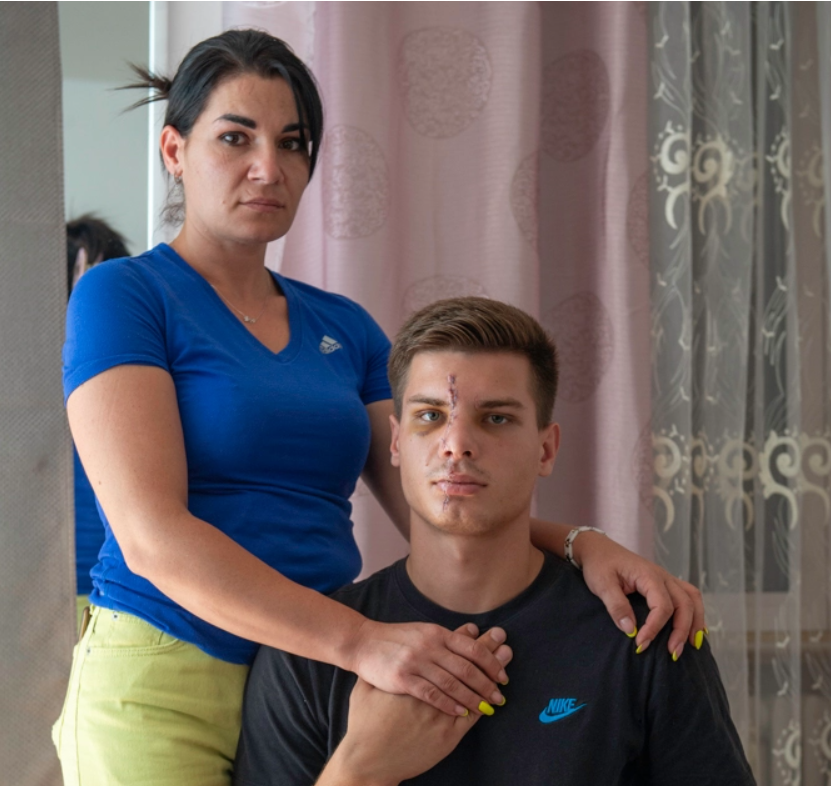
Danylo with this mother Raissa (Source: Rair Foundation)
“I thought that here in Milan, he would be safe. Paradoxically, he found the war here,” said his mother, Raissa, tearfully. She has been residing in the Italian city for seven years. Danylo reportedly thought he was going to bleed to death. “There were forty of them; they surrounded us to steal our glasses and purse. I thought I was going to bleed to death,” he said.
19-year-old Danylo Shydlovskyi’s face has been scarred for life by the attackers (Source: Amy Mek/Twitter)
Recalling the account of the horrifying incident, Danylo’s friend Stanislav said that their group of six friends had already encountered trouble with the gang earlier that day at the Lecco station where the migrants began to harass them. The situation escalated when they reached Piazza Freud outside the Porta Garibaldi station.
“Six young North Africans – he begins – already started to annoy us from the Lecco station, before getting on the train. They took the same train as us; we ignored it and settled in another carriage,” Stanislav said. Danylo added that upon reaching Garibaldi station, “those six followed us as far as the station exit.”
“Those boys joined others. There were about forty of them and they surrounded us. They took my glasses away and I didn’t react. At one point someone sprayed a stinging spray. Instinctively, I pushed away the two girls who were near me, to protect them, and I didn’t run away,” Danylo reportedly said while his mother interpreted.
He narrated further, “They pushed me against a parked car and smashed a bottle over the head. Then they hit me in the face, with a belt, and I bent over.” His friend Stanislav called out for help but it was too late by the time. “But after a few seconds, one of those guys attacked him with a box cutter: he slashed his whole face, from his forehead to his chin, and went to his back, also hitting his arm while my friend was trying to defend himself.”
The attackers fled the spot leaving Danylo in a pool of blood. He was admitted to the Fatebenefratelli hospital and was discharged after treatment with a 20-day prognosis. “But I’ll have it for at least a year. I have to keep the wound under control, they’ll have to remove the stitches (I have at least thirty) and then I’ll have to start the treatments plastic surgery,” he told an Italian news agency.
Danylo’s partner, Gianfranco has pleaded for justice asking that the guilty be made to pay. “I cannot look at his face and think whoever reduced him to this is still free to do harm.” The incident has received widespread coverage by the Italian media and has sparked uproar among the people highlighting the concerning situation that has taken form owing to the influx of immigrants in Italy and other European countries.
The 9 years of the Modi government (2014-present) have ushered into a new era of development, especially for the Indian middle class.
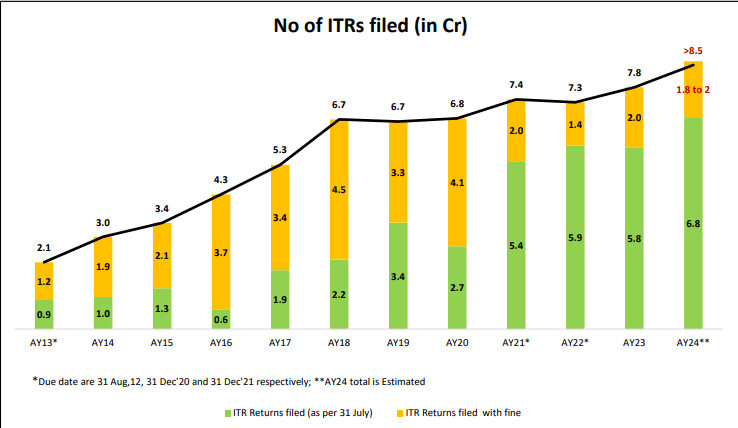
As per a research report [pdf] published by the State Bank of India (SBI) on Tuesday (August 15), the analysis of the Income Tax returns filed in the Financial Year 2022-2023 revealed the ascent of the Indian middle class.
ITRs filed in Financial Year 2022-2023, graph via SBI Research
This cohort has the potential to turn India into a ‘middle-income economy’ by the Financial Year 2046-2047, coinciding with the centennial celebrations of Indian Independence. SBI estimated that there will be 48.2 crore ITR filers in FY 2047 as compared to 7 crores in FY 2022-2023.
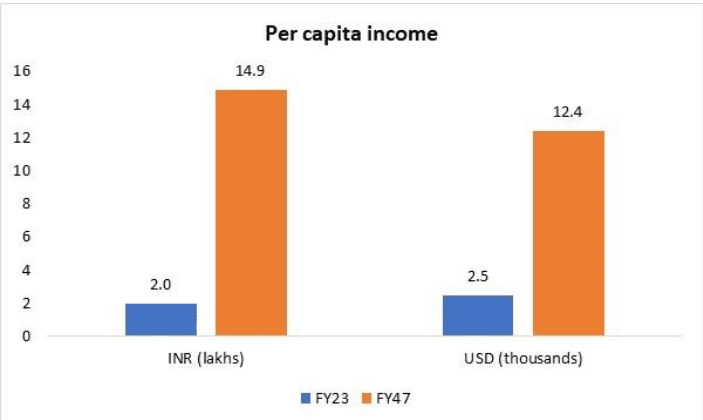
By then, 85.3% of ITR filers will also be eligible to pay taxes. About 25% of them are also expected to leave the lower-income strata by the Financial year 2046-2047. The per capita income is also expected to rise from ₹2 lakhs in this Financial year to ₹14.9 lakhs by FY 2047.
Per capita income difference of Indians between FY 2023-FY 2047, graph via SBI Research
This can largely be attributed to the Modi government’s efforts in formalising 7 crore Micro, Small and Medium Enterprises (MSMEs) and empowering the middle class.
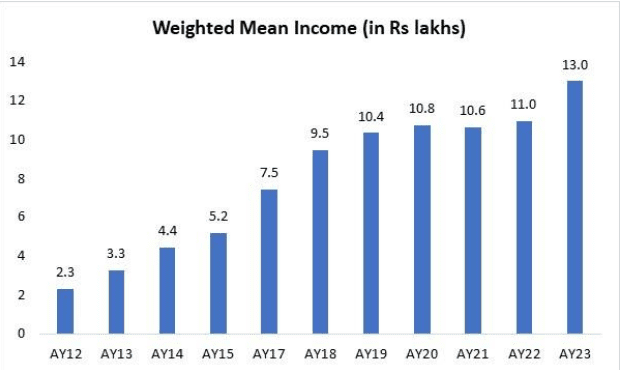
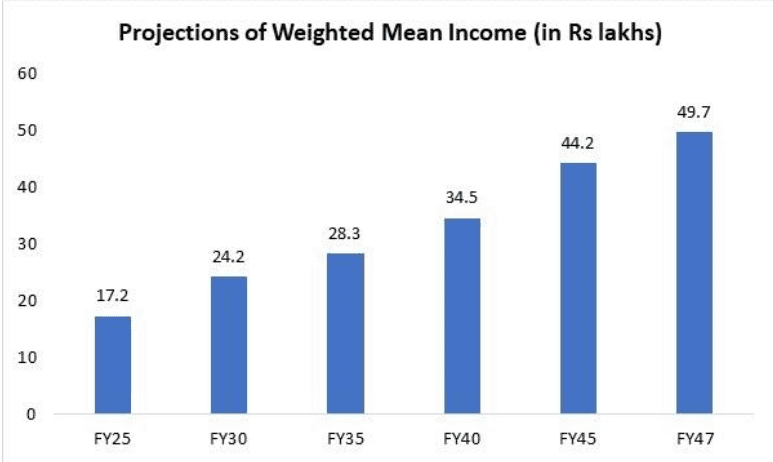
Moreover, the weighted mean income of ₹4.4 lakhs in the Assessment Year 2013-2014 has increased to ₹13 lakhs in Assessment Year 2023-2024 and is projected to increase to ₹49.7 lakhs (~ 50 lakhs) in Assessment Year 2046-2047.
Weighted mean income as per ITR records, graph via SBI Research
The stark increase in weighted mean income, as evident from the ITR filed between Assessment Years 2011-2012 and 2022-2023, explains the transition of filers from the lower-income group to the upper-income group.
“It is projected that weighted mean income is expected to increase from Rs 13 lakhs currently to Rs 49.7 lakhs in 2047, particularly due to increase in the number of tax-filers, as also due to shifting of distribution of tax-filers from lower income group to upper-income group,” the report stated.
Projected weighted mean income as per ITR records, graph via SBI Research
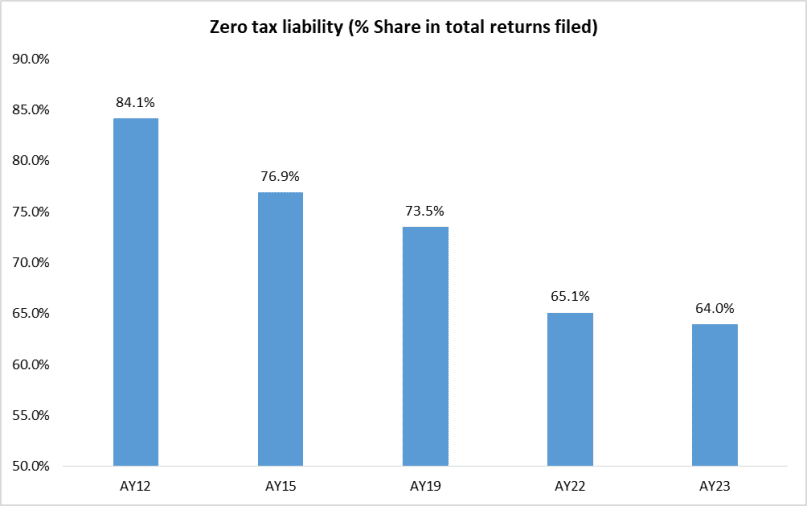
The finding is further supplemented by the ‘material decline in zero tax liability’, as evident from the research report published by the State Bank of India (SBI). This indicates an increase in income of the ITR filers, with zero tax liability share down from 84.1% (AY 12) to 64% (AY 23).
It should be noted that 84% of the 1.6 crore ITR filers in Assessment Year 2011-2012 belonged to the income group of upto ₹5 lakhs. In AY 2023, the number is down to 64% (in a pool of 6.45 crores ITR filers).
“Inter-alia, 13.6% population has left the lower income strata and migrated upwards in AY23 in comparison with AY12…8.1% population has increased in the income group of Rs 5 lakh- Rs10 lakh,” the SBI research report said.
Zero tax liability of ITR filers, graph via SBI Research
“3.8% population has increased in the income group of ₹10 lakh – ₹20 lakh, 1.5% population has increased in the income group of ₹20 lakh – ₹50 lakh, 0.2% population has increased in the income group of ₹50 lakh – ₹1 crore, while close to 0.02% population has increased in the income group of above ₹1 crore,” it further added.
The upward mobility of all income groups, especially the middle class is evident from Income Tax returns filed between Assessment Year 2011-2012 and Assessment Year 2022-2023. According to the State Bank of India, about 25% of ITR filers are predicted to leave the lowest income strata by the Financial Year 2046-2047.
The research report also highlighted an increase in the workforce from 37.9% of the population in FY23 to 45% of the population in FY 47, thereby adding 19.5 crore people to the workforce.
It must be mentioned that the Modi government has undertaken several initiatives such as ‘Skill India’, ‘Startup India’ and ‘Make in India‘ to empower India’s youth and prepare them to join the competitive marketplace. All of this is done with the sole objective of making the nation ‘Atamanirbhar’ in this Amrit Kaal.
PM Modi on fighting poverty, empowering youth
During his Independence Day address, Prime Minister Narendra Modi informed the nation that 10 lakh people have benefitted from the Pradhan Mantri Mudra Yojana.
“About eight crore people have started new businesses, and it’s not just eight crore people who started their businesses; each entrepreneur has provided employment to one or two individuals,” he stated.
“The capability to provide employment to 8-10 crore new individuals has been achieved through the Mudra Yojana availed by eight crore citizens,” the Prime Minister highlighted. He added that 13.5 crore people were able to break the chains of poverty by utilising government schemes and enter the middle class.
A Hindu family residing in a Muslim-majority village in Palwal reportedly faced an attack and was coerced to vacate their residence for allegedly sharing an anti-Rohingya message.
The Hindu family was intimidated and asked to leave their residence after one of the family members had expressed support, through a Facebook post, for withholding citizenship from Rohingya immigrants.
Sachin Kumar, the in-charge of Mundkati police station, revealed that Deepak, a Sarai village resident, filed a complaint detailing an incident on August 15.
According to the complaint, Dilshad, Irshad, Zaheer, and several others from the village, armed with sticks and homemade pistols, forcibly entered Deepak’s home and proceeded to vandalise it. The assailants threatened harm to the family unless they abandoned the village.
As per the complaint, the accused have subjected the family to repeated attacks, owing to their vulnerable economic situation and the inadequate number of Hindu families within the village. These relentless assaults have inflicted psychological distress on the complainant’s family. The family has been subjected to attacks in past as well. Their attempts to resolve the disputes have gone in vain, the complainant added, recounting that the accused individuals had resumed their aggression against them.
Kumar said a case has been filed against Zaheer, Dilshad, and Irshad regarding the incident. Ongoing efforts are underway to apprehend the suspects, and their arrest is anticipated shortly.
Pertinently, the said incident comes in the wake of the Islamist attack on Jalabhishek Yatra in Haryana’s Nuh, a Muslim-majority region notorious for deteriorating law and order, cow smuggling, and assorted social evils. The Islamists had reportedly attacked Hindu devotees bound for Nalhar Shiva Temple on Shravan Somwar on July 31, which triggered a macabre wave of violence resulting in the deaths of 6 people.
Mewat Shobha Yatra attack
On July 31, violence broke out in Haryana’s Nuh district during the ‘Brij Mandal Jalabhishek Yatra,’ which was organized by Vishwa Hindu Parishad and Bajrang Dal. Vehicles were burnt and stones pelted at the Vishwa Hindu Parishad’s Jalabhishek Yatra as clashes erupted between two communities in the Muslim-majority region of Mewat in Haryana.
“Religious Brajmandal Yatra” organized annually by Bajrang Dal, Islamic Jihadis pelted heavy stones, violence, arson and direct bullets from the hills on the pilgrims on the ancient “Religious Yatra” of Nallahad Shiv Temple, the centre of faith and reverence of Hindus in Nuh, Mewat. In which hundreds of vehicles were damaged and burnt to ashes,” said a statement shared by Bajrang Dal on Twitter.
The eyewitness said the attack appeared preplanned, which was also corroborated later after reports said WhatsApp groups were created in advance to coordinate the collection of stones and glass bottles to attack the Hindu devotees.
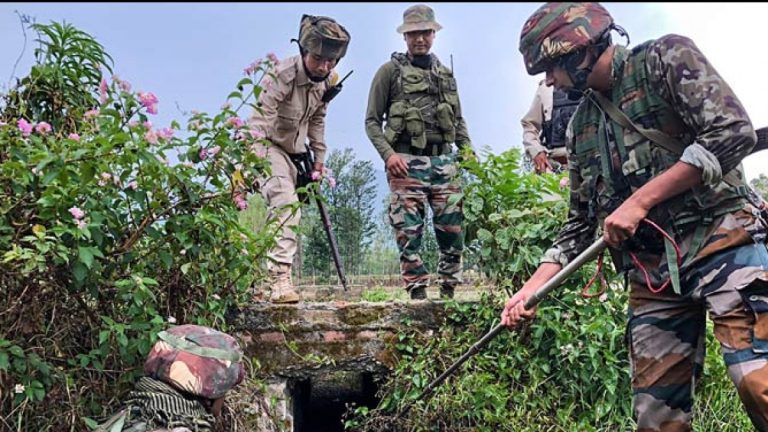
Despite all the efforts of the administration and security forces, sporadic violence continues in Manipur. In the latest incident, three men were killed after heavy gunfire in Ukhrul district on Friday, 18th August.
As per reports, heavy gunfire broke out at Kuki Thowai village under the Litan Police Station in Ukhrul district today morning. Villagers said that the sounds of heavy gunfire were heard from the village early this morning.
After the firing stopped, 3 villagers went missing. When the police carried out a thorough search in the area including the villages and the nearby forests, badly mutilated bodies of the three missing persons were recovered.
The victims have been identified as Jamkhogin Haokip (26), Thangkhokai Haokip (35) and Hollenson Baite (24). Reportedly, their bodies had injury marks made using sharp weapons, and their limbs were chopped off.
The ethnic clashes broke out in Manipur on May 3, after a ‘Tribal Solidarity March’ was organised in the hill districts to protest against the Meitei community’s demand for Scheduled Tribe (ST) status.
Meiteis account for about 53 per cent of Manipur’s population and live mostly in the Imphal Valley. Tribals – Nagas and Kukis – constitute little over 40 per cent and reside in the hill districts. Kukis in particular have been objecting including Meiteis in the ST list.
On the other hand, it has been alleged that real reason for the violence was crackdown on poppy farming by Kukis in forest areas, including by illegal Kuki immigrants from Myanmar.
The CBI has formed a 53-member team, including 29 women, to probe the violence in the state, including the case of horrific molestation of women who were paraded naked. The team which includes three DIGs – Lovely Katiyar, Nirmala Devi and Mohit Gupta – and Superintendent of Police Rajveer, will report to Joint Director Ghanshyam Upadhyay who will supervise the overall probe.
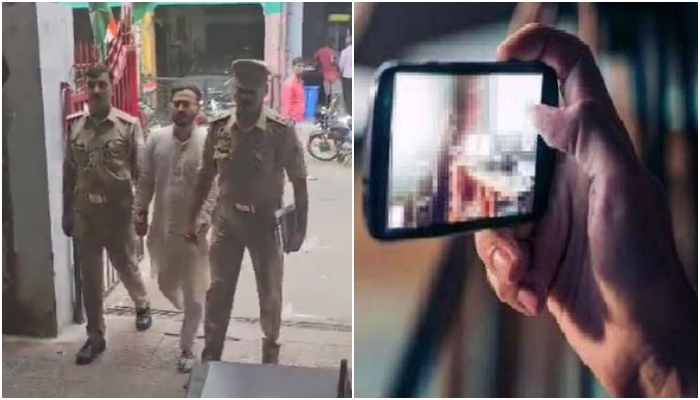
The Uttar Pradesh Police on Thursday, August 17 arrested a tuition teacher identified as Mohammed Aamir for showing minor girls porn videos on his phone and also for touching them inappropriately. The police investigated his phone to reveal that it contained several derogatory videos. The phone has now been recovered by the police.
According to the reports, the accused was appointed for home tuition by family members of two victim minor girls, one studying in the 9th class and the other one in the 5th class. The accused would come home and show the girls sexual videos, further touching them inappropriately.
This continued for several days. However, the incident came to the fore after one of the girls informed about the videos to her mother who then raised an alarm in the family. The family members then happened to check the phone of the accused and found several objectionable videos in it.
The mother of the girls commented on the issue and said that the accused was teaching the girls for around 5 years. “He has been coming to our place to teach the girls for 5 years now. Earlier he used to give home tuitions only to the elder one. Recently my younger daughter began attending his sessions. The girls were behaving weirdly for the past few days. I asked them but they seemed scared. Later I forced them to speak about what was wrong. It is then that we came to know about the videos,” she said.
Meanwhile, the father of the girls stated that the accused had tainted the relationship between a teacher and a student. Meanwhile the tuition teacher has stated that the allegations against him are wrong.
Reports mention that the accused was beaten by the family members after they knew the truth. Later they called the police. After the primary investigation, the police arrested the accused and booked him under the relevant sections of the IPC and POCSO.
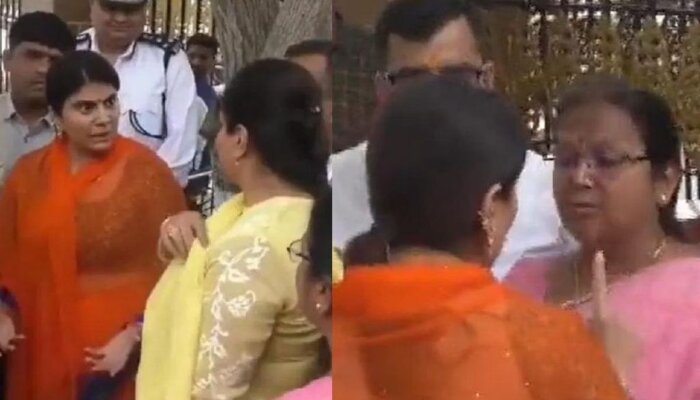
Bharatiya Janta Party MLA from Jamnagar-North Rivaba Jadeja found herself at the centre of controversy after she engaged in a heated altercation with two party colleagues during a public event on 17 August. The Jamnagar Municipal Corporation held a “Meri Mitti, Mera Desh” programme in memory of the martyrs and party leaders like her, Jamnagar MP Poonam Maadam and Jamnagar’s municipal mayor Bina Kothari attended.
जामनगर से बीजेपी विधयक #RivabaJadeja ने खोया आपा, जामनगर की सांसद @PoonambenMaadam और मेयर पर पब्लिकली भड़क पड़ीं … वीडियो हुए वायरल
Her ire was directed towards the latter two. The first time lawmaker was heard accusing “You showed your seniority in the election” and “You are the one who lit the fire, so don’t try to put it down now.” However, the MP was calm and tried to settle the matter.
The mayor advised her to be mindful of her language and refrain from such opines about her status. She stated, “You’re talking to the mayor,” which irked her further and she retaliated with statements like “Keep your voice down.”
When the Lok Sabha member attempted to intervene and asked the latter to maintain respect as she was older than the former, Rivaba Jadeja charged her “You are the one who started the fire, so stop trying to put it down.”
She later shed light on the whole matter and mentioned, “There was a program of the corporation. We laid floral wreaths as part of our tribute to the martyrs. Poonam Maadam paid respect during the function while wearing her footwear.”
She further continued, “Then, it was my turn and I decided to express greater reverence to the martyrs and removed my sandals. So, I garlanded them and paid my homage. Other corporators and party members also followed my lead and removed their shows before offering tribute.”
However, she got upset after the Parliamentarian voiced criticism. She revealed, “The MP said loudly, in a way that the press and all other party members and others present around could hear, that the President and Prime Minister don’t remove their footwear, but some people with no understanding try to act over smart and remove their footwear.”
She asserted, “I found her utterances disrespectful, particularly when we were paying homage to those who sacrificed their lives for our nation. I confronted her and highlighted that her statement was inappropriate. She responded by saying that her remarks were not aimed at me. I suggested that she should mention the intended person when delivering such comments.”
She added, “The entire issue revolved around the interaction between me and the MP and didn’t involve Binaben. Then as the mayor intervened and spoke in a rough manner, I had to react to her also. Binaben’s tone of speaking with others is well known among the people of Jamnagar.”
When questioned about the occurrence, the member of parliament claimed that she was actually speaking with the mayor and that the MLA believed that her observation was meant for her. She alleged, “In fact, when Rivaba and the mayor were having a heated argument and I tried to intervene and stop them. When Rivaba suggested that the mayor should stay within her limits, I reminded her that Binaben is a senior person and it was inappropriate to address her in such a manner. Rivaba’s emotional outburst is shocking and it appears there might be a misunderstanding or perhaps she was having a bad day or was in a bad mood.”
She proclaimed, “There was definitely some misunderstanding and its reaction was visible in the viral video. And as I said, the party is like a family, everyone in it is the strength of each other.”
#WATCH | BJP MP Poonamben Maadam speaks on her verbal spat with Jamnagar North MLA Rivaba Jadeja during an event in Jamnagar, says, "There was definitely some misunderstanding and its reaction was visible in the viral video. And as I said, the party is like a family, everyone in… https://t.co/3rdY36J1Lwpic.twitter.com/k7rrtoUN6Y
On the other hand, the mayor refused to respond on the matter. She observed, “It was an internal matter of the BJP and I do not want to make any comment about it.” At a news conference in Surat, state party president CR Patil was asked about the instance and he answered that he will look into it.
The wife of cricketer Ravindra Singh Jadeja, Rivaba Jadeja joined BJP in 2019 and was fielded in the election by the party in December 2022.