Wednesday, April 1, 2026
Home Blog Page 1924

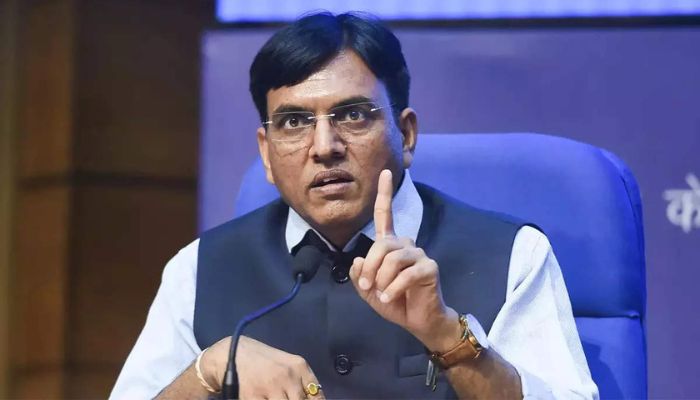
Home Minister Amit Shah chairs regional conference on Drugs Smuggling and National Security, 1,44,000 kgs of seized narcotics destroyed

Union Home Minister Amit Shah chaired the regional conference on ‘Drugs Smuggling and National Security’ in Delhi on Monday.

Over 1,44,000 kilogram of drugs worth Rs 2,416 crore was destroyed in various parts of the country by Narcotics Control Bureau (NCB) in coordination with Anti-Narcotics Task Forces (ANTFs) of all states in the presence of the Home Minister in the event.

With the destruction of these drugs, the total quantity of drugs destroyed in one year reached around 10 lakh kilograms, which has a value of around Rs 12,000 crore.

The drugs destroyed include 6,590 kg by NCB’s Hyderabad unit, 822 kg by Indore, and 356 kg by Jammu.

Along with this, various law enforcement agencies of different states also destroyed a total of 1,44,122 kg of drugs, including 1,486 kg drugs in Assam, 229 kg in Chandigarh, 25 kg in Goa, 4,277 kg in Gujarat, 2,458 kg in Haryana, 4,069 kg in Jammu and Kashmir, 1,03,884 kg in Madhya Pradesh, 159 kg in Maharashtra, 1,803 kg in Tripura and 4,049 kg in Uttar Pradesh.

Under the leadership of Prime Minister Narendra Modi, the Ministry of Home Affairs (MHA) said, the Government has adopted a ’Zero Tolerance’ policy against narcotics to create a drugs-free India.

Since June 1, 2022, till July 15 this year, all regional units of NCB and ANTFs of states have collectively destroyed around 8,76,554 kilogram seized drugs worth around Rs 9,580 crore, which is more than 11 times the target.

“In order to realize Prime Minister Narendra Modi’s dream of a  Drugs-free India, this campaign of destruction of drugs will continue actively, with the same zeal,” the MHA has added. 

  (This news report is published from a syndicated feed. Except for the headline, the content has not been written or edited by OpIndia staff)

Iran: Government announces fresh campaign reintroducing moral police to force women to wear hijab

On 16th July, the Iranian government reintroduced mandatory hijab for women with moral police back on the streets. Notably, for months, the moral police were away following the death of Masha Amini in September 2022. Amini was picked for not wearing a hijab and later killed in custody. The authorities announced a new campaign forcing women to wear Islamic headscarves in public following that.

In early 2023, Iranian authorities launched a heavy crackdown on the protesters, virtually ending the protests against the mandatory hijab. Reportedly, 500 protesters were killed, and over 20,000 were detained by the police during the protests.

On Sunday (17th July) evening, following the reports of attempts to arrest the women without the hijab, thousands of protesters gathered in Rasht, northern Iran. According to Iran International, thousands of people were there at the protest after the moral police whisked away three women. The onlookers rescued them, and there were unverified reports of tear gas and gunshots.

In December 2022, there were reports of moral police patrolling the streets, but the authorities denied it. There were claims that the moral police was disbanded, but the government denied it amidst the protests.

Police spokesman Gen Saeed Montazerol Mahdi said in a statement that moral police would resume notifying and then detaining women if they were found without hijab in public. Masih Alinejab, one of the most prominent Iranian activists currently living in the United States, shared a video of a woman being threatened and beaten by the female moral police.

She wrote, “This is Iran today, and this is how the morality police arrested a teenager for not wearing a hijab. Mahsa Zhina Amini was taken away like this and then killed. Where are those journalists who excitedly reported the cancellation of that morality police?”

Death of Mahsa Amini and anti-hijab protests

Iran saw a wave of protests after a 22-year-old girl named Mahsa Amini died in the custody of Iran’s Morality Police that detained her for improperly donning her headscarf. Several Iranian citizens hit the streets in solidarity with Amini. In support of the victims, a number of women, including schoolgirls, burnt their hijabs, and women everywhere chopped their hair in protest. Protests broke out in hundreds of places around the nation after her death.

Jalgaon Collector bans entry to disputed Jumma Masjid, trust moves HC: Here’s how the disputed mosque was illegally expanded on temple land

On Sunday, July 16, the Jalgaon District administration issued an interim order refraining people of the Muslim community to enter a disputed mosque structure that resembles an old temple. The administration has sealed the century-old disputed mosque temporarily and has issued an order under section 144 of the Code of Criminal Procedure, immediately banning prayers on the premises.

In the order, the collector has also directed police deployment in the area and has asked the local administration to take charge of the mosque, which has been officially declared as ‘disputed’.

This is after a local Hindu organization Pandavwada Sangharsh Samiti complained that the structure located in Erandol region in the Jalgaon district resembles an old temple and that the Muslim community, the Jumma Masjid Trust Committee has encroached over the temple land.

In the course of May, Prasad Madhusudan Dandawate, the complainant, submitted a plea to Aman Mittal, the Jalgaon district collector. This petition of Dandawate is said to have garnered support from the Rashtriya Swayamsevak Sangh (RSS), the Vishwa Hindu Parishad (VHP), the Bajrang Dal, and the Hindu Janajagruti Samiti (HJS). According to the complaint, the mosque has been illegally constructed over a Hindu place of worship and should be taken over by the authorities. The complainant further asserts that the Hindu character and structure of the vicinity have been destroyed by the Jumma Masjid Trust who illegally encroached on the area to call it a Mosque. 

Trust managing disputed Mosque moves to the Bombay HC

Reportedly, the trust managing the Mosque has moved the Aurangabad bench of the Bombay High Court against the collector’s order banning entry into the premises for offering prayers.

The petition, filed by the Jumma Masjid Trust Committee’s president Altaf Khan claims that the collector passed the ‘arbitrary and illegal’ order on July 11 which directed them to hand over the keys of the Mosque to the Erandol municipal council’s chief officer.

As per the trust, the mosque has reportedly been around for a while, and the Maharashtra government has designated its construction as an ancient and historical monument and that it has been included in the Schedule of Protected Monuments.

The trust also says that it has been taking the utmost precautions, and neither the state government nor the Archaeological Department have ever received any grievances in regard to the structure.

The said petition filed by the trust through advocate S S Kazi is slated to be heard on July 18.

History of Pandava Wada in Erandol

The Pandav wada sites in the Erandol region of Jalgaon district, are under Islamic encroachments. It is believed that the Pandavas spent their years in exile in Erandol region and that the Hindu and Jain temple-like structures built here are 800-1000 years old. Later due to the severe indifference among Hindus, Muslims slowly started encroaching on Pandav Wada more than 125 years ago, and they eventually built a mosque there while claiming it to be Wakf property.

Hindu groups like the Hindu Janajagruti Samiti (HJS) and Pandavwada Sangharsh Samiti have been battling to reclaim Pandavwada from the Wakf Board’s intrusions and restore the areas. The contested mosque has records of existence of at least 100 years, whereas the principal buildings in Pandava wada (built in the style of Jain and Hindu temples) are reportedly 800-1000 years old.

Hindu organizations maintain that the mosque was constructed by destroying a Hindu temple that is mentioned in the Mahabharata epic. Further, the associated Wakf committee had been working to build the disputed mosque in order to ruin the Pandavwada’s Hindu culture as described in the Mahabharata and local chronicles.

How the structure of the disputed Jumma Masjid was illegally expanded?

As per the report by Hindu Existence, the HJS team of experts is said to have discovered that the Jumma Masjid once existed near Pandav Wada, exactly behind the Pandava Wada. In 1880 AD, the mosque collapsed as a result of extensive rainfall. subsequently, the then-British government and the mosque’s controlling trust entered into a contract. The agreement, which stated that the trust would rent space from the government for a 25-year period to keep resources like wood and fodder, was attested to by a one rupee stamp paper. It was decided on a two rupee annual rent.

Even though the agreement was simply for storage, numerous important historical structures were eventually demolished. Numerous intricately carved stone pillars and window frames were charred or destroyed. More than 150-year-old trees were uprooted. The pillars were repurposed to construct platforms and shelters after the exquisite carvings were removed to destroy the Hindu-Jain motifs. The tunnels beneath the surface were closed. Nothing of the sort was done with consent. The Hindu organizations have called this a cognizable offense because Pandav Wada was covered under the Ancient Monument Act. The mamledar of Erandol was ordered to act by the Maintenance surveyor, and a trustee of Jumma Musjid Sandekhan Rahimakha is said to have apologized in writing. 

HJS calls it a case of ‘Land Jihad’

Sunil Ghanwat of HJS Maharashtra called it a ‘land jihad case’ and said, “There was a total 4 lakh acres of land with Wakf boards as Wakf property in 2009. But, the lands have been increased to 8 lakh acres as of 2023 in a miraculous way. How can this happen without encroachment over other’s land?”

“In Tamilnadu, an entire village of Thiruchenthurai has been declared as Wakf property including a 1500-old Sundareswarar Chandrasekhara Swamy temple situated in the village. Due to the culpable Waqf law, many places like Dwarka Island and Surat Municipal Corporation in Gujarat; Chandrashekhar Azad Park in Prayagraj, Gyanvapi of Varanasi, and Mathura in Uttar Pradesh have been declared as Waqf property. This aggression of Wakf must stop,” he said.

Disputed Mosque claims collector’s order as illegal

Meanwhile, the mosque committee continues to hold that the collector’s order to seal the mosque is ‘illegal’ as the mosque stands on a registered waqf property. “It’s only the Waqf tribunal that takes decisions with regard to Waqf properties. The collector has bypassed the waqf tribunal,” the committee says.

The Bombay High Court is slated to hear the petition filed by the trust of the disputed mosque on July 18.

West Bengal: TMC goons abduct Dalit BJP worker, assault and urinate on him amid the panchayat polls, complaint filed

In another incident of violence reported from West Bengal’s West Midnapore district, Trinamool Congress goons are accused of abducting a local BJP worker, assaulting him, and urinating on his face when he asked for water.

According to the reports, the incident happened on Thursday, July 13 when the BJP worker was employed as the polling agent for the recently-concluded panchayat polls. The TMC workers abducted the BJP worker and took him to the Garbeta office where he was tortured and humiliated.

The TMC party workers are said to have assaulted the BJP worker and urinated on him after he asked for water to drink. The victim was then admitted to a local hospital late on Friday evening. The victim is identified as Barun Ruidas, a Dalit.

The victim while in the hospital was paid a visit by BJP’s vice-president Samit Das where the former narrated his ordeal to the latter. “Trinamool Congress hooligans demanded money from our party worker to celebrate their victory. Being very poor, he refused to pay up which infuriated them. Then he was abducted and taken to a local party office. First, he was beaten up severely. When he asked for water, the inebriated assailants urinated on his face. We have already filed a police complaint in the matter. We will be going for a bigger movement on this issue,” Das was quoted as saying.

However, Trinamool Congress MLA and the party district coordinator in West Midnapore Ajit Maiti refuted the allegation and said that the election in the Garbeta area was absolutely peaceful. “We had organized victory processions in a limited and humble way to avoid any kind of tension. BJP is cooking up stories now to create tension in the area,” Maiti said.

A similar case was reported from the Sidhi region of Madhya Pradesh recently on July 5 when state police arrested one Pravesh Shukla for peeing on a poor tribal man named Dashmat Rawat. A video of the crime went viral on social media on 4 July, prompting the police to file a complaint and apprehend the former. Meanwhile, the state police investigating the case mentioned that the footage was one-year-old.

Later Chief Minister Shivraj Singh Chouhan apologized to the victim and washed his feet at his official residence in Bhopal. Dashmat Rawat also received financial support from the state government in the amount of Rs 5 lakh and another Rs 1.5 lakh for the construction of his home.

Abhishek Bachchan to contest 2024 polls from Prayagraj? Samajwadi Party rubbishes reports as mere rumors

Rumours have been doing rounds in UP’s political corridors that Junior Bachchan could contest the Lok Sabha elections from Prayagraj. Abhishek Bachchan might reportedly contest on a Samajwadi Party ticket from the seat. SP leadership is reportedly gathering feedback from local leaders on the matter.

However, an SP leader has reportedly denied any such developments saying that there has been no such recommendation and the reports are mere rumors. The Bachchan family is linked to SP with Jaya Bachchan as its MP in Rajya Sabha.

Prayagraj is the birthplace of Big B from where he too contested on a Congress ticket in 1984 and defeated Hemwati Nandan Bahuguna of Lok Dal. Bahuguna’s daughter, Rita Bahuguna Joshi is currently a BJP MP from Prayagraj.

Amitabh Bachchan had won with 68% votes whereas Bahuguna got only 25% votes. 2024 might be a sequel to the 1984 contest if BJP’s Rita Bahuguna Joshi faces Abhishek Bachchan as the SP candidate from the seat.

While SP leader from Yamunapur Pappu Lal Nishad reportedly said this is a mere discussion, another party leader Saiyyad Iftekhar Hussain said there’s still time for general elections. Other reports say the rumors have been rubbished by Anup Sanda saying that Abhishek Bachchan is neither joining SP nor contesting on its ticket from Prayagraj.

The Bachchans and their shift from Congress to SP

The Bachchans have been in and out of political circles time and again. The ties between the Gandhis and Bachchans go back three generations and almost six decades.

The ties between the two families can be traced back to Amitabh Bachchan’s father, Dr. Harivansh Rai Bachchan, who worked in India’s Foreign Ministry as a Hindi Officer. Former Prime Minister Jawahar Lal Nehru apparently had high regard for Dr Bachchan, which resonated in the family ties as well.

Harivansh’s wife and Amitabh’s mother, Teji Bachchan, became a close friend of Nehru’s daughter, Indira. As they moved to Delhi, Teji Bachchan worked as a social activist, and her friendship with Indira Gandhi became deeper.

Their friendship between the two families reached its peak when Bachchans lent moral support to Rajiv Gandhi in the late 1960s during his marriage with Sonia, which Indira opposed. When Rajiv Gandhi was courting the young Italian girl, Sonia Antonio Maino, Teji Bachchan acted as a mediator between the two families as Indira disapproved of their relationship.

In 1968, when Sonia Gandhi arrived in India as Rajiv Gandhi’s fiancee, it was the young Amitabh Bachchan who drove to Palam airport to receive her. When the marriage was finally fixed in 1969, Sonia Gandhi and her family moved in briefly and stayed at the Bachchans’ New Delhi residence at 13, Willingdon Crescent, to learn about Indian customs and traditions from Teji.

The friendship between the two families continued throughout the next decade. It was speculated then that both families had held wide-ranging discussions regarding Big B’s possibility of entering full-time politics. However, the relations touched a new high in 1984 when Rajiv Gandhi persuaded Amitabh Bachchan to enter politics and contest the election from Allahabad on a Congress ticket.

Eventually, Amitabh Bachchan was given a Congress ticket in 1984 and won from Allahabad with a handsome margin. However, things started taking a different turn in the late 1980s when the Bofors scandal was exposed and many, including Rajiv Gandhi and Amitabh Bachchan, were alleged to have received kickbacks.

This was the turning point when Bachchan started distancing himself from Rajiv to avoid tarnishing his image. Three years later, Amitabh quit politics and resigned after a newspaper reported his involvement in the Bofors scam.

In 1987, the Bachchan family also on board the INS Viraat where the Gandhi family used the love aircraft carrier of the Indian Navy as their personal family vehicle for their holidays in an uninhabited Island of Lakshadweep.

In the early 1990s, the relationship between families turned sour after the assassination of Rajiv Gandhi. The Gandhi family was expecting Amitabh Bachchan to join the Congress party to assist Sonia Gandhi, which he clearly refused, citing his engagements.

A few years later, when Big B was in a financial crisis, he felt cheated by the Gandhi family, who did not come to his rescue. The mutual feeling of betrayal got complicated and led to further events of betrayals and rifts, which widened especially after the Bachchan family’s ties with Amar Singh became stronger.

‘Terrorist infiltration in Manipur, human and drug trafficking: EAM Jaishankar raises concerns with Myanmar FM

On 16th July, External Affairs Minister Dr S Jaishankar met his counterpart from Myanmar, Than Swe, and raised the issue of terrorists infiltrating Manipur, India from Myanmar. Reports suggest that heavily armed terrorists are infiltrating from Myanmar into Manipur in the backdrop of Kuki-Meitei clashes.

During the meeting, MEA Jaishankar underlined the importance of peace and stability at the border areas. Notably, India shares over 1,600 KM of the border with Myanmar. He said the border areas have been “seriously disturbed recently, and any actions that aggravate the situation should be avoided”.

“Flagged concerns about human and drug trafficking. Urged stronger cooperation among relevant parties for the early return of trafficked victims,” he added.

Dr. Jaishankar also expressed concerns over the humanitarian situation in the neighboring country. Showing support for the democratic transition process in Myanmar, he said, “India supports the democratic transition process in Myanmar and highlights the need for the return of peace and stability. We will closely coordinate our policy with ASEAN in this regard.”

The disturbances in Myanmar are allowing terrorists to cross over into India. Furthermore, it has delayed the India-Myanmar-Thailand trilateral highway, which is running four years behind the deadline. Once completed, the 1,400 KM long highway will boost trade between the three countries in different sectors, including tourism, business, health, education and more. There are plans to extend the road to Vietnam as well.

Over the past five years, India and Myanmar have worked extensively in stepping up security cooperation. The ties between the two countries to control terrorists led to military action on several northeast-based terrorist camps in 2019. In 2020, 12 terrorists were handed over to Indian authorities in Imphal and 10 in Guwahati. Later, in 2021, five Manipur terrorists were handed over to India who were wanted for the murder of a commanding officer of the Indian Army and his wife in Churachandpur.

Dr. Jaishankar is in Bangkok to participate in the “12th Foreign Ministers’ Meeting of the Mekong Ganga Cooperation Mechanism” and attend the “BIMSTEC Foreign Ministers’ Retreat”. Dr. Jaishankar co-chaired the 12th MGC meeting along with the FM of Laos PDR Saleumxay Kommasith. During the meeting, he emphasized on prioritizing the implementation of the India-Myanmar-Thailand Trilateral Highway and called for the expedition of the conclusion of the Motor Vehicles Agreement between the three countries. He also proposed to take forward culture and tourism and deepen museum-based cooperation.

The Manipur Violence

Manipur has been burning amid conflict between the two ethnic groups, Meiteis and Kukis. Tensions flared up on May 3 following a ‘Tribal solidarity march’ which was organized against the Meitei community seeking ST status.

Meiteis account for the majority of the Manipur population, whereas Nagas and Kukis account for about 40% of the population. About 130 people have been killed in the clash and several have been displaced after their houses were torched and razed.

A detailed analysis of the root causes and on-ground scenario can be read here.

Tamil Nadu: ED raid at Higher Education Minister Ponmudi’s residence in Chennai and Viluppuram

0

The Enforcement Directorate (ED) on Monday conducted searches at Tamil Nadu Higher Education Minister Ponmudi’s residences, the officials said. 

According to the local police, the ED carried out searches at Ponmudi’s homes in Chennai and Viluppuram. Earlier in June, hours after minister V Senthil Balaji was taken into custody by the Enforcement Directorate (ED), Tamil Nadu minister Ponmudi, termed it a “revengeful act” and claimed that the Centre was doing wrong against states where there is a non-BJP government. 

The Enforcement Directorate took Senthil into custody in connection with an alleged money laundering case.

(This news report is published from a syndicated feed. Except for the headline, the content has not been written or edited by OpIndia staff)

Pakistan: Over 150 years old Hindu temple bulldozed to ground in Karachi, another Mandir attacked by ‘rocket launchers’ in Sindh within 24 hours 

Two Hindu temples were attacked and desecrated in Pakistan’s Sindh province within a span of just 24 hours. According to a report in Pakistani news outlet Dawn, on Sunday morning, 16 July, a gang of dacoits attacked a Hindu temple with rocket launchers in Sindh’s Kashmore region. 

The assailants reportedly targeted Hindu believers as they attacked the temple and the adjoining homes belonging to Hindus. They opened fire indiscriminately at the temple and adjoining houses. 

After the firing incident, a local police unit headed by Kashmore-Kandhkot SSP Irfan Sammo reached the spot. According to the police official, the assailants fired “rocket launchers” at the place of worship which was closed at the time of the attack. Police estimated that there were eight to nine gunmen involved in the attack.

The police official informed that the temple opens annually for religious services conducted by the Bagri community, the Dawn reported. 

SSP Sammo said, “The suspects fled from the scene after the attack. Police are conducting a search operation in the area.” He added that there were around eight to nine gunmen and they were tracking them in the riverine areas. 

Dr. Suresh is a member of the Bagri community. He informed that the dacoits fired “rocket launchers” but they failed to explode, resulting in no loss of life.

According to the Human Rights Commission of Pakistan, around 30 Hindus including women and children, were allegedly held hostage by organised criminal gangs.

The commission also expressed concerns that the criminals have threatened to attack Hindu temples with high-graded weapons. It said, “Moreover, we have received disturbing reports that these gangs have threatened to attack the community’s sites of worship, using high-grade weapons.” 

It also called on the Sindh Home Department to investigate the matter without delay.

150 years old Mari Mata Temple bulldozed

In an appalling incident of hate crime, another Hindu temple was attacked less than 24 hours before the Kashmore temple attack. An over 150-year-old Hindu temple was demolished in Karachi’s Soldier Bazaar on Friday night using diggers and bulldozers, reported Dawn on the 16th of July. 

The old Mari Mata Temple in Soldier Bazaar was razed to the ground by the local authorities. According to the Dawn report, locals claimed that the authorities carried out the demolition while the area was without electricity. They added that police vehicles were present to provide “cover” to the men operating the machines. 

Except for the outer walls and the temple’s main gate, diggers and a bulldozer demolished the entire structure. 

Shri Ram Nath Mishra is a priest of a nearby Shri Punch Mukhi Hanuman Mandir. He said, “It is a very old mandir. It is said to have been built over 150 years ago. The temple covered about 400 to 500 square yards and there had been talk of land grabbers having their eye on it. But last night the Mari Mata Mandir was just flattened.”

He added that the Mandir was managed by the Madrasi Hindu community of Karachi. 

The local authorities claimed that the old structure was dangerous and might topple any day. They added that due to this, the mandir management temporarily moved most of the deities from the temple. 

However, a member of the Madrasi Hindu community alleged that they were being forced to vacate by two persons, namely, Imran Hashmi and Rekha AKA Nagin Bai. He added that there were talks of selling the temple for an amount of 70 million rupees and the buyers had been planning to build a commercial building there. It has been alleged that forged documents in the name of an individual named Navaid have been created to transform the plot’s lease into a commercial one.

The Hindu community has urged the Pakistan-Hindu Council, Chief Minister Syed Murad Ali Shah, and the Inspector General of Sindh Police to look into the matter. 

Newslaundry mocks people killed in West Bengal Panchayat poll violence, invents theory that the murders happened due to ‘personal enmity’

On 13th July, during the Hafta program, where Newslaundry discusses the most talked about topics of the world, the panellists openly mocked the people who were recently killed during West Bengal Panchayat polls. Abhinandan Sekhri, co-founder and CEO of Newslaundry, gave a bizarre theory that the murders during elections were not political murders but might have happened due to “personal enmity”. Though the episode’s content is paid, they publish a small version on YouTube that can be seen here.

At the 1:10 minute mark into the video on YouTube, Abhinandan Sekhri said, “I think it’s possible, it’s the thesis worth exploring, that if anyone has any enmity with anyone let’s wait for elections, pel denge [we will beat the person]. What else? I think that’s a very reasonable and rational Theory. What do you think.” While he completes his question, Manisha Pande says, “Bomb ke dhuein mein kuch nazar nahi aayega [nothing will be visible in bombs’ smoke]”, with a smirk on her face. Monideepa Banerjie agreed with Abhinandan and said, “Good point, you know. I mean, that’s a really good point.”

A total of 52 people have lost their lives in the violence during the Panchayat elections in West Bengal, apart from hundreds of people being injured. All the violence took place with the active support of the state govt and the state election commission, as they refused to deploy central armed forces, ignoring orders by the high court. But now Abhinandan Sekhri and others in NewsLaundy want people to believe that there was no political violence in WB during the polls, and all the murders were due to ‘personal enmity’.

Newslaundry made derogatory remarks against PM Modi

Newslaundry has a history of making bizarre comments in the past. Recently, they stooped to another low in journalism with a below-the-belt attack on Prime Minister Narendra Modi. In a 24-minute video, under their section ‘Tippani’ (comment in English), Newslaundry’s Atul Chaurasia ranted against Professor Anand Ranganathan for his comments on MK Gandhi. During the video, Chaurasia tried to draw a strange parallel between Gandhi’s celibacy experiments and PM Modi’s married life.

In this segment, Chaurasia essentially wonders why Anand Ranganathan would not use the same language for MK Gandhi (while talking about his experiments with celibacy) and PM Modi (talking about his marriage). While attempting to show that Ranganathan was somehow biased against Gandhi and favoured PM Modi, Newslaundry ended up displaying their own glaring bias by essentially comparing the two and saying that the same yardstick needs to be used while talking about the two situations – which have nothing in common – insinuating that PM Modi’s marital status was somehow equivalent or comparable to MK Gandhi sleeping naked with young girls.

His atrocious comments came in response to Prof Ranganathan’s recent video on the controversy surrounding Gita Press getting the Gandhi Award that went viral. In his statement, Prof Ranganathan said giving Gandhi Prize to Gita Press was an insult to Gita Press. Our detailed analysis of the video can be seen here.

West Bengal Panchayat Polls violence

A total of 52 people have lost their lives since the announcement of the rural panchayat elections on June 8. The violence, thanks to clashes between political party supporters, has raised concerns about the state’s security situation. The incidents of violence in West Bengal during the panchayat polls have raised concerns about the deteriorating law and order situation in West Bengal. The Calcutta High Court has already ordered the retention of central forces in the state for at least 10 days after the announcement of poll results to prevent post-poll clashes. Over 800 companies of central forces have been deployed in the state to maintain peace and security.

QR codes pasted outside mosques across states asking Muslims to send their opposition to Uniform Civil Code

Muslim bodies are leaving no stone unturned to protest against the Uniform Civil Code (UCC) which is yet to be drafted by the government as the law commission gathers public recommendations on the matter. Jamiat Ulema-e-Hind (JUH) has now got QR codes pasted outside mosques across the country including in Uttar Pradesh, Bihar, Maharashtra, and Delhi, asking people to send opposition to the proposal.

The Muslim body has encouraged the community to access the law commission’s email address by scanning the QR code and sending their opinions against the UCC. JUH UP secretary, Qari Zakir Husain reportedly said, that they have apprised the local community, clerics, and imams about the QR codes to reject the UCC.

“Electronic barcodes were pasted so that people could scan it using a mobile phone and send their contact details along with their views in Hindi or any other convenient language to the commission. UCC is against Islamic law. We will not accept it at any cost,” Husain said.

The QR codes were seen outside the Had Noorani Masjid in Mumbai’s Malad, Bareilly in Uttar Pradesh, and other regions. In Mumbai, the police have reportedly called the manager of the mosque for investigation even as a former corporator, Ahmed Jamal, said that Muslims do not accept UCC.

The Jamiat had recently sent notices to its district presidents ordering imams to preach about the religious importance of the Muslim personal law. The QR codes are reportedly being shared widely on WhatsApp too. The codes lead to the AIMPLB website where people can register their protest against UCC.

AIMPLB and Jamiat have voiced their objections against UCC with the former saying that minorities should be excluded from UCC. On 15th July, All India United Democratic Front (AIUDF) leader Badruddin Ajmal mistook the proposed law for uniformity in food and dress.

While speaking about the matter on Friday (July 14) in the Dhubri district of Assam, he claimed, “A debate has been sparked off over Uniform Civil Code (UCC). The bill will be tabled before the Parliament soon…After UCC is implemented, we will start wearing saree and you also do the same…”

Several such videos have gone viral on social media showing just how prevalent misinformation and lack of information is on the matter.