In a shocking incident from Chandigarh, a 60-year-old woman was abducted and raped by an auto driver and his accomplice on Monday, July 3. The woman, who was heading towards a temple in Saketri, was gang-raped and brutally assaulted in the forest near Kaimbwala.
The police said on Wednesday that the woman was thrashed brutally by the accused persons who left her at the spot assuming her to be dead. The police also informed that one of the accused had been arrested.
According to the complaint lodged at the Sector 3 police station, the victim woman was walking towards Saketri Temple when two men in an auto stopped her near Kaimbwala. The two offered to drop the woman saying that they were also going to Saketri. Initially reluctant, the woman somehow agreed to go along with the accused persons in the auto-rickshaw.
The complaint further stated that the accused persons instead of dropping her at Saketri Temple, took her to another religious place. As the woman noticed this and objected, the accused took her to the nearby forest and sexually abused her. When the woman resisted, the accused brutally thrashed her and then raped her one by one. The injuries left the victim unconscious.
Meanwhile, the accused presumed that the victim has died and left the area, however, after around eight hours, the woman regained consciousness and managed to reach her home. Subsequently, she revealed her ordeal to her family.
The family of the victim then called a PCR vehicle that took her to a hospital in Sector 16. The woman’s medical examination confirmed sexual assault. Meanwhile, the police have registered a case under relevant sections of the Indian Penal Code (IPC).
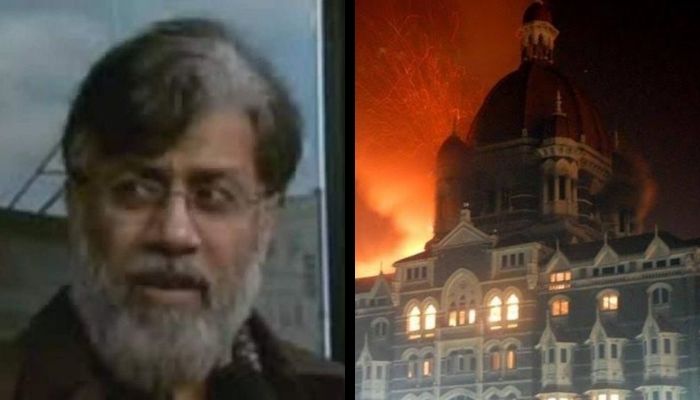
The Joe Biden administration in the United States has appealed to a court in California to deny the writ petition filed by terrorist Tahawwur Rana challenging his extradition to India. Rana is a Pakistani terrorist wanted by Indian agencies for his involvement in the 26/11 Mumbai terror attacks.
The US govt has urged the court to deny the writ of habeas corpus filed by Rana’s lawyers. This comes about a month after a US court approved Rana’s extradition to India. Tahawwur Rana is currently detained at the Metropolitan Detention Centre in Los Angeles.
“The United States respectfully requests that the Court deny Rana’s petition for a writ of habeas corpus,” said E Martin Estrada, US attorney for the Central District of California in his petition filed before the US District Court for the Central District of California.
Estrada said that Rana is unable to prove that India’s extradition request lacks sufficient evidence of probable cause. The statement came after Rana filed a petition challenging the extradition.
In July 2021, the United States administration requested a federal court in Los Angeles to extradite Pakistani-origin Canadian terrorist Tahawwur Rana to India.
Rana, who has been in US jail for more than a decade for supporting terrorist groups and plotting Mumbai attacks, faces extradition to India on murder conspiracy charges.
He was earlier convicted of his role in the Mumbai terror attacks, but US prosecutors had failed to prove a terrorism charge connecting him directly to the attacks.
However, Rana was granted early release from a Los Angeles federal prison because of poor health and amidst the coronavirus scare. The Pakistani-born terrorist was arrested again on June 10, 2020, in Los Angeles following an extradition request by India.
Rana committed fraud against the Indian govt by creating forged documents: US
The submissions to the court by the Biden administration in July 2021 said that based on the evidence submitted by India, Tahawwur Rana committed fraud against the Indian government through the creation and submission of forged documents. The purpose behind such fraud is irrelevant under the Indian criminal provisions, the document said.
“In any event, Rana knowingly allowed Headley to obtain the business visa and the cover that he needed to conduct terrorism-related surveillance operations in India, ultimately leading to the three-day terrorist attacks in Mumbai. Accordingly, the Court finds there is probable cause that RANA conspired to forge a document for cheating and use a forged document as genuine, in violation of IPC 120B, 468, and 471,” the submission said.
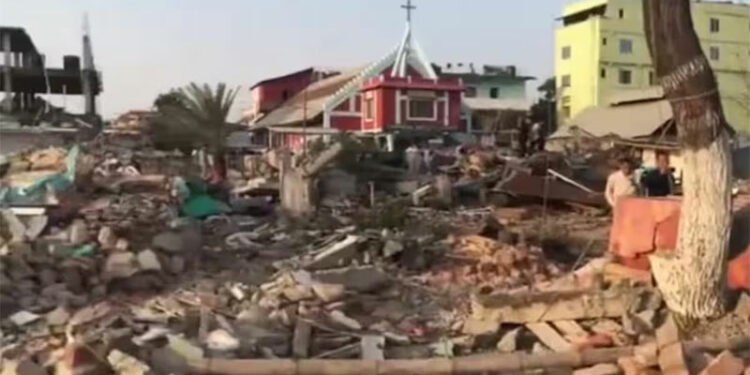
The situation in Manipur is complex, to say the least. It goes beyond the fight between ethnicities. Religious faultlines have only compounded the situation even though it is an aspect either ignored or selectively told as a “fight between Hindu Meiteis and tribals.” Illegal infiltration is at the heart of this problem. All in all, there is a sinister plot at play and history is witness to it. Misleading mainstream media reports too have openly taken sides, unsurprisingly so. However that may be, NorthEast, unfortunately, continues to bear the brunt.
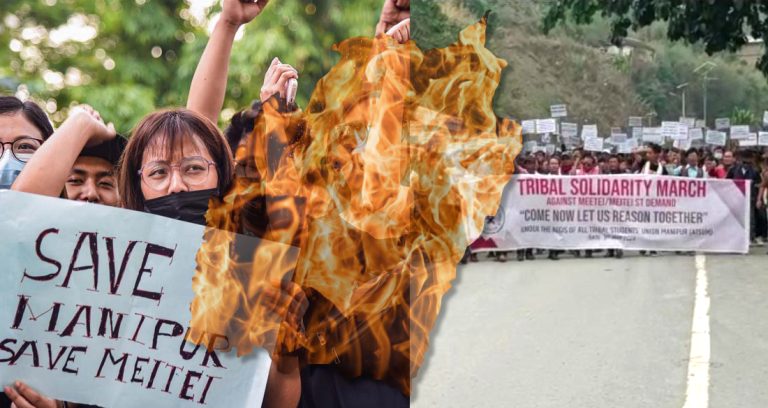
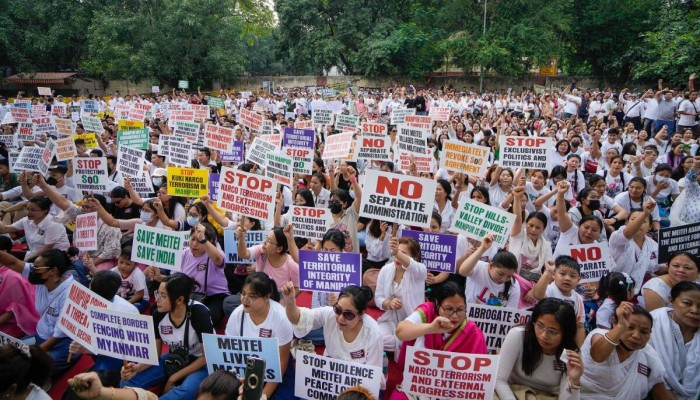
Violence broke out between largely Hindu Meiteis and Christian Kukis on 3rd May during a ‘Tribal Solidarity March’ organised by the All Tribal Student Union Manipur (ATSUM) in the Churachandpur district’s Torbung area to oppose the demand of the Meeteis for Scheduled Tribe (ST) status.
While the tribal groups have been opposing the Meitei community’s demand for ST status for years, the recent protests and violence were triggered by a Manipur High Court order on 27 March, directing the Manipur government to submit recommendations to the union government for the inclusion of Meitei in the ST list. The court had issued the order after several petitions filed by Meitei activists seeking the said direction.
Meiteis have been seeking the ST status since 1981 when the then CM Rishang Keishing raised the issue in the state assembly. In 1995, they were granted the Other Backward Classes (OBC) status. Two sub-communities within the Meiteis – Chakpas (previously known as lois) and Thoubal Khunous (previously Yaithibis) – were already identified as Scheduled Castes (SC) in 1956.
The Meiteis have made multiple requests by submitting memorandums to the state and the Centre since 2013 in this regard but to no avail. In 2012, the Scheduled Tribe Demand Committee of Manipur (STDCM) was formed which submitted the first such memorandum in November 2012 to the then Governor Gurbachan Singh Jagat.
In December same year, another memorandum was submitted by the STDCM to the then Congress CM Okram Ibobi Singh.
On 29 May 2013, the Ministry of Tribal Affairs wrote to the Manipur govt seeking a specific recommendation on the inclusion of Meiteis in the ST list; it also sought the latest socio-economic survey data and an ethnographic report on Meiteis. It has been 10 years yet no submissions have been made by the state in response to the Centre’s letter. This despite 30 representations made to the state and 10 to the Central govt.
Who are the Meiteis & why are they demanding ST status?
Meiteis, also known as Meetei or Manipuri, are the largest ethnic group in the state of Manipur comprising about 53% of the state’s population (as per 2011 census data). The majority of Meiteis are Hindus and some are Muslims, called the Pangals. They currently fall under the OBC category.
Interestingly, the Meiteis were included in the Scheduled Tribes list as a “tribe among tribes of Manipur” before the signing of the Merger Agreement of Manipur on 21 September 1949 into the Union of India. They were stripped of this ST status after Manipur merged with India. At that time, SC-ST status was not sought after, the reservation was not that big, and even govt jobs were not considered as important as they are today, and therefore the Meiteis didn’t object when they were moved out of the ST list.
Meiteir stage peaceful protest in Jantar Mantar in New Delhi
Notably, out of Manipur’s total area of 22,327 sq km, Meiteis are restricted to a mere 2,000 sq km area in the shrinking Imphal valley constituting East and West Imphal, Thoubal, Kakching, Bishnupur, and Jiribam. So the majority population of Manipur occupies a mere 10% of land in the state with no rights to purchase land outside this periphery. They cannot purchase nor occupy land in the hill districts of the state which accounts for 90% of the land in Manipur, as non-tribals are not allowed to buy land in the tribal hill areas.
According to the World Meetei Council, restoration of the ST status is a matter of survival. “Majority of the Meetei community live in a hand-to-mouth economy. Among the indigenous communities in the Northeast, Meetei is one of the smallest communities. Meetei is smaller than Naga, Khongjai(Kuki), Tai-ahom, etc,” says the Council on its website.
It further mentions, “Meetei community was isolated and not connected to MAINLAND INDIA in the past. And now with a small population of hardly 17 lakhs in India approximately 14 lakhs and 2 lakhs in Manipur and Assam respectively and the rest in other NE states and other cities of India, Meetei feels quite awkward socially and culturally. With 32.59% of the population living below the poverty line and a per capita income of Rs 70,000/- only, the community is among the poorest in India. The literacy Rate is 79% but drastically low in higher education due to economic backwardness.”
In December 2019, the Central govt extended the Inner Line Permit (ILP) in Manipur following the demands of the Meiteis who fear losing their land.
Who are the Kukis and why are they against granting ST status to Meiteis?
The largely Christian Kuki tribe in Manipur comprises over 20 sub-tribes. They are also known as CHIKIM – Chin-Kuki-Mizo-Zomi – and CHIKUMI. Chins are largely believed to have migrated from the Chin state of Burma (Myanmar). Some migrated to Bengal where they came to be known as Kukis.
Another major group of tribals in Manipur is comprised of several Naga tribes. However, the Nagas have kept themselves distanced from the current conflict. Although they also oppose the granting ST status to Meiteis, they have not taken part in the current protests and violence.
It is notable that only Meiteis and Nagas have been living in Manipur for thousands of years, and Kukis are relatively new to the region. Kukis migrated from Myanmar in the 18th and 19th centuries for various reasons, including persecution by more powerful groups in Myanmar. It is known as the Great Kuki Exodus. Kukis migrated in large numbers from the Mizo and Chill hills to Manipur during this Great Kuki Exodus in the 18th and 19th centuries.
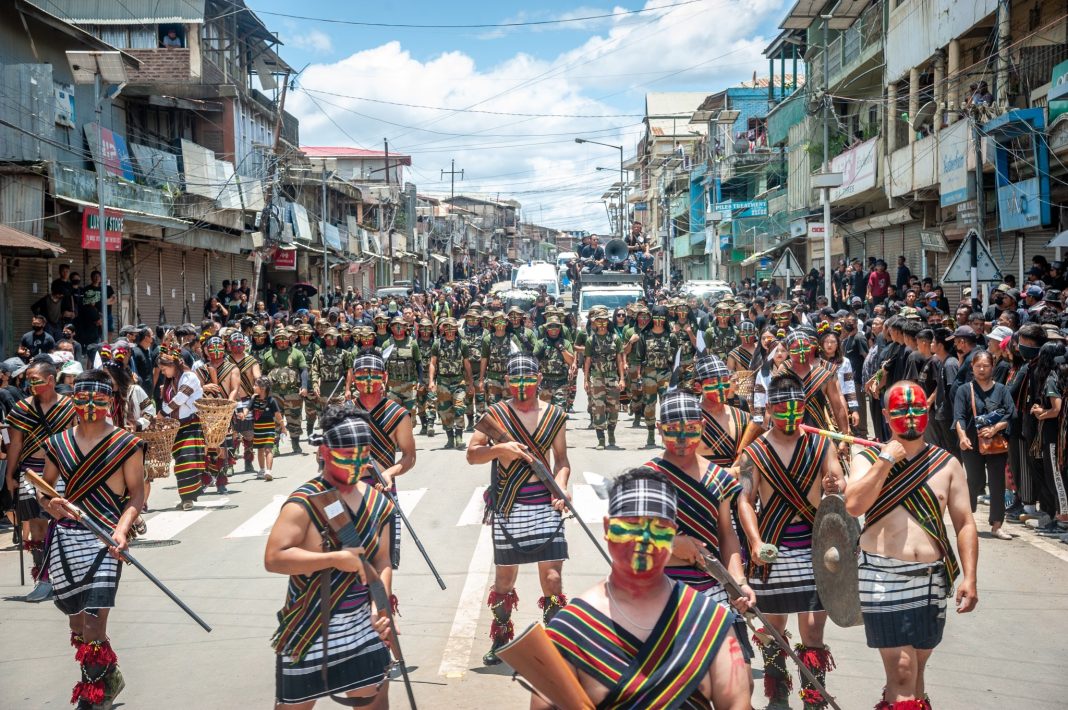
An image shared by the Kuki-Zomi group ITLF with the tribes donning the separatist flag of Zomi Revolutionary Army for “Kukiland”
The migration of Kukis to Bengal, Mizoram, and eventually Manipur was owing to various factors. Meitei kings, who would face occasional raids by the Nagas, settled the Kuki tribes from Myanmar to act as demographic buffers. These tribes came to be known as Old Kukis or Khongjais. Immigrant Kukis were also settled by the British in the area for similar reasons.
Nonetheless, the common point in all these theories is that Kukis were not necessarily original inhabitants of Manipur, unlike the Meiteis and Nagas. However, they were taken into the fold by the Meiteis and then the British given the demands of the situation in those times.
However, the migration of Kukis from Myanmar didn’t stop after the great exodus, it continues even today, as the situation in Myanmar remains volatile, and the majority groups continue to target and attack other groups. This has resulted in ongoing tension in the state, as the Meiteis allege that local Kukis are helping Burmese Kukis to immigrate illegally and then settle in forest land.
It is safe to say that Kukis and Meiteis have been living side by side even with their fair share of differences.
But Kukis believe that the Meiteis do not have the characteristics of a tribe anymore. One of their arguments is that the Meiteis lost their tribal characteristics following the introduction of Hinduism around the 1730s by the King.
In an interview, prominent Kuki leader Wilson L Hangsing expressed his reservations saying, “If there are Meiteis who remember and identify which sub-tribe they belong to under the Meitei umbrella then they can demand the ST status. But for the entire Meitei community including the Brahmins, who are not indigenous, to demand the status is propaganda. All other castes are flexible, for example, a Kshatriya King can become a Shudra if he loses a battle. But others cannot become Brahmins, everyone knows that. Brahmin Meiteis have all come from Bengal, Bihar, and Orissa.”
“Their ethnic identity may have been lost but their caste identity is still Brahmin. I don’t see how they can be reverted to tribals,” said the Kuki leader.
Kukis make up 26% of the Manipur population and occupy the majority of the 90% of land mainly in the southern hills comprising Churachandpur, Kangpokpi, Chandel, and Tengnoupal districts.
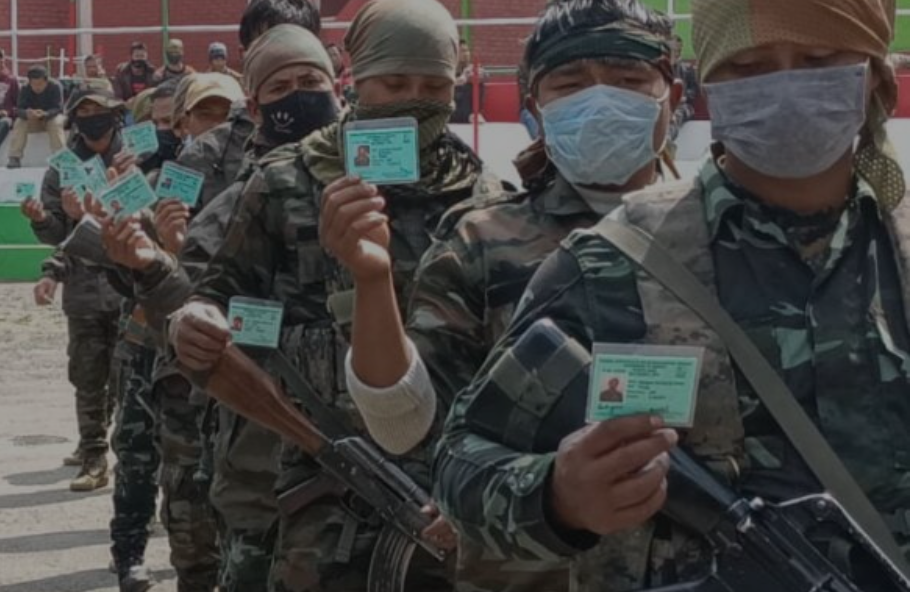
Kuki National Organisation militants
The remaining area is occupied largely by the Naga tribe in the north consisting of Senapati, Ukhrul, Tamenglong and Chandel districts. Nagas made up 17% of the state’s population. The Nagas have historically had amicable ties with the Meiteis barring some incidents of attack on Meitei kings. Many Nagas have also been absorbed into the Meitei population.
As far as the current situation is concerned, the Nagas have distanced themselves from the conflict. Both the Nagas and Kukis can purchase land in the Imphal Valley too.
Demands for a separate ‘Kukiland’ have also been made in the past since 1980. This began after the formation of Kuki-Zomi insurgent groups namely Kuki National Organisation (KNO), Kuki National Army (KNA), and Zomi Revolutionary Army (ZRA). In a more recent development, Kukis now seek Kukiland Territorial Council on the lines of the Bodoland Territorial Council in Assam.
Illegal infiltration, encroachment, and drugs menace
At the outset, the conflict seems to be that of identity and demand for ST status. But there’s more. The influx of illegal migrants from across the border from Myanmar and Bangladesh, the cropping up of illegal villages, poppy cultivation and terrorism pose a direct threat to the state’s demography and resources. These have given rise to the demand for NRC among the Meiteis.
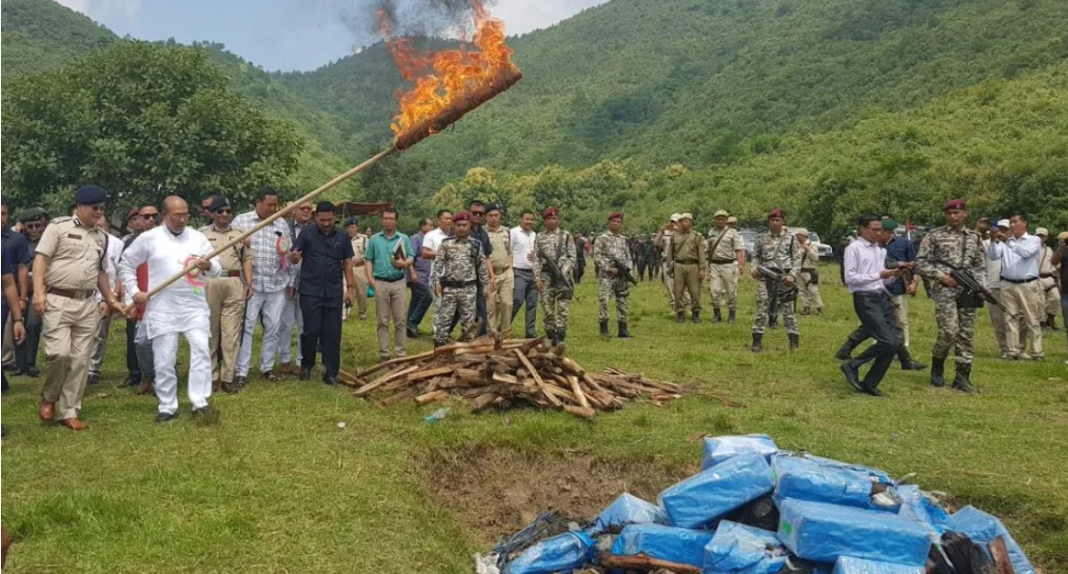
Manipur CM launches “War on Drugs” campaign in 2018 (Source: NorthEast Now)
Meiteis alleged that the Kukis who are in Myanmar and Bangladesh have been illegally crossing over the border, taking over land, and being sheltered by their distant relatives who moved to India decades ago. This has also facilitated the drug nexus.
Large areas of forest land are being occupied by the Kukis and converted into Poppy plantations, running a bustling opium trade. Illegal villages had been cropping up on forest land in the hill districts along with the poppy farms. These were largely in the protected and reserved forest areas of CHIKUMI districts. Most of these encroachers are Burmese Kukis and have migrated illegally in relatively larger numbers ever since the February 2021 coup in Myanmar.
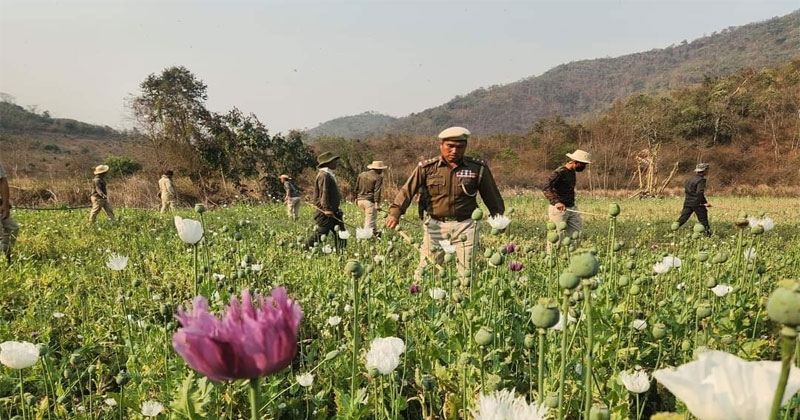
Poppy fields destroyed by authorities
The N Biren Singh govt has been carrying out a large-scale crackdown against encroachment and poppy cultivation since coming to power. The security forces have been destroying poppy fields, but they keep coming back.
The govt also razed several illegally built Churches on lands under reserved and protected forests.
3 illegally-built churches razed by Manipur govt in April. (Source: Organiser)
Despite several notices from the govt to the villages, there has been no response but open defiance. Both the Meiteis and the Nagas have staunchly backed the state government’s eviction drives.
It is being alleged that the ST status for Meiteis was just an excuse for the violence, and the real reason is opposition to the crackdown on encroachment and poppy cultivation. It is also alleged that Churches also could be behind it after the govt demolished the illegal churches.
The Manipur govt had also launched a campaign against drugs in 2017 to combat large-scale illegal poppy cultivation. Illicit poppy cultivation is mainly being conducted in hill districts of Ukhrul, Senapati, Kangpokpi, Kamjong, Churachandpur, and Tengnoupal.
According to data from 2017 to 2023, 2518 arrests have been made. Of these, interestingly, the highest among those arrested were Muslims (1083), followed by Kuki-Chin (873), Meitei (381), and others (181).
15,496 acres of poppy cultivation have been unearthed. Of this Kuki-Chin tribes recorded a total of 13,121.8 acres of poppy cultivation, Nagas recorded 2340 acres, and other communities accounted for 35 acres.
The crackdown is owing to increasing drug abuse and trafficking, particularly among the youth, which has sometimes also percolated the political corridors of Manipur.
Moreover, the Meiteis have demanded that the India-Myanmar border be sealed owing to the influx of “terrorist groups”.
Manipur and its encounters with conflict
The occupation of Assam at the hands of the Burmese for seven years (1817-1826) spilled over into the neighbouring state of Manipur as well. In Manipur, this period is known as Chahi-Taret Khumtakpa (seven years of devastation).
In 1992, at least 84 people lost their lives in clashes between Nagas and Kukis. In 1993, communal clashes between Pangals (Muslims) and Meiteis (Hindus) left at least 100 dead.
Pangals of Manipur (Source: NorthEast Live)
Interestingly, ever since, 3 May is marked as a black day or Shaheedi Memorial Day by the Pangals who have their own armed groups namely All Manipur Muslim Students’ Organization (AMMSO), All Manipur Muslim Girl Students’ Organization (AMMGSO) and Pangal (Manipur Muslim) Political Forum (PPF).
Another less talked about factor that has possibly played a role in the conflict is the existence of People’s United Liberation Front (PULF). It underlines that terrorism is another threat staring right into Manipur at least since 2006 when three Pangals named Salman Khurshid (23), Abdul Rahman (24), and Mohammad Akbar Hussein (20) were arrested by the Delhi police with arms and ammo.
In 2018, a bandh was called by the All Manipur Muslims Organisation Coordinating Committee (AMMOCOC) against the eviction drive conducted by the state. This after CM N Biren Singh had advised against communalising the eviction drive. “A particular community in the state, in the name of following the same religion, are encouraging the entry of illegal migrants in the state.”
The expert view
Experts who have been studying the NorthEast, particularly Manipur, have a very clear point of view. Some say that Kukis are not the original natives of Manipur and were settled here by the British from Myanmar. An expert, who did not want to be named, said, “In 1891 after the British defeated the Meiteis in the Anglo-Manipur War, they brought in the Kukis from Burma which was also under the Raj at the time. So the Christian-convert Kukis have since become trouble-makers considering that they demand a “Kukiland” which includes parts of Bangladesh, Burma, and parts of India. So they have a separatist-expansionist strategy. They are creating trouble wherever they go.” Some also believe that the conflict is being orchestrated from outside India.
This poses a dangerous challenge to the Meiteis. The STDCM claims that the population of Meiteis was 59% in 1951 and has come down to 44% in 2011. The Meitei body says the community is no longer the majority. “Looking at the trend of the demographic change, the number could fall further come the 2021 census data,” said STDCM working president in an interview.
The secret Kuki gameplan: Capture a vast territory in India's Far East & cut off India's access to friendly nations in South-East Asia.
Exactly like Pakistan cuts off our access to Central Asia & Europe.
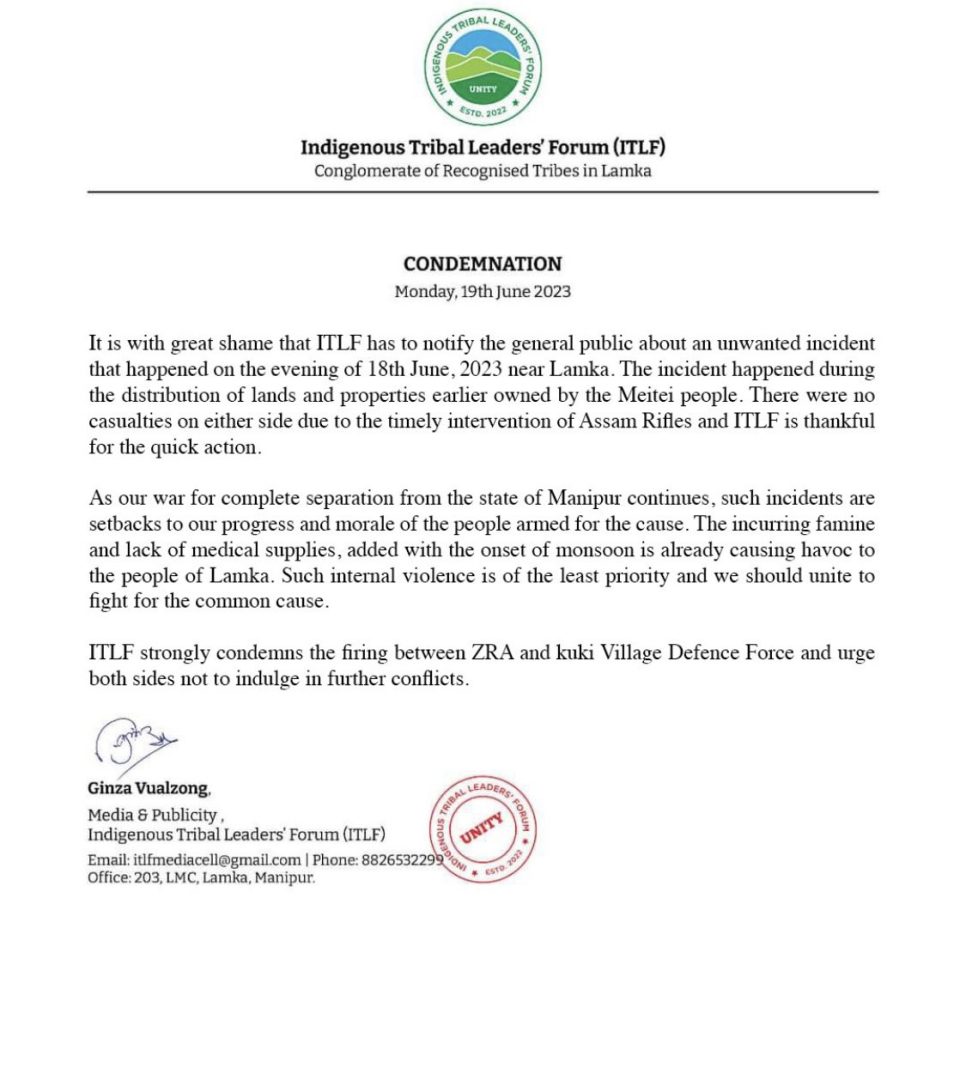
A letter by another Kuki group called Indigenous Tribal Leaders Forum (ITLF), which has now gone viral on social media, has drawn stark criticism from non-tribals and experts alike. In the letter, the group openly admits to the “distribution of lands and properties earlier owned by Meitei people.” It further casts speculation about whether there is inaction against the same by the Indian forces, saying, “timely intervention of Assam Rifles.” The group openly admits to and declares its “war for complete separation from the state of Manipur.”
Anthropologist and Author, Rami Niranjan Desai is of the view that the Kukis cannot be welcoming of illegal infiltrators just because they possibly share historical or ancestral ties with them. She also believes that if a community accounts for 30% to 40% of the population, it cannot be deemed a minority.
The Meitei community has an absolute right to demand inclusion in Scheduled list, if there is an objection you can vocalise it but you can’t become automatic weapon wielding anarchists. The Kuki militants have lost the war of perception at least. #ManipurRiotshttps://t.co/77khoamJwz
“According to me, a minority would be a community that accounts for a single-digit population, say 2% or so.” The tribals in Manipur account for about 47%. This becomes a key reason for the Hindu Meiteis to demand a level-playing field.
A brief summary
It is safe to say that the coverage of Manipur has been highly biased. Almost all mainstream media reports have made the pitch – that “Hindu majority Meiteis” are demanding ST status – without providing the context of their demand. The reports go on to talk about tribal casualties in detail, show the crackdown on encroachments and poppy cultivation in a bad light, and are limited to the simplistic majority-minority narrative.
The most underreported detail of the ongoing conflict has been the exodus of Hindus from the Kuki-majority Churachandpur district. Hindu activists have claimed that the 3rd May violence is not a tribal vs non-tribal conflict, but it was actually initiated by the Christian tribals to evict the Meiteis from Christian majority areas. Dr Khangembam Romesh, Assistant Professor in JNU, writes, “Kukis spreading Christianity among Meiteis had created multiple negative impacts on the region. The churches are communally coloured and effectively used to serve that purpose.”
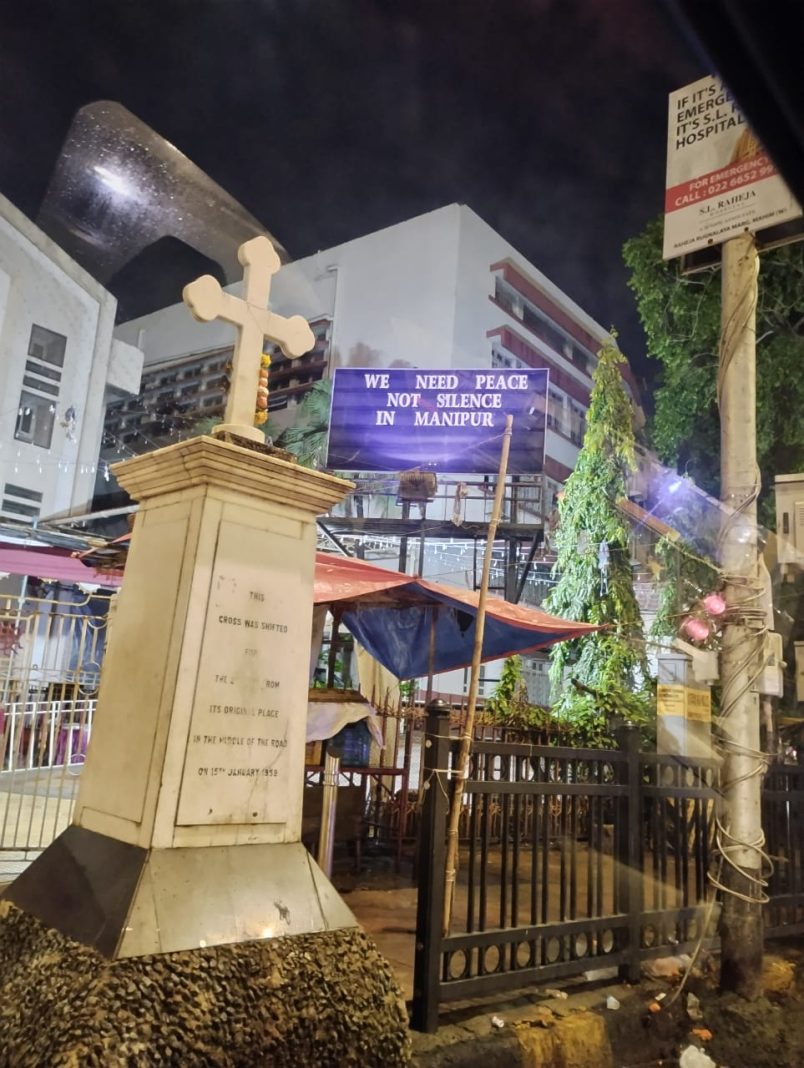
A billboard put up by St Michael’s Church in Mahim, Mumbai, by [email protected]
The Hindu activists point out that the Tribal Churches Leaders’ Forum issued a statement supporting the tribal solidarity march. In response to the call by ATSUM, The Tribal Churches Leaders Forum (TCLF unanimously resolved to endorse the ‘Solidary March’ of ATSUM in a meeting held on May 1. “This solidarity March organised by the ATSUM is to collectively protect the social, political and religious interests of the tribal people of Manipur,” said the statement.
The faultlines in Manipur breach every spectrum of identity. The last and available census data of 2011 is from a different time. The world has changed manifold ever since, and India’s Manipur has not been immune to these changes. The recent conflict brings to the fore the ground realities of Manipur which are changing by the day. The demand for ST status by Meiteis losing ground and the aggressive opposition by Kukis are technical details of the main underlying problems that Manipur is facing today.
A screengrab from a video shared by Spear Corps of the Indian Army
Tracing the origins of the two communities may not be possible nor will it necessarily yield solutions to the present-day challenges. But it is to be noted that somewhere behind their ethnic identities, there is a layer of religious identity too which has been giving shape to a conflict that may blow out of proportion in no time until Indians “Look East” and “Act East.”
A dispute has arisen between Sharad Pawar and Ajit Pawar regarding the party’s name and symbol, leading to a conflict within the Nationalist Congress Party (NCP). The political turmoil in Maharashtra started as Ajit Pawar defected with over 30 MLAs in the party and joined the NDA government in the state to become the deputy chief minister.
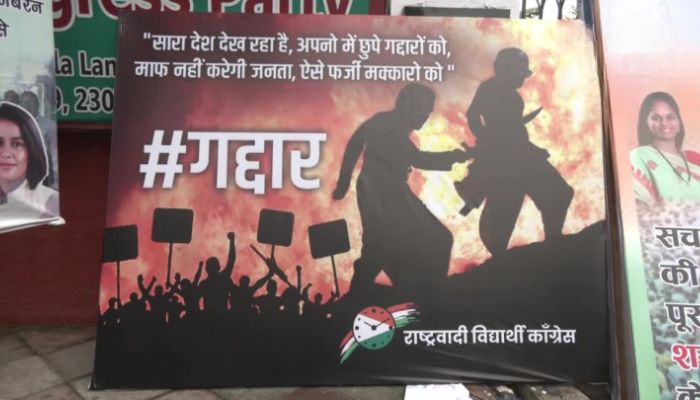
Sharad Pawar, the NCP chief, travelled to Delhi today to attend the party’s national executive meeting. Prior to his arrival, a poster war erupted in the capital, featuring references to the blockbuster film Bahubali. These posters depicted the iconic scene from the popular South Indian movie, with Kattappa backstabbing Bahubali.
Ajit Pawar rebelled against his uncle Sharad Pawar and parted ways. The debate between the two leaders is going on over the name and symbol of the party. NCP chief Sharad Pawar arrived in Delhi today for the party’s national executive meeting.
#WATCH | NCP national president Sharad Pawar arrives at his residence in Delhi.
Even before his arrival, there was a stir in the political corridors of the capital. Old NCP posters and hoardings with pictures of Ajit Pawar and Praful Patel on them were removed from outside the party office in Delhi.
#WATCH | Old posters and hoardings of NCP that showed Ajit Pawar and Praful Patel on them are being removed from outside the office of the party in Delhi. A new poster with 'Gaddaar' (traitor) written on it is being put up there. pic.twitter.com/CjLoQmI5u9
New posters were put up there, on which ‘Gaddar’ (meaning ‘traitor’) is written. New posters were also put up outside Sharad Pawar’s residence in Delhi.
The posters read, “The entire country is with Sharad Pawar in this fight between truth and lies. India’s history is such that it has never forgiven traitors.”
Posters saying "In the fight of truth and lie, the entire country is with Sharad Pawar" and "India's history is such that it has never forgiven those who have betrayed" come up outside NCP chief Sharad Pawar's residence in Delhi.
Amid the Sharad Pawar versus Ajit Pawar crisis, the Nationalist Congress Party Students’ Wing also put up a poster based on a scene from the film ‘Bahubali – The Beginning’. It shows ‘Kattappa’ stabbing ‘Amarendra Bahubali’ in the back.
Delhi | Amid NCP vs NCP crisis in Maharashtra, Rashtrawadi Vidyarthi Congress puts up a poster designed on a scene from the film 'Baahubali – The Beginning', showing its character 'Kattappa' stabbing 'Amarendra Baahubali' in the back. pic.twitter.com/ojq7EmXO7A
the caption on this poster read, “The entire country is watching the traitors who were disguised as close ones. People will not forgive such fake persons.”
Since Sunday, the political landscape of Maharashtra has been in turmoil following the unexpected swearing-in of senior NCP leader Ajit Pawar as the state’s deputy chief minister. In a significant move, Ajit Pawar, accompanied by eight other MLAs, joined the Maharashtra government led by Eknath Shinde, asserting his claim over the Nationalist Congress Party, and its election symbol. He is believed to have the support of over 30 MLAs from the party.
The roots of education are bitter, but the fruit is sweet – Aristotle
Since the time skill-oriented education has taken center stage in Indian ‘Learner’s’ discourse, and the entrepreneurial bug has bitten the youth and the oldies alike, I have been hearing all sorts of jeering and pejorative remarks being made by people from all walks of life regarding our school education.
The latest one doing the rounds is ‘How many times have you used the formula from algebra (a+b)2 = a2+b2+2ab in your life?’ Worst is, ‘How many times have you used this formula to buy 5 kg apples!’ Are you trying to mislead the youth? Yes, I feel you are. These people are usually those who play to the clapping and whistling gallery of youth.
First thing first– If our system of education (at foundation level- schools) was that bad then how come so many professors and deans in the top US and British universities are from India? They sure did their schooling from Indian schools- so did Sunder Pichai- CEO of GOOGLE (he completed schooling in Jawahar Vidyalaya Senior Secondary School in Ashok Nagar, Chennai, and completed the Class XII from Vana Vani School Madras), and Satya Nadella- Chairman and CEO, Microsoft (Satya Nadella attended the Hyderabad Public School, Begumpet), or Indra Nooyi -who was the chairman and chief executive officer (CEO) of PepsiCo, (Nooyi did her schooling in Holy Angels Anglo Indian Higher Secondary School in T. Nagar). They are running big American companies.
I agree that times are changing and yes we need to upgrade our school curriculum but we cannot just trash our earlier system. We have been doing some things right as well. In fact, very right. We also cannot say that Science, Math, and literature are meaningless!
If you want to look at American schooling for any comparison or inspiration- here it is
If you look at American school education, they teach very much the same things. From kindergarten through 5th grade, roughly ages 5-10, Science, social studies, languages, the arts, and physical education are brought in at various grades and are taught with varying amounts of inputs. Tenth graders are usually taught algebra or Geometry (I am sure they teach (a+b)2 = a2+b2+2ab there too!).
Occasionally, Algebra II or higher classes are offered to students who wish to take Advanced Placement math classes in later years of high school. For literature, students have already begun to familiarize themselves with notable authors such as Shakespeare. They do study American history and the civil war. For social studies, tenth-grade students are taught recent US History from the Colonization Era and to the Early 20th Century. In some districts, Advanced Placement coursework, such as geography, European history, or World Studies is first made available to students in this grade.
So what is different?
Yes, they do have a more practical orientation and let students learn how to apply the subject matter to deliver output. Our education policy is now going to cater to it. Yet Indian students do better than white Americans in America or the entire West
Indian students who migrate from Indian schools to American schools or go for higher studies to US universities do pretty well. Indian students, who at first glance seem to be educationally disadvantaged due to weaker English skills and little knowledge of American culture, actually have an edge in education over their native peers. This apparent educational advantage of immigrants’ children has been referred to as the “immigrant paradox”.
Studies have shown that children of immigrants in the US have very positive attitudes and behaviors toward education, and put in more effort. There could be several reasons why the Attitude of American students is negative in comparison to Indian students. One reason could be that they are fighting to achieve and have that killer instinct. They value education and are not complacent. This is a very big advantage for India.
An investment in knowledge pays the best interest. – Benjamin Franklin
School education lays the foundation for lifelong learning
Education has an element of human evolution- A good education not only teaches you skills but also helps you broaden your horizons, gain a better perspective, and teaches you to think for yourself. Education is not how well you can read and write but whether you can communicate with and understand the world around you. The importance of education is also reflected in areas of creativity and innovation. Education encourages thinking outside the box and experimenting with new ideas. For that fundamentals must be laid strongly and squarely in schools.
I did my schooling at an Indian school and found that my fundamentals and those of my peers in Physics, Chemistry, and Math are very sound. We are good at English (a foreign language) and Hindi too.
Google brain argument
Another weird argument given by some critics is that you can answer all questions of Amitabh Bachchan’s KBC show using Google and there is nothing tough about a quiz! So why remember things or have information in your head when it is available from hard discs from a computer? What kind of argument is this? This is a really dumb idea.
I would call Google brain ‘Khalee Bheja’. If you are a ‘padha likha’ or a literate person then you should be able to discuss things with others meaningfully and debate or argue a point intelligently- how do you do that with an empty mind or nothing in your head?
“The wisest route to a successful solution to nearly any problem begins with understanding its history.”—David McCullough
Values in place
I feel the most important content that is being missed out on in school education in India is imparting ‘Value education’. No point in having a great skilled engineer who is a social misfit, who is dishonest, and who is always criticizing everything including his own country. This should be taught right up the education pyramid- up to PG. From KG to PG in fact, if we want to build a meaningful patriotic society.
Emphasis on Skill Development
I have headed Business schools for close to two decades and realized the importance of sound school education in laying a strong foundation. Skill development is the new buzzword. Let me explain.
The National Education Policy (NEP) 2020 has given special emphasis on vocational education through integration and mainstreaming of vocational education with general education which will help students in acquiring various skills to meet the needs of the industries and to improve the quality of education.
Skill-based learning is an effective way for students to acquire knowledge and develop essential skills. It encourages students to actively engage in learning rather than memorizing information. With skill-based learning, students gain a deeper understanding of their subject matter as they practice analyzing, synthesizing, and applying information in various contexts.
The curriculum of skill development is more Industry oriented and teaches theory plus specific skills in a particular domain. They too require sound school education as a starter. As they say, ‘garbage in and garbage out’, you need to have reasonably well-informed school pass outs to get into skill development. For instance, they have a B Tech degree in cyber security which has computer science as the base. Therefore first the sound foundation of computer science is built and on top of that for each theory module, a practical orientation is provided. After that weightage is given to applying the knowledge to real-life problems. The rough and ready distribution is 30-40-30. This means 30% time for theory, 40% for related practical work, and 30% for actual hands-on learning. Here a student gets a degree but he or she is ready for Industry deployment from day one! I know some of my former students who did an MBA and are now into a ‘Risk management’ profile- whereas they had very little or almost zero exposure to this domain during their college days. They learn on the job which is a huge cost to the industry.
For all these, a sound school education with fundamentals in place is required.
Yet another example is collaborative teamwork. It could be a project-based learning approach where students work collaboratively to design and build a sustainable garden or renewable energy project, developing skills in teamwork, problem-solving, and creativity.
Changes are being incorporated into the school curriculum to dove-tail it with higher skill-based education. The Department of School Education and Literacy is implementing the scheme of Vocationalisation of School Education.
It aims at integrating Vocational Education with general academic education in all Secondary/Senior Secondary schools; enhancing the employability and entrepreneurial abilities of the students, providing exposure to the work environment; and generating awareness among students about various career options so as to enable them to make a choice in accordance with their aptitude, competence, and aspirations. The scheme covers Government and Government aided schools.
“If you’re offered a seat on a rocket ship, don’t ask what seat! Just get on.”—Sheryl Sandberg
The Madhya Pradesh police investigating the Sidhi urination case said that the video which emerged on 4th July 2023 showing a man engaging in an appalling act of urinating on a poor tribal individual was a one-year-old video, reported Hindi news daily Dainik Bhaskar.
Meanwhile, the report by Dainik Bhaskar quoted Sidhi Additional ASP Anjulata Patle as saying that the purported video is an old video recently made viral by some people. Patle added that those responsible for making the old video viral on multiple social media sites are being questioned about their motives.
The report by Dainik Bhaskar also quoted Vidyakant Shukla, the uncle of the accused Pravesh Shukla, who said that the video that went viral on July 4 was actually three years old. Additionally, Vidyakant Shukla revealed that the video was being used to blackmail Pravesh. Adarsh Shukla and Deendayal Sahu, two villagers from the Kubri hamlet, were allegedly demanding money by threatening to make this video public, he continued. He continued by saying that Pravesh’s rivals were going after him for political reasons as the January elections drew near.
Pravesh was so frustrated, according to Vidyakant Shukla, that on June 29, he emerged from his home and declared that he was going to kill himself. The same evening that he disappeared. In a missing person report, his family members claimed that Adarsh Shukla, Deendayal Sahu, Mrityunjay Gautam, and Praveen Kumar Shukla, aka Pintu, had used the video to blackmail Pravesh. The uncle claimed that even though they had filed a complaint, the police had not taken any significant steps in the matter; instead, they had just visited the hamlet, collected statements from select members of Pravesh’s family, and left. He bemoaned that on July 4, they noticed that the video had begun spreading across multiple social media platforms.
Notably, the news agency ANI has also quoted Pravesh Shukla’s sister as saying, “It’s an old video being circulated for political and electoral reasons.”
While talking to news agency ANI, Shukla’s father said, “There is no way my son could have done this. This is a conspiracy to frame him. We were also very distressed after we saw the video.”
We believe that God resides in every human being: Madhya Pradesh CM Shivraj Chouhan washes feet of victim
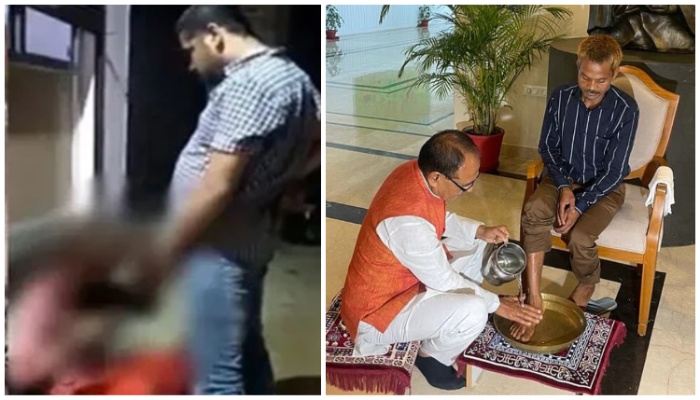
While the Madhya Pradesh authorities have been acting swiftly after the state government assured that the accused would receive exemplary punishment in the case to set a deterrence, CM Shivraj Singh Chouhan reportedly met Dashrath Rawat, the poor tribal victim and washed his feet at the Chief Minister’s residence in Bhopal on Thursday (July 6). This came a day after the accused from Sidhi, Pravesh Shukla’s house was razed by authorities on Chouhan’s orders.
#WATCH | Madhya Pradesh Chief Minister Shivraj Singh Chouhan meets Dashmat Rawat and washes his feet at CM House in Bhopal. In a viral video from Sidhi, accused Pravesh Shukla was seen urinating on Rawat.
After that, Shivraj Singh Chouhan visited Smart City Park in Bhopal along with victim Dashmat Rawat and planted saplings.
#WATCH | Madhya Pradesh Chief Minister Shivraj Singh Chouhan visits Smart City Park in Bhopal along with victim Dashmat Rawat and plants saplings.
In a viral video from Sidhi, accused Pravesh Shukla was seen urinating on Rawat. Shukla was arrested on 5th July and his illegal… pic.twitter.com/ccna4NXdCa
“For me, the poor is God and people are like God to me. Serving the people is equal to worshipping God. We believe that God resides in every human being. I was pained by the inhuman incident that happened with Dashmat Rawat…Respect and security are important for the poor…,” The Madhya Pradesh CM told the media, condemning the incident.
Sidhi urination case accused Pravesh Shukla’s illegal encroachment demolished, was arrested under NSA Act
It may be noted that the administration had acted swiftly after the state government assured that the accused would receive exemplary punishment in the case to set a deterrence. Besides arresting the accused under the stringent NSA Act, the Shivraj Chouhan government had also bulldozed his illegally constructed structure on encroached land in the Kubri region.
BJP denies that Sidhi urination case accused had links with the party, and forms a committee
On social media, the accused Pravesh is being claimed as a close supporter of local MLA Kedarnath Shukla, but the MLA himself has denied this.
Kedarnath Shukla said, “He (the culprit in the video) is neither my representative nor an associate. He is not connected to BJP in any way. I am demanding strict action against the culprit. When we visit our constituency, so many people click photos with us. But he is not attached to us in any way. He has shamed humanity and strict action should be taken against him.”
Trouble continues to mount for the Baghel govt in Chhattisgarh with sensational details about the liquor scam emerging. The Enforcement Directorate (ED) in its prosecution complaint filed in the special PMLA court has alleged that a whopping Rs 2161 crore were generated in the Chhattisgarh liquor scam.
The nexus in the scam comprised senior government officials, politicians, and other individuals, it alleged. The scam has caused a loss of a staggering Rs 2,161 crore to the exchequer, ED stated in court.
ED has named Anwar Dhebar (51), brother of Raipur mayor Aijaz Dhebar of the Congress, Arunpati Tripathi (55), an Indian Telecom Services official, businessman Trilok Dhillon (59), and their aides Nitesh Purohit (51) and Arvind Singh (48).
Anwar Dhebar was apprehended by the ED in May and remanded to four-day custody. Following his arrest, ED attached 119 immovable properties worth Rs 121.87 crore in the case. ED has also attached assets of Anil Tuteja and Arunpati Tripathi in May. 14 properties of Tuteja worth over 8.83 crores and Dhebar’s Raipur hotel Vennington Court were also attached.
ED has attached 119 immovable assets worth ₹121.87 Crore in respect of Anil Tuteja, Anwar Dhebar, Arunpati Tripathi and others in the ongoing investigation of liquor scam in the State of Chhattisgarh. Total seizure and attachment in the case stand at approx. Rs 180 Crore. pic.twitter.com/8Vwt5m1F4L
During its investigation, ED found that between 2019 and 2022, unaccounted illicit liquor worth 30-40% of the overall liquor sales in the state was sold at the behest of the syndicate.
While NAN scam-accused IAS officer Anil Tuteja managed the money collected in the scam, Anwar Dhebar, brother of Raipur’s Mayor Aijaz Dhebar, was the kingpin of the syndicate and after the deduction of a specific percentage, all the money went to Anwar.
Seeking Dhebar’s remand in May, the agency had submitted in its application that they received the Prosecution Complained filed by the IT Department along with documentary and digital data seized in search operations against Tuteja and others in the matter related to money laundering.
Based on the analysis of the data by the ED, the investigation agency found there was a syndicate operating to collect bribes by controlling the high-level management of important State departments and SPSUs.
ED further noted that Tuteja was managing the affairs while Dhebar was the syndicate’s kingpin. They used their political connections to expand the syndicate across the state, particularly in the excise department.
ED pointed out that they collected hundreds of crores in cash from “every possible point of access in a distributed hierarchical manner.” The actors involved in the scam would keep a small percentage of the collection and transfer the remaining funds to Dhebar.
Furthermore, the syndicate would allegedly keep their cut and send the money for the “benefit of the Political executives and electioneering.” ED alleged the loot “caused a massive loss to the State Exchequer and loss of central government taxes and in general loot from the local business community.”
Mentioning the family background of Dhebar, ED noted that he is the brother of Raipur’s mayor, who is under investigation by CBI in a murder case. Dhebar was allegedly running the syndicate at the behest of his political masters.
ED said during the investigation, the department found the syndicate was collecting a large number of bribes from liquor suppliers. They also collected bribes from other departments, including the food horticulture department and the PWD Department. ED said the retrieved messages from the seized devices showed how deep-rooted the syndicate was in different state departments.
ED said, “It was found that the corruption was systemic and so deep-rooted with multiple associates in different State Departments, that the accused persons and syndicate was forced to maintain detailed logs and accounts of the collected money lest there may be pilferage from the crime money itself.”
BJP President JP Nadda 1st July hit out at the Bhupesh Baghel govt saying it was completely covered in corruption.
On Wednesday, July 5, the US Ambassador to Kyiv, Bridget A Brink said that India can make a substantial contribution to settling the conflict in Ukraine given its growing global prominence and current G20 presidency.
India’s leadership is essential in addressing numerous global concerns, according to Brink, who made this statement at a special online briefing for a select group of Indian reporters. According to her, New Delhi’s growing concern over the conflict’s negative effects on the Global South provided the foundation for its participation in averting the crisis.
She added that the US aspired to work together with its allies and partners throughout the world, including India, in favor of freedom, democracies, and nations’ right to determine their own course in life. “From Kyiv, every day I see both the devastating effects of the war and the strength and resilience of the Ukrainian people,” Brink said.
The ambassador stated that the mentality required to achieve “peace” is reflected in India’s aspirations for global leadership and its demands for collaborative action through its G20 theme of “One Earth, One Family, One Future.” India’s role in the issue was framed by Brink in the context of Prime Minister Narendra Modi’s fruitful state visit to the US and President Joe Biden’s assessment of the US-India partnership as one of the most important in the world.
“The war has wide-ranging implications for the global economy, food security, and the basic principles outlined in the United Nations Charter on sovereignty and territorial integrity. As this year’s president of the G20, your country’s leadership is critical to shaping global events, including in places like Ukraine”, the US Ambassador said.
India has pushed for the Russia-Ukraine conflict’s resolution through negotiations and diplomacy.
Notably PM Narendra Modi, urged Russian President Vladimir Putin to put a stop to the war when they met privately on September 16 of last year in Samarkand, Uzbekistan.
“We agree, as Prime Minister Modi said, that now is not the time for war. Ukraine has paid a terrible cost to defend its freedom and its independence. The loss of lives and human suffering is tragic here, and the effects of this war go well beyond Ukraine’s borders,” Brink said.
Brink however, declined to go into specifics when questioned about what role the US expects India to play. “I know that the people of India understand the importance of freedom of sovereignty and territorial integrity, and India’s leaders have spoken about these bedrock principles. While the war in Ukraine is happening in Europe, the global implications of the war should inspire leaders everywhere to look for solutions to bring it to an end,” Brink was quoted.
Since its inauguration on July 1, 2015, under the visionary leadership of Prime Minister Narendra Modi, the Digital India initiative has blossomed into an epoch-making mass movement, revolutionizing the lives of an expansive majority of Indian citizens. As we commemorate its eighth anniversary, it is imperative to acknowledge the astounding achievements of this transformative endeavor, which aspires to metamorphose India into a digitally empowered society and a knowledge-based economy.
Bridging the Digital Divide and Empowering the Masses
Central to the Digital India program is the noble objective of bridging the chasmic digital divide that pervades the Indian landscape. This audacious undertaking relentlessly endeavors to furnish equal opportunities and unfettered access to state-of-the-art digital infrastructure, thereby fostering inclusivity and empowering citizens from all strata of society. By endowing digital access with the status of an indispensable utility and ensuring on-demand governance, the initiative has efficaciously obliterated the spatial chasms between the government and the populace, significantly minimizing bureaucratic bottlenecks and insidious corruption.
The transformative impact of Digital India has been far-reaching, empowering beneficiaries through the unequivocal prism of transparent and incorruptible service delivery. In fact, India has ascended to the vanguard of global nations adeptly harnessing technology for social welfare, rendering it a paragon of digital innovation and welfare-driven governance.
Key Areas and Initiatives
Digital India has propelled a multitude of notable initiatives, yielding extraordinary outcomes across diverse spheres. Foremost among these accomplishments is the laudable feat of ameliorating the urban-rural digital divide. Spearheaded by groundbreaking initiatives such as Common Service Centres, BharatNet broadband services, and the Digital Village project, urban and rural areas have harmoniously converged, fostering seamless connectivity and unhindered communication. These transformative endeavors have galvanized rural communities, conferring upon them unprecedented access to digital services, education, healthcare, and e-commerce.
Data-driven transformation stands as a pivotal pillar of Digital India’s resounding success. The advent of transformative platforms such as DigiLocker, the Open Government Data (OGD) Platform, and the National Knowledge Network has indubitably revolutionized the landscape of distributing social services and essential goods throughout the length and breadth of the nation. By streamlining processes, minimizing the bureaucratic labyrinth, and affording secure access to critical information and services, these groundbreaking platforms have catalyzed tangible benefits for individuals and enterprises alike.
The domain of Digital Infrastructure has thrived under the aegis of the Digital India initiative. Pioneering programs like MyGov, eHospital, and CO-WIN have unobtrusively redefined the paradigms of citizens’ access to government-funded services, seamlessly affording them unparalleled convenience and efficacy. From facilitating hospital appointments to forging robust citizen-governance interactions, these digital innovations have ushered in a new era of transparency and efficiency.
Digital India has harnessed the power of technology to usher in an era of unprecedented financial inclusion across the nation. At the vanguard of this paradigm-shifting transformation lies the Jan Dhan-Aadhar-Mobile (JAM) trinity, heralding an era of unparalleled ease and efficiency in the transfer of welfare subsidies to the bank accounts of the underprivileged.
Furthermore, the introduction of the Unified Payments Interface (UPI) has irrevocably transformed the financial landscape, bestowing upon India a paradigmatic shift in money transfers. UPI’s advent has precipitated a seismic surge in digital payments, rendering financial services accessible to millions and bolstering the nation’s economic fabric. Remarkably, in May 2023, UPI attained an all-time zenith, recording a staggering transaction volume of 9.41 billion, valued at a staggering Rs 14.30 trillion.
The Digital India initiative has also engendered an unprecedented surge in employment opportunities across multifarious sectors. With affordable internet access serving as the quintessential impetus, online education, e-commerce, and the burgeoning gig economy have witnessed an exponential upswing. The online work sector, comprising customer service, digital marketing, and education, has particularly thrived, proffering hitherto untapped avenues for personal and professional advancement.
Looking Ahead
The success of the Digital India initiative has laid a formidable bedrock for India’s relentless march toward an illustrious future. As the nation embarks upon the next phase of its transformative journey, securing its digital prowess, bridging extant gaps in access and knowledge, and embracing seamless global integration assume paramount importance. Prudent prioritization of cybersecurity measures shall fortify the nation against nascent and emergent threats, fostering a resilient and impervious ecosystem conducive to sustained growth and untrammeled digital metamorphosis.
Conclusion
The Digital India initiative, with its awe-inspiring trajectory, has unequivocally emerged triumphant, empowering India as a digitally sovereign nation. By bridging the digital divide, amplifying access to cutting-edge digital infrastructure, fostering financial inclusion, and catalyzing employment generation, this transformative endeavor has irrevocably transformed the lives of multitudes. India’s stellar endeavors in leveraging technology for social welfare have positioned it as a torchbearer, illuminating the path for other nations. As the voyage of progress persists, unwavering commitment to the principles of transparency, inclusivity, and technological innovation shall further elevate the lives of all Indian citizens.
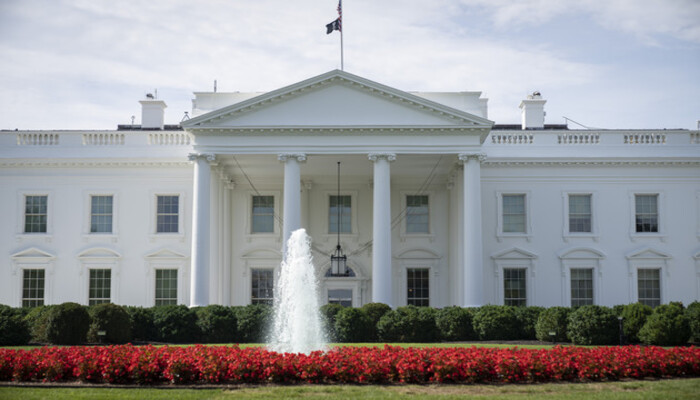
On Wednesday, July 5, US Secret Service confirmed following a lab test that the white substance found at the White House on Sunday was indeed cocaine.
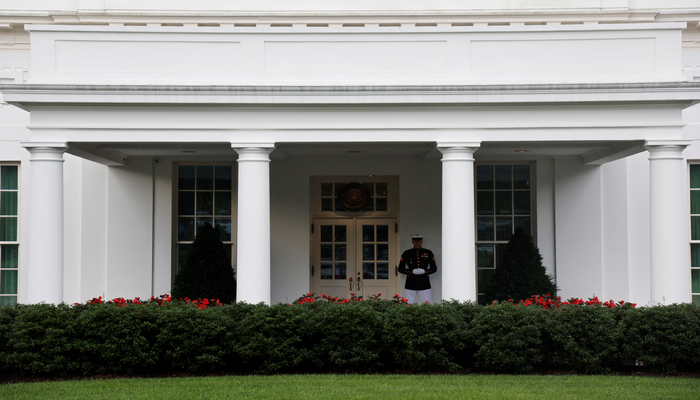
On Sunday, July 2, the powder was found in a clear plastic bag by Secret Service officials in the West Wing entry area during a routine White House sweep.
According to a law enforcement official, the cocaine was not discovered on the ground (as several media reports claimed), but in a cubby where visitors entering the West Wing are asked to leave their phones. Staff who are unable to bring their phones into an SCIF, or a sensitive compartmented information facility, where classified materials are handled, can also use these cubbies.
The West Wing entry area is said to be a heavily trafficked area which implies that it is highly unlikely that the source of the drug could be determined. The chances of finding the culprit are also quite slim.
A general view of the West Wing in the White House (Image via Reuters)
On the question of finding the culprit, an official toldPolitico, “It is going to be very difficult for us to do that because of where it was. Even if there were surveillance cameras, unless you were waving it around, it may not have been caught by the cameras. It’s a bit of a thoroughfare. People walk by there all the time.”
When asked about the incident on Wednesday, White House press secretary Karine Jean-Pierre emphasised that the investigation is under the purview of the Secret Service and stated that she is “confident” they will get to the bottom of it.
The White House “is subject to rigorous guidelines that include drug testing, and so we will take any action that is appropriate and warranted, pending the outcome of the Secret Service,” Jean-Pierre said, adding that she would not “get into hypotheticals.”
Karine Jean-Pierre repeatedly refuses to answer questions on the cocaine found in the West Wing.
The press secretary also said that President Joe Biden who returned from a weekend holiday has been briefed about the situation.
“The president thinks it’s very important to get to the bottom of this,” Jean-Pierre said
Meanwhile, on Wednesday, Tom Cotton, senator from Arkansas, wrote to Secret Service Director Kimberly Cheatle, seeking information about where the cocaine was discovered. He also requested answers by July 14 to his six questions concerning access to the White House, other instances of illegal drugs being found in the complex, and security procedures.
Congress and the American people deserve to know how cocaine got into the White House. pic.twitter.com/Fps9AJ6hSQ
“If the White House complex is not secure, Congress needs to know the details, as well as your plan to correct any security flaws,” Cotton stated in his letter.
On Sunday night, around 6 PM, a Secret Service division officer in uniform discovered cocaine. Because the officer was unaware of what the substance was, the White House’s security was briefly increased. The District of Columbia Fire Department was called, and the substance was determined to be “non-hazardous”, and sent to a central lab for further testing.