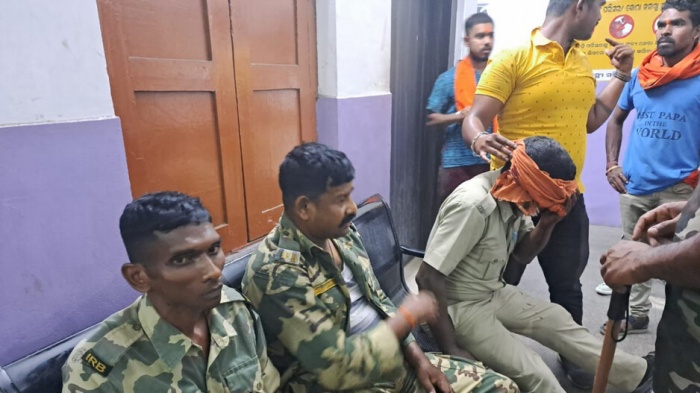
In Odisha’s Sambalpur, a bike rally organised by ‘Hanuman Jayanti Samanyoy Samiti and Bajrang Dal came under violent stone pelting when it was passing near a masjid in the Dhanupali area, triggering clashes among two groups on Wednesday evening, April 12. As per reports, several police personnel, including the woman IIC of Dhanupali Police Station have been injured in the clashes.
Violence during Hanuman Jayanti rally in Sambalpur. Peaceful are sperading faster than Covid virus.
10 police personnel including the Additional Superintendent of Police (ASP) of Sambalpur and the IIC of Dhanupali Police Station were injured .
Videos of the incident show continuous stone pelting near a masjid and adjacent lane. The bikes and scooters used in the rally are seen lying scattered as the stone pelting disrupts the bike rally. Police personnel were seen making futile attempts to prevent the mob from attacking, while abusive words are heard.
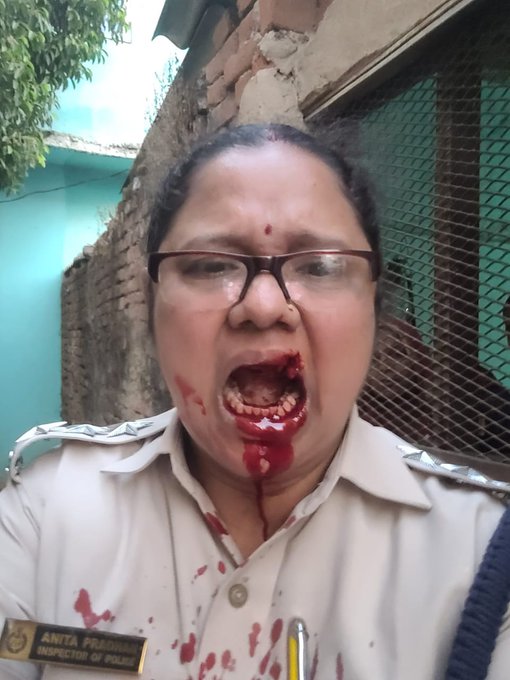
A woman police officer has received serious injuries in the stone pelting.
IIC of Dhanupali Police Station was also injured in the attack, image via @LambodarPrDash on Twitter
As per reports in the Odia media, 10 police personnel, including the ASP of Sambalpur have been injured in the violent clashes. IIC Anita Pradhan has been shifted to VIMSAR, Burla for the treatment of injuries on her face.
Violence in Sambalpur during a rally in Dhanupali Chhak; 10 police personnel, including ASP & Dhanupali IIC, injured in stone hurling#Odishapic.twitter.com/33LgUCveBh
After the stone pelting, the violence gradually spread in the area as the angry mob started setting fire to local shops and stalls. Several bikes and cars have been damaged in the violence too.
The bike rally started from Sambalpur city’s Govind Tala Square and proceeded to Jail Square, Motijharan Square, Sakshi Pada, Lakshmi talkies, and Modipada areas to make a ‘Parikrama’ of the city. However, in Dhanupali Square, the rally came under severe stone pelting from a nearby mosque.
The people participating in that rally reportedly started pelting the stones back to stop the attack. However, the violence spread and soon turned into arson and vandalism.
25 persons detained after violence, section 144 imposed
As per reports, 25 people have been detained so far after the violence. Additional police forces were soon deployed to disperse the mob. Armed police personnel have now been stationed in the area. Section 144 has been imposed on the 6 police station limit areas of Town PS, Dhanupali, Khetrajpur, Ainthapali, Bareipali, and Sadar Police Station areas.
Earlier in the day, a local politician named Jayabrata Dey was arrested for ‘inciting violence’ after some videos were found on his phone. Dey was a former BJYM leader who had later joined the BJD and was also expelled from the BJD for ‘anti-party activities’. Reports stated that Dey’s phone was found full of messages asking the general public to come prepared with sticks and stones. He was arrested by the Dahnupali police station where he has been arrested before on incidents related to violence.
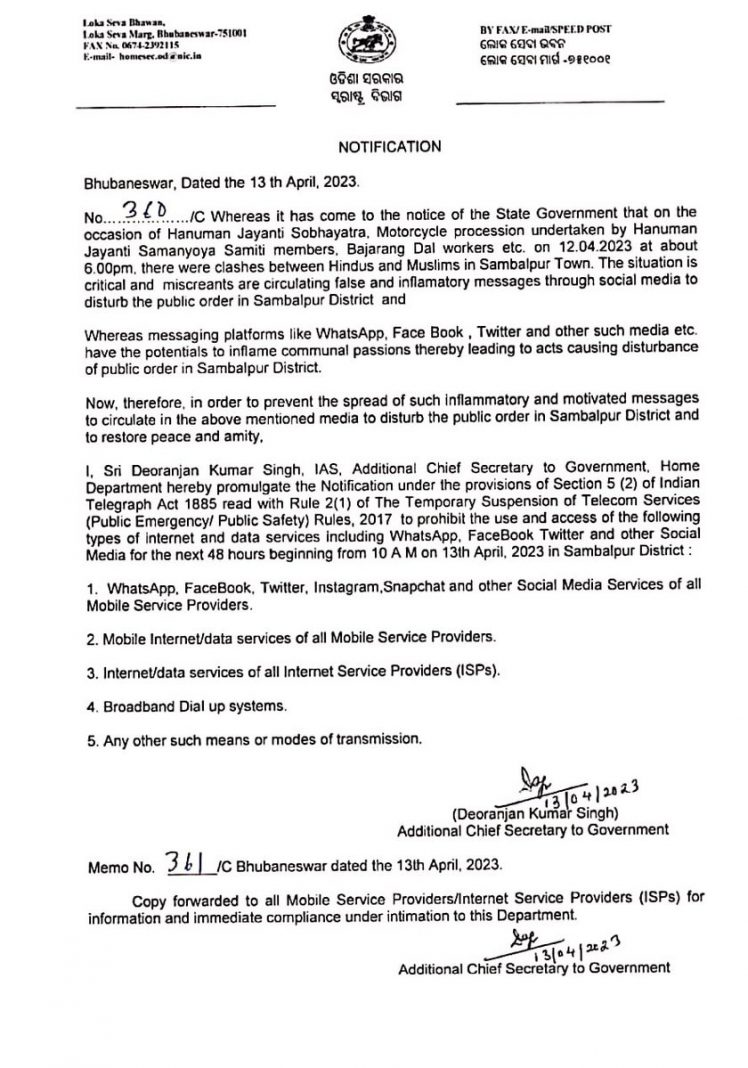
As per the latest reports, internet services have been suspended in the Sambalpur district for 48 hours. The official order says that violent clashes have happened between Hindu and Muslim groups and false and inflammatory messages are being circulated through social media.
Odisha govt orders suspending internet services in Sambalpur district, image via Siba Mohanty on Twitter
Facebook, WhatsApp, Instagram and other social media services, mobile internet and data services, and broadband services have been suspended for 48 hours in the entire Sambalpur district following the violence.
It is notable here that as per the Odia calendar, Hanuman Janmotsav is observed on April 14, on the day of Sankranti.
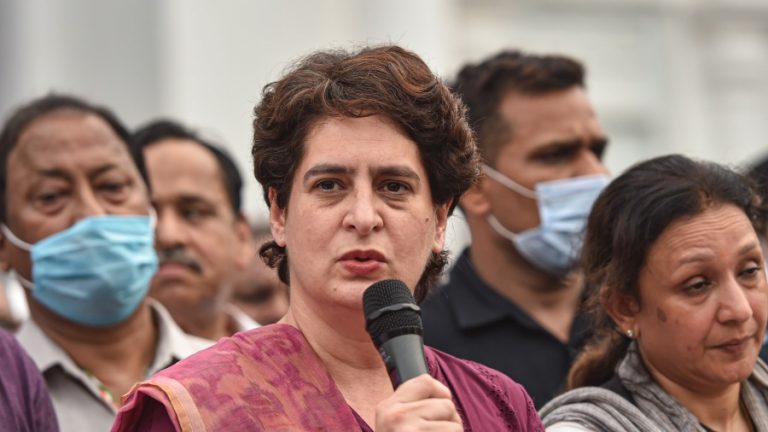
On Tuesday, April 11, Congress leader Priyanka Gandhi while addressing a public meeting organized by the United Democratic Front (UDF) workers in Kerala’s Wayanad made several assertions regarding India’s freedom struggle, one such being that India was built on the foundation of ‘non-violence’.
“Our nation was built on the foundation of truth, non-violence, equality, and justice,” Priyanka Gandhi said as she asserted that “when the institutions are failing to be checks and balances for the government, It is the job of the people of India’s job to be checks and balances for the government.”
When the institutions are failing to be checks and balances for the government, It is our job, the people of India’s job to be checks and balances for the government. pic.twitter.com/O1hfmeyYEn
— Priyanka Gandhi Vadra (@priyankagandhi) April 12, 2023
Contrary to the Congress leader’s assertions, the foundation of independent India was laid on anything but non-violence. Even our school textbooks taught us that ‘Baapu’ got us freedom from the British colonialists through his non-violent movement. However, it has been a bloody history of ours which is not often talked about. It anyways does not make sense that a country that fought two world wars would be deterred by non-violence and let go of its treasure-India.
While the true history and horrors of Direct Action Day, the Khilafat Movement, and many such pertinent episodes related to the Indian freedom struggle may not have found a place in the mainstream discussion as the emphasis was laid on the ‘Ganga Jamuni Tehzeeb’ and other imaginary notions. Our school history books drastically watered down the Indian Independence struggle and painted a romantic picture that a man with a stick in his hand singlehandedly brought us freedom.
Here are some of the chapters of our Independence history which were carefully watered down.
Two-Nation Theory
The proponents of the ‘Two-Nation Theory’ were the original ‘Tukde-Tukde Gang’. Two Nation Theory was first touted by Sir Syed Ahmed Khan, the founder of the Aligarh Muslim University. Khan had in 1876 said that he was convinced that Hindus and Muslims could never be one nation owing to the distinctiveness of their way of living and religion. Years later, in 1888, Khan had asserted that if the British leave India with all their canons and weapons, who would rule this country as he argued that both Hindus and Muslims cannot sit on the same throne, adding that one must conquer the other. “It is necessary that one of them should conquer the other. To hope that both could remain equal is to desire the impossible and the inconceivable. But until one nation has conquered the other and made it obedient, peace cannot reign in the land.”
Other than Sir Syed Ahmed Khan, Allama Mohammad Iqbal who is widely known for writing ‘Saare Jahan Se Accha, Hindustan Hamara’ had years later contradicted himself only to push for a separate ‘Muslim’ country.
In 1910, the poet happened to write Tarana-e-Milli for children to contradict own words he had written six years before. The Islamic fundamentalist nature of Muhammad Iqbal became entirely evident as he wrote, “Cīn o-ʿArab hamārā, Hindūstāṉ hamārā, Muslim haiṉ ham, wat̤an hai sārā jahāṉ hamārā” in the Tarana-e-Milli, which was composed in the same meter and rhyme scheme as ‘Sare Jaha Se Achcha’.
Interestingly, Muhammad Iqbal was also one of the lawyers who represented the murderer of Mahashay Rajpal who had published the book named ‘Rangeela Rasool’. He also praised the murderer identified as Ilmuddin, who was later conferred with the title of ‘Ghazi’ (warrior of faith) by Pakistan for killing Mahashay Rajpal in 1929.
It is important to note that this very two-nation theory laid the foundation for the demand for the creation of a separate Islamic nation, Pakistan, and the bloodshed that ensued.
Indians fought the British war
It is a known fact that Mohandas Karamchand Gandhi who is portrayed as the patron saint of non-violence throughout his life had extended support to the British during the First World War. Over 1.5 million Indian soldiers fought from the British side because MK Gandhi decided so. As pointed out by Congress leader, Shashi Tharoor in this (article), during this time, there were hardly any rebellions against the British as the Indian nationalists did not take advantage of the situation by “even inciting disturbances”. Apparently, the Congress like true ‘allies’ rallied behind the British oppressors.
Statistics of the Military Effort of the British Empire during the Great War, a report published by the War Office in 1922, states that at the end of 1919, 53,486 Indian soldiers had died, 64,350 had been wounded, and 2,937 were still missing. Nevertheless, a few pages earlier, the same book provides an “approximate” number of 47,746 Indians who were “killed, died of wounds, died,” and asserts that an additional 65,126 were injured. It is, however, not very difficult to comprehend that the actual number may have been way higher.
Jallianwala Bagh Massacre: The unasked reward of fighting the British war
Even when World War I concluded in 1919 and Britain prevailed with the assistance of Indian soldiers the Britishers did not keep their promise. Instead of allowing for self-government, the British enforced the Rowlatt Act, which banned and censored the press, imprisoned political activists without charge, and detained anyone suspected of treason against the Empire without a warrant. General Reginald Dyer gave the order to his troops to open fire on 15,000 unarmed and defenseless men, women, and children in April 1919, resulting in the horrifying Jallianwala Bagh massacre.
Interestingly, while the horror of the Jallianwala Bagh massacre still brings tears to people’s eyes, Gandhi somehow forgave the British General.
Khilafat Movement
Muslims in India launched the Khilafat movement (1919–1924) to support the Caliphate in Turkey. MK Gandhi also offered his support to this, hoping that Muslims would do the same for his nationalist struggle.
As a result of the Moplah Muslims’ senseless zeal, nearly 10,000 Hindus were brutally murdered, thousands of Hindu women were raped, and Hindu temples were desecrated. The Moplah Muslims engaged in a murderous rampage during the Malabar Massacre in 1921, slaughtering Hindus in the most heinous ways possible. Over the years in our school history books, this has been whitewashed as ‘Muslims’ struggle for Indian Independence’ while it was their movement to establish an Islamic state in India.
Direct Action Day
Muhammad Ali Jinnah gave a call that we would have “either a divided India or a destroyed India” on the streets of Calcutta on August 16, 1946, calling on fellow Muslims throughout India to participate in a “Direct Action Day.”
Nothing like the rampage that ensued had ever been witnessed in India. Over the course of three days, almost 10,000 people were killed, and up to 15,000 were injured by sword-wielding men.
Noakhali Riots
The Noakhali riots, which began on October 10, 1946, were a series of loosely coordinated murders, mass rapes, kidnappings, and forced conversions of Hindus to Islam, as well as looting and arson of Hindu properties, carried out by the Muslim community in the Noakhali district of the Chittagong Division of Bengal (now Bangladesh). Around 5,000 people were slain during the unrest, which lasted for nearly a week.
Partition
There are tales of male family heads murdering their own daughters to prevent the women from being raped by the Islamist hordes. In her book The Other Side of Silence, Urvashi Butalia narrates an incident from the Thoa Khalsa village in the Rawalpindi district (now in Pakistan) wherein 90 Sikh women jumped into a well to save their honour from the ‘enemies’.
Many lost their homes and were forced to leave countries where their family had resided for many generations. In a matter of days, a centuries-old tie to their home country came to an end.
With Ambedkar Jayanti around the corner, it is also the right time to recall that architect of the constitution was in favour of a complete population exchange at the time of partition.
When someone asserts that the foundation of India was laid on non-violence, they are lying to the Indian people and blatantly covering up the horrors the people of this country endured. Such assertions also belittle the sacrifices of freedom fighters like Bhagat Singh, Netaji Subhash Chandra Bose, and countless others.
To call Indian Independence history as ‘non-violent’ is a disgrace and disservice to thousands who were killed in the various massacres leading to 15th August 1947 and even beyond.
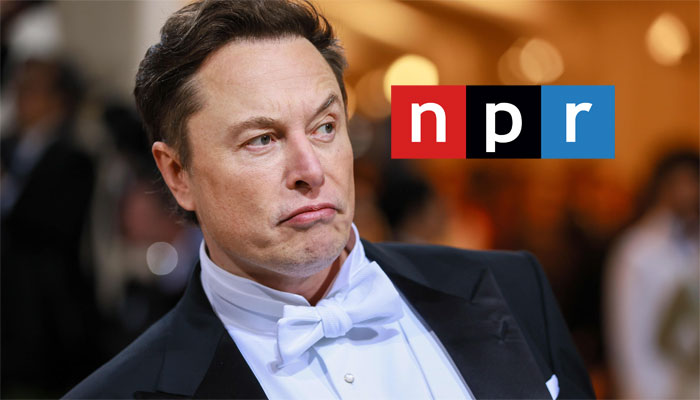
On April 12 (local time), billionaire and Twitter CEO Elon Musk shared a screenshot sent by a business reporter at NPR Bobby Allyn where he sought Musk’s remarks on the announcement made by the media house that it would be quitting Twitter. The decision was taken after Twitter labeled NPR as ‘Government-funded Media’. Since the label appeared, NPR has objected to it, claiming it is inaccurate and misleading.
In the mail to Musk, Allyn wrote, “Because of the label, NPR is quitting Twitter across all of our 50+ accounts. Our executives say the government-funded media label calls into question our editorial independence and undermines our credibility. Some wonder if this will cause a chain reaction among news orgs.” In a follow-up tweet to the screenshot that he shared,
Musk pointed out the funding information available on NPR’s website. It reads, “Federal funding is essential to public radio’s service to the American public and its continuation is critical for both stations and program producers, including NPR.” It further read, “On average, less than 1% of NPR’s annual operating budget comes in the form of grants from CPB and federal agencies and departments.”
Bobby Allyn, who also sent the email to Musk, pointed out in a tweet that only 2 per cent of the traffic at NPR was coming from Twitter. He wrote, “NPR’s analytics show that less than 2% of our traffic comes from Twitter. It’s not a surprise to people who work in media, but even before the labeling saga, there was a pretty strong business case that the game wasn’t worth the candle.”
NPR’s analytics show that less than 2% of our traffic comes from Twitter. It’s not a surprise to people who work in media, but even before the labeling saga, there was a pretty strong business case that the game wasn’t worth the candle
In a detailed article justifying its decision to quit Twitter, NPR, a public radio network, wrote that it would not posting any fresh content to its 52 official Twitter handles. They claimed to be the first major news organisation to go silent on the social media platform. In November 2022, CBS also suspended its activity on Twitter for a few days over alleged security concerns. NPR has added by going silent on Twitter, the media house is “protecting its credibility and its ability to produce journalism without a shadow of negativity”.
NPR’s CEO John Lansing in a statement said even if Twitter decides to remove the label, the network would not immediately return to the platform. He said, “At this point, I have lost my faith in the decision-making at Twitter. I would need some time to understand whether Twitter can be trusted again.”
NPR has further given its employees a two-week grace period so that they can work on their social media strategies. In an email to the staff, Lansing said, “It would be a disservice to the serious work you all do here to continue to share it on a platform that is associating the federal charter for public media with an abandoning of editorial independence or standards.”
Musk and media houses often lock horns on Twitter
Notably, Musk has raised questions over the credibility of the media houses on several occasions. Recently, after Twitter announced to dump of the legacy verified status completely, many, journalists and media houses in particular, stated they would not be paying for the verified status on the social media platform. The latest information provided by Musk was that all the legacy statuses would go away on April 20. Interestingly, New York Times became the first media house to lose the verified badge mark after it refused to pay for the same.
There are two options that the users can choose from. One is the regular Blue Verified which costs around $7 to $11 depending on the country you live in. The second is the Verified For Businesses in which the companies have to pay USD 1,000 per month and if they want additional affiliates to be added, that would cost USD 50. Both prices are excluding taxes.
NPR and its controversies
It must be mentioned that the media outlet has been at the forefront of peddling Hinduphobia and anti-India propaganda in the United States. In September 2019, the then NPR producer Furkan Khan went on a vitriolic tirade against the Hindu community. “If Indians give up Hinduism, they will also be solving most of their problems with all the piss drinking and dung worshipping.”
The ex-NPR producer had also tried to downplay the ethnic genocide of Kashmiri Pandits at the hands of Islamists as ‘normal conflict collateral damage.’ She also compared Hinduism to both Fascism and Nazism. In January last year, the Indian correspondent of NPR, Lauren Frayer, resorted to insensitivity and racial stereotyping on the micro-blogging platform. She had attributed a random case of train burglary in Los Angeles to India without verifying the facts of the case.
On 30th March 2023, Ram Navami processions in Gujarat’s Vadodara were attacked by local Islamists. Two Shobha Yatra processions of Lord Ram were attacked with stones on the same day while passing through a Muslim-dominated area.
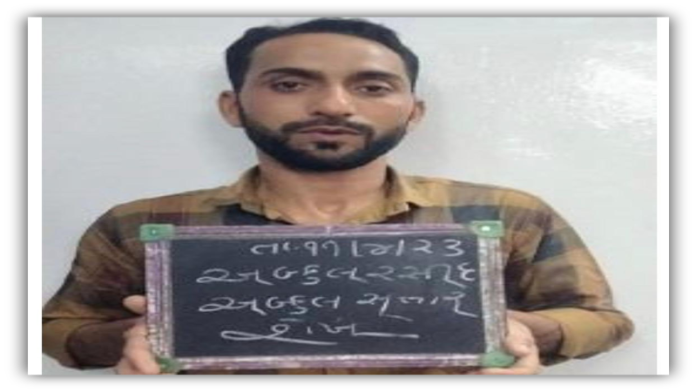
It has come to the fore that when the State Reserve Police Force (SRPF) were trying to bring the situation under control, attempts were made to snatch their rifles. On Tuesday, April 11, Gujarat Police arrested one Abdul Rashid Sattar Shaikh in connection with the matter.
वडोदरा : रामनवमी की शोभायात्रा पर पथराव के बाद पुलिस जवान पर हमला करके रायफल छीनने की कोशिश करनेवाले अब्दुल रशीद शेख को गिरफ्तार किया गया. pic.twitter.com/hvsvzyKSV2
The accused have been identified through CCTV footage of the incident.
Warasiya police said in a release on Wednesday that it had reconstructed the crime scene after a local court granted the accused one-day remand of the accused in police custody.
The action comes after SRPF constable Himmatsinh Baria lodged a complaint on April 1. In his complaint, Baria stated that the said incident took place on the evening of March 30 when the SRPF was deployed for ‘bandobast’ during Ram Navami celebrations.
Warasiya Police Inspector Ashok Mori said that on March 30, at around 5:45 p.m., the complainant was on Bandobast duty close to Kumbharwada when three people, identified as Abdul Rashid Sattar Shaikh, Bittu Rafiq Bengali, and Mohseen, all residents of the Fatepura area, tried to prevent the complainant from executing his duty and tried to snatch the government-issued duty rifle in a scuffle with the complainant.
Inspector Mori added that before fleeing the scene, the accused slapped the SRPF personnel.
On Wednesday, the accused Shaikh was remanded to judicial custody. All three accused have been booked under Indian Penal Code (IPC) sections for robbery (393), assault or criminal force to prevent or deter a public servant from performing his duty (353), voluntarily causing harm to a public servant in the discharge of his duty (332), voluntarily obstructing a public servant in the performance of his public functions (186), and crime committed in the presence of abettor (114).
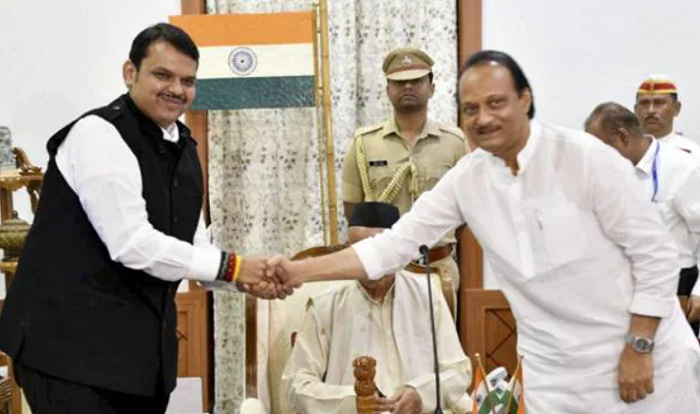
“Ajit Pawar and 7 NCP MLAs have gone not reachable,” reported some of the media houses on April 10 and suddenly the episode of CM Eknath Shinde leaving Shivsena backed by Congress to form a new Shivsena backed by BJP flashed. People began speculating that Maharashtra’s former Dy CM might also leave the party, which recently lost its national status, to join hands with the BJP.
The speculations only deepened as the Enforcement Directorate (ED) filed a chargesheet in the Maharashtra State Cooperative (MSC) Bank scam case, in which it had earlier attached the properties of a sugar mill linked to Ajit Pawar and his wife Sunetra Pawar, but dropped the duo’s names. Netizens posted tweets playing the market and claimed that Ajit Pawar might join the BJP soon, given the current political status of the NCP.
“Grand entry in the Bharatiya Janata Party,” said one of the Twitter users tagging NCP leader Ajit Pawar while the other one posted the famous meme from a TV show named ‘Tarak Mehta Ka Ultah Chashma’. The former lead character ‘Dayaben’ could be seen in the meme offering a traditional welcome aarti on behalf of the BJP saying ‘Aaiye Padhariye..’
One user named Yashodhan Ganu also speculated that Ajit Pawar would soon join BJP and he also already welcomed the leader on behalf of the party. “Welcome to BJP, Ajit Pawar,” he tweeted.
Recently, Republic TV also reported that Ajit Pawar was exploring options to make a shift from NCP and that he was about to possibly join hands with the BJP.
Several recent political incidents revolving around the state of Maharashtra, involving the BJP and Ajit Pawar in specific, are making the media and people, in general, speculate Pawar’s probable shift and that truly stands important here.
1. ED omits the names of Ajit Pawar and Sunetra Pawar from the chargesheet
The Enforcement Directorate (ED) on Wednesday submitted a chargesheet against the Maharashtra State Cooperative (MSC) Bank, in which it had earlier attached the properties of a sugar mill linked to NCP leader and Maharashtra’s former Deputy Chief Minister, Ajit Pawar and his wife Sunetra Pawar, to a court dealing with money laundering cases.
MSC bank scam case | Enforcement Directorate has submitted a chargesheet in the case, in which it has named a company linked to former Maharashtra Deputy CM & NCP leader Ajit Pawar and his wife, while Pawar and his wife have not been named in the chargesheet. The ED had attached…
However, Ajit Pawar and his wife Sunetra’s names have been dropped from the ED chargesheet but names of some companies, which came up while probing the MSC Bank scam, have been retained. The ED earlier had indicated that Ajit Pawar was indirectly involved in the case and that the major part of the funds utilised towards the purchase of Jarandeshwar SSK was received from Jarandeshwar Sugar Mills Private Limited, which received the same from Sparkling Soil, a company related to Ajit Pawar and his wife.
Ajit Pawar clarified the matter and stated that he has not yet attained clean chit in the matter and that the ED investigation against him is still underway. However, State BJP President Chandrakant Bawankule while commenting on the issue said that the ED omitted the leader’s name as it found no evidence against the leader.
Though the central agency works under nobody’s influence, the move to omit Pawar’s name from the chargesheet in the Shinde-Fadnavis-led government rule led to speculations with several people wondering if
2. Anjali Damania tweets ‘Pawar might join BJP’
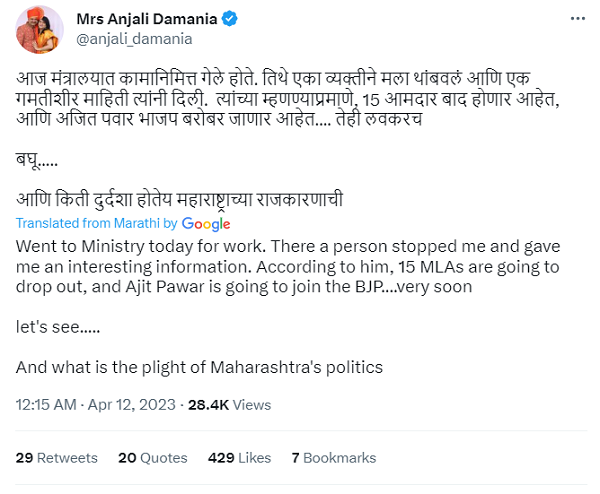
‘Activist’ and politician Anjali Damania claimed on Wednesday that Ajit Pawar might soon join BJP. Tweeting about the issue, Damania said she was informed by someone in the Mantralaya that 15 MLAs from the opposition party in Maharashtra would drop out and Ajit Pawar would soon join the BJP.
“Went to Ministry today for work. There a person stopped me and gave me some interesting takeaways. According to him, 15 MLAs are going to drop out, and Ajit Pawar is going to join the BJP… very soon. Let’s see, what turn does Maharashtra’s politics take now,” her tweet in Marathi roughly read.
screenshot from Twitter
Damania also stated that Ajit Pawar seemed going away from the ideological box set up by the Maha Vikas Aghadi, the political coalition formed after the 2019 Maharashtra Legislative Assembly election under the leadership of Uddhav Thackeray of Shiv Sena (Uddhav faction), Sharad Pawar of the NCP and Sonia Gandhi of the INC. Notably, Damania had earlier joined AAP and she came into the limelight in 2012, after she blatantly accused BJP’s Nitin Gadkari of having a business partnership with Sharad Pawar.
Gadkari later rejected the allegations, saying that he had never met Damania, and sued her for defamation. The BJP also denied any link between Gadkari and Pawar. In the meantime, the then irrigation minister Ajit Pawar was forced to submit his resignation due to aligned actions of Damania amid the bigger Maharashtra Irrigation Scam.
The recent tweet by Damania has done nothing but contributed to the speculations of Pawar joining the BJP.
3. NCP losing national status
In a major setback to the Nationalist Congress Party (NCP), the Election Commission on Monday revoked the national status of the party formed by Sharad Pawar and stated that the party would now have state party status only in Maharashtra and Nagaland. The Commission is said to have revoked the NCP’s national party status on the basis of its election performances in 2014 and 2019.
While NCP MP Supriya Sule said that the decision taken by the ECI was acceptable to the party, losing the national status has upset several of its party members. There are speculations that Ajit Pawar too might be upset over the demotion of NCP by the EC and therefore may plan a move to BJP.
4. Ajit Pawar praising Modi
The state, especially the opposition parties, suffered a massive shock recently when the Leader of Opposition and NCP leader Ajit Pawar praised the BJP-led government and said that it was PM Modi’s magic that the party had reached the remotest of the locations. He also slammed the people who criticized Modi for his education and said that it was important to see how that man works.
“After winning the elections in 2014, Modi faced a lot of criticism. However, it’s a fact that he became very popular among the masses, and the BJP won polls in many states because of him. The BJP under his leadership repeated the 2014 feat in the 2019 elections. What is important to note is that people see his work. Education is not considered a very important criterion in politics,” he was quoted as saying.
Further, going against Congress’ demand to frame a law to give voters the option of using ballot papers besides EVMs in local governing bodies and Assembly polls, Ajit Pawar reposed faith in the EVMs and said that the people who lose the elections start blaming the EVMs and fail to accept the mandate of the people.
He pointed out that if EVMs were faulty, the opposition parties would not be in power in states like Chattisgarh, West Bengal, Rajasthan, Punjab, Kerala, Tamil Nadu, Telangana and Andhra Pradesh. He observed, “It is not possible to manipulate EVMs in our country. It is a big system altogether, lots of checks and balances are involved.”
Pawar is constantly making attempts to break ranks with the opposition parties and expose cracks in his coalition with the Congress in the state of Maharashtra, allowing people to speculate about his shift from the party to the BJP.
5. Sharad Pawar backing Adani
On April 8, in an interview with the NDTV, Sharad Pawar questioned the credibility of the Hindenburg Research Report which levelled the allegations against the Adani Group. Pawar disagreed with the demand for a joint parliamentary committee probe into the alleged scam and later clarified that his disagreement is on the ground that a JPC will have a majority of the ruling party and a Supreme Court-monitored panel would be better, in his opinion.
Pawar also opined that the attack on Adani by the Congress Party seemed like a targeted attack to him. “Such statements were given by other individuals too earlier and there was a ruckus in parliament for a few days but this time-out proportion importance was given to the issue. When they raise issues that cause a ruckus across the country, the cost is borne by the country’s economy, we cannot disregard these things. It seems this was targeted,” Pawar was quoted as saying to the NDTV journalist Sanjay Pugalia.
#PawarToNDTV | “Seems Targeted”: Sharad Pawar To NDTV On US Short-Seller’s Adani Report
While speculations were rife about cracks in the opposition camp, Congress asserted that the NCP had formally supported the JPC demand and that Sharad Pawar’s remarks might be his personal opinion.
Later, LoP Ajit Pawar who backed Sharad Pawar’s stand on the Adani issue, said that Sharad Pawar’s stand was now the stand of his party and that he would not go against it. However, he said that the recent difference of opinion among the MVA partners on the Adani issue was no threat to the coalition.
The NCP supremo further happened to back PM Modi on the degree education issue and asked whether someone’s education degree could be a political issue in the country at a time when the country is facing unemployment, law and order issues and inflation. This was in response to jailed AAP leader Manish Sisodia’s letter last week from Tihar which read that the country needed to have an educated person in the PM’s post.
Ajit Pawar also, as mentioned above, later praised PM Modi and suggested people, including the opposition, see his magic and not his education or his college degree. These statements and actions by the Pawars are making strong the belief of the people who think that the Pawars are not showing unity with the opposition.
6. Ajit Pawar’s first attempt to join hands with the BJP
However interesting the politics of Maharashtra has been in the past four years, one cannot forget the episode of 2019 when the NCP leader joined hands with the BJP and then took a back seat forming a coalition with the Congress and BJP’s former ally Shiv Sena. Ajit Pawar on November 23, 2019, took oath as the Dy CM of Maharashtra with BJP’s Devendra Fadnavis becoming the Chief Minister. However, the government lasted for not more than 80 hours and it collapsed on November 26, 2019.
The ‘coup’ panned out after the Shiv Sena walked away from its three-decade-old ally BJP and joined hands with the diametrically opposite in ideals, the Congress and the NCP, to form the Maha Vikas Aghadi. Sharad Pawar then made sure that the MVA came to power.
What exact discussions happened on the night of November 22 and 23 which first led Ajit Pawar to join hands with the BJP and then withdraw his stance are still unknown. Pawar never talked about it. But back then people speculated that it was Supriya Sule and Sharad Pawar who controlled the massive political and family twist and ‘directed’ Ajit Pawar to be a part of the MVA-led government and take oath as Dy CM of the state.
If the latter twist ie, Ajit Pawar resigning from the post of Dy CM to be with MVA would not have occurred, today Ajit Pawar would probably be with the BJP and the power of NCP would have diminished. Ajit Pawar’s honest urge to be with the BJP in power cannot be ignored here.
Commenting on the issue, the current Dy CM of the state Devendra Fadnavis had stated that the NCP Supremo knew everything about Ajit Pawar’s dramatic exit after 80 hours of joining hands with the BJP in 2019. “We had an offer from the NCP that they needed a stable government and we should form such a government together. We decided to go ahead and hold talks. The talks happened with Sharad Pawar. Then things changed. You have seen how things changed,” Fadnavis said recently.
“In all fairness, I want to state that Ajit Pawar took an oath with me with honesty… but later on their (NCP’s) strategy changed,” Fadnavis added. However, NCP stalwart Sharad Pawar called Fadnavis ‘uncultured’ over his remark. The BJP then pressed over the fact that it was Sharad Pawar who had given a message that the BJP-NCP government could be formed.
7. Parth Pawar has a soft corner for the BJP?
Parth Pawar, elder son of the leader of the Opposition in the Maharashtra assembly and senior Nationalist Congress Party (NCP) leader Ajit Pawar has always had a soft corner for the political ideology possessed by the Bharatiya Janata Party and now the Balasahebanchi Shiv Sena. Junior Pawar, who is still looking for stability in his political career had earlier extended his grand wishes welcoming the construction of the Ram Mandir in Ayodhya. Going against the party stand, he had called it a cultural victory and had said that the Bhoomi Pujan of the Ram Mandir will remain etched as the ‘civilisational awakening of Bharat’.
He also, in the initial days of his career had tweeted ‘Jai Shree Ram’. Supriya Sule then covered him up saying that his activities cannot be called anti-party and that it is his personal opinion. Also, Sharad Pawar had called him immature. Junior Pawar then also demanded a CBI enquiry in the Sushant Singh Rajput case, forcing the party loyalists to question if everything was fine among the Pawar clan. Sharad Pawar had earlier stated that he had full faith in the Mumbai Police and that he would have no problem if there are demands for a CBI probe after the investigation by the Mumbai police is over.
Today is a historic day. Bhoomipoojan at Ayodhya today will be etched as civilisational awakening for Bharat. However, we need to steadfastly safeguard the secular fabric of our nation. We need to be gracious in this cultural victory. #JaiShreeRam
Several people back then including Nikhil Wagle, a journalist and Maha Vikas Aghadi government sympathiser were profoundly perturbed by Parth’s demand for a CBI inquiry into the Sushant Singh Rajput’s alleged suicide case and his statement on the Bhoomi Pujan of the Ram Mandir. Wagle wondered if anything is “cooking” in the precarious Maha Vikas Aghadi alliance.
I don’t understand why @AjitPawarSpeaks ‘ son Parth is helping BJP. First he demanded CBI probe in #SushantSingRajputDeathCase and wrote a letter congratulating Modi on Ram Mandir bhumipoojan. What’s cooking?
Also, Chaitanya Purandare, a member of the Maharashtra State Commission For Protection of Child Rights had indicated that Parth had a soft corner for BJP and Devendra Fadnavis. “In Mahabharata, Parth (Arjun) was an admirer and huge devotee of Devendra (Lord Indra),” he had tweeted.
This is only months after father Ajit Pawar was forced to return from the BJP-NCP pairing and be a part of the MVA coup again. Also recently, Parth Pawar met state minister and Balasahebanchi Shiv Sena (BSS) leader Shambhuraj Desai. Though this meeting was described as a personal visit later, it has led to rising speculations about whether the NCP has kept its lines open with the ruling alliance just like in 2019.
8. Dada respects Fadnavis and never attacks directly
Ajit Pawar is well-known for his confrontational demeanour in Maharashtra. He is called Dada. However, he tends to shy away from going after Devendra Fadnavis directly when it comes to the BJP. This was once again demonstrated when information about famed bookie Anil Jaysinghania’s alleged relationships with Amruta Fadnavis, the wife of Maharashtra Dy CM Devendra Fadnavis, surfaced. Ajit Pawar did not criticise the investigation or demand a ‘fair’ trial, like other opposition parties.
Also, ‘Dada’ avoided responding when Devendra Fadnavis commented on the 2019 political upheaval episode. He said nothing while NCP supremo Sharad Pawar called Fadnavis ‘uncultured’ and said that the latter was spreading ‘false’ facts. Ajit Pawar and his son Parth Pawar have always had good relations with the BJP and they continue to respect even the national BJP-ruled government now.
But ‘once bitten, twice shy’, they say. While there are speculations that Dada might want to join the BJP in the coming future, Devendra Fadnavis needs to take care to avoid possible danger or problems similar to the ones that occurred in the year 2019 due to Pawar’s dramatic entry and exit from the BJP-NCP pairing. Notably, Ajit Pawar has time and again put a line through his party shift guesswork and stated that he would remain loyal to the NCP.
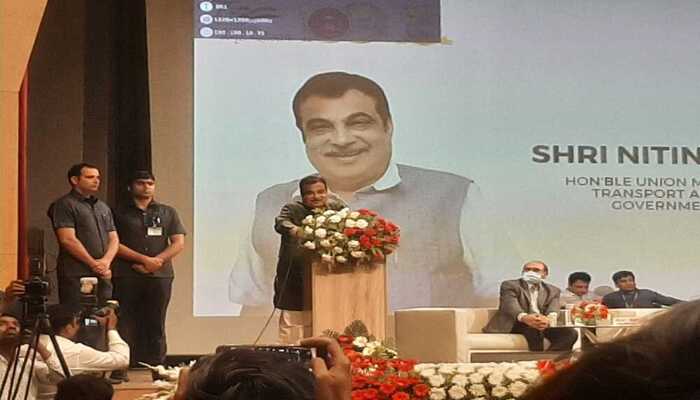
The Shri Ram College of Commerce (SRCC) in Delhi is hosting SRCC Business Conclave from 12 to 14 April, the Annual Management Festival of the college. Today was the first day of the Conclave presented by Face Magazine. The event featured renowned speakers, including Swami Mukundanand, Naveen Jindal, and Union Minister for Road Transport and Highways, Nitin Gadkari, who shared their valuable insights on various aspects of business, economics, and infrastructure development. The Business Conclave began with the lighting of the ceremonial lamp.
The event witnessed an enlightening inaugural address by Swami Mukundanand, a renowned spiritual leader, and author, who shared insights from the Bhagavad Gita and delved deeper into the philosophy of life, offering solutions to modern-day problems using ancient Indian wisdom.
The Business Conclave was attended by a diverse audience, including students, faculty, industry experts, and business professionals, all eager to gain insights from Swami Mukundanand’s profound wisdom. Swami Mukundanand, who is known for his spiritual teachings and ability to connect ancient Indian philosophy with contemporary challenges, delivered a captivating speech that left a lasting impact on the audience.
Swami Mukundanand merges the ancient with the modern
In his inaugural address, Swami Mukundanand emphasized the importance of integrating spiritual wisdom into our modern lives. He spoke about the timeless teachings of the Bhagavad Gita, one of the most revered scriptures in Hindu philosophy, and how it can provide practical solutions to the challenges faced in today’s fast-paced world. Swami Mukundanand highlighted the relevance of ancient Indian wisdom in addressing the various issues that modern-day society faces, including stress, anxiety, leadership, and decision-making.
Swami Mukundanand shared insights from the Bhagavad Gita, which teaches the importance of self-awareness, self-mastery, and selfless service. He emphasized the need for individuals to cultivate a positive mindset, develop inner strength, and align their actions with higher values and principles. Swami Mukundanand also stressed the significance of mindfulness and meditation in managing stress, enhancing focus, and improving overall well-being.
Swami Mukundanand’s speech was not only insightful but also interactive, as he engaged with the audience through anecdotes, real-life examples, and practical tips. He encouraged the audience to reflect on their own lives and strive for personal growth and development. Swami Mukundanand’s address resonated with the attendees, as he provided valuable guidance on how to lead a balanced, meaningful, and purpose-driven life.
Furthermore, Swami Mukundanand emphasized the importance of ethical leadership in today’s business world. He spoke about the need for leaders to have a clear vision, integrity, and empathy towards their team members and stakeholders. He emphasized that ethical leadership is not just about achieving short-term goals or financial success but also about making a positive impact on society and leaving a legacy that inspires future generations.
Swami Mukundanand also highlighted the role of spirituality in enhancing leadership skills. He spoke about the need for leaders to connect with their inner selves, cultivate humility, and develop a deep sense of compassion towards others. He emphasized that spirituality can help leaders develop a holistic perspective, make wise decisions, and create a positive work culture based on trust, respect, and inclusivity.
Naveen Jindal shares insights into business, life and sports
The second speaker of the event was Naveen Jindal, a distinguished industrialist, politician, and philanthropist. Naveen Jindal shared his insights on various issues, including his love for Polo and fitness, which he considers vital for maintaining a healthy work-life balance. He spoke about his passion for Polo as a sport that requires physical and mental agility, teamwork, and strategic planning, which he finds parallel to the skills needed in the business world. Naveen Jindal also emphasized the importance of staying physically fit and mentally alert to navigate the challenges of the dynamic business environment.
Naveen Jindal, known for his entrepreneurial acumen and leadership skills, shared his experiences and learnings from his journey in the business world. He touched upon topics such as leadership, innovation, and sustainability, providing valuable insights to the audience. Naveen Jindal’s address was received with great admiration, as he shared his real-life experiences and practical wisdom, motivating the attendees to become resilient and forward-thinking business leaders.
Mr Jindal began his address by sharing his journey as a businessman and the challenges he faced in building and growing his business empire. He spoke about the early days of JSPL and the struggles he faced, including debt burdens and tough market conditions. However, through perseverance, strategic planning, and a dedicated team, he gradually turned the fortunes of the company around and transformed it into a global conglomerate with a strong presence in the steel, power, and infrastructure sectors.
Mr Jindal emphasized the importance of resilience, determination, and innovation in the business world. He shared valuable lessons on how to overcome setbacks, adapt to changing market dynamics, and constantly innovate to stay ahead in a highly competitive environment. He also stressed the significance of ethical business practices, transparency, and corporate governance in building a sustainable and socially responsible business.
Apart from his business successes, Mr Jindal also shared his passion for sports, particularly his love for polo. He spoke about his deep-rooted interest in sports from a young age and how it has played a pivotal role in shaping his personality, leadership skills, and decision-making abilities. Mr Jindal emphasized the importance of sports in instilling discipline, teamwork, and sportsmanship, which are invaluable qualities for success in any field of life.
Mr Jindal also spoke about his efforts in promoting sports and supporting athletes in India. He shared his vision for developing sports infrastructure and nurturing young talent in the country. He highlighted the need for a holistic approach towards sports, encompassing both physical and mental well-being, and the importance of creating a supportive ecosystem for athletes to excel on the global stage.
In addition to his business and sports endeavours, Mr Jindal also shared his vision for education and the role it plays in shaping the future of India. He spoke about his passion for promoting education and his efforts in setting up the Jindal Global University, a world-class institution that offers interdisciplinary education and fosters research, innovation, and global engagement.
Mr Jindal emphasized the need for quality education that prepares students for the challenges of the 21st century and equips them with the skills and knowledge to drive economic growth and social progress. He stressed the significance of investing in education, particularly in rural and underprivileged areas, to bridge the gap of inequality and create a more inclusive society.
Furthermore, Mr Jindal shared his experiences and insights on managing and leading a large organization. He spoke about the importance of building a culture of trust, empowerment, and diversity in the workplace. He highlighted the need for leaders to be accessible, approachable, and empathetic towards their team members, and to create an environment that fosters innovation, creativity, and collaboration.
Nitin Gadkari captivates the audience with his wit and knowledge
The highlight of the Business Conclave was the keynote address delivered by Hon’ble Minister for Road Transport and Highways, Shri Nitin Gadkari. As a prominent political leader and a driving force behind several key infrastructure projects in India, Gadkari’s insights were eagerly anticipated by the audience. In his address, Gadkari lauded SRCC as a premier institution known for its excellence in the study of economics and commerce. He acknowledged the contribution of SRCC in producing skilled professionals who have excelled in various fields of business and economics.
In his address, Mr Gadkari candidly spoke about the challenges faced by his ministry and the need for efficient governance to overcome them. He highlighted the issue of bureaucratic red tape that has plagued the system for years, leading to delays and cost overruns in projects. Mr Gadkari emphasized the importance of adopting efficient and scientific methods to save public money, reduce red tape, and expedite the implementation of infrastructure projects.
Mr Gadkari also shared his vision for urban waste management, which is a critical issue faced by Indian cities. He stressed the need for sustainable and innovative solutions to tackle the growing problem of waste generation and pollution. Mr Gadkari highlighted the importance of adopting modern technologies and practices for waste management, including recycling, waste-to-energy, and decentralized waste processing units, to create a clean and green environment.
Furthermore, Mr Gadkari shared his personal journey in public service and the lessons he has learned along the way. He spoke about his early days in politics, the challenges he faced, and the perseverance and determination that helped him overcome them. Mr Gadkari emphasized the importance of integrity, leadership, and humility in public service, and how these qualities have guided him in his political career.
Mr Gadkari also touched upon the issue of environmental conservation and the need for sustainable development. He spoke about the importance of striking a balance between economic growth and environmental protection, and the need for policies and practices that promote sustainable development. Mr Gadkari highlighted the efforts undertaken by his ministry in building green infrastructure, including highways with tree plantation and water conservation measures, to minimize the impact on the environment.
In addition to his insights on governance and sustainability, Mr Gadkari also spoke about his ministry’s achievements in building critical infrastructure projects across the country. He highlighted the progress made in areas such as road construction, port development, and waterways, and the positive impact these projects have had on India’s economic growth and development.
Mr Gadkari also shared his thoughts on the role of technology in driving innovation and development. He spoke about the need for embracing technology and digital transformation in the government and infrastructure sectors to improve efficiency, transparency, and accountability. Mr Gadkari emphasized the importance of innovation and entrepreneurship in driving economic growth and job creation, and the need for a conducive ecosystem for startups and innovators in India.
Gadkari further highlighted the importance of investing in infrastructure for economic growth and development. He shared valuable information about the accomplishments of his ministry in building critical infrastructure projects across the country, such as highways, ports, waterways, and renewable energy projects. Gadkari emphasized the need for sustainable and inclusive infrastructure development that promotes economic prosperity, social well-being, and environmental sustainability.
Gadkari also discussed the government’s efforts to promote entrepreneurship, innovation, and skill development to foster economic growth and job creation. He shared insights on various policy initiatives and reforms aimed at creating a conducive environment for businesses to thrive. Gadkari’s address was packed with valuable information, inspiring the audience with his vision and determination to drive infrastructural development in the country.
The audience was captivated by Mr Gadkari’s inspirational address, which was filled with anecdotes, insights, and practical solutions to pressing issues. His vision for efficient governance, sustainable development, and embracing technology resonated with the young minds at SRCC, who were inspired by his leadership and achievements.
The Business Conclave at SRCC Delhi also featured interactive panel discussions, workshops, and networking sessions. These sessions provided a platform for industry experts, faculty, and students to engage in meaningful discussions, exchange ideas, and explore new perspectives on various business-related topics. The panel discussions covered a wide range of themes, including sustainable business practices.
The Business Conclave at SRCC Delhi brought together visionaries, leaders, and experts from various fields to share their perspectives, experiences, and insights on pressing business and economic issues. The presence of Swami Mukundanand, Naveen Jindal, and Hon’ble Minister Nitin Gadkari added immense value to the event, making it a memorable and enriching experience for all. The conclave served as a platform for meaningful discussions and the exchange of ideas, contributing to the overall academic and intellectual ecosystem of SRCC and the business community at large.
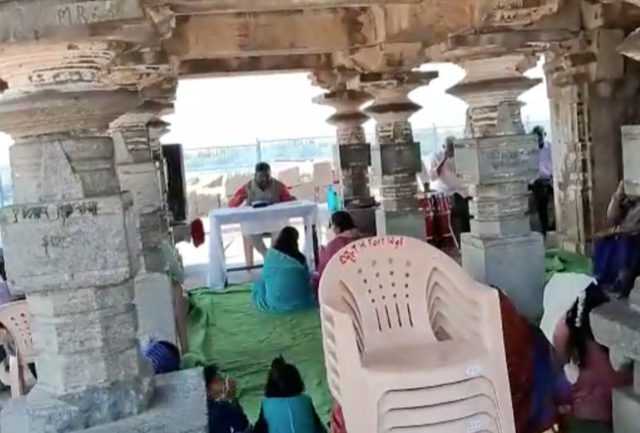
An FIR has been reportedly registered against pastor Mr Gandham Arun Kumar and others for conducting Christian prayers inside a Hindu temple in Warangal, Telangana, earlier this week.
Legal Rights Protection Forum, a non-profit activist group, took to Twitter to inform that the pastor and others involved in the incident have been booked after a complaint was lodged by Sub Inspector Sri D. Sambaiah. The FIR was registered against sections 295-A, 153a, 153b, 504, 505 r/w 34 of IPC.
Following a complaint lodged by the Sub Inspector Sri D. Sambaiah (P.S. Mills Colony), an FIR has been registered u/s 295-A, 153a, 153b, 504, 505 r/w 34 of IPC against the Pastor Mr. Gandham Arun Kumar and others for conducting Christian prayers in Hindu Mandir. https://t.co/Rl7mgKBAe1
— Legal Rights Protection Forum (@lawinforce) April 11, 2023
The matter pertains to Christians conducting prayers in a Hindu temple constructed by the Kakatiya dynasty in Fort Warangal, a video of which had gone viral on social media, drawing outrage from several quarters on the internet. The temple is reportedly under the control of the Archeological Department and being administered by the Telangana Endowments Department.
Members from Vishwa Hindu Parishad (VHP) and Bajrang Dal launched a protest, calling for action against the organisers of the program and claiming that it was an affront to Hindu deities.
To file a complaint, they proceeded to the Mills Colony police station and met with DCP Srikanth Rao and ACP Ramala Sunitha.
Later, while addressing the media, they claimed that the local Hindu community was concerned after learning about the large-scale prayers being held directly in front of Ramalayam and Swayambu Ramalingashwara Swamy temple near Gundu Cheruvu.
Lord Rama’s “pada mudras” and “shanku chakras” can be found inside Ramalayam, and the temple’s yearly Mahashivaratri festival is a well-attended occasion.
The members of VHP and Bajrang Dal questioned how the Christian community could arrange large-scale prayers in front of the temple and serve non-vegetarian food. Such occurrences, they asserted, had the potential to cause religious unrest and disrupt the peaceful environment in the surrounding area.
They also cautioned that if authorities did not take action, VHP and other Hindu organizations would begin a protest. Speakers at the event included Sriram Uday Kumar, Bandi Rohit Yadav, S. Sairam, Aditya Sai, P. Raju, Harish, Manohar, Sandeep Reddy, and Koteshwar.
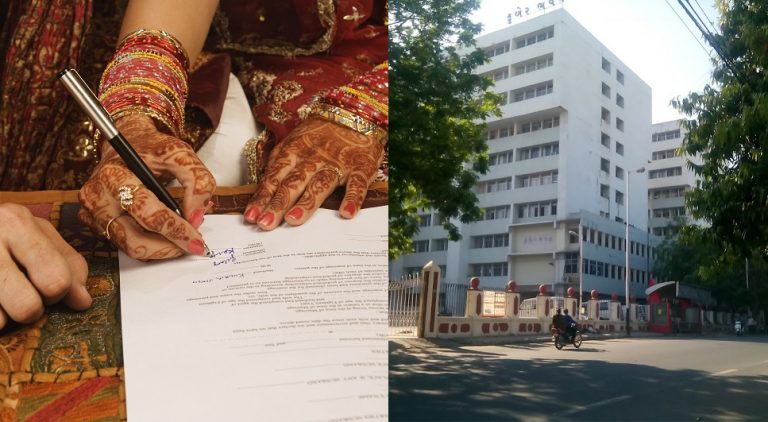
A Hindu man and a Muslim woman who had recently eloped reached the sub-registrar’s office in Vadodara city to fulfil the last formalities of their inter-faith marriage registration when a crowd gathered there and caused great pandemonium.
A complaint had been filed at the Karjan police station about the woman’s disappearance. She was in a relationship with a Hindu man, of which her family in Vadodara was aware. She and her partner both vanished a few days ago after they eloped together.
The family members of the girl and others gathered at the Sub Registrar’s office on the sixth floor of Kuber Bhavan in Vadodara when found out that the couple had arrived for registration of their marriage. After learning about the ruckus at the office, the police arrived and protected the interfaith couple. The pair, who are both adults, were taken to the ninth floor by the Raopura police to protect them. However, they were followed by several people from the Muslim group.
Furthermore, later a team of district police officers came to the Sub Registrar’s office to take the girl’s statement about the missing report that was lodged by her relatives. Kuber Bhavan remained in disarray well into the evening as the relatives of the Muslim girl continued to create lots of noise. Later the woman was taken to Nari Sanrakshan Gruh.
A similar interfaith marriage case had previously come to light in the Hasthal village of Kalavad Taluka in the Jamnagar district. Here, the father, Kishore Karsariya and sister of a Hindu man Hiren, who married a Muslim girl, Muskan Yusuf, were assaulted and forbidden from entering the village.
The couple eloped, got married and started living together in Rajkot which didn’t go down well with the latter’s family.
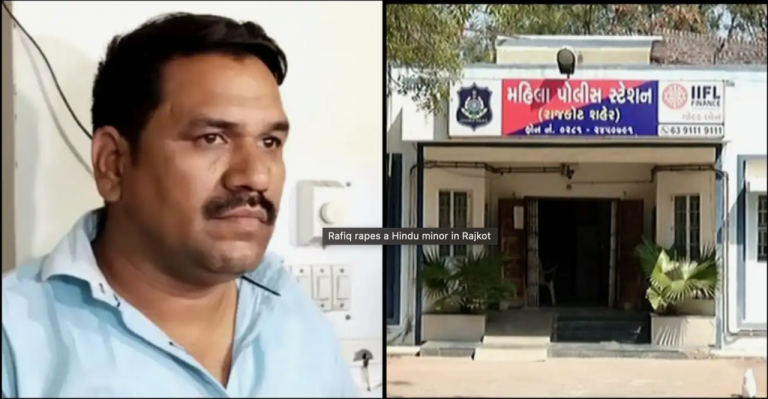
A disturbing case of a rape of a minor Hindu girl has come to light in Rajkot, Gujarat. The accused, Rafiq Arab, a friend of the victim’s father, called the girl to his home on the pretext of giving her the keys of a moped and then raped her. Rafiq was arrested by the Rajkot Women’s Police Station and has been slapped with relevant sections under the POCSO Act.
As per the information provided to the police, Rafiq is a friend of the victim’s father. Rafiq lived near the victim’s residence and used to frequently visit her home. One day, he dialed his Hindu friend’s home, which was answered by the victim. Rafiq asked the girl to bring her mobile phone and a moped he had left at her house. When the 16-year-old girl, a Class 9 student, arrived at Rafiq’s house with the keys, he was alone. Exploiting the opportunity, he detained and assaulted the victim.
The complaint filed by the victim said that Rafiq tied the girl’s legs and subsequently raped her. He then threatened the girl against informing anyone about the incident, adding that he would publicise in society that she had a boyfriend if she talked about the incident.
According to the information, he tied the legs of the victim and raped her. After this, he threatened the victim that if she told anyone about it, he would publicize that she had a boyfriend. Upon returning home, the teenager began to experience abdominal discomfort. Her family took her to the hospital, where the victim recounted the entire incident to them.
The girl’s parents filed a complaint at the women’s police station. Subsequently, the police apprehended Rafique from his workplace, following the case’s registration. Initially, Rafique vehemently denied the charges. However, after intense interrogation by the police, he confessed to his crime. The accused has been charged under the POCSO Act and section 376 of the IPC.
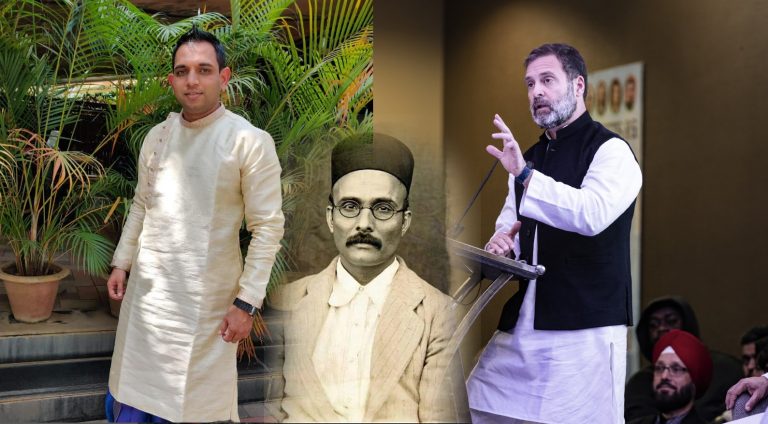
Another defamation case has been filed against Congress leader Rahul Gandhi after his conviction in a defamation case that resulted in his disqualification from Lok Sabha. Satyaki Savarkar, the grandson of Vinayak Damodar Savarkar, has filed a complaint against Rahul Gandhi over his comments on Veer Savarkar.
The defamation complaint under sections 499 (defamation) and 500 (punishment for defamation) of the Indian Penal Code has been filed before the court of a judicial magistrate in Pune.
“Today, I have filed a complaint for criminal defamation against Rahul Gandhi for his false allegations made in this speech against my grand father late Shri. Vinayak Damodar Savarkar,” Satyaki Savarkar said on Twitter today evening. He also posted a clip of a video of Rahul Gandhi’s speech where the Congress leader had alleged that Savarkar’s ideology included being happy after beating Muslims.
The disqualified Lok Sabha MP had claimed that Savarkar has written in his book that once he felt very happy after he and his friends beat up a Muslim man. He had said that this is the ideology of BJP.
Rahul Gandhi had made the comments during his recent trip to the UK, which was filled with controversial remarks by him. During an interaction with the Indian diaspora organised by the UK chapter of the Indian Overseas Congress (IOC) on 5 March, he had claimed that BJP’s ideology is “cowardice.”
Referring to External Affairs Minister Jaishankar’s remarks on China, Rahul Gandhi had said, “If you notice the statement of the Foreign Minister, he said China is much more powerful than us. To think China is more powerful than us, how can I pick a fight with them? At the heart of the ideology is cowardice.”
He then went on to say, “Savarkar, in his book, said that he felt happy after he along with 5-6 others beat up a Muslim man. If five people beat up one person and one of them feels good, this is cowardice. If you want to fight then go fight single-handedly.”
Speaking to portal The New Indian, Satyaki Savarkar’s counsel Anirudh Ganu said that Gandhi’s claims are totally baseless and Veer Savarkar did not mention any such event anywhere. “His statement is totally false,” he said.