Home Blog Page 2422

Family blast administration for calling the death of mother-daughter duo in Kanpur as ‘suicide’, here is how things have turned

On Monday, February 13, reports emerged that 45-year-old Pramila Dikshit and her 20-year-old daughter Neha immolated themselves during the demolition drive in their village Madauli under the Rura Police Station area, district Kanpur, Uttar Pradesh.

It was reported that when the district administration, revenue officials, and police came to the village to remove encroachment on ‘Gram Samaj’ land, Pramila repeatedly warned the officials to back off or else she would take the extreme step. However, when the police and administration did not pay heed and continued the demolition drive, Pramila and her daughter Neha set themselves on fire.

Son of deceased Pramila accuses SDM and Lekhpal of ordering authorities to set their house on fire

Though the district police initially claimed that the women set themselves on fire, the case has now taken a completely different turn. The family of the deceased has alleged that it was not a case of suicide as portrayed by the administration but a cold-blooded murder. The deceased’s family said that the duo did not set themselves on fire, but rather the SDM directed Lekhpal to set fire to their hut.

The son, Shivam Dixit, said that as the fire set by the administration intensified, the roof of the hut made of wooden logs collapsed and his mother and sister got trapped beneath it. While he and his father, Krishna Gopal Dixit, managed to escape, Pramila Dikshit and her daughter Neha could not escape and were burnt to death. 22 goats were also burnt in the inferno.

In a video that has been doing the rounds on social media, Shivam Dixit can be heard accusing Vishal Dixit, Gaurav Dixit, and Ashok Dixit as the prime accused. He bemoans that the trio, in connivance with district officials set his hut on fire.

According to Shivam, the officials informed him that Ashok Dixit had complained about the encroachment to the officials. The complaint, filed by Shivam, also named Vishal Dixit and Gaurav Dixit as co-accused. Along with them, 1012 other people are accused of being present at the location when the house was burned down and bulldozed.

According to Shivam’s FIR, on January 14, the SDM Janeshwar Prasad, Lekhpal Ashok Singh, Tehsildar, 12-15 police officers, and a JCB arrived at Krishna Gopal Dixit’s pucca house, where the family had been living for decades, on the basis of a complaint filed by one Ashok Dixit that the house was built on encroached land. Shivam went on to say that he had not received any prior information from the authorities advising him of the situation.

Shivam’s family contested the authorities’ arbitrary action against their pucca house. Facing protests, the authorities could only remove some construction. They returned warning Shivam and his family to vacate the area in the next 3-5 days.

Police charged Gopal Krishna’s family with rioting

Shivam stated that he went to the District Magistrate (DM) and Additional District Magistrate (ADM) offices on the same day to file a complaint, but no one listened to his request. Instead, the following day, authorities charged eight members of Gopal Krishna’s family, including Pramila and Shivam, with rioting. The cops drove them away by threatening to imprison them if they did not withdraw their complaint.

Since they were now rendered homeless, Shivam and his father constructed a kutcha house in the Madauli village and started living there. The family alleged that Lekhpal Ashok Singh once again approached them and demanded Rs 5,000. When the family refused to pay, the Lekhpal along with Maitha SDM Janeshwar Prasad and Rura police station SHO Dinesh Kumar Gautam reached their hut on February 13 at 3 pm with a JCB to demolish it. Ashok Dikshit, Anil Dikshit, and Nirmal Dikshit were also present at the scene.

Copy of the FIR filed in the case

Shivam went on to say that he and his family were resting inside the house and that 22 goats were also tied inside when the authorities proceeded to run a bulldozer over it without alerting them. He added that the enraged SDM demanded that Lekhpal set fire to their hut and the Lekhpal warned them that no one would be spared.

Police thrashed Shivam after he survived the fire

Shivam added that after he somehow managed to escape the blazing hut, SHO Dinesh Gautam and the police constables severely beat him up.

He added that his father Krishna Gopal Dixit also managed to escape the fire but got multiple burn injuries all over his body. It may be recalled that a picture of Krishna Gopal Dixit is viral on social media in which he was seen injured with cut marks on his face and forehead. 

Meanwhile, Shivam’s mother Pramila, and sister Neha got trapped beneath the wooden roof that fell over them as a result of the fire.

Authorities fled the scene after the tragedy

Shivam recalled that the authorities fled the scene leaving his mother and sister to die in the fire. “They started the fire while people were still inside. We were just about able to escape. They broke our temple. Nobody did anything, not even the district magistrate. Everybody ran, nobody could save my mother,” said Pramila’s son Shivam Dixit, adding that when the fire was doused and they went inside, they only found the charred bodies of his mother and sister.

Notably, Krishna Gopal Dixit also attested to what his son said accusing the SDM, Tehsildar, and the Lekhpal for the fire that took the lives of his wife and daughter. He also complained that they haven’t received any sort of help from the administration. “In fact, they ran away after setting our house on fire,” alleged Krishna Gopal Dixit.

The victim’s family has demanded strict action against the authorities. They have also demanded land and government jobs along with Rs 1 crore each for the two brothers as compensation.

Yogi Govt initiates action against the SDM, Lekhpal, and police officials over the deaths

After the incident came to the fore, Chief Minister Yogi Adityanath-led Uttar Pradesh government initiated action against the SDM, Lekhpal, and police officials over the two deaths.

An FIR under Sections 302, 307, 436, 429, 323, and 34 of the Indian Penal Code (IPC) was registered at Rura Police Station, district Kanpur Dehat against Ashok Dikshit, Anil Dikshit, Nirmal Dikshit, Vishal, JCB driver Deepak, SDM Maitha Gyaneshwar Kanoongo, Lekhpal Ashok Singh, SO Dinesh Kumar, 10-12 unnamed, and 12-15 police officials.

As per the latest reports, the driver of the JCB, the Lekhpal, and the SDM has been arrested in the case.

Congressis posting their Ls: Manish Tewari tries to poke holes in historic Air India deal, here is how he is wrong

On 14th February, Tata-owned Air India announced two mega aircraft procurement deals. Breaking the record for the largest order placed by an airline at one go, Air India placed orders for a staggering 470 aircraft from Boeing and Airbus. The airline is acquiring 250 aircraft from Airbus in Europe, while 220 planes have been ordered from US-based Boeing.

The size of the deal is so big and it will generate so much business in the countries where the manufacturers are located that US President Joe Biden, French President Emanuel Macron, and British Prime Minister Rishi Sunak hailed the deal. The deal will generate large numbers of employment in the USA, France and the UK at a time when the world is going through a recession, and therefore these two deals have been described as historic.

Announcing the Air India deal with Boeing, president Joe Biden said that it will support over one million American jobs across 44 states. Apart from these three countries where the Airbus and Boeing aircraft along with Rolls Royce, CFM LEAP and GE engines are manufactured, jobs will also be generated in several other countries from where Airbus and Boeing source aircraft parts.

While the record number of aircraft is ordered by Air India which is now owned by the Tata group, the Modi government has also been hailed for it. This is because governments are always closely involved in such mega deals. The deal marks India’s close ties with major nations in the world and shows how as a major market, India can’t be ignored.

And due to this, the opposition in India is trying to poke holes in the deal. Congress leader Manish Tewari took the lead in this today and claimed that while the deal will generate jobs in other countries, it will generate zero jobs in India. He asked why Indians are celebrating when no jobs will be created in India from the purchase of 470 aircraft by Air India.

He tweeted today morning, “Those exulting about @TataCompanies owned @airindiain buying 470 aircraft’s should answer one simple question- HOW MANY MANAFACTURING OR OTHER JOBS WILL THE AIRCRAFT ORDER CREATE IN INDIA? ANSWER IS ZERO THEN WHAT PRAY ARE WE CELEBRATING?”

Creation of jobs in India

Netizens were quick to help him, informing him that the 470 planes will not be bought for display, and they will not operate on their own. As many Twitter users told him, each aircraft generate several direct and indirect employment, and therefore 470 planes will create a good number of jobs in India after they are delivered, after creating jobs in the countries where they are manufactured.

A large team works around a team, including pilots, crew, ground handling staff, baggage loaders, people working at the airport, maintenance staff, and many others. The airlines also generate lots of indirect employment. With 470 new planes, which is more than 3 times the current fleet size of Air India, there will be much more routes served, more airports connected, and more flights flown, which will generate additional activities, and people will be needed to perform those activities.

Therefore, the 470 planes purchased by Air India will actually generate a large number of jobs in India after they are delivered. Apart from that, they will generate or support some jobs during manufacturing also. While it is true that Boeing and Airbus planes are made in the USA and Europe, it is also important to note that the companies depend on a global supply chain to assemble each plane. An aircraft is made up of millions of parts, and they come from all over the world.

Manufacturing in India

In recent times, thanks to the Make In India initiative of the Modi government, India also has become part of the countries that make aircraft parts. Tata Boeing Aerospace Limited, a joint venture between Boeing and Tata Advanced Systems Limited, manufactures the vertical fin structure for Boeing 737 aircraft in its Hyderabad plant. Just two days ago on Tuesday, the first batch of the vertical fins was shipped from India to the Boeing plant in Renton in Washington state.

Of the 220 planes ordered from Boeing, 190 are from the 737 Max alone, with the option of 50 more. Therefore, the vertical fins for these aircraft will be made in India by the Tata Boeing plane. Moreover, with the massive manufacturing requirements for such a large order, it is possible that Boeing can use the TABL facility to make other parts also in the future. Apart from the 737 vertical fins, the plant also makes aerostructures for Boeing’s AH-64 Apache helicopter. The plant makes including fuselages, secondary structures and other parts like vertical spar boxes.

Tata also has a joint venture with Airbus, and the foundation stone of a plant to manufacture C295 military transport planes was laid by PM Modi in October last year.

To power the Boeing and Airbus planes, Air India also signed deals with Rolls Royce to supply engines for Airbus planes, and CFM International and GE to supply engines for Boeing planes. These engine makers also have a presence in India, which means some manufacturing work for the mega deal will be done in India too.

Air India has ordered a record number of 800 LEAP engines made by CFM, which is the largest order for the engine, to power the entire fleet of narrowbody aircraft from both manufacturers. The Airline has ordered 800 engines for 140 A320 Neo, 70 A321 Neo and 190 Boeing 737 Max planes, totalling 400 planes. Apart from these, 40 GEnx-1B engines for 20 Boeing 787s and 20 GE9X engines for 10 Boeing 777s have been ordered from GE. For the widebody Airbus planes, Air India has ordered 12 Trent XWB-84 engines for 6 A350-900 planes and 68 Trent XWB-97 engines for 34 A350-1000 planes from Rolls-Royce.

The Tata group also have a partnership with GE to make parts for the CFM LEAP engine. It is notable that CFM is a joint venture between GE and French engine maker Safran. In November last year, Tata Advanced Systems signed a $1 billion deal with GE to make components for FM International LEAP engines. Therefore, with a massive order for 800 LEAP engines, a large number of components will be made in India by the Tata Centre of Excellence for Aero Engines.

Replacement claim

After netizens pointed out that the 470 planes will indeed create jobs in India, Manish Tewari made another bizarre argument. This time, he claimed that most of these aircraft are to replace old aircraft, not to expand the fleet. Therefore, they will not require additional manpower, and so no new jobs will be created.

He also claimed that as Air India is downsizing personnel- Employees to aircraft ratio, the workforce will come down.

This is a bizarre and completely baseless argument, because the current fleet size of Air India is 113 aircraft, while the order is for 470 planes. Therefore, even if the entire fleet of 113 planes is replaced, there will be 357 additional aircraft. Such a large number of planes can’t be operated with the existing manpower, and therefore a large number of direct and indirect jobs will be generated.

It is also notable that a good number of planes in the Air India fleet are new, as they were ordered in 2004 when Praful Patel was the civil aviation minister. As many as 111 planes were acquired from both Airbus and Boeing, the deal that caused massive losses for the airline forcing the govt to privatise it. It has been alleged that Air India was forced to order more planes than it needed by the minister, bleeding its finances.

While 111 planes were ordered, they were not delivered at once, as only a limited number of planes can be made in a year. In fact, the last 787 Dreamliner ordered was delivered in October 2017, just 5 years ago. Similarly, the airline received the first delivery of the A320 Neo plane in 2017, and therefore its entire fleet of 36 planes is new and is not due for replacement for a long time.

The average age of Air India’s fleet is just 2.5 years, and therefore, a large number of the 113 planes have lots of life ahead before they are retired. The oldest planes in the fleet are A319-100 planes acquired in 2007, while most new generation planes currently operated by the airline were inducted in recent years.

Manish Tewari further countered by asking why Air India downsizing rapidly if it is expanding its fleet. Ignoring the plain arithmetic that 470 planes can’t be a replacement for 113 planes, he stuck to the point that more aircraft does not mean more jobs.

The fact is, Air India has just announced the aircraft order, and no plane has arrived yet. It will take time for the manufacturers to start delivering the ordered aircraft. The delivery of the aircraft will start later this year, and this will go through several years. As and when new planes arrive, the airline will induct manpower. There is no point in recruiting people in advance when there are no additional planes yet to operate.

Moreover, correcting the employee-to-aircraft ratio is a business decision to make sure that the airline remains profitable. As a government enterprise, Air India was overstaffed, which was corrected through VRS schemes in recent times when it was under the government. Air India will definitely need more people to run more planes, but as a profit-oriented private enterprise, it will recruit people as per requirement.

Judiciary bends, yet again, in fear of the Muslim street veto should they get offended: Here is how

The Supreme Court of India on the 3rd of February, with good intentions, ended up muzzling free speech, making it mandatory for the Maharashtra Police to use sweeping, discretionary and arbitrary powers to preemptively spare the Muslim community’s fragile feelings and exposed the mythical secularism they claim to uphold on a regular basis.

On the 3rd of February, the Supreme Court rejected a petition seeking a ban on the ‘Hindu Jan Akrosh Sabha’ in Mumbai on Monday, February 5. A petitioner named Shaheen Abdullah had approached the court seeking to ban the rally by Sakal Hindu Samaj, alleging that anti-Muslim hate speeches were made during the ‘Hindu Jan Aakrosh Morcha‘ in Mumbai on January 29.

However, while refusing to ban the rally to be held on the 5th of February, a bench comprising Justices KM Joseph and JB Pardiwala demanded that certain conditions be met.

  1. The rally would be videographed and the tape submitted to the court.
  2. Directing that it would be the “duty” of the police to invoke Section 151 of the CrPc.
  3. Put a condition that no hate speech shall be made at the rally

Interestingly, the petitioner, Shaheen Abdullah, was represented by the notorious Kapil Sibal, who often takes cases that categorically go against Hindu interests. It was Sibal who insisted that the event be videographed and the footage submitted to the court. He also insisted on Maharashtra Police being directed to invoke Section 151 if they see the necessity for it. While Solicitor General representing Maharashtra govt vehemently opposed this petition and the submissions by Sibal, the court conceded.

“We also direct that the officers, in case permission is granted and in case the occasion arises for invoking power under Section 151, it shall be the duty of the officers concerned to invoke the mandate of Section 151,” the Court said in its order. Accepting Sibal’s insistence that the meeting be videotaped and a report submitted to the Court, the bench issued a directive to the area’s police inspector to that effect. The video’s contents must be made available to the Court.

SG Tushar Mehta pointed out that the petitioner, in this case, was a resident of Kerala and that he had no locus standi particularly to bring a petition to the Supreme Court against an event that. was to be held in Maharashtra, calling it an abuse of the court.

Given that according to the Bar and Bench tweet, SG said that getting the speech vetted before it is spoken may not be possible, one can assume that this request was either made by Kapil Sibal or the court itself had enquired whether the speeches can be vetted. We would never know since the law platform has not tweeted that portion of the court exchange.

Regardless, in this entire case and in the order that has been passed by the Supreme Court, it is apparent that the Kerala petitioner, his lawyer Kapil Sibal and the Supreme Court bench were extremely concerned about the speech by Hindu leaders hurting the fragile sentiments of the Muslim community.

To understand just how problematic the said order was, we must analyse each condition that was enforced by the court.

Firstly, one must understand that in the Indian constitution or the IPC, there is no set definition of hate speech. Essentially, hate speech is what hurts the sentiments of a community and given that the Muslim community is perpetually hurt and issues death threats even for quoting from their own Hadiths, one has to wonder if speeches were to ensure that Muslims are never hurt, would Hindus be able to say anything at all. Be that as it may, the court asked Hindu leaders to not indulge in any hate speech when the event would be held. What the contours of that speech would be, what would constitute hate speech, and what are the no-go zones that they believe would constitute hate speech was not elaborated upon.

Essentially, since the Jan Aakrosh Yatra was to be held to protest against the atrocities committed by Islamists against Hindus, one is to assume that leaders would talk about Islamist supremacy and the religiously motivated crimes that take place against Hindus on a regular basis. Now, would the Supreme Court consider this “hate speech”? One does not know. That would depend on the sensibilities of the honourable judges – something we cannot predict one way or another.

Further, the court assumed the role of the sole arbiter of what can or cannot be said in the public domain by Hindu leaders. It also assumed the role of being the sole arbiter of how Hindu leaders choose to express their angst against Hindu women being murdered, and raped and Hindus, in general, being vilified and hounded by the Islamists. As I write this, OpIndia is documenting how Muslims in Jharkhand have pelted stones against Hindus just because they were preparing to celebrate Mahashivratri. In fact, the very day that this order was passed by the Supreme Court, one Wajid attacked and forced a minor Hindu girl to marry him. Had also attacked her brother and threatened abduction. The very day that this order was passed, an FIR was lodged in Gwalior against SP leaders desecrating and abusing the Ramcharitmanas. None of this moves the judiciary, however, any speech made against this blatant hate against Hindus could be considered hate speech because the Muslim community would be “hurt”, and we all know what happens when their feelings are hurt.

The court did not just stop there. They even ordered that the police MUST invoke Section 151 of CrPc. Section 151 provides the police with the authority to arrest people to prevent cognizable offences against the organizers in light of the previous meeting’s occurrences. Essentially, the court asked the police to arrest anyone they think “might” make a hate speech in light of the Jan Aakrosh Yatra that was held on the 29th of January 2023. Essentially, the police were required to make preemptive arrests on the assumption that an individual may deliver a hate speech that in turn might end up hurting the Muslim community (who then might end up displaying their street power – the court did not say this, of course, but that is just how it is).

One has to concede that the court issued this order with the utmost good intentions. Anything that hurts law and order has to be monitored and curbed. However, there is one basic flaw – what hurts law and order? The speech of Hindus who are being persecuted or the actions of intolerant mobs that go on a rampage every time their fragile feelings are hurt? In the case of Nupur Sharma, it was the same Justice Pardiwalla who was part of a bench that passed distasteful comments when they were approached to club FIRs filed against her, given the threat to life she faced. The bench then held Nupur Sharma responsible for Islamists beheading Kanhaiya Lal and called her a woman with a ‘loose tongue’. Nupur Sharma had said what is written in the Hadiths in response to a Muslim panellist insulting Lord Shiv. What the Muslim panellist said was forgotten and what Nupur Sharma said was considered hate speech – not because it was, but because the Muslim hordes took to the streets, and indulged in riots and murder.

Essentially, what will be considered hate speech is only the speech that leads to street veto, which is often enforced by the Muslim community. Therefore, only speech by Hindus would, by extension, would be considered hate speech because it is only the speech by Hindus that would offend the community that enforces its street veto every now and then.

By mollycoddling an intolerant minority and shielding them from speech that hurts their sentiment (basically all speech – even factual retelling of their own atrocities against Hindus), the Supreme Court has set a dangerous precedent, taking one step further in legitimising the demand for a law that specifically protects only the Muslim community from their sentiments getting hurt. Further, it only sets boundaries to freedom of speech, specifically for the Hindus, who would be one step close to being barred from even talking about their own persecution.

The road to hell is paved with good intentions, it is said. The Supreme Court’s order, while passed with good intentions, pushes Hindus closer to hell, where they are raped, murdered, beheaded and humiliated on a daily basis by an intolerant minority and are persecuted further when they dare to talk about their persecution.

Left-Wing ‘activist’ Swara Bhasker marries Samajwadi Party leader Fahad Ahmed

Left-wing activist and Bollywood actress Swara Bhasker has married Samajwadi Party leader Fahad Ahmed. Swara Bhasker announced the news on Thursday, February 16, 2023, from her Twitter handle. Swara informed her followers that their wedding was filed with the court on 6th January 2023 under the special marriage act.

Swara Bhasker tweeted, “Sometimes you search far & wide for something that was right next to you all along. We were looking for love, but we found friendship first. And then we found each other! Welcome to my heart Fahad Ahmed. It’s chaotic, but it’s yours!”

In response, Fahad Ahmed tweeted, “I never knew chaos can be so beautiful. Thank you for holding my hand love.”

In a recent tweet posted on 2nd February 2023, Swara Bhasker nudged Fahad to get married when she wrote, “Happy Birthday Fahad Mian! May the brother’s confidence remain intact. Be happy, be prosperous. You are getting older, get married now! Have a great birthday & a fantastic year friend!”

Fahad Ahmad is the State President of the Samajwadi Yuvjan Sabha, the Samajwadi Party’s Youth Wing. He was General Secretary of the Tata Institute of Social Sciences before joining the Samajwadi Party in July 2022. The 31-year-old holds a bachelor’s degree from Aligarh Muslim University.

Swara Bhasker was earlier in a relationship with novelist Himanshu Sharma. Swara and Himanshu Sharma met during the shooting of the film “Raanjhanaa.” They broke up in 2019, after being together for five years. Swara Bhasker was most recently seen in “Jahan Chaar Yaar,” which was released a year ago. She will soon be seen in the murder mystery thriller Mimansa.

Swara Bhaskar is known for her controversial stands and ill-informed remarks over various socio-political issues. In a recent interview with the Times of India, Swara Bhasker remarked that ‘speaking up’ for people and values has cost her severely in her career and that she sometimes struggles even to pay her EMIs on time. This interview followed Swara’s participation in the Bharat Jodo Yatra with Rahul Gandhi.

Former Pakistani Cricketer Shahid Afridi attends Tablighi Jamaat Ijtema, spotted enjoying tea at the congregation

0

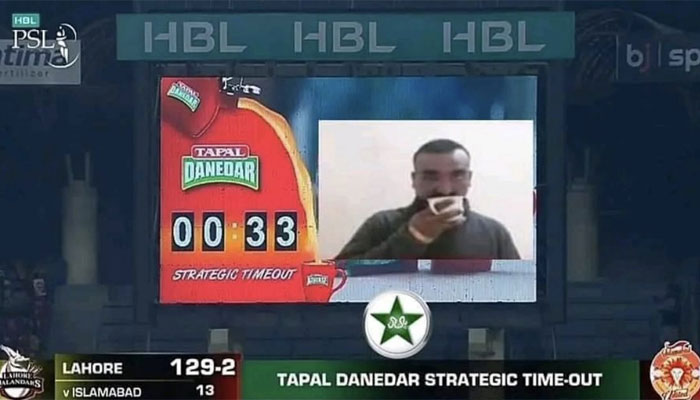
Last week, on Friday, February 10, former Pakistani cricket player Shahid Afridi attended a large gathering of the Tablighi Jamaat called Ijtema in Karachi. The interim chief selector of the Pakistan Cricket Team could be seen enjoying tea and later dozing off at the annual congressional assembly.

Tablighi Jamaat was banned by Saudi Arabia in 2021, which called the Islamic organization the ‘gate to terror’.

According to the local reports, Ijtema, a mass annual gathering of the Tablighi Jamaat, was organized on Friday in Karachi. Thousands of Muslims participated in the event. Reportedly, photos and videos of Afridi went viral over the internet in which he could be seen attending the event.

Governor of Sindh, Kamran Tessori, and MQM leader Khalid Maqbool Siddiqui were also present at the ‘religious’ gathering where Tablighi Jamaat attendees offered special prayers and gave the message of Islam.

Ijtema is a show of strength event for Muslims which is all about the “moral” reform of individuals and is often described as ‘making Muslims true Muslims’. It is termed a religious program in which several Islamic scholars are invited to offer guidance. It is an Islamic gathering organized by Islamic organizations for Muslims. It is considered to be an important aspect of the Tablighi Jamaat all over the world since it claims to have a big impact on the lives of Muslims.

Tablighi Jamaat, of which Tablighi Ijtema is an integral part, is a global Islamic missionary movement that urges Muslims to return to the way Islam was practiced during the time of Prophet Muhammad. The focus is on rituals, dress, and personal behavior, and is considered one of the most influential Islamic religious movements of the 20th century. It has become the world’s second-largest Muslim congregation after the Islamic pilgrimage of Hajj.

Participation in Ijtema, according to a European Journal, promotes religious authority, prestige, and empowerment, and adds to Muslim identity through the concept of Ummah.

Notably, one such congregation was held in Delhi in the year 2020 which had been cited by many as the “mega-spreader event” spreading coronavirus in India. The event took place in the Nizamuddin Markaz in the first half of March 2020. The Muslims who had attended the event, their family members, and those who came into contact with them were tested positive, contributing to the increase in the number of coronavirus cases in the country.

According to the Health Ministry, nearly 30% i.e 4291 cases of the total 14,378 coronavirus cases (as of April 2020) were caused due to Nizamuddin Markaz event in Delhi by Tablighi Jamaat.

Adani Group clarifies over appointing Grant Thornton for company audits, terms it as ‘market rumour’

0

On Thursday, Adani enterprises issued a statement to the stock exchange confirming that it had not hired accountancy firm Grant Thornton for an independent audit of some of its companies. “We would like to clarify that the said news item appears to be a market rumour and hence it would be inappropriate on our part to comment on it,” the company said to BSE.

“We wish to confirm that we have made and will continue to make disclosures in compliance with our obligations under the SEBI (Listing Obligations and Disclosure Requirements) Regulations, 2015 and our agreements with the stock exchanges. You are requested to take the above on your records,” the statement added.

On February 14, several reports indicated that the Adani Group hired accounting firm Grant Thornton to conduct independent audits of several of its subsidiaries in an effort to refute charges made by short-seller Hindenburg Research that have hurt its stocks and bonds. Reports also mentioned that Grant Thornton would investigate whether related-party transactions at the Adani Group conformed with corporate governance rules.

A day earlier, on February 13, Adani Group, during a market crash following a short-seller report, declared that each of its portfolio firms’ balance sheets was very healthy, that it had good corporate governance, and that its assets were secure.

On the same day, market regulator Securities and Exchange Board of India (SEBI) said that it was looking into the Hindenburg report as well as market behaviour before and after it was published.

Since the news of the study by US-based short-seller Hindenburg surfaced, the market value of Gautam Adani’s group has dropped by almost $120 billion. The Adani Group has refuted accusations of ‘brazen stock manipulation and accounting fraud… over the course of decades’ and has since made an effort to reassure investors by highlighting a robust balance sheet in response to worries over an excessive amount of debt.

According to the reports, the Congress party has also approached SEBI and the Reserve Bank of India, demanding for a probe into how public financial institutions have been exposed to the crisis. According to the Group, it has safe assets, excellent cash flow, fully financed business plans, and is still confident in the continuing potential of its portfolio to produce exceptional returns to shareholders.

The controversy surrounding the Adani Group has also sparked political conflict in India, with opposition parties, such as the Congress, accusing the ruling Bharatiya Janata Party of favouring Adani, who is from Gujarat, the home state of PM Narendra Modi.

The Supreme Court meanwhile has received several petitions calling for investigations into the different accusations, and it is scheduled to hear a number of them on Friday. To safeguard the interests of thousands of investors, the top court has already urged the government to establish a “robust framework” by modifying the legislation and enhancing the supervision provided by SEBI.

Delhi liquor scam: Court rejects bail plea of 5 accused, says allegations quite serious

0

The Rouse Avenue Court on Thursday rejected the bail petitions of five accused who were arrested in the money laundering probe emerging out of the Delhi government’s now scrapped Excise Policy.

While rejecting the bail plea, the court noted that none of the accused deserves to be released on bail in this case at this stage of proceedings as the allegations made against them are quite serious. 

The Special Judge MK Nagpal while rejecting the bail plea of Vijay Nair, Abhishek Bonipally, Sameer Mahendru, Sarath P Reddy and Binoy Babu observed that the accused persons do not even satisfy the triple test as laid down in the case of P Chidambaram vs Directorate of Enforcement being relied upon by Defence Counsels.

The court said, “It can be seen from their personal and family history given on record that none of them is a flight risk and further even though the apprehensions being expressed by the prosecution regarding the influencing of witnesses by them may not be true and can otherwise also be taken care of by imposing some conditions, but keeping in view their conduct as reflected on record it will not be possible for this court to hold that they will make no attempt to tamper with the evidence of this case in case they are permanently released on bail as serious allegations of tampering with evidence by way of destruction or change of their mobile phones, various times have already been made by the ED against them and further even the specific allegations of destruction of digital data have also been levelled against the accused P. Sarath Chandra Reddy.”

“However, in the considered opinion of this court, the oral and documentary evidence which has already been discussed above and further which has been placed on record along with the two prosecution complaints filed before this court by the ED to date, nowhere warrants such an inference to be drawn therefrom and thus, the prosecution complaints filed against the accused persons by the ED cannot be held to be piecemeal complaints or chargesheets as the investigation qua all of them stands already completed and even specific submissions to this effect are found made in the said complaints, though some further investigation regarding role of other persons involved in the commission of alleged offences and to trace out the complete trail of ill-gotten money is still kept pending,” said the court in its order.

Vijay Nair is the former communication head of the Aam Aadmi Party and Sarath P Reddy, Binoy Babu, Sameer Mahendru and Abhishek Boinpally are the South-based businessmen.

The Enforcement Directorate in its second chargesheet in the Liquor excise policy case has 12 accused names are mentioned in the chargesheet in total – 5 arrested persons (Vijay Nair, Sharath Reddy, Binoy Babu, Abhishek Boinpally, Amit Arora) and 7 companies.

Further investigation is continuing to investigate the role of ECIR named accused and other persons on various allegations said the ED.

The first chargesheet was filed by the ED in the case against Sameer Mahendru and his related firms.

In the case, the ED and the CBI had alleged that irregularities were committed while modifying the Excise Policy, undue favours were extended to licence holders, the licence fee was waived or reduced and the L-1 licence was extended without the competent authority’s approval. The beneficiaries diverted “illegal” gains to the accused officials and made false entries in their books of account to evade detection.

The FIR in the case was instituted on a reference from the Union Home Ministry following a recommendation from Delhi Lieutenant-Governor Vinai Kumar Saxena.

(This news report is published from a syndicated feed. Except for the headline, the content has not been written or edited by OpIndia staff)

Prithvi Shaw’s friend’s car attacked after cricketer refused to take selfie with fans, FIR registered

An FIR has been registered against eight people after cricketer Prithvi Shaw’s friend’s car was attacked. As per reports, Shaw refused to take selfie with the two fans and they in turn attacked his friend’s car.

As per reports, Shaw with his friend were at a five star hotel in Mumbai when they were attacked. A police complaint has been registered against eight people at Oshiwara Police Station. As per a complaint filed by Shaw’s friend Ashish Surendra Yadav, his car was attacked with baseball bats. Then the mob ran after the car and threatened to file a fake case if they did not pay up.

Prithvi Shaw refused to give selfie

Shaw had gone for a dinner at a five star hotel in Santacruz. At that time, one of the accused came up to him and asked for a selfie. Shawn took selfie with two fans but then more people came up to him and demanded he gets selfie clicked with them. Shaw then turned them down saying that he had come for dinner with his friend and did not want to be disturbed. When the group insisted further, Shaw’s friend complained about them to the manager.

The manager requested the gathered group to leave. When Shaw and his friend came out of the hotel, some people were standing there with baseball bats. One of the accused broke one glass window. Shaw was at that time sitting in the car. The complainant said that Shaw was inside the car and they did not want to trouble him. Hence, they put him in another car and sent him off.

Shaw’s friend then stopped the car at Lotus Petrol Pump in Jogeshwari where one woman came and offered to sort out the mess if they would cough up Rs 50,000. Else she would file a fake case against them.

Eventually, Yadav filed a police complaint in this regard at Oshiwara Police station and the police has started the investigation. The police have obtained details about the ones who had approached Shaw for selfie and they have been identified as Sana alias Sapna Gill and Shobhit Thakur.

Arvind Kejriwal gloats that Delhi is not among top 10 most polluted cities in the world, here is how he is misleading and cherrypicking data

On Thursday, February 16, Delhi CM Arvind Kejriwal gloated over Delhi being ‘removed’ from a list of the most polluted cities globally. CM Kejriwal congratulated the people of Delhi for their efforts and also said that there is a long way to bring Delhi to the list of the cleanest cities in the world.

In his tweet, Kejriwal shared a chart of the world’s most polluted cities by Hindustan Times and wrote, “After a long time, Delhi is not in the list of most polluted cities of the world. Efforts of Delhiites are slowly but surely paying off. Congrats Delhi! But its still a long way to go. We have to be counted in the cleanest cities of the world.”

In the list, Mumbai ranked second among the ten most polluted cities in the world, according to the Swiss air tracking index IQAir, a real-time global air quality monitor.

The list was compiled using data that was gathered between January 29 and February 2 to create it. According to the list, Mumbai is ranked as one of the second-most polluted cities in the world. Lahore, in Pakistan, came in the top place on the list. The list also included the names of the cities of Kabul, Kaohsiung, Bishkek, Accra, Krakow, Doha, Astana, and Santiago sequentially.

OpIndia, however, checked the latest rankings on IQAir and found that Delhi tops the list of the most polluted cities worldwide even as Kejriwal cherrypicked the data to pat his back. 

In the latest live ranking, Delhi is at the top followed by Lahore and Bishkek, and at number 4 is ranked Mumbai, other than Delhi and Mumbai, Kolkata has also made it to the top 10 ranking at number 9. 

Image via IQAir

While CM Kejriwal boasts Delhi not being among the top 10, the fact remains unchanged that Delhi has been consistently struggling with poor air quality and pollution. 

Delhi remains the most polluted capital

An article by IQAir details why the air quality of India’s national capital remains the most polluted in the world. The article notes that smoke produced during the stubble burning season along with several urban sources work as a deadly combination resulting in the ‘worst air quality on the earth.’

Moreover, it is also pointed out that Delhi’s annual air pollution is 19 times greater than the World Health Organisation (WHO) guideline. It is notable that in 2021, the WHO revised its average PM2.5 (particulate matter measuring 2.5) guidelines

Even as you read this article, the air quality of the national capital remains severe. Even during the time period of January 29 and February 2, Delhi’s air quality fluctuated between severe (301-400), unhealthy (201-300), and poor (101-200) as per the data by New Delhi Air Quality Index.

Graphics via aqi.in

Stubble burning

The Kejriwal-led Aam Aadmi Party government in Delhi has for years been blaming the neighbouring Punjab and Haryana and the central government for the pollution caused by stubble (Parali) burning in these states. However, even after securing power in Punjab in the last state assembly elections, it has been seen how the Aam Aadmi Party has miserably failed at curbing pollution and improving air quality. 

It was reported in October 2022 year that the state of Punjab witnessed around 8147 incidents of stubble burning from September 15 to October 27. The state also recorded a 20% increase in such incidents in comparison to the number of farm fires in the same period last year, affecting the quality of air in the major parts of Delhi, Punjab, Uttar Pradesh, and Bihar.

Despite the burning issue of farmer fires, the Punjab Assembly shelved the discussion on the topic. “The issue was not taken up as most of the sitting went into discussing the alleged usurping of SC scholarship funds to the tune of ₹64 crores by the previous Congress party government,” reported Hindustan Times on October 3, 2022.

In November last year, the AQI level went up in almost all zones in the city-state, with many places registering AQI above 500. 

In its assessment, the Central panel noted that the AAP-led Punjab Government took negligible steps to control stubble burning. The Centre pointed out the bio-decomposers’ field experiments were successful in UP, Haryana, and Delhi. No efforts were made in Punjab by the state government to employ the technique for stubble management. Furthermore, while Haryana and Uttar Pradesh opted for bio-decomposer usage across 5,00,000 acres and 138,000 acres, respectively, Punjab used it only in 7,500 acres. Nurture Farms used another bio decomposer in another 250,000 acres in the state through a CSR initiative. The panel added that not only bio-decomposer but also the government failed to deploy residue management machines effectively. There was inadequate implementation of public sensitization over the matter. 

Recently, CM Kejriwal while speaking about the different causes of rising pollution in the national capital at the opening of a real-time pollution data analyzer supersite in Delhi said that biomass burning is responsible for one-fifth of the state’s pollution, which rises considerably during the cold months when security guards and drivers burn wood and other biomass, leading the city to become a gas chamber due to temperature anomaly. He said that when security guards and car drivers at night burn wood to keep themselves warm in the winter seasons, it causes severe air pollution in the capital city.

Cracker ban and pollution persist in Delhi 

For the past four years, the Kejriwal government in Delhi has been banning the manufacture and sale of firecrackers on the occasion of the Hindu festival of Diwali as it is apparently an easier thing to do than to chalk out an action plan to address the issue of stubble burning effectively. 

A day after Diwali last year which is 25th October 2022, despite a firecracker ban, Delhi’s air quality index (AQI) stood at a ‘very poor’ level even though it was reported that it was better than in previous years.

On October 24, 2022, CM Kejriwal took the opportunity to pat his back as he credited his government for supposedly improving the air quality in the National Capital.

He shared a news article claiming that Delhi has been removed from the list of Asia’s most polluted cities. The Delhi Chief Minister made the claim that India’s National Capital was no longer polluted.

“Some years back, Delhi was the most polluted city in the world. Not anymore! The people of Delhi worked very hard. Today, we have improved a lot. Whereas we have improved, it’s still a long way. We will continue working hard so that we find a place in the best cities in the world,” Kejriwal tweeted.

The Delhi CM has had an old habit of cherrypicking data to hog the limelight, and deliberately ignoring overall facts. Notably, in the year 2021, IQAir published a report wherein New Delhi featured at the top of a list of 107 regional capital cities with the highest average annual PM2.5 concentration that year.

The Swiss air quality technology company collected data from 6,745 cities, spread across 117 countries to prepare the report.

“India’s annual average PM2.5 levels reached 58.1 in 2021, ending a three-year trend of improving air quality. India’s annual PM2.5 averages have now returned to pre-quarantine concentrations measured in 2019,” the report asserted.

The air quality report pointed out that in 2021, India was home to 11 out of the 15 most polluted cities in South and Central Asia. During that period, PM2.5 levels in Delhi increased from 84 μg/m to 96.4 μg/m3.

Graphics via IQAir

While Kejriwal may continue to present data selectively and gain attention, the fact remains unchanged that Delhi’s pollution continues to pose a threat to the health of the citizens.

‘I am taking Tipu sultan’s name, do whatever you can’, says Asaduddin Owaisi

A controversy has erupted in Karnataka after BJP state president Nalin Kumar Kateel’s statement on Tipu Sultan where he said that ‘Ardent followers of Tipu sultan should not survive on this fertile land’. The opposition has taken an aggressive stand against the BJP after his statement. Meanwhile, AIMIM president Asaduddin Owaisi has also reacted to the statement.

While speaking to the news agency ANI in this regard, Asaduddin Owaisi reacted angrily by saying, “I am taking Tipu Sultan’s name, let me see what you will do. Does the PM agree with what the Karnataka BJP president has said? This is an open call for violence, murder & genocide. Will the BJP govt in Karnataka not take action against this? This is hatred.”

What did Nalin Kumar Kateel say about Tipu Sultan?

While addressing a public meeting at Yelaburga in Karnataka, BJP’s state president Nalin Kumar Kateel talked about Tipu Sultan. He said, “We are devotees of Lord Ram and Lord Hanuman. We pray and bow to Lord Hanuman and we are not descendants of Tipu. Let’s send Tipu’s descendants back home. I ask people here whether you worship Lord Hanuman or Tipu. Then will you send those who are staunch followers of Tipu to the jungle? I am issuing a challenge – those who are staunch followers of Tipu should not survive on this fertile land.”

Medieval Islamist tyrant Tipu sultan forcefully converted thousands of Hindus to Islam. The previous Siddaramaiah government had celebrated Tipu Sultan’s birth anniversary for two consecutive years. The BJP canceled these celebrations after returning to power and has been consistently raising questions about eulogizing the Islamist tyrant.

Meanwhile, the descendants of Tipu Sultan expressed their displeasure saying that Tipu Sultan’s name is being used by the political leaders at their own convenience. According to a report by News18, Tipu sultan’s descendant Mansoor Ali said, “Why is the name of our ancestor Tipu Sultan being dragged and politicized at every given opportunity? We have had enough. Political parties cannot use his name whenever they feel it is convenient. We will be forced to file defamation cases against those who misuse his name from now on.”