Home Blog Page 2451

238 cities in India now have 5G connectivity: Ministry of Communications in Lok Sabha

0

The Government has established a road map to make 5G services available in different parts of the country through rollout obligations, said a press release by the Ministry of Communications.

Telecom Service Providers (TSPs) have started providing 5G services in the country from October 1, 2022, said a press release by the Ministry of Communications on Wednesday. As of January 31, 2023, 5G services have been started in 238 cities distributed across all licensed service areas, added the statement.

As per the Notice Inviting Application (NIA) dated June 15, 2022, for the auction of spectrum and the license conditions, the rollout obligations are required to be met over a period of five years, in a phased manner, from the date of allocation of spectrum.

Further expansion of mobile networks beyond the mandatory rollout obligations depends on the techno-commercial consideration of the Telecom Service Providers (TSPs).

This information was given by the Minister of State for Communications, Devusinh Chauhan in a written reply to a question in Lok Sabha today. 

(This news report is published from a syndicated feed. Except for the headline, the content has not been written or edited by OpIndia staff)

Hara*i: Meaning and origin of the cuss word used by TMC’s Mahua Moitra against a BJP MP

On February 7, Trinamool Congress leader Mahua Moitra was seen using abusive language inside the Parliament. In a viral video, she was heard using the word ‘hara*i’ while another lawmaker, Ram Mohan Naidu Kinjarapu, of the Telugu Desham Party was speaking.

At 7:23 PM on February 7, 2023, Ram Mohan Naidu Kinjarapu presented his remarks during the Motion of Thanks on the President’s Address in Lok Sabha. As per the uncorrected discussion text available on Lok Sabha’s website, Mahua said, “Kitne [word removed] bante hain… Kitne mahaan… aapko to pata hoga…”Several members of the Parliament objected to the language and demanded an apology from her. This ‘removed word’ was ‘harami’.

Decoding the etymology of the word Harami

The word ‘hara*i’ finds its origin in the Arabic language. Haram is the root word. Haram means forbidden, unlawful, unaccepted, or prohibited. This qualification can be bestowed upon any noun. that is, to any place, object, person, etc. Essentially it carries a negative shade or tonality of the meaning. Haram also means concubine or female slave.

Hara*i is a derivative of the word haram which means an act, outcome, or doer of what is unlawful or atrocious or simply what is haram. Therefore the meanings of the word harami include ‘something related to illegal or unlawful, illegitimate, unlawful, illegal, ill mate, spurious, a doer of what is forbidden or unlawful, a wicked, person, wicked, atrocious, robber, assassin, rascal, cheat, bastard’. In short, when someone is called harami, he is referred to with the most extreme abuse ever. Because harami also means the one who is born of a female slave. Mahua Moitra called BJP MP ‘harami’.

Mahua Moitra brazens out her abusive remarks

A day after using abusive language inside the Parliament, TMC MP Mahua Moitra on Wednesday seemed to defend herself by blaming the ‘Indian patriarchial system’ and indicated that nobody would have targeted a man for saying what she said. The MP instead of issuing an apology counter-attacked the people who slammed her for using the ‘hara*i’ word inside the parliament.

“BJP is saying how can I use such a word being woman, do I need to be a man to be able to give it back as good as it gets? So there’s patriarchy. I’m surprised BJP is teaching us parliamentary etiquette. That representative from Delhi heckled me. I’ll call an apple an apple, not an orange…if they’ll take me to the privileges committee, I’ll put my side of the story,” TMC MP Mahua Moitra said on February 8.

However, Mahua Moitra essentially contradicted herself in this explanation. She accused the BJP of patriarchy. In fact, the meaning of harami is the one who is born of a female slave. Calling someone harami is bluntly abusive. Keeping female slaves is patriarchy. TMC MP Mahua Moitra is known for such irresponsible comments.

Transformation of Kutch: From the 2001 earthquake to hosting G-20’s inaugural Tourism Working Group meeting

India officially assumed the presidency of G-20 on December 1 of last year. “During its G-20 Presidency next year, India will work jointly with G-20 partners towards this objective. The principle of ‘Data for development’ will be an integral part of the overall theme of our Presidency ‘One Earth, One Family, One Future’,” Modi had announced during the last G20 Summit in Bali, Indonesia which lasted for two days, 15 and 16 November 2022.

The use of remote working and paperless green workplaces during the Covid-19 outbreak was an example of how digital technologies could be useful in the fight against climate change, the Prime Minister had added. 

The G-20 conference is scheduled for Pragati Maidan, in September, of this year.

Gujarat will host the inaugural Tourism Working Group (TWG) meeting as part of India’s G-20 presidency starting on Tuesday at Dhordo Tent City in Rann of Kutch, according to officials. Following the “Business 20 Inception” programme conducted in Gandhinagar last month, the three-day TWG meeting, which will be attended by Union Tourism Minister G Kishan Reddy, would be the second G20 event to take place in the state.

Among those who will share their ideas at this event are Union Minister Reddy and Sandra Carvao, the head of the World Tourism Organization’s Tourism Market Intelligence and Competitiveness department. There will also be a panel discussion with experts from the Asian Development Bank, International Labor Organization, United Nations Environment Programme, and representatives from Indonesia, Italy, South Africa, Spain, Japan, Saudi Arabia, and Argentina on ‘How can tourism policy support tourism’s contribution to rural development.’ 

Tourism in Kutch

Kutch, often spelt as ‘Kachchh’, has its roots in a story that its map, if turned upside down, resembles ‘kachchh’, the Sanskrit word for tortoise. Kutch district, which has its centre in Bhuj, is India’s largest district.

The villages of Kutch have always been fertile with different cultures and artistic talent despite being surrounded by barren regions and a severe climate. Over the years, Kutch has developed as a bright spot for tourism.

Blessed with natural attractions like, The White Desert, sometimes referred to as the Great Rann of Kutch, a large region of pure white salt desert that is frequently visited for its aesthetic value and ecological significance. It is also known as the largest salt desert in the world, and it runs from the Indus River’s mouth to the Gulf of Kutch. Its striking environment is unique to India and attracts a lot of visitors. The White Desert is noted for having various sanctuaries for the protection of wildlife, flowers, and wetland areas. It has also served as the backdrop for countless Bollywood films.

One of the largest salt marshes in the world, the Rann of Kutch is situated in the Thar Desert. Rann Utsav, also called the White Desert Festival, is a notable occasion that occurs here with great festivity, every year. The event celebrates crafts, art, music, dance, food, and nature, and the people of Kutch. The carnival, which is held in the wintertime amidst the white desert, offers a variety of adventurous pursuits, excursions, and markets where one learns about the rich cultural diversity of the Kutchi people.

One of the largest seasonal saline wetland regions, the Kutch Desert Wildlife Sanctuary has water depths of between 0.5 and 1.5 metres. A broad variety of aquatic birds and an incredible array of mammalian animals are supported by the sanctuary, including the world-renowned ‘Flamingo City’. On Kala Dungar, amidst the Rann mudflats, the well-known tourist destination lies about 10 kilometres from the Nir outpost. Here, hundreds of larger flamingos breed, especially during the seasons of greatest inundation. They build muddy nests in which they lay eggs and raise their young.

Earthquake of 2001

On January 26, 2001, a powerful earthquake that was felt across much of northwest India and parts of Pakistan struck close to the town of Bhuj on the morning of India’s annual Republic Day. The earthquake had a moment magnitude of 7.7. (6.9 on the Richter scale). Along with leaving hundreds of thousands homeless and causing more than a million buildings to be demolished or damaged, the earthquake also claimed the lives of more than 20,000 people and injured more than 150,000 others.

While addressing MPs at the Bharatiya Janata Party parliamentary party meeting held yesterday morning, Prime Minister Modi when discussing the recent earthquake in Turkey, became emotional and remembered the tragic Bhuj earthquake when he was Gujarat Chief Minister.

How Prime Minister Narendra Modi rebuilt Kutch

Modi employed a multifaceted strategy to aid in the rebuilding of the disaster-wrecked area. Innovative solutions, community empowerment, and assistance played crucial roles in assisting Bhuj to recover from the massive tragedy.

The lack of housing was a major issue. The Gujarat government reacted quickly, incorporated the neighbourhood groups, formed compact teams, provided tools to each group, and concentrated on housing construction. Brick by brick, the housing issue was solved over time. The number of houses rose, they were larger than before and constructed in accordance with local standards.

The construction of schools was the other topic Modi emphasised. We must get the educational infrastructure back on track, he declared, whatever the cost. The Kutchi people have been abandoned to their destiny for generations. This region was well-known for its desert and Pakistani border (Registan and Pakistan). Modi was keen to alter this perception of Kutch after the catastrophe. As Chief Minister, Modi has previously expressed a desire to dispel the perception that Kutch is somehow connected to Pakistan.

Modi then redesigned Kutch’s agricultural industry. After the earthquake, Kutch started to export pomegranates, dates, and mangoes. Water from the Narmada gradually made its way to the area owing to the extensive irrigation system.

In August, last year, Prime Minister Narendra Modi shared a video based on the resurgence of Kutch, after the earthquake to become a thriving hub of manufacturing, agriculture, tourism, etc.

The Kutch Earthquake 2001: Recollection Lessons and Insights is a book by Pramod Kumar Mishra, who is currently the principal secretary to Prime Minister Narendra Modi. It was released in 2004 by the National Institute of Disaster Management in New Delhi. In his book he wrote, “The earthquake was most devastating in terms of its magnitude and intensity. It posed enormous challenges because of its magnitude and geographical spread for rescue, relief and rehabilitation. Yet, they faced the challenge with courage and conviction. What is remarkable is that a comprehensive rehabilitation and reconstruction programme was put in place at the earliest. Adversity was transformed into an opportunity.” The astounding success in regards to reconstruction, he continues, “has no parallel anywhere,” both inside and outside of India.

Smriti Van

On Sunday 28th August 2022, Prime Minister Narendra Modi inaugurated, the “Smriti Van” memorial, which honours the tenacity displayed by people after the horrific 2001 earthquake in Kutch. According to Modi, “Smriti Van” pays homage to the Kutchi people’s heroic spirit and the lives lost in the tragedy. The memorial lists the names of those who died in the earthquake. Additionally, it features the cutting-edge Smriti Van Earthquake Museum. According to a Gujarat government source, the massive memorial is the nation’s first of its kind and spans 470 acres on Bhujio Hill, just outside of Bhuj.

Transforming Kutch into a tourist hub

In 2006, the then-Chief Minister and current Prime Minister, Narendra Modi, created the Rann festival as a Gujarat Tourism initiative. By drawing a large international audience to Gujarat, the festival started to develop the local tourism sector. Every year in the White Rann during the winter, the celebrations take place. Rann Utsav, which was originally a three-day celebration, has expanded to a 100-day event as a result of public demand.

Salim Osama, a cattle rearer of Khavda, said, “Till now, no one wanted to come in this desert. Now, it has become a famous tourist spot after Modiji (Narendra Modi) started Rann Utsav here. As a result, thousands of villagers are able to sell their handicraft items through over 100 stalls at Dhordo. We are also selling sweets at such stalls. Locals of 56 villages near Khavda are reaping the benefits of this unique initiative of Modi.”

Bollywood superstar Amitabh Bachchan had rightly said, “Kutch nahin dekha to kuch nahin dekha (If you’ve not seen Kutch, you’ve not seen anything).”

Narmada water reached Kutch

In July, last year, through the Kutch Branch Canal (KBC), Narmada waters travelled 750 kilometres to Mod Kuba, a village in the Mandvi taluka of the Kutch area. According to Sardar Sarovar Narmada Nigam Limited (SSNNL) officials, the development marked the KBC’s completion as the last branch canal was left unfinished and the arrival of Narmada waters at the dam. Narmada waters had already been delivered to Saurashtra and north Gujarat through the Saurashtra Branch Canal and its six sub-branch canals as well as the canal system in north Gujarat.

It has taken decades for the water to get to Mod Kuba. Actor-turned-activist Aamir Khan, and Medha Patkar among others, have impeded the state government’s ability to finish the project. The Sardar Sarovar Dam project was blocked off until Prime Minister Narendra Modi assumed control of the government at the centre.

Villagers welcomed the significant development with loud cheers and firecrackers.

Renewable Energy Park in the Rann of Kutch

In Gujarat’s Kutch, Prime Minister Narendra Modi laid the cornerstone for the 30,000 megawatts (MW) Ultra Mega Hybrid Park last December, making it the largest renewable solar and wind energy facility in the world. In addition, he ceremoniously broke ground for four other desalination facilities along the Arabian Sea coast virtually. The plants will sprout up in the Kutch towns of Gundiyali, Gandhvi, Bhavnagar’s Ghogha, and Somnath’s Sutrapada. 

PM Modi wears jacket made of recycled plastic while Congress President Kharge wears a designer Louis Vuitton scarf

On Wednesday, in a bid to promote sustainability, Prime Minister Narendra Modi arrived at parliament sporting a jacket fashioned from recycled plastic bottles. PM Modi who will respond to the motion of thanks over the President’s speech in the Lok Sabha later in the day, donned a light blue coloured jacket made out of recycled plastic bottles.

However, on the other hand, Congress President Mallikarjun Kharge could be seen wearing a designer Louis Vuitton scarf in Parliament. BJP party spokesperson Shehzad Poonawalla pointed out Karge’s attire as he lauded PM Modi for wearing a jacket made out of recycled plastic material. He poked fun at Kharge by publishing a photo of him sporting the LV scarf and another with the scarf’s cost.

“Taste Apna Apna, Message Apna Apna PM Modi sends a “green message” with his sustainable fashion – blue jacket; enlisting Jan Bhagidari for the cause of sustainable growth & environment Meanwhile, Kharge ji sports an expensive LV scarf (not making any judgment)” he tweeted. According to the photograph shared by Poonawalla, the scarf donned by Kharge costs around Rs 56,332.

Notably, the jacket which PM Modi donned in Parliament today was gifted to him by the Indian Oil Corporation during the inauguration of the India Energy Week event in Bengaluru 2 days back. PM Modi at the event also introduced uniforms made from recycled plastic as part of Indian Oil’s ‘Unbottled’ campaign.

PM Modi connected India’s efforts for green growth and the energy transition with Indian values, where the circular economy is a part of everyone’s way of life and “reduce, reuse, and recycle” are ingrained in the culture, at the event. He said that programmes to turn recycled plastic bottles into uniforms will support Mission LiFE.

The jacket was gifted to PM Modi by the Indian Oil Corporation (Image source- Navbharat Times)

“These huge efforts of India towards green growth and energy transition also reflect our values. Circular economy, in a way, is a part of the lifestyle of every Indian. The mantra of Reduce, Reuse and Recycle has been ingrained in our values. Today, we got to see an example of this here. You have seen uniforms made by recycling plastic waste bottles. It does not lack anywhere as far as the world of fashion and beauty is concerned. The target of recycling 100 million such bottles every year will go a long way in protecting the environment,” PM Modi had said.

Indian Oil has adopted uniforms for retail customer attendants and LPG delivery employees made from recycled polyester (rPET) & cotton, inspired by the ambition of the Prime Minister to phase out single-use plastic. India banned several single-use plastics starting in July 2022. Reportedly, each customer service representative for Indian Oil will wear a uniform that will facilitate the recycling of about 28 old PET bottles.

Indian Oil is advancing this endeavour through ‘Unbottled’, a brand for eco-friendly clothing introduced for products derived from recycled polyester. Indian Oil aims to fulfil the needs for uniforms under this brand for the customer service representatives of other oil marketing companies, non-combat uniforms for the Army, uniforms/dresses for Institutions, and retail sales.

From assaulting a cop to hurling abuses in Parliament: An indicative list of TMC’s Mahua Moitra’s lack of basic decency and unpleasant behaviour

On February 8, Trinamool Congress MP Mahua Moitra continued her irrational rant on social media and defended the usage of abusive language in Parliament. Moitra used the word ‘hara*I’ in Lok Sabha on February 7. The TMC MP, considered a “firebrand” leader, is not new to being indecent and unbecoming of MP. There is a long history of hurling abuses, hitting cops, abusing the Prime Minister and Chief Justice of India, glorifying terrorists who attacked Pulwama and more.

Here is an indicative list of TMC’s Mahua Moitra’s lack of basic decency and unbecoming of MP

Mahua Moitra showed her middle finger to Arnab Goswami

In January 2015, during a debate, when the now-editor-in-chief of Republic was with Times Now, Mahua Moitra showed the middle finger to him. There was a discussion going on the ‘attempt to murder’ charges that were filed against a man who had slapped TMC leader and Mamata Banerjee’s nephew Abhishek Banerjee. TMC workers had attacked him, and he was admitted to the hospital in critical condition. At the beginning of the debate on Times Now, TMC leader Moitra continued to tell Arnab to let her “finish the sentence’, and soon she lost her mind and told him to ‘talk to yourself and not invite anybody’ on his show while showing him the middle finger.

Mahua Moitra assaulted a female constable in Silchar

In August 2018, Mahua Moitra was accused of assaulting a female constable of Assam Police at Silchar airport. As per reports, she was part of an eight-member TMC delegation visiting the state to discuss the anomalies in the NRC issue. When they reached the airport, the police asked them to assure them that they won’t make provocative speeches or try to instigate violence. An argument took place between the police and the delegation leading to a physical assault on the police officials. As per the Director General of Police, two constables and one district administration official were injured.

Mahua Moitra celebrated abuses hurled at PM Modi

In October 2021, Mahua celebrated that one of her supporters called PM Modi’ bhen**od’. She wrote on Twitter, “You know BJP days are numbered when while campaigning in a toto for Shantipur by-election, was met by old man half way through bath who ran out shouting in Bengali – “LPG hazaar taka – ei b*@#***d Modi ke hatao!” Priceless!”

Mahua Moitra used derogatory language for ex-CJI

In July 2022, a complaint was filed against Mahua Moitra for using derogatory language against ex-CJI Gogoi. She was also booked for defaming the whole community. She was booked for a July 14 tweet in which she said, “My first of new Twitter series on replacements for unparliamentary words. Banned word- Sexual Harassment. Replacement- Mr Gogoi.”

Mahua Moitra glorified terrorists accused of the Pulwama attack by using similar abuses

On multiple occasions, TMC’s “firebrand” has used the infamous Gaumutra jibe for BJP leaders. Notably, the same jibe was used by the terrorist accused of the Pulwama attack in a video recorded just before the attack. On February 2022, she said, “Am speaking this evening in Lok Sabha on President’s Address. Just wanted to give early heads-up to @BJP to get the heckler team ready & read up on imaginary points of order. Drink some gaumutra shots too.”

Earlier, in May 2021, she said, “Welcome to our Susu Potty Republic! Drink Gaumutra, smear cow dung & flush the rule of law down the toilet. Delhi Police issued a notice to Twitter & land up in their offices for rightly calling out @BJP’s fake document as manipulated media. Go figure.”

Moitra used abusive language here and there regularly and is infamous for spreading fake and misleading reports. Recently, she was caught red-handed after she tried to mislead her followers on Twitter about SBI’s exposure to the Adani Group.

‘Infrastructure development critical to our border preparedness’: EAM S Jaishankar on security at Indo-China border

0

Highlighting how the border Infrastructure holds the key to any nation’s preparedness, External Affairs Minister S Jaishankar once again underscored how security at the borders including at the India-China border is closely linked with the infrastructure developed in the area.

“We have focused on the rapid development of infrastructure along Northern Borders with China for obvious strategic reasons. We have focused on rapidly developing border connectivity with our friendly neighbours to enhance trade, energy and other people-to-people exchanges.” Jaishankar says

The key focus of the Modi government since coming to power in 2014 has been to ensure development-linked cooperation. “The facts are there for all to see. During the period 2008-14 the budget allocated for the China border projects stood at a mere Rs 3000-4000 cr which has taken a multi-fold jump to Rs14000 cr at present,” Jaishankar told ANI during an interaction with reporters during the ongoing session of Parliament.

Further elaborating on the road and bridge building focus, EAM Jaishankar says, “between 2008-14 roads built stood at 3610 km which has between 2014-22 at 6806 kms. Bridges built in the period before 2014 was 7.3 km which during the Modi govt regime stands at 23.5 km.”

One cannot do a thing without investing in infrastructure to ensure our forces are prepared better, says Jaishankar. “Behind the debate that we often witness on India China border including that of questions asked by opposition, one needs to look at what goes into our border preparedness. It’s the quality of our structures, the technology involved and its maintenance,” the EAM said.

While China has transgressed at multiple locations and the standoff continues, infrastructure is being developed across both sides.

The Indian government has laid a roadmap for such infrastructure which includes a network of all-weather roads. “It is not just a financial commitment Vada commitment for faster and better delivery,” Jaishankar further elaborated.

In the last two years, the budget of BRO has seen a double growth from Rs 2,500-5,000 crores which is close to a 50 per cent increase in the capital budget in the current financial year allocations made during the recently presented union budget.

(This news report is published from a syndicated feed. Except for the headline, the content has not been written or edited by OpIndia staff)

West Bengal: Boy sells minor ‘girlfriend’ for ₹40,000 in Sonagachi, buyer Zaidul, sex worker Mehrana and the teenage boy nabbed

0

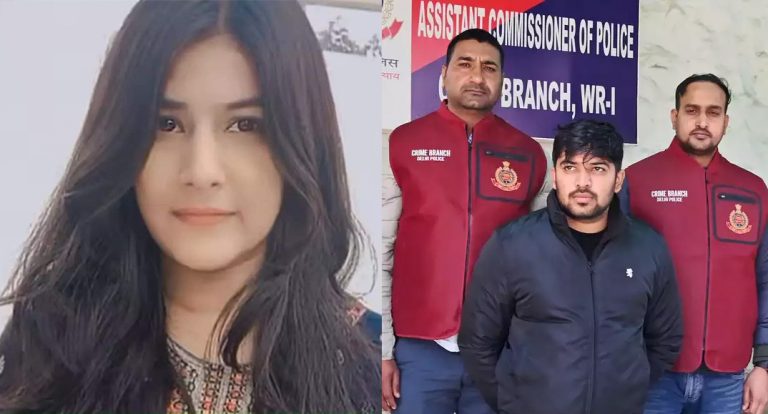
In a shocking incident in Kolkata, a teenage boy allegedly sold his teenage girlfriend into prostitution for ₹40,000 in Sonagachi, the red-light area in the city. After a missing complaint was filed by the mother of the girl, police launched a probe and rescued her, while the boy and two others involved in the crime have been arrested.

According to police sources, the boy had met the girl on Facebook, and gradually this developed into a romantic relationship. The girl is from the Sundarban area in South 24 Pargana district, while the boy is from Dholahat in the same district. After trapping the girl, the boy convinced her to visit Kolkata with him under the pretext of marriage and outing.

After the girl went missing, her mother filed a missing person complaint with the Dholahat police station. The police immediately launched a probe, and eventually traced her to Dharmatalla in Kolkata, from where she was rescued. According to information provided by the girl, three persons were nabbed. The juvenile who sold her, a man named Zaidul Shaikh who purchased her, and a prostitute named Mehrana Khatoon alias Tania who facilitated the ‘deal’.

According to Mandirbazar SDPO Biswajit Naskar, after bringing the girl to Kolkata on the pretext of marriage, the boy sold her to Zaidul Shaikh in a hotel in Arambagh in Hooghly for Rs 40,000. She also told the police that she was raped in a hotel in Ballyganj and in the Arambagh hotel where she was sold. Sex worker Mehrana Khatoon was involved in the deal to sell the girl, the police said. Zaidul was going to place the girl in the Sonagachi red light for prostitution.

On the basis of the statements of the girl, the police arrested Zaidul Shaikh and Mehrana Khatoon, while the boy has been detained as per Juvenile Justice Act. The police have registered a case against the arrested persons under sections of kidnapping and rape charges and also under relevant sections of the POCSO Act.

The two arrested adults were presented before a court in Kakdwip on Tuesday. Further probe on the case is going on.

Thala vs Thalapathy: Know who won the Thunivu vs Varisu box-office collection battle

In Tamil Nadu, the harvest festival of Pongal holds special significance and is celebrated with traditional fervour. The festival also marks its importance for cinema in the state. During the Pongal holidays, many big-budget movies are released. This year, two of the biggest Tamil superstars ‘Thala’ Ajith and ‘Thalapathy’ Vijay clashed at the box office. Ajith’s Thunivu and Vijay’s Varisu were released on 11 January, which was a Wednesday.

Talking about the numbers, Thala Ajith’s ‘Thunivu’ has done a worldwide business of Rs 250 crores, while Thalapathy Vijay’s ‘Varisu’ has concluded its box-office journey by collecting Rs 300 crores. Now, the fans of both superstars are keenly awaiting the OTT release of their favorite actor’s films. 

Surprisingly, despite receiving negative reviews, both of these movies have the second-highest box office collections of these two superstars’ careers. And that is when the Hindi versions of both movies failed to strike a chord with the audiences. Vijay and Ajith currently hold the position in Tamil Nadu that was once held by superstar Rajinikanth and “Ulganayagan” Kamal Haasan. The competition between the two was so intense that when “Thunivu” and “Varisu” were released, fans of the two film stars clashed and tore apart each other’s movie posters.

However, it can be said that Kollywood has had a very successful start to 2023 based on box office collections. The collection of Rs 50 crore from the Telugu and Kerala states for Vijay’s “Varisu” proved to be lucrative. It collected over Rs 143 crore in Tamil Nadu. Everyone was stunned when the Vijay starrer earned Rs 90 crore overseas. Whereas ‘Thunivu’ did a business of Rs 115 crores in Tamil Nadu.

About the films

Vijay starrer Varisu has Rashmika Mandanna as the lead. The film is about a happy-go-lucky man whose life changed after the unexpected death of his foster father.

On the other hand, Ajith Kumar starrer Thunivu is about a criminal mastermind played by Ajith. His team forms a plan to commit heists across banks in Chennai.

‘Was it Rahul Gandhi or his ghost who spoke in the parliament?’ BJP MP takes a dig at Gandhi scion over his ‘Rahul Gandhi is dead’ remark

BJP MP Nishikant Dubey on Tuesday took a searing dig at the senior Congress leader Rahul Gandhi, rhetorically asking if the speech was delivered by him or his ghost since he had already proclaimed that ‘Rahul Gandhi is dead’, ‘He doesn’t exist’, and so on.

“You guys have allowed a ghost to speak in the parliament. I would also like to know from the speaker how could a ghost speak in the parliament. Now you will ask me who was the ghost. The man who openly claimed that ‘Rahul Gandhi is dead’, ‘Rahul Gandhi does not exist’, so you should clarify to the nation who was the one to give a speech in the parliament, Rahul Gandhi or a ghost?” Dubey said.

Dubey’s remark was in reference to Rahul Gandhi’s incomprehensible comment made at a press conference during the Bharat Jodo Yatra.

‘I have killed Rahul Gandhi. He does not exist’: Rahul Gandhi in BJ Yatra

On January 8, during a ‘Bharat Jodo Yatra’ (BJY) press conference at Samana, Haryana, Congress leader Rahul Gandhi claimed that he had killed ‘Rahul Gandhi’ and the person we see is not ‘Rahul Gandhi’. During the QA session at the press conference, TV journalist Pradeep asked him if he believed that BJY helped in changing his image. In reply to his query, Gandhi said he had “killed” Rahul Gandhi.

Gandhi said, “Rahul Gandhi is in your head. I have killed him. He does not exist anymore. He is not in my mind. He is gone. Gone. The person you are seeing is not Rahul Gandhi. You are seeing him. You did not understand. Read Hindu Dharma a little. Read about Shiv Ji. You will understand. Do not get confused. Do not get confused. Rahul Gandhi is in your head. He does not exist in my head. Rahul Gandhi is in BJP’s head. He does not exist in my head. Why are you so confused? I do not care about the image. I do not have an interest in the image. You can keep the image you like. It concerns you, not me. I do not care. I want to do my work. Why are you so confused?”

Nishikant Dubey counters Rahul Gandhi on his allegations regarding Adani, challenges him to prove if PM Modi ever travelled with Adani after becoming PM

Besides, Dubey also responded to Gandhi’s allegations of collusion between the Adani Group and the ruling party. The BJP MP highlighted the controversies and scandals that broke out during the previous Congress governments from Bofors, Bhopal Gas Tragedy to AgustaWestland. The BJP MP also insinuated close relationships between Congress leaders and organisations such as the RSS.

The BJP MP criticised Congress for the Bhopal gas tragedy and asks how they allowed Union Carbide chairman, Warren Anderson, to escape India. The Congress held power in Madhya Pradesh and the central government at the time of the 1984 tragedy.

Dubey questioned, “Did your party’s Narasimha Rao stay at the house of Balasaheb Deoras in Nagpur?” referring to the former RSS chief Madhukar Dattatraya Deoras, commonly known as Balasaheb Deoras.

“Pranab Mukherjee, who visited the RSS office, was he part of your party?” asked Dubey, citing Mukherjee’s speech at an RSS event in 2018.

Refuting Rahul’s allegations regarding Adani, Dubey asked: “Didn’t your government give Adani the Australian mines in 2010? Didn’t you change the rules for developers like GMR and GVK? Did they have prior experience?”

“What was the role of the Congress government and its leaders like Madhavrao Solanki in (Ottaviou) Quattrochi escaping?” asked Dubey, referring to the Bofors scam that broke out when Congress was in power.

Dubey also targeted Congress with regards to Robert Vadra, husband of Priyanka Gandhi Vadra, by asking, “What is the connection between Robert Vadra and arms dealer Sanjay Bhandari?”

Dubey also called to attention the National Herald case, which has drawn the attention of ED and CBI to the Gandhi family.

Ending his speech and challenging Rahul, Dubey said: “If you can prove that after becoming PM, Modi ji travelled even once with Adani, I’ll resign.”

Assam: Youth tortured, head shaved off, urinated on in Hailakandi, prime accused Nizamuddin and two others arrested

0

Police arrested three persons including the prime accused in connection with the torture of a youth in Assam’s Hailakandi district which was captured in a video that went viral on social media. 

Nabaneet Mahanta, Superintendent of Police of Hailakandi district on Wednesday told ANI that, police have so far arrested three persons including the prime accused Nizamuddin Borbhuyan. “Our investigation is on,” the top police official said. 

In a video of the incident which had gone viral on social media shows that a youth was tortured by a person, his head was tonsured and another person urinated on him, the youth’s both hands were tied with rope. 

According to the reports, the victim’s youth was allegedly involved in a theft case he illegally entered a house in the Krishnapur area under the Lala police station in the Hailakandi district. 

In reference to the viral video from Hailakandi of a person being tortured, Assam Director General of Police GP Singh directed the Superintendent of Police of Hailakandi district to take lawful action immediately. 

The Assam DGP also instructed Hailakandi police to take immediate action to apprehend all the accused and ensure lawful follow-up.

(This news report is published from a syndicated feed. Except for the headline, the content has not been written or edited by OpIndia staff)