Home Blog Page 2501

Andhra Pradesh: Two YSRCP MLAs allege phone tapping by own party, point fingers at CM Jagan Reddy

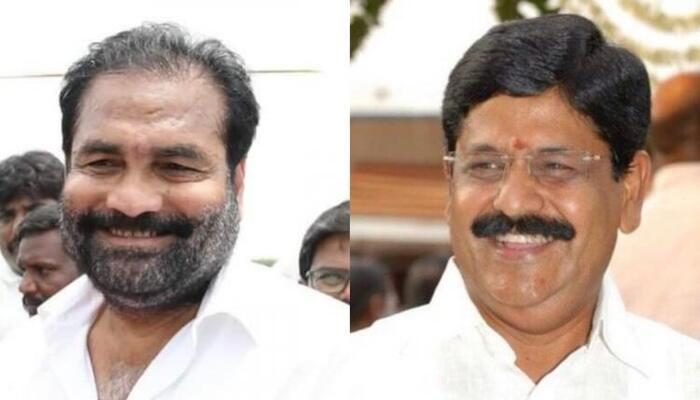
Phone tapping allegations by two MLAs from the ruling YSR Congress Party have shaken Andhra Pradesh politics.  The two MLAs Anam Ramanarayana Reddy of Venkatagiri (in Tirupati district) and Kotamreddy Sridhar Reddy of Nellore Rural have accused their own government of tapping their phones and claimed that they are under surveillance. On Wednesday, Sridhar Reddy hinted at resigning = from the party.

Anam Ramnarayana Reddy had earlier alleged that two of his along with his personal assistant’s phones were being tapped. While interacting with the media on Wednesday at the YSRCP office, Kotamreddy Sridhar Reddy said that it was only after he got a confirmation that his phones were being tapped that he decided to speak about it and quit the party. Sridhar Reddy added that he does not intend to continue with a party that has no trust in him.

The Nellore Rural MLA also claimed that his phone was being tapped only after his meeting with CM Jagan Mohan Reddy. He also claimed that this phone tapping was not possible without CM Jagan’s orders. He added that he got to know about his phones being tapped four months ago through an IPS officer, however, he did not believe him until 20 days ago when he found evidence about the same.

“About 20 days ago, I found evidence that my phone was being tapped,” Kotamreddy said.

Furthermore, Kotamreddy Sridhar Reddy went on to say that he will raise the matter with Union Home Ministry and investigation agencies. 

“Five MPs, two Ministers, and more than 30 MLAs called me to reveal that their phones had also been tapped after I reported that my phone had been tapped. As a loyalist of the YSR family, I shouldn’t actually be doing this, but the leaders challenged me to prove the accusations,” Kotamreddy said.

It is pertinent to note that Anam Ramanarayana Reddy, the Venkatagiri MLA, made a similar accusation. The MLA said that he had been calling his family via WhatsApp because he had known for some days that the two mobile phones he was using, as well as the phones of his personal assistants, were being tapped. Despite claiming that he was not being invited to local body meetings in his constituency, Ramanarayana Reddy said that he would continue to serve till the end of his term in the Assembly. After Ramanarayana Reddy levelled serious allegations against his own party, the state government reduced his security cover. Ramanarayana Reddy, however, said that he will not lodge any complaint in this matter.

Earlier this month, Anam Ramanarayana Reddy was stripped of his post as the party in-charge of his Venkatgiri constituency. Reddy had said that if Jagan Mohan Reddy goes for an early election, the YSRCP would definitely lose the election. He also alleged that during the rule of the YSRCP, no development work has been carried out in his constituency. 

Adani Enterprises not to go ahead with its FPO of shares worth 20,000 crore, to return money to investors

0

The Board of Adani Enterprises Ltd (AEL) has decided not to go-ahead with the fully subscribed Follow-on Public Offer (FPO).

The company said in a release that given the unprecedented situation and the current market volatility, it “aims to protect the interest of its investing community by returning the FPO proceeds and withdraws the completed transaction”.

Gautam Adani, Chairman, Adani Enterprises Ltd referred to the volatility in the stock over the last week and said the interest of the investors is paramount and to insulate them from any potential financial losses, the Board has decided not to go ahead with the FPO.

“The Board takes this opportunity to thank all the investors for your support and commitment to our FPO. The subscription for the FPO closed successfully yesterday. Despite the volatility in the stock over the last week, your faith and belief in the Company, its business and its management has been extremely reassuring and humbling. Thank you,” he said.

“However, today the market has been unprecedented, and our stock price has fluctuated over the course of the day. Given these extraordinary circumstances, the Company’s board felt that going ahead with the issue will not be morally correct. The interest of the investors is paramount and hence to insulate them from any potential financial losses, the Board has decided not to go ahead with the FPO,” he added.

Gautam Adani said company’s balance sheet is very healthy with strong cashflows and secure assets.

“We are working with our Book Running Lead Managers (BRLMs) to refund the proceeds received by us in escrow and to also release the amounts blocked in your bank accounts for subscription to this issue,” he said.

“Our balance sheet is very healthy with strong cashflows and secure assets, and we have an impeccable track record of servicing our debt. This decision will not have any impact on our existing operations and future plans. We will continue to focus on long term value creation and growth will be managed by internal accruals. Once the market stabilizes, we will review our capital market strategy. We are very confident that we will continue to get your support. Thank you for your trust in us,” he added.

Shares of Adani Enterprises nosedived sharply on Wednesday, a day after its follow-on public offer closed for the subscription.

The shares of Adani Group flagship company closed at Rs 2,179.75 with a sharp decline of 26.70 per cent. Its intraday low was Rs 1,941.2, over 30 per cent lower than Tuesday’s settlement price.

On Tuesday, the last day for subscription, the follow-on public offer (FPO) issued by Adani Enterprises was fully subscribed. A follow-on public offering (FPO) is the issuance of shares to investors by a company listed on a stock exchange after its initial public offerings.

Data showed the demand for the FPO was led by non-institutional investors, and they subscribed to the shares 3.26 times. The portion for institutional investors was also oversubscribed.

On Monday, an Abu Dhabi-based diversified conglomerate International Holding Company announced that it will invest about USD 400 million (AED 1.4 billion) into the Adani Enterprises’ follow-on public offer (FPO) through its subsidiary Green Transmission Investment Holding RSC Limited.

Adani Enterprises had filed a red herring prospectus with the markets regulator Securities and Exchange Board of India (SEBI) for the Rs 20,000 crore follow-on public offer (FPO), the largest ever in India.

There were concerns that the FPO may not receive a strong response from investors amid a report by a US-based Hindenburg Research that surfaced on January 24, which claimed the Adani Group of having weak business fundamentals among others.

The US-based firm, in its report, raised concerns about shares of Adani group companies having a possibility of declining from their current levels, owing to high valuations. In response, Adani Group on Sunday said the recent report by Hindenburg Research was not an attack on any specific company but a “calculated attack” on India, its growth story, and ambitions. It added the report was “nothing but a lie”.

(This news report is published from a syndicated feed. Except for the headline, the content has not been written or edited by OpIndia staff)

Amid the economic crisis in Pakistan, people in PoK and Gilgit-Baltistan protest on the streets demanding food and power

0

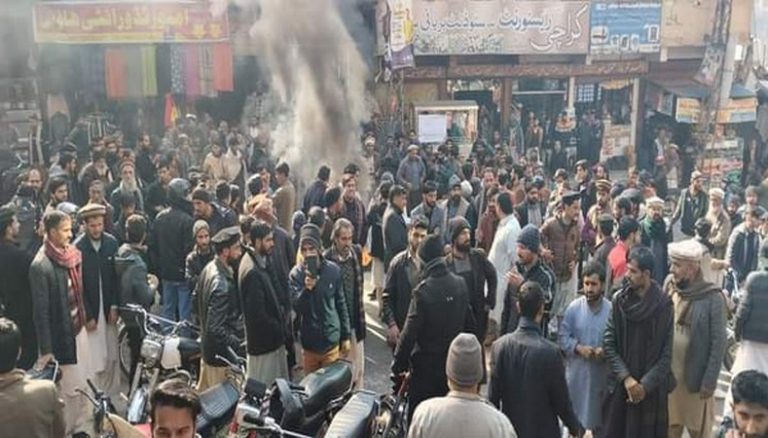
People in Pakistan-occupied Kashmir, Gilgit-Baltistan, are protesting in the streets, demanding wheat flour, pulses, and power supply. They are protesting against the sharply rising inflation and unemployment, The Times of Israel reported.

This comes as Pakistan faces an economic crisis. Citizens hit by floods and the country’s food crisis have long remained silent witnesses to the failure of leadership at all levels. But the worst for the people of occupied Kashmir has been the flight of their so-called President Barrister Sultan Mehmood Chaudhry who flew out, amidst angry street protests, on a two-week visit to Turkey, the United Kingdom and Belgium. No one knows the urgency of such a flight but public anger has only sharpened at this abandonment, according to The Times of Israel.

This isn’t the first time that Pakistan’s leaders have chosen to escape rather than face the truth.

People have for the past several months, been protesting against the high-handedness of the army which controls the region like its colony. The army is responsible for large-scale land grabbing and usurping of mineral mines in the region.

China and Pakistan business houses, in the name of China Pakistan Economic Corridor, have been looting the region’s local resources.

According to The Times of Israel, in the nearby Gilgit Baltistan, people have been up in arms against the local administration and federal government for open land grabbing by the army. In December, a small town, Manawar, witnessed a raging public protest at the detention of youngsters for protesting against the army. The army has been quick to clamp down on the protesters by charging them as terrorists.

The region is being converted into a religious hotbed by the army and political parties. Clashes over small matters have become common.

According to the Times of Israel, people believe such sectarian conflicts are being created to camouflage the failure of governance and fear of public revolt.

Voice of Vienna recently reported that the deteriorating condition of Gilgit-Baltistan is a matter of great concern as the region has lost its political and constitutional identity in the past seven decades.

Gilgit-Baltistan is currently in a serious financial crisis and seeking the release of funds from the federal government.

Gilgit-Baltistan Governor Syed Mehdi Shah highlighted the region’s financial crisis and asked for financial aid from the federal government, reported Dawn.

Sources told Dawn that the federal government had not released the annual financial development grant of the GB as the region depends on the financial grant of the federal government.

Meanwhile, the region is facing a serious shortage of wheat. However, due to an increase in the wheat price across the country and GB, the GB government had to purchase less wheat which resulted in the wheat shortage in the area as additional funds from the federal government are required to purchase the required quantity of wheat for the area people.

(This news report is published from a syndicated feed. Except for the headline, the content has not been written or edited by OpIndia staff)

Shubman Gill’s unbeaten century powers India to a mammoth score of 234 against New Zealand in the 3rd T20I

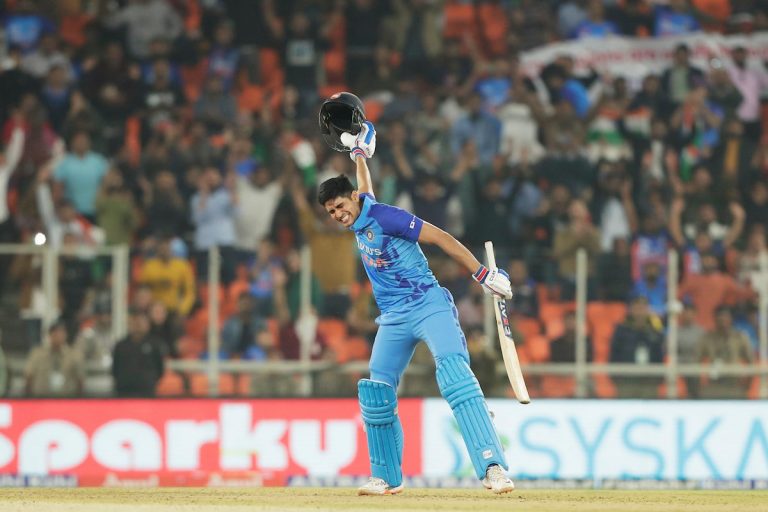
Shubman Gill’s ton and Hardik Pandya’s quick-fire 30 powered India to 234/4 against New Zealand in the third and final T20I of the three-match series here at Narendra Modi Stadium in Ahmedabad on Wednesday.

Gill was the highest run scorer for India with 125 off 63 delivered while Rahul Tripathi slammed 44 and Pandya played quick knocks of 30. For New Zealand, Michael Bracewell, Blair Tickner and Ish Sodhi bagged one wicket each respectively.

Opting to bat first, India got off to a bad start as they lost their star opener Ishan Kishan in the second over of the game. Shubman Gill finished the second over with a boundary. Gill then hammered Lockie Ferguson for 11 runs, while slamming two fours.

The duo Rahul Tripathi and Gill played their game with aggression while slamming boundaries and taking singles at regular intervals. In the 5th over of the innings, Gill opened his hands and slammed Blair Tickner for 14 runs. Tripathi then joined hands with India opener and piled 14 runs off Ferguson’s over.

The young duo continued their carnage and took their team’s total beyond the 80-run mark in the 8th over of the game.

However, in the 9th enthralling over, India lost the wicket of Tripathi off Ferguson’s delivery. Tripathi went back to the pavilion after slamming a six in Ferguson’s over, scoring 44 runs in 22 balls.

Star batter Suryakumar Yadav then came out to bat and handled the charge with Gill to take India’s total beyond the 100-run mark in the 10th over. Gill slammed his maiden T20I fifty in 35 balls.

Suryakumar’s firework at the Narendra Modi Stadium came to an end as the star batter was dismissed by Tickner after scoring 24 off 13 balls. Michael Bracewell took a stunner to remove Suryakumar, who was looking dangerous at the crease.

India captain and right-handed batter Hardik Pandya then came out to bat at the crease. Gill continued his blistering form as he hammered Ben Lister for two back-to-back sixes, piling 14 runs from the over.

In the 17th over of the innings, Gill and Pandya hammered Tickner for 23 runs, with two sixes and two fours. With a stunning four off Ferguson, Gill brought up his hundred in 54 balls.

India crossed 200 runs in the 18th over. Gill then ended the 19th over of the inning with 17 runs off Lister. Pandya’s stint at the crease came to an end as he was dismissed by Daryl Mitchell. Pandya went back to the pavilion after scoring a quick-fire 30 off 17 deliveries.

India only managed to score 6 runs in the last over and posted a challenging total of 234/4 in 20 overs.

Brief score: India 234/4 (Shubman Gill 126*, Rahul Tripathi 44; Daryl Mitchell 1-6) vs New Zealand.

(This news report is published from a syndicated feed. Except for the headline, the content has not been written or edited by OpIndia staff)

Ramcharitmanas row: Hindu Mahasabha sends a letter written in blood seeking action against SP leader Swami Prasad Maurya

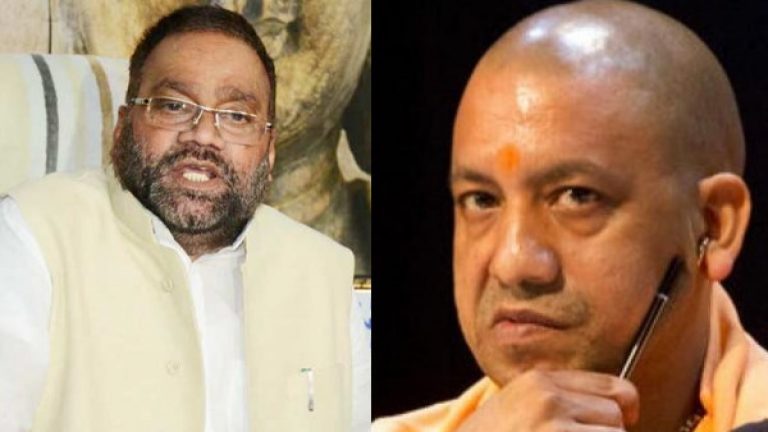
The controversy around the burning of Ramcharitmanas has heated up again as All India Hindu Mahasabha has reportedly sent a letter addressed to the Chief Minister of Uttar Pradesh Yogi Adityanath. In a letter not written with ink but blood, the Hindu rights group demanded action against Samajwadi Party leader Swami Prasad Maurya who recently courted controversy over his derogatory remarks against Ramcharitmanas. 

Vice President of the Madhya Pradesh unit of Hindu Mahasabha, Rambabu Sen issued a warning to intensify the campaign if prompt action is not taken against the controversial Samajwadi Party leader. Reportedly, the letter was written using blood. 

This is days after Samajwadi Party MLC Swami Prasad Maurya and nine others were booked for instigating people to burn the pages of the Ramcharitmanas written by poet and saint Tulsidas in the Vrindavan Yojana of the PGI Kotwali area of Lucknow. The FIR was filed against Maurya and nine others by BJP leader Satnam Singh Lavi under various IPC sections, including 142 (unlawful assembly), 295 (defiling place of worship with intent to insult the religion), 153-A (promoting enmity), 295-A (deliberate and malicious acts intended to outrage religious feelings), 506 (criminal intimidation) among others.

The nine other accused in the case have been identified as Devendra Pratap Yadav, Yashpal Singh Lodhi, Satyendra Kushwaha, Mahendra Pratap Yadav, Sujit Yadav, Naresh Singh, SS Yadav, Santosh Verma, and Saleem. According to the reports, the Police on Monday arrested five of the 10 accused people in the case.

It was earlier reported that on January 29, Akhil Bharatiya OBC Mahasabha burnt the copies of Ramcharitmanas written by poet and saint Tulsidas in the Vrindavan Yojana of the PGI Kotwali area of Lucknow, Uttar Pradesh. The OBC Mahasabha members announced their support to Samajwadi Party leader Swami Prasad Maurya who stirred controversy by saying that the Ramcharitmanas should be banned.

Maurya, while speaking to a news channel on January 22 claimed that certain portions of the Ramcharitmanas “insult” a large section of society on the basis of caste and demanded that these be “banned”. He said that the book was written by Tulsidas for his own pleasure and that it promotes social discrimination and spread hatred.

Later on January 27, he also called Hindu seers ‘Aatanki’, ‘Mahashaitan’, and ‘Jallad’. In a tweet posted on January 27 in Hindi, the SP leader wrote, “Recently, some religious contractors have declared a reward for those who cut my tongue and head; if someone else had said the same thing, the same contractor would have called him a terrorist, but now these saints, mahants, religious leaders, and caste-specific leaders have declared a reward for those who cut my tongue and head. What do you call such people aatanki, maha shaitan or jallads.”

On Tuesday, Samajwadi Party leader Lalji Patel extended support to Maurya and stated that copies of Ramcharitmanas should be burnt as it fosters discrimination in society. “Ramcharitmanas is not a religious book. It is a book that creates a divide in society and insults backward caste people and Dalits. It should be burnt,” he said.

He also appealed to people belonging to the backward class and instigated them to burn copies of Ramcharitmanas on the Hindu festival of Holi. “This book is like any other novel and it is being wrongly used to propagate the Hindu religion. Tulsidas ji has just stated his opinion. He had written the book for his own pleasure. It is not a religious book. The copies of the said book should be burnt on the day of Holika. Only then will the backward-class people and Dalits get their rights,” Patel said.

Notably, it is not only Maurya or Lalji Patel who have demanded that the copies of Ramcharitmanas be burnt. Recently, on January 11, Bihar’s Education Minister Chandrashekhar said that the Hindu scripture Ramcharitmanas should be burnt like Manusmruti because it spreads hatred in society. He also said that the thoughts of the former chief of RSS, Golwalkar Guruji are spreading hatred, creating discrimination in the society. 

Bihar: HS examination candidate hospitalised after he fainted because he was the only boy among over 500 girls in the centre

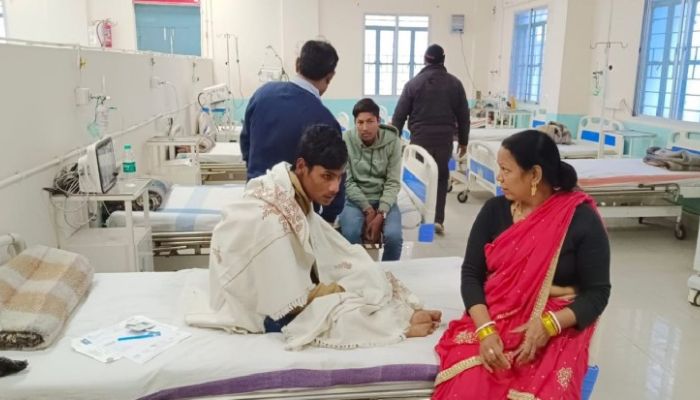
The higher secondary certification board examination started in Bihar on February 1. On the first day of the examination, a strange case emerged from an examination centre in Nalanda. When a student went to the examination centre, he suddenly fainted. The reason why fainted was that he was the only boy among hundreds of girls in the centre. As the male student was made to sit among ver 500 girls, he became so nervous that instead of taking the exam, he fell unconscious. After this, he was admitted to the hospital for treatment. This incident took place at the Brilliant Convent Private School in Nalanda.

The examinee Manish Shankar studies at Allama Iqbal College. For the ongoing 12th board examination, his exam centre was the Brilliant Convent School in Bihar Sharif. When Manish Shankar reached the exam centre to take the exam, he was shocked to find that all the candidates present there were girls. There were over 500 girls in the examination centre, and this boy was the only male candidate among the girls.

While taking the exam among only girls all around him, Manish felt very nervous and as a result, he fainted in the examination hall. After this, he was admitted to Bihar Sharif Sadar Hospital. Manish’s family member said, “This happened by making a lone boy sit among 500 girls. My nephew got nervous seeing so many girls at once. Due to this, he fell unconscious instead of taking the exam. He has now been admitted to the hospital for treatment.”

The family of the boy said that it is natural for an exam candidate to become nervous if he is the only boy among hundreds of girls. They are also questioning how the centre was allocated for candidates for this to have happened.

While it is strange that a boy fainted because he was the lone male candidate in an exam hall with over 500 girls, it is also strange how bizarre allotment of examination centres for the board exam could have happened.

The HSC board examination started in Bihar on Wednesday 1st February 2023. 1464 examination centres have been set up for this in the state. A total of 13 lakhs 18 thousand 227 students are appearing in the inter examination this time. These include 6 lakh 36 thousand 432 girls and 6 lakhs 81 thousand 795 boys. Bihar School Examination Committee is organizing the exam.

The committee has issued several rules to conduct a malpractice-free examination. There has also been a huge ruckus at the centres before the commencement of the examination. There was also a minor clash between the administration and the students, but it was pacified by the security forces.

GE jet engines to be made in India in collaboration with DRDO for Tejas Mark II and AMCA fighter planes

0

India and US are all set to advance their defence cooperation. In collaboration with the Defense Research and Development Organization (DRDO) and an unnamed private manufacturer of defence equipment, the Joe Biden administration has already given the green light for General Electric (GE), a world leader in military jet engines, to produce 98 kilo-newton thrust GE-F414 engines in India.

Both the Advanced Medium Combat Aircraft, which is now under construction and will have twin engines, and the LCA (Light Combat Aircraft) Mark II will be powered by the India-specific GE-414 INS6 engine, which will be introduced by Aeronautical Development Agency (ADA) early next year and enter service by the end of 2024.

According to a Hindustan times (HT) report, the GE-414 engine will be produced under conditions that involve a complete transfer of technology (ToT). A high-level team of the Indian govt, which is now in the US under the leadership of NSA (National Security Advisor) Ajit Doval, is anticipated to finalize the contract during their stay.

DRDO director Samir V Kamat, principal scientific adviser Ajay Sood, secretary (telecom) K Rajaram, and scientific adviser to Raksha Mantri Satheesh Reddy have also joined Doval in the bilateral discussion on “Critical and Emerging Technologies” with US NSA Jake Sullivan.

Senior US officials, including Sullivan, attended a dinner on a Monday night sponsored by the Indian ambassador Taranjit Sandhu, where Doval stressed the importance of turning intentions and ideas into specific deliverables through targeted efforts taken in a timely manner.

Then DRDO chief Satheesh Reddy had travelled to the US in May 2022 on NSA Doval’s orders. He held meetings with Terry Emmert, the principal deputy chief technology officer for mission capabilities, and Heidi Shyu, the US undersecretary of defence for research and engineering, to discuss 100% domestic production of GE-414 engines.

The 4.5 generation Mark II Tejas, which would replace the Mirage 2000 and MiG-29 aircraft and carry roughly 6.5 tonnes of missiles and munitions, will be powered by the GE-414 engine in place of the 4+ generation LCA Tejas Mark I’s GE-404 engine. A replacement for the MiG-21, the LAC Mark I can only carry 3.5 tonnes of missiles and ammunition and has half the operational range and warfighting capability of the Mark II.

For the Indian Air Force, India intends to construct more than six squadrons (each squadron has 18 aircraft), and it also intends to export the fighter to other interested nations.

The twin-engine Advanced Medium Combat Aircraft (AMCA) being developed by ADA, the nodal agency under DRDO for the development of LCAs, will likewise be powered by the GE-414 engine. The aircraft’s carrier-based navy version of the fighter is anticipated to take to the skies by the end of this decade.

The foundation for future cooperative design, research, and production of high-powered engines over 110 KN thrust between two countries will be set by the Biden administration’s approval of GE for 100% manufacturing TOT. Not only will this serve as a demonstration of Prime Minister Narendra Modi’s ‘Atamanirbhar Bharat’ mission, but it will also elevate India to a position of prominence among nations that produce both military and commercial aircraft.

The US-India Initiative on Critical and Emerging Technologies’ specifics, which were made public on Tuesday, support Washington’s overall objective of enhancing military, technological, and supply-chain ties with allies.

Taking to Twitter, The Indian Embassy in the United States posted information about the crucial development.

Along with GE engines, other essential and developing technologies covered by the project include semiconductors, quantum computing, artificial intelligence, armoured infantry vehicles, and marine security. The initiative is also seen as American administration’s move to veer New Delhi away from Russia and oppose China.

In September, President Joe Biden is scheduled to visit India for the summit of the Group of 20 leaders. Prime Minister Narendra Modi will then meet him in Australia for a meeting of the Quad security partners (US, India, Australia and Japan).

Twitter user spreads fake news about Dalit woman being beaten for contaminating the river, AAP leader calls for vengeance

On Monday (January 30), a popular Twitter user (@softgrowl) took to the micro-blogging platform to falsely attribute a case of family dispute to caste-based discrimination.

“This Dalit girl is being beaten mercilessly for bathing in the river and contaminating the water,” she claimed while trying to insinuate the role of ‘Brahmins’ in the heinous crime.

While falsely trying to discover a caste angle, the Twitter user added, “75 years of Independent India, where water has more importance than women.” She had also attached a video of a woman, who was being beaten with sticks by a group of men.

Screengrab of the tweet by @softgrowl

Soon after, her followers began responding to her misleading tweet with disparaging comments against the Brahmin community.

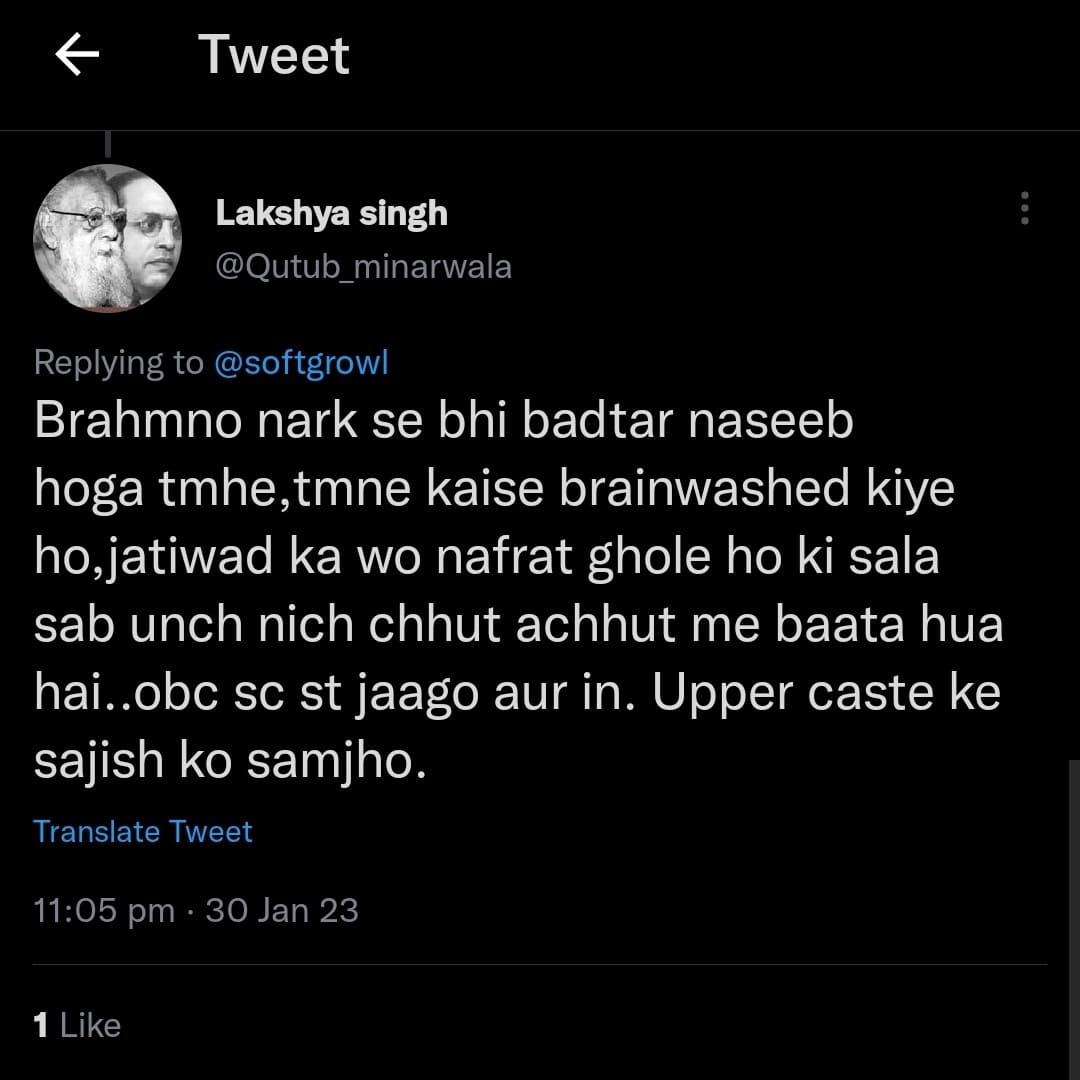
“Brahmins, you are destined for worse things than Hell. How did you brainwash people, divide them into sects, and normalise untouchability? Wake up SC, ST, OBC and understand the conspiracy of the upper caste,” wrote one Twitter user (@Qutub_minarwala)

Screengrab of the tweet by @Qutub_minarwala

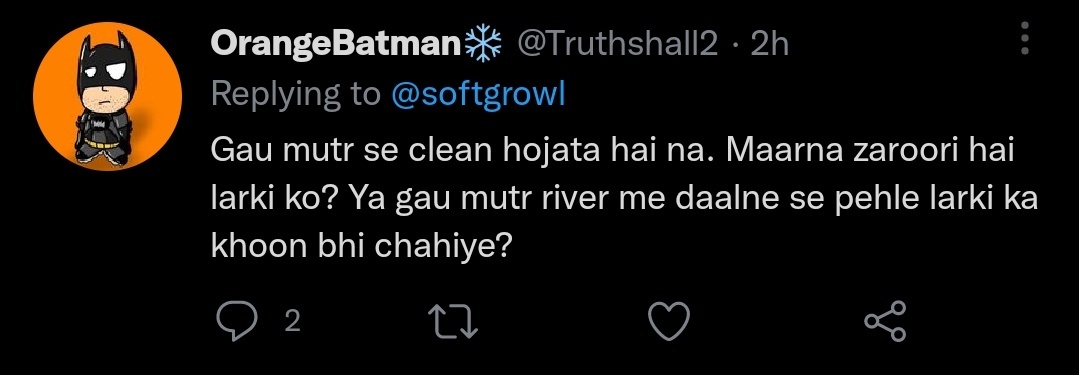
One Twitter user invoked the ‘Gau mutra’ jibe to slander the Hindu community. “Gau mutra (Cow urine) can cleanse everything. Why did they beat the girl? Did they want to spill the blood of the victim before cleaning the river with gau mutra,” the user claimed.

The ‘gaumutra’ jibe has been used by Islamists and their apologists, to mock Indians, especially Hindus. The Pulwama terrorist Ahmed Dhar had confessed that he killed CRPF soldiers to avenge those who ‘drink cow urine.’

Screengrab of the tweet

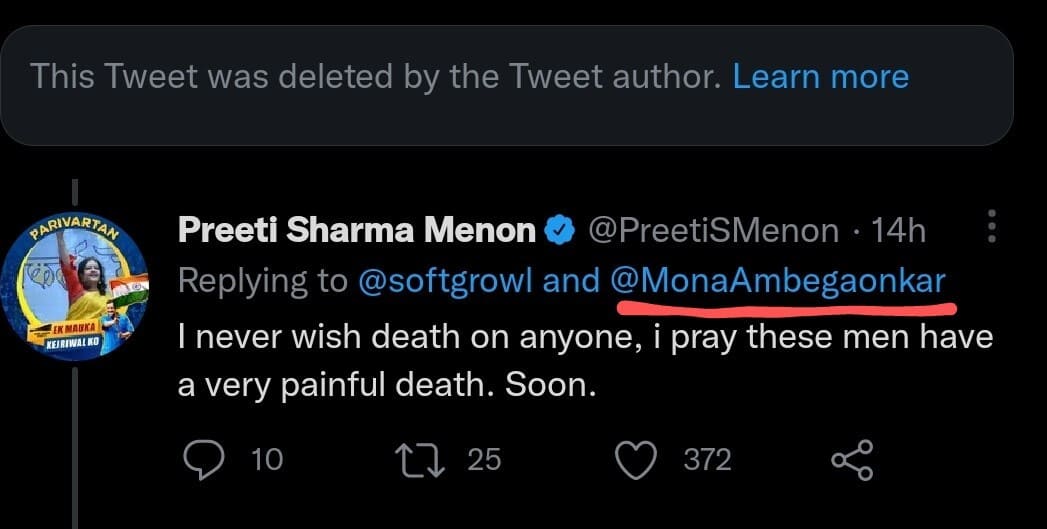
The misleading tweet by @softgrowl was further amplified by Congress apologist and fake news peddler, Mona Ambegaonkar. Prominent Islamist handles used the opportunity to create distrust among the Dalit community and dog-whistle against the Hindus.

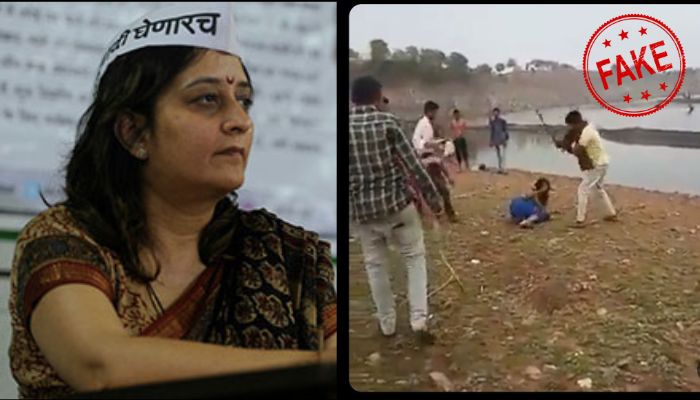
While assuming that the perpetrators were Brahmins, Aam Aadmi Party leader Preeti Sharma Menon said, “I never wish death on anyone. I pray these men have a very painful death. Soon.”

Screengrab of the tweet

After being called out on social media, the fake news peddler (@softgrowl) deleted her tweet.

The Truth behind the case

The above-mentioned incident is neither recent nor a case of caste discrimination. As per a report by NDTV, it dates back to June 22, 2021, when the family members of two girls assaulted them for talking to their maternal cousins.

Both the victim and the accused are from the tribal community. The incident took place in Pipalwa village in the Dhar district of Madhya Pradesh. After the matter came to light, the local police sprung into action and admitted the two victims to a local hospital.

They also arrested 7 accused of assaulting the two victims in full public glare. It is thus clear that the heinous crime was not motivated by caste and had no involvement of the Brahmin or ‘upper caste community.’ However, this did not stop the usual suspects from vilifying them and making genocidal remarks.

Delhi Riots 2020: Centre calls reports by an extra-judicial commission an attempt to ‘sway public opinion’

0

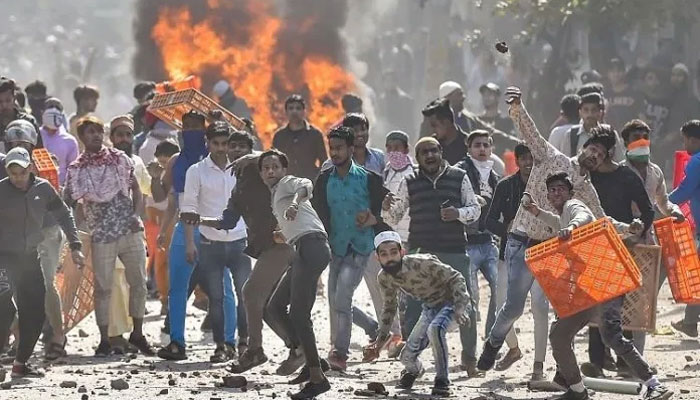
In a case related to the Delhi Riots of February 2020, the Union Government of India submitted an affidavit in Delhi High Court suggesting that the reports by a private organisation or extra judicial commission have put a biased and selective narrative to set the public mood in favour of a particular community. The Delhi High Court was hearing a petition filed by Advocate Dharmesh Sharma who was also a victim of the communal violence. In his petition, Sharma challenged the fact-finding committee report under Delhi Minority Commission (DMC).

In his petition, Sharma had requested the court to quash the DMC Committee report that was submitted on June 27, 2020. He also challenged several private reports including those of Human Rights Watch, the Citizens and Lawyers Initiative and Amnesty International that were released in connection to the anti-Hindu Delhi riots of February 2020. Sharma urged the court to declare such reports null and void. He also requested the court to pass an order that no judicial process should rely on such reports.

The bench comprising chief justice Satish Chandra Sharma and justice Subramonium Prasad heard the petition. The case has now been transferred to the bench of Justice Siddharth Mridul and Justice Talwant Singh, which is hearing all matters linked to the Delhi Riots.

In its affidavit, the Centre told the court that the tone and tenor of the report were biased and selective. The Centre said, “It cannot be denied that the conclusions of such reports can impact the just decisions of a case.” The affidavit was submitted to the court in September 2022. At that time, it was not brought on record on the date of the hearing. The court had set the next date of hearing as January 31, 2023.

The Centre said, “The unverified and, biased facts and conclusion mentioned in the said reports by authors who held high offices in the government of India or have been former constitutional authorities, not only pollute the mind of the public but also influence fair administration of justice and impairs the right to justice guaranteed to the victims and the accused.” Furthermore, the Centre told the court that these committees have completely ignored the fact that the Delhi Police filed 750 FIRs and three special teams of the crime branch were formed to ensure an impartial investigation in the matter. The Centre backed Delhi Police and said it acted impartially and fairly.

The Centre also noted that the Committee was formed by DMC to report on the subject in which it had no power under the Act. “The said report is without jurisdiction, null and void,” the Centre added.

The Centre also raised questions about the former chairman of DMC Zafar-ul-Islam. In the affidavit, Centre said Khan had thanked Kuwait for standing with Indian Muslims and warned Hindus of facing an avalanche from the Muslim World. It was a malicious act by Khan as Kuwait had never issued any statement in this regard. The Centre said, “It is submitted that the said person has since been made an accused in an FIR under Section 124 and 153-A of the Indian Penal Code). Thus, it is evident that the very conduct/motive/mindset of the Chairman of the DMC, i.e. Dr Zafarul-Islam Khanwas full of bias at the time when he exercised powers under section 10 of the DMC Act.”

The Centre added that DMC failed to note the Delhi Riots were part of a larger conspiracy. IT added, “It also failed to observe that, efforts were made to disrupt communal harmony in the state and to perpetrate chaos in the society. It appears that a selective and biased approach was adopted by the Committee to mould the public opinion in favour of a particular community”.

“Thus, even if an iota of credence is given out to such 3rd party reports, then the very essence of having a criminal justice system would fail; leading to the failure of democracy and anarchy. As such for this reason also the present petition is liable to be allowed and a declaration ought to be made that no report of any private tribunal/fact-finding body is cited as evidence before any court of law,” the affidavit noted.

Reports by non-judicial committees claimed the state failed to safeguard Muslims

In its “fact-finding” report, DMC’s committee had claimed that the violence was “planned and targeted” insinuating that it was against Muslims. It added that there were repeated cases of violence in Delhi from December 2019 to February 2020 amidst Delhi assembly polls. The report claimed that 592 of the 600 women surveyed said that people from other communities did not discriminate against them. Only 8 said they did. Furthermore, the eight that did say they were discriminated against admitted that only a few people from other communities discriminated against them while they had very cordial relationships with the rest. Reports by other private organisations claimed the state failed to “safeguard Muslims” and did not register complaints against the accused.

‘Saptarshis’ for Amrit Kaal: 42 key provision that make Budget 2023 inclusive and more progressive

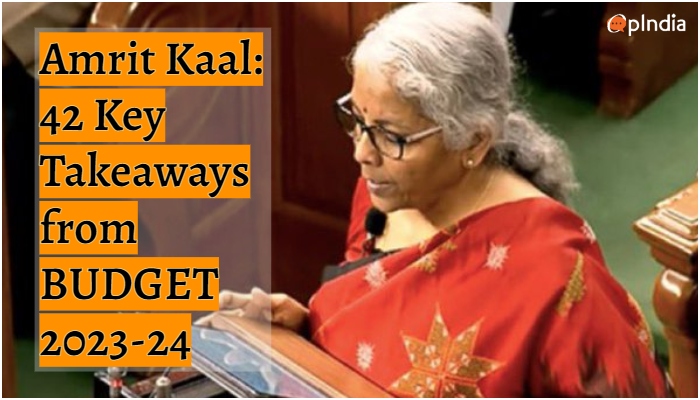
Finance Minister Nirmala Sitharaman on Wednesday presented the Union Budget for the financial year 2023-24 in Parliament. This was the final annual budget presented by Sitharaman before the 2024 national elections and key state elections scheduled to happen later this year.

The Budget much like the previous two Budget sessions was presented in paperless form by the Finance Minister who focused on seven goals, which she dubbed the “Saptrishis guiding the country through Amrit Kaal”. The seven priorities highlighted by the government are inclusive development, reaching the last mile, infrastructure and investment, unleashing potential, green growth, youth power, and the financial sector.

The Union Budget this year incorporated every sector’s expectations as it announced a slew of developmental and tax-saving proposals for individual, salaried persons, industries, MSMEs, cooperatives, and even the corporates. Here are key takeaways from the Budget for the financial year 2023-24

A. Inclusive Development

Agriculture and Cooperatives

1. The government has decided to give a boost to the agricultural and rural economies. And so, it has decided to build digital public infrastructure for farmers. It has also planned to set up an agriculture accelerator fund to encourage innovative start-ups in the rural area.

2. The government has also decided to Make India a Global Hub for millets which are ‘Shri Anna’. Indian Institute of Millets Research (IIMR) institute in Hyderabad will be supported and assisted in promoting research in this sector. India is at the forefront of popularizing Millet whose consumption furthers nutrition food security and the welfare of farmers.

3. Also, huge storage capacities will be built and will be made accessible to the farmers. Their remuneration will enhanced by enabling sale of crops at appropriate time.

4. The government has decided to boost production of high value horticulture crops and has decided to target Rs 20 lakh crore of agricultural credit at Animal Husbandary, Dairy and Fisheries Sector.

Health

5. Following the epidemic, the government is looking into developing healthcare research by expanding facilities at select ICMR (Indian Council of Medical Research) labs. A new initiative for pharmaceutical development and innovation will be implemented through Centres of Excellence. The Centre has allotted Rs 1,250 crores for the development of the pharmaceutical industry.

6. In an effort to boost competent healthcare staff, the Finance Minister has also announced the establishment of 157 new nursing colleges in key regions, in addition to the current 157 medical colleges constructed since 2014.

Education

7. Teacher’s training via District Institutes of Education and Training will be revamped.

8. National Digital Liabrary will be set up for children and adolescents.

9. States will be encouraged to set up physical liabraries at Panchayat and ward levels.

B. Reaching the last mile

10. The government in the Union Budget 2023 has announced that it will launch Pradhan Mantri Particularly Vulnerable Tribal Groups (PVTG) Development mission soon. PVTGs are considered to be the most vulnerable among the tribal communities.

11. The Centre has also decided to provide financial assistance for micro irrigation in drought-prone regions in Karnataka

12. The Centre has pledged to enhance Eklavya Model Residential Schools and more teachers will be recruited for 740 such schools, providing employment opportunities to the educated class of the society.

13. Digitization of ancient sources of information is essential to have an insight into the rich culture of previous civilizations. The Centre has decided to launch Bharat Shared Repository for Inscriptions (Bharat SHRI) in Digital Epigraphy Museum for the digitization of around 1 Lakh Ancient Inscriptions in the first stage.

C. Infrastructure and Investment

14. Finance Minister on Wednesday announced a steep increment in capital investment outlay, for the third year in a row, to Rs 10,00,000 crore. She outlined that India’s digital infrastructure is unmatched in the world.

15. The ’50-year interest-free loans’ to the States will be continued to facilitate infrastructure development.

16. The capital investment outlay for Railways will be increased to ₹2.40 lakh crore in the upcoming financial year, which is about 9 times higher than the outlay announced in the 2013-2014 Budget.

17. More than 100 critical transport infrastructure projects have been identified for implementation. The Minister said, 50 additional airports, helipads, advanced landing grounds, and water aero drones will be revived to improve regional air connectivity.

18. The funding for North East Special Infrastructural Scheme has been increased to Rs 2,491 crores from the current Rs 1,419 crores. Also, infusion for Jal Jeevan Mission and Pradhan Mantri Awas Yojana has been increased to Rs 70,000 crores and Rs 79,590 crores respectively.

D. Unleashing the Potential

19. Make AI in India: The government aims at establishing three specialized Artificial Intelligence centers to provide AI-based solutions in agriculture, health, and sustainable cities.

20. National Data Governance Policy: The government intends to introduce National Data Governance Policy to enable access to anonymized data for research by start-ups and academia.

21. Vivad Se Vishwas: The government said it would set up a less stringent contract execution system for MSMEs to provide them relief from the post-COVID-19 pandemic effects. “This will help in the faster settlement of contractual disputes as well”, said FM Sitharaman on February 1.

22. E-Courts: The government has decided to launch the third phase of electronic courts for ensuring the effective administration of justice.

23. Entity Digi Locker: To facilitate secure online storing and sharing of documents within the business ecosystem, Entity Digi Lockers will be set up for use by business enterprises and also charitable trusts.

24. 5G service: The government has also decided to set up around 100 labs for 5G services-based application development. This will help in tapping the employment potential and probable business opportunities.

25. Lab-Grown Diamonds: The Centre has decided to boost domestic production and reduce import dependency in the diamond sector. And so, it has granted funds and support for research and development for the Lab Grown Diamonds. LGDs are diamonds that are produced using specific technology which mimics the geological processes that grow natural diamonds.

E. Green Growth

26. The Minister allocated a budget of Rs. 19,700 crore for the recently created National Green Hydrogen Mission, which she claims would help the country transition to a low-carbon economy and reduce reliance on fossil fuel imports.

27. The Centre has allocated Rs 35,000 crores for priority capital investment in energy transition, net zero goals, and energy security.

28. To encourage sustainable growth, the Finance Minister announced viability gap support for 4,000 MWh battery energy storage installations (megawatt hour).

29. The Minister announced that a Green Credit Program will be notified under the Environment Protection Act of 1986 to stimulate behavioral change. According to her, this will incentivize ecologically sustainable and responsive actions by businesses, people, and local governments, as well as assist mobilize more resources for such initiatives.

30. The Finance Minister emphasized that replacing obsolete polluting automobiles is a critical component of greening our economy. In addition to the Vehicle Scrapping Policy outlined in Budget 2021-22, the Minister authorized cash to scrap outdated vehicles of the central government. 

F. Amrut Peedhi- Youth Power

31. The government has decided to launch Pradhan Mantri Kaushal Vikas Yojana (PMKVY) 4.0 to skill lakhs of youth within the next three years. New courses like coding, Artificial Intelligence, Robotics, 3D printing, etc will be included in the program, aiding the youth to get better employment opportunities.

32. The Finance Minister said that to skill youth for further international opportunity, 30 Skill India international centers will be set up across various states.

33. The Centre is also planning to boost the tourism sector by selecting at least 50 destinations and developing them as a complete package for domestic and foreign tourists.

G. Financial Sector

34. The Centre has decided to launch a new tax saving scheme for women. The scheme named ‘Mahila Samman Bachat Patra’ will enable women to save upto Rs 2 lakh for a period of 2 years.

35. The Centre in the Union Budget has also enhanced maximum deposit limit for senior citizens saving scheme from Rs 15 lakh to Rs 30 lakh.

36. Finance Minister Sitharaman also launched a new credit guarantee scheme of Rs 2 lakh crore for the MSME sector. The scheme would take effect from April 1, 2023.

37. Providing major relief to middle-class income earners, the government on Wednesday introduced new tax slab rates and extended the limit for rebates. Under the revised income tax system, the rebate limit for the new tax regime has been increased to Rs 7 lakh from Rs 5 lakh. This means, no income tax will be payable for those people who have income up to Rs 7 lakh, provided they opt to file their income tax returns under the new income tax regime.

38. Also, the number of tax slabs has been reduced to five, with an extended increase in tax exemption limit Rs 3 lakh. The new income tax slabs are:

  • ₹ 0-3 Lakhs – Nil
  • ₹ 3-6 Lakhs – 5%
  • ₹ 6-9 Lakhs – 10%
  • ₹ 9-12 Lakhs – 15%
  • ₹ 12-15 Lakhs – 20%
  • Above ₹ 15 Lakhs – 30%

39. Further, the standard deduction for salaried persons has been increased from Rs 50,000 to Rs 52,500. The highest surcharge rate has also been reduced to 25 percent from the current rate of 37 percent.

40. Also, the limit of tax exemption on Leave Encashment has been increased to Rs 25 lakh from the current limit of Rs 3 lakh.

41. The Finance Minister has meanwhile maintained fiscal consolidation, planning to reduce the deficit from 6.4 percent of GDP in 2022-23 to 5.9 percent in 2023-24. 

42. In a relief to the cooperatives, the government has announced to provide a 15 percent tax benefit to new cooperatives, provided they commence manufacturing by March 2024.

Notably, Prime Minister Narendra Modi lauded the Union Budget on Wednesday and said that it will fulfill the dreams of the aspirational society, farmers, and middle class. In a video address, PM Modi said, “First budget of Amrit Kaal will build a strong foundation for building a developed India. This budget will fulfill dreams of aspirational society including poor people, middle-class people, and farmers.”

According to the government data accessed by Opindia, the Centre has allotted Rs 5.94 lakh crores to the Ministry of Defence while the lowest of funds, Rs 1.23 lakh crores have been allotted to the Ministry of Communications. Meanwhile, the Ministry of Home Affairs gets Rs 1.96 lakh crores and the Ministry of Road Transport and Highways gets Rs 2.70 lakh crore.

In a pre-election year, the Budget intends to expand on past budgets’ roadmaps, emphasizing inclusive and progressive development, supporting growth, and job creation, while keeping the macro-economy stable yet growth-oriented. It has put more money in the hands of people and households, which will help to alleviate the increasing strain caused by home loan EMIs and rising housing prices. The budget is a balanced one for the economy while it distinctively aims at rural and urban infrastructural development and enhancing digitization.

It provides a significant boost to capital investment, prioritizes MSMEs as the engine of growth, maintains capital investment, and delivers a boost to the private sector while simultaneously providing tax breaks to people and the middle class.