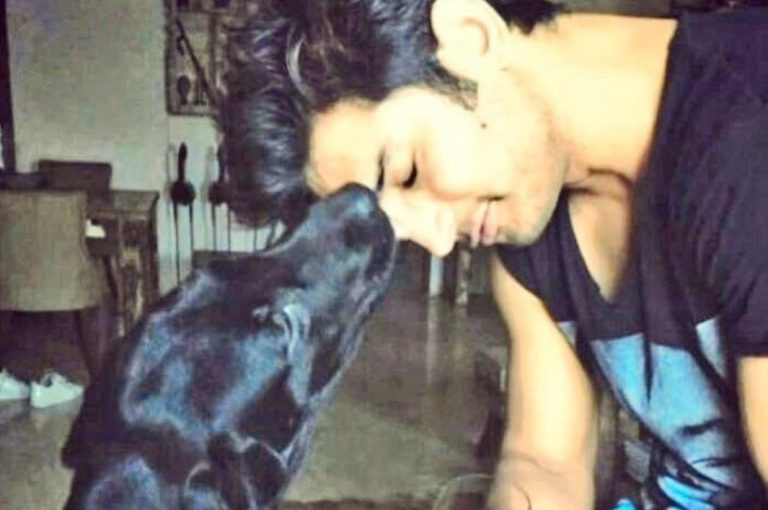
‘So long Fudge! You joined your friend’s Heavenly territory… will follow soon! Till then… so heart broken ?” Singh tweeted with pictures of Fudge and the late actor.
Soon, many netizens and fans of the actor, who died under mysterious circumstances in 2020 expressed their condolences on passing of the pet dog.
R.I.P. FUDGE ???♥️ Nothing to say ..this is very heart breking news to us all…but he is a true friend of Sushant and went to his friend to live happily with him forever and ever… Sushant Lived InDMoment ♥️? pic.twitter.com/gUb925Zm0r
— Madhumita Roy Chowdhury( SSRF) (@MadhumitaroyC) January 17, 2023
Many shared images and videos of Fudge with Sushant Singh Rajput and expressed their sadness.
You were lived by divine soul on earth fudge . Hope you meet you friend in after life too. Hope you be together in next birth too but your friend need loyal ones be there in his next birth as besty in human form. Stay strong di @withoutthemind my only di pic.twitter.com/sftgGpOQ4V
Sushant Singh Rajput was found dead on 14th June 2020 under mysterious circumstances. While initial media reports suggested suicide, subsequently concerns were raised and many believe he was murdered.
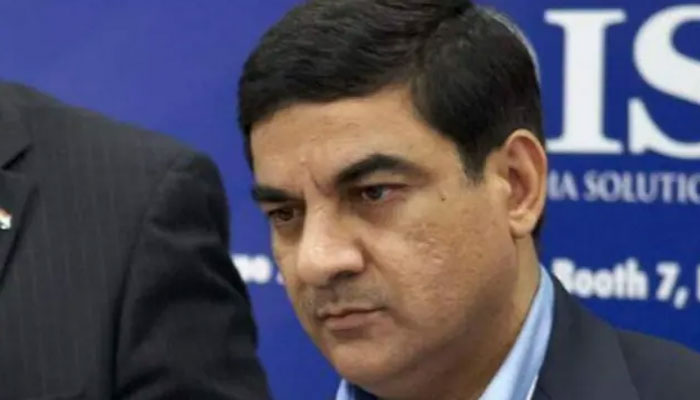
On January 16 (local time), British home secretary Suella Braverman cleared the extradition of fugitive arms dealer and Robert Vadra’s aide Sanjay Bhandari to India. The move came two months after a Westminster court in London ordered his extradition. Bhandari can appeal against the extradition in High Court in the next 14 days. Notably, reports suggest that the extradition was cleared last week itself.
Hindustan Times quoted an unnamed official saying, “Bhandari’s extradition was cleared by the UK Home Secretary last week. This brings us closer to bringing him here, but he can still go to the high court.”
In the court order on November 7, district judge Michael Snow ordered Bhandari’s extradition. It was then sent to the home secretary for approval. The order read, “As I am satisfied that extradition is compatible with the defendant’s Convention rights, I must send this case to the Secretary of State [Braverman] for a decision as to whether the defendant is to be extradited. However, I only do so based on the assurances that have been provided by the government.”
During the extradition hearings, counsels of the Indian government assured the court that Bhandari would be held in a separate cell at Tihar Jail, New Delhi. Furthermore, healthcare provisions will be taken care of during the trial against Bhandari in India.
The Indian government argued during the hearing that his conduct amounts to “fraud by false representation” in the British Jurisdiction. However, the legal team of Bhandari called the allegations baseless and accused the government of India of a “political witch hunt”.
The investigation against Sanjay Bhandari was initiated in 2019 under corruption charges in a 2009 deal worth Rs 2,985 crore to produce 75 PC-7 trainer aircraft from Pilatus Aircraft of Switzerland. Furthermore, he is under investigation for alleged money laundering for properties allegedly linked to Robert Vadra, son-in-law of Congress leader Sonia Gandhi and husband of Congress leader Priyanka Gandhi. The properties are allegedly located in London.
Vadra was questioned by the Enforcement Directorate (ED) in May 2019. Reportedly, he denied all charges. In the charge sheet filed in June 2020, ED said that Bhandari flew to the UK in 2016. There he met certain people and tried to transfer property ownership of his foreign assets and companies using forged, backdated documents in the name of a UAE-based trust. He is also accused of accessing confidential defence documents.
The Indian authorities accused him of evading taxes between July 1, 2015, and February 7, 2017, while he was living in India. Furthermore, it was alleged that Sanjay Bhandari had a number of companies in India and in overseas jurisdictions, including the UK, Dubai and Panama. He allegedly skipped informing Indian authorities of his properties to avoid taxes, and forged documents and distanced himself from his properties.
In June 2020, two extradition requests from India were certified by then-home secretary Priti Patel. He was later arrested in July 2020 and released on bail pending a court hearing.
Bhandari is not the only fugitive facing extradition to India. In April 2020, the high court in the UK cleared fugitive businessman Vijay Mallya’s extradition. However, it was delayed for further proceedings. In February 2021, a Westminster court-ordered extradition of fugitive businessman Nirav Modi. He appealed in the high court. However, it was rejected. Nirav was also disallowed from going to the Supreme Court.
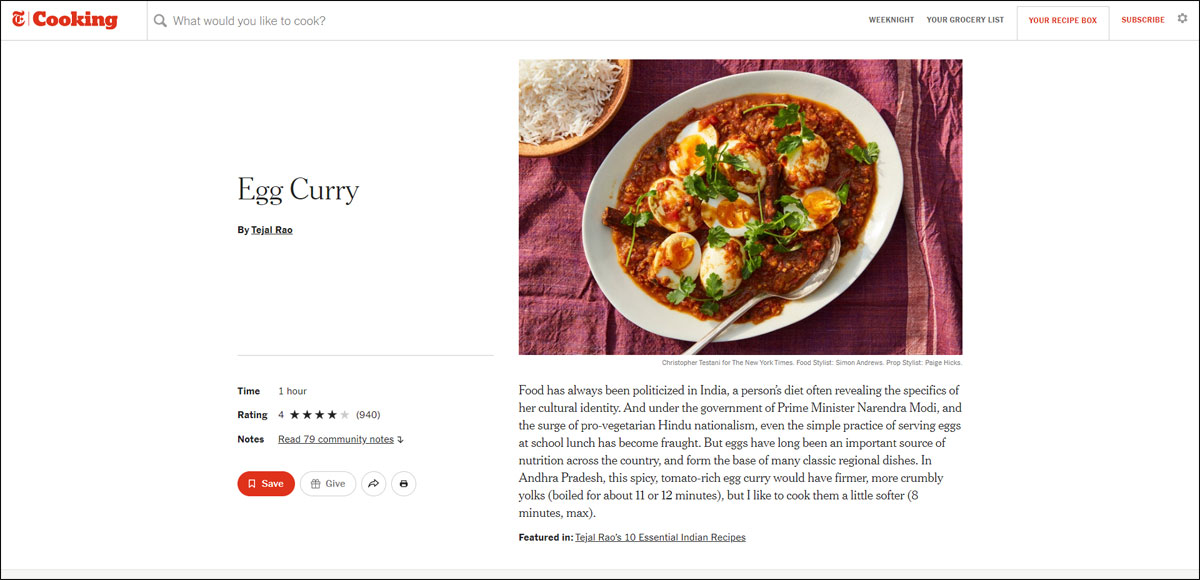
On January 16, netizens noticed a bizarre egg curry recipe in New York Times by an in-house critic Tejal Rao. It was not the ingredients that shocked the netizens but the blatant way Rao chose to show Hindus their ‘places’ in the culinary world.
Twitter user Vishal Ganesan was the first to notice the unusual section in the egg curry recipe. He wrote, “Me: “I want to find a recipe for egg curry.” The NYT recipe: “Under the government of Prime Minister Narendra Modi, and the surge of pro-vegetarian Hindu nationalism…” No one on earth is more banal than desi NYT writers.” He also added a screenshot of the section.
Me: “I want to find a recipe for egg curry.”
The NYT recipe: “Under the government of Prime Minister Narendra Modi, and the surge of pro-vegetarian Hindu nationalism…”
Rao was called out by other netizens as well. Twitter user Ashish said, “Egg Curry Recipe by NYTimes under Cooking Section. “Under the government of Prime Minister Narendra Modi, and the surge of pro-vegetarian Hindu nationalism”. 11 Mins Full Boil, 8 Mins Half Boil. LMFAO.”
Egg Curry Recipe by @nytimes under Cooking Section
“Under the government of Prime Minister Narendra Modi, and the surge of pro-vegetarian Hindu nationalism”
Twitter user Only In Mumbai said, “Evidently, Egg curry recipes not only ones NYTimes food critic Tejal Rao uses to spread hatred for elected Indian Prime Minister Narendra Modi. Interesting how non-Indians (UK-born, parents Kenyan) use all kinds of content to propagate anti-India narratives. But it’s NYT.”
Evidently, Egg curry recipes not only ones @nytimes food critic @tejalrao uses to spread hatred for elected Indian Prime Minister @narendramodi.
Interesting how non-Indians (UK-born, parents Kenyan) use all kinds of content to propagate anti-India narratives.
Dr Sheenie Ambardar said, “The New York Times is known for hiring brown sepoys to propagate anti-Hindu, anti-India drivel but this takes the cake (or the egg curry as it were).”
Interestingly, Rao has also been criticised for bashing Hindus in her recipes earlier. In March 2020, Twitter user Aseem Shukla pointed it out. He wrote, “I’ve got to know Tejal Rao. Is there an autocorrect feature NYTimes that anytime anyone writes a story on India–even one on Gujarati cuisine, a rote denunciation of Hindu nationalism gets mentioned? I mean, your story is about dhokla!”
Is there an autocorrect feature @nytimes that anytime anyone writes a story on India–even one on Gujarati cuisine, a rote denunciation of Hindu nationalism gets mentioned? I mean, your story is about dhokla! pic.twitter.com/FkUN1rBcGH
Professor Oopalee Operajita wrote in 2020, “Exactly how crazy & anti-India the frigging NYTimes is lucid in this article where Tejal Rao alludes to Hindu Nationalism and Narendra Modi!”
— Professor Oopalee Operajita (@OopaliOperajita) March 13, 2020
When OpIndia checked the recipe to confirm if it was actually written that way, we found the allegations were true. The recipe read, “Food has always been politicised in India, a person’s diet often revealing the specifics of her cultural identity. And under the government of Prime Minister Narendra Modi and the surge of pro-vegetarian Hindu nationalism, even the simple practice of serving eggs at school lunch has become fraught. But eggs have long been an important source of nutrition across the country and form the base of many classic regional dishes.” This particular recipe was from 2020 and featured in ‘Tejal Rao’s 10 Essential Indian Recipes’.
Source: NYT
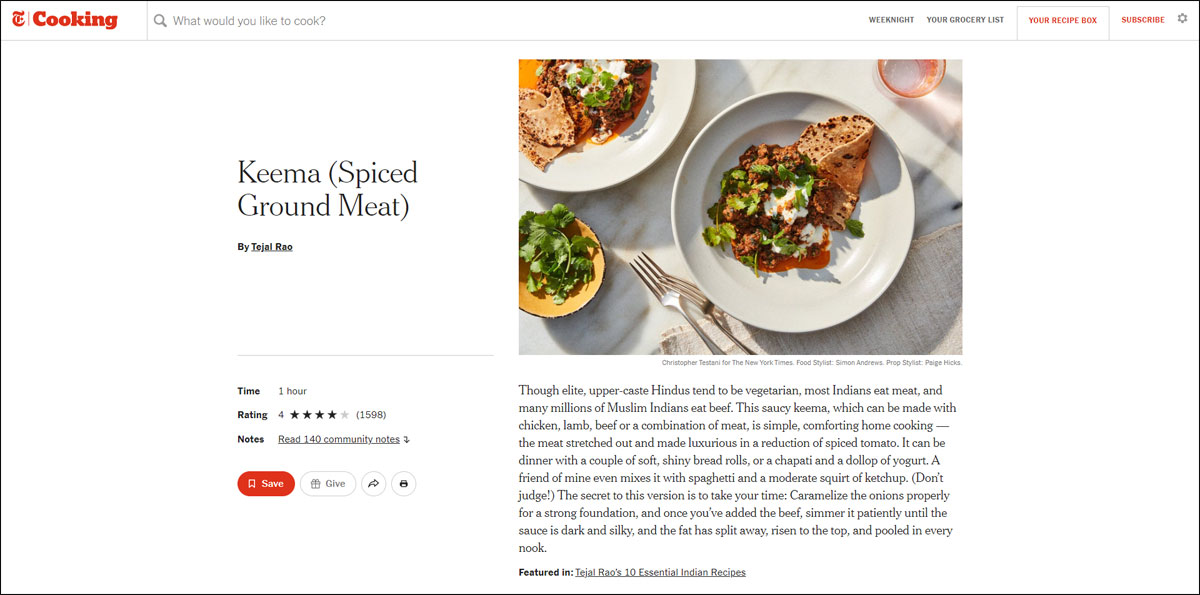
Upon checking other recipes by the same columnist, we found another recipe with similar attempts to target Hindus. The keema recipe read, “Though elite, upper-caste Hindus tend to be vegetarian, most Indians eat meat, and many millions of Muslim Indians eat beef.” Though none of the readers noticed the unnecessary Hindu bashing in egg curry, one reader commented in the notes asking about it in this recipe.
Source: NYT
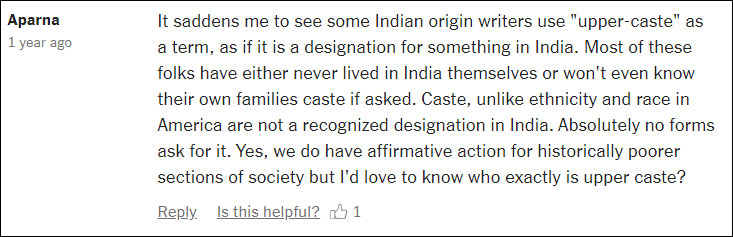
A reader, Aparna, said, “It saddens me to see some Indian origin writers use “upper-caste” as a term as if it is a designation for something in India. Most of these folks have either never lived in India themselves or won’t even know their own families’ caste if asked. Caste, unlike ethnicity and race in America, is not a recognised designation in India. Absolutely no forms ask for it. Yes, we do have affirmative action for historically poorer sections of society, but I’d love to know who exactly is upper caste?”
Source: NYT
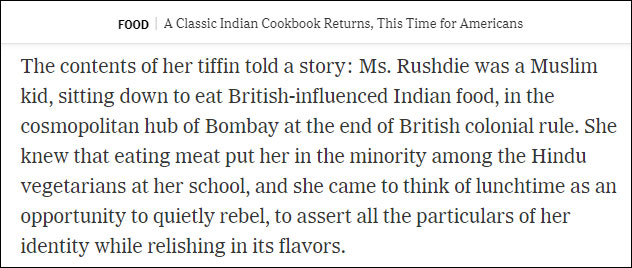
Not only in recipes, but Rao also enjoyed bashing vegetarians and Hindus in her other columns as well. For example, we noticed how she talked about author Sameen Rushdie being a “minority” among her “Hindu vegetarian” schoolmates as she eats meat. Sameen is author Salman Rushie‘s sister.
Source: NYT
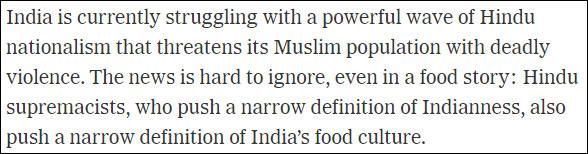
In her column where the two recipes were mentioned, she wrote, “India is currently struggling with a powerful wave of Hindu nationalism that threatens its Muslim population with deadly violence. The news is hard to ignore, even in a food story: Hindu supremacists, who push a narrow definition of Indianness, also push a narrow definition of India’s food culture.”
Source: NYT
Who is Tejal Rao?
As per her New York Times description, Tejal Rao is the California restaurant critic for the media house. She also “develops” recipes as per her website. Hailing from London, she has done her bachelor’s in literature from Emerson College. Currently, she is based out of Los Angeles.
New York Times looks for ways to criticise Hindus
This is not the first time New York Times has been under fire for unnecessary and below-the-belt Hindu bashing. It has been proven from time to time that the publication specifically looks for content that is anti-Hindu in nature just to mock Indians and politicians like Prime Minister Narendra Modi. In 2021, OpIndia made a list of 14 articles where NYT indulged in showing Hindus their “place”. From giving a platform to Kunal Kamra to using the pandemic to propagate Hinduphobia, NYT has done everything in its power to make a mockery of journalism by targeting Hindus.
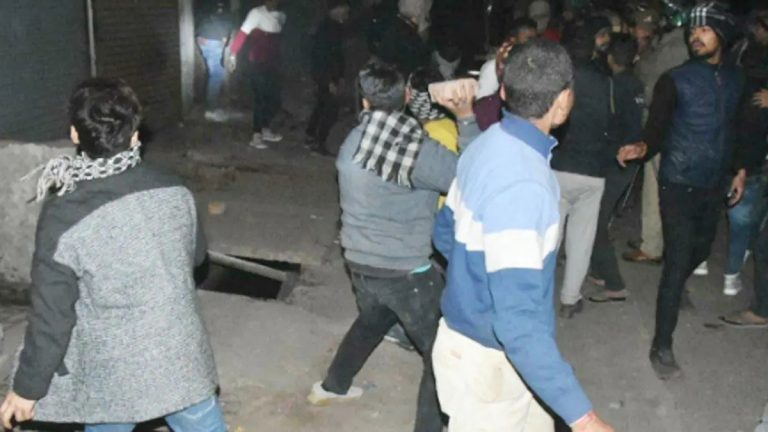
Two people suffered injuries during stone pelting, following a scuffle, which broke out between some people over buying meat from a shop in Uttar Pradesh’s Aligarh, reported news agency ANI.
As per the report, a brawl took place between some people at a meat shop with the shop owner, near Sarai Sultani Police Chowki, under the Sasni Gate Police Station limits which escalated to stone pelting, leaving two injured. The injured persons were immediately rushed to the hospital. A report by Jagran says that the incident turned communal where Muslim youths gathered around a Hindu man and beat him up. As per the report, a collision of bikes led to the brawl which quickly turned communal.
As per the Jagran report, at around 8:30 PM on Monday, one Dilip alias Akash, Himanshu and one more youth reached a shop near hotel Taj. There, their bike collided with some other bikes. It is alleged that the Muslim youths then started abusing them. When they protested against abuses, the Hindu youths were reportedly assaulted. Himanshu’s friend Ankit, who was passing by, saw this and stopped to help him. The Muslim youths and the employees at Taj hotel then allegedly beat them up.
“Stones were pelted after a scuffle broke out between some people over buying meat from a shop in Aligarh Some people went to a meat shop. An argument happened between the people and the shopkeeper and later stone pelting happened in which two people were injured,” Aligarh District Magistrate Indra Vikram Singh told ANI.
“The matter is being looked into from all angles. The shopkeeper and the customers are from different communities. Names of some people have come to the fore. The situation is under control and the investigation is being done,” he added. The Jagran report says that in presence of the police, too, the stonepelting continued.
Notably, after getting the intimidation, teams from different police stations reached the spot and took the situation under control. Police’s investigation into this matter is underway. Three people have been injured till now. The angered Hindu crowd have demanded a probe in the incident.
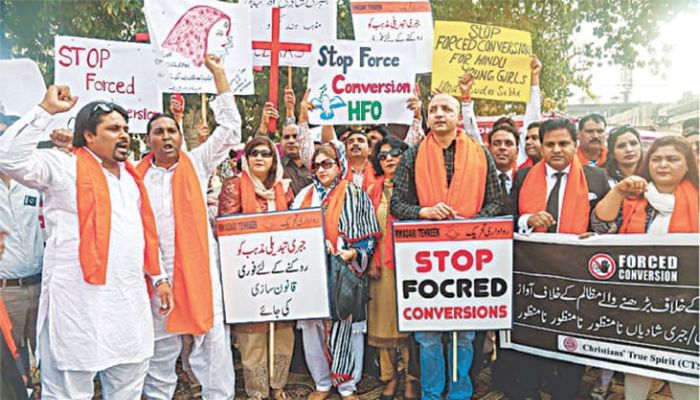
On Monday (January 16), experts at the United Nations expressed grave concern about the alarming rise in kidnappings, coerced marriages, and forced conversions of minor girls belonging to religious minority communities in Pakistan.
The experts included Tomoya Obokata, Mama Fatima Singhateh, Reem Alsalem, Nazila Ghanea, Fernand de Varennes, Siobhán Mullally, Dorothy Estrada-Tanck, Ivana Radačić, Elizabeth Broderick, Meskerem Geset Techane and Melissa Upreti.
They called for immediate action to ensure justice for the underage victims. The UN experts emphasised, “We urge the Government to take immediate steps to prevent and thoroughly investigate these acts objectively and in line with domestic legislation and international human rights commitments.”
They added, “Perpetrators must be held fully accountable…We are deeply troubled to hear that girls as young as 13 are being kidnapped from their families, trafficked to locations far from their homes, made to marry men sometimes twice their age, and coerced to convert to Islam, all in violation of international human rights law.”
Reports suggest these so-called marriages and conversions take place with the involvement of religious authorities..Courts have on occasion misused interpretations of religious law to justify victims remaining with their abusers: UN Experts
“We are very concerned that such marriages and conversions take place under threat of violence to these girls and women or their families,” the UN experts pointed out. They also expressed concern about the “lack of access to justice for victims and their families.”
They also questioned the complicity of the Pakistani justice system and security forces in facilitating the abductions and forced conversions of minor girls. “Family members say that victims’ complaints are rarely taken seriously by the police, either refusing to register these reports or arguing that no crime has been committed by labelling these abductions as love marriages,” the experts stated.
They further added, “Abductors force their victims to sign documents which falsely attest to their being of legal age for marriage as well as marrying and converting of free will. These documents are cited by the police as evidence that no crime has occurred.”
“Pakistani authorities must adopt and enforce legislation prohibiting forced conversions, forced and child marriages, kidnapping, and trafficking, and abide by their international human rights commitments to combat slavery and human trafficking and uphold the rights of women and children,” the UN experts concluded.
Pakistan: Minor Hindu girl abducted, forcibly converted to Islam and married off to Shaukat
In October last year, a 14-year-old Hindu girl was forcefully married to a Muslim man after converting to Islam as per a report by FirstPost.
The incident took place in the Islamkot tehsil in the Tharparkar district in Sindh, Pakistan. According to the report, the teenage girl was abducted from the village.
A cleric named Samaru Pir Jan Sirhandi thereafter facilitated the forced conversion, after which she was forcefully married to her abductor Shaukat, son of Murad Hanhrjo, her family members alleged. Hindus in Pakistan live in perpetual fear of persecution at the hands of the Muslim majority.
The cases of abduction, forced conversion to Islam and marriage with the abductor who is an older Muslim man, is a crimes prevalent in the Sindh province of Pakistan where underage Hindu girls from poor families are the victims. Mian Mithoo, an influential and powerful cleric of the Barachundi mosque in Sindh’s Bahawalpur is said to be the person who organises and facilitates the forced conversions. The courts then hold the forced Islamic marriage valid and make the minor girls live with the abductor, citing strict Sharia laws.
Two weeks after Trinamool Congress (TMC) spokesperson Saket Gokhale was arrested for siphoning money, party supremo Mamata Banerjee alleged ‘procedural lapses’ in the investigation process.
Gokhale used to be a Congress-supporting troll who hailed Rahul Gandhi. He had suddenly joined TMC.
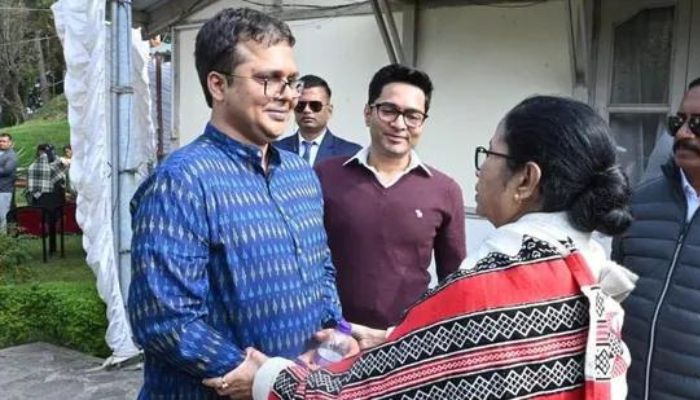
While addressing a public meeting in Murshidabad, she claimed, “On Saturday (January 14) night, the Gujarat police along with the Delhi police personnel illegally removed CCTV cameras from Banga Bhavan in Delhi. Won’t you journalists respond to this high-handedness?”
“Not #Bulldozer against bulldozer. But those who are bulldozing democracy, I warn, against their bulldozer there will be their closure” said #MamataBanerjee . #Bengal CM alleged #Gujarat Police had seized CCTV cameras of #Delhi Banga Bhavan 2 days back without consent from state. pic.twitter.com/MnLiOFRmD8
“Why don’t you raise these questions? Who stays in the new Banga Bhavan? I stay at my nephew Abhishek’s house (when I go to Delhi). If I visit the National Capital alone, then, I sometimes stay at the Banga Bhavan,” Mamata Banerjee further added.
She claimed, “Remember, the West Bengal Governor, Chief Justice and Judges of the Calcutta High Court, media persons stay there (at the Banga Bhavan). With that, they now have the footage of the privileged/confidential interactions between them? Who gave you the authority to take away the CCTV footage?”
“Remember, I do not endorse the ‘bulldozer policy.’ But those who try to run down democracy with a bulldozer, I warn them about their closure (in future),” Mamata Banerjee was heard as saying.
TMC leader Saket Gokhale was arrested for the third time in December last year by the Gujarat Police for siphoning off money in the name of activism. The police had found accounts linked to Gokhale where he was receiving money, which he claimed was being used for legal fees for activism-related cases but was instead being withdrawn by him for personal finance.
Saket Gokhale was arrested from Delhi’s Banga Bhavan. Mamata Banerjee has stated that the Gujarat police taking away CCTV footage from Banga Bhavan is illegal and it has been done without the due permission from the Bengal government.
“One of our party workers, who does social work, was wrongfully arrested from Banga Bhavan by the Gujarat Police. He was going to Rajasthan. He was arrested again even after being released on bail”, she added referring to Gokhale.
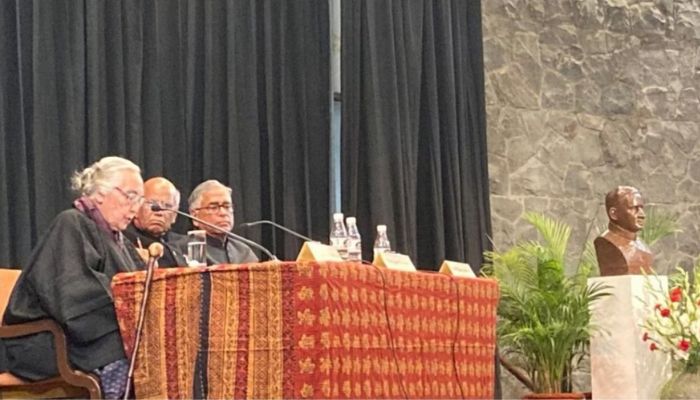
On Saturday (January 14), controversial ‘historian’ Romila Thapar delivered her speech at the India International Centre (IIC), despite calls for a boycott.
As expected, Thapar used the occasion to cast aspersions on the existence of love jihad and negate the historical persecution of Hindus. “The Muslims culminated in Pakistan and the Hindus are edging towards a Hindu Rashtra. The colonial projection is succeeding,” she tried to create panic and hysteria.
She also claimed that the confrontation between the Mughals and the Rajputs was a complex political conflict that transcended the Hindi-Muslim confrontation. Romila Thapar also suggested that marriage alliances were used to strengthen social bonding.
Upcoming Event at IIC
C.D. Deshmukh Memorial Lecture on 14th January, 6.30 PM
The lecture will be delivered by Prof. Romila Thapar, a pre-eminent historian and Professor Emerita, Jawaharlal Nehru University who will speak on Our History, Their History, Whose History. #Delhipic.twitter.com/5amQzWobD2
— India International Centre(Official Account) (@IIC_Delhi) January 12, 2023
“The Mughal royal family married into Rajput royal families of high status. Since Muslims as non-caste aliens were treated as ‘mleccha’ by upper caste Hindus, did the Rajput ruling families lose face marrying into a ‘mleccha’ family even if it was the imperial family?” she claimed.
Romila Thapar further added, “Apparently not. Was it a matter of pride that they were marrying ‘up’ as it were? There was of course no ‘love jihad’ in those days. Memoirs and autobiographies do not suggest that these were forced marriages since sociability among them on both sides was applauded.
Despite her dwindling credibility as a historian, she was platformed by the India International Centre. Such a luxury was not accorded to non-Left intellectuals, politicians and historians (the infamous case of Bloomsbury India for instance)
LSR succumbs to leftist pressure, de-platforms BJP spokesperson
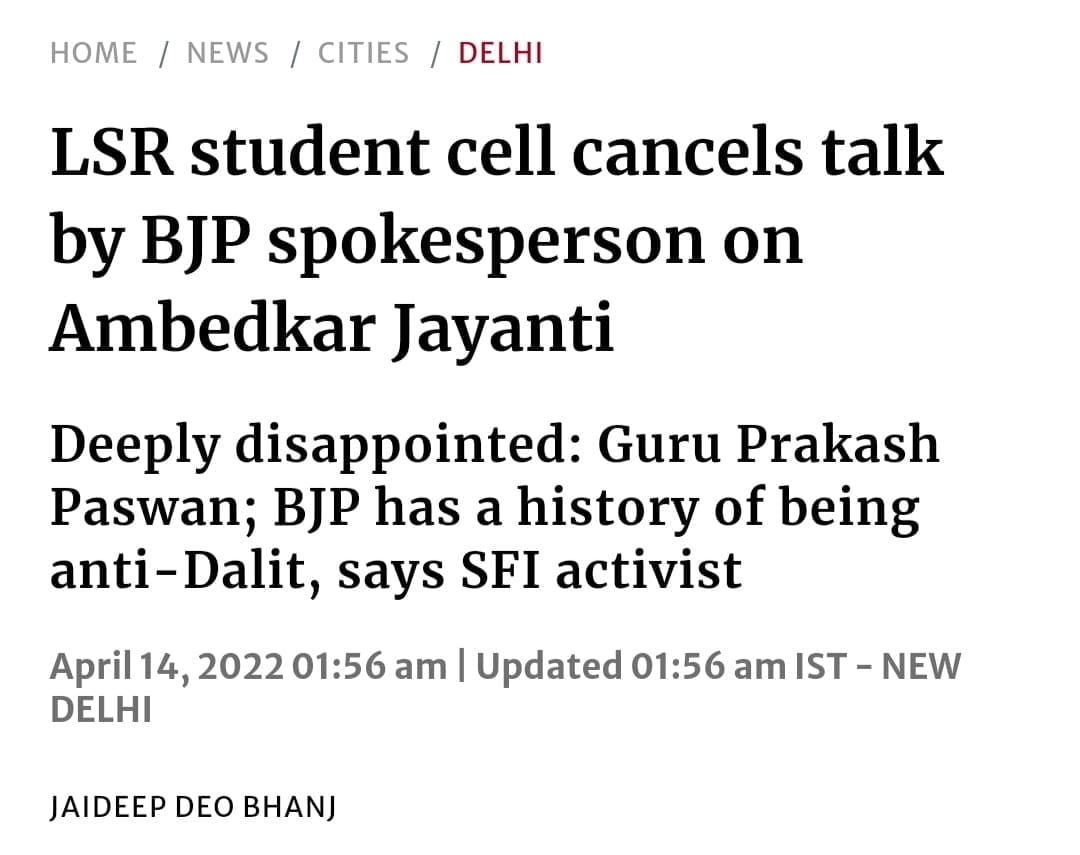
The SC/ST Cell of Lady Shri Ram College had invited BJP national spokesperson Guru Prakash Paswan to give a talk on Ambedkar Jayanti, which is celebrated on April 14th each year.
However, due to an outcry from the Students Federation of India (SFI) last year, the invitation was eventually withdrawn. Paswan expressed his disappointment with the cancellation, as he had already begun preparing for the talk, which was to be titled “Ambedkar Beyond the Constitution.”
He remarked, “Apart from my political affiliation, I am a Dalit myself, and come from an academic background. I have even co-authored a book Makers of the Modern Dalit History and was willing to engage with the students. I feel that my voice has been stifled. This is disgraceful.”
Screengrab of the news report
A champion of cancel culture, SFI secretary Prachi claimed, “The BJP has a history of being anti-Dalit and an invite to a spokesperson of the party would be making a mockery of Ambedkar Jayanti. How can we keep the politics of a person aside and look only at his work? This cannot be done.”
JNU leads the pack of Leftist wolves
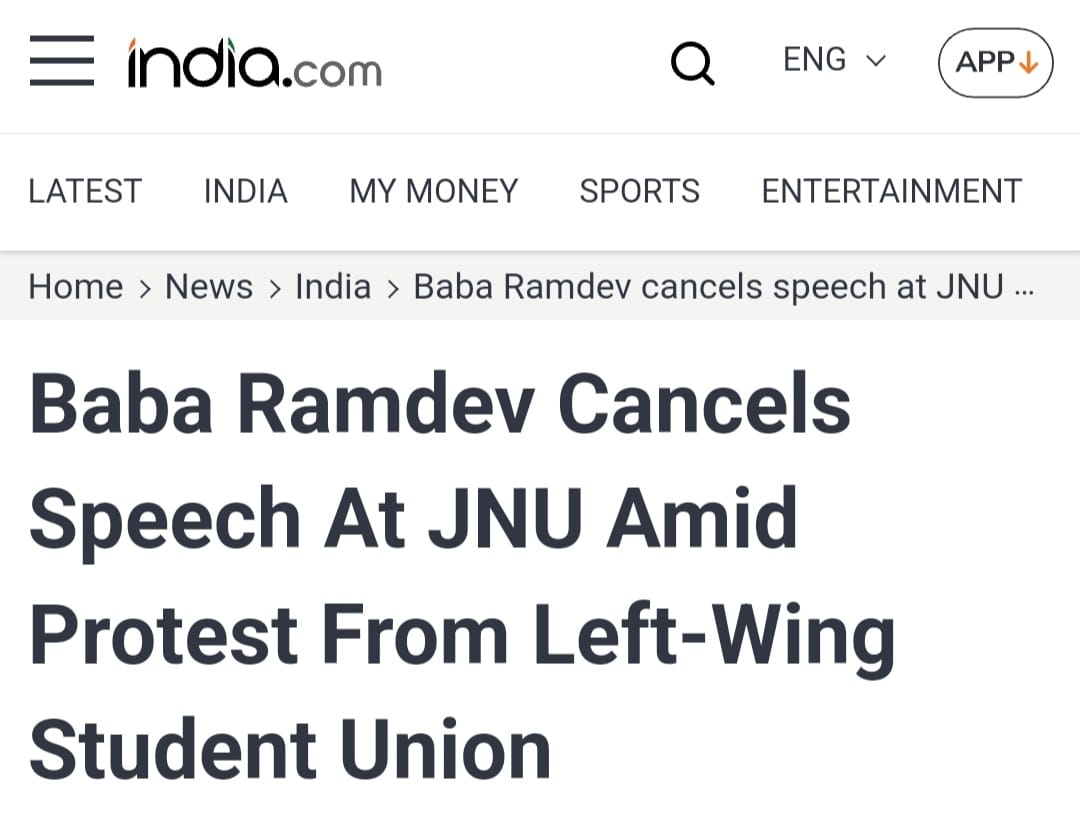
In December 2015, the infamous JNU student union displayed their intolerance over an invitation sent to Yoga Guru Baba Ramdev to the International Congress of Vedanta.
“The powerful student union objected tooth and nail to the invitation extended to him as the special speaker at the congregation”, read a report by India News.
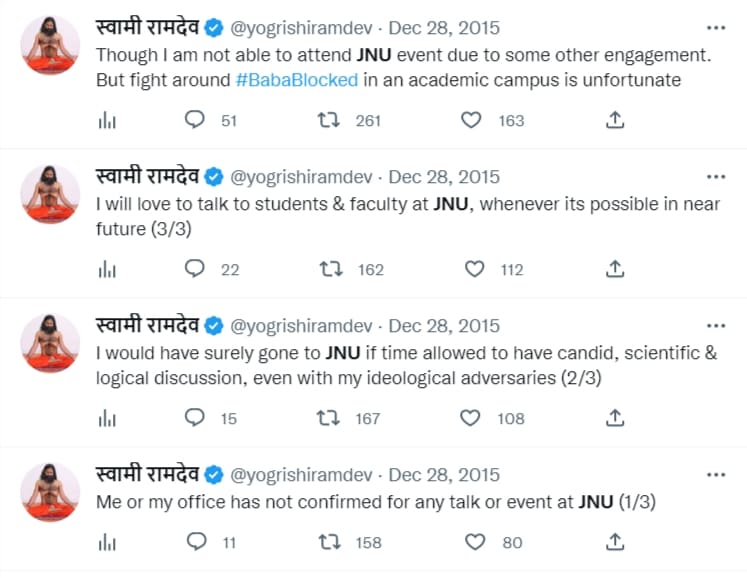
In a series of tweets, Baba Ramdev said, “I would have surely gone to JNU if time allowed to have candid, scientific & logical discussion, even with my ideological adversaries.”
He further added, “Though I am not able to attend JNU event due to some other engagement. But fight around #BabaBlocked in an academic campus is unfortunate.”
Screengrab of the tweets by Baba Ramdev
In January 2017, an invitation sent to then BJP IT cell chief, Arvind Gupta, to speak at JNU’s Digital Financial Literacy Campaign was cancelled by the JNU administration following protests organised by the Left-dominated student council.
JNUSU President Mohit Pandey had accused Gupta of supposedly abusing women and running targeted online campaigns against political opponents. He claimed, “After destroying the country through demonetisation, they are trying to digitise the economy.”
“For that they are inviting a man who was instrumental in painting Kanhaiya as an anti-national and whose troll army ran a campaign where they claimed that Najeeb had joined ISIS,” he further alleged.
Screengrab of the report by India News
When Oxford University gave it to demands of anti-Hindu groups
In May last year, film director Vivek Agnihotri took to Twitter to inform that his invitation to address the Oxford Union was cancelled, just hours before the event.
“It was all confirmed on email but a few hours back, they said they had made a mistake, there was a double booking and they wouldn’t be able to host me today. Without even asking me, they changed the date to July 1 because on that day no student would be there and there’s no point doing an event,” he pointed out.
IMPORTANT: Yet another Hindu voice is curbed at HINDUPHOBIC @OxfordUnion.
They have cancelled me. In reality, they cancelled Hindu Genocide & Hindu students who are a minority at Oxford Univ. The president elect is a Paksitani. Pl share & support me in this most difficult fight. pic.twitter.com/4mGqwjNmoB
— Vivek Ranjan Agnihotri (@vivekagnihotri) May 31, 2022
The director of ‘The Kashmir Files’ said that he was also not allowed to videotape his address at Cambridge University after deniers of Kashmiri Hindu genocide protested against such a move. He said that their opposition to his freedom of speech was based on his support of democratically elected PM Narendra Modi.
“They call me Islamophobic. As if killing thousands of Kashmiri Hindus was not Hinduphobic but making a film on the truth is Islamophobic Hindus are in minority at Oxford University. This is the oppression of the minority,” he was heard as saying.
These are only some of the events that were cancelled after the intolerant left-liberal ecosystem chose to curb freedom of speech while cribbing about the same on social media. It is also interesting to note that the intellectual class in India has the propensity to ignore the angst of Hindus against those who whitewash their genocide but have dropped speakers with remarkable alacrity when it comes to calls for a boycott from the Left, over trivial and mostly imagined reasons. Vivek Agnihotri, for example, was cancelled simply because he made a movie that shows the often whitewashed persecution and genocide of Kashmiri Hindus.
Guru Prakash Paswan, for example, is himself a Dalit scholar and was hounded by the Left simple because he disagreed with them as far as politics was concerned. He was cancelled despite the shill noise that the Left makes about hearing Dalit scholars and ensuring that the legacy of Dr Ambedkar is talked about.
Romila Thapar, on the other hand, is a “historian” who has been debunked by several scholars and has habitually whitewashed the genocide and persecution of Hindus. She was given a platform despite Hindus urging the cancellation of her talk, because it was evident that she would spread more distorted history to ensure that the amnesia of the Hindu community about their own history remains intact.
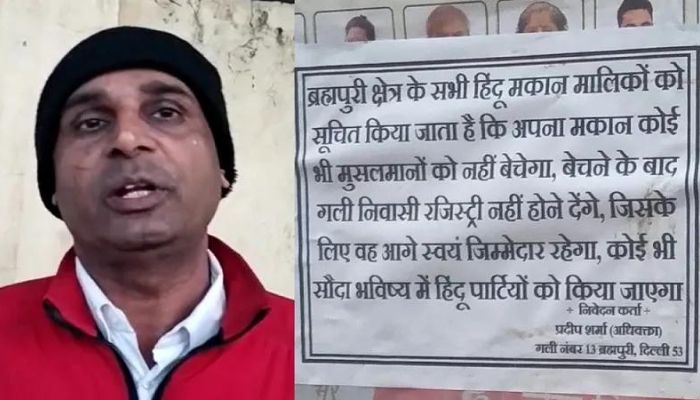
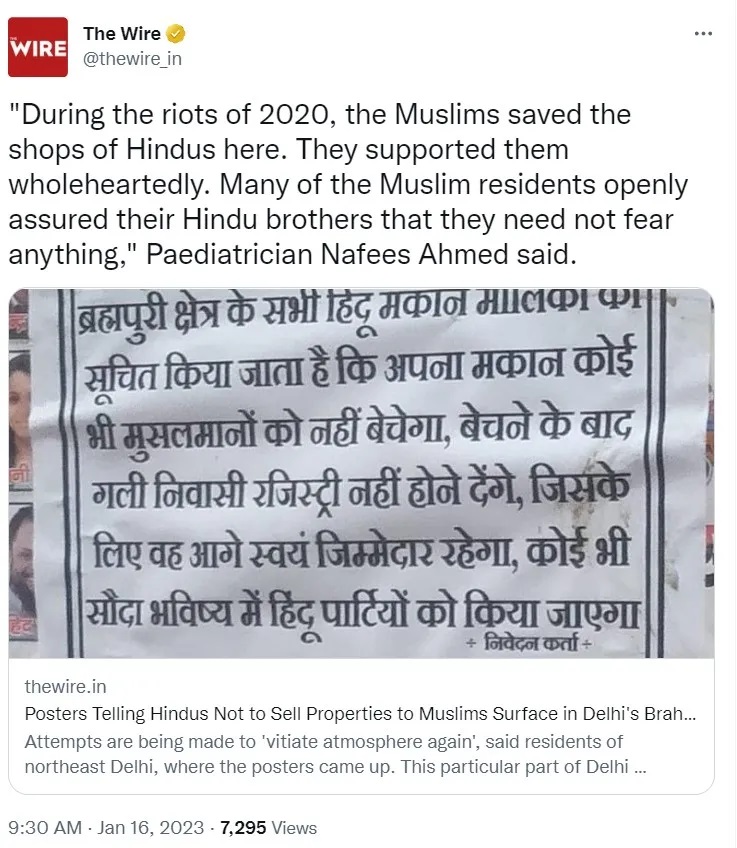
Recently, some media outlets, including ‘The Wire’, claimed that a poster has been pasted in Delhi’s Brahmpuri, in which Hindus have been asked not to sell their houses to Muslims. It was claimed that these posters have been pasted by advocate Pradeep Sharma. The poster has the address of street number 13 located in Brahmpuri written on it. However, when we went on the ground and investigated, we found something different altogether. Pradeep Sharma has denied putting up any such poster.
We found that the person whose name is seen in this poster, Advocate Pradeep Sharma, practices in Karkardooma Court. He categorically stated that he has no connection to the poster and that his name was being misused. The lawyer said that he neither knew anything about what was written on the poster nor had anything to do with it. He said that he does not suspect anyone at the moment, but he has submitted a complaint to the police against unknown people.
Advocate Pradeep Sharma termed this news of ‘The Wire’ as a lie.
He, however, admitted that some Residents’ Welfare Associations (RWAs) are active here and don’t want the population of Muslims to increase in the area and want the migration of Hindus to stop. However, he also said that if such an appeal has to be made, then people should do it in their own name, and not in his name. Advocate Sharma also said that RWA should issue an appeal in its own name if it has to be done. He said that it is not right to get someone else trolled on social media in such a way.
Advocate Pradeep Sharma also reached Usmanpuri police station, with a memorandum of the complaint. He said that he has come to the police station to give his complaint, and to find out who has installed this poster, due to which he is being harassed and his family is being threatened. He said that ‘Muslim parties’ (home buyers) have backtracked after seeing this poster, due to which local Muslim leaders and property dealers are threatening him.
He also feared a threat to his family. The lawyer said that he himself came to know about this poster when he was threatened on social media after someone sent him a photo of the poster. He said that apart from the DCP, he has also given a complaint to the local police station. Regarding ‘The Wire’ news portal, he said that his first interview is coming in OpIndia and he has not even heard the name of ‘The Wire’.
Advocate Pradeep Sharma said, “I am unaware how my statement appeared in ‘The Wire’. I have no idea how ‘The Wire’ gave all the news against me. Whatever ‘The Wire’ has written, they are not my words. I didn’t give an interview. I got calls from some journalists, and I told them I had nothing to do with the poster. Someone has given money to a sold-out channel like ‘The Wire’ and published news against me.”
He further clarified that no one came from ‘The Wire’ to take his statement, but ‘The Wire’ accused him of spreading hatred and said that he is preventing Hindus from selling their houses to Muslims. Pradeep Sharma said that as an advocate, he considers it his duty to save his clients and has never differentiated between Hindu-Muslim as part of his professional life.
Pradeep Sharma has been living in Brahmpuri since birth, and his father bought this house in 1962. Advocate Sharma said that considering the safety of his family, he is planning to sell the house. He mentioned that when the riots took place in 2020, only a few houses belonged to Muslims, today there are many Muslim households in the area.
He said that Hindus are continuously migrating from the area and up to 10-15 Hindu families have migrated. He said that in February 2020, bullets were fired in front of his house and an attempt was made to break down the gate of his house.
Sharma further said that a mosque was built in the area 5-6 years ago, following which the population of Muslims started increasing. The lawyer said that the mosque was once the house of a Brahmin, which was made a mosque after being sold. He also said that outsider Muslims come in large numbers at the time of namaz and 500-700 people come there every Friday. Azaan for the namaz is also done through loudspeakers.
Pradeep Sharma has been trying to sell the house for the last 2-3 years and will sell it to whoever gives him the right amount, whether Hindu or Muslim. In fact, there is a temple in his house, due to which he is having trouble selling the house. He feared that this mischief may have been done because of that as Hindus are migrating, while Muslims refuse to buy a house with a temple.
Explaining his plan, he said that he is even ready to remove the temple from the house so that it can be sold. He said that 70% of the area is Hindu and 30% is Hindu. He said that Hindus protect Muslims and when Muslims left their homes, many Hindus protected them – there was no arson and no violence. He asserted that Hindus always show tolerance and they are never intolerant.
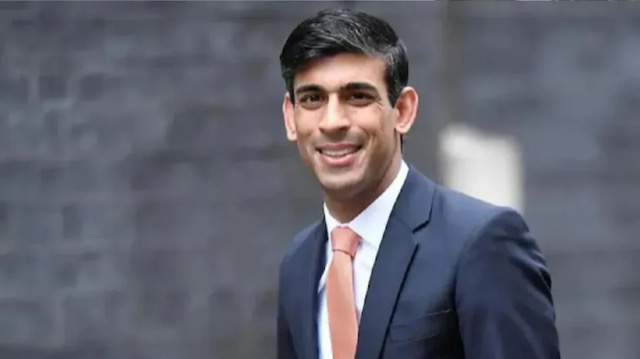
The UK government, led by Prime Minister Rishi Sunak, announced new measures to curb protests, expanding the situations in which police can take action to prevent significant disruption.
Recent protests on environmental issues have caused major disruptions in central London and blocked traffic on major roads, leading to calls for increased police authority. The government passed legislation in 2022 to address this menace, but it now plans to enact the Public Order Bill, which has been met with criticism from civil rights groups for being anti-democratic and granting too much power to the police.
On Monday, Rishi Sunak took to Twitter to announce that his government is moving to amend laws that would grant police greater power to clamp down on disruptive protests.
“Before Christmas, I promised to better support law enforcement to stop disruptive protests. Today, this government has delivered on that promise,” Sunak tweeted.
Before Christmas I promised to better support law enforcement to stop disruptive protests.
Today, this government has delivered on that promise.
The government intends to amend the bill before it becomes law to broaden the definition of ‘serious disruption’, grant police more discretion, and clarify when the new powers can be used.
The government plans to expand the definition of “serious disruption” through an amendment to the Public Order Bill, providing the police with more discretion and clarity on when to intervene against individuals or groups who use tactics such as blocking roads and slow marching to cause disruption to the public, Sunak informed.
Despite the government granting additional powers to the police to prevent protestors from using guerrilla tactics, police leaders have informed the Prime Minister that there is confusion over what constitutes a “serious disruption.”
Clarifying the conundrum faced by the police, Sunak laid down conditions on when they should step in. They are as follows:-
Police will not need to wait for disruption to take place and can shut protests down before chaos erupts
Police will not need to treat a series of protests by the same group as standalone incidents but will be able to consider their total impact
Police will be able to consider long-running campaigns designed to cause repeat disruption over a period of days or weeks
The government claims that if the new legislation is approved, it will empower the police to take action to end disruptive protests before they occur.
The proposed bill also includes the criminalization of actions such as attaching oneself to objects or buildings and granting courts the ability to limit the rights of certain protesters to prevent significant disruption. It expands upon the Police, Crime, Sentencing, and Courts Act passed in April 2022, which led to several large-scale protests against the bill.
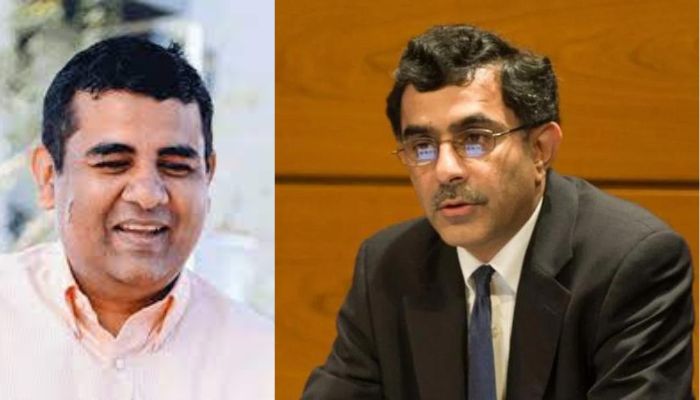
US-based political scientists Amit Ahuja and Devesh Kapur have come up with a new book titled ‘Internal Security in India: Violence, Order, and the State’. In this book, they have concluded that large-scale violence in India has significantly reduced in the last 20 years as compared to the time period between 1970 to 2000.
Summing it up, aggregate levels of violence in India – public and private – have declined in the first two decades of this century compared to the last two decades of the previous century. Both authors are teaching faculties in US-based universities. Professor Amit Ahuja is teaching at the University of California while Professor Devesh Kapur is at Johns Hopkins University.
According to a report by BBC, the finding by these two researchers stands in sharp contrast to the conclusion peddled by Thomas Blom Hansen, an anthropologist at Stanford University, that violence has now taken the center stage in public life in India. Thomas Blom Hansen drew these conclusions in his book ‘The Law of Force: The Violent Heart of Indian Politics’ published in 2021. However, Amit Ahuja and Devesh Kapur have come up with detailed statistics on every aspect of the large-scale violence to prove the former incorrect.
The authors combed through decades’ worth of government documents to conduct their research, which included a wide range of violent incidents in India, including riots, election-related violence, caste-based, religious, and ethnic violence, insurgency, terrorism, political murders, and hijackings. They discovered that during the “peak quarter century” from the late 1970s to the early 2000s, violence in India actually decreased across a number of these variables – in some cases, significantly.
Ethno-religious massacres
The duo found that, since 2002, India has not seen any ethnic or religious massacres to the same extent as the riots in Gujarat in 2002, the riots in Delhi in 1984 that targeted the Sikh community, or the murders of purportedly unlawful immigrants from Bangladesh in the small Assamese town of Nellie in 1983. In only these riots, more than 6,000 individuals officially lost their lives.
Terrorist attacks
The researchers noted that 8,749 individuals have died in terrorist acts in India since 2001, according to the Global Terrorism Index 2020. But after 2010, these attacks decreased significantly. Comparing the decade from 2000 to 2010 and the next decade, the number of terrorist events decreased by 70%, from 71 to 21, with the exception of Kashmir.
Incidents of riots
The number of riots increased about five times from the 1970s to the turn of the century. However, by the late 1990s, they had started to diminish. When the population is taken into account, currently, the number of riots in India is at a record low.
Violence during elections and high-profile murders
High-profile political killings and electoral violence have decreased significantly in India as per the research. Indira Gandhi and her son Rajiv Gandhi were assassinated in 1984 and 1991, respectively. India hasn’t seen a high-profile political assassination since then. Between 1989 and 2019, violence at voting centers decreased by 25%, while deaths associated with election violence decreased by 70%. This happened even though voter turnout increased, elections became more vigorous, and the number of voting booths doubled.
Plane hijacking incidents
In the three decades between the 1970s and 1990s, there were 15 hijackings of passenger aircraft operated by India. There haven’t been any since December 1999, when an Indian Airlines aircraft from Kathmandu to Delhi was hijacked.
The researchers credit the government for better control of situations
Though there are various factors behind this decline in the incidents of violence, Professor Amit Ahuja and Professor Devesh Kapur credited this to the state to a major extent. According to them, the increased state capacity has contributed to the reduction of riots, insurgencies, and election-related violence. The tide of this violence has been slowed down in part by greater deployment of paramilitary troops, the use of helicopters and drones for surveillance, the erection of cell phone towers, strengthened police stations, new roads, and health and educational facilities in the afflicted regions.
The researchers mention, “The decline of violence is more due to enhanced state capacity and less the sort of political settlements that would provide consent of the governed and ensure that new cycles of violence don’t occur.”