Home Blog Page 2793

UK: Prime Minister Liz Truss resigns after 45 days in office, sets a record for the shortest tenure as the UK PM

United Kingdom’s Prime Minister Liz Truss resigned on Thursday 20th October 2022. She resigned from the Prime Ministerial post on the 45th day of joining the office. Truss made the statement outside Downing Street, following her near-complete loss of political power. Liz Truss announced her resignation following the collapse of the markets after her controversial economic policies. She also lost two important ministers, and lose the trust of nearly all of her own MPs. Truss will hold the record for the shortest tenure as prime minister of the UK.

In her resignation speech, Liz Truss said, “I came into office at a time of great economic and international instability. Families and businesses were worried about how to pay their bills. Putin’s illegal war in Ukraine threatens the security of our whole continent. And our country had been held back for too long by low economic growth. I was elected by the Conservative Party with a mandate to change this. We delivered on energy bills and on cutting national insurance. And we set out a vision for a low-tax, high-growth economy – that would take advantage of the freedoms of Brexit.”

The outgoing PM accepted that she could not deliver the promises she made when she was running for Conservative leader. 47-year-old Liz Truss said, “I recognize though, given the situation, I cannot deliver the mandate on which I was elected by the Conservative Party. I have therefore spoken to His Majesty The King to notify him that I am resigning as Leader of the Conservative Party. This morning I met the Chair of the 1922 Committee Sir Graham Brady. We have agreed there will be a leadership election to be completed in the next week.”

Concluding her final address, Liz Truss said, “This will ensure we remain on a path to deliver our fiscal plans and maintain our country’s economic stability and national security. I will remain as Prime Minister until a successor has been chosen.”

On 5th September 2022, Mary Elizabeth Truss, serving as the Foreign Secretary since 2021, emerged victorious in her race with Rishi Sunak to become the new Prime Minister of the United Kingdom. Liz Truss got over 57% of the votes compared to Sunak, who served as the Chancellor of the Exchequer in Boris Johnson’s administration before resigning, who could only get just over 42%.

Over 172,000 members of the Conservative Party were eligible to vote during this election to elect their next leader, with 82.4% turning out to vote. Liz Truss got 81,326 votes while Sunak could only muster 60,399 votes. 654 ballot papers were rejected.

Liz Truss was widely expected to win the PM race against Sunak after a campaign spanning the entire summer. The election for the new leader of the Conservative Party took place after the outgoing PM Boris Johnson was forced to resign following the resignations of most of his cabinet due to a number of scandals in his government.

PM Modi along with UN Secretary-General launches Mission LiFE for action against climate change, gets support from world leaders

On Thursday, world leaders from France, the United Kingdom, and several other countries congratulated Prime Minister Narendra Modi on the launch of the Mission LiFE (Lifestyle for the Environment). According to the Prime Minister’s Office, LiFE mission will be a global mass movement led by India to ensure both individual and collective action to preserve and protect the environment. It will be India’s unique initiative at the United Nations and other global platforms for demonstrating climate action and early achievement of the Sustainable Development Goals (SDGs).

In his video message, French President Emmanuel Macron stated that France is looking forward to working with India as the country prepares to take over the G20 presidency next year.

“Dear Prime Minister, Narendra Modi, colleagues, and friends, namaste.” I wish I could be with you in Kevadia on this momentous occasion. And, at a time when geopolitical tensions are rising, we have no choice but to choose cooperation over the division for a single region. “No one can address global challenges, particularly climate change, on their own,” Macron said.

“France looks forward to working with India to make this initiative a success, including in view of India’s G20 presidency next year,” he added.

UK Prime Minister Liz Truss congratulated PM Modi via video message.

“As democracies, we must work together to ensure energy independence and economic protection.” We are collaborating with partners such as India to develop critical climate infrastructure. I commend India’s leadership in launching Mission LiFE, let’s keep leading the way.”

Moreover, Maldives President Ibrahim Mohamed Solih stated that PM Modi’s Mission LiFE could not have arrived at a more crucial time. The negative consequences of the climate crisis hit the countries with full force.

In her message, Estonia’s Prime Minister, Kaja Kallas, expressed her gratitude to PM Modi for launching Mission LiFE and stated that the need for a collective response to climate change is stronger than ever.

Georgian Prime Minister Irakli Garibashvili stated, “Georgia welcomes and fully supports this global initiative, timely introduced by PM Modi, which promotes an environmentally conscious lifestyle based on the principle of mindful and deliberate utilization.”

Guyana’s President, Irfaan Ali, said “Our planet is under attack. 70% of forest land is significantly degraded. To protect the planet, we must all work together. I would like to congratulate Prime Minister Narendra Modi on the launch of the Mission LiFE logo and mission document, which aims to mobilize 1 billion Indians to become pro-planet citizens by 2027. Congratulations on taking the lead, India.”

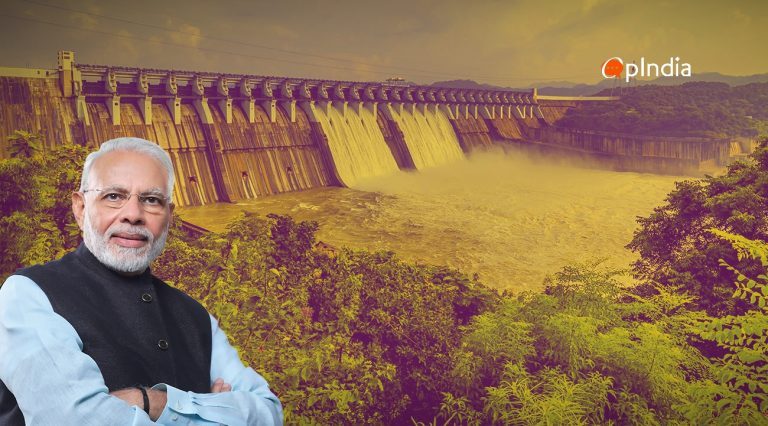
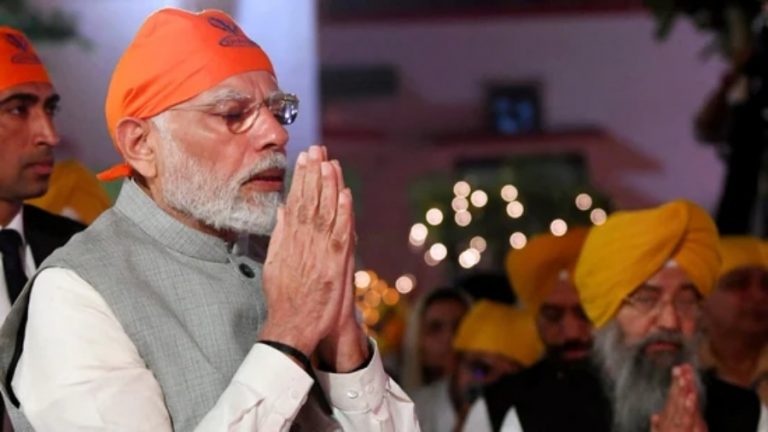
In Gujarat’s Ekta Nagar, Prime Minister Modi and United Nations Secretary-General Antonio Guterres launched the Mission LiFE mission.

Earlier, Prime Minister Modi along with UN Secretary-General Antonio Guterres paid floral tributes at Kevadia’s Statue of Unity in Gujarat, and the UN Secretary-General joined Prime Minister Modi in launching the Mission LiFE (Lifestyle for Environment) booklet, logo, and tagline.

PM Modi stated that Mission LiFE will strengthen the P3 concept (Pro Planet People).

“Mission LiFE connects Earth’s people with ‘Pro-Planet People,’ uniting them by integrating them with their thoughts.” It is based on the fundamental principle of “Lifestyle of the planet, for the planet, and by the planet,” according to the Prime Minister. Talking about the concepts of ‘Reduce, Reuse and Recycle’ and circular economy, PM said that it has been a part of the lifestyle of Indians for thousands of years.

“There was a perception created that climate change is merely a policy issue that will be addressed by governments or international organizations. “However, people are now feeling the effects of climate change,” he explained. The Prime Minister urged people to make lifestyle changes to help protect the environment from climate change.

The Prime Minister expressed delight at the support that has been showered upon India for taking up the Mission LiFE initiative and thanked the heads of all nations for sending in their congratulatory messages on this gracious occasion.  Highlighting the importance of unity in the fight against climate change, PM Modi said that the launch of Mission LiFE is taking place before the Statue of Unity, a colossal statue of the pride of India, Sardar Vallabh Bhai Patel. “The world’s largest statue will be a source of inspiration in achieving the set targets”, he said.

Mission LiFE aims at following a three-pronged strategy for changing our collective approach towards sustainability. First is by nudging individuals to practise simple yet effective environment-friendly actions in their daily lives (demand); second is by enabling industries and markets to respond swiftly to the changing demand (supply) and; third is to influence government and industrial policy to support both sustainable consumption and production (policy).

Ahmedabad Municipal Corporation renames ‘Afzal Khan no Tekro’ in the city to ‘Shivaji no Tekro’, Sunni Waqf board objects

On Wednesday, 19th October 2022, the Gujarat High Court directed that the Ahmedabad Municipal Corporation (AMC) make a decision about a representation made by a minority organization challenging the renaming of a residential colony from “Afzal Khan No Tekro” to “Shivaji No Tekro” in Ahmedabad. On October 14, the AMC’s town planning committee put up a proposal to alter the name to “Shivaji No Tekro” and sent it to the Standing Committee for approval. The committee will hold a meeting on Thursday.

However, Ahmedabad Sunni Muslim Waqf Committee objected to the name change of the area in a letter to AMC, claiming that the area exists for the last 400–500 years. The petitioner Waqf is the owner of the 3,116 sq. m. property in Sarangpur that is located opposite the New Cloth Market. Additionally, the site includes a graveyard, a Pir Afzal Khan mosque, and a Pir Afzal Khan “dargah.” According to the Waqf petition, the mosque and “dargah” have important historical importance and were built 400–500 years ago.

Additionally, it was said that there are hutments and buildings bordering the mosque and “dargah” that belong to both the Muslim and Hindu populations, some of whom are encroachers and others being Waqf tenants. The petition claimed that the land owned by the Waqf is well-known as “Afzal Khan No Tekro” for a long time. The plea claimed that without providing it with a hearing chance, the AMC committee made a decision to rename the locality that was illegitimate and unconstitutional.

However, the petitioner stated at the court hearing that the issue raised in the petition may be resolved if the corporation decides in accordance with its representation after taking into account all relevant factors. Ultimately, the court rejected the request and ordered the AMC to make a quick decision about the Waqf committee’s argument within a week.

Is this the same Afzal Khan whom Chhatrapati Shivaji Maharaj killed?

However, it is not ascertained in the reports if the Pir Afzal Khan quoted in the petition is the same as the one killed by Chhatrapati Shivaji Maharaj or if some self-identified Sufi saint has mushroomed along with his Mazar. Also, the Waqf board is claiming that the mosque on the site dates back almost 500 years which is before Chhatrapati Shivaji Maharaj in time. But, apparently, the objection to the name ‘Shivaji no Tekro’ is only because the Hindu king had killed Adilshaha’s commander Afzal Khan with the iconic weapon of hand combat – the claws on 10th November 1659.

This Afzal Khan never visited Ahmedabad. However, Chhatrapati Shivaji Maharaj raided Surat – then governed indirectly by the Mughals – twice to raise funds for the Hindu Swarajya. Naming some areas in Ahmedabad after Chhatrapati Shivaji Maharaj is at least worth considering as the King foresaw the expansion of the Swarajya, but the tyrant Afzal Khan never visited Ahmedabad. For all practical purposes, Afzal Khan has nothing to do with Indian culture and civilization in general and Gujarat and Ahmedabad in particular.

Chhatrapati Shivaji Maharaj killed ‘an Afzal Khan’ in the battle of Pratapgad

On 10th November 1659, the Battle of Pratapgad was fought between the forces of the Maratha king Chhatrapati Shivaji Maharaj and Adilshahi general Afzal Khan, near the town of Satara, Maharashtra, where the Marathas emerged victorious despite the numbers not being in their favor. It led to the eventual establishment of the glorious Maratha empire. In 1657, Aurangzeb, the Mughal leader with a heart of gold as described by so-called liberals, decided to leave the Deccan and march northward. Chhatrapati Shivaji Maharaj, in his bid to expand his Maratha empire, started winning over Konkan and other Adilshahi kingdoms.

Afzal Khan, the commander of the Adilshahi dynasty in Bijapur Sultanate, presently in Karnataka, took it upon himself to stop the forces of Chhatrapati Shivaji Maharaj. He had earlier killed Chhatrapati Shivaji Maharaj’s brother, Sambhaji Shahaji Bhosale, through treachery when he was just 33. Khan started destroying temples (not surprising). Khan’s strategy was to bring Chhatrapati Shivaji Maharaj in open in the Deccan plains against the rocky plateau where Shivaji had an advantage, and overpower him since they outnumbered the Marathas.

Chhatrapati Shivaji Maharaj sent out an emissary to Khan that he did not want to fight and wanted peace. Khan and Shivaji met on the foothills of Pratapgad. They had decided to meet unarmed with just 10 bodyguards each, who would stay within an arrow’s distance from the two men. A towering figure, Khan hugged Chhatrapati Shivaji Maharaj, but in a treacherous move, tried to kill him with a sword. However, Chhatrapati Shivaji Maharaj had come armed as well and the force was repelled by Chhatrapati Shivaji Maharaj’s armor which was underneath his clothes. Chhatrapati Shivaji Maharaj, who had concealed a bagh nakh (curved blades fixed to a crossbar just like claws) and disemboweled Khan when they embraced in the tent.

Bagh Nakh used to kill Afzal Khan

Hand-to-hand combat ensued in which the Marathas, though having been outnumbered by Adilshahi forces, emerged victorious. Chhatrapati Shivaji Maharaj was attacked by Sayyed Banda, Afzal’s bodyguard, but his trusted bodyguard Jiva Mahala came to the rescue, cutting him down, and saving Chhatrapati Shivaji Maharaj’s life. Such is the story of the valor and courage of Chhatrapati Shivaji Maharaj that the Hindu king is respected across India. No wonder the Ahmedabad Municipal Corporation chose his name over that of Afzal Khan to name a residential colony in the city.

It’s not over yet: Privacy researcher says viral WhatsApp messages claiming he had endorsed The Wire’s fraud are fraudulent

It seems that the ‘Meta Vs The Wire’ saga is not ending anytime soon. A privacy researcher named V Anand took to Twitter on October 20 to debunk the claims that he endorsed The Wire’s Devesh Kumar’s work in Meta controversy. He said some WhatsApp groups were discussing such claims.

Anand said, “I have been seeing some claims in WA groups that I endorsed Devesh’s work on Meta w/ screenshots of my interactions w/ him. Those claims are fraudulent, and I only pushed for more details like Pranesh did, which incidentally never came.”

He added, “I am really getting tired of the constant chicanery and deception. It is really bonkers that this is happening to drum up credibility on what was now clearly a dead and buried story. Notified Siddharth Varadarajan about this.”

It is likely that his October 18 tweet was being misinterpreted as an endorsement of the claims made by The Wire about Meta and BJP in its reports that have been since removed from the website pending an internal inquiry. He had said, “The painful reality of newsrooms when it comes to tech reporting. Complete breakdown of process failure. I have reviewed the details, and as shocking as they are, they are true.”

Again, this we are making a calculated guess because at this point, in this Meta vs The Wire controversy, everything is just too bizarre.

Anand was quoting Kanishk, a researcher who The Wire claimed to have validated Meta’s communication head Andy Stone’s emails. Notably, it was after Kanishk’s statement on Twitter that the email that named him was fabricated and he never validated anything for The Wire the whole story built by The Wire fell apart, and the publishing house issued a statement that it was retracting the report and initiating an internal investigation.

The ‘Meta Vs The Wire’ saga

On October 6, The Wire published a story that Instagram took down a post critical of Uttar Pradesh Chief Minister Yogi Adityanath. The post was published by a small private account known among its 250+ followers for posting “cringe” memes. On October 10, The Wire published another story claiming the post was brought down as BJP’s IT Cell Chief Amit Malviya, who did not even follow the private Instagram account, reported it. The Wire further claimed Malviya was on Meta’s XCheck list, which gave him superpowers to remove any post.

Meta refuted the claims and said no such privileges are given to any user under XCheck. However, The Wire came up with “evidence” that Malviya reported it, and the post was not even reviewed because a user with XCheck privileges had reported it. They also came up with screenshots of Meta’s communication head Andy Stone’s email, where he was furious that the list and documents were “leaked.”

Questions were raised on the authenticity of the email. The Wire again came up with more evidence, and this time they dropped some tech bombs claiming they got the emails verified and further claimed Andy even opened the emails they had sent to him. However, the claims were refuted not only by Meta but several tech experts who raised questions about the methodology used to validate emails. Also, there was a date error in the screenshot of the emails that were “repaired” by The Wire, allegedly by using Photoshop. That further raised more red flags.

Later, the expert who The Wire claimed to have validated emails said on Twitter that he never validated anything for The Wire. From this point, the whole story crumbled into ashes, and The Wire pulled down all reports related to the so-called investigation down and initiated an internal inquiry.

Meanwhile, The Wire continued to ask for Rs 30 Lakh per month from its donors/readers so that it can continue what it refers to as “journalism”.

Encroachment in Kabristan: Alleged illegal Bangladeshi immigrants take over space of the dead, here’s what Maulana Zubair had to say

0

The Panchkuian graveyard of Agra has made headlines after it was revealed that only 20 out of 250 people who have encroached on the graveyard land have proof of Indian citizenship. As per Dainik Bhaskar’s report, the majority of them could be illegal Bangladeshi immigrants.

The Panchkuiya graveyard is known as Asia’s largest cemetery. After repeated complaints of illegal encroachments by family members of people buried there, the management committee recently announced that they will not allow permanent structures to be built at graves anymore. Mohammad Zaharuddin Babar Saifi, the secretary of the graveyard committee had told TOI that even existing graves that have concrete structures will be demolished to allow space for new entrants.

There are around 100 families who have encroached on the graveyard land. Following a notice from the Waqf board, Local Intelligence Units (LIU) have started the investigation into the matter, and administrative may follow soon. Notably, the cemetery committee has banned permanent graves in the graveyard.

The people who live in the graveyard in makeshift huts sell balloons and do low-wage jobs such as making roti at eateries. Children of these families are often seen begging on the roads. Reports suggest only 20-25 people among them have Aadhar cards, and the remaining have no documents to prove their identity or citizenship. Furthermore, many of these families have done illegal constructions on the graveyard land.

Mehfooz organization’s Naresh Paras came to know about the alleged illegal immigrants and filed a complaint to the Chief Minister and Agra District Magistrate to get more information about them. He appealed to the authorities to take immediate action in the matter.

Hindus posed as Muslims to get huts

Paras told Dainik Bhaskar that several Hindu families posed as Muslims to get huts at the graveyard land. He said, “There are many Hindu families. They are living as Muslims by changing their names. The committee has set up illegal settlements for years for their personal vendetta.”

Some of them could be Bangladeshi or Rohingya

The LIU team is investigating the matter on the orders of SSP. Those who do not have identity cards or try to hide their identities could be illegal immigrants, Bangladeshi, or Rohingya. The administration will take appropriate steps once the investigation is over.

Anti-encroachment drive on Friday

On October 13, a team of ACM Pancham and other officials visited the graveyard. After the inspection, they warned the people living here that strict action would be taken if they failed to show the documents. Following the first inspection, a team from Waqf Board also visited on October 18 and pasted notices. People were asked to submit identification documents and permission to stay on graveyard land within three days. As per Dainik Bhaskar’s report, the anti-encroachment drive will take place on October 21.

ADM city Anjani Srivastava said, “The graveyard committee has written a letter as well. An investigation is being carried out into the matter based on the complaints. The administration will take appropriate action after the investigation is over. Those who have their ID can stay with the graveyard committee’s permission.”

Maulana Zubair, secretary of the graveyard committee, said, “The people who live here are very poor. Whatever decision is taken by the administration, we will honour it.”

Paras said, “People have been living here for many years. There should be an investigation into those who do not have identity cards or trying to hide their identities. Those who have identity cards are Indians. The administration should make arrangements for their rehabilitation. The government has many schemes for the poor.”

Both state authorities and the central government have raised the problem of illegal immigrants in India several times. Recently, OpIndia did a series of reports on the increasing population of the Muslim community in the border districts near Nepal. The reports suggested that many who shifted to the border areas could be illegal immigrants.

NIA arrests ‘highly radicalised’ ISIS terrorist from Varanasi, was brainwashing and recruiting youths to wage jihad against the country

0

As part of its probe into the ISIS team running the online magazine called Voice Of Hind (VOH), the National Investigation Agency (NIA) apprehended an alleged ‘highly radicalised’ ISIS operative from Varanasi. According to the federal agency, Basit Kalam Siddiqui was arrested for his active involvement in the radicalization and recruiting of vulnerable youth from India on behalf of ISIS to wage jihad against the country.

During its searches, the NIA seized incriminating items such as handwritten notes connected to the manufacturing of IEDs and explosive chemicals, mobile phones, laptops, pen drives, and so on.

In a press release, the agency informed that it had conducted two raids on October 19 in Delhi, Varanasi and Uttar Pradesh and arrested Siddiqui, who was in active touch with ISIS ‘handlers’ based in Afghanistan and indulged in content creation, publication and dissemination of ISIS propaganda materials through its magazine ‘Voice of Khurasan’.

NIA press release

On their directions, he was trying to fabricate an explosive ‘Black powder’ and gaining knowledge on the use of other lethal chemical substances to be used for the fabrication of Improvised Explosive Devices (IEDs).

“He was also imparting training on making of explosives, through several Telegram Groups he operated, for carrying out terrorist attacks against Vital Installations and the civilian population. He was also preparing to undertake ‘hijrat’ to Khorasan for joining active ISIS terrorists in combat,” the statement added.

ISIS magazine calls for destroying Idols in India

It may be noted that in January this year, Voice of Hind, the propaganda digital magazine of ISIS released its new edition in which it has gone on to instigate Muslims to “Take back Babri from Hindus”.

Earlier the ISIS magazine’s earlier edition had threatened to break Idols of Gods in India. The cover of this edition showed a computer-generated broken idol of Bhagwan Shiv with an ISIS flag hovering at the apex of the broken statue. Under the idol, the cover said: “It’s time to break false Gods”.

“Spread coronavirus to as many Kuffars as possible to take them down easily and with minimum effort,” the ‘Voice of Hind’ had said in one of its earlier issues. It also mentioned keeping chains, rods, and wires on hand, as well as being ready to choke and bludgeon Kuffars to death.

Voice of Hind and Indian government’s action against the magazine

In February 2020, Al-Qitaal Media Center, a pro-ISIS media outlet and Junudul Khilafah al-Hind launched ‘Voice of Hind’ magazine. According to a report from September 2021 in The Print, National Investigation Agency (NIA) said that the propaganda magazine was being made in a ‘call centre type setup’ in Pakistan and Bangladesh. Qualified graduates and translators work on putting this magazine together.

Initially, it was believed that the magazine originated from Afghanistan, but later with the help of technical experts, they established a link to South Kashmir. The magazine gets edited in Pakistan, and content creators were hired from Maldives and Bangladesh, the report added.

In July 2021, NIA arrested three men from Anantnag, identified as Umar Nisar, Tanveer Ahmad Bhat and Rameez Ahmad Lone, who were accused of collecting and disseminating propaganda content among youth. VOH was being circulated through a complex network consisting of fake online entities and hiding the real identities through VPN. Investigations established links between Indian mobile numbers and those online fake accounts. NIA said that it seized a large number of digital devices such as mobile phones, hard disks, SD cards etc., used in the running of the magazine.

In August 2021, NIA arrested a key Islamic state operative identified as Jufri Jawhar Damudi alias Abu Hajir Al Badri from Bhatkal, Karnataka. Another operative identified as Ameen Zuhaib was also arrested. These arrests were made in connection to the agency’s probe into VOH magazine.

In October 2021, NIA conducted several raids in Kashmir in connection to the publication of the ISIS propaganda magazine. 

Punjab farmers sell rice to private buyers in Haryana at higher prices, arhtiyas object and AAP leaders urge the farmers not to do it

0

Punjab-based arhtiyas (commission agents) and rice millers are facing severe losses as the farmers from the Bathinda, Mansa, and Sangrur districts of Punjab have decided to sell their paddy to mandis in Haryana now. The farmers have decided to sell the paddy in the Haryana markets as they are getting higher prices from private buyers compared to the MSP paid in the local mandis, according to a report by The Tribune.

The minimum support price for the paddy this year is Rs 2,060 per quintal. But the farmers have been selling the basmati-1509 variety at Rs 3,600 per quintal in the private markets in Haryana while the local markets offer Rs Rs 2,500-3,000 per quintal for every quintal.

Also, the basmati-1121 rice variety which is a new premium variety is being sold for Rs 3,800-4,000 per quintal in Punjab. The farmers have decided to sell their produce in the Haryana market as it offers Rs 4,500 for every quintal. One of the varieties of parmal is even fetching Rs 4,500-4,700 per quintal in Haryana. The markets in Haryana which are offering better prices to Punjab farmers are located in the Fatehabad, Ratia, Tohana, and Panchkula districts of the state.

Reports mention that around 70% of the paddy from the Mansa district of Punjab has been sold in the markets of Haryana. Besides receiving a higher price for their grain, farmers are also permitted to sell paddy with high moisture content in Haryana. Unlike in Punjab, where rice is purchased within the allowable moisture content limit of 17%, farmers may readily sell their products in Haryana with moisture levels up to 20-22%.

With this decision of the Punjab farmers, the state government is losing revenue collected from the farmers during paddy procurement in the form of market fees. The report mentions that while the government agencies in Punjab are procuring other paddy varieties, basmati and parmal are being procured by the private markets in Haryana at higher prices.

This decision of farmers in Punjab to sell their produce to private buyers in Haryana has caused losses for arhtiyas or the middlemen in the mandis, and they have approached the central govt to stop the farmers from doing so. Munish Babbi Danewalia, president of Arhtiya Association of Mansa, has written to Prime Minister Narendra Modi on the issue.

“Unlike Punjab, there is no purchase limit on rice millers in Haryana so farmers find it convenient to sell their produce and get payment in a hassle-free manner there. Moreover, private purchasers in Haryana are also buying paddy which is slightly above the government-fixed moisture content limit”, Danewalia said in the letter written to the Prime Minister.

Leaders of the ruling Aam Aadmi Party has decided to take the side of arhtiyas in the matter, and are trying to stop the farmers from earning higher prices for their crop. AAP leaders in Punjab are urging the farmers to not sell their produce in the markets in Haryana. AAP legislators Budh Ram and Gurpreet Singh Banawali urged farmers not to sell their crops in Haryana since it was costing the state money. They assured the farmers that they would discuss the problem with CM and try to fix it.

Meanwhile, Members of the District Rice Millers’ Association and the District Arhtiya Association Mansa have also written to Punjab CM Bhagwant Mann and requested his immediate intervention in resolving the matter. “Both parmal and basmati varieties from Punjab are being sold in Haryana and if it continues, then almost 15 percent of the product will move out of the state, causing substantial revenue loss to the government”, President of Rice Millers’ Association Makhan Goyal was quoted.

It is notable that while the farmers in Punjab are now selling their produce to private buyers in Haryana, they themselves had forced the central govt to withdraw the farm acts that had given them the freedom to sell their crop outside regulated mandis run by the middlemen. They had said they want to sell only through the arhtiyas and do not want to sell directly to buyers. But now, they are bypassing the same arhtiyas to sell directly to private buyers in Haryana.

Unnao: Maulvi Abdul Rahim arrested for attempting to rape a 5-year-old girl in madrasa

0

A Maulvi attempted to rape a five-year-old girl studying in a Madarsa in Uttar Pradesh’s Unnao district. The Ganga Ghat police registered a case under serious sections on the complaint of the victim’s family members and arrested the accused Maulvi Abdul Rahim. The incident took place in the district’s Shukla Ganj area.

Maulvi Abdul Rahim from Baaghraasi, Darbhanga, Bihar, teaches in a madrasa named Jamia Rahmat near the Ganga Ghat police station. This madrasa was where the 5-year-old girl used to study, as per reports. The Maulvi lured the girl into seeing a pond. The Maulvi allegedly molested and attempted to rape the minor. When she returned home, she was in tears and told her family about her ordeal. Family members filed a complaint at the Ganga Ghat police station.

Gangaghat Kotwali in-charge Akhilesh Chandra Pandey said that the accused Maulvi has been arrested and a case has also been registered against him under relevant sections.

Senior Superintendent of Police Shashi Shekhar Singh informed that the accused Maulvi has been arrested and the minor victim has been sent to the hospital for medical examination. Police will further take necessary action.

There have been several instances of sexual harassment of minors inside madrasas. A similar case was reported in Madhya Pradesh’s Indore. A Maulana molested a 12-year-old girl at a Madarsa in Madhya Pradesh. The 52-year-old cleric has been booked under relevant sections of the IPC and POCSO Act after the incident came to light. The maulana’s family members also have been booked for assaulting the relatives of the victim girl. The police registered a case against the 52-year-old Maulana of the Madarsa under section 354 of the Indian Penal Code (assaulting or using criminal force on any woman) and the relevant sections of the Protection of Children against Sexual Offences (POCSO) Act.

Telangana: BJP president JP Nadda’s ‘grave’ comes in Nalgona ahead of by-polls, BJP accuses ruling party BRS

Before the Munugode by-election in Telangana, the conflict between the Bharatiya Janata Party (BJP) and KCR’s Bharat Rashtra Samithi (BRS) grew more heated after unknown individuals dug a “grave” of BJP’s national president JP Nadda. The diggers alleged that Regional Fluoride Mitigation and Research Center is yet to be set up in the Choutuppal area in Munugode in the Nalgonda district. Notably, BRS was formerly known as Telangana Rashtra Samiti (TRS).

Images showed a covered-up grave with garlands of flowers on it. A photograph of JP Nadda was put on the ‘grave’, and a banner saying ‘Regional Fluoride Mitigation and Research Center, Choutuppal’ was also placed. Although the identity of the persons who did it is not known, the state BJP has blamed BRS for it.

Telangana BJP leader NV Subhash said, “BJP requested TRS govt about JP Nadda accepting there will be fluoride institute in Munugode, even after repeated requests, TRS govt has gone blind & deaf. As they’ve failed & don’t have any issue, they raked up this issue before the bypoll.”

About digging the grave of the national president of his party, BJP leader NV Subhash said, “Digging a grave & putting a picture of JP Nadda is stupidity. We condemn it and will file a police complaint.”

BJP’s Andhra Pradesh state general secretary Vishnu Vardhan Reddy said, “This is despicable! TRS workers made a grave of our Hon’ble President which is beyond disgusting even going by TRS party standards. Everyone knows KT Rao is frustrated with the growing strata of BJP but imagine if 18 crore members of BJP start doing the same to TRS!”

In a video he posted online, Vishnu Vardhan Reddy shows the location near Malkapur where the grave may be seen. Near the grave, there is also a photo of the BJP leader and a sign that reads, “Regional Fluoride Mitigation & Research Center, Choutuppai.” According to reports, this was a reaction to the failure to establish the Regional Fluoride Mitigation and Research Center (RFMRC) despite Nadda’s commitment to do so in 2016 while he served as the Union Health Minister.

The project was proposed to undertake research on the fluoride content in water and its impact on human beings. Along with it, a 100-bed hospital to exclusively treat fluoride victims is also part of the Rs 100 crore project. The union govt in 2012 had decided to set up two RFMRCs in the country, one at Nalgonda in Telangana and the other one in Gujarat. The National Institute of Nutrition (NIN), Hyderabad, was tasked with the implementation of the project. The district administration and NIN had identified 10-acre land at Dandumalkapur village very close to NH-65, near the state capital. But due to various reasons, the project has not been implemented even after a decade.

By winning four Lok Sabha seats in the 2019 General Election, 48 wards in the Greater Hyderabad Municipal Corporation, and the Dubbak and Huzurabad by-elections, the BJP has become a massive force in Telangana politics. Due to this, KC Rao has increased his criticism of the BJP and PM Modi on a variety of topics and has voiced a desire to bring together other political groups in recent months. Since May, he has met with a number of opposition figures, including Tejashwi Yadav of the RJD, HD Deve Gowda of the JDS, SP leader Akhilesh Yadav, and Nitish Kumar, the chief minister of Bihar.

On October 5, Telangana Chief Minister K Chandrashekar Rao changed the name of his party from Telangana Rashtra Samithi to Bharat Rashtra Samithi, indicating his advent into national politics. The general body meeting of the party, which was presided over by KC Rao, adopted a resolution in this regard. The Election Commission of India was subsequently informed of the name change by a letter from the TRS general secretary. He also noted that the general body meeting had made the required changes to the party constitution. Elections for the Telangana Assembly will take place in December 2023. But a year before that, as the by-election of Munugode approaches, the two parties BRS and BJP stand against each other on the issue of the BRS workers allegedly digging the grave of BJP’s national president JP Nadda.

Congress leaders attack Tavleen Singh for saying Sonia Gandhi had access to secret files, here is how she isn’t entirely wrong

As the news of Mallikarjun Kharge being elected as the new party chief in Congress broke, discussions of Sonia Gandhi’s alleged remote control over the UPA government’s functioning surfaced again. Journalist Tavleen Singh’s remarks in this regard created quite a stir.

In Her remarks to India Today, Singh said, “Don’t forget we are dealing with a lady who could make the Prime Minister of India break the Official Secrets Act and send secret files [to her]. She was nobody in the government.”

When countered by P Chidambaram and Praveen Chakravarty, Tavleen said, “I do need to prove it. Just go back to that time. There was a big controversy about that. There were stories written about it. Somebody working in the Prime Minister sent the files.” When asked to prove it, she said, “Give me a chance to do it. I cannot right now, but I can.”

Since the remarks, there has been uproar among the Congress party against her. Former Finance Minister P Chidambaram said, “Yesterday, a senior journalist made a wild and outrageous allegation against Dr Manmohan Singh on an India Today TV show. She alleged that secret files of the PMO were taken to Congress President Mrs Sonia Gandhi in violation of the Official Secrets Act. Watching the show, I protested immediately.”

He added, “Mr Praveen Chakravarti on the panel challenged her to produce evidence. After some defensive replies, she agreed to produce evidence. We wish to remind her that her time to produce evidence starts NOW. We challenge her to prove her wild and irresponsible charge against the former Prime Minister,” in a threatening tone.

Quoting Chidambaram, Singh said, “People who worked in the PMO have named officials who carried government files to 10 Janpath. Former ministers admit to taking orders from Sonia Gandhi. She was de facto PM then and will remain de facto Congress President now.”

Congress workers and leaders are fuming over Tavleen Singh’s remarks. Congress Social Media and Digital Platforms head Supriya Shrinate said, “Absolutely unacceptable. Your visceral hatred for Mrs Gandhi is no excuse for reckless accusations against her and former PM Dr Manmohan Singh. No part of the Officials Secrets Act was ever violated, as rightfully asserted by Praveen Chakravarti. You owe an apology, Tavleen Singh.”

Quoting Chidambaram, Praveen said, “A grumpy gossip columnist makes wild accusations on national TV against the globally respected former PM Dr Manmohan Singh. We demand she provides evidence immediately as she promised. Failing which she will be made to face severe consequences.”

Congress leader Pawan Khera said, “Either Tavleen Singh present the evidence or be ready for further legal proceedings. [We have] tolerated a lot. This nonsense will not work anymore.”

Congress leader Gaurav Pandhi said, “Tavleen Singh is not a journalist but a darbari herself who has been fed treats all her life outside the RSS headquarters. It’s time Tavleen Singh proves her ridiculous claim of ‘files from Dr Singh’s PMO being sent to Smt Sonia Gandhi’ OR Face A Trial In Court.”

Congress supporter Sanjukta Basu said, “You’ve spread this narrative for almost a decade without proof. I hope at least now with a stronger communication and legal team, Congress won’t let it fly without legal action and hope you are ready with evidence when a legal notice are sent.”

While there was some ‘grace’ in the replies of the Congress leaders, the supporters of the party did not bother about the language of their remarks, they immediately started personal attacks on her life and character. A Congress supporter, without taking Tavleen’s name, said, “She just wanted to sleep with Rajiv… She wanted to be his Mistress… Hence these deep wounds.”

Sonia Gandhi was the “real boss,” as revealed by information in public

While Congress has launched an attack on Tavleen Singh to shield allegations against Sonia Gandhi, the information available in the public domain is damning. In April 2014, a book titled ‘The Accidental Prime Minister — The Making and Unmaking of Manmohan Singh’ by Sanjaya Baru was released in which there were some shocking revelations. Baru was the media advisor of then PM. He painted a picture of then PM Manmohan Singh as someone who was honest and hardworking. However, he was “defanged” by the “first family,” as per the book.

Baru wrote in the book that through bureaucrat Pulok Chatterjee, the principal secretary to the Prime Minister, then-Congress President Sonia Gandhi was “privy to the files to be cleared by the PM.” He noted, “[Chaterjee] had regular, almost daily meetings with Sonia at which he was said to brief her on the key policy issues of the day and seek her instructions on the important files to be cleared by the PM.”

His book had made Congress leaders jump into denial mode. Economic Times quoted a source close to then PM saying Manmohan Singh was upset by the ‘backstabbing’ by Baru. He said, “Baru sent a copy of the book with a note saying that he was traumatized by the events of 2009 when he was not allowed to join the PMO again. So, many insiders feel that this book is the result of his disappointment in not getting his PMO job back. Everyone in the PMO is appalled by what has appeared in the book.”

Then BJP spokesperson Nirmala Sitharaman said, “This just proves what we have been alleging all along that there is a twin power-sharing system in this government where approvals were given by Sonia Gandhi… There was no accountability for her actions. Our stand has been vindicated that decisions were taken by one person and executed by another. The person wielding authority was beyond the pale of questionability.”

Baru further said in his book that in the first cabinet of Singh, no one felt they owed their position or portfolio to the then PM. At the same time, The Congress spokespersons did their best to project Sonia Gandhi as the “boss.” Baru added, “He would always be tormented by the question of whether he was his own man or Sonia’s puppet.”

Baru said in his book that the second term of Manmohan Singh, with victory in the Lok Sabha elections in 2009, brought some hope for him. However, “Sonia Gandhi nipped that hope in the bud by offering a finance portfolio to Pranab (Mukherjee).” Baru added that Manmohan Singh was inclined to give the portfolio to his principal economic adviser C Rangarajan. He said that the ex PM was against the induction of A Raja, but within 24 hours, he caved to Congress and DMK pressure.

Sonia Gandhi ‘the proxy PM’

In 2017, Indian express published a report suggesting that the Centre had decided to make 710 files of the National Advisory Council (NAC) public. These filed provided a glimpse of the ecosystem of a ‘super government’ that flourished between 2004 and 2014 with no accountability to the people. Sonia Gandhi, who was the chairman of NAC, exercised policy-making in several sectors, including power, disinvestment, coal, governance, social and industrial sectors, and real estate.

The files revealed that then PM Manmohan Singh’s UPA government followed up on the suggestions provided by NAC for decision-making. NAC intervened in the government functionalities using the bureaucrats who often got summoned to NAC’s office. The NAC chairman would write to ministers and seek compliance reports. As per the files that were made public, it was clear that the UPA government had no choice but to implement the recommendations sent by NAC.

A note in the file from October 29, 2005, read, “It was agreed that while implementation of the various recommendations of the commission would be the direct responsibility of the government agencies and other institutions, it would still be imperative to monitor and evaluate this process, closely, independently and credibly.”

Another note from the files read, “The recommendations on ‘Development of sports in the NE’ have already been communicated to the government by the chairperson vide letters dated February 21, 2014. The recommendations on ‘Development of cooperatives in India’ are also being sent to the government with the approval of the chairperson.”

In a file that had information on the Ministry of Heavy Industries & Public Enterprises, there was a letter from Sonia Gandhi to the PM dated September 16, 2004. In the letter, she was informed about the government’s plan to reconstitute the Disinvestment Commission. Sonia had written, “I would like to suggest that the first item in terms of reference of the new board should be such as to enable it to look into ways and means for strengthening public sector enterprises in general and making them more autonomous and professional. The functioning of the board should not be limited only to restructuring or advising on the closure or sale of public sector enterprises that are referred to it by the government. I hope this matter will be considered on priority and a clear decision taken before the constitution of the board for the reconstruction of public sector enterprises.”

Notably, the recommendations by Sonia Gandhi were accepted and carried out. In another letter to the PM regarding instituting an apex mechanism for the manufacturing sector, Sonia said, “I thought that the issues outlined above needed to be taken up without delay for further consideration in the government.”  In reply to the recommendation, it was revealed, “A special mechanism in the form of a high-level committee on manufacturing for implementation has been created as suggested in your letter to the PM.”