Home Blog Page 330

New Delhi: 2 killed, 3 injured as speeding car rams cyclist, slums in Janakpuri

0

Two people were killed and three others were injured after a speeding car driven by a teenager lost control on Delhi’s Pankha Road in the Janakpuri area, police said.

As per the police, the accident occurred in the early hours of Thursday when a speeding car first struck a cyclist before crashing into roadside slums.

A PCR call was received shortly after the accident, and a team rushed to the spot. The injured were immediately taken to a nearby hospital for treatment.

According to police, the car was being driven by a 19-year-old. Two people died on the spot, while three others sustained injuries and are currently undergoing treatment.

The driver has been taken into custody, and legal proceedings have been initiated.

Further details are awaited.

(This news report is published from a syndicated feed. Except for the headline, the content has not been written or edited by OpIndia staff)

‘No evidence, only assumptions’: Lokpal dismisses all charges against ex-SEBI chairperson Madhabi Puri Buch in Adani case

The Lokpal of India has dismissed three high-profile complaints against Madhabi Puri Buch, the former Chairperson of the Securities and Exchange Board of India (SEBI), concluding that the allegations lacked merit, were unsubstantiated, and appeared to be politically motivated.

The complaints, filed shortly after the release of the second Hindenburg Report dated August 10, 2024, accused Buch of corruption, conflict of interest, and quid pro quo dealings during her tenure at SEBI. The allegations centered on her and her husband’s investments, consultancy associations, and regulatory decisions involving major corporate entities including the Adani Group.

Key Allegations and Lokpal’s Findings

1. Investment Conflict

It was alleged that Buch and her husband had invested in a fund linked to Adani Group entities under SEBI investigation, without making proper disclosures. The Lokpal, however, found that the investments were passive, disclosed, and bore no connection to any SEBI-regulated activities under Buch’s purview.

2. Quid Pro Quo Deals

Accusations of Buch’s firms receiving consultancy fees from entities like Mahindra, Blackstone, and Wockhardt—while they were being probed by SEBI—were found baseless. The Lokpal noted there was no credible evidence of any undue advantage or violation of regulatory ethics.

3. Stock Sale Timing

The complaint claimed that Buch unfairly benefited by selling ICICI Bank ESOPs at peak value while SEBI had open investigations against the bank. The Lokpal ruled the timing was coincidental, legally permissible, and unrelated to any internal SEBI deliberation.

4. Document Concealment

Buch was accused of withholding critical documents from the Supreme Court-appointed Expert Committee on Adani-related stock manipulation. The Lokpal found no verifiable evidence supporting this claim.

5. Improper Recusals

While Buch had recused herself from certain cases, complainants alleged she continued to exert influence. The Lokpal, however, found no proof of her interference, noting that SEBI’s institutional mechanisms ensured checks and balances.

Lokpal’s Judgment

In a comprehensive 36-page order, the Lokpal emphatically rejected the complaints:

“The allegations in the Complaint(s) are more on presumptions and assumptions and not supported by any verifiable material… These complaints are disposed of.”

The order stated that SEBI’s regulatory actions, including those involving the Adani Group, had already been scrutinized and upheld by the Supreme Court, and could not be reopened without new, credible evidence.

Adani Group’s Response

The Adani Group, while not a direct party in the complaints, was named in the allegations as a supposed beneficiary of regulatory favoritism. The Lokpal’s findings amounted to a full exoneration, stating:

“The effectiveness of the investigations and action taken by SEBI against the Adani Group of companies has commended to the Supreme Court. That cannot be reopened directly or indirectly…”

The Lokpal also dismissed the Hindenburg Report—on which the complaints were largely based—as unreliable:

“The complaint(s)… were essentially founded on the Hindenburg Report… that report by itself cannot be made the sole basis to escalate action…”

Political and Regulatory Implications

The complaints were strongly criticized by the Lokpal for attempting to sensationalize regulatory affairs and misuse anti-corruption mechanisms:

“The Complainant(s)… only to sensationalize or so to say politicize the matter, has inevitably trivialised the process before the Lokpal. It is nothing short of vexatious proceedings…”

The Lokpal’s dismissal of the complaints reaffirms the credibility of SEBI’s functioning under Buch and is seen as a significant institutional endorsement of due process and regulatory independence. Legal experts believe the decision will deter future politically motivated or speculative filings based on short-seller reports or media narratives.

With the Lokpal’s ruling, Madhabi Puri Buch stands fully cleared of all allegations. The case underscores the importance of verifiable evidence in public accountability processes and highlights India’s adherence to rule of law, even in matters involving high-profile regulatory and corporate actors.

“By reiterating SEBI’s institutional integrity and rejecting conflict of interest charges, the order sends a strong signal that India’s capital markets are robustly governed.”

This outcome is also being viewed as a vindication of India’s regulatory institutions amid increasing global scrutiny and attempts to influence domestic policy through external reports and market maneuvers.

Union Public Service Commission (UPSC) introduces new Online Application Portal to streamline exam registration and application process

The Union Public Service Commission introduced a new Online Application Portal on 28th May for registration and filling up of application forms online. The portal is designed to simplify and speed up the registration and application process for various UPSC examinations, making it more user-friendly and efficient.

The new UPSC Online Application Portal has four parts, arranged in 4 separate cards at the home page, Account Creation, Universal Registration, Common Application Form and Examinations. The first three sections contain information which are common to all examinations and can be filled anytime by the candidates. The fourth part i.e. Examination contains examination notices, Examination Application and applications status.

Only examination specific information is to be filled up in this part by candidates during the time period allowed in the notification of an examination.

A statement issued by UPSC said that this arrangement will facilitate candidates to fill up first three parts anytime and keep ready for applying to any UPSC examination whenever notified with updates as may be required, thereby saving time and avoiding last minute rush.

From now on, all applicants are required to fill up the application and upload their documents in the newly introduced portal afresh by using the website https://upsconline.nic.in. The old One Time Registration (OTR) module will not be applicable henceforth. The old OTR website remains available to view application forms submitted earlier, but new applications can’t be submitted through the new portal only.

Detailed instructions for filling up forms are available on the home page as well as with all profiles/modules to guide the candidates for filling up the application and upload the documents.

UPSC added that applicants are strongly advised to use their Aadhar Card as ID document in the Universal Application for easy, effortless and seamless verification and authentication of ID and other details after which it serves as a permanent and common record for all examinations.

The New Application Portal is being launched with effect from 28.05.2025. Applications for CDS Exam-II, 2025 and NDA&NA-II, 2025, to be notified on 28.05.2025, will be accepted through the new online application portal.

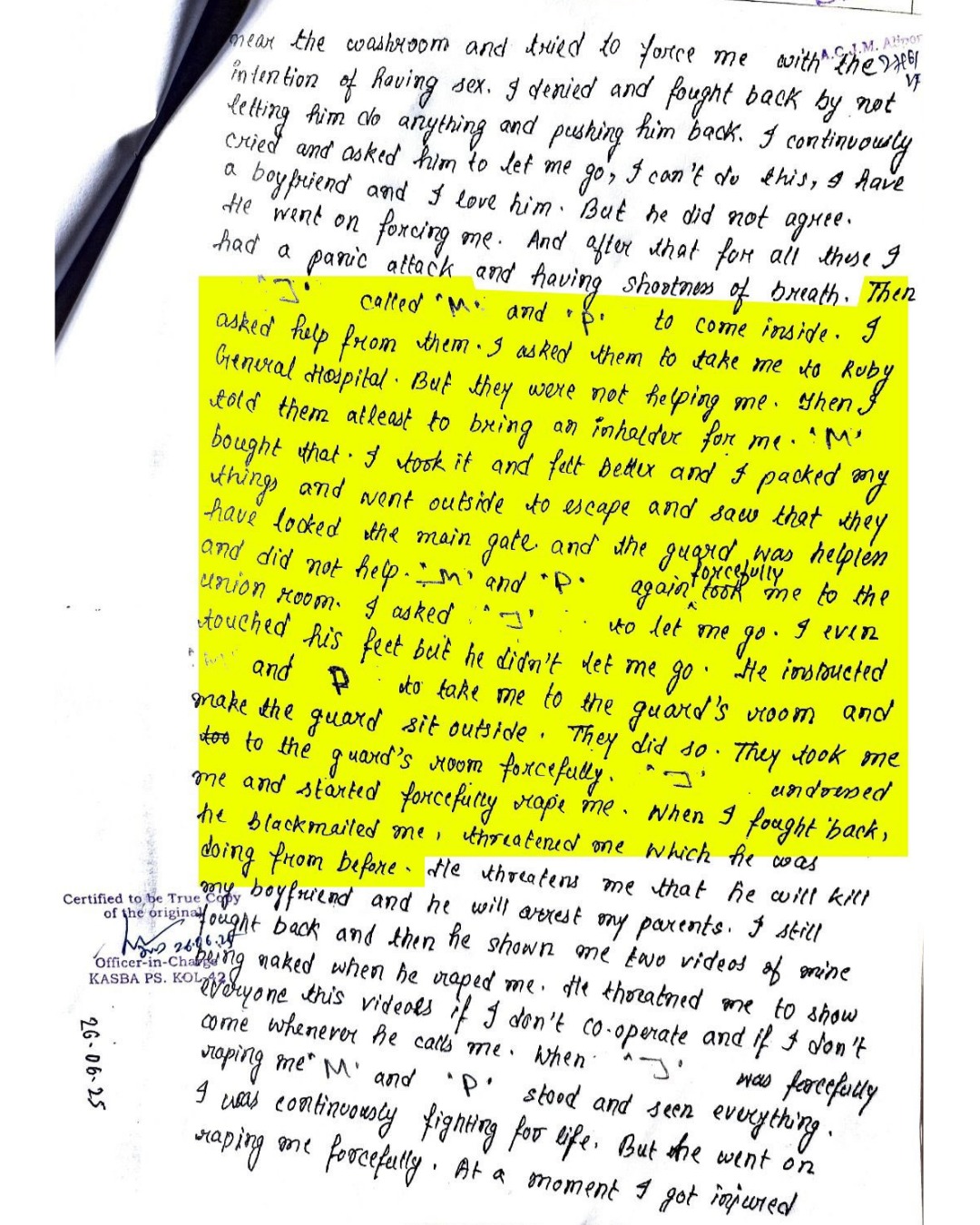
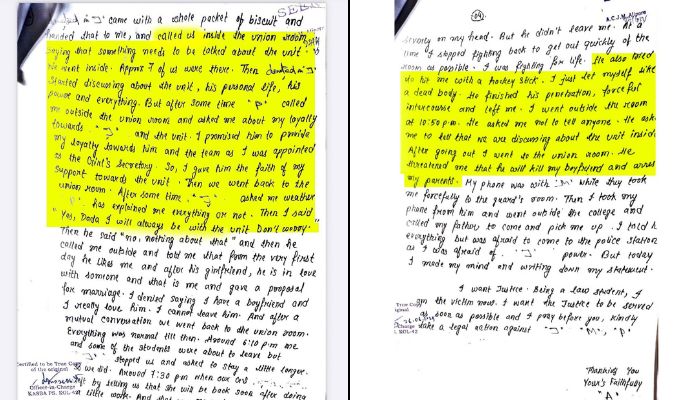
Indore: Victims allege shooting coach Mohsin Khan removed their Kalawas, stopped them from chanting Jai Shri Ram and peeped into women’s bathrooms

The investigation into the rape allegations against shooting coach Mohsin Khan who runs a shooting academy in Indore, Madhya Pradesh has revealed that he sexually exploited around 25-20 young girls from different districts. So far, five FIRs have been filed against Mohsin Khan who is currently on a 7-day police remand. A 6-member SIT has been formed by the police to investigate the allegations against him.

Khan was arrested by police on 21st May, a day after an FIR was filed against him by a girl alleging that she was raped by him. As per Dainik Bhaskar, on 22nd May, two more victims filed complaints against Mohsin. One of the victims, a lawyer by profession, accused him of rape. The other victim, who was employed by Mohsin at his academy, also accused him of sexual assault. This was followed by a complaint filed by a man named Dhruv Mahajan who alleged that Mohsin misappropriated money (₹2, 80000) which he took from him on the pretext of buying him a shooting rifle.

Victim said she was gangraped by Mohsin and others when she was a minor

On 26th May, a woman who used to work Mohsin’s house filed a case of gangrape against him along with Irfan Khan and Faizan Khan, who are siblings. She said that she was a minor at the time of the incident. The victim used to work as a house help at Mohsin’s house. She alleged Mohsin made sexual advances for the first time in February 2020 when she was 17-years-old. He used to tell the victim to dress well and even brought her new clothes. He used to make the victim change clothes in front of him and sometimes even changes her clothes by himself. She further alleged that Mohsin had unnatural sexual intercourse with her.

The victim told the police that Mohsin’s friends Irfan and Faizan also sexually abused her. She said that during, Covid-19 lockdown period, Mohsin, Irfan and Faizan called her to cook for then. When she arrived they locked her inside a room and kept her there for 15 days. During this period, all three of them gangraped her.

Mohsin removed my Kalawa, forced me to convert to Islam and eat meat: Victim

One of the victims, who enrolled at Mohsin’s shooting academy alleged that Mohsin raped her on multiple occasions between July 2022 and December 2023. She alleged that Mohsin removed the Kalawa tied on her wrist and forced her to convert to Islam. He asked her to start eating meat in order to become a Muslim. The victim alleged that Mohsin kept blackmailing her even after she left the academy and got married. He allegedly forced her to meet him and threatened to leak her obsecene picture and videos if she did not comply. The victim alleged that he raped her many times even after marriage.

Mohsin peeped into women’s bathrooms, asked them to keep the bathroom door unlocked

One of the victims, who used to work at Mohsin’s shooting academy alleged that he used to forbid the girls from chanting Jai Shri Ram. She said that he removed Kalawa from their shooting rifles and also asked them not to wear a Tilak. The victim claimed that Mohsin used to peep into women’s bathrooms and asked them to leave the bathroom door unlocked while taking bath. The victim further alleged that he used to force the girls at his shooting academy to eat beef.

The police have been recording the statements of the victims who have come out so far. Hundreds of obscene videos of several women were found on Mohsin’s mobile phone by the police during investigation. The police arrested Mohsin under the POCSO Act and other sections of BNS, and presented him in the court on Wednesday (21 May 2025), from where he was sent to jail.

Assam government to grant arms licence to indigenous people in remote, vulnerable and border areas to tackle unlawful threats from hostile quarters

In a significant decision, Assam government has decided to grant arms licences to indigenous people living in remote and border areas. The decision was taken at the weekly cabinet meeting chaired by Chief Minister Himanta Biswa Sarma.

Addressing a press conference after the meeting, CM Sarma said, “Today government of Assam has taken a very important decision in our cabinet. Assam is a very difficult and sensitive state. Today we have decided that we will give arms licence to the eligible persons who are residing in remote areas, vulnerable areas and border areas.”

Himanta Biswa Sarma added, “we will encourage our original inhabitants and indigenous Indian citizens to apply and take arms licence as per the eligibility criteria provided in the Indian Arms Act.”

In a post on X, the CM said that arms licences will be granted to to tackle unlawful threats from hostile quarters.

Explaining the move, he said that indigenous people in border areas live in constant fear due to influx of illegal Bangladeshi immigrants, and in some villages, share of indigenous people is very less. He clarified that people who want weapons will have to buy them, and govt will only grant the licence for the same. He added that govt will consider such applications liberally.

He added that this has been a long-standing demand from people in border areas, and if this demand was met earlier, many people would not have to relocate from border regions. The Chief Minister did not specify the exact criteria for vulnerability or the process for granting these licenses, but assured that the move would be carefully monitored to ensure it serves its intended purpose without escalating tensions.

CM Sarma emphasized the importance of this measure in safeguarding the “Jati, Mati, Bheti” (community, land, and house) of Assam’s indigenous people.

ANI files defamation suit against YouTuber Mohak Mangal for his ‘extortion’ claim, Kunal Kamra and Mohammad Zubair also added as defendants for spreading the video

Asian News International (ANI) has filed a defamation suit against YouTuber Mohak Mangal in the Delhi High Court alleging that he made false and defamatory accusations against the news agency in a recent video. Controversial comedian Kunal Kamra and Alt-News co-founder Mohammad Zubair have been impleaded as defendants in the suit.

Why the defamation suit is filed

The defamation suit stemmed from a video published by Mangal in which he accused ANI of demanding ₹50 lakh from him in exchange for removing copyright strikes from his channel. The YouTuber, who has over 4 million subscribers, had allegedly used some copyrighted ANI clips in his videos on the Kolkata rape case and Operation Sindoor which attracted the copyright strikes. Mangal later made a video alleging that an ANI representative reached out to him and demanded money for removing the copyright strikes against his channel.

Kunal Kamra and Mohammad Zubair shared Mangal’s video on their social media accounts, and therefore they have been added in the defamation suit as defendants.

In the suit, ANI has alleged that the video made by Mangal claiming extortion, is an attempt to discredit and insult the news agency and its services provided under its registered trademark. It further claimed that the video spreads falsehoods to damage its reputation, discourages use of its services and misuses its registered trademarks with defamatory commentary. ANI added that Mangal opendly admitted to using ANI’s original videos to earn revenue.

ANI seeks injunction against Kamra and Zubair

Regarding the other defendants, Kamra and Zubair, the suit states, “In addition to widely sharing the Impugned Video, these Defendants have independently published further false, baseless, and malicious statements targeting the Plaintiff and its founders. These statements are devoid of any factual or legal foundation and are clearly intended to malign the Plaintiff’s reputation and lower its estimation in the eyes of the public.”

The ANI has sought a permanent and mandatory injuction against Mangal, including directions to take down the video, stop using its trademarks and refrain from publishing or circulating any further false, misleading or defamatory content against ANI and its trademarks. It also prayed for a restraining order against Kamra and Zubair and others to prevent them from making or sharing defamatory and false statements about the news agency.

The suit has been filed through Advocate Akshit Mago and scheduled to be heard on 29th May.

Karnataka and Andhra Pradesh spar over state-owned Defence manufacturer Hindustan Aeronautics Limited (HAL): All you need to know

The Congress-ruled Karnataka and TDP-BJP alliance-ruled Andhra Pradesh have come at loggerheads over the possible relocation of major defence manufacturing units of Hindustan Aeronautics Limited (HAL) from Bengaluru to Andhra Pradesh.

The row erupted after several media reports claimed that the Andhra Pradesh Chief Minister Chandrababu Naidu urged Prime Minister Narendra Modi to relocate HAL from Karnataka’s Bengaluru to Andhra Pradesh, during a recent NITI Aayog meeting.

Reports suggest that the two crucial projects—the Light Combat Aircraft (LCA) Tejas and the Advanced Medium Combat Aircraft (AMCA)–are at the heart of the controversy.

The Andhra Pradesh CM reportedly offered 10,000 acres of land in the Lepakshi-Madakasira region of Anantapur district for setting up the new manufacturing facilities for the LCA and AMCA projects.

CM Naidu reportedly highlighted that Bengaluru faces space constraints. He added that the said the proposed site in Andhra is well-suited for setting up new manufacturing facilities due to its proximity to HAL’s existing infrastructure.

Besides, the Andhra Pradesh government has also proposed to develop manufacturing units in 4,000 acres of land at Orvakal in Kurnool district. These units would focus on military drones, robotics and advanced defence components.

HAL in Bengaluru and the significance of the LCA and AMCA projects

Based in Bengaluru, HAL is essential to India’s defence manufacturing. It is the primary production partner for the future AMCA as well as the LCA Tejas.

The locally designed Tejas aircraft is produced by the LCA Tejas Division in Bengaluru. Established in 2002, this division had an upgrade in 2014. Currently, 123 aircraft are on order, including 83 Mk1A aircraft that were ordered in 2021. Export orders are also being worked on.

HAL is increasing manufacturing from 10 to 16 aircraft annually in order to satisfy the increasing demand. In 2021, a new Plant II was developed to facilitate this growth.

Founded in 1940, the Bengaluru-based Aircraft Division manufactures both licensed and domestic aircraft and manages modifications for platforms such as Jaguar and Hawk planes. This state-of-the-art facility has its own airstrip as well as advanced infrastructure for assembly, testing, and production.

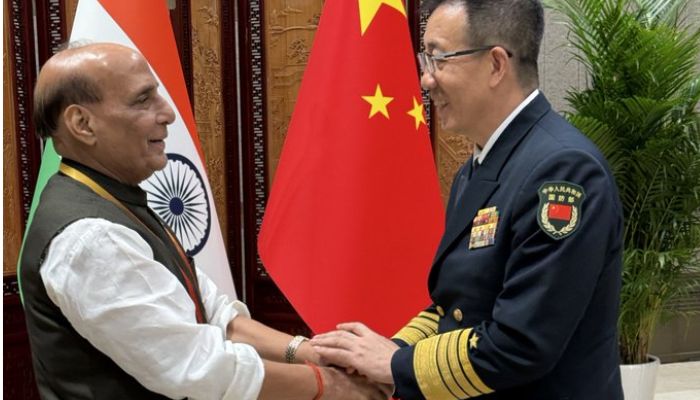
With an emphasis on deep penetration strike capabilities, India launched its ambitious fifth-generation stealth fighter jet project —AMCA.  The execution plan for its development, which would be headed by the Aeronautical Development Agency (ADA) in collaboration with HAL and industry participants, was recently approved by Defence Minister Rajnath Singh.

The project is crucial for boosting India’s air strength and has been approved in principle by the Cabinet Committee on Security. It is expected to cost about Rs 15,000 crore. Meanwhile, LCA Tejas is the light multirole fighter aircraft, and is already in production.

So far, Karnataka has been the India’s aerospace and defence hub, however, any prospect of HAL moving out of Karnataka is opposed by the Karnataka government. The Congress government in the state has raised strong objections over the alleged proposal by the Andhra Pradesh CM regarding setting new HAL facilities in the state.

Karnataka Deputy Chief Minister DK Shivakumar on Tuesday (27th May), said that the state government would not allow the shifting of Hindustan Aeronautics Limited (HAL) production units out of Bengaluru. He was reacting to Andhra Pradesh Chief Minister N. Chandrababu Naidu’s proposal to relocate HAL’s advanced production facilities to his state.

“I don’t want to comment on whatever they demand. I want Parliament members and Central ministers to react to this, but as the government, we will not allow anything to be shifted. We will give land if they want to expand,” Shivakumar told reporters here.

“They can get any new thing if they want, we will not come in their way, but as far as Karnataka is concerned, HAL is our pride, Nehruji gave this to us,” he added.

Meanwhile, Defence Minister Rajnath Singh on Tuesday approved the Advanced Medium Combat Aircraft (AMCA) Programme Execution Model, a key step to boost India’s indigenous defence capabilities and strengthen the domestic aerospace industry, the Ministry of Defence (MoD) said in an official statement.

On Tuesday, Karnataka minister M.B. Patil dismissed reports suggesting that Bengaluru-headquartered Hindustan Aeronautics Limited (HAL) may relocate its production units for the Light Combat Aircraft (LCA) and Advanced Medium Combat Aircraft to Andhra Pradesh.

Responding to Andhra Pradesh Chief Minister N. Chandrababu Naidu’s reported proposal, Patil clarified that such a move was neither feasible nor within the authority of a Chief Minister.

“As far as I learned, no CM can request HAL to be shifted somewhere. All existing operations in Bengaluru, in Karnataka, will continue,” Patil told reporters. He added, “He may have said that future expansions or one more HAL unit [could] come over there. And if I am right, I don’t think he can say and he would not have said to shift the HAL operations elsewhere.”

Meanwhile, Karnataka Chief Minister Siddaramaiah also dismissed the possibility of relocation, stating, “I do not know, as far as my knowledge goes, it cannot be. It will not be shifted.”

Echoing a similar stance, Karnataka Deputy Chief Minister D.K. Shivakumar said the state would protect its assets at all costs. His remarks followed reports that Andhra Pradesh Chief Minister Chandrababu Naidu had proposed relocating HAL’s advanced production facilities responsible for manufacturing the LCA Tejas and developing the AMCA project to Andhra Pradesh.

Speaking to reporters at the KPCC office, Shivakumar said, “HAL was not given by any BJP government. It was set up in Bengaluru by Nehru due to the availability of technical manpower. I am not going to interfere in Chandrababu Naidu’s political request to the Centre. We have also given sufficient land to HAL and provided land to set up a helicopter unit in Tumakuru. They are free to set up anything new in Andhra Pradesh; we are not going to object to it. But our government will do whatever it takes to protect our state’s assets.”

He also questioned the silence of Karnataka MPs on the matter, saying, “What are our MPs representing Karnataka doing? The Union Ministers have not spoken a word about moving HAL to Andhra Pradesh. I would expect them to speak up for the state.”

Did CM Chandrababu Naidu pitch for shifting any existing HAL manufacturing facility to Andhra Pradesh?

While the political war of words is raging on, the Andhra Pradesh Chief Minister has not proposed moving any existing HAL facility to the state. This clarification is important since the Karnataka government’s main concern stems from the possibility of the Andhra government seeking the shifting of an existing HAL facility to the state. It is essential to note that CM Naidu is free to ask for a new HAL unit to be set up in Andhra Pradesh.

Citing a top source, NDTV reported that Defence units for LCAs and AMCAs need setbacks as well, which is possible in Andhra Pradesh and may be tough in Karnataka.

French court to deliver verdict on paedophile surgeon Joel Le Scouarnec, who raped over 299 children in 20 years

On 28th May, a French court is going to issue a decision in one of the worst child sex abuse cases in the nation in which a paedophile doctor confessed to sexually abusing hundreds of patients over a 20-year period. The 74-year-old former surgeon named Joel Le Scouarnec is charged of sexually assaulting and raping 299 minors.

Prosecutors called him “a devil in a white coat” and asked for the maximum penalty of 20 years in prison on 23rd May. He was found guilty in 2020 of preying on four children, including two nieces, and is currently serving a 15-year prison sentence. The current trial, which started in February, exposed a pattern of abuse that took place in Brittany of western France, between 1989 and 2014.

The majority of the victims were hospital patients who were either sedated or asleep when the assaults occurred. Their average age was 11 and 256 of them were under 15. There were 141 girls and 158 boys among the victims. Le Scouarnec is anticipated to become one of the most prominent convicted sex offenders in French history after being charged with 111 rapes and 189 sexual assaults. Approximately 60 attorneys have represented the victims.

Advocacy organizations have accused health authorities during the trial of failing to take action after learning about Le Scouarnec’s conviction for collecting child pornographic images as early as 2005. No action was taken at the time to restrict his interaction with children or suspend his medical license as he persisted in abusing patients in hospitals until his arrest in 2017.

Prosecutor Stephane Kellenberger asked, “Should Joel Le Scouarnec have been the only one in the defendant’s box,” during his closing arguments, reported Associated Press. “More could have been done. Things could have been done differently, even within the notorious layers of French bureaucracy, where responsibilities are so often passed from one authority to another until, eventually, that responsibility is lost, and hits innocent lives,” he pointed out.

Gross negligence and lack of attention

Le Scouarnec has admitted to other assaults that are now past the statute of limitations in addition to all of the sexual abuse that the 299 civil parties have claimed. He also admitted to sexually abusing his granddaughter, in a startling admission made during the trial in front of her parents.

He was given a four-month suspended prison sentence in 2005 after being found guilty of importing and possessing materials related to child sexual abuse. The following year, however, he was hired as a hospital practitioner. The legal framework to prevent such abuse is expected to be strengthened by the case, according to child protection organizations that have joined the proceedings as civil parties.

The trial of Le Scouarnec took place as campaigners work to break down the taboos surrounding sexual abuse in France. The most well-known case involved Gisele Pelicot, who was drugged and sexually assaulted by her now-ex-husband and several other men who were found guilty. They were given prison terms ranging from three to twenty years in December.

An inquiry commission of the National Assembly, France’s lower house of parliament, is looking into claims of physical and sexual abuse that spans 50 years in a different case that centers on alleged abuse at a Catholic school. However, Le Scouarnec victims have expressed dissatisfaction about what they consider to be a lack of attention.

“This trial, which could have served as an open-air laboratory to expose the serious failings of our institutions, seems to leave no mark on the government, the medical community, or society at large,” some victims expressed.

Shocking account of perversion

More than 300,000 photographs, 650 pedophilic, zoophilic and scatological video clips were recovered during a search of his house. Le Scouarnec kept a record of his crimes, including the names, ages, addresses and nature of abuse of his victims. The doctor called himself a “paedophile” and a “major pervert” in his notes. He even boasted, “And I am very happy about it.”

At first, not every victim knew they had been abused. Some were contacted by investigators when their names were found in Le Scouarnec’s well recorded journals of his atrocities. Others checked their medical records and realized they had been hospitalized at the time. A few years prior to the trial, two of his victims committed suicide themselves.

The former abdominal and digestive surgeon exploited times when youngsters were alone in their hospital rooms by using the pretext of medical operations. His strategy was to target young patients who were unlikely to recall the interactions by disguising sexual assault as medical care. The notebooks, which contain detailed descriptions of the abuse, are now a key component of the prosecution’s case.

Victims reject apology

“I didn’t see them as people. They were the destination of my fantasies. As the trial went on, I began to see them as individuals, with emotions, anger, suffering and distress,” Le Scouarnec voiced. He stated that raping his 5-year-old niece in 1985 was his first abusive act. Although he apologized to some victims, his manner came across as cold and heartless to many.

“I am not asking the court for leniency. Simply grant me the right to become a better person,” he claimed in his closing statement in Vannes of Brittany on 26th May, per a report in France 24. However, people have questioned the sincerity of his apologies, which he repeated, sometimes word for word and mechanically, during the trial’s weeks.

One of the attorneys of the victim called him the “atomic bomb of paedophilia” and declared, “You are the worst mass paedophile who ever lived.” The retired surgeon added that he felt “responsible” for the deaths of two of his victims: Mathis Vinet, who died due to an overdose in 2021 which his family claimed was suicide and another man who was passed away in 2020.

The matter was initially made public in April 2017 after a 6-year-old neighbor reported to her mother that the man next door had touched her through the fence dividing their homes and exposed himself. “Joel Le Scouarnec says he no longer feels any sexual attraction to children, but there’s no way to verify that. Experts concluded that we cannot rely on his word alone and that his potential for future danger remains significant,” Kellenberger mentioned.

In addition to a 20-year prison sentence with a two-thirds minimum term, prosecutors are advocating for post-sentence preventive custody, a rarely employed strategy in France that targets the most dangerous criminals in the nation. If authorized, Le Scouarnec might be detained in a safe socio-medical center indefinitely, even after completing his sentence.

A third trial is anticipated in the upcoming years due to further accusations that surfaced during this trial, such as abuse involving his granddaughter. Moreover, two investigations have been launched by the Lorient public prosecutor’s office in connection with case, one of which focuses on “possibly unidentified or newly reported victims” of rape and sexual assault.

Union Cabinet approves increase in Minimum Support Prices for 14 key kharif crops

The Union Cabinet on Wednesday approved the increase in the Minimum Support Prices (MSP) for 14 key kharif crops for the marketing season 2025-26.

The government, every year, revises the MSP of kharif crops ahead of the sowing by farmers, to ensure remunerative prices to the growers for their produce.

This year, the highest absolute increase in MSP over the previous year has been recommended for nigerseed (Rs 820 per quintal) followed by Ragi (Rs 596 per quintal), Cotton (Rs 589 per quintal) and Sesamum (Rs 579 per quintal).

For paddy, it has been raised by Rs 69.

For pulses tur/arhar and moong, it has been raised by Rs 450 and Rs 86, respectively. MSP has been raised for urad by Rs 400.

Coming to oilseeds, MSP for groundnut, sunflower seed, and soybean has been raised by Rs 480, Rs 441, and Rs 436, respectively.

For cotton, MSP has been upped by Rs 589.

The increase in MSP for Kharif Crops for marketing season 2025-26 is in line with the Union Budget 2018-19 announcement of fixing the MSP at a level of at least 1.5 times of the all-India weighted average cost of production.

The expected margin to farmers over their cost of production are estimated to be highest in case of bajra (63 per cent) followed by maize (59 per cent), tur (59 per cent) and urad (53 per cent). For rest of the crops, margin to farmers over their cost of production is estimated to be at 50 per cent.

“In the recent years, the government has been promoting the cultivation of crops, other than cereals such as pulses and oilseeds, and Nutri-cereals/Shree Anna, by offering a higher MSP for these crops,” the government said.

During the period 2014-15 to 2024-25, procurement of paddy was 7,608 LMT while during the period 2004-05 to 2013-14, procurement of paddy was 4,590 LMT.

During the period 2014-15 to 2024-25, procurement of 14 kharif crops was 7,871 LMT while during the period 2004-05 to 2013-14, procurement was 4,679 LMT.

During the period 2014-15 to 2024-25, MSP amount paid to paddy growing famers was Rs. 14.16 lakh crore while during the period 2004-05 to 2013-14, amount paid to farmers was Rs. 4.44 lakh crore.

During the period 2014-15 to 2024-25, the MSP amount paid to 14 kharif crops growing famers was Rs. 16.35 lakh crores while during the period 2004-05 to 2013-14, MSP amount paid to farmers was Rs. 4.75 lakh crore.

India has three cropping seasons: Summer, Kharif, and Rabi. Kharif crops, sown during June-July and dependent on monsoon rains, are harvested in October-November. Rabi crops, sown in October-November, are harvested from January, depending on their maturity. Summer crops are produced between the Rabi and Kharif seasons.


(This news report is published from a syndicated feed. Except for the headline, the content has not been written or edited by OpIndia staff)

Union Government likely to initiate impeachment proceedings against Justice Yashwant Varma indicted in cash scandal

In a historically rare action, the central government is likely to initiate impeachment proceedings against former Delhi High Court Judge, Justice Yashwant Varma, in the upcoming Monsoon session of the Parliament. Justice Varma was indicted by an in-house inquiry panel of the Supreme Court in connection with the discovery of unaccounted cash at his residence in March this year during a fire incident.

As per reports, on 9th May, the former Chief Justice of India Sanjeev Khanna forwarded the report of the inquiry panel along with a recommendation to initiate impeachment proceedings against Justice Varma, to President Droupadi Murmu and PM Modi. President Murmu has reportedly forwarded the CJI’s recommendations to the Speakers of the Lok Sabha and the Rajya Sabha.

Based on the report of the inquiry panel, the CJI had asked Justice Varma to resign which he refused to do. This led to the CJI recommending the initiation of impeachment proceedings against Justice Varma. After bags of partially burnt currency noted were found at his official residence in Delhi, Justice Varma as transferred to Allahabad High Court by the Supreme Court collegium.

CJI Khanna formed the inquiry panel on 22nd March, comprising Justice Sheel Nagu, Chief Justice of the High Court of Punjab & Haryana; Justice G S Sandhawalia, Chief Justice of the High Court of Himachal Pradesh; and Justice Anu Sivaraman, Judge of the High Court of Karnataka. An RTI was filed with the Supreme Court seeking details of the committee report and the letters written by the Chief Justice which was rejected by the Supreme Court.

What are the allegations against Justice Varma

On March 14, 2025, a huge amount of undeclared cash was found at the house of Justice Yashwant Varma of the Delhi High Court on Holi in a fire incident. Questions were raised over such a huge stash of cash being found at the house of a sitting judge, as videos of half-burnt currency notes surfaced online. Justice Varma had denied having any knowledge of the cash and said that he was in Bhopal the day the cash was found at his house.

The process of impeachment

Under the Constitution of India, a judge of the Supreme Court or a High Court can only be removed from his office by way of impeachment on the grounds of proved misbehaviour or incapacity. The removal process can be initiated in either House of the Parliament through a motion approved by the Presiding officer of the House.

The motion is preceded by members of either House of the Parliament giving signed notice to the Presiding Offficer. In Lok Sabha, at least 100 members need to give a signed notice to the Speaker and in Rajya Sabha, at 50 members of the Rajya Sabha need to give a signed notice to the Chairman. The Speaker or Chairman consult MPs and jurists. If the notice is accepted by the Speaker or the Chairman, a 3-member committee, comprising a Supreme Court judge, a High Court Chief Justice and a distinguished jurist, will be formed to investigate the charges against Justice Varma.

The committee will decide the charges which will be followed by an investigation. A copy of the charges will be sent to Justice Varma who will be required to submit a reply. On completion of the investigation, the committee will submit its report to the Speaker of the Chairman, which will then be tabled in the concerned House of the Parliament. The motion needs to be passed by a majority of the total membership of the House and a two-thirds majority of members present and voting.