Saturday, April 4, 2026
Home Blog Page 329

No sir, I am not going to Kashmir as tourist to prove a point

22 April 2025 was one of the darkest days in Indian history. Five terrorists stormed Baisaran Valley in Pahalgam, Jammu and Kashmir. Baisaran is known for its pine forests and serene beauty. The area was jam-packed with tourists from across the country. The terrorists asked if the tourists were Hindu or Muslim and shot the Hindus. Twenty-six civilians were killed. Survivors said they were forced to prove their religion, and those who could not recite Islamic verses or the Kalma were killed on the spot. One of the local Muslim pony operators was also killed in the attack.

It was not just another act of violence. It was a direct blow to the idea of “normalcy”, especially for Hindus, in the Valley. Despite steady tourist flow, promotional reels, and relentless efforts made by the Government of India to push development in Jammu and Kashmir, the Valley continues to simmer. And sometimes, it boils over in blood.

For decades, Kashmir has suffered the effects of Pakistan-sponsored terrorism. After the abrogation of Article 370 in August 2019, hopes for normalcy and the desire to visit this ‘heaven on earth’ peaked among Indians. They wanted to experience the hospitality of Kashmiris and enjoy the beauty, the weather, and the food. But at what cost?

Yes, tourists want to go, but the sentiment must be safe first!

There is no denying that tourists from across India are eager to visit Kashmir. One of my closest friends went to Gulmarg in 2022. Even then, there was an attack, but her family was safe. The idea of being near danger was brushed off, as she and her family were safe. But not for too long.

Notably, in 2022 alone, 26,73,442 tourists visited Kashmir. In 2023, the number rose to 31,55,835 and in 2024, there were 34.98 lakh tourists who visited Kashmir. Dal Lake, Gulmarg, and Sonmarg were among the favourite locations. The dreams are real, and the longing is genuine. Tourists, especially Indians, want to visit Kashmir. They want to see normalcy there without the sight of a gun. Even the government wanted it. But that desire rests on a fragile base, the feeling of being safe.

However, things that looked safe from the outside were not the same on the inside. The Pahalgam terrorist attack shocked the nation, bringing senses back to reality. While a large number of tourists are still visiting the Valley in “We Are Not Afraid” mode, the truth is bookings have dropped sharply. Even in Katra, hotels saw large number of cancellations. No one wants to gamble their holiday on a flash of gunfire. No one wants to be killed during a vacation just because he is a Hindu.

It is not cowardice to avoid danger, it is instinct. You cannot expect people to risk death just to “prove terrorists wrong”. Normalcy must be felt, not performed. I, too, yearn to walk through almond blossoms in Badamwari. However, it should not be under the shadow of martyrdom.

Kashmir’s beauty is eternal, but trust is not, it must be earned

“Agar firdaus bar roo-e zameen ast, hameen ast-o, hameen ast-o, hameen ast.” If there is paradise on Earth, it is here, these words of Amir Khusrau, a 13th-century poet, still ring true. Kashmir remains breathtaking. But beauty is not enough to build trust. The chinar turns crimson every autumn. The Lidder sparkles in spring. However, tourists now flinch at every silence, locals are being judged, and trust remains a casualty.

Yes, the locals came out to condemn the terrorist attack.

But many of them talked more about losing their livelihood. Why did I notice it? Why did everyone notice it? Because there is a void that has formed due to the death of 26 innocent Hindus.

People from every part of the country want to believe that the Valley is safe. But a flash of violence is more than enough to shatter that glass wall. The welcoming nature of the people of Kashmir must be felt, not doubted. Even now, most Indians believe that only a handful of Kashmiris side with the terrorists. And it is true, most Kashmiris want to live peacefully, earn peacefully, without worrying whether there will be a terrorist attack or bandh tomorrow. They want to welcome tourists and show them how great the land of Rishi Kashyap is. And that begins with action, not advertising.

History demands that pain be acknowledged, not glossed over

The conflict that has rooted its presence deep into the Valley will not disappear just because you have stopped talking about it. In 1990, thousands of Kashmiri Pandits were forced out by slogans and threats blared from mosques. Countless Hindus were killed during that time. Girija Tickoo was cut from the middle using an electric saw while she was alive after gang raping her. You can throw the horrors behind the curtains but to heal the wounds, a lot is yet to be done.

Their neighbours, with whom they had shared festivals and grief, turned silent. Some of them were complicit, some of them were afraid of the consequences if they supported Hindus. Nearly the entire community fled overnight, their homes seized or destroyed. Those who dared to go back, even for a day, met horrible fate. Girija Tickoo was cut from the middle using an electric saw while she was alive after gang raping her. You can throw the horrors behind the curtains but to heal the wounds, a lot is yet to be done.

The exodus is not a footnote. It is a wound. It is a wound that has not been treated well. A wound that has been festering as it was ignored for decades. Even the Supreme Court dismissed the plea of Kashmiri Hindus and denied reopening cases of the murders of Kashmiri Hindus and the exodus. If Kashmir wants to reclaim its soul, it must confront what was done to the Pandits. Their pain must be acknowledged publicly, not brushed under the carpet in pursuit of photo-op harmony.

I am not blaming the locals. This is not a collective blame game. It is more about collective healing. Let us not pretend that the “Azaadi” slogans were peaceful. Let us not speak of “Naya Kashmir” while acting as if the darkest days will not return or loom over to give a reality check.

A truly normal Kashmir shouldn’t need Yatris protected by Army

Every year, the Amarnath Yatra takes place under the watch of tens of thousands of armed personnel. Pilgrims wear RFIDs. Convoys are scanned, drones hover, movement is restricted. Why? Because terrorists have repeatedly attacked pilgrims, including in 2017. Even in the Jammu region, Vaishno Devi now operates under heightened alert. Is this what “normal” looks like?

No, it is not. A truly normal Kashmir would not require guns at every bend of a religious pilgrimage. The very fact that the Government of India must make such arrangements proves that the threat is not gone. It is merely sleeping and waiting. I am grateful to the forces that protect Amarnath Yatra and, as a matter of fact, provide extensive security at Vaishno Devi Mandir, but it is not a victory if, to ensure no terror attack happens, hundreds of armed soldiers must become shield for the Yatris.

The fact that the Shrines have to thrive under military cover is a compromise, to say at least. True victory against terrorism will be the day when Yatras require no rifles at all.

Performative tourism cannot replace deep reform

After every attack, including the Pahalgam terrorist attack, voices rise, “We must not be afraid, go to Kashmir, show the terrorists!” I understand the emotion. But it is just a symbol of strength. The strength that will vanish in tears the moment a terrorist with a gun march towards them. Symbolic defiance is not strategy. Sooner everyone understands it, the better.

Visiting Kashmir just to “prove a point” will not dismantle the terror ecosystem. It is, in fact, feeding it. It is feeding the terror network faith that they have their target walking towards them just like a pigeon with eyes shut.

Some metrics have improved. There is no doubt in that. For example, stone pelting incidents have completely vanished from the Valley since the abrogation of Article 370. It is a positive sign. However, terror groups still exist. They are just hiding in the shadows in the form of sleeper cells. You cannot defeat sleeper cells with slogans. They are rooted out by sustained intelligence and a zero-tolerance policy for sympathisers.

However, whenever government and armed forces go ballistic on terrorists, some so-called human rights experts rush to the courts to stop them. They do not rush to the courts against terrorism. They rush to the courts to protect the sympathisers, and that is the problem.

Tourism photos and reels with smiling faces does not mean there is peace. Reform means police reforms, education over radicalisation, economic opportunities, integration without alienation, and yes, accountability for separatists, their apologists, terrorists and their sympathisers.

Kashmir is not a prop in the theatre of nationalism. It is a fragile part of India sustaining only because there are hands to support it. The real patriotism lies in creating a Kashmir that neither needs performative tourism nor needs consistent presence of armed forces.

What real peace can bring for all communities

What would a peaceful Kashmir look like? Close your eyes. Imagine Kashmiri Pandits returning to their homes, welcomed by neighbours. A Dal Lake where locals and tourists laughing without suspicion. Schools where Hindu, Muslim, Sikh children sit together and dreaming the same dream.

The pony-walla, the shopkeeper, the hotelier, every single person who has some sense left wants peace. This is why they came out condemning the terrorist attack. Or did they come because there was looming fear that every one of them would be seen with same suspicion? This sense of proving “I am not with the terrorist” has to go. And it can only go if terrorists, their sympathisers and sleeper cells are weeded out completely and burnt down to ashes.

The Kashmir we must strive for is one where no one needs curfews, raids, or patrols. Where jobs and education replace the gun. Where cinema returns, art thrives, and culture flows free. Kashmir was a paradise. Kashmir is a paradise, but it is wounded. Kashmir wants to become the paradise again. It needs help to heal, for real. But it is only possible when guns become a thing of the past and tourists are just tourists, not testaments.

Post-370 gains are real, but much more needs to be done

The abrogation of Article 370 was necessary. It removed a barrier to integration. It allowed Indian laws to apply in full. Since then, terror incidents have dropped over 70%, investments have risen, IITs and medical colleges have come up. But that does not mean 100% normalcy has been achieved. Sleeper cells still operate. Radical sympathisers still exist, preaching hate in whispers.

These are the real battles now; ideological, psychological, social

Development and deradicalisation has to go hand-in-hand. Not only the government, but the political leaders of the opposition, the locals and every stakeholder has to understand the need of peace in the Valley. You cannot achieve it without monitoring locations where terrorist sympathisers can flourish. The overground terror workers have to be marked, caught, tagged and bagged to send to cells where they can harm no one. The peace-loving citizens must be rewarded. The local leaders who support national unity must be encouraged.

Elections were important, I agree, but there was no hurry to be honest. There is a need of the political voice in the Valley, but it could have waited. Following the Pahalgam terrorist attack, while Chief Minister Omar Abdullah said in the Assembly how he could ask for statehood after such an attack, he completely brushed aside the responsibility from his shoulders. Leadership cannot behave like that.

Even if the security is not his government’s responsibility, deradicalisation is. No matter what he says or believes, as a CM, he must work to ensure there are no radical elements in the Valley. The political voices must understand they are accountable, and their loyalty must remain to the Constitution.

The path ahead

Kashmir is on the path, but make no mistake, we are not at the destination yet. It is not fear. It is a plea for honest healing. Some may say I am scared. I have given in to terror. I reject that. I am not scared. I am angry. I am tired of reading and writing like a robot about the terror attacks. I am demanding more than photo-ops. I am demanding more than just counting the number of tourists. I want everyone to come together and stitch back the soul of Kashmir, not just its economy.

Do I want to visit Kashmir? Yes. Do I want to visit any time soon? No. I will visit Kashmir when I feel peace. Not when I am told to perform it. I want to walk in the gardens, look at Kesar fields and Tulip farms, walk around the markets, buy local and enjoy local food. I want to do all this without looking over my shoulder.

Let us not pressurise our own citizens into tourism as resistance. Instead, let us ensure that when someone says, “Come to Kashmir,” it feels like an invitation, not a dare. Until then, no sir, I am not going to Kashmir as a tourist to prove a point. I will go when no one has to prove anything anymore.

Former Congress MLA’s dramatic arrest, and a ₹500 crore housing scam: What is ED’s PMLA case against  Dharam Singh Chhoker

On the 5th of May, the Enforcement Directorate officials arrested money laundering-accused former Congress MLA Dharam Singh Chhoker from the Shangri-La Hotel in New Delhi as he was trying to escape. Chhoker is the former MLA from Samalkha assembly constituency in Haryana and is accused of defrauding 1500 home buyers and siphoning off ₹500 crore.

Once a prominent figure in Haryana politics and a close aide of Congress stalwart Bhupendra Singh Hooda, Chhoker has been evading the authorities for months. In October 2024, the Punjab and Haryana High Court had directed the Enforcement Directorate to apprehend Dharam Singh Chhoker within 24 hours if he fails to surrender. However, the former Congress MLA could not be arrested. Chhoker’s arrest marks a prolonged pursuit in the high-profile money laundering case that sparked outrage in the state. Despite the corruption allegations, the Congress party gave him a ticket last year, although he lost the election.  

ED acted on a tip-off to arrest Dharam Singh Chhoker

The Enforcement Directorate’s swift action against the former Congress MLA came after the probe agency received a tip-off at around 8:30 PM on 4th May 2025. The intel suggested that Chhoker, who had multiple non-bailable arrest warrants issued by the Special PMLA court and was declared a “proclaimed offender” by a Gurugram court, was at the Shangri La Hotel socialising with friends. Within minutes of the alert, Navaneet Agarwal, the Joint Director of the ED’s Gurugram Zonal Office, arrived at the hotel with his team. As the ED sleuths approached, Dharam Singh Chhoker sensed trouble and attempted to flee towards the hotel’s exit. However, the ED officers restrained him following a brief scuffle.

By around 9:30 PM, Chhoker was in ED’s custody, bringing an end to his months-long evasion of arrest. The accused will be produced before a Gurugram court.

The former Congress MLA and his web of fraud and money laundering

Dharam Singh Chhoker’s troubles began when a money laundering case was registered against him in 2023, wherein he was accused of involvement in alleged irregularities in real estate projects under the Deen Dayal Awas Yojana, a Haryana government housing scheme. Chhoker, his two sons, Vikas and Sikander, as well as their company, Sai Aaina Farms, are accused of defrauding more than 1500 homebuyers and siphoning off over ₹500 crore. Some estimates peg the scam at ₹1500 crore.

The accusations centre on the Chhoker family’s real estate ventures in Gurugram’s Sector 68, 103, and 104, where they allegedly collected over ₹616 crore from around 3,700 investors by promising affordable flats, plots and houses. However, the Chhokers never fulfilled their promises, leaving the buyers stranded.

The Enforcement Directorate stepped into the scene after multiple FIRs were filed by Gurugram Police against Dharam Singh Chhoker, his company, Sai Aaina and its associates. The ED investigation revealed that the Chhokers attached forged documents, including fake bank guarantees, to obtain licenses for development works. These fraudulent tactics allowed the former Congress MLA to amass huge wealth, which was then reportedly diverted for personal gains.

In March this year, the ED officials attached properties worth ₹44.55 crore belonging to the Chhoker family, including three acres of agricultural land, commercial and residential plots in Gurugram, Faridabad, Delhi and Panipat. Last year, assets worth ₹36 crore were seized by the ED.

The absconding period: Dharam Singh Chhoker was playing a game of cat and mouse with the ED

As ED began closing in on Chhoker in 2024, the former Congress MLA began evading the authorities. Despite multiple summons, he deliberately did not show up, prompting a special Prevention of Money Laundering Act (PMLA) court to issue 7 non-bailable arrest warrants against Chhoker and his sons. While in April 2024, Sikander Chhoker was apprehended, Vikas is still at large. Last year, the ex-Congress MLA and his sons were declared “proclaimed offenders”, ordering them to appear by May 19, 2024. However, Dharam Chhoker managed to escape summons and arrest.

Dharam Singh Chhokar first won the Samalkha seat on a Haryana Janhit Congress ticket in 2009, before joining the Congress party. While Chhokar won the 2019 assembly polls, he faced defeat in the 2024 elections, with the money laundering case severely tarnishing Chhokar’s image.

Notably, Dharam Singh Chhoker’s son Sikander was arrested by the ED in March 2024 after he was traced in Uttarakhand’s Haridwar while absconding. He was granted bail eventually; however, as CCTV footage showing him roaming freely outside a hospital in Rohtak surfaced online, it was said that he was faking an illness to avoid jail time. The visuals showed Sikander using a Fortuner SUV, staying in hotels, and even campaigning for Congress for the state assembly elections, flouting judicial protocols. Amidst the outrage, he was sent back to the ED’s custody.

Sikander Singh Chhokar seen in CCTV footage (Image via IndiaToday)

Playing a key role in tightening the noose around the former Congress MLA’s neck, just days ahead of the Haryana Assembly elections, the Punjab and Haryana High Court in October 2024, ordered Chhoker to surrender by 2nd October or face arrest. This order came in response to a plea moved by social activist Virender Singh, who pointed out that despite being a wanted offender, Chhoker was openly campaigning for a re-election in Samalkha while contesting on a Congress ticket. While the Congress party giving a ticket to a scam-tainted leader is not shocking, the court had expressed frustration over the delays in arresting Chhoker. Noting his continued evasion, the court later in October 2024 ordered Dharam Singh Chhoker’s immediate arrest.

While the former Congress MLA managed to evade arrest for months, the Enforcement Directorate has finally nabbed him. Following his arrest, the proceedings in the money laundering case would expedite, giving a fresh hope to all the defrauded homebuyers that they will get justice.

Increase in Gujarat’s coastline from 1600 KM to 2300 KM: Result of advanced measurement methods, use of technology including satellites – Understand why this ‘increase’ was recorded

Gujarat, the western state of India, is known for having the longest coastline in the country. According to recent data, the length of Gujarat’s coastline has increased significantly. Earlier, Gujarat’s coastline was estimated to be about 1,600 kilometers, but now it is recorded as 2,340.62 kilometers. That means an increase of about 700 kilometers.

It is worth mentioning that Gujarat’s coastline was measured at 1,214 kilometers in the year 1970, later it was increased to 1660 kilometers, then to 1945 kilometers. Thus, Gujarat’s coastline has almost doubled to 2,340 kilometers in the last 53 years. Why this significant increase? Has Gujarat’s coastline really increased geographically? Or is this just a result of measurement accuracy? Let’s find out the real answer to these questions.

Increase in the length of the coastline! How?

The increase in the length of Gujarat’s coastline is the result of new methods of accurate measurement and calculation rather than geographical expansion. The Government of India has used new technology and methods to calculate the length of the coastline. In which, technology, including the help of satellites, has been utilised. Lets look at all these methods in detail.

Geographic Information System (GIS): GIS software (such as ArcGIS, QGIS) was used to digitally trace the coastline. This method included fine details (such as the Gulf of Khambhat, the Gulf of Kutch) at a scale of 1:10,000.

Satellite Imagery (Sentinel-2, Landsat-9): High-resolution images from the Sentinel-2 and Landsat-9 satellites were used to delineate the land-water boundary. The boundary between water and land was identified using the Normalized Difference Water Index (NDWI). Sentinel-2 data provides an accuracy of 5-10 meters.

LiDAR (Light Detection and Ranging): LiDAR is a laser-based technology that delineates a precise line based on the topography of the coastline and the mean high water level (Mean High Water). The accuracy of 1-2 meters with it covers even small bends and estuaries.

Fractal Analysis: The fractal dimension (complexity) of the coastline was measured using box-counting and divider methods. This method includes more details at smaller scales, which helped measure the coastline accurately.

Inclusion of Gulfs and Islands: Gujarat’s coastline includes the Gulf of Kutch, the Gulf of Khambhat, and about 144 small islands. The new calculations also take into account the length of the coastlines of all these bodies.

More detailed measurements: In the previous calculations, the coastline was measured using a straight-line approximation. Now, every small bend, groove, and estuary of the coastline has been included.

Due to these advanced methods, the length of Gujarat’s coastline has increased by about 700 kilometers. This change is not limited to Gujarat, the total length of India’s coastline has also increased from 7,517 kilometers to 11,098.81 kilometers.

Features of Gujarat’s coastline

Gujarat’s coastline accounts for about 21% of India’s total coastline, making it the state with the longest coastline in the country. This coastline has various geographical features.

For example, the Gulf of Kutch in north-west Gujarat contributes significantly to the length of the coastline. Its numerous small islands and their complex coastlines contribute a lot to the length. The Gulf of Khambhat in south-east Gujarat has also contributed significantly to the length of the coastline.

In addition, there are many small and large islands near the coast of Gujarat, such as Diu, Bet Dwarka, and other small islands. The length of the coastlines of these islands has also been included in the count. Apart from this, rivers of Gujarat such as Narmada, Tapi, and Sabarmati meet the Arab Sea, which form estuaries. The length of these estuaries has also been added to the count of the coastline.

These variations make Gujarat’s coastline extremely complex, and new technology has made it possible to measure this complexity more precisely.

Why did the measurement change

Coastline Paradox
The process of measuring the length of a coastline is linked to a mathematical problem called the ‘Coastline Paradox’. According to this principle, the length of a coastline depends on the scale at which you measure it. If you use a 1:100,000 scale, the coastline appears smooth and the length is reduced.

But if you use a 1:1,000 scale, then every little curve, notch, and detail of the bay is included, which increases the length significantly. In the case of Gujarat, the new calculations used a much smaller scale, resulting in an increase in the length of the coastline.

Earlier, maps, field surveys and manual calculations were used to measure the length of the coastline. These methods had limitations in accuracy. Now, satellite imagery, drone technology and GIS software are used, which provide very precise and detailed measurements.

Does this mean that Gujarat’s land has shrunk

No, this increase in the length of the coastline is not the result of geographical land subsidence or coastal expansion. This is only the result of the accuracy of the calculations. Because here the question is about the increase in coastline. Here the coastline means the part where the sea and the land meet. It is a matter of common sense that the coastline increases only if both of them increase. But here again we will draw your attention to the same thing that no length has increased geographically, only the modern method of measuring length has brought these new distance figures to light.

What is the importance of accurate measurement of Coastline

This increase in the length of Gujarat’s coastline is not just a statistical change; it has many practical and policy implications. Gujarat’s coastline is important for ports, fisheries, and tourism. Accurate measurements will help in the planning and development of these activities. Knowing the exact length of the coastline will allow better plans to be made to deal with erosion, flooding, and the effects of climate change.

Accurate data for coastal development, protection, and management will help the government formulate more effective policies. Accurate measurements are important for geographical, environmental, and climatic studies of the coastline. It is noteworthy that the Government of India has also broadened the definition of coastline in the new census. For example, the length of estuaries, inlets, and tidal zones was also included, which was not considered much previously.

Increase in the coastline of other states as well

This increase is not limited to Gujarat alone, but there has been a significant increase in the length of the coastline of the entire India. According to the data, the total coastline of India has increased from 7,517 km to 11,098.81 km. This increase is also a result of new measurement methods, satellite imagery, and more accurate calculations, which include the complexities of the coastlines of all the coastal states and union territories of the country.

According to the data presented in Rajya Sabha, the coastline of Andhra Pradesh has increased from 973.7 km to 1,779.91 km, that of Tamil Nadu from 1,076 km to 1,346.16 km, that of Maharashtra from 652.6 km to 1,213.08 km, and that of Odisha from 480 km to 671.12 km. Among the Union Territories, the coastline of Andaman and Nicobar Islands has increased from 1,962 km to 2,316.30 km. This increase is also due to the use of accurate measurements and new technology.

All this just means that Gujarat’s coastline has not increased geographically, but its exact length is now recorded more accurately.

The original Gujarati report explaining this can be read here.

Former NSUI President-led-trust files petition in SC against Waqf Amendment Act, media passes it off as ‘Hindu organisation’ against the new law

On Monday (5th May), several media reports claimed that an alleged ‘Hindu organisation’ named Sree Narayana Manava Dharmam Trust filed a petition in the Supreme Court challenging the newly enacted Waqf Amendment Act of 2025.

In its petition, the so-called Hindu organisation claimed, “The ‘Sree Narayana Manava Dharmam Trust’ cannot be an idle spectator to the devastating impact of the impugned Act taken as a whole on the Muslim community of India and to social justice in our country.

The Trust alleged that the new legislation, enacted by the Union Parliament, somehow abolishes the existence of Waqf in India. It further claimed that the Waqf Amendment Act will leave Muslims in economic and financial ruin.

Screengrab of the news reports

The Impugned Act thus threatens the very existence of the Muslim community in India which depends for its survival on the Waqf mechanism which has been for centuries, and continues to be, the most important source of economic and financial resources essential for the practice and survival of Islam in India. As the Impugned Act will liquidate the economic and financial foundations of the Muslim community,” the Trust alleged in its petition.

The story of a Kerala-based ‘Hindu organisation’, opposing the Waqf Amendment Act and challenging it in the Supreme Court, was covered by the likes of Bar and Bench, Deccan Herald, Mint and Guwahati Plus.

The sensational story was also published on the website ‘India Legal.’

Screengrab of the news report by India Legal

Other publications such as Vartha Bharati and Gujarat Samachar English also lent credence to the so-called ‘Hindu organisation’ challenging the new Waqf law.

Screengrab of the news reports

All these media reports failed to mention one key and important detail, i.e. the President of the Trust is G Mohan Gopal.

The Kerala-based ‘Sree Narayana Manava Dharmam Trust’ came into existence only in 2023. And since then, it has been involved in activism, primarily against Hindu causes.

For instance, the Gopal-led Trust had opposed the lighting of lamps on 22nd January 2024, i.e. the day of the inauguration of the majestic Ram Mandir in Ayodhya. It lamented that a temple was built in place of a disputed structure.

The President of the Trust had previously opposed reservations for the Economically Weaker Section in the General category. G Mohan Gopal went on to call it a ‘cancer’ in the Constitution.

Screengrab of the 2016 tweet by NSUI

All his activism boils down to the fact that G Mohan Gopal was a member of the NSUI (National Students’ Union of India) – the student wing of the Congress party.

He was not just a member but the 2nd President of NSUI after its foundation in 1971. Coincidentally, his opposition to governmental policies aligns with that of the stance of the Congress party.

The grand old party was opposed to EWS, the construction of the Ram Mandir and the Waqf Amendment Act. Miraculously, G Mohan Gopal (the man heading the Sree Narayana Manava Dharmam Trust) is also opposed to the same policies.

He had previously made false insinuations about the Judiciary helping the ‘Sangh Parivar’ establish a Hindu Rashtra in India

It is unethical to pass off a Kerala-based organisation, headed by a politically motivated individual with ties to the Congress party, as an isolated ‘Hindu outfit’ opposing the newly enacted Waqf law. The disclosure of G Mohan Gopal’s political ties must have been made in the media reports.

Anees Khan arrested by Delhi Police after a cross-state search for kidnapping a 15-year-old girl, pregnant minor recovered from Madhya Pradesh

0

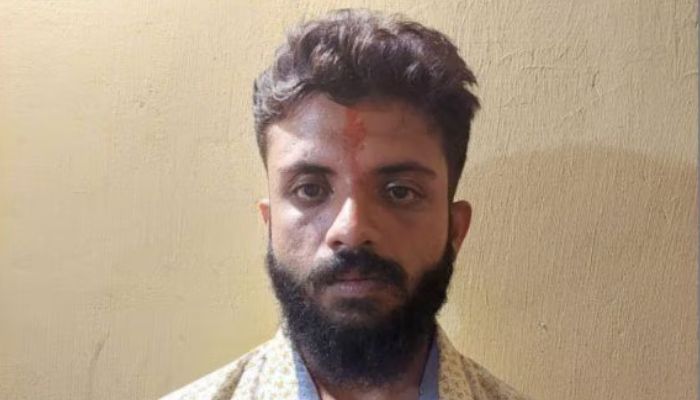
Delhi Police have successfully recovered a 15-year-old minor girl, who had been kidnapped and was found to be two months pregnant, from Madhya Pradesh.

The accused, identified as Anees Khan, was arrested following an intense investigation that included tracking leads through social media platforms like Instagram.

The ordeal began on 18th February, when a complaint was lodged at PS Geeta Colony regarding the kidnapping and disappearance of a 15-year-old girl. Delhi Police immediately registered a case under Section 137(2) BNS and began a search for the missing minor. Despite extensive efforts by the local police team, there was no initial breakthrough in locating the girl.

As the investigation progressed, Delhi Police officers spoke to the victim’s family and friends, while also leveraging secret sources for information. During their inquiry, the team discovered that the missing girl had been in contact with one Anees Khan, a local patty vendor. Family members of Khan were also contacted, and it was revealed that he had also gone missing on the same day as the girl.

Further probing revealed that Anees Khan, a married man with one child, had fled with the 15-year-old girl while his pregnant wife, was left behind. Despite conducting a raid in the village of Allahpur, District Joura, Morena, Madhya Pradesh, the police could not locate either the minor or the accused. Khan’s mobile phone, which had been switched off since the day of the disappearance, remained untraceable.

In March 2025, new information emerged from the family, leading the police to three Instagram accounts linked to the case. After careful analysis, one account was found to have been created on February 23, 2025, using a mobile number that had been switched off. Through further digital investigation, it was revealed that this mobile number was connected to a mobile hotspot linked to the name Ramlakhan Singh from Morena, MP. Singh had unknowingly shared his hotspot with an unidentified individual while traveling from MP to Gujarat. The police also discovered that another mobile number associated with the case had been used to access the Instagram account from Gwalior, MP.

With this lead, Delhi Police intensified their search and on May 3, 2025, a raid was conducted in Malghada Chowk, PS Hazari Bagh, Gwalior. The missing girl was safely recovered, and the accused, Anees Khan, was apprehended.

During questioning, it was found that the girl was two months pregnant, and the accused had kept her isolated, not allowing her to communicate with anyone. The minor girl’s mobile phone had also been deprived of a SIM card after she left her home. The girl was subsequently reunited with her family after all necessary legal formalities were completed.

Delhi Police’s swift action and diligent investigation highlight the crucial role of technology and teamwork in solving complex cases and ensuring the safe recovery of victims.

(This news report is published from a syndicated feed. Except for the headline, the content has not been written or edited by OpIndia staff)

Deactivation of mobile signals, anti-drone systems, signal jammers, metal detectors at entrances: Vatican gears up to ensure ‘absolute secrecy’ during Conclave to elect next Pope

0

Ahead of the secretive conclave to elect the next pope, all mobile phone signals will be deactivated in the Vatican on Wednesday, CNN reported, citing Italian state media.

The Vatican also plans to use signal jammers around the Sistine Chapel to stop electronic surveillance or communication outside the conclave, where 133 cardinals vote to decide who will be succeed Pope Francis, CNN reported, citing Italian news agency ANSA.

Phone signals will be deactivated at 3 pm (local time) on Wednesday, an hour and a half before the cardinals are scheduled to proceed to the Sistine Chapel to start the papal conclave, CNN reported, citing Italian state broadcaster RAI reported on Monday.

On Monday, the Vatican announced that all 133 cardinals who will vote to decide the successor of Francis have reached Rome. For centuries the Catholic Church leader has been selected in a highly secretive gathering known as “conclave”, meaning “with key” in Latin, a nod to how cardinals get locked in until a new pope is chosen. Cardinals have been given the task to choose the next pope after an elaborate process with roots in the Middle Ages.

The cardinals will have to give up their mobile phones and electronic devices on Tuesday and they will receive their devices back after the conclave ends, a Vatican spokesman said.

The cardinals will remain in the Sistine Chapel and cut off from the outside world from Wednesday. All of the cardinals who will participate in the conclave will remain in complete isolation and will take a vow to observe “absolute and perpetual secrecy.”

The signal deactivation will not impact St Peter’s Square, where the people often gather, according to the spokesman. However, security has been increased throughout St Peter’s Square, with checkpoints at the entrances and the deployment of metal detectors and anti-drone systems at the public space, CNN reported citing news outlet Corriere della Sera.

During the conclave, the Sistine Chapel is placed under total lockdown to have complete secrecy. In 2013, signal blockers were installed to stop any calls, texts, or internet access that elected Francis. In addition, the electricians, plumbers and elevator operators who will keep the Vatican running during the conclave will commit themselves to secrecy.

The statement from the Vatican City State Governorate said, “They all take an oath and will be in full-time service, staying overnight in the Vatican, without having contact with their families.”

The funeral mass of Pope Francis, who passed away on April 21, concluded at St. Peter’s Square on April 26, with the bells of St Peter’s Basilica tolling to signal the end of the 2 hours and 10 minutes long service.

Large crowds lined up along Rome’s streets to pay their respects to Pope Francis as the white popemobile carrying his coffin made its way across the Vatican flanked by motorbikes on its way to the pope’s final resting place, a place of his choosing.

Pope Francis’ coffin was transported across the River Tiber to the fifth-century church in Rome, the Basilica di Santa Maria Maggiore, where bells tolled ahead of the arrival of the pontiff’s body. The Basilica of Saint Mary Major in was a place that the pope visited frequently throughout his 12-year papacy. 

(This news report is published from a syndicated feed. Except for the headline, the content has not been written or edited by OpIndia staff)

Murshidabad anti-Hindu riots: Victims narrate how Muslim mobs spat and urinated in front of temples, vandalised idols, role played by TMC councillors and more

The Muslim-dominated Murshidabad district has witnessed large-scale incidents of violence, vandalism, arson and targeted attacks against the Hindu community on 11th April in the garb of protests against the newly enacted Waqf Amendment Act.

OpIndia has reported in detail how Hindus were selectively targeted, including their homes, shops and temples. The carnage began soon after Jumma Namaz on 11th April in the name of ‘protests’ against the new Waqf law and continued till 12th April.

The situation became so grim that 1000s of Hindus had to flee their homes in Murshidabad to the nearby Malda district via boats. 

On 22nd April, a team of journalists from Insight visited the violence-torn Murshidabad and met Hindu families who lost everything in the mayhem unleashed by Muslim mobs.

The victims narrated chilling testimonials of murder, attacks on Hindu temples and homes and the role played by mosques in supervising the violence.

They also highlighted the inaction of the local police, the complicity of TMC councillors in the violence and how party affiliation did not matter to the frenzied Muslim mobs.

All in unison pointed out that their Hindu identity was the reason for being attacked by the extremists in the 30-minute-long ground report published by Insight on its YouTube channel on 1st May.

Parul Das narrates how her husband and son were killed by a Muslim mob, police showed up after 4 hours

The Insight team met the family of Harogobindo Das, who was hacked to death alongside his son Chandan Das by a Muslim mob on 11th April.

A total of 4 extremists, namely Kalu Nadar, Dildar Nadar, Inzmam Ul Haque and Ziaul Sheikh, were arrested in connection with the murder of the father-son duo.

Parul Das, the widow of Harogobindo Das, informed, “First, they broke that shop. They looted everything and then went away. Later, they came back and destroyed our kitchen. They then pelted stones, threw glasses and bottles on our rooftop. They pelted stones and bricks from the other side of the fence. When they came for the 3rd time, they were armed with spades, shovels and other sharp weapons.”

She narrated how her husband and son were hacked to death by a Muslim mob. “The father and the son were standing there. They dragged the father-son duo out. The father was hacked near the drain. My son was killed just underneath that tree.”

On being asked whether she received any help from the police, Parul Das stated, “No, nothing. The murders would not have happened during the third time (if cops were there). They (the police) came 4 hours later.”

The helpless woman informed that she was able to identify the perpetrators from the visuals highlighted on TV. “We are in a state of terror. We want BSF camp,” she said.

Parul Das narrated that she cannot stay at her own house anymore since it has no doors. On being asked why her husband and son were killed, the woman stated, “How do I say? We did not have enmity with anyone.”

It was recently that Parul Das and her daughter-in-law Pinki Das are being harassed by Trinamool Congress goons and the West Bengal police.

Hindu victim exposes the role played by TMC councillor in Murshidabad violence

A Hindu man named Dipen Mondal highlighted the complicity of the TMC councillor in the violence perpetrated by the Muslim mob. “The councillor was present. If he wanted, he could have stopped the carnage,” the Hindu man informed the Insight team.

“Amirul (TMC MLA from Samserganj) had come. He knew everything. After he came, there was an attack from this side. Those who were there with him also took part in the vandalism and loot,” he added.

Mondal added, “If the councillor did not know, how did the villagers come here and carry out destruction? There is Mehboob Alam. How are people from his village coming and attacking our village? If he had told them no, they wouldn’t have come.”

He narrated how he and his family had to flee his village and settle in Malda’s Par Lalpur for 7-9 days. “This is happening to your own people in West Bengal, who are forced to go from one place to another. Others could come. But she (Mamata) did not get time?” the Hindu man asked.

He informed that the police chased them away from Malda and sent them back to Murshidabad. “They forcibly sent us back…Police told us that they will file cases. They told us to go away. They told us we cannot keep you here. They gave many excuses to remove us from that place,” Mondol emphasised.

He also highlighted how Muslims broke into a temple and attempted to break into a nearby shop.

A Hindu woman named Banawasi Mandal lamented, “If we have a BSF camp here, it will make our lives easier. We want compensation for the damage caused. There is nothing at home. No rice, dal and anything to wear. Everything has been turned to ashes.”

Muslims spat and urinated in front of temple, forced brother-in-law to chant ‘Allah’ and ‘Bismillah’: Victim Jharna Mondal

A Hindu woman named Jharna Mondal narrated how Muslims attacked her brother-in-law and vandalised a temple on Saturday (12th April). She added that the mob also spat and urinated in front of the temple.

“They spat and urinated in front of the temple…At least 2000 to 5000 people came and vandalised this temple…They broke this temple on Saturday,” she was heard saying.

Mondal informed the Insight team that her brother-in-law (Devar) was assaulted and forced to chant ‘Allah’ and Bismillah.

“6 people held my brother-in-law (Devar) and assaulted him brutally at that place. They forced him to say ‘Allah’ and ‘Bismillah’. All of them told my brother-in-law to leave the village,” she emphasised.

Mondal said that neither the police nor the village Pradhan came to their rescue.

“There was no police. There were 5 personnel who ran away out of fear…They (Muslims) told the police to flee or else they would kill them. No one helped us—neither the Pradhan nor the police. I fell on their feet, begged them to come and protect us, but they did not come. Our entire village pleaded with them and held their feet,” she stated.

Mondal further emphasised that the Border Security Force (BSF) saved them, and the villagers would have been dead without them.

“The BSF has rescued us. If BSF had not come, then we would not have been alive. We would have been dead. We want BSF camp. We want protection. We do not want Mamata’s police,” she concluded.

Victim Samar Das narrates how mosques incited Muslim mob, Hindus being persecuted despite being TMC members

A Hindu man from Jafrabad, Samar Das, also told the Insight team how Muslim mobs laid siege to his house.

“A mob entered my house, pelted stones and bricks. I fell after being hit on the head. They then entered my house, broke my almirah and took away 2 bhori gold and ₹20000 cash. I had withdrawn the money from Bandhan Bank for my eye surgery. They put a knife to my wife’s throat and asked her to hand over valuables and earrings,” he emphasised.

Das added, “They have issued threats to set my house on fire. They had hurled bombs at my house. My two brothers have been injured. My daughter also got hurt in the bomb attack. We are safer for the time being due to the presence of the BSF.”

He informed that the police did not show up for 4 hours despite repeated calls. The local Trinamool Congress MLA was also nowhere to be found.

“You can see these burnt houses. It wouldn’t have burnt this way if there had been timely action by TMC netas. I am also from the Trinamool Congress, and yet my house was attacked,” the Hindu man stated that party affiliation

“Only because we are Hindus. Nothing happened to the nearby Muslim houses. They are safe. They only carried out these attacks. They did it in a pre-planned manner,” he was heard saying.

Samar Das made an interesting revelation about how a mosque was used to direct Muslims to attack the Hindu community in Jafrabad.

“It was announced from the microphone of the Saritala masjid on Saturday night. That (Muslims) must go out on the field with weapons after Fajr Namaz,” he emphasised. The Hindu man pointed out how life had been difficult in the Muslim-majority area.

“We are under attack in our homeland of West Bengal, just like Hindus are under attack in Bangladesh. We are stopped from doing Puja. Our temples are being set on fire. Idols of deities are vandalised and set on fire. What is our crime? This is an attack on Sanatan Dharma,” he stated.

Samar Das slammed Mamata Banerjee, her party leaders Firhad Hakim and Kunal Ghosh for being indifferent to the plight of the Hindu community of Jafrabad.

“Muslims want to rule here. They want to uproot Hindus from Jafrabad. This is their firm resolve. And despite this, nothing is going through the ears of our State’s Chief Minister. This is even though Hindus are under attack here. If a dog belonging to a Muslim dies in Gujarat, our Mamata govt makes it an issue in Bengal,” he was heard saying.

Das added, “It has been 10-11 days (since the attack). Children did not have proper meals. They are unable to sleep. They are in a state of terror that something might happen to them. The education of the school-going children has been stopped.”

He made heartfelt appeals to the West Bengal government to ensure the rehabilitation and resettlement of the Hindus, who were subjected to violence by frenzied Muslim mobs. Samar Das also requested help from Union Home Minister Amit Shah and Prime Minister Narendra Modi.

Ties with controversial NGO, objectionable tweets, leftist ideology: As IIT Gandhinagar department faces scrutiny, actions of its faculty also raise eyebrows

The controversy involving the Indian Institute of Technology (IIT) in Gandhinagar has expanded from thesis projects to cover programs, sessions, and faculty activities conducted at the institution. The recent information that emerged online, prompting significant questions to which the institute is expected to provide answers, but it continues to assert that the controversy is unwarranted.

At the same time, professors from the Humanities and Social Sciences (HSS) department at IIT Gandhinagar have come under scrutiny on the social media. An email sent by Professor Nishant Choksi has circulated widely, wherein he threatened students with disciplinary action, and mentions the intention to impose penalties for revealing thesis projects and student information.

OpIndia reached out to Professor Choksi in an attempt to verify this email, but there was no response. Additionally, it has been discovered that he is affiliated with several Non-Governmental Organization (NGOs). A link has been found between NGO Adilok that claims to aid displaced tribal groups in the Narmada area and the Professor. On 12th January, the HSS department of IIT Gandhinagar announced that Nishant Choksi, accompanied by research associate Kalpesh Rathwa, launched books authored in Gujarati at Adilok. The focus of the publication is on the cultural and linguistic transformations experienced by the displaced communities of the Narmada Valley.

Image via OpIndia Gujarati

The board of trustees of the NGO merits attention. The chairman is Father Fernand Durai with Father Vinayak Jadav serving as vice-chairman, Nilesh McEwan as secretary and Antony Pichai as trustees, among others.

Image via OpIndia Gujarati

Concerns are emerging on social media regarding the collaboration of IIT professors with an NGO known for its religious propaganda.

Moreover, another professor named Ashish Xaxa, within the same department has made headlines. He was active on X, but after the controversy broke out, his account is nowhere to be found. His posts also raised concerns among many users. As a result, the account was first locked and then deactivated. Currently, it is not accessible. Ashish Xaxa shared a post featuring two books, “Colonising Kashmir” and “Colonising Palestine” and encouraged people to read them. This sparked a discussion about drawing comparisons between the two regions. “If not Rahul Gandhi then who,” he remarked in another post.

Image via OpIndia Gujarati

He reposted a comment which ridiculed Finance Minister Nirmala Sitharaman. A netizen has accused the professor of employing offensive language towards her before subsequently blocking her.

An inquiry into his background revealed that several of his research papers have been disseminated across different platforms. The most recent publication pertains to the year 2025. The article, entitled “Covid-19 and the Question of Indigenous Migrants in Urban India,” was featured in “Governing the Crisis: Narratives of Covid-19 in India,” which was published in London.

This article focuses on the Corona epidemic and its impact on India. During that period, the circumstances were exceptionally challenging not only for India but globally, during a once in a century crisis. Given India’s vast population, this challenge was significant, yet the nation confronted it amidst considerable difficulties. However, readers of this publication might perceive that the country has utterly failed and that the populace has despaired.

Labeling Prime Minister Narendra Modi as the “leader of the Hindu right-wing party” in the piece signifies the ideological perspective that had been embraced. Ashish Xaxa addressed the issues faced by workers in other states resulting from the sudden onset of the epidemic and the subsequent lockdown. Initially, it was claimed that the high mortality rate was due to a deficiency in medical facilities, poverty, water shortages and an insufficient number of doctors. However, the states under the I.N.D.I. Alliance, including Jharkhand and Chhattisgarh, received great praise in the article.

Image via OpIndia Gujarati

A narrative was build on the actions taken by Chief Minister Hemant Soren for these workers, claiming his complete commitment to tackle the problem without diverting his attention. However, a realistic assessment shows that all states were actively working during that time, focusing on the pandemic and putting aside other concerns. Limiting the focus to only one or two states produces a storyline that seems trivial upon initial examination, but one can see the propaganda behind it. It had been alleged that Hemant Soren personally looked into these cases. (What were other chief ministers doing)?

“His activism, decision-making ability and clarity created a kind of confidence among the people of Jharkhand. His ability to listen to the person in front is his specialty as a leader,” Ashish Xaxa wrote about Hemant Soren. The initiatives of the Bhupesh Baghel administration in Chhattisgarh were also mentioned. He served as the Chief Minister of the state during the pandemic.

This is merely one instance, yet these professors who subscribe to leftist beliefs have produced a variety of publications. After engaging with their work extensively, one can readily identify their ideological stance.

Read the report in Gujarati here.

Punjab’s AAP govt triggers domestic water war as Punjab Police takes over Nangal Dam, BBMB calls it unconstitutional and illegal

The ongoing water war between AAP-ruled Punjab and the BJP-ruled Haryana further escalated after the Punjab government claimed before the Punjab and Haryana High Court that Haryana had overdrawn its quota and was now seeking water for irrigation under the pretext of drinking needs.

The Aam Aadmi Party made this claim before the court on Monday (5th May) during the hearing on a plea filed by the Bhakra Beas Management Board (BBMB). This plea sought the court’s intervention against the Punjab government’s obstruction of the release of water to Haryana.

In its plea, the Bhakra Beas Management Board argued that on 1st May, Punjab deployed police personnel to take control of the Nangal Dam and Lohand Control Room Water Regulation Offices. This resulted in the obstruction of the release of 8,500 cusecs of water to Haryana as decided in the board meetings. BBMB’s lawyer Rajesh Garg called Punjab’s action “unconstitutional and illegal”. The senior counsel further alleged that the AAP government’s actions infringed on BBMB’s statutory authority under the Punjab Reorganisation Act, 1966.

The BBMB’s legal representative added that upon confrontation over the takeover of the Nangal Dam and Lohand Control Room Water Regulation Offices, the Punjab government sent a letter to BBMB on 5th May saying that police personnel have been deployed in view of escalating tensions with Pakistan after the Pahalgam attack.

As per the BBMB, in view of the shortage of drinking water in Haryana, Rajasthan and Delhi, a Technical Committee meeting was held on 23rd April to decide on increasing water allocation. This involved reallocation of 500 cusecs for Rajasthan and 496 cusecs for Delhi. However, Punjab refused to comply beyond its voluntary offer of 4,000 cusecs. The AAP government in Punjab cited Haryana’s alleged overuse and mismanagement of its water share.

The issue emerged after the Bhakra Beas Management Board decided to release 8,500 cusecs of water to Haryana from the Bhakra Dam. This triggered protests by AAP and a war of words between the two state governments.

AAP argues that Haryana has already received its share of water from the dam, and Punjab should get all the water. Notably, Punjab, Haryana, Rajasthan, Himachal Pradesh, and Delhi are partnering states that meet their water requirements from Bhakra and Pong dams managed by the BBMB. The board decides the annual quota of water supply to the three states for a cycle from May 21 to May 21 every year. Water purification systemsPakistan travel packages.

As reported earlier, after the meeting, Haryana CM Nayab Singh Saini called Bhagwant Singh Mann, saying Haryana needs additional water. But Mann refused, saying Punjab is already facing a water crisis, and it did not have a drop to spare. Soon after, the Punjab government decided to escalate the matter and refused to release water to Haryana from the dam. The government also ordered increased security at the Nangal dam.

In a significant comment, CM Saini said that if the Punjab government keeps capping water released from the dam at 4,000 cusec, excess water will overflow during monsoon and reach Pakistan. He said that the Bhakra dam reservoir has to be emptied before monsoon so that excess water accumulated during monsoon can be stored in the reservoir.

He said, “It is necessary to empty the Bhakra Dam water reservoir before June so that rainwater can be stored during the monsoon. If there is no space left in the water reservoir, excess water will go to Pakistan via Hari-ke-Pattan, which is neither in the interest of Punjab nor the nation.” 

Notably, if Saini’s warning becomes true, it will nullify the impact of the Government of India stopping the flow of water to Pakistan. Because the flow can be stopped only by dams. But if the water overflows the dams because of filled-up reservoirs, then the water can’t be stopped from flowing downstream and reaching Pakistan.

Meanwhile, Punjab CM Bhagwant Mann has sharpened his attacks on BBMB. Calling the Board a ‘white elephant’ while addressing the state assembly, CM Mann said, “The Bhakra Beas Management Board has become a white elephant, the entire expense of which is borne by the Punjab Government. We strongly oppose this. It should be restructured. On the basis of humanity, we are already providing Haryana with an additional 4000 cusecs of water. But instead of thanking us for this, they called an overnight BBMB meeting, changed the chairman, and demanded an additional 8500 cusecs of water.”

Pakistan faces embarrassment at UN Security Council session, faces tough questions as nobody buys their ‘false-flag’ allegation on Pahalgam terror attack

0

The United Nations Security Council members raised tough questions for Pakistan at its informal closed door session on Monday, sources in New York told ANI. The 15-nation Security Council held deliberations on Monday afternoon amid growing tensions between India and Pakistan.

There was no statement published by the UN body following the “closed consultations” that was requested by Pakistan, a non-permanent member of the Council whose presidency for the month of May is currently held by Greece.

Sources told ANI that UN Security Council members raised tough questions for Pakistan at its informal closed door session. The members refused to accept the “false flag” narrative planted by the Pakistani side and asked whether the Lashkar-e-Taiba, a proscribed terror organisation with deep ties to Pakistan, was likely to be involved in the terror attack. 

Sources said, there was broad condemnation of the terrorist attack and recognition of the need for accountability. Some members specifically brought up targeting of tourists on the basis of their religious faith. 

Many members expressed concern that Pakistan’s missile tests and nuclear rhetoric were escalatory factors. Pakistan on Monday conducted a training launch of a Fatah Series surface-to-surface missile with a range of 120 kilometres as part of the ongoing “Exercises Indus”,

Pakistan’s efforts to internationalize the situation also failed. They were advised to sort out the issues bilaterally with India.

Meanwhile, Dawn News has reported that water flows in the Chenab, recorded at the Marala head works, decreased from up to 35,000 cusecs on Sunday to about 3,100 cusecs on Monday morning. Chenab is very important for Pakistan’s irrigation system, as its canals, including the UCC and BRB canals, irrigate a vast tract of agricultural land in Punjab.

India had held the Indus Water treaty in abeyance following the Pahalgam attack and the shortage of water is seen as a likely fallout of that. 

In another setback for Pakistan, Lufthansa Airlines on Monday suspended operations via the Pakistani airspace, according to an official release of the German aviation group.

Earlier, India closed its airspace to all aircraft registered in Pakistan and those operated by Pakistani airlines, according to the Ministry of Civil Aviation (MoCA). India issued a Notice to Airmen (NOTAM) confirming the closure of its airspace to all Pakistani-registered, operated, or leased aircraft, including military flights, from April 30 to May 23 (estimated duration). 

(This news report is published from a syndicated feed. Except for the headline, the content has not been written or edited by OpIndia staff)