Wednesday, April 1, 2026
Home Blog Page 3677

New York based band ‘Brass Against’ issues apology after lead singer urinated on a fan’s face during performance

A New York based band Brass Against has been forced to apologise after its lead singer urinated on the face of a fan at the Welcome to Rockville festival in Florida on the 11th of November. The fan appeared on board with the urine stunt as he lay on the floor with a can strapped on his forehead.

“Get my man with the can on his head ready, ’cause we’re going to bring him onstage and I’ma piss in this motherfucker’s mouth,” Brass Against lead singer Sophia Urista declared while performing a cover of Rage Against The Machine. “I gotta pee… And I can’t make it to the bathroom. So we might as well make a show out of it.”

[Watch the following video at your own discretion]

In an apology on social media, the band said that lead singer Urista got ‘carried away’ and it wasn’t something their fans would see again at their shows. The band also said that what happened was “profoundly unexpected”.

While many people were mighty displeased with the urine stunt, there were others who were more sympathetic. One user said, “Yeah … the guy literally wanted it to happen. I’m not supporting it in any way but I don’t think [Urista] should be entirely to blame here.”

Most, however, saw the funny side of it.

While 2021 has been a really wild year, it is pretty safe to assume people did not expect to see the lead singer of a band urinating on a fan’s face mid show.

Bangladeshi woman forged identity as Hindu to live-in with Hindu man in Ahmedabad, made Indian passport, Aadhar and PAN cards with fake name

0

The Special Operation Group of Ahmedabad rural police in Gujarat has nabbed a Bangladeshi woman named Sirina Akhtar Hossain (33) who was impersonating a Hindu woman Sonu Hitesh Joshi. She was living in the city since 2017 in a live-in relationship with a man.

The woman was living at Sanathal locality under Changodar police station of Ahmedabad with Hitesh Joshi, a realty broker whom she had befriended through Facebook. She, later on, came to India, forged documents to conceal her identity and settled here. She had also a daughter with this man in 2018.

The matter was exposed following a family bickering after Hitesh died in a fatal accident in Kheda about 20 days back. The parents of Hitesh, who live in Naroda, accused that this Bangladeshi Muslim woman brought misfortune to Hitesh and the family. Somehow, police came to know about her through informers.

On November 11, Ahmedabad police searched her house and found two passports – one of Bangladesh and another of India. The cops also found two Aadhaar and two PAN cards, with Ahmedabad and Hyderabad addresses.

She was booked and arrested under various sections of IPC, the Foreigners Act and the Passports Act. A local court sent her to five days police remand. But she said that violated the laws of India only to stay with her love and now she doesn’t want to go back to Bangladesh.

She told the police that after she came in touch with Hitesh through Facebook, they developed a love relationship which got matured subsequently.

In mid-2017, she got 90 days tourist visa and landed in Hyderabad. Both decided to live together in Ahmedabad. She returned to Bangladesh to obtain another tourist visa and by the end of 2017, she came back to India.

During this second visit, she forged an Aadhaar card for her in Hyderabad and then secured a fake PAN card bearing the name of Gutta Sonu Biswas. Later, when she and Hitesh started living as a live-in couple in Sanathal, she got a new Aadhaar card and a PAN card with another name, Sonu Hitesh Joshi.

Pasport, Aadhar cards, PAN cards forged by Bangladeshi woman Sirina Akhtar Hossain

Sirina claims she did all for her love but it raised serious security concerns

Police are investigating how she managed the Aadhar card. Her Aadhar details are available in the database of ‘UIDAI’ (Unique Identification Authority of India). Her two Aadhar cards having addresses of Hyderabad and Ahmedabad respectively have the same number.

This raises some serious security concerns since whenever foreign nationals visit India their biometric data thumb impression and the iris scan is done at the airport. A similar process is done in issuing an Aadhar card. Police are investigating that how thrice she escaped undetected while securing Aadhar cards and an Indian passport.

Ahmedabad police have contacted the regional passport office (RPO) and the UIDAI to get details regarding documents she had submitted to get the passport and Aadhar card. Besides, the city police have also approached the private hospital in Bhopal where she had delivered her daughter. Police will verify documents she had submitted to the hospital.

From Kashmir issue to China to corruption: Nehruvian Blunders that continue to hurt India till this day

132 years since his birth, Nehru still remains a pertinent, contentious, and frequently mentioned figure in contemporary Indian politics.

The following are some of Nehru’s failures as Prime Minister, the consequences of which India suffers to this very day.

Created the Kashmir issue

After the partition, Pakistan launched a tribal militia attack to annex Kashmir. While the Indian army was on track to remove the Pakistani
invaders out of the entire territory of Kashmir, Nehru, ignoring all local advice, approached the United Nations. He thus managed to snatch defeat from the jaws of victory. Pakistan continues to claim that the very fact that Nehru had made a reference to the UN indicates that Kashmir is a disputed territory. The matter remains unresolved and is the cause of considerable bloodshed to this day.

Rejected a permanent seat at the UN

Nehru rejected the offers from the US and the Soviet Union to replace China at the UN Security Council to avoid conflict with China. Having a permanent UN seat would have elevated India’s global standing. The fact that it was offered without any compromise but rejected makes this a catastrophic blunder. Nehru’s goal of cordial relations with China remains unachieved to this day.

Presided over the disastrous Sino-Indian war

Classified documents reveal that Nehru’s friendship with China received no reciprocity. China referred to Nehru as a “lackey” of the British and the Americans and used disparaging language against India at the UN. Nehru misread China’s intentions and didn’t expect Mao to invade India in 1962.

Worst, he also allowed his erroneous assumption to affect India’s defense preparedness violating a simple life principle of hoping for the best but preparing for the worst. Over 3,250 Indian soldiers were killed. India lost about 43,000 square kilometers of land, captured by China in Aksai Chin. China continues to be a serious problem for India.

Failure to encourage, promote and implement universal primary education

While institutes such as the IIT and IIM were founded during his tenure, Nehru did not make universal literacy and mass education a priority. This is astounding considering there was widespread illiteracy across the nation at that time. The lack of education often is an impediment to upward mobility both economically and socially. His biographer Judith Brown calls this his biggest failure.

Favoured Socialism instead of free-market Capitalism.

Traditionally, India was always a free-market economy, built on trade and private enterprise.

However, Nehru famously said that ‘profit is a dirty word’. Nehru followed the Soviet model of economic policies where the state ran businesses such as industries to hotels. Taxes were high to ensure that regular citizens had minimal wealth and were dependent on the state. The spirit of entrepreneurship was discouraged.

These policies widened the income inequality and facilitated crony capitalism. They were also responsible for poisoning the minds of regular Indians to think entrepreneurs were immoral. It also caused the vilification of wealth and success. Despite economic liberalization, this mindset that prevails to this day.

Led the ill-conceived Non-Aligned Movement

When the Cold War was at its peak, the US actively sought allies in Asia. They reached out to India who rejected the idea. Nehru instead developed an impractical policy of neutrality towards the warring superpowers of the US and USSR. By 1961, Nehru helped in the establishment of the Non-Aligned Movement.

The US then allied with Pakistan, an unholy alliance that remains strong to this day. India then had no choice but to ally with the USSR, defeating the purpose of the Non Aligned movement and hurting Indo-US relations
for decades.

Rejected Nepal’s offer to join India

Nehru rejected Nepal’s King Bikram Shah’s offer of making Nepal a province of India. Nehru’s ground for rejection was that Nepal was an
independent nation and must remain so.

Rejected Balochistan’s offer to join India

Nehru also rejected an offer from the “King” or Khan of Kalat, Mir Ahmadyar Khan for Balochistan to accede to India. Once again Nehru did not comprehend the strategic importance of Balochistan which continues to face severe human rights violations under Pakistan.

Refusal To Enter Nuclear Deal

Nehru rejected a US offer of helping India with the development of a nuclear device in 1964 perhaps because he was a proponent of
non-violence. If Nehru had accepted the offer, India would have been the first to test a nuclear device in Asia. It would have deterred China from launching its war of 1962 and even imparted a note of caution to Pakistan’s plans for war in 1965.

Curbed journalistic freedom and freedom of expression

Despite being perceived as a liberal democrat, Nehru did not always stick to those principles. Back in 1950, the Indian constitution guaranteed its citizens “the right to freedom of speech and expression”. Nehru faced intense criticism from the RSS-backed newspaper the Organizer for proposing confidence-building measures with Pakistan when Hindus were being massacred. The article stated that “the villainy of Pakistan is matched only by our idiocy”.

An indignant and infuriated Nehru led the first amendment to the Constitution with an intent to clamp down voices such as Organizer who
were critical of the government. He also ended up restricting freedom of expression, the amendment was never undone and was misused by successive governments.

Toppled democratically elected Kerala government

The INC in alliance with various reactionary forces orchestrated the ‘Vimochana Samaram’ (liberation struggle) against the first elected state government in Kerala led by EMS Namboodiripad that came to power in 1957.

In time, Kerala was rocked by mass protests, which were by no means organic, calling for the resignation of the communist ministry. When the protest reached its peak, the Centre dismissed the Kerala government in 1959. It is alleged that then US intelligence that was staunchly anti-communist at that time had actively contributed to the Congress party’s strategy to destabilise the Kerala government.

Despite claims of being a liberal democrat, Nehru saw no folly in colluding with foreign powers to that interfere in India’s democracy.

Ignored Corruption

Nehru often turned a blind eye to corruption when the culprits were his allies. Krishna Menon, known to be close to Nehru, was involved in the infamous Jeep Scam in 1948. A few years later there was the LIC-Mundhra Scam which was raised by Nehru’s son-in-law and Congress MP Feroze Gandhi in parliament. Finally, there was the Cycle Import Scam.

Indifference towards Goa

After India attained independence in 1947, Nehru requested Portugal to peacefully part with the state of Goa, Portugal obviously refused. Subsequently, as he always did, Nehru approached the UN with the same request, but the Portuguese refused again.

Finally, in 1961, the Indian army seized control of Goa after the Portuguese fired at Indian fishing boats, killing one fisherman. After 36 hours of air, sea, and land strikes the Portuguese surrendered Goa back to India. This action should have been taken much before. Nehru’s dithering hence caused Goans to wait for 14 years to attain freedom.

Clung to Power for too long

Nehru’s biographer Judith Brown said he should have quit power during the 1950s after being PM for a decade. But like many politicians who do not realize that they have passed their prime, Nehru continued for far too long, much to the detriment of the nation.

Perhaps a sharper younger leader would have been able to deal with China more assertively and the outcome of the Sino-India war would have been different.

In Conclusion

Nehru unwisely rejected myriad obvious offers such as a permanent UN Seat, Nuke Assistance from the US, and offers of Nepal and Baluchistan to join India. His failure to lead educational and economic empowerment served as impediments to upward mobility for regular Indians.

His tendency to dither and refer to the UN continues to cost Kashmir dearly and delayed Goan independence. He ignored corruption. He was also staunchly undemocratic when he suffered electoral rejection or criticism.

The nation continues to suffer as a result of his myriad blunders.

Amravati in Maharashtra is burning as Muslim mobs continue rioting over fake news of mosque attack in Tripura: Watch visuals

Amravati in Maharashtra has been burning since November 12 (Friday) due to back-to-back stone-pelting incidents and damage to public and private property. Sandip Patil, additional police commissioner, has imposed a four-day curfew in the city under sections 144(1), (2), (3) of the CrPc to avoid any further incidents. As per the orders, only people with medical emergencies can come out of the house. Additionally, not more than five people can gather at a place.

The series of incidents started on Friday during rallies called by the Muslim organisations protesting against an alleged incident of burning down a mosque in Tripura. Such rallies took place in Nanded, Malegaon, Washim and Yayatmal other than Amravati. Notably, Tripura Police have clarified that the alleged incident that led to the rallies in Maharashtra had never occurred in Tripura. Also, these rallies took place without permission from the Police.

Statement by Home Ministry

Union Home Ministry issued a statement regarding the violence in which the ministry urged people not to get misguided by the fake reports regarding Tripura. It further urged people to maintain peace at all costs.

The press release that was issued on Saturday says, “There have been news reports that have been circulating that a mosque in Kakraban area of Gomati district in Tripura has been damaged and vandalised. These news reports are fake and are a complete misrepresentation of facts. The mosque in the Dargabazar area of Kakraban has not been damaged, and the Tripura Police in the Gomati district is working to maintain peace and tranquillity.

There has been no reported case of damage to the structure of any Masjid in Tripura in the recent past. There is no report of simple or grievous injury or rape or death of any person in these incidents, as alleged in some social media posts.

People should maintain calm and should not be misguided by such fake reports. For instance, in Maharashtra, there have been reports of violence and unsavoury statements that are aimed at disturbing peace and harmony based on fake news regarding Tripura. This is very concerning, and it is urged that peace is maintained at all costs.”

On Friday, stone-pelting was reported during rallies taken out by Muslim organisations to protest against incidents in Tripura at Amravati, Nanded, Malegaon, Washim and Yavatmal. Police have so far arrested 20 people and detained four others by registering 20 FIRs under various charges, including rioting, in connection with Friday’s incidents.

What happened in Amravati on Friday?

On Friday, over 8,000 people had gathered outside the office of the district collector. The aim was to submit a memorandum demanding action against the alleged atrocities against the Muslims in Tripura. However, when the people were leaving, incidents of violence took place at several locations between Cotton Market and Chitra Chowk.

One of the most disturbing videos showed Muslim children being part of the propaganda. In the video shared by a user, MVAgovt, a small kid with a skull cap holding a poster was seen asking a shopkeeper if he was going to close shop on Friday. The poster read, “Can you close your shop and business for the respect of Rasoolullah?”

Furthermore, several videos and photos emerged on social media showing how the Muslim mob pelted stones targeting specifically shops owned by Hindus in the city. In one of the videos, a Muslim mob was heard raising slogans of ‘Allah Hu Akbar’ outside a shop named Mathura Bhojanalay owned by a Hindu. Twitter user Karan Sharma shared the video that had two parts.

In the first part, the mob was seen raising slogans. In the second part, visuals of a Kiryana shop were visible. The owner of the shop was heard saying that around 20 rioters had entered the shop. Another man in the video claimed that the mob assaulted children as well.

Another video shared by the same user showed a mob moving in a market, allegedly closing down and vandalising shops owned by Hindus. The background voice in the video said that the shop they were allegedly attacking was owned by one Gupta. The Police were nowhere seen in the video.

Some photographs were also shared in which damaged vehicles and injured Hindus were seen.

A video was shared by one Harshraj Batham that showed a few men walking with swords. He wrote, “This is how Muslim mob is going for attacking Hindus in Maharashtra’s Amravati.”

The other videos showed similar visuals.

Devendra Fadnavis, opposition leader, called it unfortunate and wrote that rallies in Maharashtra were organised for an incident that never occurred in Tripura. He said, “The Tripura government and local Police have clarified that no religious place of a minority community was burned down. They have issued pictures of the same as well. I appeal to both the communities to observe restraint.” He also urged political leaders to restrain from giving any inflammatory statements.

Mamata Banerjee appoints abusive MP Mahua Moitra as TMC’s Goa in-charge: Details

West Bengal Chief Minister Mamata Banerjee has appointed Krishnanagar MP Mahua Moitra as the state in-charge of the AITC (All India Trinamool Congress) Goa unit with immediate effect. MP Mahua Moitra, who is known for making derogatory and regionalist jibes, is expected to lead the charge for AITC in the upcoming Goa elections.

The press release undersigned by the National General Secretary of the AITC said, “Hon’ble Chairperson Smt. Mamata Banerjee looks forward to a brighter future for Goa with All India Trinamool Congress paving the way with courage and wisdom,” adding, “the Hon’ble Chairperson is pleased to appoint Smt. Mahua Moitra (Hon’ble MP, Krishnanagar Lok Sabha) as the State in-charge of AITC Goa unit with immediate effect.”

Notably, Mahua Moitra is quite infamous for her ill-advised and derogatory remarks. She was elected in 2019 and since then has made a niche for herself on social media with factually incorrect and ambiguous tweets catering to the liberal audience.

Mahua Moitra had once suggested on Twitter that street power was more important than having a majority in the Parliament.

Mahua Moitra had then tried to indicate that the strength in the Parliament did not matter but instead what mattered was the capability of community or interest groups to hold the state in ransom to ensure that legislation is passed in their favor.

Her knowledge about CAA was definitely questionable when she had consciously or otherwise tried to spread misinformation on an important topic, when the fact is that Citizenship Amendment Act does not affect the citizens of India and it had no provisions to either disenfranchise the Indian nationals or curtail their fundamental rights as enshrined in the Constitution.

Last month, MP Moitra had celebrated when one of her supporters abused Prime Minister Narendra Modi in vile language during her campaign for the Shantipur by-election. She had said that an old man halfway through his bath, rushed out to meet her and said, “LPG hazaar taka- ei b@#**d Modi ke hatao!” It roughly translated to, “LPG gas costs 1000 rupees, get rid of b@#**d Modi”.

In March this year, Moitra had tweeted “Chotiwala Rakshas” in reference to BJP leader Giriraj Singh. The term “Chotiwalas” meant devout Brahmin observers of Hinduism who follow the Shikha tradition of Brahmins, and a “Rakshasha” which literally translates to monsters. Moitra had also insulted Hindu gods in her rant against Yogi Adityanath where she made fun of the vanar sena. She was also accused by BJP MP Nishikant Dubey of calling him a “Bihari Goonda”.

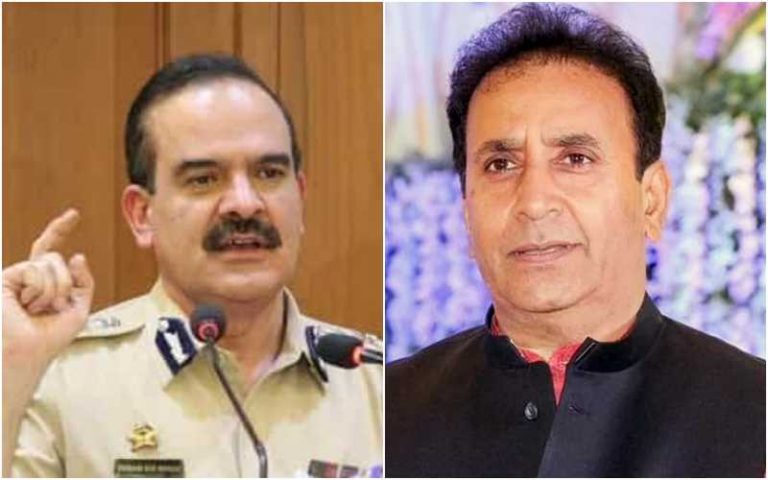
200 cops land at Twitter user Sameet Thakkar’s house after Thane Police files complaint over ‘defamatory messages’ on Nawab Malik

On November 13, Thane Police served notice to Sameet Thakkar over alleged defamatory tweets about NCP leader Nawab Malik and Housing Minister Jitendra Awhad. A criminal case was registered against Thakkar on Friday by the Thane Police. Reportedly, a team of Sitabuldi Police Station led by senior inspector Atul Sabnis had visited Thakkar’s house in Wathoda to record a statement.

Rishi Thakkar, Sameet’s brother, said in a statement that 180-200 police personnel came to their house. He said, “On Saturday, around 180-200 cops landed up at our house, which is questionable.” He added that the Police wanted Sameet to step out of the house but stepped back after Chandrashekhar Bawankule, former guardian minister, assured that he would bring Sameet the next day. In a statement to the media, he said Sameet would appear before Police within a week.

Rishi further alleged that a senior journalist had issued threats to his brother for “exposing” a politician. He said, “My brother is a citizen activist and a freelance journalist without any party affiliation.” He added that as Sameet has been exposing the truth and wrongdoings of the politicians in power and some cricketers, he is being targeted.

Amitesh Kumar, Nagpur Police chief, said that Nagpur police only provided assistance to a team of Kalwa Police that had visited Thakkar’s house to serve him notice. “Nagpur police only accompanied the team from Kalwa,” he said and claimed the steps the Police took were in accordance with the law.

Reports suggest that when Thane Police reached Thakkar’s house, Bawankule and several BJP workers also reached the spot. The Police wanted to arrest Thakkar but relented as there were chances that BJP workers might agitate against the Police. Notably, Thakkar was arrested earlier over similar offences and had spent several weeks in custody.

Thakkar alleged drug bust link to NCP

In the now-deleted tweet, Thakkar had said, “Mumbra Maharashtra resident Sajjad Dhosi who was arrested in Dwarka Gujarat Drug haul case with 88 cr drugs in bags is an aide of Maharashtra Housing Minister Jitendra Awhad. Hello Miya @nawabmalikncp you your party are truly Narcotics Congress Party.”

The case against Thakkar was registered based on the complaint of one Dinesh Bane, NCP worker from the Kalwa-Mumbra assembly. In his complaint, Bane said Thakkar posted the tweet at around 3:59 on November 11. He alleged that Thakkar published the tweet with “an intention of creating more tension” as there was an ongoing war of words among political parties in Maharashtra. The case was registered under Section 505(2) (statements creating or promoting enmity, hatred or ill-will between classes) of the Indian Penal Code (IPC).

Thakkar’s tweet was based on a drug bust that took place in Dwarka, Gujarat, on November 11. In a joint operation with a special operation group, the Police recovered 19 packets of drugs worth 88 crores. The Police had detained 44-year-old Sajjad Dhosi of Mumbra, district Thane, Maharashtra. He was allegedly carrying 6.618 KG of methamphetamine and 11.483 KG of heroin.

Milind Teltumbde, with a reward of Rs 50 lakh on his head, amongst 26 Naxals killed in Gadchiroli encounter: Read who he was

Milind Teltumbde, a top rung leader of the banned left-wing terror outfit CPI (Maoist) was amongst the 26 Naxals killed in the Gadchiroli encounter with elite C-60 commando force on Saturday. Speaking to OpIndia, Gadchiroli district superintendent of police Ankit Goyal confirmed that one of the persons killed was primarily identified as Milind Teltumbde.

Teltumbde had a reward of Rs 50 lakh on his head and was also involved in the Bhima Koregaon Elgar Parishad case. As per NIA charge sheet, he along with others was slapped with almost two dozen charges under the UAPA.

Along with Teltumbde, Korchi Dalam Commander Kishan/Jaiman who had a reward of Rs 8 lakh on his head, Mahesh Shivaji Raoji Gota with a reward of Rs 16 Lakhs on him, Bhagatsingh/Pradip/Tilak Mankur Jade with Rs 6 Lakhs on him, Lokesh Mangu Podyam with Rs 20 Lakhs on his head and Sannu Kovachi with a reward of Rs 8 Lakhs on his head were also killed.

Maharashtra Home Minister Dilip Walse Patil too confirmed Teltumbde was killed in the encounter. Three police officials received minor injuries and are hospitalised.

Who was Milind Teltumbde

In a charge sheet filed in 2020, the NIA had named Anand Teltumbde, Gautam Navlakha, Hany Babu, Sagar Gorkhe, Ramesh Gaichor, Jyoti Jagtap and Stan Swamy of having conspired to further the ideology of left-wing terror group CPI (Maoist). They were accused of abetting violence and bringing into hatred and inciting dissatisfaction against the establishment and government. They were also accused of promoting enmity between different groups on grounds of religion, caste and community.

Milind Teltumbde has been absconding and was accused of organising training camps for imparting weapon training to other members of the terror organisation. He was the younger brother of Anand Teltumbde. Milind had earlier said his brother Anand inspired him to further the activities of CPI (Maoist). The NIA in its charge sheet had said, “Milind alias Deepak is expanding the Naxal movement of Maoist in urban areas with the help of his elder brother Anand Teltumbde on the international level and took guidance from him. Milind was inspired by his brother to join the CPI (Maoist) movement.”

Tripura: MHA debunks fake news about mosque vandalism in Gomati, warns against its use to spread discontent

On Saturday (November 13), the Ministry of Home Affairs (MHA) debunked fake news about the vandalism of a mosque in the Gomati district of Tripura. The development comes amidst deteriorating law and order situation in Maharashtra over alleged violence against Muslims in the North-Eastern State.

In a statement, the MHA informed, “There have been news reports that have been circulating that a mosque in Kakraban area of Gomati district in Tripura has been damaged and vandalized. These news reports are fake and are a complete misrepresentation of facts. The mosque in Dargabazar area of Kakraban has not been damaged and the Tripura Police in Gomati district is working to maintain peace and tranquillity.”

The MHA statement further read, “There have been news reports that have been circulating that a mosque in Kakraban area of Gomati district in Tripura has been damaged and vandalized. These news reports are fake and are a complete misrepresentation of facts. There is no reported case of damage of the structure of any Masjid in Tripura in the recent past. There is no report of simple or grievous injury or rape or death of any person in these incidents as alleged in some social media posts.”

The Ministry of Home Affairs warned that fake news about mosque vandalism in Tripura could be weaponised to disturb the tranquillity in others parts of India. “People should maintain calm and should not be misguided by such fake reports. For instance, in Maharashtra there have been reports of violence and unsavoury statements that are aimed at disturbing peace and harmony, based on fake news regarding Tripura. This is very concerning and it is urged that peace is maintained at all costs,” it added.

Fake news on ‘vandalism of mosque in Tripura’

One of the earliest reports of the fake news on vandalism of a mosque in the Gomati district of Tripura stemmed from a tweet posted by ‘journalist’ Mahmodul Hassan. In a tweet on Saturday (November 13), Hassan had alleged that the Darga Bazar Mosque in Gomati was burnt on the night of October 20. He also claimed that by the time firefighters had come to douse the fire, about 60-70% of the mosque had burnt. He added, “The mosque was among the first to be attacked and burnt done in Tripura, said locals”

Screengrab of the tweet by Mahmodil Hassan

While reporting for News9, he claimed, “We spoke to several people who witnessed burning of the mosque. None of them could corroborate who was behind the act, but most of them said it was an act by “miscreants” because there was no chance that the mosque would catch fire by itself.” Hassan has earlier worked for propaganda sites such as the Quint and the Caravan.

Screengrab of the tweet by Mahmodil Hassan

Tripura police had rubbished fake news about mosque being burnt in Panisagar

Last month, the Tripura police responded to viral videos and news related to the alleged vandalism of a mosque in Panisagar during a protest march in the State. Tripura Police had categorically denied any such incident took place and said that an FIR against the viral fake posts on social media platforms.

The cops also said that certain persons are spreading fake news and rumour on Tripura by using fake social media IDs. The police added that pictures being shared of burning or damaged mosques or collections of sticks etc are all fake and are not from Tripura. Over a hundred Twitter accounts were booked under the Unlawful Activities Prevention Act (UAPA) for spreading misinformation regarding the violence at Panisagar. 

How Jawaharlal Nehru became first Prime Minister of free India

As India’s freedom struggle was approaching its culmination, Mohandas Karamchand Gandhi made his intentions clear that Indian National Congress (INC) should be dissolved. He felt the objective of the INC was to liberate India from British rule; once that goal was accomplished, the organization had no existential purpose. Gandhi proposed that all leaders who desired public service via electoral politics should form their own political party and contest elections. This actually would have been democracy in the real sense.

It is interesting to consider the possible outcomes of such an idea.

Perhaps Nehru would have been rejected by the people, which probably would have been the end of his political journey of the dynasty. Perhaps Sardar Patel would have been India’s first Prime Minister. Perhaps a newer relatively unknown face would have emerged as the nation’s leader following a fractured mandate.

However, Nehru and others within the party understood that the INC had brand recognition such that they could ride the wave of goodwill earned by the party during the freedom struggle. Challengers could be implicitly or explicitly branded as a traitor for challenging the founding fathers of free India. Hence, Gandhi’s advice was conveniently ignored and the INC prevailed.

However, Gandhi’s advice was assiduously followed in another matter. In 1946, an internal election was held to decide the President for the INC would eventually become the first Prime Minister of independent India. Among the candidates were Jawaharlal Nehru, Acharya Kripalani, and Sardar Patel.

The INC working committee and the various state committees had to send in nominations for their preferred candidates. From the very beginning, Gandhi openly favoured Nehru. Gandhi had explained his rationale behind backing Nehru ‘Jawaharlal cannot be replaced today whilst the charge is being taken from the British. He, a Harrow boy, a Cambridge graduate, and a barrister, is wanted to carry on the negotiations with the Englishmen.‘

Gandhi also felt that Nehru was better known abroad and could help India play a role in international affairs. Even Maulana Azad endorsed Nehru three days before the last date of nomination. He wrote in his autobiography, published posthumously in 1959: “After weighing the pros and cons I came to the conclusion that the election of Sardar Patel would not be desirable in the existing circumstances. Taking all facts into consideration it seemed to me that Jawaharlal should be the new President….”

The results showed that the members of INC had a drastically different opinion. Sardar Patel who was known to be a great executive, organizer, and leader, won 12 out of 15 state committees, the other state committees abstained from the process. Nehru did not receive any nominations. This was a unanimous choice for Patel while Nehru was resounding rejected. Sardar Patel was on his way to becoming India’s first Prime Minister.

When Gandhi conveyed the results to Nehru, instead of humbly accepting the popular mandate, Nehru’s reaction was that of total silence. Gandhi realized that while that Patel would agree to work as Nehru’s deputy, the reverse would most certainly not happen. Thus Gandhi intervened and asked Patel to withdraw his nomination.

Gandhi unwittingly introduced the anti-democratic culture of the ‘party high commands’ overruling state units for inter-party matters. In deference to Gandhi, Kripalani nominated Nehru and withdrew from the contest. Patel who regarded Gandhi as his mentor then willingly stepped aside in favour of Nehru. Such a supreme sacrifice is unthinkable in contemporary times.

There were two major reasons why Patel accepted Gandhi’s request. Firstly, unlike Nehru, he never had coveted positions or posts, for him satisfaction was solely derived in his service to the nation. Secondly, Patel also knew that Nehru was not one to take rejection well. He had an inkling that Nehru would probably reject playing deputy to Patel and in fact become a fierce opponent of Patel and an impediment as he governed the nation.

He knew Nehru had his myriad supporters who would also join his faction of opposing Patel. Patel understood that this division between him and Nehru would further divide a nation that was already plagued with various problems and was about to undergo an almost cataclysmic partition.

Dr. Rajendra Prasad later remarked: ‘Gandhi has once again sacrificed his trusted lieutenant for the sake of the glamorous Nehru.‘ Prasad’s usage of “once again” was owing to the Patel was denied the presidency of the INC in 1929, 1937, and 1946 in preference to Nehru and this change always occurred the last moment.

Nehru was hence ‘elected’ unopposed and his path was cleared as India first Prime Minister. Maulana Azad later changed his opinion about his previous endorsement of Nehru “It was a mistake on my part that I did not support Sardar Patel. We differed on many issues but I am convinced that if he had succeeded me as Congress President he would have seen that the Cabinet Mission Plan was successfully implemented. He would have never committed the mistake of Jawaharlal which gave Mr. Jinnah an opportunity of sabotaging the Plan. I can never forgive myself when I think that if I had not committed these mistakes, perhaps the history of the last ten years would have been different.

Michael Brecher wrote in his commendatory biography of Nehru wrote: “In accordance with the time-honoured practice of rotating the Presidency, Patel was in line for the post. Fifteen years had elapsed since he presided over the Karachi session whereas Nehru had presided at Lucknow and Ferozpur in 1936 and 1937. Moreover, Patel was the overwhelming choice of the Provincial Congress Committees…. Nehru’s ‘election’ was due to Gandhi’s intervention. Patel was persuaded to step down….“If Gandhi had not intervened, Patel would have been the first de facto Premier of India, in 1946-47. The Sardar was ‘robbed of the prize’ and it rankled deeply.”

C. Rajagopalachari, who wrote in Bhawan’s Journal in 1972, “Undoubtedly it would have been better if Nehru had been asked to be the Foreign Minister and Patel made the Prime Minister. I too fell into the error of believing that Jawaharlal was the more enlightened person of the two. A myth had grown about Patel that he would be harsh towards Muslims. This was a wrong notion but it was the prevailing prejudice.”

Patel passed away in 1950 and in 1952, INC secured a massive majority in free India’s very first election. Nehru remained India’s prime minister and continued to be prime minister till his last breath. It is sad, unfortunate, and scandalous that the very first election that would decide the leader of free India was manipulated. It wasn’t only the election but the future of India that was rigged.

Blast caused by a magnetic bomb attached to minivan kills 6 in Shia majority area in Kabul, ISIS-K suspected

0

A magnetic bomb attached to a minivan exploded today in the Shia majority area of Kabul, resulting in at least six deaths and several injuries. The blast took place in the Dasht-e Barchi area of western Kabul, as per a Taliban official.

An eyewitness to the blast has reported that Taliban officials have sealed the place of the blast, “We heard a huge blast in the minibus carrying commuters in Mahtab Qala locality of Dashti Bari area. The whole place has now been sealed off by the Taliban’s security forces”

The explosion took place on the main avenue running through Dashti Barchi, an area in Kabul heavily populated by Shiite Hazaras, who have become the target of a series of attacks carried out by ISIS-Khorasan Province (ISIS-K) – the local affiliate of the terror group ISIS.

A local man named Ismail said, “When I arrived, I saw the big flames,” adding, “It was a mini van which was targeted by a sticky bomb.” Another witness told AFP, “I was in my car and an explosion happened in the vehicle in front of us. It was completely burnt.” The witness said the explosion occurred near a checkpoint manned by the Taliban, and gunfire was heard briefly immediately afterwards. 

The bus driver, who survived the blast, told media at the hospital that at one point during his route, a suspicious man got onto the bus and a few minutes later, the explosion went off at the back of the bus. The driver Murtaza said that some people in the back of the bus fell out of the minivan with their clothes on fire, while others escaped from the front door.

Zabihullah Mujahid, the Taliban’s main spokesman has reportedly tweeted that a fire had broken out in the Dasht-e Barchi area of western Kabul. Mujahid said the fire killed at least one civilian and injured two others and that an investigation was being carried out.

Yesterday, a high-intensity bomb blast haf occurred at a mosque in Traili town of Nangarhar province in eastern Afghanistan on Friday afternoon. The explosion occurred in front of a mosque in the Spin Ghar district at around 1.30 pm, during the Friday Namaz. The explosion had left at least three people dead and more than 35 wounded, including the imam of the mosque.