Home Blog Page 3799

‘The mob is the most ruthless of tyrants’: The Dark Long Shadows of Lakhimpur Kheri, the politics and the judiciary

‘The mob is the most ruthless of tyrants’ – Friedrich Nietzsche

A long and nonsensical protest has been underway in the name of ‘Farmer’s protests’, which has been hanging over India like the sword of Damocles. Communism, with its absolutist ideology, has long been rejected by Indian democracy, shrinking from three states to eventually one single state. The presence of the left in the Indian parliament too is abysmally low. The Leftists had resigned to their situation in the Indian political system and settled for being the feeder of juvenile dreams, meant to dry up once the ruthless Sun of realism shone over the people. The ideology has globally shrunk from around thirty-six nations at its peak to not more than half a dozen countries that claim to be Communist today.

A sudden change has come about in the last one decade or so, not much in the sense of acceptability of Communism, rather as a sudden deluge of funds and means, courtesy, China’s rise and ambitions of asymmetric growth as a Global Power. India being the next door large nation with an even older history, is the last defence of democracy. This sudden rise of China and India, as the next-door neighbour of respectable size and potential, being thrown into the role of the global nemesis of China has ensured that Indian resurgence has caused a lot of discomfort in the heart of the Dragon. The result is seen with obvious indicators like Military posturing, not only against India but against all the other nations around China.

Apart from the obvious indicators, there are many cleverly camouflaged activities happening, even if we do not look at the Pandemic let loose by the rogue state next door on the world. It would be too much of a conspiracy theory if we begin investigating why the opposition ruled states in India were least prepared to tackle Covid-19 in spite of being financially much better off, population-wise much less taxed than the states which are ruled by the BJP, and wreaked the most havoc from Delhi to Maharashtra to Kerala.

The opposition has behaved in a strange manner by raising questions on action against oxygen misuse, medicine misappropriation and even going to the extent of trying to put a spanner in the launch and propagation of India-made vaccines. Notwithstanding that the whole Covid strategy of China seems to have backfired with the Chinese economy badly hurt and the world looking at India under China Plus One strategy for global sourcing. Instead of letting the pandemic make India fall into the depths of turning into a welfare state, India has taken wise and considered steps to work on supply-side strengthening with PLI schemes and such initiatives. This has kept the Indian economy sturdy and growing in the aftermath of the pandemic. We have scars, but we are coming out.

But at the same time, we find the series of protests which came about across India ever since the Congress was voted out of power, have gained momentum. From opposition to land reforms bill, the violence unleashed in the protest of CAA, to Farmers’ protest, largely driven by separatist funded, fanatic forces in the Congress-ruled state of Punjab, the tendency of the Congress to rule the nation from the streets continues.

In this process, Congress has assimilated the left within itself and in the process become a warhorse of the radical Left. The Left, never one for democracy from Russia to China (both now have life-long dictators as their ruler), has engulfed Congress and it is a pity that the party which harps on the name of Nehru, has transformed itself into the political ideology considered a threat to India.

The unending blocking of the roads of the capital city of India as a means of protest was tested during the anti-CAA protests and is being implemented with more vengeance and backed by better financing in the protests against Farm Laws. Three things these laws do are unshackling the farm trade from the gasp of middle-men (removing APMC-Only option for the trade of farm produce, already implemented in Left-ruled Kerala), bringing in farmer-friendly policies in the Contract Farming, which were earlier skewed towards the industrialists, even having the provision for the arrest of Farmer in case of default (in Punjab Contract Farming Act, brought in by Shiromani Akali Dal, now at the forefront of the agitation, with a new-found love for the farmer) and bringing in Private investments to develop the storage facilities, bringing the storage of many commodities out of arbitrary state control. The benefits of the new laws are so obvious that it is totally surprising that the rhetoric seems to be winning.

The ugliness of street politics brought in by rogues of Indian politics who were sidelined by the larger masses has reached its worst with the incidents of Lakhimpur Kheri. As the Opposition made beelines to Lakhimpur Kheri in UP after the violence in which an equal number of protesting farmers and BJP supporters were killed, the systemic collapse is visible. These kinds of street protests meant to ‘Capture the Cities’ are much in line with the policy documents of the Naxal movement, called ‘The Urban Perspective’.

The policy document clearly outlines a plan for the Maoist terrorists to step out of the dark forests of Dantewada and overthrow the elected government by capturing the urban centres. If we look at the movement of the Farmers’ protest the imprint of the Naxal plan is easily detectible. Communist leaders are driving the movement from behind with Rakesh Tikait being the face of it and Opposition Parties are riding on this movement funded through odd and undeclared sources.

The support from the intellectual class and the media has emboldened the anarchists to no end. The silence of the State has also had its role to play. Too keen to shed off the image of a tough ruler, the Narendra Modi Government has for long ignored the cases of violence coming from the criminal-infested movement. A woman from West Bengal was violated by a group of protesters and died later, the role of free movement of protesters working on shifts between Delhi and Punjab has been reported, the blocking of oxygen tankers to the capital by the protesters has been also reported.

People have been beaten up, government properties (including national memorials like Red Fort) have been attacked at will. In America, the Capitol was attacked and five people were shot dead by the security agencies. In India, Policemen were beaten up by the so-called farmers, some so severely that they were admitted to the ICU. The action from the Government has been minimal, the courts have been soft towards the rioters and the media has been manipulating the news to protect the protests as peaceful protests going on for a year, whitewashing the acts of huge violence.

When the governance fails, one looks at the Judiciary. In this case, the Judiciary too has failed India. They came out with the judgement calling street protests illegal in the case of Shaheen Bagh, but only when the street violence of the Delhi riots made those Islamist protests untenable. In this case, again the Court played its high hand and put the laws passed by the Parliament, representing the will of the people, on hold, claiming that while there was no question about the Constitutionality of the law, they, that is the Courts, did not want the blood on their hands.

There has never been such an obvious capitulating of the state before a gang of goons in the history of established democracies. The same Supreme Court which remained unmoved by the plight of victims of the West Bengal post-poll violence, in which around a hundred people were murdered merely for the electoral choice they made, instantly took up the Lakhimpur Kheri incident where eight lives were lost. In Lakhimpur, eight people died – four were farmers three were BJP workers lynched on camera by the protesting farmers and a local journalist.

The state could be blamed for delay in action by clearly missing intelligence inputs, but unlike Maharashtra where on-camera the State Police was seen handing over Hindu Sadhus in Palghar to the mob for lynching, or in Chhattisgarh where the State police shot dead three tribals this May, in this case, there was no direct complicity of the State. Still, the Supreme Court asked for the arrest of the son of the Minister who has been charged with mowing down the protesting farmers by the protesting farmers.

The self-electing set of elders in the judiciary have always been claiming to be revolutionaries, victims and martyrs, all at the same time. Mr Arun Shourie, a journalist of repute and ex-minister has written on this in his book ‘Courts and Their Judgements’ very appropriately. He writes ‘These progressive judges have a very high opinion of what they were doing. They had convinced themselves that they were battling great odds. They were also very eager that what they were doing got known far and wide.’

What we are observing as citizens in the hyperactive judiciary was seen earlier too when the plea seeking justice for Kashmiri Hindus thrown out of homeland as an outcome of widespread violence, mayhem and killings, was thrown out being old, while it took cognisance of a Kashmiri Muslim vendor being slapped in UP and asked the state to act swiftly. This feature is arbitrariness which the highest courts in their own many judgements have declared the biggest enemy of fairness.

Most people have to be circumspect of speaking out loud about what possibly brings in this arbitrariness where directly complicity of State is overlooked like in Maharashtra and Chhattisgarh and courts intervene when the state’s complicity is not even pronounced. Mr Shourie, however, writes ‘there has been much competition among judges as there has been among intellectuals and persons in public life to outdo each other in progressive, socialist declarations.’

He outlines, to me it seems, most appropriately, when he writes, As if to make up for its supine role during that period (Emergency), the Court delivered itself of one ‘progressive’ judgement after another, each bursting with egalitarian rhetoric.’

So in this instance, we have the court ignoring the recommendation of the Standing Committee of the parliament headed by an MP from Trinamool Congress urging the Government to immediately implement the Farm Laws, suspending the laws given by the parliament. They also refused to act when the commitments of peaceful protest made on 24th January were broken on the 26th of January sending around 500 cops to the hospital, totally ignoring reports of locals being beaten, murdered by protesting farmers, women being raped and molested at the protest sites.

When Arun Shourie wrote the book, it was a time when few would read about the judgements passed by the courts. The situation has totally changed today. Whatever happens, is open to public scrutiny. The courts have been silent on the illegal nature of these protests. While the judiciary does not have to go to the people for approval, their powers do derive their legitimacy from the perception of the people as the fair dispenser of justice.

It is not about how the readers of the New York Times perceive them, it is about how the people perceive them. For that, it is important for the courts to be as objective as possible. It is not that the courts must not intervene. But they must intervene when the State is seen to be an accomplice in the crime or is seen to be restricting the enforcement of the law. It cannot arbitrarily pick up the cases which get highlighted more. Media can play favourites but the courts cannot. The Court cannot consider slapping of a vendor as a more serious crime than the act of murder of a street vendor from Bihar in Kashmir. Such illogical activism will make people lose their faith in the law. The day that happens, society will collapse. Judge Robert H Bork was quoted in the book ‘View from the Bench’ :

‘The theoretical emptiness at its centre make law, particularly constitutional law, unstable, a ship with a great deal of Sail but a very shallow keel, vulnerable to the winds of intellectual or moral fashion, which it then validate as the commands of our most basic compacts.’

An exasperated Arun Shourie adds, Instead of ‘intellectual fashions’ an Indian reviewer would probably have to insert ‘fashionable cliches’.’ (How else do we explain the Courts inclination to use Gandhian principles to justify its judgements even in this case, instead of Constitutional ideas, why would a structured society follow the guidance of an individual with no constitutional authority, however great he or she might be).

The courts have stepped on extremely slippery grounds by choosing to behave in such a manner. This has embolden the rogues who have been brought to the centerstage of Politics by inaction of Modi Government to publicly mock those who died in political violence brought in by their followers as Man-eaters fit to be lynched from public platforms. That such utterances do not bring in any punitive action from Media, Government or Judiciary is mark of a decaying democracy. The sooner this decay is arrested, the better.

UP: Stone pelting, violence in Firozabad after Muslims clash with Dalit Hindus during Navratri celebrations, Police deny communal angle

0

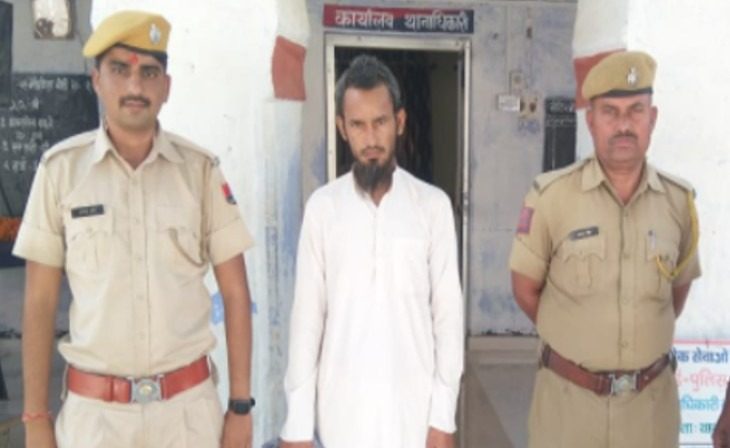
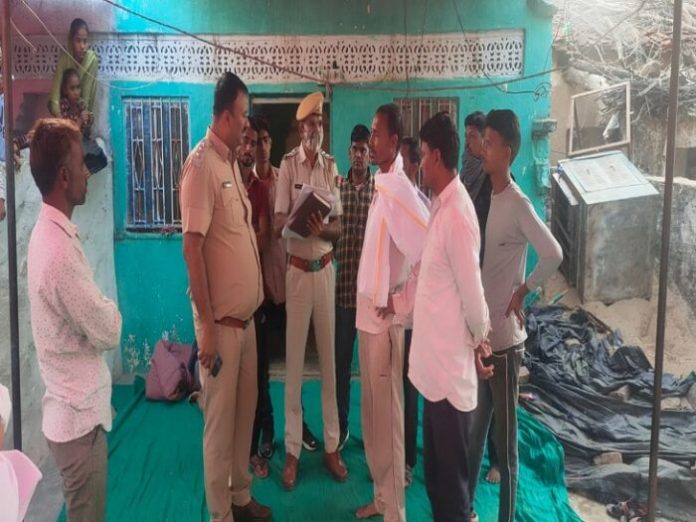
On October 10, people from a particular community pelted stones on Devi Pandal during evening aarti in Village Dikhtauli, Shikohabad, District Firozabad, Uttar Pradesh. As per the reports, people of the Dalit community had built a pandal with Mata Durga’s Moorti in a plot located on the side of the road. Every day, people would come and offer prayers during the Navratri festival.

The local Dalits and Muslims had some differences going on and there was a fierce fight between the two groups on Sunday. The Police were informed about the incident after which they arrived at the spot. Police had to use force to disperse the crowd. A total of nine people were detained. A heavy police force has been deployed to ensure law and order.

The Dalit community have alleged that since they started the Navratri celebrations, some people from the Muslim community would come and consume alcohol on the vacant land nearby. They also used abusive language during the Aarti. Such incidents led to the tension between the two groups that resulted in the fight on Sunday.

Reports suggest that a man identified as Javed Ali parked his e-rickshaw late Sunday evening near the pandal. At the same time, he placed a brick in the drain to block it. There was a birthday party going on at the house nearby. When a person named Dara Singh objected to Ali’s actions, a fight broke between them. Soon people from both sides came face to face, and stone pelting started. Ajay, owner of a nearby house alleged that the Muslims said that they would not allow drain water of the Jatav community to flow towards their homes.

Police denied communal angle

The Police not only detained nine people but also seized e-Rikshaws that were parked close to the drain. Udayveer Singh Malik, station in-charge, said that the investigation is underway and they would take strict action against the culprits.

He said that the fight broke between the two groups after they started pelting stones over drain blockage. The Police also denied the communal angle in the case. They further said the reports of stone-pelting on Durga Puja Pandal are also false.

Maharashtra in chaos, life disrupted as Maha Vikas Aghadi calls bandh in solidarity with Uttar Pradesh’s Lakhimpur Kheri ‘farmers’

Just as the state of Maharashtra was limping back to normalcy after an impending lockdown due to the coronavirus pandemic, the Maha Vikas Aghadi government declared a bandh on Monday in solidarity with Lakhimpur Kheri ‘farmers.’ 

Reports of damage, violence and protests have surfaced in the media. As per Manoj Varade, BEST spokesperson, as many as nine buses have been damaged in Mumbai since morning by unidentified miscreants. The areas from which the damage was reported are Dharavi, Mankhurd, Shivaji Nagar, Charkop, Oshiwara, Deonar, and Inorbit Mall in Malad. 

Picture of BEST bus damaged by unknown persons. Image Source: Times of India

In Thane district, Shiv Sena workers were caught on camera beating auto drivers with sticks. Taxi and auto unions had feared attacks and had warned that they will go off roads if any untoward incident takes place. 

Roads have been blocked and tyres put on fire in Mumbai’s Vikhroli area to forcefully impose a bandh, thereby hampering traffic and transportation. Bhartiya Janta Yuva Morcha Mumbai President Tajinder Singh Tiwana took to Twitter to share a video of the blockade.

One can see smoke clouds rise amid the traffic jam, where people are just helplessly standing, trying to get on with their lives and make a living.

FRTWA shut shops on the ‘request of Shiv Sena’

President of Federation of Retail Traders Welfare Association, Viren Shah said that the association has decided to keep shops closed till 4 PM after they received a ‘request’ from the Shiv Sena. 

However, Shah in a message shared with BJP MLA Atul Bhatkhalkar had mentioned that while the association opposes the death of the ‘farmers’ in Lakhimpur Kheri violence, a statewide bandh would simply result in losses. 

The association till yesterday had decided to not support the bandh. “We have suffered huge loss since last 18 months of lockdown and business now have slowly started picking up. In middle of festive season of Navratri/ Diwali where customers have started coming out to shop, let us do our business peacefully. We hope the shopkeepers are not harassed or forced to remain shut,” read a message by Shah as shared by Bhatkhalkar on Twitter. 

Message by FRTWA President. Image Source: Twitter

Another video shared on social media shows Shiv Sena workers threatening shopkeepers. “Man is clearly heard telling the shopkeeper that don’t blame me later if I break your shop!” said Gandhi in her Tweet. 

It is imperative to note that Maharashtra had one of the longest and most stringent lockdowns and only now the state had slowly opened up, with restrictions.

Shops shut, transportation of essential goods affected

All the APMCs across Nashik, Pune and Navi Mumbai have been kept shut today due to the bandh. As per transporters, the transportation of essentials and non-essential goods to Mumbai has also been affected. 

Vegetables and fruits vendors and other hawkers have been off roads since morning in Mumbai, Thane and Pune. Several shops in Thane have not opened since morning. 

Shops remain shut in Thane. Image Source: Times of India

The streets and markets of Aurangabad also wear a deserted look.

Indian Hotel & Restaurant Association said that most restaurants will keep their premises closed till 4 PM. 

BJP leader Nitesh Rane on Sunday had issued a warning to the MVA against forcing the bandh. “If shopkeepers r “forced” to close shops Tom by any of the MVA karyakartas.. they will have to face bjp karyakartas! Police shud ensure no one is forced or else there will be a law n order situation which is not our responsibility!!” he said in a Tweet. 

Meanwhile, some shopkeepers are resisting the forced bandh in the state, refusing to shut shops. As per a video shared by BJP Mumbai IT Cell member Krunal Goda, a shopkeeper can be seen fighting with some alleged political workers forcing him to shut his shop.

Congress, Shiv Sena and NCP are the ruling alliance in the Maharashtra while the Lakhimpur Kheri incident took place in Uttar Pradesh.

MVA takes out rally

Shiv Sena and NCP workers of the Maha Vikas Aghadi government have hit the street taking out rallies in different parts of the state. 

Raising anti-Modi slogans, both the NCP and Shiv Sena workers hit the streets of Thane. 

Shiv Sena workers take out a rally in Thane. Image Source: Times of India

A netizen took to Twitter to share a video from Bhiwandi, appealing the citizens to not venture out as the protestors have blocked roads. Some protestors can be seen deflating and puncturing vehicle tyres that are stuck due to the blockade.

Meanwhile, Shiv Sena leader and MP Sanjay Raut has declared the bandh a ‘success’ as most choose to stay off the road fearing any attack or damage. 

BJP takes a dig at MVA

Several Bhartiya Janta Party leaders have objected to the bandh imposed by the state government in solidarity with farmers in Uttar Pradesh. 

BJP MLA Yogesh Sagar from Charkop (Mumbai) in a Tweet said, “In five days, seven Hindus have been killed by Islamic terrorists in #Kashmir. Haven’t heard about a Bandh in #Maharashtra by MVA in protest of the same?”

Bhatkhalkar too criticized the MVA in a Tweet by saying that this state government is only known for ‘vasooli’, ‘bandh’ and lockdown. 

Voicing the apathy of small businesses, BJP MLA from Pune Siddharth Shirole said, “#Maharashtra is the only State where the Govt. itself has called for a Bandh (shut down). Traders, Businesses & professionals are yet to recover from the misfortunes caused by the #Pandemic, but once again #MVA has put politics & vendetta ahead of the lives & livelihood.”

Meanwhile, NCP leader Nawab Malik has claimed that the bandh is being carried out ‘peacefully’ across the state. 

12.5% of Keralites have mental health issues, only 15% seek treatment, says Kerala Health Minister

On Sunday (October 10), the Health Minister of Kerala Veena George admitted that about 12.8% of people in the State suffer from mental health issues and require medical attention. She made the remarks during an online seminar conducted by Kerala Sastra Sahithya Parishad, Indian Psychiatric Society (Kerala) and the Department of Psychiatry in Government Medical College in Thiruvananthapuram.

As per reports, she conceded that only 15% of such people undergo serious treatment. According to her, the rest of the patients are either unaware of the existence of treatment centres or are hesitant to visit such facilities. While speaking on the occasion of World Mental Health Day, George underlined the importance of mental health literacy. Veena George said that most people in the State do not have an accurate understanding of mental health problems and thus are unable to diagnose them or seek treatment for the same.

“In this context, it is imperative that activities related to mental health literacy be intensified in the society. The Health Department is actively undertaking this mission with the co-operation of all. Along with the health of the body, the health of the mind is also very important. Everyone needs to pay attention to identify ailments, pains and diseases and seek timely treatment,” she told ANI.

Furthermore, Veena George concluded that people have been stressed out due to Covid-19. She emphasised, “Particularly, after COVID, people are under stress owing to various factors be it financial or other. Also, everything is shifting to online mediums including studies. The mental health of children should also be given priority.” It is imperative to note here that Kerala has been one of the worst affected states for COVID which contributes to almost 50% of total active cases in India.

After Maharashtra, Kerala has had second highest total COVID cases in India. Kerala has recorded 47,94,800 of which 1,11,147 are currently active cases. Over 26,000 people have lost their lives to COVID in Kerala. Kerala is the only state which even now, after most states have the pandemic in control, continues to record over 10,000 new cases consistently.

Uttar Pradesh: Madarsa maulvi lures and rapes girl on the pretext of marriage, forces her to get abortion

0

On October 10, a case of rape of a madarsa student came to light in district Bareilly, Uttar Pradesh. Reports suggest that the cleric of the madarsa lured the student on the pretext of marriage. Later, when she got pregnant, he got the abortion done. The victim became a student of a madarsa around four years ago in Bahedi that comes under Sheeshgarh Police Station. She had a classmate identified as Ubaysh Hafiz, who later became a maulvi in the same madarsa.

Senior Superintendent of Police, Bareilly, said that after some time, she fell in love with Maulvi Ubaish Hafeez. On the pretext of marriage, Maulvi raped the girl multiple times. Whenever she asked him about marriage, he would avoid the question and told her to wait for some more time.

Meanwhile, the girl got pregnant. When she informed the cleric, he forced her to have an abortion. When she went to his house with her family members, Maulvi threatened to kill and chased her away. Speaking to OpIndia, the station in-charge, Sheeshgarh Police Station, said that a case had been registered against the accused under 356, 376, 313, 504 and 506. Maulvi Hafiz is currently absconding, and efforts are on to nab him.

Several cases of clerics being involved in similar crimes

In July this year, Nileshwar Police, district Kasaragod, Kerala, had arrested a 50-year-old madarsa teacher for repeatedly raping and sexually abusing his 16-year-old daughter for two years. He was also accused of getting his daughter raped by other men.

Mufti Musharraf of district Tumakuru, Karnataka, was recently found guilty of having unnatural sex with a minor boy six years ago. He was sentenced to 11 years in jail by a special court in Bengaluru. Reports suggest that he had raped a minor child in a madarsa in April 2015. Originally hailing from Uttar Pradesh, maulvi Musharraf’s act came to light when the child’s mother went to meet him in Madarsa. He told his mother that Musharraf had indulged in unnatural sex with him and asked her to take him back home.

Retired Supreme Court Judge bats for judicial overreach, asks SC to bypass Legislature, strike down sedition law and UAPA

On Sunday (October 10), ex-Supreme court Judge Rohinton Fali Nariman courted controversy after he urged the apex court to strike down the sedition law and the stringent provisions in the Unlawful Activities (Prevention) Act. He made those contentious remarks during an event organised by the Viswanath Pasayat Memorial Committee.

While encouraging judicial activism, the retired Judge asserted, “I would exhort the supreme court to not send sedition law cases pending before it back to the Centre. Governments will come and go (but) it is important for the court to use its power and strike down Section 124A and the offensive portions of UAPA. Then citizens here would breathe more freely.”

Justice Rohinton Fali Nariman also alleged that India’s rank on the Global Law index was poor due to colonial-era laws.

“The Nobel Peace Prize was given to two journalists from the Philippines. India’s rank there was 142…Why? This is more to do with India’s bank of colonial laws,” he had said. The retired judge also urged the Supreme Court to unilaterally strike down the sedition law (IPC 124). He inquired, “…How in this large democracy is Section 124A surviving?”

Furthermore, ex-Justice Nariman also dubbed UAPA as a ‘draconian act’ that needed repeal. He added, “We had the China and Pakistan wars. Thereafter, we introduced the draconian legislation- UAPA. Disaffection continues in the statute book and UAPA is a draconian act as it has no anticipatory bail and has a minimum of 5 years imprisonment. This act is not under scanner yet. This too has to be looked into along with the sedition law.”

World Hindu Foundation asks Justice Rohinton Nariman to take back his comments on Vedas

In April this year, Justice Rohinton Nariman made ‘objectionable’ comments on the stature of women in religion and the Rig Veda during the 26th Justice Sunanda Bhandare Memorial Lecture. He had claimed, “Rig Veda says do not make lasting friendship with women because she would be like a hyena.” The comment had attracted severe criticism, which was interpreted by many as an insult to Hindu sentiments.

Swami Vigyananand, the founder of the World Hindu Foundation, remarked, “I believe that you are not qualified to interpret Vedas and ancient Hindu scriptures. Therefore, you must resist making any commentary on Hindu scriptures and Vedas based on your reading of secondary sources. Moreover, you hold a responsible position in the judiciary. You must behave responsibly in speaking about issues concerning the great Dharma and Bharat’s civilisational heritage,” he said.

‘Necessary that China takes appropriate steps too’: Indian Army after military commander level talks over LAC

0

The Indian Army on Monday released a statement on the India-China senior military commanders’ 13th marathon dialogue that took place on October 10. As per the official statement, the negotiation yielded no result. 

The Indian Army reiterated that attempts by the Chinese Army to ‘alter the status quo & in violation of the bilateral agreements’ along the Line of Actual Control (LAC) had led to the current situation. 

However, the Chinese Army is not willing to address de-escalation in the three remaining friction points that include Hot Springs, Depsang Bulge and Charding Nullah Junction at the LAC. 

“During the meeting, the Indian side made constructive suggestions for resolving issues in the remaining areas but the Chinese side was not agreeable & also could not provide any forward-looking proposals,” informed the Indian Army. 

“The meeting thus did not result in the resolution of the remaining areas,” declared the Indian Army while emphasizing the need for the Chinese Army to take appropriate steps in the concerned areas to restore peace & tranquillity.

Concluding the statement, the Indian Army assured establishing constant communication with the Chinese counterparts to maintain stability on the ground. 

“It is our expectation that the Chinese side will take into account the overall perspective of bilateral relations & will work towards early resolution of the remaining issues,” it said. 

As per the officials, the 13th round of discussion began at 10.30 AM on Sunday at Moldo on the Chinese side of LAC. 

The negotiation was held more than two months after the last round of talks. It came at a time when the Chinese Army is involved in massive military buildup and infrastructure development across the LAC. 

‘If China continues presence along LAC, so will we’

On Saturday, Army Chief General Manoj Mukund Naravane, in response to the massive military buildup by the People’s Liberation Army (PLA) across the LAC said that if the Chinese army is to stay in eastern Ladakh, so is the Indian Army.

“It is a matter of concern that the large-scale buildup that occurred last year continues to be in place,” said the army chief.

“To sustain that kind of buildup, there has been an equal amount of infrastructure development on the Chinese side. It means that they are there to stay. We are keeping a close watch on the developments. But if they are there to stay, we are there to stay too,” asserted Naravane at a public event held in New Delhi. 

Coal crisis: How global media is attacking India to reduce China’s embarrassment

The following is a headline from the UK based Financial Times newspaper on Oct 6.

Financial Times’ headline on ‘coal crisis’

Notice the phrase “China and India.” But why? As the article itself would admit:

As of October 3, India’s 135 thermal power plants had just four days’ worth of coal stocks, down from 13 days on August 1, the power ministry said on Tuesday.

In other words, the “crisis” hasn’t even happened yet, at least by the time of the writing of the article. So how did the Financial Times work out that there is a crisis in “China and India”?

Okay, four days is not a very long time and maybe you cannot fault the Financial Times for looking a bit ahead. We will come to this. But first let us note the similar spate of articles about India’s looming power crisis in global media. Here is the BBC:

BBC on India’s ‘unprecedented power crisis’

“Brink” of an unprecedented power crisis. So it hasn’t happened yet. And here is Al Jazeera on Oct 6.

Al Jazeera on ‘energy shortage crisis’

Again, pay close attention to the exact words. India “faces” a growing crisis. So it hasn’t happened yet. But we already have the Financial Times, BBC and Al Jazeera warning us about what is going to happen. See the level of concern for India. See how much they love us and worry about us. Isn’t it touching?

Now, is there a problem with coal supplies in India at the moment? Absolutely. The Central government is having non-stop meetings with state governments, coal suppliers and all stakeholders to keep the supply chain from breaking down. Many mines have been flooded due to monsoon rain. In the international market, the price of coal (as with energy in general) has shot up massively. Power demand is surging with the economy showing a strong recovery. The festival season is here as well. A perfect storm. And so, Coal India is ramping up production, BCCL is racing against the clock. Basically, it is all hands on deck.

But the blackouts haven’t happened yet. We are on thin ice, but we are getting by. You cannot deny that.

Then why is the international media so interested? Why are they circling like birds of prey, eager to pick India apart?

Am I being too prickly here? Isn’t the media just doing its job, picking up early on a big story that literally affects hundreds of millions of people?

Yes, I would have said that. But only if I noticed a similar eagerness in the media to pick up on the much bigger and actually ongoing (instead of “looming“) power crisis in China.

In China, things are bad. When a power crisis happens, the usual thing is to shut down factories first. They always give top priority to household electricity. But in China, the trouble spread from factories to people’s homes at least two weeks ago. In many provinces across China, the government is switching off household power during the day, advising folks to make do with sunlight. Power supply at night is not guaranteed either, and people are learning to live with flashlights and generators.

The factory shutdowns in China have already impacted global supply chains. There are reports that the government in China is giving some preference to suppliers of the biggest name brands such as Apple and Tesla, just to maintain some appearance that things are fine. But you can’t fool everyone. Goldman-Sachs has already cut its GDP forecast for China. In other words, all the things that happen in the late stages of a crisis have already happened. Unlike India, where the crisis is still “looming.”

So how did the global media, if it was ever doing its job, miss the crisis in China? Why are they only talking about it only now that the blackouts are in plain sight, the factories have come to a halt and the GDP growth cuts have already been measured? Why didn’t they panic a week in advance like they did for India?

Show me all those articles in BBC and Al Jazeera and such warning about China months ago, counting down from a week before the crisis. I tried to find such articles dated from June, July or August. Considering how big the Chinese economy is and how vital their manufacturing is for the world, you would have expected the global media giants to be hot on their trail for the biggest story of the year.

I didn’t find anything. The closest I came was this story in Bloomberg on Sep 16, when the crisis was already running deep in China.

Bloomberg on China’s crisis

Did you notice the exact wording of the headline? And don’t miss the line below it: China poised for winter power deficit despite preparation. Be scared. Be very scared.

The most incisive observation I came across in recent years was this line I read somewhere: the pandemic didn’t change the world, it only revealed who is really in charge.

Maybe you are thinking: but India is a democracy. We are not China, where the only news that leaks out is how global factors are to blame for the problems in China. And how people should get ready for a crisis, despite preparation by dear leader Xi Jinping. In contrast, everything about India is in the open, despite what Freedom House says.

In that case, how about the United Kingdom, the home of the BBC?

UK crisis

Ah, the military. On the streets of a free country, distributing fuel to citizens. The first sign of a thriving first world nation, right?

No, this is not some British version of NREGA to give dignity to their soldiers with nothing to do after the surrender in Afghanistan. This is a full blown crisis. In many British cities, up to 90 percent of petrol pumps have run dry.

They say the crisis is not one of fuel itself, but of truck drivers. Apparently, these truck drivers used to be mostly migrants from poorer European Union countries. And now they have all gone home. Also apparently, there was no way to predict this crisis even four days before it happened…

Right, BBC?

So the global media couldn’t see the crisis coming in China. And when it came, they found themselves reminding people everywhere that dear leader Xi Jinping has been preparing for this. And that it isn’t his fault anyway, but the fault of everyone else. They couldn’t even foresee the day when the military would be needed to keep British people supplied with fuel.

But they have been on high alert about India. They have been looking out for us for weeks now.

One final thing. In this global energy crisis, where are our saviors? Where are our visionaries and our revolutionaries? There is another Friday coming up this week. I suppose a school strike might be in order. No Fridays for future to save us now?

Greta Thunberg leads a school strike and sits outside of the Swedish Parliament in an effort to force politicians to act on climate change on August 28, 2018 in Stockholm, Sweden

I know, I know. How dare I ask…

Arvind Kejriwal cries ‘coal shortage’ and ‘power crisis’, two years after completely banning coal-based power plants in Delhi

After Delhi Chief Minister Arvind Kejriwal urged Prime Minister Narendra Modi to intervene in the alleged coal shortage, on October 10, Deputy CM Manish Sisodia alleged the Central government was ignoring the ‘crisis’. He compared the situation with the oxygen crisis during the second Covid-19 wave earlier this year during the months of April and May.

Comparing with the medical oxygen crisis was a bit amusing because a detailed inquiry had found that the Delhi government had inflated demands and tried to manufacture a fake crisis of medical oxygen during the peak of the second wave of Covid this year.

Sisodia was addressing a press conference where he said, “For the last 3-4 days, the chief ministers across the country are flagging the issue to the central government. Amidst all this, the Union Power Minister is saying that there is no crisis at all. He said that Delhi Chief Minister should not have written a letter. Such an irresponsible approach of the Centre is very unfortunate.”

AAP’s Manish Sisodia alleged the central government is not taking steps to avoid the coal crisis. Source: Twitter

He further alleged that the government was following the policy of ‘closing eyes’, and it had created trouble in the past. He said, “If all chief ministers are flagging the issue of soal shortage, then attention should be given to it. The onus of the failure is completely on the Central government, just like before. They are mismanaging coal in the same way they mismanaged oxygen.”

Though Sisodia categorically mentioned the oxygen crisis during Covid, he forgot the fact that SC appointed audit panel had found that the Arvind Kejriwal-led Delhi government had exaggerated the oxygen requirement in the national capital by more than four times during the April 25-May 10 peak period of the Covid-19 second wave.

Earlier, Delhi Power Minister Satyendar Jain had warned that the alleged coal shortage could cause a ‘complete blackout’ in the national capital if they do not receive an immediate supply of coal. He claimed the Delhi government was ready to buy expensive electricity as well. Delhi CM, in a tweet, had said that he was keeping an eye on the situation, and his government was trying its best to avoid the alleged power crisis in the national capital.

AAP govt had earlier banned thermal power plants in Delhi

Delhi’s AAP government is claiming that it is “trying its level best” to get coal for the thermal power plants. However, the past strategies of the Arvind Kejriwal-led government in Delhi against the coal-based power plants shows the party’s double face.

AAP announced a ban on thermal plants in 2019. Source: Twitter

In 2019, the Delhi government had announced a complete ban on coal-based power plants in Delhi. Moving a step ahead, it also imposed a ban on the industries that were using coal as a power source.

In 2020, the Delhi Power Minister Satyendra Jain had written to Union power minister RK Singh and had urged him to shut down 11 thermal plants within a 300 KM radius of the national capital. Moving a step ahead, just three months ago, in June 2021, the Delhi Government had approached Supreme Court and sought directions to close down ten coal-fired power plants in Punjab, Haryana, and Uttar Pradesh.

Is there a coal shortage in India?

From the last couple of weeks, there has been a buzz in the power industry that India is facing a shortage of coal. Several states have written to the Centre to provide coal to the thermal plants as they are “running out of the stock”. AAP-led Delhi and Congress-led Punjab governments are among those who have requested a ‘faster supply of coal’.

Contrary to the claims in media reports and by some state governments, the central government has clarified on October 10 that there is no shortage of coal in the country. In a press release, the Ministry of Coal reassured that there is ample stock of coal in the country. Notably, despite monsoon and heavy rainfall in the region where coal mines are located in India, Coal India Limited has been continuously supplying coal to thermal plants across the country.

It is noteworthy that the international coal price has spiked exponentially in recent times, making it difficult for the central government to import coal that has added to the said ‘crisis’.

CIL had urged power companies to stock up coal

Interestingly, in September 2021, it was reported that CIL has been writing to the power companies not to regulate the intake of coal and build up coal stock at their end. CIL said that it would help the power companies to ensure a continuous power supply.

In the same month, CIL had stepped up supply to the power plants by 20%. The state-owned company had said that they had allocated supply to the power plants with zero to six days stock on priority and arranged alternate sources in case of an issue with the linked mines.

Temporary coal shortage is not a new phenomenon

Contrary to what some leaders and reports might be suggesting, the coal shortage is not something new. Every year, during monsoon season, there has been a shortage of coal for a limited timeframe which gets regularized quickly. In April 2018, there were reports of coal shortages in monsoon season that were refuted by the government.

In October 2019, CIL reported a 24% dip in production amidst heavy monsoon, which was later regularised. In November 2020, after the effects of the monsoon were over, CIL reported a 19% jump in coal production.

The coal ‘shortage’ is just a phase that India faces almost every year. This year, due to low imports, there might be a temporary reduction in supplies, but the central government has assured that there was nothing to worry about.

Abdul Qadeer Khan: Metallurgist turned ‘Father’ of Pakistan’s nuclear bomb, an expert in espionage, nuclear proliferation and illicit profiteering

On Sunday (October 10), Abdul Qadeer Khan aka the ‘Father of Pakistan’s Nuclear Bomb’ breathed his last at the ripe age of 85. He was admitted to a hospital in Islamabad earlier that morning after he complained of lung problem. However, his health condition deteriorated and he passed away within a few hours’ time.

His death was mourned by several politicians in Pakistan, including Prime Minister Imran Khan. In a tweet, Khan thanked Abdul Qadeer for making Pakistan a ‘nuclear State’ in the face of an ‘aggressive and large nuclear neighbour’ India.

Unlike India’s missile man APJ Abdul Kalam, who is admired by all sections of the society, Abdul Qadeer Khan of Pakistan remained a polarising figure. While the general public adore him for his supposed contribution to the country’s nuclear programme, senior scientists remember him as an ‘egomaniacal lightweight given to exaggerating his expertise’. Although he was born in present-day Bhopal in 1936, his family left for Muslim-majority Pakistan in the year 1952.

Abdul Qadeer Khan and the motivation to become a ‘nuclear power’

Abdul Qadeer Khan was motivated to join Pakistan’s nuclear programme after India successfully carried out its first-ever nuclear test on May 18, 1974 (also called Operation Smiling Buddha). Pakistan’s humiliating loss to India in the 1971 war and the subsequent creation of Bangladesh also instilled a nationalistic fervour within him. In September 1974, he wrote a letter to the then Pakistani Prime Minister Zulfikar Ali Bhutto about the need for producing highly enriched uranium (HEU) instead of weapon-grade plutonium.

When he met Bhutto in December 1974, he explained why he thought the idea of ‘plutonium’ was not feasible (plutonium enrichment required nuclear reactors and reprocessing while uranium could be enriched using gaseous centrifuges). The Pakistani Prime Minister was impressed and Abdul Qadeer Khan was inducted into the Pakistan Atomic Energy Commission (PAEC) in 1975. Khan was employed with the Physical Dynamics Research Laboratory in the Netherlands in 1972. The lab was a subcontractor of URENCO, which worked in the field of uranium enrichment using ultracentrifuges.

Owing to security lapses, Abdul Qadeer Khan was able to gain complete access to information about ultracentrifuge technology at URENCO. Between 1974 and 1975, the metallurgist stole drawings of centrifuges, collected classified information, and created a list of European suppliers. Given that URENCO began suspecting his actions, he left the Netherlands for Pakistan in December 1975. Upon his return, he began working on the enrichment of uranium using the classified information that he stole from URENCO.

Charges of espionage, proliferation and profiterring against Abdul Qadeer Khan

In 1979, the Dutch government tried to prosecute him for ‘nuclear espionage’ but failed to do so due to lack of evidence. Abdul Qadeer Khan was of the opinion that the PAEC alone couldn’t provide the materials required to sustain Pakistan’s nuclear programme. He insisted on purchasing electronic materials from Dutch companies, a proposal rejected by the Pakistani government. As such, he even tried to import Uranium from China during his visit to the Communist country for a conference. It was later returned by the Pakistani government.

By the mid-1980s, Abdul Qadeer Khan had ensured that Pakistan was on its track to build the nuclear bomb. This despite the fact that he was personally not involved in the design of nuclear devices, weapon testing or calculations. After discovering a window to benefit himself monetarily, he began creating companies in Malaysia and Dubai to sell designs, parts and centrifuges in the black market. His customers included the dictatorial regimes of Libya, Iran and North Korea. He almost gave in to a request to sell centrifuge technology to an unnamed Arab country until one of his confidantes confessed the matter to Pakistan PM Zia ul Haq.

Organizational Cultures and the Management of Nuclear Technology: Political and Military Sociology. (2017). (n.p.): Taylor & Francis.

A high-level investigation by the United States authorities found that Abdul Qadeer Khan was involved in nuclear proliferation. Without even bothering to inform the Pakistani government, he passed on information about gaseous centrifuge technology to Iran between 1987-1989. While the export of such designs was restricted by the Pakistani government, Khan was able to bypass all restrictions to achieve his ulterior motives. The US also recovered centrifuges from Libya, which were developed by Khan during his tenure at the URENCO in the 1970s. They also found that Khan had exported sensitive information regarding uranium enrichment to North Korea in exchange for rocket engines between 1991 and 1997.

The ‘Confession’ and Aftermath : The Downfall of the Father of Pakistan’s Bomb

In 2003, the International Atomic Energy Agency (IAEA) found a uranium enrichment facility in Natanz city in Iran. The facility was using centrifuges that were again based on the design of URENCO. Reportedly, it was received by Iran from a foreign intermediary in 1989. Abdul Qadeer Khan was featured as one of the suppliers of the centrifuges to Iran, which brought economic sanctions on the country from the United States. Under US President George Bush, evidence was provided to Pakistan that showed the direct involvement of Khan in sharing sensitive nuclear information and materials with its arch-rivals. On January 31, 2004, he was removed from the post of adviser on science and technology by the then Musharraf government.

(Video Courtesy: Youtube/DocsOnline)

He appeared on the Pakistan Television Corporation (PTV) channel on February 4, 2004, and confessed to his role as a nuclear proliferator. He admitted, “The investigation established that many of the reported activities did occur. These were inevitably initiated at my behest. In my interviews with the concerned government officials, I was confronted with the evidence and the findings. I involuntarily admitted that much of it is true and accurate.” Many believe that it was a staged event done to clean the dirty linen of the Pakistani army establishment. Surprisingly, the Musharraf administration pardoned him the following day but put him under house arrest until 2009.

In the last decade, he made negligible public appearances and remained away from fanfare.

Once while speaking to Geo News, he had recounted, “There are many ways (to develop Pakistan) but I have taken an oath that I will not divulge anything to this country. After the treatment meted out to me (despite ‘making’ Pakistan a nuclear power), I will not tell anything to people.”

On being asked whether he is angry with his countrymen, Abdul Qadeer Khan clarified, “I am not angry with the public but mad at betrayers and ungrateful people. The people of Pakistan still love me.”

Legacy of Abdul Qadeer Khan

The legacy of Abdul Qadeer Khan remains untarnished despite his act of nuclear espionage, nuclear proliferation and sale of classified information and military-grade equipment in the black market. Perhaps, one of the biggest ironies can be noted in the obituaries written on the event of his death. While he is being referred to as a ‘nuclear physicist’, the truth remains that he was a metallurgist who had a limited role in Pakistan’s nuclear programme. Despite this, Pakistanis hail him as the ‘Father of Pakistan’s nuclear bomb.’

The misconception regarding his educational and professional credentials have been highlighted by noted physicist Pervez Hoodbhoy in an article in 1999. He wrote, “With fewer than 40 active research physicists in the country, about 100 active chemists, and far fewer mathematicians, Pakistan is starved of scientists. Even in nuclear physics, contrary to what may be suggested by Pakistan’s successful nuclear weapons program, there are just a handful of nuclear physicists. Ill-informed journalism is responsible for certain popular misconceptions.”

Abdul Qadeer Khan was awarded the Nishan-e-Imtiaz in 1999 (Photo Credits:  STR/EPA-EFE/Shutterstock)

He further added, “For example, Dr. A. Q. Khan, the pre-eminent architect of Pakistan’s nuclear program, is often called a nuclear physicist when, in fact, his degrees and professional accomplishments belong to the field of metallurgy, which is an engineering discipline rather than physics. When Dr. Khan visited the physics department of Quaid-e-Azam University about two months ago, he endeared himself even more to his admirers by wistfully saying he wished he could come someday to this university to study physics.”