In Rajasthan, the Ashok Gehlot government had shut down the internet again on October 27. The decision was taken to reportedly ‘prevent cheating’ in the RAS exams. Internet services in several districts like Jaipur, Dhaulpur, Sawai Madhopur, Bhilwara, Ajmer, Karauli, Hanumangarh, Nagaur etc remained suspended for several hours.
In capital Jaipur, not just mobile internet, but bulk SMS services, and social media was also suspended.
The mobile internet services were suspended just because the state government is not able to control cheating during entrance exams for jobs.
The Rajasthan government had on October 23 and 24 suspended mobile internet in several districts of the state, including capital Jaipur, from 6 AM in the morning to 6 PM in the evening. The reason was, there was an entrance exam going on for Patwari posts. The state government had apparently decided that cheating in entrance exams for government jobs can be stopped if they suspend mobile internet for whole districts of Dausa, Bikaner and Jaipur.
Many residents of the state have criticised the moves and questioned the logic behind suspending internet services in the age of digital payments and wide internet use where everything from taxi, food order, supply of goods, banking and communication depends on the internet.
Sandeep Singh, a trader by profession had shared a video questioning the Rajasthan government’s arbitrary suspension of internet services. He had also asked if the suspension of the internet is actually preventing incidents of malpractice in the exams.
It is notable here that there is rampant cheating in the government job exams in Rajasthan. While on October 24 the government penalised the general public by suspending the internet, 12 people were arrested for leaking the question paper for the Patwari exams. Residents are questioning how can malpractice be stopped by shutting down the internet when the exam papers are being leaked beforehand.
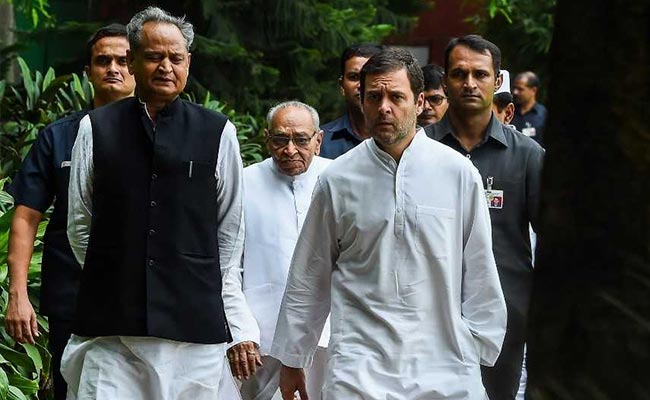
Gehlot and Congress have been criticising 4G services suspension in terrorism-inflicted Jammu and Kashmir
Gehlot and the Congress party in general, have been vociferously protesting when the Union government had suspended 4G internet services in Jammu and Kashmir after the abrogation of Article 370.
Gehlot himself had stated, “The people in Jammu and Kashmir have been forced to stay at home for 20 days without mobile internet, the government should not restrict the movement of citizens in this manner.”
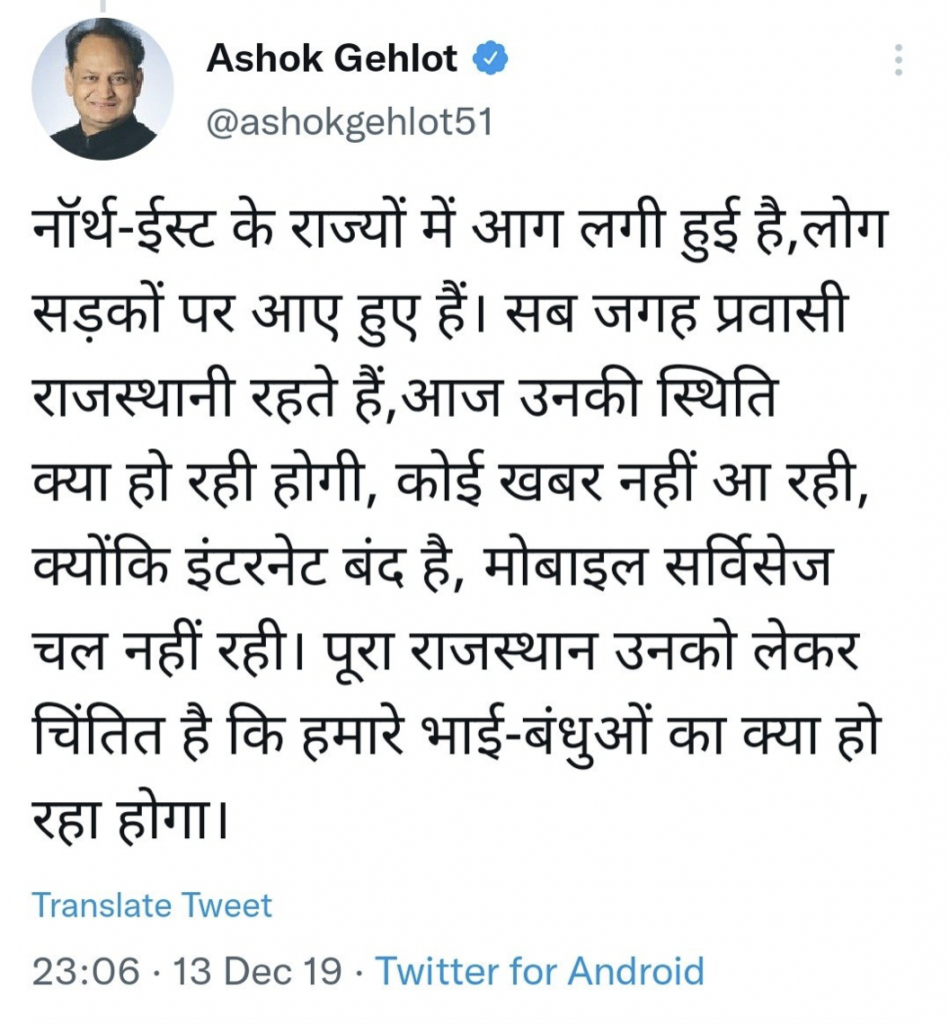
Gehlot was also very upset when the government in some North-East states had restricted mobile internet services to prevent mob violence and riots.
Gehlot’s tweet
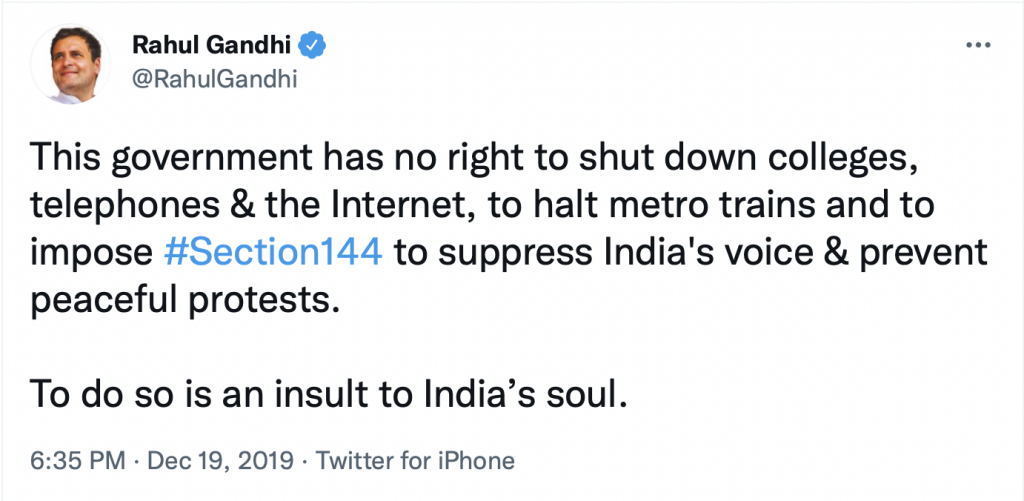
Congress prince Rahul Gandhi had stated shutting down the internet is like suppressing India’s voice. He had added that the government suspending the internet is an ‘insult to India’s soul’.
Tweet by Rahul Gandhi
Gehlot tweet in December 2019 was about the suspension of internet services in some other states of India due to the protests against CAA. He was ‘worried’ that Rajasthani people stay in those states and with mobile internet suspended they cannot contact home. He had expressed concerns regarding the safety and well being of those people stating that his government is worried over the suspension of mobile internet services.
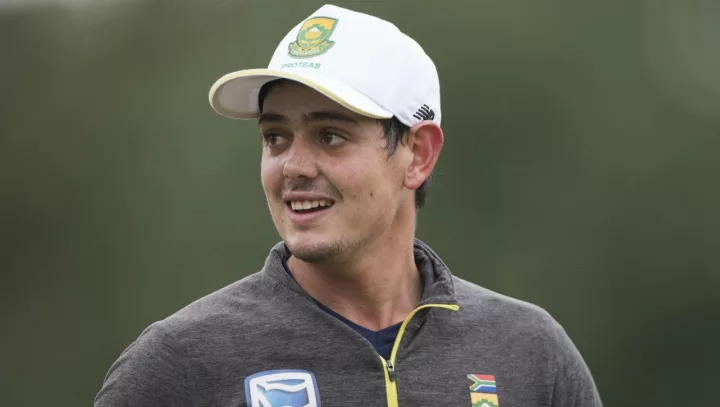
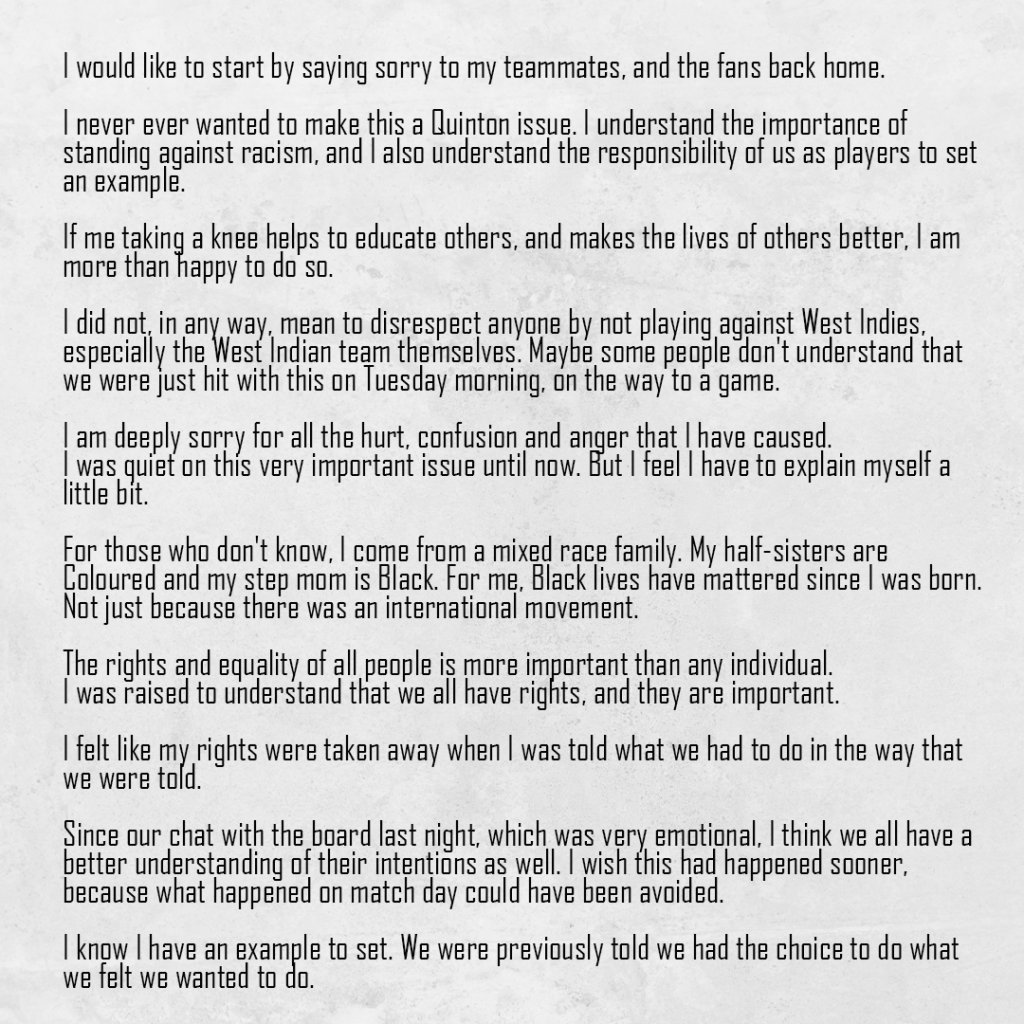
South African cricketer Quinton de Kock has finally issued a statement after he was out of the team versus West Indies for refusing to take the knee. In his statement, Quinton de Kock reiterated that he is not a racist and has siblings who are “coloured”.
De Kock said that he did not mean to disrespect anyone by not playing the match versus West Indies. He also said that he did not mean to turn it into a ‘de Kock issue’. The wicket-keeper said that the directive to take the knee was issued in the morning, when they were on their way to the match.
Source: Cricket South Africa/Twitter
“For those who don’t know, I come from a mixed race family. My half-sisters are Coloured and my step mom is Black. For me, Black lives have mattered since I was born. Not just because there was an international movement,” de Kock said.
He stated further, “The rights and equality of all people is more important than any individual. I was raised to understand that we all have rights, and they are important. I felt like my rights were taken away when I was told what we had to do in the way that we were told.”
De Kock said that there has been a discussion with the Board over the matter, which he said he wished could have happened sooner. He also said that they were told earlier they had the choice to do what they felt like doing at the time.
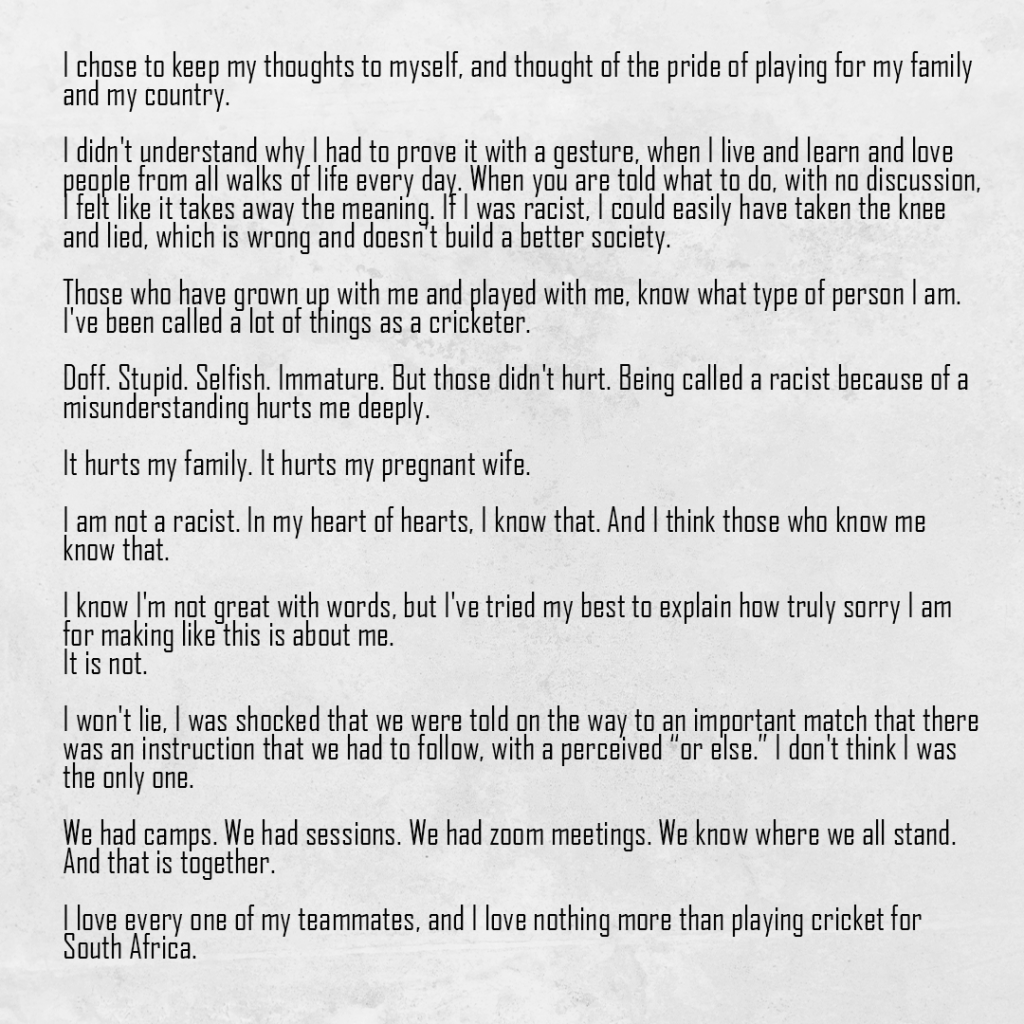
He continued, “I didn’t understand why I had to prove it with a gesture, when I live and learn and love people from all walks of life every day. When you are told what to do, with no discussion, I felt like it takes away the meaning. It I was racist, I could easily have taken the knee and lied, which is wrong and doesn’t build a better society.”
Source: Cricket South Africa/Twitter
“I’ve been called a lot of things as a cricketer. Doff. Stupid. Selfish. Immature. But those didn’t hurt. Being called a racist because of a misunderstanding hurts me deeply. It hurts my family. It hurts my pregnant wife. I am not a racist. In my heart of hearts, I know that. And I think those who know me know that,” de Kock stated.
The wicket-keeper also admitted that he was shocked when the directive to take the knee was issued.
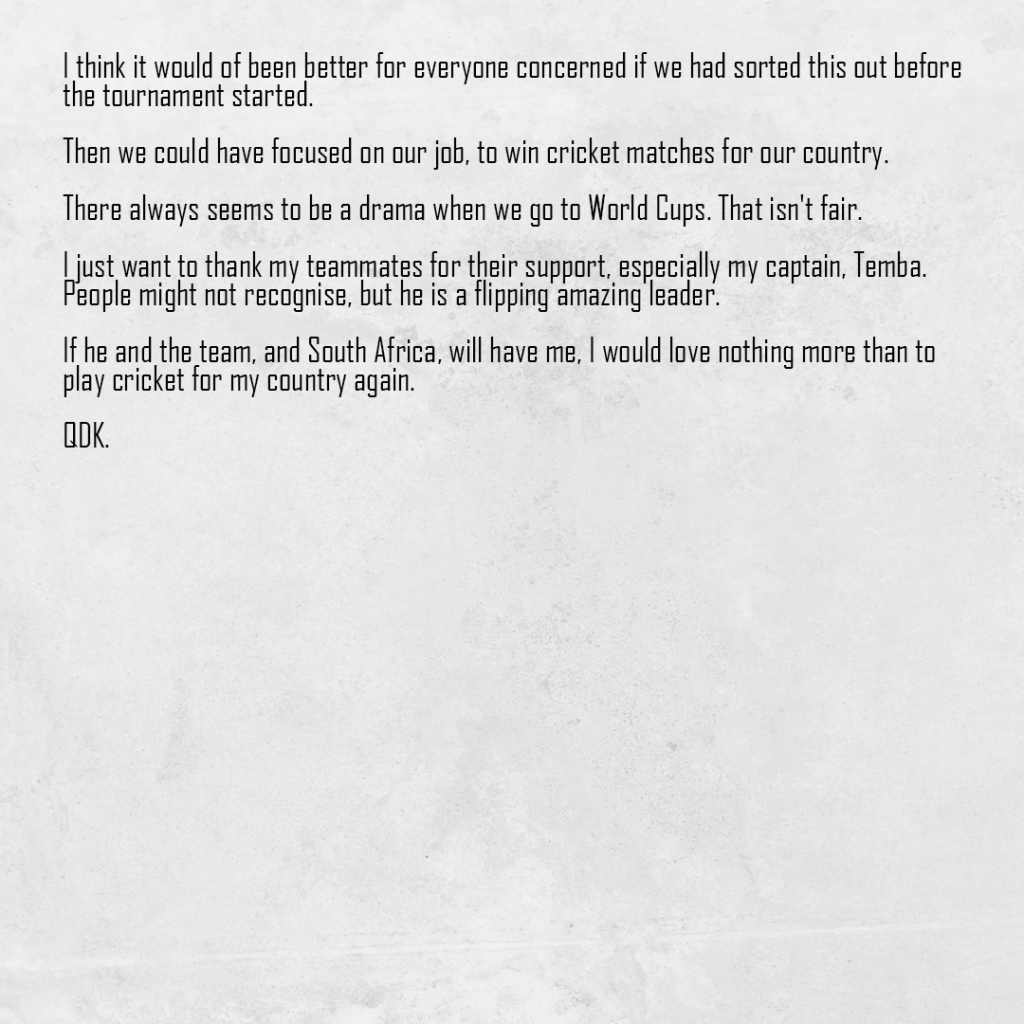
He said, “I think it would of been better for everyone concerned if we had sorted this out before the tournament started. Then we could have focused on our job, to win cricket matches for our country. There always seems to be a drama when we go to World Cups. That isn’t fair.”
De Kock also complimented Temba Bavuma, the captain of the South African team. He said that he will love to play for his country again.
Source: Cricket South Africa/Twitter
Earlier, Bavuma has backed Quinton de Kock fully in the post match conference. “Quinton is an adult. He’s a man in his own shoes. We respect his decision. We respect his convictions,” he had said.
Bavuma had stated, “As far as we stand, Quinton is still one of the players. He’s still one of the boys, so whatever support that he needs, whatever shoulder that he requires from his teammates, we’ll be there for him.”
De Kock’s decision to withdraw from the match over the knee directive had left former cricketers and social media divided. While former England captain Michael Vaughan said it should be an individual choice, commentators Pommy Mbangwa and Darren Sammy expressed disappointment over the same.
A two hundred strong crowd had assembled in a semicircle to watch half a dozen white-skinned humans wearing dirty tattered clothes, squatting on the ground with their hats turned upside down and a couple of placards saying “Please give us some money to go back home….we are broke, we have no money”. It was the decade of the sixties (more than 50 years ago). I was a schoolboy, part of that crowd opposite the coffee house in the middle of Connaught place where Palika bazaar stands today- watching all this in amusement. Out of these six Goras sitting on the ground, begging for money, I noticed that four were Sahibs (men) and two were memsahibs (women).
Coffee house those days was a good hang out for the journalists in Delhi.
One of the guys from the press stepped out of the crowd and clicked a photograph of these beggars. In a fit of rage one of them sitting on the ground got up shouting ‘you bloody man give me that camera, hand over the reel now’. He caught hold of the fellow, roughed him up nice and proper before taking out the reel from his camera and shoved him hard back into the crowd saying ‘You want to publish our photograph in the newspapers as if we are beggars? ’ The man was stunned and was visibly scared to even respond.
Not a single person came to the rescue of that journalist, not even one out of the crowd of two hundred right in the capital of their own country stepped forward. Instead, some of them were giggling and some even cheering – right in the middle of our national capital. I was wondering what they were cheering for. I was too small then but was enraged- and hung my head in shame thinking what would have happened if six of us had behaved this way in any western country. I am sure the crowd there would have clobbered us and made mincemeat out of us.
I could hardly ever forget this incident. The shame of Indians being rebuked by those who did not belong here, in our own country, stayed with me for a long time. It made me realise just how colonised in our mind we really were. We were willing to be treated as third-class citizens in our country by a bunch of foreigners who were begging for money in front of us. I wondered if it was Stockholm syndrome. PTSD perhaps? Or just our innate need to please those who look down upon us.
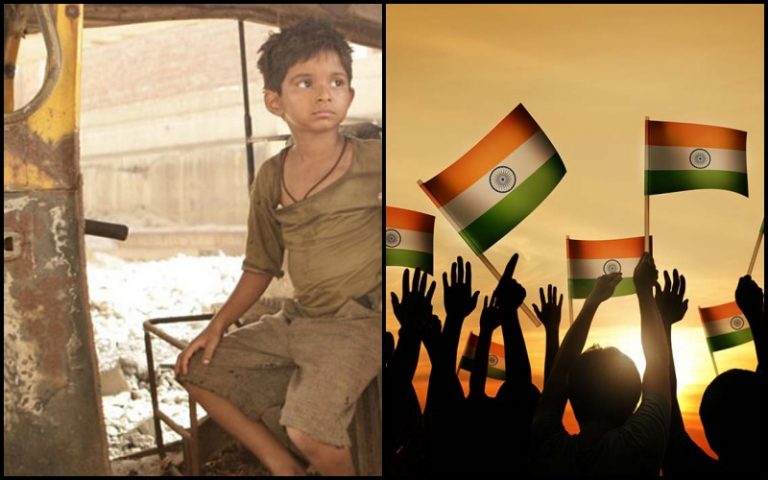
Almost fifty years later on the 26th January- our republic day- I had the same uneasy feeling. I felt like a slumdog. I saw people falling over each other- and mind you sane and so-called educated elite and intellectuals- praising a movie which had nothing good to talk about us. In fact, it was a repulsive display of western arrogance. Every channel, every newspaper and magazine in India was giving its full bandwidth to Slumdog millionaire – a movie that makes you feel sick as an Indian. I was wondering what this cheering was all about as I had wondered in front of the coffee house almost fifty years ago.
The success of a movie that has been made to display every negative of our society- prostitution, begging, maiming of children and much more is being celebrated by all and sundry in India. In one masterstroke, slumdog millionaire created more than one billion slumdogs living in India and abroad. “Jai Ho, Slum dogs Ki Jai Ho!” Oh yes there was a song also ‘Jai ho’ by A.R Rehman, Sukhwinder Singh giving the best performance of their lifetime which ricocheted in my empty numb mind
Please don’t give us this bullshit. We all are aware of our shortfalls. We know the problems of our country – corruption, poverty et al. But we don’t need the West to showcase it as poverty-porn.
As a young boy, I was confused. That day I was angry. I was very angry at every slumdog, whether he is a Slumdog poster boy or a slumdog socialite appreciating this movie or a slumdog journalist writing about it or a slumdog film critic giving four and a half stars.
‘There are protests by the socialites when an actor is shown smoking in a movie but not flutter when the West shames us. Two hundred people couldn’t call a ‘white beggar’ a beggar fifty years ago and now, one billion of us don’t have the guts to protest when they show us as a rotting society which actually is not that bad.’
We have moved miles ahead.
Who can change us? Or can we ever change and stand up for our honour and pride? The pride of a civilisational state looted by the very West that shames us today? I thought as a kid and still think as an adult Indian. We needed a leader who could show us the way.
This thought again rang a bell when our Prime Minister Narendra Modi in one of his speeches, I think it was on the floor of the parliament said ‘Till today we are so enamoured and start behaving sheepishly when we see a white skin.’ Spot on sir.
One thing is for sure, after 2014 every Indian worth his salt feels proud of being an Indian. This is not to say that none of us was proud of being Indian before PM Modi was the leader of India. But after 2014, patriotism was mainstreamed.
Yet, some had a problem when PM Modi thought of a statue of unity and made it in record time- double the height of the statue of liberty which every Indian visits when on a much-awaited vacation in the USA. Some even claimed that this kind of money should not be wasted on statues. They were not above putting a price tag on our own honour – What is a flag of a nation? A piece of cloth with some colour plastered on it and your soldier gives his life for that to keep flying high. Shame on such thinking.
Arthur C. Clarke once said, ‘There is hopeful symbolism in the fact that flags do not wave in a vacuum’. And ours does not.
Things have fast-tracked for 1.4 Billion of us since 2014. ‘Bharat badal raha hai’. Today we are a power to reckon with. As I write this piece, we have crossed 105 Crore covid vaccinations in the country leaving the West far behind.
IMF projects India’s GDP growth at 8.5% for the year 2022. We are moving slowly but surely to hit the mark of five trillion dollar economy.
Today, we no longer apologetically own our nationality or even our faith. Today, when the West writes desperate headlines trying to undermine our democracy, we know the motives and we have the spine to say, “look at your own country first. We are no longer slaves to your whims”. Today, when the New York Times publishes an article saying that our space ambitions are too lofty, we tell them off and we aim for the stars. We are no longer shackled by our past and we are no longer enslaved by our heathen guilty. Today, we stand toe-to-toe and rescue the world from a pandemic, by supplying made-in-India vaccines. Today, we realise that India is not just a political state, it is an ancient civilisation that we are duty-bound to protect.
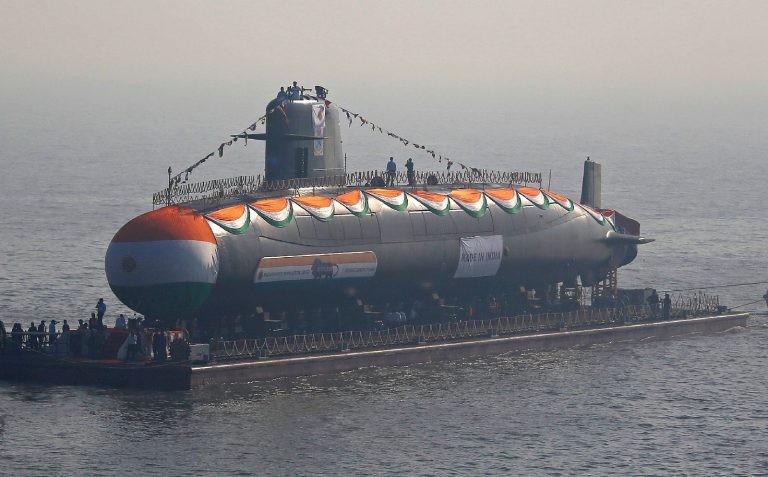
The recent Australian rejection of a long-sought deal with the French for the acquisition of 12 Short-fin Barracuda class submarines at a huge cost of $50 billion (at least four times costlier than the next most expensive non-nuclear-powered submarine) has kick-started chatter on India buying them instead. While the US promise to build 8 nuclear-powered attack submarines for the Australian Navy was enough for the Australians to cancel the contract with the French, the sheer cost of the French submarines is off-putting to any country that wishes to buy the same conventional submarines.
Indian Navy is reeling with a submarine availability shortage, with more than 35-year-old submarines still in service and expected to remain so for another 10 years. The 30-year plan of 1999 envisaged 24 non-nuclear diesel-electric submarines (SSK) and 6 nuclear powered ballistic missile carrier submarines (SSBN) which would be the naval leg of the triad of nuclear deterrence of our nation. In these 30 years, we were supposed to build enough submarines to replace the 14 in service in 1999 and also add at least 10 conventional and 6 nuclear-powered submarines additionally. In total, 24 conventional and 6 nuclear submarines were sought to be built in the period 2000-2030.
However, in the first 21 years since 2000, we have commissioned a total of 3 conventional (SSK) and 1 SSBN submarine. Obviously, it doesn’t bode well for the rest of the period, with only 3 SSK and 3 SSBN submarines on order and expected to be deployed by 2030. This leaves the Indian Navy with just 6 new SSK and 4 new SSBN submarines, while the rest (if any are left by the year 2030) after repeated refurbishment will at best serve as active reserves instead of being war capable.
Spending on the refurbishment of the Sindhughosh class submarines has reached ₹10,000 crores over the last 10 years, which was sufficient to build 5 new Scorpène class submarines if the order was placed in 2005 along with the other 6. Indeed, if instead of one Mazagaon Dock, two different Docks were chosen to build the Scorpenes, we could have had at least 8 Scorpene-class submarines today, all of which were not more than a decade old, instead of the 8 old Russian submarines which are not only creaky but are increasingly obsolete for modern war against the Chinese submarines.
The contract for building 6 Scorpene submarines required a large technology transfer from the French company DCNS (now Naval Group) which was supposed to be the basis for a homegrown submarine building industry. Despite ballooning of costs which is generally typical of the French and inordinate delay in completing the contract (another French area of excellence), we are left with the production of 6 submarines probably to be completed by 2023 and no home-grown industry to boot. Since this has been typical of the French, having done the same to us in Rafale tender as well as to the Australians in negotiating a literal loot with the Barracuda class submarine, India need not jump into the water (literally) to rescue the French after their stand-up down under.
India’s submarine building is to be looked into holistically and decisions are to be taken at the earliest to salvage the best of the 30-year plan in whatever time that remains. Of the two other available submarine classes that remain to us, the HDW built (now Thyssen Krupp Marine Systems -TKMS) type 206 submarines and their technologies were also given to India, South Korea and Australia.
While typically Indian dockyards sat on the technology and the Indian polity failed to ensure orders to ensure the talent (which in shipbuilding is the most important) in design and construction was retained and renewed, the South Koreans and Australians have a flourishing submarine building and overhauling industry having assimilated the Type 206 design. In fact, South Korea has offered its own development of Type 206 as a competitor to type 214 which the TKMS has now developed for export. Even in Australia, the biggest reason for domestic opposition against the shortfin Barracuda was the fact that the Collins-class submarines based on the HDW design could be further developed and modernized in Australia itself at much lower costs.
The objective of further conventional submarine building should comprise of the following:
Creation of in-house talent, skill, metallurgy, detection and ranging capability, torpedo capability, AIP and battery system and hull design and self-protection systems for conventional submarines to enable further R&D for 5th generation submarines after 2040.
Creation of adequate submarine building dock capacity that allows at least 6 submarines to be built simultaneously with production time of 3 years from work order to launch for trials.
Choosing a foreign collaborator to be able to jointly build/ develop and design in joint venture for export.
Create and promote a strong ancillary industry for ship building including specialty components for Submarines.
Ensure construction of at least 12 new SSK submarines by 2030 to give a healthy total of 18 SSK submarines and to add 6 more every 3 years from then on.
To develop and integrate into production of indigenous Vertical Launch System, Air Independent Power, Advanced SONAR to detect enemy submarines, Stealth and acoustic signature reduction,
Heavy Torpedo storage and launch system, VLS launched submarine variant of Akash or Barak-8 SAMs and Submarine Launched Cruise missile (either Brahmos supersonic or hypersonic) into homegrown submarine design as a joint development effort for Indian made SSK and SSN submarines.
The above seven objectives need to be aligned with the necessity to be at the forefront of deployable technologies in submarine warfare. The excellence of the Japanese Soryu class submarines in deploying Li-ion batteries that almost replace the Air-Independent Propulsion (AIP) system in capability needs to be paired with the AIP system of the Gotland class of the Swedish Navy, which gives long underwater capability at almost undetectable levels of noise. At the same time, the submarines to be built need to be armed with Desi Varunastra and also submarine-launched cruise missiles like Kalibr and Klub or other equivalent missiles.
A comparison of various submarine designs of different countries is shown below
Sl
Name
Country
Cost
Weight when submerged
AIP endurance
No. of Torpedoes
A2A missiles
Cruise missiles
to build
1
Amur-1650
Russia
$ 450 mil
2600 tons
5 days
24 -533 mm
4 -Igla
10
6 years
2
Scorpene
France
$ 650 mil
1800 tons
21 days
12- 533mm
6 – MICA
0
6 years
3
S-80+
Spain
$ 1 bil
3200 tons
55 days
12 -533 mm
0
2
8 years
4
Gotland
Sweden
$ 450 mil
1600 tons
14 days
12-533/6-400
0
0
4 years
5
Type -214
German
$ 450 mil
1860 tons
21 days
16 -533 mm
0
4
3 years
6
Type 216
German
$ 600 mil
4000 tons
28 days
12 -533 mm
6
24
5 years
7
Soryu
Japan
$ 650 mil
4200 tons
40 days
18 -533 mm
12
0
3 years
8
Taigei
Japan
$ 650 mil
4200 tons
40 days
18 -533 mm
12
0
5 years
9
Dosan Anh Changho KSS-III batch-II
Korea
$ 900 mil
4200 tons
28 days AIP + 14 days on Li batteries
18 -533 mm
10
10
4 years
What should be the selection criteria for SSK submarines in Indian Navy?
During a hypothetical war, Indian Navy could be expected to hunt and sink Chinese SSN/SSK submarines trying to infiltrate into the Bay of Bengal and Arabian Sea either from their bases in Djibouti, Gwadar and Hambantota or directly from the Chinese coast. So, the Navy requires advanced Sonar detection to detect Chinese submarines and also be much quieter and stealthier than most operational submarines in order to obtain first shot advantage vis-à-vis an enemy submarine.
It is foreseeable that in future conflict, Pakistani Navy submarines (the Chinese supplied ones) may also launch to hunt Indian surface vessels and cargo ships to sink them and augment the Chinese effort. The Indian Navy requirement in this case remains the same as in the point 1 above.
Chinese aircraft carrier operations may be carried out in Bay of Bengal and Arabian Sea through Anti-Submarine Warfare (ASW) helicopters or Y-20 transport planes which are proposed to be turned into the Chinese equivalent of P-8 aircraft of US Navy. While submarines largely do not have such Submarine launched Anti-aircraft Missile (SLAM) capability, newer technologies like IDAS for the Thyssenkrupp type 214 and the French A3SM (based on Mistral/MICA) are already tested and are available today. For what is going to be a large order of 12 submarines, having such a capability to shoot down ASW helicopters and long range ASW planes can blind the enemy to our deployment and also break an important arm of the Chinese/Pakistani Navy. This would require IN to provide its submarines with a Vertical Launched System (VLS) or a torpedo tube launched SLAM system so as to keep them current with near future technologies.
Chinese aircraft carriers and destroyers in a conflict, need to be hunted in Bay of Bengal and Arabian Sea as well as at choke points of Persian Gulf, Gulf of Aden, Malacca Straits as well as South China sea, to provide offensive capability and take the war into Chinese homeland. In such a case, having a submarine with an underwater endurance of at least 21-28 days at 8 kmph submerged speed would allow a range of 4000 – 5200 kms under water at a time. The overall operational endurance should also be around 60 days to enable an over water operational range of around 6000-8000 Kms and a ferry range of at least 15000 kms without resupply at friendly bases. This is almost the equivalent of a Nuclear-Powered Submarine (SSN) and at a fraction of the cost of an SSN, which can be used to reduce the edge China has over India in submarines. Further the submarines would require Anti-Ship Missiles and Submarine Launched Cruise missiles (SLCM) to take out ship and land targets in Pakistan, Djibouti and Chinese coast. This can be only done through VLS and only such submarines which possess VLS capability should be preferred for construction by Indian Navy.
The advantages of multiple capabilities like torpedo, mine laying, VLS launched cruise and Anti-Ship missile and Anti-Aircraft capabilities in addition to being stealthier than most operational submarines would allow the IN-submarine fleet to engage a much larger part of enemy Navy and Navy air arm in search and destroy activities, that shall tie them down instead of being deployed offensively against the Indian Coast. Thus, our task of sea denial is accomplished both by enemy asset destruction and forced re-deployment away from our seas.
One important point to be remembered is that underwater and even oceanic offensive operations cannot be conducted suddenly in a conflict. Even if the Indian Navy is eventually planning to use SSNs (Nuclear-Powered Submarine) and SSBNs (Nuclear Powered Ballistic Missile Carrier Submarine) in the south China Sea and Pacific and Indian Oceans, it has to have numerous submarines to map out underwater topography repeatedly to have a swift movement of submarines during times of conflict into targeting areas.
In fact, the Chinese Navy is currently undertaking this exercise in the Indian Ocean and occasionally in the Bay of Bengal and the Arabian Sea. For a fast topographical exercise that allows India to rapidly deploy its underwater resources in times of conflict and take the battle to the Chinese mainland, we need to have at least twice the present number of conventional submarines with long endurance when compared to the present crop of 1500–2000-ton size boats. Indeed, India’s next generation of 12 submarines should all be around 4000 tons submerged in displacement and be able to carry larger AIP and Battery sizes for decent underwater and overall endurance.
What To Choose?
The choice ultimately has to be made to go for a specific design of submarines and collaborate with a country to build at least 12 submarines at two different docks starting from 2022 to be able to commission all of them by 2030. Due to our requirement to possess heavier and longer-ranged SSK submarines, we can eliminate the designs of submarines that are lesser than 3000 tons. Further, only an established design should be taken up to avoid any research that causes delay and also pushes the research cost onto us while the offering nation uses the results of research and design for themselves subsequently freely and at our cost.
Therefore, only proven designs and production techniques should be considered when deciding on the submarine to procure. One bane of Indian procurement in defence equipment is the penchant for tendering and making submarines of different design objectives to compete for our order. This leads to a long and iterative process which despite ostensibly being done to avoid allegations of favouritism, actually achieves the exact opposite of the same.
Further, the aversion of politicians to be dragged into controversy in a defence deal means the procurement process is not taken up at the government level but at the level of vacillating bureaucrats. Thus, the entire process is long drawn out, often ending up with decades of process and nil results to show. The MMRCA tender, the P-75I tender, the AK-203 tender, the BAE Hawk purchase, the Tejas order etc. show that in most cases a decade’s delay is the norm in merely taking decisions and paperwork, leave alone solving problems of metallurgy, production and armament as well as research, which really need time.
India, therefore, needs to choose one country’s design for a large SSK submarine and go for it the whole hog. Instead of ordering modifications and additions and adding nonsensical conditions like technology transfer in niche areas like Air-independent Propulsion (AIP), etc, India should go for a plain contract to build 12 submarines in India at two docks, preferably Mazagaon and one of Vizag or Garden reach, by 2030. Further, the same weaponry and technology which is good enough for the designing country’s submarine fleet should be good enough for the Indian Navy.
To make a direct choice off the table above, one can see that only the German Type 216, the Japanese Soryu and its future upgrade Taigei-Class, and the South Korean KSS-III Batch-II also named the Dosan Anh Changho class submarines are the only four types that are reasonably useful for the future Indian Navy. All the four classes displace well above 3000 tons and provide the requisite vertical launching system (VLS), torpedo and SLCM /SLAM missiles either in torpedo tube or in VLS. Further, they have proven AIP technology and the Japanese and South Korean classes also provide latest LI-ion Batteries that further increase underwater endurance to close to 40 days.
Further, since the South Korean design is already in production and since the Taigei-Class is also close to launch, there is no fear of trying out unproven designs. Therefore, India must design between the Japanese Soryu/ Taigei designs from Japan or the Dosan Anh Changho III Batch -II class of the South Koreans. India should directly negotiate with either country and decide which one suits them financially as well as in terms of sharing useful technology and know-how. If the South Korean design is chosen then the cost per submarine would be around $700 million per boat or around $8.4 billion over 9 years.
Similarly, if the Japanese Taigei design is chosen, the same would cost $550 million per boat for 12 boats and would be equal to $6.6billion over 9 years. Either way, the costs are acceptable and the evaluation should rather be done on the basis of utility and favourable production terms to the country. Indeed, a work order of $6.5 -8.5 billion dollars would do wonders to any nation’s defence industry and it is expected that due to lack of adequate shipyards to build for both Indian Navy and Japanese Navy or the South Korean Navy, the two countries would accept these 12 submarines to be produced in India. Indeed, a joint venture between Indian and Japanese/Korean Docks should build the submarines with rights to export the same. Therefore, being a low capital affair for the partnering nation, this contract can help both India and partnering nation to develop a mature submarine production line and design that can help in taking the fight to China for both nations.
Ideally, the contract should be decided and signed before April 2022 and production should be kicked off before 2023 at Mazagaon Dock and by 2024 at the other dock also. Assuming a 3-year period of construction from metal cutting to launch for sea trials, the first 3 submarines would enter sea trials by 2026 and the next 3 by 2027. Further by 2030, 6 more would be in sea trials and ready for commissioning by 2031. The capital cost of these submarines could be met easily by amortizing the costs as is possible due to Indian construction. Indeed, the Indian Docks can be paid through Defence Bonds, which will significantly reduce the foreign component of the cost to more than half.
Conventional Power or Nuclear Power?
One of the most repeated arguments in the national defence fora today is that nuclear-powered attack submarines i.e., SSN is more important to the Indian Navy instead of conventional powered SSK submarines. On the basis of capabilities and ability to stay undetected, nothing compares with a nuclear-operated submarine. At the same time, its ability to carry large stores of torpedoes, cruise missiles and Anti-Aircraft missiles means that the SSN is more lethal, better protected and can operate as a lone wolf or in a pack.
Further, the SSN can also act as a deterrent merely by forcing over the deployment of assets for Chinese coastal defence simply because the IN had it. SSKs are noisier, operate for smaller durations and have more limited ranges due to fuel and AIP constraints and need to surface more often. The same constraints also make the submarines smaller (the largest SSK submarines are only 4500 tons while the smallest operational SSN is at least 5000 tons) and therefore lighter on torpedo stores as well as self-protection AAMs. This causes them to be dependent on other submarines and surface fleets and even then, these can only do limited duration operations in oceans.
On the balance of capabilities, the SSN is definitely more capable and useful for any Navy, leave alone Indian Navy. However, we need to consider the current state of development of SSNs in India. Presently, since 1988 India has been intermittently using first a Charlie class and now an Akula class Russian submarine on lease to provide SSN capabilities. We have paid Billions of dollars merely to lease the submarines and another $3 billion deal has been signed for a refurbished Akula Class submarine to be leased to India from 2025.
While on one side, financial constraint is given as a reason for not initiating production and design of more conventional submarines, on the other side, we are spending $3 billion to merely rent out an SSN for 10 years, when even Indian made Arihant and Arighat nuclear submarines do not cost more than $1.5 billion to make. In fact, the S-4 and S-4* ballistic nuclear submarines presently in the SBC docks would probably be constructed in just above $1 billion. So, to spend $3 billion on a lease is foolhardy and is alternatively quite enough to quickly fund an aircraft carrier INS Vishal especially if the same design of INS Vikrant is frozen and finalized.
Further, Project Alpha which is the designated SSN production program for the Indian Navy, itself gives a very unambitious timeline of 2032 for first commissioning of the first indigenous SSN for Indian Navy. Even the first SSN would go into dry dock at SBC, Visakhapatnam for construction no sooner than 2023, which is when S4* shall leave dry dock or shall be about to be launched. Even though the SSBN construction timelines have progressively declined for SBC to around 3 years before launch and 4-5 from first cut to commissioning, SSN being a new project will take longer.
Therefore, it is hoped that SSN shall be constructed in a new dry dock instead of the SSBN construction dock and that we have at least 1 assembly line of three submarine construction drydocks for SSN separately. Only then, can the Indian Navy be able to commission one SSN every year from 2030 to 2040, to possess at least 10 SSN, which would be a credible threat for the Chinese Navy in any sea. Further, having multiple submarines of a class and a larger assembly line reduces the cost of each submarine and India can even start producing SSN for other Navies at a very competitive cost compared to the US and other P-5.
Nonetheless, India’s SSN program if sped up will not deliver a submarine by 2032 at the earliest. So, it is therefore imperative to have a considerable SSK program to tide over such a shortage and to enter 2030 with a healthy strength of 18 SSK and so that by 2040, we can have 18 SSK and 10 SSN along with 4 Arihant-class and at least 2 S5 class SSBN. Thus, IN would be a true-blue water capable Navy, which can deter any nation from both nuclear attack on India as well as any conventional strike, by taking the fight to their land and strike at their underbelly.
SSK program also needs to be mastered for another purpose. Unmanned Under Water Vessels (UUV) are becoming fast popular and for at least the next 30 years, there shall only be SSK type UUV. For this, IN needs to have a large dedicated SSK fleet to patrol coastal waters and not only hunt UUVs of enemy fleet or even non-state actors, but also coordinate attacks on enemy Naval vessels of other types using our own UUV. This therefore needs technology and construction capability of both SSK and UUV types of vessels.
This is one main reason why the SSN shall never render the SSK obsolete even in large Navies. Even China as yet has 54 SSK submarines which it keeps replacing with newer SSK submarines only. This is in preparation for any large enemy Naval incursion in South China Sea, to deny Chinese coastal waters to any adversary. Therefore, the strength of numbers is never going to become irrelevant and IN also needs to have a thriving SSK building and R&D capacity to build bigger, better, quieter and more capable submarines.
For a cost-efficient yet highly lethal and Blue Water capable Navy, India has to make important strategic decisions on the construction of submarines of both SSK and SSN type. It also has to decide on the project time period and capital investment in the S5. Further, India has to decide on cancelling the $3 Billion lease for the Russian SSN or at least decide to prevent spending on a lease to affect its indigenous submarine construction plans.
India has to decide on a mixed fleet of SSK, SSN and SSBN, to deal with all kinds of threats to its maritime security and to project its National Power to obtain its international objectives. A 30 submarine Navy was ideal in 1999, when India’s main two adversaries, China and Pakistan together could not field 30 submarines on their own. Today with China having 64 submarines and adding at least 2 SSN and 2 SSK submarines every year, it shall definitely operate at least 80-100 submarines over the next 2 decades. At the same time China has already started building 8 conventional AIP equipped submarines for the Pakistani Navy and this may rise to 12-16 by 2040.
Therefore, Indian Navy will face at least 100 submarines and at least a similar number of UUVs in any joint war from 2040 onwards. In such a situation, we are optimistically looking for 18 SSK, 10 SSN and 8 SSBN at the maximum if we do not delay any further even today. Indeed, the task is tough and more importantly, urgent. India has to place its money where its mouth is and embark on a strategic submarine production program like South Korea and Japan decided in the 1990s. Every adversarial neighbour of China has embarked on a strong submarine program to deny sea dominance near their coast to China in any potential war. It is time India did so, even if it is with a delay of 20 years.
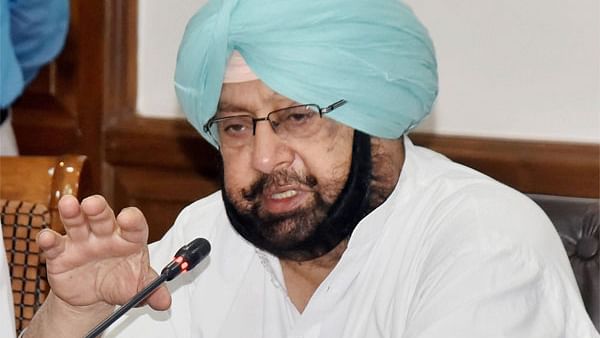
Former Punjab Chief Minister Amarinder Singh slammed the Punjab government for denying serious security concerns in Punjab. While speaking to media on Wednesday, former Congress leader Amarinder Singh warned that the Channi government’s attitude of ignoring the threats at the border may cost the state dearly.
“Something very wrong, dangerous and serious is happening at the borders in Punjab which the state could ill afford to ignore,” Captain said. He also stated that CM Channi and other Congress leaders are giving irresponsible statements regarding the issue. The threat of cross border terrorism, smuggling and narco-terrorism are very real in Punjab and there have been instances of cross border tunnels, rivers being used by Pakistanis, he reminded.
“I am not an alarmist. But having 10 years of experience in the Army and 9.5 years as chief minister and home minister of Punjab I can say something is going to happen,” Caption further warned. He took a dig at Punjab Home minister Sukhjinder Singh Randhawa. He said that a person who became home minister a month back “claims to know more than me!”.
On the other hand, I was Punjab Home Minister for 9.5 years. Somebody who has been the Home Minister for 1 month seems to say that he knows more than me…Nobody wants a disturbed Punjab. We must understand we have been through very difficult times in Punjab: Capt Amarinder Singh pic.twitter.com/EjSExBbsgJ
Stating that people need to be careful of the clandestine war from across the borders he said that sleeper cells of Pak ISI and Khalistani forces equipped with advanced technologies are creating problems. He said that powerful drones are being deployed by ISI and Khalistani forces. And the range of such drones is increasing day by day. First, they came in just 5-6 km from the border, now they reach 31 km,” he pointed out. he demanded the Punjab government to tell the people truth and take their help in fighting the challenges rather than denying the danger.
He justified the decision of the Union Ministry of Home & Affairs to extend the jurisdiction of Border Security Forces (BSF) from existing 15 km to 50 km inside the international border in Punjab, Assam, West Bengal. Punjab Chief Minister Charanjit Singh Channi had opposed this and termed it a direct attack on federalism. Amarinder said that a section is running a misinformation campaign that jurisdiction of BSF was extended with an ulterior motive to take-over administration of Punjab and BSF will be deployed at Golden Temple and other places.
Singh asserted that the state police are not equipped to handle issues of narco-terror and cross border security concerns. He added that BSF is there to help the state police and not ‘take over’ Punjab as Congress leaders are trying to falsely portray.
Channi opposes Centre’s move, asks to abolish BSF order
Punjab CM Charanjit Singh Channi and other congress leaders have been vociferously opposing the Union government’s decision to increase BSF’s jurisdiction to 50 km. Speaking to the media, Channi had yesterday openly ‘warned’ the Central government to withdraw the order. He had stated that the Centre should withdraw the order by November 8 or the Punjab government will be forced to ‘abolish’ it. He had added that the order will strain Centre-State relationship.
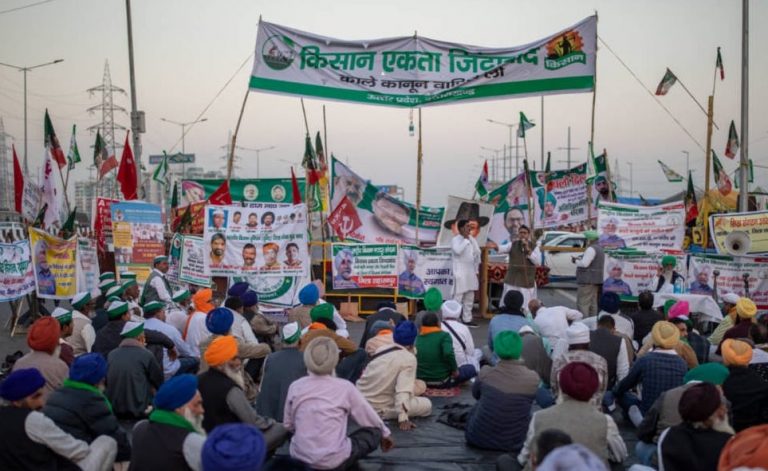
Kisan Social Army’s Ankur Sangwan, one of the prime accused in Tikri border gang rape case, on Wednesday surrendered in Bahadurgarh Court on Wednesday. He had a bounty of Rs 25,000 on his head. On police’s application, the court has sent him on remand. After he was produced in the court, he was sent to the jail. Ankur is a resident of Mandola in Charkhi, Dadri.
As per reports, Bahadurgarh DSP Pawan Kumar, a case of rape was registered at Bahadurgarh Police station in May 2021. The victim had eventually died of coronavirus. The victim’s father had told the SIT that his daughter stayed in the same tent of Kisan Social Army with Anoop Singh Chanot and Anil Malik. Where she was molested and raped. Chanot is an Aam Aadmi Party leader and one of the main leaders of Kisan Social Army along with Ankur Sangwan. On 30th April, the victim died at a private hospital in Bahadurgarh.
Police investigation has revealed that Anil Malik, AAP leader Anoop Singh Chanot and others molested the deceased victim and gang-raped her. Anil Malik has already been arrested while one more accused Jagdish is still absconding. Ankur, after surrendering in court, has said that he reached the Tikri border in November 2020 where along with his associates he started ‘Kisan Social Army’. Media outlets like Newslaundry had interviewed Kisan Social Army leaders including Chanot prior to rape case and gave them platform to abuse the ‘Godi media’ for not ‘showing true picture of farmer agitation’.
He had then gone to West Bengal during the elections where he met the victim as leader of Kisan Social Army. She, too, then joined the agitation at Delhi border. The victim had come from West Bengal on April 12 in a train to join the farmer’s protest where she was sexually assaulted. The victim who later got infected with the Covid-19 virus died at a private hospital in Bahadurgarh on April 30.
Professional protestor Yogendra Yadav, who is currently protesting on behalf of ‘farmers’, on May 10 admitted to how he knew about the sexual harassment faced by the woman as well as her possible kidnapping by the culprits but turned a blind eye. The victim’s father too had informed that Yadav was in touch with his daughter since April 24, before her death, and was aware of her predicament. However, he did not inform the police about the incident, which raised the question of whether he wanted to hide the misdeeds of the accused.
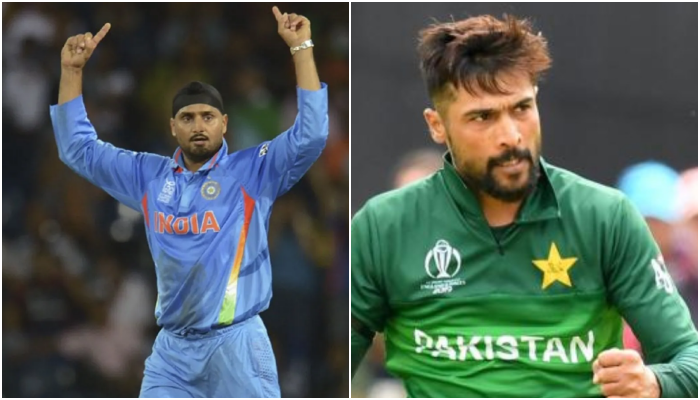
Former Indian cricketer Harbajan Singh has released a YouTube video on his official channel to put an end to his ugly Twitter banter with Pakistani player Mohammad Amir.
Singh in his video not just spoke about his recent controversial interview with Shoiab Akhtar but also asked Amir to ‘get lost’ after he took a nasty dig at the former Indian spinner.
Twitter banter
It all began with Amir tagging Singh in a Twitter post asking if he broke his television after India lost the first Super 12 match against Pakistan in the ongoing T20 World Cup on Sunday.
hello everyone woh pochna yeah tha @harbhajan_singh paa ji ne TV to ni tora apna koi ni hota hai end of the day its a game of cricket ?.
Taking the juvenile banter further, Amir sharing an old video mocked Singh for the time Shahid Afridi had hit him for four sixes in an over.
Lords mai no ball kaise ho gya tha ?? Kitna liya kisne diya ? Test cricket hai no ball kaise ho sakta hai ? Shame on u and ur other supporters for disgracing this beautiful game https://t.co/nbv6SWMvQl
Finally, Singh calling Amir a ‘fixer’ asked him to get lost from his timeline. “Get lost I feel yuk talking to people like you for insulting this game and making people fool with ur acts,” Singh Tweeted telling that all Amir cared about was money and not the game or his supporters.
For people like you @iamamirofficial only Paisa paisa paisa paisa .. na izzat na kuch aur sirf paisa..bataoge nahi apne desh walo ko aur supporters ko k kitna mila tha .. get lost I feel yuk talking to people like you for insulting this game and making people fool with ur acts https://t.co/5aPmXtYKqmpic.twitter.com/PhveqewN6h
Calling Singh a ‘cry baby,’ Khan said, “The entire #Sikh community would feel ashamed of you for this dirty comment….”
Amir’s ‘fixing scandal’
The most controversial fixing scandal had shocked the cricketing world in August 2010. In a major embarrassment for Pakistan, a 35-year-old Mazher Majeed was arrested for spot-fixing during an England vs Pakistan Test match series. Majeed was a player agent who was caught claiming to have bribed a couple of Pakistani cricketers to deliberately bowl no-balls on demand.
Reportedly, Majeed had accepted huge sums of money to spot-fix the Pakistani bowlers Mohammad Amir and Mohammad Asif to bowl no-balls at pre-decided moments during the match.
Post the investigation, the International Cricket Council’s (ICC) tribunal had barred Amir from playing any form of cricket for half a decade.
Harbhajan Singh releases a video
Ending the rather unwarranted Twitter war, Singh released a video on Wednesday clearing his stand. Singh began the video by congratulating both the Indian and Pakistani cricket teams for their performance.
Talking about his interactions with Akhtar, Singh clarified that the two have a long history of playing against each other for their respective countries and representing them in the media. “Shoiab and I have a long history of interactions and association. We both represent our countries in media and support them wholeheartedly. But who is Amir?” said Singh in his video.
Reiterating the exchange of heated words on Twitter, Singh emphasized Amir’s match-fixing scandal, calling him a traitor.
“For some money, you sold your team and even your nation. Who are you to even tell me anything? We all saw what you did at Lord’s by deliberately delivering no balls to make your team lose. You are nothing but a traitor,” remarked Singh.
“You have a few local media supporting you. Even they have no shame supporting a traitor like you. This exposes the standard of journalism in Pakistan. You are nothing but a ‘jaahil’. Please get lost,” said Singh further dedicating a four-line condescending poem to the Pakistani cricketer.
Advising Amir to simply support his country and not get into any unnecessary controversies or interfere, Singh ended his video by cheering for Team India.
“Bharat ki team zindabad thi, zindabad hai aur zindabad rahegi,” concluded Singh wishing the team all the best for their next match against New Zealand.
Communal bigotry of Pakistani players
This is not the first time the Pakistani cricket players have displayed their blatant bigotry and hatred for Indians, especially Hindus.
We reported how Waqar Younis said that it was very special for him when Mohammad Rizwan recited Namaz in front of Hindus during India versus Pakistan match at the T20 World Cup.
Prior to this, Shoiab Akhtar had brazenly supported and endorsed the two-nation theory on religious and communal lines.
Outrage swept social media websites after a small clip of a larger video from the Barabanki police station had gone viral on the internet.
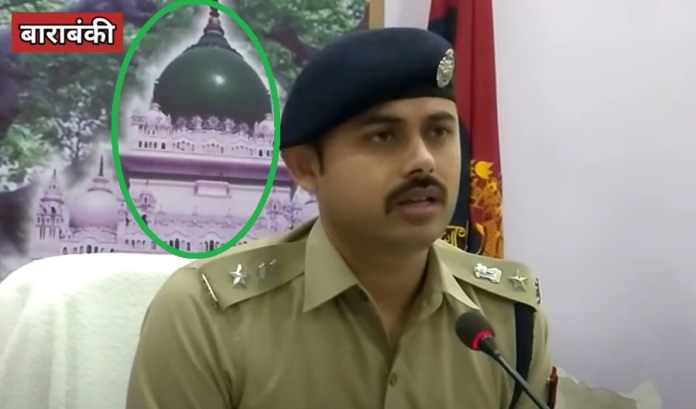
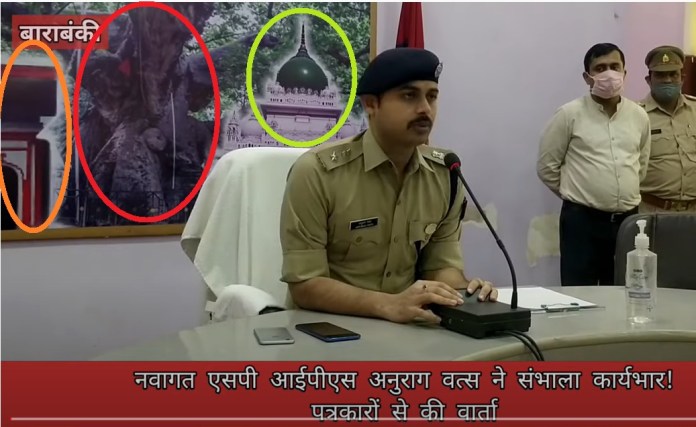
In the clip, newly appointed Barabanki SP Anurag Vats was seen interacting with the media. But what caught the attention of social media users was not what Vats said but the poster that was stuck on the wall behind the SP.
The poster that was seen in the clip bore what appeared a Muslim shrine, triggering social media users to question if pictures of religious places were allowed to be put up on walls in police stations and other govt offices.
Following the outrage, Barabanki police also took cognisance of the online furore.
Some other users said had there been a photo of Lord Ram on the wall instead of a mosque, the secular and the leftist gang would have wasted no time in targeting the SP and launching a social media campaign against him.
As Barabanki police find themselves in the midst of a social media controversy, it is worth exploring whether there is indeed a poster behind the chair of Barabanki SP and if there is, what is the significance of it.
Deva Sharif of Barabanki, Parijat Tree and Lodheshwar Temple
The picture on the wall as seen in the video clips that are doing the rounds on social media is of Deva Sharif, situated at a distance of 42 kms from Lucknow and 12 kms from Barabanki. It is the birthplace of Haji Waris Ali Shah. He died on 7 April 1905 and a building was built at the place as a mark of tribute Haji Waris Ali Shah, the Deva Sharif.
Image Source: India Opinion TV
In addition to Shah’s shrine, the poster bears pictures of two other places. However, those who were outraged over the clip on social media perhaps did not see the entire video of Barabanki SP’s interaction with the media. In the extended video, it could be seen that a picture of a tree is seen to the left of Haji Ali Shah’s shrine. The picture is of Parijat tree and it bears religious significance. There is a village, Kintoor, 38 km from Barabanki. The village is named after Kunti, the mother of Pandavas. There have been many ancient temples and ruins of others there. One of these temples was built by Kunti. There is this Parijat tree near this temple.
Furthermore, there is also a picture of a temple in the poster. At the start of the video, one can see a red and white structure to the left of the Parijat tree. This is a photo of the mythological Shiva temple Lodheshwar temple located in Ramnagar tehsil of Barabanki itself. It is believed that this temple dates back to the Mahabharata period.
This entire information is available on the website of Barabanki district – in the tourism section. In essence, the poster that triggered outrage does not have religious connotations but is meant to promote tourism in and around Barabanki. Therefore, it can be concluded that Barabanki police station has a poster meant to promote tourism in the area, perhaps published by the tourism department. However, people on social media often do not verify claims before sharing them and expressing their outrage over it. Unfortunately, even the Barabanki Police Department fell victim to the social media outrage and launched an investigation without first verifying the claims.
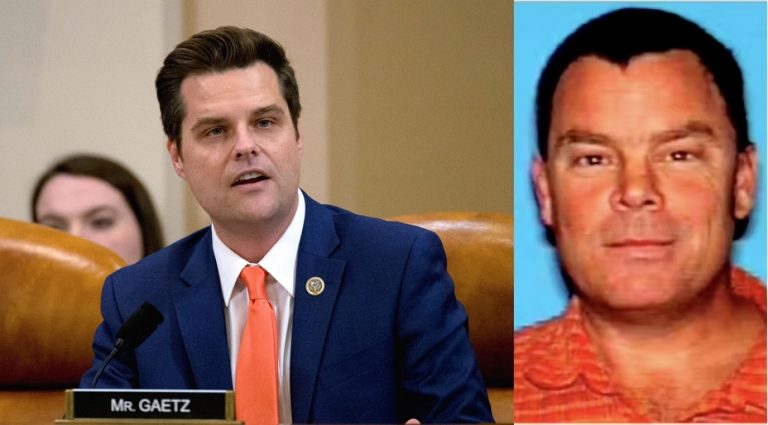
A California man who had worked as a cameraman for several major networks was arrested last week for threatening to kill Republican congressman Matt Gaetz. The Emmy-award nominated cameraman Eugene Huelsman had worked with CNN, ABC and NBC, and had also worked on the sets of Late Night with Conan O’Brien.
Reportedly, Eugene Huelsman had threatened the congressman days after the riots at Capitol Hills in January this year. Three days after the riots, he had allegedly called the office of Matt Gaetz threatening that he will shoot the Republican. Gaetz was one of the prominent Republicans who had supported Donald Trump in allegations of mass-scale voter fraud in the presidential elections.
According to charges filed against him, Huelsman told the staff of Gaetz on January 9 over phone, “Tell Matt Gaetz to watch his back, tell him to watch his children, tell him to watch everyone. I’m coming for him. I’m going to f—ing kill him. He’s a f—ing despicable f—ing tyrant and I’m going to f—ing kill him. I’m coming for you. I am going put a bullet in you and I’m going to put a bullet in one of your f—ing kids too. I hate you.” His threats on the phone were recorded, which can be heard in the Fox News clip Tweeted by Matt Gaetz given below, but still, it took months to arrest him.
BREAKING: Eugene “Gene” Huelsman, a longtime camera operator for CNN, ABC, NBC, and others, has been ARRESTED for threatening to kill Matt Gaetz and his family.
Another man who recently threatened Rep. Gaetz is still free after the DOJ blocked USCP's recommendation for arrest. pic.twitter.com/JbIe3LJAY5
Eugene Huelsman was indicted for threatening to kill Matt Gaetz and his kids by a federal grand jury give months ago in May, but he was arrested only recently, after which his identity was revealed.
According to his profile on IMDB, Huelsman has done camerawork for several shows, TV series, and award shows, including Saturday Night Live, Late Night With Conan O’Brien, the Ellen DeGeneres Show. He has almost 30 years of experience in television and film production.
Gaetz said that Eugene Huelsman was arrested after he talked about inaction by the administration over threats to him. “An indictment was issued in May, and has now been unsealed the week after my criticism,” he said. Matt Gaetz further added, “If they took our security seriously, they would arrest all of the people who violate federal law and the threats to kill us, not just some of them … I think that the Department of Justice is biased against Republicans.”
The arrest was made days after Gaetz had said that his life was in danger. “I think someone may be trying to kill me and if they are successful I would like my constituents and my family to know who stopped their arrest,” Gaetz had said last Wednesday in a speech in the House of Representative. He had added that a hitman who had threatened him on Twitter had travelled to Washington D.C. recently to target him, and said that the Justice Department declined to arrest the suspect despite the Capitol Police recommending such an arrest.
On October 8, a Twitter user with the handle @CIABOBISATYOURDOOR had threatened the Republican congressman saying, “Lookie here pal. I lived in Portland. Portland has ordered a hit on you. I accepted the contract. Have a good day.” The user had posted another tweet saying, “I am going to wipe you off the surface of the earth. Have a good day.”
BREAKING: A man traveled across the country with the explicit goal of killing me in Washington, D.C.
Gaetz said that following the threatening tweets, the individual had travelled to Washington D.C., and the Capitol Police recommended his arrest, but the DOJ refused to do so.
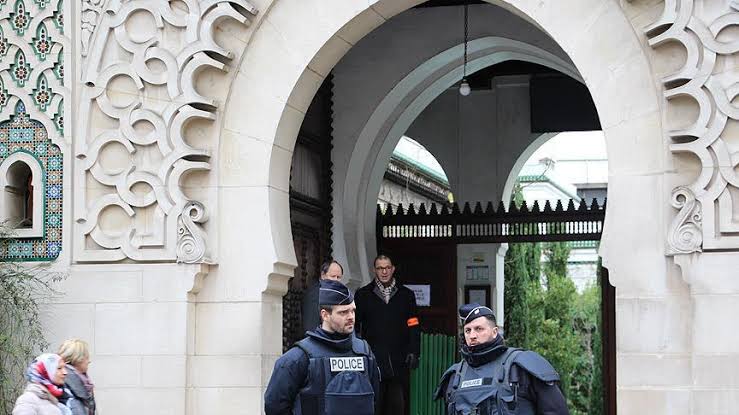
France government has ordered the closure of a mosque in Allonnes near Le Mans for harbouring ‘radical Islam’ and ‘legitimising terrorist attacks’. Interior minister Gerald Darmanin said that the managers and imams at the mosque allowed actions that run counter to the ‘values of the Republic’.
The mosque has been shut down for six months, Darmanin said, adding that the bank accounts of the mosque’s administrators were also seized.
The charges against the mosque include inciting hatred towards France, Westerners, Christians, and Jews. “The sermons propagated in this mosque cultivating hatred toward France,” Darmanin wrote on Twitter, defending the closure. The administration said that apart from hatred and discrimination”, the mosque also promoted “the establishment of sharia” in France.
Along with the mosque, a Quranic school hosted by it also has been closed, saying that “armed jihad” was promoted in the school. A pasted sign on the door of the school said on Wednesday that the classes were “suspended until further notice.”
The French Interior Minister also added that plans are underway to shut down seven more associations or religious buildings by the end of the year. The minister also informed about the closure of 13 religious associations since President Emmanuel Macron took office in Elysee Palace.
The Sarthe Governorate on Oct. 25 released a statement saying that the mosque with a congregation of 300 people in Allonnes was closed for six months on the grounds that it “defended radical Islam.” The purge was part of a campaign that has been criticized worldwide by international human rights organizations as well as global leaders, particularly in Muslim-majority countries.
President Emmanuel Macron launches sweeping measures to tackle the menace of Islamist separatism
The purge is a part of a campaign launched by France to combat the menace of Islamism that is steadily increasing in the country and whose ugly manifestation was witnessed last year in the form of the brutal killing of a French teacher for reportedly reproducing pictures of Prophet Muhammad.
Samuel Paty, a school teacher, was publicly beheaded by a radical Islamist for showing a caricature of Prophet Muhammad to his students. He was beheaded by a Russian refugee Abdoullakh Abouyezidovitch who was inspired by an online campaign that was run against Paty for alleged blasphemy.
The incident had sparked a nationwide reckoning about the threats posed by the prevalence of Islamism and institutions that played vital role in supporting and promoting it. French President Emmanuel Macron decided to grasp the nettle and announced that his government would take measures to curb what he described as Islamist separatism.
92 of the total 2,500 mosques were closed down as a part of the French government’s clampdown against Islamic extremism since September 2020. The residence permits of 36,000 foreigners were been canceled on the grounds that they posed a threat to public order.
French government passes anti-separatism bill to curb rising Islamism
The French government had earlier this year also passed the “anti-separatism” law that was assumed to counter the menace of Islamist-driven attacks. The bill contained a range of measures on the neutrality of the civil service, the fight against online hatred and the protection of civil servants such as teachers.
A provision of the law introduced an offence for wilfully endangering the life of others through spreading information about a person’s private life. It carried punishments of up to three years in jail and a €45,000 fine.
Another prominent measure in the bill said associations will have to be signatories of a republican commitment contract to qualify for state subsidies.
The law granted sweeping powers to the authorities to intervene in mosques and associations on administration related queries as well as in matters related to finances of associations and non-governmental organizations (NGOs).