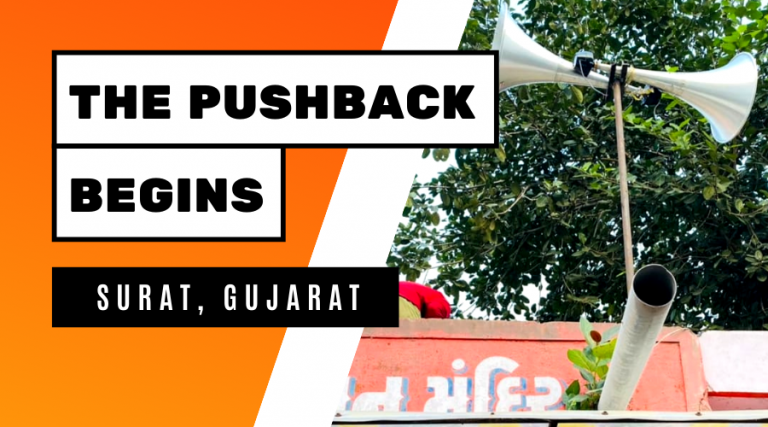
It has been 8 months since the first recital of Hanuman Chalisa took place on loud speakers in temple in Surat. It all started in Soni Faliya in Surat where Desai ni Pol is situated. Shri Sainath Yuvak Mandal, a youth organisation, decided to recite the Hanuman Chalisa twice a day, in the morning and in evening on loudspeaker. This has created a pious, religious atmosphere in the region.
It is not necessary that the loudspeakers are kept on temples only. Some residents have also provided space for facilitating the recital of Hanuman Chalisa. Timers are set and in morning and in evening, during the time of Aarti, the Hanuman Chalisa is played.
Here are the visuals from Surat’s Aazad Nagar area where recital was held. In the video below, one can hear recital of Hanuman Ashtak.
Local residents of Surat say that people of other religion use loudspeakers for their call of prayer and any objection to the same is scoffed at and looked down upon. Whereas Hindus these days hardly wear their religious identity on their sleeves because inIndia we are made to hide it to keep up the show of so-called secularism. “Hindus have restrictions while others can announce their religion on loudspeaker,” said Yagnesh Patel, a Surat resident and Bajrang Dal sanyojak, while speaking to OpIndia.
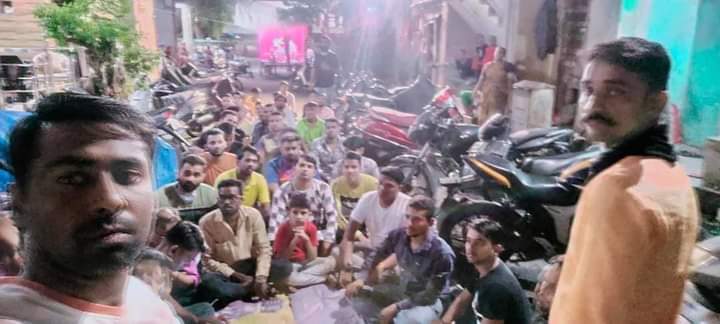
“People of certain community gather every Friday and even take up public spaces to assert their religious identity. In Surat, we have weekly Satsangs at 15 locations as of now where they come and recite Hanuman Chalisa. This way, we are trying to create awareness about our Dharm and spread positivity in the atmosphere. This is our only aim,” Patel said.
Devotees participating in Satsang in Surat
“We do not block roads and cause inconvenience to people. We sit on the space outside the temple and carry out Satsang every Saturday for some time. This makes everyone feel closer to the religion,” Patel added.
Over time, people have started appreciating the efforts and more and more people have started taking part in the prayers and satsang. This is not limited just to Surat, but even other parts of Gujarat have embraced Hanuman Chalisa recital. Other than the local Hindutva groups like Shri Sainath Yuvak Mandal, women’s group of Durga Vahini and Matru Shakti also join in the satsang.
The Hindu Pushback
Across India, the azaan, Islamic call for prayer, is blared on loudspeaker five times a day, the first one being played way before sunrise between 5-6 AM. Even Islamic countries discourage the use of loudspeaker for azaan for Fajr (morning) namaaz, or use only internal speakers for the same. In India, however, any such comments on use of loudspeakers for azaan is referred to as ‘bigotry’ and ‘Islamophobia’ – many times by the ones who refer to themselves as liberals and seculars.
No court or government in India has dared to go against this so as to preserve the so-called secular fabric of India. Police, often end up taking action against those who complaint about usage of loudspeakers instead. When those who are tasked with maintaining law and order situation and protecting interests of all individuals equally end up showing such soft stand only towards people from particular community so as to not to ‘offend’ them, it does not go unnoticed. People cannot just ignore or pretend not to notice the tectonic shifts in definition of ‘secularism’.
When the Hindus have started reciting Hanuman Chalisa on loudspeakers, it is more of a symbolic pushback. That they are not taking law into their own hands and cutting off electricity of mosques or removing the loudspeakers forcibly. The Hindus are just bringing a semblance of justice and equality that needs to be maintained. Similar symbolic protest was seen in Gurugram recently where residents decided to sit on streets to recite bhajans against illegal occupation of community ground for ‘namaaz offering’.
What is good for Paul should be good for Parvez and what is good for Parvez should be good for Prafull.
Fabindia has found itself in the thick of a controversy after its ‘Jashn-e-Riwaaz’ collection sparked massive outrage online. People on the internet were not happy that the brand had not acknowledged Diwali in its festive collection and had come up with a bizarre Urdu name for it.
Social media users accused Fabindia of attempting to appropriate Hindu festivals. Following the backlash, the brand tried to course-correct and removed all references to the campaign on Twitter. It tried to do the same with its posts on other social media platforms.
Now, it appears, the brand has come up with a brand new name entirely for its festive collection. Fabindia has decided to call it ‘Jhilmil si Diwali’, which is much more in line with the ethos of the Hindu festival.
Source: Fabindia website
Earlier, BJP MP Tejasvi Surya had said, “Deepavali is not Jash-e-Riwaaz. This deliberate attempt of abrahamisation of Hindu festivals, depicting models without traditional Hindu attires, must be called out. And brands like Fab India must face economic costs for such deliberate misadventures.”
Calls for a boycott were made by others as well. It appears that the brand has taken cognizance of the dissatisfaction of its customers over its Jashn-e-Riwaaz collection and has chosen to do away with it completely. The ‘Jhilmil si Diwali’ collection does appear far more in line with what their customers would want.
Durga Puja is an integral part of Hindu Bengali culture. Apart from being a religious festival, it is an emotion that resonates in the hearts of the Bengali community. As such, it comes as no surprise that Bengalis wait in sheer anticipation of the annual Durga Puja. But, for Hindus living across the border in Bangladesh, the auspicious occasion was sullied by violence, vandalism, killings, rapes and desecration at the hands of radical Islamists.
In a Muslim-majority nation where they constitute less than 10% of the total population, Hindus remain vulnerable to attacks by radical Islamic terrorists. Opindia has documented 100s of such cases of persecution and ill-treatment meted out to the minority community. Given Bangladesh’s track record of human rights violations, attacks on Hindus remains a routine affair. However, this time the Islamists tried to create a context to justify their ruthless atrocities on minorities, ahead of Durga Puja.
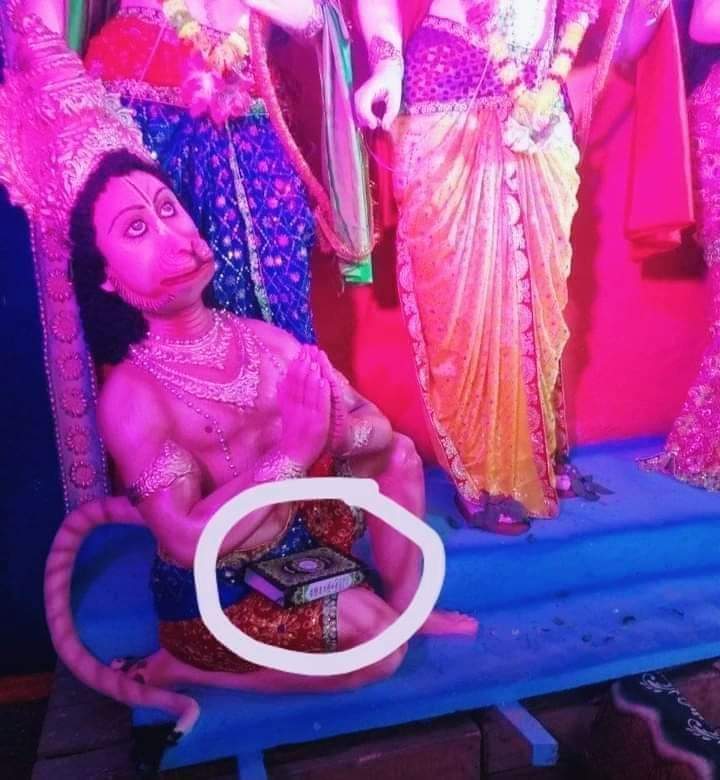
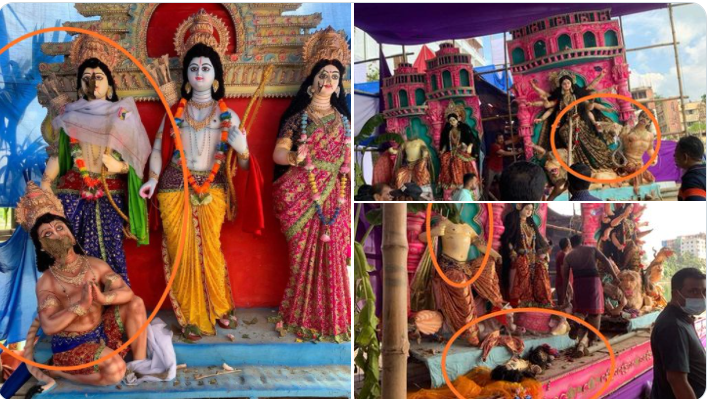
In the wee hours of Wednesday (October 13), radical Islamists reportedly entered the Nanuar Dighir Par Durga Mandir in Cumilla district and placed a copy of the Quran on the feet of the idol of Lord Hanuman. According to Shibu Prasad Dutta, the general secretary of Cumilla Mahanagar Puja Udjapon Committee, someone carried out the mischief in the morning when the guard was asleep. “The miscreants took some pictures of this and ran away. Within a few hours, using Facebook, the propaganda spread like wildfire with the provocative pictures,” confirmed a district official.
Radical Islamists placed the Quran copy on the feet of Lord Hanuman
The foundation for orchestrating a Hindu pogrom was perfectly laid – The insult of the ‘Holy Book’, the punishment for which is death. Dipan Mitra, the Secretary-General of World Hindu federation (Bangladesh Chapter), stated, “Then they raised an issue of insulting Islam and gathered a mob and started attacked Hindu Temples in Cumilla town. After that, the attack on temples and Hindus was spread all over the country…”
He further added, “They Vandalized more than 315 Temples and its Idols and looted all valuable things in more than 30 districts of Bangladesh during 13 – 16 October 2021. They attacked and vandalized nearly 1500 Hindu houses in Cumilla, Chandpur, Noakhali, Chittagong, Cox’s Bazar, Feni, Chapai Nawabgonj and other districts.” Mitra recounted the names of the 10 Hindus who were slaughtered by radical Islamists under the garb of blasphemy. They included Manik Saha, Jatan Saha, Prashanta Das, Priest Nimai Krishna, 4 unnamed Hindu priests and 1 more unidentified victim. Besides, 23 Hindu women and girls were raped and 17 Hindus remain missing.
Mitra concluded, “Now is the time to clarify the position of the government – do they want Bangladesh to be a secular prosperous Bangladesh or do they want to take it back to the ideology of previous Pakistan”. He also mentioned that the lack of justice is giving birth to new crimes in this country. He appealed to the government for immediate arrest of all culprits and provides exemplary punishment.”
The seeds of violence was sowed in Cumilla district
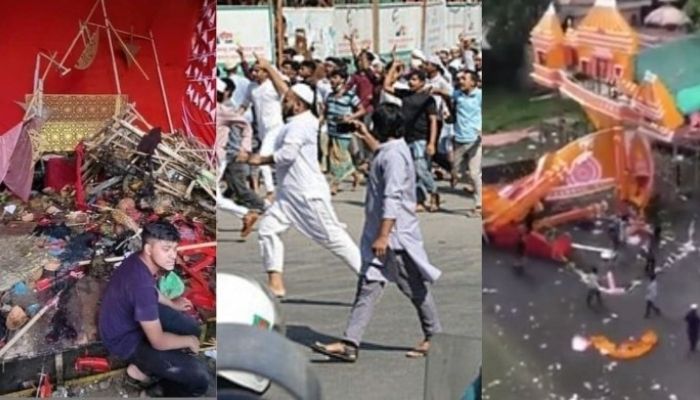
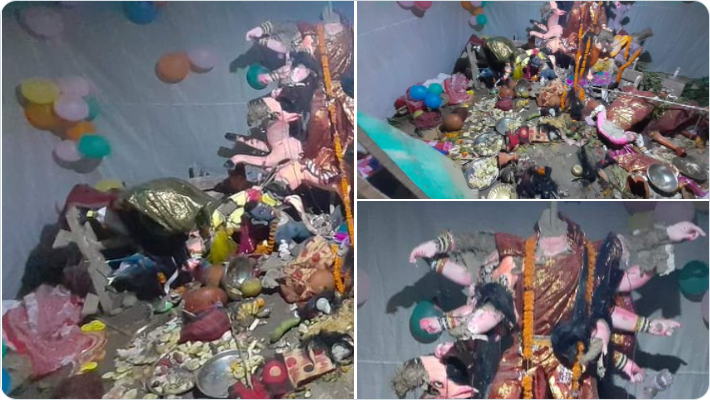
While blaming the Hindu community for the desecration of the Quran, Islamists vandalised the Durga Puja pandal and the idols of the deities kept at the Nanuar Dighir Par Durga Mandir in Cumilla. According to Dipan Mitra, the Islamic extremists also attacked the Nrisingh Dev and Dashavuja Kali temples. He added that the mob also vandalised the Rishipara temple, Rajeswari Kali temple, besides 14 other temples and Durga pandals in the district.
Islamists vandalise Nanuar Dighir Par Durga Mandir in Cumilla
Muslim mob demolished 9 Durga mandapas and Murtis in Comilla, Bangladesh. Hundreds of radical Muslims attacked this morning. The attack is still going on.
HINDU GENOCIDE IS TAKING PLACE IN BANGLADESH RIGHT AT THIS MOMENT
The Secretary-General of the World Hindu Federation (Bangladesh Chapter) informed that the Muslim fanatics attacked 15 Puja pandals (Banskhali), 3 temples and puja pandals (Melaghar in Patia), 5 temples and Puja pandals (Sarkarhat and Hathazari) in the Chittagonj district. He added that attacks were also carried out at the Karunamoyi Kalibari temple at Chakbazar and J M Sen Hall Puja Pandal in Chittagonj.
Chandpur, Bangladesh. The miscreants are demanding to set the local ISKCON temple on fire. In the second video, attacks on 150 Hindu families in Shilpara, Cox’s Bazar, looting and vandalism in Hatiya, Noakhali. Kalimandir attacked, women molested and 2 dead bodies found. pic.twitter.com/bc63SkUi1r
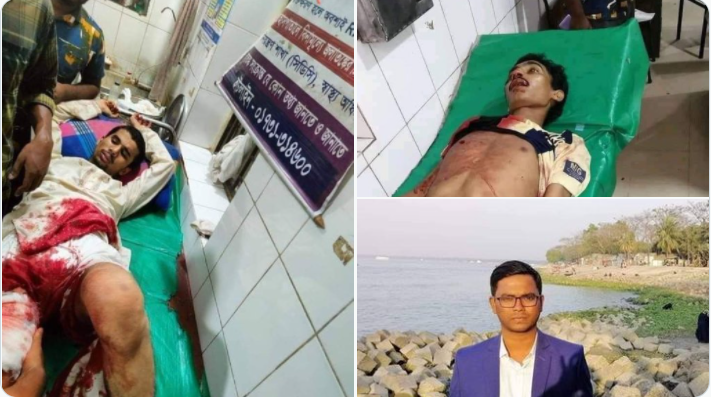
At the same time, 70 Hindu houses were attacked in Hajiganj in the Chandpur district. About 150 Hindu families were targeted along with the iconic Ramkrishna Mission. Besides, 7 temples and puja pandals were also destroyed by Muslim extremists. Advocate Dr Gobinda Chandra Pramanik, Secretary-General of Bangladesh Jatio Hindu Mohajote, shared the news of the death of Manik Saha, publicity secretary of Chandpur district branch of Bangladesh National Hindu Youth Grand Alliance.
Victims of violence in Chandpur carnage, images via Twitter
The mayhem at Noakhali
The Islamists attacked the Ram Thakur Ashram and vandalised 10 temples and puja pandals including Mongola, Nabadurga, Bijoya, Trishul and Koatbari Puja Pandal. About 20 houses were attacked in Nalchira, Chayanibazar, Begumgonj, Choumohoni and Sonaimuri. At the same time, 9 temples and puja pandals were vandalised at Choumohoni in Noakhali.
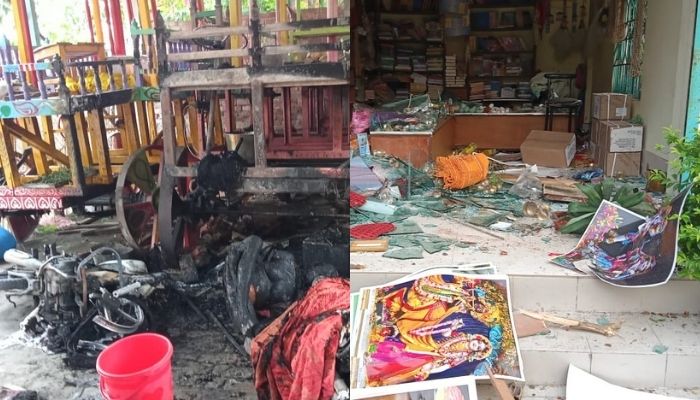
ISKCON temple vandalised in Noakhali
On Friday (October 15), a frenzied mob of radical Islamists attacked the International Society for Krishna Consciousness (ISKCON) temple in the Noakhali district of Bangladesh. In a tweet, the official handle of ISKCON wrote, “ISKCON temple & devotees were violently attacked today by a mob in Noakhali, Bangladesh. Temple suffered significant damage & the condition of a devotee remains critical. We call on the Govt of Bangladesh to ensure the safety of all Hindus & bring the perpetrators to justice.”
Just few hours back today, around 500 Muslim mob gathered outside @iskcon Temple in Naokhali and they broke Deities inside ISKCON temple and set temple on fire. They also destroyed Durga Devi in front of ISKCON Temple. Our devotees fought: many r critical pic.twitter.com/R8Rfs8H6kX
The Bangladesh unit of ISKCON lamented that the sculpture of its founder, AC Bhaktivedanta Swami Prabhupada, was burnt down during the arson attack on the temple. A Twitter account (@HinduVoice_in) had shared disturbing visuals of arson by radical Islamists. In the video clip, flames and smoke were seen rising from the burnt ISKCON temple. Spokesman Radharamn Das had shared visuals of a Hindu monk, who was critically injured after sustaining a dagger attack to his head.
Just see how they have attacked our ISKCON monks. This devotee was attacked with dagger on his head. He fought bravely before attacked from behind. These devotees don’t fear for their life but worried about women & children’s of neighborhood. Will world wake up tonight? @PMOIndiapic.twitter.com/s2He9nKJct
In a video that has now surfaced on social media, a Hindu monk at ISKCON narrated, “Hare Krishna! Today, Jamaat attacked the ISKCON temple and other temples in Choumani in Noakhali. They have executed it as part of a vicious plan. ISKCON Mandir has been desecrated. They have killed one devotee outright and stabbed another, leading to his critical state. Several motorcycles were set on fire. There was a mob of 400-500 people. They have looted 1 lakh taka from our temple The Noakhali administration has yet not taken any action against the miscreants.”
More Hindu temples attacked, petrol bombs hurled in Feni district
Radical Islamists attacked Hindus in the Feni district in the Chittagong Division of Bangladesh. A 14-second video clip had gone viral wherein radical Islamists could be seen creating mayhem on the streets. Equipped with lathis, the frenzied mob gathered in large numbers and then looted and vandalised Hindu temples in unison.
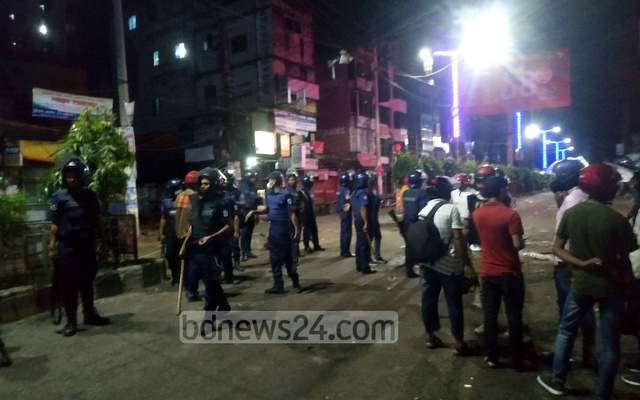
Reportedly, the President of the Bangladesh Hindu Buddhist Christian Unity Council, Shukdeb Nath Tapan, was attacked by the same Islamist mob near the Joykali temple. The Hindu community was preparing to lead a march from the said temple to the old Dhaka-Chattogram Highway’s Trunk Road. Islamists, who had gathered near Trunk Road Bara Masjid attacked the Hindus with sticks and brickbats. In a bid to control the law and order situation, the cops deployed a large team in the Feni town. They resorted to firing tear gas shells to disperse the unruly mob.
Police gathered to maintain the law and order situation in Feni, image via BDNews24
According to Officer-in-Charge (Feni Model Police Station) Nizam Uddin, more than 40 people were injured during the clashes. They were then rushed to the Feni General Hospital. According to Shukdeb, the district administration took time in sending in Border Guard Bangladesh (BGF)and Rapid Action Battalion (RAB). The attackers torched a passenger vehicle at Kalipal, hurled crude bombs, vandalised a fire truck and attacked Hindu temples such as JoyKali, Jagannathbari, Kalibari Temple and Gaziganj Ashram.
As per eyewitnesses, the student wing of the Jamaat-e-Islami named Islami Chhatra Shibir was among the perpetrators. Local activists of the Awami League and its student wing Bangladesh Chhatra League tried to resist the attackers. “We’ve got reports about vandalism of shops. We are working on it,” stated Inspector Monir Hossain (Feni Model Police Station).
Hindu houses, temples burned in Rangpur
In a fresh attack on Sunday (October 17), they carried out arson at a village and burnt 20 Hindu homes in Pirganj Upazila in the Rangpur Division of Bangladesh.
BDNews24 reported that Muslims in Jelepolli in Majipara had alleged that a Hindu man had posted ‘content dishonouring religion’ on Facebook. District Superintendent Md Qamruzzaman stated, “Police stood guard around his home. That home was saved, but the attackers set fire to some other homes not so far from his.” The frenzied mob of radical Islamists targeted three villages namely, Majhipara, Bottola and Hatibandha villages in Pirganj Upazila.
BDNews24 added that the Fire Service Department received information about the arson attack at around 9:50 pm. It was only at 3 am on Monday morning that the fire could finally be extinguished. While there have been no casualties or estimates of the damage caused, it is believed that 15-20 houses were burnt down during the attack.
Attack on Hindu temples in 24 other districts of Bangladesh
Dipan Mitra, the Secretary-General of the World Hindu Federation (Bangladesh Chapter) shared a list of temples, Hindu houses that were attacked and burnt in 24 other districts of Bangladesh. His comprehensive list reads –
150 Hindu families in Shilpara have become victims of molestation, rapes looting vandalism and DEATHS.
Cox’s Bazar, looted and vandalism in Hatiya, Noakhali. Kalimandir attacked, women molested and 2 dead bodies found. pic.twitter.com/rQJuYcIY1l
Attacked 5 Temples and Puja Pandels at Avaynagar and Sharsha in Jessore district.
Attacked 8 Temples and Puja Pandels at Mankasa, Bindapara and Shibgonj area in Chapai Nawabgonj.
Attacked 5 temple and Puja pandels at Chandpur in Moulvibazar.
Attacked 6 temples and Puja pandels at Bhola Sadar. Vandalized and looted the Hindu owned Shops and Business places at Barabazar in Bhola Sadar.
Vandalized 3 Temples and Puja Pandels at Agarghara in Barisal district.
Attacked and vandalized 3 temples at Dimala in Nilphamari.
Attacked and vandalized 20 Hindu Houses at Shuktagram of Kalia Upazila.
Attacked 1 kali temple at Pannar More area in Rajbari.
Vandalized 2 Temples at Baghat in Faridpur district.
Vandalized 3 Temples and Puja Pandels at Ashashuni, Paikgacha in Satkhira district.
Vandalized Raksa Kali Temple and Maa Sitala Temple in Bogra Sadar.
Vandalized 3 Temples at Karimgonj and Kuliachar in Kishorgang district.
Vandalized 1 kali Temple and 1 Puja Pandel at Sirajdikhan in Narsingdi district.
Vandalized 2 Temples and Puja Pandels at Sharakhola in Bagerhat district
Vandalized 1 Shiv Temple and 1 kali temple at Khatalia and Rajapur in Jhalokhati district.
Vandalized 5 Temples and Puja Pandels at Bhandaria, Mathbaria and Nazirpur in Pirojpur district.
Vandalism of idols at Pekua in Cox’s Bazar
ICHRRF condemns violence against Hindus in Bangladesh
In a statement on Friday (October 15), the International Commission for Human Rights and Religious Freedom(ICHRRF) condemned the targeted attacks on the minority Hindu population during Durga Puja. ICHRRF remarked, “Durga Puja is the year’s biggest religious festivity in traditional Bengali Hindu culture, and is a time of great celebration, musical performance, dioramas, feasts, parades and personal reflection, observed across social divides in Bengali society. However, this iconic Hindu religious festival has come under gruesome attack from Muslim mobs this year in Bangladesh, vandalizing Hindu temples, smashing icons, and assaulting devotees.”
It further added, “Across 22 districts of Bangladesh, major and minor incidents of attacks and vandalism have so far claimed the lives of at least 4 people and injured over 60 others, some critically. The violence erupted in Cumilla after rumours of an act of blasphemy at a Hindu religious gathering. Attacks followed in quick succession at several other locations.” ICHRRF also condemned the targeting of the ISKCON temple in Noakhali. The International Commission for Human Rights and Religious Freedom also criticised the action of the Bangladeshi police.
“To stop the attacks, Bangladesh police authorities have enforced a ban on all kinds of gatherings and rallies in several districts, effectively squelching public festivities and giving in to Islamist demands to exterminate overtly Hindu observances. The police also opened fire on a gathering of over 500 people, which is reported to have resulted in some casualties. The Durga Puja attacks this year are not isolated. They form part of a continuing series of attacks on Bangladeshi Hindus since early this year, which in turn are part of a decades long process of ethnic cleansing of minorities from Bangladesh,” it concluded.
Karnataka Congress on Monday was left embarrassed after it put out a derogatory Tweet against Prime Minister Narendra Modi calling him a ‘lazy’ and an ‘illiterate.’
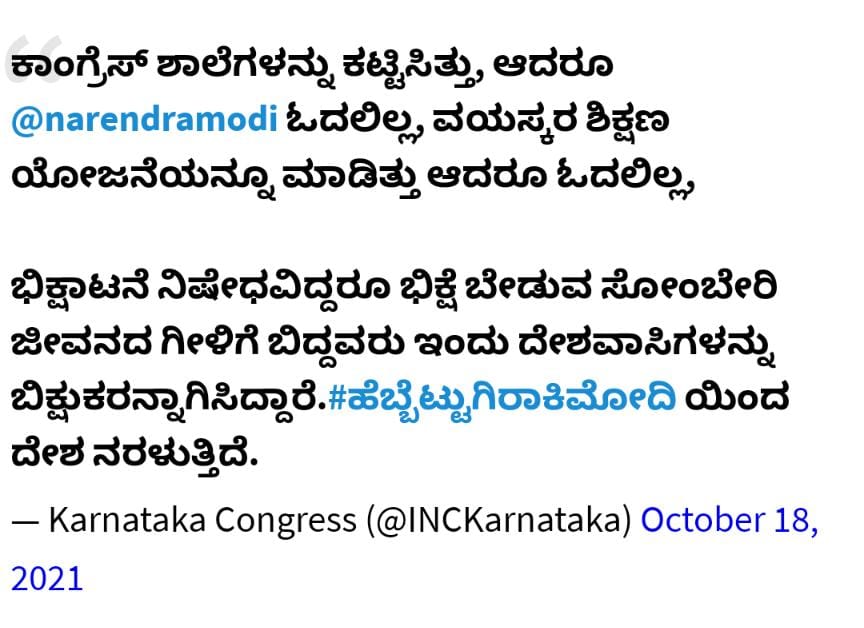
In a tweet from its official Twitter account, Karnataka Congress in Kannada said, “Congress built schools but Modi never went to study. Congress even set up schemes for adults to learn, Modi didn’t learn there too. Even though begging is prohibited, people who are lazy have made the country’s people beggars. The country is suffering because of #angoothachhaapmodi.”
Derogatory Tweet by Karnataka Congress
The shameful Tweet from Congress came just ahead of the bypolls to be held for the Sindagi and Hanagala constituencies on October 30 in Karnataka.
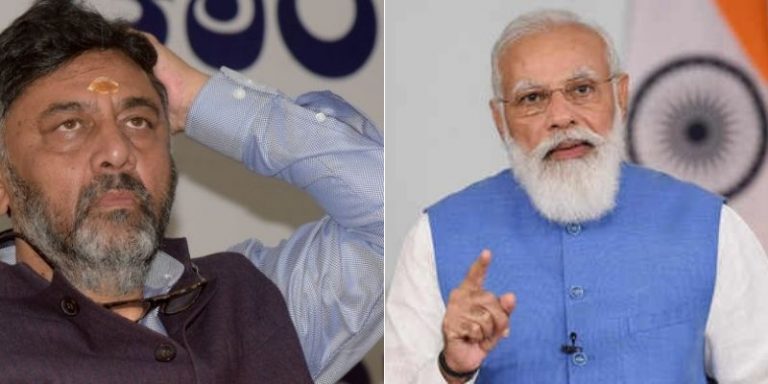
‘Uncivil Tweet by a novice‘, says DK Shivakumar
After the Tweet sparked a political row, Karnataka Congress president DK Shivakumar reportedly asked his team to take down the social media post.
In a statement, Shivakumar pinned the blame of the distasteful Tweet on a ‘novice social media handler.’
I have always believed that civil and parliamentary language is a non-negotiable pre-requisite for political discourse. An uncivil tweet made by a novice social media manager through the Karnataka Congress official Twitter handle is regretted and stands withdrawn.
“I have always believed that civil and parliamentary language is a non-negotiable pre-requisite for political discourse. An uncivil tweet by a novice social media manager via Karnataka Congress official Twitter handle is regretted and stands withdrawn,” Tweeted Shivakumar.
Congress spokesperson defends the Tweet
While Karnataka Congress President seemed apologetic about the Tweet, Congress Spokesperson Lavanya Ballal while speaking with NDTV defended the Tweet claiming that Karnataka BJP has put out worse Tweets insulting Congress leadership using crude and crass language.
“The tweet was tongue-in-cheek but it is not as disgusting as some of the tweets that have come out of #Karnataka BJP in the last one week”: @LavanyaBallal, Congress Spokesperson pic.twitter.com/falrsw4wNf
When asked by the anchor if the Tweet by Congress was a ‘tit-for-tat’, Ballal retaliated asking, “Having you ever questioned BJP for their conduct,” thereby evading the question.
Congress and foul language
This is not the first time that Congress has used derogatory and unparliamentary language for the Prime Minister of India. In a discussion on Times Now Navbharat last month, a Congress spokesperson, Mudit Agarwal said that PM Modi ‘sells his mother on TV’.
While talking about PM Modi’s background, the Congress spokesperson said, “He has never sold tea. He was lying. He is the kind of person who sells his mother on television.
PM Modi himself, while addressing a rally in 2019 had listed the abuses hurled at him by Congress. “A leader of Congress called me ‘gandi naali ka keeda’, one leader called me a mad dog, another one called me Bhasmasura. One more Congress leader, who was external affairs minister, called me a monkey while another minister compared me with Dawood Ibrahim,” Modi had said.
“They even abused my mother and even asked who my father is and remember all this was said after I became Prime Minister,” he had added further.
In November 2018, Congress leader Raj Babbar had mocked PM Modi’s mother by saying how the Rupee is devaluating so much that it is reaching her age (97/98).
Earlier, a Congress leader and MP candidate had equated PM Modi’s and UP CM Yogi Adityanath’s aunt, mother and sister to stray cattle.
Congress, in fact, has never shied away from running entire political campaigns insulting the BJP leader. From ‘chaiwalla’ jibe to ‘chowkidaar chor hai,’ the old party keeps sinking to new lows.
Ace Tennis player Novak Djokovic is unwilling to reveal his vaccination status against Covid-19 and deemed it a ‘private matter and an inappropriate inquiry’. Djokovic has been vocal against the mandatory vaccine program.
The Australian Open 2022 is scheduled for January. Djokovic has mentioned in a statement that he is unsure of defending the title in Melbourne. While talking to Serbian Daily Blic, Novak said, “Things being as they are, I still don’t know if I will go to Melbourne. I will not reveal my status whether I have been vaccinated or not, it is a private matter and an inappropriate inquiry. People go too far these days in taking the liberty to ask questions and judge a person. Whatever you say ‘yes, no, maybe, I am thinking about it,’ they will take advantage.” He further added, “don’t know if I’m going to Australia, I don’t know what’s going on. Currently, the situation is not good at all.”
Vaccine mandate for Australian Open participation
As per the regulations issued by the Victorian Government, the players must be vaccinated if they want to participate in the Australian Open. Premier Daniel Andrews had said earlier that in case Novak does not get vaccinated, he would not get a visa.
In a statement, Andrews said, “Grand slam titles won’t protect you. The only title that will protect you is you being able to have had your first dose and second dose. Logic and numerous conversations with the Prime Minister tell me that if you are an Australian citizen, you will be allowed home if you haven’t had the jab. But if you’re coming on a tourist visa or a business visa, so you’re not an Aussie. You are coming to visit – the notion of you get in here without being vaccinated, I think, is very, very low.”
Back in September Association of Tennis Professionals (ATP) had issued a statement over-vaccination in which they said, “While we respect everyone’s right to free choice, we also believe that each player has a role to play in helping the wider group achieve a safe level of immunity. Doing so will allow us to ease restrictions on-site for the benefit of everyone on Tour.”
Novak Djokovic might have already got a vaccine shot
In August 2021, SportsKeeda published a report stating Novak might have already got the vaccination shot. The report was based on the reports of his appearance in an event where the vaccine was mandatory to participate. Novak had attended SummerStage – a music festival in New York’s Central Park while he was in the city for the US Open.
In one of the tweets, the organizers had mentioned, “SummerStage is now requiring full COVID-19 vaccination for entry to all performances at Rumsey Playfield in Central Park.” Reports suggested he would not have been allowed at the event even if his star status was to be considered.
Novak Djokovic was infected with Covid-19 last year, from which he appears to have recovered without any complications. He has gone on to win multiple Grand Slams since then and was on the verge of winning all 4 slams in one calendar year in 2021 but lost in the final of the US Open.
Several studies have also emerged that show that antibodies from prior Covid-19 infection lends as much immunity to an individual as do two doses of vaccines.
Days after maintaining complete silence over the ongoing pogrom against the Hindu community in Bangladesh, Supreme Court advocate Prashant Bhushan sought to water down the role of radical Islamists in orchestrating the attacks.
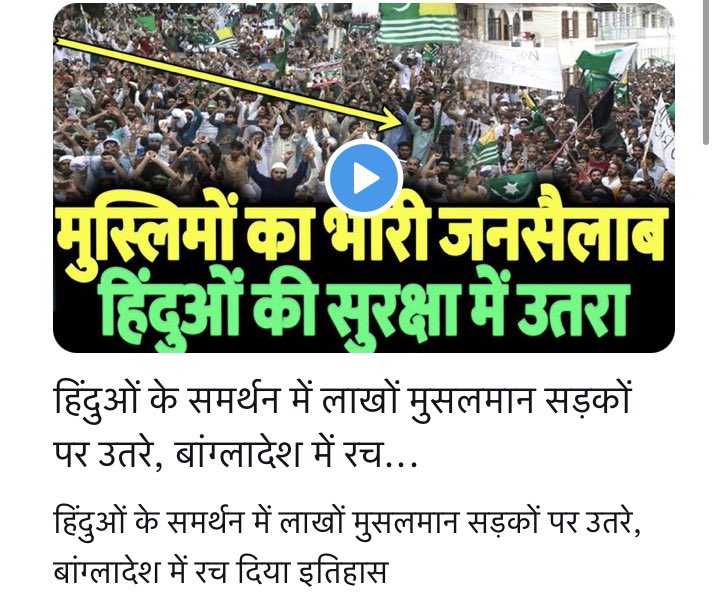
In a desperate attempt to whitewash the crimes by the Islamists in Bangladesh, he shared a video from a propaganda channel named ‘The Live TV’ to falsely claim that “lakhs of Muslims came out in support of Hindus” in Bangladesh.
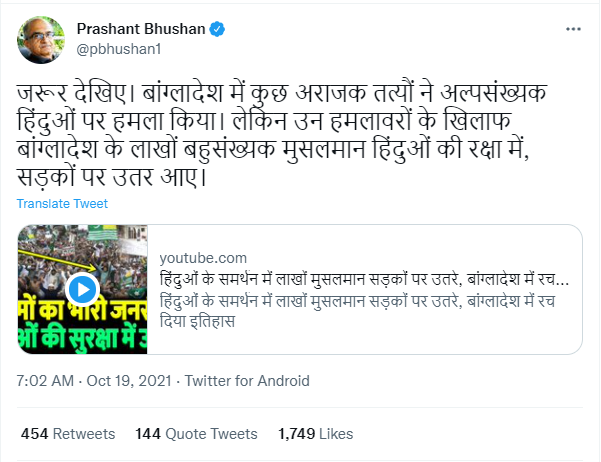
In a tweet on Tuesday (October 19) morning, Prashant Bhushan emphasised, “Must watch. Some anti-social elements attacked the minority Hindus in Bangladesh. But, lakhs of majority Muslims took to the streets against them to support the Hindus.”
It is important to note that Prashant avoided telling his followers that the attacks were carried out by Muslim fanatics over rumours of alleged ‘insult to Quran’, but mentioned the word ‘Muslim’ to refer to those who allegedly came out in support of Hindus. The advocate had shared a video from ‘The Live TV’ to substantiate his claims.
Screengrab of the tweet by Prashant Bhushan
Prashant Bhushan passed off the brutal attacks by fanatic Muslims against Hindus as ‘attacks by unsocial elements’, but was quick to claim that the protestors were all Muslims who have come out on streets to ‘protect Hindus’.
In a 10-minute long video presented by Prajwal Gautam, he made the same claim that lakhs of Muslims took out demonstrations in support of the Hindu community following targeted attacks. The said video was uploaded on Monday (October 18).
(Video Courtesy: Youtube/The Live TV)
On the same day, popular Twitter user Akshay Singh had shared the same video with the caption, ‘Huge protest by Hindus in Bangladesh.’ He suggested that it was a demonstration by the Hindu community alone. No Muslim leaders were spotted in the rally.
The Bangladeshi citizen-in-exile, Taslima Nasreen, had also shared similar visuals, calling it a demonstration by ‘Hindus and non-commumnal progressive people. She too did not make any reference to the presence of lacs of Muslims.
Hindus and non-communal progressive people took to the street in Chitagong, Bangladesh to protest the atrocities against Hindus/ crime against humanity. pic.twitter.com/ZXhmAzR2eY
While it cannot be said with certainty that there was no Muslim present during the protest, it is highly unlikely that lacs of Muslims were a part of the procession. Popular Twitter user (@BefittingFacts) also pointed out that no Muslim man could be spotted in the traditional skull cap and beard. He added that the Hindus formed the majority in the procession while referring to chants of ‘Jai Shree Ram.’
अबे फ़र्ज़ी इंसान, जैसे तू फ़र्ज़ी वैसे यह youtube वाला फ़र्ज़ी। यह protest हिंदुओ ने किया था। तू विडीओ देख ले लिंक खोल के, एक भी टोपी दाढ़ी वाला नही है। और जय श्री राम का नारा लग रहा।@thelivetvnews ❤️de delete कर। pic.twitter.com/Nx563K6XLj
Besides the exaggerated claims of Prashant Bhushan, it is interesting to note the thumbnail of the video shows an image from a protest in the Kashmir region. Protestors are seen holding Pakistani and Pakistan Occupied Kashmir (PoK) flags.
The claims and the thumbnail posted by ‘The Live TV’ is misleading to say the least and an attempt to draw false equivalence between the attack on Hindu temples by Islamists and the alleged solidarity of Muslims with the persecuted Hindus.
Screengrab of the thumbnail of the misleading video
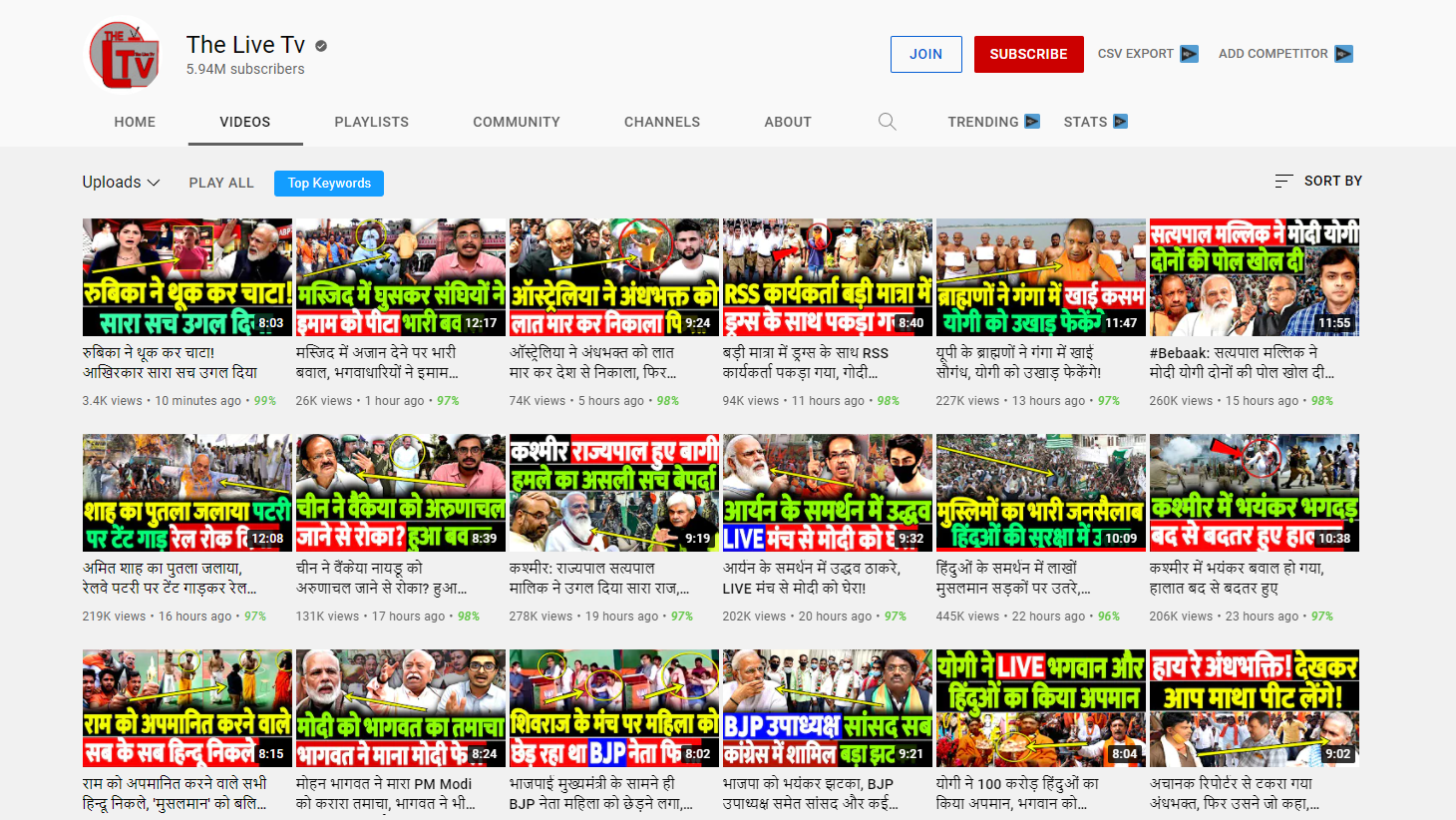
The Live TV, which boasts of 5.94 million subscribers on Youtube is infamous for its hatred towards Hindus, targeting of nationalist journalists with objectionable claims and posting misleading content to tarnish the image of the incumbent BJP government.
Screengrab of the Youtube channel of The Live TV
Violence in Bangladesh against Hindus under the garb of blasphemy
Brutal attacks, vandalism, looting, and arson had returned to haunt Hindus in Bangladesh’s Noakhali district, as close to 150 households were reportedly attacked and at least three killed in a violent clash on Wednesday (October 13).
A day later, a frenzied mob of radical Islamists attacked the International Society for Krishna Consciousness (ISKCON) temple in the Noakhali district in the Chittagong Division of Bangladesh. The Bangladesh unit of ISKCON lamented that the sculpture of its founder, AC Bhaktivedanta Swami Prabhupada, was burnt down during the arson attack on the temple.
The violence and vandalism took place after a Facebook rumour claiming ‘insult to Quran’ at a Durga Puja pandal went viral. Videos emerged on social media where a mob of enraged Muslims were seen pelting stones and vandalising makeshift Durga Puja pandals and attacking Hindu families in Bangladesh’s Chandpur area.
A social media user from Bangladesh stated that the Islamic mob was calling for the burning of a local ISKCON temple. Bangladeshi social media users had stated that under the guise of attacks, rampant loot and molestation of women have also taken place. 2 persons have been found dead in the Chandpur area.
Over the days, violence and harassment of the Hindu community had continued as houses of Hindus were reportedly burned down in Rangpur.
Following the incident, Bangladesh’s Prime Minister Sheikh Hasina ordered the criminals behind spreading communal attacks and propaganda, to be identified and punished as an example. Meanwhile, back in New Delhi, the external affairs ministry said that it was in touch with the high commission officials and noted the strict action is being taken by the Bangladesh government.
Since the incident, the Bangladesh police have made over 100 arrests and the probe is still underway.
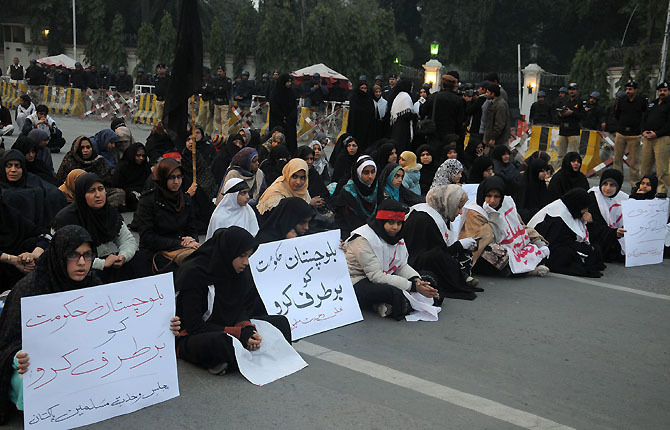
In the early morning of October 10th 2021, frontier corps (FC) Balochistan, killed two Baloch minors and injured another by firing mortar shots in the Hoshab area of Turbat Balochistan. Two of the killed children were identified as Allah Baksh, his sister Sharatoon (Malee) aged 5 and 7 years old and wounded one identified as Muskan. All three kids were playing in the back of their home when FC personnel fired mortar shots, as a result of which two of the three victims were killed and one suffered serious injuries.
The incident shocked Balochistan; Baloch social media activists, Political parties, Student organizations, Human rights groups called the incident inhuman and barbaric and an example of extreme aggression and hatred against Baloch nation.
The family of the slain children protested along with the dead bodies on the Shaheed Fida Chowk in Turbat against the Pakistani security forces who fired the lethal mortar shot that resulted in the death of the two children.
According to the family members, the authorities have tried to whitewash the crime of the security forces by saying that the children did not die as a result of the mortar shot, but they have mistaken a hand grenade as a toy and they were killed because of a grenade blast. In a viral video the Deputy Commissioner Kech, Hussain Jan can also be seen saying that FC is not involved in the killings. DC Hussain Jan also faced criticism for telling an elderly woman to remain silent because the men are talking during the sit-in.
The victim’s family have denied the claims of the local administration and said that they will continue their protest and will not bury their children until justice is served.
After two days of protest in Turbat, the family decided to march towards Quetta, Balochistan with the bodies of their children. After the announcement of taking the dead bodies towards Quetta. The same forces involved in the murder of the kids have tried to put pressure on the family to somehow stop them from reaching the capital of Balochistan. But the resolute Baloch mothers and elders have not only resisted the powerful forces but have also reached the capital of Balochistan and began recording their protest outside of the Governor house.
The family and the bodies were received by the locals of the Quetta and the Sit-in protest for justice is continuous in the capital, but it seems the provisional government has more serious concern then listening to the people of Balochistan.
The chief minister of Balochistan Jam Kamal and his party are busy fighting for the chief ministry. Pakistani mainstream media, Politicians, rights groups and so-called activists have shown zero interest in this aggression.
The people of Balochistan have been raising their voices against such brutalities and oppression. They have been telling the local and international human rights organizations, the civilised world and the neighbouring countries about the sufferings of Balochistan. But it seems like the whole world has turned a blind eye over the issue of Balochistan. Because of the criminal silence of the world, Pakistani forces are now even targeting Baloch women and children on a daily basis.
The Hoshab incident is not an isolated incident, Balochistan faces similar forms of aggression on a daily basis for example; In the last week of September, Pakistani forces killed an elderly Baloch woman, Taj bibi, in Aabsar, Turbat. Another minor was killed by the Police in Buleda on the 1st of October, during a raid in a house.
All these crimes against Baloch people go unheard and unnoticed because the civilized world chooses not to speak against the fascist regime of Pakistan. The people of Balochistan are as human as anyone else in the world. And it is the responsibility of the civilized world to help the Baloch people to get rid of these brutalities if they want a peaceful and stable region and a world free from religious terrorism.
On October 18, the Uttar Pradesh Police arrested four more people in connection to the Lakhimpur Kheri violence case. The arrested people have been identified as Sumit Jaiswal, Shishi Pal, Satya Prakash Tripathi alias Satyam and Nandan Singh Bisht. The total number of people arrested in the case have reached 10.
In a statement, UP Police said, “Four persons were arrested on Monday by the Crime Branch of the Lakhimpur Kheri police along with the SWAT team. The SIT investigators and other senior officials are interrogating the accused, and further probe is underway.” SWAT team also recovered a revolver and live rounds from Tripathi.
Satyam Tiwari’s name came up during interrogation of Ankit Das, Shekhar Bharti (Das’s driver) and Lateef (Das’s security guard). Indian Express quoted an unnamed police officer saying, “Accused Shekhar Bharti told police that Satyam Tiwari of Kaushambi was driving one of the SUVs on the day of the incident.” Another officer was quoted by Hindustan Times saying, “The accused will be questioned about the incident and their role in it. We will also apply for their police custody remand if they fail to cooperate in the interrogation.”
Earlier, police had arrested six people in the case, including Ashish Mishra, Luvkush Pandey, Ashish Pandey, Shekhar Bharti, Lateef and Ankit Das.
Lakhimpur Violence Case
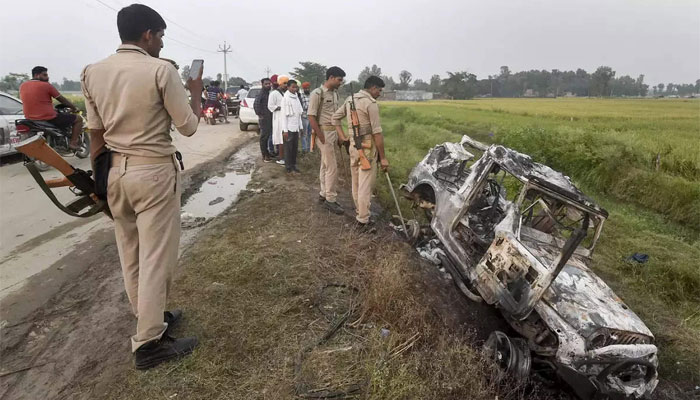
On October 3, a ‘farmer’ mob attacked a BJP convoy with stones and sticks in Lakhimpur Kheri, Uttar Pradesh. Amid the ensuing commotion, a vehicle was seen running over the protestors. Following that the angry mob of protestors had burned two vehicles, dragged the people inside the vehicle and had beaten them to death.
A total of eight people lost their lives in the violence. The incident turned into a major political drama over the past couple of weeks. So far, ten arrests have been made in the case. Uttar Pradesh government has given Rs. 45 lakh to the kin of the deceased and promised government job to one member of the family. A one-member committee has also been formed to probe the case.
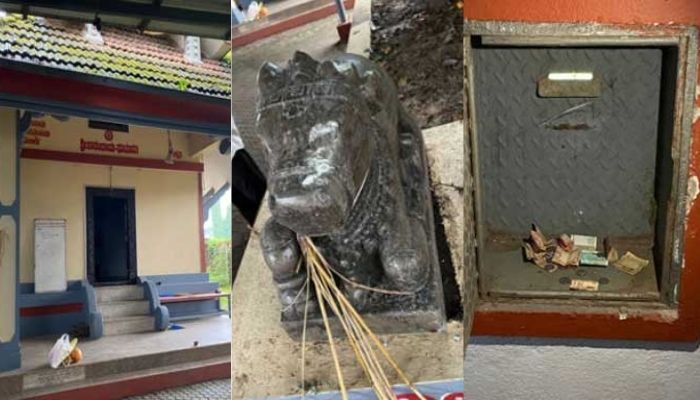
On Saturday (October 16), the Baikampady Karkera Moolasthana Jarandaya Daivastana and Naga Brahma Peeta were vandalised by miscreants at late night in Mangaluru in Karnataka, reportedDaijiworld.
As per reports, the matter came to light when devotees went to offer prayers at the temple. Daijiworld reported that the accused had damaged the idol of Naga and the stone image of Nandi. Besides, the miscreants broke open the cupboard and threw all the belongings of the Davisthana. At the same time, the gates of the temple were also destroyed.
The devotees alerted the temple administrative committee, who then called in the cops. On receiving information, the police rushed to the spot and began an investigation into the matter. Following the temple desecration, the locals have demanded security for the religious site. Police suspects it was a case of attempted robbery. However, this is not the first time that such an incident has come to light.
Raheem and Taufiq confess to urinating, putting condom in temple’s Hundi
Earlier, in April this year, two people were arrested in connection to an incident where a condom was found in a temple’s Hundi (Donation box) in Manguluru. The temple belonged to the local Manguluru deity Lord Koragajja who is considered an avatar for Lord Shiva. The arrested were identified as Raheem (32) and Taufiq (35) from Jokatte area in Mangalore.
Addressing a press meet, police commissioner N Shashi Kumar said that in between January and March this year, five cases were registered at Ullal, Kadri, and Pandeshwar police stations over miscreants dropping objectionable items into the offering boxes of temples, including a condom at the Koragajja Katte temple. However, the police were not able to track down the culprits behind the desecration of the temples.
But suddenly after some time, the duo Raheem and Taufiq started going to the temple in order to pray for forgiveness from the priests. Initially, the priests thought the duo was making fun, but finally, they confessed their heinous crime at the temple and surrendered themselves to the people there who later turned them over to the police.
The Economic Offences Wing (EOW) of Delhi Police on Sunday arrested three people for siphoning off more than Rs 300 crore taken as a loan from Yes Bank to build a hospital.
The three accused have been identified as Yateesh Wahaal and Satish Kumar Narula (directors of Nayati Healthcare and Research NCR Pvt Ltd) and Rahul Singh Yadav, proprietor of Ahluwalia Construction.
As per reports, they were arrested from Delhi, Haryana and Uttar Pradesh. “The complainant was a shareholder in a company named OSL Healthcare Pvt Ltd.,” informed the police.
The Niira Radia connection
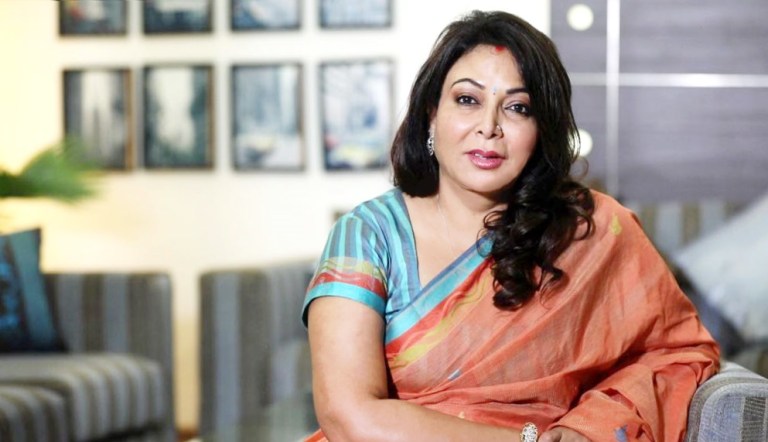
Interestingly, Wahaal and Narula are associates of infamous former lobbyist Niira Radia who is the founder and chairperson of Nayati Healthcare and Research NCR Pvt Ltd.
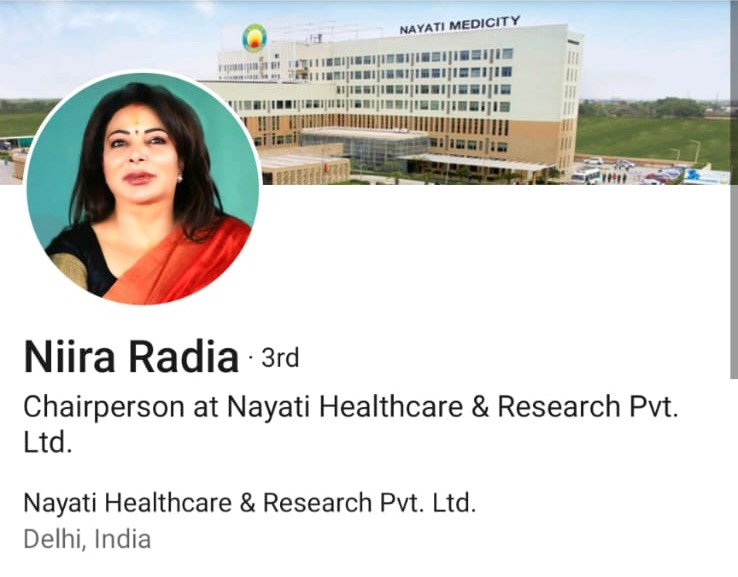
Niira Radia’s LinkedIn profile
According to the police, the three accused had taken a loan from the bank for the development of a hospital, however, it was not used for the purpose and instead misappropriated.
Radia, after being caught in 2010 2G spectrum scam had entered the hospital business in late 2014. She floated four companies under the brand name ‘Nayati’ between 2014 and 2018. These include- Nayati Healthcare and Research Pvt Ltd (August 2014), Nayati Healthcare and Research Agra Pvt Ltd (August 2017), Nayati Healthcare and Research Amritsar Pvt Ltd (August 2017) and Nayati Healthcare and Research NCR Pvt Ltd (May 2018).
As per Radia’s LinkedIn profile, she began this movement to ‘transform the way healthcare is perceived in India.’ In a bid to provide ‘affordable healthcare’ to the masses, Nayati has multispeciality hospitals in Uttar Pradesh, as per the information provided in Radia’s profile.
Niira Radia’s LinkedIn profile
Not just Nayati, Radia also has links with Ahluwalia Construction. Reportedly, it is yet another benami company of Radia which was used to siphon off funds.
Though the company bears the same name as Ahluwalia Construction Group which is one of the most reputed names in construction, it has no affiliation with this so-called company bearing its name.
Booked in 2020
The Economic Offences Wing (EOW) of the Delhi Police in November 2020 had booked Niira Radia, her sister Karuna Menon and accomplices SK Narula and Yateesh Wahal in this loan embezzlement case.
The complainant, a Delhi-based orthopedic surgeon Dr Rajeev K Sharma had alleged that Niira Radia and others embezzled Rs. 312.50 crores through fictitious bank accounts in the name of well-known contractors.
It is imperative to note that Sharma had played a key role in the establishment of the 417-bed Primamed Hospital in Gurugram and the 90-bed Vimhans Hospital in south Delhi.
Sharma had further alleged that loan and equity money to the tune of Rs. 400 crores had been siphoned off while the condition of the Primamed Hospital had deteriorated. He called it an act of “brazen cheating” and claimed there is enough evidence to hold Niira Radia guilty.
Additionally, a trail of Rs 119.15 crore reaching Radia reflected the brazen loot carried out by her and her associates.