Home Blog Page 3894

Karnataka ranks at the top, attracts almost 50% of the total FDI flow to India in the Apr-June quarter

The state of Karnataka has attracted Foreign Direct Investments (FDIs) worth Rs 62,085 crore in the first quarter of FY 2022 which is 48% of the total such investments India received during this period.

When India was battling to control the second wave of Covid 19, Karnataka has managed to attract huge foreign investments, hinting at the state’s potential for future growth.

As per reports, Karnataka is set to host the Global Investors’ Meet next February.

Large and Medium Industries Minister Murugesh Nirani on Wednesday informed about the FDI received, adding that among the Indian states; Karnataka has topped in FDI inflows in India during this period. The minister also praised the role of Karnataka Udyoga Mitra (single-window agency for investment) for making outstanding efforts to attract investments.

The minister also shared this news on his Twitter handle stating “I’m glad that Karnataka stands No. 1 in attracting FDIs in April-June fiscal and remains a preferred destination for global investors. Our state offers excellent opportunities in various sectors and provides world-class facilities to investors.

Over the years Karnataka has become ‘investors’ heaven’ due to several policy reforms’ like the ease of doing business, single window system, the introduction of affidavit-based clearance, central inspection system, and land and labour law reforms among many others.

For instance, in April the Karnataka government took a policy decision to repeal redundant laws and decriminalise many to encourage ease of doing business. The government has identified laws that required simplification or a complete abolition.

The steady rise of Karnataka on the FDI index is worth mentioning. As the minister informed, Karnataka had attracted Rs 30,746 crore FDI in FY 2019-20 and ranked third. In the next FY 2020-21 the rank remained the same but the flow of FDI had increased to Rs 56,884 crores.

Karnataka Udyog Mitra (KUM) ranked top among all investment promotion agencies

Minister informed that ‘The National Investment Promotion and Facilitation Agency, under the ‘Invest India’ program, has patted Udyoga Mitra for taking proactive steps to create an investor-friendly milieu in Karnataka. It has rated Karnataka Udyoga Mitra as India’s top Investment Promotion Agency while considering the performance of 20 other states. 

The Minister stated that the Karnataka government is committed to more reforms to help industrialists. Nirani said that the government has been aiming to score 100 points on all parameters in the coming days. Minister informed that Karnataka Udyoga Mitra scored centum in four out of eight categories namely investment projects, facilitation, aftercare and managing the website.

Mahendra Singh Dhoni appears in the list of ‘benami’ owners who have not claimed their flats in the troubled Amrapali Group projects

Former Cricket India captain Mahendra Singh Dhoni appears in a list of buyers who have not claimed their flats in the beleaguered housing projects by the Amrapali Group in Noida and Greater Noida. The name of Dhoni appears in the list of 1800 ‘benami’ flat owners in the projects in Noida, who have not claimed their properties yet. In total, there are 9538 flats in the Amrapali projects that have not been claimed by their owners.

Dhoni’s name appears at number 14 in the list for the project named Saphire Phase 1, and there are two penthouses (C-P5 and P6) at the Amrapali project located at Noida sector 45. However, the name has been spelt as Mahendra Singh Doni in the list published by the Supreme Court in newspapers.

Screengrab of a part of the list published on Times of India

The list was published on pages 8 and 9 of the Times of India today, and Dhoni’s name (apparently misspelt as Doni), appeared on the second page of the list. It asks those who have been named in the list to update their information on the Office of Receiver’s website and make any pending payments if they are willing to take possession of the flats after their completion.

The authorities are releasing the name of all the flat owners who have not claimed the flats yet, and they have been given 15 days to claim their flats. Those who fail to do so, their allotments will be cancelled and their flats will be resold in the market by the Court receiver. The rest of the list will be published next week. Last month, the receiver had submitted a list of 9538 flats in the projects of the Amrapali Group not claimed by their buyers yet. Although these people had paid the flat booking amount, they have not made any subsequent payment and didn’t appear for verification for registration of the flats in their names.

Such buyers will have to claim their flats by making the outstanding payments after their names are published in the lists. If they fail to do so within 15 days, their flats will be re-sold, and the money collected through such sale will be used to complete the stalled projects. the construction will be carried by the state-run National Buildings Construction Corporation (NBCC) under the monitoring of a court-appointed committee.

Name of Mahendra Singh Dhoni, who has been named as the mentor of the Indian team for T20 world cup, has been associated with the controversial housing project for several years. He had endorsed the projects developed by the Amrapali Group as a brand ambassador, but later the real estate developer failed to complete its projects. The company was accused of committing fraud by taking money paid by tens of thousands of home buyers and of cheating by not completing housing projects for which the company had accepted payments. The Supreme Court had termed it as a “first degree crime”.

Buyers of the project had accused Dhoni of misleading them by endorsing the company for six years. He and his wife were accused of conspiring with the Amrapali Group and duping them of crores of rupees.

An Audit report submitted at the Supreme Court had even alleged that companies linked to the cricketer and his wife Sakshi Dhoni were among those used by the Amrapali Group to illegally divert the funds collected from buyers. However, Dhoni had denied these allegations.

After endorsing the company for 6 years in advertisements, Dhoni had resigned as the brand ambassador of the company in 2019, after homebuyers in the project started to slam him on social media for his association with the company. Soon after that, he had moved the Supreme Court against the company to get his unpaid dues amounting to Rs 40 crore towards the endorsement deal.

In 2016, the Amrapali Group had announced that they were gifting each member of the Indian Cricket Team with an exquisitely designed independent villa at its Amrapali Dream Valley Project at Noida Extension worth Rs 9 crore after India’s victory in the World Cup in 2011. While Dhoni was reportedly presented with a grand villa covering 2,900 sq ft worth Rs 1 crore, the other team members were gifted villas worth Rs 55 lakh each covering an area of 1690 sq ft.

At present, it is not known whether the properties listed against Dhoni are the same ones ‘gifted’ by the company after the 2016 World Cup win, or whether they were purchased by the cricketer or given to him as part of the endorsement deal.

Amrapali Group had started around 40 housing development projects between 2010 and 2016 in the Delhi NCR region, and had sold around 45000 flats in those projects.

‘Meat shops being operated near temples, women being molested’: 200 Hindus forced to sell houses and escape Tonk district in Rajasthan

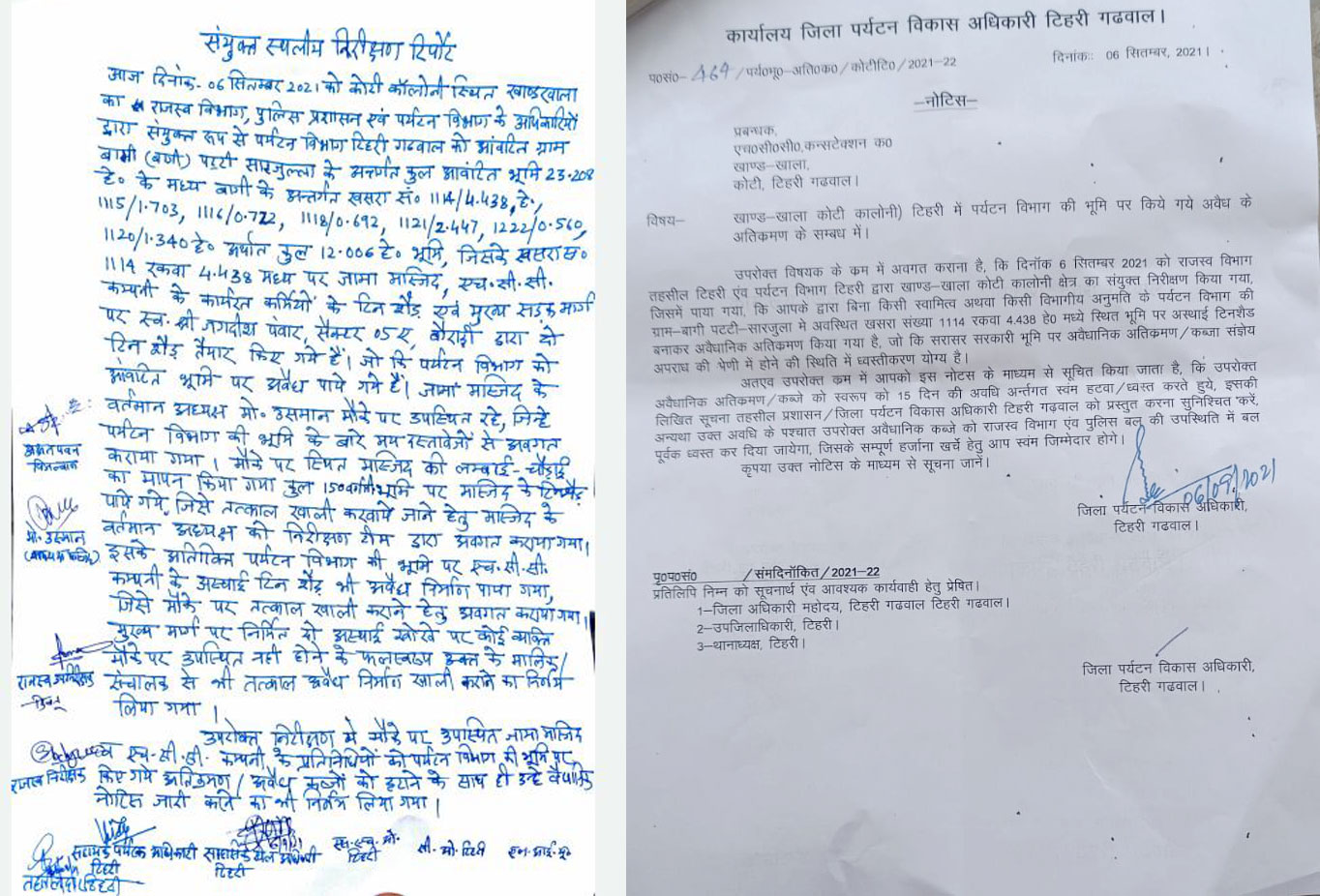
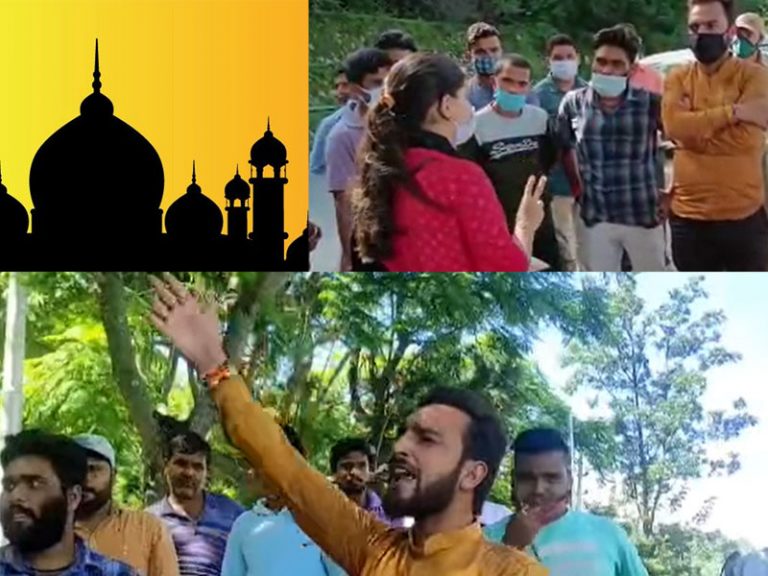
Hundreds of Hindus in Tonk, Rajasthan district’s Malpura town have claimed that they are being forced to abandon their homes and shops, citing threats from the minority communities in the area. On Monday, September 6, many such families, which, due to economic constraints were forced to live in houses in the minority-dominated areas in Tonk town’s wards 12 and 21 placed posters outside their respective homes which read that they are threatened by the Muslim community.

On Tuesday, September 7, almost 100 people belonging to these same terrorized Hindu families took out a poster march and submitted a memorandum to the Malpura SDM office, demanding justice. They then submitted a memorandum to Prime Minister Narendra Modi and Rajasthan Chief Minister Ashok Gehlot, requesting protection.

Protest March taken out by the Hindus in Tonk, Rajasthan

The memorandum alleges assault on Hindus and indecent treatment of women in minority-dominated areas.

These Hindus, who handed over the memorandum to Malpura SDM Rakesh Kumar Meena, claimed that communal tensions have existed in Malpura since 1952. They reported that approximately 600 to 800 households had sold their homes and moved out of the region. For the past two days, these families have been pleading with administrative and police personnel for protection.

Protest march in Tonk, Rajasthan

About 200 families have been requesting protection from the administration for a long time, according to local resident Radhakishan.

On Monday, September 6, another memorandum was presented, in which the Hindus in the neighbourhood claimed that the number of Muslims in the area had been steadily increasing, making it impossible for Hindus to live there peacefully. It further read that there are Jains and Gujjar temples in the neighbourhood, but security concerns due to the expanding Muslim population have forced them to close. Meat markets are operating illegally near temples, causing the temple’s idols to be sent elsewhere, read the Memorandum.

Meanwhile, the Rajasthan police, have in the last two days, attempted multiple times to remove posters from outside Hindu homes but were forced to return in vain due to public outcry. Calling the act of hanging posters outside the houses an “act to disturb the communal harmony of the city”, the Malpura administration warned the Hindus to remove such posters from their homes.

Malpura town in Tonk district has seen many communal clashes since independence and many people have lost their lives. It is noteworthy that the first communal dispute took place in Malpura town in 1952. Including the 1952 incident, eight times communal tension has arisen in Malpura. The town was recently subjected to a curfew in 2019, after some miscreants threw stones during a Dussehra procession, causing communal unrest.

Bollywood financier Yusuf Lakdawala ‘brought dead’ to JJ Hospital, was in Arthur Road Jail over charges of forgery and fraud

0

Builder and Bollywood financier Yusuf Lakdawala, who had been arrested in cheating and financial fraud case, passed away earlier today. As per reports, Lakdawala, who has been lodged in Arthur Road Jail, was declared ‘brought dead’ at Mumbai’s JJ Hospital.

Lakdwala was reportedly suffering from cancer. He was arrested first by the Mumbai Police and then by the ED in a case of financial fraud and cheating. Lakdawala was one of Mumbai’s well-known developers and had invested in Bollywood too.

As per reports, the exact cause of death is yet to be ascertained. An accidental death report, (ADR) has been filed in the case.

Lakdawala was under judicial custordy. He was being probed for conspiracy and forgery, among other allegations by the ED and the Economic Offences Wing (EOW) of the Mumbai Police.

Lakdwala was arrested by ED in a land deal case in May 2021. He was accused of trying to sell land that belonged to Mulk Raj Anand. As per a report in Republic TV, the land was in Khandala and had at one time belonged to the ruler of Hyderabad.

The developer had allegedly forged papers and had claimed that the land was gifted to his father in law. He had tried to flee the country but was arrested in Ahmedabad.

How The Telegraph used the ‘spread of classical music in Kolkata’ to glorify conversion and evangelical work that marred Bengal

The West Bengal based far-left propaganda media outlet, The Telegraph, has notoriously used the ‘spread of classical music in Kolkata’ to glorify conversion and evangelical work in West Bengal in an article dated September 8, 2021.

In the article titled: “Why Satyajit Ray could easily find cellists in Kolkata for his soundtracks”, written by Dibyokamal Mitra, the leftist media outlet has attempted to canonize Father Theodore Mathieson by singing praises about his musical ability and how his missionary work earned him a place in Kolkata’s chequered history.

However, in doing so, the media outlet has low key gone on to glorify the extent of zealotry that prevails among the missionaries in Kolkata, West Bengal and the lengths they are willing to go to convert people to their faith.

The article published by The Telegraph on September 8, 2021

The Telegraph exalts about Father Theodore Mathieson’s contribution to Kolkata’s music history and the impact of his presence on the lives of many young orphans and children with single parents who came under his care at the Oxford Mission in Behala.

“Father Mathieson’s hands became an avenue for children from disadvantaged backgrounds to distinguish themselves in an arena which would otherwise certainly not have welcomed them”, reads the article.

The article by The Telegraph elaborates how the missionary work, undertaken by Oxford Mission, the organisation which Father Theodore Mathieson served, included looking after the education and well-being of orphaned boys, acting as chaplain to leprosy dispensaries, and pastoral work in Christian villages among other things.

The article lauds Father Mathieson’s contribution to Kolkata’s musical legacy and his missionary work but refuses to throw light on the conversion agenda of such missionaries in Kolkata and elsewhere, which typically offer free education and related benefits as one of the primary incentives to the poor and destitute to lure them under their folds. 

The fact is that West Bengal has long been a hotbed of such Vatican propagandists who have skillfully exploited the poor’s vulnerabilities in order to convert them to Christianity. Mother Teresa is one of the most well-known examples of a missionary like this.

The problematic legacy of Mother Teresa

For years, Mother Teresa has been accused of being a fraud. Her problematic history of following primitive health practices and her evangelical zeal to convert the weak and the vulnerable into the Christian fold were long cited by her critics to call out the unwarranted adulation that was showered on her.

Christopher Hitchens, an English-American socio-political critic and public intellectual, was one of the staunch critics of Mother Teresa and had described her organization as a ‘cult’ that promoted suffering and did not help those in need.

Often called a ‘saint’ and ‘messiah of the poor’ by adherents of the Vatican in India, the so-called ‘Mother’ Teresa is engulfed in numerous controversies and allegations. Throughout her life she was engaged in expanding the church footprint, converting poor and baptizing Hindus into the Vatican fold. In fact, a Washington Post report stated how dying patients in hospitals run by the missionaries were forced to convert to Christianity before they died. To back this claim, the Washington Post cited the book ‘Mother Teresa of Calcutta: A Personal Portrait’ by Leo Maasburg.

The Telegraph and its past shenanigans

The Telegraph, on the other hand, has always taken pride in ‘in your face’ headlines except when it comes to reporting on things happening in its own backyard in West Bengal. The Telegraph is more of an advocacy group than an actual media organization. During the 2019 general elections, its editor had claimed in an article removing Narendra Modi from power was the only hope for India’s redemption.

The Bengal-based media house The Telegraph was called out by netizens for a headline that insulted the Dalit community as it compared the President of India, Ramnath Kovind, who is a Dalit leader himself, to ‘Covid19’. The meltdown came after President Kovind nominated ex-CJI Ranjan Gogoi to Rajya Sabha.

“Kovind, not Covid, did it”, the headline read. COVID-19 is a pandemic, a coronavirus disease that has impacted millions of people globally as of this moment. In its bid to make a wordplay on President’s name by comparing it to the deadly virus, The Telegraph had hit a new low even by its own standards.

Non-Muslim boys and girls in Kerala are being targeted for Love Jihad and Narcotics Jihad: Bishop

Bishop Mar Joseph Kallarangatt of the Pala diocese of the Syro-Malabar Church has stated that young Christian boys and girls of Kerala are being targeted for not just ‘Love Jihad’ but for ‘Narcotics Jihad’ too. As per a report in Kerala Kaumudi, the Bishop has been vocal about the targeting of young Christian by Islamist groups for conversion and exploitation.

Speaking at an event, Bishop Joseph Kallarangatt stated that non-Muslim boys and girls are increasingly becoming the victims of Narcotics Jihad along with Love Jihad in the state. Going a step ahead, the Bishop added that there are specific groups operational in Kerala that are targeting non-Muslim youngsters and even providing assistance to carry out targeted exploitation of non-Muslim youth. A video of the event where the Bishop made the statement was shared by the Kuravalingad Church.

Highlighting the menace of systemic conversion and exploitation, Bishop Joseph also added that special groups are working all over Kerala to target Hindu and Christian youth for either conversion into Islam and drug addiction. Their aim is to destroy non-Muslim religions without fighting with weapons, the Bishop added.

Bishop Mar Joseph Kallarangatt also added that security agencies and police personnel had already stated that Kerala has become a recruitment centre for terrorists, and such groups are trying to use the youngsters as their sleeper cells.

Bishop Joseph also added that these groups are propagating the cause to establish Islam all over the world, either by war or by any other means possible. He added that Jihadi extremists all over the world are seeking to promote racism, bigotry, hatred and the halal controversy is also a part of this.

Bishop had earlier issued circular warning community against ‘Love Jihad’ traps

Bishop Mar Joseph Kallarangatt had recently issued a circular among the community members in the Pala diocese, warning families against the traps of ‘Love Jihad’ and drugs. “You must be aware of the various sections and groups that have been trying to trap our female children with various tactics,” read the opening lines of the letter. 

Christian religious leaders in Kerala have been warning against Love Jihad

Earlier, the Kerala Catholic Bishops Council (KCBC), has also slammed the State and Union Government for turning a blind eye to the issue, and not conducting a proper probe into the case of “missing women and children”.

In an official communique released last year by the Media Commission of the Syro Malabar Church, the Synod of the Church had said that half of the 21 women who joined the Islamic State from Kerala hailed from the Christian community.

“The menacing rise of Love Jihad stands to imperil the communal harmony and peace in Kerala. It is a fact that Christian girls are being targeted by the love jihad in the state,” the Synod stated explicitly in the press release.

Taarak Mehta’s Babita ji and Tapu are in love in real life, families too know about the happy couple

0

Popular television serial Taarak Mehta Ka Ooltah Chashma actors Munmun Dutta, who plays Babita ji and Raj Anadkat, who plays the role of Tapu, son of Jethalal, are a real life couple, reports suggest. In the serial, Tapu’s father, the character of middle-aged Jethalal, harbours a crush on his neighbour, Babita ji, who is married to one Iyer.

Dutta is 9 years senior to Anadkat, but the age difference has not come in the way of the happy couple. The family members of the two actors are also aware of the budding romance between the two and respect their decision as well as privacy. Citing a source, the report said, “Their respective families too, are not in the dark. Nobody teases them; they don’t try to steal moments with each other. The love story is actually old and one wonders how it hasn’t come out till date.”

Earlier, speculations were rife amongst fans after they noticed both the actors leaving interesting emojis on each other’s Instagram posts.

Taarak Mehta Ka Ooltah Chashma, inspired from a Gujarati humour, satire column ‘Duniya ne undha chashma’ by columnist Taarak Mehta has been on air for almost 13 years now. The original Gujarati columns were slightly different from the show and appeared in weekly magazine Chitralekha.

Even as North Korea claims victory over COVID, military parade features hazmat suits, gas masks, as economic crisis due to pandemic worsens

0

Pictures released by the North Korean state media showed soldiers wearing bright red hazmat suits and gas masks during a military parade. This development comes amidst a rising economic crisis in North Korea as COVID-19 has wreaked havoc in the country.

North Korea is currently suffering massive food shortage and a rampant economic crisis because of the Chinese virus pandemic.

The fact that North Korea had a contingent marching in hazmat suits and gas masks could be an indication that despite the country being tight-lipped about its COVID-19 condition, has created a special task force to deal with the pandemic unleashed by China, reported BBC.

Reportedly, these military parades are more of a signal to the local population. North Korea has no democracy and the regime in the country often holds these parades to keep their population’s faith in the dictatorship alive.

According to the BBC report, while North Korea has not received any vaccination jabs and has regularly claimed that the COVID situation in the country is under control, this parade could be a signal to their population that the state is trying to battle the pandemic. It is also reported that three such military parades have been held over the span of 12 months, which is one too many even for North Korea. However, despite the spread of the pandemic, Kim Jong Un could have thought that signalling to his mask-less people amidst a pandemic is far more important than their safety.

China, North Korea and the COVID pandemic

North Korea is heavily dependent on China for food and other economic activity. As such, with most of the world boycotting the North Korean dictatorship, China is the only and staunchest ally left of the country. However, after Korea shut its borders for China after the start of the pandemic, the Korean nation has faced severe shortfall and economic crisis. Recently, it is reported that N Korea rejected millions of jabs of the Chinese vaccine against the Chinese virus.

Recently, the United Nations Children’s Fund (Unicef), which procures and delivers vaccines on behalf of the COVAX distribution program, said North Korea proposed its allotment of about 3 million Sinovac shots be sent to severely affected nations instead. According to Unicef, North Korea’s health ministry has said it would continue to communicate with COVAX over future vaccines. This was a part of North Korea denying the COVID spread in the country while holding military parades with hazmat suits and gas masks to signal to its own people.

In fact, only recently Kim Jong Un had declared stricter restrictions in the face of the pandemic.

“Officials must bear in mind that tightening epidemic prevention is the task of paramount importance which must not be loosened even a moment,” Kim said during a politburo meeting on Thursday, the official Korean Central News Agency (KCNA) reported on Friday.

Even though the food crisis in the nation and the economic crisis is worsening, North Korea has announced that the borders with China will remain shut in the face of the pandemic and that the people of North Korea should brace themselves for a prolonged fight.

Pakistan: Education ministry issues Talibani diktat for female teachers, bans jeans and t-shirts

Pakistan’s Federal Directorate of Education on Monday issued directions to all teaching staff in schools and colleges to refrain from wearing jeans and t-shirts. According to a report in Pakistani portal Dawn, all schools and colleges principals are asked to ensure all teaching as well as non-teaching staff adhere to the new dress code and ensure personal hygiene like haircut, beard trimming and use of perfume.

The letter even recommended teaching staff to wear a ‘teaching gown’ while teaching in class. The letter recommended women should wear appropriate clothes and discouraged wearing fancy, party dresses in official meetings and gatherings. Female teaching and non-teaching staff is prohibited from wearing jeans, tights and t-shirts in any case. Men, too are forbidden from wearing jeans and t-shirts.

Other than these, the notification also focussed on personal hygiene and grooming of staffers.

This step was welcomed by many in Pakistan who appreciated dress code as per Islamic teaching.

Ansar Abbasi is Editor, Investigation, with Pakistani media house The News. Pakistani Twitter user Dr Syed Naeemullah also said that such step should be encouraged and 0.1% population of ‘liberals’ who play ‘Aurat card mafia’ should not be allowed to revert the notification.

Some said that such dresscode is not enough and there should be an atmosphere where people live ‘modesty’.

Some even said that the dress code like hijab should be implemented at all public places.

Some said that this step will prevent extremism and fundamentalism in Pakistan.

Some even said that this should have happened long time ago.

Australia: Apex court rules that media houses are responsible for defamatory comments posted by others on their social media pages

The High Court of Australia, the apex court in the country, has ruled that entities with social media pages or sites will be responsible for defamatory comments posted by others, including anonymous posters. Dismissing the petitions by several Australian media houses, the High Court on Wednesday said that the media outlets are “publishers” of defamatory comments posted by third parties on their official pages on social media platforms like Facebook.

Any entity with a social media account or page is considered ‘liable for adverse material in the comments sections’, said the court judgement.

The High Court delivered this contentious judgement in a 5-2 majority in a petition filed by one Dylan Voller, who had sued several media houses for adverse comments about him posted by social media users on the Facebook pages of media houses. It is notable that the alleged defamatory comments were not made by the media houses, but ordinary social media users on the pages of the media houses.

Dylan Voller was detained in a juvenile detention centre in 2016, and shocking visuals of the bad condition of the centre had gone viral after they were published by media houses. The media houses had posted these stories on their Facebook pages, as part of their normal practice. But in 2017, Voller had sued those companies, arguing that comments left on their Facebook pages in reaction to these stories were defamatory. He had argued that by inviting these comments, the news outlets were legally their publishers. He wanted to sue several companies over this alleged defamation, including The Sydney Morning Herald, The Australian, Centralian Advocate, Sky News Australia and The Bolt Report.

Although this is a highly contentious argument, multiple courts had already agreed to it earlier, including Supreme Court of New South Wales in 2019 and the New South Wales Court of Appeal in 2020. The latest verdict by the High Court finally settles the matter, establishing that media companies are indeed “publishers” of third-party content posted on their social media accounts, and can be held liable for any defamatory content by anyone.

This verdict will have far reaching impact on free speech and sharing of information, as the media companies will be forced to either shut down their social media pages, or disallow comments by others to avoid getting sued for any random third-party comment. Lack of the ability to comment on a news story means inability to discuss it, which leads to more awareness about a topic. Moreover, alert social media users will also not be able to point out fake or misleading stories published by media houses.

Australia is known for draconian online regulation. Earlier this year, the country had passed a law requiring social media and IT companies to pay to media houses for new reports shared on their platforms by users. It had led to Facebook temporarily blocking Australian users from posting news articles, to avoid paying the charges to the media companies. The law was later amended and tech companies were allowed to negotiate with media companies on the payment terms, after which Facebook had restored the ability to share news reports.

Interestingly, while the earlier law benefited the media companies and forced the tech companies to make payments to them, the current verdict will become a major concern for media companies that run social media accounts. Moreover, the current verdict does not hold the social media companies responsible for the third-party comments.