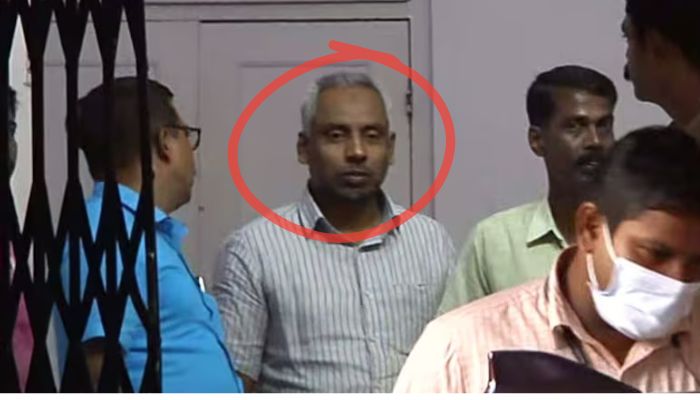
The Hyderabad Cricket Association (HCA) has been ordered to remove the name of Mohammed Azharuddin from the North Pavilion Stand of the Rajiv Gandhi International Cricket Stadium in Hyderabad. The order has been issued by Justice V Eswaraiah, Ethics Officer and Ombudsman of the HCA.
The cricket body has also been ordered to ensure that no more tickets are printed for the ongoing IPL season with the name of Mohammed Azharuddin, former cricketer and Congress leader, who was accused of match fixing. The order was issued in response to a petition filed by the Lords Cricket Club.
The Ombudsman decided that putting his name on the pavilion is a case of conflict of interest, as Azharuddin was the president of the Hyderabad Cricket Association, and the stand was named after him. The order noted that he had taken the decision personally in his own favour, and it was not ratified by the general body of the association.
“The fact that there has been no ratification/modification of the decision by the General Body further strengthens the case against the Respondent No. 1 (Azharuddin), as the Respondent No. 1 has exceeded his authority to benefit himself. In consequence of my findings, a clear case of conflict of interest is made out,” the order stated.
The issue dates back to 2019, when a decision was made to name the North Stand ‘Azharuddin Stand’, and Azharuddin was the HCA president at that time. The stand was named V.V.S. Laxman Pavilion before that.
In February this year, the Lords Cricket Club of the city, one of the members under HCA, filed a plea stating that the renaming of the stand violated rules. It said that as per Rule 38 of the Memorandum of Association and Rules & Regulations of HCA, a member of the Apex Council cannot take any decision in their favour.
The plea also urged to revert the name of the stand to VVS Laxman Pavilion.
However, the former India skipper denied the allegations of any wrongdoing, saying there was no conflict of interest. Azharuddin also said that he will go to the court challenging the ombudsman’s decision.
“There’s no conflict of interest in this. I don’t want to comment, I don’t want to stoop to this level. The cricketing world will laugh at the association. 17 years of cricket, almost 10 years as captain of the side, and with distinction. This is how you treat cricketers in Hyderabad. It’s a very sad state of affairs. We will go to the court, 100%. The law will take its course,” he told The Hindu.
The Bharatiya Janata Party has distanced itself from the controversial statements made by its two MPs, Nishikant Dubey and Dinesh Sharma, regarding the Supreme Court.
BJP National President Jagata Prakash Nadda issued a statement on Saturday (19th April) clarifying that the remarks made by the two MPs were their personal opinions and the BJP does not concur with them.
Criticising the views expressed by Dubey and Sharma, Nadda emphasised that the BJP has always respected the judiciary and considered all the courts, including the Supreme Court, as an internal part of the democracy.
“The Bharatiya Janata Party has nothing to do with the statements made by BJP MPs Nishikant Dubey and Dinesh Sharma on the judiciary and the Chief Justice of the country. These are their personal statements, but the BJP neither agrees with such statements nor does it ever support such statements. The BJP completely rejects these statements. Bharatiya Janata Party has always respected the judiciary and gladly accepted its orders and suggestions because, as a party, we believe that all the courts of the country, including the Supreme Court, are an integral part of our democracy and are a strong pillar of the protection of the Constitution. I have instructed both of them and everyone else not to make such statements,” Nadda wrote on X on Sunday (20th April).
भाजपा सांसद निशिकांत दुबे और दिनेश शर्मा का न्यायपालिका एवं देश के चीफ जस्टिस पर दिए गए बयान से भारतीय जनता पार्टी का कोई लेना–देना नहीं है। यह इनका व्यक्तिगत बयान है, लेकिन भाजपा ऐसे बयानों से न तो कोई इत्तेफाक रखती है और न ही कभी भी ऐसे बयानों का समर्थन करती है। भाजपा इन बयान…
Speaking to the media yesterday (19th April), BJP MP Dinesh Sharma took a veiled dig at the Supreme Court, saying that no one has the right to issue directions to the Parliament or the President.
Sharma said, “There is an apprehension among the public that when Dr BR Ambedkar wrote the Constitution, the rights of the Legislative and Judiciary were clearly written. According to the Constitution of India, no one can direct the Lok Sabha and Rajya Sabha and the President has already given her assent to it. No one can challenge the President, as the President is supreme.”
#WATCH | Lucknow, UP | On BJP MP Nishikant Dubey's statement on the Supreme Court, BJP MP Dinesh Sharma says, "…There is an apprehension among the public that when Dr BR Ambedkar wrote the Constitution, the rights of the Legislative and Judiciary were clearly… pic.twitter.com/B28SA04SM3
BJP MP Nishikant Dubey had also made some contentious remarks against the Supreme Court and the Chief Justice of India, Sanjiv Khanna. Dubey accused the Supreme Court of driving the country towards a state of anarchy and overstepping the limits of its constitutional powers by interfering with the work of the legislature and the executive. He also held CJI Khanna responsible for the ‘civil wars’ happening in the country.
He added that the government will introduce the National Judicial Appointment Commission (NJAC) in the next session of the Parliament to get rid of nepotism in the appointment of judges to the Supreme Court.
Allegations of judicial overreach
The statements of the BJP MPs followed the remarks made by Vice President Jagdeep Dhankhar, questioning the Supreme Court for putting a time limit on the constitutional powers of the President and the Governors in a recent judgment.
The criticism of the Supreme Court by the BJP leaders and the Vice President came after two recent developments. The Supreme Court passed a judgment on 8th April in which it set a time limit, not envisaged in the Constitution, on the exercise of power to grant or refuse assent to a state Bill by the President and the Governor.
Apart from that, while considering a slew of petitions filed before it challenging the Waqf Act on Thursday (17th April), the Supreme Court hinted at staying the Act, after which the Centre assured the Court that no no-Muslims will be appointed to the Waqf Councils and that no Waqf properties, including ‘Waqf by user’ will be denotified.
The entire controversy around the recent observations of the Supreme Court and the criticism that followed has once again sparked the debate around judicial overreach.
On 20th April, Canada’s Conservative Party leader and candidate for the Prime Minister’s post in the General Elections, Pierre Poilievre, attended the Khalsa Day Parade in Surrey, British Columbia. He shared the stage with the Jathedar of the Khalistani terrorist organisation, Babbar Khalsa, Santokh Singh Khela, who is a convict in the AI-112 bombing plot. He was arrested shortly after the infamous Kanishka Bombing that killed 329 on-board, mostly Canadians.
Happening now: World’s largest Khalsa Day Parade in Surrey, B.C.
Chants of “Kill Modi Politics” echo throughout the parade route, accompanied by Sikh hymns and martial arts demonstrations.
The event has attracted Liberal, NDP, and Conservative candidates promoting themselves.… pic.twitter.com/uE6T367uwY
At the event, slogans such as “Kill Modi Politics” were chanted, and images of Kanishka bomber Talwinder Singh Parmar were glorified.
In videos shared by investigative journalist Bezirgan Mocha, Khalistan flags were seen. Also, cut-outs of Prime Minister Narendra Modi, Home Minister Amit Shah, and External Affairs Minister Dr S. Jaishankar were placed in a mock-up jail. All three cut-outs were dressed in orange prison outfits with handcuffs.
Mocha also shared a video of the speech given by Khela at the event. Khela, while holding an axe in his hand, stated, “We will keep fighting till Khalistan gets freedom.
We will fulfil the dream of Hardeep Bhai (Hardeep Singh Nijjar). We will lead the war for Khalistan.” There were posters of Khalistani terrorist Hardeep Singh Nijjar behind him on the stage.
On one stage, a Canadian politician speaks about diversity and cultures. On the stage next to him stands Santokh Singh Khela—convicted in the 1980s for an Air India bombing conspiracy—speaking about Babbar Khalsa (terrorist organization) with an axe in his hand.
Mocha also talked to Khela a day before the event. During the conversation, Khela admitted that he was convicted for conspiracy but refused to shed light on the details.
He was released six years after he was sent to prison for his crimes. However, he was released as the prosecution failed to prove his involvement in the bombing, reports suggest.
EXCLUSIVE: Santokh Singh Khela Breaks Silence on Life Imprisonment for Air India Bombing Conspiracy
Mr. Khela was convicted in 1986 by a Canadian court for conspiring to bomb an Air India flight departing from JFK Airport in the U.S., following the Canadian Air India bombings of… pic.twitter.com/WRbdFD3ZjZ
When asked if he was a Jathedar of Babbar Khalsa, a terrorist organisation, he said, “No, I am a sewadar of Khalsa Panth,” with a smile on his face.
When Mocha said he had the insignia of Babbar Khalsa on his back, he claimed it was the insignia of “Khalsa Panth”. He added, “We will continue the fight. We want to liberate Punjab from India. The fight will continue until we get the liberation, independent Khalistan. We are supporting the peaceful referendum which is going on.”
Shockingly, towards the end of the video, there were some Sikh youth donning t-shirts with AKF written on the back. AKF stands for Anandpur Khalistan Fouj, a new terrorist outfit that Khalistani separatist/preacher-turned-MP Amritpal Singh was raising at the time of his arrest. Amritpal Singh is currently lodged in Assam jail facing charges under the National Security Act (NSA). There were reports that his NSA was being revoked by the Punjab Government; however, recent reports suggest that it has been extended for another year.
Sikh youth wearing t-shirts with AKF logo spotted at Khalsa Parade in Canada. (Image: Left: Indian Express/ Right: SS from video shared by journalist Bezirgan Mocha)
Khela masterminded the Air India 112 bombing
In May 1986, five members of the terrorist organisation Babbar Khalsa were charged with plotting to blow up Air India Flight 112. Months after the proceedings, while the Canadian court freed three men, it found Santokh Singh Khela and Kashmir Singh Dhillon guilty of conspiring to commit mass murder by blowing up Air India (AI) Flight 112 which originated at JFK airport in New York City. He was sentenced to life imprisonment in 1987. The sentence was later overturned.
The Canadian government claimed that the alleged plot was conceived on 4th April 1986, targeting an Air India flight departing from John F Kennedy International Airport on May 30 in New York. All five men involved were from Montreal, Quebec. It was later revealed that Santokh Singh Khela had been under surveillance by the Canadian Security Intelligence Service (CSIS) since at least May 1985, when they recorded a phone call he made to Talwinder Singh Parmar, the mastermind of the Air India Flight 182 bombing.
When Khela and his associates were sentenced to life, Quebec Superior Court Justice Claire Barrette-Joncas said in her passing sentence that Santokh Singh Khela and Kashmir Singh Dhillon are examples to the world of how Canada treats terrorists.
“The crime you were found guilty of is so mind-boggling that the primary end of these sentences must be deterrence, a firm notice to you and any would-be terrorist that such conduct is not to be considered lightly in Canada,” she said.
However, six years later, he was aquitted as crown prosecutors failed to disclose crucial information, and Canadiam government had to issue an apology to him, which he had confirmed while talking to Mocha.
Khela was awarded by Ajaib Singh Bagri, a close associate of the mastermind of the Kanishka bombing and who pledged to kill 50,000 Hindus
As mentioned by journalist Mocha Bezirgan Santokh Singh Khela was this year, presented with an award in Calgary by Ajaib Singh Bagri. Notably, Ajaib Singh Bagri was a close associate of Talwinder Singh Parmar, the mastermind of the Kanishka bombing, which happened a year before the Air India Flight 110 bombing plot. Ajaib Singh Bagri is the same person who had also pledged to kill 50,000 Hindus.
The bombing of Air India Flight 182 on June 23, 1985, was one of the deadliest acts of terrorism in aviation history. The Boeing 747 aircraft, operating as “Kanishka” and en route from Montreal to London, was destroyed mid-air by a bomb, killing all 329 people on board, most of whom were Canadian citizens of Indian descent. The bomb was planted in the plane’s cargo hold, and it exploded over the Atlantic Ocean near the coast of Ireland.
The investigation into the bombing revealed that the conspiracy had been planned and executed in Canada, where members of the Sikh terrorist group Babbar Khalsa, including Talwinder Singh Parmar and Inderjit Singh Reyat, were involved.
Pierre Trudeau is vastly blamed for the Kanishka bombing, as it was only after the Trudeau-led government saved Parmar he started preparing for the bombing. In 1984, Parmar told his fellow Khalistanis that “Indian planes will fall from the sky”.
In the same year, Ajaib Singh Bagri, a close associate of Parmar, pledged to kill 50,000 Hindus. He said at the founding convention of the World Sikh Organization, “Until we kill 50,000 Hindus, we will not rest!” It was reported by Milewski, who extensively covered the Khalistani movement in Canada and abroad.
To date, many consider the Kanishka bombing one of the darkest moments in Canada’s history, and it highlighted the growing influence of Khalistani extremists operating from within the country.
The bombing of Air India Flight 182 stands as a tragic reminder of the impact of terrorism and the long-lasting scars it leaves on victims’ families, while also bringing attention to the international dimensions of extremism.
Santokh Singh Khela is associated with the banned terrorist organisation Sikh for Justice
Khela is also the organiser for the Khalistan referendum conducted by Sikhs For Justice (SFJ) at Dashmesh Gurdwara. Sikhs For Justice was banned by the Indian Government on July 10, 2019, under the Unlawful Activities (Prevention) Act for anti-India activities. The Indian government designated its founder, Gurpatwant Singh Pannu, a terrorist. The organization has announced Referendum 2020, demanding a separate state of Punjab from India. Since its inception, the organization has been trying to lure the youth of Punjab with monetary rewards for instigating war against the Indian government. A day ahead of the parade, he was seen preaching about the so-called Khalistan Referendum being organised by SFJ. He was also seen standing with pro-Khalistani Sikhs chanting “Khalistan Zindabad” in the video.
King of Bhutan Jigme Khesar Namgyal Wangchuk visited the IWT terminal at Jogighopa in Bongaigaon district to assess its functionality and technical calibre as an important port of call for cargo exports from Bhutan to the global markets.
Earlier, Prime Minister Narendra Modi applauded the IWT Terminal as “a noteworthy addition in our quest for improving infrastructure as well as encouraging inland waterways for progress and prosperity.”
Union Minister of Ports, Shipping and Waterways, Sarbananda Sonowal, inaugurated the IWT Terminal at Jogighopa on 18 February 2025, along with Lyonpo Namgyal Dorji, the Minister of Industries, Commerce & Employment in the Royal Government of Bhutan.
Cargo movement commenced from that day from IWT Jogighopa, confirming its operation for business.
The King of #Bhutan , His Majesty Jigme Khesar Namgyel Wangchuck visited MMLP & IWT terminal at Jogighopa in Assam along with representatives of @mygovassam & @nhidcl offcials. Located at a distance of 91 km from Gelephu, the terminal is crucial for #IndiaBhutan bilateral trade. pic.twitter.com/zVzb1sN7wv
Speaking on the visit, Union Minister Sarbananda Sonowal said, “It is a historic moment that the King of Bhutan, Jigme Khesar Namgyal Wangchuk, visited the recently inaugurated IWT Jogighopa terminal as well as the Jogighopa Multi Modal Logistical Park (MMLP). Both projects are aligned with the vision of PM Narendra Modi’s Act East policy for inclusive growth and sustainable development. This visit further deepens the long-standing friendship, trust, and shared prosperity for both India and Bhutan.”
Welcome the visit of His Majesty, King of Bhutan, Jigme Khesar Namgyel Wangchuck to the MMLP and IWT Terminal at Jogighopa, Assam, key infra poised to boost trade and connectivity between India and Bhutan. ?????
The terminal is strategically important as it is located 91 km from Gelephu in Bhutan, 108 km from the Bangladesh border, and 147 km from Guwahati. This makes it crucial for India’s bilateral trade ties with Bangladesh and Bhutan.
The Jogighopa terminal is also one of the declared Ports of call under PIWT&T between India and Bangladesh. By the year 2027, this terminal is expected to handle a cargo of 1.1 million tonnes per annum.
Built at a cost of more than Rs 82 crore, the Jogighopa terminal has an RCC jetty with an RCC approach designed for an Electric Level Luffing (ELL) crane for cargo handling.
The terminal also has infrastructural facilities such as an administrative building, a customs office building, an immigration office, a truck parking area, a 1100 sqm covered storage area with power backup, and 11,000 sqm open storage.
Among those who were present were Assam Minister Jayanta Malla Baruah, the Chief Secretary, Government of Assam, Ravi Kota, the Director, Inland Waterways Authority of India (IWAI), senior officials of District Administration and IWAI, and officials from the Royal Government of Bhutan.
(This news report is published from a syndicated feed. Except for the headline, the content has not been written or edited by OpIndia staff)
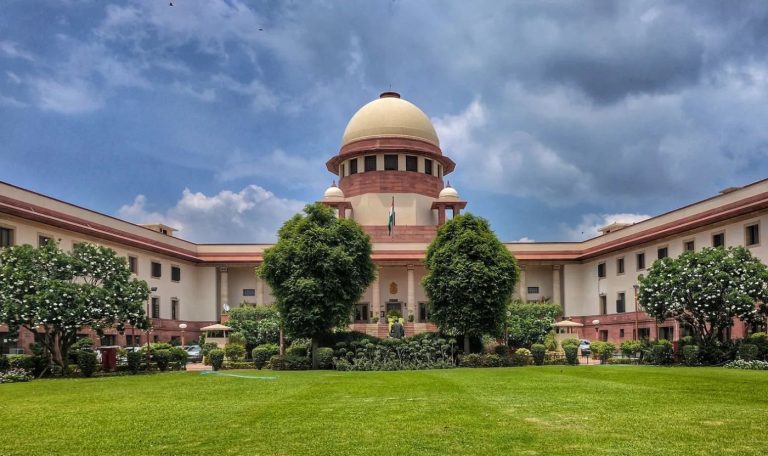
After Vice President Jagdeep Dhankhar’s open criticism of the Supreme Court, now BJP MP Nishikant Dubey as hit out at the Apex Court, accusing it of interfering with the functioning of the legislature. In a sarcastic statement, Dubey said that Parliament should be closed down if the Supreme Court were to make laws.
Dubey posted his remarks on X on Saturday (19th April): “If the Supreme Court makes the law, then the Parliament House should be closed.” His comments came in the context of the recent Supreme Court judgment, where the court prescribed a time limit to be followed by the President and the Governor in the exercise of their powers to grant or refuse assent to a Bill passed by a state legislature.
क़ानून यदि सुप्रीम कोर्ट ही बनाएगा तो संसद भवन बंद कर देना चाहिये
Supreme Court overstepping its constitutional powers
The Godda MP accused the Apex Court of transgressing the limits of its Constitutional power in striking down the laws passed by the Parliament and inciting religious wars in the country. Referring to the Supreme Court’s decision with respect to section 377 of the Indian Penal Code, Dubey alleged that the court nullified the provision and legalised homosexuality, while all the religions consider it a crime.
He added that even US President Donald Trump passed a law to declare that there are only two genders. He said that we (Parliament) brought the IT Act to stop women and children’s pornography, but the Supreme Court struck down section 66A of the Act. “If one has to go to the Supreme Court for everything, then Parliament and the State Assembly should be shut,” said Dubey.
#WATCH | Delhi: "…Supreme Court is responsible for inciting religious wars in the country. The Supreme Court is going beyond its limits. If one has to go to the Supreme Court for everything, then Parliament and State Assembly should be shut…" says BJP MP Nishikant Dubey pic.twitter.com/ObnVcpDYQf
“I have studied Article 141 in detail. It says that the law we (Parliament) make is applicable from the lower court to the Supreme Court. Article 368 says that under the Constitution of this country, the Parliament has the right to make all laws. The Supreme Court is telling the President, the Governor what work to do in three months. This country is the tradition of Ram, Krishna, Sita, Radha, Sanatan, etc. When there is a matter of Ram temple, you say show the papers. They ask for papers in Gyanvapi, Mathura, but on the mosques built after the Mughals, they say where will you show the papers from?” he added.
Supreme Court driving the country towards anarchy, says Dubey
Using strong words to criticise the Apex Court, Dubey alleged that the Supreme Court is driving the country towards a state of anarchy. He questioned the Court for prescribing a time limit on the President and the Governor’s Constitutional powers, which is not envisaged under the Constitution. “How can you give direction to the appointing authority? The President appoints the Chief Justice of India. The Parliament makes the law of this country. You will dictate that Parliament?… How did you make a new law? In which law is it written that the President has to make a decision within three months? This means that you want to take this country towards anarchy. When the Parliament sits, there will be a detailed discussion on this…,” Dubey remarked.
#WATCH | BJP MP Nishikant Dubey says, "How can you give direction to the appointing authority? The President appoints the Chief Justice of India. The Parliament makes the law of this country. You will dictate that Parliament?… How did you make a new law? In which law is it… https://t.co/CjTk4wBzHApic.twitter.com/HYNa8sxBVt
Dubey said that the government will introduce the National Judicial Appointment Commission (NJAC) in the next session of the Parliament to get rid of nepotism in the appointment of judges to the Supreme Court.
Dubey also held Chief Justice of India, Sanjiv Khanna, responsible for the “civil wars” happening in the country after Trinamool Congress (TMC) leader Kalyan Banerjee demanded the resignation of BJP leader and Chairman of the Joint Parliamentary Committee on the Waqf Bill, Jagdambika Pal.
The Supreme Court has been receiving flak from political quarters after the controversial judgment. Recently, Vice President Dhankhar accused the Supreme Court of transgressing the boundaries of its power and interfering with the work of the legislature and the executive. He said that the Court was using the Constitutional provisions like a ‘nuclear missile’ to override the democratic process.
Foreign Secretary Vikram Misri on Saturday said that Prime Minister Narendra Modi’s upcoming visit to Saudi Arabia would provide an important opportunity to discuss pressing regional and global developments, including the situation in West Asia, the Israel-Palestine conflict, and the threat to maritime security posed by Houthi attacks.
Misri was addressing a special press briefing organised by the Ministry of External Affairs ahead of the April 22-23 visit.
“This is a very important opportunity to compare notes on several issues of mutual concern in the related to the regional situation as well as the global developments and what you have referred to the attacks by the Houthis with regard to shipping and navigation, etc, is obviously something that India has been closely monitoring as well and also watching with some concern,” Misri said.
“The developments in the region, including, most recently we have obviously great concerns about freedom of navigation, the safety and security of our vessels and sea,” he added, referring to the strategic significance of the Red Sea and nearby waterways amid growing instability,” he added.
During the briefing, Misri said the evolving situation in West Asia, especially the Israel-Palestine conflict, would also feature prominently in the bilateral discussions.
“For discussions on the situation, about on West Asia, the current state of affairs between Israel and Palestine, and obviously on that front, also, we’ve seen developments of some concern. Saudi Arabia plays a very important role in addressing this issue,” he said.
“India has remained involved with all the principal actors in this issue. We’ve met with and discussed with leadership, both from Palestine as well as Israel, as also regional leaders, whether it be from Jordan, Egypt and indeed, Saudi Arabia as well, and given the multiple initiatives that are underway in the region right now, whether it is trying to settle the situation with regard to release of hostages or about the facilitation of humanitarian assistance or a ceasefire, in some ways, these are interlinked issues,” Misri stated.
“So I think this is going to make for a very interesting and rich discussion between the two sides, between the two leaders,” he said, referring to Prime Minister Modi and Crown Prince Mohammed bin Salman.
The visit will be PM Modi’s third to the Kingdom, and his first in his third term as Prime Minister.
(This news report is published from a syndicated feed. Except for the headline, the content has not been written or edited by OpIndia staff)
In what many call a tipping point, Vienna is witnessing a historic demographic shift. For the first time in history, official figures have revealed that Muslim students now outnumber Christians in government-run elementary schools. The city’s school council has released data stating that 41.2% of students in these schools are Muslims, while all Christian denominations combined account for only 34.5%. The development has sparked political debate and raised concerns over integration.
The figures have been compiled by the office of Vienna’s City Councillor for Education, Bettina Emmerling (Neos). They cover around 112,600 children across all school types. Reports say German is increasingly a second language in schools, which has made teaching difficult. According to Evelyn Kometter of the Austrian Parents’ Association, it has become difficult for teachers to conduct classes, as they have to repeat every sentence 10 to 12 times before the students can understand. An exodus of ethnic Austrian families from urban schools has reportedly begun.
The right-wing Freedom Party of Austria has termed the situation as “displacement, not immigration.” Hannes Amesbauer of the Freedom Party said, “Austrians will soon be strangers in their own country.” The government has proposed a new subject, “Living in a Democracy” to promote tolerance, diversity, and social cohesion, however, critics say integration issues run much deeper.
Europe’s leniency comes home to roost
The demographic change in Vienna is not an overnight surprise. For years, European countries—especially Germany, Sweden, and Austria—have embraced what can be defined as open-door immigration policies. These countries have welcomed anyone from war-torn Islamic nations including Syria, Iraq, Afghanistan, and Somalia, often without long-term plans for the absorption of groups with completely different cultural backgrounds into local society.
Initially, these immigration policies were promoted in the name of multiculturalism and humanitarian concerns. However, they resulted in segregated ghettos, a language crisis in classrooms, a rise in criminal activities, and political unrest. In several parts of EU countries, local law enforcement agencies have adviced certain individuals like Jews and open homosexuals to avoid going to so-called “no-go zones” dominated by Islamic communities.
Concerns over allowing anyone and everyone from Islamic countries have been raised—and are still being raised—by “far-right” groups. These concerns were dismissed by the left-liberals as fearmongering. However, the concerns are now being reflected in mainstream data: from classroom religion ratios and rising crime statistics to growing public backlash. There have been calls from the general public, experts, and political leaders alike for a rethink on immigration policies. Even centrist parties have acknowledged that the model of unchecked immigration has failed to preserve European values and social cohesion.
For example, the Social Democratic Party of Germany faced political pressure over immigration issues and recently considered tightening border measures. In Denmark, the Social Democrats, traditionally a centre-left party, have adopted stricter immigration measures in recent years under Prime Minister Mette Frederiksen making it clearly unwelcoming for immigrants from Islamic countries.
In September 2024, The Guardian reported how European countries including Sweden, France, Germany, Netherlands and Finland vowed to bring tougher immigration policies. Interestingly, they were called a result of “pressure from the far-right”.
Another notable aspect of European countries becoming stricter over immigration policies is the fact that the year-on-year number of irregular border crossings into the EU fell by 31% in the first quarter of 2025. On the other hand, historical data collected by Frontex showed that there was a spike of 17%—the highest since 2016—in irregular border crossings in 2023, with 380,000 individuals entering the EU. This figure dramatically fell in the first quarter of 2024.
India has already paid the price—Kashmir, Nepal border, and now Murshidabad
While Europe is now facing the heat of what can only be described as an Islamic cultural invasion, India has long endured the effects of demographic transitions. The most tragic example in Independent India’s history remains Kashmir, where the 1990s saw the targeted ethnic cleansing of lakhs of Kashmiri Hindus. Driven out by Islamic extremists, they were forced to flee their homeland, turning into refugees in their own country.
As reported by OpIndia, a worrying trend is also emerging along the Indo-Nepal border, where the Muslim population in certain districts has risen by over 32% since 2011, compared to the national average of 14%. Many villages near the border have reported a complete demographic turnaround, prompting calls for increased BSF jurisdiction to curb illegal migration and cross-border radicalisation.
Furthermore, it has been observed in several cities across states that where the population of Muslims surpasses a certain threshold, it becomes extremely difficult for Hindus to survive in those areas. Houses with signs reading “This House Is For Sale” often pop up in areas where Hindus face atrocities at the hands of local Islamist goons.
The most recent flashpoint is Murshidabad in West Bengal. In early April 2025, violence erupted in the city following tensions around the Waqf Amendment Act. Muslim mobs reportedly marked Hindu homes with black ink before launching attacks including bombings, vandalism, and arson. Dozens of Hindu families have since fled the area, echoing the fear last seen during Bengal’s post-poll violence in 2021.
Several Hindu leaders and prominent personalities have warned about the increasing Muslim population in certain areas. However, the secular elite has continued to downplay these concerns as fringe paranoia. But the ground reality is the same everywhere—whether it is a Hindu teacher in Murshidabad, a Kashmiri Pandit living as a refugee for decades in Delhi, or an Austrian parent in Vienna, the consequences and the pain are the same.
Communal clashes erupted in Sanodha village in the Sagar district of Madhya Pradesh on Saturday (19th April), after a Muslim man allegedly eloped with a Hindu woman a day before her wedding. As soon as people found out about the incident, clashes broke out in the area, resulting in several houses, shops being set ablaze, and properties being vandalised. The police had to use tear gas shells and mild force to take control of the situation. Teams of police have been deployed in the area, and senior police officers, including SP Vikas Shahwal, ASP Lokesh Sinha, and SDOP Prakash Mishra, are also present to maintain peace.
Locals alleging love jihad
As per reports, the Hindu woman was to get married on Saturday. The preparations for the wedding were in full swing, and all the guests had arrived to attend the wedding. However, a day before the wedding, i.e. on Friday (18th April), the woman ran away with a local Muslim man. The next morning, the woman’s family found out that their daughter was not at home. When they started searching for her, they found out that the Muslim man was also missing from his house.
The incident outraged the woman’s family and the villagers, who called it a case of love jihad. Soon, clashes erupted and the villagers vandalised the houses and properties belonging to the other community. The violence stopped after police intervention.
MLA says it is the fifth such incident in the area
Naryavalli MLA Pradeep Lariya claimed that this was the fifth incident of this kind in the area. He said that he talked to the TI and the SP regarding the matter and demanded the filing of an FIR. “On April 18, I had demanded strict action from the SP and TI in this matter, but only a missing person case was registered. This is the fifth such incident in Sanodha. We had warned the administration earlier too, but no seriousness was shown,” Lariya alleged.
BJP state president VD Sharma said that those who indulge in love jihad and mislead daughters by hiding their identity will not be spared under any circumstances. Such activities will not be allowed. Sharma urged locals not to maintain peace and let the law take its course.
After triggering outrage by claiming that there is a temple dedicated to her in Badrinath, Urvashi Rautela on Saturday claimed that her comments were misinterpreted. In a statement issued by her team, they said that she never claimed the temple was dedicated to her, and that she only mentioned that there is a Urvashi temple in Badrinath.
The statement claimed that her comments were taken out of context, and that she was actually called ‘Damdami Mai’ at Delhi University.
The statement issued in Hindi said, “Urvashi Rautela said that there is a temple in my name in Uttarakhand, not a temple of Urvashi Rautela. Now people do not even listen to things properly, just by hearing ‘Urvashi’ or ‘temple’ they have assumed that people worship Urvashi Rautela. Listen to this video properly and then speak.”
The statement further added, “Urvashi said yes, she was worshipped as ‘Damdami Mai’ in Delhi University. There is also a news article about it. Legal action should be taken against those who made confusing comments on Urvashi Rautela’s statement. It is necessary that the facts are properly investigated before making baseless allegations against any person and making derogatory comments against them. Everyone in the society should behave with respect and understanding towards each other. Only so that everyone’s rights can be protected.”
While Urvashi Rautela’s team is now claiming that she never claimed that the Badrinath temple was dedicated to her, the video of the podcast where she made the comments show that she did made that claim. She had also said that there should be another temple for her in South India, as she has acted in several South Indian movies.
During a conversation with host Siddharth Kannan, Rautela had said that the Urvashi Temple near the Badrinath Dham was built in her name. When Siddharth asked whether the temple is actually dedicated to her, she said yes, and added that people worship her there as it is a temple. She then added that a similar temple should come up in South India.
Surprised by the claim, Siddharth had asked several times whether the temple is actually dedicated to her, and she responded by saying yes every time. She never mentioned that the temple is actually for a Hindu Goddess with the same name as hers.
She then added that students from Delhi University also worship her and even garlanded her pictures, calling her ‘Damdami Mai’. “I am being serious about it. It is true. There are news articles about the same too. You can read them,” she said.
Her remarks had sparked both outrage and mockery, as the temple she was referring to is dedicated to Goddess Urvashi, not actor Urvasi Rautela. The temple is located in Bamni village near Badrinath, around 1 km away from Badrinath Dham. Priests and other locals from Badrinath slammed Rautela for her comments, saying that her statements are unacceptable. They also demanded an apology from her.
While she is now claiming that she didn’t claim the Badrinath temple is dedicated to her, she had actually said that she wishes that a similar temple should come up in South India, as she is working in Southern movies.
Worship as Damdami Mai in Delhi University
During the interview, she also added that she was worshipped as Damdami Mai at Delhi University, and the students used to garland her photograph. Today’s statement also mentions this, saying that she was actually talking about how she was worshipped as ‘Damdami Mai’ in Delhi University, and there is also a news article about it.
However, what she and her team failed to mention is that students of Hindu College in Delhi pick a celebrity, often a woman, as Damdami Mai every year on Valentine’s Day.
On the occasion, the students actually worship a tree on the campus, known as the Virgin Tree, and the ritual is known as Damdami Mai puja. During the event, they also pick a celebrity, using the name Damdami Mai for females and Damdami Papa for males. As part of this fun ritual, the boys’ hostel residents of the college had picked Urvashi Rautela as Damdami Mai in the year 2016. Kriti Sanon was also in contention for being Damdami Mai that year, but Urvashi was selected as she studied in DU’s Gargi College.
In 2017, Disha Patani was made the year’s Damdami Mai, while Hrithik Roshan was selected as Damdami Papa.
Some past photos of Virgin Tree Puja by boys of Hindu College on Valentine’s Day, with posters of Damdami Mai of the year hung from the tree
Notably, being a Valentine’s Day event, students also decorate the venue with condoms used as balloons, apart from red and pink streamers and flowers. The Puja was discontinued during the pandemic and resumed in 2023. But they have stopped picking celebrities as Damdami Mai after that.
Therefore, Urvashi Rautela was selected as Damdami Mai for one day for a specific event, and her photo was decorated with garlands on that day. But this does not mean that DU students always worshipped her, as she tried to portray in the interview.
In a powerful and unprecedented move, the Scottish Parliament passed Motion S6M-17089, officially condemning Hinduphobia for the first time in Scottish—and indeed UK—history. Tabled by Ash Regan, MSP for Edinburgh Eastern and member of the Alba Party, the motion marks a watershed moment in the fight against religious discrimination.
The motion, which drew broad cross-party support from MSPs including Colin Beattie, Stephanie Callaghan, and Kevin Stewart, specifically recognises the “alarming levels of prejudice, marginalisation, and discrimination” experienced by Scotland’s Hindu community. More importantly, it commends the Gandhian Peace Society (GPS) for its pivotal report exposing these issues and pushing for real change.
“Scotland’s diversity is its strength,” said Regan during her address. “But we cannot celebrate that diversity while ignoring the voices of those harmed by prejudice. This motion isn’t just symbolic—it’s a demand for tangible change.”
The Report that sparked a movement
At the heart of this legislative milestone lies a landmark study: “Hinduphobia in Scotland: Understanding, Addressing, and Overcoming Prejudice”. Authored by Dhruva Kumar (General Secretary and Trustee of GPS), Anuranjan Jha(President of GPS), Sukhi Bains, Ajit Trivedi, and Neil Lal (President & Chairman of the Indian Council of Scotland and UK), the report is the first UK parliamentary-recognised analysis of anti-Hindu discrimination.
“As Scotland reckons with its commitment to inclusivity, Ash Regan’s motion sets a precedent: religious harmony is not passive, it is fought for, legislated, and cherished. With global attention from the Indian diaspora and Scottish policymakers alike, this moment transcends borders, proving that justice for one community strengthens the soul of a nation,” Mr Dhruva Kumar, one of the authors of the seminal report “Hinduphobia in Scotland: Understanding, Addressing, and Overcoming Prejudice” and a political activist based out of Glasgow, UK, poignantly noted.
Dhruva Kumar (L) with Ash Regan (R)
The report weaves together statistical data, testimonies, and firsthand accounts to reveal a grim picture: hate crimes, temple vandalism, workplace exclusion, and deep-seated cultural stigmas affecting Scotland’s 30,000-strong Hindu population.
“When places of worship are vandalised or families face slurs, it’s not just Hindus being attacked—it’s Scotland’s values of tolerance,” said Neil Lal. “This report is a mirror held up to our society, urging us to do better.”
“Gandhiji taught us that non-violence includes combating ignorance,” added co-authors Jha and Kumar. “By addressing Hinduphobia, we’re building bridges across all communities.”
Dhruva Kumar
A united political and cultural front
The motion’s backing across party lines reflects a rare unity on issues of racial and religious equality. Presented to Holyrood’s Cross-Party Group on Challenging Racial and Religious Prejudice, the report has already influenced national dialogue.
Professor Peter Hopkins, the group’s convenor, hailed the report’s evidence-based approach, while Chair Foysol Choudhary called it a “critical tool for policymakers.”
The significance of the motion hasn’t gone unnoticed in the wider community. Indian diaspora leaders, such as Acharya Dr. Abhishek Joshi, Rashmi Rai, and Poonam Prajapati, welcomed the Parliament’s recognition.
“This motion isn’t an endpoint—it’s the beginning of a journey toward mutual respect,” they said. “Let it inspire global action.”
Scottish author Aline Dobbie echoed those sentiments, praising the initiative as “a hopeful moment for anyone who believes in a fairer, more inclusive Scotland.”
The Road Ahead: From recognition to reform
The Gandhian Peace Society’s report outlines concrete steps to turn awareness into action:
Legal Reform: Amend the Hate Crime Act to explicitly recognise Hinduphobia.
Education: Incorporate accurate teachings of Hinduism into school curricula.
Workplace Policy: Enforce religious accommodation and anti-discrimination training.
Community Support: Establish interfaith networks and victim support hubs.
Backed by the voices of scholars, spiritual leaders, and everyday citizens, the report has already gained international attention, from the UK to India and beyond. It has also sparked conversations on platforms like Awaz FM 107.2, where key contributors, including Sukhi Bains and Acharya Joshi, emphasised the importance of interfaith dialogue and unity.
A Call to every Scot
As Motion S6M-17089 progresses through Parliament, the Gandhian Peace Society is urging citizens to engage with its findings, support grassroots efforts, and champion inclusive policy reform.
This is more than just a political development—it’s a cultural shift. Scotland is taking a bold step toward ensuring that no one lives in fear for practising their faith.
With eyes now on how this motion transforms into lasting change, one thing is clear: a historic door has been opened—and the journey toward a more just, tolerant Scotland has begun.