Home Blog Page 391

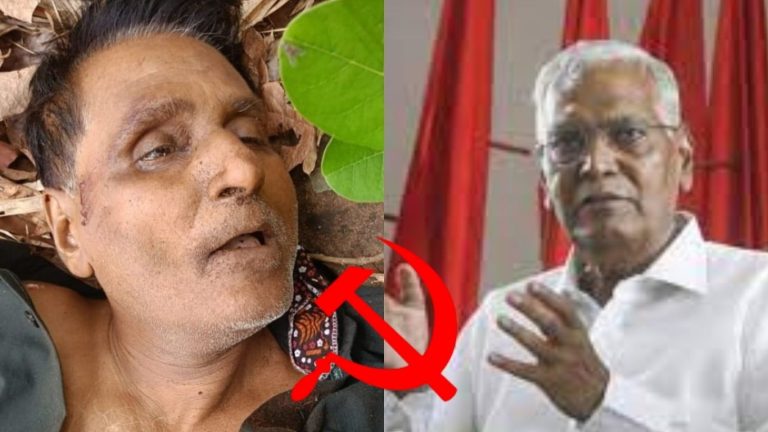
Muhammad Yunus threatens to resign? How ‘chief advisor’ to Bangladesh interim govt, who came to power via regime change, is now left with no options

On Thursday (22nd May), the media landscape was rife with source-based reports about Muhammad Yunus threatening to resign as the ‘chief advisor’ to the interim government of Bangladesh.

Yunus, a controversial US asset, took over the reins of the country on 8th August 2024 i.e. just 3 days after the undemocratic ouster of former Bangladeshi Prime Minister Sheikh Hasina in a well-coordinated ‘regime change‘ operation.

He initially received overwhelming support from the public, so-called ‘student protestors’, the Opposition Bangladesh Nationalist Party (BNP), Islamic extremists and even the Bangladeshi military.

Muhammad Yunus, who had the backing of the US deep State, was tasked to stir the country amid the political turmoil and chaos that ensued after the fall of Dhaka.

His reputation of being a ‘Nobel laureate’ and a champion of ‘microfinance’ gave hopes of ‘renewed democracy’ to the Bangladeshis. But the facade could only last 10 months.

The growing discontentment, across all sections of society, against the interim government has now left Muhammad Yunus cornered.

His failure to conduct a ‘free and fair’ election till date has brought his nefarious ambition, of staying the de-facto leader of Bangladesh, under the spotlight.

In a last bid attempt to salvage his image, Muhammad Yunus has leaked it to media via his sources that he is frustrated over ‘recent developments’ and wants to step down.

“I won’t be able to work unless the political parties can reach a common ground,” Yunus conveyed his message to BBC Bangla through Nahid Islam, who previously served as ‘information adviser‘ under him.

Muhammad Yunus tired to appease Islamic extremists

Bangladesh witnessed a drastic rise in Islamism after Yunus came to power. He first revoked the ban on the radical Islamist outfit ‘Jamaat-e-Islami.’

Thereafter, he released the leader of the radical outfit ‘Ansarullah Bangla Team (ABT)’ Muhammad Jasimuddin Rahmani.

At the same time, Muhammad Yunus downplayed the targeted attacks on the Hindu community by violent Muslim mobs. He has gone on record from lamenting about attacks on Hindus to saying that the claims of atrocities are ‘exaggerated‘.

In that way, the controversial US asset was able to placate Islamic extremists. Given that Awami Legaue was against Islamism, the interim government first banned its student wing ‘Chhatra League,’ and then the parent party.

Under the watch of Muhammad Yunus, Bangladesh saw a drastic rise in vigilante Muslim mobs, which unleashed violence under the pretext of protecting the tenets of Islam.

These mobs were largely unorganised and called themselves ‘Tawhidi Janata (meaning Revolutionary People).’ They came under the spotlight over acts of vandalism and harassment of people.

The Yunus regime introduced new textbooks for primary and secondary students, which falsely claimed that the first declaration of independence of Bangladesh was made by Ziaur Rehman (a favourite icon of Muslim hardliners in Bangladesh).

The interim government also appointed a Hizb ut-Tahrir terrorist named Mohammad Azaz as the administrator for the Dhaka North City Corporation (DNCC).

The situation had become so grim that Bangladeshi ambassador to Morocco Mohammad Harun Al Rashid was forced to slam the Muhammad Yunus-led interim government in a scathing Facebook post in March this year.

“Under Muhammad Yunus’s regime, the media has been both servile and silenced. Brutalities have unfolded daily—hidden from the world. The extremists have convinced Bangladeshis that the West no longer takes Islamic terrorism seriously—giving radicals free rein. And so far, they have been proven correct,” he pointed out.

Rashid added, “Minorities and secularists live in constant fear, while Hizb ut-Tahrir, IS, and Al-Qaeda flaunt their red and black flags, openly demanding Islamic theocracy. The July–August terrorists came straight from their ranks. But Yunus didn’t just shield them—he empowered them.“

Yunus tried to capitalise on anti-India sentiment in Bangladesh

Given that India is a perceived as a ‘Hindu nation’ by Bangladeshi Muslims, Yunus set out to antagonise the neighbouring country as well and capitalise on his growing anti-Indian sentiment in the country.

He first attempted to ban the export of Hilsa fish to India but it was in vain. He then strategically downplayed the crucial role played by India in the 1971 Bangladesh Liberation War by distorting textbooks.

Yunus remained tight-lipped when officials, appointed by him, issued threats to India. In October 2024, Law adviser Asif Nazrul in Bangladesh’s interim government warned that if India tried to refuse the extradition of Sheikh Hasina, the country would launch a “strong protest.”

Sarjis Alam, a so-called ‘student activist’, issued veiled threats to Indian Prime Minsiter Modi. And yet again, Yunus maintained strategic silence. His own ‘adviser’ Mahfuz Alam threatened to annex parts of India.

Former Director General of the Border Guard Bangladesh (BGB), A.L.M. Fazlur Rahman, had also threatened to occupy the 7 States of North-East India in case of war with Pakistan. He is a close aide of Muhammad Yunus.

Border Guard Bangladesh (BGB) commander Lt. Col Golam Kibria also issued threats to India’s Border Security Force (BSF). The interim government maintained stoic silence yet again.

Yunus went on a trip to China and urged the expansonist nation to use the 7 sisters of India as an extension of its economy.

According to him, the chief adviser expressed concerns about whether he would be able to continue working under the current circumstances.

Shrewd tactics of Yunus and the last nail in the coffin

Besides appeasing Islamic extremists and riding on anti-India sentiment in Bangladesh, Muhammad Yunus also ensured the revival of the politically dormant Bangladesh Nationalist Party (BNP).

He had given a free hand to the ‘student activists’, who played a crucial role in the regime change operation in Bangladesh, to indulge in corruption. Yunus also tried to placate the Bangladesh army from time to time.

However, it now appears that the ‘chief advisor’ to the interim government of Bangladesh has finally run his course.

The Bangladesh Army Chief General, Waker-Uz-Zaman, has directed Muhammad Yunus to hold elections by December 2025 under any circumstances. This has dented the latter’s sinister agenda to hold steadfast to the reigns of power.

The sitauation has been further excaerbated with the BNP launching an all-out protest against the interim government.

The party demanded the appointment of its candidate (Ishraque Hossain) as Dhaka’s mayor. BNP also sought for a fixed election date and removal of controversial advisors from the Yunus cabinet.

The ‘student activists,’ who practically oversaw the rise of Muhammad Yunus to the power corridors of Bangladesh, have their own political organisation (National Citizen Party or NCP) now.

They hold demonstrations every other day against one institution or another, creating more hindrance in the functioning of the interim government.

In the meantime, Jamaat-e-Islami has made it clear that it wants elections only after Awami League politicians have been tried by the govt and ‘necessary reforms’ are implemented.

With no support to continue the facade of unelected, ‘democratic’ governance, Muhammad Yunus is now left with no options. A timely resignation may still save face amid growing uncertainities (both political and economic) in Bangladesh.

The ‘chief advisor’ to the interim government has now claimed to feel like a ‘hostage’ due to protests by NCP and BNP.

He has been asked to ‘reconsider his decision’ but the question remains – Does Muhammad Yunus really have a choice anymore?
Jamnagar: AAP worker Akram raped a married woman for three years, forced her to convert to Islam and sexually exploited her minor daughter, case filed

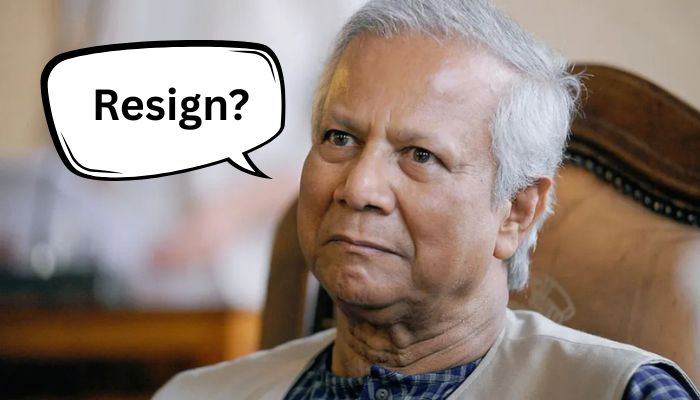
An incident of rape of a Hindu woman by an Aam Aadmi Party worker named Muhammad Akram has come to light from Jamnagar, Gujarat. As per reports, Akram sexually exploited the victim for 3 years by making false promise to marry her. Akram also sexually abused the victim’s 7-year-old daughter. The victim filed a complaint with the police after which a case was registered against the accused at the Jamnagar City A Division Police Station under the relevant provisions of the BNS and the POCSO Act.

The victim met the accused during 2022 assembly elections in Jamnagar where he promised to help her as she was going through a difficult time. He lured the victim into a relationship and had sexual intercourse with her on multiple occasions. The accused lied to her that he was not married and even promised to marry her. The victim alleged that the accused made her undergo abortion four times.

As per the victim, relying on Akram’s promise to marry her, she divorced her husband, and started living with him. Later on, Akram told her that he would seek permission from his family to marry her. About a year later, the victim recieved a call from his wife and mother who told her that they would allow her to marry Akram only if she agreed to convert to Islam. They asked her to read Qalma and visit a Dargah. The victim alleged that Akram’s family performed black magic on her.

The police have recorded the statement of the victim. An investigation is going on in the case.

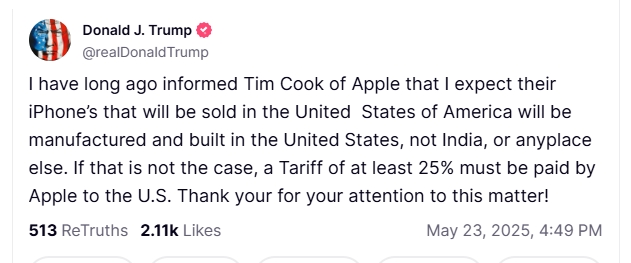
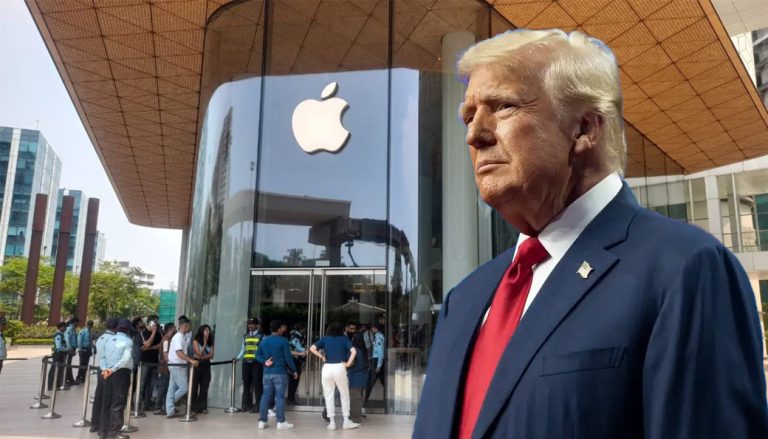
Donald Trump threatens Apple with 25% tariff if iPhones sold in the USA are made in India, after Foxconn announced $1.5 billion plant in India for iPhone components

Continuing his tariff war against supplier countries, US president Donald Trump has threatened to impose 25% tariff on iPhones imported from India to the USA. His comments come a week after saying that he told Apple CEO Tim Cook not to make iPhones in India.

In a post on his Truth Social, Trump said, “I have long ago informed Tim Cook of Apple that I expect their iPhone’s that will be sold in the United States of America will be manufactured and built in the United States, not India, or anyplace else. If that is not the case, a Tariff of at least 25% must be paid by Apple to the U.S.”

The US president added, “Thank your for your attention to this matter!”

Donald Trump’s comments came after Apple’s top supplier Foxconn announced that it is moving forward with a $1.5 billion investment in a new component factory near Chennai. . In an exchange filing at the London Stock Exchange earlier this week, Foxconn said it was investing $1.49 billion in one of its India units, Yuzhan Technologies (India) Pvt Ltd.

As per reports, the Taiwanese electronics giant is setting up the new plant in Tamil Nadu’s Oragadam industrial hub, next to its existing iPhone assembly unit. The new plant will assemble the display module for iPhones.

Earlier on 15th May, Trump had said that he does not support Apple investing in manufacturing plants in India.  In a media interaction during his Doha visit, Trump said, “I had a little problem with Tim Cook yesterday. I said to him, my friend, I am treating you very good. You are coming up with $500 billion but now I hear you are building all over India. I don’t want you building in India.”

He had added, “You(Apple) want to build in India, if you want to take care of India. India is one of the highest-tariff nations, it is very hard to sell in India. And they have offered us a deal where there is literally no tariff. So from the highest tariff, we are going to almost no tariff. So I said to Tim, we put up with all the plants you built in China for years, but we are not interested in you building in India can take care of themselves very well.”

However, both the Indian government and Apple have said that the company’s investment plans in India will go ahead as announced. The Indian government downplayed Trump’s Doha remarks, saying that Apple has assured that is will make India a major manufacturing base for its products.

Sources in Apple also indicated that the company has no plan to change its plans for investments in India based on Trump’s comments. Company executives told news agency PTI that the proposal to set up a major manufacturing facility in the country will go ahead as scheduled.

As Apple has decided to reduce its reliance on manufacturing in China, the company has decided to shift its suppliers away from China to other countries like India and Vietnam. The company currently produces nearly 15% of all iPhones in India, and plans to increase that share to 25% in the near future.

Apart from Foxconn, Tata Electronics is making iPhones in India.

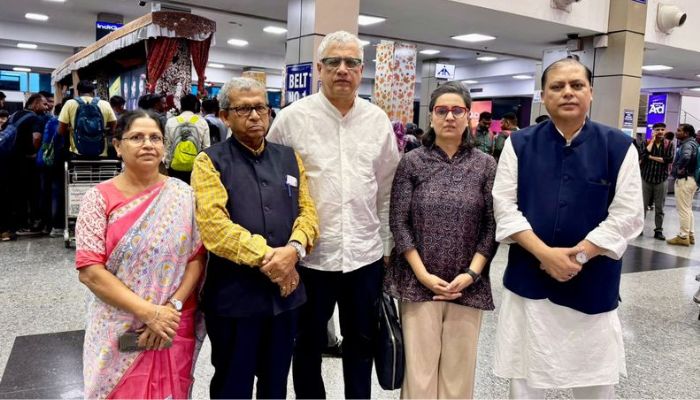
TMC MPs, silent and indifferent during Murshidabad anti-Hindu violence, now tour Jammu and Kashmir to assess the situation after Pahalgam terror attack

A five-member delegation of Trinamool Congress (TMC) leaders is on a three-day visit to Jammu and Kashmir to assess the situation following the Pakistan-sponsored Pahalgam terror attack and Pakistan’s artillery firing in the border villages. The delegation comprising Rajya Sabha MP Derek O’Brien, Nadimul Haque, Mamata Bala Thakur, TMC minister Manas Ranjan Bhunia and Rajya Sabha MP Sagarika Ghose visited Srinagar, Poonch, and Rajouri to interact with locals and extend “solidarity, empathy and sympathy”.

The TMC leaders met Jammu and Kashmir Chief Minister Omar Abdullah as visited the residence of National Conference leader Farooq Abdullah. The TMC delegation met the family of retired army officer Amarjeet Singh who was killed in Pakistani shelling on 8th May.

Sagarika Ghose and other TMC leaders in the delegation also visited the Christ School which was hit by shelling and claimed the lives of twin siblings Zayn Ali and Zoya.

On 22nd May,  Sagarika Ghose asserted that the border villages of Jammu and Kashmir have suffered the most, and the delegation has come to tell the people that they are not alone. She stated that the border villages must not be “ignored,” and they must get the attention and relief and rehabilitation they deserve.

“We, a five-member delegation of public representatives from Bengal, have come to Kashmir on a journey of solidarity, empathy, and sympathy. The border villages of Jammu and Kashmir have suffered the most… We have come to tell the people of border villages that they are not alone… Our voyage here reflects our commitment to an inclusive India where every citizen’s needs are cared for and attended to. The border villages must not be ignored. They must get the attention, the relief, and rehabilitation they deserve”, she told reporters in Srinagar.

While the TMC leaders are claiming to have arrived in Jammu and Kashmir to express solidary and empathy for the victims of those killing in Pakistani firing earlier this month, their ‘empathy visit’ is more of a political tour.

At a time, when even foremost advocate of the restoration of Jammu and Kashmir’s statehood, Chief Minister Omar Abdullah has decided not to raise this issue, TMC leaders brought up the statehood issue.

“It is a legitimate aspiration of the people. We firmly believe that Statehood must be fully restored to J&K. We believe that the elected government of J&K must be the empowered agency to look after the welfare and well-being of the people of Kashmir,” Sagarika Ghose said.

“The federal principle is ingrained in our Constitution… we believe that the elected government of Jammu and Kashmir must be the empowered agency to look after the welfare and wellbeing of the people,” she added.

TMC leaders travel all the way to Kashmir to express solidarity with victims of Pakistani violence, but fail to stand by the victims of anti-Hindu violence in Murshidabad

On the face of it, TMC delegation’s Jammu and Kashmir visit may seem like a genuine effort towards understanding the plight of the victims of Pakistan cross-border firing, however, it reeks of political opportunism when juxtaposed against the party’s tepid response to the anti-Hindu violence in West Bengal’s Murshidabad in April this year.

In Jammu and Kashmir, TMC leaders projected a unified front against Pakistan-sponsored terrorism, positioning the party as responsible national players, however, their statements, dripping with overwhelming empathy were missing when Hindus were attacked and killed by Islamist mobs in Murshidabad last month during anti-Waqf Act protests.

Sagarika Ghose could find time to visit Kashmir to meet families of those killed in Pakistani firing, however, she did not care to meet the family of Hargobinda Das and Chandan Das who were brutally killed by Islamist mob in Dhulian’s Shamsherganj for simply being Hindus. Forget meeting the Hindu victims of Murshidabad violence, TMC leaders had resorted to downplaying the attacks and playing political blame-game.

It, however, seem like TMC indulged in politics of convenience by visiting Kashmir but skipping Murshidabad due to the revelations of involvement of local TMC leaders in Murshidabad violence. The report by the fact-finding formed by the Calcutta High Court highlighted that local TMC councillor Mehboob Alam and MLA came with rioters on 11th April and saw the violence and went away. The report says that these attacks were carried out on directions of Mehboob Alam adding that the local police in the TMC-ruled state remained inactive and completely absent when Islamist mobs ran riots.

While the state was burning due to communal violence, members of the ruling All India Trinamool Congress (AITC or TMC) were preoccupied with downplaying the incidents, placing blame on the Bharatiya Janata Party (BJP), Rashtriya Swayamsevak Sangh (RSS) and even Hindus from other states as well as alleging conspiracy.

Instead of acting against the Islamist rioters, TMC leaders including motormouth Mahua Moitra issued a video helplessly pleading the rioters to halt their rioting. This outspoken leader, who positions herself as a staunch feminist and a fierce advocate against majoritarianism appears to have lost her voice when it comes to addressing the oppression of Hindu minorities in Murshidabad. The necessity of catering to the Muslim vote-bank incapacitated even the most “fearless” leaders.

Similarly, Sagarika Ghose who is empathising with victims of Pakistani brutalities in Kashmir, had turned apathetic to the plight of innocent Hindus in Murshidabad as her party’s votebank attacked them. Ghose had blamed the BJP for violence and declared Bengal police as “best in the country” even as the latter failed to act against Islamist mobs and remained nothing more than a mute spectator, a fact confirmed by the fact-finding committee’s report.

Sagarika Ghose’s apathy towards Hindus, however, is not shocking given it is an undeclared prerequisite for joining the Trinamool Congress. Ghose had not only downplayed anti-Hindu Murshidabad violence but also downplayed the Sandeskhali unrest last year. She brushed off the raging controversy as a ‘local land dispute.’ OpIndia had reported the testimonies of several women of Sandeshkhali. They courageously narrated the sexual exploitation suffered by them at the hands of TMC leaders such as Sheikh Shahjahan and his aides, Uttam Sardar and Shiba Prasad Hazra.

While illegal land grabbing by the Trinamool Congress was one of the concerns of the villagers, it wasn’t the crux of the issue. The former ‘journalist’ shrewdly dismissed key concerns of women’s safety and threats of gang rape received by the victims from her party leaders. Besides denying the harrowing experiences of the women in Sandeshkhali as a ‘local land dispute’, Sagarika Ghose accused the ‘outsiders’ of politicising the issue. Here, the ‘outsider’ reference was for the BJP. Apparently, downplaying Islamist violence or TMC-orchestrated political violence as a non-issue, blaming the BJP and secularising communal violence has become part of TMC’s SOP.

TMC leaders, however, have only been following their supreme leader, Mamata Banerjee. Not to forget, the West Bengal Chief Minister had last year attempted to downplay the harassment and sexual exploitation of women at the hands of Trinamool Congress goons. During a public meeting at Birbhum, she dubbed the unrest in Sandeshkhali as a ‘minor incident’ and blamed the BJP and the media for amplifying the issue in the public discourse.

Mamata Banerjee, who has a pathological obsession with fighting against the Kafirs (Islamic term for non-Muslims) had also downplayed the Islamist mob violence in Murshidabad. She even attempted to shift the blame from Muslim rioters to the Border Security Force (BSF) and the BJP as well as called it a “well-planned conspiracy”.

What further exposed the apathy of TMC towards victims of violence in West Bengal was that when Murshidabad was grappling with Islamist mob violence against Hindus, the TMC MP from Bahrampur, Yusuf Pathan, was ensconced  in “calm surroundings” and was sipping tea. His Instagram post had sparked massive outrage last month.

Similarly, Derek O’Brien, who had been very vocal against the Waqf Act, also shared pictures of his lunch a day later on 13th April, on Instagram. “Sunday lunch. Home. Kolkata. Rice. Dal. Palong saag (spinach). Tengra maach (catfish) jhaal. What are you having for Sunday lunch?”, wrote O’Brien in the caption.

While TMC MPs like Khalilur Rehman and Samirul Islam made token visits to Murshidabad, the absence of Bahrampur MP Yusuf Pathan and the focus of TMC’s top brass on downplaying the Islamist violence against Hindus to shield its Muslim votebank reveal a callous disregard for their own state’s victims.

TMC’s hypocrisy is glaring. The party sends high-level delegation to Jammu and Kashmir leveraging the emotional issue of Pakistan-sponsored terrorism to deflect public attention from their governance lapses in home state. The TMC delegation’s Kashmir visit to express solidarity and demand statehood restoration demonstrated that the party is playing politics of convenience. TMC is not a stakeholder, it is neither in power in Jammu and Kashmir nor in Centre, yet it is raking up the statehood issue to position itself relevant in national politics, all while failing to protect innocent people from its own party goons and Islamist rioters in West Bengal.

The Trinamool Congress’s desperation to tour Kashmir, while failing to firmly stand with the victims of Murshidabad Islamist violence, exposes the party’s double standards. The party is quick to champion peace in a region where it faces no direct accountability but dodges responsibility where it is accountable.

Even the seriousness of TMC’s solidarity, sympathy, empathy and whatnot for the victims of Pakistan-sponsored terrorism can be comprehended from the theatrics the party displayed during appointment of multi-party delegations which were to visit foreign countries to present India’s anti-terror stance and inform allies about Operation Sindoor.

The TMC chose not to send its Lok Sabha MP Yusuf Pathan who was nominated by the centre or any other Member of Parliament in the multi-party delegations “They cannot decide a member’s name on their own. It is not their choice. If they request, the mother party will decide as is customary,” West Bengal Chief Minister Mamata Banerjee stated.

“How can the union government decide the representative of Trinamool? They should have held discussions with the opposition to decide which representative a party will send,” party’s National General Secretary Abhishek Banerjee argued. “The BJP government is at the helm of affairs. They can decide for their party, but not for Congress or AAP (Aam Aadmi Party),” he added.

The government selected the MP from Murshidabad to be a member of the delegation after its floor leader for the Lok Sabha, Sudip Bandhyopadhyay, stated that his health prevented him from taking part in the campaign. According to TMC, the government did not consult them. After high-voltage political drama, the TMC dropped its boycott plan and decided to send Abhishek Banerjee as a member of one of the multi-party delegations, considering the national sentiment.

TMC demonstrated an outpour of empathy for victims of Pakistan-sponsored Islamist terrorism in a region where it faces no direct accountability and cruel indifference towards victims of Islamist mob violence in a state it is under scrutiny. While standing in solidarity with the innocent victims of Pakistani attacks in Jammu and Kashmir is not wrong, however, nailing national optics while turning a blind eye to Islamist attacks on innocent people in own state begs the question: Why TMC runs out of ‘solidarity’, ‘sympathy’ and ‘empathy’ for victims of violence be it Islamist mob violence, or political violence in West Bengal?

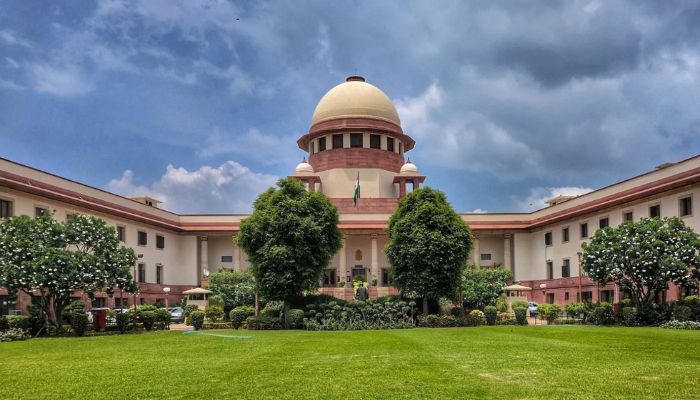
Supreme Court frees man convicted of sex with 15-year-old girl saying she didn’t view it as a crime, says she suffered more from the system

On 23rd May, the Supreme Court ruled against sentencing a man found guilty under the Protection of Children from Sexual Offences (POCSO) Act. It stated that the girl did not consider the incident to be criminal in nature, according to the committee’s report, and she had suffered more as a result of the ensuing legal and social repercussions.

While the conviction was upheld, the bench ordered no sentencing for the man who is now the girl’s husband. “What troubles is the issue of sentencing. Victim didn’t treat this as heinous crime. She couldn’t make informed choice. Society judged her, legal system failed her, family abandoned her. She is trying to save her husband,” the court pronounced.

It added, “The facts of this case are an eye-opener for everyone. It highlights the lacunae in the legal system,” pointed out a bench of Justice Abhay S Oka and Justice Ujjal Bhuyan. The case initially made its way to the Supreme Court following controversial comments of the Calcutta High Court in its 2023 ruling exonerating the guy.

The apex court highlighted, “The final report concludes that though the incident is seen as crime in law the victim did not accept it as one. The committee records that it was not the crime that caused any trauma to the victim but rather it was the consequence that followed which took a toll on her. What she had to face as a consequence was the police, the legal system, and constant battle to save the accused from punishment.” 

The bench chose not to impose a penalty after exercising its authority under Article 142 of the Constitution, which grants it the authority to administer full justice. The convicted guy who was 24 at the time of the crime married the girl who is now an adult and lives with her and their child.

Additionally, it stated that the victim has developed an emotional bond with the accused and has became “very possessive about her small family.” The court then concluded, “That is the reason we are giving for exercising power under Article 142 not to impose sentence.”

The State Women and Child Welfare Ministry and the West Bengal government were also directed by the top court concerning cases involving adolescent sexual relationships. It instructed them to reflect about taking additional action in light of the recommendations made by Amicus Curiae. The bench also demanded actions to enhance sex education, increase public knowledge of the POCSO Act and guarantee the mandatory reporting of sexual assault instances to safeguard kids.

Background of the case

The Supreme Court started the proceedings as a suo motu case after the Calcutta High Court made contentious remarks while acquitting a 25-year-old man who had been convicted under the POCSO Act of having sex with a 15-year-old girl. Among other directives to teenage males and girls, the high court made comments about adolescent sexuality, noting that female teenagers should restrain their sexual urges.

The apex court set aside the high court’s ruling on 20th August 2024. It upheld the accused’s acquittal under sections 363 and 366 Indian Penal Code (IPC) while restoring his conviction under section 6 of the POCSO Act and sections 376(3) and 376(2)(n) of the IPC. The high court’s comments were deemed offensive and unjustified and they also violated Article 21 of the Constitution, according to the court’s instructions on authoring judgments. Furthermore, the State of West Bengal appealed the decision of the high court.

The Supreme Court, in its decision, laid down multiple instructions to ensure that the state complies with Section 19(6) of the POCSO Act and Sections 30 to 43 of the Juvenile Justice (Care and Protection of Children) Act. Even after the conviction was reinstated, the court made the decision to carefully consider the facts before determining the appropriate sentence.

The court ordered the West Bengal government to form a three-person expert committee with support from organizations such as NIMHANS or TISS. It consisted of a social scientist, a clinical psychologist and a child welfare official serving as the coordinator and secretary.

The committee was required to help the victim make an informed decision about her future, including whether to stay with the accused and to educate her about the benefits that the state and the union government had to offer. The court directed that the committee’s report, whether preliminary or final, be sent under a sealed cover so that the case might be reviewed for sentence consideration.

The court further directed that its judgment should be forwarded to Law and Justice Departments across all States and Union Territories to convene meetings with relevant authorities to ensure strict implementation of Section 19(6) of the POCSO Act and relevant JJ Act provisions. They also had to consider framing Rules to implement Section 46 of the JJ Act and submit compliance reports to the Ministry of Women and Child Development which was to compile and submit a final report to the court.

The court documented the state’s commitment to give the victim’s kid a top-notch education on 24th October 2024. After speaking with committee of experts members and listening to the victim, the court noted on 3rd April that she need financial assistance. It stated that the West Bengal State Legal Services Authority should assist in exploring the her options for vocational training or part-time work following her completion of her 10th board exams.

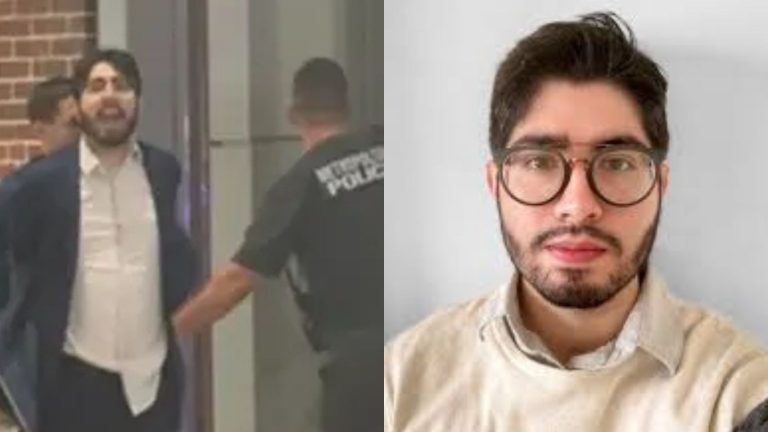
Left wing terrorism in America: How a socialist ‘Black Lives Matter’ supporter was so radicalised by his leftist ideology that he killed 2 Jews in cold blood ‘for Palestine’

In a tragic event, two Jewish Israeli staff members employed at the embassy of Israel in Washington DC were killed on Wednesday (21st May) when they were returning after attending a cultural event at the Jewish Museum. The duo were supposed to get engaged in a week.

The murderer, identified as Elias Rodriguez (30), reportedly shouted ‘Free Palestine’ slogans before shooting the victims at a close range. The victims have been identified as Sarah Milgrim and her fiancé Yaron Lischinsky, both working with the Israeli embassy in Washington DC, and were about to get married soon.

As per reports, Rodriguez kept shouting ‘Free Palestine’ slogans and pulled out a red keffiyah from his bag even as he was being taken into custody after killing the Israeli embassy staff members. “I did it for Gaza,” Rodriguez told the police officers as per report by the New York Times. Ironically, the victims were attending American Jewish Committee’s ACCESS Young Diplomats Reception where the attendees discussed ways to bring more aid into the Gaza Strip.

Elias Rodriguez had a radical leftist ideology

An English graduate from the University of Illinois, Chicago, Rodriguez worked as an oral history researcher at History Makers and was recently working as a Profiles Administration Specialist at the American Osteopathic Information Association.

With no direct connection with Israel or Gaza, Rodriguez’s antisemitic ideology apparently hardened with his involvement in US far-left politics. He was a member of the far-left, pro-Palestine group called the ‘Party for Socialism and Liberation (PSL)’ which routinely leads protests against Israel and posts hateful anti-Israel content on social media.

According to the New York Post, hours before shooting, the pro-Palestine organisation posted a message on social media that read, “End the genocide. Israel out of Gaza now.” However, a day after the incident, the PSL denied any association with Rodriguez through a social media post.

Rodriguez regularly attended protests for various causes which included Black Lives Matter protests and the protests over Israel-Palestine issue. A 2017 GoFundMe page reportedly revealed that Rodriguez was self-radicalised. The fundraiser aimed to send him to the People’s Congress of Resistance, a leftist gathering in Washington DC, guided by the slogan of “Stand against imperialism — Down with the warfare state!”

On the GoFundMe page, which is said to have been written by Rodriguez, he describes himself as the son of an Army veteran who was deployed in Iraq. On the page, Rodriguez claims that the ‘genocidal war’ in Iraq left a deep impression on his mind.

“When my dad came home from Baghdad, he came with souvenirs. One was a magazine pouch with a warning in Arabic to back away or my dad would shoot and kill you. He joked that the print was so small an Iraqi would be dead long before they had a chance to read it. He also gave me a patch of Iraq’s national flag, one he ripped off of an Iraqi soldier’s uniform because he could. I don’t want to see another generation of Americans coming home from genocidal wars with trophies,” the page reportedly read.

How the Modi government is dealing with the left wing terrorism

Left-wing terrorism has existed in India for decades, enjoying patronage of so-called ‘intellectuals’ and ‘social activists’ purportedly fighting for the rights of the poor. These intellectuals and social activists, popularly known as urban naxals, have been providing cover for the bloodshed carried out by the foot soldiers of their ideology in the name of justice. However, the Modi government has expressed its resolve to completely eradicate Naxal terrorism which has deprived the people, it claimed to fight for, of development and the opportunities to join the mainstream.

In January this year, the Modi government launched Operation Kagar which is a part of its multi-pronged strategy combining aggressive military operations, enhanced coordination between Central and State forces, and development efforts to achieve its target of eradicating naxalism from the country by March 2026. Under this operation, around 1 lakh para-military troops, including the Central Reserve Police Force (CRPF), its elite CoBRA units, District Reserve Guards DRG), and state police have been deployed in the left-wing terrorism affected areas.

In a major breakthrough its their operation against naxalism, the security forces eliminated 27 naxal terrorists including dreaded naxal leader Nambala Keshav Rao alias Basavaraju, who masterminded the massacres of politicians and security forces. Earlier, the security forces neutralised 31 Naxals carrying a bounty of Rs 1.72 crore, in Operation Black Forest that went on for 21 days from April 21 to May 11.

Where are the Chagos Islands, what is the deal between UK and Mauritius, and why it is a positive move for India: Explained

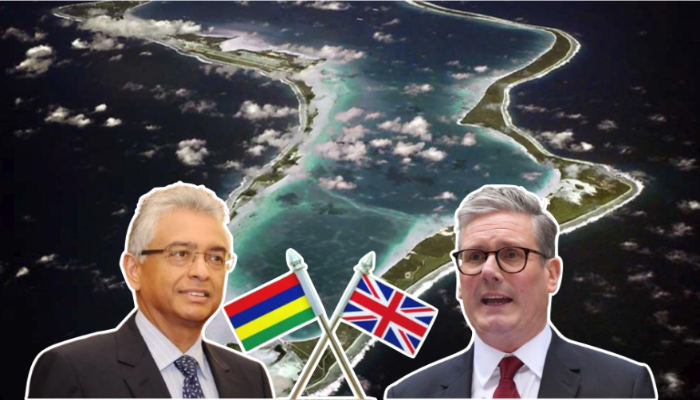
On 22nd May, British Prime Minister Keir Starmer finalized an agreement to transfer the Chagos Islands to Mauritius while leasing a crucial military base for £101 million annually. The deal outlined that Mauritius would regain sovereignty of the islands but the United States and the United Kingdom would be permitted to maintain a military facility on one of the islands, Diego Garcia, for a first 99-year period.

Starmer stated that the agreement enhanced the United Kingdom’s national security and was the only feasible solution to ensure the base’s long-term viability. The development transpired after a high court verdict that enabled the formal signing of the contentious agreement. Following their surrender by France in 1814, the islands have been governed by the United Kingdom.

Decades of British rule over the Indian Ocean archipelago which has been the focus of continuous legal and diplomatic conflicts since the islands broke away from Mauritius in 1965 will come to an end with this accord. The multibillion-pound decision withstood months of criticism on both sides of the Atlantic and an impromptu judicial challenge.

“President Trump has welcomed the deal along with other allies, because they see the strategic importance of this base and that we cannot cede the ground to others who would seek to do us harm,” Starmer conveyed from UK’s Northwood military headquarters. “If we did not agree this deal the legal situation would mean that we would not be able to prevent China or any other nation setting up their own bases on the outer islands or carrying out joint exercises near our base. No responsible government could let that happen,” he declared.

Britain set to pay billions to Mauritius

The contract will amount to £3.4 billion ($4.5 billion) for Britain throughout the duration of the lease as the country shut down its last colonial outpost on the continent while still exercising control over the crucial military base. Diego Garcia, the largest of the islands in the chain accommodates a strategically critical American naval and bomber base.

According to the prime minister, the United States-run base is situated “right at the foundation of our safety and security at home.” He pointed out that it is essential for British intelligence and counterterrorism efforts. He highlighted that the “full assessment” of the motivations behind the settlement was “highly classified” while speaking in Hertfordshire.

However, he mentioned that the country was at risk of a expected legal defeat in international courts if a settlement had not been reached. He added that such failure would have resulted in huge punitive damages. The United Nations-backed International Court of Justice’s 2019 advisory judgment which urged the United Kingdom to return the islands and end its colonial administration, sparked the transfer of sovereignty.

The government’s intention to sign the deal with Mauritius was put on hold on 22nd May when a United Kingdom High Court judge granted a last-minute injunction on the request of British citizens Bernadette Dugasse and Bertrice Pompe who were born in Diego Garcia. The contract had been criticized by them for not including Chagossians. The contract could be finalized once the British High Court reversed the injunction a few hours later.

An initial deal between the two nations was struck in October. Nevertheless, it was halted when Britain indicated that it needed to wait for US President Donald Trump’s assent. A change of government in Mauritius also caused the transaction to stall along with disputes arising about the amount that the United Kingdom should pay for Diego Garcia’s lease. Britain receives an undisclosed payment from the United States to run the base.

What are the Chagos Islands: A brief history

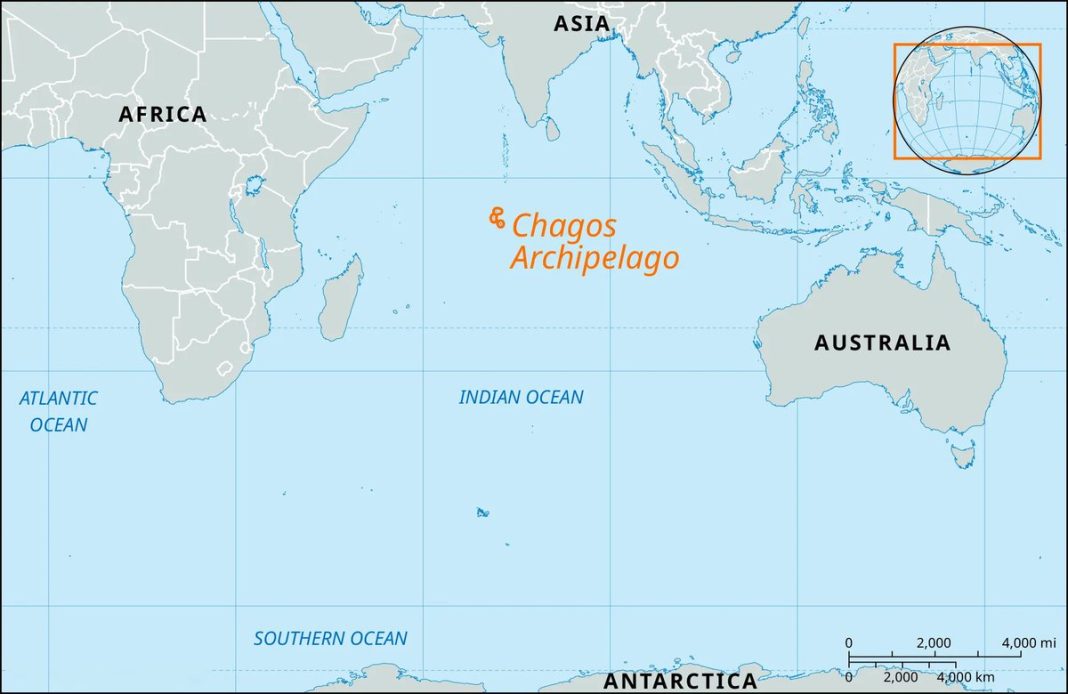
Located around 500 kilometres (310 miles) south of the Maldives archipelago, the Chagos Archipelago is a collection of seven atolls made up of 58 separate tropical islands in the Indian Ocean. There are about 4,000 personnel stationed on the islands. There haven’t been any indigenous inhabitants, often referred to as Chagossians or Ilois, since Britain forcibly uprooted up to 2,000 people, mostly former agricultural labourers, from the islands in the late 1960s and early 1970s to build the Diego Garcia base.

Image via Nxt EU
  • 1783: Slaves from Africa were the first people to settle in the Chagos Islands. They were employed on farms that produced coconuts and copra which the French created. The arrival of indentured Indians followed their emancipation.
  • 1814: The Chagos Islands and neighboring Mauritius were officially taken from France by Britain after Napoleon’s abdication and exile during the Napoleonic Wars.
  • 1965: As Mauritius and the UK negotiate independence, the Chagos Islands became the British Indian Ocean Territory (BIOT). The UK and the US also agreed to establish a military base on one of the islands, Diego Garcia.
  • 1968: The United Kingdom retained control of the BIOT while Mauritius was granted independence. The latter challenged that it was unlawfully compelled to hand over the islands to gain independence from Britain in exchange for £3 million.
  • 1967-1973: All residents of the Chagos Islands were compelled to relocate with the majority moving thousands of kilometers away to the main island of Mauritius or the Seychelles and even accept invitations to stay in England, primarily in Crawley in West Sussex to make room for a UK-US military installation. According to Human Rights Watch, the forced relocation constituted an offense against humanity and an “appalling colonial crime.”
  • 1982: The United Kingdom consented to contribute £4 million to a trust fund founded for the Chagossians under a Mauritian law.
  • 2000: The removal of the Chagossians was deemed illegal by United Kingdom’s High Court.
  • 2008: After a number of lower British court judges ruled that the exile of Chagossians was illegal, the UK’s highest court at the time, the House of Lords, rules against their right of return.
  • 2010: A UK Foreign Office official told the US that a decision to set up a “marine protected area” (MPA) would “put paid to resettlement claims of the archipelago’s former residents,” according to a May 2009 US diplomatic cable made public by WikiLeaks.
  • 2015: According to a United Nations tribunal, Britain violated the law when it constructed a marine protected area (MPA) in the Chagos Islands. It denied Mauritius its fishing rights as well as failed to consult the island nation.
  • 2016: The UK government continued to forbid Chagossians from returning home after announcing a £40 million support package to help and compensate them.
  • 2019: The UN’s highest court, the International Court of Justice issued an advisory opinion declaring that the United Kingdom must return the isolated Indian Ocean archipelago to Mauritius “as rapidly as possible” and pronounced that the ongoing British control of the area was unlawful. The motion denouncing Britain’s control of the islands was overwhelmingly supported by the UN general assembly. However, the UK did not abide by the motion which allotted it six months to leave and reunify the islands with Mauritius.
  • 2021: The prime minister of Mauritius called on the UK to stop its “illegal occupation” of the Chagos Islands as the UN’s special international maritime court dismissed the latter’s claim to sovereignty over the islands. A fishing boat carrying Tamil asylum seekers was rescued and transported to Diego Garcia in the same year. They stayed there and characterized the conditions as horrible and akin to a prison. Self-harm and attempted suicides had been widely reported.
  • 2022: The United Kingdom declared that it has consented to kick off talks with Mauritius over the future transfer of the Chagos Islands.
  • 2024: After years of acrimonious conflict over Britain’s final African colony, the UK decided to cede the Chagos Islands to Mauritius and keep control of the military facility on Diego Garcia which it shares with the US.

The military station on Diego Garcia, which has aided US military operations from the Vietnam War to wars in Iraq and Afghanistan, is arguably the most well-known feature of the archipelago. The United States admitted in 2008 that the station had also been utilized for covert rendition flights involving suspected terrorists.

The US has designated the station, which has approximately 2,500 primarily American employees, “an almost indispensable platform” for security operations in the East Africa, South Asia and the Middle East.” During a recent campaign of heavy airstrikes against Yemen’s Houthi rebels in 2024 and 2025, the United States sent a number of B-2 Spirit bombers equipped with nuclear weapons to Diego Garcia. It has also been the site of launching attacks against Taliban and al-Qaeda targets in Afghanistan in 2001 along with humanitarian aid deployments to Gaza.

What was the delay

After Starmer’s Labour Party was elected in July, negotiations to transfer the islands to Mauritius resumed which were originally commenced in 2022 under the previous Conservative government in the United Kingdom. The British government declared in October that it was completing the terms of a treaty that would transfer sovereignty of the islands to Mauritius with Diego Garcia remaining under British rule.

Former President Joe Biden of the United States praised the accord as a “historic agreement” that guaranteed the Diego Garcia base’s survival. The government’s decision to cede sovereignty of the region, however, was criticized by Britain’s opposition Conservatives, who charged that it put the country and its allies at risk. Marco Rubio, who is currently Secretary of State, stated last year that it was “a serious threat” to the national security of the United States.

India supports the agreement

India expressed that it has always backed the “legitimate claim” of Mauritius over the Chagos Archipelago in accordance with its core stance on “decolonization, respect for sovereignty, and the territorial integrity of nations” and applauded the UK’s decision to yield the sovereignty of the Chagos Islands to Mauritius.

“The formal resolution of the longstanding Chagos dispute through this bilateral treaty is a milestone achievement and a positive development for the region. This is further to the understanding between the two sides reached in October 2024, and marks the culmination of the process of decolonisation of Mauritius in the spirit of international law and rules-based order,” the Ministry of External Affairs in New Delhi mentioned in a statement.

Furthermore, the MEA asserted, “As a steadfast and longstanding partner of Mauritius, India remains committed to working closely with Mauritius and other like-minded countries to strengthen maritime security and regional stability and ensure peace and prosperity in the Indian Ocean region.”

“India played a quiet but important role in the background. It firmly backed the principled Mauritian position, supporting its stance on the need to do away with the last vestiges of colonisation. At the same time, it consistently encouraged both sides to negotiate with an open mind and with a view to achieving mutually beneficial outcomes,” according to ANI.

They added, “It is believed that the final outcome is a win for all sides involved and will reinforce long term security in the Indian Ocean region.”

Vadodara: Rickshaw puller Sohail raped a Hindu girl on the pretext of marriage, used to burn her with cigarette stubs, tried to convert her to Islam

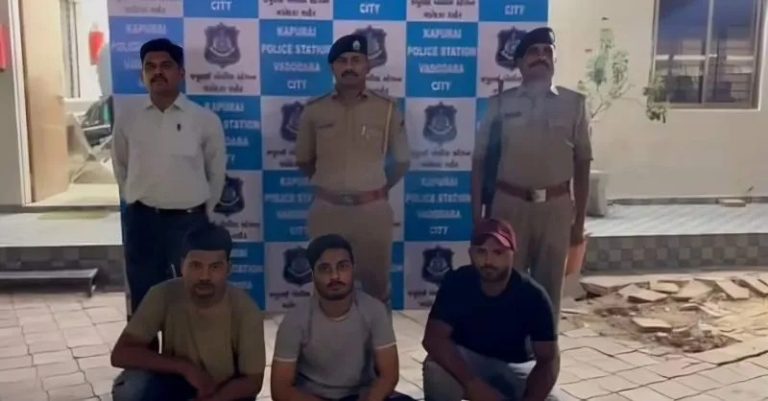
In Vadodara, Gujarat, a case has been registered with the Kapurai police against a Muslim youth who raped a Hindu minor girl on the pretext of marriage and then tried to force her to convert to Islam. The police have arrested the main accused Sohail and his two accomplices in this case and are taking further action.

The victim girl, who lives on Ajwa Road, came in contact with rickshaw puller Sohail Nazimkhan Pathan in the year 2023. The two started talking and took their relationship forward by exchanging mobile numbers.

Sohail used to take her for walks and used to promise her marriage. When the girl informed her mother and grandmother about this, both of them said that she was too young and should decide after she becomes an adult. The victim was 17 years old in 2023 as per reports.

It was further stated that Sohail took her to his house in 2023 and forcibly had physical relations with her. The complaint states that the accused was pressuring her to convert and was also threatening to kill her. The victim has stated in her statement that he did not even let her go home.

Faim and Junaid took him to Sohail’s house, burnt her with cigarette butts

Referring to the incident of May 17, the victim has said in her complaint that on that day, Sohail’s two friends Faim and Junaid came to her and threatened to kill her and took her to Sohail’s house. It is said that Sohail beat her up and put cigarette butts on her hands. The next day, the victim ran away from Sohail’s house and informed her family, who reached Kapurai police station and lodged a complaint, after which the police registered a case under POCSO and arrested three accused.

The police have arrested Sohail and his two friends in this matter and have started further action.

When ideology trumps justice: The Omar Rashid case and how predators are empowered by convenient feminists fearing “fanning” Islamophobia

In the wake of explosive allegations against The Wire journalist Omar Rashid, a disturbing and damning pattern is surfacing, one where women, particularly from the liberal-left ecosystem, claim they chose silence over justice, not out of fear of their abusers, but out of fear of “fanning Islamophobia.” The result? A chilling equation where optics trump outrage, and abusers walk free while survivors self-censor to appease political narratives.

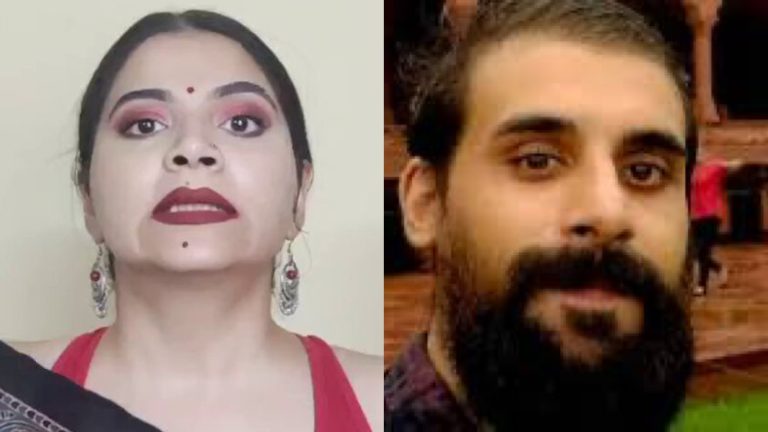
Enter Ruchika Sharma, a YouTuber best known for her thirst traps of cosmetic tutorials to compensate for her lack of scholarship in history, who decided to toss ideological grenades into an already volatile conversation. Weighed down more by ideological considerations than intellectual integrity, Sharma took to X (formerly Twitter) with a take so perverse, it would be laughable if it weren’t so tragic.

“Equally sad but predictable to see this woman’s harrowing experience be used to fan Islamophobia,” she wrote. Then, without a trace of self-awareness, Sharma revealed she too had once chosen not to call out her own abuser. Why? Because, in her words, “dingbat Sanghis will just use it to further their own horrible communal agenda.”

Yes—she admitted it. She had been abused, and she decided the optics of calling out a Muslim man during polarised times were worse than staying silent about the abuse itself.

Predictably, the internet erupted.

Critics across the spectrum pointed out the grotesque moral inversion: both Sharma and the anonymous survivor seemed more horrified at the possibility of being misused by the right wing than by the acts of violence committed against them. In a stunning display of moral gymnastics, the crime itself was subordinated to who might gain political capital from its exposure.

This moral tightrope was especially visible in the survivor’s original account.

The anonymous Hindu woman accused Omar Rashid, a journalist celebrated in liberal circles—of repeated sexual coercion, physical abuse, and forcing her to consume beef against her will. What made her stay quiet, she claimed, was the looming threat of being seen as a pawn in a communal narrative. “He kept reminding me of my identity in a ‘Hindu Rashtra’,” she wrote, “and how this relationship had to remain secret for the greater good of Muslim men.” Her silence, weaponised through guilt, was not just fear—it was manipulated submission under the guise of solidarity.

In a follow-up, she clarified that her post was not an indictment of a religion, but a condemnation of patriarchy. “His faith didn’t define his crime—his predatory nature did,” she explained. “He could have belonged to any religion. What happened wasn’t about food or faith. It was about control.”

While her clarification might satisfy the moral relativists on the left, the backlash was fierce. Many argued that by refusing to speak up earlier, precisely because of the man’s religion, she may have enabled continued abuse. Ideology, once again, stood guard while justice stood abandoned.

It wasn’t just Sharma and the survivor. Another woman came forward recounting a similar moral paralysis: she had once let go of a molester because he was Muslim, believing that filing a complaint would make her complicit in a state already perceived as hostile to minorities. “It felt ethically wrong of me somehow,” she admitted, echoing the same dissonant logic.

The Wire has since issued a tepid response, announcing an “internal inquiry” into the allegations against Rashid. But many online are sceptical, seeing it as damage control, not accountability.

What this case has ripped open is not just the dark underbelly of a journalist’s alleged actions, but the deeper rot festering within liberal feminism. A feminism that breaks its silence only when it’s safe, that picks and chooses its villains based on identity rather than action, is no feminism at all. It’s complicity in designer activism, and the casualties are the very women it claims to protect.

Because when political expediency becomes more sacred than justice, it is not just victims who lose; it is the very idea of accountability that dies a slow, ideological death.

And predators? They thrive in that silence.

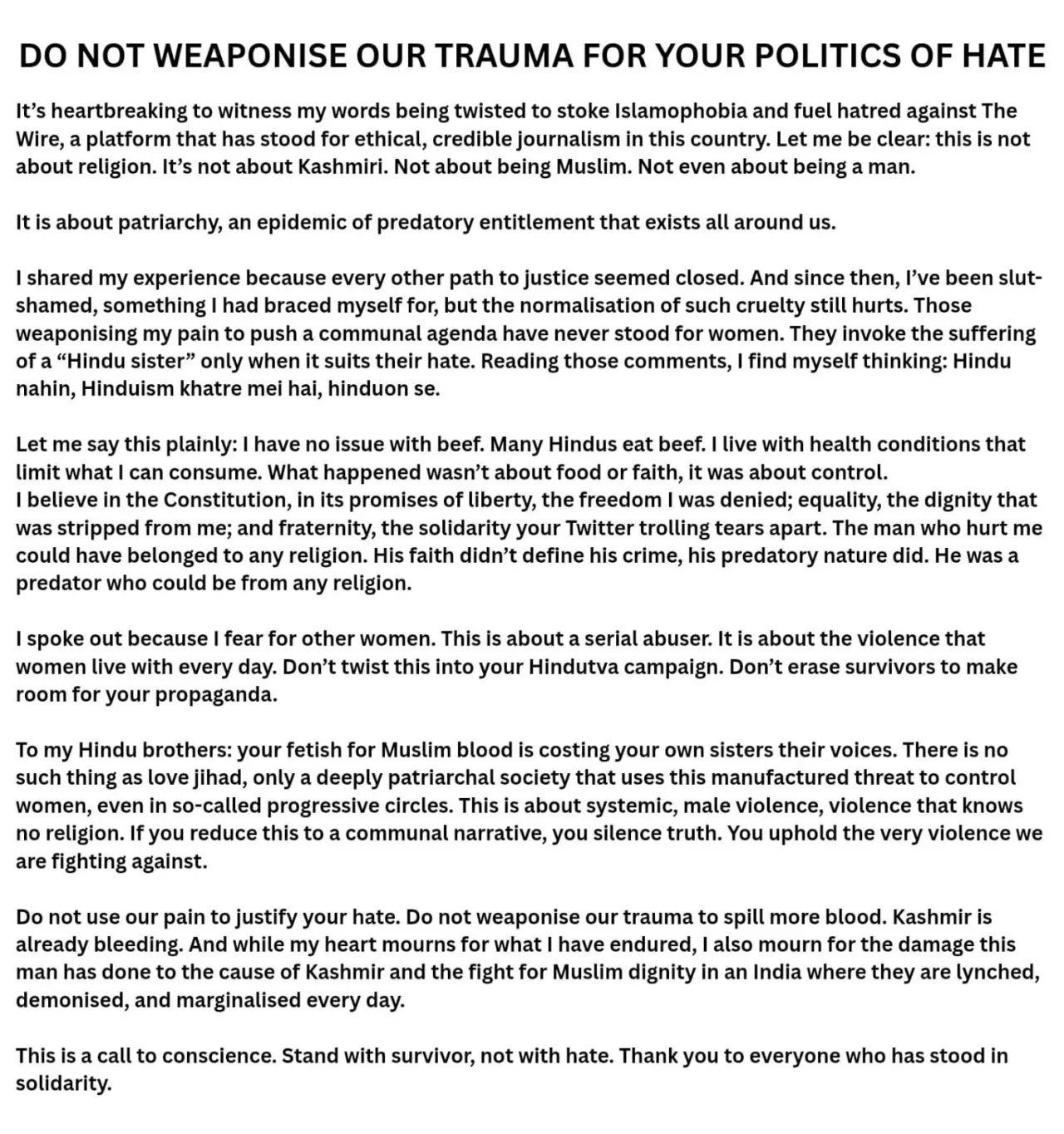
Communist parties, their leaders, Urban Naxals outrage after killing of terrorist Basavaraju alias Keshav Rao in encounter, portray the mastermind of multiple massacres as a hero

The entire urban naxal ecosystem is in deep shock after the killing of the dreaded naxal leader Nambala Keshav Rao alias Basavaraju in an encounter with the security forces on May 21, 2025. He was among the 27 naxal terrorists killed during a fierce gunbattle with the security forces in the in Abujhmad area of the Narayanpur district of Chhattisgarh. Basavaraju, who had a bounty of ₹1.5 crore on him, was the general secretary of the banned CPI(M). He was the brain behind several lethal attacks on politicians and security forces, including the 2010 Chintalnar massacre of 76 CRPF jawans and the 2013 attack in Jhiram Ghati wherein several Congress leaders were killed.

The CPI(ML) Liberation issued a statement condemning the killing of the Basavaraju terming it a “cold-blooded extra-judicial killing”. “…it is clear that the state is spearheading Operation Kagar as an extra-judicial extermination campaign and taking credit for killing citizens and suppressing Adivasi protests against corporate plunder and militarisation in the name of combating Maoism,” read the CPI(ML) Liberation statement.

The CPI(M) called the government’s action against naxal terrorism as a “policy of killing and annihilation”. Ironically, the Maoist party which the supports armed revolution, accused the government of having a mindset that celebrates taking of human life.

CPI General Secretary D Raja also expressed his anguish on the killing of Basavaraju. “CPI strongly condemns the cold-blooded killing of a senior Maoist leader along with several Adivasis in Chhattisgarh. It is yet another instance of extrajudicial action carried out under the guise of counterinsurgency operations. The repeated use of lethal force instead of lawful arrest raises serious concerns about the State’s commitment to democratic norms and the rule of law,” he wrote on X.

Riled up urban naxals, who reject the idea of a democratic state, are quoting the Constitution and the state law to condemn the state action against naxal terrorism that has plagued several parts of the country for decades and has deprived the local communities of the opportunity to join the mainstream. They are now portraying Basavaraju, who masterminded several brutal massacres, as a ‘hero’ who was fighting for the rights of poor Adivasis.

Urban naxals wrote open letter urging government not to act against naxal terrorists

After the Modi government launched Operation Kagar at the beginning of the year to eradicate the roots of Naxalism, the urban naxals tried to negotiate with the government on behalf of the naxal terrorists. In March, the central committee of the CPI(M) expressed its willingness to engage in peace negotiations with both the central and state governments, provided they cease the Operation Kagar. This was followed by an open letter by the so-called ‘activists’ who urged the government to stop the war on ground in the name of the interests of Adivasis.

Union Home Minister has declared to eradicate Naxalism by March 2026. As of 2015, approximately 106 districts across 10 states were classified as naxal-affected. This number was reduced to 38 by 2024 and further to 18. Out of these, 12 were considered the most impacted by naxal activities, yet this figure has now fallen to just 6.

Earlier, the security forces conducted ‘Operation Black Forest’ near Karreguttalu Hill (KGH) at the Chhattisgarh-Telangana border as part of counterinsurgency. The 21-day-long operation was carried out by the joint forces of the Central Reserve Police Force (CRPF) and state police between April 21 and May 11. In the operation, the security forces neutralised 31 Naxals carrying a bounty of Rs 1.72 crore. A total of 214 Naxal hideouts and bunkers were destroyed in the operation and a total of 450 IEDs, 818 BGL shells, 899 bundles of was recovered.