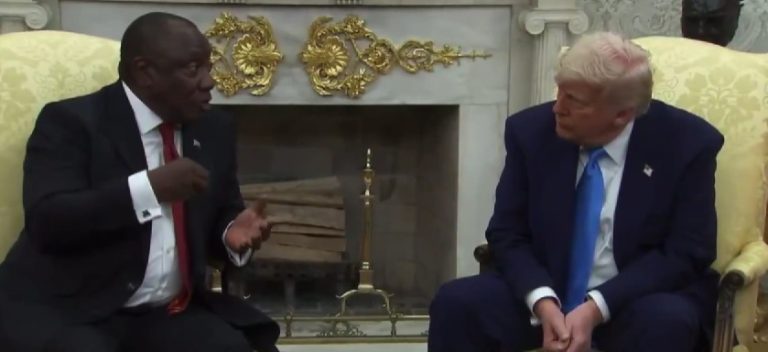
After a showdown with the Ukrainian President, Volodymyr Zelenskyy, at the Oval Office in February this year, US President Donald Trump pulled a similar stunt during his meeting with the South African President, Cyril Ramaphosa, on Wednesday (21st May). In the meeting that was supposed to improve the relations between the US and South Africa, Trump raised the issue of persecution of white minorities in the country.
Trump also confronted President Ramaphosa with a video clip to claim that a ‘White genocide’ was taking place in South Africa. The video clip showed a far-left opposition leader, Julius Malema, singing with protestors, “Kill the Boer, kill the farmer”, a slogan that was popular during the apartheid-era fight against white-minority rule in the country.
BREAKING: President Trump brings a TV into the Oval Office in front of the South African President and shows him a video of his own government calling for the genocide of white farmers.
Savage.
"Turn the lights down. Turn the lights down and just put this on."
In a room full of reporters and government officials, President Ramaphosa was taken by surprise when President Donald Trump unexpectedly played the video. However, maintaining his calm amid flaring tensions, he explained to the US President that the remarks made in the video did not represent the policy of the South African government.
“Our government policy is completely against what he was saying, even in the Parliament. And they are a small minority party, which is allowed to exist in terms of our Constitution,” said President Ramaphosa, to which Trump responded, “But you do allow them to take land. And then when they take the land. They kill the white farmer. And when they kill the white farmer, nothing happens to them.”
Donald Trump is a demented, stupid racist who has been psyopped by Elon Musk to believe wholeheartedly in “white genocide.” When corrected, he goes off on a rant about his Qatari jet.
— Jim Stewartson, Antifascist ?????☠️?? (@jimstewartson) May 21, 2025
Refuting Trump’s allegations, Ramaphosa said, “No, no, no, no, nobody can take land. There is criminality in our country. People who do get killed, unfortunately, through criminal activity are not only white people. Majority of them are Black people.”
Notably, the incident comes days after the US government granted asylum to 54 white Afrikaner South Africans. While Donald Trump suspended the US refugee settlement programme in January on his first day in office, later he signed an executive order to grant refugee status to Afrikaners, the descendants of Dutch and French colonisers. The white people in South Africa allege that they are facing discrimination in the country.
President Ramaphosa calls the White genocide a false narrative
Ahead of his visit to the Oval Office, the South African President outrightly dismissed the allegations of a White genocide taking place in South Africa as a “false narrative”. On 16th May he wrote on X, “The false narratives about a genocide are not a reflection of who we are as a nation, and during our working visit to the U.S., we will be advancing a proudly South African message”.
The false narratives about a genocide are not a reflection of who we are as a nation and during our working visit to the U.S. we will be advancing a proudly South African message. pic.twitter.com/x1MI8N76bt
— Cyril Ramaphosa ?? (@CyrilRamaphosa) May 16, 2025
Persecution of minorities in South Africa
Donald Trump has been alleging persecution of the White minority in South Africa. While he suspended the US refugee settlement programme in January on his first day in office, later he signed an executive order to grant refugee status to Afrikaners, the descendants of Dutch and French colonisers in South Africa. They have been alleging that they are facing discrimination in the country. Earlier this month, the US government granted asylum to 54 white Afrikaner South Africans.
In February, Trump issued an executive order suspending foreign aid to South Africa, alleging that the South African government under President Ramaphosa “radically disfavored landowners”. The South African government had criticised the US executive order.
More than 26 years since the end of apartheid, once South Africa’s system of legal segregation, the country continues to remain marred with the scourge of racism. The oppressor and the oppressed simply have swapped places. The unrest escalatted after President Ramaphosa announced in 2018 that the ruling African National Congress (ANC) planned to change the constitution to allow the expropriation of land without compensation.
The party began the process of expropriating land from white farmers for redistribution to black farmers. It followed the “willing seller, willing buyer” model whereby the government buys farms owned by white farmers and redistribute them to black farmers. White farmers opposed the proposal as deeply unjust and approached the courts against it. However, this opposition to the expropriation plan proved costly for white farmers, many of whom were murdered in targeted killings, presumably because they had opposed the African National Congress’s party redistribution plan.
At least 19 spies have been caught in India in the last few days following Operation Sindoor against terror camps running out of Pakistan. The most prominent name among them is of YouTuber Jyoti Malhotra. After her arrest, the leftist and secular community is running a propaganda on social media that if a Muslim had been arrested instead of Jyoti Malhotra, the narrative would have been entirely different.
That is true, the narrative would have been different, but not in the way in which they are saying. However, this is one name, under the cover of which the so-called secular and Islamic fundamentalists tried to start a trend on social media that traitors have no religion.
As part of this propaganda, it is being said that Hindus are not saying anything about the arrest of Jyoti Malhotra because of her religion, however, this is completely wrong. The majority community is not only bringing forward the exploits of Jyoti Malhotra, but has also put everything under the scanner, from her social media profiles to her Pakistan tour. Hindus are digging into the entire history of Jyoti Malhotra to detect the warning signs that could have been noticed earlier.
First of all, let us talk about the arrest of about 19 spies., this doesn’t include the people who are still being questioned and the people still on the radar of security agencies. Out of these 19 names, only one name has shot into prominence, that of Jyoti Malhotra, whom no Hindu is defending. Meanwhile, Islamic fundamentalists are trying to save their ‘Ummah brothers and sisters’ under her cover.
First of all, you should know the names and religion of those 19 spies… out of which 15 are Muslims – Jafar Hussain, Mohammad Arman, Noman Ilahi, Mohammad Zubair, Mohammad Yasmin, Ghazala Khatun, Nasreen Bano, Mohammad Raqib, Arif Khan, Raqib Khan, Arshad Khan, Mofizul Islam, Sadiq Khan and 2 others. Further, among these 19, there are 2 Christians, whose names are Palak Sher Masih and Suraj Masih. Both are residents of Punjab.
There is a Sikh from Haryana – Devendra Singh Dhillon, who lived in Patiala, Punjab. It is also being claimed that Jyoti has become a Muslim herself after falling in ‘love’ with her Pakistani handler and has also married him. There are many such media reports about these claims.
Anyway, take a look at some samples of the propaganda started by seculars and Islamic fundamentalists in the name of Jyoti Malhotra. A so-called journalist named Kavish Aziz wrote on X, “A simple YouTuber Jyoti Malhotra meets Maryam Nawaz Sharif and even interviews her. Imagine if Zeenat or Zubeda were in Jyoti’s place, the Godi media would have been sitting in their studios and serving hatred against the Muslims of India, beating their hearts. Muslims would also have been harassed in many parts of the country.”
एक मामूली सी यूट्यूबर ज्योति मल्होत्रा मरियम नवाज शरीफ से मिलती है और उनका इंटरव्यू भी ले लेती है। सोचिए ज्योति की जगह अगर जीनत या जुबेदा होती तो गोदी मीडिया कलेजा पीट पीट कर भारत के मुसलमान के खिलाफ अपने स्टूडियो में बैठकर नफरत परोस रहे होते.. देश के कई हिस्सों में मुसलमानों… pic.twitter.com/7DnIbv19lP
Mohammad Asgar, who calls himself a journalist, is also asking similar questions by posting pictures of Hindu and Sikh spies. He wrote, “Today two Pakistani spies were caught! One’s name is Jyoti Malhotra and the other’s name is Devendra Singh. Now no one will ask about religion. No questions on patriotism, no bulldozers, no TV debates! Is the religion of treason only Muslim?”
So-called secular leader Surendra Rajput was also seen asking the same question. He wrote on X, “Haryana’s YouTuber Jyoti Malhotra turned out to be a Pakistani spy! If this name had been of a Muslim, the entire BJP and the entire Noida media would have been screaming!” Many secular people were seen asking similar questions on the lines of Surendra Rajput.
हरियाणा की यूट्यूबर ज्योति मल्होत्रा पाकिस्तान की जासूस निकली! ये नाम अगर किसी मुसलमान का होता तो सारी भाजपा और सारा नोएडा मीडिया चीख रहा होता!
However, no Hindu came in support of Jyoti Malhotra. Neither did the majority of Hindus express ‘pity’ for the Pakistani spy Jyoti Malhotra, nor did they show any sympathy with her. Neither did the majority community undertake any social initiative to provide any kind of lawyer or announce to fight a legal battle for her.
However, on the other hand, the Muslim ummah stands up for a Muslim, even if he is a terrorist, even if he is Syed Asim Ali who slit the throat of Kamlesh Tiwari. Similarly, organizations like Jamiat Ulema-e-Hind were seen fighting legal battles for the youth arrested on charges of terrorism.
Jamiat Ulema-e-Hind has provided free legal aid to the accused of terrorism many times. For example, Jamiat provided lawyers for the accused in the 2006 Mumbai train bombings and suspects in the 2010 Varanasi bombings. The organisation claims to be fighting for ‘justice’.
This Muslim Ummah hires top lawyers and even makes the Supreme Court work at midnight. You will remember the case of Islamic terrorist and gangster Yakub Memon, who was sentenced to death for the Mumbai blasts, but not only was the Supreme Court open at midnight to hear his case, but a full debate also took place.
If we talk about creating a narrative, then who can forget the case of Afzal Guru, who was sentenced to death in the Parliament attack case, for which emotional narratives like ‘Master ka beta’ were run. Even today, fundamentalists get emotional about Afzal Guru.
All these cases are old, but even recently, a Muslim youth was killed in Bokaro during an attempt to rape, then not only the entire Islamic community stood in his support, but even the so-called secular forces like Congress-JMM also stood up for him. The Siddiqui community even collected money for his case.
The Muslim MLA and minister of Congress themselves went to the door of Abdul who tried to rape and demanded justice for him on social media. Whereas no one even went to the door of the real victim of this case, the tribal family, rather the members of that family are behind bars.
However, Jyoti Malhotra’s case is not only a warning for India’s security but also shows how social media can be used for religious and social polarization. Operation Sindoor exposed enemies inside and outside the country, but Jyoti’s case started a new propaganda.
Islamic fundamentalists and ‘secular’ forces tried to use this case against Hindus. Despite there being only one Hindu name in the list of 19 spies, Islamic fundamentalist forces used it to defend the Muslim community. In such a situation, India needs to be cautious not only from external threats but also from internal propaganda and polarization.
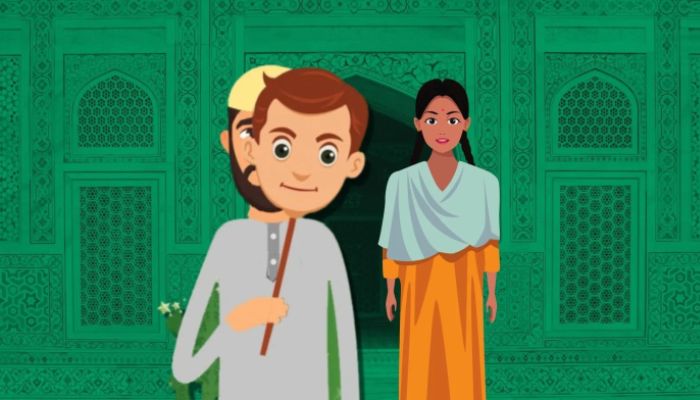
A minor girl in Bhagalpur of Bihar has accused a Muslim boy of sexually exploiting her and forcing her to convert to Islam in the name of marriage, reported Dainik Bhaskar. She also charged that the authorities failed to register a case even after the application was submitted. She was repeatedly directed from one police station to the next.
“I used to frequent the library for my studies. While playing online games, I got acquainted with a boy through social media. He introduced himself as Raj and did not disclose his religious identity. He had created a social media profile under the name Mr Broken,” the victim disclosed.
She mentioned, “We started talking and then on 16th May he came to Bhagalpur. He stayed in a hotel near the railway station and called me there. Afterward, he recorded obscene photos and videos.” Her family members apprehended a young man who captured inappropriate photographs and footage of their daughter and subsequently handed him over to the Kotwali police station.
The underage girl further unveiled, “He threatened to publicize the video and called me to come to Siwan on 19th May. Without letting anyone at home know, I took a train to Patna at 8:30 pm and reached there. Eventually, we both managed to arrive in Bhagalpur on 21st May.”
The accused accompanied her during the stay at a hotel. “He ordered me to embrace Islam prior to our marriage. Subsequently, I learned that he is a Muslim. Following this revelation, I contacted my family to share the entire situation,” she added. The girl’s famile members stated that cops at Kotwali police station did not file the case and redirected them to Ishakchak police station at 4 pm.
The latter returned them to Kotwali police station at 4:30 pm, asserting that the matter falls under their jurisdiction. However, the Kotwali police refused to register the case until 9 pm, alleging that they had not received the family’s application. According to the family, they received threats suggesting that an investigation by the police would lead to problems for them.
Therefore, they should provide written confirmation that they do not wish to pursue legal action and are taking their daughter with them. This matter was associated with religious conversion as well. However, the police did not initiate any probe. Afterward, Senior Superintendent of Police (SSP) Hriday Kant was informed.
The Kotwali Inspector indicated that the family had conveyed their concerns verbally to the Ishakchak police and hence they were told to visit there. “They brought the boy back to us. As no applications have been filed, the case has not been registered. He is presently being questioned.” The perpetrator has failed the matriculation exam two times and his father is a mason.
A case involving mass conversions has come to the fore in Sikh-majority villages near the India-Nepal border in the Pilibhit district of Uttar Pradesh. This matter pertains not only to religious identity but also raises concerns about a potentially orchestrated conspiracy at both national and international scales.
The All India Sikh Punjabi Welfare Council reported that more than 3,000 Sikhs have embarced Christianity in recent years. According to reports, a substantial number of Sikhs live in the villages within the jurisdiction of the Hazara police station in Pilibhit, including Bailaha, Tatarganj, Bamanpura Bhagirath and Singhara.
It is estimated that between 20,000 and 30,000 Sikhs stay in these areas. Their livelihoods largely dependent on agriculture and small-scale businesses. Local residents and Sikh organizations have observed an increase in conversion activities in these border areas near Nepal since 2020.
These efforts are primarily led by Protestant pastors from Nepal and some local individuals designated as pastors. They are persuading Sikhs to become Christians through financial incentives, superstition and disease prevention meetings.
Intimidation and manipulation to trap people
The matter came to light when Manjit Kaur, a Sikh woman from Bailaha village, filed a complaint at the Hazara police station in Pilibhit on 13th May. She disclosed that her husband had already been lured into Christianity and she and her children were now facing pressure to convert as well. She reported that upon her refusal, her fields were destroyed and her kids were assaulted.
According to Manjit, the perpetrators enticed her with the prospect of government benefits and Rs 2 lakh, but none of the commitments were fulfilled. Afterward, the police registered a case against eight named and dozens of unidentified people.
The president of the All India Sikh Punjabi Welfare Council, Harpal Singh Jaggi has addressed the serious issue. In a press conference at the local Gurdwara Shri Singh Sabha, he stated that around 3,000 Sikhs have converted in the predominantly Sikh hamlets of Pilibhit. He submitted a list of 160 families to the district authorities, confirming the same.
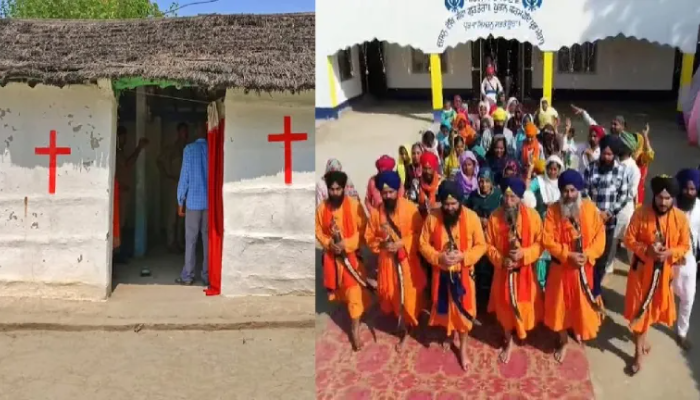
Jaggi asserted that both Nepalese and some local pastors are capitalizing on poverty, illiteracy, and superstition to convert Sikhs to Christianity. He also unveiled that some families have had cross marks drawn on their homes which are perceived as a sign of conversion. While many have removed these symbols following administrative intervention, they continue to follow Christianity.
Jaggi remarked that this is an infringement on the religious and cultural identity of the Sikh community, suggesting that foreign powers might be instigating this conspiracy via Nepal. He demanded a fair investigation and strict action from Chief Minister Yogi Adityanath, Deputy Chief Minister Brijesh Pathak and the district administration.
Shocking revelations in ground report
A ground report by Aaj Tak delved deeper into the matter. Their team traveled to Bailaha village and talked to the residents, victims and the Gurdwara management committee which led to startling findings. The people indicated that pastors arriving from Nepal, along with some missionaries from Punjab are attracting Sikhs by organizing healing prayer meetings.
These events promise to cure illnesses and provide financial support, thereby easily swaying vulnerable and less educated persons. A victim named Parminder Singh stated that the missionaries do not openly reveal when a person has converted. They encourage Sikhs to maintain their traditional clothing and names to conceal the development.
Nevertheless, many people are gravitating towards Christianity due to fake healing sessions and financial incentives. However, individuals such as Lakhwinder Singh and Baljeet Singh have reverted to Sikhism through “ghar wapsi,” after they were converted. Lakhwinder mentioned that when his son’s health did not improve, he attended prayer meetings but after finding no success he returned to Sikhism.
The management committee of the Gurdwara announced that 160 families successfully came back to the fold of Sikhism. It has even initiated religious events such as “Amritpan” to facilitate the same. Additionally, a public list has been released featuring nine individuals who have converted from Sikhism to Christianity and are now encouraging others to follow suit. Their names have been displayed within the Gurdwara in an effort to socially ostracise them.
Vulnerable areas and an international conspiracy
The geographical positioning of Pilibhit adds further complexity to the situation. Located next to the Nepal border, this region has historically been a hub for cross-border activities. Investigative authorities suspect that certain NGOs (Non-Governmental Organizations) and missionary groups based in Nepal are engaged in conversion efforts.
Jaggi emphasised that Nepalese pastors have been operating in this region since 2012, specifically targeting Sikhs under the influence of foreign entities. He argued that this issue transcends religious concerns and pertains to the nation’s internal security. According to local Sikh leaders, the main drivers of conversion are a lack of education and poverty. They contend that those who are economically weak and socially marginalized are more susceptible to such temptations.
Several victims have attested in affidavits that they were attracted by offers of two lakh rupees, housing, toilets and other government programs only to find out that they received no benefits. The Pilibhit administration is treating this issue with utmost seriousness. District Magistrate Sanjay Kumar Singh announced the establishment of a special investigation team (SIT) to thoroughly probe the matter.
Superintendent of Police Abhishek Yadav informed that a case has been filed against eight identified and many unknown individuals based on a complaint from Manjit Kaur. Furthermore, an unauthorized church has been dismantled. The administration has initiated counseling camps in villages where matters of conversion have been reported.
Nonetheless, Sub-Divisional Magistrate (SDM) Ajit Pratap Singh from Puranpur tehsil stated that there is no substantial evidence of widespread organized conversion. He maintained that certain individuals attend prayer meetings driven by their faith, which cannot be stopped. However, the affidavits provided by people and the list from the Gurdwara Committee refute this claim.
CM Yogi orders inquiry
Meanwhile, Chief Minister Yogi Adityanath has taken cognizance of the matter and has given instructions to increase vigilance in all border districts. He has ordered strict action under the “Uttar Pradesh Prohibition of Unlawful Conversion of Religion Act” which prohibits conversion through force or inducement.
Sikh organizations charged that this situation constitutes an assault on their religious and cultural identity. They want individuals who have made a voluntary conversion to document it in official records. Moreover, they have sought stringent measures against the offenders and a comprehensive inquiry at a high level. Gurdwara committees have initiated an extensive campaign to promote religious awareness and “ghar wapsi.”
OpIndia already reported on the activities of Christian missionaries engaged in conversion in the border districts near Nepal. Many steps have been taken to address the occurrences of Christian conversion in seven districts that border Nepal. Last year, an incident involving the transportation of individuals from Uttar Pradesh to Nepal was revealed, during which Hindu organizations not only thrashed the accused priests but also blackened their faces with soot. OpIndia has also released a report detailing the network of Christian missionaries extending to Ayodhya.
On Wednesday (21st May), two staffers at the embassy of Israel in Washington, DC, were killed near the Jewish Museum. The Israeli authorities described this disturbing incident as an act of anti-Semitic terrorism.
The two Israeli embassy staff members were shot dead, steps away from the Washington Field Office of the FBI. It is being claimed that the shooter was donning a Keffiyah and raised ‘Free Palestine’ slogans before killing the two Israeli embassy staff members, although authorities have not confirmed the same yet.
Breaking: Two Israeli embassy staff were shot and killed outside the DC Jewish Museum—reportedly during an AJC Young Diplomats event.
Eyewitnesses say a man wearing a keffiyeh entered the museum shouting “Free Palestine” around the time of the shooting. pic.twitter.com/b51jyRJMWD
Taking to X, US Homeland Security Secretary Kristi Noem confirmed the “senseless” killing of the duo and said, “Two Israeli Embassy staff were senselessly killed tonight near the Jewish Museum in Washington, DC. We are actively investigating and working to get more information to share. Please pray for the families of the victims. We will bring this depraved perpetrator to justice.”
Two Israeli Embassy staff were senselessly killed tonight near the Jewish Museum in Washington DC. We are actively investigating and working to get more information to share. Please pray for the families of the victims.
We will bring this depraved perpetrator to justice.
As per the Times of Israel, the shooting incident unfolded when the American Jewish Committee was hosting an event at the Jewish Museum. Reports say that the names of the deceased victims have not been revealed, however, it is confirmed that the two were affiliated with the Israeli diplomatic mission in the United States.
Some reports have identified the shooter as one Elias Rodriguez.
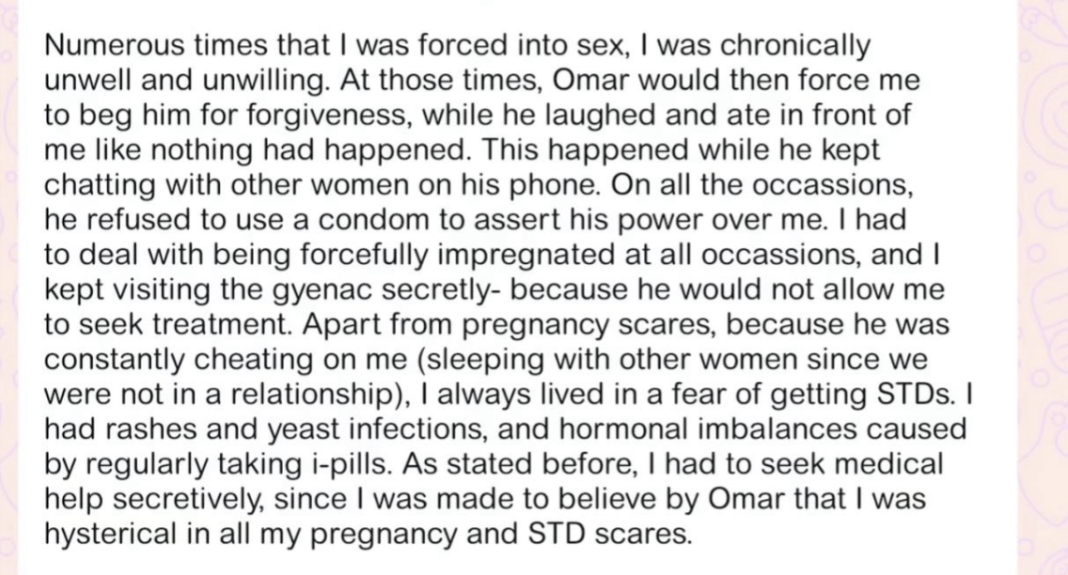
A woman has levelled serious allegations of rape, sexual abuse, torture, mental and physical harassment and extreme violence against TheWire journalist Omar Rashid. In a viral Instagram post, the woman has narrated her prolonged torture at the hands of the so-called ‘progressive and liberal’ journalist associated with TheWire.
?SHOCKING – Kashmiri Muslim journo Omar Rashid @omar7rashid who works for @thewire_in trapped a Hindu girl
In the viral Instagram post, the unnamed woman has narrated that she was trapped by a much older Omar through his connections in Delhi’s ‘Liberal’ media circles and influence as an experienced journalist. She mentioned that Omar had ‘charmed’ her through days of chatting abour progressive politics, followed by suggestions of ‘walks’ in the Lodhi garden. She wrote that Omar has tried the same tricks with multiple women where he uses his false image of a charming Muslim man who is a pet lover, foodie, progressive Liberal and a guy who has lost his mother.
Calling Omar Rashid a serial abuser and rapist, the woman has stated that she was brutally beaten, slapped, kicked and violently raped by Omar multiple times. Throughout the span of the ‘relationship’, the woman stated, she has been subjected to extreme sexual humilation, abuse, beatings and violent rape that left her bleeding and bruised.
Omar reportedly never used any protective method while subjecting the woman to forceful and violent sexual intercourse, and the victim had to visit the gynaecologist multiple times to get abortions, or get treated for sexually transmitted infections because Omar was in a sexual relationship with multiple, unknown persons throughout.
The woman has stated that Omar smashed all her belongings, some family heirlooms, knowing that she is struggling financially and she cannot afford losing those items. He reportedly used her to extreme humiliation, making her beg at his feet while he described imaginary sexual abuse of her mother before her, and physically assaulting her.
The woman narrated that despite her begging and saying ‘no’ to unprotected, violent sex, even while she was unwell, Omar raped her multiple times, even to the point where she had to hide inside washroom to save herself. The woman has added that Omar Rashid had forced her to eat beef multiple times, asserting his Kashmiri Muslim identity and highlighting her ‘non-Muslim’ status, despite she hating the beef and puking it out every time he force-fed her.
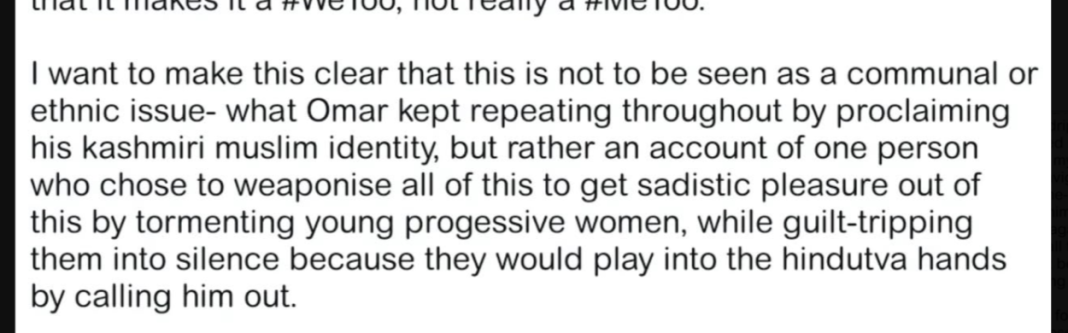
The woman has also mentioned that she does not want her ordeal to be given a ‘communal angle’, but it should be seen as another one of the countless stories where women suffer abuse and exploitation by older, more powerful men they come in contact with at workplaces.
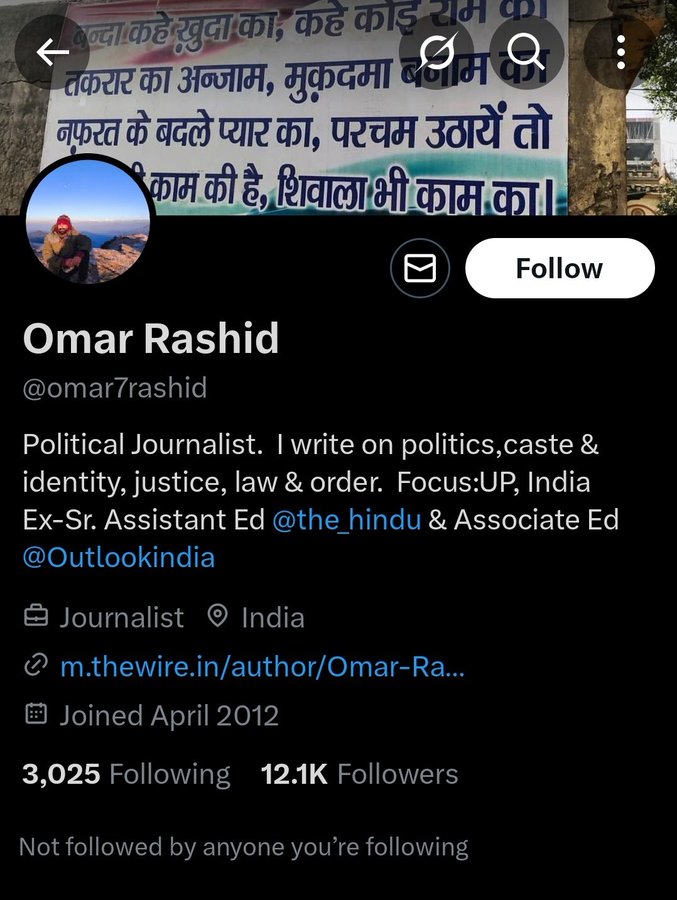
Omar Rashid’s X handle
TheWire acknowledges the allegations against their journalist
Leftist propaganda website TheWire has acknowledged the serious allegations against their journalist, adding that they are conducting an inquiry into the matter. “The Wire has taken serious note of the grave allegations against Mr Omar Rashid, who has been contributing to The Wire as an independent journalist for the past couple of years. We will be conducting an enquiry as per relevant laws and procedures applicable in the matter and decide on how best to move forward to address the allegations raised on the post”, the note shared by The Wire read.
The Wire's statement on the grave allegations against one of our contributors, Mr. Omar Rashid: pic.twitter.com/eeZZWkntp8
It is notable here that for years, The Wire and other similar leftist propaganda outlets have been outright denying the phenomenon of Love Jihad, where Muslim men systematically target Hindu or Christian women under a false persona, and subsequently subject them to torture, humiliation, rape and violence, both physical and mental. The phenomenon finds its roots in the Islamic ideas supremacy of the Islamic persons and the belief that ‘Kafir’ or non-Muslim woman are fit to become sex slaves, even the belief that it is the duty of a male follower of Islam to humiliate and enslave ‘Kafir’ women, make them renounce their faith and make them produce Muslim children.
Thousands of women in India and worldwide continue to become victims of this phenomenon. From the rape gangs of the UK, the sex slavery of Yazidi women, the rape and blackmail gangs of Ajmer, to the conversion and jihadi recruitment cartel in Kerala, this ideology of enslaving the ‘kafir’ women and using them to further the cause of Islam has been alive and ongoing in today’s so-called modern world, often helped and furthered by Leftist organisations like The Wire itself.
The central government on Wednesday told the Supreme Court that Waqf is an Islamic concept, it is not an essential part of Islam and Waqf boards discharge secular functions.
Solicitor General Tushar Mehta, representing the Centre, told a bench of Chief Justice of India BR Gavai and Justice Augustine George Masih Waqf Board does not touch upon any religious functions.
“Waqf is an Islamic concept. But it is not an essential part of Islam. Waqf is nothing but just charity in Islam,” said Mehta, adding that charity is recognised in every religion, and it cannot be regarded as an essential tenet of any religion.
Defending the Inclusion of non-Muslims in the Waqf board, he said that it was for diversity and to take care of the secular aspects of the Board.
“Waqf Board discharges only secular function. Managing properties, register maintenance, and auditing accounts. Purely secular. There is a power to regulate secular practices in a religion. Administration of property has to be in accordance with law,” said Solicitor General, adding that having two non-Muslims on the Board will not affect any religious practice.
He said the amendments in Waqf Act were brought in after taking into confidence all stakeholders and were solely aimed at curbing mismanagement and misuse of Waqf.
Solicitor General said that the Amendment Act was passed after detailed deliberations by the Joint Parliamentary Committee, which took the views of various stakeholders across the country.
He further submitted that there was a lot of “mischief” going on in the name of Waqf-by-user, as there are cases across the country of government properties being claimed.
Abolition of Waqf-by-user is prospective, and the existing Waqfs won’t be affected if they are registered, he added. Also, Waqf-by-user is not a fundamental right, said the Solicitor General.
“Now a false narrative is being made that Waqf is being snatched. This is nothing but the country being misled. Waqf-by-user is not allowed prospectively with some exceptions. One, it should be registered,” he argued.
He also submitted that once a property comes into dispute only the Waqf character is taken away and not the possession or other rights with respect to the property.
Mehta also said that the 2025 Act included provisions regarding Waqf-Alal-Aulad, specifically concerning the protection of female inheritance rights in family endowments, ensuring that women heirs receive their rightful share before property is dedicated to Waqf.
The apex court has been hearing arguments on interim stay of the Act. The arguments will continue tomorrow as well.
A batch of petitions challenging the Act was filed before the apex court, contending that it was discriminatory towards the Muslim community and violates their fundamental rights.
Six Bhartiya Janta Party-ruled states had also moved the apex court in the matter, in support of the amendment.
President Droupadi Murmu on April 5 gave her assent to the Waqf (Amendment) Bill, 2025, which was earlier passed by Parliament after heated debates in both Houses.
Central government had filed its preliminary affidavit in the Supreme Court while seeking dismissal of petitions challenging constitutional validity of Waqf (Amendment) Act, 2025 as it said law was not violative of the fundamental rights guaranteed under the Constitution.
The Centre in its affidavit had said the amendments are only for the regulation of the secular aspect regarding the management of the properties and hence, there was no violation of the religious freedoms guaranteed under Articles 25 and 26 of the Constitution.
The Central government had urged the court not to stay any provisions of the Act, saying that it is a settled position in law that constitutional courts would not stay a statutory provision, either directly or indirectly, and will decide the matter finally.
(This news report is published from a syndicated feed. Except for the headline, the content has not been written or edited by OpIndia staff)
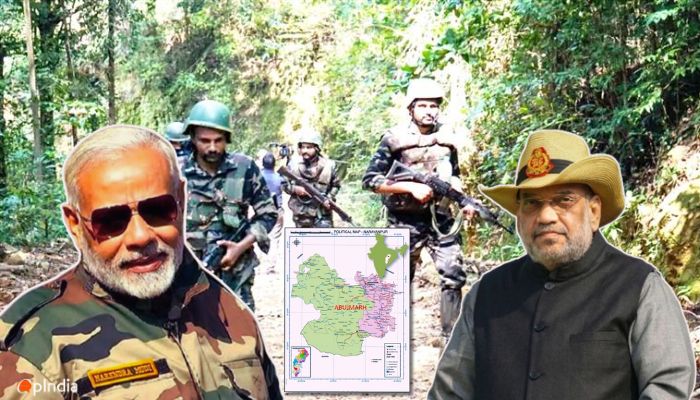
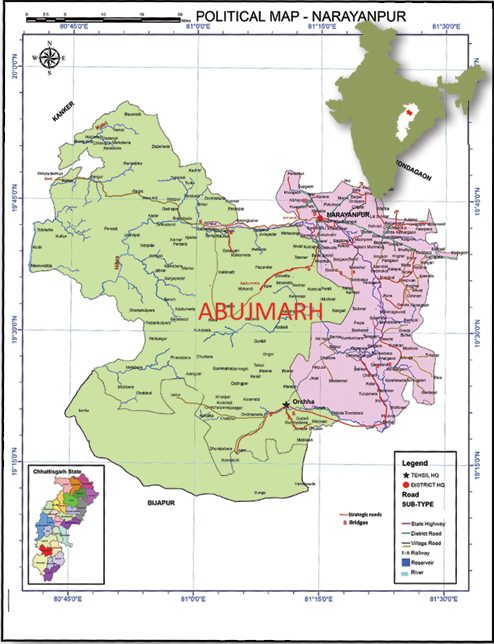
In a major breakthrough in the war against left-wing extremism or Naxalism, the security forces have eliminated top Maoist terrorist Nambala Keshav Rao also known as Basavaraju. The Maoist leader was killed in an encounter in the Abujhmadh (also spelt Abujmarh) forests of Chhattisgarh’s Narayanpur district.
Basavaraju was among the 26 Naxal terrorists killed by the security forces on the 21st of May 2025. Basavaraju, the general secretary of the banned outfit Communist Party of India-Maoist (CPI-M). The 70-year-old Maoist leader was among India’s most wanted Maoist leaders and had a bounty of Rs 1.5 crore on his head. He was behind the 2010 Chintalnar massacre of 76 CRPF jawans and the 2013 attack in Jhiram Ghati wherein several Congress leaders were killed.
Earlier, security forces conducted ‘Operation Black Forest’ to break the backbone of Naxals near Karreguttalu Hill (KGH) at the Chhattisgarh-Telangana border. The 21-day-long operation carried out by the joint forces of the Central Reserve Police Force (CRPF) and state police between April 21 and May 11 neutralised 31 Naxals carrying a bounty of Rs 1.72 crore. A total of 214 Naxal hideouts and bunkers have been destroyed in the operation and a total of 450 IEDs, 818 BGL shells, 899 bundles of Codex, detonators and a huge amount of explosive material have been recovered during the searches. In addition, nearly 12,000 kilograms of food supplies have also been recovered.
Taking to X, Union Home Minister Amit Shah lauded the security forces for the “landmark achievement” in eliminating Naxalism and killing Basavaraju.
“A landmark achievement in the battle to eliminate Naxalism. Today, in an operation in Narayanpur, Chhattisgarh, our security forces have neutralized 27 dreaded Maoists, including Nambala Keshav Rao, alias Basavaraju, the general secretary of CPI-Maoist, topmost leader, and the backbone of the Naxal movement. This is the first time in three decades of Bharat’s battle against Naxalism that a general secretary-ranked leader has been neutralized by our forces. I applaud our brave security forces and agencies for this major breakthrough,” the Home Minister said.
Minister Shah also expressed joy over completion of Operation Black Forest and reiterated the Modi government’s commitment to annihilating Naxalism before 31st March 2026.
“Also glad to share that after completion of Operation Black Forest, 54 Naxalites have been arrested and 84 Naxalites have surrendered in Chhattisgarh, Telangana, and Maharashtra. The Modi government is resolved to eliminate Naxalism before the 31st of March 2026,” Shah said.
A landmark achievement in the battle to eliminate Naxalism. Today, in an operation in Narayanpur, Chhattisgarh, our security forces have neutralized 27 dreaded Maoists, including Nambala Keshav Rao, alias Basavaraju, the general secretary of CPI-Maoist, topmost leader, and the…
Quoting Amit Shah’s post, Prime Minister Narendra Modi lauded the security forces for eliminating Maoist leader Basavaraju in Abujhmadh and said that his government is committed to eliminating the naxal menace.
“Proud of our forces for this remarkable success. Our Government is committed to eliminating the menace of Maoism and ensuring a life of peace and progress for our people,” PM Modi said.
Proud of our forces for this remarkable success. Our Government is committed to eliminating the menace of Maoism and ensuring a life of peace and progress for our people. https://t.co/XlPku5dtnZ
As the “red citadel” of Naxalism, Abujhmarh has fallen, it is pertinent to know the bloodied history of this region infested by Maoist terror for decades.
Abujhmadh: The last naxal fortressand its ultimate fall after 40 years
Abujh means what cannot be understood, while Madh means hill. Abujhmadh has been the only piece of land in India which has had no revenue map; villagers have no title deeds (patta) to the land they live in or cultivate, even though the area (4000 km) is bigger than the state of Goa.
Due to naxalism, this area had little to no civil administration. With population of around 40 to 45 thousand, mostly Abhujhmadhia tribe people, Abujhmadh included the Orcha block and some regions of the Narayanpur district. Abujhmadhia are among the Particularly Vulnerable Tribal Groups (PVTGs) of Chhattisgarh and are entitled to special benefits and rights from the government meant for endangered groups like them.
The area also includes the parts of Dantewada and Bijapur in Chhattisgarh, and Gadhchiroli in Maharashtra.
There has been no roads, hospitals and other basic facilities in Abujhmadh since Naxalites would not allow any development work or any step towards mainstreaming of this region and its people take place. As per locals, Naxalites used to set buses ablaze if they entered villages in Abujhmadh. Maoists made sure that no land deeds were earmarked in Abujhmadh, no motorable roads are constructed and no development ever reaches the villages on this hill. To ensure this, the Maoist terrorsts would either resort to violence or propaganda, mostly both.
After independence in 1947, the Orcha and Narayanpur areas underwent development, with motorable roads constructed by 1980s, however, Abujhmadh Hill remain untouched since it was deliberately left out of reach to ensure that the culture and traditions of local tribals are diluted.
The situation however, began turning hostile as Maoists eyed the so far tribal-inhabited unknown hill in the 1990s. By 2000s, the Maoists transformed Abujhmadh into their stronghold. They destroyed roads, burnt over 50 schools and cut off the region from whatever connect it had with the mainstream. The Maoists began operating “Jantana Sarkar” in Abujhmadh. They ran their own schools in Murumwada and Botor, where even till the recent years, Maoists taught their own syllabus.
Abujhmadh is covered by the single Assembly constituency of Narayanpur. Around 90 per cent of its area remains unsurveyed. Back in April 2017, a revenue survey was conducted in Akabeda and other villages with the assistance of IIT-Roorkee, however, the survey could not make much progress due to security concerns and lack of infrastructure.
Abujhmadh got its first operation theatre and two new mobile towers in 2023, however, over most of the area has been without a mobile network.
The Election Commission has been making efforts to bring the people of Abujhmadh into the electoral mainstream and since 2018, more than 300 names have been added to the electoral roll in this erstwhile Maoist fortress. These low numbers make it clear that the people of Abujhmadh have historically been non-participant of electoral process.
In December 2024, a District Reserve Guard (DRG) head constable was killed by Maoists in Abujhmadh’s Kohkameta during an encounter. Maoists have also been killing former Sarpanch (village leaders) in areas controlled by them. Last year, two ex-sarpanches including a BJP functionary were killed by Maoists in Bijapur district under south Bastar. In 2023, an ex-Sarpanch named Ramji Dodi from the Zara village in Abujhmadh was abducted by Maoists along with his two nephews and taken to a jungle area where he was strangled to death. The sarpanch was brutally murdered by Maoists for being a ‘Mukhbir’ or police informer.
Despite the challenges, the security forces and the government relentlessly continued their efforts to end the Naxal menace in not only Abujhmadh but the entire Dandakaranya region.
In February 2025, a former Maoist, Giridhar, told TOI that Abujhmadh, the red citadel of Maoists, has “fallen”. The former commander of PLGA, who surrendered and quit Naxalism in 2024, said, “Abujmarh is no longer an impregnable Red citadel. The liberated zones have been smashed, commandos are conquering every inch of Dandakaranya jungles. Maoist cadre base has been practically wiped out.”
Highlighting the change in mindset of the youth in Naxal-infested areas and the administration’s friendly approach towards them, Giridhar who masterminded the 2009 ambush that killed Rajanandgaon SP Vinod Chaubey said, “Our cadre base was fast depleting. Police seemed friendlier, with their civic actions, freebies, jobs, and promise of a better life. With education and the lure of urban dazzle, nobody wanted to join us. The youth did not want to die with a police bullet in their head.”
Fight against Naxalism: Centre and security forces continue non-stop action to make India naxal-free
Earlier this month, the security forces have killed 31 Naxalites in the biggest-ever operation against Naxalism, on the Karregutta Hill (KGH) at the Chhattisgarh-Telangana border.
So far, a total of 214 Naxal hideouts and bunkers have been destroyed in this operation and a total of 450 IEDs, 818 BGL shells, 899 bundles of Codex, detonators and a huge amount of explosive material have been recovered during the search. In addition, nearly 12,000 kilograms of food supplies have also been recovered.
A large number of forces, equipment, and other logistics were mobilized in a professional manner for the implementation of the action plan of this historic operation. In the joint briefing, the forces were primarily warned about the tough and challenging terrain of KGH, hundreds of caves for hiding, ambush points, and the dangers of IEDs. Detailed information about their area of operation was provided to the security forces to ensure there was no confusion.
As part of the anti-naxal operation, the security forces also destroyed four Naxal technical units that were being used for the production of BGL shells, homemade weapons, IEDs, and other deadly weapons. During the operation, a large quantity of ration supplies, medicines, and daily-use items were also recovered from various Naxal hideouts and bunkers.
It is noteworthy that building on the success of the anti-Naxal operations in 2024, the security forces have neutralsed 197 hardcore Naxalites in the last 4 months as part of the ongoing anti-Naxal operations in 2025. In 2014, 35 districts were most affected by Naxalism, and by 2025, this number hasd reduced to only 6. Similarly, the number of Naxal-affected districts has decreased from 126 to just 18. In 2014, 1080 Naxal incidents were recorded in 330 police stations across 76 districts, whereas in 2024, only 374 incidents were recorded in 151 police stations across 42 districts. In 2014, 88 security personnel were martyred in Naxal violence, which decreased to 19 in 2024. The number of Naxalites killed in encounters has increased from 63 to 2089. In 2024, 928 Naxalites surrendered, and so far, 718 have surrendered in the first four months of 2025. From 2019 to 2025, the central forces, in collaboration with state police, have established a total of 320 camps in Naxal-affected states, including 68 night-landing helipads. The number of fortified police stations, which was 66 in 2014, has now increased to 555.
The long-term results of this extensive operation against the Naxalites are being observed, such as the division of large and armed Naxal units into several smaller units. The security forces’ hold on these areas has strengthened, and they are continuously advancing in the National Park area under the Bijapur district and the Maad region under the Narayanpur district.
Under the Operation Kagar, around 1 lakh para-military troops, including the Central Reserve Police Force (CRPF), its elite CoBRA units, District Reserve Guards DRG), and state police were deployed in the left-wing terrorism affected areas. These security personnel have been equipped with modern technology like drones for information gathering, AI for intelligence gathering, and satellite imagery, among others.
With the fall of Abujhmadh after Karreguetta, India is striding towards eradicating the menace of left-wing extremism/Maoism/Naxalism and bringing areas infested with this ideology and violence into the mainstream of peace, prosperity, education and development.
OpIndia earlier reported how the leftists in an open letter blatantly sided with the Maoist terrorists and emphasised that the government should discontinue its anti-Naxal crackdown. However, despite all the challenges and hurdles brought up by Maoists and their cheerleaders in politics and ‘civil society’, the Modi government and the security forces have continued their crackdown on the Naxalites unabated.
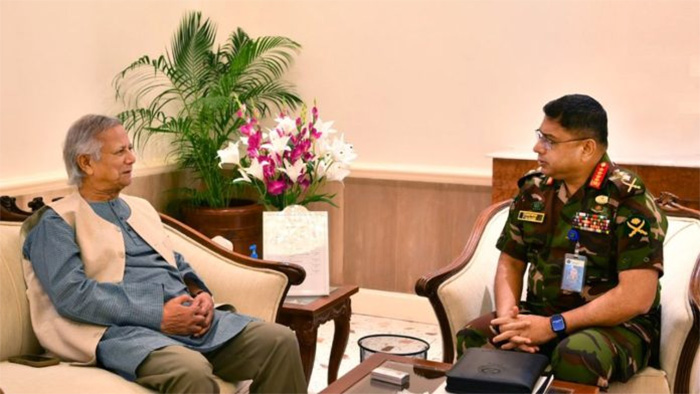
Bangladesh Army chief General Waker-uz-Zaman has reiterated his opposition to the proposed ‘humanitarian corridor’ to Myanmar, saying there will be “no bloody corridor business”. He also made it clear that the unelected interim govt led by Muhammad Yunus can’t take major decisions like the corridor or handing over a port to a foreign country.
Notably, the United Nations has requested the Bangladesh for a corridor through the country to Myanmar’s Rakhine state to deliver aid material. The region is facing shortages of foods and other essential items after rebel Arakan Army took control of the region. The Arakan Army, which serves as the military wing of the United League of Arakan (ULA), gained full control over the Bangladesh-Myanmar border in December 2024. UN Secretary-General Antonio Guterres, during his recent visit to Bangladesh, called for establishing the corridor through the country to deliver aid to Rakhine State.
The interim govt of Bangladesh had agreed in principle to the UN proposal for the corridor. Last month, Foreign Affairs Adviser Md Touhid Hossain said that the govt has agreed in principle to the proposal, subject to certain conditions. However, several political parties opposed the move, saying any such decision must be taken only after discussion with all political parties. Bangladesh Nationalist Party strongly opposed the proposal, saying they don’t want to become another Gaza.
Addressing officers at the Army Head Quarters (AHQ) in Dhaka in Wednesday, General Waker-Uz-Zaman stated that there will be no Humanitarian Corridor, nor any port allotted to any foreigners till an elected government comes to power in the country. He added that Bangladesh Army will not allow anything that will affect the sovereignty and geographical stability of the country, attracting huge applause from the officers.
The army chief expressed concerns that the Muhammad Yunus-led interim government was taking decisions while keeping the country’s Armed Forces in the dark. Using very strong language while talking about the proposal of the corridor, General Waker-uz-Zaman said that there will be “no bloody corridor business”.
He also said that the elections in the country must be held by December this year, and the interim govt can’t determine the country’s course, only an elected government can do so. He said that an elected government should be in power by January 1, 2026 after concluding “free and fair” polls, following which the army will return to the barracks.
The general said that there are some “foreigners” in the interim government who are acting irresponsibly and will go back to their country when things go wrong. He was evidently talking about Khalilur Rahman, the first NSA of Bangladesh and a resident of USA, who has been at loggerhead with the army chief since his appointment to the position last year. Notably, Khalilur Rahman has been pushing for the Myanmar corridor. However, recently Rahman has clarified that the govt has not taken any decision on the corridor.
Amid the calls for massive amendments to the constitution, he said that any large-scale changes are not desirable.
Zaman further added that decisions like allotting a port to foreigners must be taken by an elected govt, nut the interim govt. His comments seem to be over the Interim govt’s proposal to hand over the operations of a terminal of the Chittagong port to foreign entities.
Notably, the Yunus govt has decided to hand over the operations of a New Mooring Container Terminal (NCT) at Chittagong Port to a foreign operator. The move was initially introduced under the previous Awami League government, and the current administration is actively considering it. Shipping Adviser Brig Gen (Retd) M Sakhawat Hussain said that the administration is in favour of bringing in a foreign operator to manage the terminal.
The move is being strongly objected by several parties, including BNP and Jamaat-e-Islami. Earlier this month, the 12-party alliance said that under no circumstances should the New Mooring Container Terminal (NCT) be handed over, nor should the Chattogram Port be leased to foreign entities.
The political parties argue that bringing a foreign operator to run an already built port is not necessary, saying foreign investment is welcome only for greenfield projects. They also assert that the interim government has no authority to make such a major decision related to national interest unilaterally.
The 950-metre-long NCT of the port has five jetties — four for ocean-going vessels and one for smaller ships on inland routes. At present, local firm Saif Powertec Ltd has been running four jetties.
In another important comment, General Waker-Uz-Zaman that the “Army will no longer tolerate mob violence or lawlessness”, pointing out to prevailing lawlessness and protest going violent in the country.
Amarjit Singh Dulat, former chief of the Research and Analysis Wing (R&AW) was recently featured on a podcast by Bharat Raftaar TV journalist Jitesh Jethanandani. During the interaction, he was asked about his visit to Pakistan which made him lose his temper.
He had a physical outburst and used abusive language on camera. The journalist asked him questions regarding Pakistan occupied Kashmir (PoK) and other issues. However, he appeared hesitant to respond and then became enraged when his visit to Pakistan came under the spotlight.
“Take him out, remove this ba***rd. Who was that sisterf**ker? Who was that dog? Who was he? Do you know who I am? Who was saying all this? Motherf**ker, what do you think of yourself? Bloody Sindhi, do you think I am crazy? I will f**k up your mother,” he lashed out.
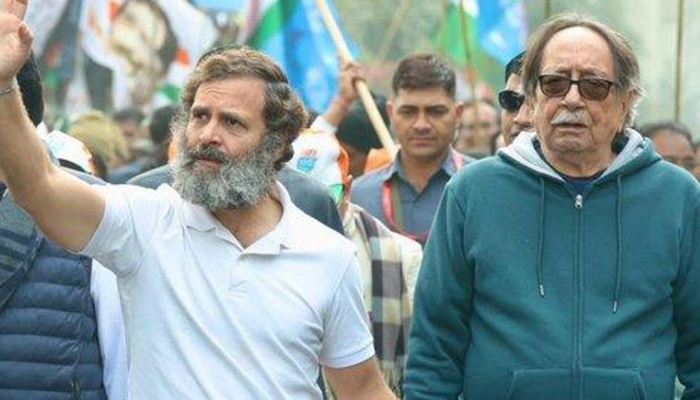
Jethanandani asked, “You were seen in Rahul Gandhi’s Bharat Jodo Yatra. How did you become a part of that journey and what were the reasons,” to which Dulat responded, “I received a call from him and I joined the yatra. Yes, my views align with the Congress. I served during the party’s regime. We have always been with the Congress.”
He tried to downplay the Kashmiri Hindu genocide and claimed, “It was those same people who were angry with Delhi and they didn’t kill only the Pandits. More Muslims were killed back then,” when he was asked how the minority community was butchered in the 1990s in the valley.
When questioned about PoK (Pakistan-occupied Kashmir), Dulat alleged, “There’s no issue, what issue is there,” and added, “If there’s any solution, it’s this: make a settlement on the Line of Control. What you have is yours and what we have is ours.”
“Yes, tourism has increased. I had said that the voices of local Kashmiri leaders should have been heard,” when Jethanandani pointed out that tourism has increased in Kashmir after the abrogation of Article 370. Notably, local Kashmiri leaders have been opposing the decision. Dulat supported them and accused that the spike in tourism is a problem, not a benefit.
The host also inquired about “Operation Sindoor” and stated, “There was tension between India and Pakistan 10–15 days ago.” However, he was soon interrupted by Dulat who mocked, “I say we should have taken Lahore. I like Lahore.”
When asked Dulat acknowledged that he has contacts in Pakistan. However, he lost his temper and became aggressive when his recent trip to Pakistan was brought up. The question was related to his recent book “The Spy Chronicles: RAW, ISI and the Illusion of Peace” which he co-authored with former Pakistani intelligence officer Asad Durrani.
Dulat has often been in the news for controversial reasons. He has frequently supported anti-BJP and pro-Pakistan narratives. He was also photographed walking hand in hand with Rahul Gandhi during the Congress-led Bharat Jodo Yatra in 2023.
When the 2019 film “The Kashmir Files” was released which depicted the atrocities faced by Kashmiri Pandits, Dulat dismissed it as propaganda. He downplayed the massacre and exodus of Kashmiri Pandits from the valley, claiming that the popular perception surrounding the shocking event differs from reality.
Dulat also raised doubts on the Pulwama terror attack. In the lead-up to the 2019 general elections, he infamously labeled the deadly terror strike as a “gift” for the Bharatiya Janata Party after which he received massive backlash.