Home Blog Page 4141

Dilip Kumar: From Censor Board under PM Nehru blocking the release of ‘Ganga Jamuna’ to him campaigning for Congress leaders

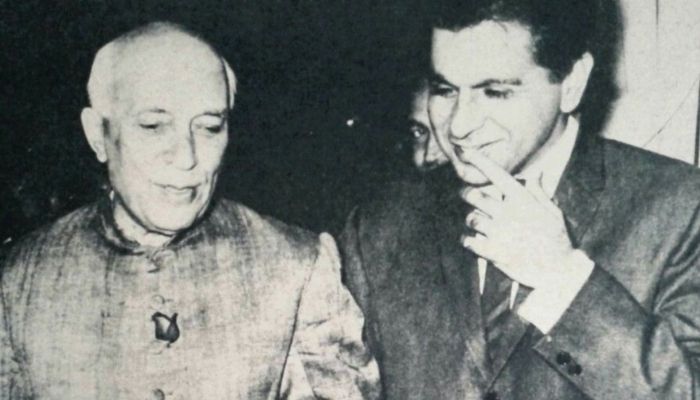
Muhammed Yusuf Khan, popularly known as Dilip Kumar, breathed his last on Wednesday (July 7) morning. Often referred to as ‘The Tragedy King’, Kumar is credited for introducing a new form of method acting in the Hindi film industry. His demise was mourned by his fans in India and Pakistan. Dilip Kumar was not just a great actor but also a director and a writer. However, he too had to face hurdles in his creative pursuit under the Nehru government.

The Congress party had become the gatekeepers of ‘social morality’ and began interfering in the film industry. Congress MP Lilavati Munshi, who headed the Society for the Prevention of Unhealthy Trends in Motion Pictures, had moved a resolution in the Parliament in 1954 seeking a ban on ‘undesirable’ and ‘objectionable’ scenes. As such, all kissing scenes were banned. The Nehru government thus adopted the resolution in 1959 under the Cinematography Act. Lilavati Munshi also had a problem with Dilip Kumar’s hairstyle. She alleged that it had an ‘adverse’ effect on the youth.

Dilip Kumar’s tryst with censorship under Nehru Raj

When Dilip Kumar’s Ganga Jamuna movie was being made, the actor learnt that it had been banned by the Ministry of Information and Broadcasting (I & B). The then Minister, Dr. BV Keskar, was least bothered about films and also frequently banned the airing of movie songs on All India Radio (AIR). Keskar was firm in his resolve of banning the movie Ganga Jamuna on grounds of violence and vulgarity. The Censor Board had recommended 250 cuts in the movie for it to be released. A desperate Dilip Kumar reached out to PM Nehru for help.

The meeting was scheduled for 15 minutes initially by Nehru’s daughter Indira Gandhi. During the meeting, Dilip Kumar explained how the Censor Board officials behaved like demigods and would not listen to the film directors or producers. He had highlighted several instances where the Censor Board failed to do its job and it somehow impressed PM Nehru. The meeting lasted for over 1.5 hours, following which the ban on his movie Ganga Jamuna was lifted. A few days later, Dr BV Keskar was sacked from the I&B Ministry.

Dilip Kumar – Career in Politics

In his book, ‘Nehru’s Hero: Dilip Kumar in the Life of India’, British Parliamentarian Lord Meghnad Desai wrote that Dilip Kumar was a Nehruvian man and also the hero of the first Prime Minister. PM Nehru invited the veteran actor to address a conference of Indian Youth Congress (IYC) during the 1950s. He even pressurised Dilip Kumar to campaign for VK Krishna Menon in the 1957 Lok Sabha election from the North Mumbai seat. As a result of the actor’s efforts, Menon managed to become an MP. However, Dilip Kumar distanced himself from Menon following India’s loss in the 1962 war.

Reportedly, the actor never joined electoral politics as such and remained committed to the principles enshrined in the Indian Constitution. Kumar was made the Sheriff of Mumbai between 1980-1981 during which he worked for the welfare of the differently-abled people. He had campaigned for several politicians such as VP Singh (1994 fundraiser), Manmohan Singh (1999), and a Congress candidate from Alwar in 1996. It was only in the year 2000 that the veteran actor Dilip Kumar was nominated to the Rajya Sabha by the Congress party from Maharashtra.

During his 6-year tenure, the actor actively participated in parliamentary proceedings and development work. He was also a member of the Standing Committee of the Parliament on Health and Family Welfare. The committee prepared a report, which eventually led to the amendment of the Indian Medical Council Act, 2006. Dilip Kumar also used MPLAD funds for the development of gardens in Bandra Fort, the construction of Jogger’s Park, and the Bandstand Promenade. He was awarded the Padma Bhushan in 1991, followed by Nishan-e-Imtiaz in 1998. The Modi government also awarded him with Padma Vibhushan in 2015.
Cabinet Reshuffle: The new ministers of the Narendra Modi government take oath of office and secrecy at the Rashtrapati Bhavan

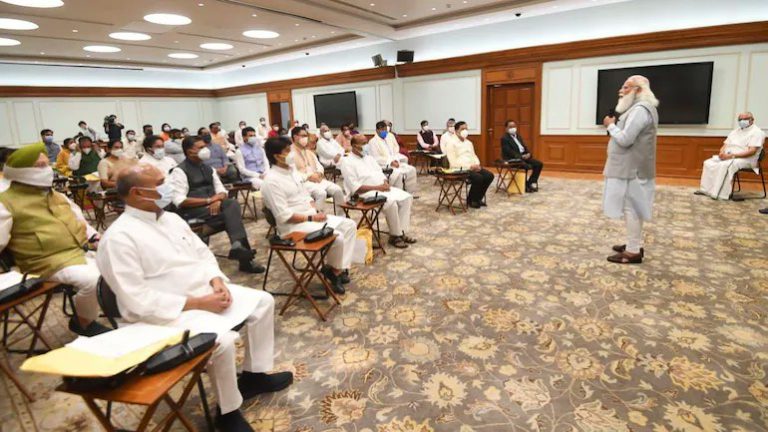
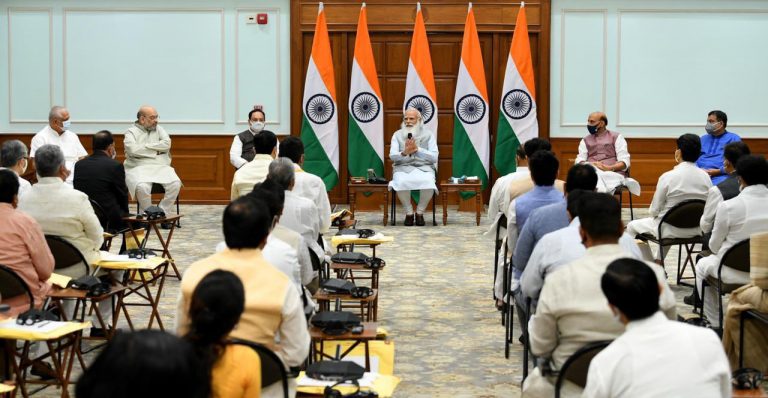
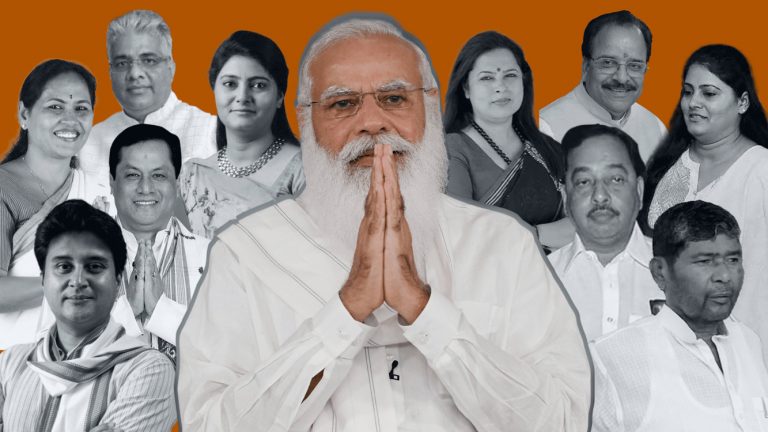
On Wednesday (July 7), a total of 43 leaders of the National Democratic Alliance (NDA) took oath as Ministers in the Narendra Modi government. The oath-taking ceremony started at 6 pm at the Darbar Hall of the Rashtrapati Bhavan. This is the first cabinet reshuffle since the BJP formed the government in May 2019. Among the 43 ministers who took oath, 15 are cabinet ministers, and the rest 28 are ministers of state.

While most of the ministers are new inductions in the ministry, seven existing ministers of state are also taking oath as cabinet ministers, as they have been promoted as cabinet ministers. They are Anurag Thakur, Hardeep Singh Puri, Kiren Rijiju, Parshottam Rupala, G Kishan Reddy, Raj Kumar Singh and Mansukh Mandaviya.

Although 43 new ministers took oath today, the strength of the Modi government will go up by 24 only. This is because, among the 43 ministers who took the oath, 7 are existing Ministers of State promoted to cabinet rank. Apart from that, 12 ministers have resigned from the union ministry today.

The first to take the oath of office and secrecy was former Maharashtra CM Narayan Rane, followed by former Assam CM Sarbananda Sonowal. Senior BJP leader Dr. Virendra Kumar and former Congress leader Jyotiraditya M Scindia were sworn in next.

Here is the full list of new ministers who took oath today:

Cabinet ministers

  1. Narayan Rane
  2. Sarbananda Sonowal
  3. Dr Virendra Kumar
  4. Jyotiraditya Scindia
  5. Ramchandra Prasad Singh
  6. Ashwini Vaishnaw
  7. Pashu Pati Kumar Paras
  8. Kiren Rijiju
  9. Raj Kumar Singh
  10. Hardeep Singh Puri
  11. Mansukh Mandaviya
  12. Bhupender Yadav
  13. Parshottam Rupala
  14. G. Kishan Reddy
  15. Anurag Singh Thakur

Ministers of State

  1. Pankaj Choudhary
  2. Anupriya Singh Patel
  3. Satya Pal Singh Baghel
  4. Rajeev Chandrasekhar
  5. Shobha Karandlaje
  6. Bhanu Pratap Singh Verma
  7. Darshana Vikram Jardosh
  8. Meenakshi Lekhi
  9. Annapurna Devi
  10. A Narayanaswamy
  11. Kaushal Kishore
  12. Ajay Bhatt
  13. B. L Verma
  14. Ajay Kumar
  15. Chauhan Devusinh
  16. Bhagwanth Khuba
  17. Kapil Moreshwar Patil
  18. Pratima Bhowmik
  19. Subhas Sarkar
  20. Bhagwat Kishanrao Karad
  21. Rajkumar Ranjan Singh
  22. Bharati Pravin Pawar
  23. Bishweswar Tudu
  24. Shantanu Thakur
  25. Manjupara Mahendrabhai
  26. John Barla
  27. L. Murugan
  28. Nisith Pramanik

List of Cabinet Ministers who have resigned

Earlier today, as many as 12 ministers tendered their resignations.

  1. Prakash javadekar, Minister of Information and Broadcasting
  2. Ravi Shankar Prasad, Minister for Law and JusticeHarsh Vardhan, Minister of Health and Family Welfare
  3. Ramesh Pokhriyal Nishank, Minister of Human Resource Development
  4. Harsh Vardhan, Minister of Health and Family Welfare
  5. Santosh Gangwar, Minister of State with independent charge in the Ministry of Labour and Employment
  6. Sadananda Gowda, Minister of Chemicals and Fertilizers 
  7. Debasree Chaudhuri, Minister of State for Woman and Child Development
  8. Sanjay Dhotre, Minister of State for Electronics and Information Technology
  9. Thawar Chand Gehlot, Minister for Social Justice and Empowerment
  10. Babul Supriyo, Minister of State for Environment, Forest and Climate Change
  11. Pratap Sarangi, Minister of State for Animal Husbandry, Dairying and Fisheries and Micro, Small and Medium Enterprises
  12. Rattan Lal Kataria, Minister of State for Jal Shakti

NCP leader Eknath Khadse’s son-in-law Girish Chaudhary arrested by ED in Bhosari land scam

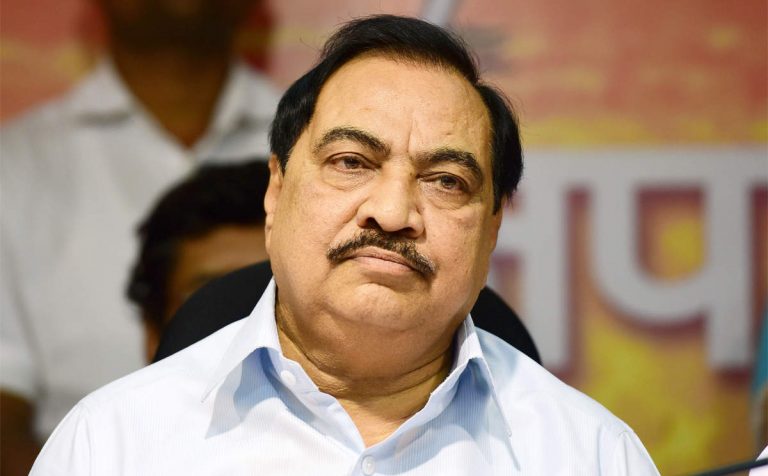
NCP leader Eknath Khadse’s son-in-law Girish Chaudhary has been arrested by the Enforcement Directorate (ED) in a money laundering case pertaining to a land deal in Pune’s Bhosari. 

After being questioned by the agency for 13 hours till late night on Tuesday at the ED office in Mumbai, Chaudhary was arrested by the agency, and he was produced before the special Prevention of Money Laundering Act (PMLA) court. 

As per an ANI update, Chaudhary will be in custody till July 12 for further interrogation. 

In 2017, Maharashtra Anti-Corruption Bureau had registered a case against Eknath Khadse, his wife Mandakini, Girish Chaudhary and the landowner Abbas Aqani after finding irregularities in a 2016 Pune land deal.

When a part of Devendra Fadnavis-led Cabinet, there were allegations against Khadse for misusing his official powers to facilitate the purchase of the Maharashtra Industrial Development Corporation (MIDC) government land by his family in the Bhosari area of Pune. 

The 3.1 acres of land which cost Rs 30 crore was purchased for Rs 3.75 crore, as per reports. 

Following the allegations, Khadse had resigned from the cabinet and then the BJP only to join NCP in 2020. Khadse refuting the allegations had claimed that he had received a clean chit from the ACB in 2018. Khadse also alleged that he and his family are being heckled for quitting BJP and joining the Nationalist Congress Party. 

Advocated Asim Sarode who is fighting a case against Khadse in Pune court has reported the possibility of Khadse and his wife also being arrested. 

Gurdaspur police reject ‘blasphemy’ angle in Army man lynching case in a Gurudwara in Punjab

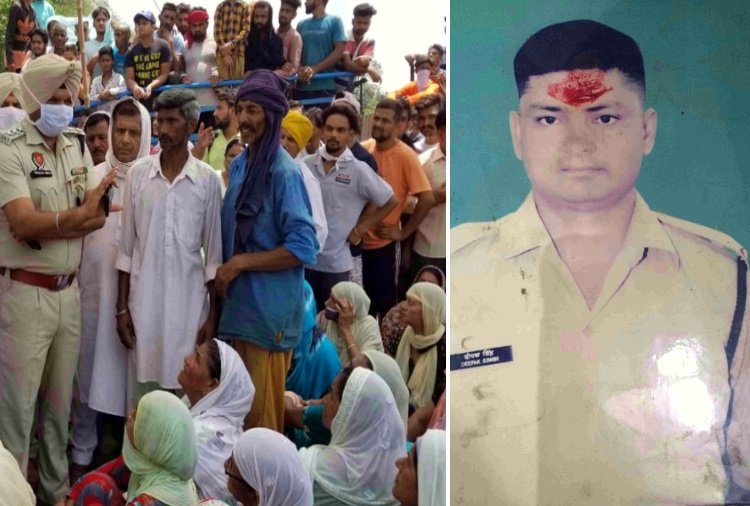
Gurdaspur Police has denied the reports of ‘blasphemy’ angle in the recent murder case of an Army official. While talking to OpIndia, SP Investigation, Harvinder Singh said the reports of blasphemy are baseless. He said, “He [Deepak Singh] deboarded the bus at the wrong location and went to Gurudwara. The lock on the main gate outside Gurudwara was intact, but the strips on the gate were broken. He was drunk at that time. He was beaten up by the caretakers when they noticed him on the premises.” 

When OpIndia asked him if anyone has been arrested, SP Singh said, “We have filed a case in the matter and identified those who were involved in beating him. We will arrest the accused very soon.”

The lynching of Army man in Gurdaspur Gurudwara

On the night between July 1 and July 2, Deepak Singh, an Army staffer, was lynched in a Gurdwara located in a village near Gurdaspur, Punjab. A section of radicals reportedly said that Singh was killed as he had committed sacrilege against the Guru Granth Sahib. Daljit Singh Kashmir alias Bobby was booked as the main accused in the case, among others. Bobby is currently on the run. Damdami Taksal Jatha Rajpura, actor-turned-activist and Republic Day riots accused Deep Sidhu, and several others came in support of Daljit Singh and justified the lynching.

It was also reported that a few days earlier to the incident, Sikh religious leader Baba Ravinder Singh Joni had published a video in which he had called to burn the blasphemer and contact him afterwards. He claimed he would fight the case for the person who burns the blasphemer alive. However, in a recent interview with Seerat Punjabi Di, Baba Joni said as there is no proof of blasphemy in this case, why would he stand with the accused? He said he had sent some learned Sikhs to get more information on the case, and if blasphemy is proved, he would definitely help the accused.

However, he repeated his stand that he would stand with anyone who burns the blasphemer and reward him as well. Joni was reportedly questioned by the Police after his video went viral on social media. Facebook also removed the video from its platform, but it has surfaced repeatedly over the past few weeks.

A separate case of alleged ‘blasphemy’ reported in Mohali, Punjab

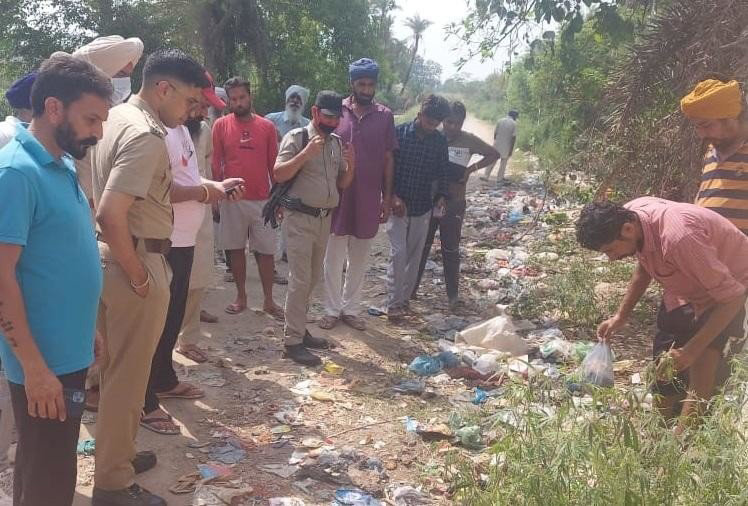
Another case of alleged ‘blasphemy’ has been reported in Mohali district, Punjab. As per reports, the incident took place in Manauli village, near Mohali IT city. The villagers found torn pages of Gutka Sahib (a short version of Guru Granth Saheb that is kept in homes) in several locations in the village. The Police were informed, and as the matter was sensitive, SP City Harvinder Singh took charge of the case. The investigation team from Sohana Police Station also reached the location with forensic teams.

Police searching for the torn pages of Sikh holy book, image via Amar Ujala

According to a report on Daily Post Punjabi, the villagers found out about the incident at around 8 AM. The Granthi of the Gurudwara was informed, who rushed to the location. The Granthi told Daily Post, “We reached the location at around 8 AM. So far, we have found 70+ pages of Gutka Sahib.” When the reporter asked him if they have found all the pages, he said, “No, we are still searching for the remaining pages.” He further added that two days ago, a woman had found two pages on her roof, which she kept at the place of worship in her house. Those pages were also recovered by the Granthi.

OpIndia reached out to SP City Harvinder Singh Virk to learn more about the case. He said, “Police was informed about the torn limbs of Gutka Sahib that were found in Manauli village. A case has been registered based on the complaint of the Sarpanch under Sections 295(a) and 120 of the Indian Penal Code against the unknown person(s). As the investigation is in its initial stage, it would not be correct to make any assumptions. Forensic experts have collected the samples. There was only one CCTV camera in the region, and we are checking the footage to find evidence.”

While talking to Daily Post, SP Virk said that they have full support from the locals and the case would be solved peacefully.

It is notable here that the pages of the Sikh holy book are referred to as ‘ang’ or limbs.

Cabinet Reshuffle: 12 ministers resign from the union ministry ahead of the swearing-in ceremony of new ministers

The cabinet reshuffle of the Modi government is going to result in a massive change in the composition of the union ministry. While reportedly as many as 43 new ministers are going to take oath at 6 PM today at the Rashtrapati Bhavan, 12 existing ministers have resigned from the government till now.

The union ministers that have tendered their resignations till now are as follows:

  1. Harsh Vardhan, Minister of Health and Family Welfare
  2. Ramesh Pokhriyal Nishank, Minister of Human Resource Development
  3. Santosh Gangwar, Minister of State with independent charge in the Ministry of Labour and Employment
  4. Sadananda Gowda, Minister of Chemicals and Fertilizers 
  5. Debasree Chaudhuri, Minister of State for Woman and Child Development
  6. Sanjay Dhotre, Minister of State for Electronics and Information Technology
  7. Thawar Chand Gehlot, Minister for Social Justice and Empowerment
  8. Babul Supriyo, Minister of State for Environment, Forest and Climate Change
  9. Pratap Sarangi, Minister of State for Animal Husbandry, Dairying and Fisheries and Micro, Small and Medium Enterprises
  10. Rattan Lal Kataria, Minister of State for Jal Shakti
  11. Ravi Shankar Prasad, Minister of Law and Justice, Electronics and Information Technology and Communications
  12. Prakash Javadekar, Minister of Environment, Forest and Climate Change, Minister of Information and Broadcasting and Minister of Heavy Industries and Public Enterprises

Among those who resigned today, Thawar Chand Gehlot has already been appointed as the governor of Karnataka. West Bengal BJP leader Babul Supriyo informed on Facebook that he had been asked to resign. However, later he rephrased that sentence to say “Yes, I have resigned from the Council Of Ministers”.

The resignations will make way for new ministers that will join the union ministry after the swearing-in ceremony today evening. The Cabinet expansion had also become necessary due to the death of union ministers, and the exit of NDA allies Shiv Sena and Akali Dal.

According to reports, Jyotiraditya Scindia, Sarbananda Sonowal, Narayan Rane are Meenakshi Lekhi are among the senior BJP leaders to be inducted in the union cabinet. Apart from BJP, leaders from JDU, Apna Dal, LJP etc will find places in the ministry. Janata Dal-United (JD-U) national president RCP Singh, Lok Janshakti Party (LJP) national president Pashupati Paras and Apna Dal Sonelal leader Anupriya Patel are set to become ministers in the Narendra Modi government.

Seven current Ministers of State, including Anurag Thakur, G Kishan Reddy, Hardeep Puri, Purushottam Rupala and Kiren Rijiju are set to be elevated to cabinet rank.

Rajasthan: Dalit man beaten to death by Sagar Qureshi, Imran and others in Jhalawar, video goes viral

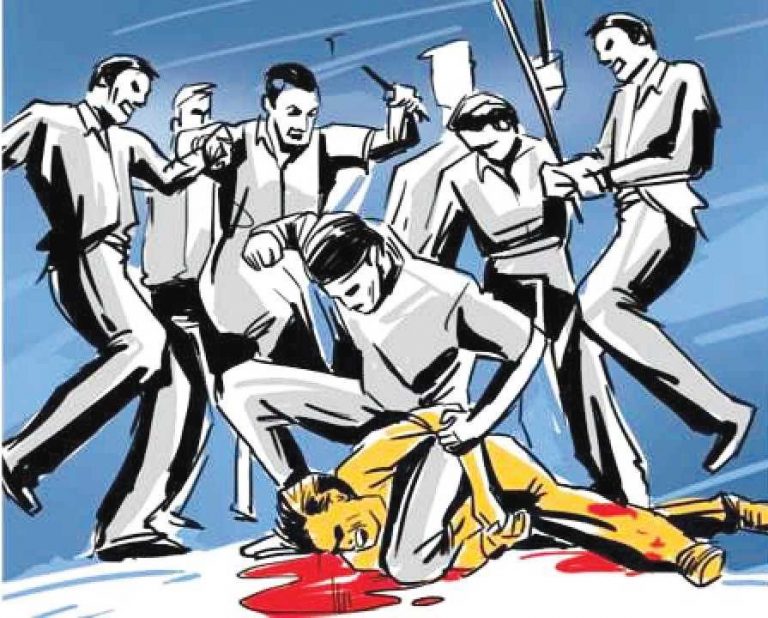
Krishna Valmiki, a Dalit boy from Jhalawar was lynched at Haldighati road by Sagar Qureshi, Raes (Kaalu), Imran (Shanu), Akhtar and others on July 01. Valmiki was rushed to Jhalawar’s government district hospital but had to be shifted to a city hospital in Jaipur due to complications. The boy, however, succumbed to his injuries while undergoing treatment on Tuesday morning. 

As per reports, Valmiki was dragged out of his car and attacked by prime accused Qureshi and his gang due to personal animosity. The perpetrators left him to die on the road after hitting him with sticks and clubs. One of the perpetrators had allegedly shot the video of the incident which went viral on social media. 

While the main accused have been arrested, the police are on the lookout for the one who shot the video of the lynching. Valmiki was attacked by at least 12 men who reportedly wanted to take revenge due to an ongoing rivalry. Police official Amit Kumar informed that a group had attacked Qureshi after which he along with his accomplices made a plan to take revenge.

Police have reportedly said that all accused, namely Sagar Qureshi, Raees, Imran, Akhtar Ali, Sohail, Sahid etc have been arrested and most of them are history sheeters.

While Qureshi was arrested after the incident, a few of his companions were arrested only on Tuesday. Anticipating further violence, police teams had been deployed in several areas of Jhalawar and Jhalrapatan.

The accused have been taken into custody on a production warrant for further interrogation. All the accused in the case are history-sheeters and the process is on to book them under relevant sections of IPC for murder after Valmiki’s death. 

Police forces have been deployed at the bus stand and residential areas of the accused to prevent any tension. 

Economic recovery in sight as India’s electricity demand records a new high, crosses 200 GW on Wednesday

After a slump in the electricity demand during the second wave of the coronavirus pandemic, India’s peak electricity demand recorded a new high of over 200 gigawatts (GW) on Wednesday noon, breaking yesterday’s record. 

The update was shared by Power and New Renewable Energy Minister Raj Kumar Singh via a Tweet. “All India power-demand crossed 200 GW at 1201 hrs today,” he Tweeted.

As per a Mint report, India had recorded a new high of 197.06 gigawatts (GW) on Tuesday. Before this, the last recorded all-time high demand for power was 191.24 GW on 30 June. 

A decline in demand was noticed during the second wave of the pandemic with the last record high being noted on January 31 this year at 189.64 GW.

The phenomenon is being seen as a sign of recovery as energy consumption, especially electricity and refinery products, is usually linked to overall demand in the economy. Of India’s total electricity demand load pattern, industrial consumption accounts for 41.16%, agricultural for 17.69%, and commercial electricity consumption accounts for 8.24%, as per the report.

While domestic consumption has been on a rise since the onset of the pandemic last year, the commercial and industrial demand had taken a hit after many factories had to close due to sporadic lockdowns. 

The rise in demand also comes in the backdrop of increasing mercury levels with several parts of India awaiting monsoon. 

Team Modi: Here is the list of 43 leaders who would take an oath today in the new cabinet

43 leaders will be inducted into the newly expanded cabinet later today. The oath ceremony will take place later in the evening at 6 PM at Rashtrapati Bhavan.

Here is the full list of new ministers:

  1. Narayan Rane
  2. Sarbananda Sonowal
  3. Dr Virendra Kumar
  4. Jyotiraditya Scindia
  5. Ramchandra Prasad Singh
  6. Ashwini Vaishnaw
  7. Pashu Pati Kumar Paras
  8. Kiren Rijiju
  9. Raj Kumar Singh
  10. Hardeep Singh Puri
  11. Mansukh Mandaviya
  12. Bhupender Yadav
  13. Parshottam Rupala
  14. G. Kishan Reddy
  15. Anurag Singh Thakur
  16. Pankaj Choudhary
  17. Anupriya Singh Patel
  18. Satya Pal Singh Baghel
  19. Rajeev Chandrasekhar
  20. Shobha Karandlaje
  21. Bhanu Pratap Singh Verma
  22. Darshana Vikram Jardosh
  23. Meenakshi Lekhi
  24. Annapurna Devi
  25. A Narayanaswamy
  26. Kaushal Kishore
  27. Ajay Bhatt
  28. B. L Verma
  29. Ajay Kumar
  30. Chauhan Devusinh
  31. Bhagwanth Khuba
  32. Kapil Moreshwar Patil
  33. Pratima Bhowmik
  34. Subhas Sarkar
  35. Bhagwat Kishanrao Karad
  36. Rajkumar Ranjan Singh
  37. Bharati Pravin Pawar
  38. Bishweswar Tudu
  39. Shantanu Thakur
  40. Manjupara Mahendrabhai
  41. John Barla
  42. L. Murugan
  43. Nisith Pramanik

Earlier today, as many as 12 ministers tendered their resignations.

  1. Harsh Vardhan, Minister of Health and Family Welfare
  2. Ramesh Pokhriyal Nishank, Minister of Human Resource Development
  3. Santosh Gangwar, Minister of State with independent charge in the Ministry of Labour and Employment
  4. Sadananda Gowda, Minister of Chemicals and Fertilizers 
  5. Debasree Chaudhuri, Minister of State for Woman and Child Development
  6. Sanjay Dhotre, Minister of State for Electronics and Information Technology
  7. Thawar Chand Gehlot, Minister for Social Justice and Empowerment
  8. Babul Supriyo, Minister of State for Environment, Forest and Climate Change
  9. Pratap Sarangi, Minister of State for Animal Husbandry, Dairying and Fisheries and Micro, Small and Medium Enterprises
  10. Rattan Lal Kataria, Minister of State for Jal Shakti
  11. Ravi Shankar Prasad, Minister of Law and Justice, Electronics and Information Technology and Communications
  12. Prakash Javadekar, Minister of Environment, Forest and Climate Change, Minister of Information and Broadcasting and Minister of Heavy Industries and Public Enterprises

The list of 43 new ministers that will take oath today also includes few existing ministers like Anurag Thakur, Kiren Rijiju, Hardeep Singh Puri etc. That is because, they are being promoted to cabinet rank from their existing positions as ministers of state. The oaths for cabinet ministers and ministers of states are taken differently. As a result, when a minister of state is elevated to the cabinet rank, they need to take oath again.

AYUSH Ministry rubbishes study that linked Ayurvedic herb Giloy to liver damage, says patients may have consumed a different herb

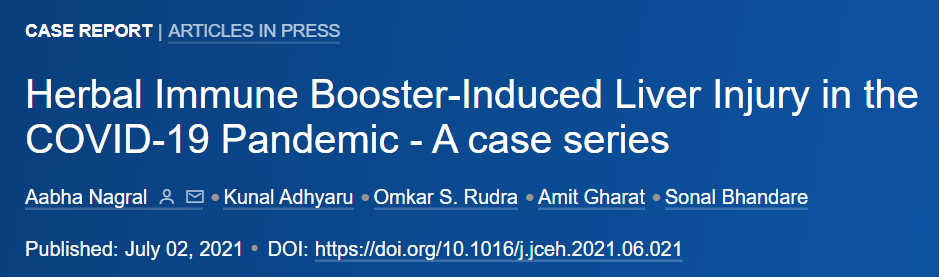
The Ministry of AYUSH has dismissed a case study, which claimed that the prolonged consumption of the Indian herb Tinospora cordifolia (Giloy/TC) has led to liver damage in 6 patients with acute hepatitis.

The study was published in the Journal of Clinical and Experimental Hepatology. Titled ‘Herbal Immune Booster-Induced Liver Injury in the Covid-19 pandemic – A case series’, the study was authored by Aabha Nagral, Kunal Adhyaru, Omkar S Rudra, Amit Gharat, and Sonal Bhandare. It was conducted between September and December 2020, followed till March this year, and published on July 2.

The methodology of the study read, “We included out-patients and in-patients aged > 18 years with a presentation of acute hepatitis and recent exposure to ingestion/ consumption of a distinctive formulation containing TC. We also excluded acute viral hepatitis A, B and C, and E by serological tests and Wilson disease.” The patients were subjected to several tests including ultrasonography, and liver biopsy.

Screengrab of the study

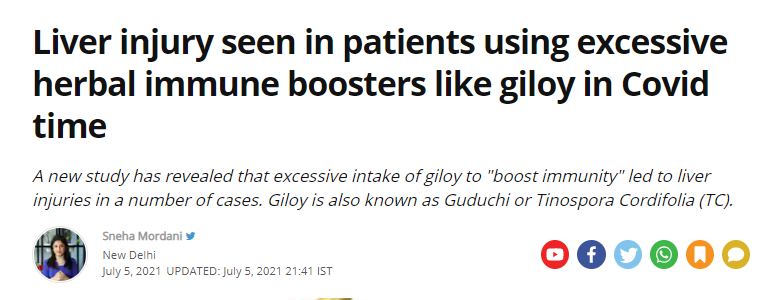
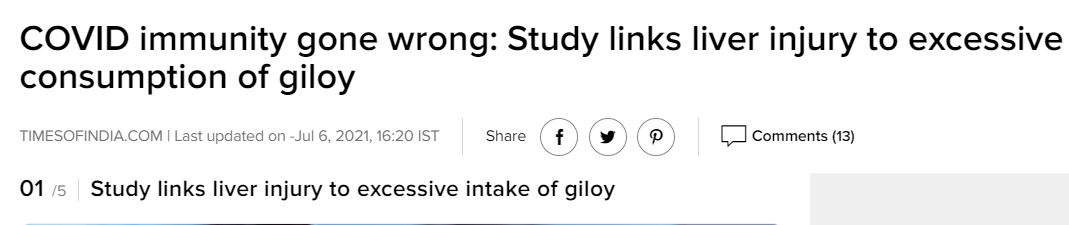
The contentious study was covered by several news portals including India Today and The Times of India.

Screengrab of the India Today report
Screengrab of the Times of India report

AYUSH Ministry points out flaws in research paper

In a statement, the Ministry of AYUSH said, “This study mentions that use of herb LinosporCordifolia (IC), commonly known as Giloy OE Guduchi, resulted in liver failure in six patients in Mumbai. The Ministry feels that the authors of the study failed in placing all needful details of the cases in a systematic fain. Apart from this, relating Giloy or TC to liver damage would be misleading and disastrous to the traditional medicine system of India as the herb Guduchi or Giloy has been used in Ayurveda since long. The efficacy of IC in managing various disorders is well established.”

The AYUSH Ministry further added, “After analysing the study, it was also noticed that the authors of the study have not analysed the contents of the herb that was consumed by the patients. It becomes the responsibility of the authors to ascertain that the herb consumed by the patients is TC and not any other herb. To build upon the soundness, the authors would have taken the opinion of a botanist or would have consulted an Ayurveda expert. In fact, there are many studies that point out that identifying the herb not correctly could lead to wrong results. A similar-looking herb Tinosporo Crispa might have a negative effect on the liver.”

The Ministry pointed out that the authors of the study did not identify the herb species correctly through standard guidelines. ” It is unclear that what dose the patients had taken or whether they took this herb with other medicines. The study has not taken into account the past and present medical records of the patients. Publications based on incomplete information will open the door for misinformation and defame the age-old practices of Ayurveda. It would not be can of context to state here that Scientific Evidence on medical applications of TC or Giloy as practice to the liver, nerves, etc. are available,” it added.

AYUSH Ministry emphasised that several studies are already available in the public domain that talk about the beneficial uses of Giloy. It said that keywords such as ‘Guduchiand safety’ and ‘T Cordifolia efficacy’ returned 169 and 871 studies respectively. While slamming the media, it concluded, “No adverse event is noted in any clinical practice by pharmacovigilance or in any clinical study. The newspaper article based its entire story on the much limited and misleading study without taking into account the voluminous peer-reviewed, robust studies that speak for the efficacy of TCordifolia and without consulting any reputed Ayuneda expert or the Ministry of Ayush. This also is not up to the mark from a journalistic point of view.”

Maharashtra: Muslim organisations want special law to punish ‘insults’ against Muhammad, even when 295(a) was brought for the same reason

Muslim religious groups like Raza Academy and Tahaffuz Namoos-e-Risalat Board and Prakash Ambedkar-led Vanchit Bahujan Aghadi (VBA) have reportedly been pressurised the Maharashtra state government to introduce ‘Prophet Muhammad Bill’. The aim is to bring an act to stop blasphemy against Prophet Muhammad and religious figures of all religions.

As per a report in the Times of India, though the bill is promoted as the ‘Prophet Muhammad Bill’, the draft bill prepared and submitted to the government has been titled ‘Prophet Muhammad and Other Religious Heads Prohibition of Slander Act, 2021’ or ‘Hate Speech (Prevention) Act, 2021’.

Influential Muslim organisation Raza Academy has shared that they want the “Tahffuz e Namoos e Risaalat Bill passed in the assembly or they will launch nationwide protests.

Maulana Moin Ashraf Qadri (Moin Mian), president of All India Sunni Jamiatul Ulema, said, “It is our suggestion, but the government can name whatever it chooses to. Our demand is that there should be a strong law to stop vilification, mocking and insult to our holy prophet and all deities and religious heads. Communal clashes have happened because the existing law against hate speech is insufficient to stop miscreants.”

Section 295(a) and the case of ‘Rangeela Rasool’

Though there is no law against blasphemy in India, there is a law that provides the provision of imprisonment and a fine against those who deliberately hurt the religious sentiments of anyone. Section 295(a) of the Indian Penal Code (IPC) has the provision of fine and imprisonment up to 3 years if the accused has hurt religious sentiments “with deliberate and malicious intention”.

The history of Section 295(a) is fascinating. It all began in 1923 when Muslims published two highly offensive books titled “Krishna teri geeta jalani padegi” with derogatory and vulgar language against Shri Krishna and other Hindu deities and “Uniseevi sadi ka maharshi” which contained derogatory remarks on Arya Samaj founder Swami Dayanand Saraswati (incidentally written by an Ahmadi). At that time, 295(a) did not exist.

As a response to the two books Pandit Chamupati Lal, a close friend of Mahashay Rajpal, wrote a short biography of the Islamic Prophet, Mohammed. Titled “Rangeela Rasool”, this short pamphlet was a satirical take on the domestic life of Mohammed. Because of the sensitive nature of the pamphlet, Pandit Chamupati made Mahashay Rajpal promise that he would never reveal the name of the author.

The pamphlet was historically accurate and based on hadiths, but it caused an obvious outrage among the Muslims in Lahore. The first edition sold out quickly, however a mere one month after the publication of the pamphlet, in June 1924, Mohandas Gandhi wrote in his weekly ‘Young India’ condemning the pamphlet, indicating that it had already become a national issue as early as June 1924.

Notably, the Lahore High Court said in a judgement that the writing was “offensive” to the Muslim community, the prosecution was not legally possible as the writing could not cause enmity or hatred between different religious communities as noted under Section 153(a) of the IPC. The Muslim outcry after the said judgement forced the then-rulers to change the law and introduce Section 295(a).

On September 6th, 1929, a 19-year-old carpenter named Ilm ud din stabbed Mahashay Rajpal on his chest eight times while he was seated in the outer verandah of his shop. Mahashay Rajpal did not survive the attack and succumbed to the injuries.

Interestingly, Ilm ud din was an illiterate teenager. He has not even read the Rangeela Rasool book, or any other book in his life. Muslim organisations and religious leaders had sparked so much hatred in the society that a clueless teenager was motivated to murder Mahashay Rajpal because he thought Rajpal had committed ‘blasphemy’.

When Ilm ud din was convicted of his crime, Urdu poet Iqbal and Jinnah had tried to plead on his behalf, hailing his act of murder as a glorious religious work.

The murderer Ilm ud din was hailed as a religious hero, was glorified as a ‘Ghazi ‘ and even has a mazar in Pakistan. In that mazar, even annual Urs is held where Muslims gather to pay homage to ‘Ghazi Ilm ud din’, celebrating the act of murder.

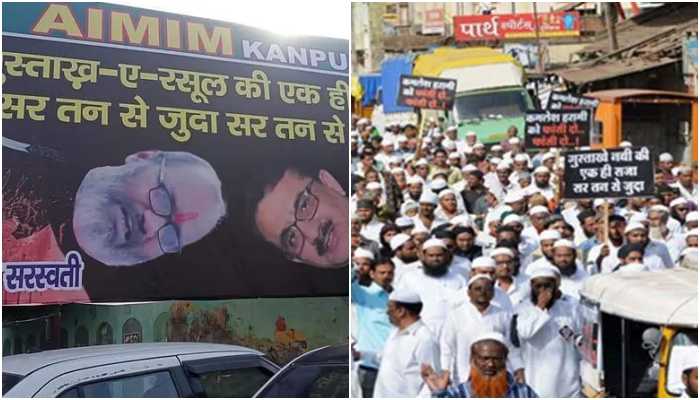
It is also notable here that the lack of a specific blasphemy law has not stopped fanatic Muslims from committing murder and arson in retaliation to alleged ‘insults’ to their prophet. In 2019, former Hindu Mahasabha leader Kamlesh Tiwari was murdered brutally in his home for his statements against Muhammad made several years earlier.

In 2020, a violent mob had gone on a rampage and torched two police stations in Bengaluru’s because an MLA’s relative had allegedly shared a derogatory Facebook post against Muhammad. In 2015, 12 people were killed in the office premises of French magazine Charlie Hebdo for the same ‘crime’.