Home Blog Page 468

Karnataka: BJP worker commits suicide in Bengaluru, blames Congress leaders, police in suicide note

A 35-year-old BJP worker from Madikeri, Karnataka, allegedly died by suicide in Bengaluru late Thursday night. Vinay Somayya was found hanging at his Nagawara office shortly after posting a detailed suicide note on WhatsApp and Facebook. In the thousand-word note, he accused several Congress leaders of harassment and claimed political pressure drove him to take the drastic step.

Vinay said he had been made admin of a WhatsApp group, “Kodagu Problems and Suggestions,” just days before a controversial message was shared. Though he denied any involvement, he said he was blamed and slapped with a politically motivated FIR, which tarnished his reputation.

He accused Congress leader Tenneera Maheena of deliberately spreading the case details and his photo to defame him. Vinay was recently arrested based on Maheena’s complaint, and said even after getting bail, police continued to target his family under orders from Congress MLA AS Ponnanna. He also denied accusations of instigating communal tensions, claiming he never made the alleged phone calls.

“I only forwarded a voice message and its screenshot. Why was an FIR filed against me, but not against the source?” he wrote, questioning the fairness of the case.

Vinay also alleged that Madikeri MLA Mantar Gowda scolded him for raising concerns about the Kushalnagar Government Hospital in a group chat, asserting he had proof that the MLA initiated the call.

He claimed a campaign was underway to paint him as a repeat offender, including attempts to label him a “rowdy.” He named Harish Poovayya for repeatedly posting defamatory content and added that efforts were being made to open a rowdy sheet against him.

Despite a High Court stay on the FIR, Vinay said the harassment didn’t stop. He also referenced another alleged suicide tied to Maheena’s family, urging a probe into the Congress leader’s role in that incident.

In an emotional appeal, he asked for support for his wife and daughter. “Even one rupee from each person will help their future. Please don’t let my family be harassed,” he wrote. He also thanked BJP leaders like Pratap Simha, KG Bopaiah, and Appachu Ranjan for their support.

Police have launched a preliminary investigation and sent the body for a post-mortem. While acknowledging the suicide could be linked to the FIR and arrest, they declined to comment on the detailed allegations.

BJP Slams Congress Over ‘Political Vendetta’

The BJP condemned the incident as a result of political persecution. Leader of the Opposition R Ashoka called it “100 per cent political revenge” and claimed the Kodagu administration had become a “Congress office.” He demanded the suspension of the district’s SP before any probe proceeds.

Legislative Council Opposition Leader Chalavadi Narayanaswamy also blamed the Congress and urged a CBI inquiry. “This is not an isolated case,” he said, calling for FIRs against MLA Ponnanna and his aide while rejecting any police or CID probe.

State BJP president BY Vijayendra expressed deep sorrow and demanded a fair, transparent investigation. “BJP workers have been constantly harassed since the Congress came to power,” he said, calling for legal action against those responsible.

Karnataka Home Minister Dr. G Parameshwara responded by assuring a thorough inquiry by the local DCP. “We will verify what’s been shared on social media. If the claims are true, action will be taken,” he said, adding that a review would happen regardless of motive.

As controversy continues over the Waqf Amendment Bill, read how Waqf properties are regulated by govt in other countries, especially Muslim nations

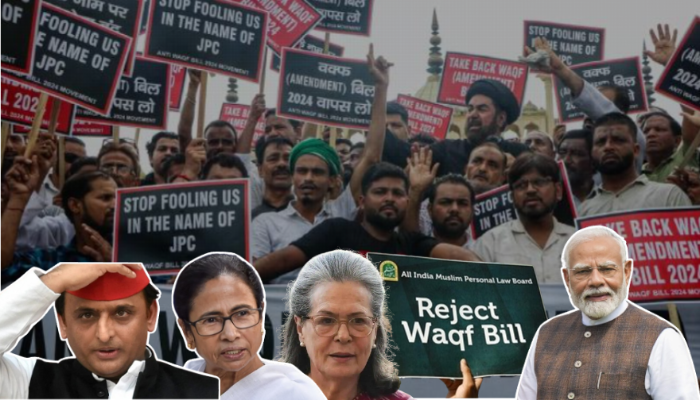
The Waqf Amendment Bill has been passed in the Lok Sabha and the Rajya Sabha on 2nd and 4th April, respectively. It seeks to improve the management of Waqf properties while incorporating measures to protect heritage sites and foster social welfare. This legislation is designed to streamline governance by increasing transparency in property management, facilitating better coordination between Waqf Boards and local authorities as well as safeguarding the rights of stakeholders.

The bill was reintroduced in the lower house by Kiren Rijiju, the Union Minister for Minority Affairs. He initially presented it in August last year, after which it was sent to a Joint Parliamentary Committee (JPC), headed by Bharatiya Janata Party (BJP) MP Jagdambika Pal for extensive examination. On 27th February, the JPC approved 14 amendments proposed by the members of parliament.

The JPC also launched a comprehensive public outreach campaign. According to reports, the committee received an astonishing 97,27,772 memoranda from both citizens and organizations. These consultations featured significant Muslim organizations such as Darul Uloom Deoband, Jamiat Ulama-i-Hind and different Jamaat factions, covering 10 cities across India. During these interactions, the committee met with 25 State Waqf Boards, local civil society groups and legal experts.

The report submitted by the house panel on 13th February received approval from the union cabinet on 19th February. The bill is poised to be enacted into law in the midst of uproar, misinformation, propaganda and threats from both opposition parties and Muslim leaders along with their ecosystem who are desparate to paint the development as “anti-Muslim” and “against the Constitution” for vote bank politics.

While certain groups are alleging discrimination, the Waqf maintains control over an extraordinary expanse of land across India, along with absurd claims over private and public properties as well as Hindu temples. Furthermore, in various foreign nations, including several Muslim-majority countries, the Waqf is subject to various legal regulations and degrees of government involvement. Consequently, the situation in India is neither rare nor novel, nor does it contravene the rights of any citizen under the Constitution and the following list of countries confirms the same.

How Waqf laws are amended, abolished or brought under government control: Saudi Arabia

A Council of Ministers resolution in 2010 created the General Authority for Awqaf (GAA), a government agency with autonomous legal and financial standing. Its objectives are to manage, conserve, develop and improve endowments in the Kingdom of Saudi Arabia. It has a direct organizational association with the Prime Minister. This is to meet the requirements of the endowers and strengthen their contribution to social and economic advancement and solidarity in line with the goals of Islamic (Sharia) law. 

The country’s endowment sector has gone through multiple phases of development and oversight. It commenced in 1961 with the founding of the Ministry of Hajj and Endowments after which the Supreme Council of Endowments Law in 1966 was enacted, followed by In the Charitable Endowment Act in 1973. The Ministry of Islamic Affairs, Endowments, Dawah and Guidance then took over endowment management in 1993 which lasted until 2010, when the Council of Ministers resolved to create the General Authority for Awqaf. The law was adopted on 9th December 2015.

The main tenet of the General Authority for Awqaf’s strategy is to serve as the endowment sector’s enabler and a platform for the realization of Saudi Vision 2030. Furthermore, the General Authority for Awqaf is in charge of overseeing, cataloging, registering and maintaining endowments in addition to carrying out associated tasks that support their growth in compliance with the guidelines established by the donors. The General Authority for Awqaf uses five pillars to execute out its strategy including:

  • Establishing the governance and regulations for the endowment sector, accomplishing a multiple goals such as issuing guidelines for endowment administration, reporting unidentified endowments, building endowment investment portfolios and handling infractions.
  • Directing banks to projects and activities that benefit the community, where the authority has set up many portfolios to address the requirements of the developing community.
  • Advancing the endowment industry with the goal of increasing understanding of its significance for social and economic advancement as well as the endowment workplace.
  • Increasing its financial resources by diversifying its sources of income through projects and programs meant to achieve growth and financial sustainability.
  • Building institutional capacities for the authority and developing the creation of an internal governance framework are two ways to improve institutional excellence.

The Awqaf Investment Company was established by the General Authority for Awqaf to act as the authority’s investment division. It was founded as a closed joint-stock business that helps endowments grow, improves the effectiveness of their investments, and guarantees consistent returns.

The Awqaf Riyadah Center was set up by the General Authority for Awqaf, which has developed the endowment sector’s components. The center’s objective is to strengthen the endowment sector by enhancing its knowledge and research capabilities, increasing developmental impact, and improving the elements of endowment regulation through advancements in research, comprehensive data sets, and innovative solutions.

Singapore streamlines Wakafs

A wakaf, as defined by section 2 of the Administration of Muslim Law Act 1966, is a permanent dedication by a Muslim of any movable or immovable property for any purpose recognized by Muslim law as pious, religious or benevolent, in accordance with Singaporean law.

A wakaf consists of a donor (the wakif) who hand overs his possessions (mauquf) via declaration (sighah). A mutawalli or trustee is then chosen to oversee the property. The capital, or the initial asset or assets, must be preserved by the trustee. The beneficiaries (muquf’alaih) only receive the revenue produced by the asset or assets. Each wakaf needs to register with Majlis Ugama Islam Singapura (MUIS), which is also in charge of keeping their record. It will gather the following details, among others, for registration reasons.

  • Complete details, including contact information, of the trustees.
  • A comprehensive list of beneficiaries (or categories of beneficiaries) and the purposes of the wakaf.
  • A detailed description of the wakaf properties that allows for their identification.
  • The total annual income generated from the wakaf properties.
  • The annual rates and taxes owed for the wakaf properties.
  • An estimation of the yearly expenses associated with generating income from the wakaf properties.
  • The funds allocated under the wakaf are designated for: (i) the compensation of the trustee and allowances for individuals, exclusively religious activities, charitable initiatives and pious endeavors and other related purposes.

All of Singapore’s wakafs are in the care of MUIS which also has broad authority over them all. For example, a person cannot be designated as a trustee under an instrument or declaration forming a wakaf until they have received previous written approval from MUIS. The trustees could be subject to terms and restrictions from MUIS regarding their appointment during this procedure.

Additionally, after every fiscal year ends, the trustee is required to prepare financial statements for the wakaf and maintain accurate accounts and records of its activities. It is necessary to submit these financial accounts to MUIS.

The police have the authority to request that MUIS provide information related to the wakaf, as stipulated by the Criminal Procedure Code 2010, if they deem such information essential for any investigation, inquiry, trial or other legal proceedings under the CPC.

Anti-Waqf sentiment in Turkish Republic

The waqfs faced hostility from the Turkish Republic’s leaders. The primary focus of this animosity was Islamic brotherhoods, but waqfs were also targeted by the because it was charged that they funded the former. The removal of the waqfs was one of the biggest promises offered by multiple parliamentary candidates in the general elections of 1931. Furthermore, all of this was consistent with the party’s doctrine. A 1939 article noted that this massive sale of waqf estates was consistent with the Peoples’ Party’s “for the people” slogan.

The Committee for the Abolishment of the Waqfs was established in 1937. Once it was understood that a significant portion of the waqf properties could be claimed, the ministries, particularly the Ministry of Education and the Ministry of Interior, started to vie for these assets. Educational institutions affiliated with mosques could be claimed by government agencies. If the waqfs wished to benefit from the rental income of these properties, they were required to pay the local authorities the market value as assessed. This regulation initially facilitated the confiscation of waqf properties without compensation, subsequently allowing the original owners to repurchase their long-held assets at market rates.

The declaration that the Ministry of Finance would be responsible for collecting waqf revenues was a critical step toward eliminating the financial autonomy of the Waqfs. The Tanzimat era (1830s) witnessed this move, which left the Waqfs entirely at the Ministry of Finance’s mercy financially. The Ministry of Education receives the revenues and assets from all education-related waqfs. In 1954, a significant republican decision led to the abolition of all cash waqfs, and the confiscated capital was utilized to fund the Bank of the Awqaf.

Previously, Law 429 on the Abolition of the Ministries of Waqfs and Islamic Law and Military Affairs disbanded the Ministry of Waqfs and Islamic Law on 3rd March 1924. When the Civil Code was passed in October 1926, the term “Waqf” was changed to “Foundation.” The Ministry of Education took control of waqf schools and madrasas, while waqf water sources were assigned to local authorities or municipalities. Furthermore, waqf cemeteries were designated to municipalities, waqf forests were appropriated by the Ministry of Forests, dervish lodges were closed and other waqf assets were entirely dissolved.

Waqfs developed after the republic’s declaration were primarily focused on education, culture, health, and social welfare. Examining, updating, and managing the waqfs that were left over from the Ottoman Empire was considered a key objective in the early republican era. In 1929, Swiss law professor Hans Leemann was asked to draft a waqfs regulation to achieve this goal which was later imposed as Waqf Code 2762 on 5th June 1935.

The General Directorate is currently in charge of managing, restoring and using Waqf properties. Additionally, it guarantees that Waqf funds are allocated to public welfare initiatives. The country underwent considerable revisions to conform to secular norms.

Waqf’s ministry under the control of Parliament in Egypt

The Ministry of Waqf, responsible for Islamic endowments in Egypt, came under the direct authority of the Egyptian parliament in 1924. Earlier, Muhammad Ali’s policies regarding waqfs in the initial phase of his rule (1805 to 1848) were designed to improve his control over land tenure and tax collection. At the time, he did not seek to infringe upon waqfs that originated from the private property of their founders.

Instead, he targeted waqfs with dubious legal status, especially those consisting of endowed fertile land that had originally been part of the state’s holdings. The uncertain legal status of these waqfs allowed the ruler to reclaim the land. In this regard, Muhammad Ali emulated the actions of those who came before him. He mandated that the holders of land waqfs demonstrate their ownership, following the declaration of state ownership over land properties.

Another initiative by Muhammad Ali regarding this issue was carried out during the cadastral survey conducted between 1812 and 1814, which was approached in a similar manner. In 1812, his son, Ibrahim Basha, mandated a survey of all waqfs allocated for “mosques, piety, and charity,” imposing a tax amounting to half of the standard land tax on these properties. Later, in 1814, the owners were required to validate the origins of their properties. If any land beyond what was recorded in the title deed was identified, that surplus would revert to state ownership.

The land’s initial area was recorded under the name of its founder, its real owner and cultivator. All waqf lands were subject to standard taxation, with the exception of those whose owners could present new title deeds issued during the “White Days” (13th, 14th, and 15th days of each month in the Islamic calendar) and thereafter. In these instances, only half of the tax was necessary.

Modern Waqf system in Lebanon

The management of Waqf properties has undergone significant changes due to numerous legal reforms, especially during the Ottoman era and the French Mandate. Consequently, these properties are now administered by the Directorate General of Islamic Waqf, under the Ministry of Endowments and Islamic Affairs. Meanwhile, Dar Al-Fatwa supervises religious and endowment matters, which encompass endowments, mosques, zakat, and charitable activities.

The ministry has to oversee the administration of Waqf properties, guaranteeing their appropriate utilization, and supervising the allocation of Waqf revenues for philanthropic endeavors as initiatives are underway to modernize Waqf management by implementing digital solutions and enhancing transparency and efficiency.

Muslims formed family waqfs to allocate the income generated from their assets to their relatives. Should the family become extinct, these funds typically revert to assist the impoverished. However, a discussion regarding the elimination of family waqfs began in the Levant and Egypt in the early 1900s. The first decade of the twentieth century saw the beginning of the discussion about abolishing family waqfs in Egypt and the Levant. In Lebanon and Syria, which fell under French Mandate following the collapse of the Ottoman Empire, the debate was sparked by a proposal from the Director of the Waqf Directorate aimed at abolishing family waqfs.

The push to do away with the family waqf was a recurring theme in the contemporary discourse of progress and evolution. Appeals for betterment and enlightenment always came before demands to reform waqf. Improvements for property such as the waqf took the form of proposals to “free” its movement from what were viewed as antiquated restraints.

Professionalised Waqf in Oman

The Omani Waqf Establishment was launched to professionalize waqf practices, and the Ministry of Endowments and Religious Affairs (MERA), also called the Ministry of Awqaf and Religious Affairs (MARA), is in charge of managing and supervising all issues pertaining to waqf (endowment) properties and religious affairs in Oman. The first mosque in Oman, the Al-Midmar Mosque, was constructed in about 627 A.D. by Mazin bin Ghadouba, a disciple of the prophet Muhammad.

Waqf was restricted to constructing and remodeling mosques at the period. Later, Omani people expanded its scope to include aiding the underprivileged and other philanthropic endeavors. In Oman, there are currently more than thirteen different kinds of waqf, including those for grave care, education, mosques and Quran schools. Imams were in charge of awqaf until recently. An organization devoted to the administration of awqaf was founded in 1950 by Sultan Said Bin Taimur. The entity changed its name to the Ministry of Awqaf and Religious Affairs in 1997.

Ministry of Islamic Affairs controls Waqfs in Kuwait

The management of Waqf properties in Kuwait falls under the jurisdiction of the Ministry of Awqaf and Islamic Affairs. However, the regulation governing the Ministry of Awqaf and Islamic Affairs was amended by the government. It was renamed the Ministry of Islamic Affairs. Waqfs have been instrumental in providing support for religious, educational and social services in the country. The ministry is dedicated to the development and is tasked to lookafter Waqf assets, which encompass mosques, educational institutions, and healthcare facilities. To ensure its relevance in 2024, the ministry is also focused on modernizing Waqf management through digital initiatives aimed at enhancing transparency and efficiency.

Habib Bourguib abolished Waqfs

After gaining independence in March 1956, Habib Bourguiba’s efforts to build the Tunisian state involved implementing reforms that abolished the Bey institutional and legal system. He eliminated the religious courts, abolishing Sharia in 1956 and rabbinical courts in 1957. On 13th August 1956, he enforced the Code of Personal Status (CSP), which officially severed ties with conventional Muslim legal practices. Furthermore, in May and July of 1957, he dismantled habous (mortmain properties), some of which had been designated for charitable or religious purposes. Ultimately, the Zaytuna mosque-university, one of the primary hubs of Islamic education in the Maghreb, was disbanded by the decrees of 29th March 1956 and 1st October 1958.

Separate Waqf boards in Iraq

The Sunni Endowment Office and the Shiite Endowment Office, which were founded following Saddam Hussein’s overthrow in 2003, are in charge of monitoring Waqf in Iraq. Their management is centralized, and Sunni and Shiite endowments have their own offices. Iraq’s Waqf administration is split along sectarian lines (Sunni and Shiite).

Waqf under federal agency in UAE

The General Authority of Islamic Affairs and Endowments, sometimes referred to as Awqaf is in charge of waqf properties and federal laws regulate the waqf system in the United Arab Emirates. Waqf holdings, which are religious endowments under Islamic law, are governed by the body which is a federal organization in the country.

Centralised Waqfs in Syria

The Ministry of Awqaf in Syria is charged with the oversight of Waqf properties, ensuring they are utilized correctly and that the revenues derived from them are distributed for charitable purposes. The management of Waqf is centralized under this ministry.

Similar measures in other countries

The French acquired control of the habous (Islamic endowment) in Algiers and Morocco in 1830. In other regions, the government the government tightened its control regulations. Waqfs, which had been in Muslim areas of Russia for centuries, were seized and deemed state property during the revolution.

Muslim populations in various European nations, like France, Germany and the United Kingdom, own religious properties, although they are not officially recognized as “Waqf Boards.” The majority of holdings are registered under the names of Islamic Foundations or Muslim Charity Trusts.

In his work “Outlines of Muhammadan Law,” Professor Asaf A.A. Fyzee provides insight on the advancements regarding waqf in many nations and wrote, “The importance of the institution will be better understood if we take into consideration the enormous extent of waqf/land or, the possessions of the Dead Hand, in the various countries of Islam. In the Turkey of 1925, three-fourths of the arable land, estimated at 50,000,000 Turkish pounds, was endowed as waqf.”

“At the end of the 19th century, one-half of the cultivable land in Algiers was dedicated. Similarly, in Tunis one-third and in Egypt one-eighth, of the cultivated soil was ‘in the ownership of God’. But it was already realised by the beginning of the 20th century, first by France and later in Turkey and Egypt, that the institution of waqf was in some respects a challenge to the natural growth and development of the national economy,” he added.

He further conveyed, “We must consider briefly the advantages and disadvantages of the institution. The religious motive of waqf is the origin of the legal fiction that waqf property belongs to Almighty God; the economic ruin that it brings about is indicated by the significant phrase The Dead Hand.’ Waqf to some extent ameliorates poverty, but it has also (another) side. When a father provides a certain income for his children and descendants, the impulse to seek education and the initiative to improve their lot gradually decrease.”

Fyzee then noted, “Charitable aid often keeps people away from industry, and lethargy breeds degeneration. Furthermore, some people who desire fame by making foundations and endowments obtain property by shady means, amounting even to extortion and exploitation. Agricultural land deteriorates in the course of time; no one is concerned with keeping it in good trim; the yield lessens, and even perpetual leases come to be recognised. In India, instances of the mismanagement of waqfs and of the destruction of waqf have often reached the courts.”

Conclusion

The introduction of the Waqf concept in India reportedly occurred during the Delhi Sultanate, with its development peaking during the rule of Firoz Shah Tughlaq. Nevertheless, it was after India’s Independence that its extensive powers were established through various legislative actions by Parliament. In 2013, just a year before Prime Minister Narendra Modi came to power, the Congress-led UPA (United Progressive Alliance) government enacted the Waqf (Amendment) Act, which conferred sweeping powers upon the Waqf Board.

Notably, the Waqf Act, established in 1955, was designed to oversee the management of Waqf properties and guarantee their appropriate use for their intended purposes. However, both the original act and its 2013 amendment have proven ineffective, resulting in problems such as unlawful land occupation, mismanagement, disputes over ownership, delays in registration and surveys and an increase in litigation and complaints.

The Waqf Inquiry Committee’s suggestions were incorporated into the Waqf (Amendment) Act, 1984, marking the sole attempt to modernize India’s Waqf system. Among other things, it allowed for the creation of Waqf Tribunals, the reconstitution of Waqf Boards with new powers, the appointment of many committees and appointments as well as the expansion of the authority of the Waqf commissioners. However, political realities and strong opposition prevented modernization from happening.

According to government data, Waqf Boards oversee 870,000 properties covering an area of 940,000 acres throughout India, with an estimated worth of ₹1.2 lakh crores. India holds the distinction of having the largest waqf holdings globally. Additionally, the Waqf Board ranks as the largest landowner in India, following the Armed Forces and the Indian Railways. The Waqf Board has recorded a total of 872,328 immovable properties and 16,713 movable properties.

Additionally, there are 356,051 Waqf Estates registered with the board. The inability to appeal Waqf tribunal decisions in higher courts hinders transparency and accountability within its management. Therefore, addressing the glaring injustices became a pressing necessity for the central government. This crucial advancement is expected to help resolve the longstanding challenges, despite the bogus propaganda.


Krishna Janmabhoomi: SC hears Muslim side appeal against Hindu side’s plaint that ASI protected place can’t be used as a mosque, says it will examine it on merits

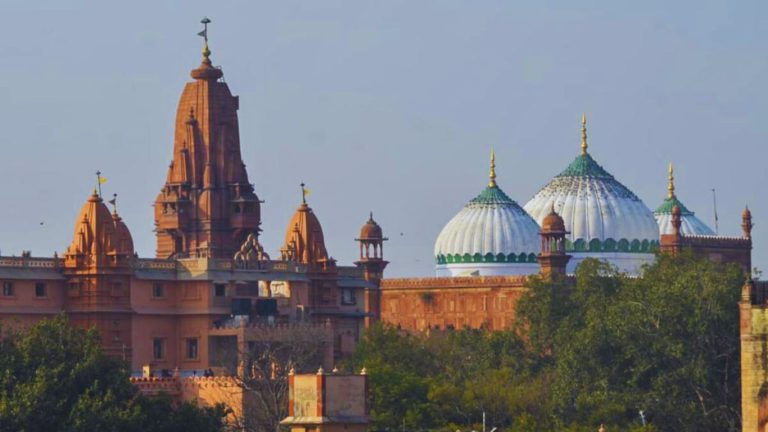
The Supreme Court on Friday (4th April) heard an appeal filed by the Muslim side in the Krishna Janmabhoomi dispute challenging an Allahabad High Court order, which allowed the Hindu side to amend their plaint to implead the Archaeological Survey of India (ASI) in the case.

The Hindu side had said that the Shahi Idgah cannot be used as a mosque and that the Places of Worship Act did not apply to the disputed structure as it is ASI protected. The Supreme Court said that it will examine the Hindu side’s claim on merits.

“As far as the question of whether the ASI protected place can be used as a mosque is pending before us. We had stated that no effective interim order be passed, and you never told this to the High Court. This will have to be dealt with in other matters on merits,” a bench of the Chief Justice of India, Sanjiv Khanna and Justice PV Sanjay Kumar reportedly said. The Supreme Court issued notices to the Hindu side on the appeal.

The Apex Court observed that the order of the High Court to allow the Hindu side to amend the plaint seemed prima facie correct. “You have the right to amend the plaint and implead parties. No parties, retrospective or not is a separate issue. They can also amend the plea and raise the issue in replication that the Places of Worship Act will not apply. That is why the impugned order appears to be correct. It’s not a new case. He is entitled to challenge it when you raise a new defense,” the Supreme Court noted.

The Muslim side opposed the amendment of the plaint, fearing it would nullify their defense

The Hindu side had sought permission from the Allahabad High Court to amend their plaint to include the claim that the disputed structure cannot be used as a mosque, and that the Places of Worship Act, 1991, cannot apply to the structure as it was declared as an ASI-protected site by a 1920 notification issued by the Lieutenant Governor of the United Province under Section 3 of the Ancient Monument Preservation Act.

The Muslim side opposed the amendment of the plaint by the Hindu side, arguing that it was an attempt to nullify the defense taken by the former, which relies on the Places of Worship Act.

“The proposed amendments show that the Plaintiffs are attempting to negate the defense taken by the Defendant that the Suit is barred by the Places of Worship Act 1991 by setting up a new case. The Plaintiffs are amending their Plaint, to try and wriggle out of the defense taken by the defendant that the suit is barred under the Places of Worship Act, 1991,” the Muslim side contended.

The High Court, however, allowed the Hindu side to amend their pleadings and add ASI as a party. “Let the amendment be incorporated in the plaint within a month. The defendant may file an additional written statement within two weeks of incorporation of the proposed amendment by the plaintiffs,” the High Court said in its order.

The case, along with related matters, will be heard on 8th April.

From renting away Waqf land for personal gains, siphoning funds and bribery: How various Waqf Boards have been marred in corruption and irregularities in India

In a historic move, the Lok Sabha passed the Waqf (Amendment Bill) on 3rd April 2025, with a 288-232 votes, aimed at overhauling the management of Waqf properties across India. Soon after, the bill was also cleared by the Rajya Sabha. While the so-called ‘secular’ opposition parties continue to decry the Waqf Bill as an ‘assault’ on Muslim rights and their religious freedom alongside constitutional values, the bill, in reality, is a long-overdue correction to rein in rampant corruption enabled by the existing Waqf Act 1995.

Emboldened by the unchecked powers bestowed on Waqf Boards by the Congress government in the Waqf Act 1995, a slew of audacious irregularities and acts of corruption, ranging from sprawling land grabs and shadowy encroachments to forging fake land deeds, have been committed by Waqf authorities in various states of India

OpIndia has brought to its readers a compilation of 21 cases exposing a sordid saga of corruption in the name of Waqf. This compilation offers a deep dive into the murky depths of the Waqf scandals that contributed towards pushing the Modi government to reform the laws and strip Waqf Boards of their unwarranted and discriminatory powers.

Misappropriation of  ₹4 crore by former Karnataka Waqf Board CEO

In July 2024, the High Grounds Police in Karnataka’s Bengaluru registered an FIR against the former CEO of the Waqf Board, Zulfiqarulla. The case was registered under Sections 403 (criminal misappropriation of property), 406 (criminal breach of trust), 409 (criminal breach of trust by public servants) and 420 (cheating), based on the complaint lodged by Chief Accounts Officer Mir Ahmed Abbas accusing Zulfiqarullah of misappropriating Waqf funds eight years ago.

The complaint stated that the government had taken over the property of the Kalaburagi dargah belonging to the State Waqf Board and paid ₹2.29 crore and another ₹ 1.79 crore from the Muzrai department. The total amount worth ₹4 crore was transferred to the Waqf Board bank account in November 2016. The accused former Waqf Board CEO Zulfigarulla allegedly transferred the money to other accounts between October 2021 and February 2024 in 54 transactions. Names of the Bagalkot Deputy Commissioner and the tourism development committee president also emerged in this case.

Former Madhya Pradesh Waqf Board head and Congress leader Riyaz Khan misused Waqf properties for personal gains

In July 2024, the Madhya Pradesh Waqf Board issued a notice to Congress leader Riyaz Khan for the recovery of Rs 7 crore. After the complaint, an FIR was also registered against Riyaz in the Kharakuan police station. Riyaz Khan, who was the head of the Ujjain Waqf Board for around 26 years, was allegedly extorting money from shopkeepers located on the Waqf Board’s land. Khan began as a tea-seller. However, during his time as head of the Waqf Board in Ujjain, he amassed huge wealth, including three bungalows. After corruption allegations were levelled against him, Riyaz Khan went into hiding, and the police placed a ₹5000 bounty on him.

In its notice issued to Congress leader Riyaz Khan for recovery of siphoned funds to the tune of ₹7 crore 11 lakh, the Waqf Board said that Khan siphoned ₹ 7 crore 11 lakh from the year 2006-07 to the year 2022-23. The Waqf Board constituted an inquiry committee on 2 August 2023 to investigate Riyaz’s tenure. The investigation found that 115 shops, 2 school buildings and 5 office rooms were constructed at Madar Gate as Waqf property. Khan collected rent for many years by intimidating shopkeepers, but neither did he inform the board about it nor did he account for the funds he collected. The Congress leader used Waqf property as his private property and earned unauthorized profits from it.

Sunni Central Waqf Board in UP’s Saharanpur earned undeclared income worth ₹7.5 crore from 183 Bigha land

In June 2024, a case of embezzlement of income tax worth crores from 183 bigha Waqf land in Chilkana in Uttar Pradesh’s Saharanpur district. Commissioner Hrishikesh Bhaskar Yashod had directed the DM to initiate an investigation into the matter after a complaint was submitted by a local resident, Hakim Ali. Sunni Central Waqf Board has about 183 bighas of land of Waqf number 322, 121 in Firozabad village. Every year, a traditional fair of Dargah Sharif is organized on this land, and there is also a brick kiln on the said land. The complaint letter said that this land generates an annual income of about ₹ 50 lakhs. In 15 years, an accounting income of about ₹ 7.5 crores was earned.

Former Mutawalli sold Waqf land worth ₹20 crores fraudulently in UP’s Kanpur

In the Dalelpurva area under Anwarganj Police Station precinct of Kanpur, Uttar Pradesh, a former Mutawalli Shadab Khan illegally sold the Waqf Board’s 5000 square metre land worth ₹ 20 crores. Khan was in-charge of Waqf property in this area from 2001 to 2024. The District Minority Welfare Officer, Pawan Kumar, lodged an FIR against 10 people, including the former Mutawalli, at the Anwarganj police station in June 2024. The investigation in this case was handed over to the SIT. The team took some documents into its possession.  The matter first came to light after the new Mutawalli Mohammad Wasim took charge.

During the investigation, it was found that 1254 sqm of land of Arzi number 1053, 1054 was shown to have been purchased in his name. On this basis, four agreements of 1974.69 sqm land of 89/208 Baby’s Compound, Dalelpurwa and two deeds of 236.138 sqm land were made, and a total of 2210.828 sqm land was sold. Mutawalli Shadab Khan had prepared a proposal to exchange the Dalelpurwa waqf property with a property in Indiranagar and sent it to the Waqf Board.

Waqf Board’s Mutwalli illegally constructed 16 shops on Waqf land and sold them for personal gains in UP’s Amroha

In June 2024, a case of fraud was reported in Uttar Pradesh’s Amroha wherein Anwar Sibtain, the Mutawalli of the Uttar Pradesh Shia Central Waqf Board Lucknow, first illegally constructed 16 shops on Waqf land and then sold these shops. This enraged the local Shia community. In this sequence, on May 2nd 2023, the Additional Survey Commissioner Waqf Uttar Pradesh directed the board to investigate the illegal construction and take action.

During the investigation, Anwar Sibtain told in his explanation that he had got the construction done after getting permission from the board, however, he did not attach a copy of any order of the board with the explanation. While a photocopy of a forged letter of the Chief Executive Officer was submitted on 9 May 2023, which is not in the records of the board. After this, the Waqf Board considered the evidence presented by Anwar Sibtain baseless and ordered the District Magistrate and Additional Survey Commissioner, Waqf Amroha, to seal the shops built on the Waqf property. In addition to illegal construction and sale of 16 shops on Waqf land, Anwar Sibtain was also involved in other financial irregularities during his tenure.

Delhi Waqf Board official misappropriated Waqf property worth ₹100 crore

In September 2024, the Enforcement Directorate arrested Aam Aadmi Party (AAP) MLA and Delhi Waqf Board Chairman Amanatullah Khan in connection with a money laundering case. An FIR was filed by the Delhi Anti-Corruption Branch (ACB), and in September 2023, the ACB officials arrested him for alleged financial mismanagement and other irregularities within the Delhi Waqf Board. 

According to the ACB, the initial FIR in this case was filed in January 2020. It was filed under Section 7 of the Prevention of Corruption Act, along with Section 120B of the Indian Penal Code (IPC). They later invoked Section 13 of the Prevention of Corruption Act and Section 409 of the IPC.

During the investigation, a witness revealed several issues related to the tenancy of Waqf properties. The witness said that in 2021, he submitted a bid of Rs 30,000 for a Waqf Board shop at Fatehpuri Masjid. His bid was the highest but he was still asked to pay ₹ 10 lakh. He was then instructed to withdraw his bid when he refused to pay Rs 10 lakh for the shop. According to the Investigative Officer in court, Amanatullah Khan subsequently accepted a lower bid of Rs 19,000 from another bidder which led to financial loss for the Delhi Waqf Board.

In another case, the ED has alleged that ₹36 crore was laundered into properties by the AAP leader’s agents. Amanatullah Khan is also facing a case for illegal appointment of members to the Waqf board, causing a loss to the exchequer. Besides, Khan also allegedly siphoned money collected for Delhi Riot victims through the Waqf Board, and bought property in his second wife’s name.

Punjab Waqf Board officer Layak Ahmed caught taking bribe in Bhatinda

In March 2024, Layak Ahmed, Executive Officer, Punjab Wakf Board, posted at Bathinda, was caught red-handed taking a bribe of ₹15000. The Punjab Vigilance Bureau caught the corrupt Wakf Board official after a complaint was filed by one Narinder Singh Monga. The complainant alleged that Layak Ahmed demanded Rs 50,000 as a bribe in lieu of providing land on lease in Bathinda. The accused Waqf Board official agreed to take ₹ 20,000 as advance money alongside two blank cheques from the complainant. The vigilance team laid a trap and caught Layak Ahmed demanding and accepting ₹ 15000 bribe.  

Himachal Pradesh Waqf Board official Sadiq Mohammad caught demanding bribe

In January 2023, Vigilance Bureau officials caught Sadiq Mohammad, posted as Estate Officer at the Waqf Board in Shimla, demanding ₹ 1,25,000 as a bribe from a man in exchange for renewal of his lease agreement of a house. The accused was arrested after a case was filed against him under Section 7 of the Prevention of Corruption Act. The Vigilance Bureau officials revealed that Sadiq Mohammad had already taken ₹25,000 as bribe and was further demanding ₹1 lakh.

Assam Waqf Board officials illegally sold waqf lands

In January 2023, it was reported that the Assam Waqf Board was at the heart of several scams during the years 2021-2022. Ashraf Ali, former president of Assam Goria Moria Yuva Chhatra Parishad Muslim Organization, had filed a case in CM Vigilance, which directed the Waqf Board itself to investigate the matter. Back then, complainant Ashraf Ali had alleged that although an investigation was initiated in the Waqf Board irregularities, no concrete action was taken.

Assam Waqf Board transferred Waqf land to private companies in the Cachar district

Back in 2014, an Assam Waqf Board beneficiary, Ataur Rahman Barlaskar, approached the Guwahati High Court alleging that the state waqf board transferred waqf land to private companies in Cachar district. He alleged that waqf properties as vast as 3000 Bighas which included a tea garden in Barak Valley, were illegally transferred to private housing companies.

As per the data, the Assam Waqf Board’s total worth in 2014 was ₹15,000 crore, and its annual revenue ranged between ₹50,000 to ₹1.5 lakh, however, government records showed that Waqf properties should generate a revenue of at least ₹ 1000 crore annually.

Delhi Waqf Board officials accused of committing irregularities in recruitment and appointment of 33 contractual employees

In the year 2022, the Delhi Lieutenant Governor VK Saxena recommended that the Union Home Ministry launch disciplinary proceedings against IAS officer and former Delhi Waqf Board CEO SM Ali for allowing illegal resolutions of the board. The CBI had revealed that Ali executed the “illegal” resolution passed by the board for Mehboob Alam’s appointment as CEO, and also formally handed over the charge to him as his successor. The probe agency had alleged that an advertisement published for the post of CEO was in violation of the Delhi Waqf Act and Rules. This also formed the basis for appointing other staff on a contractual basis. The board not only gave post facto approval to the “illegal” advertisement, but also approved the “illegal” appointment of Alam as its CEO based on that advertisement.

Illegal transfer of Waqf land in Karnataka

According to a report from a committee in Karnataka, 29,000 acres out of a total of 54000 acres of Waqf land were leased for commercial use. This report, presented in 2012, stated that Muslim leaders usurped waqf properties worth ₹ 2.35 lakh crore and used them for commercial purposes. Notably, Waqf is the permanent donation of any movable or immovable property by a Muslim to any purpose recognised by Muslim law as pious, religious, or charitable.

The report stated that the Karnataka Waqf board had been allotted 54,000 acres worth Rs 410 lakh crore with 33,741 registered properties in the state, for religious or charitable purposes, however, the former Waqf Board heads misused assets, encroached, unlawfully disposed of, mismanaged, and indulged in fraudulent actions in Gulbarga, Bangalore Urban, Bangalore Rural, Ramanagaram, and Koppal in collusion with senior Congress politicians.

Pune Waqf Board scam worth ₹7.7 crore

In 2021, the Enforcement Directorate arrested two people after conducting raids in Maharashtra’s Pune and Aurangabad in connection with the Pune Waqf Board Scam Case involving an illegal deal of Tabut Inam Endowment Trust worth ₹7.7 crore. The accused duo had submitted forged documents, including an NOC of the Waqf Board and claimed a demand draft of ₹  7,76,98,250. This amount was deposited in a personal account. In a similar case registered at  Bund Police Station in Maharashtra in 2021, Imtiaz Shaikh and Chand Mulani were arrested over accusations of impersonating as the president and secretary of Tabut Inam Endowment Trust and submitting a forged document of the state Waqf Board, showing its consent to their appointment. Consequently, the collector’s office released an amount of money to them instead of the trust members.

₹100 crore Waqf land scam in Aurangabad

In Maharashtra’s Aurangabad, AIMIM leader Imtiaz Jaleel, who is currently at the forefront of opposing the now-passed Waqf Amendment Bill, had back in 2021 alleged that Waqf authorities in the city had allowed illegal development and sale of a waqf land on the Jalna Road. It was alleged that illegal transactions in this case were to the tune of ₹ 100 crore.  

“In 1964, a firm, Kailash Motors, took one lakh square feet of land facing Jalna road on an 11-year lease. When the issue of giving land on long lease in violation of law cropped up in 1995, the waqf authorities and the then waqf board members and Mutawallis prepared a rent agreement in March 1996,” Jaleel said back then.

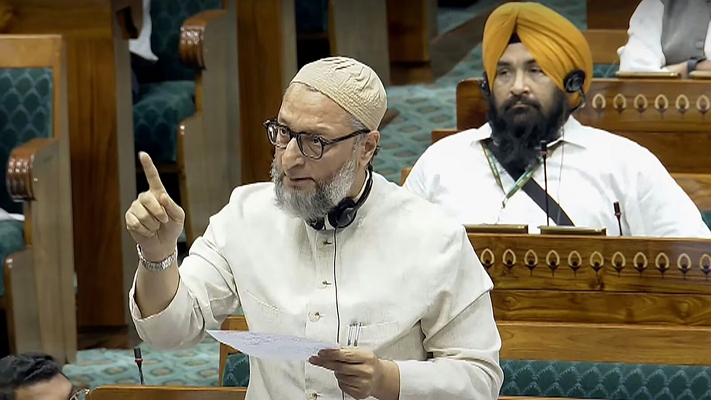
Amusingly, the case raised by Imtiaz Jaleel demonstrated that Waqf Board officials are involved in corruption and yet when the Modi government brings a law that essentially curbs this corruption and streamlines the functioning of Waqf Boards, Jaleel’s party vehemently opposes the reform so much so that its supremo Asaduddin Owaisi tears a copy of the Waqf Bill in Lok Sabha. Perhaps, Muslim votes are more important than transparency in Waqf-related matters.

Multi-crore scam in Punjab Waqf Board

Back in 2019, it was reported that IAS officer and Punjab Waqf Board CEO Shaukat Ahmed Pare exposed a massive scam in the state Waqf Board and suspended Kharar’s estate officer Mohammad Rizwan.

This case is from 2015, in which the Waqf Board was to get about 12 crore rupees in exchange for the land given in Kharar NHA. In this case, the court’s decision came against the Waqf Board and the court ordered to give three-fourths of the amount of ₹12 crores to the lessees, whereas on the contrary three three-fourths of the amount was to go to the Waqf Board. Back then, the CEO said that the board received about 6.5 crore rupees through SDM Kharar, and ₹ 3.5 crore was about to be released, but they caught it in time. He added that the Wqf Board suffered huge losses due to this scam.

Conspiracy to appoint non-eligible staff in an MSS Waqf Board-run college in Madurai

In 2019, CBI conducted raids at the residence of AIADMK MP Anwar Raajha’s Ramanathapuram residence, the Tamil Nadu Waqf Board premises in Chennai and the MSS Waqf board-run college in Madurai. The FIR in this case stated that Jamal Mohideen, the then secretary and correspondent of the MSS Waqf board college in Madurai, had criminally conspired with Anwar to appoint non-eligible staff who were without National Eligibility Test or State Level Eligibility Test clearance at the college between October 2017 and November 2018. The accused persons had demanded and accepted illegal payments amounting to ₹  35 lakhs from non-Muslim and ₹  30 lakhs from Muslim candidates. During this time, 30 appointments were made.

Mohd Imtiaz, Ziauddin and Wahaj Khan forged NOC  for the endowed Telangana Waqf Board land

In December 2018, the Abids Police Station in Telangana’s Hyderabad registered a case after it emerged that a fake No-Objection Certificate (NOC) of 4 acres of Waqf land was issued. The NOC fraudulently obtained by the accused Mohammad Imtiaz, Mohammad Ziauddin, and Mohammad Wahaj Khan declared that Dargah Hazrat Pir Mehmood is not a Waqf property. These accused persons were also involved in two other similar cases pertaining to waqf properties.

Congress leader illegally colonised Waqf land in Bathinda

In 2017, an FIR was registered against Congress councillor Rajesh Kumar Gandhi and four others for the illegal colonisation of the Wakf Board’s 18-acre land in Bathinda. Regarding this case, the district court had said back then, “The defendants are illegally and forcibly raising construction over the suit land without any authority and permission of the plaintiff [Waqf Board].”

West Bengal waqf scam worth ₹1000 Cr under CBI scanner

In 2012, the CBI launched an investigation into an alleged ₹1000 crore West Bengal state Waqf Board fraud. According to State Waqf Board records, the total number of registered waqf properties with the State Waqf Board is 8,160. There are 7352 public Waqf Estates and 808 Aulad Waqf Estates. The panel discovered that nine Waqf estates changed hands between 1980 and 1985, and 117 between 1986 and 1995. 28 were sold, 47 were leased, 21 were exchanged, and 30 were handed over to promoters.

Telangana State Wakf Board misrepresented a portion of the Waqf property to lease it out

In 2016, Telangana State Wakf Board officials Mohammad Asadullah and others were accused of illegally misrepresenting a portion of waqf property as an empty shop in an advertisement inviting bids for the ‘shop’ to be given on lease. The ‘shop’ was a portion in the Waqf Board’s Naal-e-Mubarak ashoorkhana in Pathergatti.

Notably, leasing out a Naqqarkhana is illegal since it would change the nature of waqf, which is prohibited under the Waqf Act of 1995.

Delhi Waqf Board scam worth ₹ 286 crore

In 2016, the Delhi Waqf Board accused its former chairman Chaudhary Mateen Ahmad of leasing 62 bighas of land to a private developer for a meagre annual rent of Rs 15,000, thus causing a huge loss to the board. Back in 2006, Mateen Ahmad entered into an agreement with a private developer and gave away the land in the Narela area for a donation of Rs 1.10 crore and a rent of 25 paise per square yard for an indefinite period. The terms of this agreement, however, were in violation of the Waqf Act (1995).

Conclusion

This compilation of corruption in Waqf Boards is a mere drop in the ocean. There have been numerous reported and unreported scams involving Waqf properties. This rampant corruption has only benefited the privileged Muslim elite. Besides, corruption within Waqf Boards, the unchecked powers handed to them by the Congress government in 1995 have also emboldened Waqf Boards to arbitrarily claim ownership of lands, houses, villages, colleges and nearly anything under the sun. Corruption and political patronage made Waqf Boards unimaginably stronger, all while Muslim appeasing politicians projected Muslims as ‘oppressed minority’.

The abovementioned 21 corruption cases are a stark testament to the rot festering within the Waqf Boards across the country. Several such cases paint a chilling picture of greed masquerading as ‘guardianship’ all in the name of religion. From illegal land grabs, bribes to forged documents, these scams reveal not only the violation of law but a systematic plunder committed by a privileged few, that has thrived in the shadows of an outdated, outrageous and discriminatory law.

As the dust settles on the Waqf Amendment Bill 2025, its promise of stricter oversight, digitised records, transparent audits, and increased accountability could significantly curb, if not completely eradicate, this Waqf corruption menace, given its implementation matches its intent.

AIMIM Chief Asaduddin Owaisi approaches Supreme Court against Waqf Amendment Bill, Congress to move top court challenging constitutionality of the bill

0

All India Majlis-e-Ittehadul Muslimeen Chief and Hyderabad MP Asaduddin Owaisi has approached the Supreme Court against the Waqf Amendment Bill 2025.

The bill passed in both Lok Sabha and Rajya Sabha now awaits President Droupadi Murmu’s assent to become an act.

All India Muslim Personal Law Board, in a post on X, vowed to hold protests nationwide against the Bill.

“The government’s stance regarding the Waqf Amendment Bill 2025 is regrettable. The All India Muslim Personal Law Board will soon undertake nationwide protests and legal action against the Waqf Amendment Bill 2025,” the AIMPLB said.

Earlier today, Congress Lok Sabha MP Mohammed Jawed moved the Supreme Court against the Waqf Amendment Bill.

Congress MP and party General Secretary in charge of Communications Jairam Ramesh today announced that the party will soon challenge the “constitutionality” of the Waqf Amendment Bill in the Supreme Court after it was passed in the Parliament in the early hours today.

In a post on the social media platform X, the Congress leader outlined the party’s ongoing legal actions, stating that the party was already challenging several laws in the Supreme Court, including the Citizenship Amendment Act (CAA) of 2019, amendments to the Right to Information (RTI) Act of 2005, and amendments to the Conduct of Election Rules (2024). Additionally, the party is intervening in the court to uphold the Places of Worship Act, 1991.

“The INC’s challenge of the CAA, 2019, is being heard in the Supreme Court. The INC’s challenge of the 2019 amendments to the RTI Act, 2005, is being heard in the Supreme Court. The INC’s challenge to the validity of the amendments to the Conduct of Election Rules (2024) is being heard in the Supreme Court. The INC’s intervention to uphold the letter and spirit of the Places of Worship Act, 1991, is being heard in the Supreme Court. The INC will very soon be challenging the constitutionality of the Wakf (Amendment) Bill, 2024, in the Supreme Court,” Ramesh said.

Parliament passed the Waqf Amendment Bill 2025 in the early hours of Friday after a marathon and heated debate.

Rajya Sabha sat beyond midnight to pass the legislation. Chairman Jagdeep Dhankhar said, “Ayes 128 and Noes 95, Absent zero. The Bill is passed.”

Lok Sabha, which took up discussion on the Waqf (Amendment) Bill on Wednesday, passed it past midnight after a marathon debate with 288 MPs voted in favour of the Bill while 232 against it.

The government introduced the revised bill after incorporating the recommendations of the Joint Parliamentary Committee, which examined the legislation introduced in August last year. The bill seeks to amend the Act of 1995 and improve the administration and management of Waqf properties in India.

The Bill aims to overcome the shortcomings of the previous act and enhance the efficiency of Waqf boards, improving the registration process and increasing the role of technology in managing waqf records.


(This news report is published from a syndicated feed. Except for the headline, the content has not been written or edited by OpIndia staff)

Tamil Nadu BJP chief K Annamalai announces he is not in the race for the state leadership, says new leader will be selected unanimously

0

Tamil Nadu BJP chief BJP K Annamalai on Friday triggered speculations about him stepping down as the chief of Tamil Nadu BJP after he claimed that a “leader will be selected unanimously” and he is “not in the race.”

“There is no contest in Tamil Nadu BJP, we will select a leader unanimously. But I am not in the race. I am not in the BJP state leadership race,” Annamalai said while speaking to reporters here today.

His remarks today come days after a meeting of AIADMK leader Edappadi Palaniswamy wth Union Home Minister Amit Shah in New Delhi along with other party leaders. Assembly elections in the State are slated to be held in Tamil Nadu in 2026.

The meeting gave rise to speculations about the return of the BJP-AIADMK alliance ahead of the upcoming state assembly elections. However, leaders from neither side confirmed the real objective of the meeting.

Edapaddi K Palaniswami had addressed the media on the issue on March 26 and stated that the decision on the alliance will be made once the elections nears.

Palaniswami had said, “On alliance, I have already spoken several times. Is any party firm on alliance? Are parties in DMK alliance firm? We can’t tell. This is politics, as per the political situation, changes will happen. How can we tell now itself? When did we form an alliance at the time of 2019 elections? It was February when we made the announcement. Similarly, we will have talks with like-minded parties and make a decision on alliance when elections come near. If you ask now, how can I tell you about it? We will let you know you know our alliance status.”

He further said that they gave a memorandum to the Home Minister on current issues in the state.

In the past two elections of the Lok Sabha and previous assembly polls, AIADMK has not been able to put up a strong show and has also faced factionalism. BJP is keen to improve its prospects in Tamil Nadu after a determined effort in the last Lok Sabha polls in which it could not win a seat in the southern state.

AIADMK had got into an alliance with the BJP after the demise of J Jayalalithaa’s in 2016.

The DMK won both the 2019 Lok Sabha and the 2021 Assembly elections the DMK also won the 2024 Lok Sabha elections.

The AIADMK and BJP were in an alliance for the 2021 state elections, during which the BJP won four seats. It however broke off ties with the BJP in the year 2023.


(This news report is published from a syndicated feed. Except for the headline, the content has not been written or edited by OpIndia staff)

Lies like ‘Muslims stayed in India out of choice’ make a comeback during debate on Waqf Amendment Bill: Here is the actual truth behind the claim

The lie that ‘Muslims stayed in India by choice’ after Partition made a comeback during the debate on the Waqf Amendment Bill 2025. Although it had no bearing on the enactment of the legislation, the lie is repeated time and again to gaslight the Hindu community.

The overall objective of this calculated falsehood is to convey that Muslims are ‘overwhelmingly patriotic’ and that Hindus must somehow be grateful to them for choosing India over Pakistan.

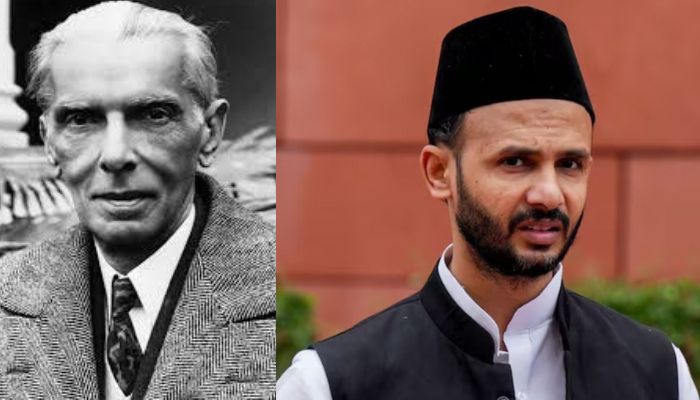
Although history and facts show that Muslims did not stay back in India out of choice. Nonetheless, this did not stop the grandson of the controversial Shafiqur Rahman Barq to claims Muslims chose India over Pakistan.

Zia Ur Rahman Barq, who was booked for instigating violence in Sambhal during the court-ordered survey of the Jama Masjid in November last year, attempted to guilt-trip Hindus.

“The Muslims who loved Pakistan went away. The Muslims who loved India did not leave and are still living in the country,” he brazened out.

The Samajwadi Party MP then claimed that Muslims are owners of the land that constitues India. “We are not the enemies of the nation. We are not the servants either but owners of this land,” he further stated.

Muslims oversaw creation of Pakistan, many stayed back despite voting for the Muslim League

During the provincial elections in 1946, it is an undisputed fact that Muslims voted overwhelmingly for Muslim League which had stirred up religious passions with its demand for a separate Islamic State at the time.

The Muslim League asserted that Hindus and Muslims cannot co-exist in the same country and thus, Muslims should have a country of their own carved out of India itself, post-independence.

In total, 87% of seats were won by the Muslim League in India in 1946. A closer look at the numbers shows how the demand for a separate Islamic State bolstered the political demand for a separate state.

The table below shows a comparison between the seats won by the Muslim League in 1937 and 1946. As one can see, the number of states that were won by the Muslim League of Jinnah went up manyfold in 1946.

In every state, the rise in the popularity of the Muslim League was substantial. In states like Bihar, for example, from zero seats in 1937, the Muslim League won a whopping 34 seats out of 40 seats.

In Madras, the increase was from 9 to all 29 seats. The pattern holds across all states, or provinces, as they were called during that period. It is to be remembered that though the two-nation theory itself existed for much longer, a formal political demand was made for a separate state for Muslims in 1940.

It was in 1940 that Jinnah formally announced the demand in Lahore that the Muslim League formally recommitted itself to creating an independent Muslim state, including Sindh, Punjab, Baluchistan, the North-West Frontier Province and Bengal, that would be “wholly autonomous and sovereign”.

The resolution guaranteed protection for non-Muslim religions. The Lahore Resolution moved by the sitting Chief Minister of Bengal A. K. Fazlul Huq was adopted on 23 March 1940, and its principles formed the foundation for Pakistan’s first constitution.

Source: University of Chicago

The formalisation of the demand in 1940 led to a huge surge in the Muslim population supporting the Muslim League and by extension, supporting the demand for a separate Islamic State called Pakistan, which would be carved out of India.

It is thus intriguing when several apologists claim that most Muslims stayed back in India out of choice and that most Muslims at the time did not want a separate Islamic state.

There can be no denying that there was opposition even from the Muslims at the time to the idea of a separate state, however, political statements and what counts during voting are two rather separate concepts.

If Muslims wanted a separate Islamic State and voted overwhelmingly in its favour, why did so many Muslims stay back?

The obvious argument that is presented, sans facts, to counter the overwhelming support for the creation of Pakistan is that if most Muslims at the time supported the two-nation theory, then why did so many Muslims stay back?

And if they indeed did stay back, it only means that they rejected the two-nation theory. After partition, several leaders were in support of the full exchange of population, including leaders like BR Ambedkar.

In his book on Partition, Ambedkar clearly outlines how and why he was in favour of a full population exchange between India and Pakistan, which would essentially mean that all Hindus and other religious factions other than Muslims would come back to India and all Muslims from India would go to Pakistan.

In fact, he had even written a basic framework on how the issues arising out of full population exchange could be dealt with.

Sardar Patel had, even after the partition spoken extensively about how Muslims had helped create Pakistan. His famous quote from his speech in Kolkata, 1948, bears testament to the fact. He had said, “Most of the Muslims who have stayed back in Hindustan, helped in creating Pakistan.

Now, I don’t understand what has changed in one night that they are asking us not to doubt their loyalty”.

Further, one has to remember that the demand for full population exchange was supported by several stalwarts at the time.

A report in Sunday Guardian says, “Dr Mookerjee, accompanied by Rajkumari Amrit Kaur, went to plead with Gandhi for agreeing to Jinnah’s proposal for an exchange of population, the old man’s flat reply was that partition was on a territorial basis and not on religious grounds. Hence, no question of exchanging Hindus from Pakistan with Muslims from India. This was when the division was exclusively on the criterion of religion, Hindu and Muslim”.

Jharkhand: Razia Khatoon provided weapons to the Islamist mob, Arif-Asif pulled the saree-blouse of women, Tribal harassed during their festival

On !st April, Islamist fundamentalists attacked Sarna tribals during their Sarhul (Spring) festival in Pithauryia, adjacent to Jharkhand’s capital Ranchi. The injured in the attack have been admitted to the hospital. In protest against this incident, the people of the tribal community blocked the Ranchi-Patratu road on Thursday (3rd April 2025). In the video that surfaced, the women have also said that there was molestation and gunfire involved.

The women attacked say that while going to perform Sarna Puja, they were attacked by the Islamist mob with sticks and were threatened with axes and guns etc. They said that one Razia Khatoon is the mastermind of this attack. At the same time, Asif and Arif tried to tear the blouses and sarees of the women by pulling them.

A video related to this incident has surfaced. In this, women of the tribal community are telling how they were mistreated by the Islamist fundamentalist attackers. In the video, a girl showed the marks of injuries on her shoulder and neck and said that Razia Khatoon had beaten her. The girl said that during the yatra, Asif/Arif pulled her blouse from behind.

The woman said that during the yatra, her husband was attacked by the Islamists, due to which he suffered a severe head injury. The woman said that there is a danger of blood clotting in her husband’s head. The woman expressed apprehension that if something happens to her husband, where will she go with her child. She said in a warning tone that if something happens to her husband, she will not spare the attackers.

The women say that the attackers included Muslims from their village as well as from the surrounding villages. The women said that apart from Razia Khatoon, Asif Ansari, Arif Ansari, Gulshan Ansari, Gulzar Ansari, Zulfan Ansari etc. were also among the attackers. A woman showed the axe and said that her nephew was attacked with it.

The tribal women who had come out for Sarna Puja included girls as well as elderly women. None of them was spared. The Sarna women say that they had put up flags for Sarna Puja. Razia Khatoon removed those flags and threw them away. The women say that Razia told them, “You don’t have to go this way. You people (tribals) don’t have to live here anymore.”

Not only this, the women also said that when Islamists were attacking, Razia was giving sticks and weapons to everyone. Another woman said that Razia Khatoon herself was throwing stones at the Sarna tribal people. The women said that Razia Khatoon’s son had started the fight. Meanwhile, Asif Ansari was threatening to shoot everyone by pointing a gun at them.

The tribal women even said that this time during Eid, Muslims had tied garlands on the roads. When they were going to Sarna, Muslim flags got stuck in Tribal garlands. After this, the Islamist mob got enraged and attacked them. Another woman said that Muslims create trouble during their festival.

Resentment in tribal community

In protest against this incident, people of Sarna community blocked Ranchi-Patratu road from 9 am. Along with this, all the shops of Pithauriya market were also closed. Angry people demanded immediate arrest of the Islamist attackers. Although the police have arrested two accused, people say that the protest will continue till the remaining accused are arrested.

The victims say that not only their procession was stopped, but Pahan (priest) and others were also beaten up. Ravi Pahan, Nagdev Pahan, Painbhora Munda, Sandeep Munda, Vijay Munda, Ajay Munda, Arvind Munda, Karan Munda have been injured in this incident. The victims went to the police station on Wednesday (2nd April 2025) and lodged a complaint, on the basis of which the police registered an FIR.

In the FIR, the police have named Adam Ansari, Arif Ansari, Mintu Ansari and Juaifa Ansari. At the same time, many unidentified people have been made accused. It is said in the complaint that when the procession of Sarhul reached Hargarhi place in Hethbalu village, the attackers attacked with sharp weapons. The attackers were already waiting there in ambush.

What is the entire matter

Actually, people of Muslim community had put up Jhalar on both sides of the road. Meanwhile, on the occasion of Sarhul, the tribal community put up a flag on the roadside, as per tradition, on the way to worship. A day before, there was tension between the two sides regarding this. On April 1, when the people of the tribal community were going to celebrate Sarhul, the Jhalar put up by the Muslims got stuck in the tractor and broke.

After this, the Muslim side attacked the tribals with sticks, bricks and axes. 8 people including Pahan, who was leading the Sarhul procession, have been injured in this violence. At the same time, the Muslim community says that 4 people have also been injured from their side. DSP Amar Kumar Pandey says that there was a clash between the two sides regarding the decoration.

Former Chief Minister Babulal Marandi said that the audacity of a particular community has increased during the reign of Chief Minister Hemant Soren. Hemant Soren is neither able to protect the Sarna sites nor is he able to ensure the safety of the Sarhul festival. He has appealed to the Ranchi police to take strict action against the miscreants who are obstructing the Sarhul procession without delay.

Babulal Marandi said, “Hemant Soren ji, do another drama – like you first filed a case against the Sarna Sthal agitators, then tried to garner applause by stopping the action. In the same way, now get an FIR registered by the tribes, then cancel it and garner applause. Keep fooling and confusing the tribal society through such crooked politics.”

PM Narendra Modi meets Bangladesh Chief Advisor Yunus at BIMSTEC summit, expresses serious concern over safety of Hindus and other minorities

0

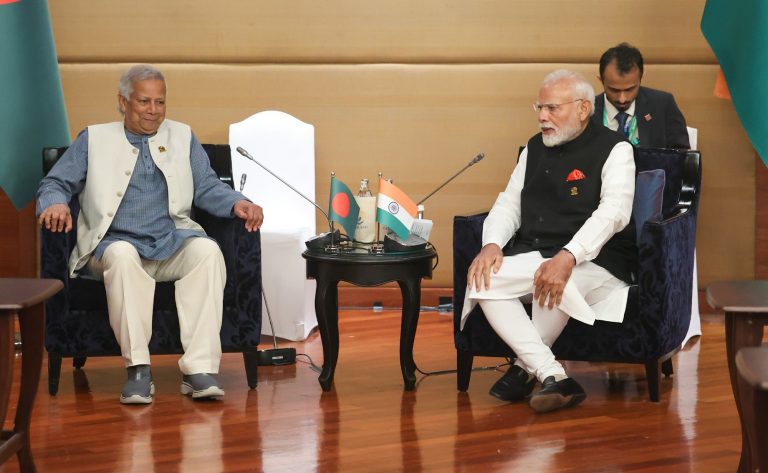
Prime Minister Narendra Modi met the Chief Advisor of the government of Bangladesh, Muhammad Yunus in Bangkok on Friday during the sidelines of the 6th BIMSTEC Summit. During the meeting, PM Modi expressed India’s concerns regarding the safety and security of minorities, including Hindus in Bangladesh and expressed his expectation that atrocities against them would be thoroughly investigated, the Ministry of External Affairs (MEA) said.

In an official statement, the MEA stated, “Prime Minister underlined India’s concerns related to the safety and security of minorities in Bangladesh, including Hindus, and expressed his expectation that the Government of Bangladesh would ensure their security, including by thoroughly investigating the cases of atrocities committed against them.”

During the meeting, PM Modi also underlined India’s desire for a constructive relationship with Bangladesh based on “mutual respect and sensitivity.”

The PM in a post on social media platform X said, “Met Mr. Muhammad Yunus, Chief Adviser of the interim government of Bangladesh. India remains committed to a constructive and people-centric relationship with Bangladesh. I reiterated India’s support for peace, stability, inclusivity and democracy in Bangladesh. Discussed measures to prevent illegal border crossings and expressed our serious concern for the safety and well-being of Hindus and other minorities.

In a post on X, MEA Spokesperson Randhir Jaiswal said, “PM @narendramodi met @ChiefAdviserGOB of Bangladesh on the margins of BIMSTEC Summit today in Bangkok. PM underlined India’s desire for constructive relations with based on mutual respect & sensitivity.”

The post further noted that PM Modi underscored the need to tackle growing extremism, which is “a threat to regional stability”.

PM Modi highlighted that India will support the advancement of BIMSTEC’s agenda as Bangladesh takes over the chairmanship of BIMSTEC.

“PM also underlined the need to ensure the safety & security of Hindus in Bangladesh and tackle growing extremism which is a threat to regional stability. India will support advancement of the BIMSTEC agenda under Bangladesh’s incoming chairship”, MEA Spokesperson Jaiswal said on X.

Prime Minister Narendra Modi met Bangladesh Chief Adviser Muhammad Yunus on the sidelines of the BIMSTEC Summit in Bangkok, their first face-to-face meeting since the collapse of Bangladesh’s former PM Sheikh Hasina’s government.

Notably, PM Modi is in Bangkok for the 6th BIMSTEC Summit, where he was received by Thai PM Paetongtarn Shinawatra at the Government House.

Earlier in the day, Prime Minister Modi met with the Senior General of Myanmar, Aung Hlaing, to discuss bilateral relations between the two countries.


(This news report is published from a syndicated feed. Except for the headline, the content has not been written or edited by OpIndia staff)

Enforcement Directorate raids multiple locations linked with Empuraan producer Gokulam Gopalan in connection with alleged FEMA violations

The Enforcement Directorate (ED) is conducting raids at multiple premises linked to AM Gopalan, producer of the controversial movie Empuraan. Several teams of the ED arrived at Gokulam Grand Corporate Office and Gokulam Mall in Kozhikode and the offices of Sree Gokulam Chits in Kodambakkam, Chennai, on Friday (4th April) to conduct searches.

As per reports, the raids are part of an ongoing investigation into the alleged violations of the Foreign Exchange Management Act (FEMA) by Gopalan’s firm, Gokulam Chit & Finance Co. Pvt Ltd. The central agency is also questioning the businessman in connection with a bank transaction involving large amounts of money. Gokulam Chits operates in multiple states, including Tamil Nadu, Kerala, Telangana, Puducherry, Maharashtra, New Delhi, Andhra Pradesh and Haryana. The firm reportedly has stakes in multiple sectors, including hospitality, media, health, education, transport, and logistics. No official statement has been released by the ED regarding the current raids.

Notably, this is not the first time Gopalan’s firm has been under the scanner of the authorities. In 2017, his firm’s offices in three different states were reportedly raided by the Income Tax Department for an alleged tax evasion. The officials claimed that Sree Gokulam Chits had concealed in its records significant amounts of income which included recovered bad debts and interest earnings. It was alleged that the firm did not disclose income to the tune of ₹1,107 crore over five years. Moreover, in 2019, Gopalan’s son, Byju Gopalan, was imprisoned in the United Arab Emirates on charges of forging documents.

L2:Empuraan stirred controversy for portraying Hindus in a bad light

Recently, L2:Empuraan, produced by Gopalan, received major backlash for the alleged misportrayal of the 2002 Gujarat riots. The movie was accused of showing Hindus as insensitive and merciless, using the context of the Godhra riots. Following the controversy around the movie, Gopalan has reportedly asked director-actor Prithviraj Sukumaran to modify certain controversial parts of the movie. Later on, Mohanlal, the lead actor in the movie, also issued a statement addressing the outrage surrounding the film’s depiction of Hindus and the Godhra riots. He acknowledged that certain aspects of the film had caused distress to some of his fans and assured that the team had decided to remove such references.