The Enforcement Directorate (ED) is conducting raids at multiple premises linked to AM Gopalan, producer of the controversial movie Empuraan. Several teams of the ED arrived at Gokulam Grand Corporate Office and Gokulam Mall in Kozhikode and the offices of Sree Gokulam Chits in Kodambakkam, Chennai, on Friday (4th April) to conduct searches.
As per reports, the raids are part of an ongoing investigation into the alleged violations of the Foreign Exchange Management Act (FEMA) by Gopalan’s firm, Gokulam Chit & Finance Co. Pvt Ltd. The central agency is also questioning the businessman in connection with a bank transaction involving large amounts of money. Gokulam Chits operates in multiple states, including Tamil Nadu, Kerala, Telangana, Puducherry, Maharashtra, New Delhi, Andhra Pradesh and Haryana. The firm reportedly has stakes in multiple sectors, including hospitality, media, health, education, transport, and logistics. No official statement has been released by the ED regarding the current raids.
Notably, this is not the first time Gopalan’s firm has been under the scanner of the authorities. In 2017, his firm’s offices in three different states were reportedly raided by the Income Tax Department for an alleged tax evasion. The officials claimed that Sree Gokulam Chits had concealed in its records significant amounts of income which included recovered bad debts and interest earnings. It was alleged that the firm did not disclose income to the tune of ₹1,107 crore over five years. Moreover, in 2019, Gopalan’s son, Byju Gopalan, was imprisoned in the United Arab Emirates on charges of forging documents.
L2:Empuraan stirred controversy for portraying Hindus in a bad light
Recently, L2:Empuraan, produced by Gopalan, received major backlash for the alleged misportrayal of the 2002 Gujarat riots. The movie was accused of showing Hindus as insensitive and merciless, using the context of the Godhra riots. Following the controversy around the movie, Gopalan has reportedly asked director-actor Prithviraj Sukumaran to modify certain controversial parts of the movie. Later on, Mohanlal, the lead actor in the movie, also issued a statement addressing the outrage surrounding the film’s depiction of Hindus and the Godhra riots. He acknowledged that certain aspects of the film had caused distress to some of his fans and assured that the team had decided to remove such references.
The Indian subcontinent has once again become restless. After turmoil in Bangladesh, a large section of the people in India’s other friendly country Nepal is on the streets. Curfew has had to be imposed even in the capital Kathmandu.
In Nepal, which has been facing continuous unrest for the last three decades, a crowd of lakhs is demanding the return of Hindu monarchy. Their demand is that Nepal should be declared a ‘Hindu Rashtra’ again. After experimenting with democracy for about a decade and a half, Nepal is again standing at the same crossroads where it was in the 1980s.
Pakistan has taken advantage of this unrest in Nepal for the last three-four decades. The unrest has led to the strengthening of influence of China, America, Christian missionaries and Islamic fundamentalists in the country. Continuous efforts have been made to break Nepal by separating it from its Hindu origin. Some leaders of India are also responsible for pushing Nepal into this situation. The Hindu people of Nepal are now in such a situation that instead of democracy, they are demanding that it be made a monarchy and a Hindu nation again.
How Rajiv Gandhi sowed the seed to end monarchy of Nepal
Hindu monarchy ended in Nepal in 2008. King Gyanendra Shah had to abdicate his throne in 2008. Before this, the leftists had shed a lot of blood in Nepal for almost a decade. Thanks to that, the nearly two and a half centuries old monarchy of Nepal came to an end in 2008.
However, the story of the end of the monarchy in Nepal started being written almost 20 years before 2008. Even though the monarchy in Nepal was later ended by the movement of the leftists, its seeds were sown by Rajiv Gandhi when he was the Prime Minister of India. His one step distanced Nepal from India, the distance which has not been bridged till date.
Till the end of 1980s, relations between Nepal and India were strong. There was no major border dispute. Lakhs of Nepalis worked in India. Nepal was dependent on India for all its needs. India had almost monopoly in supplying products to Nepal.
This situation changed by the end of 1980s. Rajiv Gandhi stopped supply of everything to Nepal in the year 1989. India had closed 19 out of 21 routes going to Nepal. Blockade was imposed for everything from oil to ration for Nepal. After this, Nepal had a huge problem of oil and food.
Long queues formed even for a basic item like kerosene in Nepal. This step was taken by Rajiv Gandhi when Nepal had an earthquake of more than 7 magnitude on Richter scale a few days ago. Two reasons were given for this step of Rajiv Gandhi.
One reason given then was Nepal’s arms deal with China. Those on India’s side said that this was a threat to their security and they could not allow this to happen. The other reason given was the end of the agreements made with Nepal for transportation.
Due to all this, King Birendra Bikram Shah, who was ruling Nepal at that time, had a conflict with India. This blockade lasted for a year and during this time Nepal had to face a lot of problems. Another story behind this is the treatment of Nepal and King Mahendra.
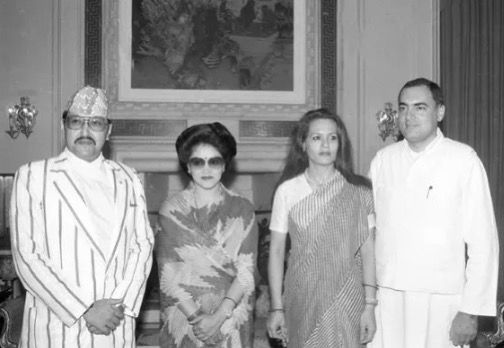
King Birendra and his wife Aishwarya with Rajiv Gandhi and Sonia Gandhi
It is said that in 1988, then Prime Minister Rajiv Gandhi went to Nepal with his wife Sonia Gandhi. While there, Rajiv Gandhi also visited Pashupatinath temple in Kathmandu, however, the priests here refused to allow his wife Sonia Gandhi to enter the temple.
It is said that Sonia Gandhi’s entry was opposed because she is not a Hindu, but a Christian. Only Hindus can enter the holy temple. After this, Rajiv Gandhi asked for help from King Mahendra in this matter. King Mahendra also refused to help and said that he cannot interfere in religious matters. It is said that Queen Aishwarya, wife of King Birendra was also against Sonia entering the temple.
When Rajiv Gandhi visited Nepal,Sonia Gandhi was not allowed into Pashupatinath Temple because she is Xtian. Even the King could not help. Rajiv imposed a blockade on Nepal to avenge this ‘slight’. This was the point when Nepal began to turn against India. @Swamy39 on @NewsX
This story was told by Tathagata Roy quoting BJP leader Subramanian Swamy. It is said that Rajiv got angry due to Sonia not being allowed to enter the temple in Nepal and after returning to India, he took steps to overthrow the monarchy from Nepal. This blockade was a part of that.
Rajiv Gandhi also deployed ‘Research and Analysis Wing’ to gather parties against the King of Nepal. Amar Bhushan, who was the Special Director of R&AW, has told in his book ‘Inside Nepal’ that on the orders of Rajiv Gandhi, R&AW strengthened the movement going on in Nepal against the King.
Many spies were also recruited for this. At the time when Rajiv Gandhi imposed the blockade against Nepal, at the same time, a movement was going on in Nepal to reduce the powers of the King and remove the ban on running political parties. When the blockade happened, the public got more enraged.
The people and students of Nepal were not only angry against India, they also turned against King Birendra Shah. They were organized by R&AW during this period. R&AW strengthened the Nepali Congress Party and the Communists during this period. This movement also became violent and many people were killed in it. The king finally had to bow down in April 1990.
Due to this operation of R&AW, the king had to give permission to political parties in 1990. After this, Nepal was no longer a full-fledged monarchy. It became a constitutional monarchy. Due to this attitude of Rajiv Gandhi, Nepal also tilted towards China.
In this way, Rajiv Gandhi pushed Nepal towards China due to personal resentment and also hollowed out the roots of its monarchy. While Rajiv Gandhi weakened the monarchy by nourishing the communists in Nepal, the communists of India played a big role in ending this monarchy.
Sitaram Yechury also went to meet the communist leaders in the year 2006. At that time, the monarchy and guerrilla forces were fighting in Nepal. It is said that he went there at the behest of Prime Minister Manmohan Singh. Sitaram Yechury is believed to have deep ties with the Nepalese leftists.
In 2006, he also brokered an agreement between the leftists and the rest of the parties in Nepal. This was called the Yechury formula. During his visit, Yechury had said that what was achieved in 1990 should now be taken forward.
Missionaries take advantage of instability in Nepal
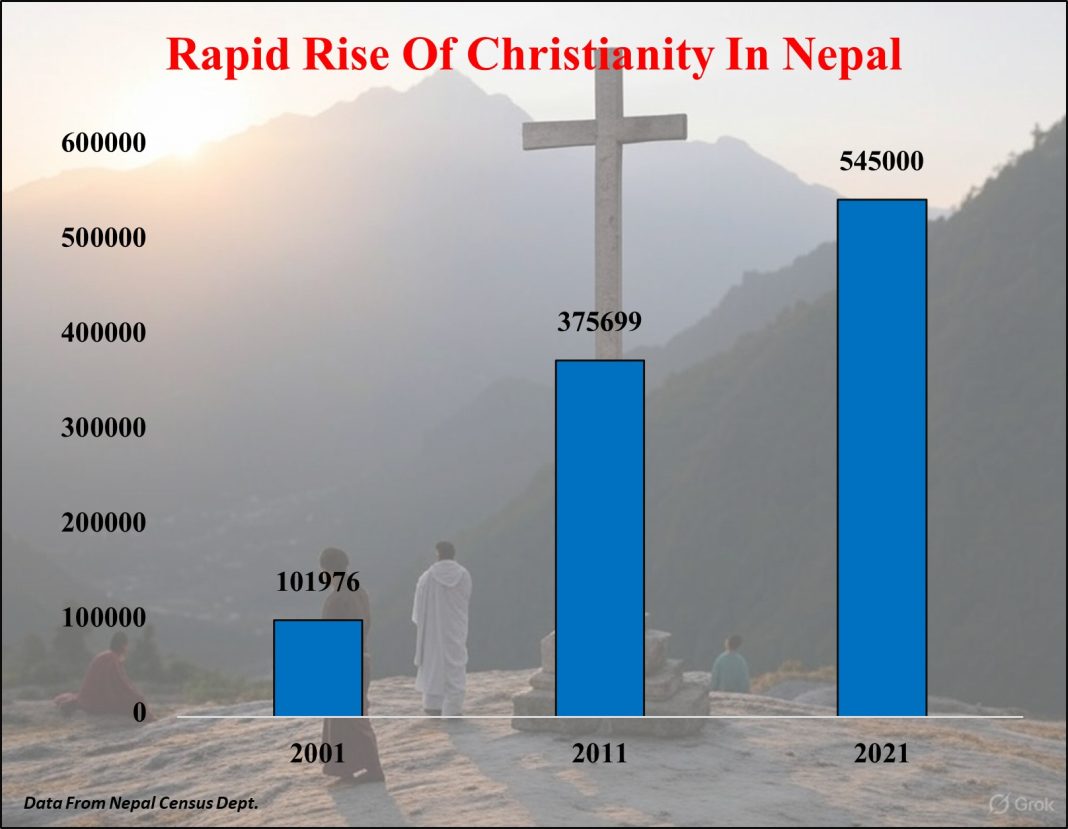
Foreign powers have taken full advantage of this instability that has been prevailing in Nepal for the last three decades. Christian missionaries have been at the forefront of this. Many Christian missionaries have been active in the Hindu nation Nepal for a long time. A BBC report in 2023 said that the Christian population in Nepal has increased by 68% in a decade.
In 2011, 3.76 lakh Christians lived in Nepal. This number was only 1 lakh in 2001. Currently, more than 5.5 lakh Christians live in Nepal. This is the situation when there was not a single Christian in Nepal in 1951. The target of conversion are only the Hindus of remote areas of Nepal.
It is clear that whenever there has been instability in Nepal, conversions have taken place rapidly. This trend is still continuing. This game of Christian conversions has increased even more rapidly after Nepal’s status as a Hindu nation ended in 2008 and it became a ‘secular nation’.
According to a BBC report, Christian missionaries from South Korea have a major role in Christian conversions in Nepal. South Korea started sending Christian missionaries to Nepal about two decades ago. Since then, about 20,000 Korean missionaries have joined the campaign to convert Hindus to Christianity.
According to new figures, there are about 7758 churches in Nepal. 50 years ago, the number of Christians in Nepal was not even equal to the population of a village, today more than 7700 churches have been built there. Leftists have also played a major role in Christian conversions in Nepal.
Leftists started gaining influence in Nepal since 1995. The leftists were mostly settled in the hilly areas of the north. They taught the people of Nepal that religion is opium of the masses and the people will not get anything from religion. The leftists were against Hinduism in Nepal.
People moving away from religion and the prevalent poverty created a fertile ground for Christian missionaries. Already troubled people were lured with financial incentives, and sometimes in the name of education and health, and converted to Christianity.
It is not that no one in Nepal is worried about this conversion. While talking to BBC, former Deputy Prime Minister of Nepal Kamal Thapa had said about Christian missionaries are spreading in Nepal like wildfire. He had expressed concern that this will endanger the existence of the country’s culture.
Islamic fundamentalism is also spreading in Nepal
Along with Christian missionaries, Islamic fundamentalism is also spreading its roots in Nepal. In the year 2001, Nepal had a Muslim population of 9.54 lakhs. In 2021, it has increased to more than 14 lakhs. Not only has the population of Muslims increased in Nepal, but fundamentalism has also increased.
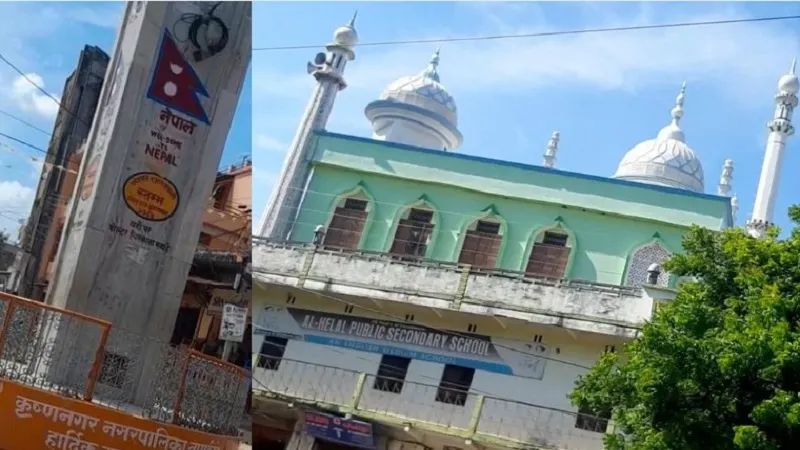
Mosques and madrasas have sprung up in Nepal in the areas bordering India. In a ground report done by OpIndia in 2022 on this matter, it was found that the economy in the border areas is also largely dominated by Muslims. In Nepal, which was a Hindu nation till 2008, Muslims even tried to change the name of a village to Islam Nagar.
Border areas of Nepal have seen a rapid rise of Islam
In another incident, it was revealed that first kutcha huts were built for the Rohingya infiltrators and later there was a demand to build permanent houses at this place. There have been many such cases when the fundamentalists have come out on the streets and created a ruckus.
China and ISI took advantage of the chaos in Nepal
China and Pakistan’s intelligence agency ISI have taken advantage of the instability in Nepal and the end of its status as a Hindu nation. ISI has used Nepal as a base to send fake notes to India. Many big Islamic terrorists who fled from India have also been caught in Nepal.
Pakistan has been using this area for its own benefit by inciting Islamic fundamentalists in Nepal and sending its spies. Due to the open border with India, Pakistanis have also used it as a route to escape from India. Wikileaks also revealed that Pakistan had even set up a terrorist organization in Kathmandu.
After pressure from India, Nepal arrested many Pakistani citizens in 2020. These citizens used to bring fake notes to India and expand the terrorist network. During the 1990s, Dawood Ibrahim gang made Nepal its base. After committing crimes in India, the criminals used to flee to Nepal.
While Pakistan has been using Nepal for its own purposes, China too wants to encircle Nepal due to its expansionist policy. Rajiv Gandhi’s action on Nepal had pushed it towards China.
China always wanted to increase its influence in Nepal. It wanted to encircle India with the help of Nepal. After the Communists came to power in 2008, China’s infiltration in Nepal has got a new support. The Communists increase trade and cooperation with China to put pressure on India.
The biggest example of this is Nepal’s inclusion in the Belt and Road project. Nepal has been saying no to this, but China has included it in it. China wants to trap Nepal in a debt trap like Sri Lanka and use it to encircle India in its own backyard.
Nepal has also recently built a new airport in Pokhara by taking a loan from China. This airport is like a patient who has died before reaching the hospital. Nepal had requested India for the first flight to this airport but it refused. After this, work started here with a flight from China.
This airport is lying vacant like Gwadar and Hambantota ports. There is a fear that China can take over this airport by putting pressure on Nepal to recover the loan given for this. China also interferes in the internal affairs of Nepal.
In 2020, news came out of the Chinese female ambassador honeytrapping even the then Prime Minister of Nepal KP Sharma Oli. This spy was instigating Nepal against India. She was transferred from Nepal after this.
The conflict between Madheshis and Paharis worsened the situation
Apart from all these fights, the fight between Madheshis and Paharis in Nepal has worsened the situation. Madheshis refer to the people living in the Terai region of Nepal and most of the areas adjacent to India, while the Pahari population lives in the mountainous regions of the country.
With the end of monarchy in Nepal, the gap between the Madheshis and the Pahari people widened. Those who talk about Madheshi interests say that the Pahari people have always dominated the politics of Nepal and the Madheshis do not have the representation they deserve.
Apart from this, the Madheshis have also been angry about not being given autonomy to their region. Another end of this fight is also connected to the Maoist movement of Nepal. In fact, most of the leaders of the Maoist movement of Nepal came from the Pahari population.
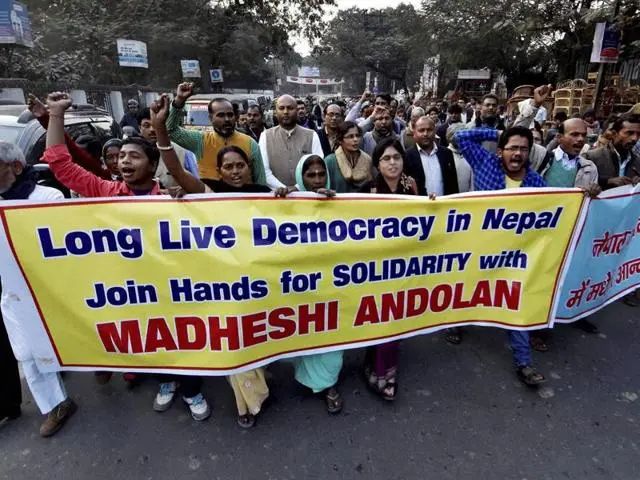
Madheshis had launched a massive protest in 2015
Their cadre was also from here. During the movement, many Maoists looted the Terai region and carried out a series of kidnappings and murders. This also led to division among the two communities. Madheshis had also protested during the formation of the constitution in 2008 and 2015.
This movement turned violent in 2015. Many Madheshis were killed in it. After a lot of uproar, the Nepal government agreed to some of the demands of the Madheshis. This fight between the Madheshis and the hill people has given another problem to the already troubled Nepal and has made the life of the people here difficult.
The people of Nepal are fed up of all the instability
In the last 30 years, the people of Nepal and especially the Hindus have seen so much instability and wars that they now want to return to the old ways. They have seen everything in the last three decades – monarchy, constitutional monarchy and democracy. The worst situation they have experienced is due to the democracy in the country.
When the monarchy ended in Nepal in 2008, the democratic parties had made big promises to the Nepali people. They had completely excluded the then King Gyanendra from the entire process. Employment was promised to the Nepali youth who had suffered a period of violence for a decade, and prosperity to the Nepali people.
By 2025, most of these promises have not been fulfilled in Nepal. Nepal has become a victim of instability after the advent of democracy. In the 17 years between 2008 and 2025, the government has been formed and dissolved 13 times in Nepal. The Prime Minister has changed 13 times. Out of these, 11 times the government could not even last for 2 years.
The leftist parties that took up arms against the monarchy are today infighting among themselves. Nepal’s politics has been revolving around leaders like Sher Bahadur Deuba, KP Sharma Oli, Pushpa Kamal Dahal Prachanda and Baburam Bhattarai for the last two decades.
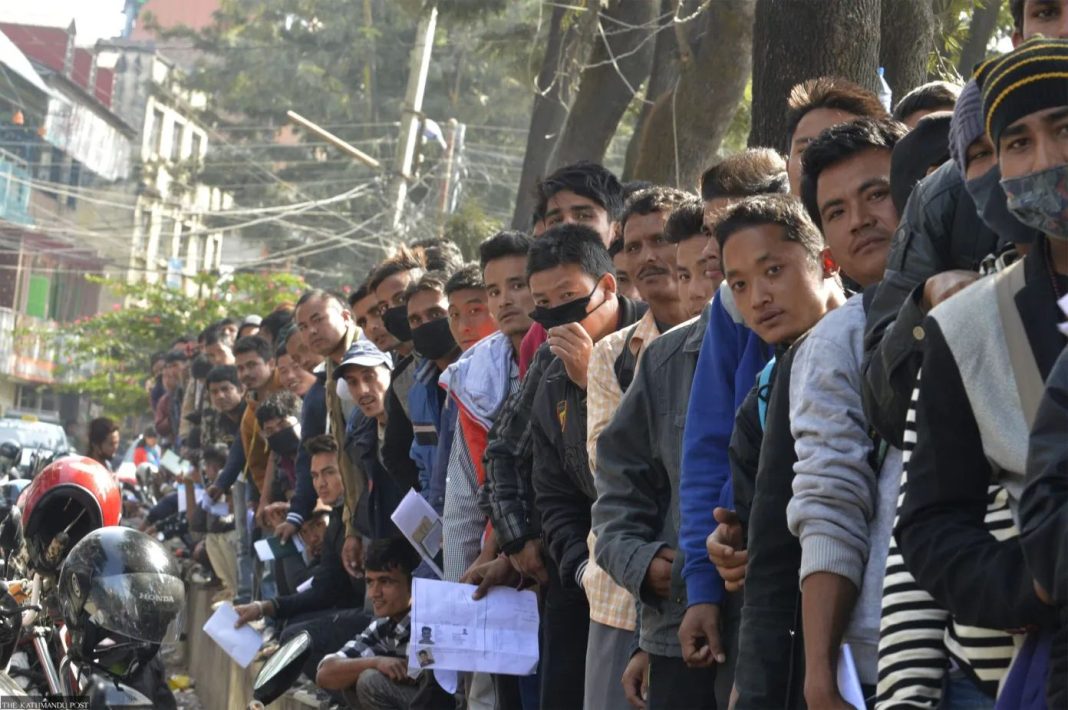
After the advent of democracy, Nepal’s leaders have not been able to resolve their own disputes. Currently, the unemployment rate in Nepal is more than 12%, which is frightening. This rate is even above 20% among the youth. A large number of youth are fleeing from Nepal to India or Arab and European countries to work.
A report states that on an average 1700 people are leaving Nepal every day. Most of those leaving the country are the youth. About 10% of Nepal’s population has gone to other countries in search of work. Currently, about 23-24 lakh people have left Nepal and are working abroad.
Unemployment rate among Nepal youths is 20% (Image Source: Kathmandu Post)
Apart from unemployment, the second major issue is corruption that came after democracy in Nepal. During the monarchy, power was centralized and the general public did not have to face corruption in day to day life. But now corruption has taken deep roots in Nepal.
A report by The Kathmandu Post states that more than 28,000 cases of corruption were registered in Nepal in 2023. In many places, the work of government departments is stuck because many officers and employees are either suspended or serving jail on charges of corruption.
Due to all this, there is dissatisfaction among the general public. Apart from this, there is also a shortage of basic facilities. A report states that 73% of the people in Nepal do not get clean drinking water. Another report shows that about 35 lakh people of Nepal are still deprived of electricity. There is also a lack of roads in the hilly areas. Due to this, the people of Nepal are now fed up.
Demand for return of monarchy and Hindu nation
Nepal has been distanced from Hinduism and monarchy for the last 3 decades. Currently, Nepal is a secular nation. There is no monarchy here either. But even then the problems of the people have not been solved. They now feel that the monarchy which was removed due to the Maoist movement can fix their country again.
The history of monarchy in Nepal is about 250 years old. It was established by King Prithvi Narayan Shah. After that, his future generations ruled here till 2008. However, during this time, the monarchy also faced many problems.
The Rana family ruled Nepal from the middle of the 19th century to the latter half of the 20th century by keeping this family in control. However, in the 1950s, King Tribhuvan Shah took back power by coup. He died in 1955. After this, King Mahendra ruled till 1972.
After 1972, Birendra Bikram Shah became the king. His tenure was full of interesting events. Be it facing the blockade from Rajiv Gandhi in 1989 or becoming the face of democracy in 1990. The leftist movement also started in Nepal during his rule. However, in 2001, King Birendra and the rest of the family were assassinated by his son Dipendra.
After this, his brother Gyanendra was made the king. Gyanendra’s tenure was the end of monarchy in Nepal. During Gyanendra’s tenure, there was a change of power in Nepal. Nepal used to be a Hindu nation till Gyanendra’s tenure.
After 17 years, Nepal is back where it started from. In these 17 years, democracy in Nepal has not been able to do what the people there want. In such a situation, for some time now, there has been a demand to bring back King Gyanendra. Hindus of Nepal feel that the return of monarchy and the status of a Hindu nation is the only way left for them.
This effort is not one-sided. Former King Gyanendra of Nepal recently released a video. During this, he talked about ‘taking responsibility in one’s own hands’. This was a big message. This was the first time after the end of monarchy in Nepal that the former king said such a thing.
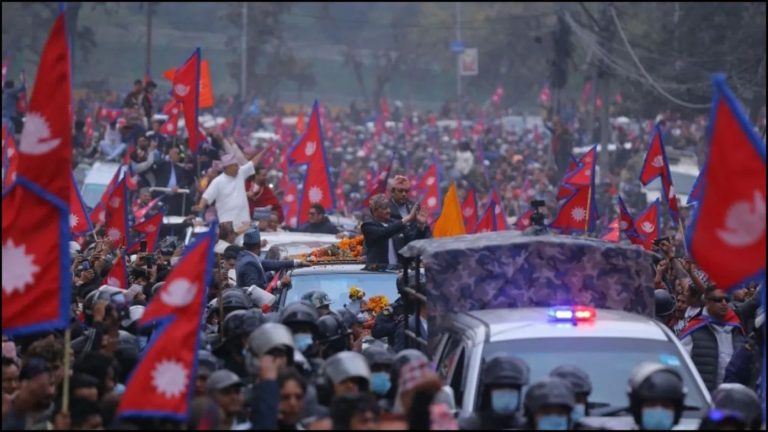
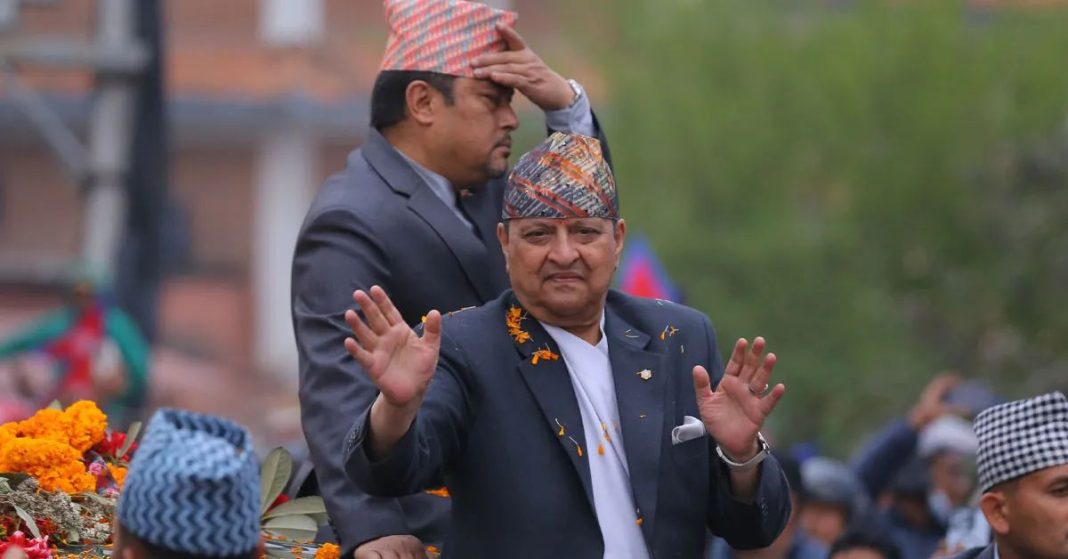
The support for King Gyanendra did not decrease even during democracy. A large part of the public still has respect for the king. On March 9, 2025, King Gyanendra Shah of Nepal returned to the capital Kathmandu. He was earlier on a tour of temples across the country.
King Gyanendra is highly popular among public (Image Source: Kathmandu Post)
After his arrival in Kathmandu, he was welcomed by a crowd of lakhs outside the airport. This made everything clear about their support to him. His supporters also raised pro-monarchy slogans after his return. The supporters had placards in their hands saying ‘Bring back the monarchy’, ‘Give us back our king’ and ‘This Nepal is of Gyanendra’.
The biggest name among those raising voice for the return of monarchy in Nepal is the Rashtriya Prajatantra Party (RPP). This party wants the return of monarchy as well as Hindu Rashtra in Nepal. This party has also organized big demonstrations. After the return of King Gyanendra to Kathmandu, a big ceremony was also organized under the leadership of this party.
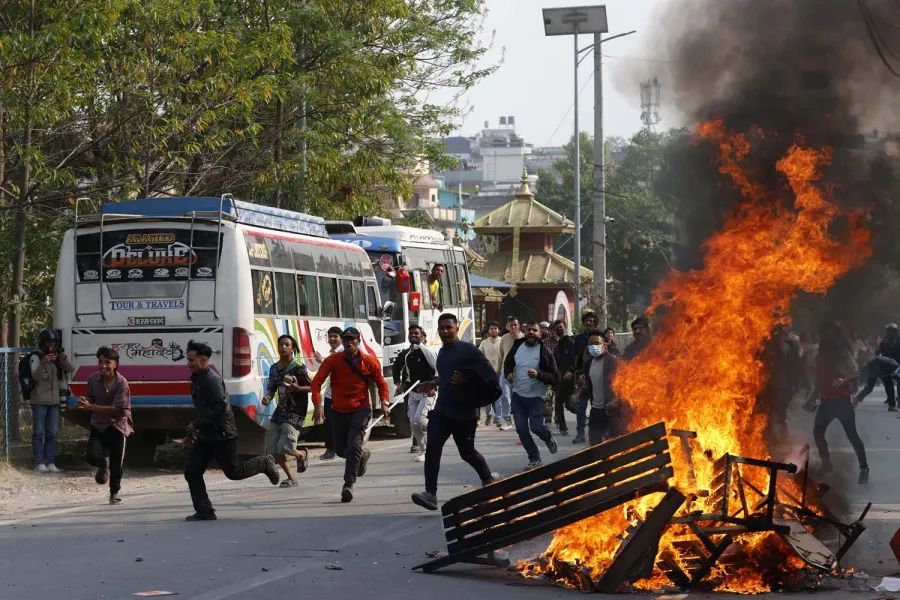
On March 28, 2025, the movement for monarchy in Nepal turned violent. RPP organized a huge demonstration in Kathmandu. During this movement, the protesters demanded the return of the monarchy. To suppress the movement, the police used lathi charge and also opened fire.
This resulted in the death of one protester. This made the movement more violent. During this demonstration in Tinkune area of Kathmandu, the supporters who got furious against the police action vandalized several buildings. One building was set on fire. This resulted in the death of a media person.
Violence erupted in Nepal during pro-Monarchy protests (Image Source: Kathmandu Post)
Curfew had to be imposed in Kathmandu due to this demonstration. The army had to be called in here as well. This movement showed how a large section of Nepal supports the monarchy. Swati Mishra, a member of the Central Committee of RPP, said that they want King Gyanendra back not as a king but as a guardian.
RPP says that they want to use Hinduism as a stabilizing force in Nepal. RPP’s statement also seems to carry weight. Religion has played a big role in the unification and stability of Nepal. People feel that the atmosphere of instability has come only after the country was made secular.
During the monarchy in Nepal, Hinduism was also a controlling force over the monarchy. The religious people of Nepal and the king’s attachment to religion protected it from becoming unstable. However, Nepal was made secular by amending the Constitution. This was an agenda of the leftist parties.
Due to this, not only did religion lose its status as a unifying force in Nepal, but Nepal also leaned towards China. Religion was the only thing that kept Nepal strongly connected to India. Leftist parties now run towards China instead of India. But the public is not able to connect with it. Because their cultural connection is with India.
The people of Nepal now feel that democracy has given them only corruption, instability, internal conflicts and promises, whereas during the era of monarchy they were more prosperous. That is why those who support monarchy include not only the common people but also the big businessmen of Nepal.
Durga Parsai, a big businessman of Nepal, is also a part of this movement. Along with the people of Nepal, its elite class has also been a supporter of monarchy. Bollywood actress Manisha Koirala had said in an interview that the constitution here has not fulfilled the aspirations of the people. Koirala comes from a powerful political family of Nepal.
She had said that the king of Nepal should have been given a place in the new constitution. She had described the current system of Nepal as a ‘mask of democracy’. She had said that even today 90% of the Nepali people support the monarchy in some way or the other. Manisha Koirala had said that monarchy cannot be removed from the minds of the people of Nepal.
Now whether it is Koirala or the common people of Nepal, everyone believes that monarchy can solve their problems. Nepal’s political parties believe that King Gyanendra is behind the movement for monarchy. They also accuse India of promoting monarchy.
This is nothing new, even a utensil falling on the ground in Kathmandu is said to be a conspiracy of India by the leftist parties. The parties do not want the return of the king in any way. India has not yet given any reaction to this movement and new political equations.
It remains to be seen whether the king’s rule returns to Nepal in the future or democracy regains its place. Whether Nepal will become a Hindu nation again or not, time will tell. Some middle path may also emerge where both the king and democracy are given a share.
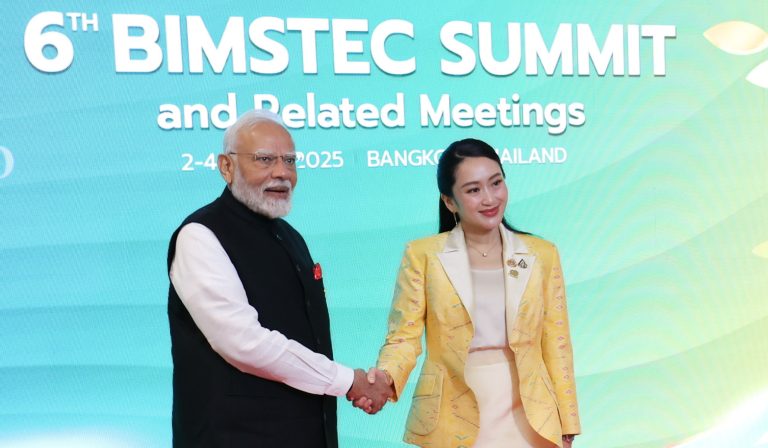
Prime Minister Narendra Modi proposed a 21-point Action Plan covering different aspects of cooperation among the BIMSTEC nations at the 6th BIMSTEC Summit in Bangkok, Thailand today. The action plan focuses on strengthening business ties, harnessing the potential of the IT sector, and collaborating on disaster management, particularly in light of the recent earthquakes in Myanmar and Thailand. Modi also stressed the need for joint efforts in space exploration, bolstering security, and empowering youth to lead the future of BIMSTEC.
He remarked to boost business across BIMSTEC nations and harness the rich potential of the IT sector. PM Modi emphasized to work in the world of space and strengthen the security apparatus. Urging to collectively energise BIMSTEC and underlining the role of youth who will take the lead, he expressed hope that the cultural linkages will further bring the BIMSTEC nations closer.
In a thread post on X, PM Modi posted the 21 points of the action plan he has proposed. He wrote, “BIMSTEC is an important forum to further global good. It is imperative we strengthen it and deepen our engagement. In this context, I proposed a 21-point Action Plan covering different aspects of our cooperation.”
BIMSTEC is an important forum to further global good. It is imperative we strengthen it and deepen our engagement. In this context, I proposed a 21-point Action Plan covering different aspects of our cooperation. pic.twitter.com/6lsTbLwAGc
The 21-point Action Plan spans multiple sectors, including business, IT, disaster management, security, space, training, capacity building, energy, youth engagement, connectivity, and culture. It reflects a comprehensive approach to strengthen BIMSTEC cooperation, with India taking a leadership role by hosting several initiatives, establishing centers of excellence, and promoting regional integration through trade, technology, and cultural exchange.
Here are the 21 points of the action proposed by PM Narendra Modi:
Business
Establishment of BIMSTEC Chamber of Commerce To foster stronger business-to-business (B2B) ties among BIMSTEC nations.
Organization of BIMSTEC Business Summit every year To provide a platform for entrepreneurs and governments to align on trade priorities.
A feasibility study on the possibilities of trade in local currency in the BIMSTEC region To explore reducing dependency on global currencies like the US dollar and promote regional financial autonomy.
IT
A pilot study to understand the needs of BIMSTEC countries to share the experience of Digital Public Infrastructure (DPI) To assess the specific requirements of member nations for implementing DPI.
Connectivity between India’s Unified Payments Interface (UPI) and payment systems in the BIMSTEC region To enable seamless, real-time, low-cost, and secure cross-border payments, boosting tourism, business, and remittances.
Mitigation and Disaster Management
Establishing the BIMSTEC Centre of Excellence for Disaster Management in India To collaborate on disaster preparedness, relief, and rehabilitation.
The fourth joint exercises between BIMSTEC Disaster Management Authorities will be held in India this year To enhance regional cooperation in disaster response and management.
Security and Space
Holding the first meeting of the Home Ministers’ Mechanism in India To strengthen cooperation in combating cybercrime, cybersecurity threats, terrorism, and drug and human trafficking.
Setting up ground stations for manpower training for BIMSTEC countries, manufacturing and launching of Nano Satellites, and use of remote sensing data To advance space technology collaboration and enhance regional security through technological innovation.
Training and Capacity Building
BODHI, i.e., BIMSTEC for Organized Development of Human resource infrastructure initiative Under this, 300 youth from BIMSTEC countries will be trained in India every year.
Scholarships to BIMSTEC students in the Forestry Research Institute of India and Naland University To promote educational opportunities in forestry and other academic fields.
Training programme every year for young diplomats from BIMSTEC countries To build diplomatic capacity and foster regional understanding.
Tata Memorial Centre will support training and capacity building in cancer care in BIMSTEC countries To enhance healthcare capabilities in cancer treatment and research.
Establishment of Centre of Excellence for research and dissemination in traditional medicine and Centre of Excellence in India for exchange of knowledge and best practices, research, and capacity building for the benefit of farmers To promote traditional medicine and agricultural innovation through research and knowledge sharing.
Energy and Youth Engagement
The BIMSTEC Energy Centre in Bengaluru has started working To coordinate energy-related initiatives and train youth in the energy sector.
Faster work on electric grid interconnection To enhance energy security through regional grid connectivity, aligning with initiatives like ‘One World, One Sun, One Grid’.
BIMSTEC Young Leaders’ Summit will be held this year, and the BIMSTEC Hackathon and Young Professional Visitors programme will be launched To engage youth in leadership, innovation, and professional development.
To hold the BIMSTEC Athletics Meet in India this year To promote youth engagement through sports.
Hosting the first BIMSTEC Games in 2027 To further youth interaction and regional unity through a major sporting event.
Connectivity and Culture
BIMSTEC Traditional Music Festival will be held in India this year To strengthen cultural ties and promote people-to-people connections through music.
Establishment of Sustainable Maritime Transport Centre in India This Centre will work to enhance coordination in building, research, innovation, and capacity in maritime policies, and promote cooperation in maritime security.
During the discussion on the Waqf Amendment Bill, 2025 yesterday (3rd April) in the Rajya Sabha, Union Law Minister Kiren Rijiju highlighted several instances where waqf boards across the country made bizarre claims over entire villages. He pointed out one such case from Tamil Nadu where the Waqf Board claimed the entire Hindu-majority village of Thiruchenthurai/Thiruchendurai, including a 1500-year-old temple, near Trichy.
The statement of the head of the Waqf Board
An online media portal, The Federal, said that Rijiju’s statement about the waqf board claiming the Thiruchenthurai village was wrong and conducted a ‘fact-check’ to prove it. However, the purported fact-check had several loopholes. The portal quoted Abdul Rehman, head of the Tamil Nadu Waqf Board, who refuted Rijiju’s claims. Rehman said that the entire village measured up to 800-900 acres, while the waqf property covers about 480 acres. He claimed that the 1500-year-old temple is on the Waqf land, which was donated to it. He said that the donors wanted the temple to remain there.
The Federal further quoted Rehman as saying that the Union Law Minister was lying because the Waqf Board never claimed the entire village. He pointed out that the Waqf Board owns a significant amount of land in the nearby village of Suriyar, which also includes a 1000-year-old temple surrounded by nine ponds.
The shady fact-check
Proceeding with its fact-check, the media portal then presented some historical details about the village land and the waqf board. Quoting historical records, the Federal claimed that land donations to the waqf board were made by Queen Rani Mangammal in the 18th century. “According to historical records, Queen Rani Mangammal had gifted several villages, including Thiruchendurai, to the Waqf Board – a fact documented in a 1954 gazette and confirmed by an ancient copper plate referring to the village as Inam Gramam,” the media portal claimed.
Now, this statement of the Federal, which claims that the Queen gifted “several villages including Thiruchendura village”, contradicts the earlier quoted statement of Abdul Rehman in which he said that the waqf board did not claim the entire village but only a part of it, which also includes the ancient Hindu temple.
What was the case?
The incident of the Tamil Nadu Waqf Board claiming the entire Hindu-majority village of Thiruchendurai in Tamil Nadu came to light in 2022 when a villager named Rajagopal attempted to sell his 1 acre 2 cents of land to one Rajarajeshwari. When Rajagopal, a resident of the nearby village of Mullikarupur village arrived at the Registrar’s office to get the sale of his land registered, he was surprised to learn that the land did not belong to him and instead belonged to the Waqf Board.
“The Waqf Board owns the land on which you have come to register the deed. This contract cannot be registered, according to the Waqf Board’s directive,” Murali, the registrar, stated. “You should obtain a no-obligation certificate from the Waqf Board in Chennai,” he further added. “Why do I need to obtain a no-obligation certificate from the Waqf Board to sell my land which I purchased in 1992?” Rajagopal inquired in astonishment. Rajagoapl said that he was shown a 250-page letter from the Tamil Nadu Waqf Board, which said that in Tiruchenthurai village requires a no-objection certificate from the Waqf Board in Chennai. “The Waqf Board has informed the Deeds Department by letter and documentation that the entire village is theirs. It has also been stated that individuals who come to register a deed for land in the village should obtain a certificate of no objection from them,” he said.
The entire village was shocked to learn that their lands belonged to the Waqf Bard. They wondered how the Waqf Board could claim ownership of the entire village when the villagers have all the necessary land documents for their respective lands, both residential and agricultural. The subject was brought to the District Collector’s attention by the villagers, he stated that the matter will be investigated, and action will be taken after that.
Tensions erupted in Shahjahanpur in Uttar Pradesh after torn pages of the Islamic book Quran were found in the Jalalabad police station area on Thursday evening. Thousands of Muslims gathered at the spot on Tehsil Road, demanding action. However, later, it was found that a Muslim man was the culprit.
As per reports, the incident took place at around 9 PM on Thursday just 50 meters away from Jalalabad police station. A youth was seen tearing pages of the Quran and blowing them in the air in front of a shop. After the word of the incident spread, anger spread among the people of the Muslim community. A large number of people came out on the road and started creating a ruckus.
After receiving the information, Superintendent of Police (SP) Rajesh Dwivedi with the police force reached there and managed to pacify the crowd. A heavy police force was deployed on the spot to maintain order.
After that, the police identified the culprit using CCTV footage, who was identified as a youth named Nazeem. He was promptly arrested by the police.
दि-03.04.25 को रात्रि में थाना जलालाबाद क्षेत्र में धार्मिक पुस्तक के फटे हुए पन्ने मिलने की सूचना पर तत्काल संज्ञान लेते हुए CCTV व अन्य जानकारी के माध्यम से एक नजीम नाम के व्यक्ति को हिरासत में लेने व अग्रिम कार्यवाही के सम्बन्ध में #श्री_राजेश_द्विवेदी SP_शाहजहाँपुर की बाईट। pic.twitter.com/a9cpLf1VKG
— SHAHJAHANPUR POLICE (@shahjahanpurpol) April 3, 2025
Talking about the incident, SP Dwivedi said, “I myself reached the spot with police force and after calming down the crowd gathered at the spot and leaving the place, I examined the CCTV footage, in which a young man was seen blowing the pages of the holy book in the air. The accused has been identified as Nazeem, who is a resident of Jalalabad town.”
The SP said that the accused is mentally ill, and took him in custody in the night itself. The situation in the area remains peaceful, and police are interrogating the suspect.
The enactment of the Waqf Amendment Bill of 2025 has rattled the Congress and its ally Indian Union Muslim League (IUML), given that it has the potential to nullify the illegal claim made by the Kerala Waqf Board on the lands of 600 Christian families in Munambam.
IUML leader Panakkad Syed Sadikali Shihab Thangal has vowed to challenge the Bill through legal means. The radical Islamic party had taken particular offence to the repeated references to the Munambam dispute amid the Waqf Amendment Bill controversy.
It claimed that that the Munambam issue is somehow different and not related to the Waqf Amendment Bill while also alleging that the dispute will henceforth become more complex.
The matter was raised in the Parliament by Union Minister Kiren Rijiju on Thursday (3rd April) during a debate on Waqf Amendment Bill of 2025. Minister Suresh Gopai assured that the bill would help the Christian residents of Munamabam.
After witnessing open support for the Waqf Amendment Bill by Christian bodies, IUML leader M.K. Muneer remarked that Christians and Muslims should hold talks to sort out the land dispute.
IUML supports the illegal claims of Kerala Waqf Board on lands owned by the 600 Chritistian families in Munabam but has ‘promised’ not to allow eviciton of residents. Its ally Congress was seen monkey-balancing over the issue.
Congress is in a fix
Opposed to the Waqf Amendment Bill to appease the Muslims, the grand-old party said that Munambam ‘is not Waqf land’ so as to not irk the Christian community.
In the hopes of targeting the BJP, Kerala Congress leader V D Satheesan claimed, “So, can all those who are claiming that the Bill will help the people of Munambam please explain how it will benefit the affected people there?”
It also attacked the CPIM-led-State government in Kerala for delaying resolution of the Munamabam land dispute. Christians constitute 18.4% of Kerala’s population. They have traditionally voted for the Congress party.
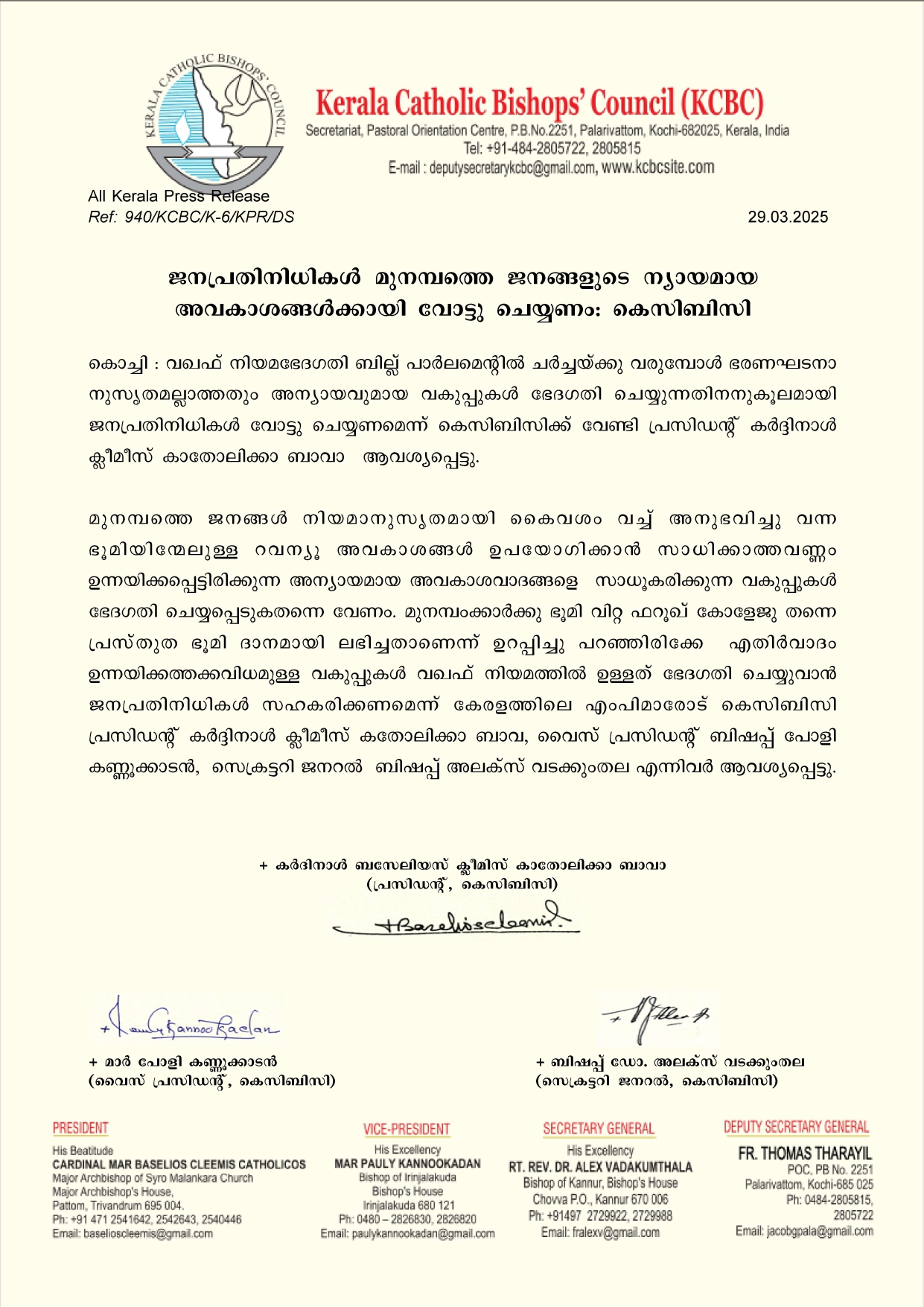
However, the Kerala Catholic Bishops’ Council (KCBC) has recently urged the members of Parliament from Kerala to vote in favour of the Bill when it is tabled for discussion. It sought the amendment of the “unconstitutional and unjust sections” of the Waqf Act.
Through the press release, the KCBC President, Cardinal Clemis Katholika Bava, Vice-President Bishop Polly Kannookkatan and Secretary General Bishop Alex Vadakkumthala urged the Kerala MPs to support the amendments to “objectionable” parts of the Waqf Act.
Soon after, the the Catholics Bishops Conference of India made a similar appeal. “Certain provisions in the existing Waqf laws are inconsistent with the Indian Constitution and against the secular democratic values of the country,” it added.
BJP has been quick to make grounds and gain the confidence of the Syro-Malabar, Latin, and Syro-Malankara Catholic Churches on the Munambam land dispute. Christian votes helped BJP send its first MP from Kerala to the Parliament.
The support is likely to increase in the upcoming State Assembly elections, which are scheduled to be held next year. It can make deep cuts in the Congress vote bank in Kerala.
The Munambam land dispute
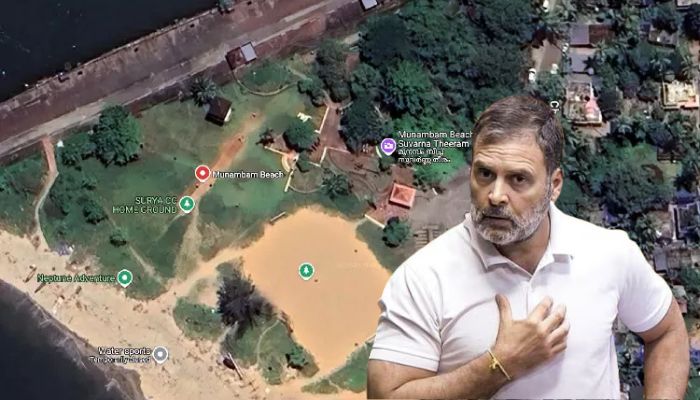
The Munambam waqf land dispute has led to protests and political debates in Kerala. Around 600 Christian and Hindu families are opposing the Kerala State Waqf Board’s claim over 404 acres of land in the Munambam suburb of the Ernakulam district in Kerala. The Waqf Board has asserted that the said land was granted as waqf property in 1950. On the other hand, the residents have argued that they legally purchased the land decades ago. The controversy has gained a lot of traction owing to the bypolls in the state, with political parties using the matter for their own agendas.
The Munambam waqf land dispute revolves around 404 acres of land in the coastal region of Munambam in the Ernakulam district of Kerala. There are 600 families living on the land, constituted primarily of Christians from the Latin Catholic community and Hindus from backward sections. These families have lived on this land for decades. The Kerala State Waqf Board has claimed ownership of the land, citing a waqf deed registered in 1950. The residents, however, have insisted that they own the legal rights to the land as they purchased it decades ago from Farook College, which was once entrusted with its management.
In the 1960s, Farook College started the process to evict residents who were occupying the land, leading to a legal battle. These residents, who lived on the land pockets for generations, did not have the official documentation to prove their ownership. Eventually, the college management decided to have an out-of-court settlement with the residents and sold land pockets to them at the market price.
The sale, however, became another headache, as, according to the documents, the management of the college did not disclose that the land they were selling was waqf property. Instead, they cited a “gift deed” that was registered in 1950 as the basis of the ownership. As the information of the land being waqf property was omitted from the sale information, it became the ground for future disputes. Later, the Kerala Waqf Board argued that the sale of waqf land without the consent of the Waqf Board was illegal under the Waqf Act.
For years, the issue did not become a matter of discussion until 2009, when the Nissar Commission, appointed by the CPI(M)-led government, announced that Munambam land was indeed waqf property. The commission found that the sale of the land initiated by Farook College was unauthorised and recommended that the land sold by the college should be recovered.
In 2019, a decade after the findings were reported by the Nissar Commission, the Kerala Waqf Board decided to act on it and suo motu declared the land as waqf property under Sections 40 and 41 of the Waqf Act, 1995. The Board then instructed the Revenue Department to cease accepting land taxes from the occupants of the land, effectively undermining the residents’ claims of ownership of the land.
In 2022, the Kerala state government overruled the Waqf Board’s directive. However, the Board challenged the decision in the Kerala High Court. The court issued a stay on the state government’s action, leaving the residents in a legal limbo. As of now, several appeals are pending in front of the court challenging claims made by the residents as well as the Waqf Board.
Nadeem Akhtar, another JD(U) leader resigned from the party making him the fifth member to leave over the party’s support for the Waqf Amendment Bill.
His resignation follows that of four other leaders, including JD(U) leader Raju Nayyar, Tabrez Siddiqui Alig, Mohammad Shahnawaz Malik and Mohammed Kasim Ansari.
Earlier, JD(U) leader Raju Nayyar wrote in his resignation, “I resign from JD(U) after Waqf Amendment Bill is passed and supported in the Lok Sabha.”
He went on to express his deep disappointment with the party, stating, “I am deeply hurt by the JD(U) voting in favour of this black law, which oppresses Muslims.”
“I resign from the post of former state secretary of JD(U) youth and primary membership of the party. I request to send a letter to the Honorable CM Nitish Kumar and relieve me from all responsibilities,” he added.
The All India Muslim Personal Law Board (AIMPLB) had urged all secular political parties, including BJP allies and MPs, to oppose the Waqf Amendment Bill.
In a letter addressed to JDU National President and Bihar Chief Minister Nitish Kumar, Tabrez Siddiqui Alig expressed deep disappointment, stating that the party had “betrayed the trust of the Muslim community.”
While, in his letter, Mohammad Shahnawaz Malik wrote, “Millions of Indian Muslims like us had the firm belief that you are the flag bearer of purely secular ideology. But now this belief has been broken.”
Mohammed Kasim Ansari stated that he was resigning as the party’s stance on the Waqf Amendment Bill had “deeply hurt” millions of Muslims.
The resignations comes at a critical time for JDU, as Bihar gears up for the assembly elections.
The Parliament passed the Waqf Amendment Bill 2025 in the early hours of Friday after a marathon and heated debate. Rajya Sabha Chairman Jagdeep Dhankhar said, “Ayes 128 and Noes 95, Absent zero. The Bill is passed.” The Mussalman Wakf (Repeal) Bill, 2024, has also been passed in the Parliament.
(This news report is published from a syndicated feed. Except for the headline, the content has not been written or edited by OpIndia staff)
Speaking at the Startup Mahakumbh 2025 on Thursday (3rd April), Union Commerce Minister Piyush Goel lambasted the Indian startup ecosystem. Calling out the Indian startups for the lack of technological innovations, the Minister drew a comparison of the Indian startups with the Chinese startups. He said that while the Indian startups are limited to food, delivery, and basic consumer products with fancy labels, the Chinese startups are working on semiconductors, electric vehicles, batteries, and Artificial Intelligence (AI).
He displayed a comparative chart of Indian and Chinese startups during the event to drive home the point that while Indian startups are behind the Chinese startups which are leading the global startup landscape by venturing into future technologies.
via X
While the Union Commerce Minister appreciated all the progress that India has made so far, he also warned the young entrepreneurs against thinking small. “We are very proud of what India is now. But are we the best in the world as yet? Not yet. Should we aspire to be or are we going to be happy being delivery boys and girls?” said Goyal. Without mincing words, Goyal said that making fancy ice cream and cookies cannot be called startups.
“Fancy ice cream and cookies…I know at least three or four billionaires whose children make one brand or the other of the very fancy ice cream and cookies, and run a very successful business. I have no complaint against that. But is that the destiny of India? We call ourselves startups by selling these kinds of products with good packaging and labels like healthy ice cream, gluten-free, and vegan products. This is not a startup. This is entrepreneurship. This is business,” he said.
“Look at what the other side is doing- robotics, machine learning, preparing themselves for 3D manufacturing, next generation factories that are more efficient, and they compete with the rest of the world and capture markets. We won’t be there to witness India in 2047. We are the sculptors of India, but you have to make Viksit Bharat 2047 happen. And that is eminently possible,” he added.
India needs to choose between making ice cream and semiconductor chips
The Union Minister said that the investors need to think out of the box and encourage startups focused on technologies like AI, semiconductors, and so on. He said that the country did witness growth in the field of semiconductors and AI but there is a long way to go. “We are developing our own Artificial Intelligence (AI). We are investing heavily to become self-reliant, building chips, AI models. We should prepare the nation for the future. What will India be manufacturing, ice cream or chips (semiconductors)? ” he said. “Instant grocery delivery, latest, hot on the block, I have no problems you can list that a few billion dollars, I am very happy. I only wish they had more Indian investors rather than foreigners buying off all our startups,” he added.
#StartupMahakumbh2025 | Piyush Goyal’s bold message to 'Shark Tanks' | Food delivery vs deep tech
Taking a dig at the investors in the popular TV show ‘Shark Tank’ in which aspiring entrepreneurs present their business ideas before a panel of investors to seek investment, Goyal urged them to change their perspective. “We will all have to show some courage for that. I am saying this to all the investors as well. Aman Gupta, please change your perspective on the Shark Tank,” said Goyal.
Goyal said he did not plan to say all this in his speech. He showed a paper and said that he had received some talking points for his speech. “I had not planned this, by the way. Sitting there, I opened my talking points (he displayed a paper). I read it and I said to myself that the people here have arrived organically, and if I speak a word from this, then I’ll be addressing an empty hall in the third edition of the Startup Mahakumbh.”
Indian entrepreneurs and investors need to think global: Goyal
Goyal challenged the Indian entrepreneurs to expand their vision in order to compete with the global startups. “We’ll need to go global, we’ll need to think big. We’ll need to be ambitious. We’ll need to experiment. We’ll need to go beyond the boundaries of our own thinking. Let’s not limit ourselves to the past. Let’s explore the unknown. And, frankly, when we look at Deep Tech and I look at the numbers; probably a thousand companies or a thousand startups in the Deep Tech ecosystem. These are disturbing signs. Wealth creation in the short term may happen with some of these conveniences. But are we going to be limited to grocery stores only, or do we want to create an identity for India at the global level?
He urged the young entrepreneurs to take advantage of the startup-friendly ecosystem provided by the Modi government for the growth and promotion of the Indian startup ecosystem. He said India is making agreements with countries like the UK, Australia, Bahrain, and even the European Union. “Our ambitions are to compete with the best in the world. With everyone of them, we talk of the startup bridge. But I can’t take them to grocery stores and say this is what India is offering for startups, ” he said.
“Today, under Prime Minister Modi’s guidance and leadership, we are not aiming small. We are not looking at agreements with countries which are in a situation which is even worse than what India is in”, he added.
He appealed to the Unicorns to contribute towards creating “pools of domestic capital” to support startups. He said that Indian as well as global investors should show some generosity while giving clawback to Indian startups, so that young entrepreneurs can retain “respectable ownership” over their hard work. The Minister also proposed certain measures for assisting startups that have not been successful to help them start again.
Maulana Shahabuddin Razvi Barelvi, National President of the All India Muslim Jamaat expressed his support to the Waqf Bill and assured the Muslim community that legislation does not pose any threat to the properties- mosques, dargahs, Eidgahs, or cemeteries of the community.
“This bill is meant to give rights, not take them away,” he said, refuting claims that it would harm the interests of Muslims.
Speaking after the bill was passed in both the Lok Sabha and Rajya Sabha, Razvi expressed his gratitude to the central leadership and congratulated the public on the move.
“I want to assure the Muslim community that there is no threat through the Waqf Amendment Bill–neither to masjids, dargahs, Eidgahs, nor cemeteries. The real threat is to the waqf land mafia, who have looted properties worth crores and acted against the true purpose of waqf,” he stated.
He further urged the community to refrain from protesting against the bill, emphasising that the amendment is designed for their benefit.
Razvi also warned against political misinformation and urged the public not to be misled by rumours.
“I appeal to Muslims not to be influenced by political agendas and not to pay attention to false narratives being spread about the bill,” he added.
Even as some religious leaders have endorsed the Waqf (Amendment) Bill, 2025, dissenting voices within the community have raised concerns, alleging that the bill weakens Muslim rights and was passed without proper consultation with stakeholders.
“They are trying to mix honey with poison and say that this bill is beneficial for us. However, experts within our community have analysed and highlighted the disadvantages of this bill,” claimed Maulana Sufiyan Nizami (Chairman, UP Waqf Tamiro Tarraki Board).
“They (BJP) claim that the government has strategically framed the bill as a measure for the welfare of Muslims, while in reality, it undermines the legal and administrative framework of Waqf institutions. “This narrative is being pushed for political benefits,” he stated.
Maulana Sufiyan Nizami alleged that key stakeholders from the Muslim community were not adequately consulted before the bill was passed.
“The amendments have weakened the authority of waqf institutions rather than strengthening them. This move disregards the religious and community-based significance of waqf properties,” he asserted.
As an opponent to the bill, the Maulana accused the government of using its parliamentary majority to push the amendments without due consideration for the concerns raised by Muslim organizations.
“This has been done purely based on power, ignoring the voices of those directly affected,” they added.
The Waqf (Amendment) Bill, 2025, which has now cleared both Houses of Parliament, continues to evoke sharp reactions.
While some leaders have called it a step toward transparency and reform, critics remain firm in their stance that it diminishes the autonomy and management of waqf properties.
The Lok Sabha, which discussed the Waqf (Amendment) Bill on Wednesday, passed it past midnight after a marathon debate.
The government introduced the revised bill after incorporating the recommendations of the Joint Parliamentary Committee, which examined the legislation introduced in August last year. The bill seeks to amend the Act of 1995 and improve the administration and management of waqf properties in India.
The bill aims to overcome the shortcomings of the previous act and enhance the efficiency of Waqf boards, improving the registration process and increasing the role of technology in managing waqf records.
(This news report is published from a syndicated feed. Except for the headline, the content has not been written or edited by OpIndia staff)
On Thursday (1st April), all Judges of the Supreme Court unanimously agreed to publicly make available the declaration of their assets.
The apex court reportedly decided to boost public confidence in the Judiciary and promote transparency. The decision was taken during a full-court meeting held on Thursday.
The Judges decided to disclose their assets to the Chief Justice of India (CJI) and the declarations would be uploaded on the official website of the Supreme Court.
#BREAKING In a full court meeting held on April 1, supreme court Judges decide that they shall disclose their statement of assets, which will be stated on the Supreme Court Website. The technicalities are being looked at #SupremeCourtpic.twitter.com/XnJwhd2knB
The specifics of the matter will be finalised in due course of time. The development comes weeks after a large pile of unaccounted currency notes was recovered from the residence of Delhi High Court Judge Yahwant Varma.
It must be mentioned that all Judges of the Supreme Court have declared their assets, but they are not available for public access.
The Background of the Controversy
On 21st March, reports emerged that Delhi Fire Services found a pile of cash at Delhi High Court Judge Yashwant Varma’s official residence during a firefighting operation. Reports further suggested that Justice Varma was not at his residence at the time, and an internal inquiry was initiated by the Supreme Court of India. Justice Varma also faced transfer to Allahabad High Court.
However, within 24 hours, the Supreme Court issued a clarification that the collegium’s decision to transfer Justice Varma was not linked to the alleged incident. However, an internal inquiry was confirmed.
Notably, Delhi Fire Services (DFS) ‘denied’ finding any cash during the firefighting operation. Later, DFS chief Atul Garg stated that he had never told any media outlet that firefighters did not find cash at the scene.
When asked why his name was being quoted in the reports, Garg replied, “I don’t know why,” adding that he had already sent a clarification to the media outlets carrying the statement.
The current issue has reignited the discussion over declaring assets by judges, which is currently only optional as per the Supreme Court’s resolution from 1997.
Judges in the Indian judiciary system are required to declare their assets. But there is a catch. It is done internally to the Chief Justice of India, and these asset details are available to the public only on a voluntary basis. That means, if a judge does not want the people of India to know about his or her assets, it is at their discretion.
The practice of internal declaration was established by a 1997 Supreme Court resolution. Public disclosure is not mandatory, which has been reflected by the court’s emphasis on privacy under the Right to Information (RTI) Act, 2005. The stance has also been upheld in several key rulings, including in 2019, that allow disclosure only if a larger public interest is demonstrated.