Home Blog Page 5102

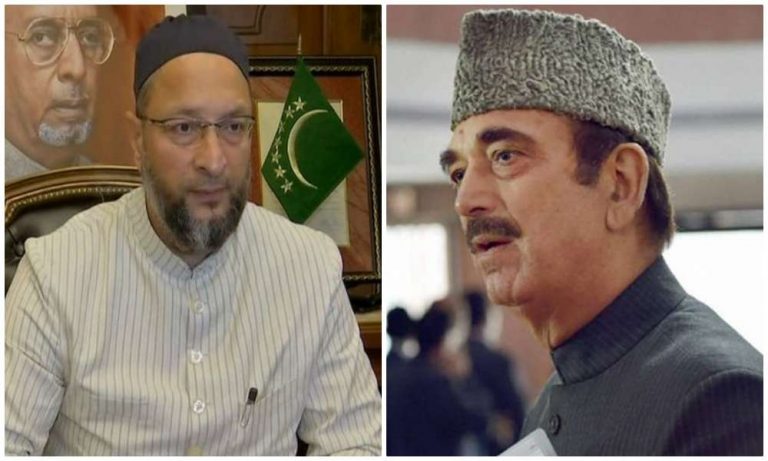
For how long will Muslims remain slave of Congress’ ‘janeudhari’ leadership: Asaduddin Owaisi rubs salt on Ghulam Nabi Azad’s wounds

All India Majlis-e-Ittehadul Muslimeen (AIMIM) chief Asaduddin Owaisi gave a nudge to Congress leader Ghulam Nabi Azad and other Muslim leaders in Congress and asked them for long will they continue to be slaves of the party’s ‘janeudhari‘ leadership. Sonia Gandhi is currently the interim party president at the time of this report.

<

In a tweet Owaisi said that Azad used to refer to AIMIM as ‘Team B’ of the BJP. “Now you’re accused of the same. 45 years of ghulami for this? Now it’s proven that anyone opposing Janeudhari leadership will be branded B-Team I hope Muslims now know the high cost of loyalty to Congress,” he said.

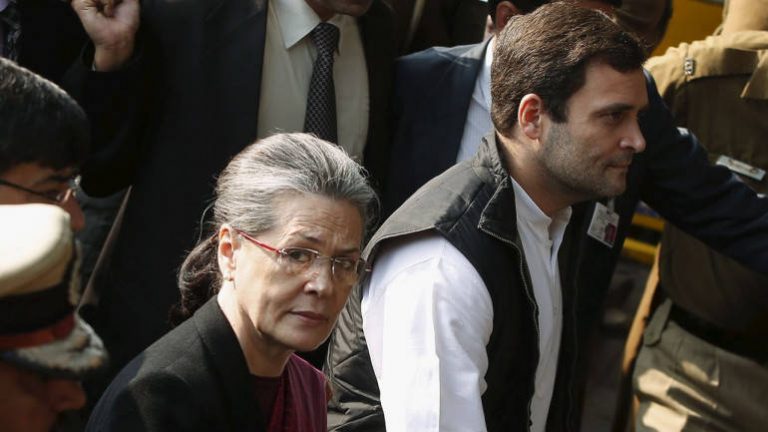
Owaisi was reacting to media reports wherein former Congress President Rahul Gandhi had accused the 23 Congress leaders who wrote to Sonia Gandhi asking to overhaul the existing party structure of ‘colluding with the BJP.

Following this, Ghulam Nabi Azad offered to quit the party. Senior Congress leader Kapil Sibal too had expressed is displeasure at the allegations but deleted his tweet after claiming that Rahul Gandhi personally informed him that he had made no such allegations.

Later, Azad also ‘clarified’ that Rahul Gandhi never made such a statement.

However, as of now it is not yet clear whether Azad has withdrawn his offer to quit Congress or not, considering Rahul Gandhi ‘never said’ what was widely reported.

3 possible explanations why Congress seems to be imploding and a war is brewing between the old and new guard

Congress is in a state of chaos and the party seems to be imploding from the within. The implosion is so grotesque, that much like actual explosions where it takes hours, nay, days, to piece together what really transpired, nobody can truly figure out what is going on at the CWC meet. Essentially, Sonia Gandhi was the interim chief of Congress. Then, news surfaced that she had resigned. Soon, news surfaced that she had not resigned. Then, Congress ‘rebels’, who are essentially loyalists only, write a letter demanding for a full overhaul of the party. In the meantime, “protests” erupted demanding that Rahul Gandhi become the Congress President yet again. Somewhere in between, Priyanka Gandhi Vadra said that a non-Gandhi should become the President but some other Congress members protested and said that the party would disintegrate if a Gandhi was not at the helm to lead them proudly to defeat.

Now, at the CWC, things get even more confusing. Essentially, Sonia Gandhi is acting as the sacrificing queen who only wants what is best for her kingdom (Congress) and her successor to the throne (Rahul Gandhi) while Rahul Gandhi is acting as the Laltu Chele (Mama’s boy) who wants to uphold his mother’s reigning honour and legacy.

To that effect, Sonia Gandhi first said that she is giving the party time to find her replacement and after they do, she will be stepping down from her position as the Congress President – As a section of the leaders want. Reportedly, Rahul Gandhi was unhappy with the letter of dissent and raised questions over the timing of the letter. However, after media reported that he had said that those leaders (which included Kapil Sibal) were colluding with BJP and Kapil Sibal’s meltdown, Sibal clarified that Rahul had ‘personally’ assured him that he had said no such thing.

In the meantime, AK Antony reportedly said that the letter by rebel Congress leaders was ‘cruel’ and Ghulam Nabi Azad, after hailing Sonia Gandhi, offered to resign.

Essentially, amidst this entire chaos that the Congress party seems to have become, only one thing seems to be certain – there is a section that wants Sonia Gandhi to continue as the President of Congress and there is another section that wants Rahul Gandhi to continue.

However, the “internal rift” trope becomes slightly difficult to believe since Congressmen are often more loyal than the queen herself and that the Congress party would rebel against the Gandhi seems unthinkable.

Then what really is happening? Is this the old guard vs news guard battle? Is the old guard Sonia Gandhi and the new guard Rahul Gandhi?

Here are the three explanation we think could explain the confusion and chaos in Congress currently:

Gandhis vs Outsiders

This might seems like what could be happening, especially after Priyanka Gandhi Vadra randomly said that a non-Gandhi should become the President of the Congress party next, however, this is highly unlikely.

One could think that finally, with all the talk about nepotism, the ouster of a leader like Jyotiraditya Scindia, the almost ouster of Sachin Pilot and the downright terrible leadership provided by Rahul Gandhi, the Congress leaders may just have grown the hint of a spine and decided that it was time the Congress party was cleansed of the Gandhi clan.

However, a mass uprising that could affect any form of change is unlikely in the Congress party. Even in the past, there were dissenting voices who thought that a change of guard was long over-due, however, while the pretence to take them seriously was put on diligently, eventually, they were ousted and the reign of the Gandhis continued.

While long-time loyalists like Ramchandra Guha, who are not the sole recipients of the gravy train anymore, theorise that a non-Gandhi must lead the party now, it seems unlikely that his dreams would be realised.

Old Guard vs New Guard

When there is a battle, the central subject of which is whether Sonia Gandhi or Rahul Gandhi should lead the party, the obvious conclusion one can draw is that it is the battle between the old guard of the Congress party vs the new guard. Which is to say, that the battle is between Rahul Gandhi and his supporters vs Sonia Gandhi and her supporters.

However, the interpret the battle as the ‘old guard’ being Sonia Gandhi and the ‘new guard’ being Rahul Gandhi could be fallacious. The battle seems to be far more between the new crop of leaders who resort to ugly name calling and sub-intellectual ranting with zero finesse versus the old group of leaders who peddled the same nefarious agenda but with some semblance of panache. For example, the reactions of Divya Spandana and Pallavi Ghosh are rather telling in this aspect.

When the news of Rahul Gandhi accusing Kapil Sibal and the others of working in tandem with the BJP arose (later rumoured to be false), Pallavi Ghosh, who is a Congress loyalist, immediately jumped into action to defend the senior leaders.

She said that the leaders can be criticised for writing the letter, but accusing them of helping BJP is ‘not done’.

Contrast this to the response by Divya Spandana.

Responding to the now-deleted tweet by Kapil Sibal, Spandana said that Rahul Gandhi should have said that the leaders who wrote the dissenting letter were not only colluding with BJP but also with the media.

It should also be kept in mind that while old leaders like Sibal dissent, young and uncouth leaders like Hardik Patel support the Rahul Gandhi camp.

Thus, to assume that the fight is between Sonia Gandhi and Rahul Gandhi could be off the mark. The fight, essentially, seems to be between a ruffian group that supports Rahul Gandhi and the traditional political class that would prefer Sonia Gandhi’s methods of rule.

Fight for resources: Memes or Media?

While the old leaders and young turks fight it out, the chaos in the Congress party could well be about the distribution of resources. With their electoral downfall, one can possibly imagine that the resources at the disposal of Congress, to invest in the media and to ensure that Rahul Gandhi ‘comes of age’ against would be limited.

In such a scenario, the destruction of resources would be paramount. One would imagine that Sonia Gandhi would want to employ resources in traditional media and journalists instead of Twitter trolls. However, Rahul Gandhi would be more incline to investing in a Twitter army and meme makers as we have seen in the past.

The contrasting tweets by Pallavi Ghosh and Divya Spandana could be a testament to the fact. Rahul Gandhi had planed immense faith in Spandana, who used to spread fake news, share offensive memes and quotes as a political weapon against the BJP. However, Pallavi Ghosh, while loyal to the Congress, had a bit more finesse in peddling the Congress agenda.

Essentially, while Congress is firmly in the throws of chaos, the battle does not seem to be between Sonia Gandhi and Rahul Gandhi as much as their supporters who are looking for their own place in the gravy boat.

ISIS terrorist Abu Yusuf influenced by Zakir Naik, wanted to retaliate against Ram Mandir construction. Here is what we know so far

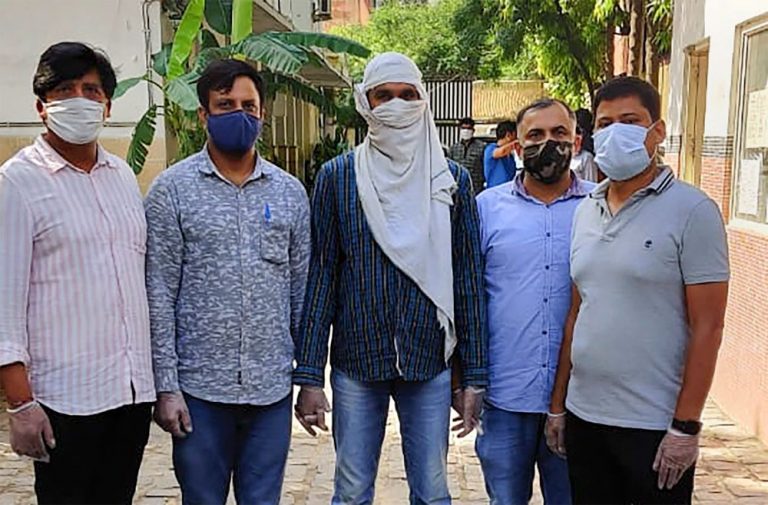
On 22nd August, Delhi Police arrested an ISIS operative from New Delhi after an encounter. The Police got the information about him from Intelligence Agencies after which he was nabbed. During interrogation and search in his house in Uttar Pradesh’ Balrampur, a lot of updates followed. Here is what we know about Abu Yusuf and his case so far.

  • On 22nd, Delhi Police arrested Abu Yusuf after an encounter from the Dhuala Kuan area. Police recovered explosives and weapons from him. The police recovered a pistol, live cartridges, and approx 15 KG IED from Yusuf along with two pressure cookers. IEDs were diffused with the help of the Bomb Disposal Team of National Security Guards (NSG).
  • Teams of central agencies, Delhi Police and UP Police ATC, questioned him.
  • After his arrest, Delhi and Uttar Pradesh have put on high alert especially Ayodhya, Noida, and National Capital. Police carried out multiple raids in Delhi and UP to find his other associates.
  • During the initial interrogation, Yusuf told the police that he, along with his group, was planning a major terror attack as a retaliation to the construction of Ram Mandir in Ayodhya.
  • He informed the police that he was in touch with his handlers in Afganistan and later police found out that he was in contact with handlers in Syria and Pakistan as well.
  • DCP Special Cell PS Kushwah said in a statement that he was planning to carry out lone-wolf attacks in a crowded area in Delhi. According to the reports, he told the police that he did a recce of several places that can be considered as potential targets for terror attacks.
  • Police booked Yusuf under the Unlawful Activities (Prevention) Act. He was sent to police custody for eight days.
  • He spent five years from 2006 to 2010 in Saudi Arabia. Security agencies believe that this was the time when he came in contact with the radicals and started operating as a sleeper cell for ISIS.
  • Yusuf revealed that he had planned to move to Khorasan in Afghanistan along with his family but his handler Huzaifa died in 2019 that forced him to stay in India.
  • His first handler was Yusuf-al Hindi who was killed in Syria in 2017. Abu Haziafa Al Bakistani, a Pakistani took over for Hindi who was killed in drone strikes in Afghanistan. After that, a different handler was in contact with Yusuf who was helping him in carrying out attacks in India.
  • Reports suggest that security agencies were keeping an eye on him from last year. He had planned to detonate bombs on 15th August, but it failed.
  • Recent reports suggest that he was highly influenced by the Islamic Preacher Zakir Naik who fled from India and took shelter in Malaysia. The Malaysian government had given him a permanent residency.
  • The security agencies took Yusuf to his native place in Balrampur Uttar Pradesh to search his house. The police found bomb jackets, explosives and inflammatory material at his residence.

Reactions of Yusuf’s family

Yusuf’s father claimed that he did not know about his intentions, and if he had known, he would have thrown him out of the house.

Yusuf’s wife tried to play the poverty card and said that he should be forgiven as she has four children, and without a husband, it will be difficult for her to manage her house. Interestingly, his wife knew that he had been hiding explosives at home, but she never cared to inform the police or anyone about it.

Fact-check: Did Bababhai Pathan from Ahmednagar ‘adopt’ two ‘orphan’ girls and married them off as per Hindu rituals?

Recently, social media websites were flooded with a heart-warming story of a Muslim man ‘adopting’ two girls and later marrying them off as per Hindu rituals.

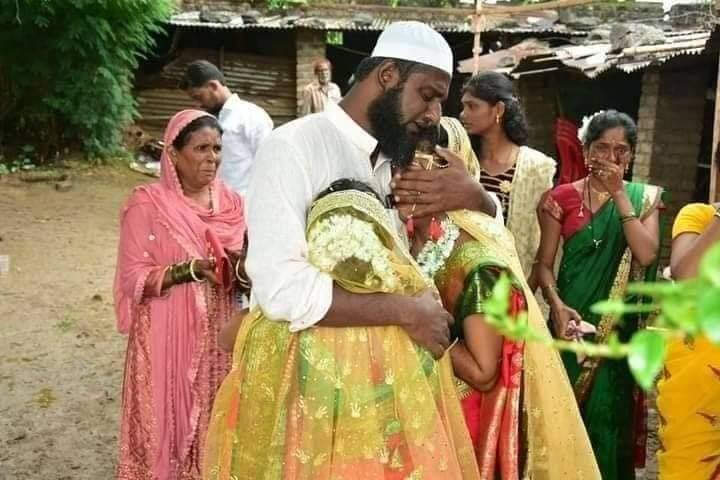
According to the several reports in the media, a Muslim man, Bababhai Pathan, who hails from Ahmednagar district in Maharashtra, ‘adopted’ two orphan sisters and organised their wedding from his own expenses in accordance with the Hindu rituals.

The same story was picked up by an IPS officer Dipanshu Kabra, posting a tweet lavishing praises on Bababhai Pathan for ‘adopting’ two orphan girls and marrying them off as per Hindu traditions. Lauding Pathan’s gesture, Kabra hailed the Muslim man as a totem of unity and humanity and asserted that it is due to people like him that the faith and trust of crores of people on humanity remains resolute.

The brides’ are not orphans as claimed in the media

However, contrary to the media reports claiming that the Muslim man ‘adopted’ the orphan girls and in a benevolent gesture and married them off according to the Hindu customs, the brides were neither adopted, nor orphans and their mother is still alive.

According to popular Marathi blogger and columnist Sameer Gaikwad, Bababhai Pathan was a rakhi brother of the bride’s mother and he performed the rituals of a maternal uncle at the wedding of the two daughters of the Bhusare family in Bodhegaon of Ahmednagar. The mother of the brides ties rakhi to Bababhai Pathan every year because she doesn’t have a biological brother.

After it came to the fore that the girls were not orphans ‘adopted’ by Bababhai Pathan as being bandied about in the media and the weddings were organised by the mother of the girls, IPS Kabra corrected himself by issuing a clarification tweet on the incident.

Clarifying assertions made in his previous tweet, IPS Kabra said that he was updated from media sources that the two sisters were not orphans and that their mother ties rakhi to Bababhai Pathan every year as she doesn’t have a real brother.

Cracks in Yadav household? Tej Pratap Yadav, son of fodder scam convict Lalu Yadav, tweets cryptic tweet on ‘thieves’ who looted Bihar

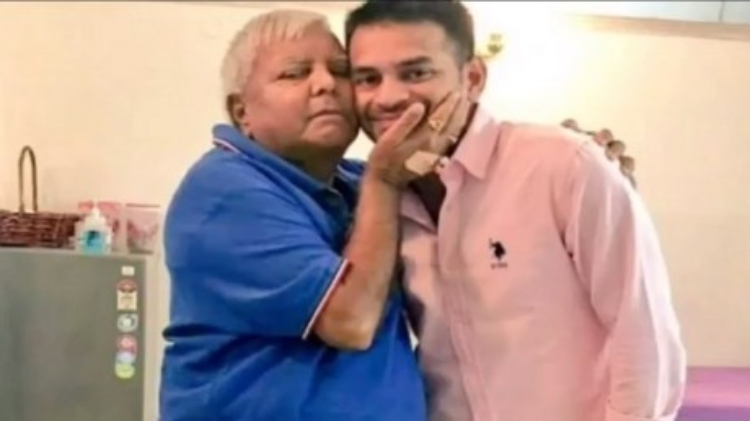
The multi-crore fodder scam convict Lalu Prasad Yadav’s eldest son Tej Pratap Yadav has taken to social media today, to write a cryptic Tweet on ‘thieves’ who looted Bihar.

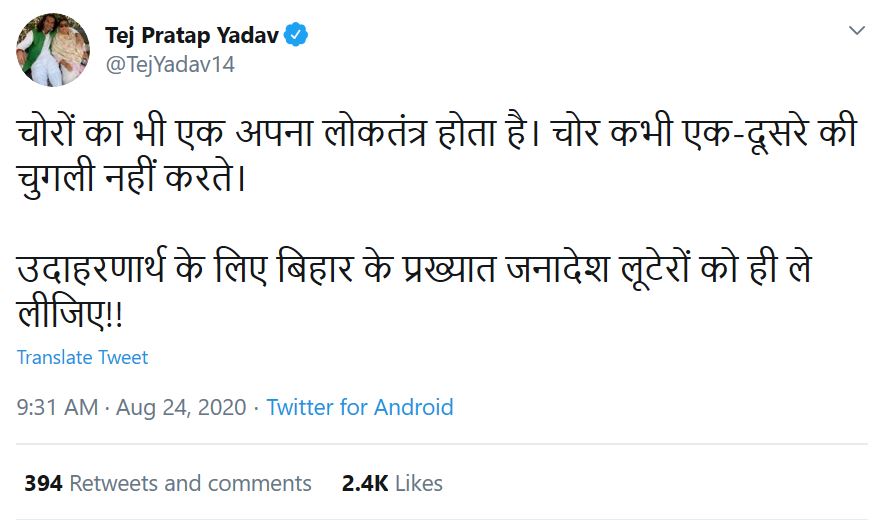
Giving his two cents on the basic characteristics of ‘thieves’, the Bihar’s former cabinet minister for health, Tweeted in Hindi: “चोरों का भी एक अपना लोकतंत्र होता है। चोर कभी एक-दूसरे की चुगली नहीं करते। उदाहरणार्थ के लिए बिहार के प्रख्यात जनादेश लूटेरों को ही ले लीजिए!!”, roughly translated as “Thieves also have their own democracy. Thieves never cheat each other. Take, for example, Bihar’s famous mandate looters”.

Tej Pratap Yadav’s tweet

This cryptic Tweet by Tej Pratap, got the ball rolling for the Netizens, who asked whether the Tweet was directed towards his father, who has been serving a jail sentence after he was convicted in four fodder scam cases.

A Twitter user wondered whether the son has taken upon himself to narrate his father’s story.

Many Twitter users started dedicating memes to Tej Pratap Yadav and his father Lalu Prasad Yadav convicted in a corruption scandal that involved the embezzlement of about Rs 900 crores from the government treasury of the state of Bihar.

The multi-crore Fodder scam

RJD President and former Bihar Chief Minister Lalu Prasad Yadav has been convicted in four fodder scam cases and was awarded up to 14 years of imprisonment. Two decades have passed since the multi-crore fodder scam was unearthed. It involved many politicians and bureaucrats siphoning off several crores of rupees, on the pretext of purchasing fodder, medicines and animal husbandry equipment for ‘vast herds of fictitious livestock’ over a period of 20 years.

The scam was unearthed by then finance commissioner VS Dubey who stumbled upon financial irregularities of massive proportions while reviewing the performance of various departments of the Bihar government. He found out that money was withdrawn in excess of the allocation by some of the departments and the animal husbandry department topped the list of withdrawals.

Lalu Prasad Yadav, father of Tej Pratap Yadav and ex-Bihar CM convicted in four fodder scam cases

A special CBI court in 2013 had convicted Lalu Prasad Yadav in the first fodder scam case involving the withdrawal of Rs 37.7 crores from the Chaibasa treasury. Lalu was pronounced guilty in another fodder scam case involving the Deoghar treasury of Rs 89 lakhs in December 2017. After this, both Lalu and Jagannath Mishra were found guilty of the third fodder scam involving the Chaibasa district treasury of Rs 33.67 crores. Lalu Prasad was sentenced to five years of jail term and a fine of Rs 10 lakhs. In March 2018, a special CBI court in Ranchi pronounced RJD chief Lalu Prasad Yadav guilty in the fourth fodder scam.

Imprisoned in Jharkhand, the former CM of Bihar has spent a large part of his sentence undergoing treatment at the RIMS.

Robert Vadra’s self-proclaimed ‘chela’ and ‘gold buddy’ roots for the Gandhis, says no ‘outsider’ can be Congress president

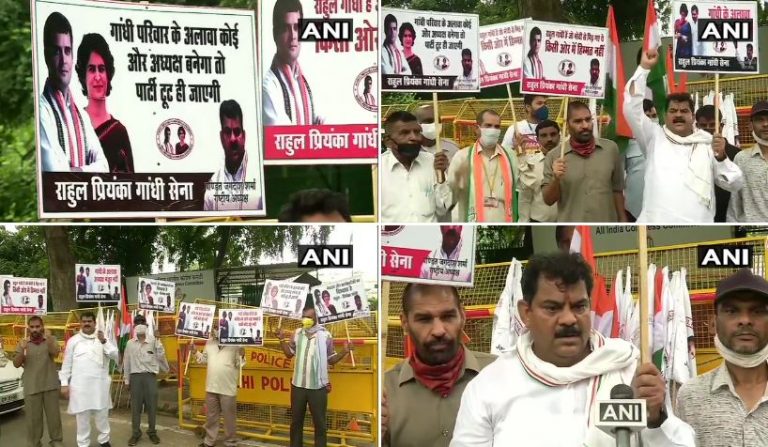
A day after Congress interim president Sonia Gandhi wrote to the party leaders, asking them to get together and find a new chief, son-in-law, Robert Vadra’s self-proclaimed ‘chela’ and ‘gold buddy’, Jagdish Sharma has been relentlessly staging dharna and raising slogans outside AICC office demanding that the Party’s reigns should remain in the hands of the Gandhi family only.

“We want Party President from Gandhi family only. Party will be destroyed and break away if any outsider is made President,” Robert Vadra’s ‘chela’ was quoted as saying by ANI.

Reportedly, Captain Amarinder Singh had also opposed the idea of a non-Gandhi president of the Congress party and has called that the attempt by a few leaders to seek a change in the leadership as a bid to weaken the party.

Jagdish Sharma and his unfaltering loyalty towards Vadra

It is probably Jagdish Sharma’s unfaltering loyalty towards the Gandhi family’s son-in-law that has deliberated him to engineer the protest wherein he asserts that no ‘outsider’ can be Congress president. Sharma is the same person who had held protests, after Congress’ 2014 election debacle, demanding that Priyanka Gandhi Vadra be brought into active politics to ‘save the party’.

In fact, Sharma has always been very vocal about his proximity to Robert Vadra. In 2012 after hurling a shoe at AAP Supremo Arvind Kejriwal, Sharma had boasted of being Vadra’s ‘Gold Buddy’. Similarly, in December 2018, Jagdish Sharma had asserted that he was “Vadra Sahab’s chela”.

Sonia Gandhi to step down as Congress interim president, say reports

Meanwhile, Sonia Gandhi has reportedly told her aides that she does not want to continue as interim Congress president. This came amid a massive controversy over a letter by 23 top party leaders calling for sweeping reforms, introspection and “a full-time, visible leadership”. The letter suggests that the Gandhis, who has led the party for most of the years since its inception, can remain an “integral part of the collective leadership”.

Sonia Gandhi has decided that the matter will be discussed at the Working Committee meeting today.

PM Modi announces 500-bed Covid-19 makeshift hospitals at Patna and Muzaffarpur under PM CARES Fund Trust

0

Prime Minister Narendra Modi has announced that PM CARES Trust Fund has decided to allocate funds to establish 500-bed makeshift hospitals for treating Covid-19 patients in Patna and Muzaffarpur.

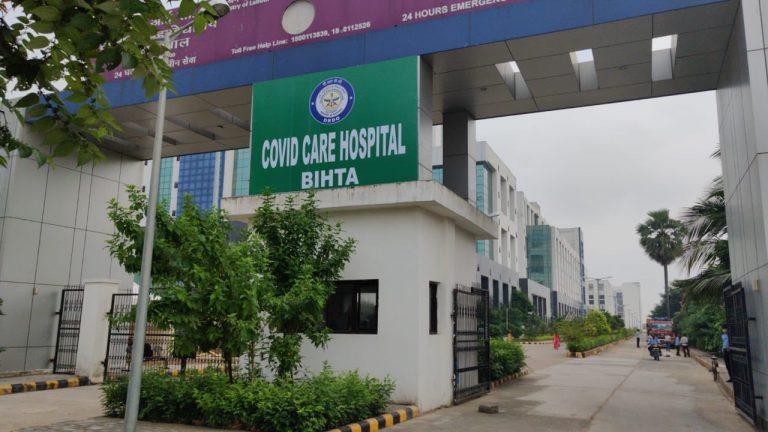
The hospital at Bihta, Patna will be inaugurated today. The hospital in Muzaffarpur will be inaugurated soon, PM Modi wrote in a tweet.

He informed that each hospital would have 125 ICU beds with ventilators and 375 normal beds. Every bed will have oxygen supply, and the Armed Forces Medical Services will provide doctors and paramedical staff for these hospitals.

PM CARES Fund

PM CARES Fund was set up earlier this year in wake of Chinese Coronavirus outbreak. In June it was reported that 14,000 ventilators will be delivered to states across India using PM CARES fund soon. Earlier, the government had earmarked Rs 2,000 crore from the fund to provide 50,000 ventilators to states and union territories, which would double the existing capacity of ventilators.

The public charitable trust with the name ‘Prime Minister’s Citizen Assistance and Relief in Emergency Situations Fund’ (PM CARES Fund)’ will be a dedicated national fund with the objective of dealing with any kind of emergency or distress situation, like the current Covid-19 pandemic. Prime Minister is the Chairman of this trust, and its members include Defence Minister, Home Minister and Finance Minister. 

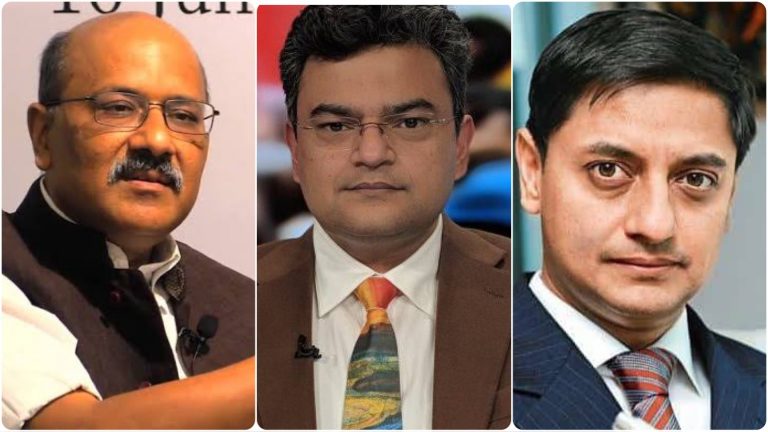
Shekhar Gupta falsely accuses authors Sanjeev Sanyal, Anand Ranganathan and Sanjay Dixit of bullying Bloomsbury into withdrawing book on Delhi riots

As the controversy surrounding the abject capitulation of Bloomsbury to the pressure mounted by the liberal establishment to de-platform a book on Delhi Riots 2020 intensifies, ‘The Print’ founder Shekhar Gupta has levelled false accusations against authors Sanjeev Sanyal, Dr Anand Ranganathan and Sanjay Dixit.

In his video show ‘Cut The Clutter’, Gupta absolved the liberals from coercing the Bloomsbury publication to backtrack on its decision to publish a book on Delhi Riots 2020 and instead wrongly pinned the blame of threatening Bloomsbury on authors Sanjeev Sanyal, Dr Anand Ranganathan and Sanjay Dixit.

In the above clip from Gupta’s video show ‘Cut The Clutter’ on YouTube, it can be seen that Gupta announces that some ‘prominent authors’ had threatened to withdraw publishing of their books with Bloomsbury if they do not stop the Delhi Riots book by Monica Arora. With a blatant and abject misrepresentation, the video then shows the tweets of Sanjeev Sanyal, Anand Ranganathan and Sanjay Dixit.

Surprisingly, Gupta does not name the persons, the ‘secular-liberals’ who actually pressurised Bloomsbury to de-platform the above-mentioned book.

Shekhar Gupta blames Sanjeev Sanyal, Dr Anand Ranganathan and others for Bloomsbury’s capitulation to ‘Liberals’

Gupta, who also happens to be the President of The Editors Guild of India, alleged in the video that the decision of Bloomsbury to cancel the publication of the book on Delhi Riots 2020 was taken after authors such as Sanjeev Sanyal, Dr Anand Ranganathan, Sanjay Dixit and several others, who have published their books with the publication house, threatened to sever their ties with the organisation.

In reality, Sanjeev Sanyal, Dr Anand Ranganathan, Sanjay Dixit, Shefali Vaidya and several other authors, took to Twitter to condemn Bloomsbury’s arbitrary decision of withdrawing the publication of the book ‘Delhi Riots 2020: The Untold Story’ by authors of Monika Arora, Sonali Chitalkar and Prerna Malhotra. As a consequence of the Bloomsbury’s unprofessional behaviour, many authors also announced that they will no longer be associated with an organisation that actively partakes in suppressing Freedom of Expression.

Tweets posted by Sanjeev Sanyal, Dr Anand Ranganathan were meant to condemn the arbitrary de-platforming of the book by Bloomsbury

The tweets posted by the authors, which were shown in Gupta’s video as the ones ‘threatening’ Bloomsbury, were in response to the Bloomsbury’s abject surrender to the pressure from the liberal intelligentsia, who were rattled at the publication house for providing their platform for a contrarian viewpoint on the Delhi Riots 2020. However, Gupta twisted the grievances raised by the authors about the publication house’s unacceptable behaviour and misrepresented them, claiming Bloomsbury withdrew the publishing of the book after the tweets posted by the aforementioned authors.

Authors demand clarification from Gupta for the dishonest presentation

Gupta’s dishonesty was promptly called out by author Sanjeev Sanyal, who in his tweet called out ‘The Print’ founder for blatantly misrepresenting him and Dr Anand Ranganathan. Clarifying his stance, Sanyal said that contrary to what Shekhar Gupta had presented in his ‘Cut The Clutter’ video, he and Dr Ranganathan had been advocating Freedom of Expression and are protesting against the cancellation of the book by the publication house.

Dr Anand Ranganathan also posted a sharply critical tweet addressed to Shekhar Gupta for peddling lies about him and Sanjeev Sanyal. Dr Ranganathan asserted that Gupta is an embarrassment to his profession and that his analysis on the book cancellation by Bloomsbury was immature and replete with lies and falsehoods. He also threatened to sue Shekhar Gupta for giving a false account of tweets by him and Sanjay Sanyal.

Soon after Gupta and ‘The Print’ were called out for their skulduggery, the video posted on YouTube was made ‘private’, so as to refrain the users from watching it.

Shekhar Gupta apologises

Shekhar Gupta, on his part, apologised and re-shared the video after editing the portions that were misrepresenting the authors.

In his tweet, Shekhar Gupta said that in the original video, there were some errors and he was sorry about them.

Bloomsbury surrenders to the leftist online mob, de-platforms Delhi riots book

Bloomsbury India kicked had up a storm after it decided to withdraw the publication of the book ‘Delhi Riots 2020: The Untold Story’ by authors Monika Arora, Sonali Chitalkar and Prerna Malhotra. In a statement, the publication house cited a ‘virtual pre-publication launch organised without our knowledge by the authors’ as one of the reasons for its decision.

Bloomsbury India said that they had planned to release the book, a factual account based on investigation and interviews conducted by the authors, in September 2020 but they have rescinded their decision.

The publication house further added, “However, in view of very recent events including a virtual pre-publication launch organised without our knowledge by the authors, with participation by parties of whom the Publishers would not have approved, we have decided to withdraw publication of the book.”

Even as the Bloomsbury informed that they are withdrawing the book, it was marked as unavailable on e-commerce site Amazon. Before that, the book was available for pre-order, and a large number of people had pre-ordered the book ahead of its planned launch in next month.

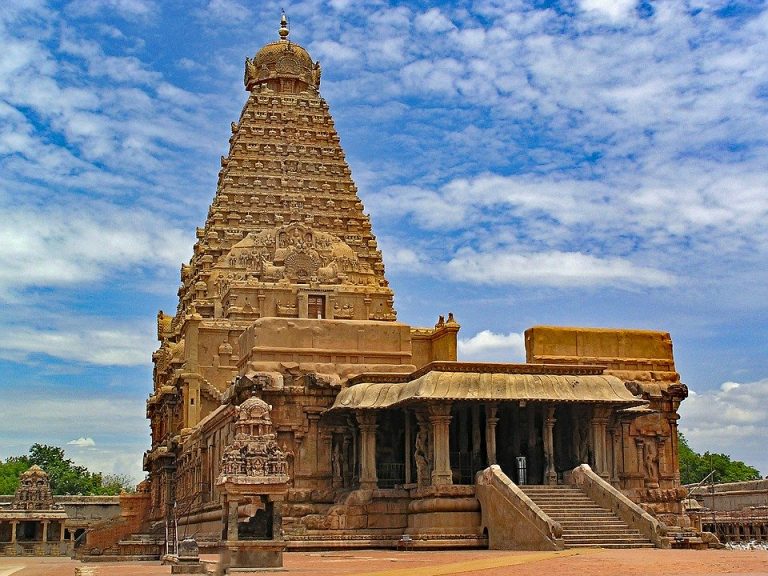
Insistence on representation of every caste among the Temple trustees: A colonial idea that endangers Temple tradition

In the ongoing discussion about state entrenchment in Hindu Temples, we come face to face with the question of what the alternative system would be, were the State to make a long-overdue exit, and whether it would be duly “democratic”. In our previous article, we spoke about how the democratic process that is being proposed may be counterintuitive to the values of Hinduism and what makes our temples truly sacred for devotees.

However, another issue that has come up in this discussion is that question of caste representation among the Temple trustees to avoid caste-discrimination.

Coming to issue of caste representation among Temple trustees, an insistence upon due representation by way of members of every caste being elected to administrative roles would be an error of gargantuan proportions. A Temple is not a public or parliamentary body, to ensure equal representation. 

On the ground, elections are often won by those that enjoy the most political and financial clout, and Temples would turn into a second Lok Sabha. Besides, there wouldn’t be much distinction between the current system of government appointees handling Temple affairs and this proposed system – and we’ve seen with our very eyes how disastrous it has proven to be. 

In essence, the restoration of traditional systems of administration, or certain communities having control particular religious institutions doesn’t necessarily amount to discrimination, but in fact, contributes to the preservation of the identity, legacy and continuance of the character of that particular Temple. 

Interventions in the name of social justice cannot be made at the cost of ancient traditions. This would mirror the current paradigm of the Indian state, in which there is superimposition of the principles of a secular state or western constitutional ideals onto already pluralistic and henotheistic religious institutions. 

Even the contention of exacting individual rights over those conferred upon an individual by virtue of being a devotee, in the name of egalitarianism, would amount to a disservice to the systems of governance, administration, and public policy that have existed in Bhārat well before the advent of colonialism. In this vein, the secular modern Indian state needs to maintain an equal distance from Hindu religious institutions, just as it does to those of other faiths, in the interest of protecting India’s pluralism and diversity.  

Temples, once free to administer themselves, must also be granted the unconditional right to employ any and all means in order to adhere to their sampradāya. Only if every jātivarna, village or religious denomination reserves the right to propagate unchanged, their particular “brand” of Hinduism in any manner they deem fit; only then will we be able to protect the collective diversity of our faith as a whole.

Therefore, while every Hindu has certain basic rights with respect to every Temple, when it comes to demanding a role in their management, there are multiple caveats. Ideally, the administration must not be monopolized by any one individual or members of a certain caste. Anyone should be able to partake in rituals or ceremonies, yet meritocracy and quality are a priority and must not be compromised. An injection of social justice where unwarranted can result in a loss of the sanctity and specificity of the Deity’s rituals, and irreparable damage to the heritage of the institution. 

It would be quite simplistic, or one might even say reductionist, to apply the same equalizing principles that are ordinarily applied to secular institutions, uniformly to thousands of Temples across the Hindu fold, which are immensely pluralistic and heterogeneous. We have Temples with unique traditions as old as time, and it is imperative to respect and preserve each tradition by applying the appropriate principles on a case-by-case basis, in the most integrated manner possible.  

Apart from jāti-specific religious practices, jāti-held traditional knowledge is also dependent, to some extent, on the survival of the birth-based or hereditary system. Temples customarily provide a large inter-reliant ecosystem that facilitates the preservation of Temple-dependent or Temple-sanctioned trades (such as florists, classical musicians, mahouts, etc.) and indigenous art.

Skilled artisans involved in this auxiliary system are tied with the health and prosperity of the Temple – for example, the craftsmen with the traditional knowledge of metal sculpture, or those with ultra-niche skills as in the case of the parrot-maker of the Srivilliputhur Temple (that makes, each day, a parrot with leaves and flowers from the Temple garden, used to adorn the goddess Andal every evening).

The survival of many jātis and the unique knowledge they possess is, in many ways, linked to Temples, and making make blanket statements about prejudice based on caste is not constructive. There is a need to safeguard the existing ecosystem rather than fantasize about utopian alternatives that do not do our Temples justice.

There are hundreds upon thousands of Temples set up in our country by local groups belonging to a multitude of jātisvarnas, and tribes, some with syncretic and some with traditionalistic structures. An innumerable portion of these is owned and operated by non-brahmins. They collectively subscribe to a set of ideas and establish shrines or charitable institutions based on their beliefs. 

The individuals that fund the construction of the Temple are generally placed in charge of the trust. Must these Temples also be subject to “caste equality” or “dismantling of caste identity”? Especially in such cases, pressuring a community to divorce their identity from the Temple, which they have the legitimate right to retain, would result in an irreparable dilution of the very spirit upon which it was conceived.  

In the case of Temples that are several thousands of years old, with a certain richness of heritage, bequeathed with substantial immovable properties, whose history of administration has been long-winded – changing hands multiple times over the centuries, the situation may not be so straightforward, for where there is considerable wealth, there will always be a special interest in its management.

These Temples were historically patronized by local kings under whose jurisdiction the Temple fell, and were administered through certain appointees or ministers of the king; while at the core, the bearers of the hereditary sampradāya, the archakas, presiding acharyas etc. remained largely unchanged.

While we are not a Hindu monarchy anymore, the situation has turned a 180 – with the state actively leeching off Temples, treating them as cash cows instead of funding them with benevolence worthy of our country’s dharmic legacy. Administrative decisions, both financial and religious, are often placed in the hands of “secular” government appointees.

The politicization of Temple control, members of successive political parties whimsically entering and exiting Temple trustee positions every election cycle, and using Temple trusteeship as a bargaining chip for political power has been the norm for the past few decades. 

Government appointees to Temples, with utter disregard for the heritage of the Temple and the Deity, operate solely for personal, financial, and political gain. This has resulted in the loss of agency and authority of those that are responsible for adherence to Temple traditions and genuinely concerned with the fate of the Temple – inadvertently resulting in moral deterioration and a grave injustice to the Temple’s founding principles.  

It is entirely possible to retain each of Bharat’s Temples’ unique traditions by simply reverting to trustee control, yet buttressing it with appropriate checks and balances. Financial transparency could potentially be guaranteed by conducting frequent audits through outside agencies and publishing all financial information related to the Temple periodically.

While priesthood* must, to some extent, be democratized, it mustn’t come at the cost of compromising integrity. In Temples across Tamil Nadu, hundreds of Temples have non-brahmin priests, and of course, this is completely acceptable as long as they are adequately trained in the intricacies of that sampradāya.  

*Here, state role in impoverishing priests and disincentivizing priesthood as a viable livelihood must be mentioned. A majority of priests in state-managed Temples across the country are grossly underpaid, disrespected, and hence are understandably disenfranchised. Veda pathasalas have already been dealt the worst possible hand, and have virtually no takers while income prospects from such a traditional education are so grim. The priesthood has essentially been devalued both in society and monetarily when in actuality, it should have been immensely funded and treasured.   

To the state, Temples aren’t just about money but also about the exertion of political will through control of Hindu institutions. As long as Hindus are functionally castrated without free access to their own resources, they can be manipulated by political parties. Driving wedges amongst Hindus over trivial caste issues is the agenda of the “left”, that seeks to suppress our efforts to regain control of Temples and destroy what we’re desperately trying to build.

Unfortunately, caste division is a tried and true, time-tested colonial strategy to crush any prospects of Hindu unity. We must be careful not to take the bait so readily. 

Donald Trump’s campaign releases video featuring PM Modi to woo Indian-American voters ahead of elections

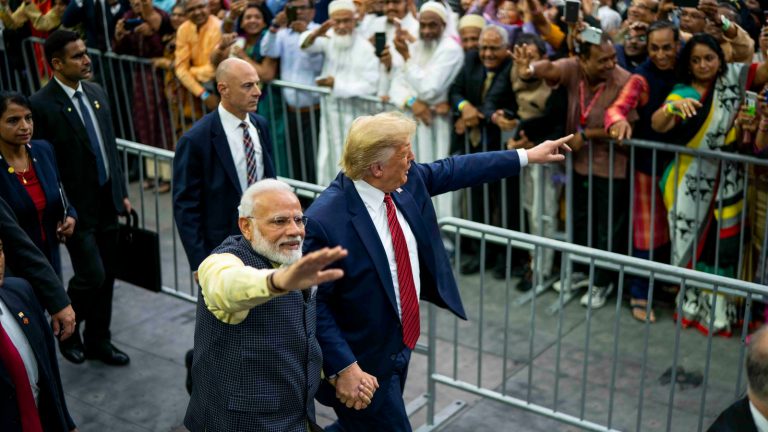
With less than two and a half months to go for the United State of America’s presidential elections, the Donald Trump campaign has released a video featuring Indian PM Narendra Modi. The 1.47-minute video commercial with snippets from this year’s “Namaste Trump” and last year’s “Howdy Modi” events, is an attempt to woo more than 2 million Indian-American voters to give “4 more years” to the incumbent president of the USA.

The national chair of the Trump Victory Finance Committee, Kimberly Guilfoyle took to the microblogging site to share the short video clip, while she wrote: “America enjoys a great relationship with India and our campaign enjoys great support from Indian Americans!”

The video begins with the address of PM Narendra Modi to a packed stadium during his visit to Texas in September last year. “Mr President, you had introduced me to your family in 2017,” says, PM Modi, in a clip from the ‘Howdy Modi’ event in Houston last year. Gesturing towards the cheering audience, he adds: “And today, I have the honour to introduce you to my family.”

The clip then cuts to the “Namaste Trump” event in Ahmedabad in February this year. “America loves India,” Trump says in the video. “America respects India, and America will always be a faithful and loyal friend to the Indian people.” The video also features Trump and Modi exchanging pleasantries with each other and waving to the crowds with First Lady Melania Trump.

The video has been released hours ahead of the Republican party’s convention that will officially nominate Donald Trump for a second term on Monday. Americans will elect its next president on November 3, 2020.