The human trials of the coronavirus vaccine COVAXIN, developed by Bharat Biotech, have begun at Rohtak’s Post-Graduate Institute of Medical Sciences on Friday, Haryana Health Minister Anil Vij tweeted. The Harayana state minister also said that there have been no adverse side effects reported on the subjects so far.
“Human trial with Corona vaccine (COVAXIN) of Bharat Biotech started at PGI Rohtak today. Three subjects were enrolled today. All have tolerated the vaccine very well. There were no adverse efforts,” Vij tweeted.
Human trial with Corona vaccine (COVAXIN) of Bharat Biotech started at PGI Rohtak today. Three subjects were enrolled today. All have tolerated the vaccine very well. There were no adverse efforts.
— ANIL VIJ MINISTER HARYANA (@anilvijminister) July 17, 2020
Bharat Biotech’s COVAXIN to be launched on August 15
It is pertinent to note that this is the same coronavirus vaccine that the Indian Council of Medical Research (ICMR), the apex body for the medical research in the country, had announced earlier of being released for the public use by August 15.
Hyderabad-based Bharat Biotech successfully developed COVAXIN™ in collaboration with the ICMR and National Institute of Virology (NIV). The SARS-CoV-2 strain was isolated in NIV, Pune and transferred to Bharat Biotech for the effort.
The ICMR, in its letter to the stakeholders, claimed that COVAXIN™ is the first indigenous vaccine being developed by India and is one of the top priority projects which is being monitored at the topmost level of the Government. The vaccine is derived from a strain of SARS-CoV-2 isolated by ICMR-National Institute of virology. Pune- ICMR and BBIL are jointly working for the preclinical as well as clinical development of this vaccine, the letter read.
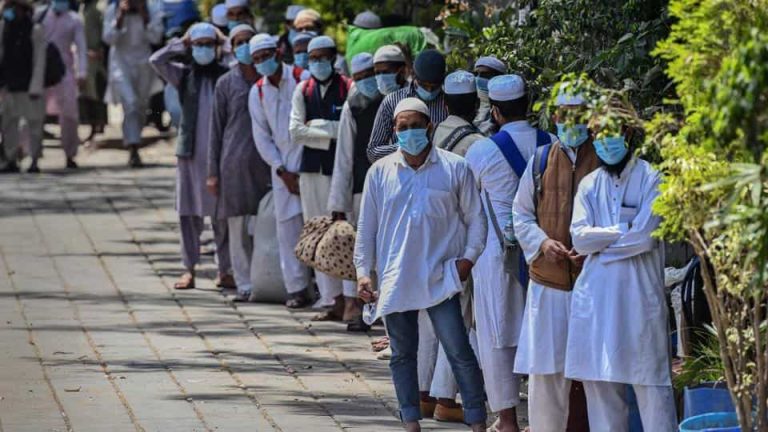
Over the last few days, a Delhi court has granted a spree of bails plea bargaining in connection with the Tablighi Jamaat congregation that took place at Markaz Nizamuddin during mid-March amidst the coronavirus outbreak in the country.
Plea bargaining is a pre-trial negotiation between the accused and the prosecution where the accused agrees to plead guilty in exchange for certain concessions by the prosecution. The Criminal Procedure of Code allows for plea bargaining in cases where the maximum punishment is 7-year imprisonment; offences don’t affect the socio-economic conditions of the society and the offence is not committed against a woman or a child below 14 years.
Delhi court grants bail to 34 Thai who attended Tablighi Jamaat event
The Metropolitan magistrate in Delhi today allowed 34 Thai nationals to walk free on plea bargaining and imposed a fine of Rs 6000 each. The foreign nationals from Thailand were represented by advocate Ashima Mandla. The fine has been paid to PM Cares Fund as per the direction of the court.
The court had earlier observed that there was sufficient prima facie material on record to proceed against the accused persons under Section 14(b), Foreigners Act, 1946, under provisions of the Epidemic Diseases Act, the Disaster Management Act, and the Indian Penal Code.
The Delhi Court had recently granted bail to foreign nationals in connection with the cases related to Tablighi Jamaat congregation this year in March, which had later turned out to be a coronavirus hotspot. The Delhi Police had booked around 955 foreign nationals in this matter.
Here are other instances in the last few days when the Delhi Court have allowed the bail of foreign nationals accused in the Tablighi Jamaat congregation to walk free in lieu of payment of fine:
Delhi Court allows 200 Indonesians and 22 Nepalese Tablighi to walk free
A Delhi court on Thursday granted bail to 92 Indonesians who were charge-sheeted for attending Tablighi Jamaat event here allegedly in violation of visa norms, indulging in missionary activities illegally and violating government guidelines issued in the wake of coronavirus outbreak. The relief was granted to the foreigners on furnishing a personal bond of Rs 10,000.
Besides Indonesians, 22 Nepalese having a connection with the Muslim seminary and who had attended the controversial event at Markaz Nizamuddin were also allowed to walk free on payment of fine Rs 4,000 each.
Foreign nationals from Djibouti, Mali, Kenya and Sri Lanka granted bail
Earlier this week, the Delhi Court had allowed foreign nationals from Djibouti, Mali, Kenya and Sri Lanka to walk free on payment of Rs 5,000 as fine after the accused accepted mild charges under the plea bargain process, related to various violations including visa norms while attending Tablighi Jamaat congregation here during the COVID-19 lockdown.
Thai and Nepalese Tablighi Jamaat members granted relief
On July 11, the Delhi court allowed a different set of Thai and Nepalese Tablighi Jamaat members, who had attended the gathering at Markaz Nizamuddin in Delhi in mid-March, to walk free on furnishing the surety of Rs 10,000 each.
Bail granted to 82 Bangladeshi Nationals
Last week, the Delhi court had granted bail to 82 Bangladeshi nationals who had attended the controversial Tablighi Jamaat congregation in Delhi for allegedly violating visa norms, indulging in illegal proselytising activities, and infringing government guidelines, mandated in the aftermath of the COVID-19 outbreak.
The Chief Metropolitan Magistrate Gurmohina Kaur provided bail to the foreigners in exchange of paying a fine of Rs 10,000 each.
Tablighi Jamaat members from China, Brazil, Australia, Fiji and the Philippines granted bail
Earlier this month, the Delhi court granted relief to members of Tablighi Jamaat from China, Brazil, Australia, Fiji, and the Philippines, who were accused of gross violations after they were found attending the Tablighi Jamaat congregation that had devolved into a potent coronavirus hotspot in the country.
Hearing the plea bargaining application, the Delhi Court ordered their bail on payment of fine of Rs 10,000 each. The accused had agreed to mild charges under plea bargaining.
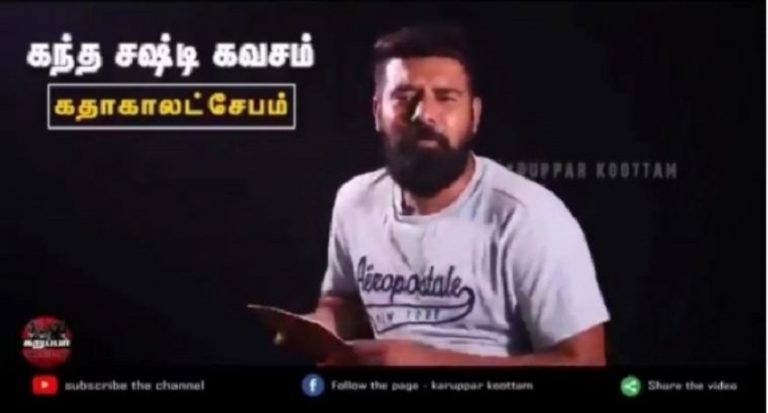
Two individuals associated with a Tamil YouTube channel named ‘Karuppar Koottam’ have been arrested by the police in Tamil Nadu after an alleged insult to the worship of Hindu God Murugan. Anchor Surendran and another prominent member M Senthil Wasan were arrested on Wednesday after a case was filed in the matter.
The arrests were made on the basis of complaints filed by youth wing leader Vinoz P Selvam on behalf of Vice President of BJP in Tamil Nadu M.N.Raja and leader R.C.Paul Kanakraj. A Tamil speaker Karan Praveen told OpIndia that the controversy began when the worship of Lord Murugun, or Lord Kartikeya as he is popularly known in North India, the son of Lord Shiva, was mocked.
We were told that Karuppar Koottam in a video hurt the sentiments of the Tamil Hindu community. The said video made fun of the Skanda Shashti Kavacham, which is chanted by Tamil Hindus, to gain the favour of the Gods. The Skanda Shashti Kavacham holds as much significance for Tamil Hindus as the Hanuman Chalisa does in households of North India.
The Karuppar Koottam used the mantra in a very obscene and vulgar manner in one of their videos. Subsequently, the cyber crime branch booked Surendran under sections 153, 153(a) (1) (A), 295 (p), 505 (1) (b) and 505 (2) of the IPC. Following the registration of the FIR, another Surendra Natarajan, surrendered himself before the authorities.
Prior to his surrender, Surendran garlanded a statue of Periyar, in an obvious bid to garner political support. In his anticipatory bail application filed before the Madras High Court on Wednesday (July 15, 2020), Surendran defended himself saying that he has the right to express himself in a democracy and his incendiary comments should not be considered a crime.
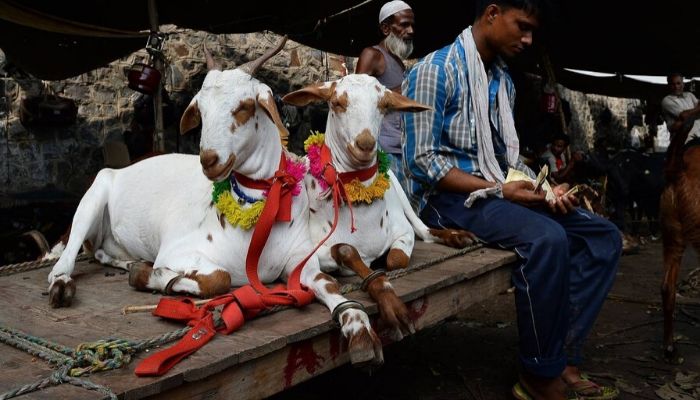
Amidst the rising number of Coronavirus cases in the State of Maharashtra, the Shiv Sena-led-government had directed that prayers for Bakri Eid must be confined to home. The government has made it clear that prayers should not be offered in Eidgah or other public places. Besides, the government has informed that livestock markets will remain closed and as such goats can only be purchased online or through phone services. As of July 17, Maharashtra has reported 1,14,947 active cases of Coronavirus and 11,294 deaths.
Bakri Eid prayers should not be offered in mosques or Eidgahs or public places, but should be done at home only. Currently all operating livestock markets will remain closed. If citizens want to buy animals, they should buy it online or by phone: Maharashtra Govt #COVID19
The state govt has also asked Muslims to celebrate the event in a simple manner. “Bakri Eid should be celebrated in a simple manner this year given the COVID-19 outbreak,” an official statement issued by home minister Anil Deshmukh said. The govt also added that there will be no relaxation in restrictions for Eid in containment zones, and people are directed not to congregate in public places on the day of the festival.
Social distancing flouted ahead of Ramzan
As the month of Ramzan commenced, crowds were seen shopping and moving around at various places completely flouting the lockdown and joining the public gatherings. One of the areas was the Shastri Park area of North-east Delhi, which witnessed a huge crowd on despite lockdown orders. Similar situations were seen in financial capital Mumbai also, where authorities have been unable to enforce the lockdown from the beginning. The Ramzan had increased the crowd in the markets in the city, which had the highest number of Coronavirus positive cases in the country.
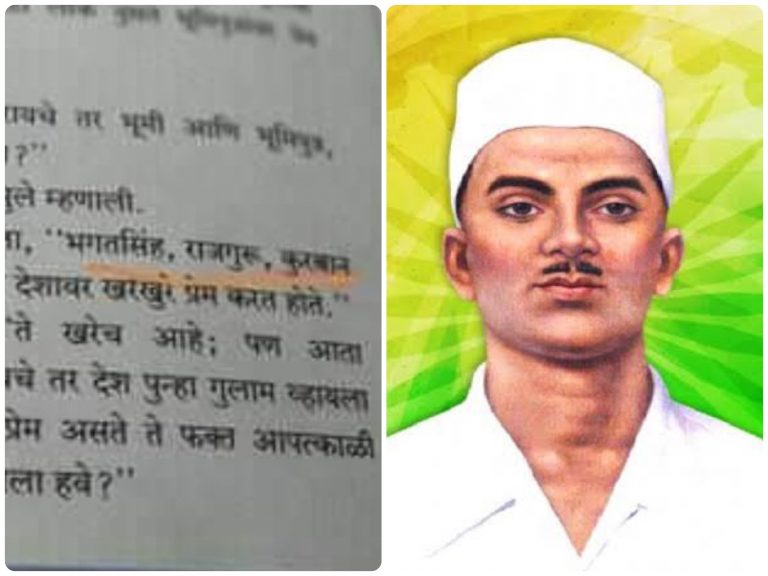
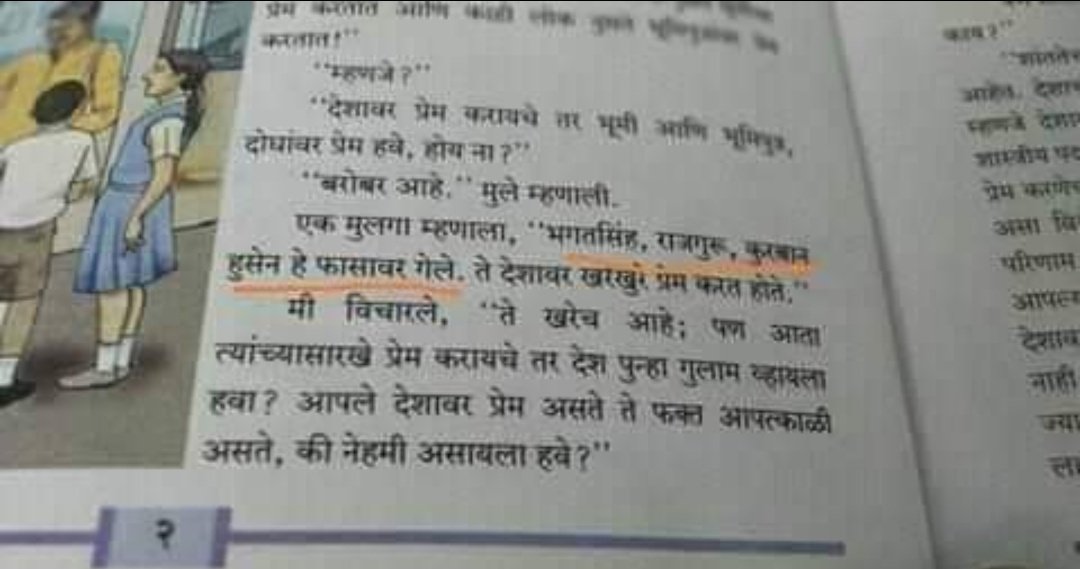
A massive controversy broke out in Maharashtra after a Class 8 Marathi textbook printed by Maharashtra State Education Board mentioned Kurban Hussain as one of the Freedom fighters to have been hanged alongside Bhagat Singh and Rajguru in connection with the Lahore conspiracy case.
In a glaring error, the Maharashtra State Education Board replaced the name of revered Freedom fighter Sukhdev with another Freedom fighter Kurban Hussain from Solapur as one who was hanged in Lahore along with well renowned revolutionary leaders Bhagat Singh and Rajguru.
#MahaAfzalAghadi govt of Maharashtra removes name of revolutionary freedom fighter Sukhdev & replaces with Kurban Hussain from Marathi textbook of Maharashtra State Secondary Board of Class 8.
Factual errors made in Marathi book of Maharashtra State Board
The omission of Sukhdev’s name from the textbook has created an uproar in the state, with the opposition alleging that the Maha Vikas Aghadi government is brainwashing the students with a distorted version of history. The Maharashtra government, under pressure from the opposition and other organisations, have admitted to the error and ordered a probe into the matter as to what led to the replacement of Sukhdev’s name with Kurban Hussain.
The chapter titled “India is my country” in the Marathi textbook of Class 8, the well-known writer Yadunath Thatte’s essay has created a stir after the error of the names of the Freedom fighters were pointed out by the people. On March 23, 1931, Bhagat Singh, Rajguru and Sukhdev were hanged to death by the British colonial rulers in Lahore Jail. The incident served as a rallying point for India’s struggle for independence and till this day serves as a reminder of the contributions made by the Freedom fighters to liberate the country from the British shackles. Every year, India celebrates March 23 as “Shaheed Diwas” to mark the contributions of Bhagat Singh, Rajguru and Sukhdev for India’s independence struggle and pay homage to them.
NCP claims typographical error, Congress justifies saying its in Marathi book, not in History
While the NCP, one of the alliance partners in the Maha Vikas Aghadi government in Maharashtra has called the mistake as “typographical error”, the Congress party has provided an absurd justification to the blunder, claiming that the book is a Marathi textbook and not a History book, notwithstanding the fact that the names of legendary freedom fighters–Bhagat Singh, Rajguru and Sukhdev are always taken together. In a bizarre justification, Maharashtra Congress spokesperson Sachin Sawant claimed that even Kurban Hussain was also a freedom fighter and that the country should also respect the sacrifice made by Hussain.
Brahmin Federation demands action against the culprits
On the other hand, Anand Dave of the Brahmin Federation has asked the state government to take action against the culprits. He has said that the mistake in the class VIII textbook of Balbharati is unacceptable and deplorable. He has also demanded the state government to withdraw all the books immediately.
On Thursday, the Vatican reportedly directed Bishops across the world to report sexual offences committed against minors by predator priests, even when they are not legally obliged to do so. The Vatican has also released a manual for bishops and religious superiors to conduct an internal investigation into sexual offences perpetrated against young children and vulnerable adults. As per reports, despite the existence of canonical norms, the laws are often neglected by Bishops.
Unlike the existing Vatican policy about cooperating with the law enforcement in sex crimes only when it is compulsory, the new manual directs Bishops to report all such crimes even when there is no explicit legal obligation. “Even in cases where there is no explicit legal obligation to do so, the ecclesiastical authorities should make a report to the competent civil authorities if this is considered necessary to protect the person involved or other minors from the danger of further criminal acts,” the manual emphasised. The manual reiterated that Bishops and other Church authorities must oblige with subpoena requests.
Reportedly, the manual has been issued in several languages such as Italian, French, English, Spanish, Portuguese, Polish and German to prevent Bishops from citing excuses for not conducting the preliminary investigation against predators within the Church. The manual further directed Bishops to not ignore anonymous allegations or even social media posts as they can be used to conduct a preliminary investigation. Moreover, the manual stated that allegations shall not be ignored under the pretext that they do not fall within the limitations of the Church. The Vatican added that allegations can only be dismissed if the Bishop believes that the chain of events leading up to the assault is improbable.
Vatican warns Bishops against ‘negligence’
The manual stated that sexual offences include sexual relations, physical contacts for gratification, exhibitionism, masturbation, pornography production, and conversions of a sexual nature. The Vatican also listed physical contact with sexual intent as an offence which is often dismissed by Bishops as boundary violations. The manual, published by the Congregation for the Doctrine of the Faith, cautioned that Bishops can be canonically punished if found dismissive of serious allegations or negligent about conducting a preliminary investigation.
Sex abuse summit of 2019
In 2019, Pope Francis led a sex abuse summit and issued 21 points to help Bishops investigate and prevent abuse by church priests. He realised that many bishops did not understand the gravity of the sexual abuse problem in the Catholic Church. One of the recommendations was to issue a detailed handbook that could provide step-by-step instruction. Reportedly, the Vatican had been a long proponent of not encouraging Bishops to report perverted priests under the pretext that it can lead to the persecution of the Catholic priests in countries where they are a minority.
A week after OpIndia published a detailed fact-check on the claims of Prathap NM, who has been dubbed as the ‘drone boy’ and a drone scientist for making over 600 drones using e-waste like broken mixer grinders and televisions, the 22-year-old Prathap on Thursday responded to the all allegations against him.
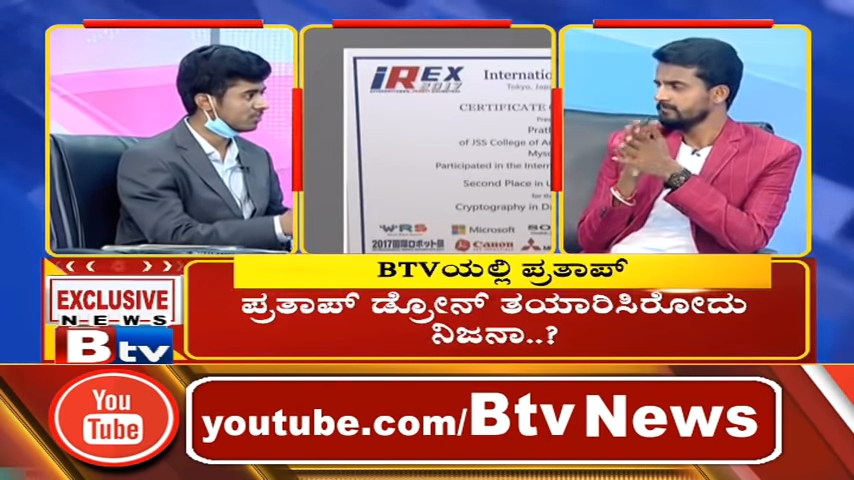
Speaking to a Kannada news network, Prathap NM, who has been hailed as the ‘Drone Scientist’ across the country, took questions from the anchor Kirik Keerthi. Citing OpIndia reports that had earlier debunked most of the claims made by the 22-year-old, the anchor put forward various questions to Prathap seeking clarifications for various assertions he had made over the last two years.
Medals, Awards, and recognitions
Earlier, we had reported in much detail on the discrepancies in Prathap’s claims about him winning three awards in Germany in 2018. Prathap had claimed to have won the “Albert Einstein Innovation Gold Medal” in the International Drone Expo 2018 held at Hanover in Germany, a gold medal in the International Drone Expo held in Germany. He had also claimed that he had secured first place in CeBIT Drone Expo-2018 at Hanover, Germany, and also bagged the gold medal in International Robotic Exhibition held at Tokyo, Japan, in December 2017.
In our report, we have detailed how there is no evidence of any such awards and medals given in the events claimed by Prathap, and some of the events also does not exist. The websites of the organisations that hold the events do not mention any such award, and Prathap’s name is not mentioned as winner of any such award or medal.
We had also mentioned how Prathap, despite winning all the awards did not have a single photograph or video showing him receiving such awards. There are few photographs of him with such medals and awards, but they are not from any ceremony where he received them.
There is also not a single photo or video of any drone built by the ‘drone boy’. While there are some photographs of Prathap with some drones, all of them are commercially produced drones made by various companies, and he had just got himself with them in technology expos in various countries like Japan, Germany etc.
Drone boy Prathap shows certificates from organisations which have claimed they are fake
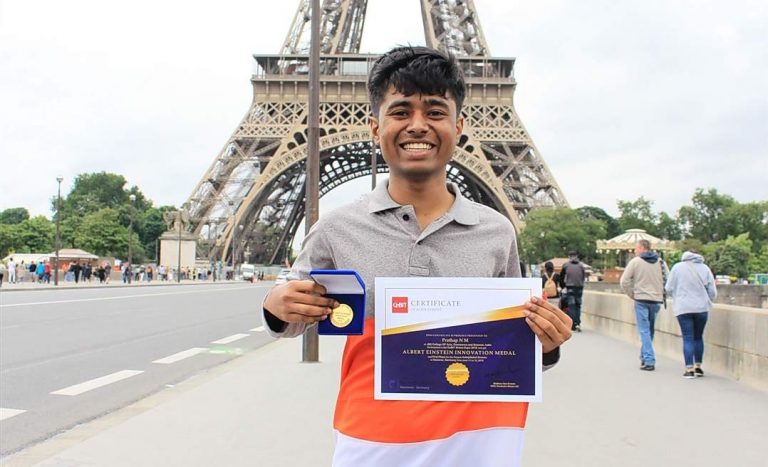
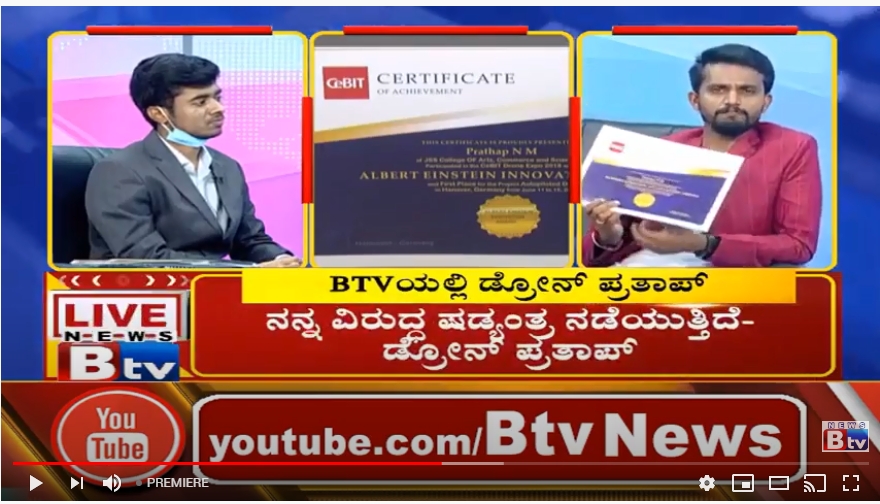
Responding to all the allegations of OpIndia, Prathap NM cited few certificates pertaining to the awards he claimed to have won during the show. Interestingly, the 22-year-old “scientist” did not display any of the medals in the live show but displayed few certificates, whose authenticity is still questionable. Although, video clips of a medal with the text ‘Albert Einstein Innovation Medal’ one side and at ‘CeBIT 2018 Hannover’ on the other side was shown in the show.
The first set of certificates shown by Prathap, as he claimed in the show was from the International Robotic Exhibition in Tokyo, Japan. He displayed two sets of certificates, which were interestingly different from the viral images on the internet. The certificates displayed by Prathap did not have an Airbus logo on them, which was very much present in the earlier certificates, which he had claimed to have won from Japan.
The anchor also asked him how could there be a spelling mistake on the certificate of such a prestigious award. The spelling of vehicle was mistakenly written as ‘Vehical’ on the certificate issued by IReX. Responding to the discrepancies, the 22-year-old “Drone boy” said that it was a mistake on his part to misspell the word and stated that it has not been committed by the organisers.
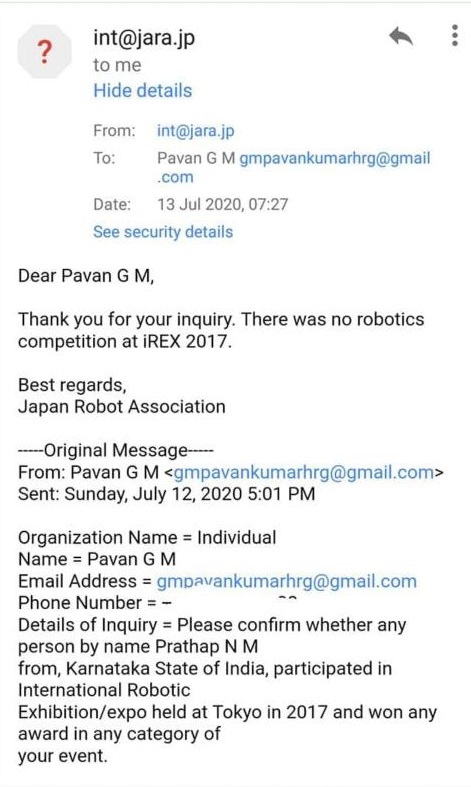
Further, a mail written by a social media user to check the authenticity of the claims was posted on social media. The user had posted an image of his conversation with the Japan Robot Association, the organization which hosted the International Robot Exhibition 2017. The organizers have categorically stated that there was no robotic competition during the year-2017.
Image Source: Pavan GM
It may be noted that the International Robot Exhibition (IReX) held in Tokyo is a trade fair where companies making robots participate. College and university students with their robots also take part in the show, but there is no competition of drones or robots in the event, and there is no record of Prathap winning the first prize, or any prize, in the event.
The second certificate which Prathap displayed in the show pertains to the ‘Albert Einstein Innovation Award’.
Despite clarifications from Prathap, there are too many inconsistencies in his claims with respect to the ‘Albert Einstein Innovation Award‘ as there are no such awards in the first place. When searched about ‘Albert Einstein Innovation Medal’ at ‘CeBIT Drone Expo 2018’, the search results only point to a single name of Prathap, and no sources are attached to it.
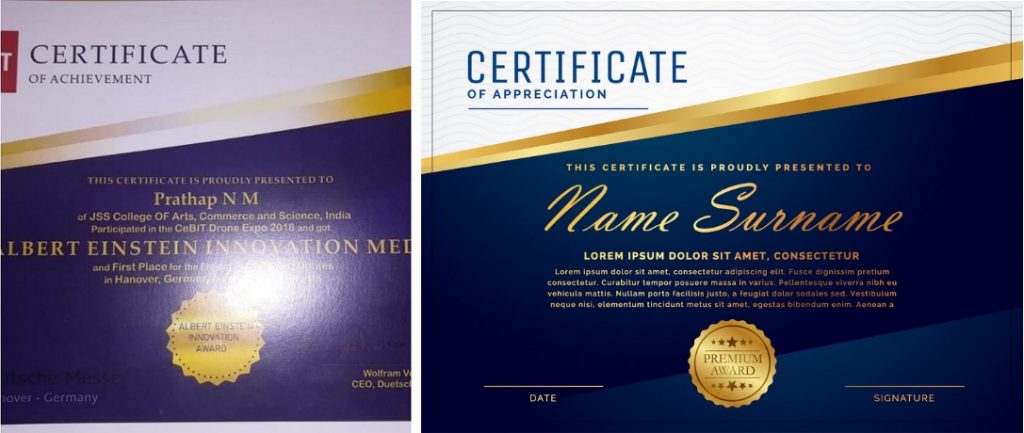
On the certificate shown by Prathap in the live show, it can be seen that it is written as ‘Albert Einstein Innovation Medal’ on the top, whereas it is written as ‘Albert Einstein Innovation Award’ below.
Below the certificate, there is a name mentioned – Wolfram von Fritsch, who is claimed to be the CEO of ‘Deutsche Messe’, which is responsible for the expo. However, Wolfram von Fritsch resigned from the post in 2017 even before the expo, who was replaced by Dr. Jochen Köckler back in 2017 itself. The certificate awarded to Pratap in 2018 has Wolfram von Fritsch’s name as CEO raising suspicion over his claims.
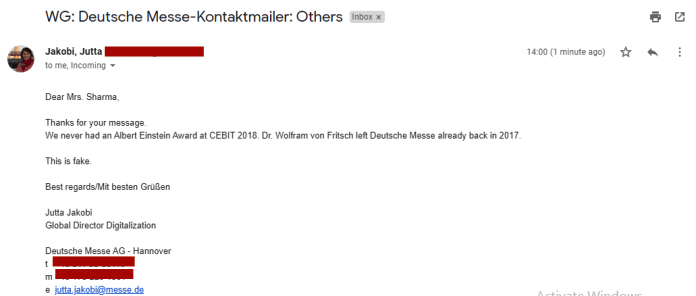
Deutesche Messe, the organiser of the CeBIT expo, had already clarified that they don’t give the awards as claimed by Prathap, to an email query by one of our readers, Saniya Sharma.
Jutta Jakobi’s mail to Ms Sharma
Jutta Jakobi, the Global Director of Deutsche Messe AG, the organisation that organises the CeBIT expo, had informed that they never had an Albert Einstein Award at CEBIT 2018. She also informed that Dr. Wolfram von Fritsch left Deutsche Messe already back in 2017. As the CEO left the organisation in 2017, his signature can’t be there in a genuine certificate issued in 2018.
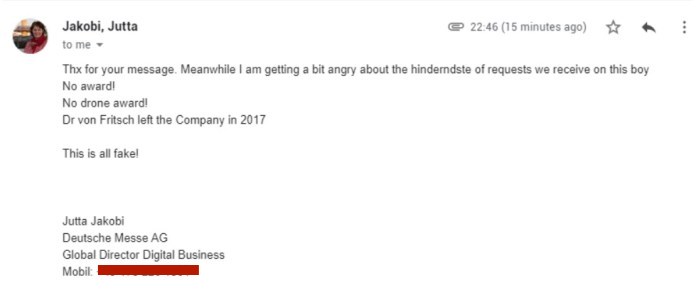
But as Prathap showed the same certificate in the TV interview yesterday, we sent them the screenshots of the certificate and medal shown in the TV show asking whether they are genuine, and the Global Director of Deutsche Messe AG replied with reiterating the same, saying that the certificate is fake.
Mail by Jutta Jakobi
Jutta Jakobi categorically stated, “No award! No drone award! Dr von Fritsch left the Company in 2017”. She also declared, “This is all fake!”
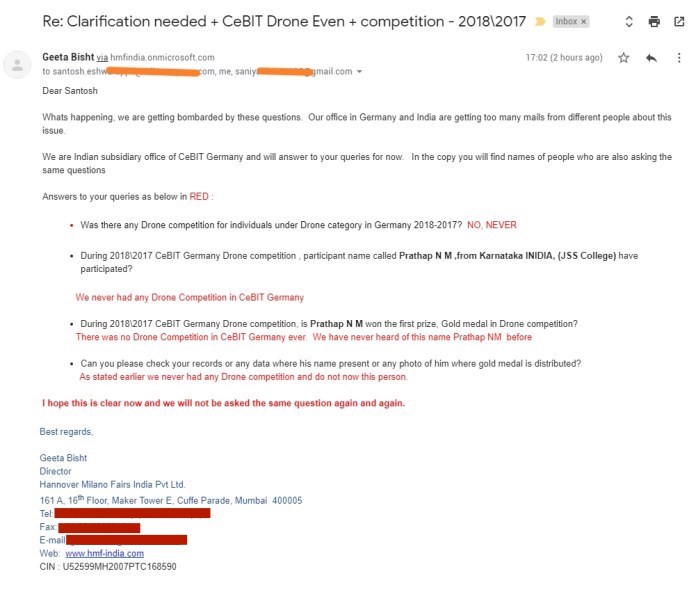
We have also sent mail to Deutsche Messe’s India office, and they also categorically denied any Drone competition for individuals in their CeBIT expo in Germany. The screenshot of the mail sent by the company’s director in India is given below.
Mail by Geeta Bisht
From mails by both India and Germany offices of Deutsche Messe, it clear that they have been receiving too many inquiries about Prathap, and they are tired off telling everyone that his claims are fake.
So, the pertinent question that arises is how did Prathap then got hold of such a certificate at a time when there is no such award or medal in the first place.
When we looked into such certificates, we found an identical certificate available on stock vector image sites on the internet. The stock image has the same design as Prathap’s certificate, but it has dummy text on it. Which means, anyone can download the file, replace the dummy text with text of their choice and print them. Although it may be claimed that CeBIT used a stock image to print certificates, that seems highly unlikely, as large organisations have in house design teams for such jobs, or they get custom designs made by agencies, rather than using off-the-shelf designs.
With “Drone boy” Prathap failing to show any medals during the live show and only submitting few ‘purported’- unauthenticated certificates, additionally with the denial from the organisations named in the certificates, can be stated that his claims of winning medals, awards are not proved,
The ‘Drone Boy’ Prathap, who was then questioned on the authenticity of his claims regarding four countries honouring him with ‘Young Scientist Awards’, he said he had mistakenly mentioned it as ‘awards’ and also clarified that it was actually a recognition.
He claimed that four countries, Japan, France, Germany and ‘Africa’ had honoured him with ‘Young Scientist Honour’ and not an award. However, he did not show any documents to prove the same citing non-disclosure agreements.
Evidence of Drones made by “Drone Boy”
One of the strongest criticism against “Drone boy” Prathap is that he has never displayed a drone, which he claims to have developed. Prathap, who claims to have developed over 600 drones in the past two years, yet again failed to display any of his creations on the live show. He didn’t bring any drone built by him using e-waste, neither showed any photo or video that shows his drones.
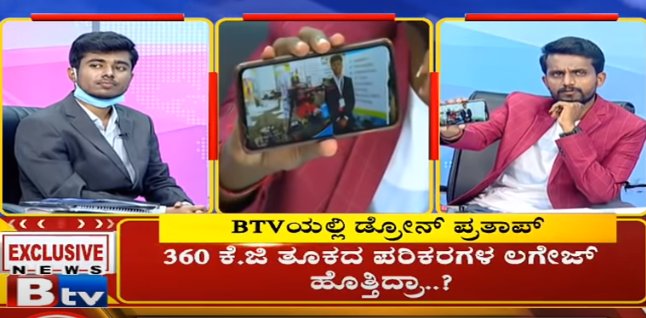
Instead, he showed an image to the show anchor on a phone, where he was standing next to a drone. Although the full image was not shown on screen, the phone was shown, where we can see that Prathap is standing next to a drone.
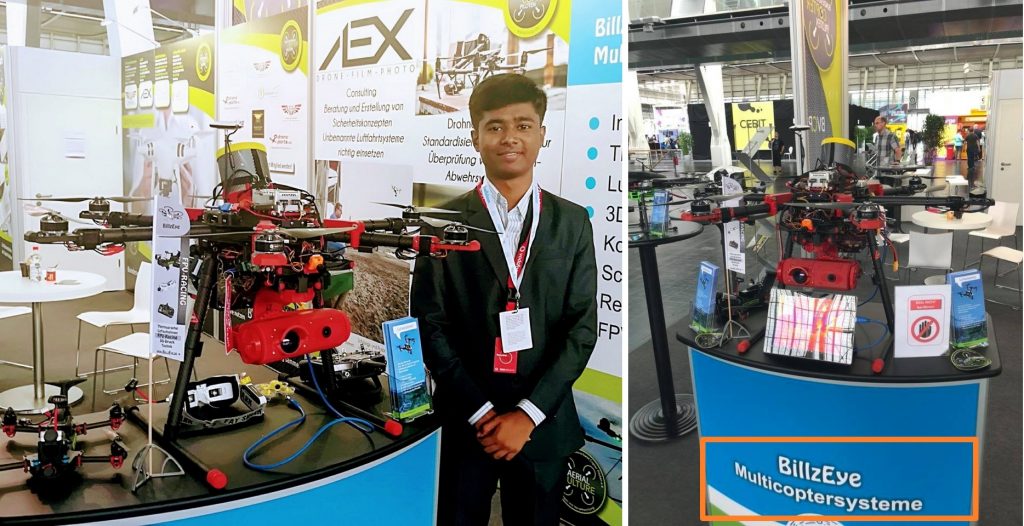
On close examination, it can be seen it is the same image which was published in an article on by BetterIndia. Again, it is a drone displayed at an expo, which can be determined by seeing the posters in the background. This is a drone made by BillzEye Multicoptersysteme, which was displayed at the CEBIT 2018.
The image shown by Prathap, image showing that it is a BillzEye made drone displayed at CeBIT 2018
This is a racecopter made by BillzEye, which means this drone is used in racing competition of drones. Prathap had visited the expo, and got himself photographed with the drone on display.
This means, Prathap NM showed the image of a drone made by a German company to the anchor in the show to prove that he has build drones. Moreover, the image of the drone at the expo has been shared by the company on social media, hence it can be easily fact-checked, but still, he chose to show it in the TV show.
Citing that most of his drones are unregistered, Prathap said he could not display his drones and promised to develop and showcase his drones in the near future. Earlier in another media interaction he had claimed that he can’t show the drones due to intellectual property issues.
Prathap’s response to African Black Mamba story
In the show, Prathap also clarified regarding his claims of using his drone to deliver antivenom to an 8-year-old girl who was bitten by a snake in Sudan.
Earlier, he had said that he used his Eagle 2.8 drone to deliver anti-venom to a kid within a few minutes, which would have taken at least 10 hours to deliver on road. We had described how the claims he had made did not add up as there are no drones in the entire world that could match such speed.
As the anchor pointed out all the scientific facts to Drone boy” Prathap, the 22-year-old “Drone Boy” said that the entire incident was entirely factual but he may have missed certain points and stated wrong facts in the ‘heat of the moment’.
According to Prathap, the road journey need to reach the snake-bitten girl was not 10 hours but only three-four hours. He also revealed that the drone he which operated was not entirely created by him, but was more of a collaboration.
Even if the location was 3-4 hours by road instead of 10 hours, it would still mean a distance of around 60-100 km, which is still beyond the longest range of commercially available rotary wing battery powered drones.
“Drone Boy” Prathap fails to display his technical knowledge on drones
As the show progressed, one of Prathap’s friend identified as Darshan appeared on the show. Darshan, who was introduced as a ‘classmate’ of the “Drone Boy” posed some questions to Prathap.
Darshan, as he posed questions, said that he wanted to check Prathap’s technical knowledge on drones rather than debunking his other claims. Darshan did not want to let go of the opportunity to check Prathap’s technical know-how on drone amidst all the other noise. He asked the 22-year-old “Drone Boy” to explain the system of ‘Drag and lift’, an essential concept concerning drones and aeronautics.
Darshan said he was a researcher of Mechanical and Aeronautical Engineering from Tokyo, studying at one of the imperial universities of Japan, which is considered to be the Ivy leagues of Japan.
However, Prathap not only failed to respond to his questions but also said that the show was not the right place and time to discuss such technical topics. He also said that he would respond to Darshan’s questions at a later date by communicating him through a mail.
The Japan visit of the “Drone Boy”
Prathap shows his passport and visa to Japan, as a proof that he had indeed gone to Japan and participated in the expo in Tokyo.
The show also contacted another person, who had helped Prathap with money during his Tokyo visit. Prathap asked him to confirm that he had helped Prathap, which he confirmed, saying that he had helped Prathap as he was struggling to communicate with taxi driver due to language issue, and he also gave him some money. Prathap sought to use this testimony to prove that he had actually visited Japan, and therefore his claim of winning awards also true.
But the fact is, OpIndia report never said that he didn’t visit Tokyo. In fact, we had found that he had visited an expo in Japan where he had got himself photographed with commercially made drones at an expo, which were later circulated as drones made by him. Therefore, whether he visited Japan and attended expos is not a matter of debate. But there is still no proof any drone made by him and any award won by him, and the organisers of the award have denied issuing the awards.
The curious case of Prathap’s visit to 87 countries and French citizenship
In a speech delivered by Prathap, he had claimed that he had visited nearly 87 countries in the past to exhibit his drones and deliver lectures in different universities. As the anchor showed one of his old speech videos, where he had claimed of possessing four passports, the 22-year-old ‘scientist’ said that he had erred yet again in saying that he had four passports and clarified that he had only two passports. If that claim is correct, it is a crime to have multiple passports, and India does not allow dual citizenship.
During the show, another video of Prathap was also telecast in which he had claimed that the French government had offered him a citizenship considering his achievements. When questioned about the fact of the matter, Prathap confessed that he had lied about it.
The 22-year-old drone “Drone Boy” said that it was not the French government which had offered him the citizenship but a third-party individual who had promised him of helping to obtain French citizenship if he ever settles in France.
Prathap claims to have studies 70,000 research paper, delivered talks in NASA
In one of his speeches, Prathap had claimed that he had studied more than 70,000 research papers in the last two years. As the anchor questioned the veracity of such a ridiculous claim, the “Drone Boy” defended his statements by stating that he only read the abstracts of the research papers and not the research paper in entirety.
If analysed closely, Prathap’s claim of studying 70,000 research papers in a span of two years defies logic as it turns out, if it is believed, he claims to have studied close to 95 papers in a day.
Prathap had also stated that he had visited NASA John F Kennedy Space Centre in Florida, United States to deliver a lecture and also claimed of delivering lectures in universities such as Oxford university of United Kingdom, Stanford University of USA. However, he later said that he never claimed to have done so but delivered presentation at these places and not lectures.
During the entire show, the “Drone Boy” Prathap went on to claim that all his proofs were in his email and could not be disclosed due to non-disclosure agreements.
As we have seen, Prathap failed to show any drone built by him, and gave bizarre explanations for not showing them. He showed one photograph of a drone which is built by a German company. And the organisations from whom he has claimed to have received awards and medals have denied the existence of such awards and medals.
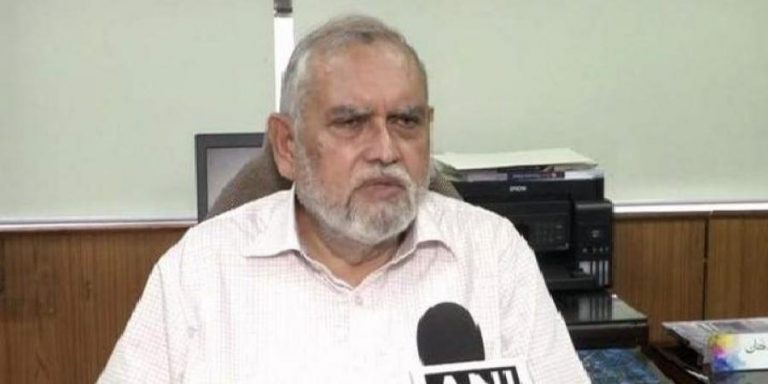
A study on Muslim women in Northeast Delhi, the region in the national capital that had witnessed severe communal riots in February, conducted by the Delhi Minorities Commission dispels the narrative of ‘Muslims under threat’ quite effectively. The report was edited by Zafarul Islam-Khan, the controversial chief of the Commission who had made incendiary comments recently.
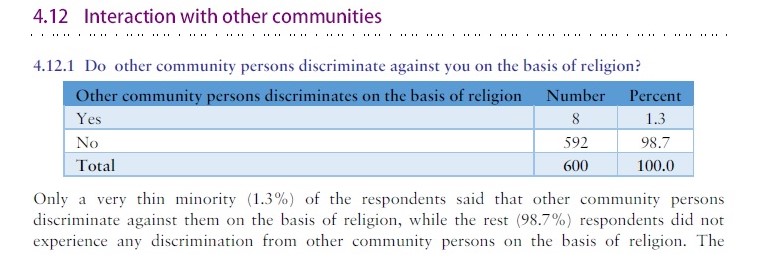
The report says that 592 of the 600 women surveyed said that people from other communities did not discriminate against them. Only 8 said they did. Furthermore, the eight that did say they were discriminated against admitted that only few people from other communities discriminated against them while they had very cordial relationships with the rest.
Source: Delhi Minorities Commission Report
The report states, “Only a very thin minority (1.3%) of the respondents said that other community persons discriminate against them on the basis of religion, while the rest (98.7%) respondents did not experience any discrimination from other community persons on the basis of religion. The respondents who felt discrimination on the basis of religion from other community persons said that very few individuals from other communities discriminated against them while the rest of them had very cordial relationship.”
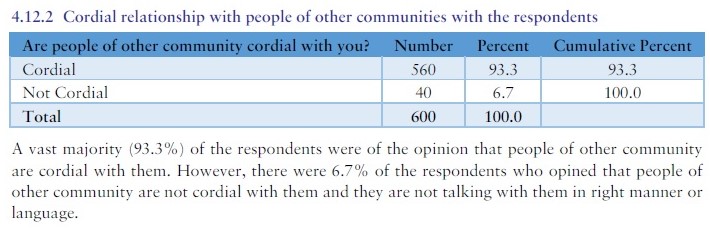
The report further says that of the 600 women surveyed, 560 of them said that people from other communities are cordial with them while only 40 answered the question in the negative. The report said, “A vast majority (93.3%) of the respondents were of the opinion that people of other community are cordial with them. However, there were 6.7% of the respondents who opined that people of other community are not cordial with them and they are not talking with them in right manner or language.”
Source: Delhi Minorities Commission report
The findings of the study commissioned by the Delhi Minorities Commission dispels the narrative that its Chairman has been trying to create. Recently, while certain misguided characters in the Arab world were trying to persecute Hindus living in Gulf countries, Zafarul Islam-Khan had thanked Kuwait for “standing with the Indian Muslims” and attacked Hindus by referring to them as “Hindutva bigots”, who according to him miscalculated the reaction of the Arab world about the “persecution of Muslims in India”.
“Mind you, bigots, Indian Muslims have opted until now not to complain to the Arab and Muslim world about your hate campaigns and lynchings and riots. The day they are pushed to do that, bigots will face avalanche,” he added. Subsequently, he was booked on charges of sedition by Delhi Police. However, he refused to apologise for his remarks and said that he stands firmly by his comments.
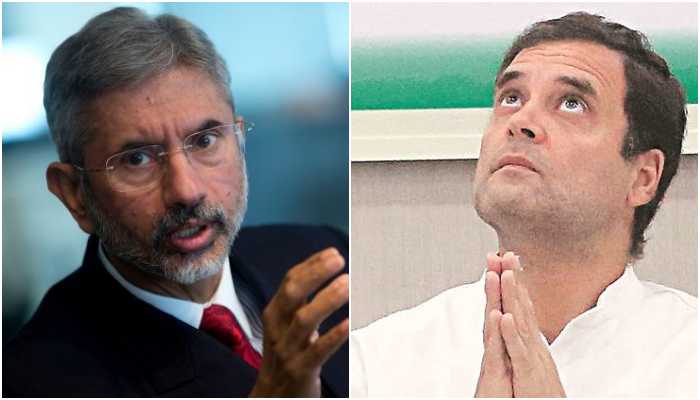
Earlier today, Congress prince Rahul Gandhi had released his much-publicised video. As expected he went on a rant, indirectly blaming India in an apparent litany of complaints against the current government’s foreign policies.
The three-minute video clip showed Rahul Gandhi bringing up the Ladakh standoff issue and lay the blame squarely on India’s soldiers. Gandhi almost seemed to be arguing that for China’s expansionist, dominant policies, that is generating protests globally, India is to be blamed. Gandhi effectively stated that the reason for China’s aggression is India’s ‘current’ foreign policies.
Foreign minister S Jaishankar has replied to Rahul Gandhi’s video. In a series of tweets, Jaishankar dismissed Rahul Gandhi’s insinuations and lies. Explaining why and how Gandhi scion’s assertions are wrong, the former diplomat stated, “Our major partnerships are stronger and international standing is higher. Witness the regular summits and informal meetings with the US, Russia, Europe, and Japan.”
The Union Minister also stated that now, India engages China on more equal terms politically.
.@RahulGandhi hs questions on Foreign Policy. Here are some answers:
•Our major partn’ships are strongr & internat’l standng higher.Witness regular summits&informal meetngs wth #US#Russia#Europe & #Japan.India engages #China on more equal terms politically.
Jaishankar further stated, “We speak our mind more openly now. On CPEC, on BRI, on South China Sea, on UN-sanctioned terrorists, etc.”
Border infrastructure
The foreign minister also highlighted the border infrastructure imbalance that the nation has been burdened with during all these years of Congress rule. He stated that Rahul Gandhi should compare the government’s expenses on border infra in the 2008-14 period to the 2014-20 period. He stated that the border infra budget has been increased by 280%, road construction works by 32%, bridges by 99% and 6 times the number of tunnels have been added.
Ties with neighbours
The minister also slammed Rahul Gandhi’s comments about the relationships with neighbours that the Gandhi scion had insinuated to have deteriorated during the current government’s rule.
Giving the example of Sri Lanka, Jaishankar said, the Hambantota port agreement between China and Sri Lanka was concluded in 2008, while the UPA government did nothing about it. He further added that India has managed to transform relationships with the Maldives in recent years, after watching president Nasheed’s government being toppled in 2012. Relationship with the Maldives has been revived, he stated.
Regarding Bangladesh, Jaishankar stated that a boundary dispute with the country was settled in 2015, furthering improved ties and opening paths to more development and transit. “And terrorists no longer find safe haven there”, he added.
Regarding Nepal, Jaishankar stated that PM Modi became the first Indian Prime Minster to visit there after 17 years. He added that Nepalin citizens will assert how India has contributed to the development of power, fuel, housing, hospital, roads projects in the country.
He further added that Bhutan has found a stronger security and development partner in India. And unlike 2013, they do not worry about cooking gas anymore, said Jaishankar, hinting about the time when the UPA government had soured relationships with Bhutan by cutting kerosene and LPG subsidies.
He furthered that under the current Indian regime, Afghanistan has seen the completion of major projects like the Salma Dam and Parliament.
Pakistan and the difference between UPA and NDA
Rahul had skipped discussing India’s ties with Pakistan. However, Jaishankar reminded him that Pakistan has definitely noticed the difference between India’s response during the UPA era and the NDA era. Mentioning the surgical strike post-Uri attacks and Balakot airstrikes that had delivered major shocks to Pakistan, Jaishankar asked Rahul Gandhi to compare the response with the UPA-era response to 26/11 Mumbai attacks, Sharm-al Sheikh and Havana incidents.
Manmohan Singh’s blunders
It is notable here that in Sharm-al Sheikh, Egypt, during a summit of the NAM in 2009, a foolhardy joint statement by Manmohan Singh with the Pakistani PM had effectively legitimised Pakistan’s allegations that India has been interfering in Balochistan.
In Havana, Cuba, in 2006, another major blunder by Manmohan Singh had resulted in India acknowledging Pakistan as a “victim of terrorism”. It was widely criticised as the ‘Havana handshake’ by Indian media and policy watchers.
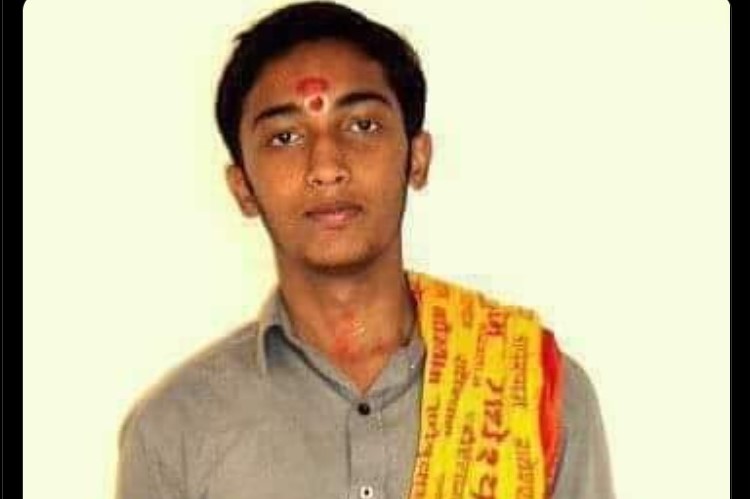
On the 17th of July, 2012 Vishal Kumar, a 19-year old ABVP karyakarta, was murdered in Kerala by goons associated with the Campus Front of India. He was one of the three ABVP karyakartas who suffered injuries during the unprovoked attack on them. The said attack occurred the previous day during the welcome to the first-year graduation students by the ABVP unit of the Chengannur Christian College at Alappuzha district.
Reportedly, things were going on smoothly until a group of Muslims from outside came to the college gate and started abusing the ABVP and Goddess Saraswati. Vishal Kumar was among the indivudlals who attempted to diffuse the tension. However, all of a sudden, the group of Muslims started attacking them with knives, daggers and other such weapons.
The police later arrested one Ansar Faizal in connection with the murder. Nazeem, the college unit secretary of the Campus Front, and Shafeeque, a Popular Front sympathiser, were also arrested in connection with the gruesome incident. Five years later, as per reports, a chargesheet was finally filed in the matter. 20 person were indicted in the incident.
As per the chargesheet, the prime accused were Nasim, Ansar Faisal, Shefeeq, Aasif Mohammed, Shameer Rowthar MS, Shamir Rowthar, Afzal, Altaj and Shibin Habeeb. “As Vishal’s murder is related to terror elements, the local police will not be able to bring out the truth. A separate investigation team can only bring out the truth,” ABVP state secretary M Aneesh Kumar had said just over two weeks after the murder.
It is believed that Vishal Kumar was targeted because he had strengthened the network of the Sangh and had started new Shakhas as well. Vishal Kumar was born in Saudi Arabia and completed his preliminary studies in the United Kingdom. However, when he had reached a certain age, he requested his parents that he be allowed to come to India and continue his education here.
His parents were, quite obviously, not keen on the idea, however, Vishal was adamant that he wished to serve the nation through the Sangh. He was also supporting the education of four other students from poor backgrounds to pursue their studies. Even in his family, his political beliefs were an oddity. His father had confessed that it was his son who changed his perception of the Sangh.
The Campus Front of India, of course, is the students’ wing of the radical Islamic outfit Popular Front of India (PFI). There have been numerous crimes that its members have been engaged in. In one instance, PFI members had chopped off the hands of a Kerala Professor for allegedly insulting Islamic Prophet Mohammed.
The PFI is also accused by the National Investigation Agency for being involved in love-jihad cases in Kerala. Another Popular Front of India (PFI) leader is also accused of his involvement in the heinous murder of RSS activist Rudresh in Bengaluru in 2016. Apart from a litany of such crimes, the PFI is also suspected of involvement in the anti-Hindu riots in Delhi earlier this year.
Vishal Kumar was another bright soul whose life was cut too short by the scourge of Radical Islam. He finds himself in a long list of Sangh karyakartas in Kerala who have been murdered by either leftists or Islamists due to their political inclinations. Even to this day, the rampant murder of Sangh activists continue with impunity. And unfortunately, true justice in such cases are few and far in between.