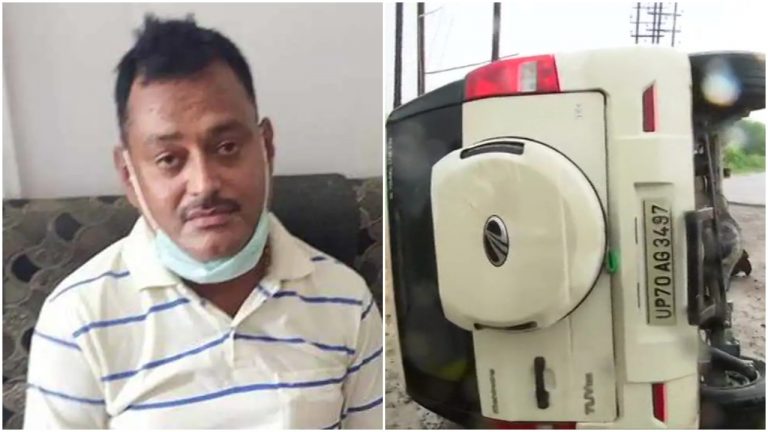
The notorious gangster Vikas Dubey, who was arrested from Ujjain yesterday, was today killed in an encounter after he reportedly tried to flee when a car in which the Special Task Force (STF) convoy taking him from Madhya Pradesh’s Ujjain to Uttar Pradesh’s Shivli overturned in Kanpur.
Following Dubey’s encounter, a large number of people, including prominent personalities raised aspersions on the authenticity of the encounter, insinuating that the gunning down of Dubey was rigged and staged by the police to eliminate the dreaded gangster who was recently involved in the brutal killing of 8 UP police personnel.
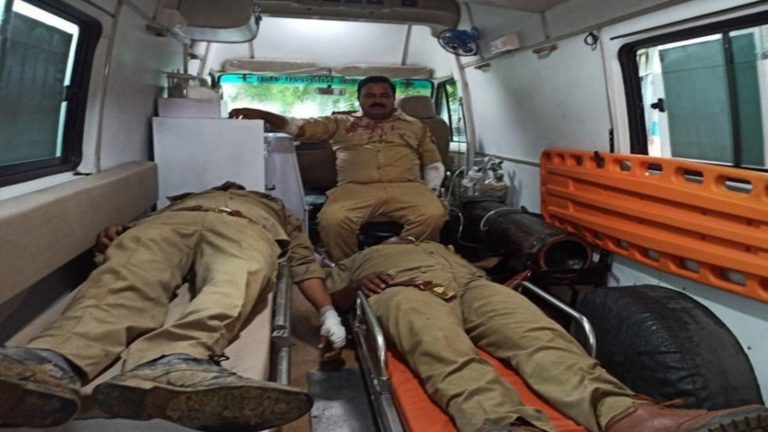
However, putting paid to the unfounded rumours and malicious speculations that the police might have had a role in orchestrating Dubey’s encounter, the doctor who tended the injured police officials in the encounter revealed that the cops who tried to stop Dubey from fleeing had sustained bullet injuries.
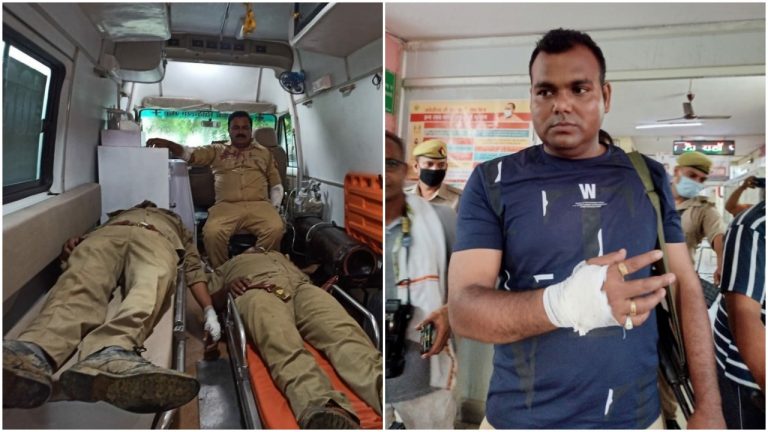
Claiming that all the three injured police personnel are out of danger, Dr RB Kamal, Principal, LLR Hospital, Kanpur, said, “The condition of the 3 injured police personnel is stable; bullets brushed by two of them. #VikasDubey had 3 bullet injuries on the chest and one on his arm.”
The condition of the 3 injured police personnel is stable; bullets brushed by two of them. #VikasDubey had 3 bullet injuries on the chest and one on his arm: Dr RB Kamal, Principal, LLR Hospital, Kanpur pic.twitter.com/sdvUqgO8TH
The doctor’s assertions lay to rest the malicious speculations that were doing the rounds on the social media platforms that Vikas Dubey was murdered in cold blood by the law enforcement officials in broad daylight. Dubey, who was infamous for ruthlessly and unhesitatingly opening fire at the police officers was neutralised after he tried to escape.
Vikas Dubey killed after he attempted to mount an escape
During the encounter, which took place at Sachendi border near Kanpur, Vikas Dubey sustained bullet injuries. 4 policemen also suffered injuries in the encounter.
According to reports, later Vikas Dubey succumbed to his injuries. The body has been taken from the spot to Lala Lajpat Rai Hospital or Hallett Hospital in Kanpur where police and team of doctors are present.
The police have said that the police car met with an accident and the car overturned. After the accident, Vikas Dubey tried to snatch the weapon of injured policemen and attempted to flee. It was then that the police fired in retaliation, killing the gangster.
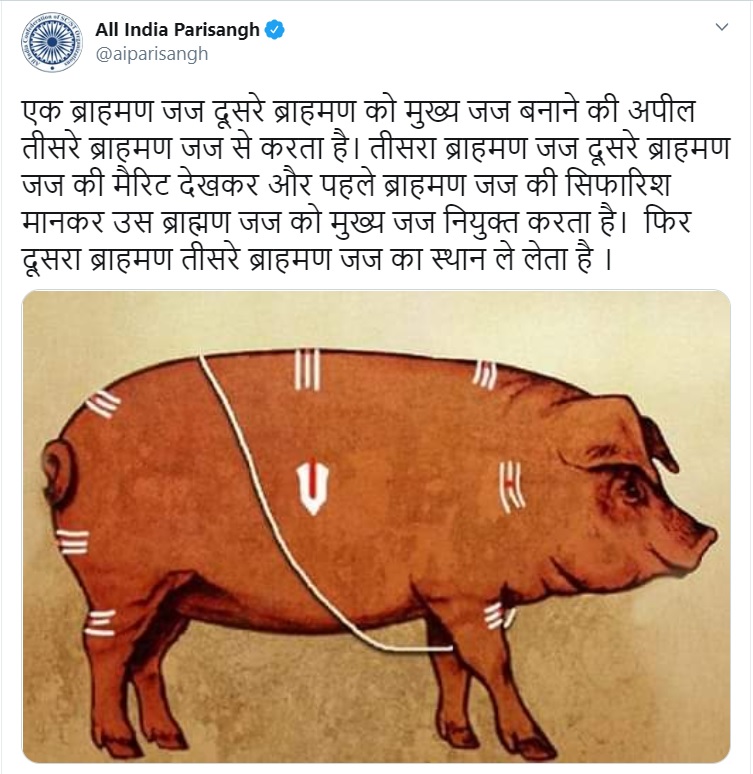
All India Parisangh, which claims to represent the Dalits of the country, hit another low on Friday after it not only made hateful comments against Brahmins by comparing the community to ‘pigs’ but also made disparaging comments against country’s judiciary.
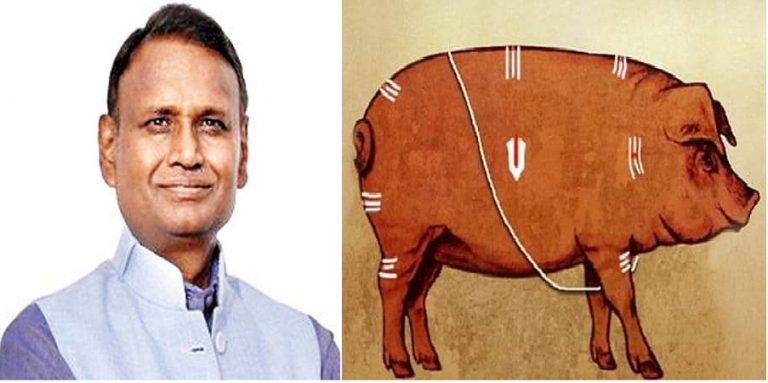
The self-proclaimed Dalit organisation All India Parisangh, run by the Congress leader Udit Raj, which has time and again resorted to such vile derogatory casteist hurls targeting Brahmins, resorted to the anti-Brahmin propaganda by posting an image of a pig wearing ‘Janeu’ – the sacred thread.
By openly propagating anti-Brahmin sentiments and comparing Brahmins to ‘pigs’, the Parisangh claimed that the Indian judiciary is only comprised of Brahmins. Expressing its contempt for country’s judiciary, the Dalit organisation claimed that ‘Brahmin’ judges in the Indian courts only recommended fellow people from the community, who were then selected as judges by the third set of Brahmins.
The derogatory comments were not only directed at the Brahmins of the country but also an attack on the independence of the judiciary. In a hurry to propagate its caste politics, the Dalit organisation, which is run by a Congress member, has now shamefully resorted to referring the upper caste communities as ‘pigs’.
Anti-Brahmin campaign by All India Parisangh
The anti-Brahmin rhetoric of Udit Raj’s organisation is not a new phenomenon. Last month, as Republic TV Editor-in-Chief Arnab Goswami had questioned Sonia Gandhi over her silence on Palghar Sadhu lynching case, All India Parisangh had come in support of the Congress interim president to make casteist slurs against Arnab Goswami.
The All Indian Parisangh had taken to Twitter to say, “Itna neeche koi Brahmin hi gir sakta hain, jitna Arnab Goswami gira hain”, roughly translated as (only a Brahmin can fall as low as Arnav Goswami has fallen).
Following such casteist statements, a complaint was filed against Congress spokesperson Udit Raj for his defamatory statement against the Brahmins.
Sarita Giri of the Samajwadi Party Nepal has been removed from her position of a member of the House of Representatives after she defied the party whip on Nepal’s Constitution Amendment Bill that altered the map of the Himalayan state. She was earlier expelled from the party and the party had written to the Federal Parliament Secretariat concerning the matter.
Sarita Giri had asserted that there was no clear evidence to claim that Lipmiyadhura, Lipu Lekh and Kalapani belong to Nepal. Consequently, contrary to the party line, she had floated an amendment seeking to retain the old map of Nepal on the country’s national emblem. She was asked to withdraw her amendment but Sarita Giri refused to do so.
Sarita Giri had held China responsible for the new map bill and questioned Nepalese Prime Minister KP Sharma Oli on the move. Increasing Chinese interference in the internal politics of Nepal is also suspected in the entire fracas. Some have also speculated that Oli was himself honey-trapped by the Chinese, which has led to his current capitulation.
Meanwhile, as per reports, India has also sent a diplomatic note registering its protest against Nepal’s revised map. India sent a letter to the Delegated Management and Government Assurance Committee of the National Assembly. “India has objected to the issuance of the new map. It has rejected our claim in a diplomatic note,” Chairman of the Comittee, Ram Narayan Bidari, said.
Nepal passed amendment bill including Indian areas of Limpiyadhura, Lipulekh and Kalapani in the updated map
Nepal’s lower house of parliament passed an amendment recently to update the country’s map including Indian areas of Limpiyadhura, Lipulekh, and Kalapani in the constitution of the country. The bill was supported by all the 258 lawmakers present and voting.
The move came on the heels of the endorsement extended by Nepal’s House of Representatives on June 10 to have a proposal seeking consideration of the constitution amendment bill for change of country’s map following a long discussion. India has consistently rejected these claims, terming it untenable.
On Thursday, a Delhi court had reportedly set aside the punishment of 60 Malaysian nationals, belonging to Tablighi Jamaat, for a fine of ₹7000 each after they had attended the Nizamuddin Markaz in Delhi. They were accused of violating visa norms and government rules, amidst the Coronavirus outbreak in the capital city.
The order was passed by Metropolitan Magistrate Siddharth Malik after the Nizamuddin Markaz attendees sought for a lesser punishment and accepted the ‘mild’ charges under a plea bargaining process. Advocate S Hari Haran informed that the accused could walk free after the complainant, Sub-Divisional Magistrate of Lajpat Nagar, Inspector (Nizamuddin) and Additional Commissioner of Police (Lajpat Nagar) did not object to their plea bargain.
Reportedly, the Tablighi Jamaatis were charged under the Epidemic Diseases Act, Disaster Management Act and relevant provisions of the Indian Penal Code (IPC). As per reports, the Delhi Police (Crime Branch) had registered a total of 49 chargesheets, and 11 supplementary chargesheets against 956 Tablighi Jaamatis from 36 countries.
Nizamuddin Markaz attendees had no malicious intent, argues counsel
Hari Haran argued in court that the ‘inadvertent’ offence was committed with no malicious intent and that it would not be repeated. While the Magistrate had initially imposed a fine of ₹15,000 on each accused, the counsel pleaded for a lesser fine citing that many of them were either students or retired individuals. Following that, the Judge reduced the fine amount to ₹7,000. The Malaysian nationals were also granted bail on a bond of ₹10,000. During the hearing, the accused along with embassy officials were present in the court.
What does the law say?
As per reports, an accused can plead guilty to an offence and seek lesser punishment under a plea deal. Under the CrPC (Code of Criminal Procedure), an accused can file for a plea bargain in cases where no crime had been committed against women or children below 14 years. It further includes offences where the maximum punishment is 7-year imprisonment or the ones that do not affect the socio-economic conditions of the society.
MHA blacklists defaulters
Earlier, the Ministry of Home Affairs (MHA) had decided to ban more than 2,200 blacklisted foreign nationals from entering India for 10 years for violating visa norms and getting involved in Tablighi Jamaat activities. The Modi government had blacklisted 960 foreigners in April, including four Americans, nine Britishers, and six Chinese nationals who had attended the Nizamuddin Markaz on tourist visas. In addition to the already blacklisted 960 foreigners members of the Tablighi Jamaat, more than 1,000 others had been banned from coming to India for violating visa norms by visiting the country on tourist and e-visas.
Vikas Dubey, the notorious gangster was neutralised today by UP Police in an encounter. While taking Dubey from Madhya Pradesh, the convoy of the police met with an accident. While the policemen lay injured in the accident, Vikas Dubey tried to snatch their weapons and escape. During this, Dubey was shot and killed.
The four policemen injured in the accident have not been brought to the hospital for treatment.
According to the reports, the injured policemen have been rushed to Lala Lajpat Rai Hospital in Kanpur, after they suffered some injuries during the encounter of gangster Vikas Dubey.
Kanpur: According to police, 4 policemen were injured after a car from UP STF convoy bringing back #VikasDubey from Madhya Pradesh, overturned today morning. pic.twitter.com/rI0RMpWXwz
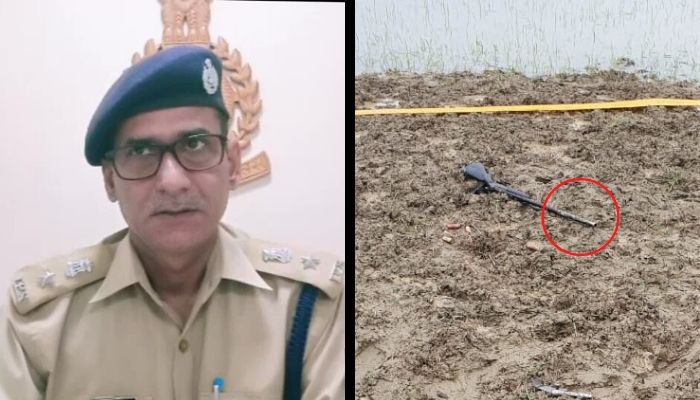
IG Kanpur Mohit Agarwal, speaking to the media said, “Gangster Vikas Dubey has been killed in an encounter with the police. Four police personnel have also been injured. The injured personnel are currently being treated at a hospital.”
Gangster Vikas Dubey tries to escape, killed in an encounter
In a dramatic turn of events on Friday, the notorious gangster Vikas Dubey, who was arrested yesterday from Ujjain, Madhya Pradesh, was killed in an encounter in Kanpur on early morning on Friday.
The encounter had broken out between Vikas Dubey and the Uttar Pradesh Special Task Force (STF) after the gangster tried to flee upon reaching Kanpur. One of the vehicles of the convoy of Uttar Pradesh Special Task Force (STF) that was bringing back gangster Vikas Dubey from Madhya Pradesh to Kanpur overturned after skidding on the road due to heavy rains.
Soon Dubey tried to escape from the police custody and allegedly snatched a rifle from one of the injured policemen to open fire at the police. Following which, police shot at him in retaliatory firing. He sustained bullet injuries and was rushed to Kanpur’s LLN hospital where the doctors declared him dead.
The notorious gangster Vikas Dubey, who was responsible for the death of 8 policemen in Kanpur was arrested from Ujjain’s Mahakal temple on Thursday.
On Friday, a notorious criminal named Panna Yadav was injured during an encounter with the Special Task Force (STF) of the Uttar Pradesh police at Force at Ahiranpurwa village in Hardi area of Bahraich. On being brought to the district hospital, he was declared dead. According to Superintendent of Police Vipin Mishra, Yadav was a resident of Gorakhpur and carried a bounty of ₹50,000 on his head.
As per reports, Inspector General (STF) informed that the criminal had 36 cases of loot, robbery, extortion, and dacoity registered against him. He further stated that Panna Yadav would carry out his operations in Azamgarh, Gorakhpur, Kheri, Basti, and Maharajganj. The cops were tipped off about the presence of Yadav. The criminal was gunned down after he had reportedly opened fire on the police.
A notorious criminal, Panna Yadav, was injured in an encounter with Special Task Force at Ahiranpurwa village in Hardi area of Bahraich last night. He was rushed to district hospital where he died. He was a resident of Gorakhpur & carrying a reward of Rs 50,000: SP Vipin Mishra pic.twitter.com/b9UEWcRIXF
The notorious gangster Vikas Dubey, who was arrested yesterday from Ujjain, Madhya Pradesh, has been killed in an encounter in Kanpur in the early morning on Friday. According to the reports, the encounter broke out between Vikas Dubey and the Uttar Pradesh Special Task Force (STF) after the gangster tried to flee upon reaching Kanpur.
Vikas Dubey, who was arrested from Ujjain in Madhya Pradesh on Thursday, was being brought to Kanpur on Friday morning. As the Uttar Pradesh STF convoy reached Kanpur, Vikas Dubey tried to flee, resulting in an encounter.
The notorious gangster, Vikas Dubey, who was arrested from Ujjain, Madhya Pradesh was killed in an encounter in the wee hours of the morning on Friday, 10th of July 2020. According to the police, while he was being transported to Uttar Pradesh, the convoy met with an accident. While police officials lay injured, Vikas Dubey tried to snatch their weapons and escape. In the process of trying to stop him, he was shot and killed.
The encounter of Vikas Dubey invited mixed reactions. While some said that Vikas Dubey had met his fate, rightly so, for brutally killing 8 police officials of the Uttar Pradesh police, others questioned the validity of police taking matters into their own hands, while doubting the credibility of the police’s version of what led to the encounter.
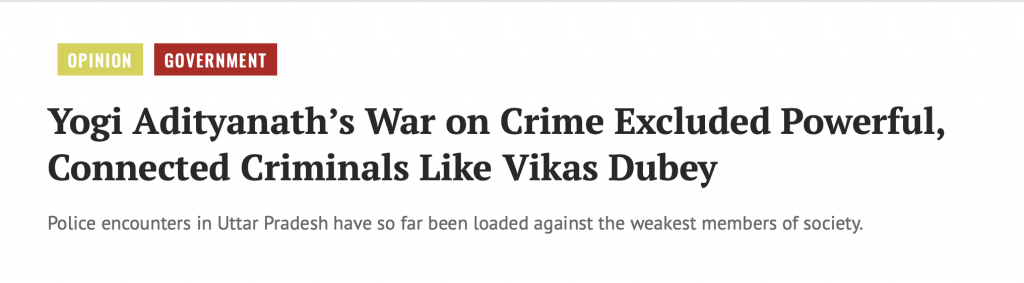
However, only a day before, The Wire was spinning a completely different yarn. An article published in The Wire insinuated that Yogi Adityanath was ‘casteist’ because in his ‘encounter raj’, a ‘Brahmin’ gangster would never be encountered and killed.
Article by The Wire
The Wire article starts with Yogi Adityanath’s legendary statement that criminals will not be spared. He had said that anyone committing a crime would be hammered (‘thoke jayenge’). One recalls how Yogi Adityanath in 2017 had said that criminals in Uttar Pradesh will either be jailed or killed in encounters. The article then goes on to talk about various tough statements made by not just Yogi Adityanath but even police personnel in the state.
It is after a long elaboration on what everyone knew was Yogi Adityanath’s public stance, The Wire started peddling a sinister agenda.
Article by The Wire
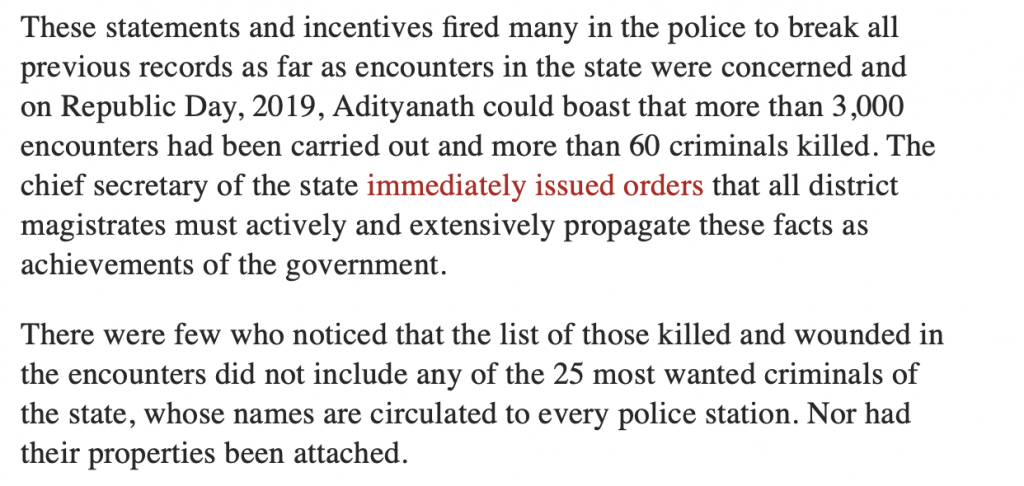
At this point, it would almost seem like The Wire cannot decide whether they support the practise of extra-judicial encounters, whether a result of circumstances or otherwise, or whether they consider it a human rights violation. Either way, The Wire insinuates that most people encountered in the state have been low rung, petty criminals and that none of the most wanted criminals have ever been encountered in the state.
The Wire then takes their propaganda further.
Article by The Wire
The Wire makes very clear insinuations here:
The Yogi Adityanath government had no intention of going after Vikas Dubey
The Yogi Adityanath government went only after Muslims and Dalits
The Yogi Adityanath government went after petty criminals, not the ones who were ‘connected’
The entire premise of the article was shattered well before the encounter itself.
The premise of the article is that the Yogi government goes only after Muslims and Dalits, however, if the Yogi government had no intention of nabbing Vikas Dubey, the initial raid itself would not have been set up.
It is pertinent to note here that in all these years, while the Samajwadi Party ruled, Vikas Dubey ran amuck with impunity and no coercive action against him. It was only during the Yogi Adityanath reign that a raid was conducted where an attempt was made to nab Dubey. In the process, 8 policemen were brutally murdered and then, a manhunt was launched as a result of which, Dubey was nabbed in Madhya Pradesh.
Further, after the encounter, the entire narrative of The Wire where it attempted to allege that Yogi Adityanath was ‘casteist’ for not killing Vikas Dubey in an encounter lies shattered as is.
However, one has to wonder why The Wire would publish such an article in the first place. The Yogi Adityanath government’s intention to inflict the strictest punishment on Vikas Dubey was rather evident from the raid that was carried out. After 8 police officers were killed, it was also a foregone conclusion that the police would not sit idly by after their brethren were slaughtered by the history-sheeter. What could possibly convince an editor to publish an article like the one published by The Wire, perhaps knowing fully well that they might end up severely embarrassed in the coming days?
Presumably and rather evidently, The Wire did not want Vikas Dubey to meet his fate. The narrative against Yogi Adityanath has been one that has been as severe and persistent as the one against PM Modi while he was the Chief Minister of Uttar Pradesh. Seen as a leader who is not afraid to be politically incorrect and flex his muscles when the thugs take to the street, CM Yogi has repeatedly proven that he couldn’t possibly care less about the media or what it thinks about him, even if he tried.
By publishing this article, The Wire presumably aimed to exert pressure on Yogi Adityanath to ensure that no harm befalls Vikas Dubey. The reason behind this could be multiple. It is entirely possible that The Wire wanted Vikas Dubey, a notorious gangster to be alive, well and free so that their diatribe against Yogi could continue unabated. If Vikas Dubey had managed to escape or stay alive, The Wire would have found another, long-running trope against the saffron-clad Yogi who they love to hate. They would repeat ad-nauseum that Yogi Adityanath was a casteist and bigot who confidently took action against Muslims during the anti-CAA riots but got cold feet when it came to a gangster who was a ‘Brahmin’.
Further, they would have also peddled the theory that Dubey was ‘allowed to escape’ because he knew several secrets about the political class and hence, the UP govt never wanted him in custody in the first place. They would have conveniently forgotten that only a day before, Vikas Dubey’s mother had categorically stated that Dubey was a part of the Samajwadi Party. In fact, his wife too was a part of SP. They had no connections with the BJP directly whatsoever.
This little fact would have been hidden and every attempt would be made to insinuate, slyly, that Vikas Dubey was somehow connected to the BJP.
In essence, by shooting a bullet into Vikas Dubey’s chest, the Yogi Adityanath government seems to have dodged a media bullet that was headed straight for it.
Whether one believes in the principle of neutralising gangsters in encounters or not, whether one believes the UP police’s version of events or not, the one thing that has been proven beyond doubt, in this case, is that Yogi Adityanath’s fight against crime does not depend on a person’s faith or caste. And it certainly won’t be affected by what the likes of The Wire want.
On Thursday, amidst the ongoing tensions between India and Nepal, the cable operators in Nepal have banned the broadcasting of Indian news channels except for Doordarshan in their country.
Addressing a press conference, Nepal Information and Broadcasting Minister Yuba Raj Khativada had claimed that the Indian media was telecasting news that jeopardised the sovereignty and self-respect of Nepali citizens.
Nepal’s Multi-System Operators have decided to put a ban on Indian news channels reportedly on account of their ‘unfounded’ reports on Nepal over the last few days.
Some Indian channels ran shows on Oli being ‘honeytrapped’
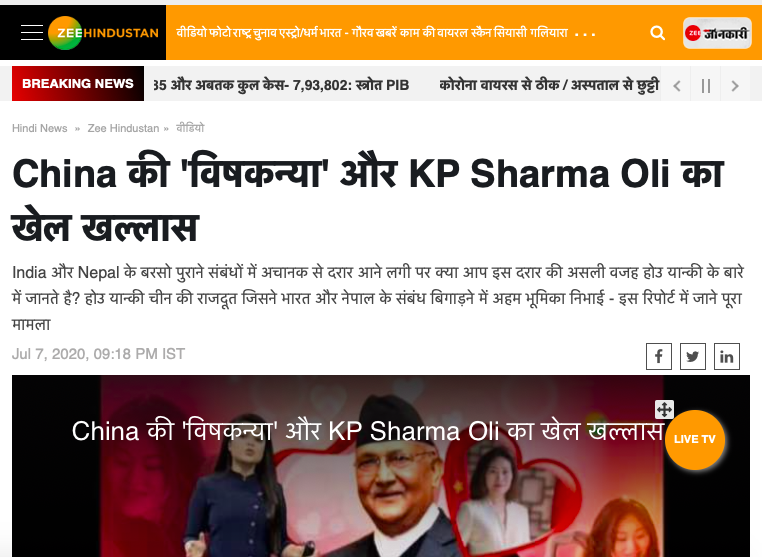
The decision to ban Indian news channels also came after a few media networks ran episodes featuring speculations about an alleged ‘relationship’ between Nepal’s Prime Minister KP Sharma Oli and the Ambassador of China to Nepal, Hou Yanqi, earlier this week. Some news reports had suggested the premier could have been “honey-trapped” by the ambassador.
One of the media reports on Oli’s alleged affair
Nepal Communist Party raises a strong objection to Indian media reporting on Oli
The reports alleging Oli’s cosy relationship with the Chinese Ambassador had garnered widespread criticism in Nepal and the spokesperson of the ruling Nepal Communist Party (NCP) criticised such reports.
Senior Nepal Communist Party spokesperson Narayan Kaji Shrestha had too alleged that the Indian media was spreading “baseless propaganda” against Nepal PM KP Sharma Oli. Echoing similar sentiments, chief advisor to Nepal PM Bishnu Rimal had condemned the news reports from India pertaining to KP Sharma Oli, stating that it violated basic ethics of journalism.
Baseless propaganda by Indian media against Nepal govt and our PM has crossed all limits. This is getting too much. Stop with the nonsense, said former Deputy Prime Minister & Spokesperson of the ruling Nepal Communist Party (NCP) Narayan Kaji Shrestha: Nepal media
As per reports, the ban is not official and has been brought in by cable operators. Nepal’s Nepal’s information minister Yuba Raj Khatiwada, when asked whether the Nepalese government is mulling a ban on Indian channels, had stated that it would be better if Indian media practises self-restraint. Nepalese social media handles had trended #BackoffIndianMedia recently.
Nepal’s aggressive posturing against India
The ongoing tensions between India and Nepal come after the Himalayan neighbour on the behest of China, arbitrarily decided to amend its map to add some Indian territories as part of it.
The Nepal government headed by KP Oli decided to adopt a Constitution Amendment Bill, to pave way for changing the updated political-administrative map, which includes Indian areas of Kalapani, Lipulekh and Limpiyadhura, in its symbol.
Perhaps acting at the behest of China, the Nepal Communist Party-led government in the country, had made irredentist claims against India by asserting that Nepal would “bring back at any cost” the Indian territories of Kalapani-Limpiyadhura-Lipulekh area.
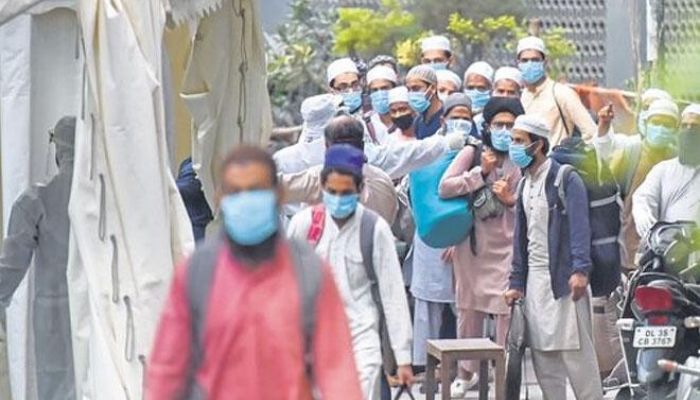
On Thursday, an Indian Army convoy was attacked by a group of Pakistan-sponsored Islamic terrorists in Pampore in Awantipora district of South Kashmir during which a soldier and a woman were injured.
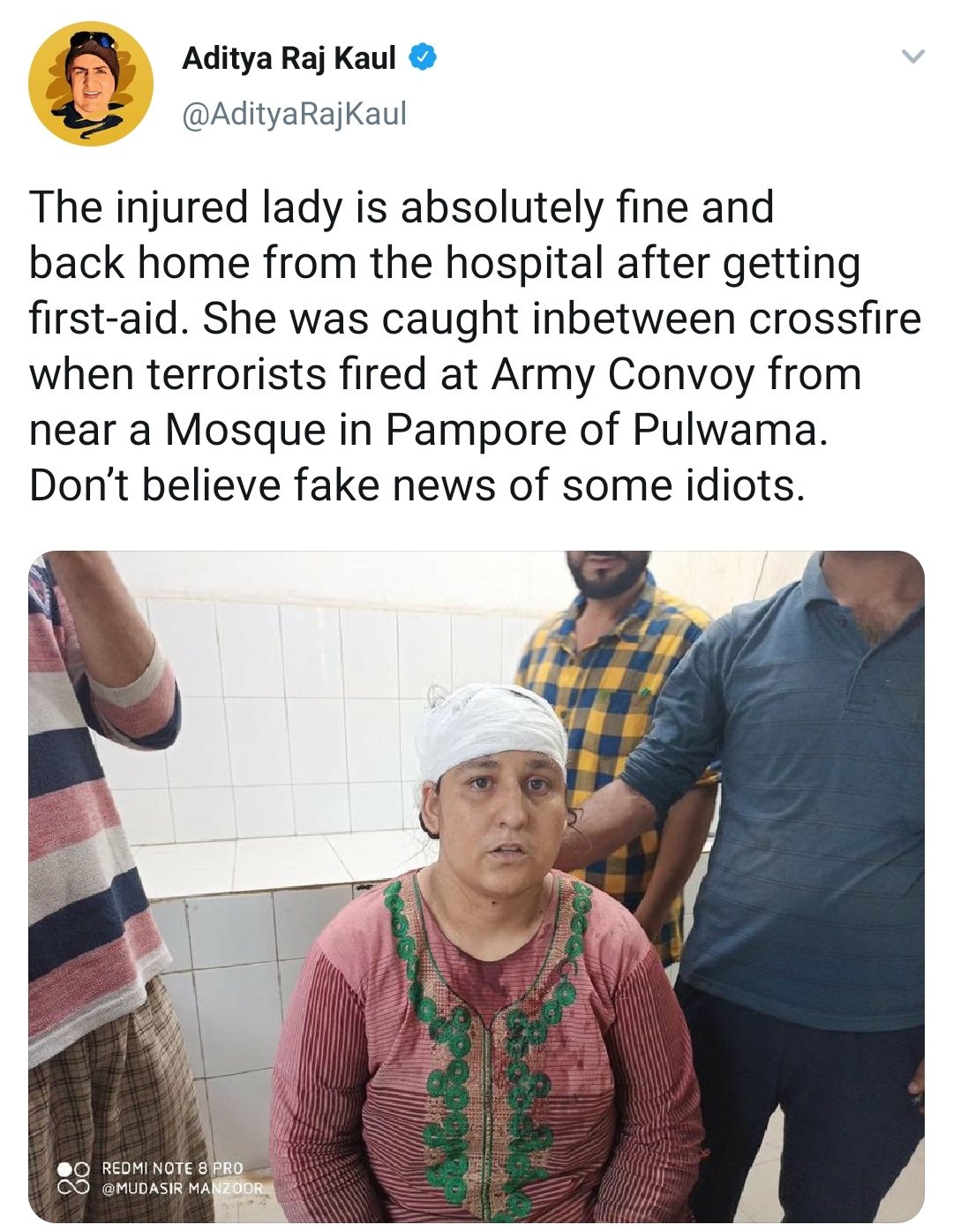
Reportedly, during the attack on the Army convoy that took place in the Ladoo area of Pampore, a Kashmiri woman suffered minor injuries and was soon shifted to a nearby hospital for treatment. The injured lady was soon discharged.
The lady was reportedly caught in between the crossfire when terrorists attacked at the convoy of the security forces from near a Mosque in Pampore of Pulwama.
As reports began to emerge that there has been another attack by the Islamic terrorists, the propaganda machinery within Kashmir resorted to peddling false information pertaining to the incident to claim that the lady was hit by the bullets of Indian Army, who later succumbed to injuries.
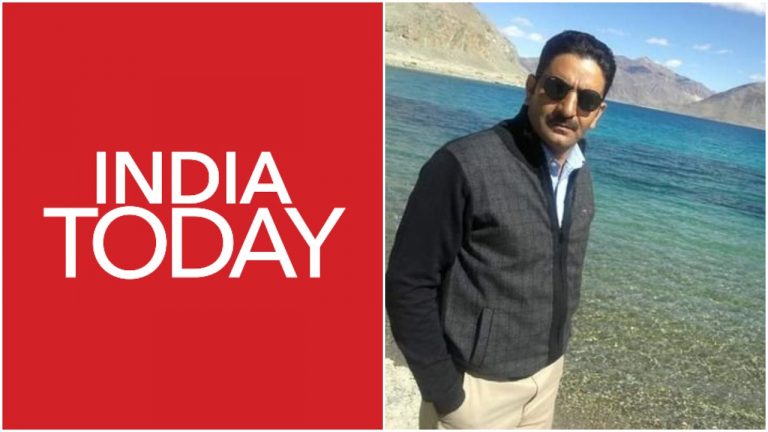
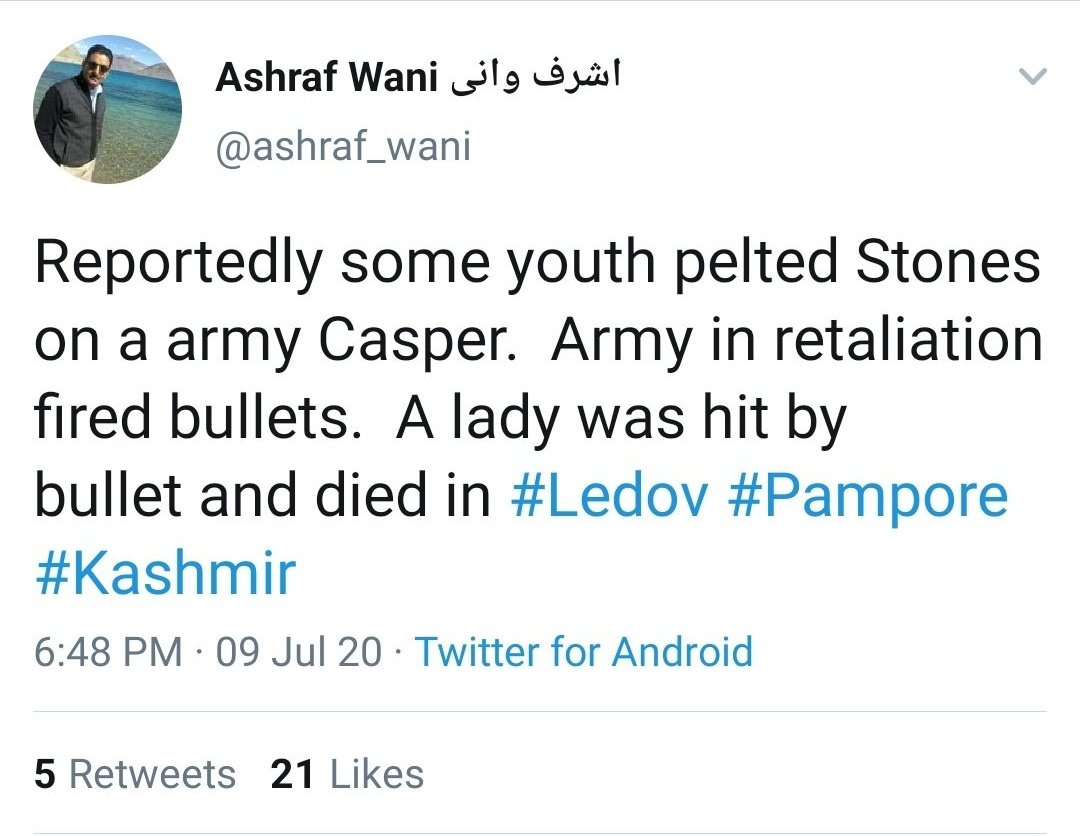
Ashraf Wani, the India Today journalist took to Twitter to claim that a lady died after she was hit by a bullet in Pampore after the Indian Army had fired against “youth pelting stones”.
Image Source: Ankur Singh
However, senior journalist Aditya Raj Kaul posted the image of the injured lady, who was referred to as dead by Ashraf Wani, to state that the injured lady was absolutely fine and back home from the hospital after getting first-aid.
It is notable here that Wani had not only invented a civilian ‘death’ when there was none, he had also stated that the Indian Army had opened fire on some ‘youth pelting stones’, trying to peddle a narrative that the army fires and kills young boys who pelt stones. The authorities have confirmed that bullets were fired at the Army convoy, not ‘stones pelted’.
Anti-India rhetoric spread by some groups
This is not the first time that India Today journalist has been pushing such dangerous false information on social media with regards to the terrorist attacks in the valley. Just a week back, Ashraf Wani had passed off a purported video of the son of the deceased, to claim that his 64-year-old father, who was killed by terrorists in Sopore, was actually picked by CRPF jawans.
In fact, Wani was trying to push the narrative on social media that 64-year-old man who was killed by the terrorists, was actually picked by the security forces, who was later found dead on the streets of Sopore. The image of the three-year-old child sitting on the chest the deceased person, who was later saved by the Indian Army had gone viral on the internet. Some media portals had even circulated a video of the three-year-old to claim that his grandfather was shot by police.
These purported videos of Ashraf Wani also made it to the social media groups of pro-Pakistan sympathisers in the valley, who used it to spread the narrative that it was the CRPF soldiers who killed the old man and not the terrorists.
The notorious gangster Vikas Dubey, who was arrested yesterday from Ujjain, Madhya Pradesh, has been killed in an encounter in Kanpur on early morning on Friday.
According to the reports, the encounter broke out between Vikas Dubey and the Uttar Pradesh Special Task Force (STF) after the gangster tried to flee upon reaching Kanpur.
Vikas Dubey, who was arrested from Ujjain in Madhya Pradesh on Thursday, was being brought to Kanpur on Friday morning. As the Uttar Pradesh STF convoy reached Kanpur, Vikas Dubey tried to flee, resulting in an encounter.
According to sources, gangster Vikas Dubey attempted to flee after the car overturned. Shots were fired and he has been rushed to a hospital; more details awaited on his condition https://t.co/VPBEQjlcai
During the encounter, which took place at Sachendi border near Kanpur, Vikas Dubey sustained bullet injuries. Two police constables have also sustained injuries.
According to India Today, Vikas Dubey succumbed to his injuries. The body has been taken from the spot to Lala Lajpat Rai Hospital or Hallett Hospital in Kanpur where police and team of doctors are present.
The police has said that the police car met with an accident and the car overturned. After the accident, Vikas Dubey tried to snatch the weapon of injured policemen and attempted to flee. It was then that the police fired in retaliation, killing the gangster.
#WATCH Vikas Dubey attempted to flee by snatching pistol of the injured policemen after car overturned. Police tried to make him surrender, during which he fired at the policemen. He was injured in retaliatory firing by police. He was later rushed to the hospital: SP Kanpur West pic.twitter.com/ZajJVLNGBU
IG Kanpur Mohit Agarwal said that 4 policemen were injured in the accident.
Vikas Dubey arrested in Ujjain
The notorious gangster Vikas Dubey, who was responsible for the death of 8 policemen in Kanpur was arrested from Ujjain’s Mahakal temple on Thursday.
According to the reports, Vikas Dubey was present in the Lord Mahakal temple at Ujjain on Thursday. The visuals showed that Madhya Pradesh police nabbed the gangster inside the premises of Lord Mahakal temple. Reports stated that the security personnel at the temple had identified Dubey and had alerted the local police.
Vikas Dubey, dressed in a white shirt with a mask, was then brought to the Mahakal police station. The police had reportedly found credible identity proof with him after the arrest proving that the man arrested is Vikas Dubey.