Following the shocking revelation by Aviation Minister Ghulam Sarwar Khan that 30% of pilots have fake licences, the national carrier of Pakistan PIA (Pakistan International Airlines) faced a crackdown in the UK, Malaysia, EU, and the United Arab Emirates. In the latest development, the United States on Thursday had reportedly imposed a ban of six months on the operations of the airlines in the country.
In April this year, Pakistan’s national carrier had received permission to run 12 direct flights to different cities in the United States. While 7 were operational, the permission for the remaining five has now been revoked. This was the first time when PIA was allowed to run direct plights to the US.
Reportedly, the US Department of Transportation notified about their decision to the PIA via an email and added that it was made in the backdrop of ‘serious concerns to aviation safety.’ The same was confirmed by the PIA spokesperson Abdullah Khan. “It is a setback for us. However we are keeping very close coordination with the US Department of Transportation and we sincerely hope that with the reformative process already underway, they will review their decision to revoke the permissions,” Khan was quoted as saying.
Pakistan begins verifying its pilots
As per the report, 262 Pakistani pilots whose credentials were labelled as ‘dubious’ had been grounded. Moreover, an inquiry has been initiated into the issuance of fake licences to pilots between 2012 and 2018. In a cabinet meeting, it was stated that 28 such PIA pilots had been terminated while an additional 37 pilots were suspended on suspicion of dubious credentials. Reportedly, around 450 pilots had received clearance from the Pakistani regulator till now. Earlier, in a joint conference, Barrister Shahzad Akbar, Ali Haider Zaidi, and Senator Shibli Faraz had assured that the government would ensure merit and transparency in all its national institutions. As per Pakistan Airlines Pilots Association (Palpa), there have been discrepancies between the government’s claims and the licences that have been labelled as dubious. As such, they have now demanded a judicial investigation.
Crackdown on PIA by other countries
Amidst the controversy surrounding fake licences of the Pakistani pilots, several countries have imposed strict restrictions on the operations of Pakistan International Airlines (PIA). The United Arab Emirates (UAE) had sought to verify the licenses of the Pakistani pilots employed with its airlines after claims of ‘dubious qualifications’ of 30% Pakistani pilots had surfaced. Earlier, the United Kingdom Civil Aviation Authority had withdrawn PIA’s permit to continue operations in three major flying destinations. A Pakistan International Airlines spokesperson informed that the European Union safety agency had suspended the airlines from operating in Europe for the next six months effective from July 1, 2020. On July 2, the Civil Aviation Authority of Malaysia (CAAM) had reportedly suspended Pakistani pilots who were working in the country.
PIA pilots have fake licences
Last month, Pakistan’s Aviation Minister Ghulam Sarwar Khan made a shocking revelation that more than 30 percent of civilian pilots in Pakistan carried fake licences and were not qualified for flying. While addressing Pakistan’s National assembly, the aviation minister said that some 262 pilots in the country paid someone to sit on their behalf in the qualifying exam to clear the examination. These findings were revealed after a probe into the PIA plane crash in Karachi in May this year. Following the publication of the report into the crash, Pakistan International Airlines grounded 150 pilots suspected of having fake licenses.
Today is the birthday of Defense Minister Rajnath Singh. And let me tell you a story about the time Rajnath Singh lost from Mohana Assembly constituency in the 1993 elections to the Uttar Pradesh Assembly.
What! Why am I being so unkind to him? Rajnath Singh has achieved so much : Chief Minister of Uttar Pradesh, BJP President, Home Minister and now Defense Minister. But for his birthday, all I want to discuss is how he lost an Assembly seat thirty years ago. Why?
Well, that is because sometimes, there can be great glory in losing an election. When you know you have done the right thing for the country and sacrificed your short term political interest for it.
The year was 1992 and Kalyan Singh was the Chief Minister of Uttar Pradesh and Rajnath Singh was the education minister. The UP government brought in a tough new ordinance against the rampant cheating in board exams all across the state. Among other things, those found cheating could be arrested.
That may seem harsh. But consider this. As soon as the law came into effect, the percentage of candidates passing the Class 12 board exams dropped to a mere 30% from 80% a year ago. For the Class 10 board exams, the percentage of passing candidates dropped to a mere 15% from 58% a year ago.
Those are shocking statistics. A rough estimation therefore suggests that 50 out of every 80, or over 60% of the candidates who passed the Class 12 board exams in UP were using unfair means. For the Class 10 exams, the picture is even more stark. One can guess that 43 out of 58, or nearly 75% of those who passed the Class 10 exams needed unfair means. In other words, some 75% of people who had “passed” Class 10 had not passed at all!
In 1991, India’s literacy rate was just about 50%. And now we find out that in India’s most populous state, 75% of those who were thought to have completed Class 10 had not passed at all!
What kind of future could India have with a workforce such as this?
Somebody had to take desperate measures to stop the cheating mafia and Rajnath Singh did just that. And if it is unpopular, so what? That’s what education is. You work hard now so that you are better off tomorrow.
But then there is Indian secularism, willing to cater to the most foolish instincts of society. Even if it means throwing away our entire future.
In the elections of 1993, Mulayam Singh Yadav made the ordinance a huge political issue. He won. As Firstpost recalls
“When Mulayam Singh Yadav of the Samajwadi Party came to power in 1993, he repealed the law. Students rejoiced and raised cheers for the new government.”
Yeah, three cheers for cheating! And cheers for a generation of kids who have been fooled by Indian secularism into thinking that they will have a bright future by cheating in exams instead of studying for them.
Predictably, as soon as the law was repealed, the percentage of students passing the Class 12 exams jumped up to 54% and the year after to 73%. For Class 10, the number jumped up immediately to 38% and then to 54%. Our nation probably got a crop of students with high school certificates that were essentially fake. But who cares? Indian secularism won. The nation lost.
In case you don’t realize, the 1993 election in Uttar Pradesh is a particularly fond memory for India’s ‘secularists.’ It came just after the fall of Babri Masjid in Dec 1992. The BSP and the SP fought the election in alliance and defeated the BJP. It was seen as a great victory for the “idea of India” over Hindutva.
I have a question. Did any of the liberal elites who cheered the 1993 win send their own kids to UP government schools? Of course not. Their kids went to Doon school and then accessed privilege networks to obtain admission to elite colleges in England and America. Whose kids went to schools where cheating was the only way to pass exams? The kids of common people, the kids from the weakest and most marginalized in society.
The liberal elite took away schools from the poorest and weakest for the love of five star NGO activism and their beloved Babri Masjid. Next time, one of these five star elites asks “Why not a hospital?” … tell them this story.
By the way, one of Mulayam Singh Yadav’s favorite arguments against the anti-copying measure was that it would be harder to marry off girls who were caught cheating. Tell this to some woke feminist organization headquartered around JNU. This is the legacy of Indian secularism. Those who swear by secularism must own up to it.
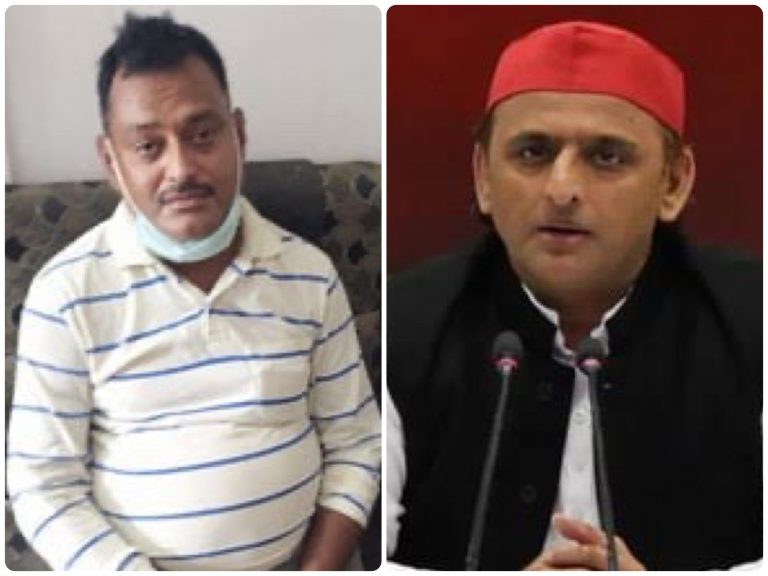
Mounting an attack against the Yogi government in the wake of the encounter of dreaded gangster Vikas Dubey, the Samajwadi Party chief and former state chief minister Akhilesh Yadav raised doubts over the authenticity of the encounter and declared that the BJP government in Uttar Pradesh is brazenly carrying out custodial deaths of “innocent people”.
In an interview with Aaj Tak’s Anjana Om Kashyap, Akhilesh Yadav said, “Vikas Dubey would not have become Vikas Dubey if the government at that time had stopped him. As far as ‘Operation Clean’ is concerned, is killing of innocent people, the occurrence of custodial deaths, a sign of law and order?”
Akhilesh Yadav was referring to the ‘Operation Clean’ launched by the Yogi Adityanath government in the state in the aftermath of the brutal deaths of 8 policemen. More than 25 teams of police personnel had fanned out across the state of Uttar Pradesh and other states, in a bid to hunt down Dubey, wanted in over 60 criminal cases, and his associates.
The incidence of Vikas Dubey’s encounter provided an opportunity to the opposition in Uttar Pradesh to question the state government’s commitment to upholding law and order. However, while slamming the state government, the former UP chief minister accused the gunning down of Dubey as extra-judicial killing and alleged that the police and the administration are engaged in killing the “innocent people” in the state.
“This state government should answer the questions arising out of today’s encounter. The government wants police to bump off people but many times they forget who should be eliminated. How could people forget this? Can you kill anybody with impunity? Who gave you this right?” said Yadav raising aspersions on the police encounter of Vikas Dubey earlier today.
Vikas Dubey’s Samajwadi Party links
While the Samajwadi Party chief is raising questions about the veracity of the encounter that killed Vikas Dubey, it is pertinent to note what the dreaded gangster’s mother had to say about the political affiliations of his son. Sarla Devi, the mother of the dreaded gangster Vikas Dubey, on Thursday reacted to the arrest of her son in Ujjain, Madhya Pradesh and revealed that Vikas Dubey had close relationships with the Samajwadi Party.
Speaking to the media, Sarla Devi, the mother of Vikas Dubey said that they were made aware of his arrest after watching the news on the television. She also revealed about the gangster’s political links stating that Vikas Dubey was ‘with the Samajwadi Party (SP) these days’.
Vikas Dubey killed in an encounter while fleeing
Vikas Dubey, who was arrested from Ujjain in Madhya Pradesh on Thursday, was being brought to Kanpur on Friday morning. As the Uttar Pradesh STF convoy reached Kanpur, Vikas Dubey tried to flee, resulting in an encounter.
During the encounter, which took place at Sachendi border near Kanpur, Vikas Dubey sustained bullet injuries. Two police constables have also sustained injuries.
The police have said that the police car met with an accident and the car overturned. After the accident, Vikas Dubey tried to snatch the weapon of injured policemen and attempted to flee. It was then that the police fired in retaliation, killing the gangster.
The gunfight between Vikas Dubey and the Uttar Pradesh STF near the Kanpur border leading to the death of the dreaded gangster has riled up many people.
A section of social media users questioned the Uttar Pradesh police over their claims that Vikas Dubey escaped and shot at them, which led them to fire in response, killing the notorious gangster. The others had a different take on the incident, who welcomed the police encounter of the notorious gangster, who was responsible for the killing of eight policemen and injuring several others.
However, as mentioned as a Rumi quote in Bollywood movie ‘Rockstar’ there is a field beyond right sayers and wrong sayers where a Congress loyalist is working on an entirely different thought process.
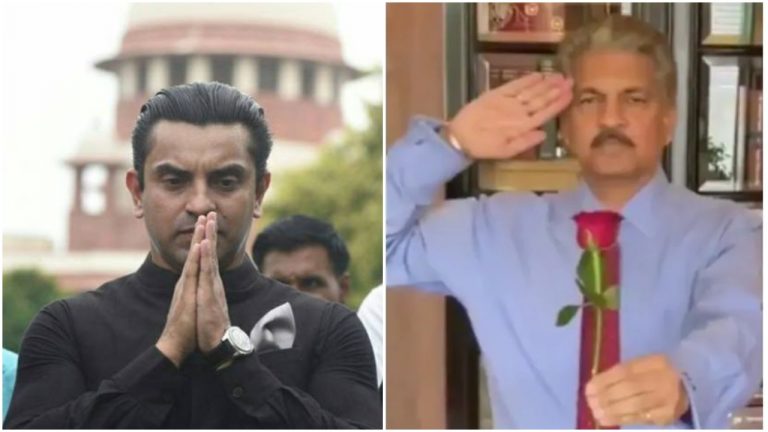
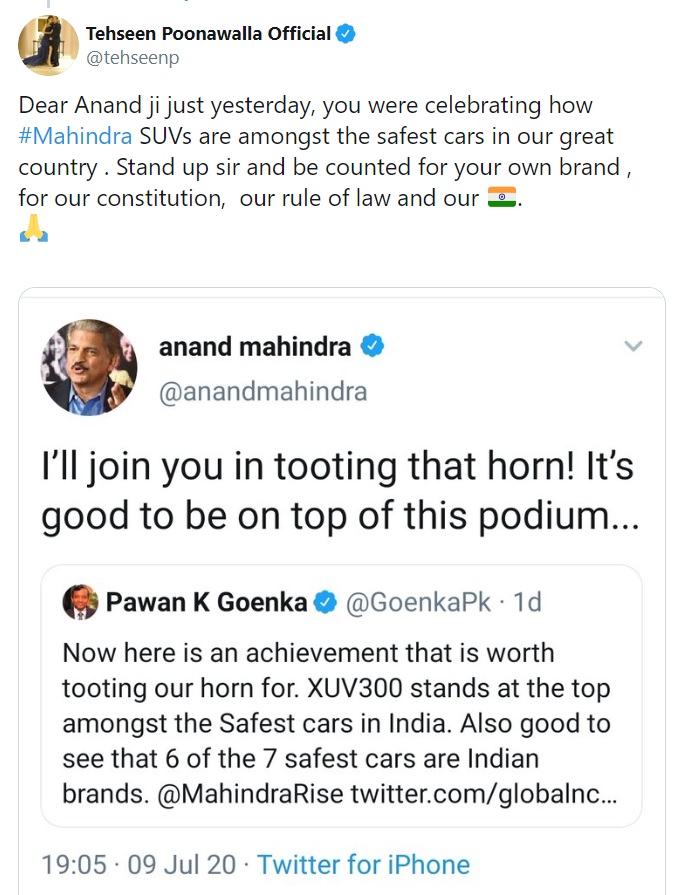
Tehseen Poonawalla, a self-proclaimed ‘activist’ and brother-in-law of Congress President Sonia Gandhi’s son-in-law Robert Vadra, too had his own conspiracy theories regarding the gunfight between Vikas Dubey and UP police personnel that took place on the outskirts of Kanpur. Poonawalla is behind Mahindra Motors because it is their car that Vikas was allegedly travelling in.
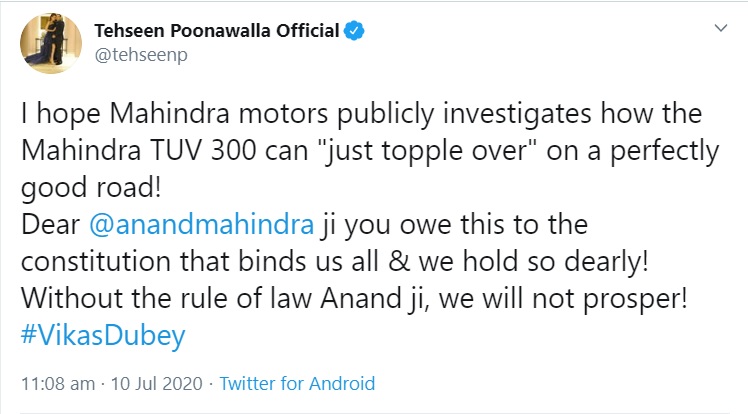
Hours after the incident, Tehseen Poonawalla took to Twitter, to hold industrialist Anand Mahindra accountable for the incident as he demanded that Mahindra motors should publicly investigate how a Mahindra TUV 300 can “just topple over on a perfectly good road”. Tehseen Poonawalla also demanded an explanation from Anand Mahindra for the toppling of a Mahindra vehicle, which was carrying gangster Vikas Dubey on Friday before his death.
It is reported that the gangster was brought to Kanpur from Ujjain in a Mahindra TUV 300, which toppled near Kanpur as it skidded on the highway due to heavy rains. Following the accident, Vikas Dubey tried to escape and snatched a gun to fire at policemen, who in a retaliatory firing killed the gangster. News reports from the encounter site had shown a toppled Mahindra car.
Not giving up after just 1 tweet, Tehseen kept on his quest to get Anand Mahindra, the CEO of Mahindra and Mahindra, involved in the inverstigation.
“Dear @anandmahindra ji you owe this to the constitution that binds us all & we hold so dearly! Without the rule of law Anand ji, we will not prosper! #VikasDubey,” said Tehseen Poonawalla.
Image Source: Tehseen Poonawalla
The industrialist is yet to respond to Poonawalla’s demands. Tehseen, in the meanwhile, has also written to the National Human Rights Commission in his personal capacity and on letter pad that has his name in big bold letters printed on the top.
— Tehseen Poonawalla Official (@tehseenp) July 10, 2020
Among the highly thought provoking questions that Tehseen has raised are:
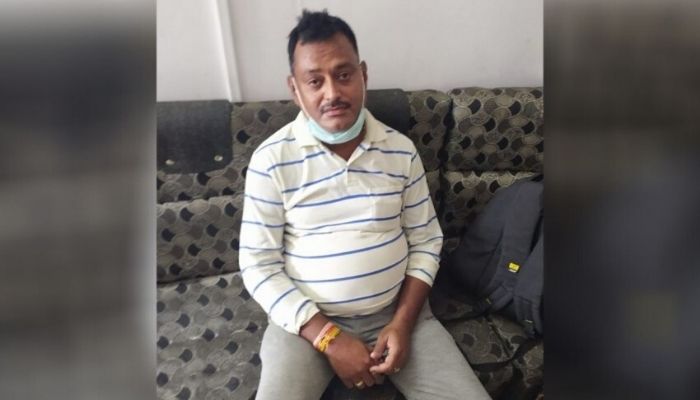
Vikas Dubey’s last visuals (from his arrest yesterday) had shown him sitting on a TATA Safari, then how was he sitting in a Mahindra TUV?
How did Dubey a physically unfit man with a paunch, manage to get out of a toppled vehicle pushing physically fit police officers?
Why was the snatched gun not tied with a rope to the police officer’s uniform?
It is yet to be seen if Tehseen also shoots off a letter to 221 B Baker Street, London to find answers for his questions.
Gangster Vikas Dubey tries to escape, killed in an encounter
In a dramatic turn of events on Friday, the notorious gangster Vikas Dubey, who was arrested yesterday from Ujjain, Madhya Pradesh, was killed in an encounter in Kanpur on early morning on Friday.
The encounter had broken out between Vikas Dubey and the Uttar Pradesh Special Task Force (STF) after the gangster tried to flee upon reaching Kanpur. One of the vehicles of the convoy of Uttar Pradesh Special Task Force (STF) that was bringing back gangster Vikas Dubey from Madhya Pradesh to Kanpur overturned after skidding on the road due to heavy rains.
Soon Dubey tried to escape from the police custody and allegedly snatched a rifle from one of the injured policemen to open fire at the police. Following which, police shot at him in retaliatory firing. He sustained bullet injuries and was rushed to Kanpur’s LLN hospital where the doctors declared him dead.
The notorious gangster Vikas Dubey, who was responsible for the death of 8 policemen in Kanpur was arrested from Ujjain’s Mahakal temple on Thursday.
Amidst the frenzy of Delhi riots and ongoing media propaganda blitzkrieg, a body was found on 25 February 2020. The body was identified as that of a person named Parvez. On 26 February, Delhi Police, on its first FIR in the case, had written that ASI Rakesh was alerted about a body in GTB hospital, brought by a person named Nitesh. No address for the deceased person was registered and he was declared ‘brought dead’ by the hospital.
As per the police FIR, dated 26 February, the incident had occurred at 7 pm on 25 February. The FIR states that from the pockets of the deceased person, 13 live cartridges, a Nokia phone and a bunch of keys were recovered. The FIR mentions that the deceased person was found on the road going from Ghonda Chowk to Baburam Chowk. When the police searched for the ‘Nitesh’ who had brought the body, they could not trace him. The address given by this so-called Nitesh was found to be a false one.
FIR dated 26-2.2020, registered by ASI Rakesh
Three methods, two places and contradictory statements by Sahil Parvez
The first FIR has mentioned that the deceased person named Parvez, (male, aged about 48 years) had died of a bullet injury. The deceased person’s son Sahil Parvez, speaking to media before his father’s funeral, stated something that contradicts his subsequent statements. Sahil stated that his area saw riots on 24 February, but on 25th, Hindus and Muslims made peace, hugged each other and apologised.
He further states that his father was standing in a bylane away from the main road when there was a sudden stampede. He turned right to go to his house and then he was hit by a bullet on his right chest. He fell on his face, and was bleeding. Sahil then says that he then took his father to the GTB Hospital. The video is linked below.
Sahil Parvez speaking to media
Sahil’s application to Delhi Police
Sahil Parvez had on 19 March written an application letter to the SHO Bhajanpura, with copies to the Prime Minister of India, Home Minister, Delhi LG, Human Rights Commission, the Commissioner of Police, Delhi and several organisations. Every page of the letter had the thumb impressions of Sahil.
Sahil’s March letter is completely in contrast to what he had stated to the media previously. not only the place of violence changes, the scenario, and characters are changed too. Shockingly, Sahil has also named 16 persons as the attackers who killed his father. Sahil’s letter stated that him and his father were going to offer Namaz at around 7 pm, when 16 persons, whose names were also given by Sahil, attacked them with sticks, swords, and guns and killed his father. Sahil also added that the same named persons have been threatening his family from the previous day.
Additionally, Sahil had alleged in his letter that the police abused him with filthy words regarding his religion and claimed that on-duty policemen were getting ‘his people’ (Muslims) killed. He also added that a person named Sushil Jat had abused and threatened him in front of a policeman.
On the next day, this Sushil Jat and another person named Devesh (along with their other associates) were accused of murder. Sahil writes in his letter that after the attack, he had put his father on a scooter and took him to GTB Hospital. He further claims that at the hospital, he had shown his Aadhar Card in the presence of police and in turn, was allegedly abused and threatened by the police and for accusing Sushil Jat as the attacker of his father.
Sahil further wrote that the police had deliberately written the wrong name and address while he admitted his father at the hospital. He added that he was told that his father is dead and crime branch ha threatened his family too. He adds that the accused Sushil and his friends had threatened him multiple times that the ‘whole police department is with them’.
Sahil’s letter to Delhi Police
The registered statement on April 3
On April 3, Sahil gave a statement to police. He claimed that he was dealing with the trauma of his father’s death and his mother’s illness, and had spent the days after his father’s death in his native village, hence his statement was delayed.
In his statement, Sahil has named the same street at the place of the murder, the street near his house that connects to Baburam Chowk. however, the methodology of the attack has changed here. He claims that Sushil and his associates fired bullets on Parvez saying that he (Parvez) is the root of all problems.
In this statement, Sahil states that after bringing his father home, he had put his father on a motorcycle with the help of his relatives and had taken him to the hospital. He has also added that by mistake, some Nitesh’ name and some other address got added in the hospital by his friend Shahrukh.
This is on contrast to Sahil’s letter on 19 March, wherein he had categorically stated that he was threatened by the police and the police had deliberately written Nitesh’s name and a wrong address.
Sahil’s statement to police on April 3
Parvez was brought to the hospital in 3 different ways?
The notable issue here is that Parvez was killed, but his son Sahil has reported three different versions of bringing him to hospital, the place and manner of the attack on three occasions. On the video above, Sahil himself is stating to the media that his father was shot while standing in front of their house and going to police for help in transport, but in the nest letter dated 19 March, he has identified 16 of the attackers with names and claims that he was threatened and the police deliberately changed the name and address at the hospital.
On the April 3 statement, Sahil then adds that he had brought his father to hospital with his friend Shahrukh and it was Shahrukh who had added the wrong name and address ‘by mistake’.
What do family members of the accuses persons say?
As per eyewitness accounts of the family members of the accused persons, on 24 February, the area in North East Delhi saw violent riots by Muslims where many shops of Hindus, including the shops of several accused in the case, were broken, vandalised and set on fire by Muslims who were raising slogans of ‘Allah Hu Akbar’.
The family of accused Tyagi has stated that their house was attacked with Patro bombs by local Muslims. The mob had also reportedly set their motorcycle on fire and tried to break down their gate.
The family members of the accused persons have stated that the Muslim mob was so violent that the families had shut their doors and were inside their houses, praying for safety. They had also made several calls to police asking for help. The families have also provided the reference numbers of the calls that were received after the calls. They were being told that police teams will be sent when available and as per instructions of senior officials.
Reference not of Dial 100 calls made on February 24
On April 8, the 16 persons accused by Sahil in his letter weer summoned by the police for interrogation at the Crime Branch office in Dwarka. They were summoned on the next day too, and since these persons were innocent, they obeyed the summons, hoping that they are cooperating with the police in its investigation into the riots, say the family members. All the accused persons had gone to the crime branch office on their own vehicles. On the night of April 9, the families were informed that the accused persons have all been arrested.
The families have also stated that on the day of 25 February, the entire area was calm and as the locals were afraid after a violent day of riots, almost all of them were indoors. They have stated that they were not even aware of Parvez’s death until they were summoned by the police. The police, in its investigation, has noted that the accused were within 500 metres of the location of the alleged crime on the day of the crime, that is 25 February.
The summons sent to the accused
One of the accused named by Sahil, who as per the complaint, not just kicked an injured Parvez but even revved something from his pockets, has not been arrested by the police. The reason given is, when the police traced the location of his phone, he was not in Mohanpuri, the area of the crime. Devesh has stated that he had gone to Etawah in UP to bring his daughter-in-law from her parent’s home. Devesh has also shown us the toll receipts of the highway where he went on February 23 and returned on February 27. Devesh, however, has been named by Sahil, as one of the persons who killed his father along with Sushil Jat.
Toll reciepts shown by Devesh
The family members of the accused have highlighted another issue. By 24 February, all the street lights in the area were broken by rioters. It was winter in Delhi and darkness sets in pretty soon in the evening. Sahil, who had stated on the video that he had helped his father who had fallen face-first on the stairs in front of their house, but his later statements claim that he had seen and identified the attackers 50 feet away from his house. He had identified each ‘attacker’ by name and has even mentioned the colour of their clothes.
Parvez who was ‘going for Namaz’ had a gun and live bullets in pockets?
Sahil had alleged that Devesh had kicked his injured father and had taken something away from his pocket. Next, he has also claimed that his father’s licenses revolver is ‘missing’. It is notable here that Sahil’s 19 March claims have been changes (wrt to his media statement) in regards to the ‘place of the incident’ to match with the police’s first FIR, that Parvez was found in a road connecting Baburam Chowk. Similarly, when the police report mentions 13 bullets found in Parvez’s pocket, Sahil’s next statement of the incident mentions a missing revolver.
Sahil has mentioned in his written statements that he was going to offer Namaz with his father. It raises a question that why was a person going to offer Namaz had a live bullets (and a gun?)with him.
A person who was describing in detail to the media where exactly was his father standing and how he was shot and how exactly he fell, suddenly brings the places and mannerism mentioned in a police report in his statements to match.
His April 3 statement also removes the mentions of police where in he had earlier claimed that the on-duty policemen were abusing him and threatening him. Similarly, he also states that Shahrukh’s name was mentioned as Nitesh, while his earlier statement had explicitly mentioned that the police had deliberately written the name as Nitesh and mentioned a wrong address.
Who are the 16 accused named by Sahil Parvez?
Chandrakant Maheswari’s young son is one of the accused
The statements of the family members makes a pattern clear with regards to the persons named by Sahil in his letter to the police that he sent almost a month after his father’s death. Most of the accused are associated with Hindu organisations like VHP, RSS and are the only earning members of their respective families.
The families have also states that since the day of their arrest, no communication has been permitted with the accused persons by the police.
Chandrakant Maheswari, the father of accused Suprem, says that he has been living in the area for 38 years. He adds that most of the Hindu families were scared and were only focused on saving their lives during the horrific riots. He also adds that most Hindu families in the area are small businessmen who keep to themselves and lead simple lives.
Uttam Mishra’s teenage daughter died due to trauma
Shashi Mishra, whose husband is one of the accused
Shashi Mishra is the wife of Uttam Mishra, one of the 16 accused. She says the family runs a small shop. After Uttam Mishra’s arrest, his daughter, who was ill, expired in trauma and shock. The family is yet to submerge her ashes in the Ganga because Uttam Mishra has been denied bail. She said that she had to perform the last rites of her young daughter on her own.
Vikrant Tyagi’s uncle has been arrested
Vikrant Tyagi says that the accused persons have been taken by the police only on the thin premise that their mobile phones were active within 500 metres of the place of the crime. He asks, “thousands of people live in the area. Are they all involved?”
They say that the ‘active mobile phones’ is the only basis the police has cited for the arrests. Due to coronavirus pandemic, the sessions judge is not available and the families are struggling for applying for bail.
Sushil’s sister Nisha’s statement
Nisha’s the sister of the main accused Sushil
Nisha, Sushil’s sister, has stated that Sushil is the only earning member in their family. They have buffaloes and earn a livelihood by selling milk. Sushil has been accused of firing and killing Parvez.
Sandeep Chawla’s wife
Sandeep Chawla’s wife says he has been selling her jewellery to feed her family. For over three months now, she has not been allowed to talk or meet with her husband.
What does the police say?
Vikrant Tyagi showed us the CCTV footages from the houses and shops of the accused persons. In the footages, a Muslim man, reportedly named Haji Islam, is seen leading a mob to vandalise, damage and set fire to the shops of Hindus. The mob was armed with guns and other weapons. Bullets were being fired everywhere.
Chandraprakash Maheswari even showed us print outs of the CCTV footage. Upon being asked whey he, a private citizen is doing so much investigative work, he said, “We don’t have any other option. We have scanned individual CCTV footages from the area, identified each rioter, and made a file with all the evidence. We went to the Jaffrabad police station with all the images and details. But the police did not even file an FIR.
They were reportedly told by the police that they are not concerned with the events of the riots on 24 February at all because the murder had occurred on 25 February.
Images from CCTV. Only 4 have been added, there are more than 50 images
What do the families plan to do?
The families stated that they do not have enough resources to make their voices heard. There are lawyers available, but due to the pandemic, courts are not functioning properly. While we were meeting the family members, a lawyer hired by them was trying to secure bail for the accused persons. The lawyer says that on the thin premise of mere mobile phone locations, the police should not be able to keep them for long.
The families says they have faith o the countries judicial system and hope that justice will be served. In our country, where even after 22-year-long trials, the courts have opened door at 2 am for convicted terrorists, these seemingly innocent people should not have to languish in captivity. We hope that the actual murderers of Parvez are caught soon and Sahil gets justice for his father. We also hope that the people who were indoors in a crowded locality to protect their families in the riot infested area, are not prosecuted on the basis of phone locations.
On Friday, Tirath Pal Singh, the father of police constable Jitendra Pal Singh, reportedly thanked the Yogi Aditya Nath-led-Uttar Pradesh government and the police administration, following the death of hardened criminal Vikas Dubey in an encounter. Jitendra was one of the 8 policemen who were killed by Dubey and his accomplice on July 2 in the Bikeru village of Chaubepur police station area of Kanpur.
“I am proud of UP police”, Tirath Pal Singh stated. He added that the death of the slain criminal had brought peace to his soul. Expressing his anger over the police insider who tipped off Vikas Dubey about the raid, he said that they must be exposed in public and brought to justice in a way similar to Dubey. However, the elder brother of martyred Deputy Superintendent of Police (DySP) Devendra Mishra insisted that the criminal should have been alive.
According to him, the interrogation would have revealed the names of the politicians and policemen who were associated with the notorious criminal. “If it was an accident, then, we cannot do anything about it”, he added. Meanwhile, Urmila Verma, the wife of deceased constable Sultan Singh, said that the death of Vikas Dubey had brought relief to her soul. However, she questioned, “How will we know about those who were trying to save Vikas Dubey? If he was interrogated, then, we could have got some answers.”
Vikas Dubey killed in encounter
The notorious gangster Vikas Dubey, who was arrested yesterday from Ujjain, Madhya Pradesh, was killed in an encounter in Kanpur on Friday. According to the reports, the encounter broke out between Vikas Dubey and the Uttar Pradesh Special Task Force (STF) after the gangster tried to flee upon reaching Kanpur. Reportedly, the police car met with an accident and the car overturned. After the accident, Vikas Dubey tried to snatch the weapon of injured policemen and attempted to flee. It was then that the police fired in retaliation, killing the gangster.
Dubey killed 8 policemen, injured 6 others
In a shocking incident, eight police personnel were killed and six cops were injured in Uttar Pradesh’s Kanpur during a police raid to nab the hardened criminal and murderer Vikas Dubey on July 2 late night. A team of 15-16 Uttar Pradesh police had carried out raids in search of criminal Vikas Dubey in Chaubepur in Kanpur. The raid was carried out at 1 am on the intervening night of July 2-3 in Bithoor area in Chaubepur.
The police personnel were ambushed by Dubey’s men who were prepared with arms on the roof of a building and continuously shot at them. The criminals had already blocked the road with a JCB machine to prevent the policemen from escaping. According to the police, Vikas Dubey and his men were already aware of the police raid and were on high alert. The criminals managed to flee from the spot after killing the police personnel. The deceased cops of Kanpur have been identified as DSP Devendra Kumar Mishra, SO Mahesh Yadav, Chowki Incharge Anup Kumar, Sub-Inspector Nebulal, Constables Sultan Singh, Rahul, Jitendra and Bablu.
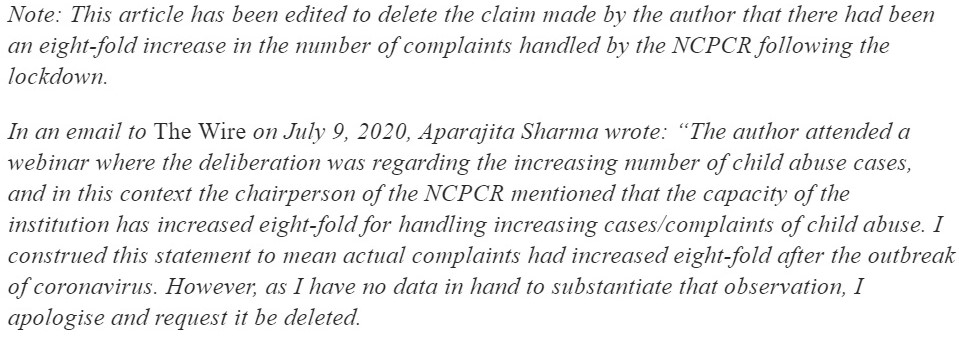
The Wire has issued a half-hearted apology after it was caught spreading fake news that claimed that the National Commission for Protection of Children Rights (NCPCR) has said that it has seen an 8-fold rise in the complaints post lockdown. Now, the claim has been retracted after the author of the article said that she had no evidence to support her stunning claim.
In a note, The Wire added that the article “has been edited to delete the claim made by the author that there had been an eight-fold increase in the number of complaints handled by the NCPCR following the lockdown.” The author, too, came up with a bizarre justification for the apparent ‘error’.
She said, “The author attended a webinar where the deliberation was regarding the increasing number of child abuse cases, and in this context, the chairperson of the NCPCR mentioned that the capacity of the institution has increased eight-fold for handling increasing cases/complaints of child abuse. I construed this statement to mean actual complaints had increased eight-fold after the outbreak of coronavirus. However, as I have no data in hand to substantiate that observation, I apologise and request it be deleted.”
The clarification added by The Wire
The Press Information Bureau had immediately fact-checked the dubious claims made by the leftist propaganda website. It said that the National Commission for Protection of Children Rights (NCPCR) has categorically denied the 8-folds increase in the complaint. It said that NCPCR has denied the wrong information being circulated and warned people against misleading reports quoting incorrect facts.
The clarification issued by The Wire does give one the impression that the author suffers from comprehension issues. It also reflects extremely poorly on The Wire that they ran such a shocking claim without bothering to actually verify the news. But it is something people have come to expect from the leftist propagandist at the portal.
“In the previous year, the NCPCR addressed around 5,000 complaints; post-outbreak (beginning March 2020), this has increased about 8-fold” the article had said. It appears that the author was so overeager to paint the government in poor light that she portrayed an increased capacity to deal with crimes as rise in actual crimes. Thus, effectively, she converted a positive development into a negative one due to her aversion towards the government.
The Wire has often published such malicious lies in order to sway public mood against the government. In the past, it had maliciously misrepresented facts to project the Indian Railways in poor light and claimed that 3 out of 4 ‘fact-checks’ by PIB were ‘unsubstantiated’.
The Wire also lied about the ventilators which were received in a donation by Gujarat government. It alleged that the firm from which the Modi government procured the ventilators had close ties to the BJP leaders and insinuated that the payment of which might have been made by the PM Cares fund.
Falling in line with the central government’s flagship project Swachh Bharat Abhiyan, the ministry of road transport and highways has taken the initiative to utilise waste plastic, which otherwise is not recyclable, in roads and highway construction. Till now the central government has already constructed 1 lakh km of road by using plastic waste and plans to double it in this financial year, reports Hindustan Times.
The revolution of plastic waste roads started brewing in 2015 when the Centre made it mandatory for all road developers in the country to use plastic waste for road construction. In 2016, Union minister Nitin Gadkari had announced the initiative. Since then, the government has utilised the waste plastic in constructing one lakh kilometre of road in 11 states.
Central govt saves Rs 30,000 per km
According to the report, earlier for every one kilometre of road construction, 10 tonnes of bitumen was being used. After the central government came up with this initiative, 9 tonnes of bitumen and 1 ton of wasted plastic is being utilised to construct every 1 km of road. Which means that by introducing this methodology, the central government is saving one-tonne bitumen per kilometre, the cost of which is Rs 30,000.
The process of building roads by utilising recycled waste of plastic was conceptualised by Padma Sri Rajagopalan Vasudevan, a professor from Madurai’s Thiagarajar College of Engineering. According to the professor, fondly known as the ‘Plastic Man Of India’, plastic waste roads can prevent potholes. They are more durable against extreme weather conditions like floods and heat as compared to the conventional roads.
How it works
The civic bodies of each city are first required to collect all the city’s wasted plastic and put them through three tasks – cleaning, drying and shredding. The plastic waste can include anything from sweet wrappers to shopping bags.
The plastic waste plant shreds the waste into 4mm pieces
Next, the shredded pieces are added to the bitumen mix, which is also heated at 160°c. The final mix is used for constructing roads.
The mix is combined with tar and coal and used to construct roads.
Western Railways installed benches made of recycled plastic waste at railway station
Besides being utilising for road construction, recycled plastic waste has also been used to construct benches, in the effort to promote the central government’s flagship initiative, the Swachh Bharat Abhiyan. In October last year, the Indian Railway Western Railway zone had installed three benches made of recycled plastic in the premises of Churchgate station in Mumbai.
India generates at least 25,940 tonnes of plastic waste daily, out of which about 60 per cent gets recycled, according to the Union environment ministry. The rest gets dumped in landfills, clogs drains, goes into the ocean as micro-plastics, or is burnt, leading to air pollution.
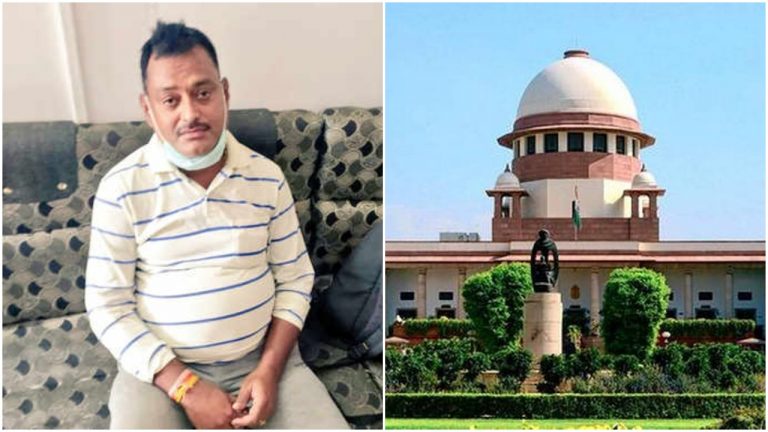
Hours before the gunfight broke out between gangster Vikas Dubey and Uttar Pradesh police near Kanpur killing the gangster, a petition was filed in the Supreme Court seeking protection for the gangster.
According to the reports, the Mumbai-based petitioner Ghanshyam Upadhyay had stated that there was a high possibility that Vikas Dubey might be killed in an encounter like his aides. Citing the encounters of several of Dubey’s aides, the petitioner demanded protection for gangster Vikas Dubey.
The petitioner had also urged the Supreme Court to transfer Vikas Dubey’s case from Uttar Pradesh police to CBI. The petitioner also asked for the registration of an FIR for the demolition of Vikas Dubey’s house and other properties by the UP Police along with the killings of his associates.
Hours before Vikas Dubey was killed in an encounter, a petition in the Supreme Court demanded urgent listing for action into the possible “killing” of Dubey by UP Police since other accused involved were killed in encounter. #vikasDubeyEncounter@Uppolice#SupremeCourtpic.twitter.com/N2AovY72qW
The petition, which was filed on Thursday evening, said, “Direct UP Police and government to safeguard the life of accused Vikas Dubey and ensure that he is not killed/encountered by police and complete security arrangement is made for his safe production in the concerned court from time to time and he is dealt with in accordance with law.”
“Register an FIR in the incident of pulling down/demolishing the residential building, shopping mall of accused Vikas Dubey and so all his expensive cars/vehicles and various other movable/immovable properties with the help of a bulldozer, JCB, Poclain machines and further killing of five co-accused, who were alleged to be involved in killing of eight policemen and giving the said killing colour of encounter,” read the petition.
Uttar Pradesh police will concoct the same story: Petitioner
The petitioner further claimed that the UP Police was expected to “concoct the same story of encounter” after killing Vikas Dubey like they did when four of his associates were killed after the July 2 incident.
The lawyer from Mumbai also stated that he had no sympathy for Dubey but maintained that in a country where even Afzal Guru and Ajmal Kasab had been given a fair trial, “Dubey cannot be simply killed by UP police officials who have become a law unto themselves”.
Advocate Upadhyay said Dubey has in fact proved to be a ‘Bhasmasur’ for the UP Police.
However, even before the Supreme court heard his plea, Vikas Dubey was killed during a gunfight with the UP STF on Friday morning when the force was bringing him to Kanpur from Ujjain.
Gangster Vikas Dubey tries to escape, killed in an encounter
On Friday, the notorious gangster Vikas Dubey, who was arrested yesterday from Ujjain, Madhya Pradesh, was killed after a gunfight broke out between him and the Uttar Pradesh police in Kanpur on early morning on Friday.
The encounter had broken out between Vikas Dubey and the Uttar Pradesh Special Task Force (STF) after the gangster tried to flee upon reaching Kanpur. One of the vehicles of the convoy of Uttar Pradesh Special Task Force (STF) that was carrying gangster Vikas Dubey from Madhya Pradesh to Kanpur skid and overturned on the road due to heavy rains.
Reportedly, Dubey allegedly tried to escape from the police custody and snatched a rifle from one of the injured policemen to open fire at the police. Following which, police shot at him in retaliatory firing. He sustained bullet injuries and was rushed to Kanpur’s LLN hospital where the doctors declared him dead.
The notorious gangster Vikas Dubey, who was responsible for the death of 8 policemen in Kanpur was arrested from Ujjain’s Mahakal temple on Thursday.
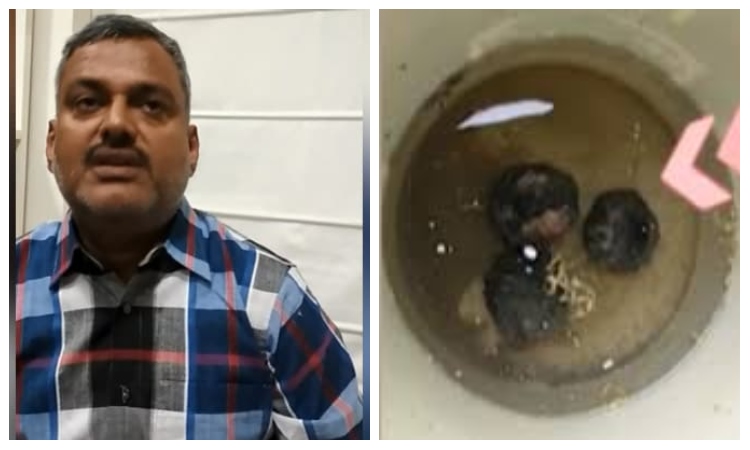
Police who have been conducting search operations daily after the July 3 massacre which killed 8 policemen have recovered 7 country-made bombs from locations owned by the dreaded gangster Vikas Dubey, who was killed in an encounter in Kanpur on early morning on Friday.
The police found these bombs reportedly at the Panchayat Bhawan in Bikru village. Some of the bombs were found from a location which was being taken care of by Vikas Dubey’s driver Daya Shankar Agnihotri who is now in police custody. It is also being reported that such bombs could have been used in the attack mounted by Dubey against the police in which 8 police officers died.
According to police sources, three police teams are conducting searches in the Bikru village, especially of houses of those connected with Vikas Dubey.
Dubey’s mother refuses to claim his body
Meanwhile, it is being reported that the slain gangster’s mother has refused to go to Kanpur to claim her son’s body for the last rites. ASP Deepak Kumar who reached the Krishna Nagar residence of the gangster’s mother, Sarla Dubey, said that she has told the police team that she does not want to associate herself with the notorious gangster. “I have nothing to do with my son now,” said Sarla Dubey.
RB Kamal, Principal, LLR Hospital, Kanpur, has confirmed that the police personnel who were injured in the encounter are now stable. Bullets had brushed by two of them, he said, furthering that Vikas Dubey had 3 bullet injuries on the chest and one on his arm.
The condition of the 3 injured police personnel is stable; bullets brushed by two of them. #VikasDubey had 3 bullet injuries on the chest and one on his arm: Dr RB Kamal, Principal, LLR Hospital, Kanpur pic.twitter.com/sdvUqgO8TH
Vikas Dubey, the notorious gangster was neutralised today by UP Police in an encounter. While taking Dubey from Madhya Pradesh, the convoy of the police met with an accident. While the policemen lay injured in the accident, Vikas Dubey tried to snatch their weapons and escape. During this, Dubey was shot and killed.
The four policemen injured in the accident have not been brought to the hospital for treatment.
Police had arrested Vikas Dubey from Ujjain’s Mahakal temple on Thursday. Reports stated that the security personnel at the temple had identified Dubey and had alerted the local police.