Home Blog Page 5276

Pakistan: At least 19 Sikh pilgrims returning from Nankana Saheb killed, read initial details

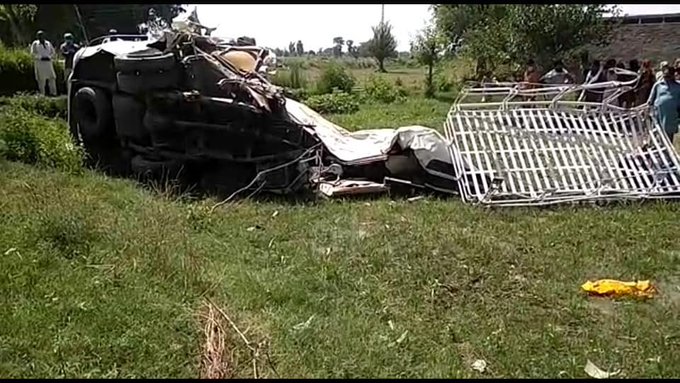
In a major tragedy, 19 Sikhs, reportedly from the same family, have been killed in Farooqabad, Pakistan when an express train rammed into a bus. As per reports, the incident occurred when the bus carrying the Sikh pilgrims collided with the Karachi-Lahore Shah Hussain Express in the Sheikhupura district.

As per reports, the pilgrims were returning to Gurudwara Sacha Sauda after performing religious rituals at Nankana Saheb. The dead bodies are being shifted to local hospitals. The bus was reportedly carrying 25 members. Police officials and rescue workers are on the site ascertaining damages.

Initial reports with photographs from the scene show a completely damaged bus. The bus was reportedly crossing the railway tracks when it was rammed by an oncoming Shah Hussain Express. The pilgrims were reportedly returning from Nankana Saheb.

It is a developing story. More details are awaited.

How Power Sector Liberalisation in 2009 led to a Chinese monopoly, Rs 3 Trillion NPAs and crippled domestic manufacturing

The Union Power minister R K Singh this week said the government is planning to impose curbs on Chinese power-equipments as Indian firms can manufacture almost all critical items used for generating, transmitting and distributing electricity. A meeting between the minister and his state counterparts is taking place today.

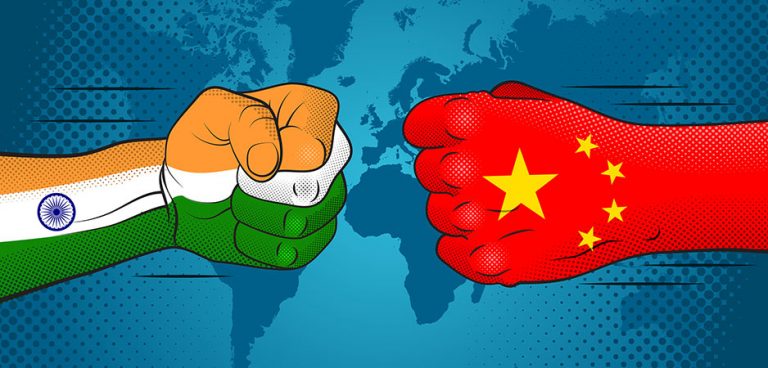
India-China trade deficit (imports against exports) in 2014 was 33 times that of 2004.  In 2020, India has INR 65 billion imports from China and INR 25 billion exports. The current government cannot just unplug imports from China due to WTO commitments. However, the government can certainly curb imports.

Here’s a look at why import curbs are essential and how a decade of cheap Chinese imports hurt the Indian power sector.

As part of the power sector liberalisation, duties for imported power-equipments were slashed to zero in the mega power policy while domestic companies had to pay different taxes and duties. Indian industry had been demanding a level playing field since 2008 by urging the government to remove the 10-20% price disadvantage it faced against Chinese power equipment suppliers.

In the last decade, the Indian government never imposed anti-dumping duty on cheap Chinese imports despite the recommendation of a high powered government panel. The cheap imports also destroyed the local MSME manufacturers and suppliers. 

About 60,000 MW to 65,000 MW of the total 90,000 MW coal-based power capacity in the private sector was under financial stress, according to a Parliamentary Standing Committee on Energy 2018 report. Indian banks are under severe balance sheet pressure due to exposure of INR 3 Lakh Crore to such assets weighed by a slow resolution process and tepid power demand from distribution companies, the report said. 

We will look at three specific examples to understand how the power sector dream of 2009 crash-landed. First, we look at how it hurt a state-owned premier Maharatna manufacturer of capital goods equipment, then we find out how plants running on Chinese equipment have negligible resale value, and finally, we see how influential promoters got huge bank loans to set up power plants. 
 

BHEL

The power sector liberalisation not only brought misery to banks but also led to the collapse of a 56-year old state-run Maharatna company – BHEL. Shares of BHEL used to be known as the crown jewel among India’s Navaratna companies have lost 90% since 2008. In 2009, the Indian government removed import duty on Chinese power equipment which led power plants to use cheap Chinese equipment.

Private power generation companies were given government sops and mushroomed at the cost of struggling homegrown companies. The homegrown companies, including BHEL, were not only producing high-quality components but they were exporting to the Middle East and Africa. Once allowed inroads into the power sector, the Chinese companies set up plant, machinery and labour clout in India. 

Athena Chhattisgarh Power

Vedanta Ltd. had submitted a resolution plan to the lenders for the corporate insolvency resolution process of Athena Chhattisgarh Power, which offered to pay much lower than the liquidation value for the under-construction 1,200 MW thermal power plant, according to media reports. The low bid of around INR 2.5 million per MW bid was mainly due to concerns about potential problems servicing Chinese equipment used in the construction and getting the spare parts, especially after Covid-19.

Also, investors are wary after several government agencies are cancelling contracts given to Chinese companies due to the on-going border dispute between the two countries. Athena Chhattisgarh, which has a debt of INR 5,442 crore, should have got a liquidation value of INR 10 million to INR 15 million per MW. The replacement value of a distressed thermal power plant in India is between INR 20 million to INR 30 million per MW depending on the plant’s age, condition, fuel supply and the power purchase agreements. Analysts say the huge discount for Athena is mostly due to its Chinese build.

Lanco Group

The stressed power plants promoted by the Lanco group show how private companies often in unrelated sectors aggressively commissioned a slew of power plants after the mega power policy was amended in 2009.

Lanco Amarkantak Power Limited was commissioned in 2009 and was initially planned to set up thermal power plant with an aggregate capacity of 3,240 MW, according to the company website. The power firm has defaulted on its outstanding debt of more than INR 50,000 crore and has been making consistent losses for the past five years citing high fuel costs and low capacity utilization. 

Its market cap fell from INR 18,777 crore in December 2007 to INR 138 crore now. The firm’s executive chairman L. Madhusudhan Rao is a brother of Lagadapati Rajagopal, a former Lok Sabha member of the Congress.

Clearly, liberalisation of the power sector in 2009 was supposed to unleash the animal spirit in the economy. Instead, it ended up saddling state-owned banks with INR 3 trillion rupees of non-performing assets, cheap Chinese power-equipments flooding the local market and a crippled domestic manufacturing sector.


Brave Hindus of Pakistan decide to defy Fatwa and go ahead with construction of Krishna temple in Islamabad

In face of grave religious persecution, including fatwa (Islamic decree) issued by a Lahore-based prominent Islamic seminary and threats from Muslim fundamentalists, brave Hindus in Pakistan have decided to go ahead with building a temple dedicated to Lord Krishna in the country’s capital Islamabad.

Braving the odds of building a Hindu temple in a predominantly radicalised Islamic country, the tiny Hindu population of Islamabad have made up their mind of building a Sri Krishna temple on the 20,000 sq ft land allotted to them by the Pakistani government.

Fatwa issued against the construction of Hindu temple in Islamabad

The decision to build a Hindu temple in defiance of threats from fundamentalists and Islamic seminaries is of particular significance, given the country’s troubled history of religious persecution of minorities, especially Hindus. As per media reports, a Lahore chapter of seminary Jamia Ashrafia has issued a fatwa, prohibiting the construction of a new temple but “permitting” the minority community to repair their places of worship. 

The fatwa said that in Islamic nations, renovation of existing places of worships of non-Islamic religions are allowed but the construction of new places of worship for such religions is forbidden.

Other than the fatwa, a petition was also filed in the Islamabad High Court against the construction of the temple. The petitioner said that the scheme does not fall under the master plan prepared for national capital Islamabad. The High Court has issued a notice to the Capital Development Authority (CDA). The petition urged that the land allotted for the construction of the temple in Sector H9 of Islamabad should be withdrawn and that the construction funds for the temple should also be withdrawn.

First Hindu temple constructed in Pakistan’s capital

It is worth noting that this is the first time that a Hindu temple is being built in Pakistan’s capital city, Islamabad. Earlier, there were two Hindu temples in the city, one of which was transformed into a tourist place and the other one is locked in a litigation case.

Following the groundbreaking ceremony of Sri Krishna Temple held on June 23, the Islamabad Hindu Panchayat had met Pakistan Prime Minister Imran Khan on June 25. According to a PTI’s Member National Assembly, Lal Chand Malhi, the construction of Sri Krishna Temple is going in full swing, adding that about 3000 Hindus live in the Pakistani capital and they had been championing the cause of constructing a temple dedicated to Sri Krishna since 2017.

Malhi further added that the Capital Development Authority in 2017 had allotted the plot to the Hindu Panchayat for a temple and crematorium and it took nearly three years for the formal ratification, including seeking approval of site plan, and for the construction of a new temple. 

The PTI’s MNA said that he had urged the Prime Minister to authorise Rs 10 crore for the construction of the temple. “He had immediately sanctioned Rs 10 lakh and if we get financial support from the government, the construction will complete soon or else it could take some time,” he said.

Medical college owned by Congress leader refuses to pay stipend to students, Rajdeep Sardesai blames PM Modi’s call to hail corona warriors

Even as India is amidst an acute coronavirus crisis, with the number of caseloads steadily rising, some journalists are trying to exploit this adversity by furthering their political propaganda. To this end, journalist Rajdeep Sardesai recently posted a tweet regarding non-payments of stipends to the medicos in a hospital in Karnataka and took a sly dig at the Prime Minister for demonstrating his respect for the corona warriors by asking people to clang Thalis but not paying them their due salaries.

“In a hospital in Davanagere in Karnataka, resident doctors have not been paid for 16 months, that’s right 16 months! There is no point in saluting corona warriors, beating Thalis if basic stipends/salaries are not paid on time. Time to walk the talk! Good night, shubhratri,” Rajdeep tweeted.

As per Rajdeep’s assessment of the unfortunate misery faced by the resident doctors in a hospital in Davanagere in Karnataka, PM Modi is to be held responsible for the non-payment of salaries to the medicos.

Hospital owned by Congress leader Shamanur Shivashankarappa

Responding to Rajdeep’s tweet, a Twitter user informed him that the hospital in question was the JJM Medical College where stipends were not paid for about 15 months. The Twitter user also added that the college hospital is owned by a Congress leader–Shamanur Shivashankarappa.

JJM Hospital website

The governing body of the JJM medical college is headed by Dr Shamanur Shivashankarappa, a veteran Congress leader and a Member of the Legislative Assembly from the Davanagere South Assembly Constituency.

However, these details were not mentioned by Rajdeep Sardesai in his tweet, because, perhaps the aim was to cast aspersions on PM Modi’s commitment to the wellbeing of the doctors and other frontline coronavirus warriors.

Stipend of medicos in JJM college stopped under Congress-alliance rule in Karnataka

While Rajdeep took a swipe at PM Modi for the interminable deferment of stipend to the doctors at a hospital in Karnataka, he conveniently did not reveal the full details of the matter and its origin. The resident doctors of JJM college have been on indefinite strike against non-payment of stipend for over 16 months now. The BJP formed the government in Karnataka in July 2019, almost six months after the doctors at JJM college staged protests against the non-payment of their due salaries. Before them, the Congress-JDS alliance was at the helm of affairs in the state of Karnataka when the medicos started their protest against the non-payment of the stipend.

On the expected lines, Rajdeep deems it inconsequential to apprise his Twitter followers of the genesis of the protests that had its roots in the tenure of HD Kumaraswamy government in Karnataka.

BJP government in Karnataka had asked college authorities to pay the stipends

It is also pertinent to note that the Karnataka Government had already directed the JJM authorities to pay the pending stipends to the doctors. Taking cognisance of a letter written to the Karnataka Health and Family Welfare Department, seeking for the release of funds to pay interns stipends for up to 11 months, the BJP government in Karnataka in February 2020 had ordered the principals of Kasturba Medical College (KMC), and JJM Medical College, to pay the outstanding stipend of the medicos which were yet to be paid.

The Yeddyurappa government in Karnataka had instructed the hospital authorities to pay the pending stipend to the protesting doctors in February 2020 but the governing body of the medical college, chaired by a veteran Congress leader, did not heed the instructions. As per the Medical Council of India, medical colleges need to have their own hospital and should pay for students serving in the said hospitals.

In May 2020, Karnataka Medical Education minister K Sudhakar had even warned the authorities of the private medical colleges, including JJM college, who had not paid stipends of the students at par with stipends paid by government colleges.

In an interaction with the minister, students of JJM Medical college had raised the issue of non-payment of dues.

Japan stands in solidarity with India, says it opposes any unilateral attempts to change the status quo by China

Standing in solidarity with India, the Japanese ambassador to India Satoshi Suzuki on Friday re-iterated that Japan was opposed to any unilateral action to change the status quo along the India-China border.

In a strong gesture of support for India amidst the ongoing tensions with China along the LAC, Japan delivered a powerful message to China that it will not accept any change in status-quo along the India-China border. Suzuki, through his official Twitter handle, posted the solidarity message after his conversation with India’s foreign secretary Harsh Shringla.

The Ambassador added that Japan hopes for peaceful resolution of the tension through dialogues. He informed that he has been briefed on the situation along the LAC by India, and was informed that Indian govt intends to pursue a peaceful resolution for the issue.

The statement from Japan comes at the backdrop of several meetings at the diplomatic and military levels between India and China, which has failed to achieve any results to end impasse along the LAC and even as Prime Minister Narendra Modi toured the Ladakh sector to meet troops and be briefed on the situation.

Earlier in May, the Japanese government had backed the efforts to achieve a peaceful resolution of the standoff.

“The Government of Japan’s position is that it is closely monitoring the situation, as it may have an impact on regional stability. The Government of Japan hopes that this situation will be resolved peacefully through dialogue between the concerned parties,” the country’s foreign ministry had said in a statement on July 18.

Japan is one of the members of the ‘Quad’ — a strategic group of India, the US and Australia – that has been formed to counter China’s growing assertiveness in the Indo-Pacific region and to ensure it remains free from any kind of dispute.

On June 19, Japanese Ambassador to India Suzuki had reportedly conveyed Japan’s condolences to the people of India and to the families of the 20 Indian soldiers who lost their lives in the line of duty at Galwan Valley.

Veer Bhogya Vasundhara, our enemies have seen your fire and fury: What PM Modi said in fiery speech to Jawans at Leh amidst India-China stand-off

Prime Minister Narendra Modi paid a surprise visit to Leh in Ladakh on Thursday. He delivered a speech to Indian Army personnel and personnel of the Indian Air Force and the Indo-Tibetan Border Police. The visit to Leh in the wake of the conflict with China at the Line of Actual Control. During his speech, he paid tribute to the warriors of Galwan Valley.

Prime Minister Modi said, “Today, I pay tribute to the soldiers who were martyred in Galwan Valley. His might, from his battle cry, the earth is still cheering him on.” “Today, every countryman’s head bowes respectfully in front of you. Today every Indian’s chest is puffed up by your bravery and might,” he added.

Narendra Modi told the soldiers, “Our enemies have seen your fire and fury. This land in Ladakh is India’s crown. It has given several brave hearts to the nation.” He also said that the entire world was witness to the might and bravery of the Indian armed forces. He added, “Your courage, your dedication to protect the valor and honor of Mother Bharati is incomparable. Your livelihood is not less than anyone in life. In these difficult circumstances, no one in the world can compete against the height at which you protect and serve as a shield of Maa Bharati.”

The Prime Minister also invoked the spirit of ‘Veer Bhogya Vasundhara’ during his speech. He said, “We say here, Veer Bhogya Vasundhara. That is, the Veer (valorous) protect the motherland with the strength of his weapon. This land is heroic. Our strength and determination to protect it is as high as the Himalayas.”

In a not-so-subtle dig at China, Narendra Modi said, “The era of expansionism is over. The world has moved on to the path of development. The expansionist forces have ruined the world in the last century. But they have either been defeated or forgotten in history.” He also emphasised that peace is not a virtue that can be forced by the weak. Consistently, India is expanding its power on land, water and air.

Drawing inspiration from India’s civilisational heritage, Narendra Modi said that the Indian soldiers are part of the same tradition that has repelled invaders since centuries. He said that we are the same people who worship Bansuridhari Krishna (flutist Krishna) but also idolise the same Krishna who wields the Sudarshan Chakra. He also said that whenever he takes a decision for India’s national security, he thinks of two mothers, one is Maa Bharti and the other is the mother who gave birth to brave-hearts such as the Indian soldiers defending the country’s borders.

PM Modi’s Leh visit hits the intended target, China issues statement talking about “escalation of situation” and “diplomacy”

After the PM Narendra Modi visited Ladakh to meet security personnel posted along the LAC, China has issued a statement saying that efforts are on to reduce tension between the two countries, and no party should do anything that can escalate the situation.

Addressing media, Chinese Foreign Ministry spokesperson Zhao Lijiant said, “India & China are in communication and negotiations on lowering the temperatures through military & diplomatic channels. No party should engage in any action that may escalate the situation at this point.”

https://twitter.com/ANI/status/1278958686409457666

The Chinese spokesperson’s comment came when Indian PM Narendra Modi was being briefed by security officials about the preparedness against Chinese forces along the border. The PM, along with Chief of Defence Staff (CDS) General Bipin Rawat and Army Chief Gen M N Naravane reached Leh in Ladakh on Friday morning to review the India’s readiness gainst the aggressive People’s Liberation Army (PLA), and also to understand the proposed de-escalation and disengagement process between the two nations at the conflict points along the border.

PM made a surprise visit to Ladakh, as it was decided only last evening. He met the security forces at Nimu near Leh to take stock of the situation. The PM also met soldiers who were injured during the clash with Chinese forces last month. The Prime Minister’s visit was meant as a morale booster for the armed forces and a powerful message to China, which is showing a non-stop aggression against India in the last several months.

The India-China border tension is at very high point at present after aggressive actions by Chinese military. After a scuffle between the two forces on the banks of Pangong Tso lake, the clashes took a deadly turn at the Galwan Valley along the LAC in mid-June. Although both the forces didn’t use firearms respecting treaties between both the nations, Chinese forces had attacked Indian patrolling parties with stones, sticks, rods wrapped with barbed wire and other such weaponry, which had left several Indian soldiers dead and injured. The Indian soldiers had immediately retaliated to this by counter attacking several Chinese camps in the area, and at the end of night-long fight, India had lost 20 soldiers. While China too acknowledged casualties on their side, they didn’t give a number, but it is estimated that more than 40 Chinese soldiers died in the clash.

Former Prime Minister Manmohan Singh’s daughter Amrit Singh works for George Soros’ Open Society Justice Initiative

The links between the Congress party and forces that seek to undermine India have given everyone plenty of cause for concern. Recently, it was discovered that China had paid the Rajiv Gandhi Foundation (RGF), managed by senior Congress leaders, more than Rs. 1 crore during the UPA regime.

More than that, the RGF also had links with other dubious elements, both within India and abroad. At OpIndia we have reported extensively on the links between the Congress party and American billionaire George Soros. The links revealed that George Soros, through his complex network of NGOs, had a disproportionate influence over the Congress party.

Now, it has come to notice that Amrit Singh, the daughter of former Prime Minister Manmohan Singh, is also associated with one of Soros’s initiatives. According to the website of Open Society Foundations, Amrit Singh “directs the project on national security and counterterrorism at the Open Society Justice Initiative.”

Source: OSF

Her bio on the OSF website states, “Singh conducts strategic litigation, documentation, and advocacy issues relating to counterterrorism measures including “counter-extremism” policies, freedom of expression restraints, extrajudicial killings (including through drones), rendition, torture, and arbitrary detention.”

“She also oversees Justice Initiative projects on economic justice, anticorruption, and freedom of information, association and assembly,” it adds. She has also received awards for her work on human rights law. In 2012, she was awarded the India Abroad Publisher’s Special Award for Excellence.

‘Globalising Torture: CIA Secret Torture and Extraordinary Rendition’, a report by Amrit Singh published by the Open Society Justice Initiative, received great attention in international media for exposing the global torture network following its release in 2012.

‘Globalising Torture: CIA Secret Torture and Extraordinary Rendition’, a report by Amrit Singh, daughter of former PM Manmohan Singh, for Soros Foundation

Apart from Amrit Singh, the Congress party also has several other links to George Soros. For instance, Shiv Shankar Menon, the National Security Adviser of India during the UPA regime, sits on the Board of one NGO along with George Soros. Furthermore, Harsh Mander, who was on the National Advisory Council formed by Sonia Gandhi, is also the Chairman of George Soros’s Open Society Foundation’s Human Rights Initiative Advisory Board.

The Rajiv Gandhi Foundation was in the limelight recently for the donations it received from foreign organisations. It also came to light that they had partnered with the Aman Biradari Trust, an NGO founded by Harsh Mander. Thus, Congress has deep ties with George Soros, the philanthropist who declared war on nationalism and nationalists. Given his past conduct and track record, such intimate relationships between the two factions do give Indians a lot of cause for concern.

Bharat Biotech-ICMR to launch indigenous coronavirus vaccine COVAXIN by August 15

In a major development, the Indian Council of Medical Research (ICMR), the apex body for the medical research in the country, on Thursday said that it will launch the coronavirus vaccine COVAXIN™ for the public use by August 15.

The country’s first coronavirus vaccine, which is developed in by ICMR in partnership with Hyderabad-based Bharat Biotech could be released by August 15 for the public use.

Hyderabad-based Bharat Biotech successfully developed COVAXIN™ in collaboration with the ICMR and National Institute of Virology (NIV). The SARS-CoV-2 strain was isolated in NIV, Pune and transferred to Bharat Biotech for the effort.

ICMR chief writes letter to all stakeholders

In a letter written to Bharat Biotech and principal investigators of medical colleges, ICMR Chief Balram Bhargava has asked for fast-tracking of the indigenous vaccine with an aim to launch by August 15.

“This is the first indigenous vaccine being developed by India and is one of the top priority projects which is being monitored at the topmost level of the Government. The vaccine is derived from a strain of SARS-CoV-2 isolated by ICMR-National Institute of virology. Pune- ICMR and BBIL are jointly working for the preclinical as well as clinical development of this vaccine,” the letter read.

Image Source: Neeta Sharma

The ICMR has asked a total of 12 institutes to fast track clinical trials of the vaccine as it is being considered among the highest priority projects which are being monitored by the government.

“You have been chosen as a clinical trial site of the BBV152 COVID Vaccine. In view of the public health emergency due to COVID-19 pandemic and urgency, to launch the vaccine, you are strictly advised to fast track all approvals related to the initiation of the clinical trial and ensure that the subject enrollment is initiated no later than 7, July 2020,” stated Dr Bharagava in a letter addressed to the clinical trial sites.

The ICMR in its letter to the selected institutes said that BBIL is working expeditiously to meet the target, however, the final outcome will depend on the cooperation of all clinical trial sites involved in this project.

Reportedly, the indigenous, inactivated vaccine was developed and manufactured in Bharat Biotech’s BSL-3 (Bio-Safety Level 3) High Containment facility located in Genome Valley, Hyderabad, India. Last week, Bharat Biotech had received approval from the Drug Controller General of India (DCGI) to conduct phase I and II human clinical trials.

Australia: Security guards at five-star hotel had sex with quarantined travellers, Melbourne hit with second wave of coronavirus outbreak

Australia’s Victoria is currently experiencing the second wave of the coronavirus outbreak. As per reports, as many as 36 suburbs across 10 zip codes were put under lockdown after a sudden spike in coronavirus cases.

As reported by Australian media, authorities in Victoria now suspect that security guards employed to monitor quarantined foreign travellers in several hotels across Victoria were having sex with them, in blatant violation of isolation and quarantine protocols.

Victoria recorded 73 new cases on Wednesday. Most alarmingly, at least 20 of the new positive cases have no known source of transmission, leading to concerns over community transmissions. The state of Victoria has reportedly been recording over 50 new cases since the past week.

Unacceptable breaches: State government launches inquiry

As per reports, the state government in Victoria has announced a judicial inquiry into its hotel quarantine program, after the allegations of security staff fraternising with quarantined guests emerged after the recent spike in coronavirus cases.

A report in Vice stated that many of the recent cases were traced back to private contractors working in two two quarantine hotels in Melbourne, the Stamford Plaza Hotel and the Rydges on Swanston Hotel.

Daniel Andrews, the Victorian premier, announced on Thursday that the state government will allocate 3 million Australian dollars to support the inquiry, and all international returned travellers will be diverted from Melbourne for two weeks while the entire hotel quarantine system is examined and set in order.

The state ha snow recorded at least 301 cases of community transmission. The state authorities and police have acknowledged the instances of ‘breach’ involving contact between security guards and quarantined guests.

Other allegations

There are also allegations of security firms engaging in ‘ghosting’, where private contractors allegedly inflated the number of guards listed on duty to charge the government more for their services. As per reports, the state authorities had opted to hire private contractors to guard the hotels, ignoring opposition and concerns.

15 hotels in Melbourne had volunteered to be a part of the quarantine programme that was launched in March. Foreign travellers who had tested positive were moved in ambulances to the hotels, listed as ‘red’ hotels. While medical staff were also stationed at the hotels, none of the medical staff, have so far found to be coronavirus positive. Most new cases are from private security guards employed at the hotels.

Victoria premier Andrews has also suspended international flights to Melbourne following the cases of community transmission, to extend and aide contact tracing work. Jenifer Coate, a retired judge will now lead an inquiry into the ‘breach’ that led to security staff contracting infections from guests.