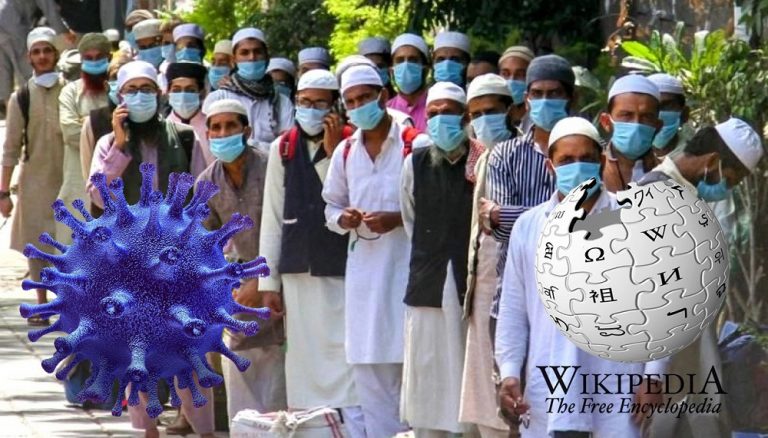
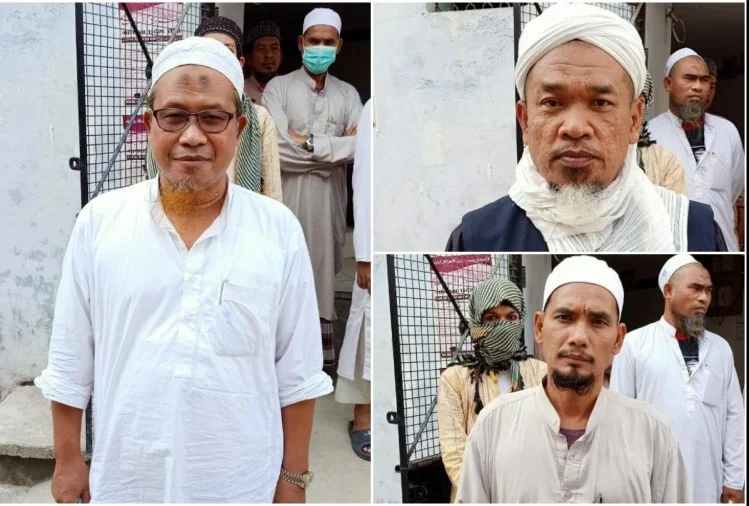
The Yogi Adityanath government in Uttar Pradesh, coming down hard on the Tablighi Jamaat attendees, have sent 66 foreign Jamaatis to jail for flouting the visa norms. These foreign Jamaatis in Uttar Pradesh’s Saharanpur have been shifted to a temporary jail, designated especially for the purpose after the direction from Chief Minister’s office.
Out of the 66, 54 persons have been sent to a temporary correction home for adolescents. Meanwhile, 12 Jamaatis will be kept in Tibiya Deoband until further notice.
Prior to the arrest, these foreign nationals were quarantined for two weeks in a guest house in Kareli, Uttar Pradesh. After their reports turned out to be negative they were arrested by the Uttar Pradesh police. Most of these foreign nationals are from Indonesia and Sudan.
30 Tablighi Jamaat attendees including AU Professor arrested in Prayagraj
Yesterday, 30 people including Tablighi Jamaat attendees, including 16 foreign nationals, who had attended Delhi’s Nizamuddin Markaz event in March, had been arrested from Prayagraj in Uttar Pradesh. 7 of these from Indonesia while 9 are from Thailand. As per reports, a case was registered against them two weeks back.
As per reports, one of the professors teaching at the Allahabad University had attended the event at Nizamuddin Markaz and upon his return had continued to take classes and was also an invigilator during the exams, putting lives of hundreds of students at risk.
The Allahabad University Professor along with his wife was put under a 14-day quarantine and now that the period has lapsed, he has been formally arrested.
Tablighi Jamaat members hiding in Prayagraj mosques
The Tablighi Jamaat members were reportedly living in two mosques in Prayagraj where they had hidden their travel history. On 31st March, 7 Indonesian nationals along with two others were caught living illegally in a mosque at Katju road in Shahganj. Similarly, 11 Jamaatis including 9 Thailand nationals were found living in the Hera Mosque at Kareli. They had all attended the Nizamuddin Markaz event. A case was registered against them all and they were put on quarantine.
Nizamuddin Markaz
The Islamic evangelical event, where Muslims around the world gather to learn to live life as prescribed by Prophet Mohammad, was held in Delhi’s Nizamuddin Markaz in March this year. The event, which was attended by several foreign nationals, ended up being a hot spot for coronavirus cases in India, contributing to as many as 30% COVID-19 positive cases in India. Tablighi Jamaat members have also been accused of misbehaving with healthcare workers, including molesting nurses and pelting stones at doctors and cops.
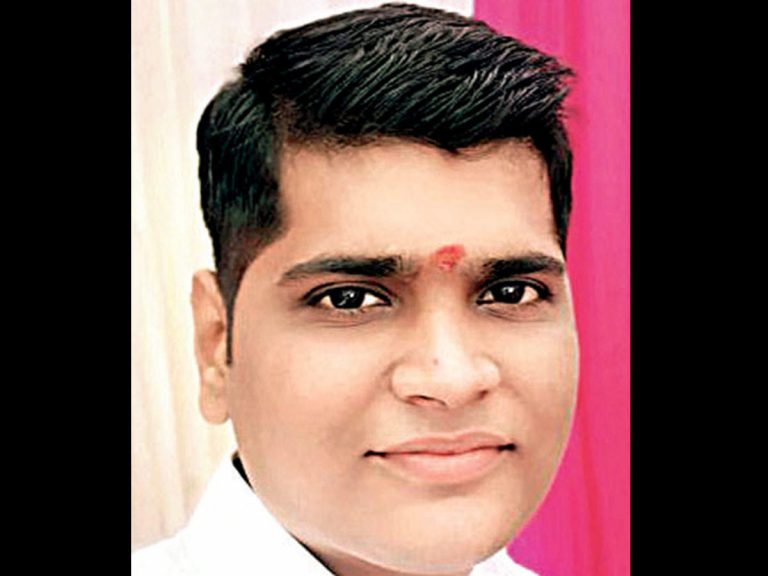
The scourge of Wuhan coronavirus continues to exacerbate in the financial capital of India. Recently, it snuffed out the life of a 25-year-old Mumbai resident, a doting father to a one-and-half-year-son, with no underlying conditions, says a report published by the Times of India.
Pradip Mali, now deceased, reportedly consulted a physician after he developed a cough on April 14. After an x-ray was done, the physician said that Pradip’s lungs appeared cloudy and filled with a cough. He was asked by the doctor to take a COVID-19 test and get admitted if necessary. After being turned away by two private hospitals, Mali was admitted to Kasturba hospital on April 16.
Before Pradip got admitted to the Kasturba hospital, he had gone to the Saifee hospital at Charni road which allegedly asked him to furnish COVID-19 positive report as it was a dedicated coronavirus hospital and was authorised to admit only positive coronavirus patients. His brother then took him to HN Reliance hospital at Charni Road which said that they have stopped testing coronavirus and referred them to Kasturba hospital.
Pradip was tested at Kasturba hospital where his report had come positive for the novel coronavirus. A day later, his family of 9-Pradip’s parents, wife and child, his brother Pankaj, his family, and other relatives were quarantined at a hotel.
According to Pradip’s brother Pankaj, his brother initially seemed fine but was put on oxygen support. Pankaj remembers that towards the end his brother kept asking if he could be shifted to a private hospital, to which Pankaj reassuringly responded that once his condition stabilises, he would be shifted a private hospital.
“Shift me to a private hospital. I haven’t had a sip of water since the previous day. Nobody is here to even fix my oxygen mask. Do you think I will come out it this alive?” were some of the desperate pleas made by Pradip to his brother Pankaj on his last phone calls.
Helpless, since he was himself quarantined at a hotel, Pankaj frantically called the ward 30 where Pankaj was admitted and asked nurses to feed his brother with water. “The nurses came and gave him water after I called. They also tried to fix his oxygen mask but he was constantly removing it. After I called my brother’s phone a few times, someone switched of his phone,” said Pankaj.
Pankaj added that the last time they spoke was on Sunday morning at 5 am when Pradip complained that he had not had water since Saturday. He also told Pankaj that his oxygen mask was not in place and there was nobody in the ward to fix it. Pradip then implored his brother if staffers at Kasturba hospital could pay a little more attention towards him. On Sunday 4 pm, Pradip breathed his last at Kasturba, where he had come walking three days ago.
However, refuting the allegations of negligence towards patients, Medical superintendent of Kasturba Dr Chandrakanth Pawar said it was impossible that patients were not being taken care of. “Patients are admitted here in critical condition. We are treating them with medications and treatment protocol the Union government has recommended,” he said, adding even those without any underlying conditions can deteriorate.
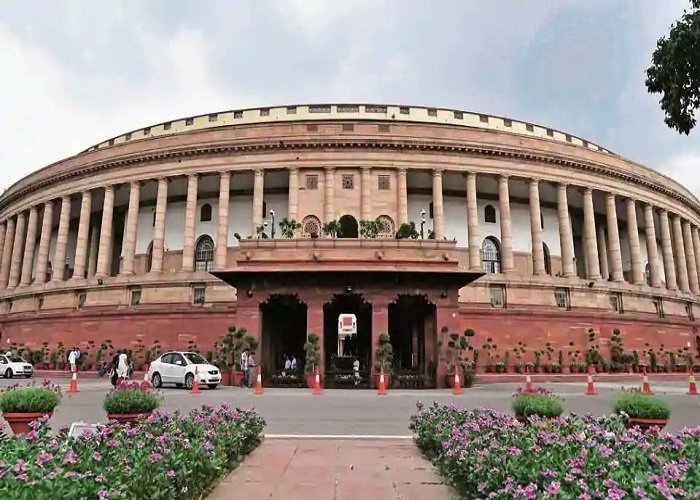
A staff of Parliament house who was working as a housekeeper has been found infected by the Wuhan Coronavirus. As per reports, there are 3,000 staffers in the Lok Sabha, among them, this has emerged as the first case.
As per a report in Hindustan Times, the staffer was not at work since the budget session was adjourned on March 23. “Approximately ten days ago, he fell ill and went to Ram Manohar Lohia hospital for check-ups including ECG. He was discharged on the same day,” an official said.
The report claims that the staffer was not posted in the parliament complex but at the Lok Sabha secretariat at 36 GRG road.
Another official claimed that he developed symptoms of coronavirus such as cough, fever and body ache. He said, “On April 18, he again went for a check-up at RML Hospital. This time, the doctors tested him for COVID-19. On Monday (April 20), his report came and he tested positive for COVID-19.”
The man has a wife, three sons and a daughter. His Grandchildren also live with him at his residence in Kali Bari Marg, New Delhi. His son works with Electronics Corporation of India Limited (ECIL) and is currently posted in CCTV wing of parliament house.
The Municipal Corporation of Delhi and other agencies have been directed to conduct COVID-19 tests for his family members too.
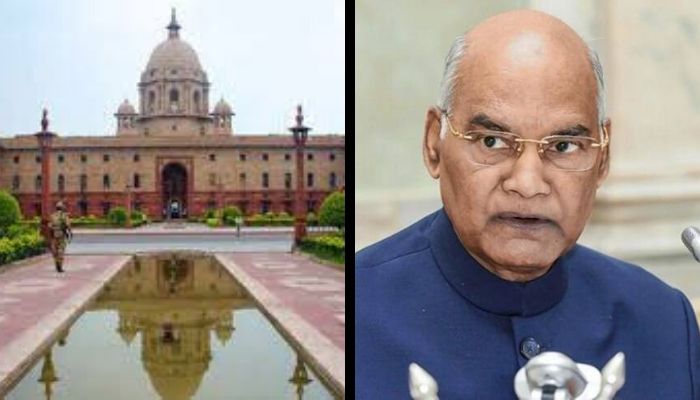
Relative of a sanitation worker in Rashtrapati Bhawan found positive
The daughter-in-law of a sanitation worker who works in Rashtrapati Bhawan was found coronavirus positive. Given that effect, 125 families associated with Rashtrapati Bhavan were sent to strict self-isolation.
Reports suggests that the mother of the woman’s daughter-in-law had died of the Chinese virus infection and her funeral was attended by all family members. When they were sent for testing, all of them had tested negative, except for the employee’s daughter-in-law.
Coronavirus in India
On April 14, Prime Minister Narendra Modi had extended the nationwide lockdown in India till May 3, 2020. Soon after that, a religious congregation attended by the Tablighi Jamaat members was found to be behind the sudden spike in the number of the Wuhan Coronavirus cases. The deadly virus has claimed 590 lives and infected 18,601 people in India so far.
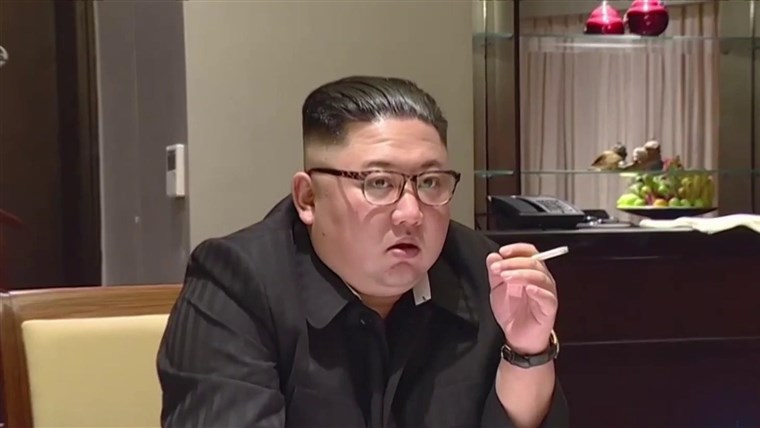
The presidential office in Seoul, South Korea on Tuesday said no “unusual activity” has been detected in North Korea after rumours were rife that the supreme leader North Korea, Kim Jong Un is in fragile condition post heart surgery. The US is seeking details about Kim Jong Un’s health conditions after receiving information that the North Korean leader is “gravely ill” after undergoing cardiovascular surgery on April 12, the US officials said.
The Trump government wasn’t sure of Kim’s current condition, said the officials to media on condition of anonymity. One of the officials said the White House was told that Kim underwent surgery last week and took a turn for the worse. CNN had earlier reported, citing a US official with direct knowledge of the matter, that Kim may be in “grave danger” after the surgery. The White House declined to comment.
Rumours about Kim Jong Un’s surgery
Kim Jong Un had recently missed the celebration of his grandfather’s birthday on 15 April. This raised speculations and rumours about his health conditions as, reportedly, only three days prior to the event, Kim Jong Un, underwent heart surgery. It is one of the biggest events of the year as it marks the birth of the nation’s founder, Kim Jong Un’s grandfather, Kim II-Sung.
Kim Jong-un has never missed the event, and it seemed very unlikely that he would simply choose not to turn up. Inevitably, his absence prompted speculation and rumours, none of which is easy to substantiate.
North Korea’s state media reported on April 11 that Kim attended a Politburo meeting of the ruling Workers’ Party of Korea and reported the next day that Kim “inspected a pursuit assault plane group”, however the state daily had not revealed the date of that visit.
The first report of illness
An anonymous source told the Daily NK, a Seoul-based website that gathers information from informants inside the isolated nation, that they understood he had been struggling with cardiovascular problems since last August. However, his health reportedly “worsened after repeated visits to Mount Paektu”. This was, reportedly, because of excessive smoking, obesity and overwork. This led to a chain of reporting by international media on a single-sourced story.
Later some reports emerged that intelligence agencies in South Korea and the US were monitoring the claim. Post this news, rumours started brewing as US media reported that Kim Jong Un was “gravely ill” post-surgery.
However, a statement from the South Korean government and a report by Reuters, citing an official with the Chinese Communist Party’s International Liaison Department, said that Kim was not believed to be critically ill.
North Korea’s supreme leader Kim Jong Un:
North Korea tightly controls any information surrounding its leader, who is treated almost like a deity there, and gathering intelligence out of the country is hardly possible.
Kim, believed to be 36-year-old, took power upon his father’s death in December 2011 and is the third generation of his family to rule the country.
Known to be a heavy smoker, Kim has been shown in state media in recent months appearing at military drills and riding a white horse on the country’s revered Mt. Paektu, where state propaganda says his grandfather used as a guerrilla base to fight Japanese colonial occupiers.
In 2014, Kim Jong Un disappeared for 40 days from early September, which had also sparked a torrent of speculation then, including that he had been ousted in a coup by other political grandees. Then he re-appeared, pictured with a cane. State media at the time admitted he was suffering from an “uncomfortable physical condition”, but did not address rumours that he was suffering from gout.
As the world economy continues downfall due to the Coronavirus pandemic, the WTI crude price went negative for the first time history on Monday. The May contract prices for WTI crude oil crashed rapidly, going from few dollars to negative in a matter of minutes, after reaching a low of -$40 per barrel, the price settled at -$37.63 per barrel at NYMEX (New York Mercantile Exchange) on April 20. The price went down by more than 300% in a single day.
Source: CNBC
Indian Twitter was keenly following this rapid development last night, as the financial media houses live-tweeted the constantly decreasing price of crude minute by minute. Many assumed that crude prices have crashed globally, and demanded that the benefit of the crash should be reflected in the retail price on fuel in India. Congress MP Shashi Tharoor, who has made it a habit of making comments and demands without knowing the facts, also demanded that Govt of India should “finally relent and pass some of this windfall onto the beleaguered Indian Consumer”.
Will the shameless government that has milked the public with extortionate fuel taxes for six years finally relent and pass some of this windfall onto the beleaguered Indian consumer? pic.twitter.com/zEJIQIGYfn
‘Crude price has turned negative’ is a misleading news, because despite the crash in markets yesterday, we are not going to see a steep decrease in fuel prices, even though prices will remain low.
This is because, what crashed was only the May future prices for WTI, will not have much elsewhere in the world. Let us see what those words in this sentence means.
What is WTI
West Texas Intermediate, the WTI is the benchmark crude oil price in the USA. It is a grade of crude oil which is the underlying commodity of oil future contracts in the New York Mercantile Exchange. The WTI is mainly produced in the USA, primarily from the Permian Basin in Texas and other nearby states. Other major grades of crude are Brent crude, Dubai crude, Oman crude etc. Brent crude is the major crude traded globally, and India also buys mainly Brent. Therefore, a fall in WTI price does not have much implication for India.
What is future contract
Future contract is a kind of transaction in commodities and financial instruments like equities. It is essentially a contract between two parties for a transaction in future but at a price fixed at present. For example, lets say party A offers to buy something at ₹1,000 per unit two months later, regardless of what will be price of that commodity at that time, and party B agrees to sell it at that price at that time. So, both parties A and B will enter into a contract to buy and sale that commodity at ₹1,000 per unit two months later, this is called a future contract. If the price of that commodity is more than ₹1,000 2 months later, party A makes profit because he is getting that item at ₹1,000, while if the price becomes lower than ₹1,000 he makes a loss. The situation is exactly opposite for the seller, who makes profit if the price goes down but suffers loss if it becomes higher than the contract price. Just like stock exchanges, there are exchanges where future contracts are traded.
Oil is one of the major commodities which is traded in the future market. There are two kinds of people who deal in Future Contracts. Some people are in the market only to speculate on the contracts, they buy and sell them before the maturity, treating it as any other financial instrument. While others buy and sale because they need the oil to use or have actual oil to sell. Oil refineries opt to buy in future at a predetermined price, to maintain stability in supply of crude, and oil producers also have assured buyers for future.
What is May Contract
Future Contracts have a maturity date, the date on which the actual transaction will happen. Oil futures are traded on a monthly basis, there are different futures for each month. Before the maturity date, the futures can be traded, and on the maturity date, whoever is having buy option will have to take delivery of the crude from the seller. Yesterday was the last of trading on the May future, and today delivery of those transactions will happen. While the May Future crashed and turned negative, the June contract was trading at a much better price of above $20 per barrel, and the July contract price was above $26 per barrel.
The price of June Contract Brent Crude, the main crude traded internationally, was above $25 per barrel. Therefore, it was not an across the board crash in price of crude, but only the price of May Contracts crashed just before its maturity.
Why May Contracts crashed
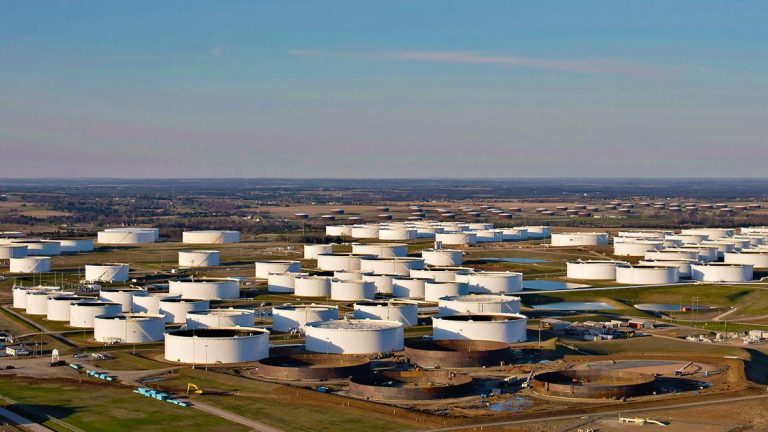
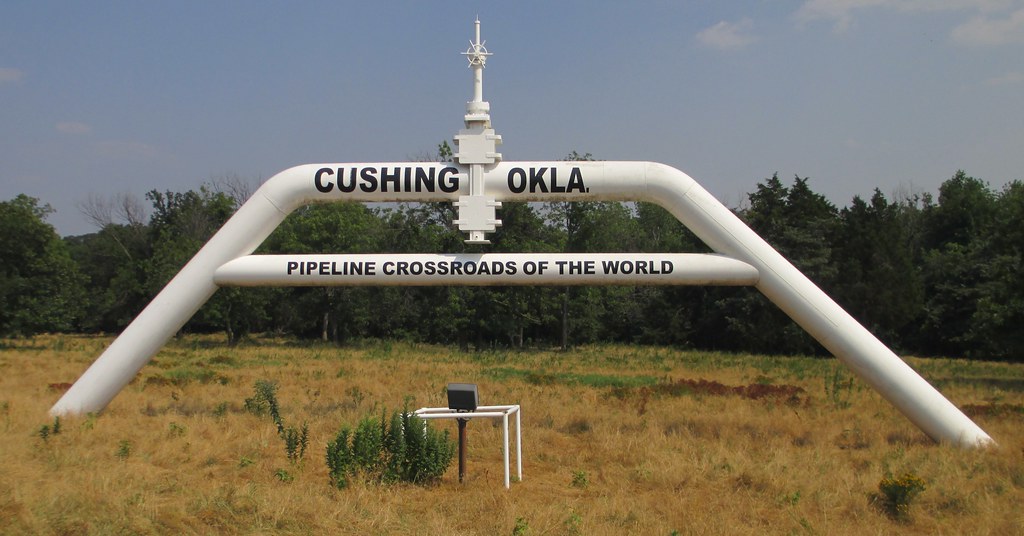
The rule in future trading in WTI crude is that after the contracts mature, the buyer will have to take delivery of the crude from the seller. And this handover takes place in one place, a town named Cushing in Oklahoma. Cushing is a major trading hub for crude oil and price settlement point for WTI crude. This is where the crude is delivered by the seller to the buyer.
Pipeline Crossroads of the World monument in Cushing
But as the world has come to a standstill due to the Coronavirus, there is no demand for oil. This means oil is sitting in storage facilities, and there is no more capacity to keep any new oil that is coming. Both mega tankers floating in oceans and massive storage facilities on the ground, including the storage at Cushing.
As there is no place to store the commodity, it became worthless. Moreover, even if there are place to keep it, there are no buyers, so it will be sitting in storage tanks, which will mean incurring cost with no certainty when the market will improve. That’s why the those who were having the future contracts started selling them at the exchange before the maturity date to avoid taking delivery. Exchange prices are a factor of demand and supply, if there is more demand then available supply, the price rises, and if there is more supply but few takers, the price comes down. As everyone was selling and nobody was buying the May contracts, price crashed, and ultimately turned negative.
The negative price means that investors holding May contracts had to pay people to take away the oil from their hands, as they didn’t want to incur storage costs.
Why there is so much oversupply of oil
The global economy started to take a hit due to Coronavirus from February itself, as countries had started restrictions on international travel. But the crude production continued by producer countries due to conflict between major producers like Saudi Arabia and Russia, creating a huge stockpile with no takers. Earlier this month, the OPEC+, the group of oil producing countries which includes the OPEC counties, USA, Russia and other countries, agreed to cut production of oil to maintain stability in price. But the group agreed to cut production by 9.7 million barrel per day, which is around one third of current global oversupply. Plus, the cut starts from May 1, which meant producers kept producing oil in April and flooded the market. Oil storage tanks and pipelines will be full even before the production cut begins, which has resulted in the sharp drop in prices.
Why Indian oil prices will not come down due to the negative price
As already explained earlier, India is not a major trader in WTI crude. Although Indian oil buyers are active participants in crude futures, most of them are in Brent, Dubai and Oman. Even in normal times, only a small amount of crude is imported from USA. This is because, even if WTI price is hovering at lower level than Brent for considerable amount of time, the cost of transporting it from USA to India offsets that benefit.
It also not possible to take benefit of the negative price in the USA, because the delivery of that oil have to be taken in Cushing in Oklahoma, and will have to transport from the middle of the USA to coast, and then ship it all the way to India. Given that even Brent price is very low at present, it does not make any sense to go to the USA to buy oil as even if the purchase price is negative, it will involve considerable transportation cost.
The price in fuel in India is based on the average of the prices of Brent, Dubai and Oman crude prices, and WTI price is not a factor in it. Therefore, the negative pricing in the USA will not have any effect on the Indian market.
Although the price of the Indian oil basket is also low at present, as there is a global glut in the oil market, the prices should come down when those low crude prices start reflecting in retail prices. That is unless the govt decides to raise taxes to maintain a stable price and to help in tax collection which is already very low due to the ongoing lockdown.
Shashi Tharoor is an MP and a former union minister, and he is expected to know what kind of oil India buys. But in an effort to target the Modi government, he kept aside facts and demanded that Indian consumers should get the benefit of negative price in the USA.
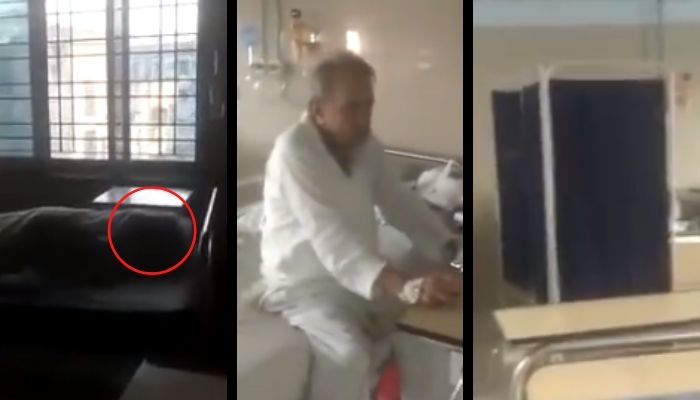
In a video shared by Babul Supriyo, BJP MP from Asansol, a person admitted to an isolation ward in M.R.Bangur Hospital in Tollygunge in West Bengal narrates the deplorable conditions under which suspected Coronavirus patients have been quarantined. 45 seconds into the video, the man holding the camera points towards a dead body lying unattended on a bed for over 2-3 hours.
The man alleged that no provisions had been made by the hospital authorities to dispose off the body. He then directs the viewers to another dead body that is concealed behind black curtains. The video creator then highlighted the lack of proper social distancing provisions in the ward by citing the example of two other suspected Coronavirus patients who are in close proximity to the body of the deceased.
1/2: This is a shocking video that has emerged frm alleged M.R.Bangur Hospital,Tollygunje, WB•It is shocking in every sense of the term•Since this VDO is in the Public Domain, I wud request Honble WBCM @MamataOfficial to conduct a thorough enquiry into it&release the FACTs asap pic.twitter.com/d1Ps5Jb3ar
“There are people here whose health condition is vulnerable but there are no provisions for rapid-testing in the State. As such, test results come only after a minimum of 4 to 5 days”, he said. Given that the people in the ward are crammed together with little space between two beds, the probability of everyone getting infected from the Chinese virus thus increases.
“I am here since Thursday and I have seen 5 to 6 people die in this ward. Most of them have died due to respiratory problems. In all probability, they were Coronavirus-positive patients. They died even before their test results had come. I do not know what happened to their corpses after their death”, he narrated.
Pointing towards an aged uncle dressed in white, the man said, “When grandpa came to the hospital, he was fine. But, now, even he has started coughing.”
Babul Supriyo in his tweet has demanded an inquiry into the matter and to release facts at the earliest.
The most alarming aspect in the video was that some dead bodies were kept in the same space as suspected Coronavirus patients, quarantined for observation. This, at a time when most accounts of best practices dictate that dead bodies of Coronavirus patients should be ideally cremated and not even buried. Even if it was not a pandemic being dealt with, keeping dead bodies with other patients can only be a recipe for disaster.
West Bengal sitting on a Time Bomb
The suppression of facts and fudging of data has become a major worry for authorities and health experts in West Bengal, which has now snowballed into a huge controversy between the Trinamool Congress-led West Bengal government and doctors who are whistleblowing against the state government for forcing health authorities not to declare deaths from coronavirus unless certified by a state government-nominated panel.
According to a Sunday Guardian report, the manipulation of data on coronavirus cases by the Mamata Banerjee-led government, expectedly, has come under fire from officials of the Kolkata-wing of the Indian Council of Medical Research, who have blamed the TMC-led government for slowing down the mandatory tests related to the deadly virus.
The troubling part is that the state government has not even responded to the Ministry of Health and Family Welfare of the Central government’s declaration that the whole of Kolkata city and some of its districts should be declared as Coronavirus hotspots.
Mamata Banerjee Defiant
On April 20, the West Bengal Chief Minister Mamata Banerjee questioned the formation of the Inter-Ministerial Central Teams (IMCT) constituted by the Central Government for quick redressal of coronavirus crisis in states claiming that it is ‘not consistent with the spirit of federalism’.
Earlier, the Central government had constituted 6 IMCT to make on-spot assessment of the coronavirus situation and issue necessary directions to state authorities for its redressal. The IMCT would also submit its report to the central government in the larger interest of the general public
30 people including Tablighi Jamaat attendees, including 16 foreign nationals, who had attended Delhi’s Nizamuddin Markaz event in March, have been arrested from Prayagraj in Uttar Pradesh. 7 of these from Indonesia while 9 are from Thailand. As per reports, a case was registered against them two weeks back. As per reports, one of the professors teaching at the Allahabad University had attended the event at Nizamuddin Markaz and upon his return had continued to take classes and was also an invigilator during the exams, putting lives of hundreds of students at risk.
The Allahabad University Professor along with his wife was put under a 14-day quarantine and now that the period has lapsed, he has been formally arrested.
Tablighi Jamaat members hiding in Prayagraj mosques
The Tablighi Jamaat members were reportedly living in two mosques in Prayagraj where they had hidden their travel history. On 31st March, 7 Indonesian nationals along with two others were caught living illegally in a mosque at Katju road in Shahganj. Similarly, 11 Jamaatis including 9 Thailand nationals were found living in a mosque at Kareli in Hera mosque. They had all attended the Nizamuddin Markaz event. A case was registered against them all and they were put on quarantine. Later, Police got a tip that one of the professors at Allahabad University had recently returned from Nizamuddin event and was continuing with his life without informing the authorities. Later he, along with his family, was also put on quarantine.
All 30 are expected to be produced before the court later this afternoon following which they may be jailed. Professor Mohammad Shahid of Allahabad University who was teaching in the science department has been charged with housing the Jamaatis.
Nizamuddin Markaz
The Islamic evangelical event, where Muslims around the world gather to learn to live life as prescribed by Prophet Mohammad, was held in Delhi’s Nizamuddin Markaz in March this year. The event, which was attended by several foreign nationals, ended up being a hot spot for coronavirus cases in India, contributing to as many as 30% COVID-19 positive cases in India. Tablighi Jamaat members have also been accused of misbehaving with healthcare workers, including molesting nurses and pelting stones at doctors and cops.
On Monday, 125 families in the Rashtrapati Bhavan were asked to self-isolate after the daughter-in-law of a sanitation worker who lives in the same complex tested positive for the Wuhan Coronavirus.
Earlier, the mother of the woman’s daughter-in-law had died of the Chinese virus infection and her funeral was attended by all family members. When they were sent for testing, all of them had tested negative, except for the employee’s daughter-in-law. Reportedly, the infected patient has been transferred to a quarantine centre at the Birla Mandir complex.
As such, 25 families that are within the same block of the Rashtrapati Bhavan have been kept under strict isolation while an additional 100 families have also been asked to self-isolate. They are only allowed to step out of the house for procuring groceries while following social distancing norms.
Coronavirus in India
On April 14, Prime Minister Narendra Modi had extended the nationwide lockdown in India till May 3, 2020, after the religious congregation attended by the Tablighi Jamaat members saw a sudden spike in the number of the Wuhan Coronavirus cases. The deadly virus has claimed 590 lives and infected 18,601 people in India so far.
As factories stay shut and vehicles stay off the roads amidst coronavirus lockdown, the water quality of the rivers has improved. Ganga is much cleaner in Kanpur and Varanasi and mountain ranges like Dhauladhar in Himachal Pradesh are visible from Jalandhar, Punjab.
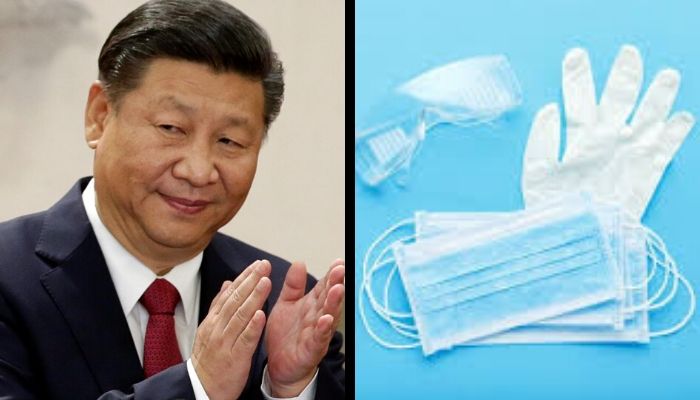
On Monday, a top White House official, Peter Navarro, told Fox Business News that the United States has evidence to prove that China is now selling Personal Protective Equipments (PPEs), required by health workers, at exorbitant prices after the Communist-run country had hoarded them in the months of January and February.
This had resulted in an acute shortage of PPEs in countries such as India, Brazil, and Europe. “They bought 18 times more amount of masks. They increased their expenditures of both goggles and gloves”, he alleged.
Calling for a fair investigation into the matter, Navarro said that the behaviour of China is not in accordance with the international order. He said that the lack of sufficient supplies of PPEs has compelled the United States to onshore its production.
“First of all, the virus was spawned in China. Second of all, they hid the virus behind the shield of theWHO. The third thing they did was basically hoard PPEs and now they’re profiteering from it”, Navarro said to Fox News.
China sells donated PPEs to Italy
After selling defective masks and testing kits to the world to combat their home-grown virus, China was accused of selling back the PPEs to Italy which the European country had originally donated as a humanitarian gesture. As reported in Spectator magazine, China had earlier claimed that it will send PPEs to Italy, which has lately emerged as the hot spot for the Chinese coronavirus outbreak, to help it contain it.
However, now the reports reveal that China had sold, and not donated, those PPEs to Italy. Not only that, China actually forced Italy to buy back the same PPEs that Italy had donated to the Communist country.
US threatens retaliation
During a press conference at the White House on Saturday, US President Donald Trump threatened China with “consequences” if it is found that they were “knowingly responsible” for the outbreak of the Wuhan Coronavirus. He added, “It could have been stopped in China before it started and it wasn’t. And now the whole world is suffering because of it. If it was a mistake, a mistake is a mistake. But if they were knowingly responsible, yeah, then there should be consequences.”
Trump emphasised on how the Chinese Government refused to co-operate with the US in dealing with the pandemic. He said that China was perhaps embarrassed about the fact that the virus originated in the country. He also raised questions about the low Chinese figures on Coronavirus-related deaths in the country. Trump reiterated, “The number’s impossible,” he said. “It’s an impossible number to hit.
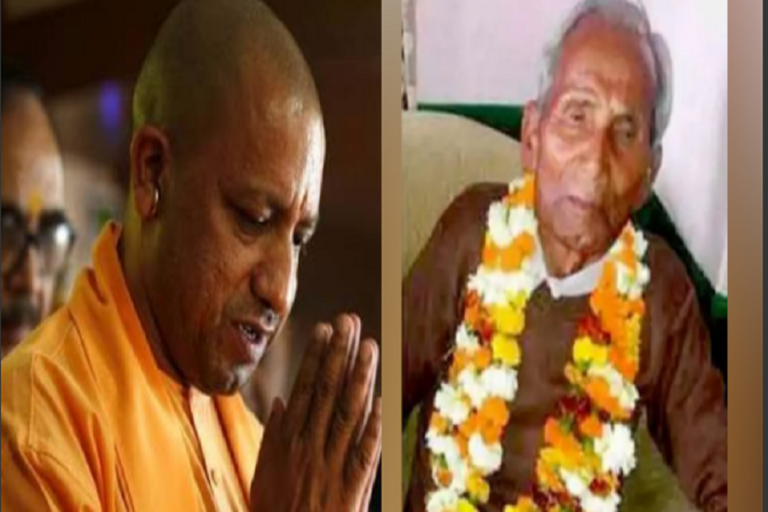
On 20th April 2020, Anand Singh Bisht, father of Uttar Pradesh Chief Minister, Yogi Adityanath took his last breath at AIIMS. In April, of 2017, while I was researching for Yogi Adityanath’s biography, I was fortunate to spend time with Yogi Adityanath’s father, mother and other family members. Those conversations were so real and honest that they are still fresh in my mind. Now, when Anand ji is no more, I want to re-live and share some of those conversations with the readers. Here I am sharing some excerpts from my book – The Monk Who Became Chief Minister, of my conversations with Anand ji and his wife Savitri Devi ji. Through these conversations, we can easily peep into many traits and habits of today’s Yogi Adityanath.
What Anand Singh Bisht and Savitri Devi thought of Ajay, today’s Yogi Adityanath?
Talking to me Shri Anand Singh Bisht told that Ajay was always polite and courteous and was an avid newspaper reader right from a very young age. Shri Bisht said that although he was constantly on tours and often away from home, he made it a point to check on his children and gave surprise visits to ensure their diligence and attention to studies. He said that maybe owing to all this today, the Ajay of a small village named Panchur has become Yogi Adityanath, 21st Chief Minister of Uttar Pradesh. It’s interesting to note that, after becoming the Chief Minister of Uttar Pradesh, Yogi and his Ministers have conducted a series of ‘surprise checks’ of delivery of different government services. Shri Bisht was a proud father who felt that managing a state like UP, is not everybody’s cup of tea and only Yogi can control it because since his childhood he has developed a good ability to make decisions. Shri Bisht also told me that Yogi’s work as a Member of Parliament was always for the people and free from any type of corruption and that’s why people love him. He further added that People have started flocking for his sifarish (recommendations) to his son, after he becoming the Chief Minister of UP. He added that he keeps such people at bay by graciously accepting their congratulations and asking them to join him for tea while politely telling them that no recommendations will be entertained.
Yogi Adityanath’s mother Savitri Devi ji also told me that Ajay was good student and never kept bad company. She said that he was a simple boy and they never realized that he would grow to this stature. She fondly remembered how close he was to her as his father was usually posted at different locations and he was also strict, so all the children were a little scared of him. Regarding their personal habits, Savitri Devi ji said that everyone in their house always woke up early. Even at the age of around 80, (in 2017) she used to wake up at 4 am to finish her chores and then goes to the fields to oversee the small agriculture farms that they have. (In 2017) At 85, Ajay’s father also used to get up at 4 am every day and cleans the whole house and the surrounding compound. Savitri Devi ji said that right from his childhood, Ajay was fond of cows. The Bisht family had cows at home and taking them out to graze was part of Ajay’s routine after school. Pointing to the trees around their house in Panchur, Savitri Devi ji told me that Ajay had planted many of these, when he was a boy.
Why Yogi Adityanath’s school and college friends were afraid of Anand Singh Bisht ji?
Later in the conversation, Shri Bisht said that as a forest ranger, he has worn a Khakhi dress all his life. His uniform had three stars on the shoulders, which looked like a police uniform, and moreover, his uniform also had a UPF (Uttar Pradesh Forest) badge, which was quite similar to UPP (Uttar Pradesh Police) badge and this sometimes scared Ajay’s friends as they mistook him for a policeman. He laughed and added that now after Ajay has become CM, he has, with him, a full time Khakhi dressed gunman, a real policeman, as part of the security protocol.
When Anand ji and Savitri ji found out that their son has taken Sanyas
After doing his graduation in Kotdwar, Ajay enrolled for Master of Science (MSc) in Mathematics in 1992 from Pandit Lalit Mohan Sharma Government PG College, Rishikesh. While he was in MSc first year, he started visiting Gorakhpur and meeting Mahant Avaidyanath. After a couple of meetings Ajay was convinced about joining Mahant Avaidyanath at the Gorakhnath Mutt as a full time disciple. In November 1993, Ajay left his village, his parents, his friends, and his studies and without disclosing much to anyone in the family, he went to Gorakhpur. On 15th of February 1994, Ajay was anointed as a Nath Panth yogi by his guru Mahant Avaidyanath.
पूज्य पिताजी के कैलाशवासी होने पर मुझे भारी दुःख एवं शोक है।
वह मेरे पूर्वाश्रम के जन्मदाता हैं।
जीवन में ईमानदारी, कठोर परिश्रम एवं नि:स्वार्थ भाव से लोक मंगल के लिए समर्पित भाव के साथ कार्य करने का संस्कार बचपन में उन्होंने मुझे दिया।
It was only after couple of months that Ajay’s parents found out from the newspaper about his sanyas. Until then his parents thought that he had gone to Gorakhpur for some employment opportunity. After finding out, Ajay’s parents reached Gorakhpur on the next available train and at the Mutt, Anand Singh Bisht, was shocked to see Ajay in a sanyasi’s attire. Mahant Avaidyanath was out of station that time and Ajay had to calm his parents and made them talk to his guru on phone. Mahant Avaidyanath told Ajay’s father that his son Ajay is Yogi Adityanath now. Mahant Avaidyanath further requested Anand Singh Bisht that of his four sons, one had decided to come with him for nation building and for strengthening Hinduism; and asked him to please allow him to serve the country. After initial resistance his parents gave in.
After couple of months Yogi Adityanath, came back to Panchur village, in Uttarakhand to take Biksha (alms) from his mother, as a part of the Sanyasi tradition. Since then Ajay’s parents have visited Yogi Adityanath in Gorakhnath Mutt couple of times. Now they call him “Maharaj ji’, as others do, respecting the protocol and dignity of his role. Yogi Adityanath has visited his hometown in Uttarakhand only for a few very important functions in the family. Yogi Adityanath has established a college, Mahayogi Guru Gorkhnath College, near his village in Uttarkhand, under the Gorakhpur Mutt’s administration.
An honest Chief Minister son, is my life’s biggest earning
I had a long chat with #YogiAdityanath’s father, Sri Anand Singh Bisht ji during researching for Yogi Ji’s biography. At the end of our discussion, Anand ji said – I have not earned anything much in life, what I hv earned is a honest CM Son. His eyes were teary & I was choked. pic.twitter.com/rQd89mKxNJ
Concluding the discussion with Ajay’s parents I mentioned that hills of Uttarakhand have given Govind Ballabh Pant, Hemvati Nandan Bahuguna and Narayan Dutt Tiwari as Chief Ministers of Uttar Pradesh and now this house has given Yogi Adityanath as the fourth CM for Uttar Pradesh, hailing from the hills. To this, Savita Devi ji proudly recalled that Ajay always wanted to serve the people and now he is doing exactly that. With wet but contended eyes, Anand ji added that he has not earned much in life. What he has earned is an honest Chief Minister son. He added that their lives are blessed as Ajay’s parents and today they are proud of the monk who has become the Chief Minister of such a big state.