Home Blog Page 5578

ISIS claims responsibility for Kabul Gurudwara attack which left 27 dead, India extends assistance to affected families

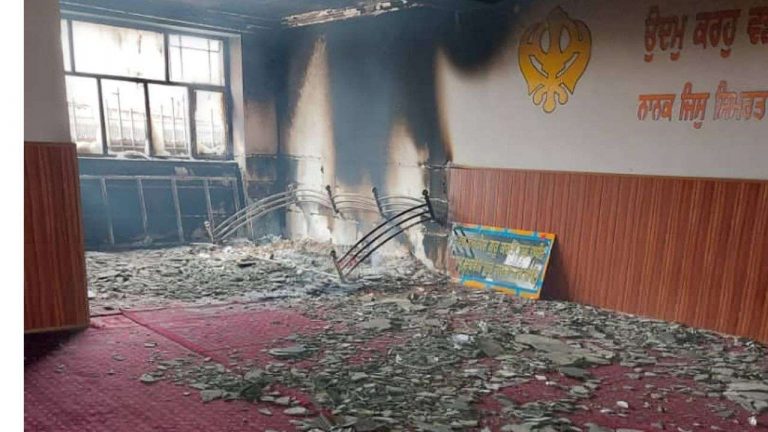
Earlier in the day, armed terrorists and suicide bombers attacked a Gurudwara in Shor Bazar area in Kabul, Afghanistan, leaving 27 dead and at least 15 injured. According to the latest reports, the Islamic State (ISIS) has now claimed the responsibility for the attack.

Sources said that while one suicide bomber detonated himself at the entrance, three ISIS terrorists stormed the shrine in the Shorbazar area Wednesday morning (25 March). Around 150 people were worshipping in the Gurudwara at the time of the attack.

The Afghan security forces rescued around 80 worshippers from the Gurudwara and killed all three terrorists in a day-long gun-battle after which NATO soldiers helped with the clearance operation.  

India strongly condemned the terror attack. In an official statement, the government said, “India stands ready to extend all possible assistance to the affected families of the Hindu and Sikh community of Afghanistan.”

“Such cowardly attacks on the places of religious worship of the minority community, especially at this time of COVID-19 pandemic, is reflective of the diabolical mindset of the perpetrators and their backers.

“We commend the brave Afghan security forces for their valourous response to the attack and their exemplary courage and dedication to protecting the Afghan people and secure the country. India stands in solidarity with the people, the government and the security forces of Afghanistan in their efforts for bringing peace and security to the country.”

The Shor Bazar area of Kabul was once home to several gurdwaras but they were destroyed during the fighting in the 1980s. Kabul is still home to several thousand Hindus and Sikhs, who because of being the minority community in Afghanistan, have been facing severe discrimination. This has forced many Hindus and Sikhs living in the area to migrate to other countries.

Last year too, ISIS had claimed responsibility for the suicide bombing occurred in August 2019 at a wedding hall in western Kabul, killing at least 63 people and injuring 182 people.

Silver lining: Coronavirus lockdown brings down air pollution levels in several cities, especially Delhi

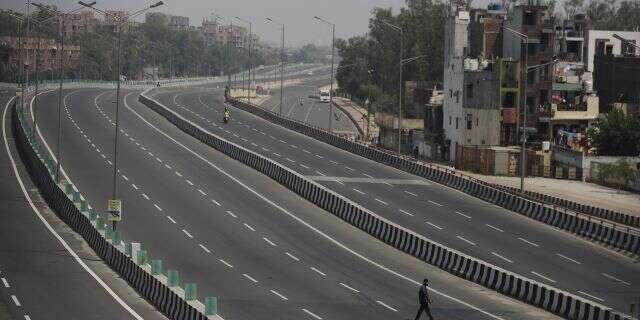
The Coronavirus pandemic has effected people physically as well as mentally all across the globe. While India battles the deadly virus head-on by putting the entire country under 21-day lockdown, some positive effects of minimal human interference could already be felt in many parts of the country, especially Delhi, during the earlier one-day ‘Janta Curfew’ lockdown on Sunday.

In India, several cities otherwise known to record high pollution levels have recorded an improvement in air quality on March 22 (Sunday). Delhi especially, which tops the world in air pollution, recorded the average AQI between March 13 and 22 as 161.4 compared to 190.5 last year. Data from SAFAR suggested that the overall AQI score of Delhi on March 25 stood at a satisfactory level. This year Delhi has had only moderate air quality days during the period but last year there were 4 poor air days.

According to SAFAR (System of Air Quality and Weather Forecasting and Research), AQI between the range of 51 and 100 is considered as ‘satisfactory’ or ‘very good‘, 101-200 is ‘moderate‘, 201-300 falls under the category of ‘poor‘. While 300-400 is considered as ‘very poor‘, levels between 401-500 fall under the ‘hazardous‘ category. Delhiites have survived hazardous and very poor category many times in the recent past when pollution hit the city too hard.

It is believed that strict travel restrictions and shutting down of all the non-essential services have brought an enormous decline in the levels of nitrogen oxide, a pollutant emitted generally by motor vehicles, in the city.

Netizens couldn’t stop talking about this development as it is very rare when we see Delhi’s air in the satisfactory range.

The better AQI is no doubt due to the lack of vehicles on the roads because of the lockdown caused by by coronavirus outbreak.

China refuses to allow discussion on Wuhan Coronavirus in UNSC, blocks draft that called for “full transparency” over the outbreak

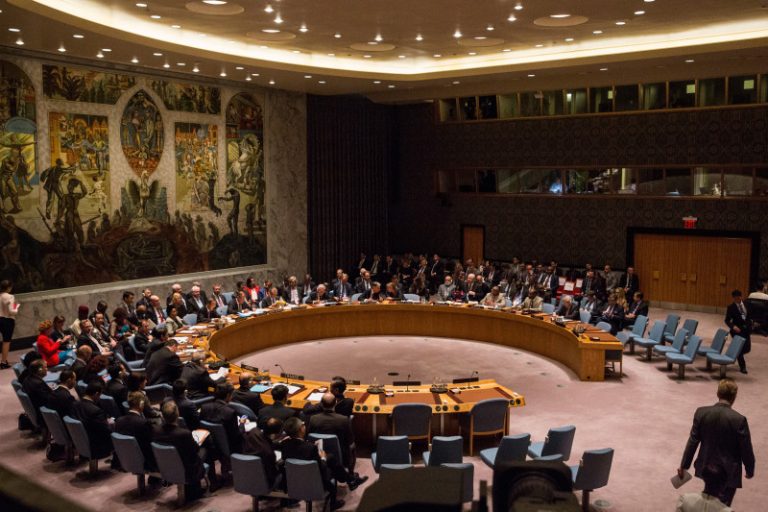
China, which is being held responsible for the Wuhan Coronavirus outbreak throughout the world is reportedly not allowing the global issue to be discussed in the United Nations Security Council (UNSC). Many countries want to pass a proposal on the global issue but China is constantly putting obstructions.

While Coronavirus has already claimed thousands of human life across the world, the United Nations have been failing in discussing the epidemic yet because of veto by China. The pandemic that broke out in Wuhan province of China has infected more than 4.3 lakh people around the globe. But the intergovernmental body United nations hasn’t started discussions over this serious problem. Neither the United Nations General Assembly of 193 members, nor the 15 member UN Security Council has discussed the matter yet.

When Chinese Ambassador Zhang Jun was asked questions related to the discussion on COVID-19, he said that it is not on the agenda of the United Nations Security Council. The United Nations Security Council is alleged to be divided on its proposal on the pandemic. China has also objections regarding the terminology of the proposal.

According to reports, China and some other countries are blocking a draft to discuss the pandemic at the UNSC. The draft proposal prepared by Estonia highlights “growing concern about the unprecedented extent of the COVID-19 outbreak in the world, which may constitute a threat to international peace and security.” The draft also calls for “full transparency” over the outbreak, which clearly refers to growing criticism that China is hiding vital details about origin about the Virus, making China uncomfortable over the terminology of the draft. None other US president Donald Trump has been alleging that China is misleading the world on the issue. Non-permanent member South Africa opposed the draft first, and later China and Russia also blocked it, reports say.

Another important aspect here is that China is the President of the UN Security Council for March. The President decides what issues will be discussed in the UNSC. Although the term of President changes every month, as a permanent member China has veto power so it can continue to block the issue to be taken up by UNSC.

Read- Wuhan coronavirus: A pandemic that was started in China, covered up by China but China thinks calling it Chinese is ‘racism’

The workings of the United Nations, headquartered at New York, has also virtually come to a halt, as the city is worst hit by Wuhan Coronavirus in the US. The meetings of the United Nations are also being conducted through video conferencing.

The G20 countries will be discussing the epidemic on Thursday with a common strategy. After the meeting of SAARC countries through video conferencing, Prime Minister Modi has also suggested the video conference meeting for G20 countries.

Watch: Kolkata girl abuses cop, spits on his uniform for stopping her car during the lockdown

Prime Minister Modi announced a 21-day nation-wide lockdown on the 24th of March to halt the spread of the coronavirus outbreak. All the states are strictly complying with the lockdown orders. Police in all states have been asked to be strict with the curfew violators.

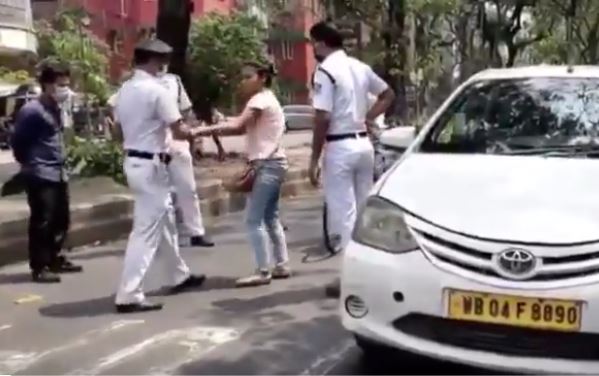
Amidst all this, a video has surfaced from the streets of Kolkata in West Bengal where a young girl is seen yelling and abusing a policeman as he tries to prevent cars from plying on the road during the lockdown.

A Twitter user named ‘Mikku’ going by the handle @effucktivehumor had shared a video where a couple of policemen are seen standing on the road intercepting cars passing by, flouting the lockdown orders. Suddenly a girl comes charging at a policeman and spits on his shirt. She yells at him, claiming that she is unwell, and she needs to go to fetch some medicines.

The policeman, initially in a gentle tone tries to explain to her that he wasn’t even talking to her and that he was only questioning the driver of the car. The girl, however, refuses to listen to the cop and raises her voice at him. She addresses the policeman disrespectfully, which, in turn, compels the cop to raise his voice at her. He, in a stern voice, asks her to go back, pointing his finger at her. This further agitates the girl who shouts and tells the cop not to raise fingers at her. “Ungli mat dikhana”, (don’t point fingers at me), said the girl in a high pitched tone.

Here, another boy intervenes and asks the girl to keep calm. He says: “tum patient ho na tum gaadi mein baitho” (aren’t you the patient? sit in the car), but the girl refuses to budge.

Throughout the conversation, the girl keeps referring to the cop as ‘tu’. (While ‘Aap’ in the Hindi language is a more formal word for ‘you’, generally used for elders or strangers, ‘tu’ is a very informal term, often considered derogatory if used for elders or strangers.)

In the video, at so many occasions, the policeman is heard asking the girl to go back, but the girl does not listen. She continues to yell and abuse the cop. She tells him that he does not deserve to wear the police uniform… in turn, the cop tells her that she doesn’t deserve to be a citizen of the country. The bickering continues, until a man intervenes and yells at the girl and asks her to leave.

In the video, other people are seen trying to pacify the girl, saying that the cop is merely performing his duty for the public safety, but the girl refuses to stop and continues the verbal abuse.

India has been put under a 21-day lockdown amidst the coronavirus outbreak. PM Modi in his address yesterday requested every citizen of the country with folded hands to stay where they are. The Prime Minister said that according to health experts, 21 days are essential to break the cycle of transmission of the Coronavirus. 

Narendra Modi said that a ‘Lakshman Rekha’ has been drawn at their doorstep and everyone should stay at home for the duration of the lockdown.

India under Lockdown: The downsides of under-reacting were simply too scary

So India is officially on lockdown in an attempt to arrest the spread of Wuhan Coronavirus. Twenty one days. For what it’s worth, India was already locking down anyway. The Indian Railways had come to a halt. All international flights had been stopped. A day later, all domestic flights were stopped. Inter-state travel was banned. Then, the lockdown was announced in 75 districts. A day before the PM’s announcement, Maharashtra had gone into a complete curfew already.

The Prime Minister has now formalized what was happening. As far as the economic cost goes,  the 75 districts locked down the previous day would represent most of the GDP of the country anyway. After all, one interesting feature of the Wuhan Corona virus pandemic is that it is going from the “rich” to the “poor.”

Will the lockdown really be worth it? Honestly, this is impossible to answer. What we do know is that the rate of infection and the death tolls in Western countries were frankly terrifying.

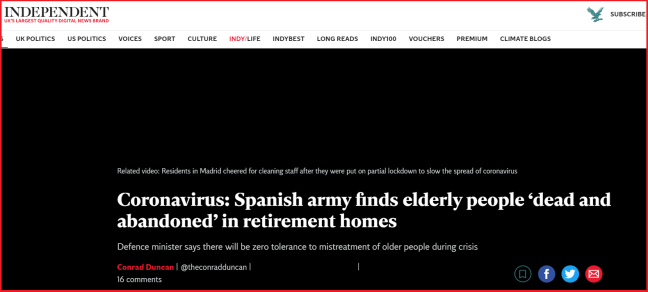
Yesterday, 150 people died in the US. Almost 250 people dead in France. So bad is the situation that the tragedy in places like US and France isn’t even being reported a whole lot. The headlines belong to Italy and Spain, were 600-700 people are dying daily. This may not even be the full death toll. The Spanish Army, now out on the streets, is finding bodies of old people who had been left around to die.

Article by Independent
Article from Independent

The worst in humanity has begun to surface. The fear of imminent death is looming and people are doing savage things. In India, we hear that landlords are beginning to turn doctors away from renting homes! There was the video of the poor Indigo employee whose family is being ostracized by her neighborhood. In panic like this, the animal instinct is now baring itself.

In India, while we have seen few deaths so far, the number of infections is beginning to climb at a scary pace. Ten days ago, we would see 10-20 infections a day. Within no time, it rose to 30-50 a day. Now, we are lucky if we can keep it under 100 infections a day. What if this exploded to 1000 a day? Or 10,000 a day? The US is now reporting several thousand cases a day. The same could happen in India.

Luckily, the death toll has stayed very much under control so far. But who knows for how long? After seeing the way the number of infections began increasing, do we really have the appetite to run the experiment and find out?

One thing that we can say for certain is this : Every country which tried to take it easy and thought the crisis would blow over, has paid a terrible price.

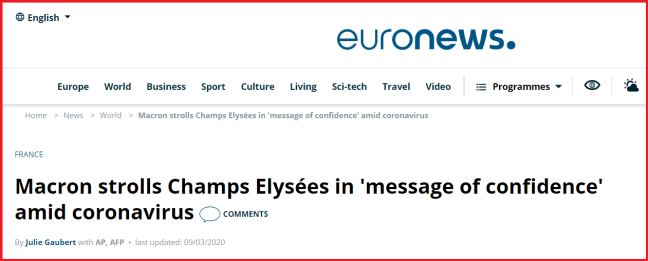
Here is the President of France on March 9.

Untitled
Article from Euronews

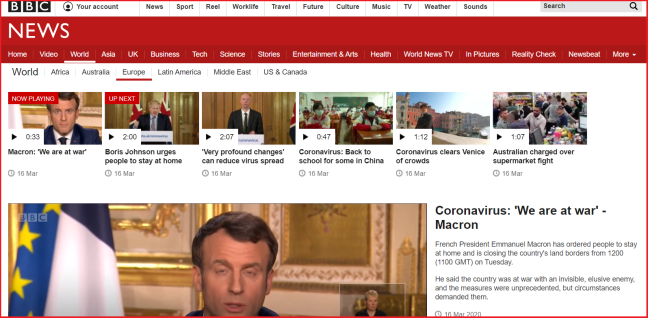
And here is the President of France on March 16.

Untitled
Article from BBC

Well, that escalated quickly.

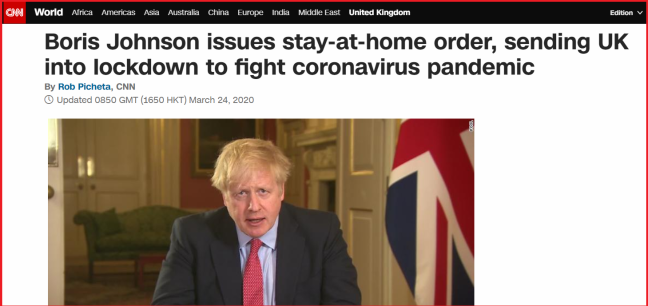
The British initially said they had a plan. They wanted to go on with their lives, as usual, chasing something called ‘herd immunity.’  This is where they are now.

Untitled
Article from CNN

In the United States, President Trump initially compared the Wuhan Corona virus to the flu, which kills 37000 Americans every year. But he appears to have changed his mind again.

One thing seems clear. The virus does not spare anyone. It does not care about anyone. If we under-react, the virus could extract a terrible toll. It seems everybody eventually comes around and undertakes extreme measures. The only question is when.

India has gone into lockdown with only 500 or so cases. That makes us one of the nations earliest on the curve, to implement extreme measures. But waiting another week could have been catastrophic.

Of course, the lockdown brought out the usual caravan of Modi haters and their narrow-minded taunts, now all over social media. Why isn’t everything better planned? Why couldn’t India have tested all 1.3 billion people already? Did you hear that Iceland has tested its entire population, all ten of them? Well, maybe not, but you get the picture anyway. And now that 1.3 billion people are under lockdown, where is the plan for doorstep delivery of supplies to hundreds of millions of households.

There are two possible explanations for this. Maybe they are our sincerest well-wishers. Maybe they have sky high expectations from India, now expected to succeed at something where all of Europe and the United States have failed miserably.

Or maybe they are just impatient to see India fail and by extension, Modi. There has been a real thirst and a real curiosity in the West about India. For Indian liberals and their sponsors in the West, it seems catastrophe in India can’t come soon enough. With the lockdown, there is now genuine fear in these liberal circles that India won’t hit the per day 1000+ death toll they have been promising their editors in the West. For backup, they search for opportunity in the terrible economic toll that this lockdown will take. Either way, the more the misery of India, the more they make merry.

We really are on our own here. It does look like nobody wants us to succeed. Which is a disheartening thought, considering that Indian people have never wished harm upon any other nation. But India’s growing might has opened up deep seated insecurities and prejudices both about skin color and non-Abrahamic faiths.

The good news is that our fate is in our own hands now. If the lockdown succeeds, we will make history. Let’s make it happen.

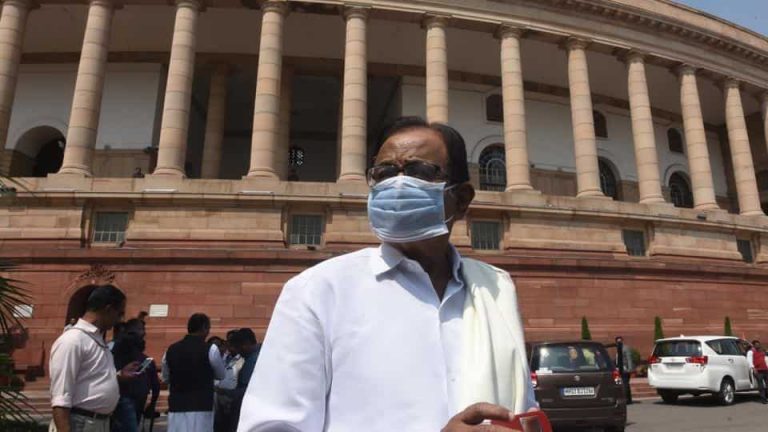
Congress leader P Chidambaram asks people to be ‘foot soldiers’ of ‘Commander’ Modi in the fight against coronavirus

0

Describing the call by PM Modi for nationwide lockdown as a ‘watershed moment’ in the country’s fight against coronavirus, the scam accused senior Congress leader P Chidambaram has urged people to be ‘foot soldiers’ of PM Modi, whom he described as the ‘commander’ of the fight.

“We should put behind us the debates that took place before March 24 and look upon the nationwide lockdown as the beginning of a new battle in which the people are the foot soldiers and the PM is the Commander. We owe a duty to extend our full support to the Prime Minister and the central and the state governments,” Chidambaram said in a two-page statement.

The former finance minister released his statement on his Twitter account along with providing a 10-point cash transfer plan for people to cope up with the economic crisis that has emerged because of the lockdown. Chidambaram also emphasised the imperative for the government to think and plan not just for 21 days but for some weeks beyond the lockdown period to provide people with money and items of daily needs.

Chidambaram asked the government to double the amount payable/paid under PM-Kisan Yojna to Rs 12000 and transfer the amount in the bank accounts of the beneficiaries immediately to allay concerns of cashlessness among the farmers. He also exhorted the government to include the tenant farmers under the purview of PM-Kisan Yojana and transfer the Rs 12000 amount to them as well.

“Take the lists of registered MGNREGA workers and transfer a sum of Rs 3000 into the bank account of each beneficiary. There will be some duplication despite the de-duplication efforts made by seeding Aadhaar in these accounts. There will be cases where a beneficiary received double payment. There will be some mistakes. Doesn’t matter. Even for allowing 15 per cent of ‘wrong payments’, it is worth doing these cash transfers,” the UPA-era finance minister said.

Furthermore, for the urban poor, he proposed that the government transfer ₹6,000 to Jan Dhan accounts including the no-frills or zero balance accounts opened before Jan Dhan accounts and offer 10 kg of free rice or wheat through public distribution shops to every ration cardholder.

Chidamabaram also suggested the government to ask registered employers to maintain current levels of employment and wages while granting a guarantee to the employers that the government will reimburse the amount paid to the employers within 30 days.

“Open a register in every ward or block and invite persons who have not received payment under any of the categories listed above to register their name, address and Aadhaar. Street people and destitute will fall under this category. After minimal verification, open a bank account in each name [if there is not already one], seed it with Aadhaar and transfer Rs. 3000 into each bank account,” he said.

In addition to these suggestions, Chidambaram proposed asking banks to defer payment of EMIs until June 30, extend the deadline to pay taxes until June 30 and reduce goods and services tax (GST) on essential commodities.

“Cut GST rates by 5 per cent on all wage goods, essential goods and services, and all goods of mass consumption for the period 1 April to 30 June 2020,” he said.

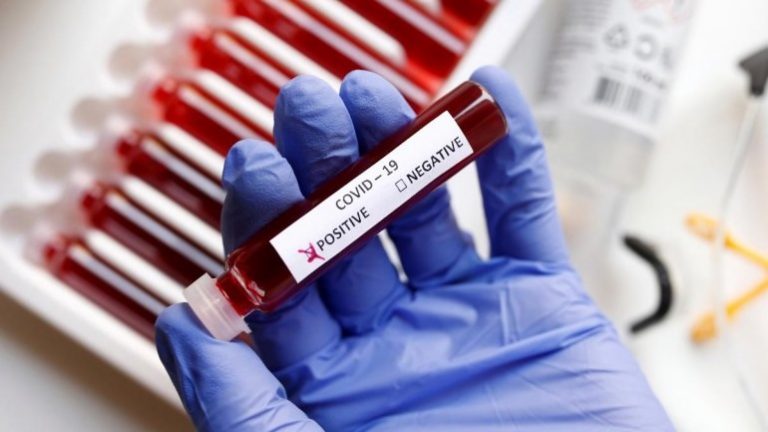
Did Gujarat company ‘CoSara’ become ‘the first and only’ company to get ​license to make Covid-19 testing kits? Here are the facts

On the 12th of March, the World Health Organisation (WHO) announced that the Wuhan Coronavirus, also known as Covid-19, has a pandemic. The outbreak that originated in Wuhan, China has claimed 18,910 lives and has infected a total of 4,23,493 people worldwide. While the WHO and China were complicit in hiding the severity of this pandemic for well over two months as the virus spread in the entire world, India has managed to mostly contain the spread of Covid-19 with strict measures. Only yesterday, on the 24th of March 2020, Prime Minister Narendra Modi announced a total country-wide lockdown in a bid to control the spread of the virus. While countries across the globe are trying their best to contain the spread, India, with a population of 1.3 Billion, has been relatively successful so far with 512 active cases, 9 deaths, and 40 people cured and discharged.

The pertinent point to note here is that the Wuhan Coronavirus was thrust upon the world and the preparation to deal with this in terms of testing kits, quarantine facilities and what medicines are to be administered are being developed and figured as the world moves forward. In that fight too, India has done remarkably well with relatively limited resources. India became the fifth country in the world to successfully isolate the Covid-19 virus strain that will help in developing vaccines, cures and testing kits. The response time in containment was also lauded by WHO.

As India prepares to fight the long battle against the Wuhan Coronavirus, there are elements that have continued to play petty politics and spread fake news. Recently, a rumour was spread that a Gujarat based firm had become the first and only firm to get the license to develop testing kits for Covid-19. The rumour led to the usual politicking with vested interests alleging that the Gujarat firm was given preferential treatment because the management of the company is “close to politicians”. However, the facts, when seen without the lens of unbridled propaganda, tell a very different tale.

Saket Gokhale, a less-known individual who fancies himself as an activist tweeted a thread where he alleged that he had found evidence of “corruption and favouritism in a pandemic”.

Saket Gokhale alleged that on the 20th March, 18 firms got permission from the government of India to get their testing kits validated by National Institute of Virology. He then says that “Gujarat-based firm CoSara had already received an approval to start manufacturing Covid-19 test kits. This firm is a collaboration between a US-based company & an Ahmedabad-based firm”. In the same tweet, he admits that Co Sara has FDA approval.

Gokhale said that some of the 18 firms that were waiting for their kits to get validated said that their kits would be sold for Rs 400 – Rs 500, which would be cheaper than imported ones. It is after these tweets that the ill-informed allegations began.

Gokhale said that “Suddenly, on 21st March, the Health Ministry issued guidelines allowing private labs to conduct Covid-19 tests. The cost of these is capped at a whopping 4500 rupees. These guidelines have one caveat – ONLY testing kits approved by US FDA/European CE can be used. That means ONLY kits manufactured by Ahmedabad-based CoSara can be used for Covid-19 testing. So after allowing 18 firms to test their kits for production, the Modi govt. suddenly changed guidelines to favor ONLY 1 Ahmedabad company (whose testing kit cost is unknown)”.

He ended his allegations by saying “Why is a Gujarat-based firm being provided monopoly on Covid-19 testing kits by suddenly tweaking guidelines overnight? Why are 18 firms who can produce testing kits for very cheap prices being blocked by these sudden new guidelines? I’ve filed an RTI to get more info”.

Essentially, what Gokhale alleged was that on the 20th of March, the Government of India asked Indian companies to get their kits validated which would be cheaper than imported kits. However, on the 21st, the Guidelines issued by ICMR specifically said that only FDA approved kits could be used while on 19th, the Govt had already issued approval to CoSara to ‘start manufacturing Covid-19 test kits’, a company, which is politically connected and has FDA approval. He then alleged that because of these guidelines, ONLY Co-Sara kits would be used and essentially, the Modi government changed the guidelines AFTER giving permission to 18 firms for manufacturing only to favour one company, which Co-Sara.

It is important to note that Saket Gokhale made these allegations on the 23rd of March. The importance of the date will be apparent when we move forward with facts.

As is the nature of activism, the thread focussed on CoSara while ignoring several other developments that had taken place between the 18th of March and 24th of March. It also ignored several established norms that the ICMR will have to follow in the face of Coronavirus pandemic, which the world is dealing with as we go along.

Gokhale’s lie is rather crafty as he has not only lied, but completely missed certain vital facts as well.

On 20th March, 18 firms for permission to get their kits validated?

This is a lie. On the 20th of March 2020, 14 firms got permission to get their test kits validated, not 18. The 14 firms, in fact, included Roche Diagnostics, which is a Swiss firm, along with Indian firms. At least this was reported by the media on the 20th. On the 19th of March, CoSara published a press release that claimed that it had become the “first and only Indian company to receive a license from the Central Drugs Standards Control Organisation (CDSCO) to manufacture RT-PCR COVID-19 test kits”. In reality, CoSara did not get any special license that they made it out to be. Actually they already have a Coronavirus test kit which is approved FDA in USA, and that’s why their kit does not need any additional validation in India, and can start production right away. They didn’t need any NIV approval, and they were not issued any specific approval.

In fact, ICMR had also responded to Gokhale’s tweet clarifying that “Cosara falls under the US-FDA approved category. Therefore, no special approval was given”.

Roche, which was one of the companies that got the permission to test their kits and it was reported by the media that it got the ‘license’ on the 18th, is on record saying, “The test licence accorded to Roche Diagnostics India allows us to import select quantities of the Cobas SARS Cov-2 diagnostic test kits for product performance evaluation. Following successful completion of the evaluation, a decision from the authorities will enable us to commercialise the kits in India”.

Essentially, it is here itself that Gokhale’s entire lie comes crashing down, however, there are certain other truths that should be explained.

So where did the number 18 come from?

We could not find any media which says that 18 firms were waiting for results of their kits, all media reports said there were 14 firms. 18 was the number of private lab chains that got permission to conduct the Covid-19 tests as on 21st March. That some of them were developing their kits individually is a separate matter. Essentially, these 18 labs were given permission to conduct tests and send their results to the government. That some of these 18 firms were waiting for approval to make their kits available commercially, becomes a separate matter altogether.

By now the number of private laboratory chains approved for Wuhan Coronavirus has gone up to 22.

For example, Trivitron Healthcare is the first Indian private diagnostic firm to receive approval to conduct Covid-19 tests.

The chairman and managing director said the kits which will be manufactured indigenously will have a turnaround time (period between the test being conducted and receiving the report) of four to six hours.

“Depending on the PCR platform (the gold- standard testing platform for viruses), a lab can turn around 100 tests to 1,000 tests per day. We have a production capacity to conduct 5,00,000 to 7,00,000 tests per day in our Chennai facility if we operate in three shifts,” added Velu.

The kit validation is happening at NIV Pune.

The kits developed by the firms are planned to be sold to private diagnostic chains such as Dr Lal Path Labs, SRL Diagnostics and Metropolis Healthcare, among others. This was reported by News 18 on the 21st of March 2020.

Explanation

Essentially, India has been giving license to molecular diagnostic companies to simply get their Covid-19 test kits validated from the NIV (National Institute of Virology). First, the company has to show that its test kits work with no variance, then they receive approval for those tests. It is only after that they receive a license to sell their test kits to diagnostic laboratories.

21st March – Here is why ICMR said only FDA approved test kits could be used

On the 21st March, the ICMR (Indian Council for Medical Research) issued a notice where one of the clauses read that Commercial kits for real-time PCR based diagnosis for Covid-19 should be US FDA approved or European CE certified.

ICMR notification about Covid-19

This circular was turned into a “scam” by Gokhale. But the fact is that, as on 21st March, the ICMR had insisted on USA FDA or European CE certification test kits for the 16 approved labs because till then, the Indian kits had not been validated and the validation results were not out. Contrary to what Gokhale might think, the validation process for PCR tests kits takes substantial time. As there were no kits validated by ICMR NIV, the only option was to start with manufacturing kits which were already validated by FDA or European CE, as these standards are considered reliable worldwide due to their stringent validation tests.

That Saket Gokhale completely lied and said that the 21st March circular would make ONLY CoSara eligible is again a lie. Any company with kits American or European validations can make kits. Either way, ICMR mentioned that their guidelines continue to change and it is evident that this requirement was imposed because Indian test kits had not gone through the process of validation yet and the results were awaited.

The 23rd of March – When Gokhale tweeted his lies, India approved two Indian test kits

If one recalls, the article had mentioned earlier that the fact that Gokhale had spread his lies on the 23rd of March should be kept in mind. Interestingly, it is on the 23rd of March 2020 that the ICMR released the validation results of 9 testing kits for Covid-19. Of the 9 test kits that were sent for the process of validation, 2 kits were approved for use in Government and Private labs because these kits were found to have 100% concordance among true positive and true negative samples.

In a press conference on 23rd March, Director General of ICMR, Balram Bhargava had categorically said that FDA or CE approval is not mandatory for test kits, and kits approved by ICMR NIV will also be allowed. He had also informed that the validation process of kits by NIV was being fast-tracked. This makes it clear that the condition of requiring FDA/CE validation for kits mentioned in the notification dated 21 was modified and now kits validated by NIV also can be produced.

The names of the two companies whose kits were approved were:

  1. Altono Diagnostics (German)
  2. My Lab (Indian)

Other than these two, other FDA / Euro CE approved kits could also be used.

On the 23rd, it was also reported that India had waived off the need for Drug Controller General of India’s approval for COVID-19 testing kits that are developed locally. The two companies whose diagnostic test kits had been validated by Indian Council of Medical Research (ICMR)’s National Institute of Virology began supplies on 23rd, government officials had informed at the press conference.

24th March – One more kit gets approved

On the 24th March, ICMR released a list of 14 kits that were tested for commercial use. It said that test kits with 100% concordance among true positive and true negative samples will be approved for commercial use in India

Other than Altono Diagnostics and My Lab that were approved on the 23rd, another kit, made by Seegene, was found to have 100% concordance and was thus approved by ICMR for commercial use.

The other companies whose test kits were tested were BGI, Krishgen Bio System, ABI, HIMEDIA, Huwel, IIT Delhi, Kilpest, Genesig and Roche. 3 kits of Roche were tested, but none of them produced 100% concordance.

This means that these three companies can now supply their kits. And as CoSara already has US FDA approval, they can manufacture the kits under that certification as per ICMR rules, but no specific permission was issued to the company as claimed by the company and others on social media. It means that any company having kits validated by FDA and EU CE can make kits in India without needing any separate approval, apart from companies which have kits validated by ICMR NIV.

In conclusion, as there were no company with kits validated by ICMR, only kits certified by American and European authorities were allowed to make their kits in India. But once the results of Indian validation tests started coming out, the kits that showed 100% concordance also got permission for manufacture.

It is thus evident that while Saket Gokhale gets ample traction on Social Media from folks who either don’t understand or don’t follow the developments closely, his assertions are based on selective facts and whole lies. It is evident from the chronology of events that there was no favouritism or corruption in the process. Perhaps it would bode well for people to remember that in the time of pandemic, spreading fake news can land one in jail for up to 6 months.

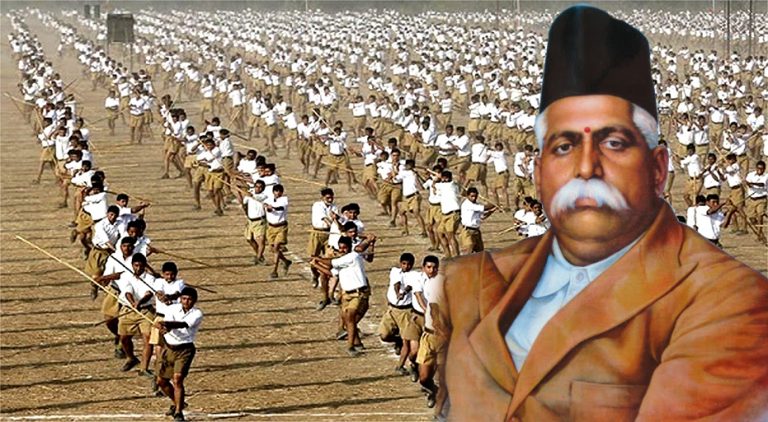
P.P. Dr. Keshav Baliram Hedgewar: The Man who transformed modern India and its trajectory

‘Tat Tvam Asi Swayamsevaka’
Translation: That thou art, Swayamasevak

These are the words of P.P Dr. Keshav Baliram Hedgewar or our beloved Doctorji had said and these are the words that guide me daily. Everybody who has been a part of the Rashtriya Swayamsevak Sangh (RSS) believes the same. We are all wholly and purely a Swayamsevak. That is what defines and guides us in everything that we do. That is what defines our whole existence.

According to the Hindu calendar, today is the Janmatithi of P.P. Doctorji, the creator of the RSS way back in 1925. It all started with a small idea. He just wanted the neighbourhood boys to come together every day for an hour in a uniform. He just asked them to sing patriotic songs, do some physical exercises and play kabaddi. There was no membership or attendance. He did not even have any infrastructure, just an open playground. He felt that this will instil patriotism in the boys who would then be able to lead the country in all sectors. People laughed at his idea then. But these young guys networked among each other and then branched out to spread this mission far and wide. Today, RSS is the largest voluntary organization in the world and all its members are still committed to serving the country in whichever way possible.

What amazes me today is how well he understood the nuances of the problems that plague our society and how simple were his solutions to tackle these problems. The problem of caste had torn apart our community for ages. He knew that the only way he could unite the Hindus was if he could eradicate caste from it. No, he did not go about preaching against caste. He came up with a very simple solution. Everybody who attends Shakha should wear the same uniform and do everything in the Shakha together. Through the uniforms, the bands and the drills he instilled a feeling of equality and unity in the youth. This made them realize that only if they are together in this can they overcome any challenges that come their way.

Read- Liberals have a meltdown as Pranab Mukherjee hails RSS founder Hedgewar as ‘great son of India’

There is an incident about Doctorji I was told at the Sangh that I still remember vividly. Once Dr. Ambedkar has said that he was born a Hindu, but he won’t die a Hindu. Doctorji did not ridicule or rebuke him because he understood the ordeal Dr. Ambedkar went through to say those words. So, he invited him over to the Sangh to address the members. When Dr. Ambedkar visited, he asked Doctorji where the scheduled caste people were. Doctorji replied that in a Shakha, there are no touchables or untouchables, there are only Hindus! Dr. Ambedkar then realized that the Shakha was an absolutely equal place with no caste consciousness. That was the brilliance of Doctorji!

There is another incident that was told to me about Doctorji which requires a special mention in today’s times. Once when he came across an area, he saw a colony named “Hindu Colony”. He then remarked that why do Hindus have a colony named after them when this entire nation belongs to them? He helped us see the Hindus beyond a community and as a nation. So, whenever we make petty demands for immediate gratification, we all need to take a step back and understand that we need to build a nation together. We cannot just remain happy with small gifts and tokens. The journey that was started by Doctorji has still a long way to go and we shouldn’t stop till it is finished.

The small idea of Doctorji has now spread across many organizations like Vigyan Bharathi, Seva Bharathi, Vidya Bharathi, Akhil Bharatiya Vidyarthi Parishad, and the Bharatiya Mazdoor Sangh. They are now one of the biggest organizations in their respective fields. India, to date, has just two non-Congress Prime Ministers who lasted full terms, and both of them had started their journey as Swayamsevaks. This is all a result of Doctorji’s vision. Today, on his Janmatithi, I pay my humble respects to this brilliant leader and visionary whose writings and stories have made me what I am today.

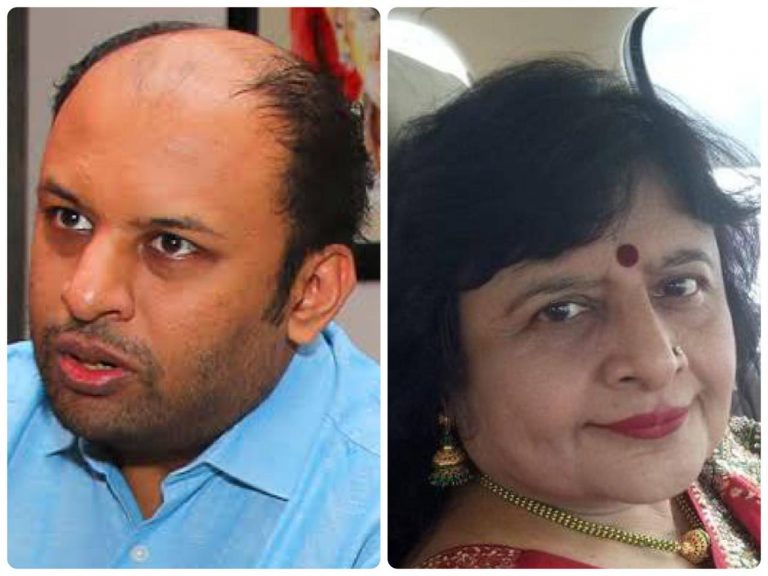
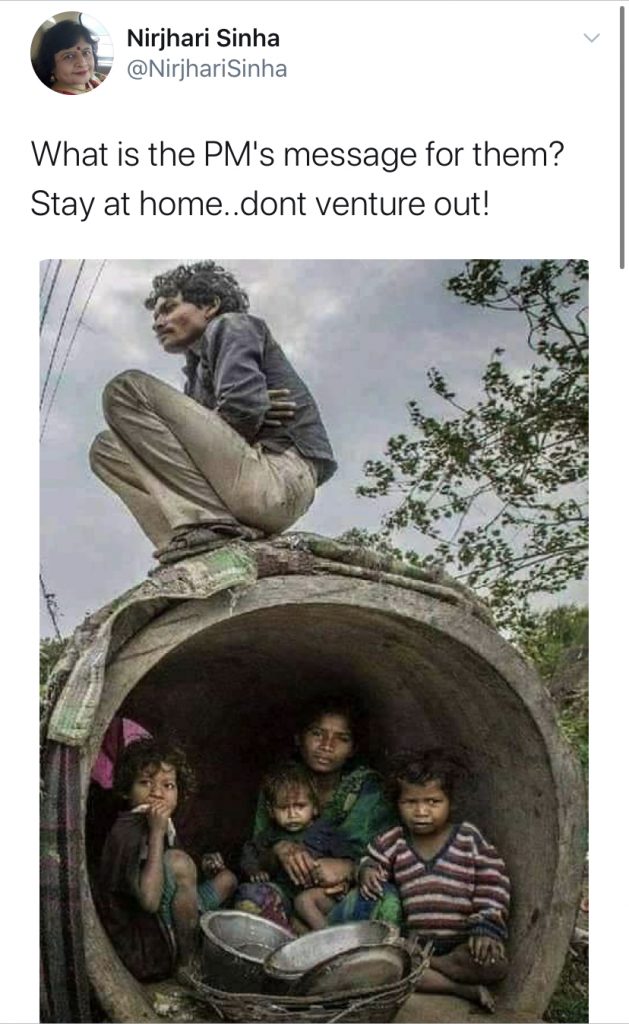
Director of AltNews Nirjhari Sinha shares old picture to protest against PM Modi’s call to stay home amidst coronavirus outbreak

Even as the country grapples with the looming threat of coronavirus, some perverse individuals have, in this time of national crisis, continued peddling their propaganda against PM Modi. In one such instance, faulty ‘fact-checker’ AltNews Director Nirjhari Sinha expressed her disapproval of PM Modi’s decision to lock down the country for 21 days to battle the spread of the virus that threatens to overwhelm the public health system in the country.

Ms Sinha tweeted a photo of a seemingly destitute and homeless family with a caption “What is the PM’s message for them? Stay at home..don’t venture out!”

While Ms Sinha’s sardonic tweet underscores the grim reality that there are still a great number of people without a roof on their heads but it also highlights her obstinate and depraved desire to imperil lives of millions of Indians by opposing total lockdown of the country just because it was ordered by PM Modi. It was, however, disingenuous of Ms Sinha to overlook the fact that PM Modi instituted PM Awaas Yojana, a scheme through which he plans to provide housing to everyone by 2022.

Read: AltNews’ Pratik Sinha helps New Yorker water down Pulwama attack, cast aspersions that Balakot airstrike was fabricated

In addition, while Nirjhari Sinha objected to PM Modi’s call for a blanket lockdown for 21 days, she apparently shared an old picture from December 2016 to push her anti-Modi hatred. According to Ms Sinha, PM Modi’s decision to announce total lockdown is inappropriate and that people should be allowed to move around as per their will and allowed to freely transmit the deadly contagion, endangering their own lives as well as those who come in their contact.

The lethal coronavirus had been rampaging across the world with fatalities reaching above 15000 and the figure of those affected by the contagion crossing 350,000-mark. Italy, the worst-hit country by the pandemic has witnessed deaths of more than 4800 people. Countries across the world who are now facing the menace of coronavirus are imposing sweeping restrictions to curb the spread of the disease and alleviate the burden on their respective public health systems and bring down the mortality rate.

However, pathological hatred towards Modi has caused Nirjhari Sinha to take leave of her senses, questioning the measures which have been imposed by various advanced countries who are battling the scourge of coronavirus. In the absence of a potent vaccine to eradicate covid-19, doctors across the world have advocated stringent measures such as total lockdown to thwart the ominous spread of the disease. This conventional wisdom and expert opinions, however, are anathema for the propagandists whose sole agenda is to promote their propaganda, even if it entails jeopardising lives of millions of people just to oppose PM Modi.

Read: “Media Houses that have amplified a report by so called ‘Fact-Checker’ AltNews may take note”: Prasar Bharti debunks fake narrative on JNU violence

Earlier yesterday, Alt News co-founder Pratik Sinha was found sharing misinformation and lies about India’s readiness to fight Wuhan coronavirus to cast the Indian government in a bad light. Pratik indulged in sharing rumours about Wuhan coronavirus as he retweeted a tweet in which Twitter user Vikrumaditya alias Vasundhara claimed that he/she (in the picture) is wearing the same mask since a week as doctors don’t have enough N95 masks, the masks which are more efficient in preventing the spread of the Wuhan Coronavirus. The tweet was subsequently deleted and soon afterwards, Vikrumaditya alias Vasundhara tweeted a clarification that he/she is not affiliated to any political party or any group.

The Taliban-US treaty: Will it sound the death knell for Pakistan?

GAS OVER TAKING OIL

With the use of natural gas for power generation skyrocketing during last over one decade, the share of energy produced from gas has also significantly increased with gas now comprising about 35% of the fuel mix. This rapid escalation in the dependence on gas presents a new challenge. This has led to increasing the quest for the same and subsequent dominance of the market by world powers. The largest known gas reserves today are found in Iran, Russia, Qatar and Turkmenistan, in that order. 

Turkmenistan, unlike the others, does not have a well-developed market and is an opportunity in the making. The gas reserves of Russia and Iran are out of the sphere of influence of the United States (US) and perhaps, that is why the American Energy Giants have a special interest in gaining access to this landlocked Central Asian country’s gas reserves. The geographical location of Afghanistan thus offers immense opportunity for the US to draw out gas reserves of landlocked Turkmenistan in Central Asia. Turkmenistan shares its border with Russia in the North, Afghanistan to the South East, Iran to the South and South West and Caspian Sea to the West.

MOST SIGNIFICANT CORRIDOR

Gas reserves of Turkmenistan have been on US radar since long. The US had four options to transport the gas. The first option was to transport through Russia, but that would have greatly enhanced Russia’s political and economic control over the Central Asian Republics. The second option was to lay a pipe through Iran, but that would have enriched a regime which the US was seeking to isolate. The third option was to route through China, but that would have been a much longer route and would have been prohibitively expensive. The fourth and the last option was to pump it through Afghanistan into Pakistan’s ports further on to the world market through the Arabian Sea. 

In December 1997, the US chose the fourth option and not many would remember that the US had then invited the Taliban to Texas as US State Guest for the said pipeline talks. In fact, a year later in 1998, Dick Cheney, later Vice President of the US during the 2001 Afghan war,  while serving as Chief Executive of a major oil company, had even remarked, ” I cannot think of a time when we have had a region emerge suddenly to become as strategically significant as the Caspian. But oil and gas are worthless until it is moved. The only route which makes both political and economic sense is through Afghanistan.” Perhaps, thus, Afghanistan and Pakistan became central to the US plan for an alternative to Russian and Iranian oil and gas. 

US intent of drawing gas from this region, therefore, could have been successful only by laying pipeline either through Afghanistan into Baluchistan province of Pakistan on to the Arabian Sea or linking it through the existing Turkmenistan–Iran pipeline in the Northern Region of Iran going into Turkey and the rest of Europe. Each of the two options had its own problems. Going through Afghanistan into Pakistan and up to Gwadar Port, involved the presence of the Taliban in Afghanistan and the other option of linking through the existing Turkmenistan–Iran pipeline involved dealing with a perceived hostile regime in Iran. Thus, the way forward was either through exerting pressure on the Iranian Government with an option of military conflict for a regime change or clearing Afghanistan of the Taliban. With the passage of time, China’s BRI Project coming up in Baluchistan going up to Gwadar Port since 2014, further added to the problem. Thus, the current unfolding strategy of the US in the Middle East can be seen through the combined prism of these two options. 

THE BIG BANG DEAL

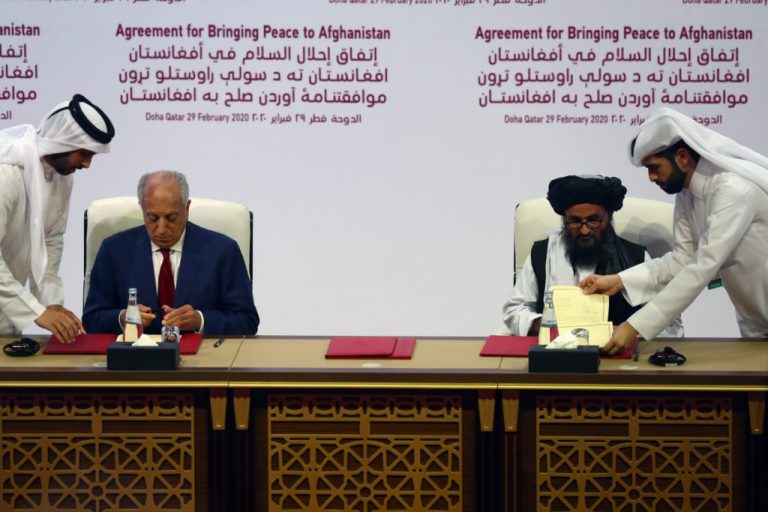
Finally, after 18 years of bitter conflict, the US and Taliban have signed a deal on 29 February 2020. This deal, followed by the gradual withdrawal of US troops from Afghanistan, has now opened the door to talks between the Taliban and the Afghan Government. The Taliban is expected to commence talks with various other Afghan groups including the Afghan Government in Kabul to ensure a permanent ceasefire and working out a road map to install a new government.

But the question now is, who is going to be the representative of Afghan Government at various International level organisations form the new Government in Kabul – the faction led by the incumbent Ashraf Ghani or the other one by Abdullah Abdullah?  Both held separate swearing in ceremonies and claimed to have formed the Government. The ongoing dispute, therefore, renders the Afghan Government weak and divided at this crucial stage when the US is looking at withdrawing its troops post agreement with the Taliban. The Taliban is also expected to ensure that Afghan soil is not used by any group to threaten the security and other interests of the US and its allies. This may sound simple and straight forward, but is it going to be so? However, Pakistan somehow, appears to be upbeat and cheering up, perhaps because the ISI has close ties with Sirajuddin Haqqani, the deputy leader of the Taliban. 

Though the US expresses hope that Afghanistan will get stabilised once all groups including the Taliban and the Government in Kabul come to a permanent settlement through talks, but the majority do not feel so due to the presence of Islamic State (ISIS) resulting in incalculable future scenarios. The ISIS has already claimed responsibility for the blast carried out during the oath ceremony of the two leading Presidential candidates. ISIS has been very active in Afghanistan since 2014 and many former Taliban fighters have pledged allegiance to the black flag of the caliphate. ISIS virtually took control of complete Nangarhar Province leading to a number of violent clashes between them and the Taliban. ISIS is known to be having no dearth of weapons. Russia and its allies including Iran have routinely been accusing the US of inadvertently or deliberately backing ISIS, though the US has denied the accusation of having any such collusion. The prevailing feeling of fear is, perhaps, vindicated by the US too, expressing the need to keep a watch post withdrawal of US troops, by maintaining counter-terrorism units in Afghanistan essentially to ensure that attacks like Al Qaeda’s strikes of 2001 are not repeated.

PIPELINE POLITICS

It is believed that once the Taliban and the Government in Kabul finally come to a settlement, then at least six thousand prisoners will be released. Out of these, five thousand would be from the Taliban who have been in custody of the Kabul Government and the balance would be the security personnel in the custody of Taliban. Can anyone guarantee that these five thousand Taliban prisoners on being released, will be rehabilitated by Government of Afghanistan and the Taliban?

Though the Kabul Government has categorically said that no more private military troops will be hired, but in the backdrop of continued ISIS existence over so many years, it is natural to believe that when the US soldiers withdraw, they may be replaced by  American Private Military contractors, like Academia, for guarding US interests.

Having settled with the Taliban, ‘ the larger interests’ of US as part of next step, maybe now looking at creating a safe and friendly space for extending the much-awaited US gas pipeline from Turkmenistan to Taliban controlled Afghanistan and further on to Baluchistan which is now an important cog in the Chinese BRI project in Pakistan, linking it to the warm waters of the Arabian sea through Gwadar Port. The current revival of the Baluch freedom movement is detrimental to the interest of China and therefore, an all-out effort by Pakistan army is being made to crush the uprising.

The US-Taliban deal followed by committed withdrawal of the US Military from Afghanistan, is being seen as a major success in Pakistan and a reason for celebration. Is the Government of Pakistan really so naïve to be unable to analyse and foresee the negative fallout of this deal engulfing their own country or have they been misled into believing some illusive dream?

BOILING PAKISTAN

Baluchistan is the largest province of Pakistan, the others being Punjab, Sindh and Khyber Pakhtunkhwa, covering almost three thousand five hundred square km and 43 percent of the total area, but having only five percent of the total population of Pakistan. Strategically and geopolitically, by virtue of its location, Baluchistan provides access to the energy-rich regions of Central Asian countries. It also has vast deposits of natural resources such as coal, oil, copper, gold, lead, zinc etc. However, the people of Baluchistan have always felt marginalised, exploited and suppressed at the hands of the Pakistani state. In addition, the CPEC project through Baluchistan has also reinforced a sense of fear in the locals of getting further marginalised by the increasing presence and settlement of Chinese. In the recent past, a few attacks have taken place on Chinese workers where many lives have been lost. After the death of Nawab Akbar Bugti, the movement had significantly slowed down, but since the year 2018, the resurgence of strong and organised Baluch guerrillas is visible. Baluch Liberation Front and Baluch Liberation Army have recommenced armed struggle against Pakistan with renewed vigour putting immense pressure on already stretched out Pakistan Military. The brazen attack on the Chinese Consulate in Baluchistan, killing of Pakistani labourers and Chinese engineers working on the CPEC project, attack on Zaveri Pearl Continental, a five-star hotel in the port city of Gwadar and killing of Pakistan Naval and Coast Guard personnel on Markan Coastal Highway are few examples of a clear indication of the growing ability of Baluch freedom fighters to take it up to further dangerous levels in the near future. 

Pashtuns, the second largest ethnic group in Pakistan mostly confined to North-Western part of the country, have always been bearing the brunt of ‘war on terror’ launched by the Pakistan Military post US invasion of Afghanistan. Many innocents lost their lives instead of the intended terrorists and this led to the rise of Pashtun Tahafuz Movement (PTM). A mass movement led by a charismatic young leader in Manzoor Pashteen gathered storm against the Pakistan Government to seek justice for the innocents killed by the military and their tacit collusion with terrorists. But instead of addressing their grievances, the Pakistan Government chose to crack down on them and even the media went silent on the atrocities committed by the military. Today, the movement has gathered a lot of strength and is likely to go out of control. The movement today has taken a separatist nationalist turn and seeks greater autonomy as a ‘Pashtun state’. The presence of ISIS militants along the Pakhtun-Afghanistan border will only make matters worse for the Pakistan Government in not too distant a future. 

Gilgit Baltistan is also witnessing a new wave of separatist movement gaining ground in the region resulting in a number of deadly attacks and loss of lives. The Nanga Parbat attack undoubtedly underscored the region’s vulnerability to future attacks. Shias have always felt discriminated against and marginalised.  The unopposed rise of Tehreek-e-Taliban Pakistan (TTP) is a clear signal of escalation of worsening situation and weakening of the Pakistan Military in times ahead. Interestingly, Gilgit Baltistan, from where the CPEC enters Pakistan, is connected to the restive Chinese Xinjiang Autonomous Region as also with Kashmir. 

Sindh too, like Baluchistan and Khyber Pakhtunkhwa, is yearning to secure freedom from Pakistani occupation due to prolonged political tyranny and exploitation.  Though the movement initially began in 1948 and peaked in 1972 with demand for total independence, but lacking external support, the movement got contained by the Pakistan Military. Besides suppression of the Sindhi identity and language, the Pakistan government has also imposed a ban on all cultural celebrations within the province. People from other minority religions such as Hindus, Ahmadis and Christians are also facing religious persecution and being forced to convert or move out of the country. Close on the heels of the growing demand for freedom in other provinces, it will not be out of place to anticipate that Sindhudesh Liberation Army too will come into action in the near future. 

THE INEVITABLE FALLOUT

Pakistan must bear in mind that US withdrawal post-signing of US-Taliban peace accord, has actually not solved any existing problem. It has rather left open a Pandora’s box of troubles for both Islamabad and the Kabul Government. Pakistan is already bleeding internally from several thousand cuts. The public image of the Pakistan Army too has hit a new low in the eyes of the masses. They are seen as consuming bulk of the national resources and at the same time, woefully incapable of defending the country from intruders. Within the Army itself, soldiers are getting sceptical and wary of taking action against coreligionists who are believed to be fighting for Islam. While instances of junior officers questioning the prudence, judgement and integrity of senior officers are coming to light, the reason for action taken against a fourth-generation military officer Brigadier Ali Khan undoubtedly indicates sipping in of radicalisation in the forces. 

Pakistan is a poverty-stricken country where over 70 percent of the population lives in villages without the basic amenities of life. They are bereft of shelter, sanitation, drinking water, food and clothing. While the population of Pakistan continues to grow at a rapid rate, literacy rate is decreasing resulting in increasing unemployment. Pakistan having already availed of IMF bailout twelve times since 1980, Imran Khan is now running from pillar to post seeking bailout for the thirteenth time. Pakistan is facing a serious economic crisis on the back of insurmountable fiscal deficit and nil growth. The economy of Pakistan has totally crumbled as also communication barriers and societal divide have increased manifold to dangerous proportions. The Pakistan Government and the Military are known to be dominated by the Pakistani Punjabis who are the most despised lot in Pakistan as of today. In their effort to impose a uniform identity post-independence, the Pakistani Punjabis have tried to crush provincial identities, their unique culture and rich traditions which has led to a sense of lack of identity in Pakistan society torn by ethnic and sectarian divides. All this will now help ISIS to gain ground with the separatist organisations of the troubled provinces drawing parallel with what happened in case of Syria. 

The ISIS growing in space and strength, aided by the internal strife of Baluchistan, Khyber Pakhtunwa, Gilgit Baltistan and Sindh is a distinct possibility. The five thousand Taliban prisoners, if not absorbed in Afghanistan Military or suitably rehabilitated on being released, will find an easy and lucrative employment with the ISIS considering their training, battle experience and indoctrination. ISIS already has three districts of Afghanistan under their full control besides strong foothold in other parts of Pakistan, especially in Baluchistan province.

So, what is there for Pakistan to cheer about the US-Taliban deal?  Rather, it only sounds the bugle of Pakistan getting divided on ethnic lines and failing to exist as a Nation in the not so distant future. Iran too, will not remain unaffected in case Baluchistan becomes an independent nation as this will lead to the demand for Greater Baluchistan involving the Balochis of Iran. Also, with repeated attacks on the Hazaras, someday, Iran may intervene to protect the rights of Shia minorities as they have in Iraq, Syria and Lebanon only to add further fuel to the ongoing feud within Pakistan. 

Interestingly, not long ago, the Indian Defence Minister Shri Rajnath Singh while speaking at a Seminar on 22 September 2019 in Patna on Abrogation of Article 370 in J&K, had very clearly said, “You can see they’re already getting discouraged. Pak PM comes to PoK and says ‘countrymen don’t go to India-Pak border’. I said it’s good because if they do, they’ll not be able to go back to Pakistan. They should not commit the mistake of repeating 1965 and 1971.”  He further added saying that “If they (Pak) repeat it, then they should think what will become of Pakistan Occupied Kashmir…Human rights violations are committed against Balochs and Pashtuns there. If it continues, no power will be able to protect Pakistan from getting further divided into pieces.

Today’s prevailing scenario undoubtedly sounds the bell which our Defence Minister had very unequivocally sounded six months ago. 

TIME TO RECALIBRATE

Since Pakistan is on a self-destruct mode, India needs to work on a long-term military strategy both in Pakistan and Afghanistan. Pulling out of the US troops from Afghanistan and in all probability, replacing them with American Private Military contractor, will be a new reality. Though a decision for not committing of the Indian Armed Forces in Afghanistan had been taken as part of the policy, however, there is a need to enter the vacated space through alternative means and start influencing the outcome. While opening an embassy in Djibouti is a bold strategic initiative, India may also consider raising Private Military Companies through big corporate houses who have huge business investments and assets abroad to protect and let it be contracted by the US to augment their Private Military Troops. Indian Private Military Companies could also be employed to protect Indian assets not only in Afghanistan, but also in other troubled countries of the Middle East and some parts of Africa as well. It must be noted that Private Military Companies have been hired by China to build and operate internment camps in Xinjiang region affected by Uighur Muslims.

As far as Pakistan is concerned, the time to act is Right Now. India must keep a very close watch on all the separatist movements gaining ground in Pakistan and recalibrate its military strategy for the Western border. Exploiting Pakistan’s fault lines under the prevailing circumstances, India must deploy her military might accordingly to strike at the vulnerabilities on short notice at a place and time of own choosing. India also has to prepare herself to rigidly guard against the likely massive influx of refugees from a disintegrating Pakistan so as to not repeat the history of 1971. This is where the recently amended Citizenship Amendment Act, 2019 will become relevant in giving the Indian Government a statutory footing in deftly handling the likely refugee influx from the anticipated Afghan-Pakistan crisis. 

BEHIND THE CURTAIN

ISIS gaining ground in the aftermath of the US troop withdrawal, will rush to control the production and trading of opium. India by virtue of being geographically connected with the so called ‘the Golden Crescent,’ comprising Pakistan, Afghanistan and Iran, will become the easy destination and further transit route for smuggling through land and maritime routes. Thus, Indian public if hooked to the menace of opiates, may end up being the largest source of financing for the burgeoning Islamic State in the Afghan -Pakistan border regions. 

ISIS has also talked about creating a separate province in India. Recently Sawt ul Hind an ISIS digital publication carried stories on Delhi riots with a clear intention of provoking Muslim sentiments not only in India but across the Islamic world. Earlier also, plenty of fake news and videos had come up provoking Kashmiris and drumming up international support against India. 

FIRM DEALING

There is no guarantee that the Taliban will honour the peace deal signed with the US. Other players such as Russia, China, Pakistan, Saudi Arabia and Iran will be able to help in establishing a stable Government in Kabul. Thus, a chaotic phase is in the offing which will undoubtedly engulf Pakistan completely. India cannot remain unaffected unless India not only comes down heavily on drug mafias and destroys both the darknet trading platform and the likes of ‘tukde tukde’ gang operating within the country to create a divide, but also prepare for a full-scale military intervention on the Western border if the situation so demands. 

SUMMARY 

India has been on a constant watch of every development and movement taking place in Afghanistan since a long time. And this is amply demonstrated when one recalls what the then Home Minister and now Defence Minister Shri Rajnath Singh had told a delegation of US-India Strategic Dialogue way back in January 2015. He had then said, “New Delhi was keenly observing the developments in Afghanistan as the situation in the troubled nation has security ramifications for the region, particularly India.” Thus, India’s vision has always been clear without an iota of ambiguity. 

India, therefore, must now consider that participation through offering Private Military Companies would also meet in a way, a long-standing demand of the US for the presence of the Indian military in Afghanistan. This would also serve as an opportunity to exploit opening up of the Indian Defence market for supplying weapons and military equipment to this large private army enterprise, likely to be effectively employed by nations across the globe. This market will give a substantial push to the Indian Military Industrial Complexes, thereby enhancing the nation’s economic growth. India also has no dearth of well-trained retired personnel from the armed forces, armed police, special forces and other civil agencies to pick from and gainfully utilised.

To sum up, it would sound apt to quote at this stage what the Indian Foreign Minister Shri S Jaishankar, while addressing a conference by the Centre for Policy Research on 02 March 2020 said, “In a world which is fractured with polarised debates, India is willing to step up to the plate and play a larger role.” Therefore, the time has now come for India to step out and make her presence felt in the global power play, leveraging every instrument of power at her disposal ranging from natural geographical dominance, global presence of Indian diaspora, soft power of Bollywood, a growing strong economy, military might and nuanced diplomacy. 

(This aticle has been written by Lt Gen Abhay Krishna, PVSM, UYSM, AVSM, SM, VSM, (Retd) Former Army Commander of Central Command, Eastern Command and South Western Command.