Home Blog Page 6004

Shivraj Chauhan slams MP govt for sending electricity bills to flood victims, demands faster relief and compensation

0

About 46,000 residents in Mandsaur and Neemuch districts across Madhya Pradesh were shifted to safe places as torrential rains continued to lash the western region of the state. The continuous rain has triggered floods in many parts of the state, especially Mandsaur and Neemuch districts.

Over 2000 people in Rampura town in Neemuch district had to be evacuated after backwater levels at the Gandhi Sagar Dam reached alarming levels, officials stated.

So far, the state government had announced aid of Rs 100 crores. A fund of an additional 325 crores has been put into relief and rescue operations, according to a report in Hindustan Times.

The devastating floods and incessant rains have wreaked havoc in the state as almost 32,000 families in the catchment area of Indira Sagar and Sardar Sarovar dams are at risk of being deluged with the water levels soaring to alarming levels in the two dams. In addition to this, the locations that were finalised for the rehabilitation of project-affected people are also submerged in water due to unabated rains. Nisarpur, which was identified as one of the places to inhabit project-affected people is already in the throes of floods.

Thousands of people have been vacated from 100-150 villages in Mandsaur alone and shifted to safer locations. A large number of people are displaced due to interminable rains and the resultant flooding. Some villages are totally vacated as flood level has crossed a dangerous threshold. The town of Ramapura, under Neemuch district, is 40 per cent submerged. The government has fired up the relief work in the affected districts of Mandsaur, Neemuch, Ratlam, Agra-Mala, Sheopur, Damoh, Raisen, Ashoknagar, Bhind and Shajapur.

Amidst the crippling floods, the former Chief Minister of Madhya Pradesh, Shivraj Singh Chauhan, who was on a visit to take stock of the situation of the flood-affected areas expressed solidarity with the flood-hit people. He reassured them to not worry as their ‘Mama’ is still alive, as reported by Nai Duniya.

Ironically, flood victims have received electricity bill from the Madhya Pradesh government asking them to pay their bills. Chauhan also proceeded to burn electricity bills on the stage and issued an ultimatum to Kamal Nath government stating if the concerns of people are not addressed by September 21, he would launch a protest against the Congress government beginning September 22.

Chauhan has also asked the state government to adequately compensate farmers across the state who have lost their crop due to disastrous floods. Chauhan announced that he and his fellow MLAs in BJP have decided to donate a month’s salary for the flood victims.

The Rebel and The King: The similarities and fundamental differences between Narendra Modi and Donald Trump

0

As Prime Minister Narendra Modi celebrates his 69th birthday today, it is perhaps worth pondering upon the forces that fueled his rise. While many Indian supporters of the Prime Minister are loathed to admit it, there are certain remarkable parallels between the Modi Wave and the Donald Trump phenomenon. In terms of personalities, there aren’t many similarities. But in many ways, they are the perfect representatives of their respective civilizations.

Although many Indian supporters of Narendra Modi do not like him to be associated with Donald Trump, it cannot be denied that there are great similarities between the two. Perhaps they should consider, why should they trust the same media that calls Donald Trump racist and a fascist when they don’t trust them when they call Narendra Modi the same?

It is worth considering the fact that the same forces which oppose Donald Trump in the United States are the most vociferous critics of Narendra Modi in the international scene. The same people who oppose Donald Trump are toeing the Pakistani line on Kashmir and slandering India. Under such circumstances, it is worth delving into the similarities and differences between the two world leaders and try to ascertain the reasons behind the stellar rise to power.

Narendra Modi’s election as Prime Minister was a major populist revolt in the world. It was as significant an event as Brexit and the election of Donald Trump as President of the United States of America. Until results started pouring in, there were few people who really believed Trump could pull off the greatest upset in American history. The same was the case with Brexit. And when it came to Narendra Modi, not even his most ardent supporters believed the BJP could secure a simple majority in the Parliament on his own.

However, by the end, the results of each of these elections would send shockwaves across the world. The message in all these elections was one and the same: The forgotten people of this world shall be ignored no more. Far-Left American Filmmaker Michael Moore was perhaps the only Progressive who had predicted Trump’s victory. He had said in the days leading up to the polling that Trump’s election was going to be the ‘biggest f**k you’ recorded in human history.

[youtube https://www.youtube.com/watch?v=FLfvXjKMwtI]

In an iconic speech, after admitting that he personally knew a lot of Trump voters and that they were not racist but “actually pretty decent people” whose lives had been destroyed by the prevailing political establishment, Moore had said, “And it’s why every beaten-down, nameless working stiff who used to be part of what was called the middle class loves Trump. He’s the human Molotov cocktail that they’ve been waiting for – the human hand grenade that they can legally throw into the system that stole their lives from them. And, on November 8, election day… although they lost their jobs, although they’ve been foreclosed on by the bank… next came the divorce, and now the wife and kids are gone, the car’s been repo’d, they haven’t had a real vacation in years, they’re stuck with a shitty Obamacare bronze plan where you can’t even get a fucking Percocet, they’ve essentially lost everything they had, except one thing… the one thing that doesn’t cost them a cent, and is guaranteed to them by the American constitution – the right to vote.”

The only person on the Left who truly gauged the motivation of the Trump voter, Moore went on to say, “They might be penniless. They might be homeless. They might be fucked over and fucked up. It doesn’t matter. Because it’s equalized on that day. A millionaire has the same number of votes as a person without a job. One. And there’s more of the former middle class than there of the millionaire class. So, on November 8, the dispossessed will walk into the voting booth, be handed a ballot, close the curtain, and take that lever, or felt pen, or touchscreen, and put a big, fucking “X” by the name of the man who has threatened to upend and overturn the very system that has ruined their lives. Donald J. Trump.”

He went on to add, “They see that the elites who ruined their lives hate Trump. Corporate America hates Trump. Wall Street hates Trump. The career politicians hate Trump. The media hates Trump… ‘The enemy of my enemy is who I’m voting for on November 8.’”

Finally, he concluded his outstanding speech with the words, “Yes, on November 8, you, Joe Blow, Steve Blow, Bob Blow, Billy Bob Blow, all the Blows, get to go and blow up the whole goddamned system, because it’s your right. Trump’s election is going to be the biggest ‘fuck you’ ever recorded in human history – and it will feel good.”

As is evident, the motivations of the Trump voter weren’t cultural or racism, they were primarily economic. Due to the disastrous economic policies of the establishment combined with illegal immigration, manufacturing jobs dried up and people were relegated to the status of third-class citizens in their own country. And all of this while the corrupt political establishment at Washington DC prospered. This is where the Trump phenomenon differs from the Modi Wave.

The Modi Wave was primarily about cultural concerns combined with massive corruption in the political establishment. Like the people in Rural America, Hindus in the country were relegated to the status of third-class citizens in their own country. Illegal immigration was ruining the Northeastern regions of the country, the political establishment was busy creating a mythical Saffron Terror narrative, accusing the entire Hindu community of sins it wasn’t guilty of.

Hindus were made to feel ashamed of their own heritage, secularism was only a one-way street and the political establishment was actively trying to implement a law that would pronounce Hindus guilty in every instance of communal riots due to their very identity. They were demonized and made to feel embarrassed about their identity while people who committed a genocide of Hindus were portrayed as victims and continued to enjoy state patronage. They decided enough was enough.

Hindus saw how Narendra Modi was treated by the very same political establishment which demonized them by the virtue of their identity. Despite being cleared of all accusations, the then Chief Minister of Gujarat continued to be vilified by his opponents in the political arena as well as in the media. Despite his stellar work in developing Gujarat, his achievements were brushed aside by those who had looted the country of thousands of crores.

Thus, on the 16th of May, 2014, the verdict was vengeance. People came to see Narendra Modi as one of their own, the only person in the fight who could ‘drain the swamp’. They saw the manner in which the elites hated Modi, the same people who had demonized them all this while. They saw the manner in which the corrupt, who had looted the country while keeping them in the throes of poverty, denigrated Modi’s ‘Gujarat Model’. They saw the manner in which Narendra Modi was demonized and hounded for years for a crime he hadn’t committed.

They saw the manner in which the elites in their ivory towers mocked Modi’s humble beginnings as a Chaiwaala and derided his astonishing rise to the pinnacle of the corridors of power. In Modi, they saw an individual who had defied all odds by the virtue of his integrity, hard work, and devotion. In him, they saw a weapon who could nuke the system which was out to destroy their heritage and their civilization. For over a decade, the people of Gujarat supported him in his fight and now, people of the entire country would have his back.

The Modi Wave and the Trump phenomenon, undeniably, had remarkable similarities. In a similar vein, so did the political opponents they were up against. Both, the USA and India, were ruled by a set of elites who didn’t really identify themselves with the culture of their respective countries and their own citizens. They felt not a shred of loyalty towards their own citizens, nor any empathy.

Hillary Clinton and Sonia Gandhi were the embodiment of everything that was wrong with the political establishment in their respective countries. Perceived as corrupt to their very core, their political power was entirely due to their husbands. It is a popular perception that they operated more as the head of a mafia than actual politicians. More than that, there was the widespread impression that they were ‘above the law’. Hillary Clinton did commit a series of felonies which would have landed any ordinary American in prison for life. Similarly, Sonia Gandhi and other senior Congress leaders were believed to have escaped without any consequences for the rampant corruption within the administration.

Sonia Gandhi’s son, Rahul Gandhi, the undeclared Prime Ministerial candidate of the Congress party, and Hillary Clinton ran on sheer entitlement. Their entire campaigns were based on a sense of entitlement. “Vote for me because it’s my time to rule,” appeared to be the central theme of their respective campaigns. In addition to all of this, there was also the unholy nexus between their respective parties and the media.

Like Trump, Narendra Modi, too, was the anti-establishment candidate. They had to battle not only the establishment of their opposition parties but also disgruntled factions within their own. Some Indian supporters of Narendra Modi are prone to assuming that Trump is an idiot, a fool who managed to find himself in the White House due to a combination of factors, the racism of his voters and the terrible opposition candidate. They could not be more wrong.

During the course of his campaign, Donald Trump defeated the Bush dynasty, the Republican establishment, and the Clinton dynasty. He went against the media, Hollywood, Academia and even the Vatican. Google, Facebook, and every other multinational corporation tried their very best to defeat him and yet, he emerged victorious. He could not have done it without a fair amount of ingenuity. He could not have pulled off the greatest upset in American history without being a political genius himself.

Narendra Modi, on the other hand, faced much greater odds during the first decade of the century and the first couple of years of the second than during his actual campaign. By the end of 2012, it was certain that the BJP would emerge as the single largest party in the 2014 General Elections. There were only doubts about the margin of victory. However, until 2010, Narendra Modi faced as great an odd as Donald Trump, if not more. Donald Trump never faced the possibility of his entire life being destroyed, Narendra Modi did. Donald Trump never had to carry the ambitions of the American civilization on his shoulders, Narendra Modi shoulders the aspirations of a Civilization thousands of years old.

Both Narendra Modi and Donald Trump’s campaigns had remarkable similarities. Both of them ran on the promise of a New Dawn, of better times. “Make America Great Again,” was the main slogan of the Trump Campaign, “Achchhey Din Aaney Waaley Hain,” was Narendra Modi’s. Nationalism featured prominently in both their campaigns. While Donald Trump said, “We will no longer surrender this country or its people to the false song of globalism,” the entire campaign of the BJP screamed, “We shall not surrender this country or its people to the false song of Secularism.” For the Clinton establishment, Trump’s supporters chanted “Lock her up!” For the Congress establishment, Narendra Modi said, “Janta maaf nahi karegi.”

Despite so many similarities between the Trump phenomenon and the Modi Wave and their respective campaigns, there are fundamental differences between the two heads of governments. All of them can be summed up under the paradigm of The Rebel and The King. Needless to say, the American President is the archetypical rebel while the Indian Prime Minister is the King. Their conduct, the success they have achieved and their legacies are perfectly explained by those very labels.

Donald Trump is a rebel for obvious reasons. For decades, Trump was part of the very establishment he is now waging a war against. For years, he was a good friend of the Clintons and the political establishments of both parties. Although he had hinted at a Presidential campaign for years, there was never any indication that the policies he promised would be so much at odds with mainstream politics. He was a lifelong Democrat.

The exact moment when he decided to revolt against the system the privileges of which he had enjoyed for so long is still unclear. Some believe Barack Obama’s roast of Donald Trump at the White House Correspondent Dinner in 2011 played a part. However, it doesn’t appear likely as a lot of his opinions have remained consistent for years prior to that. But personal enmity and the repeated personal insults that Obama threw at him in the following years might well have contributed to it.

Donald Trump would often say, “I alone can fix it.” And that was because, he would say, he has been a part of the very system. “I am your voice,” he declared at the Republican National Convention. “I am with you. I will fight for you. And I will win for you.” A rebel does always stand alone.

Thus, viewed from this light, it isn’t really a surprise that Donald Trump hasn’t achieved that much success during his Presidency on his core promises. The economy is doing well and it appears almost certain that he will be reelected in 2020, however, the flagship policies he ran on haven’t yet been fulfilled. The Wall hasn’t been built yet, illegal immigration is still rampant and while he can boast of significant successes, he has only five more years in his hands at the most at the end of which things could very well go to how they were before.

That is not to say Donald Trump’s achievements are insignificant. The appointments he has made to the Supreme Court will determine the future of the country for decades to come. A bipartisan consensus is slowly developing against China. Tech Giants such as Facebook and Google have been exposed to be the greatest threat to American Democracy. The very nature of the Republican Party has undergone a tectonic shift under his Presidency. Most importantly, his Presidency exposed political correctness and progressivism for the evil ideology it is.

Having said that, Donald Trump, in many ways, has himself adopted the mantle of The Rebel quite well. More than that, there was never a chance that he could ever be anything else. He has always been a one-man army. For a long time during his presidency, he was battling opposition from within his own party. He was forced to appoint numerous individuals he doesn’t agree with to his administration. Despite all of that, not only has he managed to achieve considerable success, he has also managed to keep the USA out of more pointless wars.

While many Modi supporters would like it very much if he treated the media the same way as Donald Trump treats them, Narendra Modi’s goal is to fundamentally alter the system. Therefore, he cannot act in the same manner as Donald Trump. He has to carefully navigate the system so that he can supplant it with one that is sympathetic to his own interests. While Donald Trump’s victory was largely due to his own efforts, Narendra Modi understands that his own was the consequence of the efforts of an entire parallel system and other remarkable individuals. It was a team effort and significant credit must go to the RSS and his trusted friend and lieutenant Amit Shah and, of course, every single Karyakarta of the party. He is a leader, not a maverick. And therein lies all the difference.

It’s no wonder then that Narendra Modi has already altered fundamentally the political fabric of the country. Once he became Prime Minister, he had the unquestioned support of his own party and the RSS. While Donald Trump said “I am your voice,” Narendra Modi indicated quite clearly, “I am one of you.”

While his supporters were impatient and disappointed with the lack of action on ‘core issues’, Narendra Modi understood that as a King, he had a lot of time in his hands. And even if he could not accomplish all that he wished to during his own tenure as Prime Minister, his successor will. Therefore, he worked incrementally towards his goal. And the first major decision he took after being reelected was the abrogation of Article 370 which marked the death of Nehruvianism. And going forward, there are sufficient indications that 2024 will be won on the basis of Hindutva.

Narendra Modi has cultivated an image of himself as a statesman. He had to, because he is the archetypical King. A King doesn’t have the luxury of a maverick, he has to act carefully. And due to that very reason, Narendra Modi has achieved much greater success than the archetypical rebel. The Rebel and The King, both, have clear strategies. However, The King has much greater time in his hands to implement his tactics while The Rebel has to content himself with choosing the best possible tactic available due to a paucity of time. More importantly, The King has successors who would cement his legacy in the future should they be able. The Rebel could very well end up as merely a blip in the larger scheme of things.

Victor Davis Hanson, a retired classics professor and senior fellow at the Hoover Institution, called Donald Trump a tragic hero in his book, ‘The Case for Trump’. He wrote, “Trump likely will end in one of two fashions, both not particularly good: either spectacular but unacknowledged accomplishments followed by ostracism when he is out of office and no longer useful, or, less likely, a single term due to the eventual embarrassment of his beneficiaries, as if his utility is no longer worth the wages of his perceived crudity.”

We can already see that scenario unfold before our very eyes. Donald Trump can often be seen complaining that he doesn’t receive enough praise for his great achievements. His accomplishments are not even acknowledged by the media or Academia. And yet, he carries on relentless in his endeavor. For that, he deserves much credit.

I slightly differ from the professor’s prediction about Trump’s legacy. If he wins another term, as he is most likely to, by the time he is done, Donald Trump will be regarded as the President who ushered in the Dawn of the New Era. He will not die a tragic hero but be considered a deeply flawed man who tried to do the best he could with what he had.

The Republican Party will carry forward Trump’s legacy and although the media might never acknowledge his accomplishments, primarily because he is the one responsible for exposing them for the unethical neanderthals they are, his supporters will remember him fondly and he will continue to be genuinely cherished by the people who voted him to power. Trump inspired genuine love and admiration among his followers. When he told his followers at his rallies, “You know what? I love you guys,” people felt that. That kind of love does not fade away easily.

Narendra Modi, on the other hand, will go down in history as the Founder of a New India. He will be heralded as the Prime Minister who fundamentally shifted the direction the country was heading in. He will be remembered as the Prime Minister under whose reign Jammu & Kashmir was fully integrated with the rest of the country. And quite possibly, it will be under his reign that we will have a Bhavya Ram Mandir at Ayodhya. The Citizenship Amendment Bill, which would make India the natural home for Hindus will also be passed during his tenure.

When Narendra Modi eventually decides to hang up his boots, he will have a worthy successor to carry forward his legacy. At this moment, it appears Home Minister Amit Shah is next in line to be Prime Minister. Thus, there is little doubt that Narendra Modi will have a hallowed legacy and will replace Jawaharlal Nehru in the pantheon of the great men of independent India. Some would argue, he already has. But there are certain other deeds that need to be done to permanently bury the Nehruvian Idea of India.

It is pertinent to remember that neither Donald Trump nor Narendra Modi consciously chose to be The Rebel or The King. In more ways than one, the mantle was foisted upon them the moment they decided it was time to enter national politics. Whatever happened afterward was a natural consequence of that particular choice they made.

History also, perhaps, played their part. The West’s relationship with Monarchs ended rather badly while rebels and revolutionaries are cherished and valourized. Therefore, it was impossible for Donald Trump to be anything but a rebel. On the contrary, Indians have a great love for the Kings of yore. The greatest monarchs are still our revered heroes. They represent the ideals we wish our own politicians would aspire to. Chhatrapati Shivaji Maharaj, Maharana Pratap, Samudragupta, Ashoka,  Sri Krishnadevaraya, the Cholas, they are still our greatest heroes. Therefore, subconsciously, Indians still long for a King, for a strong leader. It’s no wonder then personality politics still dominate Indian politics and political dynasties are still rampant in Indian democracy.

Regardless of everything else, The Rebel and The King will determine the future of not only their own countries but the entire world for decades to come. In an era of global uncertainties, we will see much greater collaboration between the two as they seek to undermine China’s bid to establish itself as a global hegemony. Their success or failure will shape the destinies of billions of people worldwide. And it is in their shoulders that the future of the current international order now rests.

BJP to return to power in 2022 in Uttar Pradesh: Chief Minister Yogi Adityanath

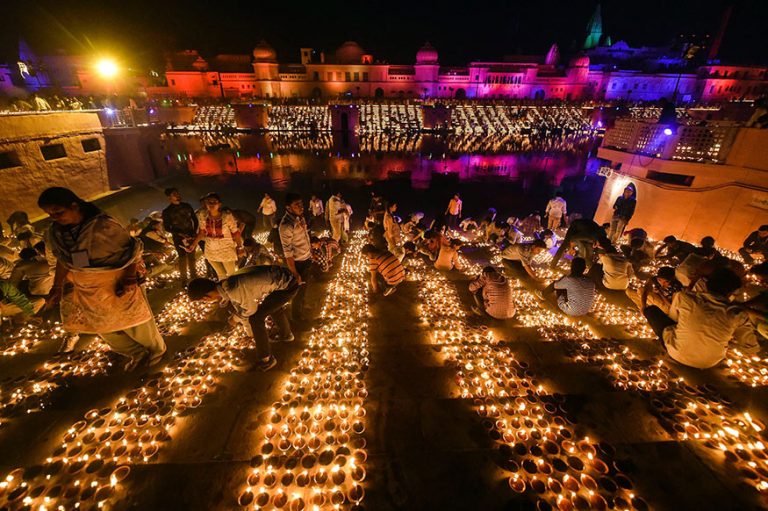
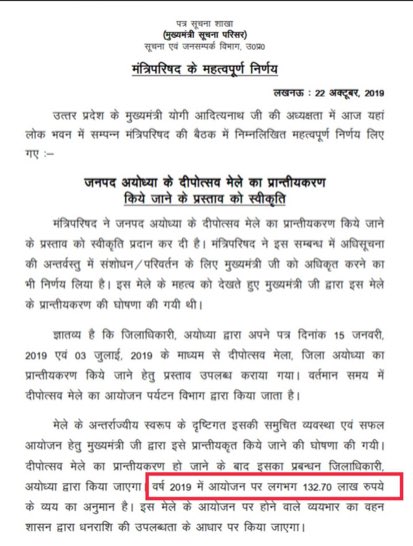
BJP will return to power in Uttar Pradesh in 2022, said Chief Minister Yogi Adityanath in an interview with Dainik Jagran. Stating his government’s achievements in last two-and-a-half years, he said that earlier, Ayodhya had a barren Deepotsav, his government has revived it while the Kumbh has been a huge success story for his government. He also said that with the rate at which the state is progressing, it will reach 1 trillion USD economy by 2030. However, if they accelerate, they could achieve it by 2024.

When asked whether he gets angry, he said that he does not get angry. “When you have to achieve big goals, you have to be patient. You should be committed to take up challenges. I am never disappointed. I always learn something from every incident. I am a Yogi during stressful situations. I practice Yoga regularly and hence despite sleeping for only 3.5-4 hours every day I am fresh all day long,” he said.

Development in Uttar Pradesh

Speaking to Dainik Jagran, he said that currently the growth rate is at around 8% and his government’s aim is to get investment of Rs 40 lakh crore in next four years. Currently, the per capita income of an individual in UP is Rs 64,000 while the national average is Rs 1,20,000. If UP achieves 1 trillion dollar economy by 2024, the per capital income could double.

To achieve this, the UP government will focus on agriculture, cooperative farming as well as development of industries. Focus will also be on improving law and order situation in the state, he said. To improve manpower utilisation, the state government will also work on education and heath sectors.

Upcoming polls

Speaking on the upcoming bypolls in Uttar Pradesh, Yogi Adityanath said that while the elections till 2014 were fought on religious and caste lines, things have changed since then. Prime Minister Modi has shown that elections can be fought and won on issues of development, women empowerment and industrialisation. “When Opposition brought in communal poison, we answered them back,” he said.

Speaking on the state assembly elections which will be held in UP in 2022, Yogi Adityanath said that he is confident that the BJP will return to power. “There should be no difference between the state and centre. Our aim is to implement all central schemes in the state,” he said. “In next two-and-a-half years, UP will have a different picture. We have controlled the epidemic outbreaks on diseases like encephalitis, dengue and are even working towards improving the employment and health of the youth,” he added.

Ties with Russia

Adding how Uttar Pradesh can help far-east Russia in terms of farming, he said that the state will help Russia with contract farming. They have over 50 lakh hectares land where no agriculture takes place. UP will help with technology and manpower and help develop integrated development in agriculture in Russia. An MoU in this regard was signed between UP government and Russia in August this year.


Chennai: Corporation official heckled and thrashed by MDMK cadres for trying to remove banners welcoming Vaiko

0

An executive engineer of the Chennai Corporation was beaten up and heckled by Marumalarchi Dravida Munnetra Kazhagam (MDMK) party cadres on Sunday after he tried to remove illegal banners and posters placed by them.

MDMK members had reportedly put several banners welcoming Rajya Sabha MP and party’s general secretary Vaiko near YMCA grounds at the Todd Hunter road in Chennai.

Vaiko was scheduled to visit Chennai to addressed a gathering on the occasion of CN Annadurai’s birth anniversary.

As reported by India Today, after the corporation received complaints about the placement of illegal banners near the ground, the executive engineer K Varadarajan and other staffers reached the spot to remove the political banners and posters. However, MDMK workers arrived there in their cars and allegedly started attacking Varadarajan and his driver.

Varadarajan has received injuries and is undergoing treatment in a private hospital.

MDMK general secretary Vaiko defended the party cadres’ reckless action by saying that the hoardings were not in public area but inside the venue of the meeting. However, the Saidapet police on Monday registered a case against P Subramani, MDMK district secretary, under relevant sections of the Indian Penal Code, and arrested him. Police are on the lookout for the others.

The city corporation has removed 4000 illegal banners across the city since last week. Moreover, cases have also been registered against 245 people for erecting illegal flex banners. This action has been taken following the public outrage after an illegal hoarding recently claimed the life of a 23-year-old techie Subhasri in Chennai.

Subhasri Ravi, a 23-year-old software engineer, was crushed to death on September 12 (Thursday)by a water tanker at Pallikarnai in Chennai. Subhasri, who was on her way back home from work, was thrown off her scooter after an illegal hoarding erected on the road’s divider fell on her following which she lost her balance and was hit by a water tanker.

The illegal hoarding was reportedly erected as part of wedding celebrations of an AIADMK functionary’s son on the Pallavaram-Thoraipakam radial road.

AIADMK functionary C Jayagopal was subsequently booked under the Section 4 of The Tamil Nadu Open Places (Prevention of Disfigurement) Act, 1959 for installing the hoarding without permission, after an assistant engineer of the Chennai corporation registered a complaint about the same.

The Chennai corporation had earlier filed a case under Section 326 of the Chennai City Municipal Corporation Act, 1919.

Moreover, facing flak over the death of the woman techie, the Chennai Corporation on September 14 (Saturday) decided that patrol vehicles would be deployed to dismantle such hoardings in all the zones. The licences of firms that print illegal banners or hoardings would be cancelled and their manufacturing units sealed, the corporation added.

Bombay HC orders NGO to pay cost of 1 lakh for filing ‘frivolous petition seeking to stall development in Navi Mumbai’

0

The Mumbai High Court imposed a fine of rupees one lakh on an NGO on Monday for filling frivolous petition to stall development project in Navi Mumbai. The court noted that the PIL filed by Abhivyakti, the NGO, was motivated to somehow stall development work in Navi Mumbai.

Abhivyakti had filed a petition at the Bombay High Court last year claiming that water from Panvel creek flows into a depression on a 6-hectare land at Kharghar in Navi Mumbai, which forms a pond. They had requested it to be declared as a wetland and protect it. They had alleged debris were dumped into the area and 90% of the water body has been encroached upon.

Responding to the petition, City and Industrial Development Corporation (CIDCO) had denied that the water body was connected to Pavel creek, and said that no pond ever existed at that location. It informed that the land was jirayat, that means rainwater accumulates on that land only during monsoon, and it is cultivated during non-monsoon season. There is a slight depression on the land which collects rainwater during monsoon, CIDCO said.

After this response by CIDCO, Abhivyakti filed a rejoinder but didn’t contest the arguments of CIDCO. It instead changed its argument, saying that due to the importance of wetlands for the ecosystem, the area should be notified as wetland. The NGO said that wetlands should be identified and notified after satellite imaging.

In view of this request, the Panvel SDO filed an affidavit saying that no wetland was mapped in that location as per satellite imaging. According to NWIA Atlas mapping carried out during the year 2005 using IRS-1C LISS-III satellite data of 23.5m resolution, no wetland was mapped in the area.

The NGO had contested this claim, saying that ISRO had mapped the area and identified it as wetland. But the Panvel administration produced a response received from ISRO which said that no Wetland was identified at the specified area in its satellite mapping.

Going by all the arguments, the court concluded that the initial claim of the petitioner that the wetland was created due to it being connected to Panvel creek was factually incorrect. After that, they had claimed that it was a pond created by rainwater, which was also proved false as water accumulated only during monsoon season. The court also noted that the land was private owned which was acquired by the government for development. The court also notes that no pond was detected in satellite mapping done by ISRO.

As a result, the court concluded that the petition was filed to stop development in Navi Mumbai. The court said that the petitioners had used Google images of the area obtained during monsoon to raise the boogie of environment being damaged.

The court dismissed the PIL saying it is frivolous, and imposed a fine of ₹1,00,000 on the NGO. The court asked the costs to paid to the High Court Legal Aid Fund within two weeks.

Madhya Pradesh: Minor boys found chained in madarsa, accused Mufti Md Sad and Hafiz Salman arrested

0

A shocking incident had come to light where a minor 10-year-old boy, was found chained to a metallic bench in an unregistered madarsa in Prabhat lane of Ashoka Garden in Madhya Pradesh’s Bhopal on Sunday morning. Another seven-year-old boy who also studied and lived at the same madarsa, was also found sleeping near the chained boy.

As per reports, local residents had spotted the minor sleeping with one of his legs tied to a metal bench with an iron chain at 10 am on Sunday morning inside the madarsa. A small lock was used to secure the chain. The locals subsequently alerted the police who reached the spot and freed the boy.

The police have now arrested Mufti Mohammad Sad (32) and Hafiz Salman (19) based on the statements of the victims. The victims alleged that the two men physically abused them. A case has been registered under Section 75 and 85 of the Juvenile Justice Act and Section 342 (Punishment for wrongful confinement) of the IPC.

A senior police official said that the minors, who were students at the madarsa, had tried to flee the institution in the past, following which the managers decided to chain them. The probe has revealed that the madarsa was not registered with the State Madarsa Board, but was being run under a registered educational society named Zakaria Education Society.

According to reports, the police also confirmed that the minors who were among the 22 boys who studied and lived at the madarsa have been sent to a shelter home on Monday on the recommendation of the Child Welfare Committee, Bhopal, and are currently undergoing counselling.

Accounts of such horrors have become quite common with madarsas. Yesterday we reported how a madarsa cleric from Kathumar village of Alwar district in Rajasthan had abducted a minor girl from the village and forcibly taken her to Hyderabad where he raped her multiple times in a guestroom of a mosque there.

Prior to this incident, we reported how a teacher in a madarsa in Uttar Pradesh’s Kushinagar allegedly used the CCTV cameras in the madarsa to watch girl students as they changed clothes. These are, however, just a few out of the numerous cases of rampant child abuse going on inside madarsas.

People are wearing Saffron clothes and committing rapes inside Temples: Congress leader Digvijaya Singh

0

Senior Congress leader Digvijaya Singh, who has a habit of making slanderous statements against the Hindus, kicked up a storm on Tuesday after he claimed that people wearing Saffron are committing rapes inside the temples these days, reports ANI.


Digvijaya Singh, who is infamous for making controversial statements, made the remarks while addressing the Sant Samagam in Bhopal. The former Madhya Pradesh Chief Minister said people wearing Saffron clothes are the ones committing rapes inside the temple and this was not Hindu religion.

He added that it is a matter of concern that people are defaming ‘Sanatan Dharma’. Singh further added that and even god will not forgive those who are doing these things in the name of religion.

“Today, people are wearing saffron clothes and raping, rapes are happening inside temples, is this our religion? Those who have defamed our ‘Sanatan Dharma’, not even God will forgive them,” Digvijaya Singh said.

Digvijaya Singh, who is known to make illogical statements, had sparked a major row recently by claiming that BJP and the right-wing Hindu outfit Bajrang Dal are getting money from Pakistan’s spy agency Inter-Services Intelligence (ISI). The veteran Congress leader further alleged that non-Muslims were spying for ISI more than the Muslims and everyone should understand this fact.

Did you see the Vikram Lander? Brad Pitt asks about lunar module to American astronaut on the ISS

Hollywood actor Brad Pitt, on a call with American astronaut Nick Hague on the International Space Station asked whether he saw ISRO’s Vikram Lander land on the lunar surface.


Pitt was in a conversation with NASA astronaut on the ISS as a part of promotion for his upcoming film Ad Astra which is slated to be released on 20th September. Pitt plays the role of an astronaut on a dangerous mission.

Hague, however, said that he did not see the Vikram Lander land on the lunar surface. “No, unfortunately,” he said. Hague, along with two other American, two Russian and one Italian astronauts is living on the International Space Station.

Read Also: ISRO Chief K Sivan breaks down after Vikram Lander loses contact, PM Modi embraces and consoles him

On 7th September, Chandrayaan-2’s landing module had gone silent after Vikram Lander went silent when it was merely 2 KMs from the landing surface of the moon. While ISRO was able to locate the lunar module in one piece, it had tiled a little because of the hard landing. All efforts to resume the communication has so far been unsuccessful.

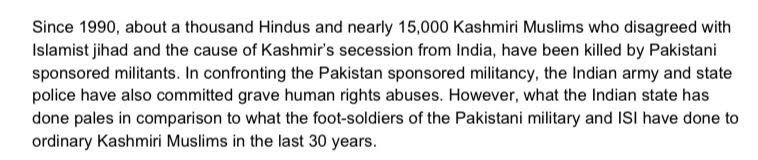
While talking about Muslims in Jammu, Karan Thapar diminishes massacre of Hindus and Sikhs in Jammu and the KP exodus

Karan Thapar in his article “We cannot be selective about the past in Jammu & Kashmir” in Hindustan Times dated 15th Sept 2019, gives a call to morality, intellectual honesty and being conscious to multiple peoples and their identities. He further goes on to say that our memory becomes selective, it also becomes one-sided and that could divide us. We could end up a very different country to the one we want to be he adds. Since I agree with this I feel compelled to comment on his article and point out some glaring facts he has both missed and misrepresented.

My ancestral village of Bumnal, in Jammu district, is not too far from what is now the International Border and my father recounts the troubling times of Partition when he had to vacate his village. He distinctly remembers the journey because he as a 7-year-old refused to leave and only after a slap or two, mounted the horse my Grandfather had specially arranged for this forced exodus. In their absence, the village was burnt down along with its primary school. My father and his family relocated to Samba district and it took a few years before they made their way back to our ancestral village. Since this was an anomaly for a secular and pluralistic Jammu, it must be pointed out that ours was a Hindu village and the events an overspill of the bloody partition of India. A fact Mr Thapar missed in his remembrance of Jammu in 1947.

India Office Records Library in London corroborates the fact that at least till the end of September 1947 when communal disturbances gripped the sub-continent and even lead to disquiet amongst the people and administration of Kashmir, there was next to no animosity between the Hindus and Muslims, barring a few stray incidents in the Jammu Region.

The Records mentions and Prem Shankar Jha in his book Kashmir 1947- Rival Versions of History also makes a reference to the fact that though some atrocities were committed by bands of Sikhs and by some of the state troops in the border belts of Jammu Province in the first weeks of October it was an extension of and reaction to the communal carnage occurring along its borders in East and West Punjab and the atrocities committed on the Hindus within Jammu & Kashmir and in the adjoining areas of West Punjab.

Karan Thapar makes an unreasonable comparison of events related to the Partition in 1947 with what happened to the Kashmiri Pandits in 1990, effectively doing exactly what he professes of not doing, i.e diminishing the KP exodus. No atrocity can be justified and the atrocities committed in Jammu Kashmir in 1947 because of a bloody partition cannot be justified either. 

However false references to Jammu Massacres of 1947 and the suggestion that the atrocities were only committed against Muslims will also not go unchallenged. Karan Thapar’s pitch-perfectly colludes to the Pakistani version of the events of 1947. Pakistan justifies its attack on Jammu Kashmir based upon the propaganda that Hindu Dogra Maharaja Hari Singh wanted to cleanse his state of its 77% Muslim population so that he could accede the state to India. A preposterous lie which does not explain why the Maharaja did not first cleanse his own 8000 strong State Forces which comprised of 3000 Muslims and wait for them to betray and kill the Hindu officers before deserting and joining the enemy ranks on 22nd to 26th October.

Karan Thapar quotes Horace but forgets to mention the fortnightly reports sent from December 1946 to the end of June 1947, where the Crown’s representative to the Secretary of State for India on Kashmir Internal Conditions, Webb writes that there was nothing to report or that the communal situation was uneasy but that there had been no violence. Even Jinnah’ Direct Action Day caused no ripples in the Valley.  The only incident occurring in Jammu town on 21st September 1946, when a Hindu youth was stabbed to death. The following day three Muslims were also found killed similarly. There was a crackdown by administration after this incident. Webb refers to this incident and adds that the state government’s response was ‘ prompt and firm’. He even reports that despite the arrival of 2,500 Hindu and Sikh refugees from the tribal agency of Hazara in December 1946, there were no communal reactions. Of course, tragically most of these refugees fell victim to the very tribesmen they had escaped ten months later on October 1947.

Karan Thapar chooses to ignore the well-established fact that the tribal raids were planned and incited a month before the alleged atrocities of the State forces when Kashmir was peaceful. This was not a spontaneous reaction to save Muslim brethren from a fictional Dogra genocide. Major Gen Akbar Khan in his book Raiders in Kashmir details this planned invasion against Jammu and Kashmir, while also regretting a lack of local support. Amiss in Thapar’s references was the dispatch of 30 th March 1947, that Pir of Manki Sharif in the NWFP had sent his agent provocateurs to the frontier districts of the state to prepare the people for ‘holy crusade’. To uncritically accept the accounts of an Alistair Lamb, Snedden or a Richard Symond is where the intellectual dishonesty lies. Multiple accounts and reports like that of General Scott proves that quite contrary to the lies about a genocidal anti-Muslim Dogra Force, the State forces had done an exemplary job of looking after its own population alongside taking care of a quarter-million of refugees that had entered the state 

Since Karan Thapar rues selective memory and its dangers, important to point out the massacres of Hindus and Sikhs of Mirpur, Bhimber, Kotli, and the tribal agencies of Hazara where they were completely wiped out. The brutal killings and rapes of Sikh and Hindu men and women are hard to forget. Bal K Gupta in his personal memoir Mirpur Ki Traasdi – Vismrit Atyachar, recounts crossing the bridge over Jhelum, along with a fleeing Hindu and Sikh population and seeing many women jump off the bridge to avoid rape and kidnapping. His bone-chilling account of these mass suicides details how women shocked and robotic in their grief and fear first threw their children into the icy cold river and only after watching them completely drown, threw themselves off the bridge too. Bal K Gupta details how the local Muslim population of Mirpur city and adjoining villages joined this carnage and kidnapped Hindu women and killed their men. The author was one of the 1600 people who were rescued by the ICCR from Alibeg and repatriated to India. 

Poonch and Rajouri were no different from Mirpur. Col Rehmatullah Khan sent for Rajouri’s protection by Maharaja Hari Singh defected and joined the tribal raiders. He and Major Nasrullah killed the Gorkha sepoys of their own companies. Rajouri witnessed mass suicides by the Hindus by means of consuming poison, some in full public view. To avoid rape and kidnap of Hindu women, Rajouri witnessed chilling honour killings. Many women and children were abducted and sold in Kotli by raiders. 

Important to remember these forgotten Hindus and Sikhs of Jammu and Kashmir or as Karan Thapar rightly points out the memory would be one-sided and one-sided memory can never do justice to the truth. We can neither be selective nor untruthful about the past in Jammu and Kashmir. The census figures quoted by Karan Thapar if not completely untrue are at best projected and contentious. Limitations, inconsistencies and contradictions have marred the available census figures. Jammu city known as the City of Temples has never be known as a Muslim majority city but post-1947 has been known as the Refugee capital, home to POJK, West Pak and KP refugees. The influx of the Hindu and Sikh refugees in 1947 to Jammu city is reflected in the rise of Hindu population in the 1981 census.

It is Karan Thapar who in his hurry to toe the Pakistani version of the events in Jammu and Kashmir in 1947 has resorted to inflated and incorrect census figures, not taken into account the Pakistani invasion of Jammu and Kashmir and effectively murdered and insulted the massacres of Hindus and Sikhs in 1947 and then of the Kashmiri Pandits in 1989. The past must be remembered but remembered in all its entirety and truthfulness otherwise we become a very different country from what we want to be.

Congress has always been against Dalits, sad and shameful behaviour: Mayawati on Rajasthan BSP MLAs defecting to Congress

BSP chief Mayawati is not pleased with Congress after her party’s six MLAs in Rajasthan left BSP and defected to Congress. These MLAs had given a letter late last night to speaker CP Joshi, requesting him to merge their legislative party with the Congress.

As per reports, the MLAs who have decided to change their loyalties and merge with Congress are Rajendra Singh Gudha, Jogendra Singh Awana, Wajib Ali, Lakhan Singh Meena, Sandeep Yadav and Deepchand. These MLAs have decided to merge their legislative party in the assembly with the Congress. A congress leader has stated that all the six MLAs were in contact with Rajasthan CM Ashok Gehlot and have now decided to come into the Congress fold.

Mayawati, who after the 2018 assembly elections in Rajasthan, had declared that her party will stay out of government but will give outside support, has taken to Twitter to unleash her acrimony at the Congress party.

The BSP supremo tweeted: “By once again breaking BSP MLAs, the Congress has reflected that they are non-trustworthy and fraudsters. They have betrayed BSP at the time when we were providing unconditional support to the Congress in Rajasthan”.


It is notable here that all the six BSP MLAs had also defected to Congress during Ashok Gehlot’s earlier tenure in 2009.

“Instead of fighting with its opponents or bitter rivals, Congress has a habit of betraying its supporters”, Mayawati tweeted furthering that “Congress is anti-SC, ST and OBC and has never been sincere and honest about the rights of these classes.”


“The Congress has always been against BR Ambedkar and his ideology. That is why Ambedkar had to resign as the country’s first law minister. Congress never honoured him with a Bharat Ratna, which is sad and shameful,” lambasted Mayawati.


It has become difficult for the BSP supremo to reconcile to the fact that she has been backstabbed by the party to whom she provided her unconditional support. Notably, Mayawati had supported Congress in Madhya Pradesh too.

However, in the recent past, the BSP supremo has been quite vocal about her repugnance towards the grand old party. She had recently slammed the Congress party and former Prime Minister Jawaharlal Nehru blaming them to be the root cause of Jammu and Kashmir problems.

Earlier too, Mayawati had, slammed the Congress and opposition parties over their attempted visit to Kashmir. Criticising their intention behind the visit Mayawati stated that the opposition leaders should rather have waited and given the government some time to normalise the situation in Jammu and Kashmir.

Notably, during the Karnataka crisis, the BSP supremo had snubbed the Congress-JDS coalition and asked lone BSP MLA to abstain from the trust vote.