Home Blog Page 6190

Digvijay Singh wants Congress leadership to march from Lal Qila to Lal Chowk to protest the abrogation of Article 370

0

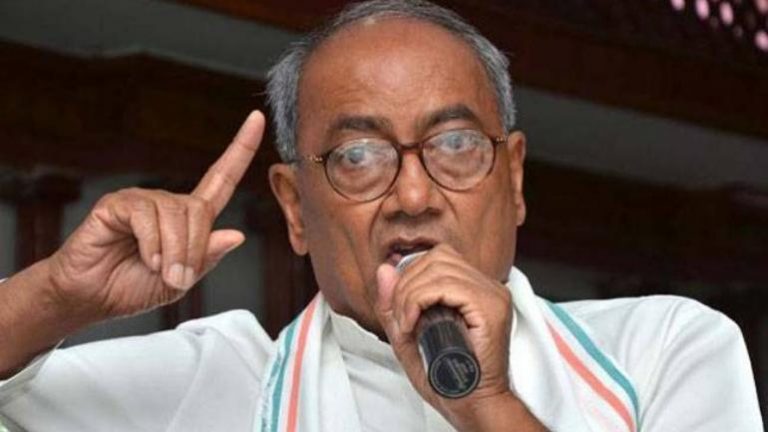
The recent move by Government of India to bifurcate the state of Jammu and Kashmir (J&K) into two union territories, Jammu and Kashmir and Ladakh, doesn’t seem to have gone well with senior Congress leader and Rajya Sabha MP Digvijay Singh. A visibly infuriated Singh invoked Mahatma Gandhi to express his feeling on the matter and said, “What would have Mahatma Gandhi done … in a situation that this bill had come and passed? I think he would have taken a march from Lal Qila to Lal Chowk to show the solidarity with the Kashmiris.”

Singh was speaking at the launch event of journalist Dhirendra K Jha’s book, Ascetic Games: Sadhus, Akharas and the Making of the Hindu vote. He took the stage to demonstrate his views on the recent political developments in J&K and confessed that Congress party was leaderless since Rahul Gandhi’s resigned as party president on July 6, 2019.


In response to a journalist on whether the Congress leadership would have the courage to march to Lal Chowk, Singh responded, “That’s what I would want them to do.”

Singh admitted to his party’s past mistakes including the failure to deal with religious fundamentalisms, preventing Babri Masjid demolition and reversing Supreme Court judgment on Shah Bano.

About 70 terrorists and hardline pro-Pakistan Kashmiri separatists shifted from Jammu and Kashmir to Agra: Reports

0

As the state of Jammu and Kashmir returns to normalcy after the revocation of Article 370 and Article 35A, approximately 70 terrorists and hardcore pro-Pakistani Kashmiri separatists have been shifted to Agra. They were airlifted to Agra in a special plane provided by the Indian Air Force.


This decision to shift prisonners from the state to Agra was taken just before PM Modi’s speech to the nation where he talked about the government’s decision on the state.

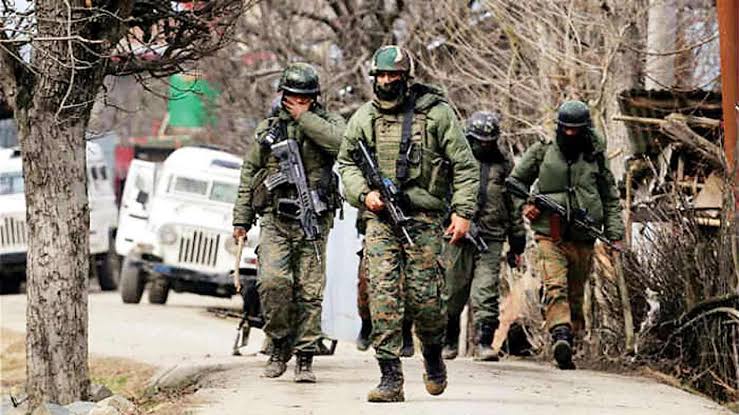
Amidst high-security, separatists and terrorists landed at the Kheria airport in Agra Thursday. The route to the jail was guarded with heavy police deployment. It is also reported that the Kashmiri prisoners have been kept in the jail’s high-security barrack. In addition, Provincial Armed Constabulary (PAC) and SWOT teams have also been posted outside the jail.

The move to fly dreaded terrorists and separatists is considered as a preemptive action taken up by the government as normalcy seems to be returning to the valley after the government decided to abrogate Article 370, and split the state into two Union Territories. The article 370 granted separate status to the state of Jammu and Kashmir from the other states in the country. The Jammu and Kashmir Reorganisation Bill was passed in Rajya Sabha on August 5 and on August 6 it made through the Lok Sabha with a massive mandate. The bill has bifurcated the state into two union territories – Jammu & Kashmir and Ladakh.

Concentration Camps to Lal Chowk March: Congress leaders compete with each other on generating hysteria over Article 370

The year is 2019 and hyperboles in political discourse are in fashion. Since Article 370 was abolished in Jammu and Kashmir and the former state was bifurcated into two Union Territories, politicians of a secular hue have engaged in extremely disturbing sermons. It is a trend that ought to worry us all.

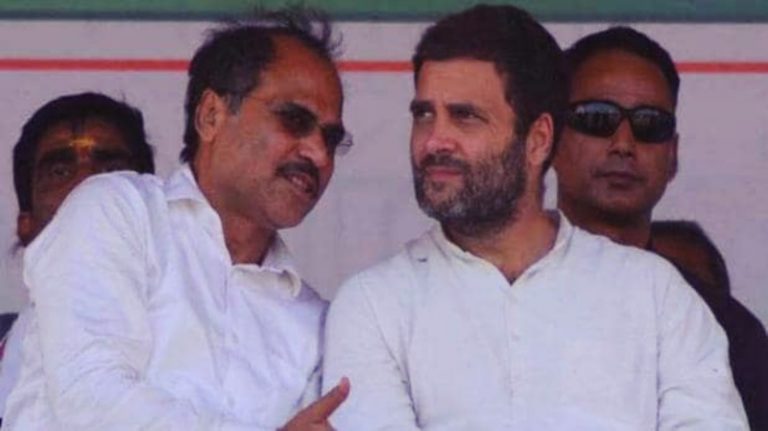
One of the prominent figures to have participated vigorously in problematic discourse is the leader of the Congress party in the Parliament, Adhir Ranjan Chowdhury. After insinuating that Jammu & Kashmir wasn’t India’s internal matter, he has now claimed that Kashmir has been transformed into a concentration camp.


Unfortunately, he isn’t the only leader from the Congress party who has been toeing the Jihadist line. Former Union Finance Minister P. Chidambaram, who is mired in numerous criminal investigations, has touted Shah Faesal to insinuate that the abolition of Article 370 was “the biggest betrayal” perpetrated against the Kashmiri Muslim community by the Indian government.


Digvijay Singh went one step further. He claimed that he wants his party to march to Lal Chowk in Srinagar. He said, “What would have Mahatma Gandhi done … in a situation that this bill had come and passed? I think he would have taken a march from Lal Qila to Lal Chowk to show the solidarity with the Kashmiris,” before adding it’s what he wants his party to do.

To be fair to Digvijay, it does sound like something Gandhi would have done. But taking pointers from an individual who could not prevent the partition of the country despite his pathological pacifism does not appear to be a very sensible course of action.

The tone and tenor of the statements made by senior leaders of the Congress party only reflect the stance taken by their Supreme Leader. Former Congress president Rahul Gandhi has made a series of insensitive and callous comments which could only jeopardize the effort being made by the government which is of great historical significance.


Of course, most of what the Congress party is saying isn’t true. There are no concentration camps in Kashmir, no one has locked Kashmiris up in gas chambers trying to force poison gas on them. No one has locked lakhs of them in prisons in a bid to exterminate them.

I can feel my IQ dropping by 20 points by merely having to say that. It was not an unconstitutional measure. A temporary provision in the Constitution was struck off by perfectly constitutional means. And to prevent any law and order issue fueled by Pakistan sponsored separatist elements, the government of India took certain precautionary measures ahead of announcing the decision in Parliament, like suspending mobile and internet communications, imposing section 144, and keeping some potential troublemakers in preventing house arrest.

Such measures are regularly taken by state governments whenever there is an apprehension of law and order issue due to various reasons. They no doubt create temporary hurdles for ordinary citizens, but to compare them with concentration camp crosses all limits of logic.  J&K hasn’t been torn apart, the state has already started returning to normalcy, and people in Ladakh are happy as they got their long-standing demand of union territory fulfilled.

Even members of the Congress party know it in their hearts that their words are as far from the truth as they could be. That is why there is a vertical split developing within the party. Many people have refused to toe the Nehru-Gandhi dynasty line, and understandably so.

There is a good reason why the Nehru-Gandhi dynasty and its motley crew of clowns are opposing the move with tooth and nail. They are perfectly aware that if the NDA government succeeds in its endeavor, it will be extremely difficult for the Congress party to ever return to power. They want the government to fail so that they can then turn around and say, “I told you so.”

The Nehru-Gandhi dynasty loves power. They love power more than anything they have ever loved, maybe only their love for their children exceeds it. It is perhaps their only redeeming quality. It does appear that due to their love for power and their children, they are willing to sacrifice the interests of the entire country. Such hyperbole helps no one apart from Pakistan and those entities inimical to Indian interests.

To paraphrase the words of a certain US politician: The Nehru-Gandhi dynasty is desperate for power, I pray to the Gods they never get it. The Congress party, in their desire to see the ruin of Narendra Modi and the BJP, are willing to destroy our country. They are willing to set the whole country on fire so that they could rule over the ashes.

Removal of Article 370 is not withdrawal of special provisions, it is giving equal rights to people of Jammu and Kashmir: PM Modi

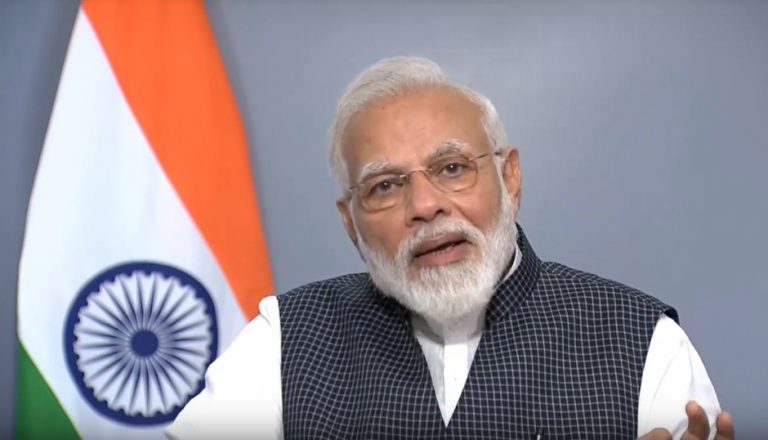
Prime Minister Narendra Modi addressed the nation via a televised speech today evening at 8 PM. This is the first time the PM talked to the public after the historic decision to abrogate Article 370 and Article 35A of the constitution was taken by the government. These two articles had given the state Jammu and Kashmir a separate status and kept it alienated from the country. The Article 35A, which was introduced by presidential order in 1956, was repealed by issuing a new presidential order on 5th August, which had superseded the earlier order. While Article 370 was removed using the provisions of clause 3 of the Article.

The speech was being carried live by most news channels. The speech can be watched on the live stream embedded below.

[youtube https://www.youtube.com/watch?v=Cb8DIUBXvjA]

8:00 PM: Everyone thought nothing will change, even with Article 370. Nobody was talking about the harmful effects of Article 370. Nobody was able to tell people the ill-effects or the benefits of Article 370 on the people of Jammu and Kashmir.

8:05: Article 370 and 35A was being used by Pakistan to instigate people. 42,000 people have died so far.

8:05: Any government of any party makes laws in the parliament to ensure the well-being of people. There is a lot of debate during the process inside and outside the parliament. But it tragic that earlier a law was made and it was not even applicable to one part of the country.

8:07: Any law made for the benefit of the people did not benefit the people of Jammu and Kashmir. In the country, children have the right to education. J&K children did not have that right. The rights that girl-children get, were not availed by the girls of J&K. Even sweepers could take benefit of the rights they have in the rest of the country. In the rest of the country, to stop atrocities against Dalits, there are laws. But in J&K, there were no such laws. Even for the marginalised, there were laws in the entire country, but none in J&K. Minimum Wages Act was also not applicable in J&K. SC and ST got reservations, but not in J&K. Now, with Article 370 and Article 35A being made history, J&K will come out of its ill-effects.

8:10: It is the aim of the government to give the employees, including the police of J&K get the same rights as the other employees in the rest of the country.

8:12: Very soon, in J&K and Ladakh all central and state positions will be filled. From this, the youth of J&K and Ladakh will get employment. Along with that, PSUs and Private Sector companies will get an incentive for employment generation. The govt will start a scholarship program so most students can avail of the benefits.

8:15: After the removal of Article 370 and 35A, only for some time, the UTs have been kept under the central government only for some time. After President’s rule has been employed, in the past few months, J&K has seen good governance and development. The schemes that were limited to paper, are being seen on the ground now too. Projects that were stalled for years are seeing progress. We have tried to bring in a new culture in governance. As a result, IIT, IIM, AIIMS etc and irrigation projects, power projects or even ACB has seen an improvement in working. Connectivity projects too have seen an improvement.

8:16: Our democracy is so strong, but in J&K, there are people who have never voted in the Assembly Elections, Panchayat Elections etc and neither did they have the right to contest. These people are those who after the 1947 partition, came to India. They had all rights in India, but only in J&K, had no rights. Should they not get their rights?

8:17: I want to tell the people of J&K, your representatives will be chosen by you. I am confident that together, we will fight terrorism and embark on a new path of development.

8:19: We all want that in the coming time, J&K sees Assembly elections and we see new representatives of the people. I want to assure the people, that they will get to elect their own representatives very soon in a calm and peaceful environment.

8:20: It is my experience that 4-5 months back, in the Panchayat elections of J&K and Ladakh are working very well. They should be welcomed and appreciated. When I went to Srinagar, I met them at length. When they came to Delhi, to my residence, I spoke to them at length. Because of them, J&K has seen development at the rural level. Whether it is about providing electricity or making the village ODF. In fact, the women representatives have performed phenomenally well. I am confident, that after the abrogation of Article 370, when they get a better environment to work in, they will perform better.

8:22: I am confident that the people of J&K will defeat terrorism and move forward with new hope.

8:23: Decades of dynasty politics deprived people of leadership. Now, the youth of J&K will lead and develop J&K and Ladakh. I urge the youth to come forward in a leadership role. J&K and Ladakh can be the biggest tourist spot in India. But we need the help of the rest of the country. There was a time when Bollywood would shoot in Kashmir. Now when J&K turns to normalcy, this will resume. I urge people, whether, from Bollywood or Industry or technology, they should focus on J&K and Ladakh.

8:26: The decision of the government will also benefit youth who are interested in sports. New stadiums, scientific training etc will be provided. They will be able to display their talent to the world and play for India.

8:30: Farmers will benefit when they sell the unique plants of J&K. After becoming a UT, the development of the people of Ladakh is the responsibility of the central government. The govt will ensure that the people of Ladakh get all benefits.

8:30: In a democracy, it is obvious that some people will be for the decision and some will be again. I respect their reasons for differences. And it is our responsibility to assuage their sentiments. But I urge them to work for the benefit for the Nation. Respect the sentiments of the Nation. They should work towards the betterment of the nation.

8:32: The abrogation of Article 370 is reality. But it is also a reality that because of this, certain steps had to be taken. The effects are also being borne by the people of J&K and they are cooperating. Some people are trying to instigate people, and they are getting a response from the nationalists of J&K. Even terrorism is being fought by these nationalists and the people who believe in the Indian Constitution.

8:34: I assure the nationalists that the situation will become normal soon. I give all of you my best wishes for Eid. We are trying to ensure that there will be no problems in celebrating the festival. Even people who live outside J&K and want to go back home for Eid are being helped by the central government.

8:35: I also thank the paramilitary forces, government employees, J&K police and all employees for being there to help the people of J&K. Their hard work has increased by faith in change. Jammu and Kashmir is our crown. Many have sacrificed their lives for this crown.

8:37: Several people have sacrificed their lives because of terrorism. They have all dreamt of a quiet, secure and developed J&K. All of us need to fulfil those dreams together.


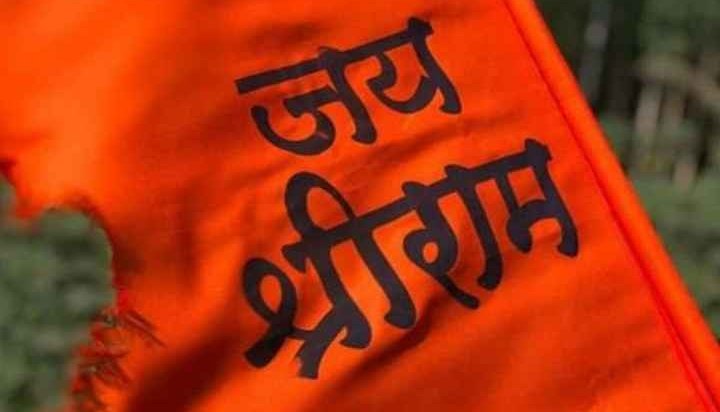
West Bengal: Govt school asks students to write a report on ‘Jai Shree Ram and its negative impact on society’ during school exams

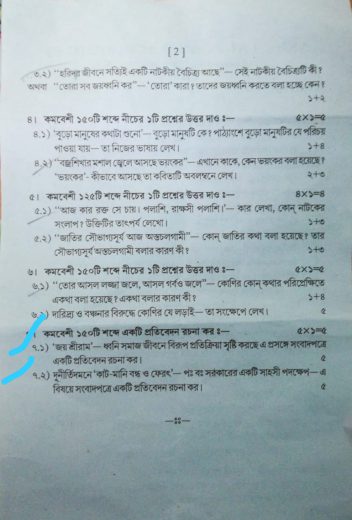
Hooghly government school in Polba region, West Bengal of Chief Minister Mamata Banerjee has found itself in the middle of a controversy after it asked its students to write a report on ‘Jai Shri Ram’ and its ‘negative impact on the society’ during a class exam.

The question paper also had a question on how the campaign for refunding “cut money” can stop corruption.

SS of a part of the question paper, given to students of Hoogly Government school.

Since the ‘Jai Shri Ram’ topic is currently one of the most politically sensitive topics in the state the children were left confused as to how to deal with the question. Whether they should reply to the question honestly or diplomatically keeping Mamata’ perception in view had left the students flummoxed. Since the question was only for five marks most of the students thought it to be safe to skip the question.

However, those who answered the question brought it to the notice of the principal as the examination was about to get over. The principal, in turn, assured that every student, irrespective of whether they attempted or not, would get full marks for that particular question.

This incident drew a lot of criticism from BJP’s district organisation president Subir Nag, who dubbed it as the West Bengal government’s deliberate move to confuse the young minds. BJP, which won the Hoogly seat in the recent Lok Sabha election has also planned to submit a memorandum seeking an explanation as to how the school authorities could allow such a question paper to be printed without basic inspection.

Though Trinamool Congress panchayat leader, Nirmal Ghosh, who is associated with the school apologised and said that he would inquire into the matter, the ruling Trinamool Congress Party has distanced itself from this controversy dubbing it a stray incident and blaming the principal and the subject teacher in this regard.

The three words that have been triggering Mamata and her goons for the longest time now are ‘Jai Shri Ram’. Mamata has several times in the past exhibited her malevolence against the chant.

She has not only called the slogan a deliberate attempt ‘to sell hatred ideology’ but has also many a time threatened to take action against people chanting Jai Shri Ram.

The chant of Jai Shri Ram has become one of political upheaval in West Bengal with TMC goons lashing out at those chanting it. In fact, many people in West Bengal have faced Mamata’ wrath for using the slogan.

In the month of June, 3 BJP workers along with a 14-year-old boy were shot for chanting Jai Shri Ram. Last month, a BJP worker named Krishna Debnath succumbed to his injuries after he was brutally beaten up by Trinamool Congress (TMC) workers for chanting the slogan. Mamata Banerjee had also got 10 people arrested for chanting ‘Jai Shri Ram’ at her. She had claimed that she was being abused.

In fact, the reluctance and the intolerance against the slogan have become so deep-rooted in Mamata’s realm that a class-I student was allegedly brutally thrashed by his school teacher for chanting ‘Jai Shree Ram’.

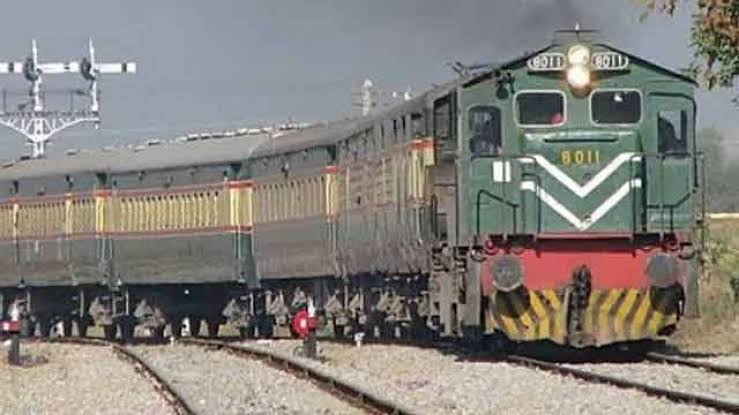
Pakistan suspends Samjhauta Express, asks India to send driver to take the train back

0

Spooked by India’s audacious move of abrogating the provisions of Article 370 and bifurcating the state into two union territories, Pakistan seems to have rushed into taking a series of ineffectual decisions to protest against India’s decision. After snapping bilateral trade and downgrading diplomatic ties with India, Pakistan has today announced that it will permanently discontinue Samjhauta Express train services.


In addition to this, Pakistan has also requested India to send a driver to Pakistan to take back the Samjhauta Express which was supposed to carry passengers on its run from Pakistan to India. Pakistani officials have informed Atari station authorities about their government’s decision and asked an Indian guard and a driver to take Samjhauta express from Wagah side to Atari.

Pakistan Federal Minister for Railways Sheikh Rashid Ahmed had recently tweeted that Samjhauta Express that plies twice a week between India and Pakistan has been suspended by Pakistan. He also added that those who had already paid for the tickets will get their money reimbursed from Lahore DS office.


However, there are contradictory reports claiming that the services haven’t stopped yet. According to Atari station master, Pakistan guard and driver refused to come to India and therefore Indian crew and guard will be sent with the engine to bring the train from Wagah side.


Besides, Imran Khan government has also decided to put a ban on the screening of Bollywood movies in Pakistan.


After the abrogation of Article 370, Pakistan has been taking harebrained decisions to lodge its protest against India’s decision. It has snapped bilateral trade relations, scaled-down diplomatic ties with India and expelled Indian envoy from Pakistan.

Amidst scare-mongering by Congress, Jammu and Kashmir returns to normalcy within two days of abrogating Article 370

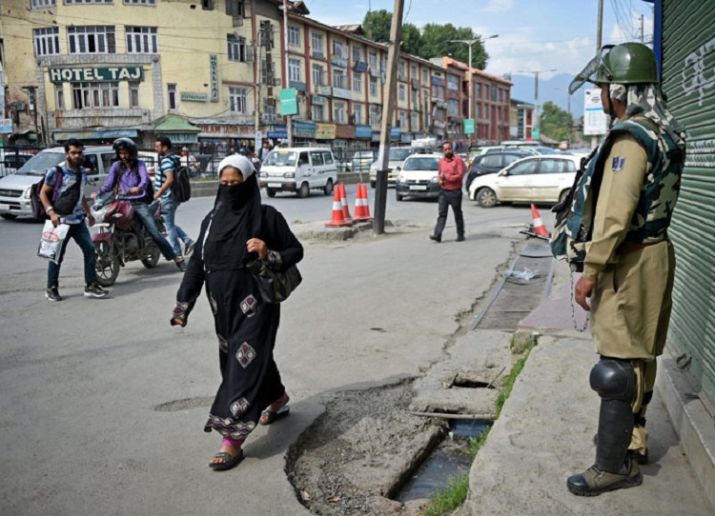
Days after revoking the controversial Article 370 and bifurcation of the state of Jammu and Kashmir (J&K) into Union Territories (UT) of J&K and Ladakh, normalcy seems to have returned to the valley. People are now slowly coming out of their homes and are happily interacting with each other in welcoming the decision of Narendra Modi government.

On August 5 Home Minister Amit Shah roared in the Parliament that “a historic wrong has been corrected,” and now seemingly the residents of the newly-formed UT of Jammu & Kashmir echo his sentiments.

Since the historic decision was made, certain political parties, media, and intelligentsia were scare-mongering and inciting the people of J&K to react against the abrogation of Article 370. The liberal industry was expecting some blowback by Kashmiris in response to the abrogation of the unjust article and bifurcation of the state.

However, the people of the newly formed UT have perceived abrogation and bifurcation as a golden opportunity to progress themselves and the society, and are now welcoming the Government of India’s (GoI) decision.

Times Now ground report has also called out the lies furthered by some media. In a video posted by the channel, it can be seen that the people of Kashmir are engaged in their daily routine. Some children can also be seen playing football.


The videos released by the Times Now suggest that life is back to normal in Kashmir contrary to claims of “liberal-secular” media.

Author and Journalist Rahul Pandita has also shared some of the videos of Kashmir valley. Even these videos suggest that life has been limping back to normalcy despite tensions here and there. In the video, a large number of vehicles moving on the streets can be seen.


He also uploaded a video of Srinagar’s iconic Zero Bridge at 7.55 pm on Wednesday. It can be seen that most of the barricades in Srinagar have been lifted allowing people to move out of their houses to buy essential items. Pandita also claimed he saw women on their evening stroll, besides witnessing stalls selling grilled meat at Dalgate, Rajbagh.


According to Pandita, many Kashmiris are happy because of the abrogation of Article 370. He added that people of the Kashmir believe that a handful of people with political power have benefitted from the ongoing conflict.

In his tweets, he further clarified that fuel was available at some petrol pumps and posted that he himself filled petrol in his car on the outskirts of Srinagar city. He added that in the morning some vegetable sellers had put their produce on sale along the Boulevard road.


Earlier today, the Congress party and its ecosystem attempted to create a false narrative by deliberately repeating the Pakistani line on J&K. Leader of Congress in Lok Sabha Adhir Ranjan Chowdhury on Thursday had compared the situation in Jammu and Kashmir with Nazi concentration camps.

Senior Congress leader Ghulam Nabi Azad once again parroted the lines of Pakistan and insulted the people by suggesting ‘anybody could bring people with money.’ His remarks came in the wake of NSA Ajit Doval’s recent visit to Shopian- the hotbed of terrorism.

In Shopian, Doval was seen interacting and eating lunch with the local Kashmiris. His visit to the terror-infested district reiterates the GoI’s claims that normalcy was returning to the valley.

District Commissioner’s office has also issued helpline numbers to help people in distress.

Article 370 is gone and we have Rakhi Sawant to thank

Indian government has diluted Article 370 and credit for it should go to Rakhi Sawant.

Earlier this week, the Indian government abrogated Article 370 in the state of Jammu and Kashmir, making it an integral part of India without any riders and bifurcated the state into two union territories, Jammu & Kashmir and Ladakh.

Even as Indians thanked Prime Minister Narendra Modi and Home Minister Amit Shah for the historic move, the world forgot the one person who perhaps triggered the move earlier this year. Television star Rakhi Sawant.

Sawant took to Instagram to thank Prime Minister Modi for dilution of Article 370.

She thanked PM Modi for the move so that the laws applicable to the rest of India are now applicable to Kashmir. “Kashmir hamara ho gaya hai. I am so proud of you Modiji. You are the best. Aap ke jaisa koi nahin. Humara neta kaisa ho? Humara PM kaisa ho? Modiji jaisa ho. So Modiji aap jio karodo-hajaaro saal aur hum sab aapka vansh hai,” Sawant cheered for PM Modi.

She then added that she is thankful to her producer-director of the film ‘Dhara 370’ for casting her in the film. She boasts that the film was the first one to raise the issue of Article 370. Sawant then thanked PM Modi for listening to her.

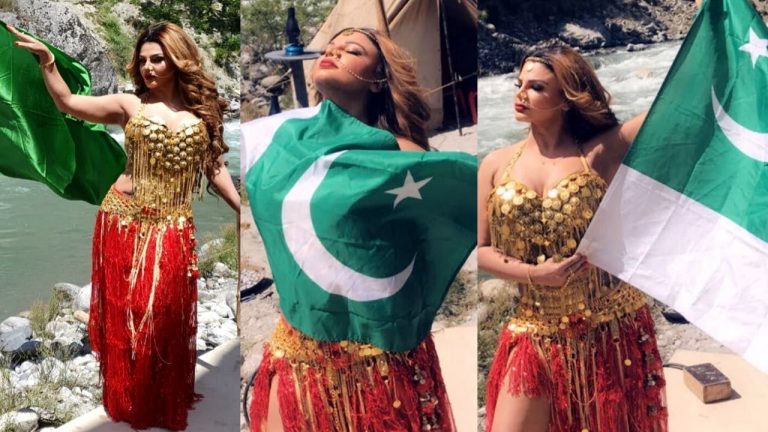
Rakhi Sawant is playing a role of a Pakistani dancer in her upcoming film ‘Dhara 370’ where she saves Kashmiri youth from becoming terrorists. She had earlier posted pictures on Instagram where she was draped in Pakistani flags. However, Pakistanis had then abused Rakhi Sawant for posing with the Pakistan flags. She appealed to people that this is just a role she is playing and that they should not eat her brain for this.

Meanwhile, she has said that now that Kashmir is ours, she will go there for her honeymoon.

Article 370 fallout: Pakistan partially shuts down airspace between India and Pakistan for a month

0

As Pakistan tries to increase tensions over full integration of Jammu and Kashmir in India by abrogation of Article 370 by the Indian government, it has partially shut down its airspace for all airlines. The Pakistan airspace remained closed for several months after the Balakot strikes by India, and it was reopened only last month.

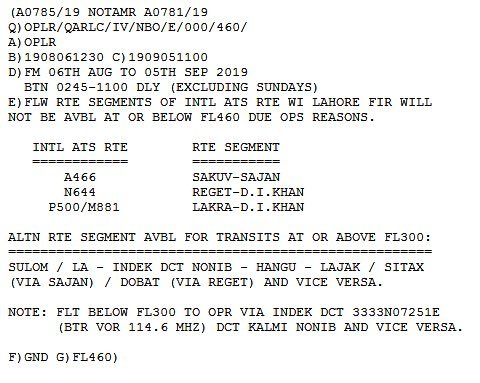
According to a NOTAM (notice to airman) issued by Pakistan on 6th August, three segments of air routes between India and Pakistan will remain closed till 5th September. All three segments are part of International routes connecting Lahore. They have cited ‘operations reasons’ as the reason for this closure. The restriction will be in place for 8 hours and 15 minutes a day, except Sundays. The NOTAM also states that alternative segment of the route is available above 30,000 feet for flights operating on the affected route, while flights

NOTAM issued by Pakistan

This airspace closure is much minor compared to the complete closure of airspace by Pakistan after Balakot strikes. During that time all international flights that usually fly over Pakistan had to take a different route avoiding Pakistan, resulting in a longer route which had increased cost of the airlines. Compared to that, the current order will increase the flying time by a few minutes for some flights that operate during the restricted time period.

With this decision, the flying time of around 50 flights will increase by about 10-15 minutes for Indian carriers. “The major route which we use for our long haul flights are still open and hence the impact is not much right now but we have got initial inputs that the remaining air routes will be shut. The impact will be huge as flying time for our ultra long haul flights using Pakistani airspace would increase by 2-3 hours,” said a senior Air India official.

Yesterday, a report in Times of Islamabad had reported that such a move was being anticipated after India abrogated all provisions of Article 370 and stripped Jammu and Kashmir off its special status. “Pakistan is anticipating February-like aerial aggression from the Indian side; thus, an airspace closure is deemed necessary”.

After the Balakot airstrikes where India had gone deep into Pakistan territory and flattened terror camps in Balakot with airstrikes, Pakistan had shut its airspace completely for weeks. Pakistan had in June asserted that it will open its Eastern airspace for flights to and from New Delhi only if India promises not to repeat a Balakot like operation inside Pakistan’s territory. Interestingly, while Pakistan wants India to promise that a Balakot like operation won’t be repeated, when the operation, codenamed ‘Operation Bandar’ had happened, Pakistan had lied that India had managed to hit just a few trees. It was only in July that Pakistan had re-opened its airspace for civilian flights again.

Yesterday Pakistan had downgraded diplomatic relations with India along with suspending trade relations, to which India responded today by reiterating that revocation of Article 370 is a completely internal matter of India.

Re-shaping Article 370: Has the Modi government upped its Constitutional game?

These last few days have been exciting, to say the least, but perhaps the words historic and momentous do better justice to them. The lightning speed with which the Presidential Orders of August 5, 2019, and August 6, 2019, have been promulgated thanks to the Centre’s doggedness and determination, has put an end to the 70-year old stalemate created by and surrounding Article 370 of the Indian Constitution.

Contrary to what was widely reported and continues to be reported by the mainstream media, Article 370 has not been “scrapped” or “repealed”. Instead, the Article has been employed to supersede the 1954 Presidential Order with the Order of August 5, 2019, and critically, to extend and apply the entire Indian Constitution to the State of Jammu and Kashmir.

The following results have been achieved cumulatively through the twin Presidential Orders:

  1. With the supersession of the 1954 Presidential Order, abominations such as Article 35A, which were introduced through the 1954 Order, have been done away with in one fell swoop;
  2. The Constitution of Jammu and Kashmir, 1956, which was a by-product of Article 370, has been replaced by and with the Indian Constitution;
  3. While Article 370 still remains in the Constitution, the new version cements the application of the Indian Constitution to the State notwithstanding anything contained in any provision of the Constitution or any other legal instrument, which includes the Instrument of Accession executed between the Princely State of Jammu and Kashmir and the Indian Union.

The sequence in which the Presidential Orders have been promulgated is of particular significance since the object of the Order of August 5th was to first achieve the replacement of the Jammu and Kashmir Constitution with the Indian Constitution, so as to avoid a Constitutional void.

Further, the Order also paved the way for invoking Article 370(3) by replacing the hitherto inoperable references to the “Constituent Assembly of the State” (which ceased to exist in 1956 once the J&K Constitution came into force), with the “Legislative Assembly of the State”. This way, it was made possible for the President to invoke the amended Article 370(3) through the second Presidential Order to overhaul the entire provision to cement the sovereignty of the Indian Constitution over the troubled State.

Given that the State is currently under the President’s Rule, it is being argued in some quarters that the constitutionality of both Presidential Orders is seriously circumspect since neither the Government of the State nor the Legislative Assembly has been taken on board before giving effect to the decision. While this appears to be an arguable position, it is important to note that the unamended Articles 370(1) & 370(3) began with non-obstante clauses, meaning thereby, that no other provision of the Constitution could have been used to fetter the application of any of the powers of either the Parliament or the President under Article 370. This means that such powers were available for exercise even during the subsistence of the President’s Rule under Article 356.

Therefore, constitutionally speaking, it could be argued that the Presidential Orders of August 5 & 6, 2019 cannot be impugned on the ground that they could not have been promulgated during the President’s Rule. If the framers of the Constitution had indeed intended to prevent such a circumstance, they could have easily clarified in Article 370 itself that the President could not exercise his powers under the Article when the State was under President’s Rule.

As for the legality of amending Article 367 through a Presidential Order under Article 370, the Government may have been inspired by the ruling of the Supreme Court in 1961 in Puranlal Lakhanpal v The President of India wherein it was held by a Constitution Bench that the power of the President under Article 370(1)(d) even extended to the insertion of an altogether new provision in the Indian Constitution in relation to the State of Jammu and Kashmir. This decision was rendered in the backdrop of a challenge to Article 35A on the ground that the President could not have inserted Article 35A through powers under Article 370 since it was in violation of the procedure for Constitutional amendment prescribed in Article 368.

Since the Supreme Court upheld the validity of Article 35A by enlarging the scope of powers of the President under Article 370(1)(d), one suspects the Government too can defend the amendment to Articles 367 and 370 by placing reliance on the very same judgment. In other words, if the opponents of the current Presidential Orders wish to challenge the constitutionality of the amendment to Articles 367 and 370 on grounds of violation of Article 368, they cannot do so without conceding that even Article 35A was introduced in 1954 in violation of Article 368.

Interestingly, the Home Minister Shri Amit Shah referred to Article 363 in his speech in the Parliament introducing the resolutions relating to Article 370. Those who have already approached the Supreme Court challenging the Presidential Orders and those who wish to join the queue should perhaps read Article 363. This is because the said Article effectively takes away the jurisdiction of the Supreme Court or any other Court in relation to a dispute which relates to a covenant or treaty or any other instrument entered into by the Ruler of a Princely State with the Indian Union.

In fact, a combined reading of Articles 363 & 143 would make it clear that any dispute which falls within the scope of Article 363, falls within the exclusive jurisdiction of the President, and the Supreme Court may at best perform an advisory role when such advice is sought by the President under Article 143.

While none of this precludes further challenges to the Presidential Orders before the Supreme Court, and it is anyone’s guess which way the Supremes will ultimately rule, this much is clear that a lot of thought has gone into the ideation and execution of Operation 370 in all respects, not just legal.

This is also proof of the fact that the BJP has now understood that it is possible to find solutions for “core issues” within the four corners of the Constitution. One sincerely hopes that the very same commitment, focus and execution are brought to bear on other core issues.