Home Blog Page 6336

Pakistan PM Imran Khan goofs up again, attributes Rabindranath Tagore’s quote to Kahlil Gibran

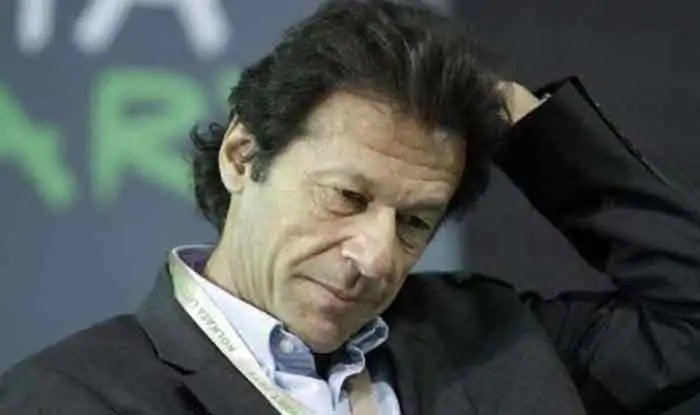
Prime minister of Pakistan Imran Khan continues to embarrass himself by goof-ups. After saying that Japan and Germany share a common boundary, Khan was caught attributing a quote by Rabindranath Tagore to Kahlil Gibran, a Lebanese-American writer, poet and artist. Gibran was contemporary with Tagore.

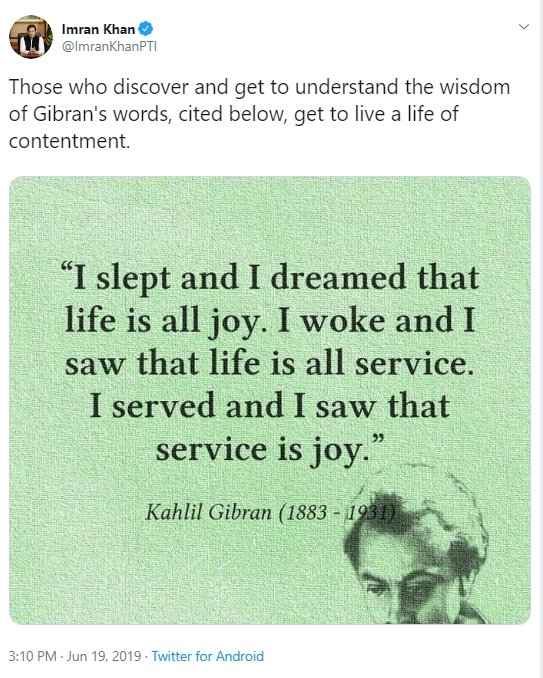
Imran Khan posted a tweet today, attaching an image that contained an inspirational quote. It says, “I slept and dreamt that life is all joy. I woke and saw that life is all service. I served and I saw that service is joy.” The quote was followed by the words Kahlil Gibran (1883-1931), implying that he wrote it.

Along with the image, Imran Khan tweeted, “Those who discover and get to understand the wisdom of Gibran’s words, cited below, get to live a life of contentment.”

Immediately after he tweeted this, many people replied informing him that he is attributing a Tagore quote to Gibran. They are right to point out that Imran Khan goofed up again, as the quote was indeed said by Tagore. Although the quote posted by Imran Khan slightly varies from the actual quote of Tagore, there is no doubt that it was said by Tagore and not Gibran. The actual quote is, “I slept and dreamt that life was joy. I awoke and saw that life was service. I acted and behold, service was joy.”

The Pakistani PM was severely criticised on Twitter after he posted the tweet. Imran Khan’s image has taken a beating in recent times with several goof ups and diplomatic embarrassments. He was seen breaching diplomatic protocol at the recently concluded SCO summit, and was seen insulting the Saudi king.

Media does it again: Portrays JeM Pulwama terrorist as a chocolate boy who turned murderous due to Indian Army

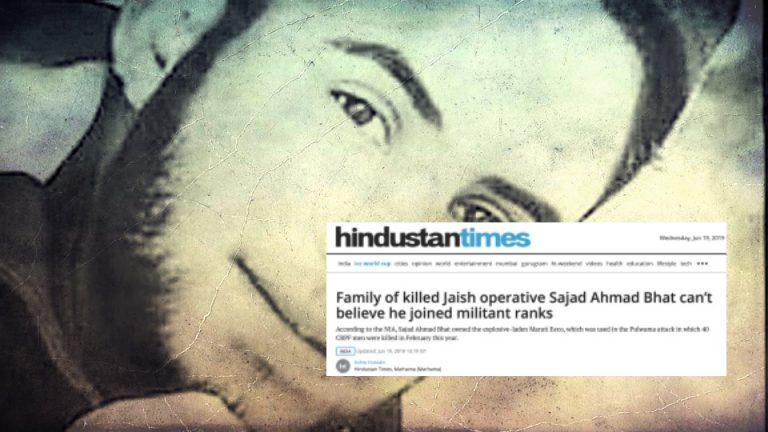
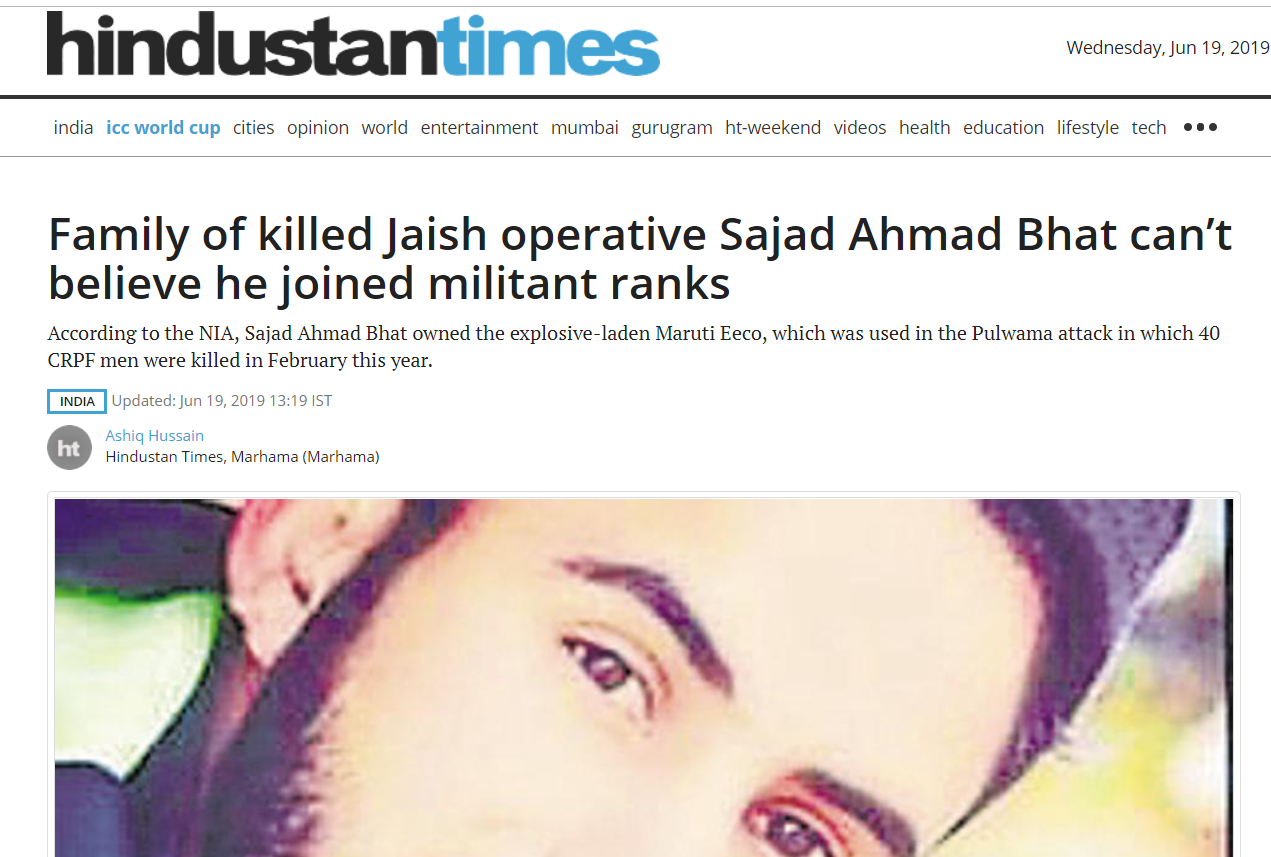
The mainstream media has made it a habit of sympathizing with the families of terrorists. In numerous instances, they have tried to humanize terrorists themselves as well. The latest entrant to the party is a report on Hindustan Times by Ashiq Hussain that humanises a terrorist involved in the Pulwama attack.

The report titled, ‘Family of killed Jaish operative Sajad Ahmad Bhat can’t believe he joined militant ranks’ quotes the terrorist’s uncle, Tariq Ahmad Bhat, as saying, “He would study, offer namaz during the day and teach village kids in the evening. That was his life. Even after Pulwama blast, he lived a normal life till February 22, when he went missing. We had no idea that he will join militancy.”

The report further quotes the uncle as saying that Sajad was “waylaid by the army during a protest and tortured in custody.” According to the uncle, Sajad’s father was arrested as well “on false charges of provoking protests”.

According to the NIA, the vehicle that was used in the Pulwama terrorist attack belonged to him. A week after the attack, Sajad had gone missing from his home. His family was informed of his joining Jaish-e-Muhammad by the Police a day later.

After every terror attack, attempts are made to absolve the family of the terrorists of their sins. Under the garb of such ‘neutral’ reports, the Army is presented in poor light. The subtle connotation in the report is that Sajad had become a terrorist after he was mistreated by the Indian Army. However, what is the source of such information? His own family, a terrorist’s family.

The terrorist dedicated his life towards attacking India, however, our mainstream media believes his family ought to be given a platform to further narratives that can serve as propaganda for separatist organizations in the valley. An apple hardly ever falls far from the tree and in this particular instance, with his father’s own arrest, there is sufficient reason to believe that the apple did not fall far from the tree.

It has become a general theme with the mainstream media. Zakir Musa, the jihadi terrorist head of Ansar Ghazwat-ul-Hind who was killed by the security forces on 23rd May, became ‘fashionable young boy’ who loved ‘cigarettes and sports bikes’. They tried the same with the family of the Pulwama suicide bomber. The family, too, had claimed that their son had become a terrorist after suffering mistreatment at the hands of the Army.

There’s a pattern emerging here. As per reports on the mainstream media, the terrorists were ‘chocolate boys’ who became murderous due to the fault of the Indian Army. In reality, nothing could be further than the truth. It’s not for nothing that the mainstream media is so hated. Because their reportage gives one the feeling that their agenda is not in consonance with the welfare of this country.

Wooden crosses removed from Panchalimedu, Kerala HC directs government to find out who owns the land

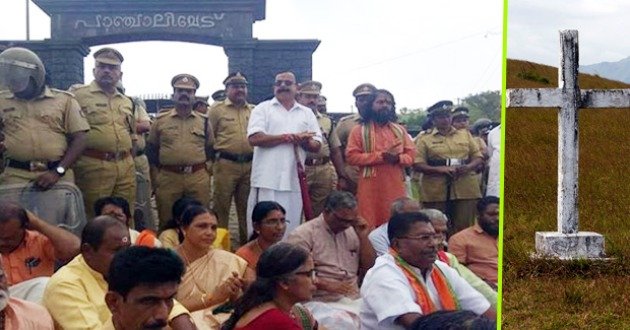
Yesterday, out of the 17 illegal crosses planted in Panchalimedu, three wooden crosses have been removed. In a petition that was heard today against the encroachment of land, the Kerala HC has directed the government to clearly identify the true owner of the land.

After the intervention of Kerala CM Pinarayi Vijayan stopping the removal of the crosses, the Hindu Aikyavedi had filed a complaint before Idukki district Collector H Dineshan alleging that the St. Mary’s Church at Kanayankavayal were trying to encroach upon the revenue land.

The Collector had then ordered the removal the wooden crosses which were planted by church authorities last Good Friday. He stated that the church installs a wooden cross every Good Friday and removes them a few days later. However, this time they had failed to do so. The trident that was placed in front of the cross was also removed. Presently, there are 14 cement crosses which the Church claims were installed 65 years ago.

Yesterday, a petition was filed in the High Court against the Church’s attempt to encroach upon the lands of Panchalimedu.


As per reports, the High Court while hearing the petition today asked whether the land belongs to the government or the Devaswom board. The government has been given 10 days time to respond to this. The case would be heard again on July 1st.

The Hindu Aikyavedy led by K P Sasikala Teacher were headed towards Panchalimedu to protest against the Church’s encroachment. They were however prevented from doing so by the Police.

Last week a village revenue department official had ordered the removal of the crosses and had given the Church time until Monday to do so. However, the CM directly intervened to stop the removal of the crosses and the state authorities had filed an FIR against the ones who placed the Trishul in front of the illegal crosses. Allegedly the communist government has been aiding the Church in encroaching upon the sacred lands of Panchalimedu.

Watch: Delhi traffic cop persuades people to follow traffic safety rules by singing rap songs

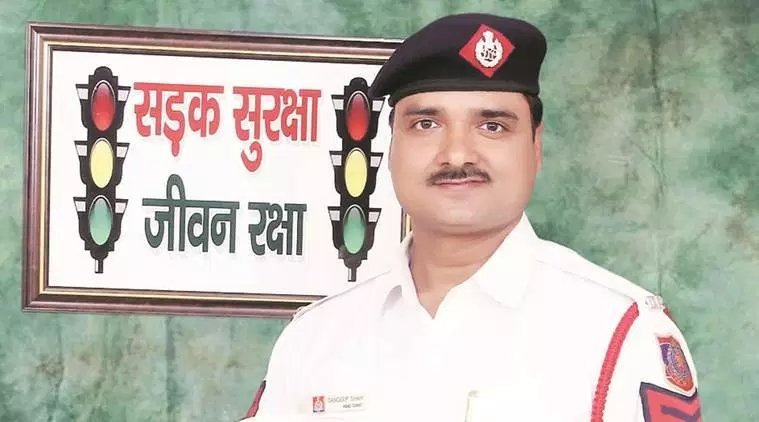
Sandeep Shahi, a head constable in Delhi traffic police, has adopted a unique and swanky way to spread road safety awareness in the national capital. He has boned up the art of rapping and has been using the song “Apna Time Aayega“, from Ranveer Singh’s movie Gully Boy, with his own set of lyrics to promote road safety.


His rap song, “Humse na ho payega, kaun bola? Sadak ki, suraksha ki, jeevan ki raksha ki, helmet ki, seatbelt ki niyam agar apnayega, jeevan khushaal ban jaayega. Baat meri maan, suraksha ko jaan”. “Tera time aayega. Jai Hind, Jai Bharat,” has been getting an overwhelming response by people on various social media platforms like Twitter.

“I came to know about the viral video of my rap song. People are very casual about road safety and are reluctant to follow traffic rules. So, I felt it was my responsibility to make them aware,” Shahi said while speaking to ANI.

Shahi, who lost his wife, Pink Rani, in an accident, appeals to citizens to wear helmets and seat belts while travelling and to follow the traffic rules. “I was deeply hurt when my wife suffered injuries in the road accident. Also, I see many young people taking traffic rules very lightly. So, I decided to write this rap, it was the best way to connect with the youth,” he added.

Shahi has also discovered other innovative ways to persuade motorists to abide by the traffic rules. Sometimes, he uses a mirror to make them feel guilty, while sometimes Shahi uses placards with messages such as “Hamesha ISI mark waala helmet pehnein” (one should always wear helmets that have an ISI mark on them) and “Mastishk Suraksha kawach” (helmet is the safety equipment for your head).

The cop also buys helmets using his own money and gifts it to others. So far, he has distributed around 700 helmets.

Chhattisgarh: SP leader abducted and killed by Naxals in Bijapur, Killers refuse to return his body to family

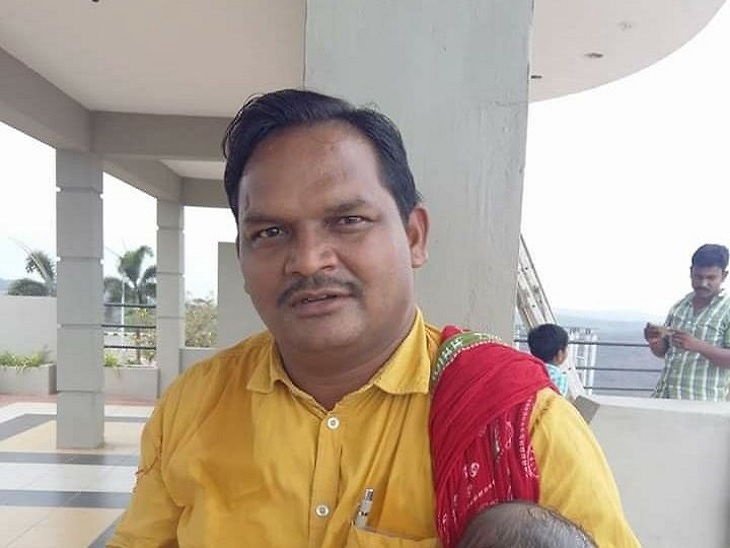
Samajwadi Party leader Santosh Punem who was abducted yesterday has been killed by Maoists in the insurgency-hit Bijapur district of Chhattisgarh, Wednesday.


Santosh Punem had contested the recently concluded assembly elections in Chhattisgarh on Samajwadi Party’s ticket from Bijapur. He was also state vice president of Samajwadi Party in Bastar.

Punem, who was also a contractor by profession, was kidnapped from his construction site in Marimalla village, Tuesday, where he had gone to supervise some road work, said the Superintendent of Police, Divyang Patel.

Some locals, this morning, spotted the SP leader’s body lying in a pool of blood at the nearby Marimalla hills and passed on the information to the police who in turn rushed a team of personnel to the spot, which was deep inside a forest, 16 km away from the police station. Reports state that the police team is yet to retrieve the body.

The vehicles on spot, including one Bolero and three trucks, were attacked and set on fire by the Maoists. They have also refused to return the body of the leader to the family when Punem’s wife and brother had arrived to take the body.

The Maoists are reportedly trying to create an entirely new red corridor along the western border of Chhattisgarh. The recent recovery of a Pakistani Army gun from Maoists in Chhattisgarh has also raised the suspicion that the Maoists could be having links with Pakistani terrorists in Kashmir, supported and funded by the Pakistani government.

In a sudden upsurge in the nefarious activities by Naxals in Chhattisgarh, five persons, including a BJP MLA, lost their lives when Naxal terrorists ambushed the convoy of BJP in Dantewada in Bastar region Chhattisgarh in April.

Prior to the assembly election last year, the Maoists had beaten up at least 35 villagers for skipping their meet.  They had also put up posters in parts of Bastar and Kankar regions cautioning people to avoid the polls, failing which could lead to mortal danger for them.

Moreover, in a major attack on CRPF jawans by the Naxals in the poll-bound Chhattisgarh, as many as 4 jawans were killed.

PM Modi’s GST and demonetisation played big role in the formalisation of over 2 million jobs: ISF report

The two bold steps, demonetisation and GST, by the Modi government 1.0, despite drawing flak had contributed immensely in formalising jobs, reveals a study commissioned by Indian Staffing Federation (ISF).

The last four years saw an unprecedented momentum in the formalisation of jobs. More than seven million jobs have been formalised between 2015 and 2018. Cumulatively over 28% of 7.06 million jobs formalised in between these four years were due to demonetisation and goods and services tax (GST).

The Narendra Modi-led government had in November 2016 announced demonetisation of specified high-value banknotes of ₹500 and ₹1000 denominations. GST, a comprehensive indirect tax that subsumed various central and state levies, came into effect in July 2017. The government has drawn harsh criticisms for the haste with which both the steps were implemented and the consequent problems faced by large sections of industry.

However, the report, “Impact of Key Reforms on Job Formalisation and Flexi Staffing”, commissioned by the Indian Staffing Federation (ISF) and executed by data and consulting company Kantar stated that the policies that contributed to formalisation of jobs during the period from 2015-18 include the introduction of the Goods and Services Tax (GST), demonetisation, EPF and ESIC reforms, Skill India initiatives, Fixed Term Contract Reform, as well as the Maternity Benefit reform.

Moreover, the study reveals that only about 16% of India’s estimated 500 million workforces are in the formal sector. The rest are in the informal sector. Modi Government 1.0 had always stressed on higher formal employment.

They contended that India has underestimated the formal employment count thus far. The Economic Survey of 2018 states: ‘India’s formal sector, especially formal non-farm payroll is substantially greater than currently believed. Formality defined in terms of social security provision yields an estimate of formal sector payroll of about 31 per cent of the non-agricultural workforce (non-agriculture, as NSSO-EUS states, is 24 crore or 240 million); formality defined in terms of being part of the GST net suggests a formal sector payroll share of 53 per cent.’

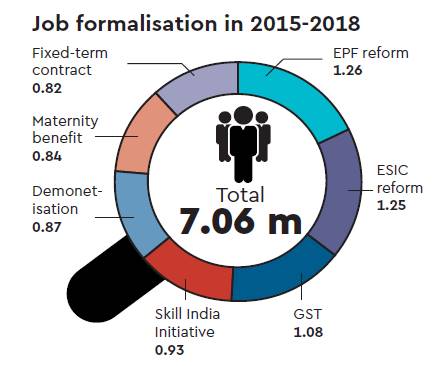
Of the seven million jobs that shifted to the formal sector in 2015-18, EPF reforms contributed 1.26 million (18.16%), ESIC 1.25 million (17.68%), GST 1.08 million (15.32%), Skill India initiatives 0.93 million (13.10%), demonetisation 0.87 million (12.35%), maternity reforms 0.84 million (11.83%) and Fixed Term Contract 0.82 million (11.56%).

The job formalisation graph, credit: Financial Express

EPF and ESIC initiatives include the Pradhan Mantri Rojgar Protsahan Yojana (Government of India pays the full employer’s contribution towards EPF and EPS for the first three years of employment) and Employees’ State Insurance (Central) Third Amendment Rules (all employees who earn Rs 21,000 or less per month are to be mandatorily enrolled for employee insurance under the ESI Act). While both these schemes were launched in 2016, GST came in July 2017.

The study further estimated formalisation of around 11.03 million jobs in 2018-2021 as a result of current and imminent policies and reforms.

Reforms in EPF and ESIC will drive formalisation of jobs the most. The report revealed that flexi staffing industry has witnessed acceleration due to the government’s reforms since 2016. It said the flexi workforce is expected to go up to 6.1 million by 20121 from 4.1 million in 2019. In 2015 and in 2018, the number of flexi workforce in the country stood at 2.1 million and 3.3 million, respectively.

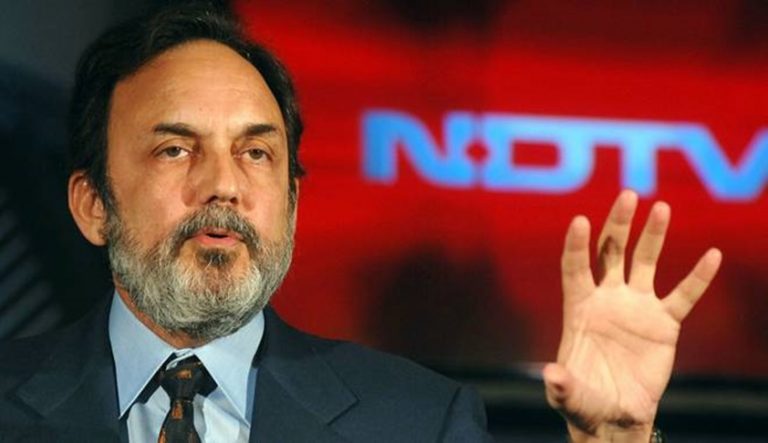
NDTV to file appeal against SEBI order imposing a penalty of Rs 12 lakh for delayed disclosures

Media house New Delhi Television Ltd (NDTV) has decided to file an appeal against the Securities and Exchange Board of India (SEBI) order imposing a penalty of Rs 12 lakh on the media group for failing to make timely disclosures to the stock exchanges.

The order imposing the penalty was issued by the SEBI after it noticed multiple disclosure lapses by NDTV and noted non-compliance with Substantial Acquisition of Shares and Takeover (SAST) regulations.

The company said that the SEBI order, which is yet to be received by them, is likely to be set aside in appeal. “The company will be filing an appeal against the said order of and when the same is received by the company, and as per advice received by the company, this order is likely to be set aside in appeal”, said NDTV in a regulatory filing.

According to the SEBI order, NDTV delayed the disclosure of the information relating to the acquisition of 40 lakh of its shares by Indiabulls Financial Services in January 2008 and the acquisition of 20.28% of the total share capital of the media group by its promoters in July 2008. Following these transactions, the entities were supposed to make the required disclosures to NDTV as per relevant SAST provisions and NDTV, in turn, was supposed to report the same to the BSE and the NSE.

“The allegation of delayed disclosures under Regulation 7(3) of SAST… to BSE and NSE against the Notice stands established”, said SEBI.

Earlier this week, NDTV promoters Parnnoy Roy and Radhika Roy were barred by the SEBI from accessing Securities Markets and holding any management post in NDTV for the next 2 years. However, the Roys were able to get a stay order from the Securities Appellate Tribunal (SAT) against this order of SEBI.

Doctors are life-savers, professionals, not magicians and certainly not slaves

They are life-savers. Professionals who spend decades harnessing their talent. They often go beyond the call of their duty to ensure they live up to the oath they have taken:

“I swear to fulfil, to the best of my ability and judgment, this covenant: I will respect the hard-won scientific gains of those physicians in whose steps I walk, and gladly share such knowledge as is mine with those who are to follow. I will apply, for the benefit of the sick, all measures [that] are required, avoiding those twin traps of overtreatment and therapeutic nihilism. I will remember that there is art to medicine as well as science, and that warmth, sympathy, and understanding may outweigh the surgeon’s knife or the chemist’s drug. I will not be ashamed to say “I know not,” nor will I fail to call in my colleagues when the skills of another are needed for a patient’s recovery. I will respect the privacy of my patients, for their problems are not disclosed to me that the world may know. Most especially must I tread with care in matters of life and death. If it is given me to save a life, all thanks. But it may also be within my power to take a life; this awesome responsibility must be faced with great humbleness and awareness of my own frailty. Above all, I must not play at God.

I will remember that I do not treat a fever chart, a cancerous growth, but a sick human being, whose illness may affect the person’s family and economic stability. My responsibility includes these related problems if I am to care adequately for the sick. I will prevent disease whenever I can, for prevention is preferable to cure. I will remember that I remain a member of society, with special obligations to all my fellow human beings, those sound of mind and body as well as the infirm. If I do not violate this oath, may I enjoy life and art, respected while I live and remembered with affection, thereafter. May I always act so as to preserve the finest traditions of my calling and may I long experience the joy of healing those who seek my help”. 

They promise to help us to the best of their ability. While that might sound like a simple statement for most, when life and death hang in the balance, the ‘best of their ability’ statement takes prominence.

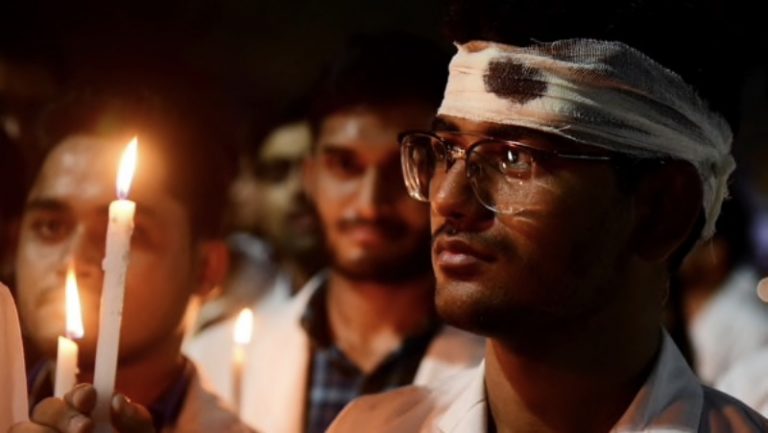
Recently, we saw a Muslim mob attack doctors mercilessly in West Bengal because an 85-year-old man could not be treated and died of natural causes. Doctors throughout the country went on strikes and demanded that they are treated with respect and dignity. They demanded that they are kept safe.

Then, after the wrath of Encephalitis in Bihar, we saw journalists heckle and give the third-degree to government hospital doctors who visibly looked agitated and overworked.

While the human reaction might be to first question the doctors, the epidemic of attacks on doctors and the culture of heckling doctors should raise alarm bells. Doctors are humans, like us, They too feel pain and hurt, just like us. However, their responsibilities are far greater. And they also constantly face the risk of being blamed, attacked and even demonised for doing their job.

Recently, a doctor in the UK, Dr, Keith Wolverson, was on the verge of losing his job and a facing a halt in his long career because he had asked a Muslim woman to remove her niqab so he could hear her better. The woman’s husband had complained against the doctor claiming racial discrimination.

The case of young Paribaha Mukherjee having his skull cracked by a mob of over 200 men arriving in trucks to launch a vicious attack on the NRS hospital is not a one-off incident. It was just the tipping point. West Bengal’s doctors took to streets because it was their only way of saying “enough is enough”. The state government was simply not listening. Dr Binayak Sinha, a Kolkata-based senior doctor has recently written on The Economic Times that in the last two years, there have been over 175 incidents of violent attacks on doctors and healthcare staffers in Bengal alone.

Earlier this month, a man named Rafiq Rasheed came with a knife to Dr Ramkrishna Verma’s clinic in Indore and, after learning of his absence, attacked the doctor’s wife and son. The woman died, the son was critically injured. Rasheed was apparently unhappy that Dr Verma’s treatment for his skin disorder was not working.

One wonders if this culture of heckling and attacking stems from the general attitude that has been prevalent in society. Often we hear wails of how doctors overcharge or how, when one goes to a surgeon, one does not come out with a simple prescription for medication, but almost always, the advice for surgery, even when not required. One hears several people complain of how doctors are ordering needless tests just to ensure their billables increase.

Or how, doctors often, under the pressure of big Pharma companies prescribe expensive drugs when the generic ones would do the job just fine.

We have heard uncles and aunties sit around their living room and talk about how lawyers and doctors should be kept far away or how a 90-year-old aunt died because of the doctor’s negligence. In the same breath, you would hear another person chime in and accuse doctors of stacking up the bill by keeping the patient hooked on to life support.

Doctors, damned if they do, damned if they don’t.

This is not to say devious doctors who only know the scent of money do not exist. But when the society at large sees doctors either as Gods or the Devil, such attacks on doctors and such shameless heckling is bound to continue.

We have often seen doctors ‘work miracles’. We have seen doctors travel to remote parts of the world, endangering their own lives to ensure that the sick and the needy are taken care of. We have seen doctors go above and beyond the call of duty. As a general group, doctors by and large do right by their patients.

But it is with an awareness that one would realise that some tests might appear necessary to a doctor, while it might seem needless to the initiated-by-google-doctor-who-doubles-up-as-a-patient. That perhaps that extra MRI was needed. Or that extra blood test was vital to rule out the suspicion of some disease that the doctor did not think fit to disclose beforehand.

Doctors can work miracles, sometimes, but they are not miracle workers. Doctors serve and cure, but they cannot trump God himself. Doctors try their best to save lives with limited resources that governments and bureaucrats may provide, but they don’t deserve to be heckled just because the media does not have the courage to ask real questions to the ones who wield power.

Doctors work under extremely stressful environments and are susceptible to burnouts. A study from rural British Columbia reported that 80% of physicians suffered from moderate to severe Emotional Exhaustion, 61% suffered from moderate to severe Depersonalisation, and 44% had moderate to low feelings of Personal Accomplishment.

A more recent study of US physicians found 46% of the respondents had at least one symptom of burnout. European General Practice Research Network Burnout Study Group, on the other hand, found that, while 12% of participants suffered from burnout in all three dimensions, 43% scored high for Emotional Exhaustion, 35% for Depersonalisation, and 32% for low Personal Accomplishment. In the United Kingdom, approximately one-third of the physicians had features of burnout, which are comparable to studies from Arab countries like Yemen, Qatar, and Saudi Arabia.

The burnout percentage among Indian doctors are exceptionally high too. The study’s author Dr Gharpure said, “Some of my colleagues used to work for 34 hours at a stretch. It is not surprising that we hear instances of doctors snapping at patients they are stretched.”

Medicine is a profession that clearly needs the professional to go above and beyond the average physical and emotional capacity. While the job itself, where they have an individual’s life and death in their hands, is stressful the added stress of being beaten up and heckled at the first sign of trouble is the last thing they need, not only for their own sanity but also so they can continue to be in the condition to adequately treat their patients.

Doctors are caregivers. Lifesavers and sometimes, they are miracle workers. They are not Gods and they are certainly not slaves. They are professionals who are trained to do a job. While a doctor’s negligence can lead to someone’s life being snuffed away, blaming a doctor for trying to save an ailing old man’s life but failing, leads one nowhere. They are not God. For the media to go heckle doctors working in meagre conditions, with the meagre conditions being the fault of the administration, only add to the frenzy, doesn’t solve it.


Economic Advisory Council slams Arvind Subramanian, says his criticism of GDP estimation methodology ‘lacks rigor’

The Economic Advisory Council to the Prime Minister (EAC-PM) has released a detailed analysis of India’s new GDP estimation methodology. In it, the Council has defended the technique dubbing it to be at par with global standards. It also offers a point-by-point rebuttal to former Chief Economic Adviser Dr. Arvind Subramanian’s critique of the technique where he had asserted that GDP numbers had been overestimated.

The report says, “India’s GDP estimation methodology stands at par with its global standing as a major and responsible economy. It is of the quality and precision expected from a transparent and well managed economy. The new methodology introduced in 2015 is a testament to India’s intent to adopt the most modern global standards to accurately report its economic data. And India’s direction and pace towards the goal of accurate National Income Accounting is worthy of praise.”

The primary contributors of the report “reject the author’s (Subramanian’s) methodology, arguments and conclusions” in the paper titled ‘India’s GDP Mis-estimation: Likelihood, Magnitudes, Mechanisms, and Implications’. They say that the paper does not specifically critique coverage or methodology and “lacks rigor in terms of specific data sources and description; alternative hypothesis; rationale of equation specifications, use of dummies, and robustness-check diagnostics of estimated equations; and choice of countries in the sample and a specific list”. Therefore, “it would not stand the scrutiny of academic or policy research standards”. It also remarks that the paper is not peer-reviewed.

The EAC analysis says that the former CEA has cherry-picked 17 indicators from a private agency, which is not a primary source of information.

The report notes that “the weakness of Dr. Subramanian’s attempt to suggest that the growth numbers are over-estimated confirms that the estimation process is robust to spurious criticism.” And stresses further, “The fact of the matter is that India’s GDP methodology is consistent with internationally accepted standards and is in a continuous process of improvement.” The statement also notes that Dr. Arvind Subramanian’s paper is not peer-reviewed.

However, the paper does admit that “GDP calculation has always been an imperfect art” and “Irrespective of the methodology, there are always some areas that require extrapolation, estimation and sometimes even guestimates based on past trends”. The primary contributors to the report are Bibek Debroy, Rathin Roy, Surjit Bhalla, Charan Singh and Arvind Virmani.

Reacting to Subramanian’s comments that India’s GDP has been overestimated by the previous governments, the government of India had issued a clarification last week as well.

The full report of the Economic Advisory Council can be accessed here [PDF].

Kerala MP to table private member’s bill at Lok Sabha to overturn the Supreme Court’s Sabarimala verdict

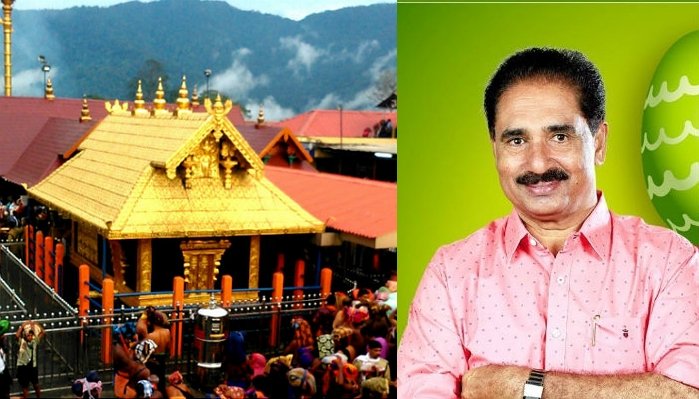
N K Premachandran, Lok Sabha MP from Kollam in Kerala, will move a private member’s bill in the Lok Sabha seeking to overturn the Supreme Court’s verdict on Sabarimala. The bill would be presented on Friday and it would be the first private member’s bill to be tabled in the new Lok Sabha.

As per reports, Premachandran’s Sabarimala Sreedharma Sastha Temple (Special Provisions) Bill, 2019 seeks “status quo on religious practices of the Sabarimala Sreedharma Sastha Temple, as existed on the 1st day of September 2018”.

N K Premachandran is an MP from Kollam and a member of Revolutionary Socialist Party (RSP) which is part of the Congress-led United Democratic Front (UDF) in Kerala. He was among the several MPs who had opposed the Supreme Court verdict.

The bill seeks to restore the customs that were followed by the temple and if the law comes into effect all petitions and appeals pending before the court and tribunals should become invalid. Any modification in temple customs should be based on religious practices that were followed on September 1, 2018. Both the centre and state governments should ensure that religious practices are being carried out.

Since it is a private member’s bill even though it would be presented on Friday it would only be taken up for discussion on July 12.

Annie Raje, a CPI leader and General Secretary of National Federation of Indian Women termed the bill as “feudal and manuvaadi” and said that it was unfortunate for the first bill to presented is “anti-women”.

Prior to the Supreme Court verdict, the rules of the temple were such that women between the age of 10-50 were restricted from entry. The identities of women entering the temple were checked by the police and only allowed if they satisfied the requirement. A few years ago a petition was filed to allow women of all ages to enter the temples.

On 28 September 2018, the Supreme Court delivered a verdict allowing women of all ages entry into Kerala’s Sabarimala temple. It was seen as a major step towards gender equality by a few, contrary to the views of women who in large numbers protested and demanded an ordinance against the verdict.

In the 4:1 majority verdict of the Supreme Court, the sole dissenting voice was of Justice Indu Malhotra, the only woman in the 5-judge bench. Her Ladyship observed that there exists a difference between diversity and discrimination.

The interveners of the petition, including J Sai Deepak who represented the group People for Dharma, gave a tough fight and gave some stunning arguments. Hearing the arguments in court, Advocate Prerna Kumari, who was one of the petitioners revealed that she respects the sentiments of female devotees of the temple who are ready to wait till they turn 50 and allowed entry to the temple.

The verdict had hurt the sentiments of the devotees and triggered a countrywide protest. The Congress had also made a turnaround from their initial stand of supporting the verdict although the high command of the party has a different view.

In October review petitions had been filed challenging the Supreme Court’s decision. Despite the protests, The Kerala Chief Minister Pinarayi Vijayan said that it would not be filing a review petition and would ensure the SC order is implemented.

Without the support of the government, devotees had taken it upon themselves to safeguard their tradition. Violence had ensued at the instigation of Left Wing Extremist groups. Several activists attempted to barge into the temple after the SC order. In haste to implement the order, a massive police force was arranged to fortify the temple. A large number of Devotees have also been arrested for protesting.

With the help of the communist government, two women in total have managed to desecrate the temple, angering the devotees.

The Kerala High Court came down heavily on the Kerala Communist government for interfering unnecessarily in the daily affairs of Sabarimala temple. In February, the Supreme Court had reserved its judgement after hearing the 65 review petitions.

Prime Minister Modi had earlier voiced his support for the devotees of Sabarimala and the BJP had promised to protect traditions in its manifesto.