Home Blog Page 6539

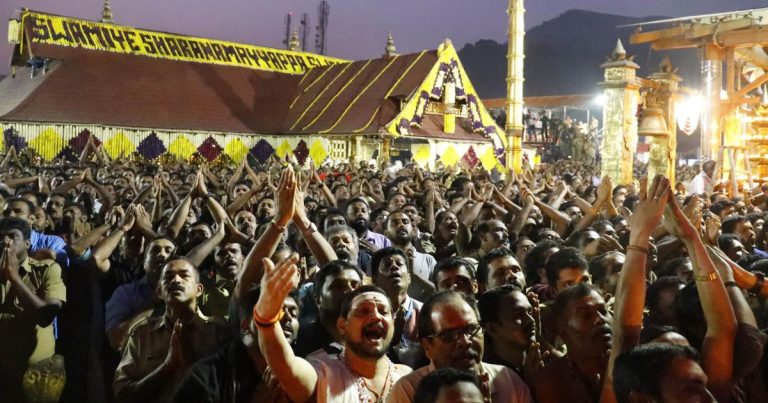
BJP Manifesto promises to secure and protect faith, traditions and rituals related to Sabarimala

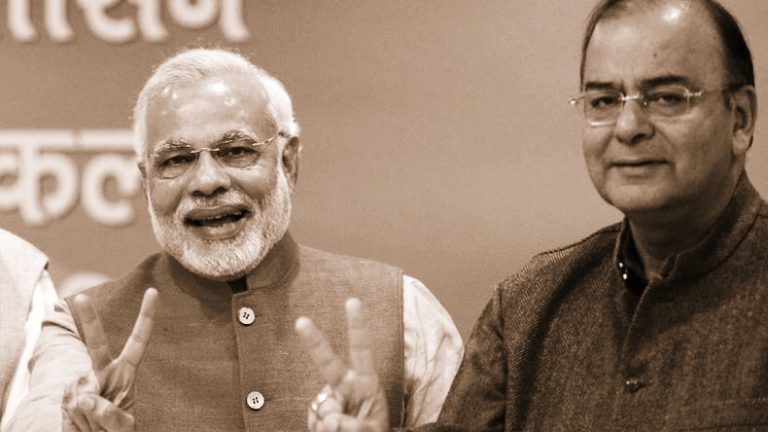
On Monday, Prime Minister Narendra Modi released the BJP’s election manifesto for 2019 Lok Sabha polls at the party’s Delhi headquarters. The 45-page election manifesto with a theme “Sankalpit Bharat, Sashakt Bharat” has 15 broad points that the PM Modi led BJP aims to fulfil.

Under the “Cultural Heritage” promises, BJP has indicated its agenda with respect to fulfilling its objectives regarding the issue of Sabarimala shrine.

Reiterating its stand on Sabarimala issue, the BJP in its ‘Sankalp Patra’ promises to undertake every effort to ensure that the subject of faith, tradition and worship rituals related to Sabarimala are presented in a comprehensive manner before the Supreme Court.

“We will endeavour to secure constitutional protection on issues related to faith and belief,” said the BJP manifesto.

BJP manifesto

The BJP Sankalp Patra further added that the philosophy of the party is anchored in the civilisational ethos of India. “As we build ‘New India’, we intend to actively invest in strengthening our cultural roots and preserving civilisational continuity,” asserts BJP through its manifesto ahead of the 2019 Lok Sabha elections.

A massive controversy had erupted last year when the Supreme Court had delivered a contentious judgement allowing women of all ages to enter the Sabarimala shrine violating the culture and traditions of the Hindus. In the garb of implementing controversial Supreme Court judgement, the Communist Kerala government, headed by controversial CM Pinarayi Vijayan with the help of state police force had turned the area near Sabarimala into a war zone.

The Communist Kerala government faced massive protests after it deliberately allowed politically motivated ‘activists’ to enter the shrine and violate age-old customs while arresting Hindu devotees to keep them away from entering the Sabarimala shrine. In a deliberate attempt to violate the Hindu traditions and humiliate Hindus, Pinarayi Vijayan government had allowed communist colleagues to enter the Sabarimala shrine with the aid of the state police.

The Kerala government had finally won its war over Hindu devotees after it had successfully aided women to enter the Sabarimala shrine violating the age-old Hindu customs of not allowing women to enter inside the shrine. The desperate act of Kerala government to defame Hindus was met with massive anger and protest across the country. Lakhs of devotees, especially women, lit lamps and stood on roads and highways in a peaceful protest, covering a distance of 795 km on 26 December to show their solidarity with Hindu devotees who are fighting for the preservation of age-old Hindu customs.

In a huge embarrassment to Pinarayi Vijayan led Kerala government, the Kerala High Court while hearing a petition seeking to restrict entry of non-Hindus in Sabarimala temple had expressed its displeasure over the police excesses at the Sabarimala temple.

The Kerala High Court had also lashed out at the Communist Kerala government for its high-handedness and brutality in dealing with Hindu devotees present at the Sabarimala shrine. The Kerala High Court observations come hours after the Kerala police forcefully evicted several Hindu devotees from the Sabarimala temple.
Vision for a New India: Here are the 75 goals BJP seeks to achieve by 2022 in its manifesto

The BJP, in its manifesto, has accorded the vision of a New India by 2022 a very prominent place. It has listed 75 goals which the government will focus on achieving by the time the country celebrates its 75th anniversary of Independence. The party has titled its manifesto as Sankalp Patra, meaning its not just announcement of promises, but a commitment to fulfil the promises made before the elections.

Here is a list of the 75 goals the BJP will seek to achieve by 2022:

  1. Achieve the target of doubling farmers’ income by 2022.
  2. Enable the creation of 10,000 new Farmer Producer Organizations.
  3. Ensure adequate market avenues for the realisation of MSP through e-NAM, GrAMs
    and Pradhan Mantri AASHA Yojana.
  4. Work towards ensuring that maximum farmers get income support under the Pradhan Mantri Kisan Samman Nidhi Yojana.
  5. Launch a pension scheme for small and marginal farmers to ensure social security after 60 years of age.
  6. Work towards completing all irrigation projects under the Pradhan Mantri Krishi Sinchayi Yojana.
  7. Provide short-term new agriculture loans up to ₹ 1 lakh at 0% interest rate for 1-5 years
    on the condition of prompt repayment of the principal amount.
  8. Increase the cropped area under irrigation.
  9. Work towards digitising land records.
  10. Strive to ensure all-weather connectivity for every village.
  11. Work towards assisting the maximum number of fishermen by ensuring the
    availability of storage and other infrastructure under a new ‘Matsya Sampada Yojana’.
  12. Ensure 100% disposal of liquid waste and reuse of waste water.
  13. Aim to cover all the secondary schools under Operation Digital Board.
  14. Enable investment of ₹ 1 lakh crore in higher education through Revitalising of Infrastructure and Systems in Education (RISE).
  15. Work towards increasing the number of seats in premier management institutes.
  16. Work towards increasing the number of seats in premier engineering institutes.
  17. Work towards increasing the number of seats in premier law institutes.
  18. Establish at least one Atal Tinkering Lab in every block.
  19. Under a new ‘Entrepreneurial Northeast’ scheme, provide financial support to MSMEs and for employment generation in northeastern states.
  20. Ensure a pucca house for every family.
  21. Ensure the LPG gas cylinder connection to all poor rural households.
  22. Ensure 100% electrification of all households.
  23. Ensure every citizen has access to a bank account.
  24. Ensure a toilet in every household.
  25. Ensure access to safe and potable drinking water for all households.
  26. Complete Phase-1 of Bharatmala Project expeditiously.
  27. Double the length of national highways.
  28. Ensure 100% waste collection under Swachh Bharat Mission to achieve ODF+ and ODF++ in cities and villages.
  29. Ensure ODF status for all villages and cities.
  30. Achieve 175 GW of renewable energy capacity.
  31. Strive to achieve 10% blending of ethanol in petrol.
  32. Connect every Gram Panchayat with high-speed optical fibre network.
  33. Ensure the supply of piped cooking gas in major Tier 1 and 2 cities.
  34. Form a new Ministry of Water unifying the water management functions. This will help approach the issue of water management holistically and ensure better co-ordination of efforts.
  35. Aim to increase the number of operational airports to 150 for better air connectivity.
  36. Increase port capacity to 2,500 MTPA.
  37. Ensure conversion of all viable rail tracks to broad gauge by 2022.
  38. Make all efforts to ensure electrification of all railway tracks by 2022.
  39. Start developing smart railway stations across India.
  40. Work towards equipping all main railway stations with Wi-Fi facility.
  41. Complete the dedicated freight corridor project by 2022.
  42. Establish 1.5 lakh health and wellness centres under Ayushman Bharat.
  43. Start setting up 75 new medical colleges/postgraduate medical colleges.
  44. Target provisioning of telemedicine and diagnostic laboratory facilities at all health and wellness centres to ensure quality primary medical care to the poor at their
    doorstep.
  45. Work towards increasing the number of childcare facilities threefold.
  46. Ensure a drastic reduction in cases of tuberculosis.
  47. Increase the doctor-population ratio to 1:1400.
  48. Under the POSHAN Abhiyaan, aim to reduce the malnutrition level as well as accelerate the rate of reduction of malnourishment.
  49. Further improve India’s rank in ‘Ease of Doing Business’ ranking.
  50. Work towards improving GDP share from the manufacturing sector.
  51. Work towards doubling the total exports.
  52. Establish National Traders’ Welfare Board and create a National Policy for Retail Trade for the growth of retail business.
  53. Work towards creating a single-window compliance and dispute resolution mechanism for MSMEs.
  54. Strive to ensure reduced tax rates, higher tax collection and greater compliance.
  55. Work towards ensuring a stable taxation regime.
  56. In order to incentivise compliance of law and ease of doing business, amend the
    Companies Act to impose civil liability for technical and procedural defaults of a minor nature, thus unclogging the majority of cases from courts.
  57. Ensure the availability of banking services within 5 km of every individual.
  58. Achieve complete digitisation and modernisation of courts.
  59. Promote and increase digital transactions.
  60. Ensure end-to-end digitisation of government processes.
  61. Enable digital delivery of government services.
  62. Work towards substantially reducing the current levels of air pollution.
  63. Work towards completely eliminating crop residue burning to reduce air pollution.
  64. Put an Indian in space in an Indian spacecraft as part of ‘Gaganyaan’ mission.
  65. Ensure full immunisation coverage of children.
  66. Strive to make all government buildings accessible.
  67. Ensure the completion of six Tribal Freedom Fighters Museums.
  68. Work towards completing the development of ‘Panchteerth’ circuit.
  69. Expand the Pradhan Mantri Shram Yogi Maandhan scheme to cover all small
    shopkeepers.
  70. Ensure comprehensive social security coverage for all unorganised labourers including insurance, pension etc.
  71. Work towards increasing female workforce participation rate.
  72. Ensure justice for Muslim women by enacting the law against triple talaq.
  73. Achieve the goal of Clean Ganga by 2022.
  74. Complete the development of all projects under Swadesh Darshan, PRASAD and HRIDAY schemes.
  75. Work towards digitisation of collections in all national museums.

Kerala: CPM leader arrested for brutally assaulting rag-picker minor girl with sack containing iron pieces

A local CPM leader in Kerala has been arrested on Sunday for thrashing a nomad rag-picker girl. According to reports, C. Raghavan, who is a former president of Vattamkulam panchayat near Ponnani, had brutally thrashed the 10-year-old girl. Raghavan is a member of the CPM area committee. The girl has been admitted at the Medical College Hospital (MCH), Thrissur with serious injuries.

According to police sources, the incident took place when the victim along with few other girls were picking rags and scrap metal from a property owned by Raghavan. The girl told police that when Raghavan spotted them, he took her sack containing metal pieces and hit her with it. She suffered serious head injuries due to this assault.

After the incident, locals admitted the girl at the primary health centre at Edappal, from where she was referred to Thrissur for further treatment. A case has been registered against the CPM leader, but the charges are yet to be decided. Changaramkulam Inspector Manesh K.P. told media that police will decide on sections to be slapped against the accused after they receive the report from the hospital. “If it is grievous injury, we will be forced to slap non-bailable sections”, he said.

The girl belongs to a family from Andhra Pradesh who has been living in Edappal for last five years. The family earn a living selling metal scraps collected from roadsides.

Meanwhile, the state human rights commission has taken the case suo moto after it learnt about the incident from local news media. The commission has directed the Malappuram district police chief to submit the investigation report within three weeks. The human rights commission also directed the district collector to inform the steps taken to prevent such violent incidents towards children.

BJP manifesto not prepared with ‘tukde tukde’ or ‘Ivy League’ mindset, but with strong Nationalist mindset: Arun Jaitley

Releasing the BJP manifesto today for the upcoming 2019 Lok Sabha polls, Finance Minister Arun Jaitley said that this manifesto has not been prepared with a ‘tukde tukde’ mindset or even an ‘Ivy League’ mindset but with a strong Nationalist perspective in mind.


He said that this the new security doctrine for India and therefore, the BJP will reject all ideas for the Balkanisation of India which many others in the political and public space have promised. Jaitley said that the BJP will work single-mindedly to ensure that India becomes a strong and secure country.

‘This manifesto not prepared with tukde tukde mindset. Not even an Ivy league mindset. Prepared with strong nationalist mindset by a committee headed by Rajnath Singh and hence rooted in Indian realities’, he said.

Finance Minister Arun Jaitley also said that this manifesto is one by a government that is going to continue to be in power and therefore wants to expedite the path of progress in this country.

The BJP has released a manifesto that makes 75 milestones and scores of other promises to the people of India. The BJP has released its manifesto with 75 promises with the rationale that India, by 2022 when it completes 75 years of independence, can transform into New India.

Among the promises by BJP, are 75 new medical colleges to be opened by 2022, reach the Swachchha Ganga target by 2022. BJP also promised Kisan Samman Nidhi benefit to be extended to all farmers and not just those farmers with upto 2-hectare land. Farmers to be given a pension. Pension to also be extended to small shopkeepers. The BJP manifesto also promised the facilitation of the building of Grand Ram Temple at Ayodhya among several other promises.

Arun Jaitley’s ‘tukde tukde’ comment was undoubtedly aimed at the Congress party that has made some rather outlandish promises in its 2019 manifesto, that according to the BJP would aid in the Balkanisation of India.

In its manifesto, the Congress party has promised that if voted to power, Congress will ensure the dilution of AFSPA and ensure that the presence of security forces in the Kashmir valley is reduced. Not only that, while talking about AFSPA, Congress party went to the extent of blaming the Indian Army of torture, forced disappearances and sexual violence and said that these human right violations are done with immunity by the Army. The Congress also promised the abolishen of sedition laws that would make slogans like ‘Bharat tere tukde honge’ legal but promised a crackdown on social media and the media in general.

Brother-in-law of Congress leader Kamal Nath converted nearly Rs. 242 crores to dollars using bogus bills: Reports

Diaries allegedly belonged to Deepak Puri, the chairman of Moser Baer group and brother-in-law of Madhya Pradesh Chief Minister Kamal Nath, which were seized during the Income Tax raids on Thursday has reportedly revealed that Moser Baer group had involved in converting Rs. 242 crore of money to dollars by raising bogus bills, reported News18.


According to reports, the Income-Tax (IT) Department had conducted raids on more than 50 locations connected to Kamal Nath, MP Chief Minister’s OSD, Ratul Puri (Kamal Nath’s nephew), Amira Group, and Moser Bayer. The IT Department had recovered a diary during these raids, which has revealed the money trail between shell companies to convert crores of rupees into dollars using bogus bills.

The seized diary suggests that nearly Rs.242 crores were transferred to five ‘shell’ companies owned by Parasmal Lodha. A Kolkata-based company was also used for infusion of bogus capital to the tune of Rs.125 crores. Reportedly, Moser Baer group also bought shares worth Rs.250 crores through shell companies from Mauritius. The diary also reveals that Deepak Puri had allegedly collected money from various sources to get it converted into dollars through issuing bogus bills.

On Thursday, the IT officials had carried out searches also underway in Bhopal, Indore, Goa and 35 locations in Delhi. More than 300 I-T officials had conducted the searches on individuals associated with Moser Baer group. The IT officials had recovered huge cash stuffed in suitcases from a person known as Prateek Joshi from Bhopal.

The Enforcement Directorate had on Thursday questioned businessman Ratul Puri, nephew of Madhya Pradesh Chief Minister Kamal Nath in connection with the Rs 3600 crore AgustaWestland scam. On Friday, Ratul Puri was summoned for questioning a second time.

However, Ratul Puri had said that he was cooperating with the investigation and had nothing to do with defence deals. He also said that he had no business dealings with his relatives as he ran an independent business.

Earlier, the Enforcement Directorate had tracked down the money trail of kickbacks received by Christian Michel, the prime accused middleman in the AgustaWestland chopper scam, and it has led them to Moser Baer which is owned by Deepak Puri. It was reported that a part of the kickbacks was routed through Moser Baer which is owned by Deepak Puri.

Deepak Puri is the brother-in-law of senior Congress leader Kamal Nath. Puri is married to Nita Puri, sister of Senior Congress Leader and Chief Minister of Madhya Pradesh Mr Kamal Nath and have one son Ratul Puri. Both Nita and Ratul are part of Moser Baer.

Christian Michel, the middleman in the AgustaWestland VVIP Chopper scam, who was extradited from Dubai, has been revealing his previous links and the connection from the time when this deal was in consideration has made some stunning revelations.

Defence Middleman Christian Michel was extradited to India on 4 December from United Arab Emirates (UAE). Recently it was also unearthed that, Christian Michel’s involvement was not only restricted to AgustaWestland scam. He had also lobbied against France-based Rafale in order to enable Eurofighter, its rival, to grab the MMRCA deal. On 5th January, the Patiala House Court had extended Michel’s judicial custody till February 26.

Congress goons allegedly vandalise Vishnu Sahasranama Yajna by social activist Chakravarthy Sulibele, shout anti-Modi slogans

On Sunday, Congress party workers allegedly resorted to vandalism and attempted to prevent well-known social activist and orator, Chakravarthy Sulibele from addressing the gathering at Poornaprajna Vidyapeetha at Bangalore, reports Deccan Herald.

According to reports, Chakravarthy Sulibele, a vocal supporter of PM Narendra Modi was at the venue to attend Vishnu Sahasranama Yajna, which was organised to serve the cause of the nation. As Sulibele began to address the gathering, the goons allegedly belonging to the Congress party started shouting slogans against PM Narendra Modi.

Reportedly, some of the BJP supporters present at the programme raised pro-Modi slogans in response to Congress supporters. Sulibele, however, asked them not to shout slogans, saying that it was not a political programme.

The organisers had to intervene to state that the event was a prayer meet and requested supporters not to shout any slogan but their efforts went in vain. As the situation turned tense at that time, the police intervened and controlled it.


Following the incident, Sulibele tweeted, “Some congi goondas came to the program at Vidyapeetha today where I was speaking on ‘RashtraDharma’ and tried disturbing me. But none cared them.”

However, Election observers reached the spot and informed Sulibele that there is no provision to seek votes within temple premises. But Sulibele insisted that he was there to speak about the nation and not about any candidate. After he was informed about the election norms, Sulibele left the spot without delivering his speech.

Author Sahana Singh narrated the incident and accused the Congress party workers of unleashing at Poorna Pragnya Vidyapeetha Bangalore during the Vishnu Sahasranama Yajna. Singh said that goons allegedly belonged to the Congress party kicked, beat up people, shouted anti-Modi and pro-Rahul Gandhi Zindabad slogans inside the temple premises. She said that what was supposed to be a gathering of Dharmic scholars, musicians and writers became a scene of vandalism because of Congress goons. According to Deccan Herald, however, the police has denied the incident of anyone being attacked.


She said her mother and sister had returned from Vidyapeetha in the morning feeling spiritually uplifted after chanting Vishnu Sahasranama. They had no idea of the ugliness that would descend in the evening.


She also added, “The hooliganism by Congress goons at Vidyapeetha in Bengaluru y’day started immediately after someone on stage said ‘Bharat Mata ki Jai’ & ‘Vande Mataram’. “How can you talk about desha & Bharat Mata in a temple?” they demanded. Can it get more ridiculous than this?”.

Mayawati’s direct appeal to the Muslim voter exposes yet again the hollowness of Indian ‘secularism’

There is this thing about Mayawati that makes her think she is above everything: the Constitution, the law, the nation, the people and basic decency.

Untitled.png
Mayawati ‘warning’ Muslims at a rally in Saharanpur, Uttar Pradesh

Who helped her think this way? It was the secular ecosystem, ever obsessed with the mission of castigating Hindu society, that always gave a wide berth to her because of her Dalit identity.

Who in their right mind can deny that Dalits have faced prejudice and oppression for centuries and are still systematically disadvantaged in a thousand different ways? But the matter hardly ends there. Show me a single person who has ever reaped an actual tangible benefit from Mayawati being in power except for Mayawati herself and her family members? Did Dalits benefit? Ha!

First of all, as a truly hardcore supporter of free speech, let me say I do not support any action by the EC or any other legal coercion against her in any form because of this statement. Every single time the EC has ordered “bans” against speaking about an issue during election campaigns, whether it be Sabarimala, or Godhra or appealing for votes on basis of caste/religion, I have opposed it. Every person, including politicians, has a right to ask for votes based on absolutely anything, as long as they do not make credible threats of direct violence.

My stand is principled. The liberal stand is not.

A few days ago, when PM Modi spoke about Rahul Gandhi picking a seat where “majority is minority and minority is majority”, the liberals came down on him like a ton of bricks.

And of course, the world-famous spinner and Madison Square boxer decided to lie outright about what PM Modi had said, twisting it to “Wayanad is a place where WE are a minority”. PM Modi literally never said that. Madison Square Boxer made it up. That’s his job. He is a liar.

Where are those liberals now? Have they reacted to Mayawati’s direct call to Muslims?

Of course, they have. But in a very different way. They have not reacted with outrage but with irritation. Complaining that Mayawati’s unguarded statement might cause reverse polarization and hand over a big advantage to BJP. They are probably right about that part.

But think about the mentality underlying what liberals are saying. They only appear to be blaming Mayawati for “giving the game away”.

In other words, what liberals are really saying is that Mayawati should not have made the covert campaign overt. Perhaps they are saying that Mayawati should have waited till the demographics of UP becomes like that of Wayanad?

In this election, everyone has been forced to play Hindu. The agendas have been hidden away for the moment. Like Kamal Nath would say, he would deal with the Hindus later (“nipat lenge”).

But liberals are right in worrying. Mayawati’s remark has given the BJP a big opening in Uttar Pradesh and particularly Western Uttar Pradesh. She made this statement at a well-publicized rally in Deoband (the heart of Dar ul Uloom) with 4 full days to go for voting in just the first phase on April 11. Uttar Pradesh will be voting in seven full phases. With cable news widely reporting her statement, the remark being all over social media and in this era of Whatsapp, she has given a LOT of time for BJP to let every Hindu voter in UP know about this. In fact, she has given just enough time for every Hindu voter to hear about it, but not enough time for Hindu voters to forget about it.

Hindus have notoriously short memories. History bears witness to that.

Another fact that we should not lose sight of is that Mayawati’s remark is most disrespectful of her core voters, the Dalits and in particular the Jatavs. Because Dalits and Muslims often have similar socio-economic situations, it is Dalits who face the brunt of the violence when things go wrong on the ground. In such situations, the “secular” political forces always come down on the side of the “minority”, taking Dalits for granted. Mayawati has just made it official: she takes her Dalit, especially Jatav voters for granted. It is the M vote that she is really interested in.

This is the fundamental reason that “Dalit + Muslim” has never worked as a winning electoral combination, despite being the ultimate fantasy of every JNU comrade.

If it is any consolation for Mayawati, she is not the only one trying her best to make the Mahagathbandhan lose the election in Uttar Pradesh. Akhilesh has been contributing his fair share.

Untitled.png
Samajwadi Party to levy 2% taxes on ‘upper caste elites’

Apart from seeding an ugly discourse around caste based taxation, this proposal also shows that UP’s junior Shehzada has a puzzling lack of political savvy. He is doing this in the one state in India where “upper” caste votes make a real impact? Seriously?

Think about the household wealth of Akhilesh’s ruling family. Presumably, this 2% tax would not apply to him because he is “backward”. It would apply to so-called “upper” castes, 99.99% of whom would likely never be half as rich as he is. This is an outright injustice. And electorally foolish.

And I am sure Akhilesh has a political “guru” somewhere who can parachute in and make it worse by saying that honest taxpayers are “selfish”. Yes, please pay some more tax so that the poor poverty-stricken Akhilesh can get his bungalow furnished even more lavishly the next time he becomes CM. He will, of course, be taking the furnishings with him, from the tiles to the taps, when he leaves office.

Add this to Akhilesh’s promise of creating an Ahir (Yadav) regiment in the military. Actually, M+Y is not a winning combination in itself. It used to work because “Y” would attract other OBCs to coalesce around the most dominant OBC group. The secret to Amit Shah’s success lay in convincing the non-Y-OBCs to move to BJP, along with non-Jatav-Dalits. You would think Akhilesh would know he needs to bring the non-Yadav-OBCs back to SP. But then you are not thinking like a disconnected Shehzada who has been thrust with greatness by India’s secular ecosystem.

In brief, the “Mahagathbandhan” in Uttar Pradesh is an alliance between one out of touch Shehzada and another exceptionally arrogant politician who takes her core voters for granted. They think they have an arithmetic advantage, but remember that Uttar Pradesh has delivered “surprising” results in every Assembly and every Lok Sabha election right since 2007. Watch this space.

West Bengal: TMC leader Anubrata Mondal asks election officials to allow them to ‘manage’ 500-600 votes at every booth

In a shocking incident, Trinamool Congress (TMC) leader Anubrata Mondal on Sunday made an appeal to the Election Commission (EC) officials to let him rig the polls and allow his people to “manage” 500-600 votes per booth, reported Times Now.

According to the reports, Anubrata Mondal speaking at a rally stated that the EC officials can take help from TMC block presidents while discharging their duty and the party will extend its full support but in exchange, his party workers should also be allowed to do “their jobs.”


Birbhum district Trinamool chief Anubrata Mondal was addressing a group of teachers most of whom will be deployed for election duty. “This is a very important election and everyone has to be responsible. And I request all the Presiding officers to make way for TMC to register poll 500-600 votes with folded hands,” Mondal said.

The attempt by the TMC leaders to influence the elections has left the opposition parties raging. The BJP has written a letter to the EC for his speech. The BJP and the CPM said they would lodge complaints with the Election Commission on Monday.

However, Mondal later attempted to undo the damage he had caused by his statements. “I actually meant mock votes when I said ‘polled votes’. I have requested them (teachers) to allow us to cast 500-600 mock votes,” said Mondal.

District magistrate Moumita Godara Basu said, “I have heard about the speech. I will take appropriate action after going through the video of the speech.”

The Trinamool Congress is notoriously known for electoral violence and other illegalities on the day of the elections. Last year, TMC had won 20,000 seats uncontested in West Bengal Panchayat elections amidst the allegations that the party which fielded its candidates on all rural seats, had prevented the filing of nominations by resorting to violence. The BJP had moved the Supreme Court to interfere in the matter of its party workers not being allowed to file nominations for the Panchayat elections.

Fearing serious violence and electoral irregularities in the West Bengal, the Election Commission of India decided to hold the elections in the state in seven phases starting from April 11 to May 19. The results of the 2019 Lok Sabha elections will be declared on May 23

EC asks Congress to remove lyrics targeting Modi government from its election campaign song

The Election Commission (EC) has objected to Congress Party’s campaign song for the 2019 Lok Sabha elections. The Commission has asked the party to remove particular lyrics from the song which were clearly targeting the Modi government by making allegations like the Modi government spread hatred, deceived the poor, changed the names of cities etc.

The following lines were found objectionable by the EC: “Tum jhooti chaalein chal ke, sheheron ke naam badal ke, noton ko kachra kar ke, aur har nirdhan ko chhal ke, nafrat ka dhuaan phailaake, bhai se bhai ladaake, kehte ho hum ko chun lo, ab tum bhi humaari sun lo” (You made false moves, changed cities’ names, scrapped the currency, deceived the poor, spread the smoke of hatred, pitched brothers against each other, and yet want to be elected, now it’s your turn to listen to us)

The Media Certification and Monitoring Committee (MCMC) had passed an order asking the party to remove the lyrics from the campaign song. The Committee cleared the song after the objectionable lines were removed from it. Even though Congress removed the lyrics of the song, which was written by famous writer Javed Akhtar, it has challenged the order.

Earlier, the Election Commission had ordered the BJP not to play its theme song anywhere after TMC had raised objections against it. The song which was composed by BJP MP from Asansol Babul Supriyo, was asked to be modified but later the Election Commission ordered the party to withdraw the song.

‘Anti-satellite missile test can’t be kept secret as satellites are tracked by multiple stations’, DRDO Chief on Mission Shakti

The Defence Research and Development Organisation (DRDO) chief Dr G Satheesh Reddy held a press conference in Delhi yesterday addressing the media persons on Mission Shakti that was successfully launched by India on March 27. Dr Reddy highlighted the technical aspects of the mission as well as the planning and technology that was employed to make the mission a success.

An audio-video presentation during the conference revealed how the planning of the mission has started back in 2014 when PM Modi had asked the DRDO to work on challenging technologies, which was followed by a series of discussions held by the National Security Advisor (NSA) Ajit Doval on the subject. The final permission for the test was granted by the Prime Minister in 2016. A large team of people including 150 scientists worked tirelessly to make the mission a reality.

DRDO Chief Dr G Satheesh Reddy,
Courtesy: ANI

During the Question-Answer session, a journalist asked Dr Reddy as to how he would respond to the apprehension expressed by senior Congress leader P Chidambaram regarding the announcement of the success of Mission Shakti by PM Modi where he said that only a foolish government would make such a disclosure and betray a defence secret. To this Dr Reddy said that technically a mission of this nature cannot be kept a secret after the test is conducted. Look at the people who have already conducted this test like the US and China, they all came in the public view because the satellites on orbit are tracked by many stations across the world, he said.

After the Mission Shakti was conducted the NASA had called the mission a “terrible” thing and expressed apprehension over the debris created by the interception of the low orbit satellite threatening the International Space Station (ISS). Ruling out the possibility of any such risk to the ISS or any other space asset, Dr Reddy said that even though the range of the intercept missile is up to 1000 km, it was deliberately lowered down to 300 km so the debris created after the collision does not get scattered far away. He said that as per the extensive simulation studies carried out using an internationally accepted software before the launch of the mission, the debris will decay within 45 days. Further adding he said that the risk posed by the debris was temporary, which was by even admitted by the NASA, and persisted for only up to 10 days from the day of the collision.

When asked about the military importance of the test regarding the hostilities with adversaries which already have this technology, Dr Reddy said this test was a deterrence capability test but it will work for defence as well.

On the question of whether such capabilities existed in the past, the DRDO chief replied that as part of the Ballistic Missile development some basic technologies were being developed but the discussion for this started in 2014 and the go-ahead for the test was given in 2016 after a presentation was made before the highest office.

Dr Reddy also spoke about the participation of women in Mission Shakti. Though he could not provide the exact number, he said that at least 30-32 women contributed to the success of the mission. Regarding the content of indigenous contribution in the whole system used in the mission, Dr Reddy said that around 90 percent of the equipment used was indigenous and only the equipment which were not available in the country were bought from outside.