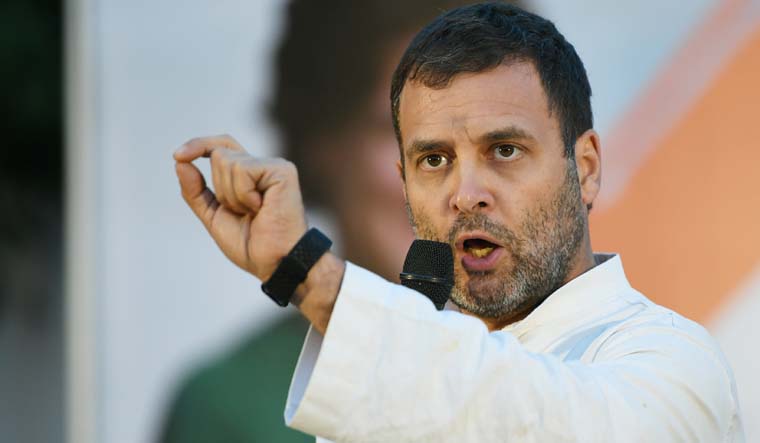
Campaigning for the upcoming elections, Congress President Rahul Gandhi was in Pune to interact with the students during which he candidly admitted his love and affection for PM Modi.
In an interaction with the students in Pune, Rahul Gandhi proclaimed that he genuinely loved PM Modi and harbours no hatred or anger against him. As soon as Rahul declared his fondness for PM Modi, the crowd of students started chanting “Modi Modi” in an attempt to display their affection for PM Modi as well. The crowd was so loud with pro-Modi slogans that the host of the event had to request the people to simmer down for Rahul Gandhi to continue.
“I love Mr. Modi. I genuinely feel no hatred or anger towards him,” Rahul said. After Rahul’s declaration, a loud cheering resonated with students shouting in unison pro-Modi slogans and expressing the similar sentiment of love and affection for PM Modi as echoed by Congress President Rahul Gandhi.
This is not the first time that Rahul Gandhi has been greeted with pro-Modi slogans in his rallies. In one of his public events in Bengaluru last month, Rahul Gandhi was welcomed with pro-Modi slogans by techies after which the police had even detained some of them.
Ten years ago, this would never have been possible. If I remember correctly, it was in 2010 that the Radia tapes spilt into the public domain. For weeks, the then-nascent social media was buzzing, comment threads on internet forums were overflowing with common folks demanding that the names of big liberals in these tapes be reported by mainstream media.
Radiagate was the official end of innocence for a generation in its relationship with the media. For at least two reasons. First, for at least ten years, we knew that the world of media was shady. But we didn’t know just how deep the rot was. Radiagate officially ended the image of the journalist as having any kind of moral authority or having anything at all to do with truth or justice. The journalist was reborn in public imagination as a fixer, a go-between who works in power circles of Delhi and Mumbai, helping strike corrupt deals involving politicians and big business.
In the language of the street, a ‘Dalal’.
The second thing we realized was how mainstream media stick together to protect its members, more like a cartel. Quite the opposite of the free market of ideas, where competitors spare no opportunity to belittle each other. No, mainstream media was different. In principle, we had many “brands” which were competitors in theory, but in reality, they were all controlled by the same hand.
And that’s why no mainstream media would cover the Radia tapes. They all cooperated in maintaining a deafening silence. The big liberal names in the Radia tapes never had to explain themselves. It became a symbol of the contempt with which the zamindars of Lutyens Delhi look down on common folk.
Fast forward one decade. To the case of Agusta Patrakars.
This might exactly be the opposite of Radiagate.
The internet is here and everyone is on social media. The big liberals whose names have been taken can no longer hide. The document is up on the internet and nothing… absolutely nothing in the world can ever make it go away.
And social media will not let them forget. Ever.
They know it. Silence is futile. The stony silence that big liberals used during Radiagate is totally useless now. And I see this morning that the ones who were named have scrambled with clarifications, denials and justifications. They know that the longer they remain silent, the more guilty they will look. Within 15 hours of the story hitting all platforms. Even some newspapers have published the story.
Silence is futile. The media must own up to its ‘Agusta patrakars’.
Who changed the game? Technology changed the game. Reinforces my belief that science and technology is always the greatest servant of humanity. Without the power of the internet and the democratization of narrative, do you think the Agusta Patrakars would have been scrambling to explain themselves? Do you think newspapers would have published the story? Of course not.
In this, I would be unfair if I did not mention Arnab Goswami. Listen to him go last night:
“The truth will be printed because it must be in print. The truth must be imprinted into our nation’s memory and those in print must print the unprintable truth.”
Ouch!
Spare a thought for Arnab here. Think about the extent of the professional risk he is taking, by going up against the most powerful in the media establishment. Governments come and governments go, but the establishment stays. There is a reason nobody else in media is willing to go out so openly against the ones at the top of the profession. Even some journalists believed to be somewhat sympathetic to the right wing have taken a cautious line, sticking with the big guys in media on this, possibly not willing to risk it all and rock the boat.
Arnab broke with the rest of the media on anti-national chants at JNU. Think about how much it bothered them. He broke with them on issues of Award Wapsi and “intolerance”. He became the thorn in their side, the itch they couldn’t stop scratching. They say he is loud (and he is), they call him Commando Comic, they call him North Korean media and what not. But at least his name does not come up when talking about multi-million $$$ scams. Isn’t that better?
Again and again, the Agusta Patrakar situation reminds me of the days of Radiagate. Back in the day, they didn’t think that the internet or social media was such a big thing. Back in the day, social media was all about real people expressing their real opinions. No big money to drive narratives, no shady corporations getting paid to manipulate folks by stealing their data. Only real people. It was chaotic and sometimes unpleasant, but always real. Like life.
Now that *they* know how powerful social media can be, Big Business, Big Media and Big Liberalism have banded together to recreate on the internet the Orwellian world of mainstream media. Disagree with the global liberal ‘party line’? It’s all ‘hate speech’. Think that it is silly to see hijab as a symbol of empowerment? That’s ‘hate speech’ too.
They haven’t yet figured out a way to scrub the internet off everything they don’t want to hear. But they are working on it, in closed-door meetings with placard-carrying liberal activists who intend to smash all dissent. A shadowban, for instance, makes ideas disappear without creating a public spectacle that might attract sympathy. Very effective, one should say.
Remember that this democratization of the narrative is an invaluable gift that technology has given us. Don’t let them take it away.
Congress President Rahul Gandhi on Thursday filed his nomination from Wayanad, Kerala while his sister looked on and urged Wayanad to ‘take care of her brother’. Rahul had chosen to contest from Wayanad in addition to Amethi as a ‘safe option’ considering Amethi, the Gandhi bastion, might just fall to the fiesty BJP candidate and Union Minister Smriti Irani who has been working in the constituency tirelessly despite her loss in 2014.
However, this ‘safe seat’ might throw up some new questions for Rahul Gandhi that would probably be difficult to answer. His election affidavit, which was filed by Rahul Gandhi to seal his candidature has thrown up serious questions about properties that OpIndia reported about earlier.
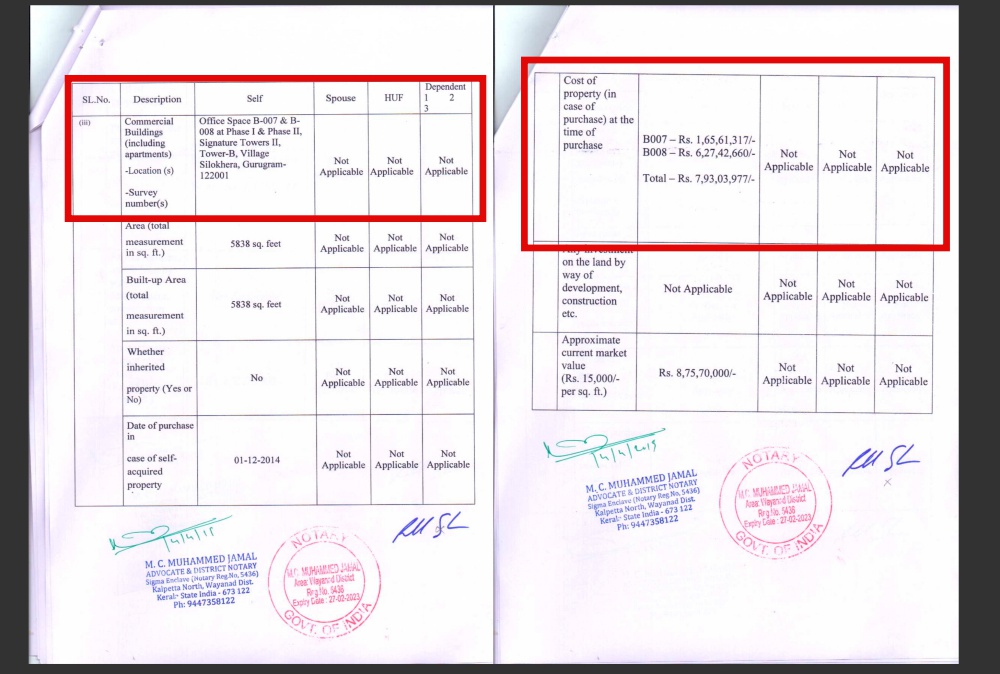
In his 2019 election affidavit, Rahul Gandhi lists purchase of two properties in Signature Towers II which is owned by Unitech. According to the election affidavit, Rahul Gandhi has declared that he purchased two properties in Signature Tower II, office spaces B-007 and B-008. The Affidavit says that that office space B007 was purchased for Rs. 1.65 crores and B008 was purchased for Rs. 6.27 crores.
Interestingly, the affidavit says that the properties were purchased on 1st December 2014.
Rahul Gandhi’s election affidavit 2019
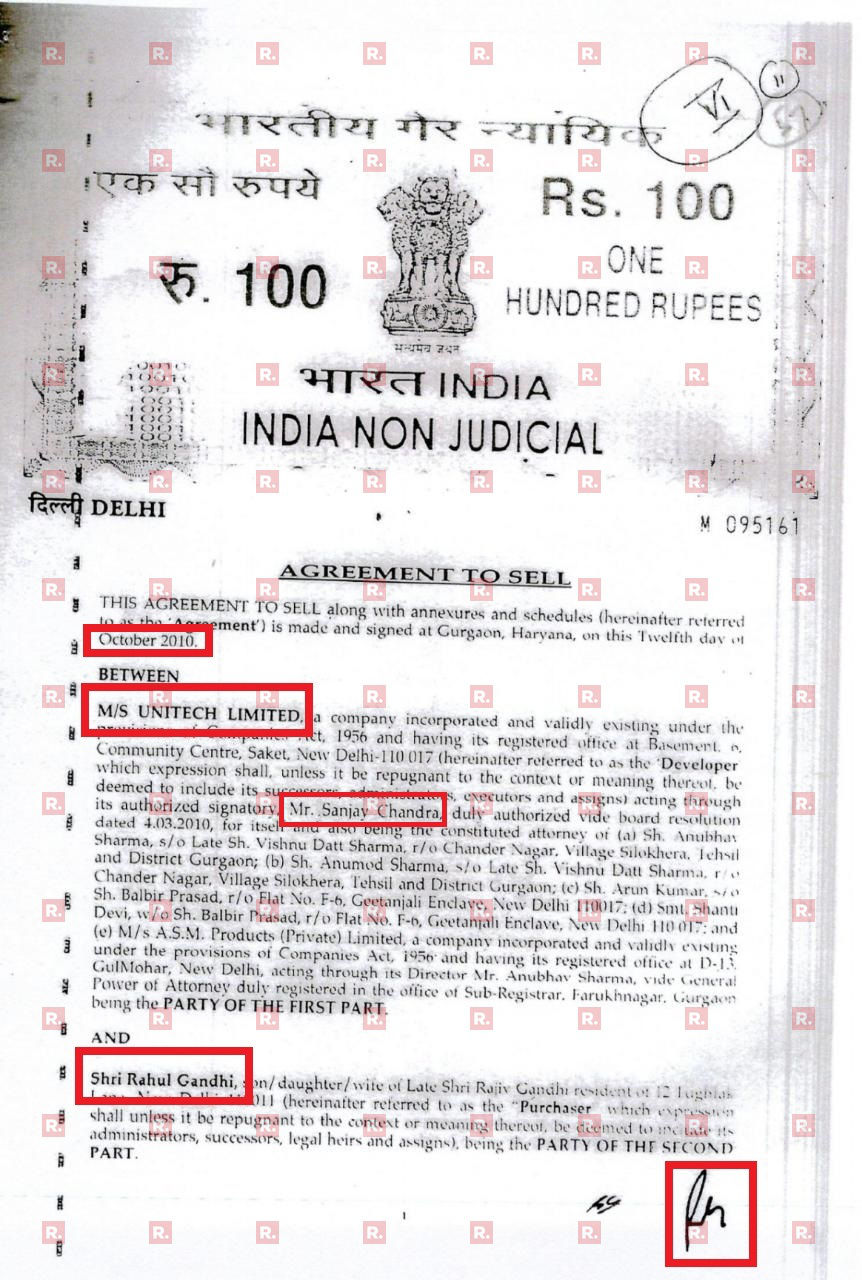
Earlier, OpIndia had reported how Rahul Gandhi had purchased the same two properties in 2010. In October 2010, after the Supreme Court asked the Congress to reply to a notice regarding 2G and just weeks before the CAG report on 2G was tabled in the Lok Sabha, Rahul Gandhi had signed a deal with Unitech to buy two office units in this Unitech’s ‘Signature Tower 2’ in Gurgaon. Rahul Gandhi had paid Rs 1.44 crore and Rs 5.36 crore for B-007 & B-008 in this plush tower. The balance payment was meant to be paid upon possession of the properties.
After whistleblowers spoke to OpIndia, Republic TV had also released the documents where Rahul Gandhi had signed the purchase papers.
Source: Republic TV
The same properties, B007 and B008 which were purchased by Rahul Gandhi in October 2010, have re-appeared in the 2019 election affidavit that Rahul Gandhi has filed now, in Wayanad.
Interestingly, as we reported earlier, in Rahul Gandhi’s 2014 election affidavit, these two properties were not listed by Rahul Gandhi.
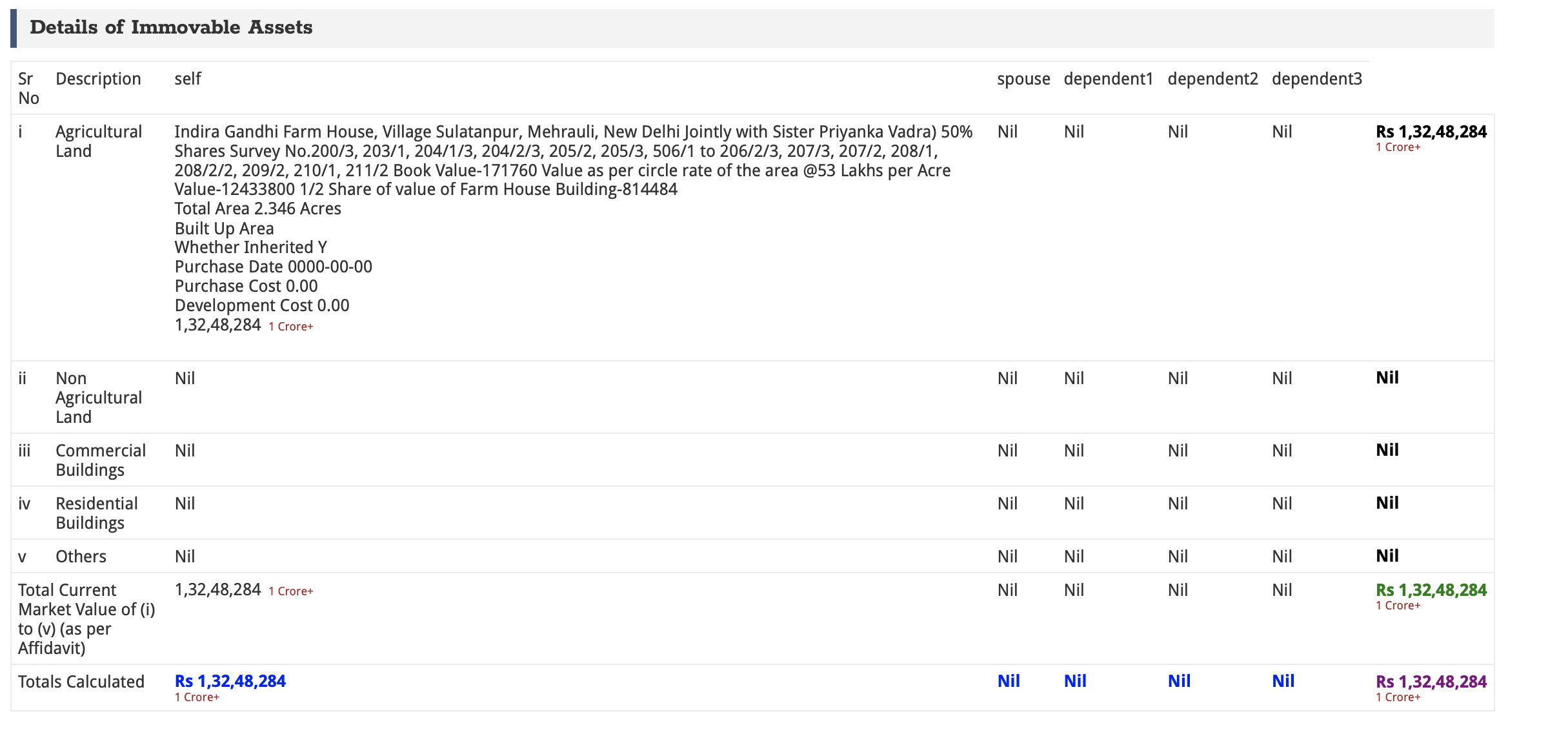
In 2014, after the properties were purchased in October 2010, Rahul Gandhi in his election affidavit had only listed the farmhouse he owns jointly with his sister Priyanka Gandhi Vadra.
Rahul Gandhi’s 2014 Lok Sabha election affidavit
Unitech is infamous for its involvement in the 2G scam. In early 2008, Unitech Wireless, a subsidiary of Unitech, was granted a pan-India telecom license by the government for Rs. 1,658 crore under the infamous first-come, first-serve policy. Subsequently, it sold 67% of its shares to Telenor of Norway for Rs 6,120 crore. This placed the value of the company at Rs. 9,100 crores. The stake sale happened when the company had no other asset, therefore, it was only fair to assume that it was the value of the license it held.
Then, the CAG report blew the lid off the scam. It said that the inexpensive spectrum sale caused a loss of Rs. 1.76 lakh crore to the government exchequer while benefiting private entities like Unitech. It was further alleged that rules and guidelines were violated in the process which suggested a collusion between those who got the licenses and those who received it.
In our previous expose, we had written:
The timeline of the entire series of events is also interesting. In October 2009, the CBI registered a case into the alleged irregularities in the allocation of 2G spectrum. On October 8, 2010, the Supreme Court sought the then UPA government’s response to the Comptroller and Auditor General’s or CAG report on the alleged scam. In October, the same year, Rahul Gandhi purchased two commercial properties at Gurugram’s Signatures Towers-II owned by Unitech. Needless to say, this property doesn’t find a mention in his 2014 affidavit. Intriguingly, several of such deals struck with dubious, scam-ridden individuals is strategically struck to avoid the hint of it appearing in his election affidavits which is for public consumption.
Our assumption at that time was that perhaps the properties did not appear in the 2014 election affidavit because between 2010 and 2014, the properties may have been sold by Rahul Gandhi.
However, with the emergence of these properties in Rahul Gandhi’s 2019 affidavit, there are some pertinent questions that Rahul Gandhi must answer the most important one being, why the properties did not find a mention in his 2014 affidavit.
There are only two possible scenarios that would explain the inexplicable absence of these properties in his 2014 election affidavit.
Scenario 1:
The first scenario that would explain the absence of the Signature Tower properties being absent from his 2014 election affidavit is if Rahul Gandhi, after purchasing these properties in 2010 October had subsequently sold these two properties before filing his 2014 election affidavit and then repurchased it on 1st December 2014 as his 2019 affidavit now claims.
This is, of course, a far more unlikely scenario because selling a property just to purchase it later at an inflated price would make little to no business sense. In 2010, Rahul Gandhi had paid Rs 1.44 crore and Rs 5.36 crore for B-007 and B-008 in this plush tower. In his 2019 election affidavit, Rahul Gandhi says that that in 2014 office space B007 was purchased for Rs. 1.65 crores and B008 was purchased for Rs. 7.93 crores.
The price in 2010 for which there are signed agreements and the price listen in his 2019 affidavit have a substantial difference. The cost of the property in which Rahul Gandhi claims he purchased the property in 2014 is much higher than the cost that he signed up for in 2010.
Thus, it would make no sense to assert that Rahul Gandhi purchased these properties from Unitech in October 2010, then sold his properties before filing his 2014 election affidavit, and then proceeded to repurchase the same properties in December 2014 at a much-inflated price that now appears in his 2019 election affidavit.
It is also possible that the payment made for these properties were reflected as ‘advance for purchase of property’. In the 2014 affidavit, there is a Rs. 6.89 crore advance that has been divulged by Rahul Gandhi. But if the payment was made for the properties, it begs the question why Rahul Gandhi added it as an advance and not an asset where he mentions specific properties as he does for his farmhouse that he co-owns with his sister Priyanka Gandhi. Was there an effort to hide the asset considering in 2019, it is declared that the purchase was made in December 2014?
Scenario 2
The second and more likely scenario is that Rahul Gandhi did not disclose all assets in the 2014 election affidavit.
If the property was purchased in 2010, regardless of whether the entire amount was paid at the time or not, the properties should have been listed in his 2014 affidavit. That it was not, and it wouldn’t make sense for him to sell his property and months later, purchase his properties in December 2014, raises suspicion that Rahul Gandhi was not being truthful in his 2014 affidavit. Also, for it to be listed as an advance for purchase of property raises suspicion that Rahul Gandhi wanted to hide the fact that he has indeed purchased the property from 2G scam accused Unitech.
The reason of lying, if he did, would perhaps be that he was well aware that the properties were being purchased from Unitech, who were accused in the 2G scam which was perpetrated and was being investigated by his own Congress government and wanted to hide this misadventure from the public eye.
If he lied then, he is lying now too
If we assume that scenario 2 is more likely and that Rahul Gandhi perhaps lied in his 2014 election affidavit, it stands to reason that Rahul Gandhi is lying in his 2019 affidavit as well.
If we accept that Rahul Gandhi lied in his 2014 election affidavit and he did indeed purchase the 2 Unitech properties in October 2010 and failed to add it in his 2014 affidavit, then, his declaration in his 2019 election affidavit that these properties were purchased in December 2014 is also not true.
Lying or misrepresenting facts in an election affidavit is a serious offence that can get the candidate disqualified.
With these damning facts coming to the fore, one can only hope that a full and thorough inquiry is launched by the Election Commission of India into the discrepancies in the 2019 and 2014 election affidavits of Rahul Gandhi.
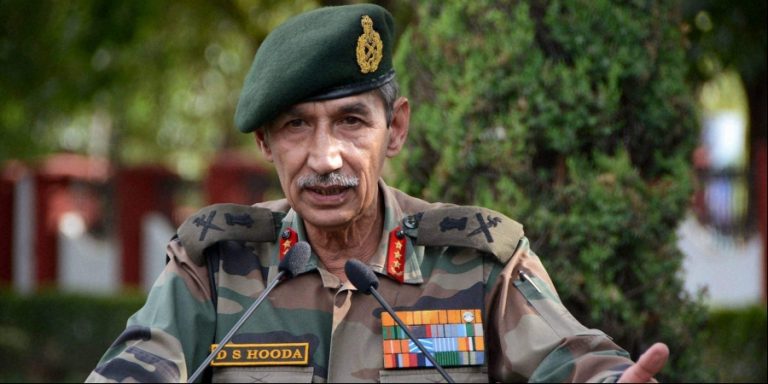
Lieutenant General D S Hooda, who was approached by the Congress Party to submit a report on the National Security plan has outrightly refused to have made a reference to the Armed Forces (Special Powers) Act(AFSPA) in his report submitted to Congress President Rahul Gandhi.
Former Northern Army Commander Lt General Hooda was selected by the Congress to head a task force created by the Gandhi scion to prepare a national security strategy document for the party in the run-up to the upcoming Lok Sabha elections.
The Congress Manifesto 2019, which was termed as “a Charter to weaken India” by Union Minister Arun Jaitley, promises to repeal the sedition laws, dilute the AFSPA and decrease the presence of Armed forced in the Kashmir valley. Lt General Hooda, however, has clarified that he did not recommend anything regarding the AFSPA in the 42-page report on national security submitted by him.
While talking to NDTV Lt General Hooda said, “There is no mention of AFSPA as far as my document is concerned, nor is there any reference to the number of troops that are required to be there in the valley. There is no reference to the AFSPA one way or the other.”
“Our political objectives in Kashmir must be clear. And from those political objectives we will draw our military strategy and as part of that strategy what needs to be done or how much troops are required to be there, all these things, I think, are subsequent steps that need to be taken”, he added.
LT General Hooda said that he was not in the favour of dilution or removal of AFSPA as it is required for the protection of the Armed forces. “I think we should not talk about dilution or removal of the AFSPA because its something that is legally required for the army to operate in that area”, he said.
Contrary to the Congress manifesto’s claims, General Hooda stated that the AFSPA is not providing enough protection to our soldiers in its present form. “It’s also no secret and I have written about on a number of occasions, it needs a review”, he said, suggesting a review of the AFSPA as he felt that the Act has been diluted post the 2016 Supreme Court judgment and is failing to provide adequate protection to our soldiers.
He gave two reasons for reviewing the Act, he said, “It should be reviewed for two important reasons first is, that it’s become a bad word and it’s a stick that human rights activists and some civil society groups are using to defame the army. I can tell you with confidence that we have an excellent human rights record.”
“Secondly, after the 2016 Supreme Court judgment on AFSPA, 700 officers went to court because the judgment has diluted the AFSPA completely. Because it talked about excessive use of force, how do you judge that? It talked about investigations can be done by any organisation, not necessarily the Army. It also said that the Army people can be tried in criminal courts. So I think the way AFSPA is today it is not providing adequate protection even to our soldiers. there are major problems with it and we seriously need to review it”.
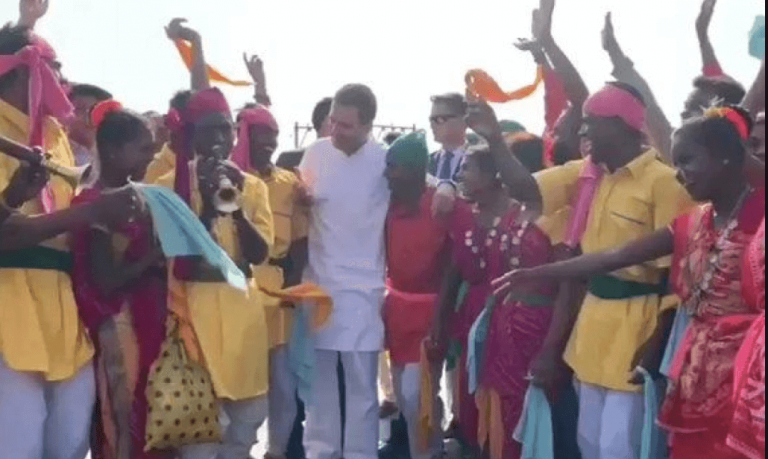
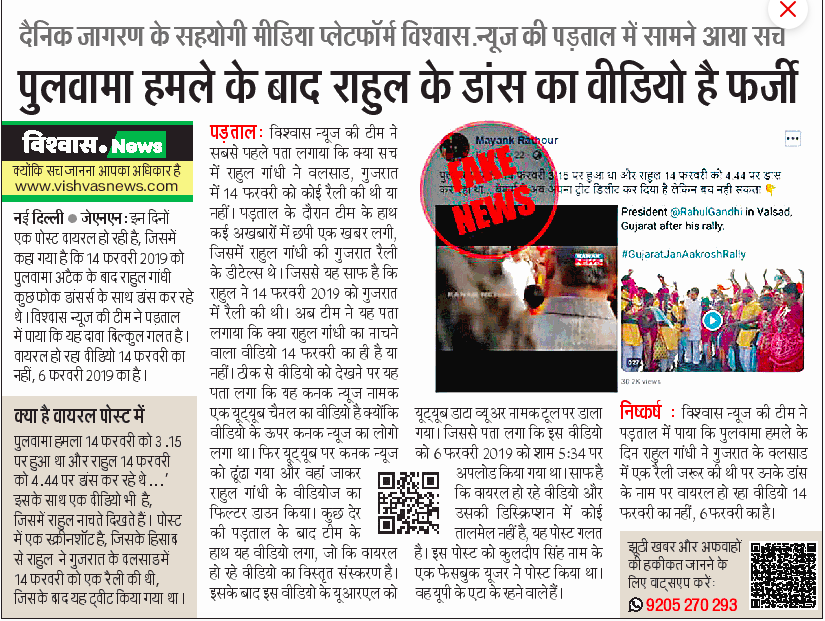
On April 1, Dainik Jagran’s ‘fact checking’ affiliate ‘Vishvas News’ published an article titled “Fact Check: राहुल गाँधी का डांस वाला वीडियो पुलवामा अटैक वाले दिन का नहीं है” (Fact check: Rahul Gandhi’s dance video is not from the day of Pulwama attack). The same article was published in the Dainik Jagran’s print edition on April 4.
Dainik Jagran publishes misleading news
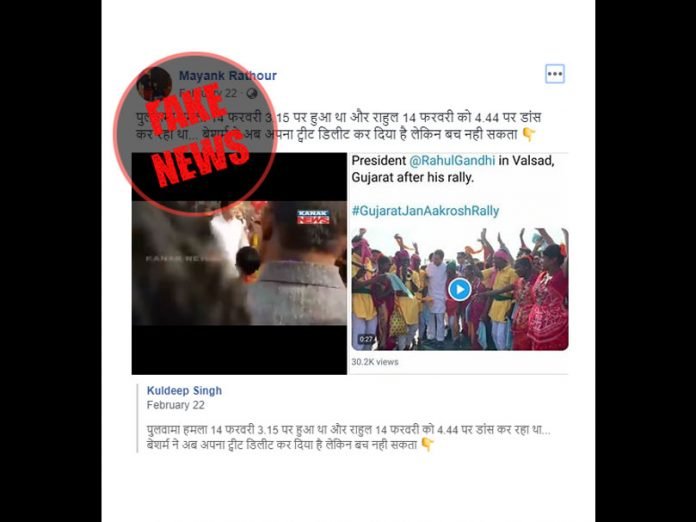
In the said ‘fact check’, Vishvas News has ‘fact-checked’ a viral image where one Kuldeep Singh had shared two screenshots of Rahul Gandhi’s dancing video, one of which was a screenshot from Congress’ official account.
Vishvas News ‘fact-checking’ viral videos
Vishvas News claims that the original poster (OP) shared multiple screenshots, including one which was from verified account of Congress, claiming Rahul Gandhi had held a rally in Valsad, Gujarat. Vishvas News relies on newspapers like Indian Express and others which had reports of Rahul Gandhi’s Valsad rally. Surprisingly, it does not check Congress’ official account which had also tweeted about Rahul Gandhi’s rally in Valsad.
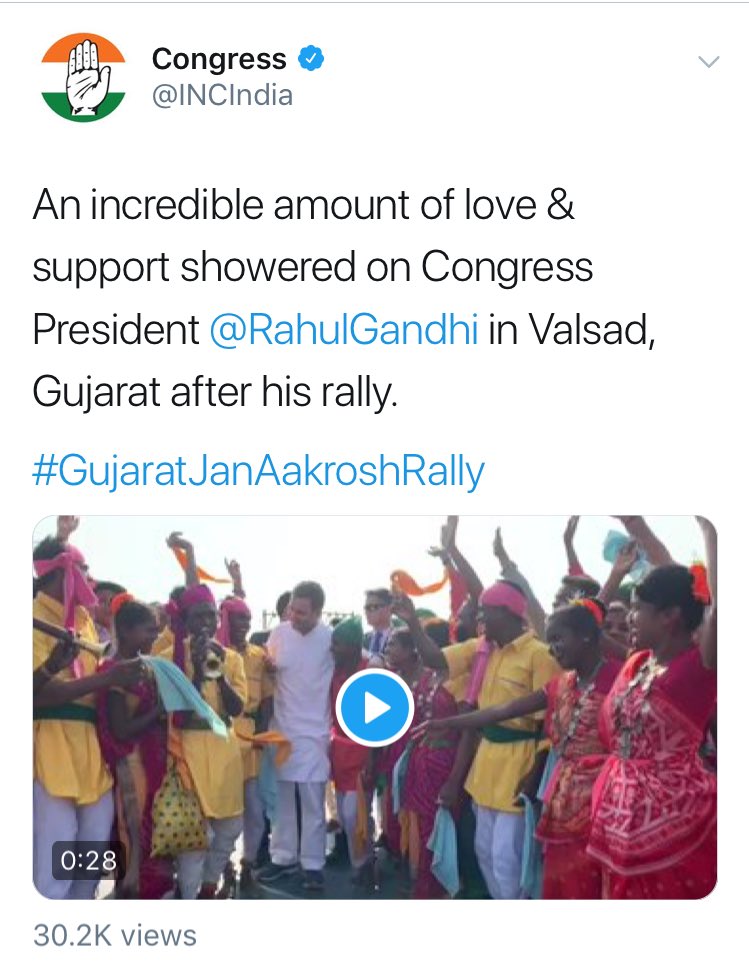
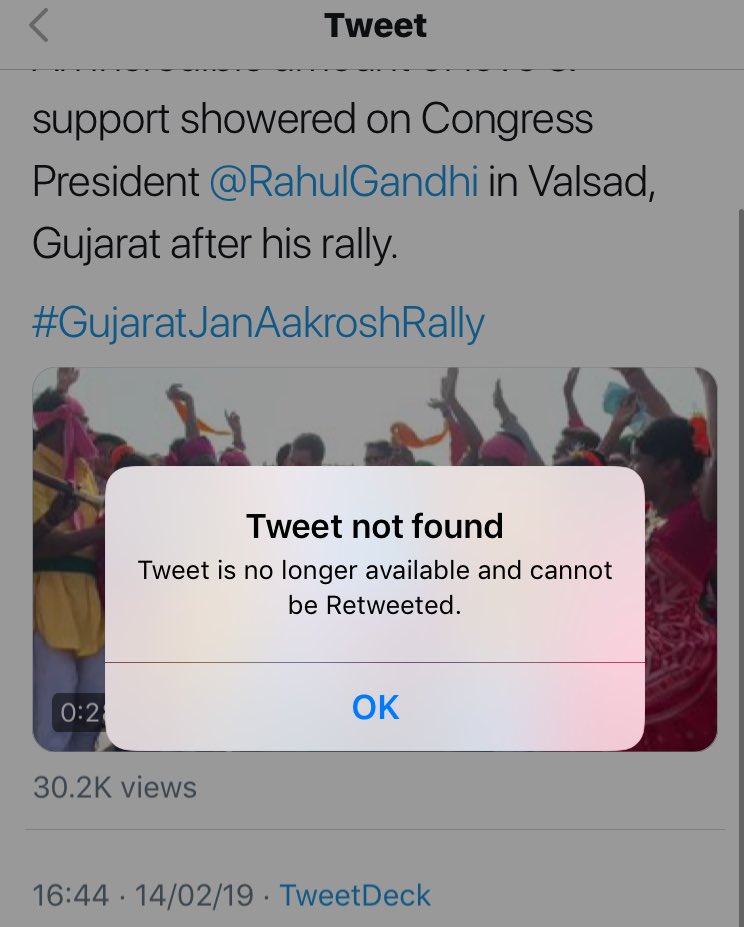
Not only that, Vishvas News very conveniently does not verify the right image in the OP’s post, which was a tweet from Congress’ official handle, which showed Rahul Gandhi dancing in Valsad after the Pulwama attack. Following public outrage, Congress had deleted those tweets later.
Tweet by Congress’ official Twitter account on 14th February 2019‘Deleted tweet’ notification on Congress’ Tweet
Vishvas News not only ignores this aspect, but then goes on to ‘fact check’ another image in the OP, which was a video of Rahul Gandhi dancing from a rally in Rourkela.
While part of the post shared by the OP was indeed false and misleading, the fact that a ‘fact-checker’ chose to not report that Rahul Gandhi was indeed dancing right after Pulwama attack, and put up a misleading and confusing headline to its readers is worrisome. More so because Vishvas News is empowered by Facebook to ‘fact-check’ news and claims on the social networking platform.
Facebook had recently added five ‘fact-checkers’ to its roster which are ‘certified through a ‘non-partisan‘ International Fact-Checking Network. These were added to ‘fight spread of false news on Facebook, especially ahead of the 2019 general elections.
If such ‘independent’ fact-checkers flag news like Rahul Gandhi dancing in Valsad right after Pulwama attack as ‘fake’, even those pages or profiles on Facebook that share the genuine news could be reported for spreading ‘fake news’. One may try to argue that Rahul Gandhi was not aware of the casualties at the time of his dance, but to declare a genuine incident as ‘fake’ raises questions.
Facebook has often been accused of bias and now it is worrying when a ‘fact-checker’ on their roster to independently fact-check viral news is found indulging in spreading misleading information to confuse the readers right before the elections.
Bahujan Samaj Party leader and meat baron Haji Yakub Qureshi will be contesting the 2019 Lok Sabha election from the Meerut-Hapur seat against BJP’s sitting Member of Parliament Rajendra Agrawal.
Qureshi, who is a four-time Mayor from Meerut, had made headlines after he announced a bounty of Rs 51 crore for beheading the cartoonists of France based publication Charlie Hebdo for publishing the cartoon of Prophet Mohammad. Qureshi later announced to give the said amount to the terrorists who had barged into the office of Charlie Hebdo armed with lethal weapons and killed 12 people including 8 journalists. Qureshi was also reportedly involved in attacking environment activists who had started a movement for banning the meat plants to save the environment.
Qureshi is the owner of meat company Al Fahim Meatex Private Limited which is said to be one of the largest buffalo meat exporters in India. His meat company has recently been under the scanner of law enforcement authorities regarding certain illegalities. In the month of February this year, some parts of his meat factory were sealed by the authorities for not having the required sanction for the map of the factory. Meerut’s environment has been affected due to a large number of meat factories in the region. Addressing the problem of illegal meat factories, CM Yogi Adityanath had ordered the closing down of the illegal slaughterhouses in State soon after he became the CM in 2017.
Along with Qureshi, his children also do not seem to have any fear of the law. His son Haji Imran Qureshi was reportedly involved in grabbing the land of farmers and also giving death threats to the owners of the land. Qureshi’s daughter had also made headlines back in 2017 when she reportedly beat up the teachers and students with a hunter in Meerut Public School where her daughter was studying. The video of the incident had gone viral in which she is seen carrying a hunter with her in the school premises.
With a considerably large Muslim population in the Meerut area, Qureshi stands good chances of winning the current Lok Sabha election if he is able to consolidate the Muslim vote in his favour.
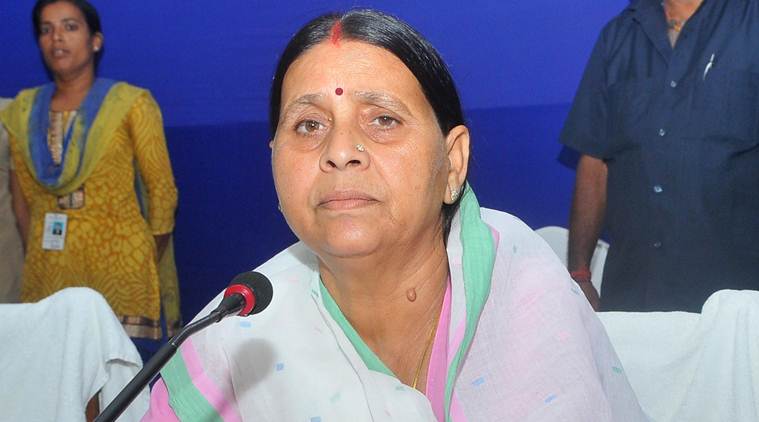
In a shocking incident, Former Bihar Chief Minister Rabri Devi was caught defending rape convict RJD leader Rajballabh Yadav while campaigning for his wife, who is contesting from the Nawada Lok Sabha seat in the Lok Sabha elections, as per reports.
According to reports, Rabri Devi addressing a rally in Nawada said Rajballabh Yadav was wrongly convicted in the case and went on to ask people to vote for rape convict’s wife Vibha Devi. Rajballabh Yadav is convicted for raping a minor girl and was subsequently disqualified from contesting polls.
“The way Rajballabh ji has been convicted and he has been set up by those who wanted to spoil his name, thus Vibha Devi (Raj Ballabh’s wife) is the candidate and we have to help her win. We have to make her win,” said Rabri Devi told people in Nawada on Thursday.
Ironically, Rabri Devi defended the rape convict Rajballabh Yadav while speaking on the issue of lack of women safety in Bihar. “They talk about Beti Bachao Beti Padhao but, what is happening in Bihar? Girls have been kidnapped and raped. Nobody’s safe in Bihar. The state government in to blame,” said Rabri Devi.
She further went on to claim that her husband Lalu Prasad Yadav was also a victim of political vendetta while accusing Nitish Kumar government of failing to provide security for women in the state.
Raj Ballabh Yadav, who is Rashtriya Janata Dal (RJD) MLA from Nawada, was named in a case of rape of a minor girl at his residence in Bihar Sharif on February 6, 2016.
In December last year, a Patna court had convicted Rajballabh Yadav and four others in connection with the rape of a minor in 2016. He was convicted under Section 376 of the Indian Penal Code and 4, 8, 17 of the Protection of Children from Sexual Offences (POCSO) Act.
A 15-year old girl, a resident of Bihar Sharif was reportedly abducted by a woman, Sulekha Devi to a location 15 KM from the district headquarters. According to reports, the woman and Yadav consumed alcohol and forced the minor girl to watch pornographic videos. Yadav then allegedly directed the girl to imitate the lewd acts. When the girl resisted, she was raped and confined the entire night.
We already know that the Gandhis are divine, they are not from this world, we mere mortals, that too, brown heathen mortals, do not deserve them. Yet, they continue to shower their divine grace on us. They wave at us, smile at us, they even talk to us, and ask us to call them by their name like we are their equals.
As if all that smiling and waving was not enough to purge us of our sins and fill our hearts with happiness, they sometimes even climb down from their vehicles to walk among us and behave like us, like mere humans. Isn’t that another sign of their greatness, that such divine angels even walk among dirty, smelly people and try to blend in the crowd, oblivious to the three dozen cameras following them?
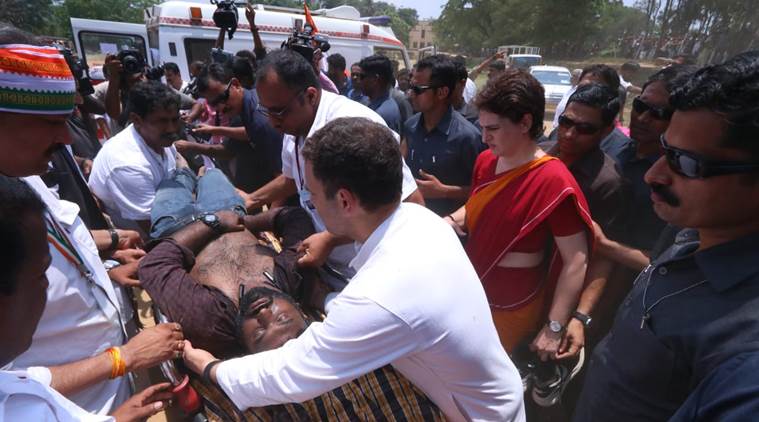
Just days ago, we saw a glimpse of how kind, graceful and loving Rahul Gandhi is. When a journalist named Rajender Vyas was allegedly hit by a motorcycle just at the precise moment when Rahul’s cavalcade was passing through the general area, by pure coincidence, of course. Rahul was kind enough to spot that journalist from his bulletproof vehicle and stop. Or so we are told.
Journalist Rajender Vyas met with an accident. Congress President stop his cavalcade and took him to Aiims. pic.twitter.com/p7q1Vk1fFO
In the videos of that incident that surfaced later, ungrateful souls pointed out that the journalist was probably faking it, as there was no injury on him. In videos shared on social media, the journo was seen asking Rahul to wipe his forehead again, so he can ‘put the footage to use’. Heathen, non-believers tried to spread the canards as if the entire episode was fake. Sheer blasphemy. Faithlessness.
This is what the angels of heaven have to endure on earth when they attempt to teach non-believers the true faith. The tainted non-believers fail to notice that it was not a physical injury that Rahul was trying to heal. They are here to clean our tainted souls. The amount of kindness we get from the Gandhi siblings and their mother can easily outweigh all the 12 AgustaWestland choppers and is worth much more than all the plots sold in Haryana and Rajasthan.
Leftists have been screaming their lungs out since May 26, 2014, that democracy is in danger and media is under attack. Looking at the frequency of ‘journalists’ falling ill or meeting with accidents just when the Gandhis are in the vicinity, it becomes slowly clear what the leftists have been going on about all these months.
Yesterday in Wayanad, another poor ‘journalist’ allegedly was in danger. Sorry, as some reports say, an entire media bus was put under danger in Modi’s India. It was another divine coincidence that the media bus met with an accident precisely in the area where Rahul and his sister Priyanka were present.
The media bus met with an accident at the end of @RahulGandhi‘s roadshow in Wayanad. Few journalists were hurt.
But as luck would have it, even if the accident happened in Modi’s India, the location was Rahul’s Wayanad. So then, both siblings hurried to help the poor soul with their divine presence.
Not paying the slightest attention to the dozens of cameras positioned around them, the Gandhi siblings unleashed their grace all over the place. While Rahul tried to carry the stretcher by standing on its way and touching the handles, Priyanka carried the man’s shoes in her own hands. Such kindness, such simplicity, and genuine compassion are absolutely rare in an age of media props and PR stunts.
As it happens always, the faithless have again started casting doubts over the incidents. Too many ‘injured’ journalists in too precise locations in too short a timespan they say, with all the impunity of their heathen souls.
The real question is why is it journalists & others have conveniently timed mishaps around the Gandhi’s? they trip, sprain an ankle, faint or get hit, on a weekly basis in close physical proximity to the Gandhi’s https://t.co/uYjSRpcV5x
This is the 2nd time in 1 week that a journo was involved in an accident with RahulG around the corner.
What is happening in our country? Where is the chowkidar? Kya yahi hain achche din?https://t.co/9S5oDuATBD
Such lack of faith is unfortunately rampant in Modi’s India. Even when disciples of God heal ailments and thwart Lucifer’s sinister attacks with the mere power of their touch and prayer, the devils of Modi’s India still disbelieve them and cast doubts. They claim their healing powers as fake and call it all a PR stunt. Similar allegations are being made on the incidents of ‘injured’ journalists too.
Non-believers will always doubt. Modi’s India has so many of them. But as we gear up for an election season in the middle of summer, more and more politicians will campaign. Hundreds of journalists and camerapersons will tail them. Let us hope that the Gandhi siblings are present in the vicinity whenever any journalist, god forbid, faints or feels weak. Maybe that is the reason Rahul has chosen Wayanad after all. Why should the blessings of the Gandhi family be limited to Raebareli and Amethi? Kerala should get it too. It is now Gandhis’ own country.
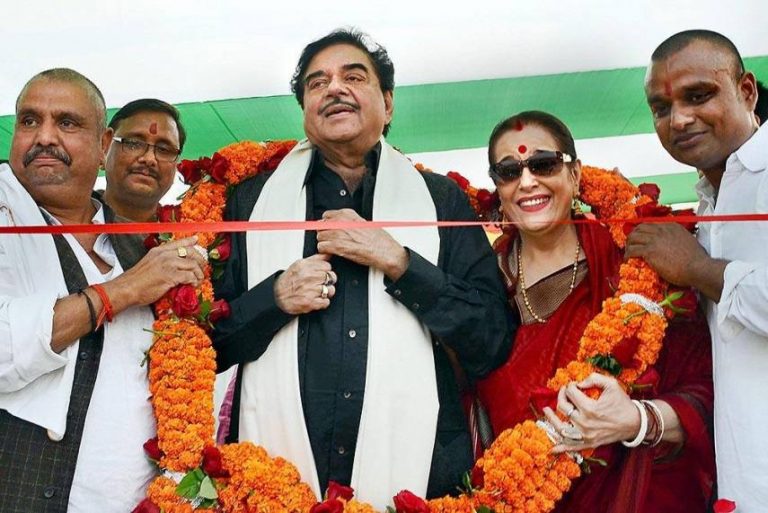
Soon after actor-turned-politician Shatrughan Sinha had, after being shunned by the BJP, showed his keenness to join the Congress, there have been reports that his wife, Poonam Sinha, will be contesting the Lok Sabha elections from the Lucknow parliamentary constituency.
Poonam Sinha will reportedly contest on the Samajwadi Party (SP) ticket with the Bahujan Samaj Party’s (BSP) support and plans to take on BJP’ bigwig and the Union Home Minister, Rajnath Singh from Lucknow.
Since the Congress has decided not to field a candidate from Lucknow and support the candidature of Sinha from the Uttar Pradesh capital, Poonam Sinha and Rajnath Singh are set to take on each other one-on-one.
A Congress functionary confirmed that “Jitin Prasada was keen to contest from Lucknow and he had to be persuaded to opt for his constituency Dhaurhara. Decks have now been cleared and Lucknow will be one of the seven seats that the Congress has said that it would leave for the SP-BSP alliance.”
The decision to field Poonam Sinha as the joint opposition candidate against Rajnath Singh is an attempt by the Samajwadi Party to keep the Home Minister confined to his constituency, said party sources who furthered that the party has already completed its homework and was all set to field Poonam Sinha from the Capital city of Uttar Pradesh.
“There are four lakh Kayastha voters and 1.3 lakh Sindhi voters in Lucknow, apart from 3.5 lakh Muslims. (Poonam Sinha is a Sindhi while her husband Shatrughan Sinha is a Kayastha). This will give a major push to her candidature,” said an SP leader.
BJP General Secretary Vijay Pathak, however, dismissed the issue and said, “Lucknow has always been a BJP bastion and continues to be one. Rajnath Singh has ensured a lot of development of the state capital and has a rapport with the people. An imported candidate will not cut much ice with the voters.”
Sources confirmed that it was Poonam Sinha’s appointment that had led to the postponement of Shatrughan Sinha’s joining the Congress. He is now slated to join the Congress in Delhi on April 6 and will be the party candidate from Patna Sahib Lok Sabha seat in Bihar.
In fact, the actor-turned-politician, who was known to be acrimonious towards his own party, was particularly irked as BJP had earlier decided to field Union Minister Ravi Shankar Prasad from Patna Sahib seat, from where he is a sitting MP.
The BJP, sick and tired of the rebel within their party had shown Shatrughan the red flag at the beginning of the year, asking him to quit the party if he so wanted.
The rebel leader, who has been openly speaking against BJP and taking part in opposition rallies for quite some time now, had recently met the Congress President, and had shared a picture with him on Twitter hailing the Gandhis as “the family of Nation builders”.
Finance Minister, Arun Jaitley has recently thanked Congress Party for accepting their ‘problem’. According to reports, Jaitley said, “Some eminent former BJP men have been accepted by the Congress as a gift. We thank Congress. Our problem is now yours. Good luck!”
Interestingly, Rajnath Singh had won the Lucknow seat in 2014 garnering 55.7 percent of the total 10,06,483 votes polled. He had won in all the five assembly segments of the constituency.
There has been substantial talk over how Rahul Gandhi makes his money considering his only legitimate income is that of an MP’s salary. Rahul Gandhi has never held a job, at least one that people know of and has no professional vocation, unlike some other politicians who have been businessmen, lawyers etc before they took the plunge into full-time politics.
Later it was found that apart from salary as MP, Rahul Gandhi was also earning through land deals and rental income from acquired properties, though it remains unclear how did he first acquire enough resources to get into such deals and acquire such assets.
Rahul Gandhi’s assets per his election affidavits went up from Rs 55,38,123 in 2004, to over Rs. 2 crores in 2009 and finally, over Rs 9 crores in 2014. It must also be remembered here that in 2011-12, there are allegations that Rahul Gandhi had escaped incomes of Rs. 155 crores through AJL for which, the IT department has slapped a Rs. 100 crores tax notice on Rahul Gandhi and Sonia Gandhi.
Rahul Gandhi has now filed his election affidavit while filing his nomination from Wayanad, Kerala which is meant to be his safe seat.
According to his latest affidavit, his assets have grown from 9.35 crores to 15.88 crores in 5 years.
Essentially, while the Congress government was in power, from 2004 to 2014, Rahul Gandhi’s assets grew from Rs 55 Lacs to 9.35 crores and while the Modi government was in power from 2014 to 2019, Rahul Gandhi’s assets grew from 9.35 crores to 15.88 crores.
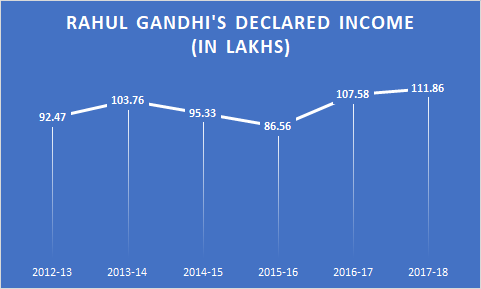
Rahul Gandhi’s income according to his 2019 election affidavit stands at Rs. 1.11 crores. In 2012-2013, his income stood at Rs 92.47 lac.
Source: Rahul Gandhi’s election affidavits
Rahul Gandhi’s lowest declared income was in the year 2015-2016 where his declared income was 86.56 lacs. Interestingly, it is evident from the chart that Rahul Gandhi income started declining in the financial year Modi government came to power. Interestingly, recently his income started increasing again, a period following the demonetisation year when the Modi government had declared that high-value notes of Rs. 500 and Rs. 1000 were no longer a legal tender.
In his 2019 affidavit, Rahul Gandhi has taken a personal loan of Rs 5 lakh from his mother Sonia Gandhi and has a liability of Rs 72,01,904.
In our previous reports, we had tried to elaborate on how Rahul Gandhi earns his money, considering his only legitimate income is that of an MP’s salary. We had reported how his seemingly clandestine deals have panned out over the years.
Rahul Gandhi jointly owns a farmhouse with his sister Priyanka Gandhi Vadra which earned rental income from scam accused who were under investigation by the Congress government. Rahul Gandhi had rented the Indira Gandhi farmhouse to scam accused FTIL and earned rental income that far exceeded the valuation of the farmhouse.
In 2013, Rahul Gandhi and his sister, Priyanka, rented their 4.69 acre farmhouse in Delhi to Financial Technologies (India) Ltd. (FTIL), merely 10 months after a show cause notice was served to National Spot Exchange Ltd (NSEL), a company promoted by FTIL, for alleged norm violations. In fact, The Congress government had exempted the NSEL from complying with the provisions of the Forwards Contracts Regulations Act through a notification dated June 5, 2007. Later, it was discovered that the NSEL traded in contracts which were in violation of the conditions under which it was granted the exemption.
FTIL had signed an 11-month lease agreement to rent Indira Gandhi Farm House in Mehrauli at a monthly rent of Rs 6.7 lakh. FTIL also paid an interest-free deposit of Rs 40.20 lakh vide two separate cheques of Rs 20.10 lakh each respectively to Rahul and Priyanka Gandhi. Interestingly, while Rahul Gandhi was earning a rental income of 6.7 lac per month, the farmhouse which was rented was only valued at a little over Rs. 9 lac according to his election affidavit.
While the NSEL scam broke out in June 2013, Rahul Gandhi and Priyanka Gandhi Vadra rented their farmhouse to FTIL from January 2013 to October 2013. This goes to show that while the multi-crore scam broke out, Rahul Gandhi and Priyanka Gandhi were profiting from FTIL.
His other clandestine deals, Rahul had bought 2 properties from Unitech, accused in the 2G scam in 2010. While he had paid a little over 4 crores for these properties, he had also allegedly earned interest on deposit from Unitech while they were under the scanner for their involvement in the 2G scam.
Now, with Rahul Gandhi’s assets growing by 1600% under UPA and but ‘just’ by 70% under the Modi government, one certainly wonders which aspect of his earning capacity has changed with the change in government from one run by his mother, Sonia Gandhi and the other run by Prime Minister Narendra Modi.