RLD (Rashtriya Lok Dal) leader Jayant Chaudhary, crossing lines of basic civility, threatened to ‘demolish’ the BJP office in the national capital. On March 30, the RLD leader while addressing a public gathering, Chaudhary said that if Ajit Singh (Party President and son of former Prime Minister Chaudhary Charan Singh) gives us orders, we will go and demolish the BJP party headquarters in Delhi.
Jayant Chaudhary, RLD: Aapne ₹1,500 cr ka ek alishan kendriya karyalaya,BJP ne Delhi mein banaya hai…Pichhli baar hum koi tod fod karne nahi aaye the, abki aap chook karoge to Ajit Singh ji ailaan karenge, hum log chalenge aur ek-ek eenth ukhaad na di jo karyalaya ki.(30/3/19) pic.twitter.com/D1OuBDtQQ4
“They have built a Rs 1,500 crore palatial central headquarter in Delhi. We didn’t do any harm last time but if they do it again, Ajit Singh will give us orders and we will march and remove bricks of the headquarters,” Chaudhary reportedly said. He further said that while he does not wish to use abusive terms for the BJP leaders, who call us ‘Sharab’ and ‘milavat’, he would still like to call them ‘Jutiya’, which sounds similar to the abusive word ‘ch*t*y*’
#WATCH Jayant Chaudhary, RLD: Yeh aapko sharaabi kahein, yeh aapko milavat kahein, to maine bhi inke liye naam soch rakha hai…Main gaali to nahi dena chahta inko lekin yeh bahut bahut bahut bade jutiye hain, jutiye, bahut jutiya party hai. (30/3/19) pic.twitter.com/kKIDGtT5wY
He was referring to the ‘Sarab’ dig PM Modi had taken at the SP-BSP-RLD alliance in Uttar Pradesh where he had said that the ‘sarab – Samajwadi Party (Sa), Rashtriya Lok Dal (Ra) and Bahujan Samaj Party (B)’ are harmful for the society. Chaudhary’s loss of basic civility shows his frustration and lack of linguistic skills that the best comeback he could come for the ‘Sarab’ dig is a word which sounds like an abusive term, and even there he did not have the courage to say it openly.
In the history of Indian elections, Amethi has been the ‘safe’ seat for the Gandhi family and the Congress party. Since the 1960s, it has always been won by a Congress candidate, except on two brief occasions. It has been the constituency that sent Sanjay Gandhi, Rajiv Gandhi, Sonia Gandhi and Rahul Gandhi to the Parliament.
However, things look different in 2019 Lok Sabha elections as Rahul Gandhi faces a stiff challenge from BJP’s Smriti Irani.
Voter situation in Amethi Constituency
Rahul Gandhi has contested from Amethi since 2004 and has always won comfortably. He never faced any stiff competition in Amethi except in 2014 from BJP’s Smriti Irani.
Rahul got close to 4 lakh votes in every election but in 2014, his vote percentage fell sharply to 46%.
Data Source: Election Commission of India report for 2004, 2009, 2014
Before 2014, BJP was always stuck at single digit vote percentages. However, in 2014, BJP made a remarkable foray into the Gandhi bastion and Smriti Irani ended up getting 34% of the votes.
In 2014, Rahul secured 4 lakh votes again but Smriti Irani also reached close at 3 lakh votes. The loss margin for a non-Congress government had been substantially reduced to only about 1 Lac. This was unprecedented in the constituency of Amethi.
Data Source:Election Commission of India report for 2004, 2009, 2014
With the above numbers as baseline reference from 2014, the following changes are expected to impact voting in 2019.
Factors that may reduce Rahul Gandhi’s votes
Haroon Rasheed, son of a longtime Congress member Sultan Khan has reportedly abandoned Congress and is contesting as an independent candidate from Amethi. His father was reported to be a strong influencer in Amethi. He was also the proposer for Rajiv Gandhi’s and Sonia Gandhi’s nominations in earlier elections.
A large section of his supporters who would have voted for Rahul would now vote for Haroon Rasheed, thus bringing down Rahul’s votes. The moving away of a Congress strongman may as well push Congress from the edge of defeat to the abyss of loss.
Factors that may increase Smriti Irani’s votes
Mayawati’s BSP has declared to not field any candidate from Amethi, apparently to support Congress.
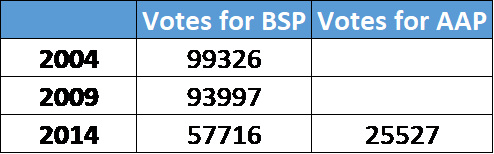
BSP traditionally secures about 90 thousand votes in Amethi in every election. In 2014, BSP secured lower votes at 60 thousand but Dr Kumar Vishwas of AAP also got 25 thousand votes.
Data Source: Election Commission of India report for 2004, 2009, 2014
In 2019, AAP is not expected to get many votes and BSP is not fielding any candidates. These 90 thousand votes would shift to Congress or BJP.
It must be noted that these are the voters who have never supported Rahul Gandhi and have always voted against him even in his home turf.
Hence, it might be reasonable to believe that a good part of these 90 thousand votes may get transferred to Smriti Irani, thus bringing up her vote count.
Other than the arithmetic, the fact that Minister Smriti Irani has worked tirelessly in the constituency is bound to play a massive role in how the chips fall on 23rd May 2019. While Rahul Gandhi has hardly returned to Amethi after his victory in 2014, Smriti Irani, despite her loss, went back to Amethi several times to work for the people of the constituency. The track record of what Rahul Gandhi did in Amethi for the past 10 years compared to what Smriti Irani did in the constituency only in the last 4 years speak for themselves.
Possible outcomes
Indian voters can be completely unpredictable. Hence actual outcome cannot be predicted with certainty. However, based on the above numbers, it is reasonable to believe that in 2019, Rahul Gandhi may end up securing less than 4 lakh votes and Smriti Irani may end up securing more than 3 lakh votes.
Depending on the quantum of that difference, either it would be a close win for Rahul Gandhi (not a facile victory as it has always been) or Smriti Irani may go down in history as the politician who ousted Congress’s party President and Prime Minister candidate from his home constituency.
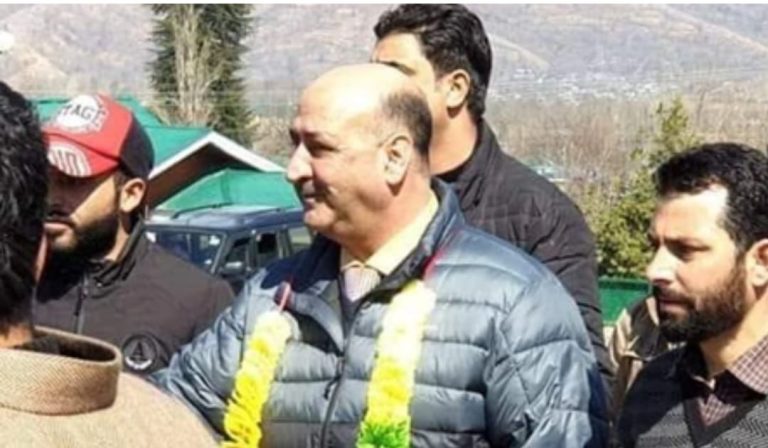
Former Sessions Judge in Anantnag and National Conference (NC) in charge of Kokernag Assembly constituency in Jammu and Kashmir Syed Tauqeer has been charged by the Jammu and Kashmir Police for inciting violence against Forest Officials while addressing locals in Kokernag area.
A video has been doing rounds recently in which Tauqeer is reportedly seen telling people to chop off the limbs of forest officials if they come to block a road there. “Somebody was whispering in my ear that forest people are blocking a road here. You have my go-ahead that if anybody approaches, you chop-off their limbs and then I will manage the rest. You start (using your) rights over the forest from now on. There are few months to government formation, tell them that NC’s nominated candidate has given us the permission,” said Tauqeer.
An FIR has been lodged again Tauqeer by the police under sections 116, 506 and 153 of the Ranbir Penal Code at Police Station Larnoo. Tauqeer had taken voluntary retirement and had joined the National Conference on March 17. The NC has distanced itself from Tauqeer’s statements which are absolutely shocking coming from a former judge. The Party posted a statement on Twitter saying that it does not endorse Tauqeer’s remarks.
The statement said that Tauqeer has been advised to exercise more care when choosing words and that this was a momentary lapse which happened in the heat of the moment. A few of days ago another NC leader Javed Ahmed Rana had threatened to put PM Modi behind the bars if he came to power calling the Prime Minister a murderer of humanity.
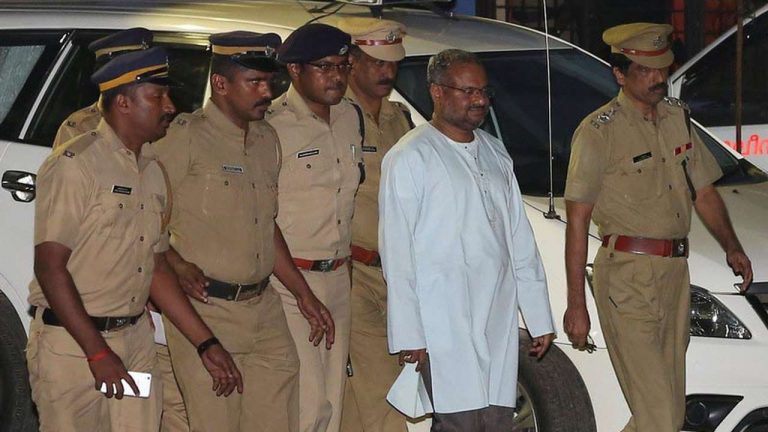
Father Anthony, a close aide of Kerala nun rape case accused Franco Mulakkal, was arrested by the Punjab Police after unaccounted cash was recovered from his residence in Partappura near Jalandhar, reported Mirror Now.
According to reports, the Punjab police on Friday had arrested Father Anthony and 5 others after they found Rs.9.66 crores of unauthorized cash. Father Anthony has not produced any proof accounting for the seized cash.
SSP, Khanna, Dhruv Dahiya, had stated that the money is unaccounted and no documents were there to show how it was collected. Father Anthony belongs to the Diocese of Jalandhar.
However, two days after police recovered Rs 9.66 crore in alleged ‘hawala’ money from six men, Father Anthony Madassery of Jalandhar has accused the Punjab police of misappropriation of Rs 6.65 crore. The priest also demanded that an FIR is lodged against the “erring officers” and the case is handed over to the CBI.
Father Anthony claims that the police on Friday had recovered Rs 16.65 crore, while South Indian Bank Officials who were present at the spot had counted the money using a counting machine as it was to be deposited in the bank. But the police disclosed to the media that Rs 9.66 crore has been found in my possession, thereby misappropriating an amount of over Rs 6.65 crore, he claimed.
Meanwhile, the police have rejected these allegations and called them “concocted”. Khanna police replied there was no question of misappropriation as the recovered amount had been counted by the income tax department and certificates have been issued.
Franco Mulakkal, Bishop of the Roman Catholic Diocese of Jalandhar, is accused of raping a 44-year-old nun at a guest house in Kuravilangad in May 2014 and subsequent sexual exploitations afterward. The nun had registered a complaint in June 2018 and has also claimed that despite her complaints, the church took no action on the bishop. The congregation had also stood by the rape accused and referred to him as an “innocent soul”.
Despite the initial delay in the arrest of the Bishop, Kerala police acted subsequently upon the incriminating pieces of evidence present against Bishop Franco Mulakkal of the Archdiocese of Jalandhar, Punjab, for allegedlyraping a nun from Kerala on multiple occasions. Rape accused Bishop Franco was granted conditional bail in the case on October 15 in the case.
After his release, Bishop Franco was given a grand welcome in Jalandhar where people had arrived in large numbers. Since his release, Missionaries of Jesus has attempted to silence those four nuns for supporting the victim nun who had accused Bishop Franco of rape. the four out of the five nuns who had supported the rape survivor nun were asked to leave the Kuravilangad convent, and go to convents, previously assigned to them. Shockingly, apart from threats and intimidation, Father Kuriakose who had testified against Bishop Franco was found dead under mysterious circumstances.
As many as 200 Islamic scholars (mufti) have declared Centre’s Sukanya Samriddhi Yojana, where a bank account is opened by parents of a girl child in her name, as ‘un-Islamic’ as per Sharia. According to Ajimullah Siddiqui, media in-charge Jamiyat Ulema-e-Hind (JUH), the Sukanya Samriddhi Yojana has an interest element which is ‘un-Islamic’ as per Sharia and hence the yojana is also considered un-Islamic.
Launched in 2015 by Modi government as part of the ‘Beti Bachao, Beti Padhao’ initiative, Sukanya Samriddhi Yojana let parents of the girl child with less than 10 years of age open a bank account in her name. The banks were to provide 9% interest on the deposited amount. The interest element makes the yojana ‘un-Islamic’ say the ‘Islamic scholars’. However, financial transactions through different mobile apps, like PayTM or even booking a taxi through a mobile app is allowed as per Sharia. Amusingly, using Google AdSense for advertising ‘lawful goods’ is allowed. Promoting movies and illegal programs through Google AdSense is not allowed, though.
As per the statement by the JUH 200 Islamic scholars and jurists from Darul Uloom Deoband, Nadawatul Ulema, Lucknow Jamia Qasmia Shahi, Muradabad and other different Islamic institutions participated in a three-day conference held in Delhi which concluded recently. All India Muslim Personal Law Board’s Kamal Faruqui said that Islam calls for earning through business and participatory transaction. Earning interest through capital lying with a bank is ‘un-Islamic’.
Darul Uloom Deoband’s ‘fatwa department’ is often in the news for declaring things ‘un-Islamic’. Last year, it had declared CCTV cameras ‘un-Islamic’. Before that, dancing and marrying bank employees was also declared ‘un-Islamic’. Darul Uloom Deoband had also issued fatwa against Muslim women taking shopkeepers’ help to wear bangles since it was ‘wrong and a big sin’ (to have strange men touch arms).
Deoband clerics had once issued a fatwa against life insurance, as they claimed that Life and death are in the hands of Allah and no insurance company can guarantee a man’s longevity.
Also a few days ago a cleric associated with the Darul Uloom Deoband university issued a fatwa against women watching football games, as watching men playing with bare knees is forbidden for women.
In the past fatwas were issued against posting photos of self and family on social media websites like Facebook and WhatsApp. New Year Celebrations and designer burqas, too have met with the same treatment.
A fatwa was also issued against a 15-year-old Muslim girl for dressing up as Lord Krishna and reciting Gita. A Deoband Ulema had reportedly expressed his displeasure at the girl dressing up as Lord Krishna and termed it as anti-Islamic.
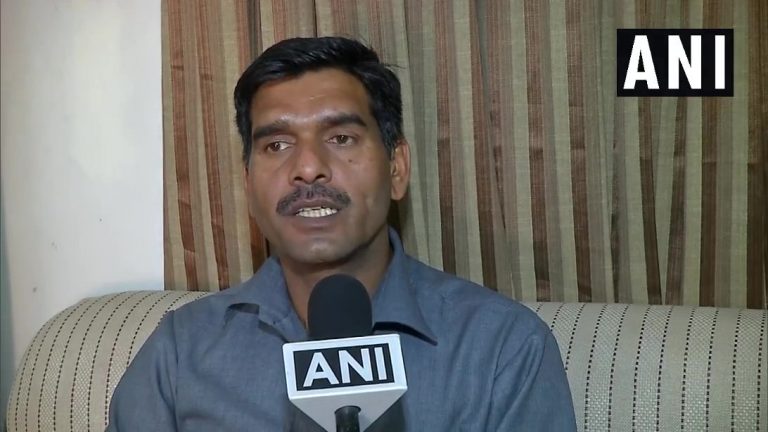
BSF Constable Tej Bahadur Singh, who had made headlines by posting a video on Facebook complaining about the poor quality of food served to the BSF soldiers, will be contesting as an independent candidate against PM Narendra Modi in Varanasi.
TB Yadav (BSF constable who was dismissed from service in ’17 after he had released video on quality of food served to soldiers): Contesting as independent candidate from Varanasi. PM had said ‘will give status of martyrs to soldiers of paramilitary forces,will give them pension’ pic.twitter.com/PuDRIs9DzH
Yadav, who was dismissed from the service on disciplinary grounds, questioned the PM about his promise of giving the status of martyrs to soldiers of paramilitary forces and giving them pension. Calling himself “asli chowkidar” and the PM as “nakli chowkidar”, Yadav said that it is an equal fight as both are chowkidars one is real and the other is fake.
Tej Bahadur Yadav, Independent candidate from Varanasi Parliamentary Constituency: I will ask PM, ‘you had made promises, what all did you do till date? Tell us.’ It’s an equal fight, on one side you have ‘asli chowkidaar’ and on the other you have ‘nakli chowkidaar. pic.twitter.com/XIgSylCZRJ
Yadav’s video had created outrage on social media as he had alleged that the government was sending all the necessary supplies but the senior officials have been misappropriating the funds. An inquiry was subsequently ordered into the matter. The PMO had also sought a report on the incident and new guidelines were issued regarding the food supplied to the jawans.
In an affidavit submitted to the Delhi High Court by Defence Ministry had clarified that this is a misconception that army, navy and air force personnel are granted the ‘martyr’ or ‘shaheed’ status while the same is not granted to Central Armed Police Forces (CAPF) like CRPF, BSF, Assam Riffles etc. The government had said that no such status is accorded to the defence forces, hence the question of according an equal status to CAPF does not arise. Responding to a petition, the affidavit had mentioned that “the prayer of the petitioner that the status of ‘martyr’ or ‘shaheed’ be given to the deceased Paramilitary Armed Forces personnel at par with army, navy and air force is misconceived and unfounded”. The government had clarified that paramilitary forces were not denied any due status as alleged.
Despite the clarification from the government in the court, opposition parties, including Rahul Gandhi continues to spread the lie that the government is depriving the paramilitary forces the status. The Congress president has even promised to accord the status if his party comes to power, which is a misleading statement. It is unfortunate to note that even people who have worked in BSF believe in the misconception.
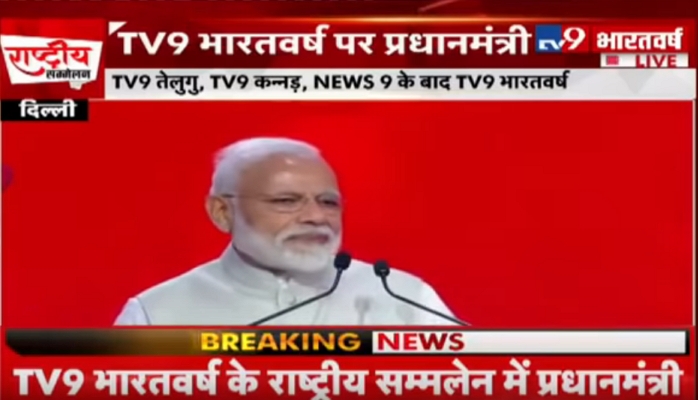
On 30th March, a new Hindi News channel named TV9 Bharatvarsh was launched. This is the latest addition to the TV9 network under the Associated Broadcasting Company Pvt Ltd, which currently has the TV9 Telugu channel. A national conference was organised on the occasion of launch of the channel, and Prime Minister Narendra Modi was invited to it. Modi delivered the keynote address at the TV9 Bharatvarsh Conclave.
Now, a video has emerged showing PM Modi talking with executives of the network, where he made such a comment which was totally unexpected for people present there. Talking to TV9 founder and CEO Ravi Prakash, Modi says, “you have filled your new channel with such people who have abuses for me in their blood”. Shocked, Ravi Prakash replies, “we are bringing change in that”. To that, Modi laughs and says “don’t do this, let the poor people live, let it continue as it is. If their soul dies, it will not be fun”. The response of the CEO shows that what Modi said was true, that the channel is indeed filled with people who hate Narendra Modi.
Now the video has gone viral on social media, with various reaction of people. Some people are pointing out how despite knowing that the channel is filled with his haters, PM Modi accepted the invitation. Those people call Modi Hitler, fascist, abuse him daily, and still he went to attend the launch event.
@narendramodi जानते थे कि जो लोग रात दिन उन्हें गालियां देते हैं, मोदी को हिटलर, तानाशाह बोलते हैं ऐसे लोगों का जमावड़ा है @TV9Bharatvarsh
फिर भी वो उनका निमंत्रण स्वीकार करके वहां जाते हैं।
प्रधानमंत्री सच में तानाशाह होते तो जाते ? https://t.co/bY8mCIETzS
Alert social media users also noted that when PM Modi was making the comment, the channel’s editor Vinod Kapri was present right there, who is known for his hatred for Modi.
“यहां ऐसे-ऐसे लोग खड़े हैं, जिनके blood में हैं हमको गाली देना. ऐसा मत करो भाई, इनको जीने दो!” PM says this about @vinodkapri, while he’s standing just next to him.
It has been speculated that PM Modi’s comments were directed at Kapri, who is a known fan of Congress president Rahul Gandhi, and whose hatred for Modi is out in open through his social media posts.
In a mega event organised in the capital of the country, New Delhi, Prime Minister Narendra Modi interacted with lakhs of chowkidars across the country. The PM held a virtual video conference which was digitally broadcasted to at least 500 places in the country and took questions from vibrant professionals and youngsters pledging their support for #MainBHiChowkidar campaign from different parts of the country.
PM Modi spoke on a plethora of topics- Mission Shakti, Congress lies, Pakistan, Balakot airstrikes and on other topics he was asked questions on.
Starting with the event, PM Modi expressed his gratitude to the people of the country for appointing a Chowkidar like him to New Delhi for protecting their interests. When asked what keeps him going, PM Modi replied that it was the love and affection of 130 crore Indians and a sense of responsibility towards them that keeps him motivated in his endeavour.
Taking a jibe at Congress, PM said it was his constant effort while being country’s Chowkidar that he safeguards public money and not let ‘Panja’ lay hands on it. PM Modi also added that Chowkidar is not an arrangement, nor it has any uniform to identify it, in fact, it is a spirit and an emotion embodied by millions of Indians who want to protect their country from different evils in the society.
चौकीदार न कोई व्यवस्था है, न कोई यूनिफॉर्म की पहचान है न कोई चौखट में बंधा है।
On being asked what will be his resolution while taking an oath as PM of the country this year and his expectations from the young Chowkidars in the country, PM Modi replied that serving the people, enabling them to achieve their dreams will be his resolution. Modi also asserted that he expects citizens to strike a balance between exercising their rights and performing their duties and that everyone should be honest and sincere in fulfilling his/her responsibilities. “Everyone has dreams and they should have it. But they should keep the country at top priority,” PM Modi said.
When asked about what drove him to permit an operation like Balakot and if he had thought about his political future, had the operation gone south, PM Modi said he was not to be credited but instead the credit should go to the Armed forces for carrying out such an audacious operation. He also said that he is not one of those politicians who thinks about an individual’s future prospects before the nation’s security. “There have been many Prime Ministers before me who thought about their future before taking decisions, for me, the priority is country and not my political future,” PM Modi said.
PM Modi also asserted that it was the trust in the discipline of our Armed Forces, and the firm belief in their valour that allowed him to grant the Armed Forces full freedom to carry out any operation that they deemed appropriate. “Pakistan thought Modi will be busy in elections, he will not retaliate. For me my country is the priority, not elections,” he said. “Pakistan will die its own death, we will march forward,” Modi exclaimed.
पाकिस्तान को लगता होगा की मोदी चुनाव में busy होगा तो शायद कुछ करेगा नहीं।
In an apparent swipe at P Chidambaram, who recently criticised Modi for publicising DRDO’s Mission Shakti, PM Modi said that some “over smart” people lack ‘common sense’ and they do not realise the fact that Space is constantly being watched over by many countries and it wouldn’t have remained a secret that India had now entered a coveted list of countries possessing anti-satellite capability. Modi further slammed Chidambaram on the claim that the anti-satellite capability was achieved in 2012, saying that though the capability was there since 2012, it has to be tested to gain recognition. ” Some times it’s important to tell the world that you have developed a technology,” PM Modi said. Modi lauded DRDO scientists for developing and successfully testing the momentous technology.
Answering about the question related to tackling lies spread by Congress, Modi made a blistering attack on the party claiming that the lies spread by Congress are seasonal and spread as per their convenience. “They create lies and then leave it in the field for their ecosystem to pick it up,” he said. In an indirect reference to Rahul Gandhi, Modi contended that it is because of these numerous lies that they often quote wrong numbers every time. “Lies need to be remembered, Truth doesn’t need to be memorised. That’s why they quote different numbers on every occasion,” Modi said.
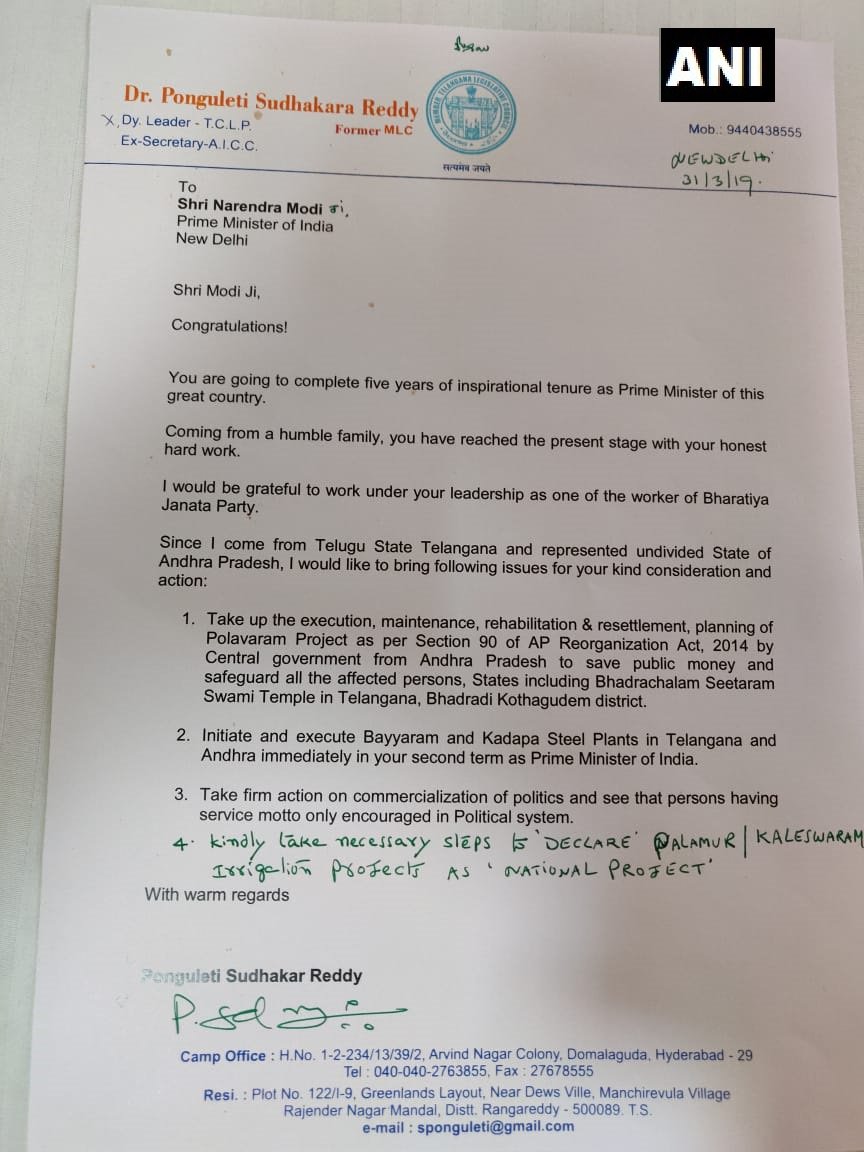
After tendering resignation earlier in the day from the Congress Party, the former All India Congress Committee (AICC) Secretary Dr P Sudhakara Reddy has now written to Prime Minister Modi expressing his desire to work with the Bharatiya Janata Party under his leadership.
Dr P Sudhakara Reddy’s letter, Courtesy: ANI
In a letter addressed to PM Modi, Reddy praised him for having reached this stage coming from a humble family. He highlighted some of the issues related to Telangana in his letter which included planning and execution of Polavaram Project as per Section 90 of AP Reorganisation Act, 2014, initiating and executing Bayyaram and Kadapa Steel Plants in Telangana and Andhra Pradesh and declaring Palamur/ Kaleshwaram Irrigation Project as National Project. He requested PM Modi to address these issues in his second term as the Prime Minister. Reddy also met PM Modi in this regard expressing his desire to join the BJP.
Reddy said that he was deeply hurt by Congress Party’s act of politicising the Pulwama terror attack. ” I was deeply hurt by the politics on the Pulwama terror attack in which our brave soldiers died. On the matter of national security, there should be no politics. In Narendra Modi I have seen a strong leadership, which is lacking in Rahul Gandhi”, said Reddy.
Reddy had resigned from the AICC earlier in the day alleging that the Congress Party is demanding crores of Rupees for giving tickets for the upcoming Lok Sabha elections. He had written to Congress President Rahul Gandhi expressing shock over crores of Rupees being sought for allocating Party tickets for the general elections. Reddy also wrote about how his complaints regarding the actual ground situation were not received by the high command due to the presence of middlemen. He blamed the Congress Party for failing to understand the sentiments of the countrymen.
A robust discussion about the military capabilities of a nation and, the conduct of its armed forces in peace and wartime, in public space is important on many levels. For one, a wider audience interested in military affairs means that it does not remain an esoteric subject, understood only by a few. An informed public can question the government on policies related to armed forces, nation’s preparedness and national security. Evaluation of the performance of the country’s armed forces in war-time is important to ensure proper lessons are learnt. It also means that the true picture comes to fore and speculations do not emerge.
In the same vein, it is good that there is a discussion on Balakot strike by Indian Air Force (IAF) on 26th February 2019 and air-battle over Kashmir on the following day.
In the absence of Government of India (GOI) and Indian Air Force (IAF) coming out with exact details of what happened on 27th February morning, many articles have appeared offering their version of events. These articles fall broadly into two categories:
(a) By journalists on defence beat who would’ve used their contact in Ministry of Defense (MOD), and may-be IAF, to piece together the story of the aerial battle.
(b) By ex-IAF personnel who by virtue of their organizational contacts and technical expertise have done and shared analysis.
While most articles present the same overall picture, they differ in their details. For example, there’s no consensus on the exact number of fighters involved from each side. However, sifting through the data-points which these articles provide and combining them together can give you a still more accurate picture of what transpired.
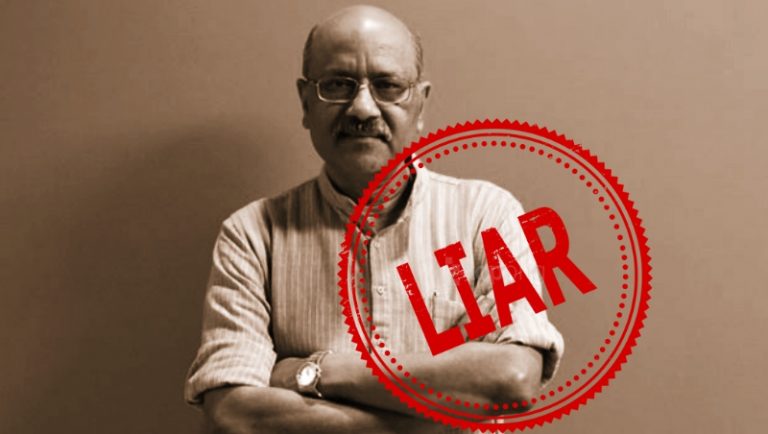
In most cases, commentators have tried to be factual and present as accurate an account of the aerial battle as possible. A noted exception has been an article carried in The Print on 27th March and written no less by Shekhar Gupta. The article is speculative in nature and twists the available information to present an unnecessary pessimistic reading of the aerial battle from India’s perspective. In many cases, the logic has been turned on its head.
In this article, I present a rebuttal of points made in the said article. This is going to be a long read, so please bear with me. Because even if the insinuation is brief, it requires thorough analysis to rebut such claims.
Air Battle Over Kashmir
Before we proceed with the rest of the article, let’s settle the confusion about number and type of fighters involved from both sides. This is crucial to the debate.
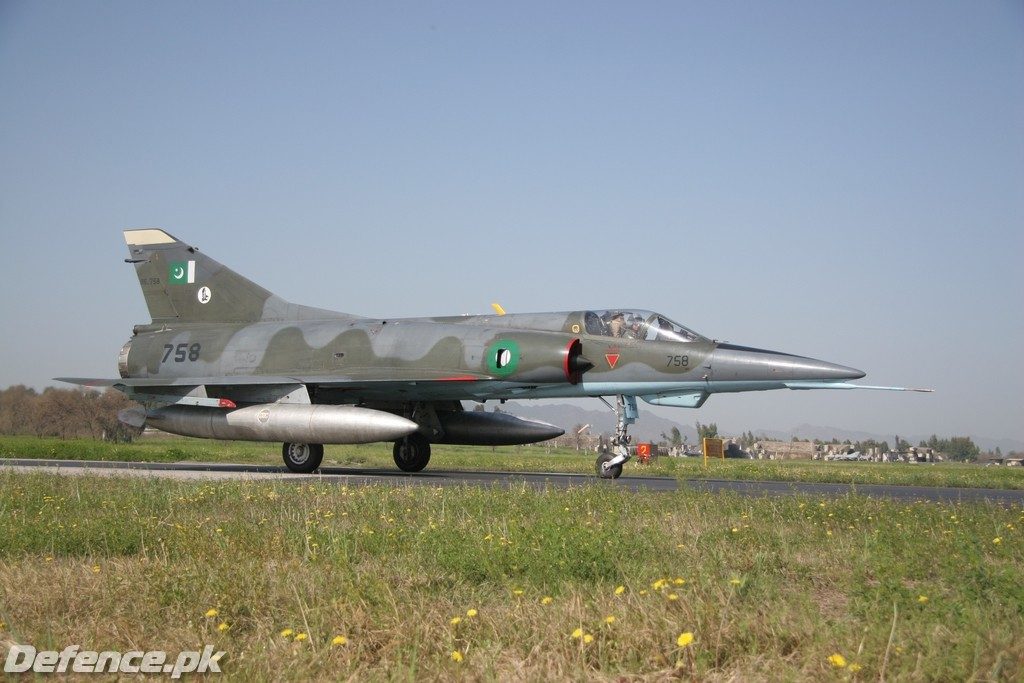
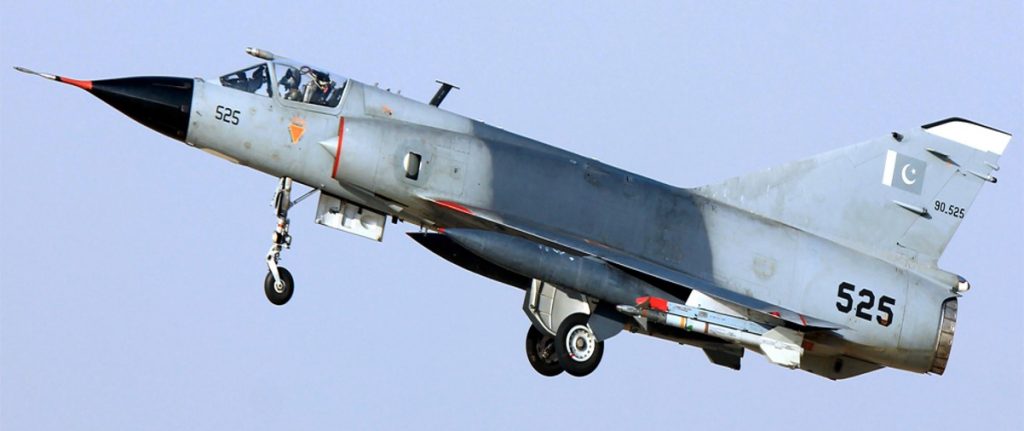
There is no definite account of the number of PAF fighters which took part in the raid on 27th February 2019. The numbers vary between 20-24 fighters. Same goes for the break-up of this strike package as per various types. The number also varies for the Indian Air Force. For this article, I’m sticking to the following numbers:
Pakistan Air Force – 20 (total fighters)
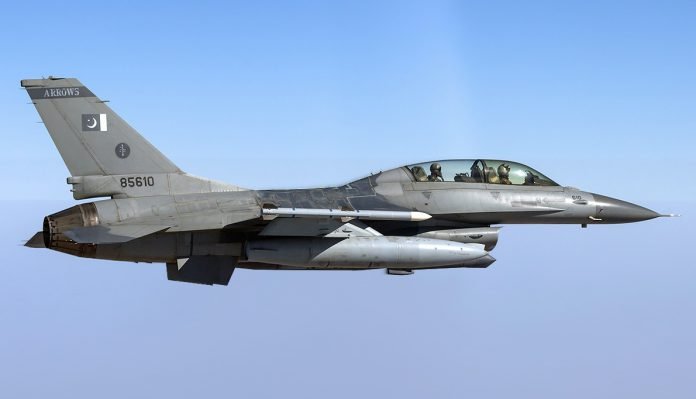
F-16 – 08 (some reports talk about 11 F-16s which I’ve not considered)
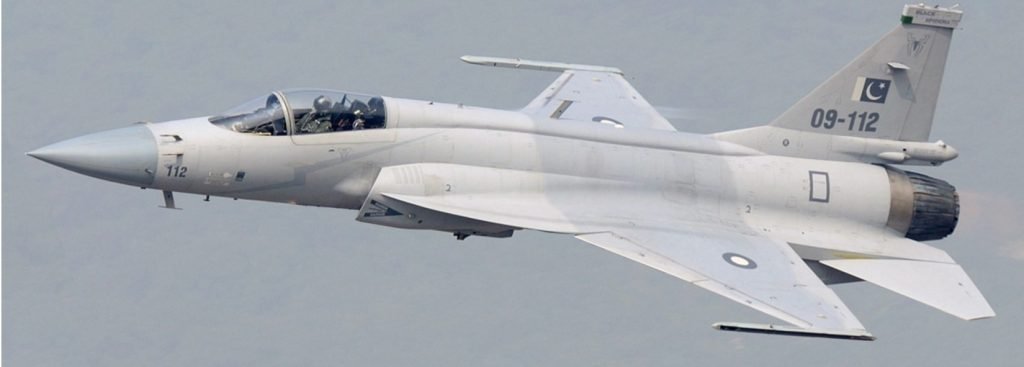
JF-17 – 04
Mirage-V – 04
Mirage-III – 04
source: airliners.net
Indian Air Force – 12 (Going by Shekhar Gupta’s article)
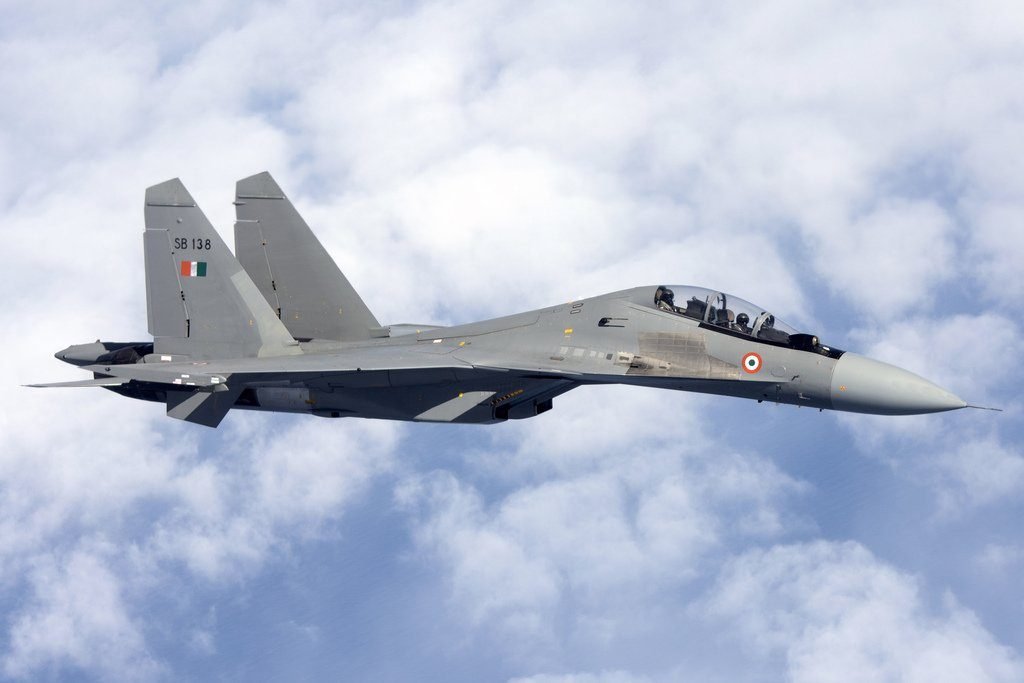
Su-30 MKI – 04
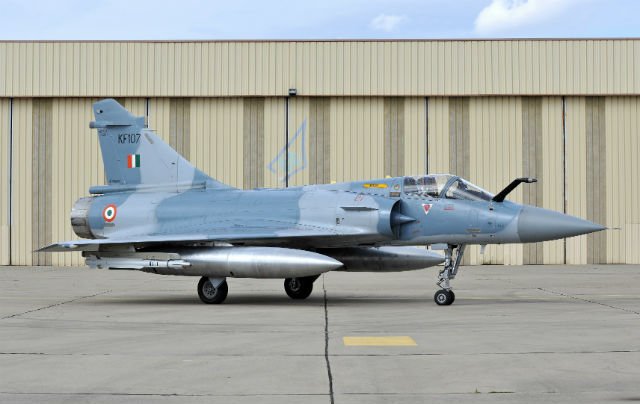
Mirage-2000 (upgraded) – 02
Mig-21 Bison – 06 (some reports talk about 2 while others talk about 4 Mig-21 Bison)
Another important parameter to understand is the placement of these fighters and progress of the air-battle. Placement means location of IAF fighters when the air battle commenced and areas targeted by different sub-packages of PAF’s overall fighter package.
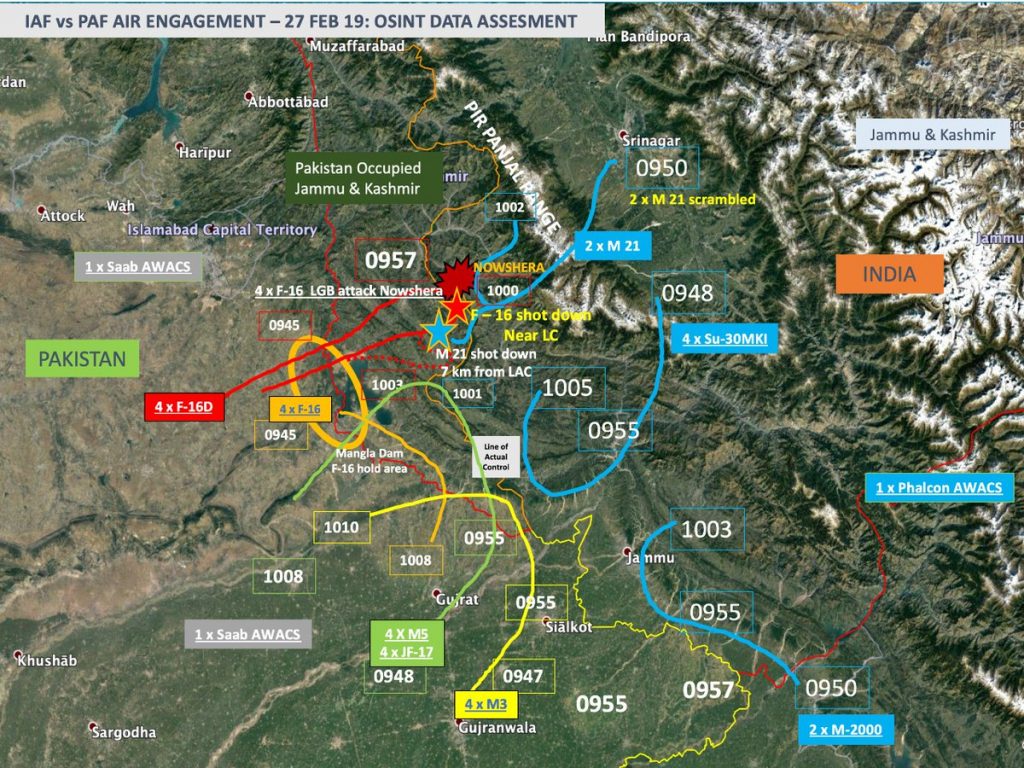
To this end, again, there are various reports. While differing in minor details, most agree with the air-battle picture given in the map shown below. This map first appeared on Twitter and was shared by Air Marshal Anil Chopra (retd) [twitter handle @chopsyturvey].
The map shows the placement of Indian and Pakistani fighter aircraft.
It shows that air-battle had two broad components.
First, the air-battle in the southern part which involved 2 x Mirage-2000 (upgraded) from IAF and 04 x Mirage-V, 04 x Mirage-III and 04 x JF-17 from PAF.
Second air-battle happened towards the north and involved 04 x Su-30 MKI and 06 x Mig-21 Bison from IAF and 08 x F-16 from PAF.
However, please do keep in mind that this map gives a broad overview of air-battle and is a snap-shot. Actual air battle would’ve been very dynamic.
*M3 and M5 in the above map mean Mirage-III and Mirage-5 of Pakistan Air Force, respectively.
Scrutinizing the details
Now, let’s come to the assertions made by Shekhar Gupta in his article.
Point 1:
In the Rajouri-Mendhar sector air skirmish, a day after the IAF’s successful Balakot strikes, the Pakistan Air Force (PAF) was able to create surprise and local superiority—technological and numerical—in a chosen battlefield. It struck in daylight when least expected, and perfectly timed the changeover of IAF AWAC patrols. The outnumbered IAF pilots (12 aircraft of three vastly different types) scrambled from various bases showed the presence of mind not to walk into the ambush set for them. But they failed to deliver a deterrent punishment on PAF.
The above point makes multiple assertions. Let’s look at them one-by-one.
(a) Surprise? What Surprise?
The one who attacks has the initiative. This is a fundamental rule of warfare. The defender has to react to this initiative. On 27th February 2019, when Pakistan Air Force (PAF) attempted to bomb targets on the Indian side of Line-of-Control (LOC), it had the initiative. But did it have surprise? Every bit of information available about this air-battle says an emphatic ‘NO’.
Before I answer this point in detail, here’s a brief introduction about the Indian Air Force’s Air Defence Ground Environment System (ADGES).
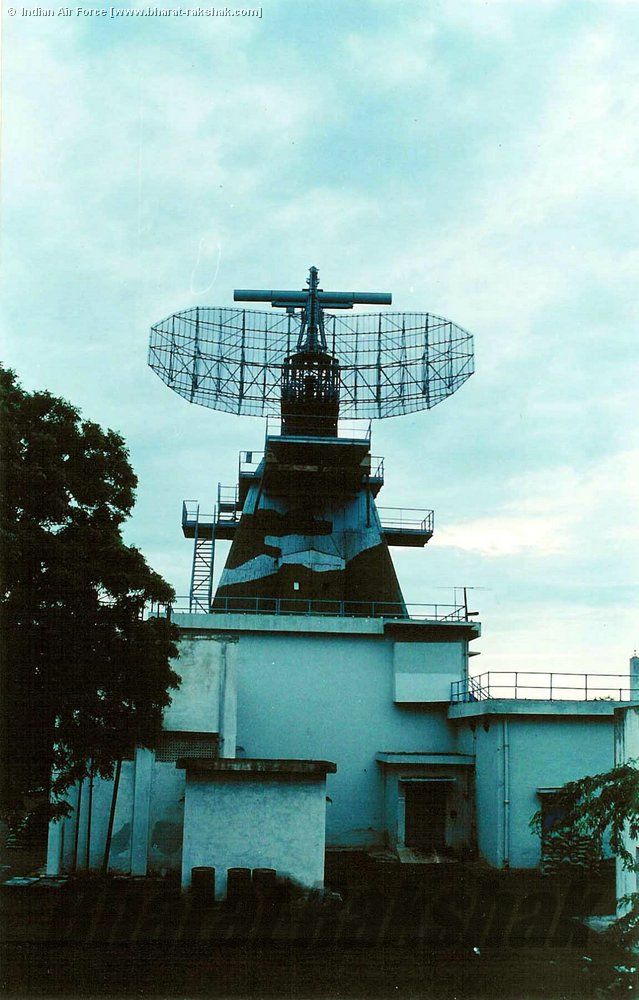
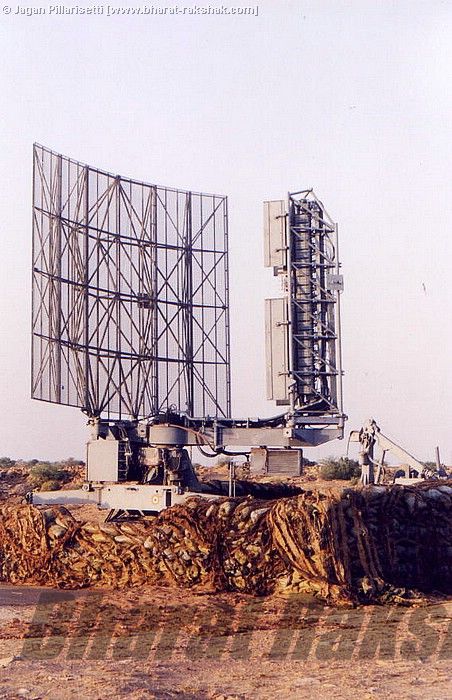
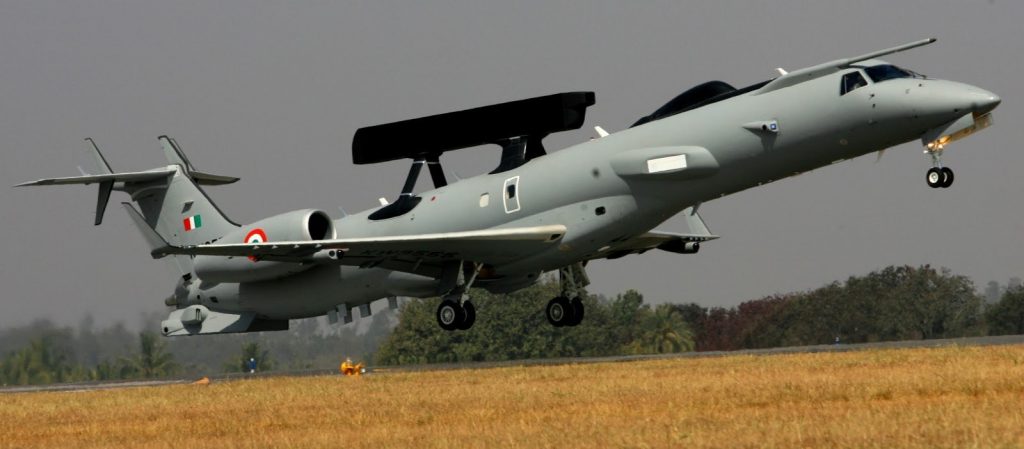
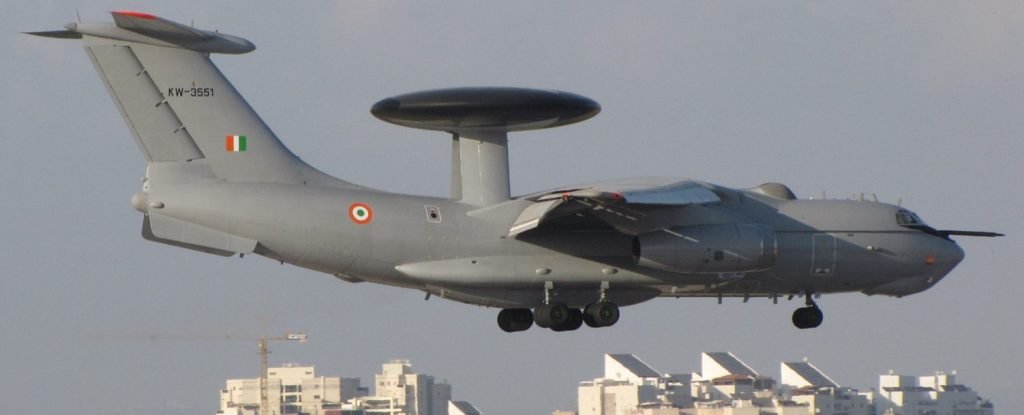
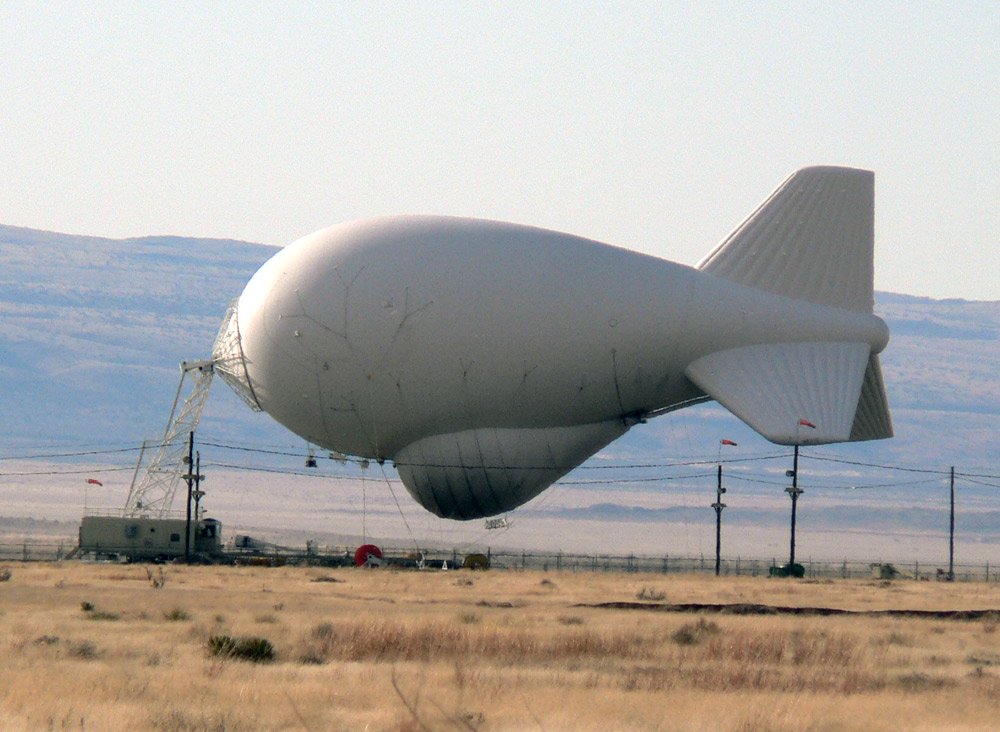
ADGES consists of various types of radars with varying range; the longest range radars have a range in excess of 1,000 kilometres while most others operate in 100-500 km range bracket. These radars are a mix of static and transportable radars and are organized in a manner so as to not leave a gap in radar coverage. To this mix, you can add airborne platforms like A-50 ‘Phalcon’ AWACS (Air Warning and Control System) and Netra AEW&CS (Airborne Early Warning and Control System). Another unique element is the AEROSTAT balloon mounted radar – a radar mounted on a tethered helium-filled balloon which rises 20,000+ feet in height and gives coverage in excess of 200 kilometres. Because of its height, it has more depth, is not constrained by earth’s curvature and can pick-up very low-level flying targets as well.
India’s main long range radar and back-bone of ADGES: THD-1955. It has a range in excess of 1,000 km but is generally operated at 40%-50% of peak output.PSM-33 Mk2 Radar – A mobile radar. This is Indian enhanced version of French TRS-2215 radarNetra – DRDO developed indigenous AEW&C systemIL-76 mounted Phalcon AWACS systemTethered balloon mounted radar system (representative image)
In a major overhaul of ADGES and to make it more effective, IAF has implemented network-centric Integrated Air Command and Control System (IACCS). Under IACCS, information from various radars/sensors is pooled through high-density fibre optic cables into a node and a single, consolidated air-picture is generated. And this is not limited to only defence radars but civilian radars as well. By 2015, IAF had already established 5 nodes of the IACCS in the western sector facing Pakistan at Barnala (Punjab), Wadsar (Gujarat), Aya Nagar (Delhi), Jodhpur (Rajasthan) and Ambala (Haryana). Four other major nodes and ten sub-nodes are in the process of being set-up.
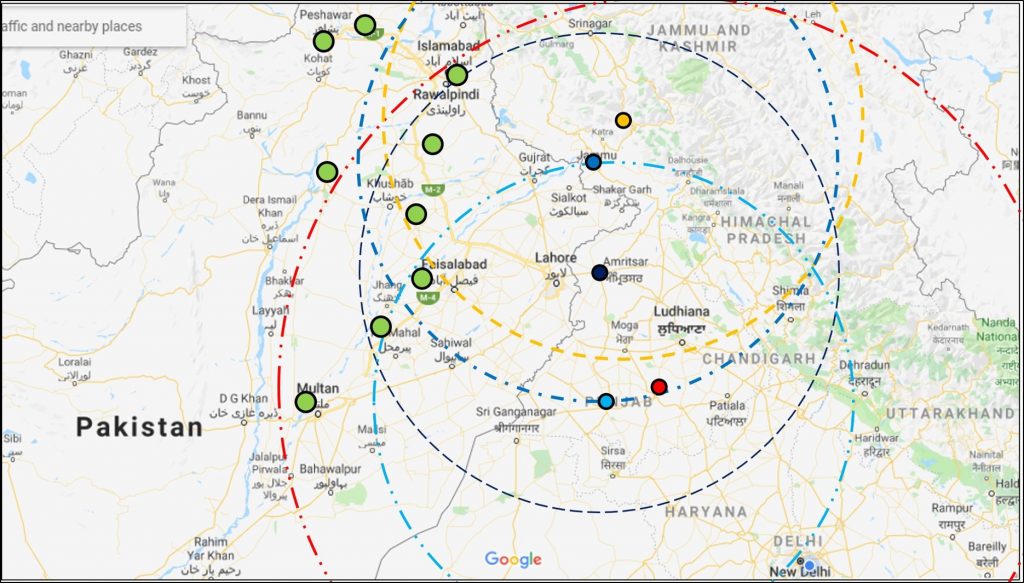
To get a sense of depth/range and overlapping radar coverage of IAF, please see the map below. The red-dot is centred on Barnala (Punjab). Apart from being an IACCS node, it is also home to Indian’s first tethered balloon based radar system. And I think a THD-1955 radar is also located in the vicinity. Other points are the probable location of other static and mobile radar units (which in IAF ‘s language are known as Signal Units). The mobile radar units ( known as Transportable Radar Unit – TRU) are likely to move further west to extend their coverage.
Various circles on the map represent likely radar coverage range from each location. The colour of the circle is the same as the location marker. While the red coloured circle, centred on Barnala (Punjab), shows a coverage with a range of ~400 km, other circles show coverage over a range of ~250 km. From top to bottom, the locations are – Natha Top (Jammu), Jammu, Amritsar, Barnala and Bhisiana (Bhatinda).
The green markers inside Pakistan are major airbases and some satellite bases of Pakistan Air Force. It’s not surprising that IAF radar network picked-up PAF fighters the moment they were in air from their bases in central and south Pakistan Punjab.
Representative image of Indian radar coverage
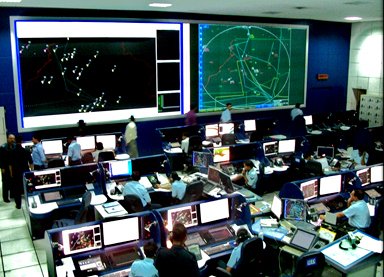
Information from such overlapping coverage, consisting of multiple sensors, comes to an IACCS node like Barnala. Representative image of an IACCS node is given below. It shows a bank of operators and ground controllers seeing a consolidated air-picture over a vast geography.
IACCS Node (representative image)
Given the overlapping radar coverage which can see considerable distance inside Pakistan, it can be construed that IAF became aware of the PAF strike package from very early on.
Let’s consider the evidence which confirms the above and contradicts the assertion about IAF being surprised by PAF. A report on 25th March 2019 by respected journalist and defence analyst, Nitin Gokhale, had the following information:
“Pakistan first closed its civilian airspace and disallowed any commercial traffic around 8.45-9 am. In any case, Indian fighter controllers, sitting at a secure control room in Punjab and watching an array of inputs from multiple on the ground and airborne radars, were keeping a close watch on the Pakistani airspace that morning. Around 9.30 am, the IAF fighter controllers noticed at least two dozen PAF fighters getting airborne in a span of 15 minutes. Twelve of the PAF fighters appeared headed to the south of Pir Panjal range (Jammu, Poonch, Nowshera), four towards Srinagar, while four others were airborne in the area opposite Anoopgarh/Suchetgarh in Rajasthan.
The Indian flight control centre, aware of the danger, quickly alerted four fighters—two Su-30s and two Mirage-2000s—deployed on combat air patrol (CAP) in the area south of Pir Panjal and simultaneously ordered two MiG-21 Bisons, based in Srinagar to scramble. One of the MiGs was piloted by Wing Commander Abhinandan Varthaman”
Long story short, PAF simply did not have any surprise element. In fact, Indian sensors were able to detect the PAF fighters the moment they took off from their airbases. Considering that these Pakistani fighters took-off from air bases which are 200+ km from the international border tells you how deep the Indian radar network can scan and detect enemy air-activity.
In fact, Indian ground controllers had a good 10-12 minute lead on the PAF’s strike package. Consider this data-point from an article by Air Vice Marshal Arjun Subramaniam:
Into this melee came in four MiG-21 Bisons, scrambled from the Operational Ready Platform (ORP) on both runways ends at Srinagar and controlled by a GCI radar. Covering the almost 200 km in about 10-12 minutes at top speeds of between 950-1000 km/hr, the lead Bison with Wing Commander Abhinandan Varthaman would have arrived on the scene just as three F-16s appear to have barely crossed the LC, impeded in no small measure by the intense BVR manoeuvring with the Sukhois
What the above tells you is that IAF had a complete picture of the evolving and dynamic air-situation. If anything, IAF had a lead time of 10+ minutes to scramble additional jets and position them judiciously at the right place to counter the PAF aggression.
Also, if you combine the information about IACCS node at Barnala (Punjab) with what is mentioned in the excerpt above, Indian fighter controllers most likely sitting in Barnala were overseeing air-battle over 300+ km away in Naoshera-Rajouri! This is another vindication of network-centric nature of our ADGES which allows information to be pooled from various resources at a single node and generate a composite air-picture, independent of the location of the node.
So, no, PAF did not have any element of surprise on 27th February 2019, like how IAF had on 26th February 2019 when it bombed targets in POK and at Balakot in Khyber Pakhtunkhwa in Pakistan.
If anything, it proves that Indian air-defence network worked as per expectation in a real air combat situation and this situational awareness allowed IAF controllers sitting in Barnala (Punjab) to alert Indian fighters and also position them favourably with respect to PAF strike package. They also gave the scramble call and got between 4-6 Mig-21 Bison airborne, one of which shot down the PAF dual seat F-16D.
Contrary to opinion, it is PAF which got surprised by the presence of IAF Mig-21 Bison on their tail.
(b) The Mythical Superiority
The next point made by Shekhar Gupta is about the numerical and technical superiority of PAF strike package. Let’s look at these two points separately.
(b.1) Numerical Superiority
As I said earlier, the initiative always rests with the attacker. In this case, since PAF knew it would be running the gauntlet with IAF on high alert, it had no option but to create a large strike package consisting of actual and decoy sub-packages.
But what exactly did PAF achieve with its supposedly numerical superiority? The answer to that question is – NOTHING!
A smaller IAF force of 12 fighters was able to repulse a larger force of 20 fighters. Contrary to their claim, PAF was not able to hit any military target because of the intervention of IAF fighters. And this numerical superiority argument becomes still more absurd, and actually in India’s favour when we consider some additional data-points from other reports.
For example, if we refer to the air-battle map and the following data-point from an article by Air Vice-Marshal Arjun Subramaniam (retd):
“The first engagement took place in the south with two Mirage 2000s intercepting a large package of more than eight aircraft under extremely effective AWACS control in the airspace high over Jammu. Armed with beyond-visual-range (BVR) missile MICA missiles and likely to have been the upgraded Mirage 2000s, they would have locked on first to the JF-17s, duelling with them at long distances and conversing among themselves as the battle progressed ‘going hot’ and ‘going cold’, or ‘extending’ and ‘exiting’—all of it typical fighter pilot jargon across the world that indicates different stages of BVR combat. Frustrated at being unable to clear the Mirage 5s to proceed towards their intended target, the PAF formation would have turned back—not something unheard of or unprofessional—living to fight another day is a wise strategy in tough times. One deduction from this engagement if the forces painted are right is the clear superiority of the upgraded Mirage 2000 over the JF-17!”
As per the above assessment, 2 x Mirage-2000 (Upgraded), equipped with advanced MICA missiles, was able to foil the attack by 08 PAF fighters! The PAF fighter package consisted of 04 x Mirage-V and 04 x JF-17. This ratio gets further skewed because another package of 04 x Mirage-III was most probably not launched on their target because of the inability of the above package to get through.
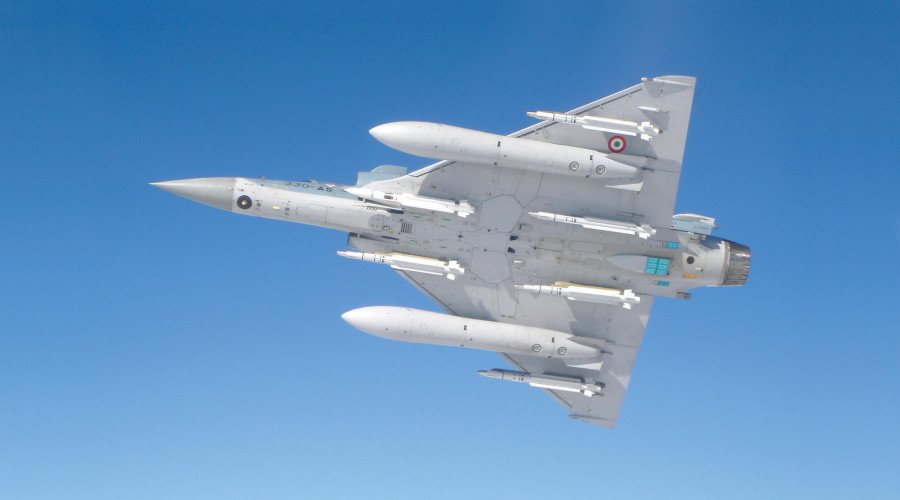
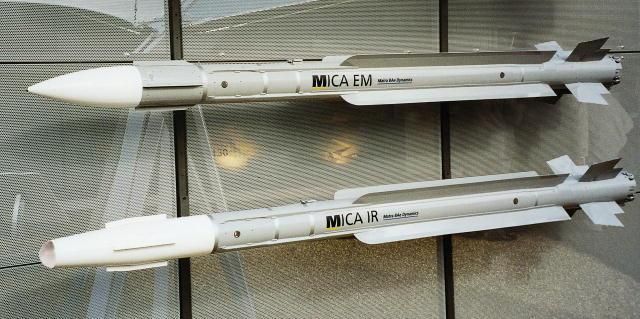
French Mirage-2000-5 equipped with 06 x MICA missiles. Missile mounted just below leading edge of aircraft’s left wing is MICA-RF (active radar homing) while balance 05 are MICA-IR (missile with imaging infra-red seeker)Family of MICA missiles – on top is the active radar homing MICA-RF and lower on is MICA-IR, which uses imaging infra-red to hit enemy aircraft
Though, we’ve another recent report[5]which says that Mirage-III aircraft did launch H-4 Stand-of-Weapon (SOW) from 50 kilometre within Pakistan but because of intervention by IAF, these failed to hit their target.
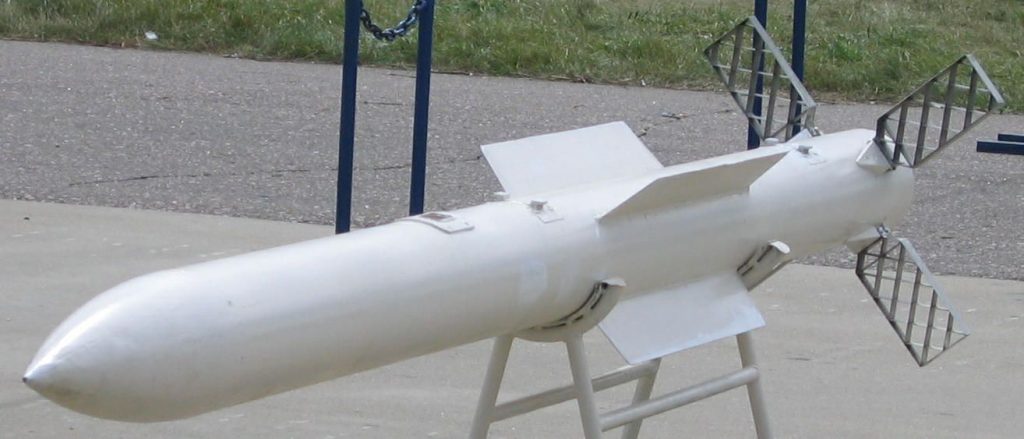
South African Denel H-4 Stand-off-Weapon – this was the main air-to-ground weapon carried by PAF Mirage-III and Mirage-V to hit Indian targets
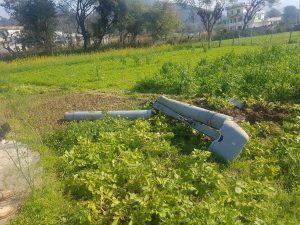
Images of remnants of H-4 SOW from POK. PAF Mirages most likely jettisoned them in panic when faced with threat from IAF’s Mirage-2000 (upgraded)
Either way, in one of the engagements, 2 IAF Mirage-2000 (upgraded) took on and deterred 12 PAF fighters! A defender to attacker ratio of 1:6.
In second engagement, which took place up north towards Poonch and Rajouri sector, 08 x F-16 were up against 02 x Su-30 MKI and 06 x Mig-21 Bison. The reason I say only 02 Su-30 MKI and not 04 as originally mentioned because of this data-point from the same article by Air Vice-Marshal Arjun Subramaniam (retd) which has been mentioned above:
“To the north was a duel between four SU-30MKIs and eight F-16s. Two of the Sukhois could have been in a swing role and towards the end of their combat endurance (a characteristic that allows it to switch between roles albeit with a marginal reduction in effectiveness in the second role) while the other two would have been in full air defence configuration”
Of the 04 x Su-30 MKI’s in the air, 02 x Su-30 MKI was low on endurance (must’ve been in the air for a long time) and most probably did not take an active part in the battle.
So, in the end, 02 x Su-30 MKI and 06 Mig-21 Bison (some reports say 04 x Mig-21 Bison were involved, which is more likely) were involved in the duel with 08 x F-16s. And created enough threat for F-16s because of which they missed hitting their targets even with laser-guided bombs (LGB). Not only that, PAF ended up losing an F-16D to Indian Mig-21 Bison.
Further evidence of how IAF thwarted the PAF plans in air-battle played is mentioned below. Taken from Nitin Gokhale’s article mentioned earlier.
An Indian analysis has also shown that when Pakistan launched the short retaliatory strike only three or four aircraft including three F-16s crossed the LoC and came only three or four km inside Indian territory before they were challenged by the IAF interceptors. As a senior IAF officer puts it: “While three or four aircraft came into Indian territory in an offensive mode, 21 aircraft were in the total package only for support. They were all trying to protect those three F-16 aircraft.”
This ties with other narratives which say that F-16s entered Indian territory while Mirage-III/V dropped stand-of-weapons from well within Pakistan. Pakistan Air Force was trying to get some hits on Indian ground targets and seemed least bit interested to press home its numerical advantage and take on IAF fighters.
Superiority, anyone?
(b.2) Technical Superiority
Using the above break-up of forces on both sides, it is evident that only 08 x F-16 on Pakistan’s side were of any match to 04 x Su-30 MKI and 02 x Mirage-2000 (upgraded). PAF’s JF-17 in current form is roughly equivalent to Indian Mig-21 Bison. As for Mirage-III and Mirages-V, these upgrade machines are also on the same league as Mig-21 Bison with the difference that PAF’s Mirage-III and Mirage-V have received upgrades which primarily optimizes their air-to-ground capability. This upgrade allowed them to carry the Denel H-4 Stand-of-Weapon.
As the outcome of air-battle over Kashmir shows, it was a smaller Indian fighter force which deterred a much larger PAF force.
So, which technical superiority are we talking about here?
Point 2:
Four Sukhoi Su-30s, the IAF’s most powerful air-superiority aircraft, were involved in the melee at beyond visual range (BVR). They were surprised by the PAF F-16s firing their American AMRAAM missiles from so far that the Sukhois’ own radar/computer/missiles were not able to give them a “firing solution”. Translated: India’s best fighter, which constitutes half of IAF’s combat force, was outraged and outgunned.
Whereas the first main assertion of article questions capability of India’s air-defence network, this one makes serious allegations about capabilities of IAF’s Su-30 MKI. And that too by using very contentious and dubious reasoning.
Beyond-the-Visual-Range (BVR) combat with active radar guided missiles generally involves the following step:
Before firing, launch aircraft passes the location of the enemy aircraft to the missile. Using its Inertial Navigation System (INS), the missile works out the location and direction of target aircraft with respect to its own position.
The missile is fired towards the enemy aircraft.
The parent aircraft continues to track the enemy aircraft. And using a data-link, pass the updated information about target aircraft’s location to the missile. The missile alters course basis this information. This is called a mid-course update.
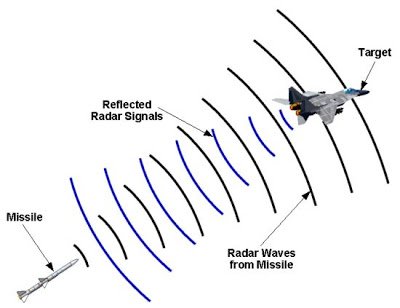
This happens till a point where radar mounted on missile’s nose takes over and actively starts to track the target aircraft. At this point, the missile becomes completely independent and homes onto target aircraft on its own.
Another way of doing this is to launch the missile blind – that is, you launch the missile in general direction of the enemy aircraft and hope that missile ends-up close enough to enemy aircraft for missile radar to pick-up and home onto it. This approach is generally used when the launch aircraft itself is being fired upon by enemy aircraft and cannot maintain the lock on enemy aircraft as it is trying to evade the missile fired at it.
The following images show the terminal stage of a typical active radar guided BVR missile. Note the radar on missile’s cone generating radar signals, which are reflected by target aircraft, and picked-up by missiles radar. This is how it guides itself to the target.
What most likely happened in F-16 versus Su-30 MKI duel was that F-16s tried to gain lock from maximum possible firing range of AMRAAMS and launched the missiles, hoping for a lucky shot. Because the shots were taken from MAX range of both F-16 radar and missile range, Su-30 MKIs were able to break the lock and evade/outmanoeuvre and/or jam the AMRAAM missiles.
An article by Shiv Aroor gives a description of air-battle between Su-30 MKIs and F-16:
“As the stand-off strikes took place, an air-to-air battle commenced with the two Indian Su-30s reporting (in their debrief) repeated radar locks from what they say were Pakistani F-16s beyond visual range and manoeuvring in the air to turn ‘cold’ on the weapon locks.
IAF sources indicated to Livefist that the said F-16s were looking specifically to shoot down a Su-30 — something that would have been a major loss for the IAF. The Su-30s (and later, three of the MiG-21s) are said to have flown patterns to remain ‘kinematically safe’ against the repeated AMRAAM locks even as the distance between the Indian and Pakistani jets loosely closed over the Line of Control.
The hot-cold radar lock sequence continued for several minutes, with the said PAF F-16s repeatedly attempting to sustain locks on the Su-30 MKIs long enough for meaningful shots.
Sources say the three AMRAAMs were launched in DMAX-1, the dynamic attack zone where the missile is unleashed at the limits of its range. On all three occasions, the Su-30s used countermeasures to dodge the incoming weapons.”
In short, what happened was that in their desperate bid to shoot-down a Su-30 MKI while at the same time trying to keep Su-30 MKIs as far away as possible from 3-4 F-16s which entered Indian airspace to bomb targets, PAF F-16’s fired AMRAAMs from maximum possible range. Even a basic understanding of air-warfare will tell you that the probability of scoring a kill at MAX Range is very low. These AMRAAM shots by PAF F-16s were more like shot-in-the-dark, hoping to achieve a kill.
But why didn’t Indian Su-30 MKIs fire missiles at F-16s? Are they technically inferior to Pakistani F-16s? Do they have inferior radar? Or inferior missiles as compared AIM-120 C5 AMRAAM?
Again, the answer is emphatic NO!
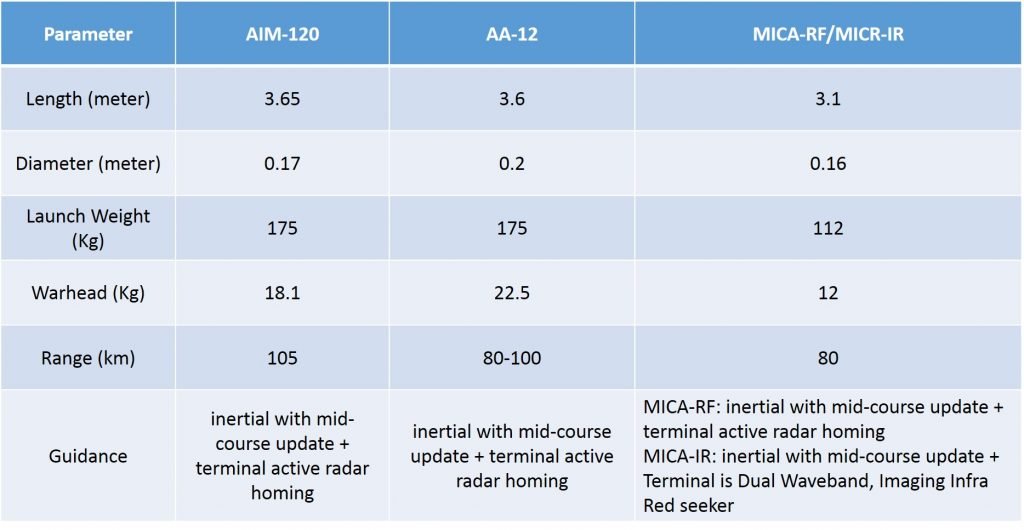
Indian Su-30 MKI has a much more powerful radar (N011M ‘Bars’) compared to radar [AN/APG-68(V)9] on even the most advanced F-16 in PAF service (F-16 Block 52). In terms of active radar guided air-to-air missiles, Su-30 MKI carries the Russian AA-12 ‘Adder’ (RVV-AE) which has a similar range as the AIM-120 C5 on Pakistani F-16s.
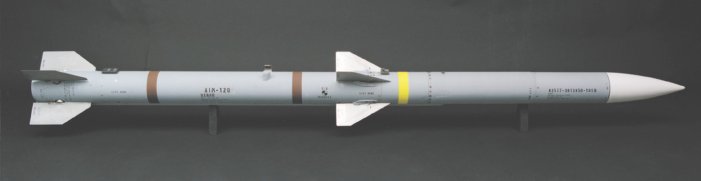
The table below compares the features of three BVR missiles which are main protagonists of this air battle – AIM-12 C5 (Pakistan), AA-12 ‘Adder’ (India) and MICA-RF/IR (India). Please be advised that maximum ranges are always classified and these are indicative numbers from open source. As it is, max ranges generally are meaningless because what matters is the range of ‘No-Escape Zone’ of the missile. This is the zone where the probability of a hit is the highest. The reason why French Meteor (which IAF is getting with Rafale) is considered a very potent missile is that its NEZ is supposed to be 60 km, highest known amongst BVR missiles till date.
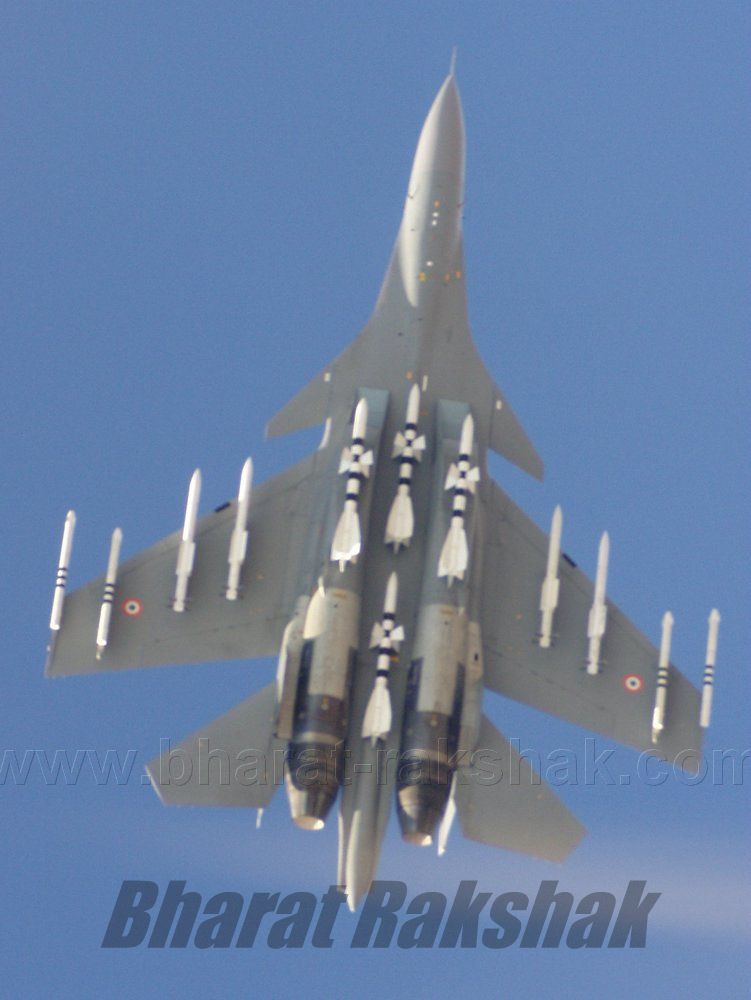
Su-30MKI in Air-Dominance role – It is armed with 12 Air-to-Air Missiles. Starting from wing-tip, first two missile are R-73 or AA-11 ‘Archer’, next two are active radar homing R-77 or AA-12 ‘Adder’ and 4 missiles on the belly are semi-active radar homing R-27 or AA-11 ‘Alamo’R-77 or AA-12 ‘Adder’AIM-120 ‘AMRAAM’
Unlike the Pakistan F-16s, IAF Su-30 MKI did not fire their missiles blindly. They outmanoeuvred Pakistani AMRAAMs while positioning themselves for high probability kill shots. What most likely happened that by the time Su-30 MKIs could achieve the shot, PAF F-16s turned tail and exited the Indian airspace. And we know from various accounts that as per prevailing Rules of Engagement (ROE), IAF Su-30 MKIs did not pursue the fleeing F-16s.
What is not being mentioned is that only 02 x Su-30 MKI took on and deterred 08 x F-16s. And while Su-30 MKIs might not have fired any BVR missile, their continuous effort to gain high probability kill shot, even while out-manoeuvring the incoming AMRAAMs, was big enough threat for PAF F-16s to miss their target and turn tail.
If anything, the above shows a superb level of training of IAF fighter pilots and their adeptness at BVR combat.
Shekhar Gupta is making a virtue out of PAF F-16s firing BVR missiles for the sake of firing and hoping to get a lucky shot. While it is the Indian SU-30 MKIs which acted as per BVR combat playbook.
Point 3:
Fortunately, two of the upgraded Mirage-2000s were on patrol. These have new French missiles (MICA, or Missile d’interception, de combat d’autodefense) which are the exact peers of the F-16/AMRAAM. They were able to lock-on to some of the PAF planes, which panicked into dropping their South African-origin stand-off weapons (SOWs) in a hurry, mostly missing the targets. Nevertheless, one fell in the middle of the Nowshera brigade headquarters compound. It was closer than we think.
This part is a bit funny because it mixes up things.
As discussed earlier and as evident from the map of the air battle over Kashmir, Mirage-2000 (upgraded) and Su-30 MKI were flying Combat Air Patrol (CAP) over two distinct geographies. While Mirage-2000 (upgraded) confronted a large mix force of PAF’s Mirage-III, Mirage-V and JF-17 in the southern part of Kashmir, Su-30 MKIs were duelling with 08 x F-16s up-north in general area of Poonch.
Su-30 MKIs managed to hold their own against a much larger force of F-16s and there is no evidence/report that at Mirage-2000s (upgraded) intervened in the air-battle between Su-30 MKI and F-16s. The South African Stand-of-Weapon (SOW) which were dropped in a hurry by PAF fighters were carried by Mirage-III/Mirage-V while F-16s are supposed to have dropped Laser Guided Weapons (LGBs).
Point 4:
Surprised, and outnumbered, the IAF scrambled six MiG-21 Bisons from Srinagar and Awantipur. Since these climbed in the shadow of the Pir Panjal range, the PAF AWAC failed to detect them. Their sudden appearance at the battlefield upset the PAF plan. This was fortuitous.
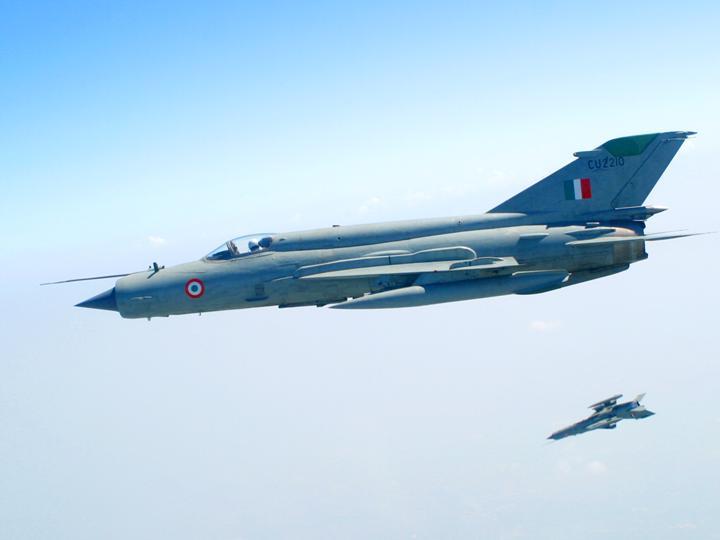
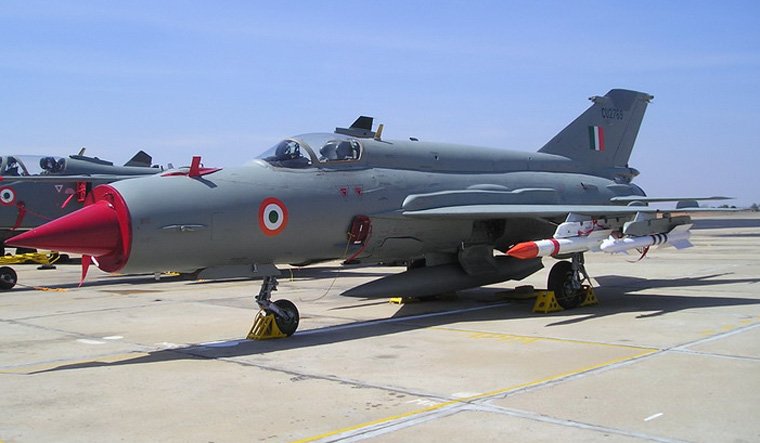
Mig-21 Bison armed with R-77 or AA-12 ‘Adder’ and R-73 or AA-11 ‘Archer’ missiles
As already discussed, IAF was not surprised. It had detected the PAF fighters from the moment they took-off and had already alerted the Indian fighters on Combat Air Patrol (CAP) in the area.
From the article quoted earlier by Nitin Gokhale:
The Indian flight control centre, aware of the danger, quickly alerted four fighters—two Su-30s and two Mirage-2000s—deployed on combat air patrol (CAP) in the area south of Pir Panjal and simultaneously ordered two MiG-21 Bisons, based in Srinagar to scramble. One of the MiGs was piloted by Wing Commander Abhinandan Varthaman.
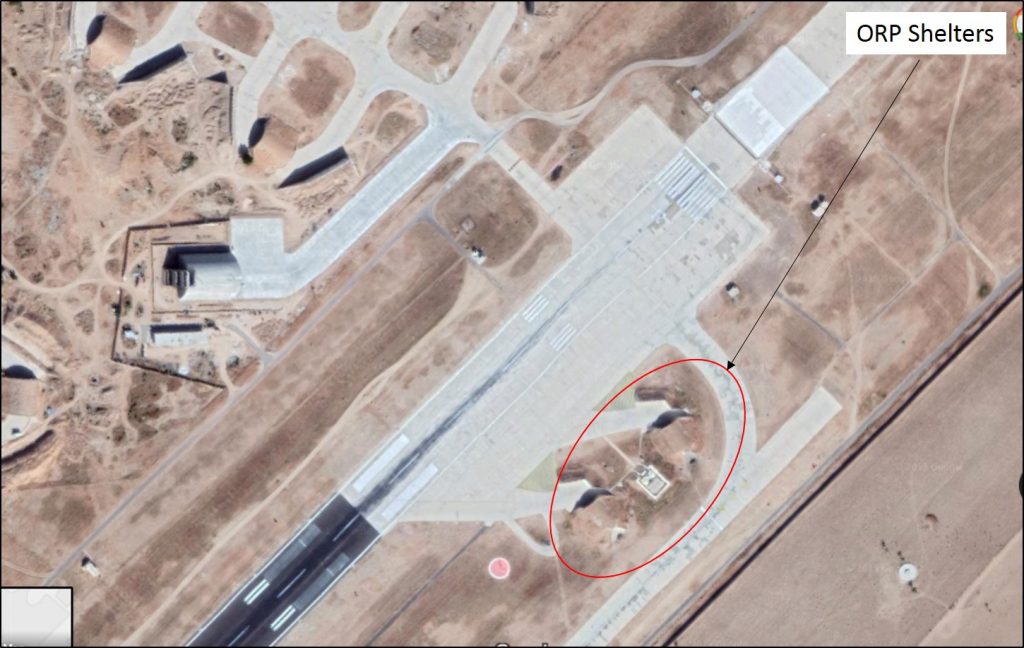
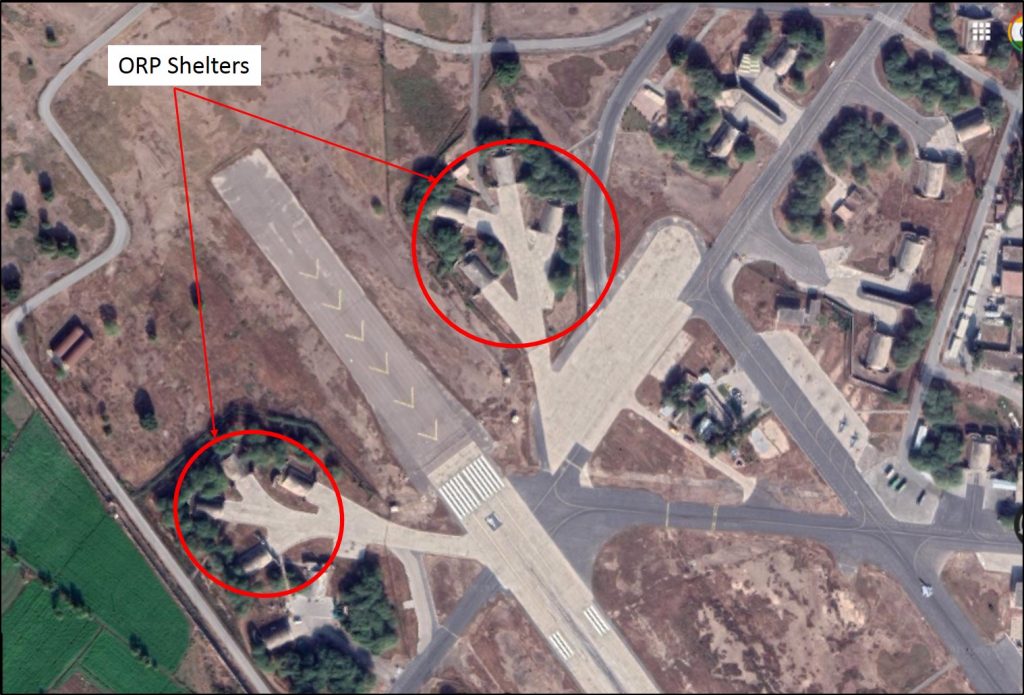
All the forward airbases of IAF have fighters on Operational Readiness Patrol (ORP). It consists of 2-4 fighters, along with their pilots, ready to take-off within 2-minutes of the alarm being sounded. The fighters are fuelled, armed with missiles and pilots are in their flying overalls. To remove time wasted in taxing towards the runway, fighters are parked in Hardened Aircraft Shelters (HAS) which are located on either end of the runways; fighters exit from their HAS and directly enter the runway to reduce reaction time.
Check the satellite images of ORP shelters at IAF and PAF bases.
ORP Shelters adjacent to runway at an Indian air baseAn amazing 08 ORP shelters at Pakistan Air Force’s airbase in Sargodha, Pakistan. It is the most premier air base of PAF and most probably the largest. Home to their F-16 fleet and Combat Commanders School, the PAF’s equivalent of US Navy’s ‘Top Gun’ School.
So, between 2-6 Mig-21 Bison, on ORP at Srinagar and Awantipora air bases were scrambled the moment threat from PAF was discovered. The fighter controllers based in Barnala (Punjab) guided these fighters towards enemy fighters, placing them at an opportune position vis-à-vis enemy fighters. One account speaks of Mig-21 Bison diving down from 15,000 feet towards exiting F-16s which were at 7,000 feet. This allowed Wing Commander Abhinandan to at the right place, at the right time. And he managed to get a lock on PAF F-16.
In north Kashmir air-battle, Mig-21 Bison was part of the IAF’s calculation from the beginning and as Shekhar Gupta himself says, it was the attacker, Pakistan Air Force, which was surprised in the end and ended up losing an F-16D to Indian Mig-21 Bison.
Point 5:
It is only because of IAF’s good training, situational awareness, and some luck that this audacious PAF mission failed. No ground target was hit. Its larger objective of luring vastly outnumbered and out-ranged IAF jets into a pre-set “killing zone” was the bigger failure.
What good is an audacious plan if it fails to meet any of its objectives?
I mean, look at it from Pakistan’s side – no ground target was hit and they ended-up losing an advanced and precious F-16D. And has already been discussed, this ‘vastly outnumbered’ forces managed to achieve its objective – that of thwarting aggression from PAF and ensuring minimum damage to own assets, whether on the ground or in the air.
Point 6:
How did Wing Commander Abhinandan Varthaman cross the LoC? He was in visual pursuit of a PAF fighter for sure. But his controller was warning him to return. He didn’t. Because he couldn’t hear. As you’d expect in 2019, the battle zone had full radio-jamming. That’s why modern fighters have secure data links. Why didn’t that MiG have it? Ask the gallant Sir Humphrey of the MoD who blocked the purchase for three years claiming that a defence PSU would make it. Don’t ask me his name, find out. You might learn another truth you don’t want to face.
There is no denying the fact that any modern air force looking to implement network-centric warfare requires a digital data link for its fighter aircraft. A data link enables many functions like an exchange of information between fighters, between fighters and command & control nodes, fighters and AWACS etc. It enables increased situational awareness between participants. For example, a Su-30 MKI with its powerful radar could transmit its own radar picture to smaller Mig-21s which have smaller radars. This way, Mig-21s can be aware of air situation which otherwise they cannot detect because of their smaller and less powerful radars. Voice communication is one aspect of a digital link.
Coming to Wing Commander Abhinandan’s case, the article makes it seem as if radio-jamming was 0-1 kind of affair. We’ve other reports which talk about final communication between Wing Commander Abhinandan and Ground Controllers. For example, consider this report from Livefist:
Livefist has been given to understand that Wing Commander responded to two warnings from radar controllers to turn back (since he was minutes from crossing into hostile airspace) with radar calls saying he had an aircraft in visual range and was attempting a manual close combat lock. Moments later, with his lock confirmed, he gave a final call saying he had the lock tone, before launching a single Vympel R-73 heat-seeking missile.
It is not my argument that there was no radio-jamming or that IAF does not need fleet wide digital data-links. My contention is that information is presented in a highly skewed manner. For example, how come Wing Commander Abhinandan’s wingman could hear the call from fighter controller? How come Su-30 MKI did not face radio-jamming? Because while they’ve data-link to talk to each other, I doubt there’s a data-link between ground controllers and Su-30 MKI. Further, in any battle, ground or air or naval, it is known that frequencies will be jammed. And there are fall-back options to switch to other frequencies. We don’t know whether this happened or not.
Conclusion
Defence is a subject which very few people understand outside of a small circle of serving and retired armed forces personnel, career security & strategy people, academics in this field and some hobbyist like yours truly.
Given this scenario, when a journalist or an analyst pens an analysis of an event like Balakot strike or air battle on 27th February, you expect him/her to educate the public through facts and by breaking down complex military jargon into a language which common people can understand. Appreciation and critique are part and parcel of any such analysis. A good analysis should foster debate and discussion on the subject at hand.
However, what you don’t expect is half-truths or faulty analysis even when information to contrary is available. Which is actually painful because people like me who’ve read Shekhar Gupta’s article on armed forces and security aspect from the mid-80s have witnessed the amazing depth of his writing and analysis.
This particular article not only does not tell the reader what happened and how it makes broad assertions which will seed doubt into the mind of its readers about the capability of Indian Air Force and Indian Armed Forces.
This is not done! Mr Shekhar Gupta can definitely do better. Much better. Maybe.
Note 1 – All images have been sourced from the internet.
Note 2 – Inputs on the subject have been taken from the discussion on the bharat-rakshak forum. Special mention needs to be made of poster Karan M on the said forum for his analysis of BVR combat.